
Lesson 1 Communication Defined Objectives Define Fields of
Lesson 1 Communication Defined
Objectives Define Fields of Experience Define communication Identify the parts of the Sender. Receiver Communication Model Explain why effective communication is important

Communication – the act or process of using words, sounds, signs, or behaviors to express or exchange information or to express your ideas, thoughts, feelings, etc. , to someone else. This is fun! Mmm-hmmm!
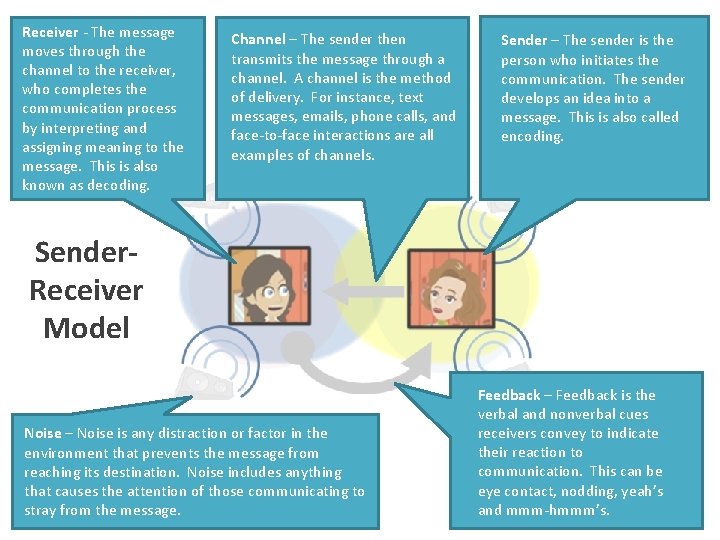
Receiver - The message moves through the channel to the receiver, who completes the communication process by interpreting and assigning meaning to the message. This is also known as decoding. Channel – The sender then transmits the message through a channel. A channel is the method of delivery. For instance, text messages, emails, phone calls, and face-to-face interactions are all examples of channels. Sender – The sender is the person who initiates the communication. The sender develops an idea into a message. This is also called encoding. Sender. Receiver Model Noise – Noise is any distraction or factor in the environment that prevents the message from reaching its destination. Noise includes anything that causes the attention of those communicating to stray from the message. Feedback – Feedback is the verbal and nonverbal cues receivers convey to indicate their reaction to communication. This can be eye contact, nodding, yeah’s and mmm-hmmm’s.

What affects how we communicate? Fields of experience – consists of the beliefs, attitudes, values, and experiences that each participant brings to a communication event. Fields of experience People who have similar fields of experience are more likely to understand one another.
Why do I need to better understand communication? As you mature and prepare to enter the workforce, you will encounter many different people with many different fields of experience. Understanding how communication works will help you be more effective when communicating with others. Effective communication will allow you to experience fewer misunderstandings, which can cause: • Friction between people • Wasting of time • Mistakes
Summary Defined Fields of Experience Defined communication Identified the parts of the Sender. Receiver Communication Model Explained why effective communication is important
- Slides: 7