
LESSON 1 Cold War America WWII Effects on
- Slides: 25
LESSON 1 Cold War America
WWII Effects on SC’s Economy • SC experienced significant economic growth during WWII. • The war effort ended the Great Depression as South Carolinians enjoyed full employment. • Military bases expanded to meet training needs for WW 2 • Fort Jackson, Parris Island, the naval base at Charleston and a new air base at Columbia • These military bases helped the local economy to grow and continue to bring money into our state today.
From Hot to Cold War A Deep Mistrust • Both nations emerged from WWII as superpowers. They each had huge armies and their governments and economies were strong. • Their mistrust of each other led to the Cold War. The United States is a Capitalist country, while the Soviet Union (USSR) was a Communist country.
From Hot to Cold War Capitalism v. Communism Capitalism Communism • An economic system • A economic and that allows for the political system where private ownership of the government owns land, property, and all the land, property, businesses. and businesses. • Free flow of goods and • The government services. controls the economy in every way—the • Government has little country has a to do with business. command economy. • Free enterprise
The Cold War An Arms Race and Proxy Wars • Both sides built up their militaries and their weapons, especially nuclear weapons. • This arms race threatened world peace. o MAD = Mutual Assured Destruction
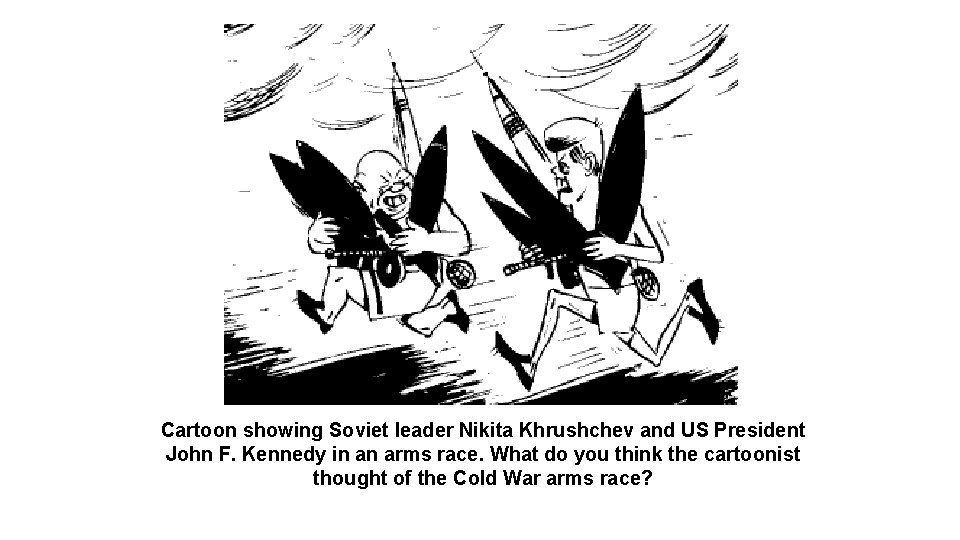
Cartoon showing Soviet leader Nikita Khrushchev and US President John F. Kennedy in an arms race. What do you think the cartoonist thought of the Cold War arms race?
The Cold War Containment • US policy during the Cold War was to stop the spread of communism—to contain it. • How? o Truman Doctrine: American aid ($$ and supplies) to any country in the world threatened by communism. o Marshall Plan: American aid ($13 billion) to rebuild war-torn Europe so that countries would not turn to communism.
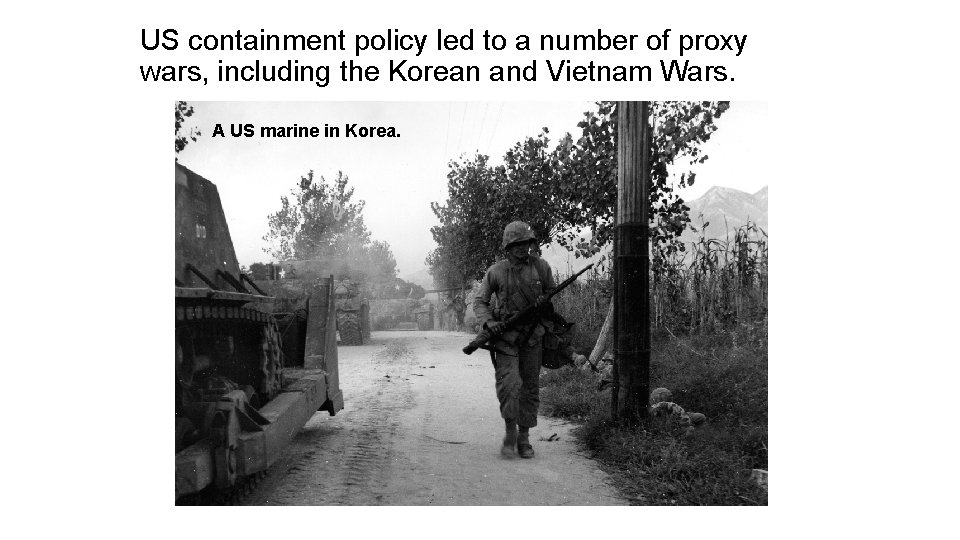
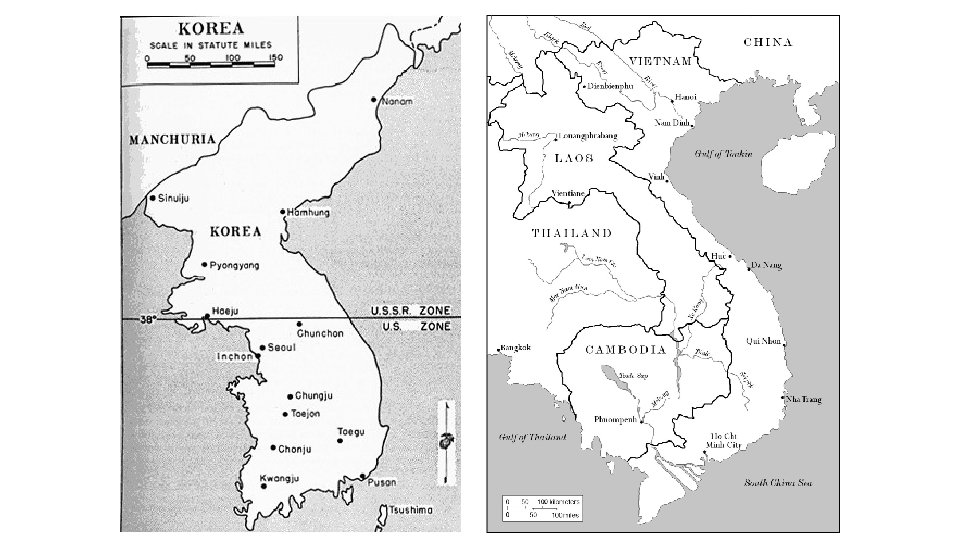
US containment policy led to a number of proxy wars, including the Korean and Vietnam Wars. A US marine in Korea.
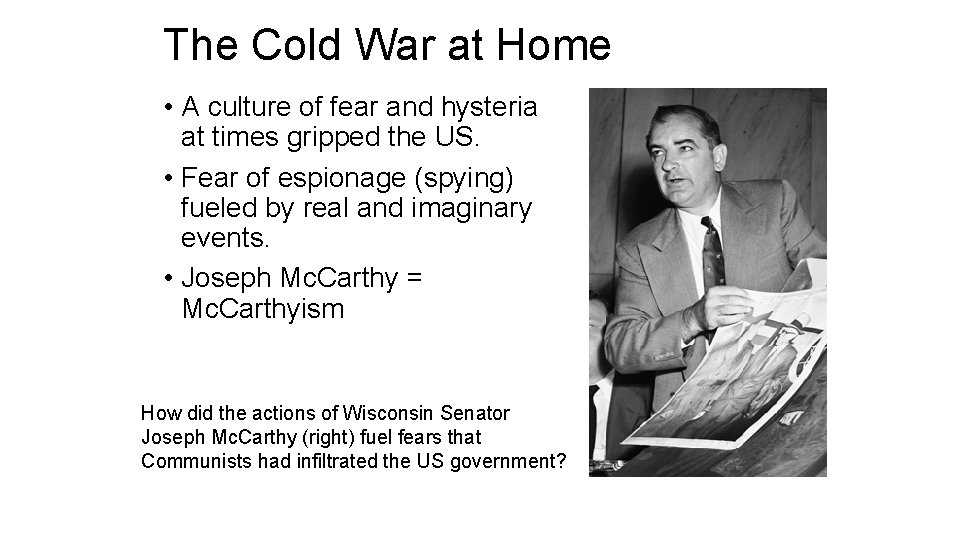
The Cold War at Home • A culture of fear and hysteria at times gripped the US. • Fear of espionage (spying) fueled by real and imaginary events. • Joseph Mc. Carthy = Mc. Carthyism How did the actions of Wisconsin Senator Joseph Mc. Carthy (right) fuel fears that Communists had infiltrated the US government?
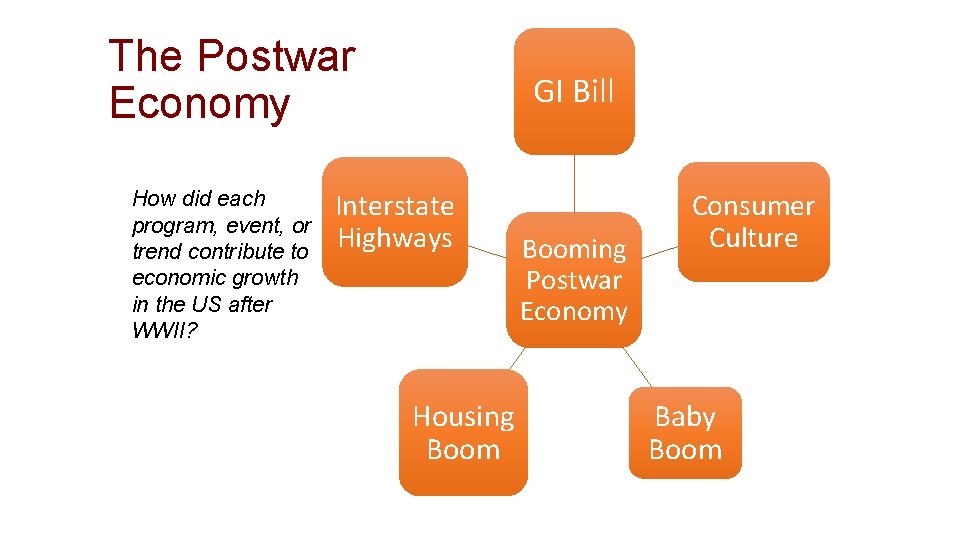
The Postwar Economy How did each program, event, or trend contribute to economic growth in the US after WWII? GI Bill Interstate Highways Housing Booming Postwar Economy Consumer Culture Baby Boom
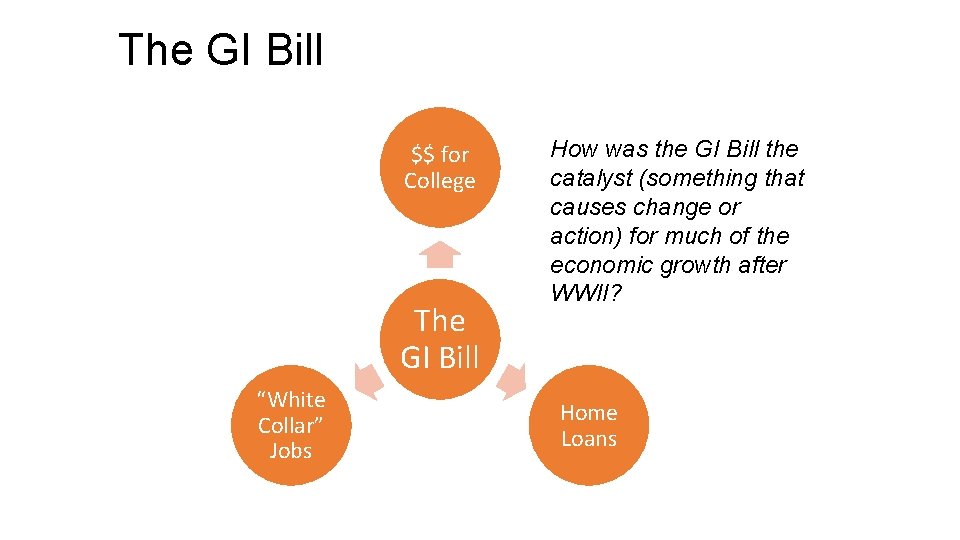
The GI Bill: veterans used this government program to get loans to buy a house, get an education or start new businesses. This boosts the SC economy and many people move to the suburbs.
The GI Bill $$ for College The GI Bill “White Collar” Jobs How was the GI Bill the catalyst (something that causes change or action) for much of the economic growth after WWII? Home Loans
Consumer Culture • Once the war ended, economic prosperity continued in SC and throughout the country. • Consumer Culture • Demand for goods unavailable during wartime (remember the WW 2 ration books? ), the needs of growing families, along with the ability to pay for things led to Americans spending a lot of $money$ when the war ended.
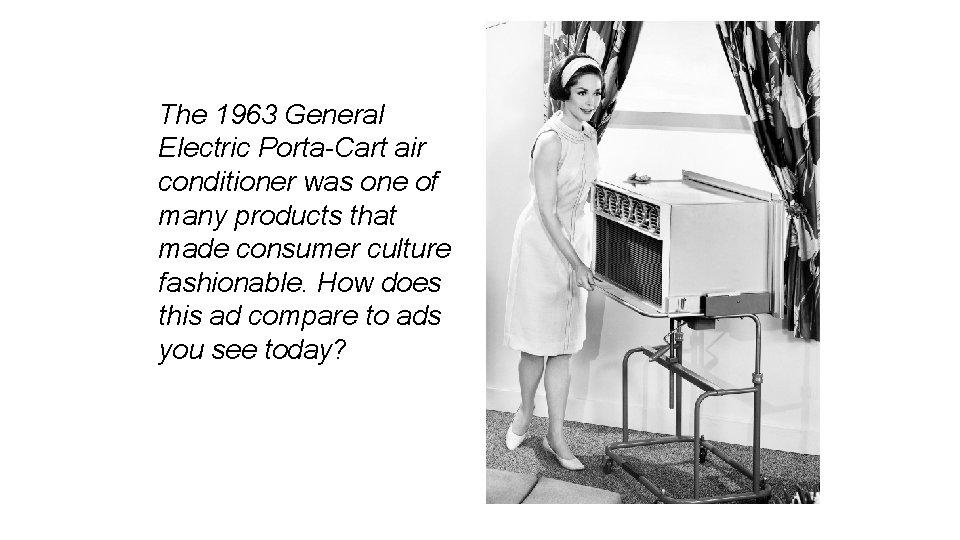
The 1963 General Electric Porta-Cart air conditioner was one of many products that made consumer culture fashionable. How does this ad compare to ads you see today?
The Baby Boom • Soldiers returned home to an improved economy and were able to support larger families. There was a post-war baby boom (a LOT of children were born) which lasted from the end of WW 2 to the early 1960’s.
The Housing Boom • Suburbs= residential areas outside of a city. • Suburbs Grow (Suburbanization) • After WW 2, many people move from rural to urban areas (from the country into cities). Veterans use the GI Bill to buy houses in the new suburbs. Many highways are Built, which makes it possible for people to live farther away from work.
Post War Tourism • SC’s tourist industry develops • Wide availability of automobiles • Expansion of highways • Motels and fast food restaurants followed the building of highways and resort development gave Americans a place to go vacation. • Air conditioning availability during the hot summer months • SC’s mild climate and affordable housing costs make our state a great place for many people to retire.
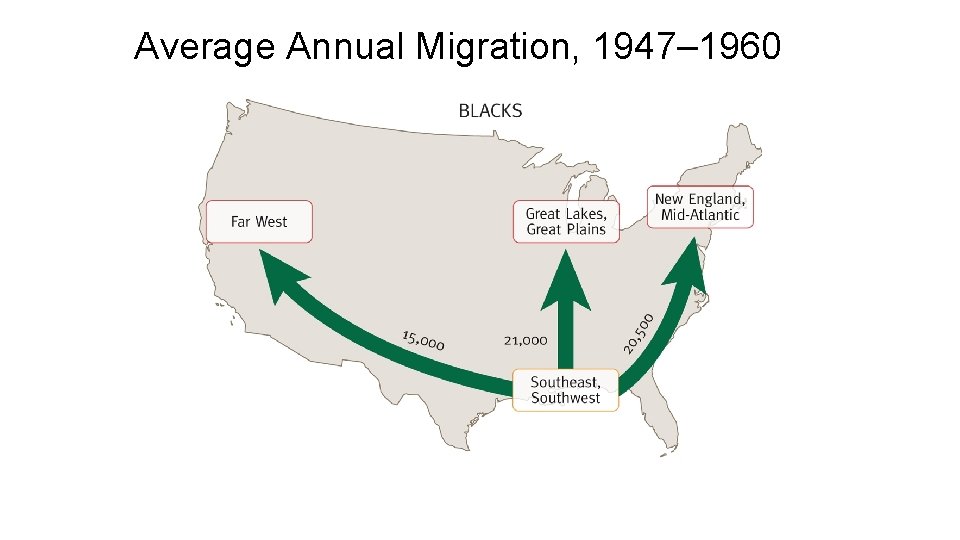
Average Annual Migration, 1947– 1960
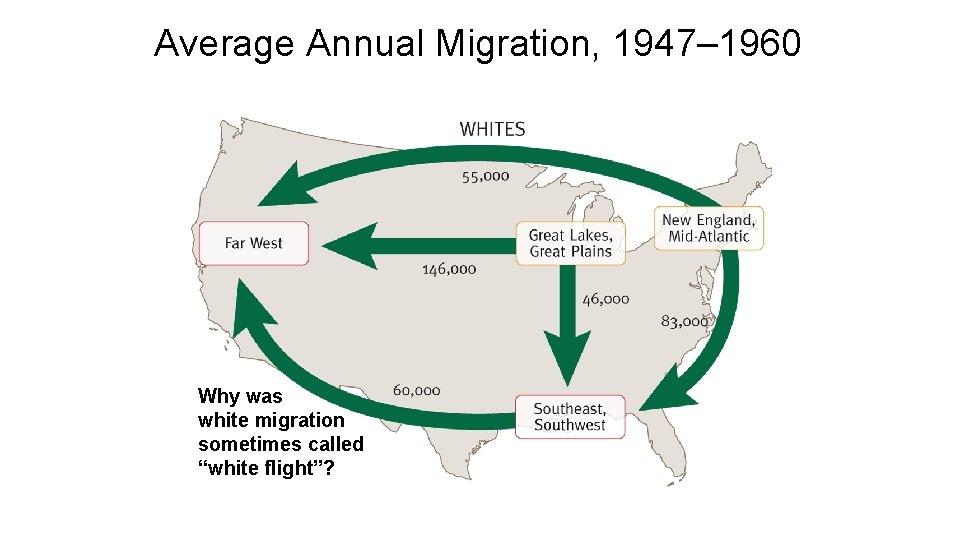
Average Annual Migration, 1947– 1960 Why was white migration sometimes called “white flight”?
A Booming Postwar Economy Urban Life in South Carolina • The South Carolina Development Board was created in 1954 to attract businesses and encourage economic growth. • Many businesses moved to the upcountry. • Lowcountry development led to growth of resorts like Sea Pines Plantation on Hilton Head Island tourist destinations such as Myrtle Beach and Georgetown. • Increased road construction and interstate highways fueled growth in SC tourism.
The Arms Race Comes to South Carolina The Savannah River Plant • Built in the 1950 s by the Du. Pont Company on the Savannah River between Barnwell & Aiken. Nuclear weapons were built there. • It created plutonium (fuel) for weapons during the Cold War and today provides nuclear energy to power our state. • It is currently used to store nuclear waste. • Over half of SC’s electricity now comes from nuclear plants.
Cold War Benefits SC • The Cold War begins after WW 2 ends, so SC continues to benefit from wartime govt. spending. • The Cold War brought money to SC because: • Military spending created industries that provided jobs. • The Savannah River Nuclear Plant was built. • Military bases that served WWII stayed open or were reopened during the Cold War.
Education Changes in SC • After WW 2 ended, Cold War competition with the USSR meant that we needed to improve education • In SC, the school year was extended to 9 months and the 12 th grade was added to high schools • A system of technical colleges were created that would attract the economic investment to SC as it supplied an educated and trained work force to meet industry needs.
Education Changes in SC • Governor Richard Riley passes the Education Improvement Act (EIA) in the 1980’s which is still in effect today and continues to reform education. • In 1998, SC passes the Education Acountability Act. This law created the standardized testing system which we use today, like our PASS test in May and the standards we learn to prepare for it.