
Lesson 1 3 Apparatus Safety Student Performance Objective
Lesson 1 -3: Apparatus Safety
Student Performance Objective • After completing this lesson, the student shall be able to identify safety considerations for operating emergency vehicles. In addition, students will be able to demonstrate skills in safely operating and driving an apparatus. FIRE 130 -PPT-1 -3 -1
Overview • Apparatus Rider Safety • Starting, Idling, and Shutting Down Apparatus • Driving Apparatus FIRE 130 -PPT-1 -3 -2
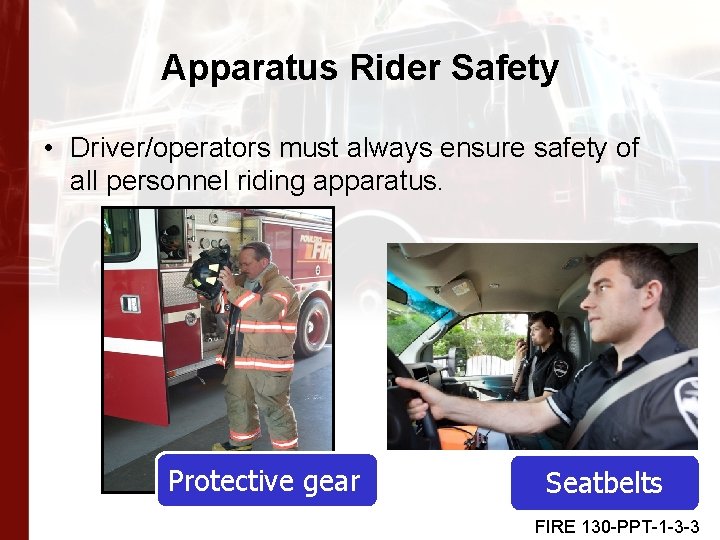
Apparatus Rider Safety • Driver/operators must always ensure safety of all personnel riding apparatus. Protective gear Seatbelts FIRE 130 -PPT-1 -3 -3
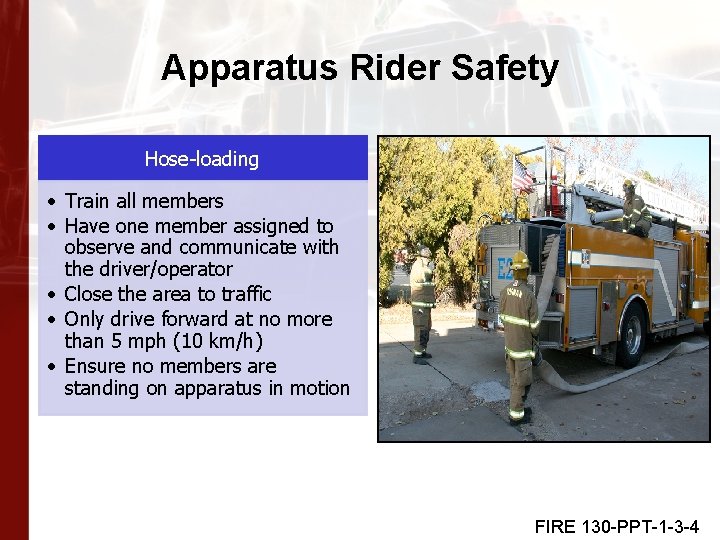
Apparatus Rider Safety Hose-loading • Train all members • Have one member assigned to observe and communicate with the driver/operator • Close the area to traffic • Only drive forward at no more than 5 mph (10 km/h) • Ensure no members are standing on apparatus in motion FIRE 130 -PPT-1 -3 -4

Apparatus Rider Safety • Firefighters should never be allowed to ride tailboard, front bumper, or running boards of any moving apparatus Safety procedures that require seatbelt in safe, enclosed position Safety bars and gates intended to prevent falling out of jump seat FIRE 130 -PPT-1 -3 -5
Apparatus Rider Safety • Tiller training can be problematic due to the lack of a second seat in the tiller operator’s enclosure. Single seat in operator enclosure • No place for instructor to have contact with operator NFPA® allows for detachable seat • Seat firmly attached • Instructor belted in • Helmet and eye protection required • Newer apparatus may have operator and instructor seats FIRE 130 -PPT-1 -3 -6
Starting, Idling and Shutting Down Apparatus • Starting the apparatus – Vehicle manufacturers provide specific details regarding features of their apparatus in operator manuals. – When preparing to start apparatus, whether for an emergency response or routine trip, the driver/operator must first know: • Destination • Route of Travel FIRE 130 -PPT-1 -3 -7
FIRE 130 -PPT-1 -3 -8
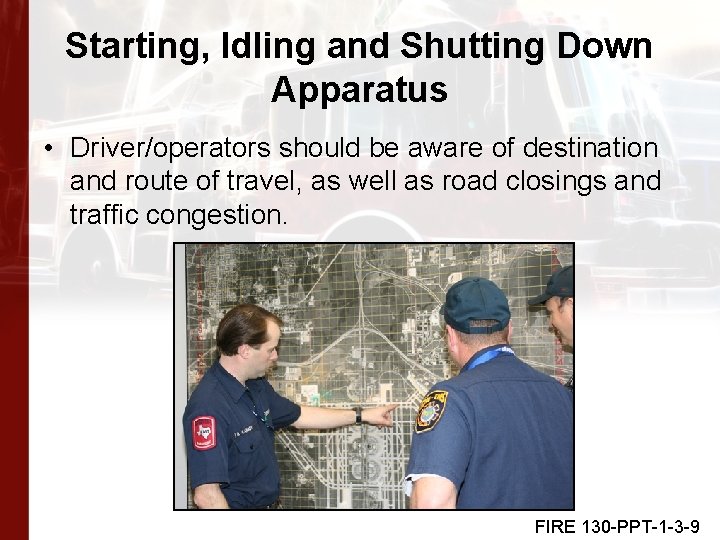
Starting, Idling and Shutting Down Apparatus • Driver/operators should be aware of destination and route of travel, as well as road closings and traffic congestion. FIRE 130 -PPT-1 -3 -9
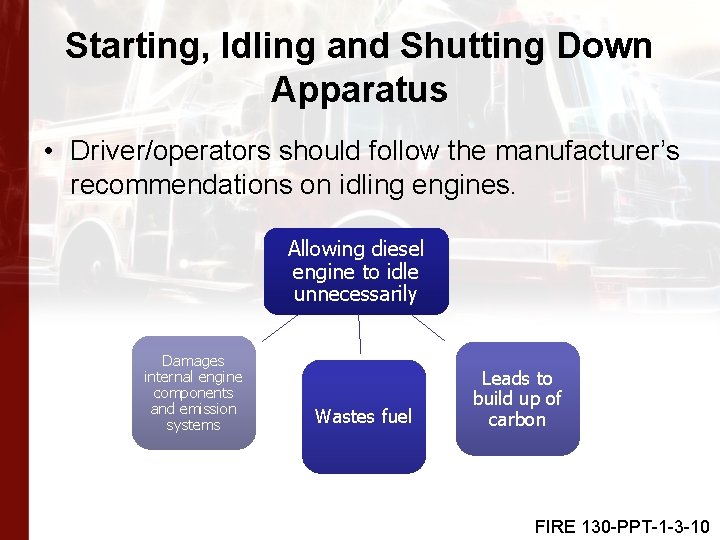
Starting, Idling and Shutting Down Apparatus • Driver/operators should follow the manufacturer’s recommendations on idling engines. Allowing diesel engine to idle unnecessarily Damages internal engine components and emission systems Wastes fuel Leads to build up of carbon FIRE 130 -PPT-1 -3 -10
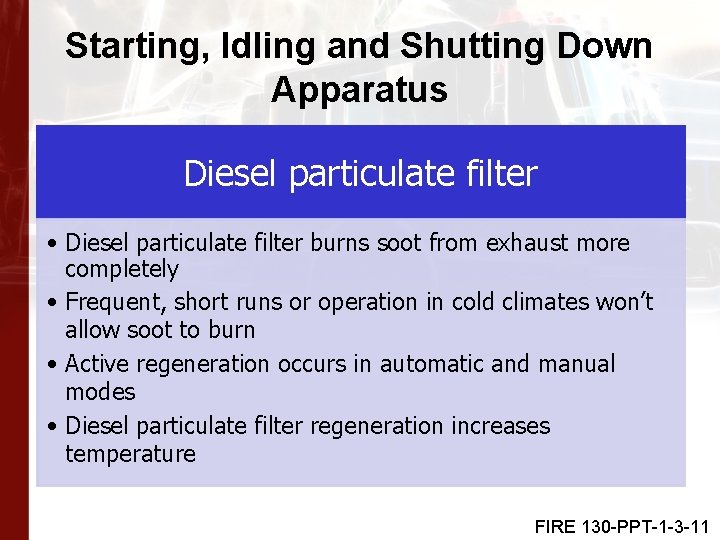
Starting, Idling and Shutting Down Apparatus Diesel particulate filter • Diesel particulate filter burns soot from exhaust more completely • Frequent, short runs or operation in cold climates won’t allow soot to burn • Active regeneration occurs in automatic and manual modes • Diesel particulate filter regeneration increases temperature FIRE 130 -PPT-1 -3 -11
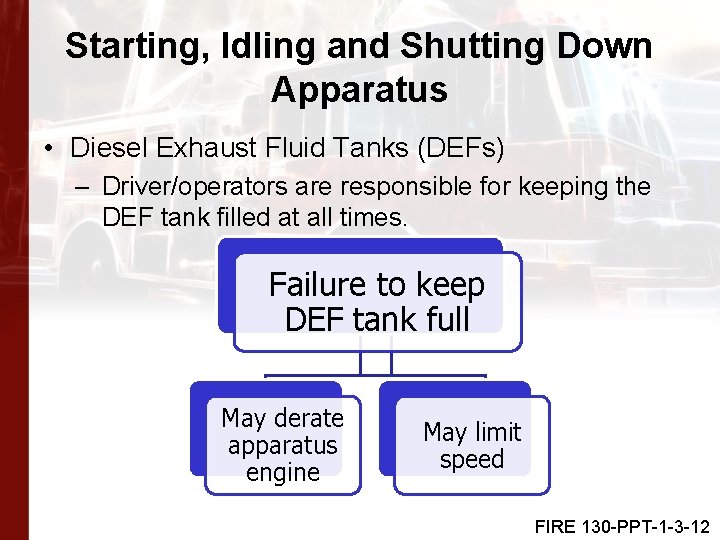
Starting, Idling and Shutting Down Apparatus • Diesel Exhaust Fluid Tanks (DEFs) – Driver/operators are responsible for keeping the DEF tank filled at all times. Failure to keep DEF tank full May derate apparatus engine May limit speed FIRE 130 -PPT-1 -3 -12
Starting, Idling and Shutting Down Apparatus • Shutting down the engine – A hot engine should cool to normal operating temperature before being shut down. Premature shut down may result in • Immediate increase of engine temperature • Oil film “burning” on hot surfaces • Damage to heads and exhaust manifolds • Damage to turbocharger that can result in seizure FIRE 130 -PPT-1 -3 -13
Starting, Idling and Shutting Down Apparatus • Remember the following considerations when shutting down an apparatus. Never shut down the engine when apparatus is in motion Always follow the manufacturer recommendations FIRE 130 -PPT-1 -3 -14
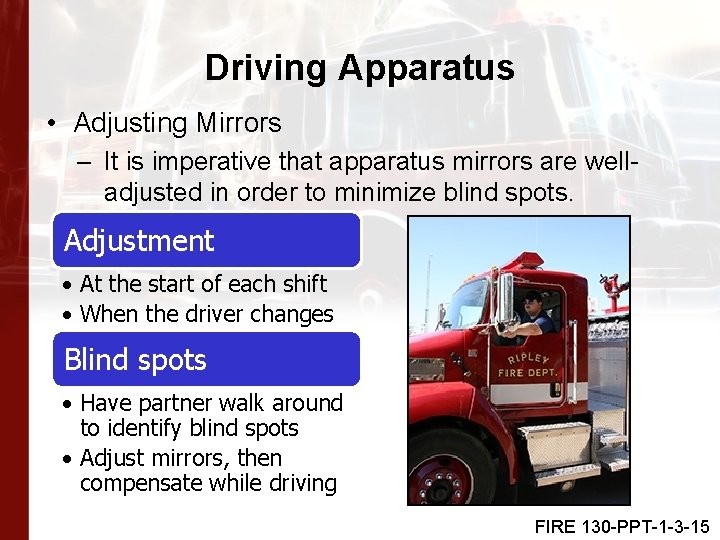
Driving Apparatus • Adjusting Mirrors – It is imperative that apparatus mirrors are welladjusted in order to minimize blind spots. Adjustment • At the start of each shift • When the driver changes Blind spots • Have partner walk around to identify blind spots • Adjust mirrors, then compensate while driving FIRE 130 -PPT-1 -3 -15
Driving Apparatus • Transmissions – Most apparatus are equipped with automatic transmissions. Automatic transmissions There is no decision about when to shift gears. Engine damage from lugging is less likely. FIRE 130 -PPT-1 -3 -16
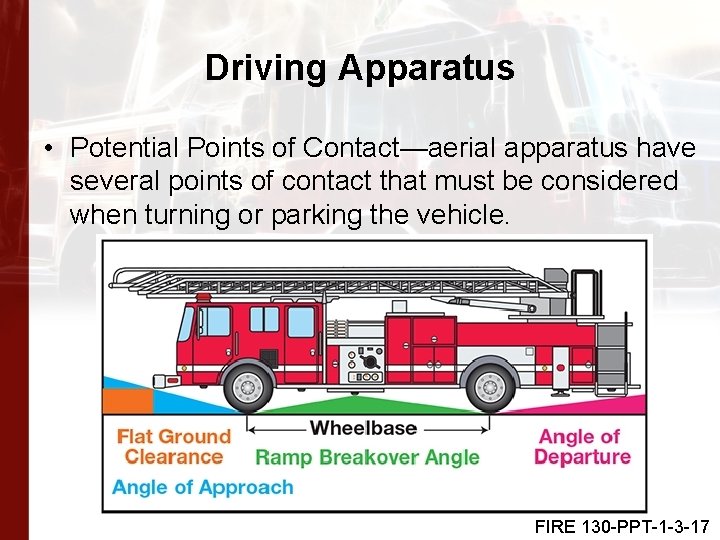
Driving Apparatus • Potential Points of Contact—aerial apparatus have several points of contact that must be considered when turning or parking the vehicle. FIRE 130 -PPT-1 -3 -17
Driving Apparatus • Weight Transfer/Center of Gravity—driver/operators must understand weight transfer in order to safely operate the apparatus. Weight transfer follows the law of inertia. Weight transfers occur when the vehicle changes speed or direction. Rollover or skidding is caused by lateral weight transfer. Fast turns, harsh steering action, or driving on steep slopes can result in hazardous situations. Water tanks can be a concern to drivers. Minimum steering will minimize weight transfer. FIRE 130 -PPT-1 -3 -18
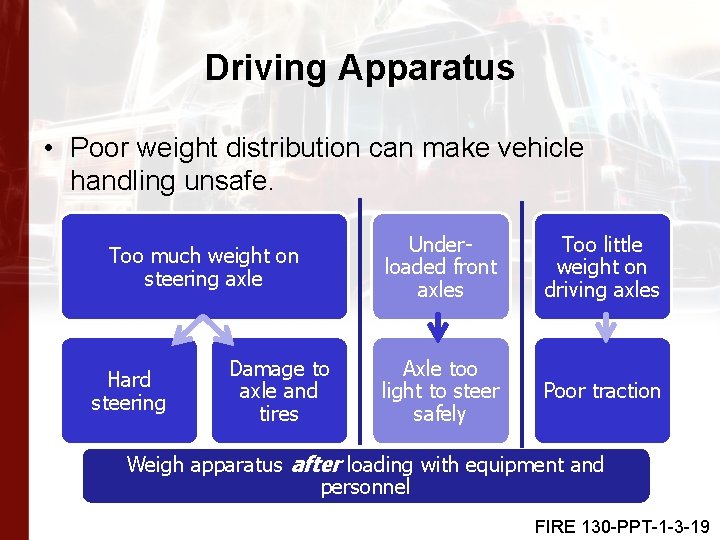
Driving Apparatus • Poor weight distribution can make vehicle handling unsafe. Too much weight on steering axle Hard steering Damage to axle and tires Underloaded front axles Too little weight on driving axles Axle too light to steer safely Poor traction Weigh apparatus after loading with equipment and personnel FIRE 130 -PPT-1 -3 -19
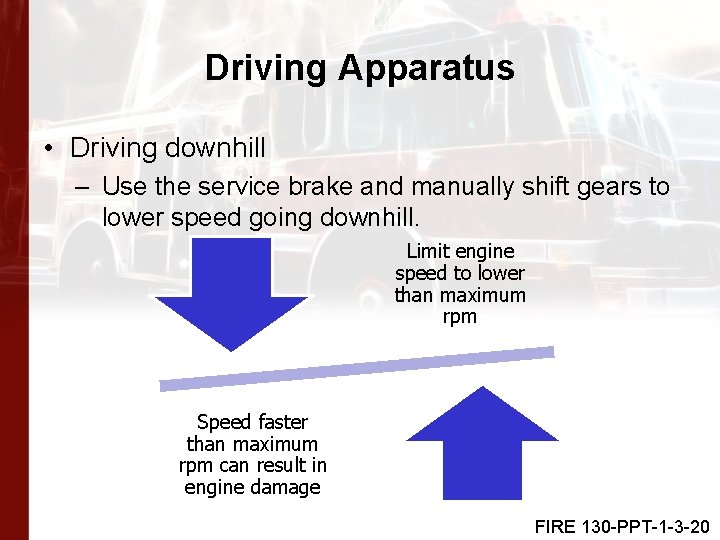
Driving Apparatus • Driving downhill – Use the service brake and manually shift gears to lower speed going downhill. Limit engine speed to lower than maximum rpm Speed faster than maximum rpm can result in engine damage FIRE 130 -PPT-1 -3 -20
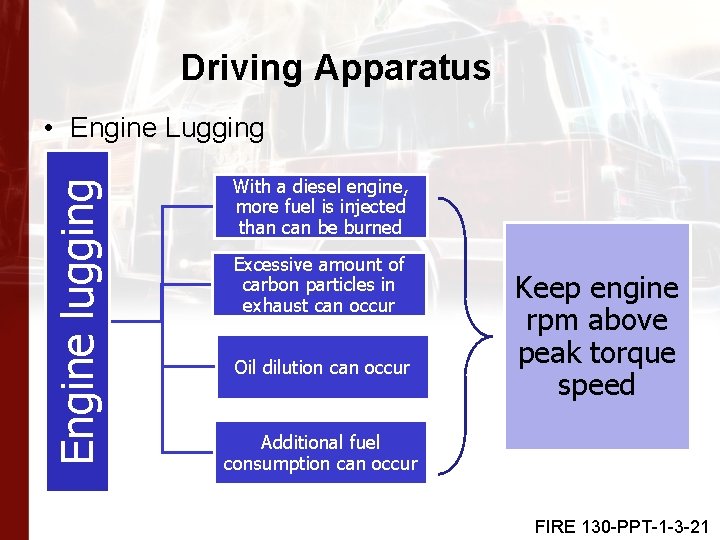
Driving Apparatus Engine lugging • Engine Lugging With a diesel engine, more fuel is injected than can be burned Excessive amount of carbon particles in exhaust can occur Oil dilution can occur Keep engine rpm above peak torque speed Additional fuel consumption can occur FIRE 130 -PPT-1 -3 -21
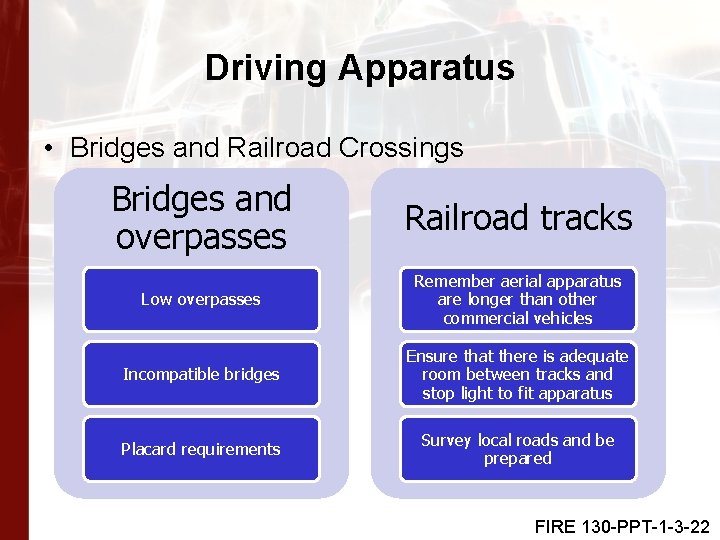
Driving Apparatus • Bridges and Railroad Crossings Bridges and overpasses Railroad tracks Low overpasses Remember aerial apparatus are longer than other commercial vehicles Incompatible bridges Ensure that there is adequate room between tracks and stop light to fit apparatus Placard requirements Survey local roads and be prepared FIRE 130 -PPT-1 -3 -22
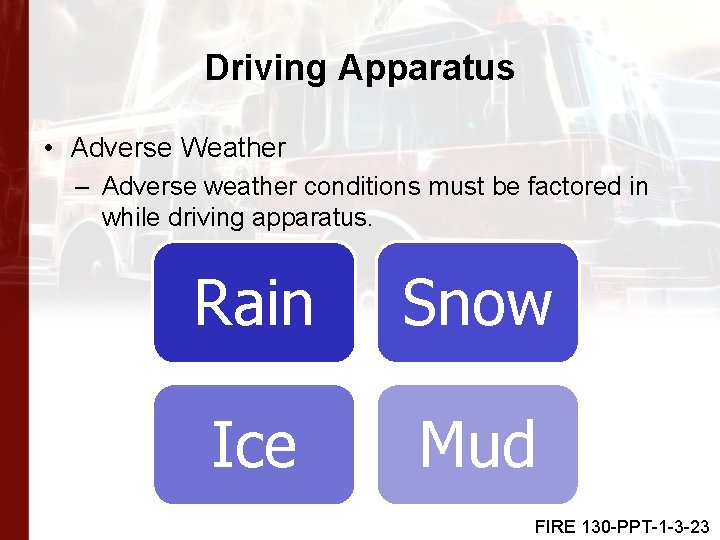
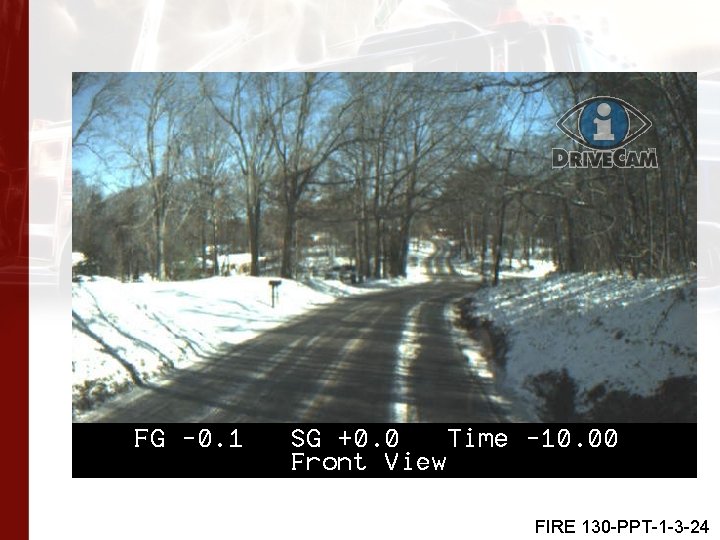
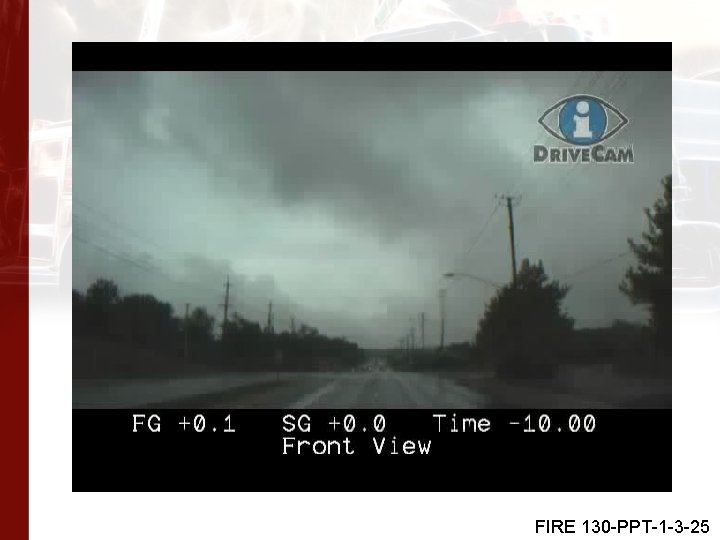
Driving Apparatus • Adverse Weather – Adverse weather conditions must be factored in while driving apparatus. Rain Snow Ice Mud FIRE 130 -PPT-1 -3 -23
FIRE 130 -PPT-1 -3 -24
FIRE 130 -PPT-1 -3 -25
Student Performance Objective • After completing this lesson, the student shall be able to identify safety considerations for operating emergency vehicles. In addition, students will be able to demonstrate skills in safely operating and driving an apparatus. FIRE 130 -PPT-1 -3 -26
Review • Apparatus Rider Safety • Starting, Idling, and Shutting Down Apparatus • Driving Apparatus FIRE 130 -PPT-1 -3 -27
- Slides: 28