
LEPROSY Hansens Disease Causative Organism Mycobacterium leprae Affects
LEPROSY (Hansen’s Disease)
• Causative Organism- Mycobacterium leprae • Affects mainly cooler parts of the body • Skin, mouth, Respiratory Tract, eyes, Peripheral nerves, Testis, etc • Earliest ----Skin & Nerves
PATHOGENESIS ü Acid fast, obligate intracellular organism ü Poor growth in culture, but grows in armadillo, foot pad of mice ü Virulence– cell wall properties ü Cell mediated immunity– Lepromin Test
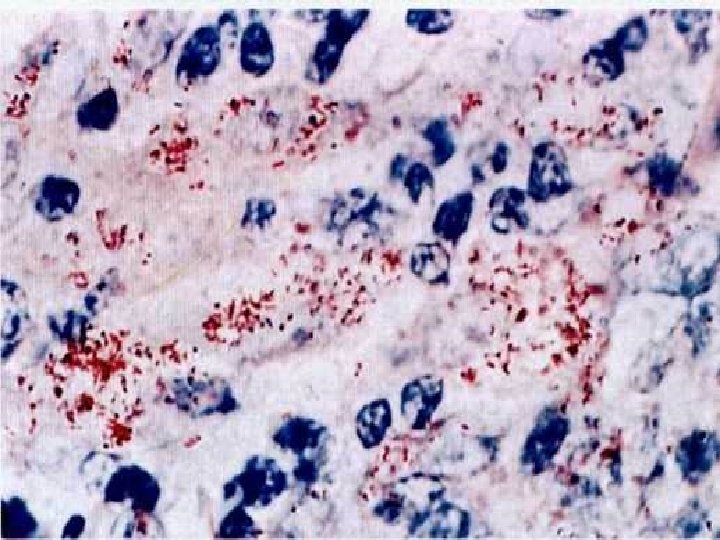
DIAGNOSIS Ø Split skin smears & nasal smears AFB ( Ziehl – Neelson) stain Fite Faraco Stain Silver stain
• Bacteriological Index • Morphological Index Solid staining – Live Fragmented / Beaded - Dead • Paucibacillary – No Bacilli • Multibacillary – Some or many Bacilli
TRANSMISSION • ? Inhalation • Direct Contact • Maternofetal transmission
Classification 2 Main types ( polar forms); a) Lepromatous – Low Immunity b) Tuberculoid – High Immunity
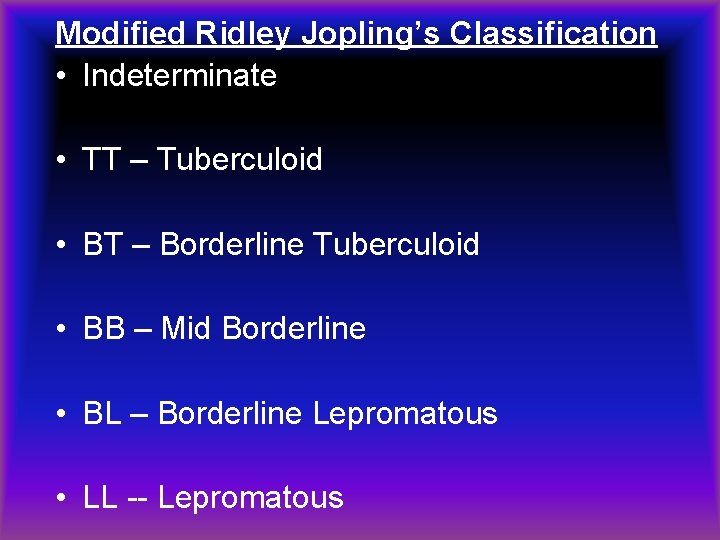
Modified Ridley Jopling’s Classification • Indeterminate • TT – Tuberculoid • BT – Borderline Tuberculoid • BB – Mid Borderline • BL – Borderline Lepromatous • LL -- Lepromatous
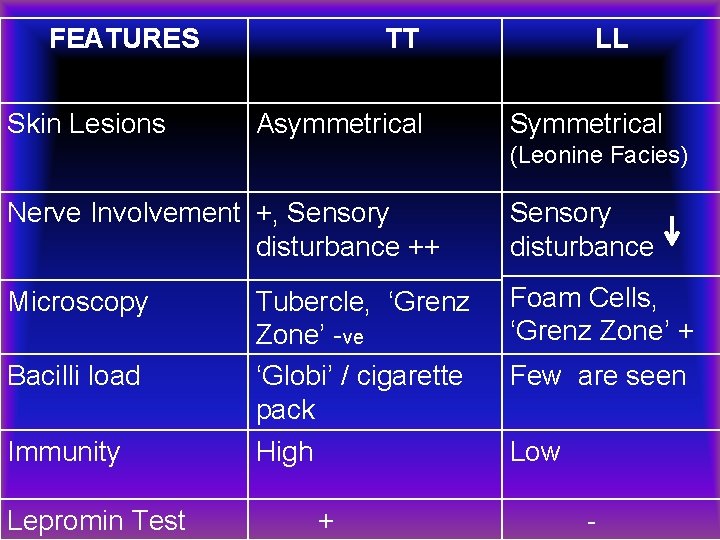
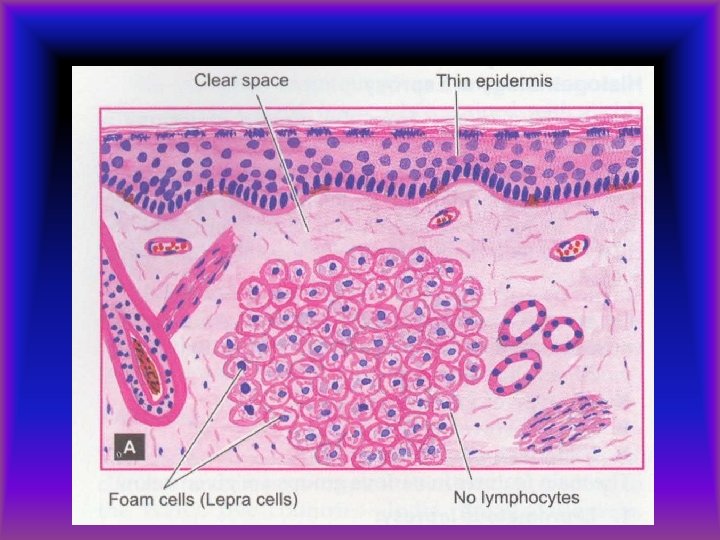
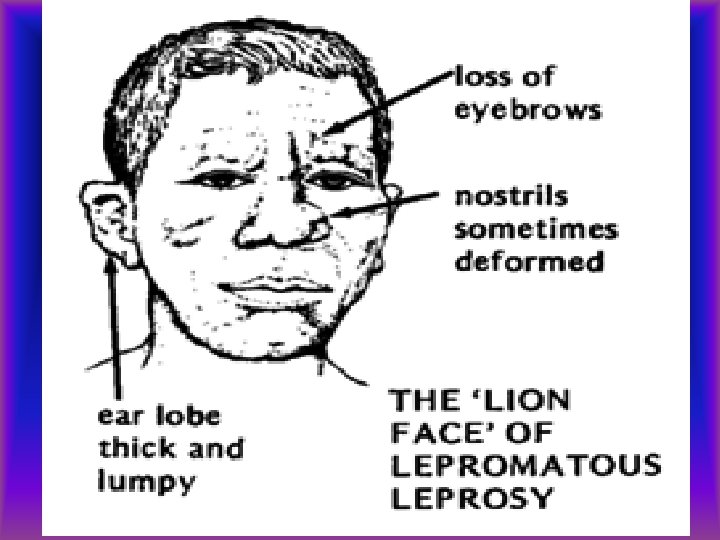
FEATURES Skin Lesions TT Asymmetrical LL Symmetrical (Leonine Facies) Nerve Involvement +, Sensory disturbance ++ Sensory disturbance Microscopy Tubercle, ‘Grenz Zone’ -ve ‘Globi’ / cigarette pack Foam Cells, ‘Grenz Zone’ + High Low Bacilli load Immunity Lepromin Test + Few are seen -

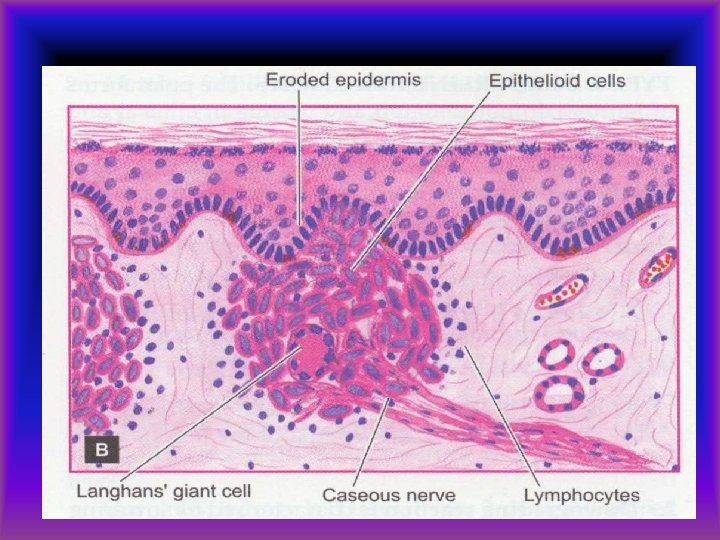
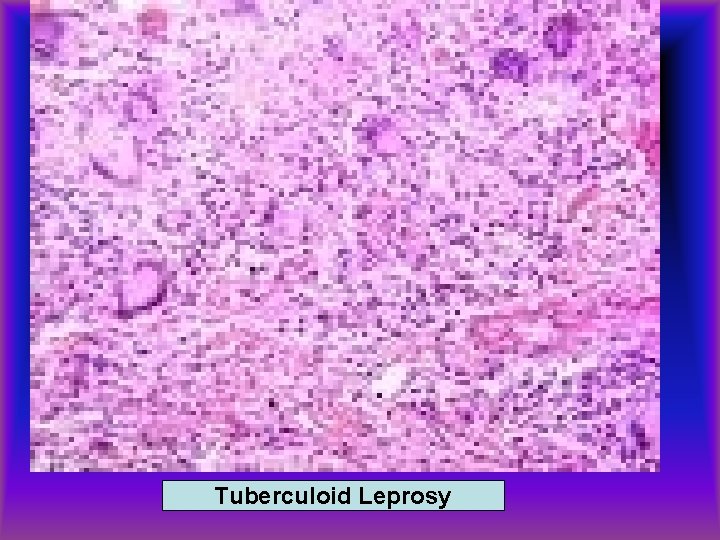
Tuberculoid Leprosy
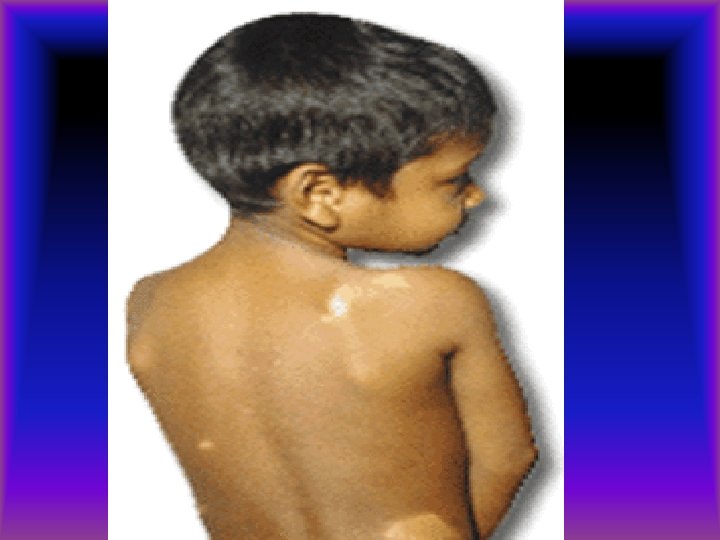
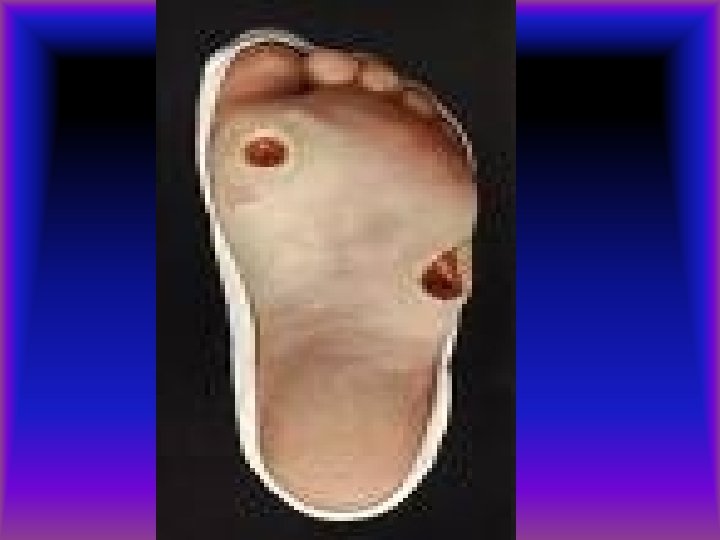
Tuberculoid Leprosy: • Skin lesions • Nerve lesions Anaesthesia, Skin & muscle atrophy, Trophic ulcers, Contractures, etc • MC – Ulnar, Radial, Common peroneal • VII Cranial nerve Keratitis, Corneal ulcer
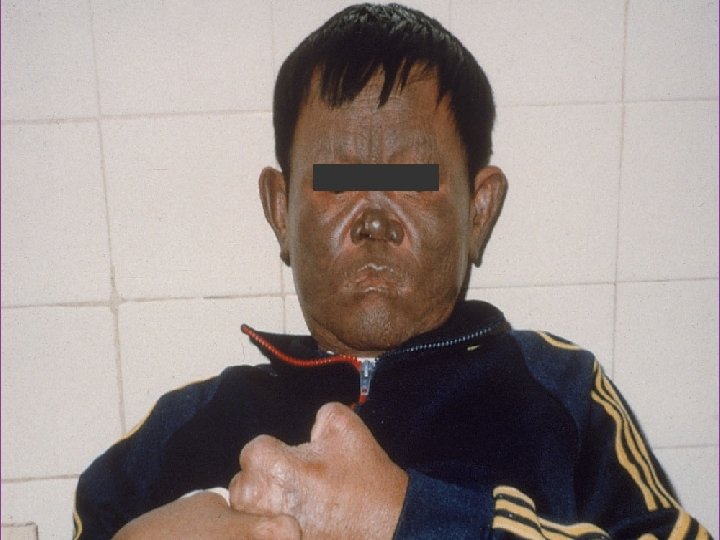
Lepromatous Leprosy: • Widespread invasion of shwann cells, neural macrophages • Globi Aggregates of foam cells filled with masses of AFB • Macules, Papules, Nodules Leonine Facies • Testes- Extensive destruction Sterility
REACTIONS IN LEPROSY Type I ( Reversal Reaction) • Upgrading Reaction • Downgrading Reaction Type II ( Erythema Nodosum Leprosum) • Usually after chemotherapy • Occurs in LL • Tender nodules, Iridocyclitis, Lymph node involvement • Infiltration of neutrophils, Vasculitis • Responds to Treatment
- Slides: 23