
Leopard Man CSUS Expository Reading and Writing Unit

















- Slides: 54
Leopard Man CSUS Expository Reading and Writing Unit
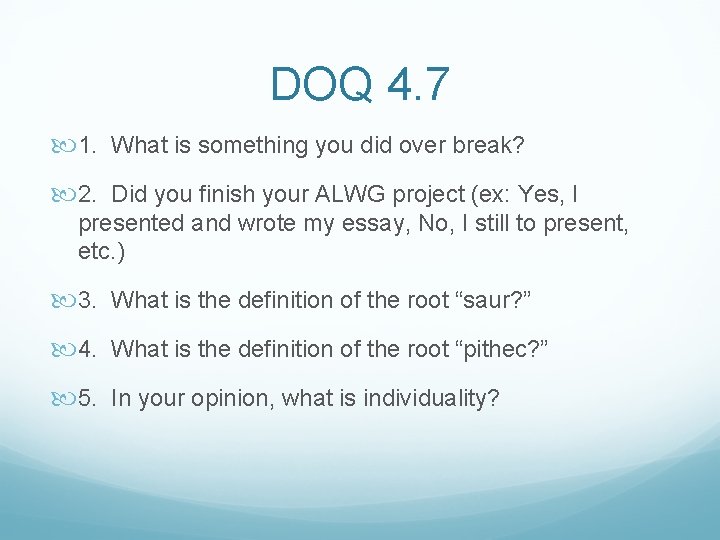
DOQ 4. 7 1. What is something you did over break? 2. Did you finish your ALWG project (ex: Yes, I presented and wrote my essay, No, I still to present, etc. ) 3. What is the definition of the root “saur? ” 4. What is the definition of the root “pithec? ” 5. In your opinion, what is individuality?
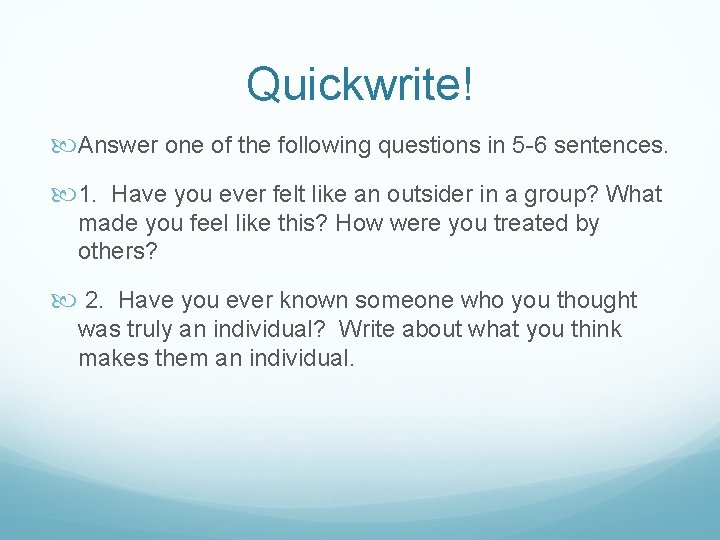
Quickwrite! Answer one of the following questions in 5 -6 sentences. 1. Have you ever felt like an outsider in a group? What made you feel like this? How were you treated by others? 2. Have you ever known someone who you thought was truly an individual? Write about what you think makes them an individual.
Quickwrite continued After you have written for 5 -10 minutes, discuss your responses with your partner. After your partner discussion, answer the following question: 1. What are three most interesting ideas your group had about being an individual or belonging to a group? 2. Were you surprised by the other answers in your group? Why or why not?
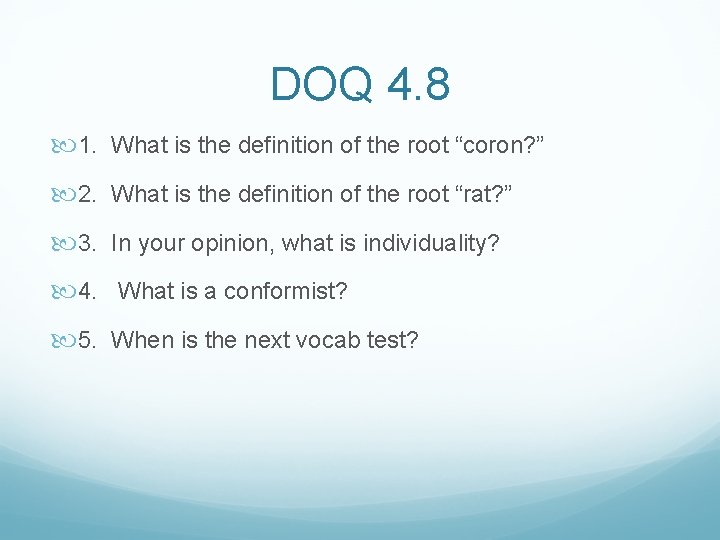
DOQ 4. 8 1. What is the definition of the root “coron? ” 2. What is the definition of the root “rat? ” 3. In your opinion, what is individuality? 4. What is a conformist? 5. When is the next vocab test?
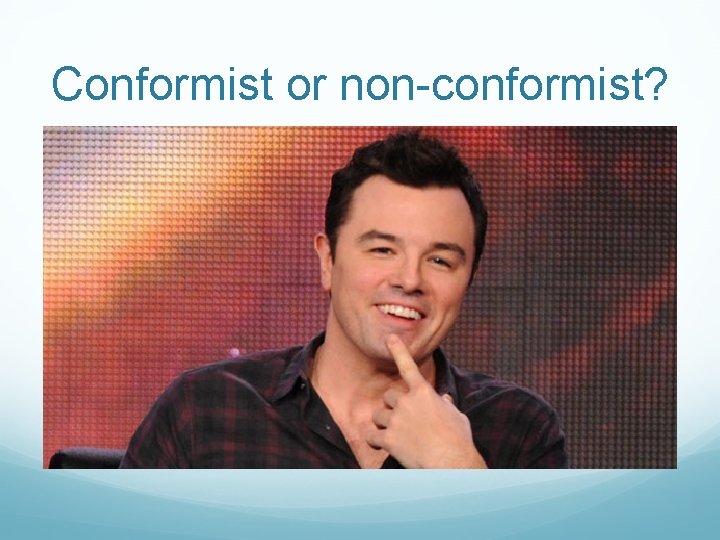
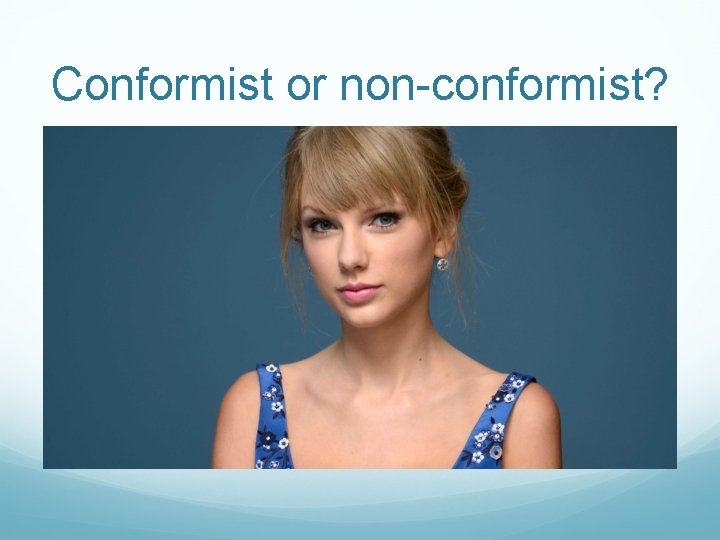
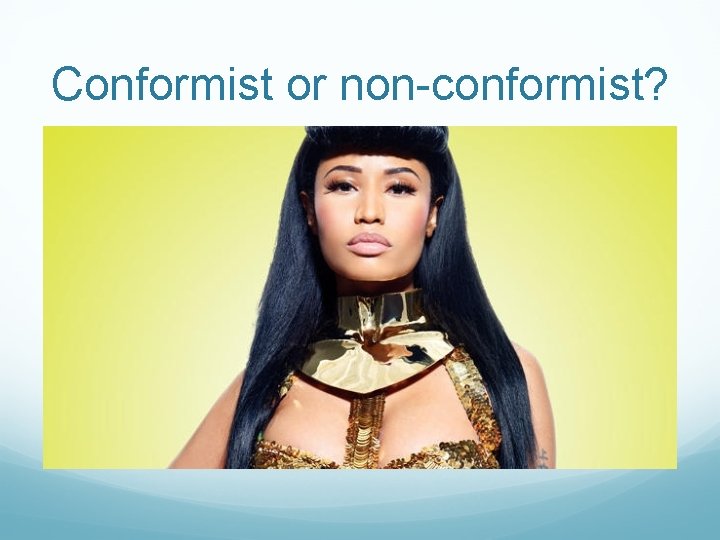
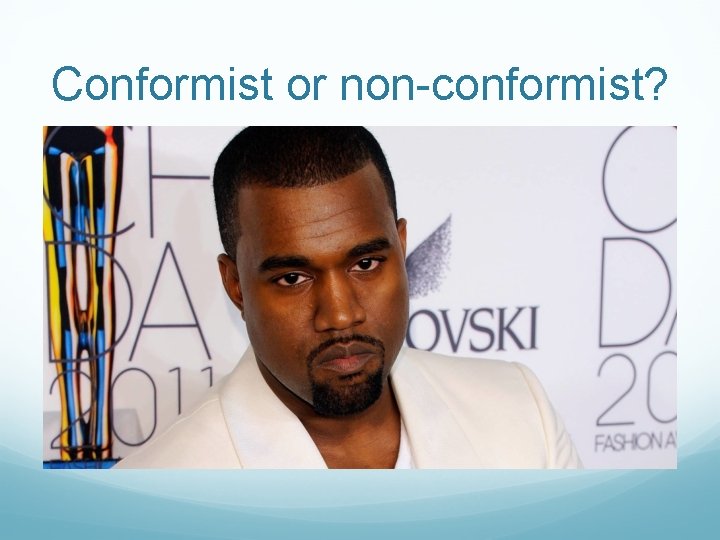
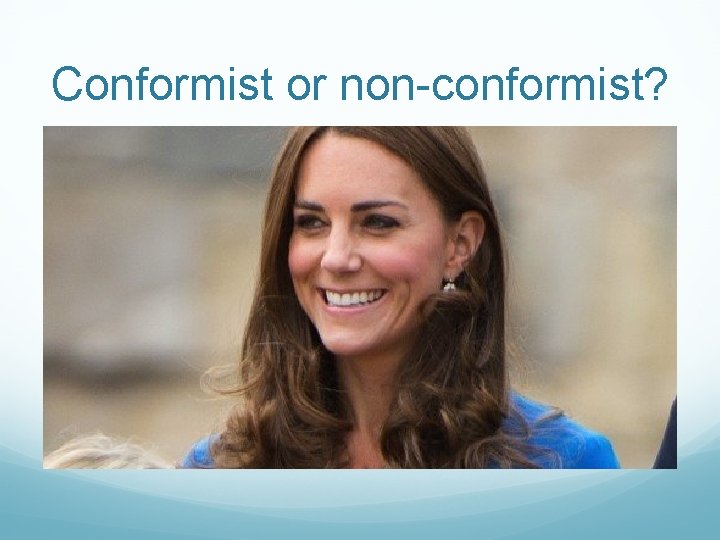
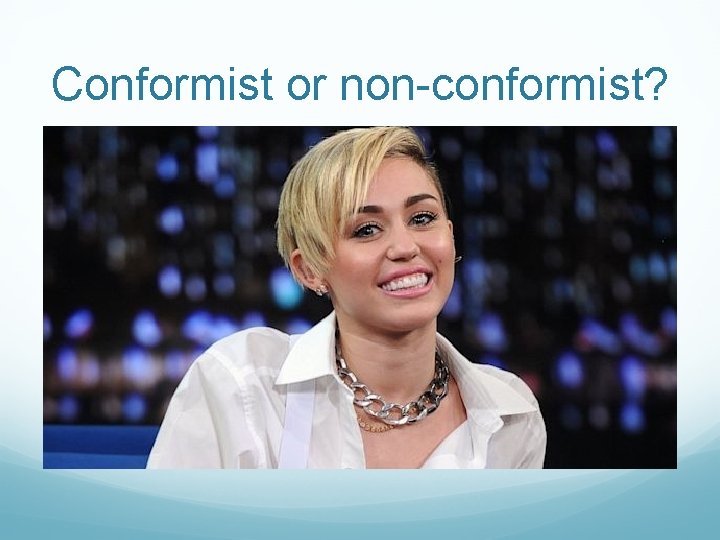
Introducing Key Concepts What makes someone a conformist? What makes someone a non-conformist? https: //www. youtube. com/watch? v=vh. KY 9 x 9 zz 3 Y
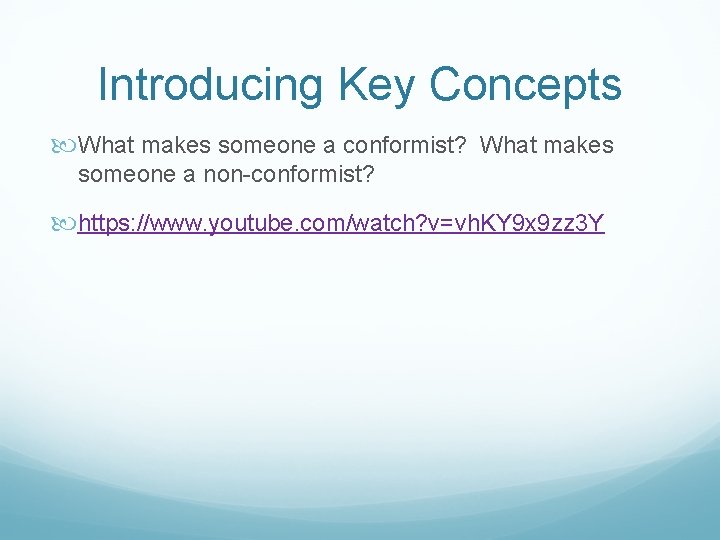
Conformist or non-conformist?
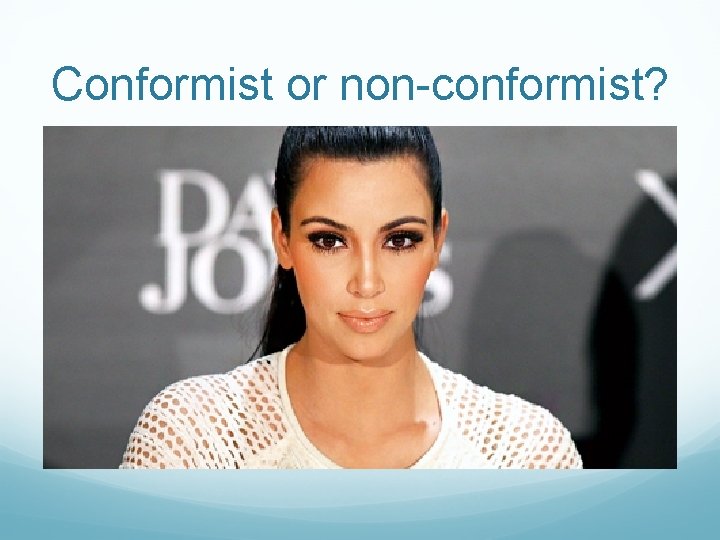
Conformist or non-conformist?
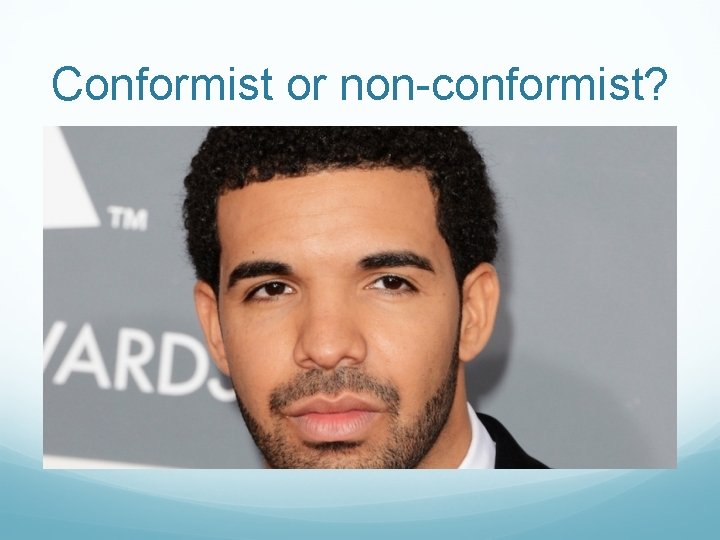
Conformist or non-conformist?
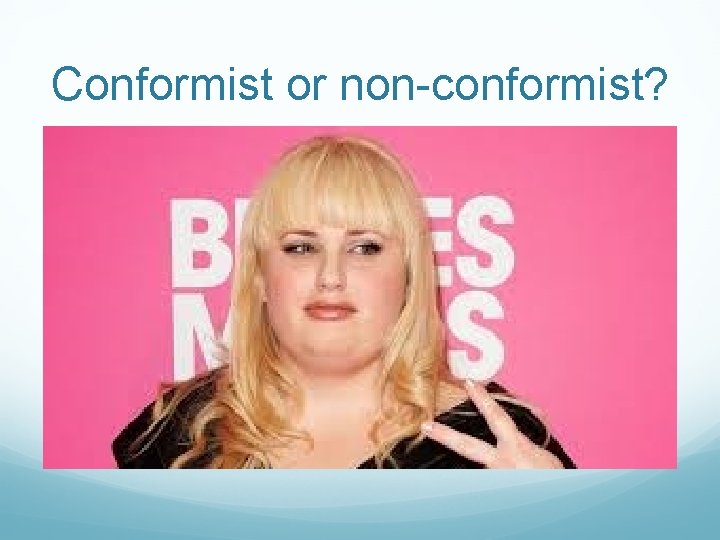
Conformist or non-conformist?
Conformist or non-conformist?
Conformist or non-conformist?
Conformist or non-conformist?
Conformist or non-conformist?
Conformist or non-conformist?
Conformist or non-conformist?
Conformist or non-conformist?
Conformist or non-conformist?
Conformist or non-conformist?
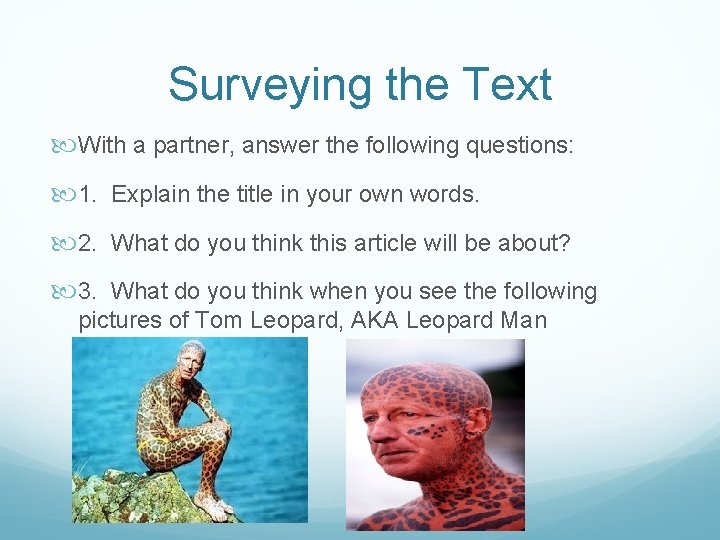
Surveying the Text With a partner, answer the following questions: 1. Explain the title in your own words. 2. What do you think this article will be about? 3. What do you think when you see the following pictures of Tom Leopard, AKA Leopard Man
Tom Leppard, Leopard Man https: //www. youtube. com/watch? v=Pn. UDSBonub 8
Making Predictions and Answering Questions 1. What do you think is the purpose of this essay? 2. Based on the title and other features of the text, what information or ideas do you think will be in this essay? 3. Who do you think is the intended audience for this piece? How do you know? 4. What do you think will be the author’s opinion about the topic?
Introducing Key Vocabulary Chart your familiarity with these key vocabulary words by filling in the last three columns below. Then, in pairs, look up the definitions of all the words. Look at how the words are used in the sentences to help with the context. Spending time with new and unfamiliar words at this point will improve your understanding of the essay.
First Reading-Understanding the Essay 1. Why is Tom Leppard called “Leopard Man”? 2. What does the author think about people with tattoos and piercings? Why does he have these opinions? 3. How is Leopard Man different from other tattooed and pierced people? 4. Where does Leopard Man live? 5. According to Feys, what kind of people does society fear? Why? 6. What is the “world’s most common but dangerous psychological disorder” (par. 6)? Explain Feys’ argument in this paragraph. 7. Why is Leopard Man so happy? 8. What is Feys’ final message to the reader in paragraph 11? What does he want the reader to do?
Quickwrite! Take 5 -10 minutes to write a journal entry about your understanding of the text at this point. What is the text about? What is your opinion of the author’s main point so far? What parts confuse you? Why? Be prepared to discuss your reactions with the class.
DOQ 4. 10 1. What is the definition of the root “monger? ” 2. What is the definition of the root “gno? ” 3. Who is Tom Leppard? 4. Do you think Leppard is a conformist or nonconformist? Why or why not? 5. What did you learn from the article “The Sociology of Leopard Man” by Logan Feys?
DOQ 4. 13 1. What is the definition of the root “sol? ” 2. What is the definition of the root “hibern? ” 3. What did you learn from the article “The Sociology of Leopard Man” by Logan Feys? 4. What is the author’s opinion of Leopard Man? 5. Why is Leopard Man so happy?
Annotating and Questioning the Text Reread the text, and complete the following assignment: 1. Highlight and label the following points in the essay in the left-hand margin: • Introduction • Issue or problem being addressed • Author’s main arguments • Author’s examples • Conclusion 2. Write in the right-hand margin your reactions to what the author is saying. 3. Highlight in another color any places where you were confused.
Analyzing Stylistic Choices The questions below about the author’s use of words and sentences will help you understand how the text works. Words 1. What is the definition of “non-conformists” (par. 2)? What image comes to your mind when you hear this word? 2. How do the words “anti-social freak” (par. 2) make you feel? What image comes to mind when you hear those words? 3. Which words or synonyms are repeated? Why?
Analyzing Stylistic Choices cont. Sentences 1. What does Feys mean when he says, “Most anti- social freaks, in their obsession with displaying their freakishness, are just as dependent on others’ opinions as approval-seeking socialites” (par. 2)? Explain what he means in this statement. 2. In paragraph 4, Feys says, “society looks down upon freakish and extraordinary individuals alike and views them with suspicion. ” Who is he talking about when he says “freakish and extraordinary individuals”?
Mapping the Organizational Structure Draw a line across the page where the introduction ends. Is it after the first paragraph, or are there several introductory paragraphs? How do you know? Draw a line across the page where the conclusion begins. Is the last paragraph the conclusion, or are there several concluding paragraphs? How do you know? Discuss your reasons for drawing the lines where you did. In this activity, thinking and reasoning about organizational structure is more important than agreeing on where the lines should be drawn. Now divide the body of the text into sections by topics (what each section is about). Remember that the topic of a section may consist of more than one paragraph. Write a short description of what each section is about.
Mapping… Continued… Next, answer the following questions on the sections you have identified: How does each section make you feel? What is the writer trying to accomplish in each? Which section is the most developed? Which section is the least developed? What would make it more complete? Which section is the most convincing or appealing to you? The least convincing or appealing? On the basis of your map of the text, what do you think is the main argument?
DOQ 4. 14 1. Who is Leopard Man? 2. What is a non-conformist? Give an example. 3. What are your opinions of Leopard Man? 4. What is the definition of the root “grav? ” 5. What is the definition of the root “oma? ”
Responding to the Text Responding to your reading is an essential part of critical thinking. It forces you to understand the main ideas as you also learn to respond to them. Write a personal response to the piece based on the following questions: What do you think about the essay? How did you feel before reading? How did your feelings change? Were there any areas you were confused by? Were there any areas you were surprised by? Why do you think you had those reactions? What would you say to Leopard Man if you got to meet him? After you have created a summary of the text, write two questions that can be used for a class discussion. Be sure to write your own answers to the questions.
DOQ 4. 15 1. What is the definition of the root “rub? ” 2. What is the definition of the root “di? ” 3. Use one adjective to describe Leopard Man. 4. & 5. What are logos, ethos and pathos?
Logos, Ethos and Pathos Review https: //www. youtube. com/watch? v=gf 81 d 0 YS 58 E Logos Ethos Pathos
Logos, ethos or pathos? Kahoot. it
Rap Lyrics on Trial Logos Ethos Pathos
Thinking Critically Questions about Logic (Logos) 1. What are the major claims or assertions made in this reading? Do you agree with the author’s claim that people who try to look different are really looking for attention and approval from society? Explain your answer. 2. Do any claims appear to be weak or unsupported? Which ones? What makes you think they are unsupported? 3. What counterarguments does the author not consider? 4. Do you think the author has left something out on purpose? Explain your answer?
DOQ 4. 17 1. What is logos? 2. What is ethos? 3. What is pathos? 4. What is the definition of the root “calor? ” 5. What is the definition of the root “pulse? ”
DOQ 4. 20 1. Why are logos, ethos and pathos important? 2. What have you learned from reading the article about Leopard Man? 3. Give an example of a parenthetical citation. 4. Should you cite text that you’ve paraphrased? 5. What is the definition of the root, “ist? ”
Thinking Critically Questions about the Writer (Ethos) 1. Is the author knowledgeable on this subject? How do you know? 2. What does the author’s language tell the reader about him? 3. Does the author seem trustworthy? Why or why not? 4. Does the author seem serious? In what ways?
Thinking Critically Questions about Emotions (Pathos) 1. How does this piece affect you emotionally? Explain your answer. 2. Do you think the author is trying to manipulate the readers’ emotions? If so, how?
Using Other’s Words One of the most important features of academic writing is the use of words and ideas from written sources to support the writer’s own points. There are essentially three strategies for incorporating words and ideas from sources, as shown below: 1. 2. 3.
Direct Quotation Logan Feys says, “Society looks down upon freakish and extraordinary individuals alike and views them with suspicion” (Feys, par. 4).
Paraphrase In “The Sociology of Leopard Man, ” Logan Feys argues that society fears people who are different because we do not understand them (Feys, par. 4).
Summarize In “The Sociology of Leopard Man, ” Logan Feys describes the life of Tom Leppard, a man who lives alone in the Scottish wilderness and is tattooed from head to toe with leopard spots. Feys argues that while most people who look like this crave attention from others, Leopard Man lives a quiet, happy life because he is satisfied with himself. Feys suggests that all people should take time out of their busy lives to be alone and reflect on themselves once in a while (Feys, pars. 1 -2).
DOQ 4. 21 1. Who is Logan Feys? 2. Write a parenthetical citation from the article “The Sociology of Leopard Man. ” 3. Do you need to cite information that you’ve paraphrased? 4. What is the definition of the root “flect? ” 5. What is the definition of the root “pter? ”
Works Cited Last name, First name. “Article Title. ” Website. Publisher’s name (if unknown use N. p), Publishing place (if unknown, use n. d. ) Medium of publication. Date piece was accessed. <website URL> Author= Logan Feys Article title= The Sociology of Leopard Man Website= Rebirth of Reason The publisher and publishing place are unknown. Medium of publication = Web Date piece was accessed = 20 Apr. 2015 Website URL = http: //rebirthofreason. com/Articles/Feys/The_Sociology_of_Leopard_Man. shtml
Intro to Summative Assessment Logan Feys argues, “To be human is to be an individual human, with individual tastes, talents, values, and aspirations that are distinct from those of others. Living in society, we are under constant pressure to surrender our individuality to the will of the majority, the school, the workplace, the family, etc” (Feys, par. 6). Do you agree with Feys? Write a well-developed essay discussing the degree to which you agree or disagree with Feys’ argument about individuality and society. Use examples from the text and your personal experience to support your opinion.
Intro to Summative Assessment Get out a piece of paper. You will have ten minutes to quietly write any thoughts you have in response to the topic. Don’t worry about spelling, grammar, or complete sentences at this point—just keep your pen moving on paper. If you run out of things to say, repeat some ideas you may have already written. Do not stop writing until I say “stop. ”
Intro to Summative Assessment After writing for 10 minutes, read what you have written. Highlight and underline important words, phrases, or ideas that stick out to you as you read. Make a note of any words or ideas that are repeated or that start to form patterns. Ask questions and make notations in the margins to note something interesting. The idea is to start to make sense of your free write.
DOQ 4. 22 1. How prepared do you feel for the summative assessment? 2. What is the summative assessment for this unit? 3. Write a parenthetical citation from the article “The Sociology of Leopard Man. ” 4. Do you need to cite information that you’ve paraphrased? 5. What is the definition of the root, “monger? ”
DOQ 4. 24 1. When is the rough draft of your Leopard Man essay due? 2. When is the Cycle 20 vocabulary test? 3. Have you finished all the pre-writing activities from Wednesday? 4. How many “main arguments” will you have in your essay? 5. Do you agree or disagree with the author’s argument about society? (People are encouraged to be conformists).