
Leonardo da Vinci Human ingenuity make various inventions



- Slides: 53
Leonardo da Vinci “Human ingenuity make various inventions, but it will never devise any inventions more beautiful, nor more simple, nor more to the purpose than Nature does; because in her inventions nothing is wanting and nothing is superfluous. ” Jim Robbins, Second Nature, Smithsonian, July 2002, Vol. 33, No. 4, p. 78 -84
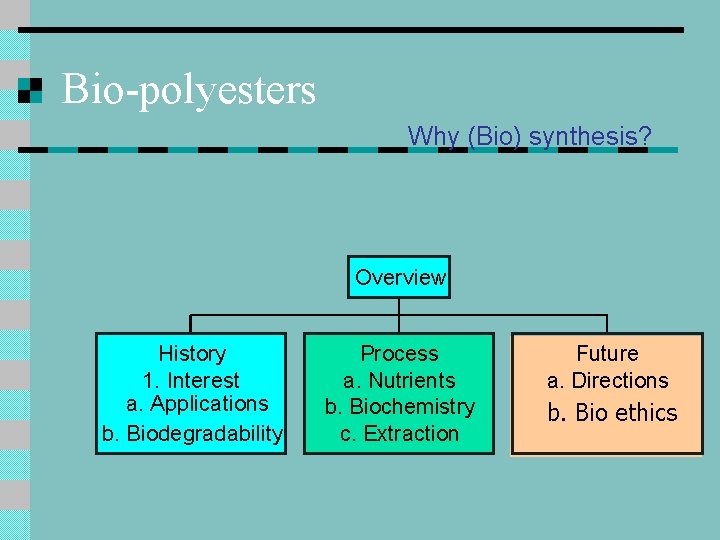
Bio-polyesters Why (Bio) synthesis? Overview History 1. Interest a. Applications b. Biodegradability Process a. Nutrients b. Biochemistry c. Extraction Future a. Directions b. Bio ethics
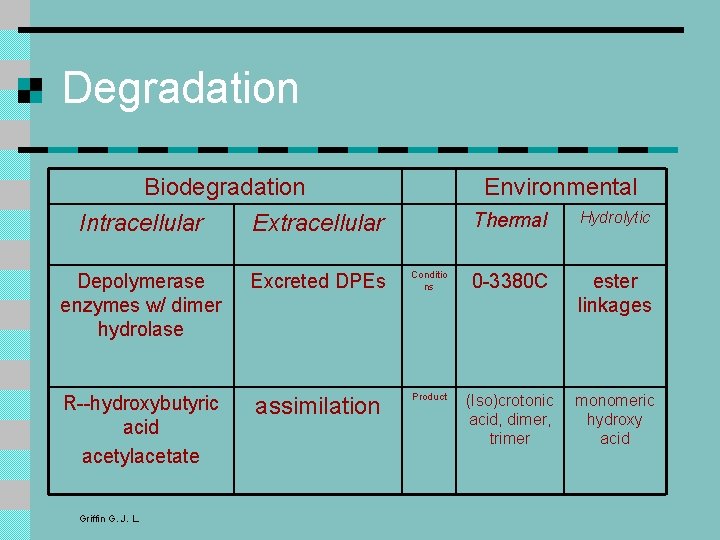
Degradation Biodegradation Intracellular Extracellular Environmental Thermal Hydrolytic Depolymerase enzymes w/ dimer hydrolase Excreted DPEs Conditio ns 0 -3380 C ester linkages R--hydroxybutyric acid acetylacetate assimilation Product (Iso)crotonic acid, dimer, trimer monomeric hydroxy acid Griffin G. J. L.
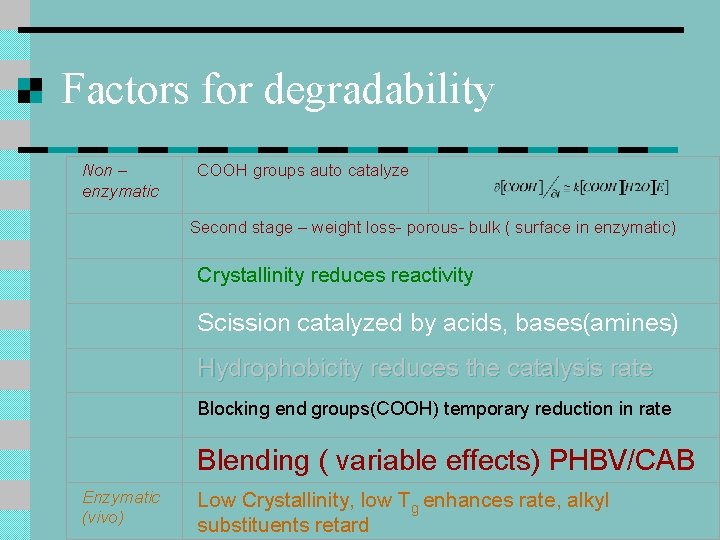
Factors for degradability Non – enzymatic COOH groups auto catalyze Second stage – weight loss- porous- bulk ( surface in enzymatic) Crystallinity reduces reactivity Scission catalyzed by acids, bases(amines) Hydrophobicity reduces the catalysis rate Blocking end groups(COOH) temporary reduction in rate Blending ( variable effects) PHBV/CAB Enzymatic (vivo) Low Crystallinity, low Tg enhances rate, alkyl substituents retard
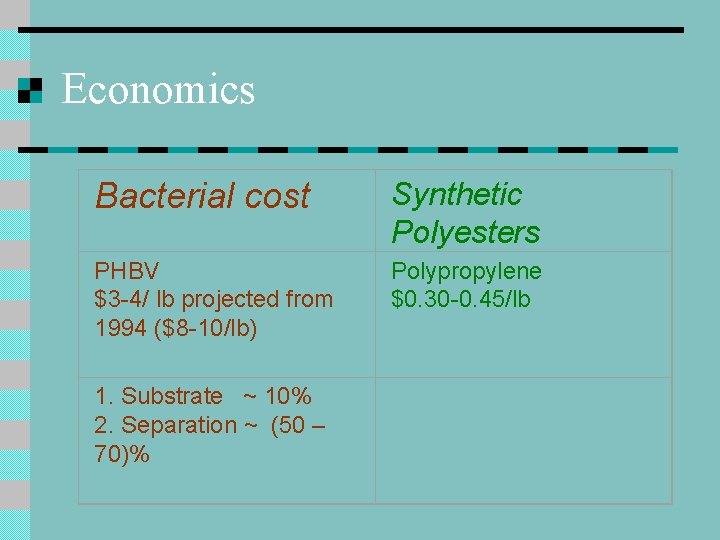
Economics Bacterial cost Synthetic Polyesters PHBV $3 -4/ lb projected from 1994 ($8 -10/lb) Polypropylene $0. 30 -0. 45/lb 1. Substrate ~ 10% 2. Separation ~ (50 – 70)%
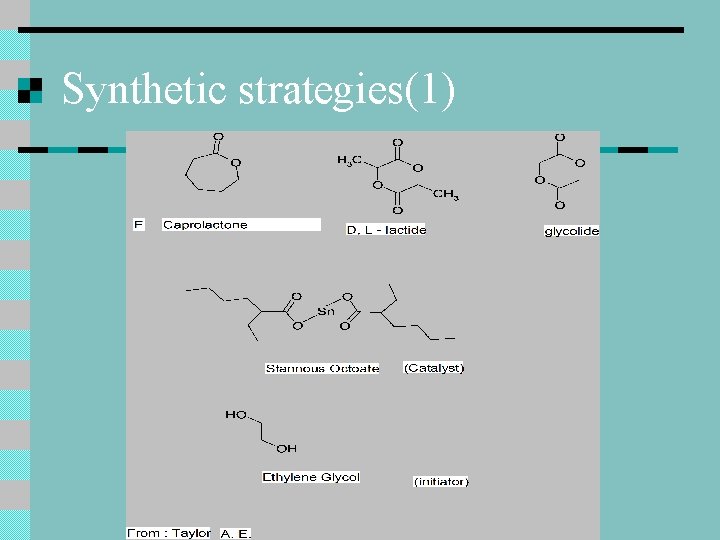
Synthetic strategies(1)
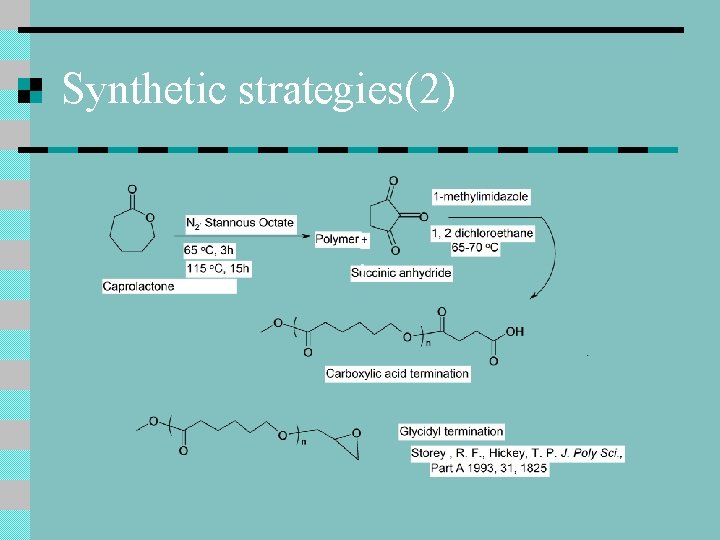
Synthetic strategies(2)
Synthetic strategies(3)
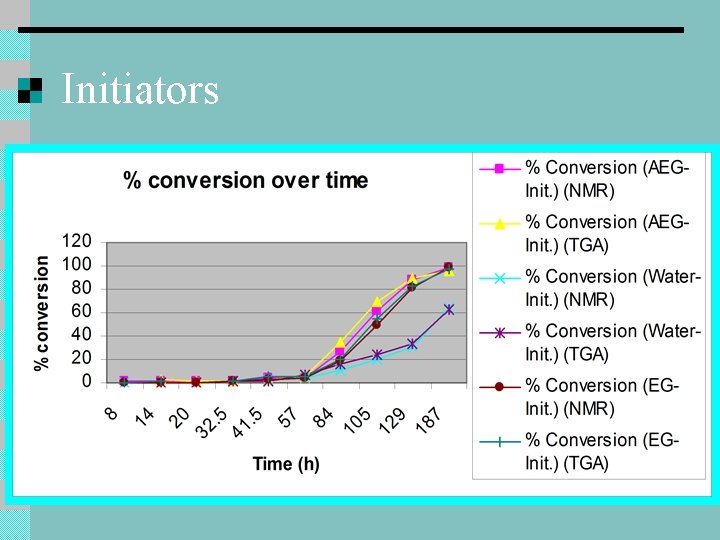
Initiators
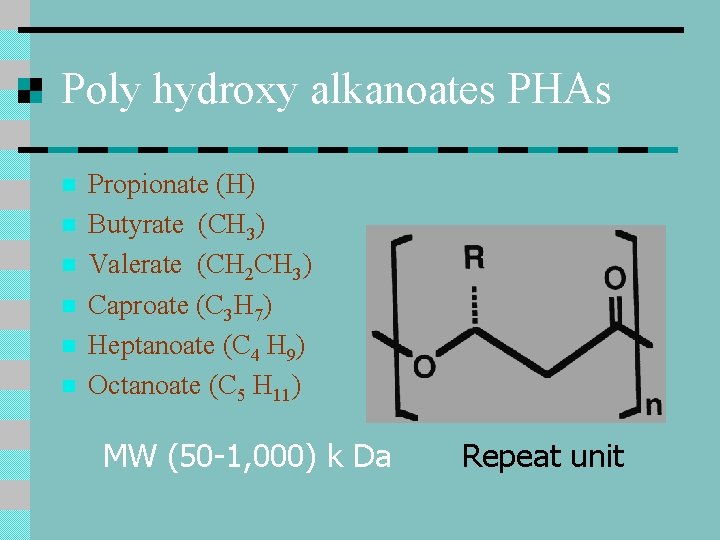
Poly hydroxy alkanoates PHAs n n n Propionate (H) Butyrate (CH 3) Valerate (CH 2 CH 3) Caproate (C 3 H 7) Heptanoate (C 4 H 9) Octanoate (C 5 H 11) MW (50 -1, 000) k Da Repeat unit
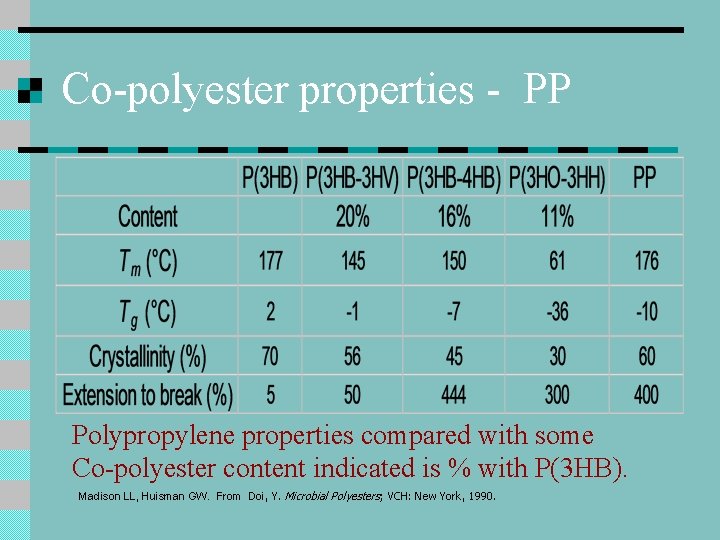
Co-polyester properties - PP Polypropylene properties compared with some Co-polyester content indicated is % with P(3 HB). Madison LL, Huisman GW. From Doi, Y. Microbial Polyesters; VCH: New York, 1990.
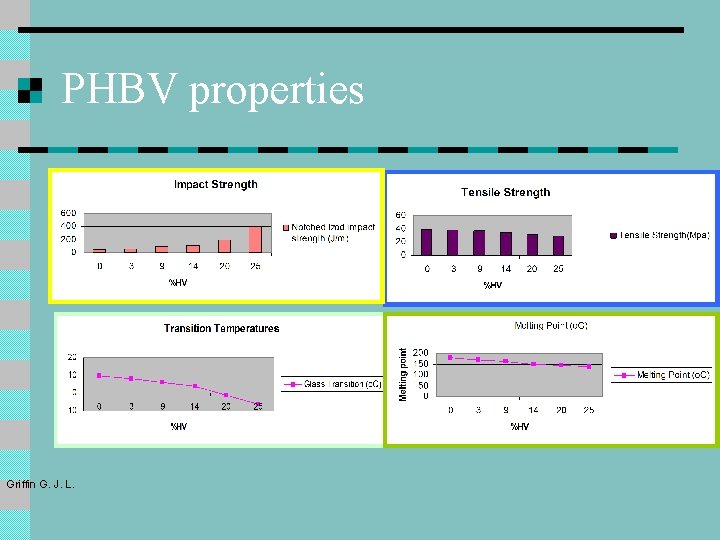
PHBV properties Griffin G. J. L.
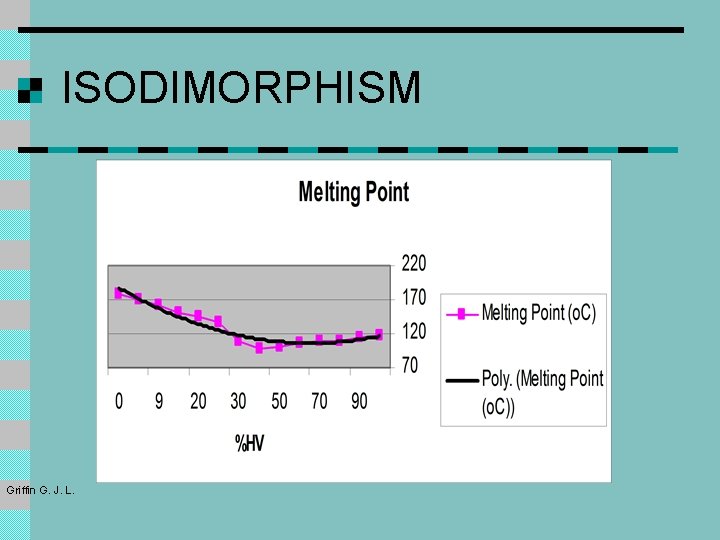
ISODIMORPHISM Griffin G. J. L.
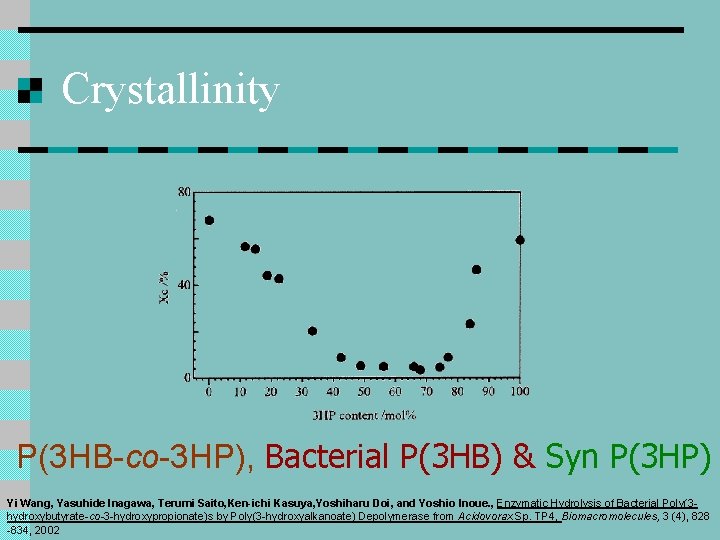
Crystallinity P(3 HB-co-3 HP), Bacterial P(3 HB) & Syn P(3 HP) Yi Wang, Yasuhide Inagawa, Terumi Saito, Ken-ichi Kasuya, Yoshiharu Doi, and Yoshio Inoue. , Enzymatic Hydrolysis of Bacterial Poly(3 hydroxybutyrate-co-3 -hydroxypropionate)s by Poly(3 -hydroxyalkanoate) Depolymerase from Acidovorax Sp. TP 4, Biomacromolecules, 3 (4), 828 -834, 2002
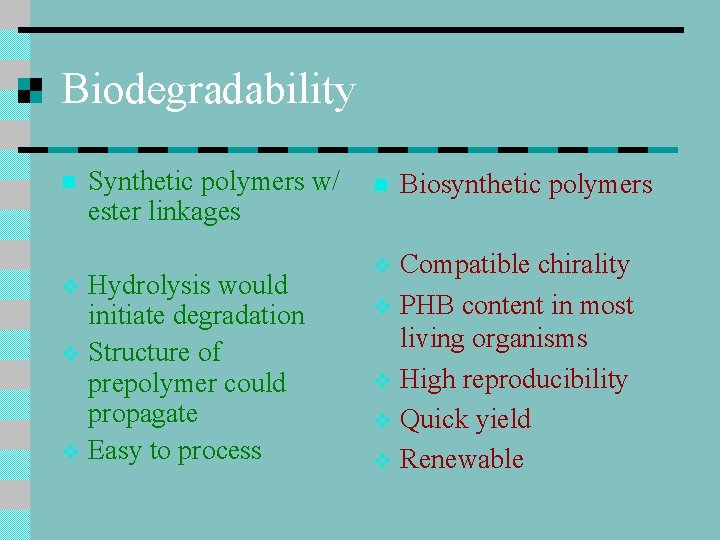
Biodegradability n Synthetic polymers w/ ester linkages Hydrolysis would initiate degradation v Structure of prepolymer could propagate v Easy to process v n Biosynthetic polymers Compatible chirality v PHB content in most living organisms v High reproducibility v Quick yield v Renewable v
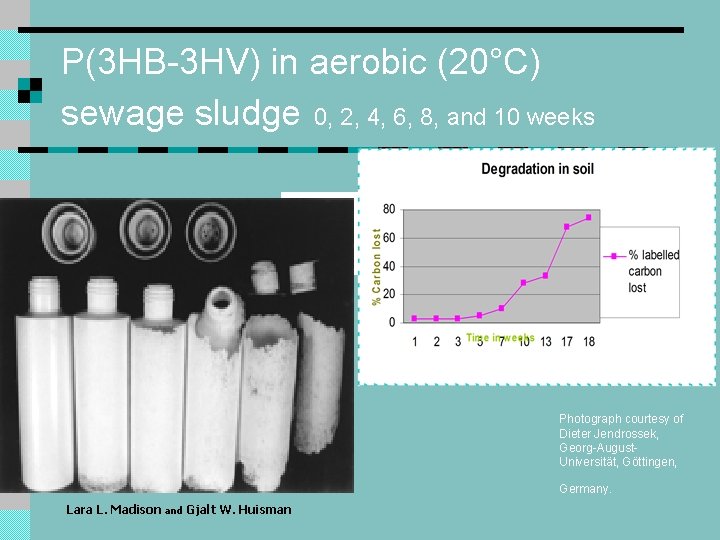
P(3 HB-3 HV) in aerobic (20°C) sewage sludge 0, 2, 4, 6, 8, and 10 weeks Photograph courtesy of Dieter Jendrossek, Georg-August. Universität, Göttingen, Germany. Lara L. Madison and Gjalt W. Huisman
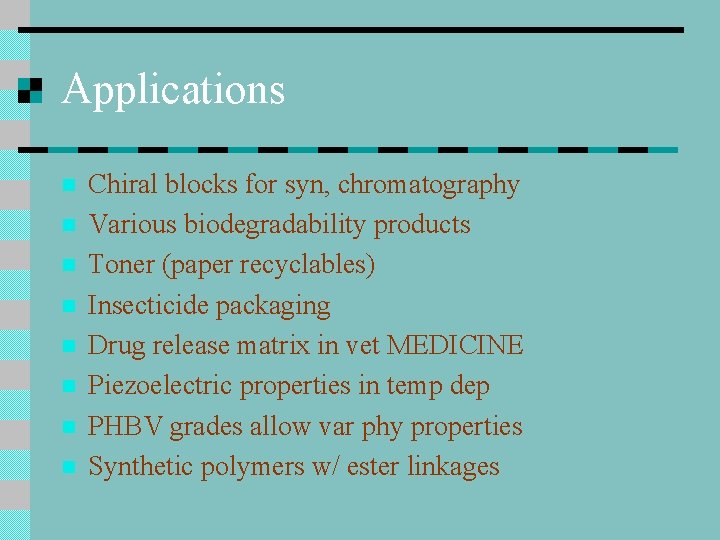
Applications n n n n Chiral blocks for syn, chromatography Various biodegradability products Toner (paper recyclables) Insecticide packaging Drug release matrix in vet MEDICINE Piezoelectric properties in temp dep PHBV grades allow var phy properties Synthetic polymers w/ ester linkages
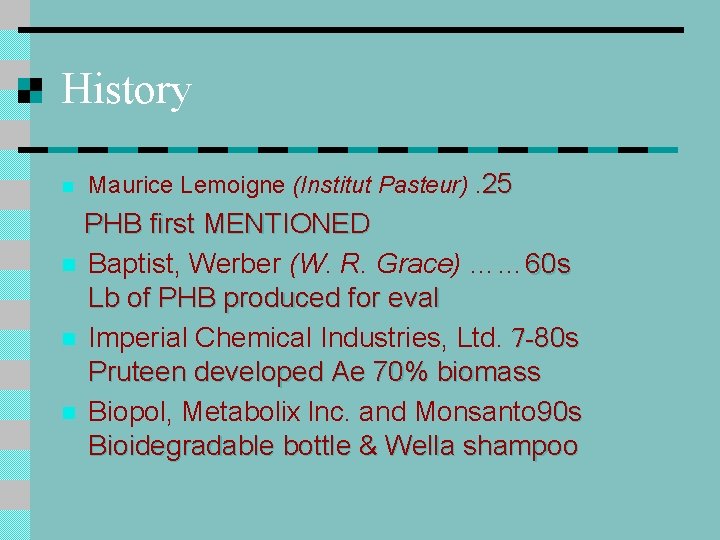
History n Maurice Lemoigne (Institut Pasteur). 25 PHB first MENTIONED n Baptist, Werber (W. R. Grace) …… 60 s Lb of PHB produced for eval n Imperial Chemical Industries, Ltd. 7 -80 s Pruteen developed Ae 70% biomass n Biopol, Metabolix Inc. and Monsanto 90 s Bioidegradable bottle & Wella shampoo
Philip Ball, Consulting Editor, Nature “There is no assembly plant so delicate, versatile and adaptive as the cell. ” Jim Robbins, Second Nature, Smithsonian, July 2002, Vol. 33, No. 4, p. 78 -84
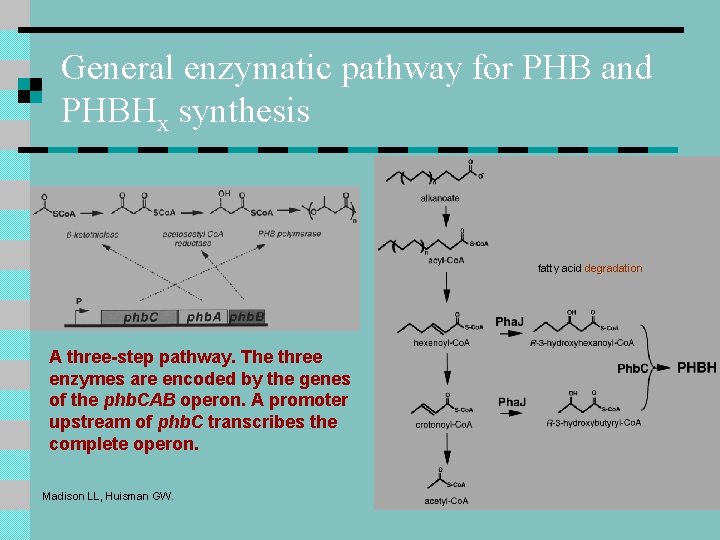
General enzymatic pathway for PHB and PHBHx synthesis fatty acid degradation A three-step pathway. The three enzymes are encoded by the genes of the phb. CAB operon. A promoter upstream of phb. C transcribes the complete operon. Madison LL, Huisman GW.
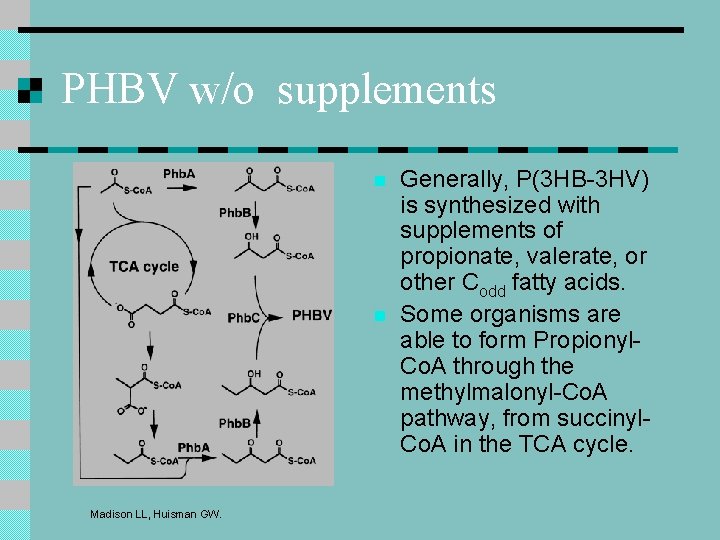
PHBV w/o supplements n n Madison LL, Huisman GW. Generally, P(3 HB-3 HV) is synthesized with supplements of propionate, valerate, or other Codd fatty acids. Some organisms are able to form Propionyl. Co. A through the methylmalonyl-Co. A pathway, from succinyl. Co. A in the TCA cycle.
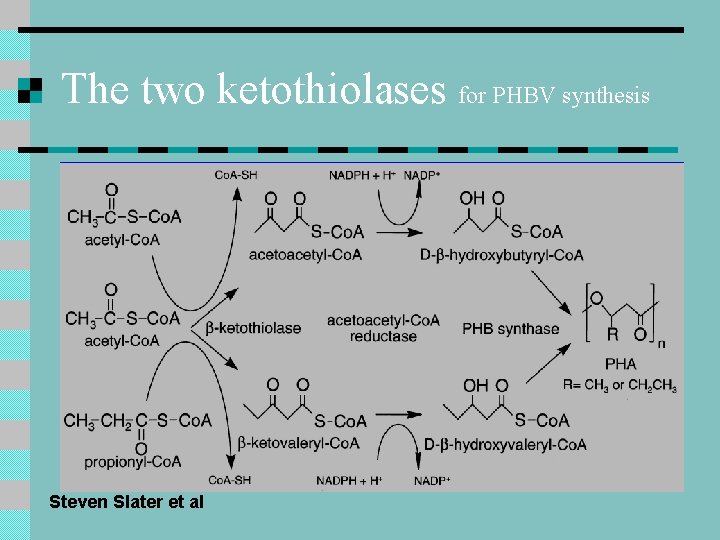
The two ketothiolases for PHBV synthesis Steven Slater et al
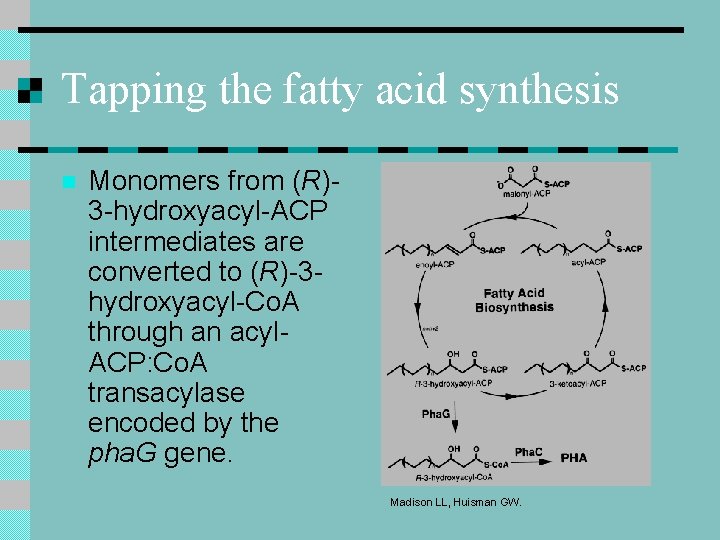
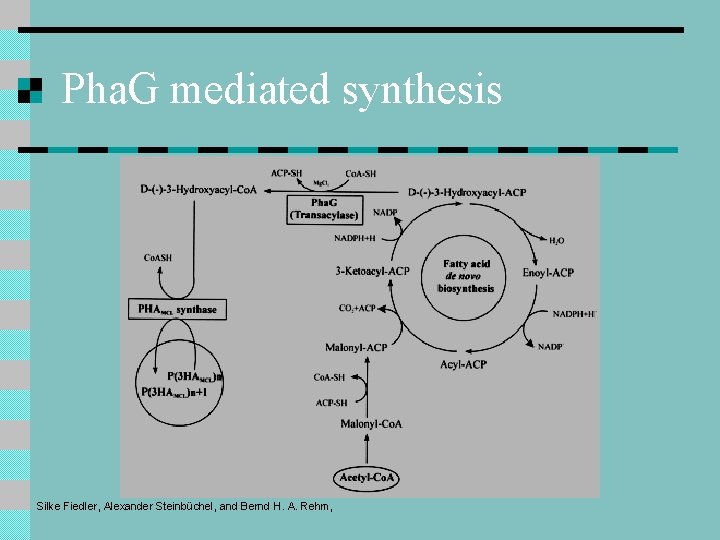
Tapping the fatty acid synthesis n Monomers from (R)3 -hydroxyacyl-ACP intermediates are converted to (R)-3 hydroxyacyl-Co. A through an acyl. ACP: Co. A transacylase encoded by the pha. G gene. Madison LL, Huisman GW.
Pha. G mediated synthesis Silke Fiedler, Alexander Steinbüchel, and Bernd H. A. Rehm,
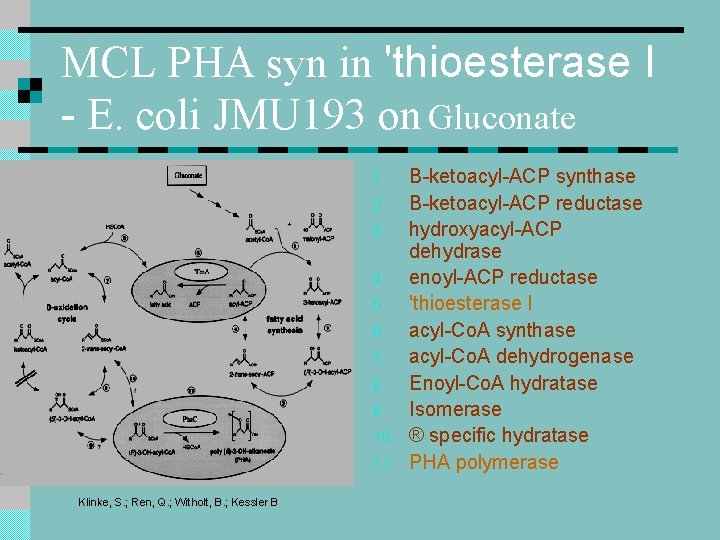
MCL PHA syn in 'thioesterase I - E. coli JMU 193 on Gluconate 1. 2. 3. 4. 5. 6. 7. 8. 9. 10. 11. Klinke, S. ; Ren, Q. ; Witholt, B. ; Kessler B B-ketoacyl-ACP synthase B-ketoacyl-ACP reductase hydroxyacyl-ACP dehydrase enoyl-ACP reductase 'thioesterase I acyl-Co. A synthase acyl-Co. A dehydrogenase Enoyl-Co. A hydratase Isomerase ® specific hydratase PHA polymerase
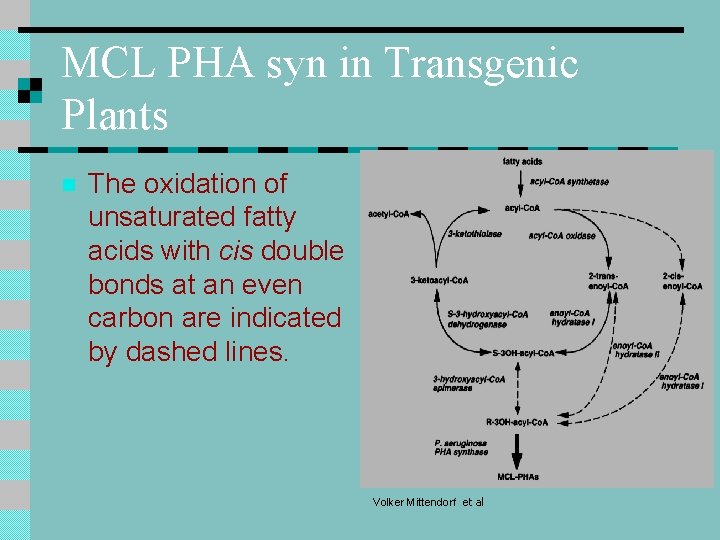
MCL PHA syn in Transgenic Plants n The oxidation of unsaturated fatty acids with cis double bonds at an even carbon are indicated by dashed lines. Volker Mittendorf et al
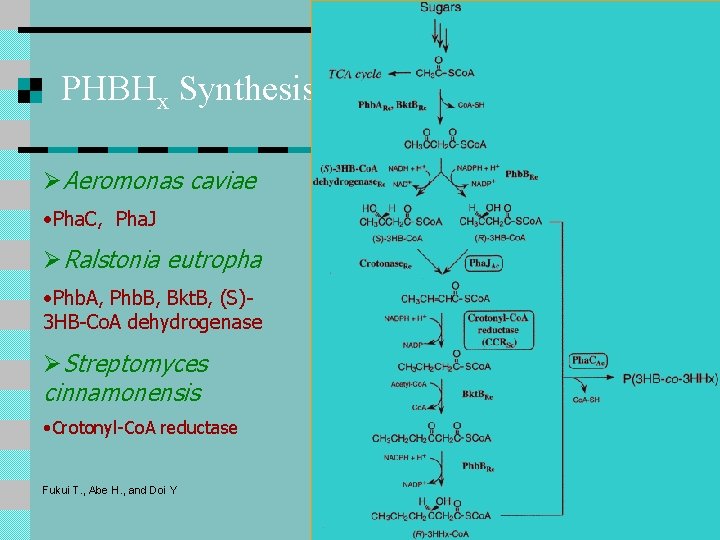
PHBHx Synthesis ØAeromonas caviae • Pha. C, Pha. J ØRalstonia eutropha • Phb. A, Phb. B, Bkt. B, (S)3 HB-Co. A dehydrogenase ØStreptomyces cinnamonensis • Crotonyl-Co. A reductase Fukui T. , Abe H. , and Doi Y
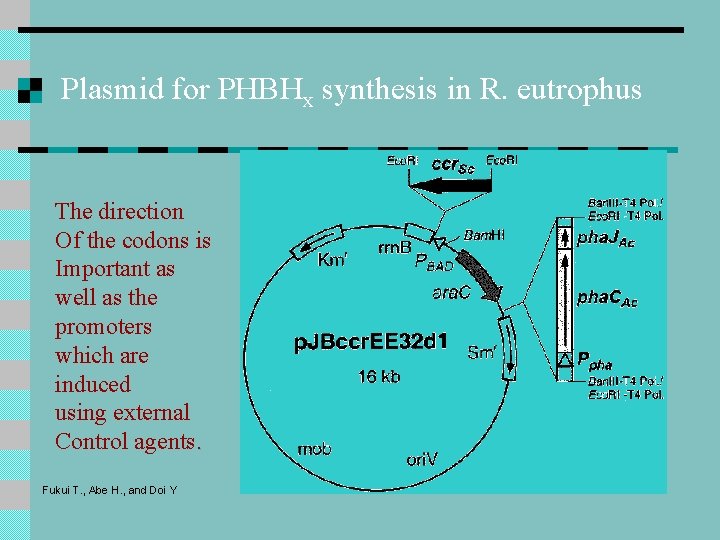
Plasmid for PHBHx synthesis in R. eutrophus The direction Of the codons is Important as well as the promoters which are induced using external Control agents. Fukui T. , Abe H. , and Doi Y
Gene constructs for Transgenic plants v. PTS, Peroxisomal targeting sequence v. Pha. C 1 synthase v. Fat. B 3 thioesterase v. OCS, octopine synthase Yves Poirier, Giovanni Ventre, and Daniela Caldelari
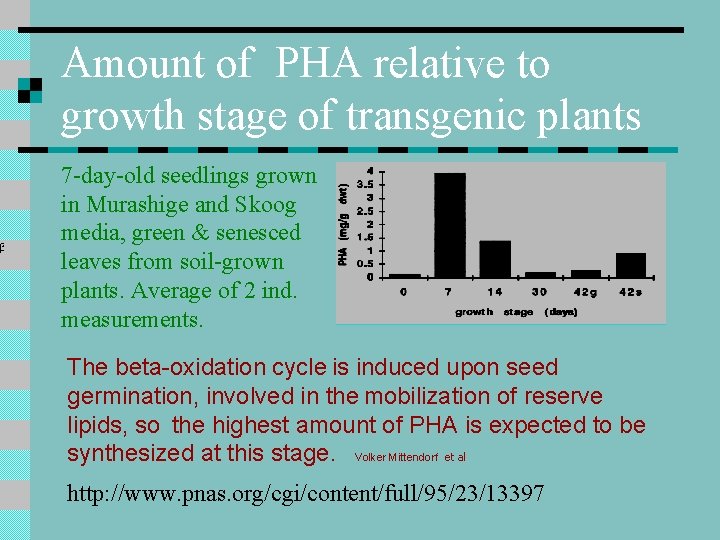
Amount of PHA relative to growth stage of transgenic plants 7 -day-old seedlings grown in Murashige and Skoog media, green & senesced leaves from soil-grown plants. Average of 2 ind. measurements. The beta-oxidation cycle is induced upon seed germination, involved in the mobilization of reserve lipids, so the highest amount of PHA is expected to be synthesized at this stage. Volker Mittendorf et al http: //www. pnas. org/cgi/content/full/95/23/13397
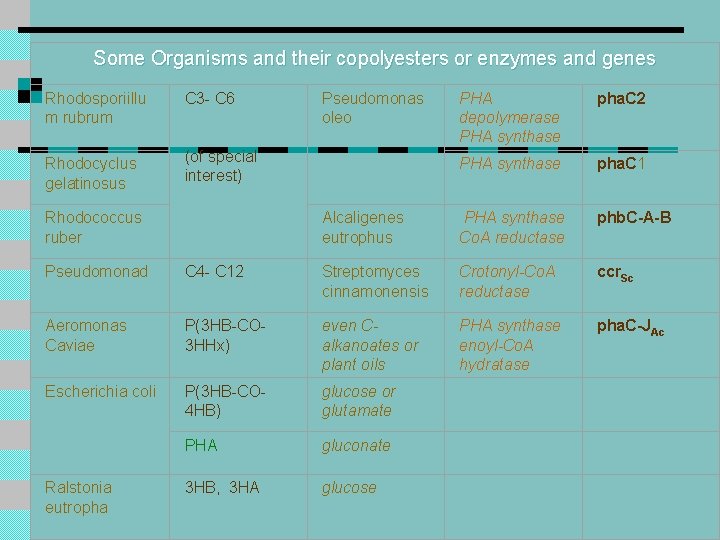
Some Organisms and their copolyesters or enzymes and genes Rhodosporiillu m rubrum Rhodocyclus gelatinosus C 3 - C 6 (of special interest) Rhodococcus ruber Pseudomonad C 4 - C 12 Pseudomonas oleo PHA depolymerase PHA synthase pha. C 2 PHA synthase pha. C 1 Alcaligenes eutrophus PHA synthase Co. A reductase phb. C-A-B Streptomyces cinnamonensis Crotonyl-Co. A reductase ccr. Sc Aeromonas Caviae P(3 HB-CO 3 HHx) even Calkanoates or plant oils PHA synthase enoyl-Co. A hydratase pha. C-JAc Escherichia coli P(3 HB-CO 4 HB) glucose or glutamate PHA gluconate 3 HB, 3 HA glucose Ralstonia eutropha
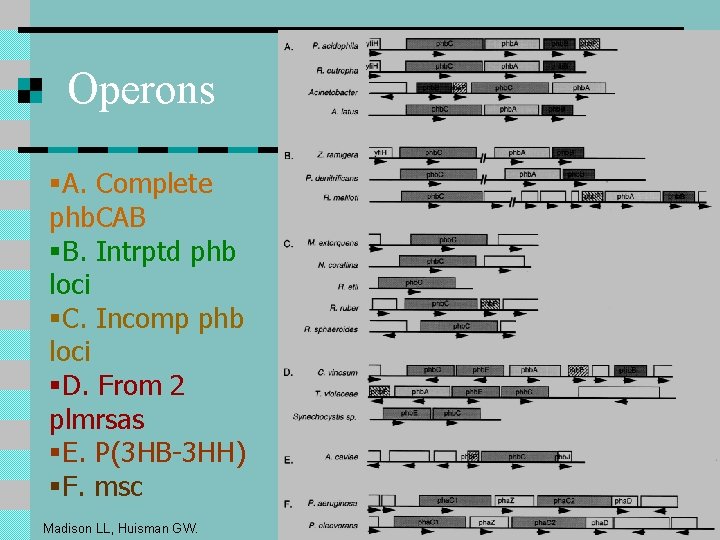
Operons §A. Complete phb. CAB §B. Intrptd phb loci §C. Incomp phb loci §D. From 2 plmrsas §E. P(3 HB-3 HH) §F. msc Madison LL, Huisman GW.
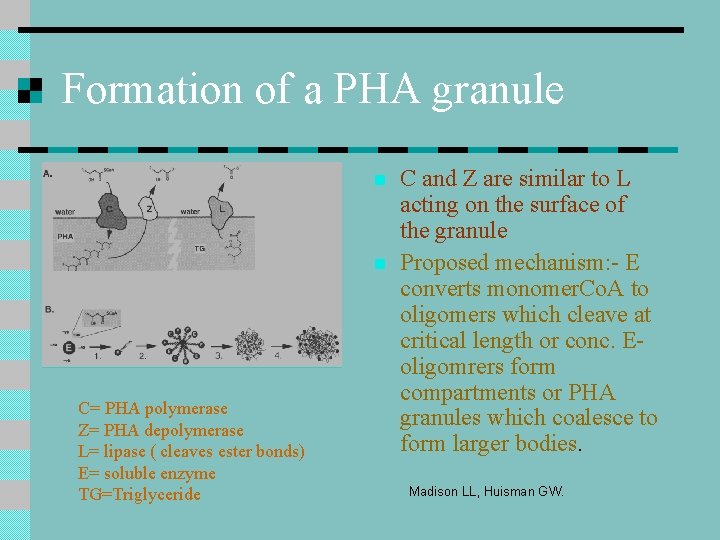
Formation of a PHA granule n n C= PHA polymerase Z= PHA depolymerase L= lipase ( cleaves ester bonds) E= soluble enzyme TG=Triglyceride C and Z are similar to L acting on the surface of the granule Proposed mechanism: - E converts monomer. Co. A to oligomers which cleave at critical length or conc. Eoligomrers form compartments or PHA granules which coalesce to form larger bodies. Madison LL, Huisman GW.
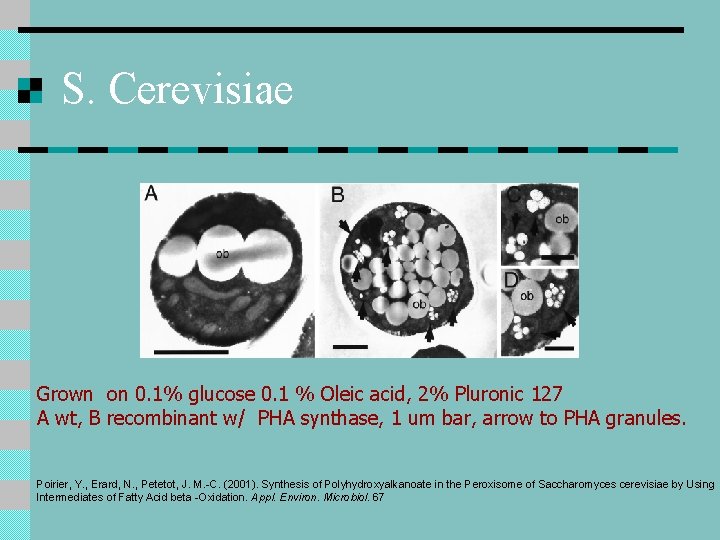
S. Cerevisiae Grown on 0. 1% glucose 0. 1 % Oleic acid, 2% Pluronic 127 A wt, B recombinant w/ PHA synthase, 1 um bar, arrow to PHA granules. Poirier, Y. , Erard, N. , Petetot, J. M. -C. (2001). Synthesis of Polyhydroxyalkanoate in the Peroxisome of Saccharomyces cerevisiae by Using Intermediates of Fatty Acid beta -Oxidation. Appl. Environ. Microbiol. 67
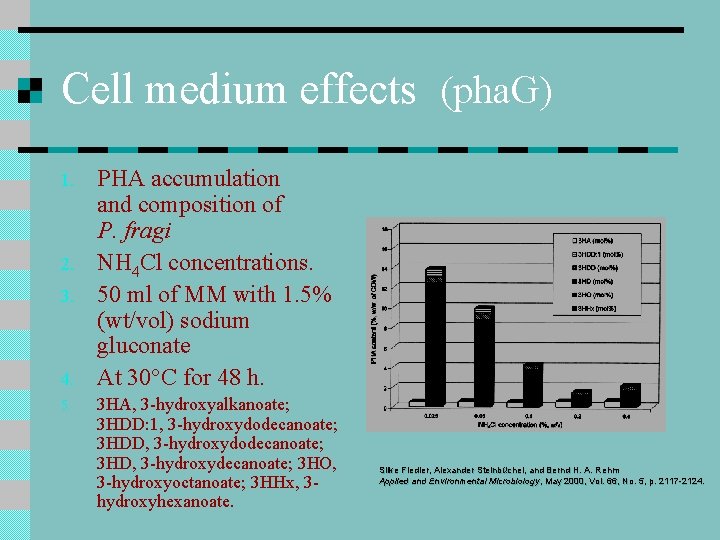
Cell medium effects (pha. G) 1. 2. 3. 4. 5. PHA accumulation and composition of P. fragi NH 4 Cl concentrations. 50 ml of MM with 1. 5% (wt/vol) sodium gluconate At 30°C for 48 h. 3 HA, 3 -hydroxyalkanoate; 3 HDD: 1, 3 -hydroxydodecanoate; 3 HDD, 3 -hydroxydodecanoate; 3 HD, 3 -hydroxydecanoate; 3 HO, 3 -hydroxyoctanoate; 3 HHx, 3 hydroxyhexanoate. Silke Fiedler, Alexander Steinbüchel, and Bernd H. A. Rehm Applied and Environmental Microbiology, May 2000, Vol. 66, No. 5, p. 2117 -2124.
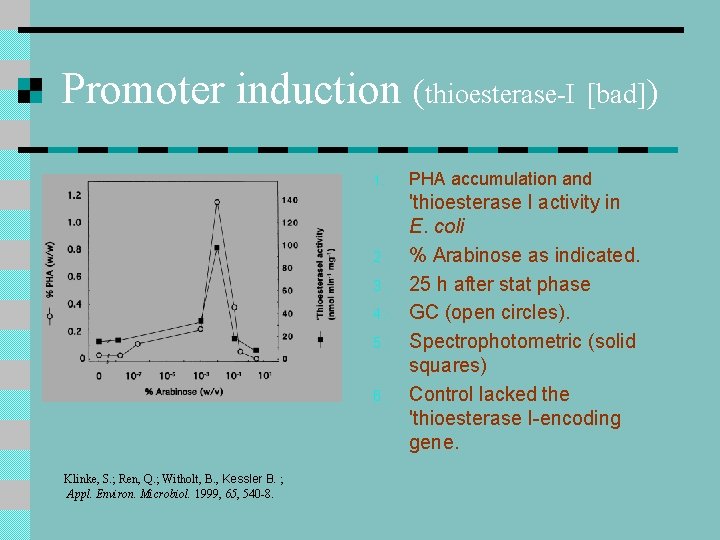
Promoter induction (thioesterase-I [bad]) 1. 2. 3. 4. 5. 6. Klinke, S. ; Ren, Q. ; Witholt, B. , Kessler B. ; Appl. Environ. Microbiol. 1999, 65, 540 -8. PHA accumulation and 'thioesterase I activity in E. coli % Arabinose as indicated. 25 h after stat phase GC (open circles). Spectrophotometric (solid squares) Control lacked the 'thioesterase I-encoding gene.
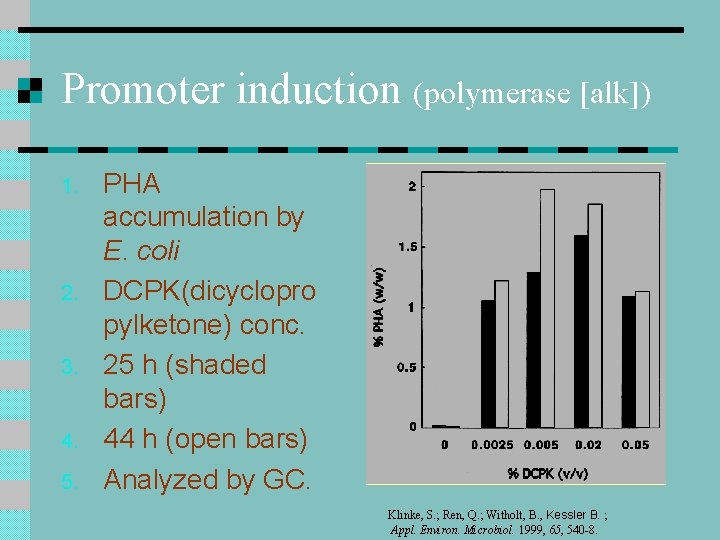
Promoter induction (polymerase [alk]) 1. 2. 3. 4. 5. PHA accumulation by E. coli DCPK(dicyclopro pylketone) conc. 25 h (shaded bars) 44 h (open bars) Analyzed by GC. Klinke, S. ; Ren, Q. ; Witholt, B. , Kessler B. ; Appl. Environ. Microbiol. 1999, 65, 540 -8.
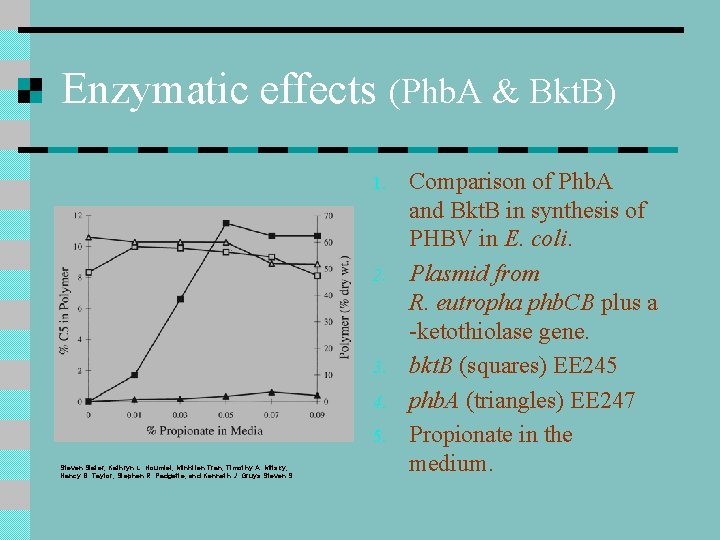
Enzymatic effects (Phb. A & Bkt. B) 1. 2. 3. 4. 5. Steven Slater, Kathryn L. Houmiel, Minhtien Tran, Timothy A. Mitsky, Nancy B. Taylor, Stephen R. Padgette, and Kenneth J. Gruys Steven S Comparison of Phb. A and Bkt. B in synthesis of PHBV in E. coli. Plasmid from R. eutropha phb. CB plus a -ketothiolase gene. bkt. B (squares) EE 245 phb. A (triangles) EE 247 Propionate in the medium.
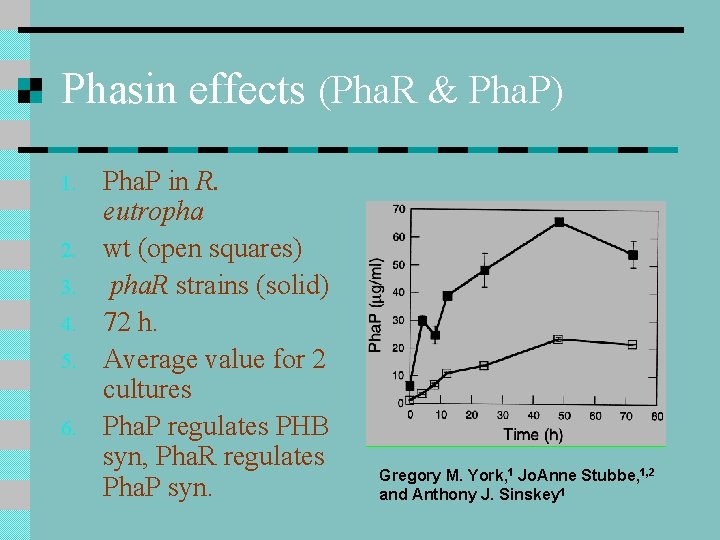
Phasin effects (Pha. R & Pha. P) 1. 2. 3. 4. 5. 6. Pha. P in R. eutropha wt (open squares) pha. R strains (solid) 72 h. Average value for 2 cultures Pha. P regulates PHB syn, Pha. R regulates Pha. P syn. Gregory M. York, 1 Jo. Anne Stubbe, 1, 2 and Anthony J. Sinskey 1
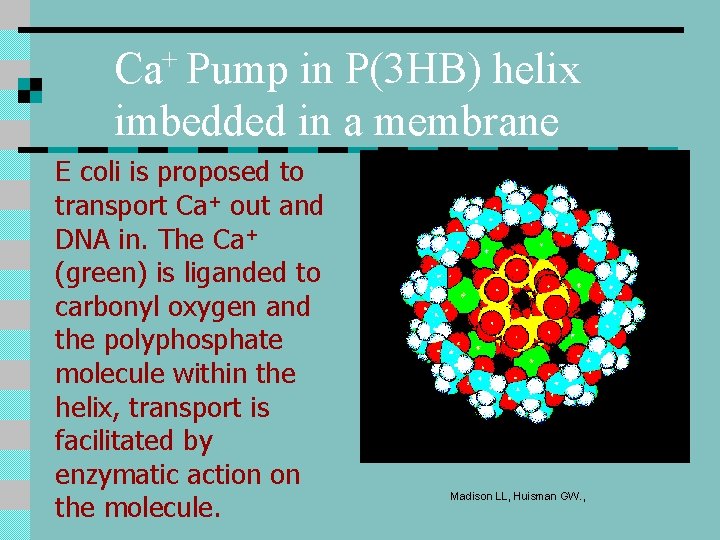
Ca+ Pump in P(3 HB) helix imbedded in a membrane E coli is proposed to transport Ca+ out and DNA in. The Ca+ (green) is liganded to carbonyl oxygen and the polyphosphate molecule within the helix, transport is facilitated by enzymatic action on the molecule. Madison LL, Huisman GW. ,
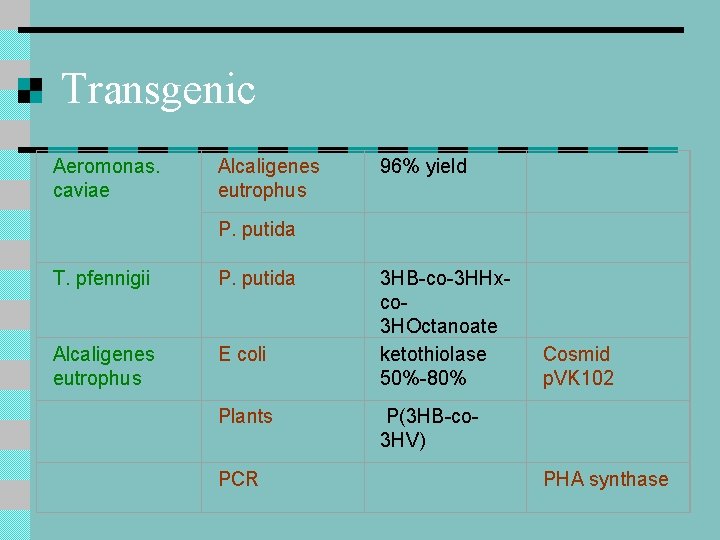
Transgenic Aeromonas. caviae Alcaligenes eutrophus 96% yield P. putida T. pfennigii P. putida Alcaligenes eutrophus E coli 3 HB-co-3 HHxco 3 HOctanoate ketothiolase 50%-80% Plants P(3 HB-co 3 HV) PCR Cosmid p. VK 102 PHA synthase
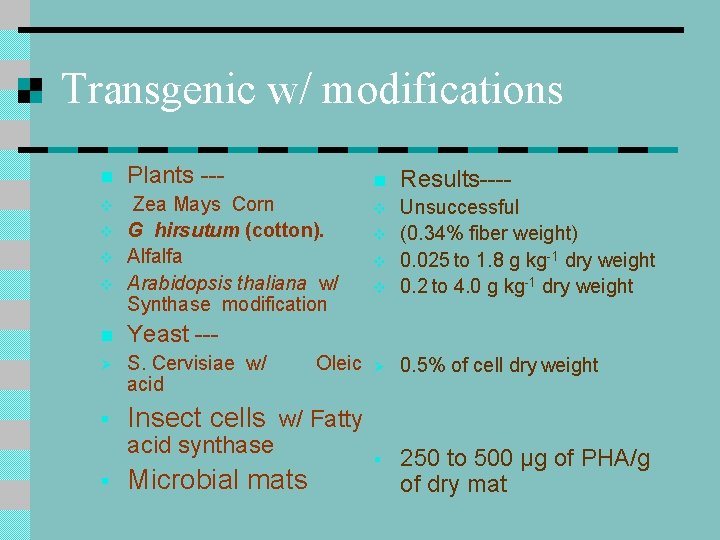
Transgenic w/ modifications n Plants --- v Zea Mays Corn G hirsutum (cotton). Alfalfa Arabidopsis thaliana w/ Synthase modification v v v n Yeast --- Ø S. Cervisiae w/ acid § Insect cells w/ Fatty acid synthase § Microbial mats n Results---- v Unsuccessful (0. 34% fiber weight) 0. 025 to 1. 8 g kg-1 dry weight 0. 2 to 4. 0 g kg-1 dry weight v v v Oleic Ø 0. 5% of cell dry weight § 250 to 500 µg of PHA/g of dry mat
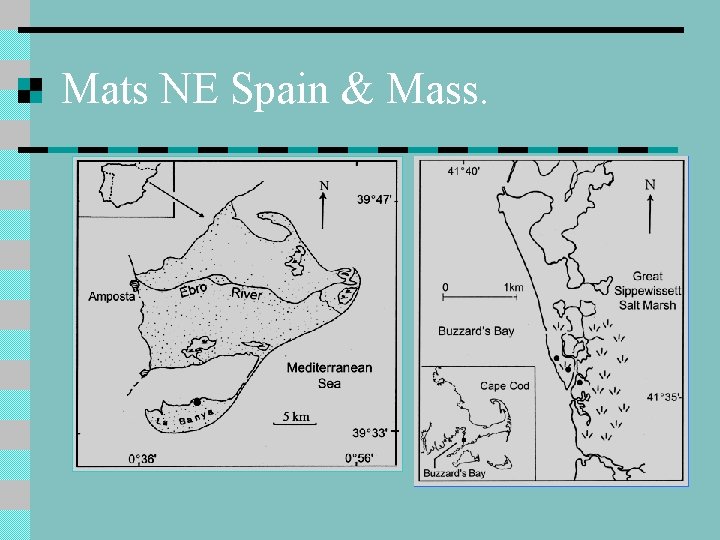
Mats NE Spain & Mass.
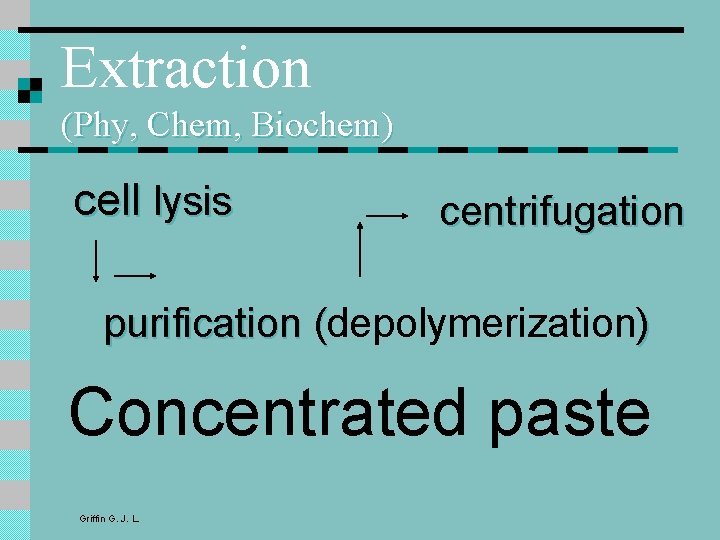
Extraction (Phy, Chem, Biochem) cell lysis centrifugation purification (depolymerization ) purification ( Concentrated paste Griffin G. J. L.
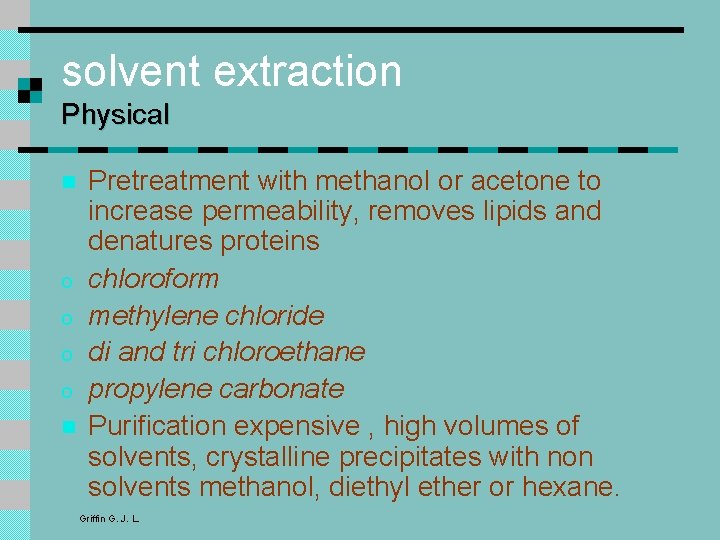
solvent extraction Physical n o o n Pretreatment with methanol or acetone to increase permeability, removes lipids and denatures proteins chloroform methylene chloride di and tri chloroethane propylene carbonate Purification expensive , high volumes of solvents, crystalline precipitates with non solvents methanol, diethyl ether or hexane. Griffin G. J. L.
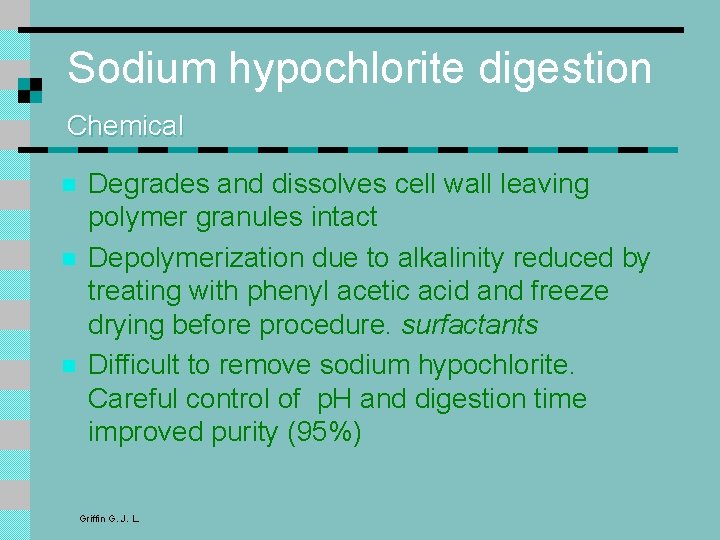
Sodium hypochlorite digestion Chemical n n n Degrades and dissolves cell wall leaving polymer granules intact Depolymerization due to alkalinity reduced by treating with phenyl acetic acid and freeze drying before procedure. surfactants Difficult to remove sodium hypochlorite. Careful control of p. H and digestion time improved purity (95%) Griffin G. J. L.
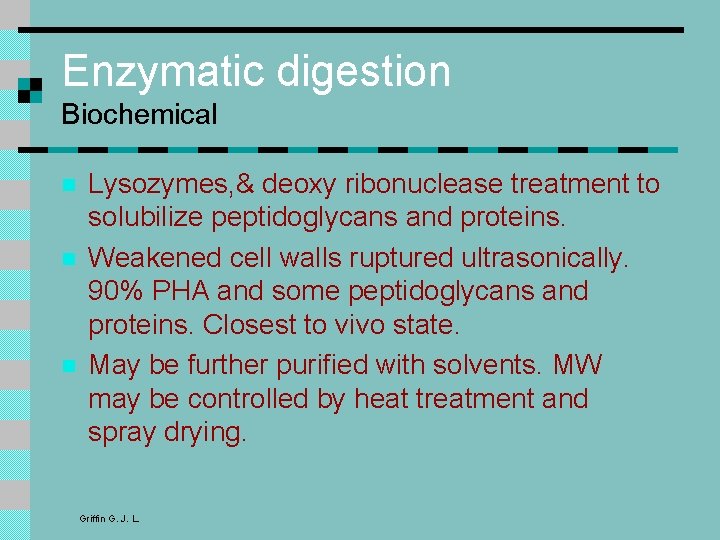
Enzymatic digestion Biochemical n n n Lysozymes, & deoxy ribonuclease treatment to solubilize peptidoglycans and proteins. Weakened cell walls ruptured ultrasonically. 90% PHA and some peptidoglycans and proteins. Closest to vivo state. May be further purified with solvents. MW may be controlled by heat treatment and spray drying. Griffin G. J. L.
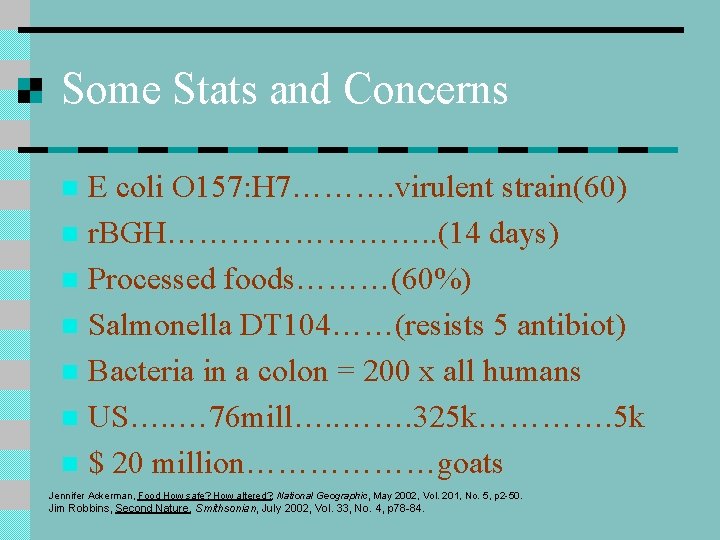
Some Stats and Concerns E coli O 157: H 7………. virulent strain(60) n r. BGH…………. . (14 days) n Processed foods………(60%) n Salmonella DT 104……(resists 5 antibiot) n Bacteria in a colon = 200 x all humans n US…. . … 76 mill…. . ……. 325 k…………. 5 k n $ 20 million………………goats n Jennifer Ackerman, Food How safe? How altered? , National Geographic, May 2002, Vol. 201, No. 5, p 2 -50. Jim Robbins, Second Nature, Smithsonian, July 2002, Vol. 33, No. 4, p 78 -84.
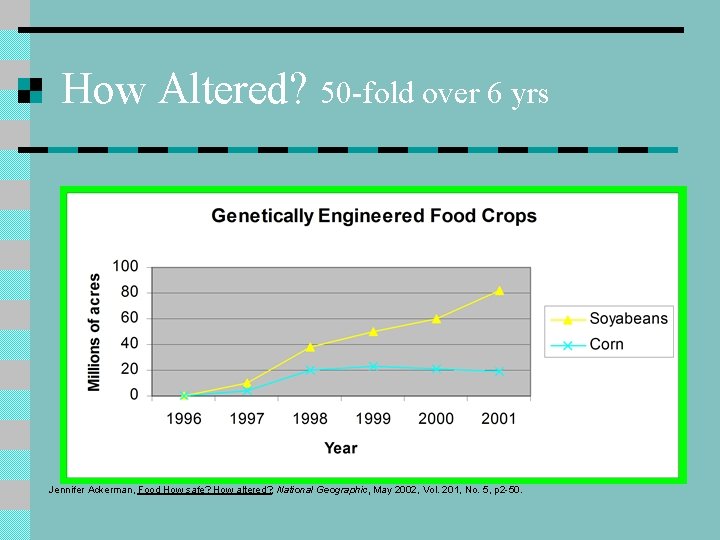
How Altered? 50 -fold over 6 yrs Jennifer Ackerman, Food How safe? How altered? , National Geographic, May 2002, Vol. 201, No. 5, p 2 -50.
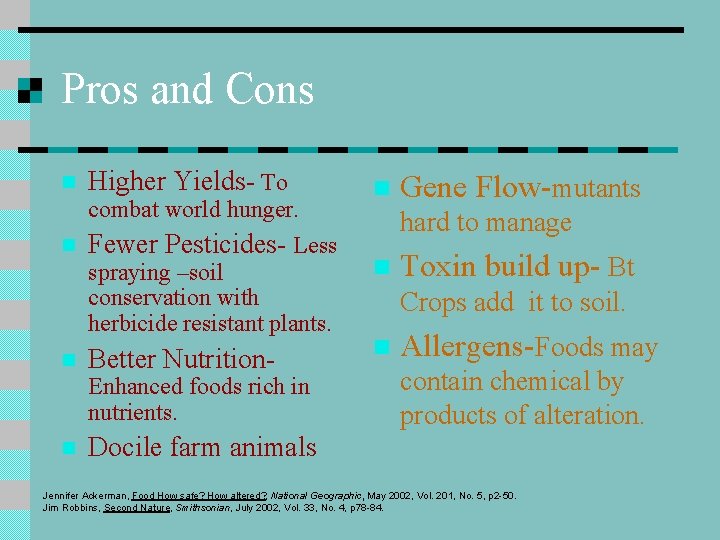
Pros and Cons n Higher Yields- To combat world hunger. n Fewer Pesticides- Less spraying –soil conservation with herbicide resistant plants. n Better Nutrition- Enhanced foods rich in nutrients. n n Gene Flow-mutants hard to manage n Toxin build up- Bt Crops add it to soil. n Allergens-Foods may contain chemical by products of alteration. Docile farm animals Jennifer Ackerman, Food How safe? How altered? , National Geographic, May 2002, Vol. 201, No. 5, p 2 -50. Jim Robbins, Second Nature, Smithsonian, July 2002, Vol. 33, No. 4, p 78 -84.
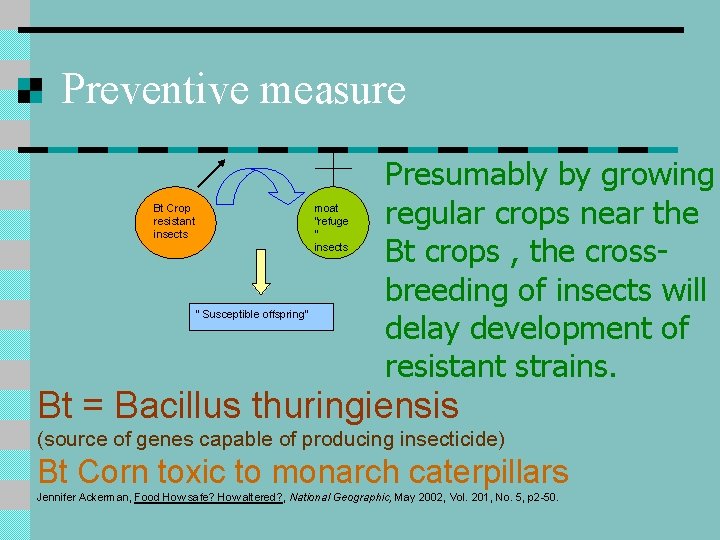
Preventive measure Bt Crop resistant insects “ Susceptible offspring” moat “refuge ” insects Presumably by growing regular crops near the Bt crops , the crossbreeding of insects will delay development of resistant strains. Bt = Bacillus thuringiensis (source of genes capable of producing insecticide) Bt Corn toxic to monarch caterpillars Jennifer Ackerman, Food How safe? How altered? , National Geographic, May 2002, Vol. 201, No. 5, p 2 -50.
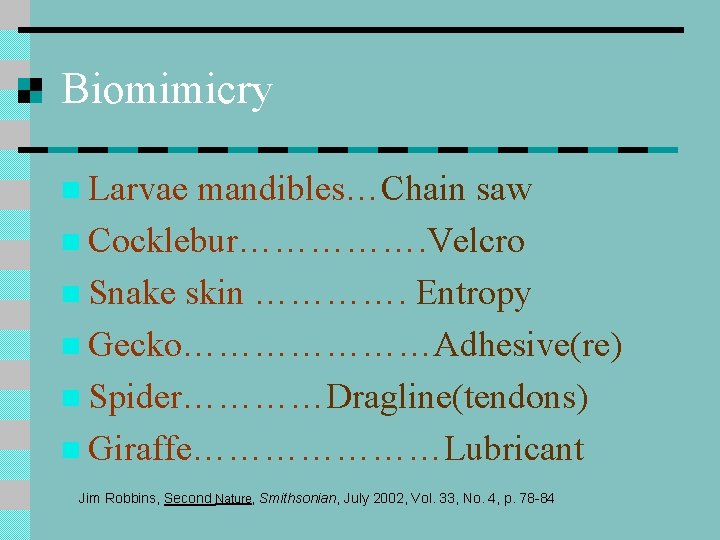
Biomimicry n Larvae mandibles…Chain saw n Cocklebur……………. Velcro n Snake skin …………. Entropy n Gecko…………………Adhesive(re) n Spider…………Dragline(tendons) n Giraffe…………………Lubricant Jim Robbins, Second Nature, Smithsonian, July 2002, Vol. 33, No. 4, p. 78 -84
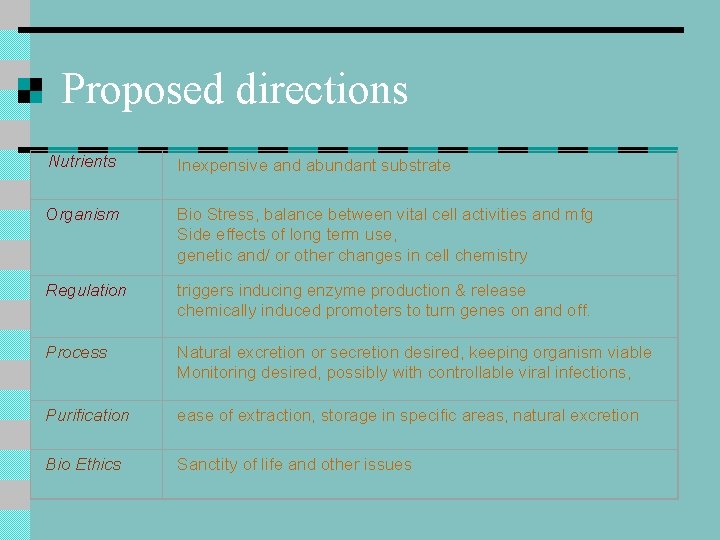
Proposed directions Nutrients Inexpensive and abundant substrate Organism Bio Stress, balance between vital cell activities and mfg Side effects of long term use, genetic and/ or other changes in cell chemistry Regulation triggers inducing enzyme production & release chemically induced promoters to turn genes on and off. Process Natural excretion or secretion desired, keeping organism viable Monitoring desired, possibly with controllable viral infections, Purification ease of extraction, storage in specific areas, natural excretion Bio Ethics Sanctity of life and other issues