
Leon de grammaire Gender in French Rule All

- Slides: 24
Leçon de grammaire: “Gender” in French
Rule: All nouns in French have a gender. This means that they are either “masculine” or “feminine. ” • This is a new concept for English speakers. Nouns in English do not have “gender. ”
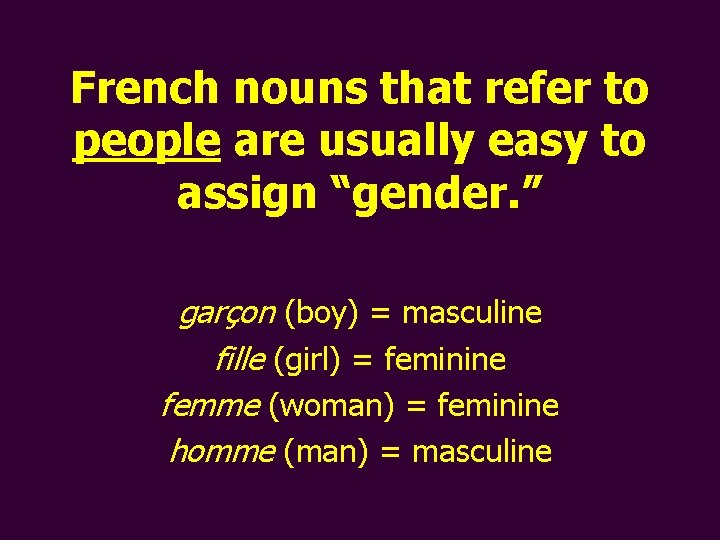
French nouns that refer to people are usually easy to assign “gender. ” garçon (boy) = masculine fille (girl) = feminine femme (woman) = feminine homme (man) = masculine
But what about French nouns that don’t refer to people? How do you assign “gender” to things like: a pencil? a computer? a table? a car?
Unfortunately, there is no foolproof system to determine the gender of many nouns in French. Gender of French nouns is usually based on the spelling of the French word.
The closest you can get to a rule is that the “majority” of nouns that end in the letter -e are probably feminine. But that concept only works about 80% of the time.
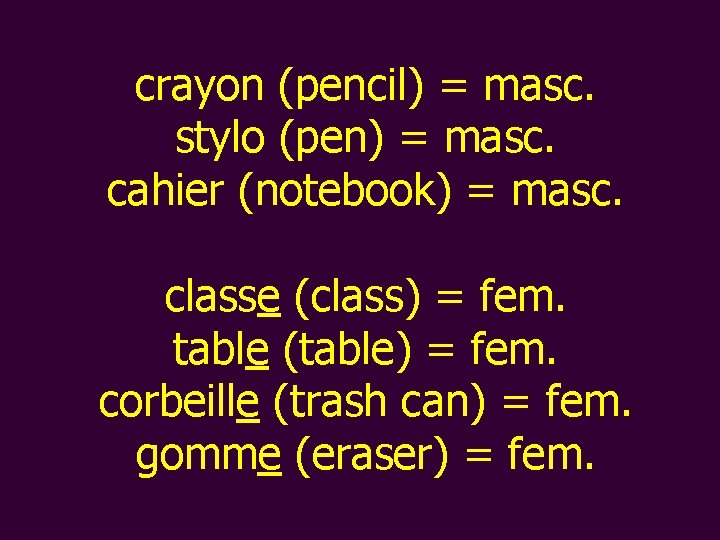
crayon (pencil) = masc. stylo (pen) = masc. cahier (notebook) = masc. classe (class) = fem. table (table) = fem. corbeille (trash can) = fem. gomme (eraser) = fem.
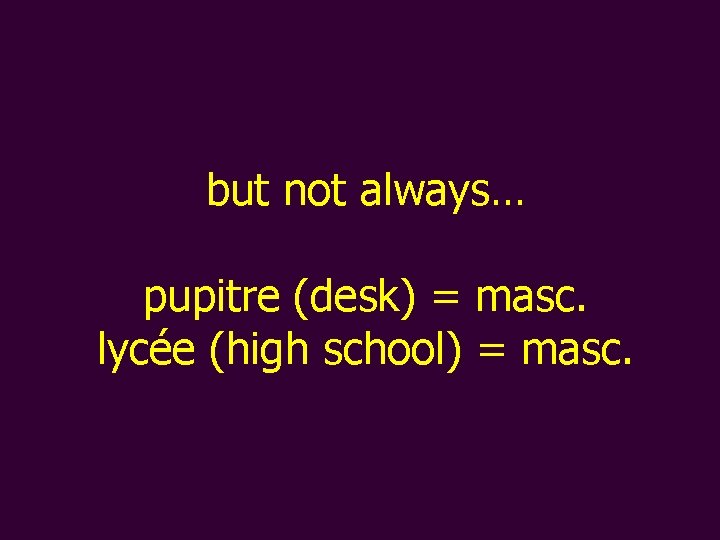
but not always… pupitre (desk) = masc. lycée (high school) = masc.
Leçon de grammaire: “Articles” in French
An “article” is a short word that comes before a noun, such as “a” or “the. ” a pencil the pencil
French nouns must use articles all the time! There are 2 types of articles: * definite articles * indefinite articles
Definite Articles In English, the definite article is “the. ” Because English words do not have gender, we always use the word “the” with any noun.
Definite Articles in French The French also can say “the” in front of nouns, but because every noun has a gender (masculine or feminine) in French, there are different words for “the. ”
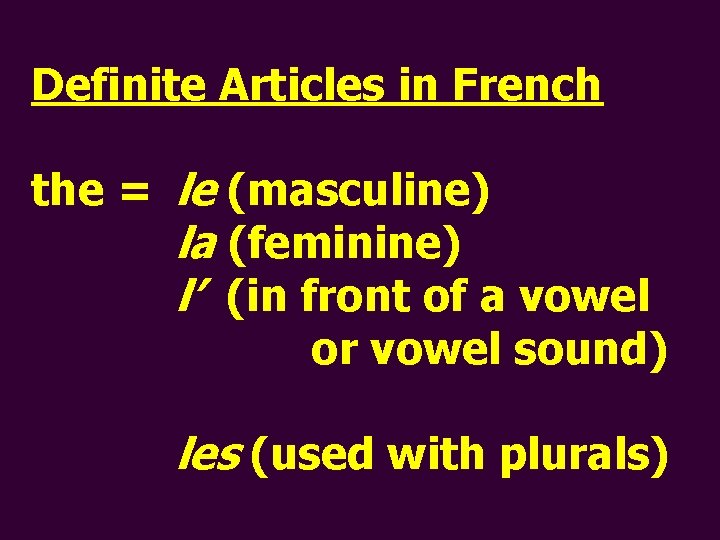
Definite Articles in French the = le (masculine) la (feminine) l’ (in front of a vowel or vowel sound) les (used with plurals)
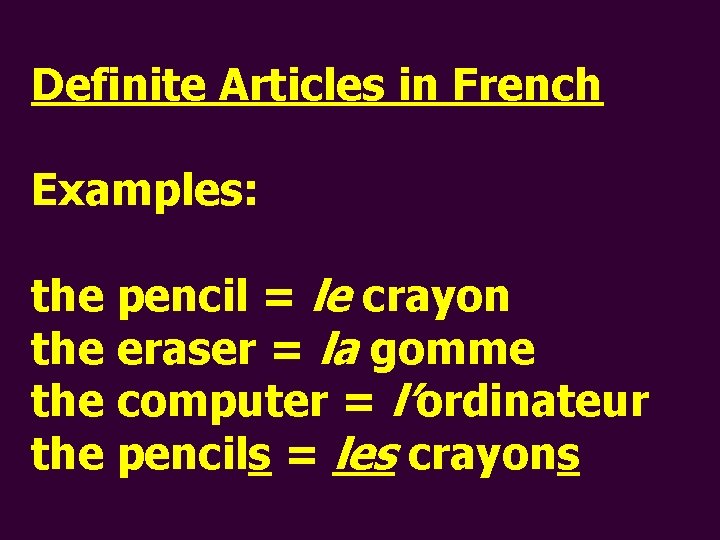
Definite Articles in French Examples: the pencil = le crayon the eraser = la gomme the computer = l’ordinateur the pencils = les crayons
Indefinite Articles In English, the indefinite article is “a” or “an. ” Because English words do not have gender, we always use the word “a” with any noun.
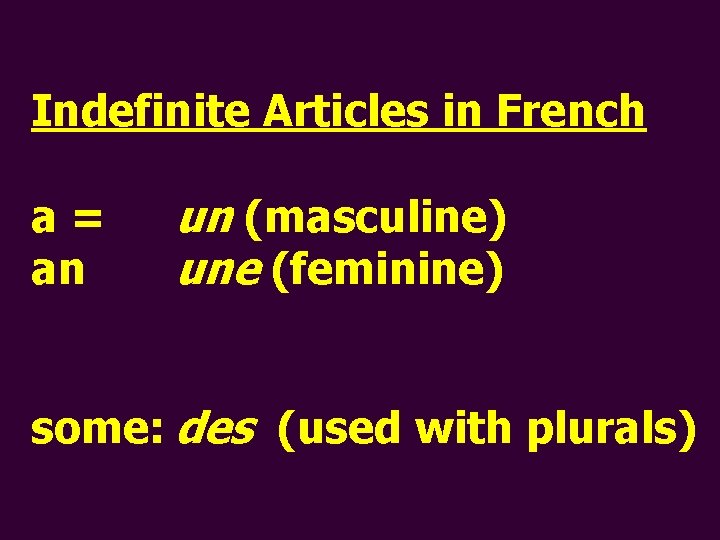
Indefinite Articles in French a= an un (masculine) une (feminine) some: des (used with plurals)
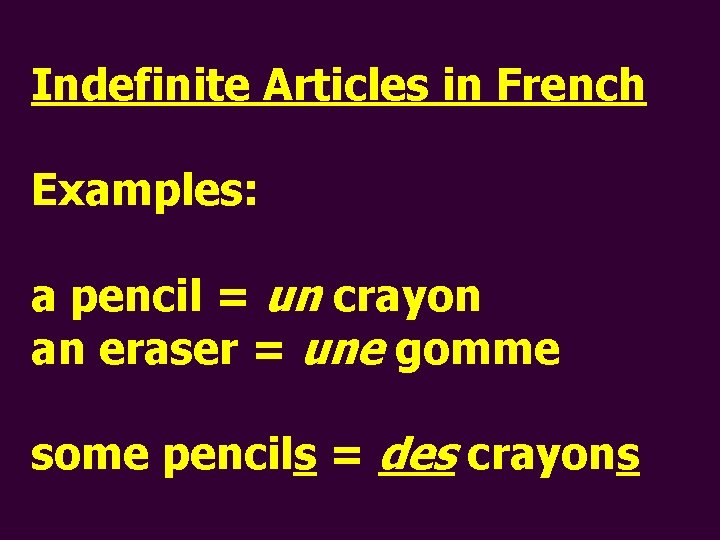
Indefinite Articles in French Examples: a pencil = un crayon an eraser = une gomme some pencils = des crayons
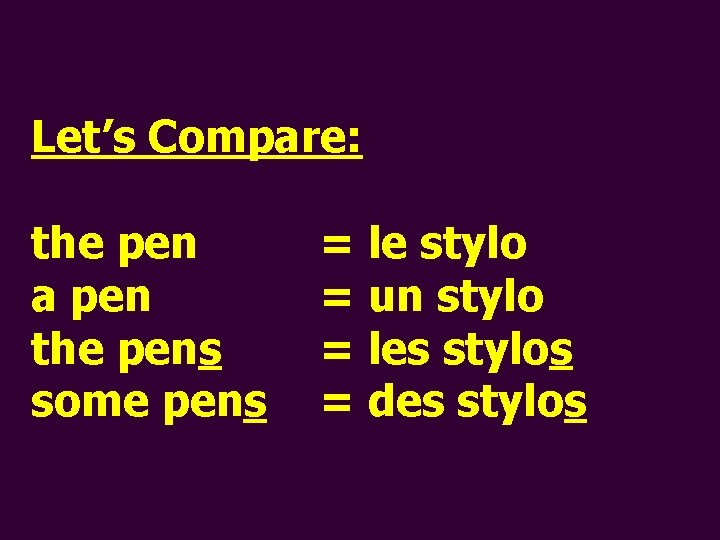
Let’s Compare: the pen a pen the pens some pens = le stylo = un stylo = les stylos = des stylos
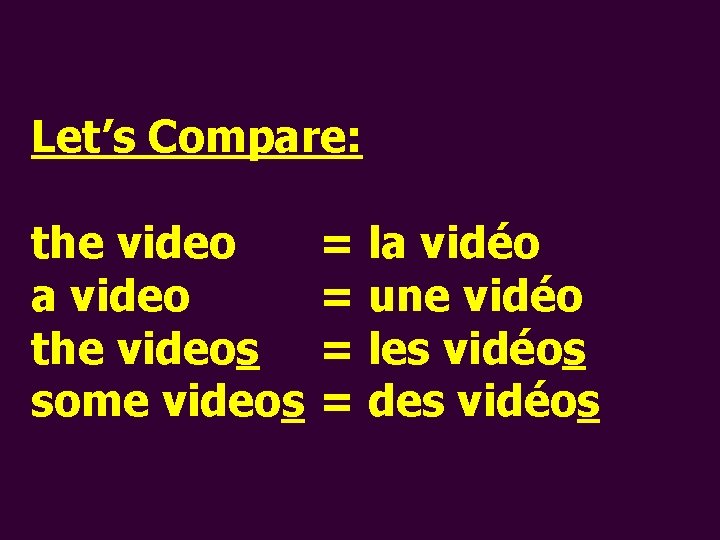
Let’s Compare: the video a video the videos some videos = la vidéo = une vidéo = les vidéos = des vidéos
Your Turn: the notebook =? a notebook =? the notebooks = ? some notebooks = ?
Your Turn: the notebook = le cahier a notebook = un cahier the notebooks = les cahiers some notebooks = des cahiers
*** Some tricky plurals: le cours = les cours (if the singular already ends in an -s, do not add another -s to make the plural) les sacs à dos les feuilles de papier (on noun phrases, put the -s on the end of the first word in the phrase, not the last)