
LENSES CONVERGING LENS Convex shape will cause the
- Slides: 13
LENSES
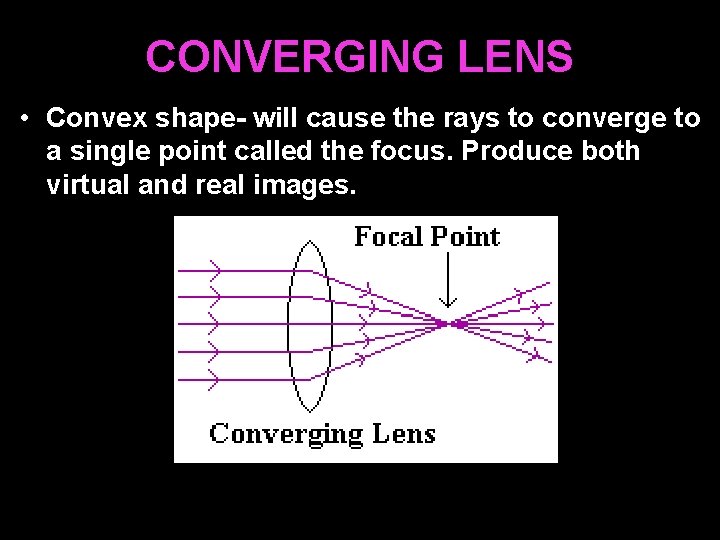
CONVERGING LENS • Convex shape- will cause the rays to converge to a single point called the focus. Produce both virtual and real images.
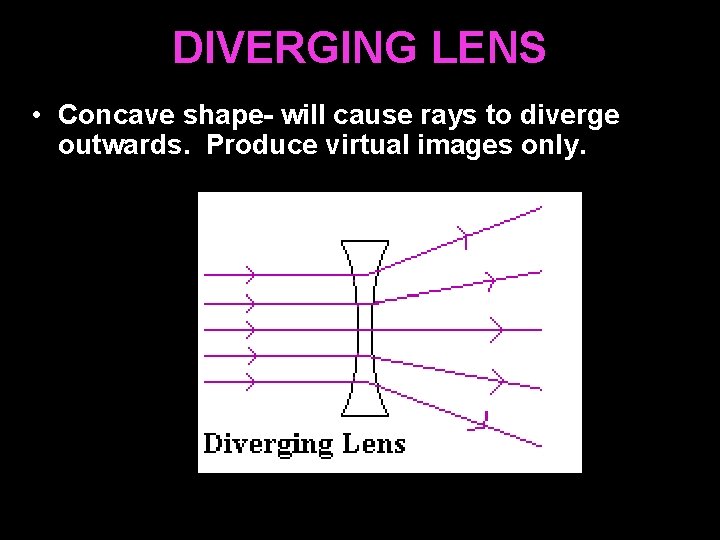
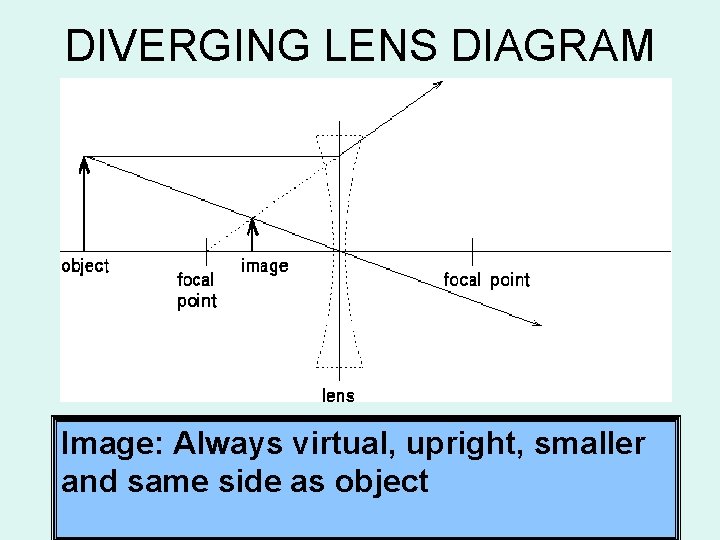
DIVERGING LENS • Concave shape- will cause rays to diverge outwards. Produce virtual images only.
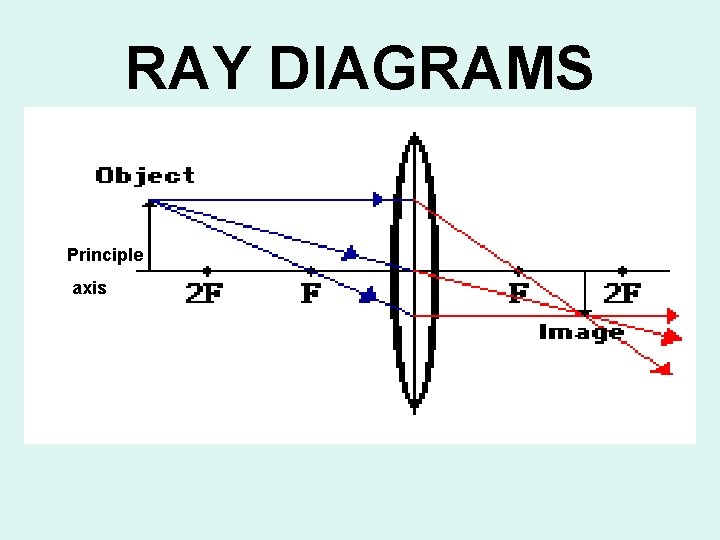
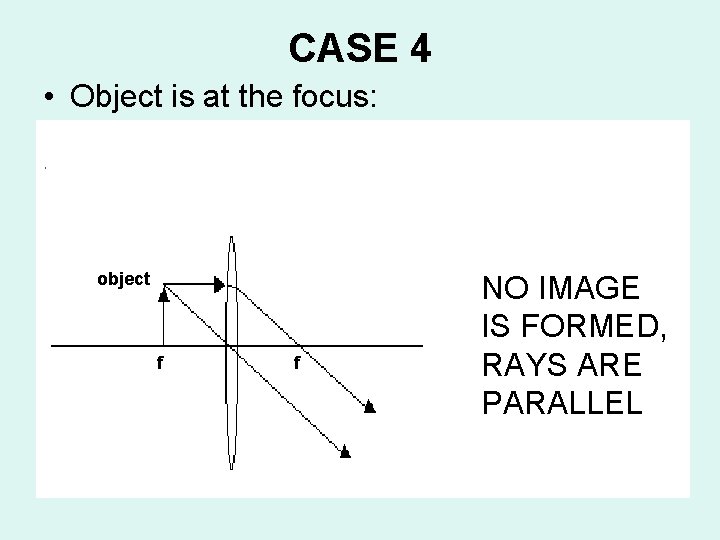
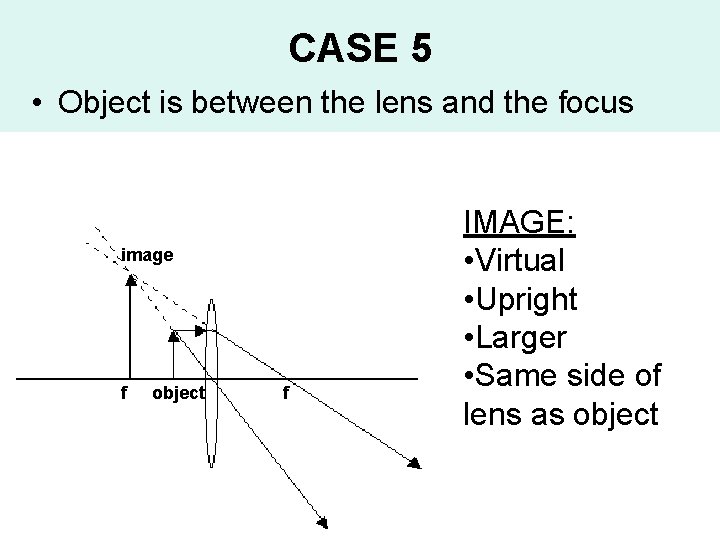
DRAWING RAY DIAGRAMS Ø Light rays moving parallel to the principle axis are refracted through the focus. Ø Rays passing through the focus on one side of the lens will be refracted parallel to the principle axis. Ø Rays passing through the optical center of the lens continues without refracting. Ø Use two of these to locate an image.
RAY DIAGRAMS Principle axis
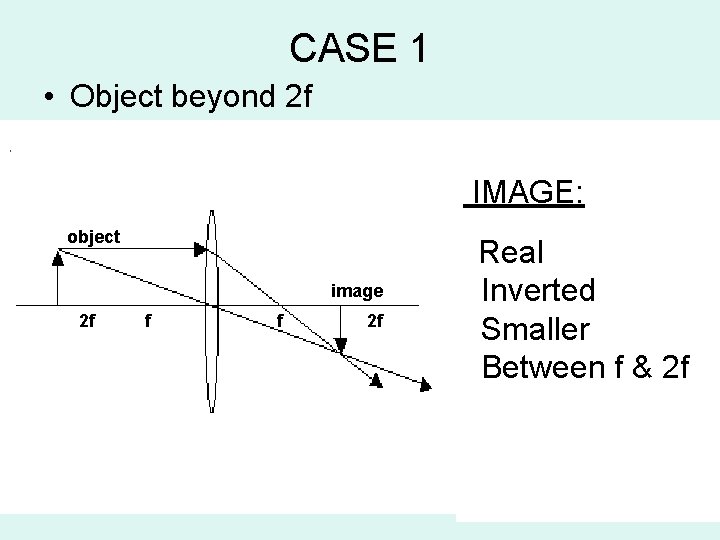
CASE 1 • Object beyond 2 f IMAGE: object image 2 f f f 2 f Real Inverted Smaller Between f & 2 f
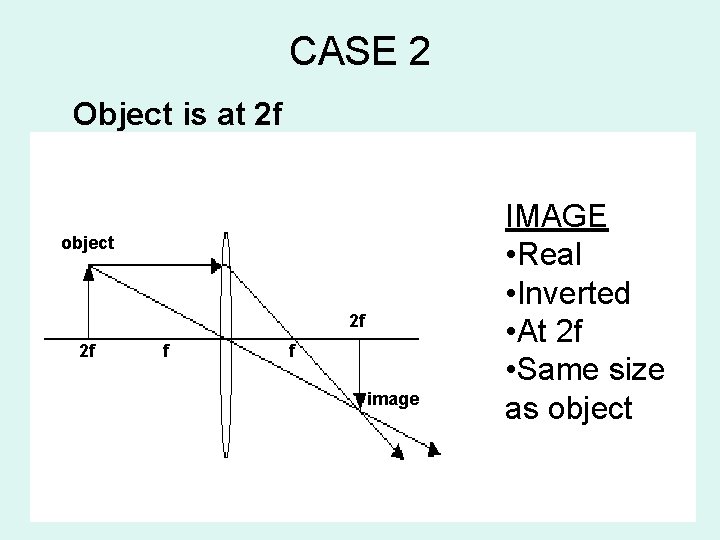
CASE 2 Object is at 2 f object 2 f 2 f f f image IMAGE • Real • Inverted • At 2 f • Same size as object
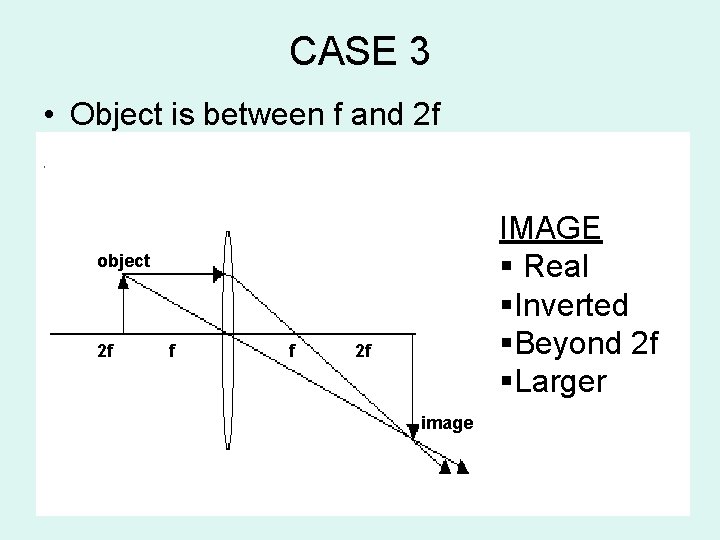
CASE 3 • Object is between f and 2 f IMAGE § Real §Inverted §Beyond 2 f §Larger object 2 f f f 2 f image
CASE 4 • Object is at the focus: object f f NO IMAGE IS FORMED, RAYS ARE PARALLEL
CASE 5 • Object is between the lens and the focus image f object f IMAGE: • Virtual • Upright • Larger • Same side of lens as object
DIVERGING LENS DIAGRAM Image: Always virtual, upright, smaller and same side as object
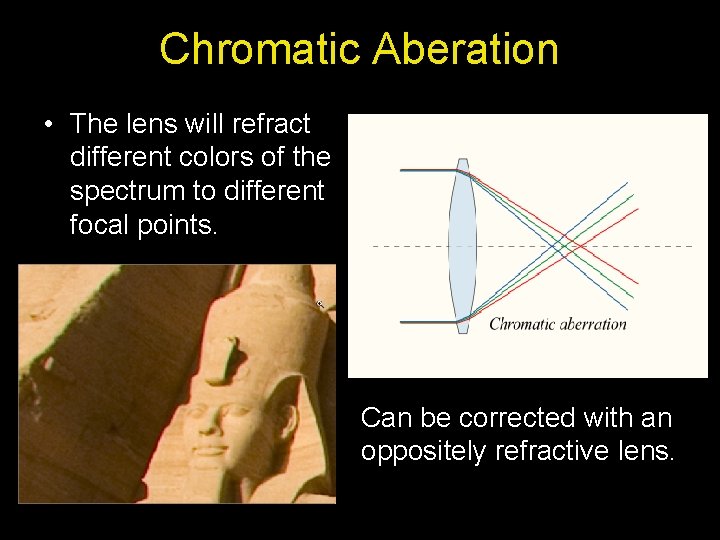
Chromatic Aberation • The lens will refract different colors of the spectrum to different focal points. Can be corrected with an oppositely refractive lens.
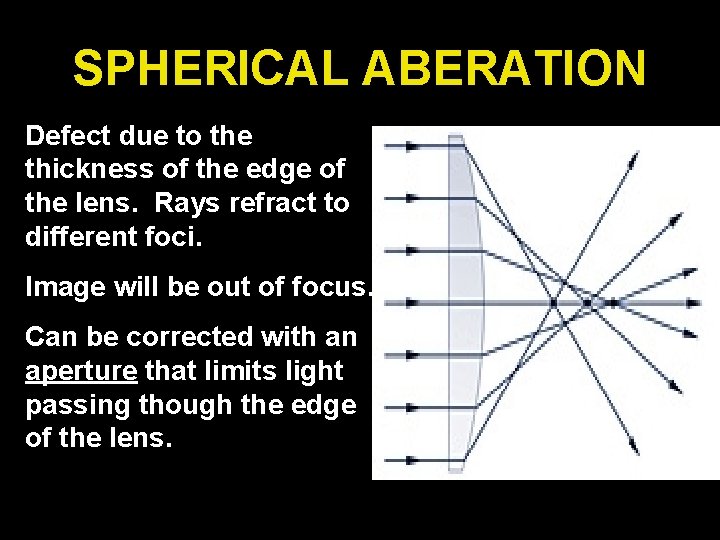
SPHERICAL ABERATION Defect due to the thickness of the edge of the lens. Rays refract to different foci. Image will be out of focus. Can be corrected with an aperture that limits light passing though the edge of the lens.