
Lens Ingrid Narvaez Spring 2013 Dr Mongi Abidi
Lens Ingrid Narvaez Spring 2013 Dr. Mongi Abidi
Outline • What is a lens? • Light Rays • Pinhole Camera – Problems – Circle of Confusion • Alternative to pinhole camera: lens – Focal length • Subdivision of focal length Slide 2
Lens • A lens is a device that collects light rays and projects them as images onto a piece of film. • Characteristics: – Focus- Responsible for controlling the sharpest part of the image. – Focal Length- Responsible for controlling the magnification of a scene. – Lens Aperture- Opening through which light travels. Slide 3
Light Rays • Light must be controlled for images to be formed. • In a camera, a light-control device is needed in front of the film, to help select and aim rays. • Although all the light-rays can not be used to form an image, a selection of them can. • If the rays reach a barrier with a small pinhole in it, the majority of the rays will be deflected by the barrier. Slide 4
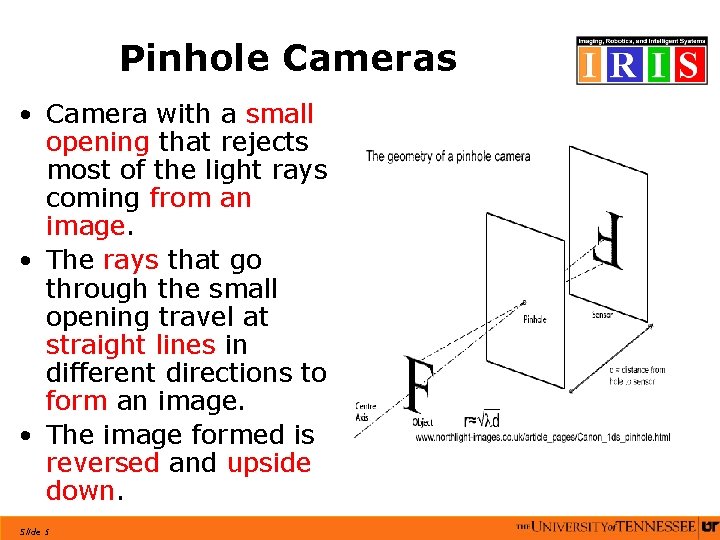
Pinhole Cameras • Camera with a small opening that rejects most of the light rays coming from an image. • The rays that go through the small opening travel at straight lines in different directions to form an image. • The image formed is reversed and upside down. Slide 5
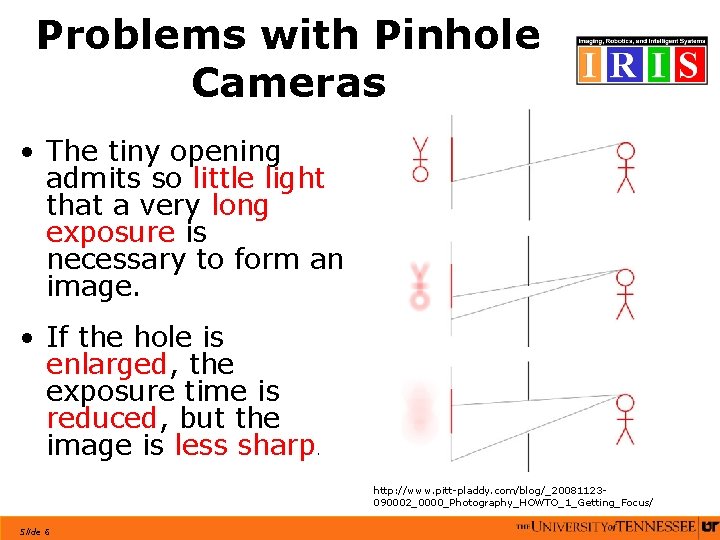
Problems with Pinhole Cameras • The tiny opening admits so little light that a very long exposure is necessary to form an image. • If the hole is enlarged, the exposure time is reduced, but the image is less sharp. http: //www. pitt-pladdy. com/blog/_20081123090002_0000_Photography_HOWTO_1_Getting_Focus/ Slide 6
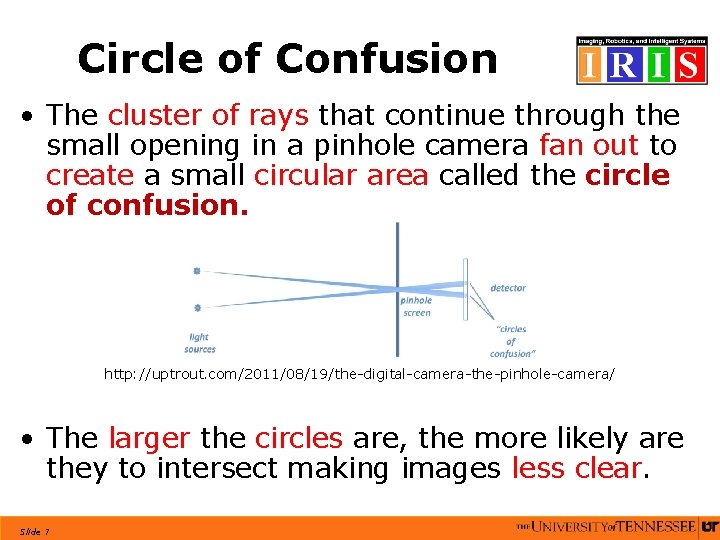
Circle of Confusion • The cluster of rays that continue through the small opening in a pinhole camera fan out to create a small circular area called the circle of confusion. http: //uptrout. com/2011/08/19/the-digital-camera-the-pinhole-camera/ • The larger the circles are, the more likely are they to intersect making images less clear. Slide 7
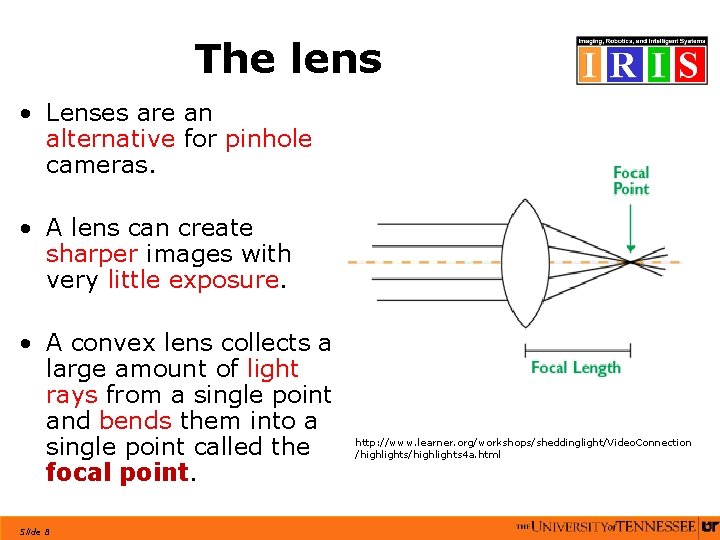
The lens • Lenses are an alternative for pinhole cameras. • A lens can create sharper images with very little exposure. • A convex lens collects a large amount of light rays from a single point and bends them into a single point called the focal point. Slide 8 http: //www. learner. org/workshops/sheddinglight/Video. Connection /highlights 4 a. html
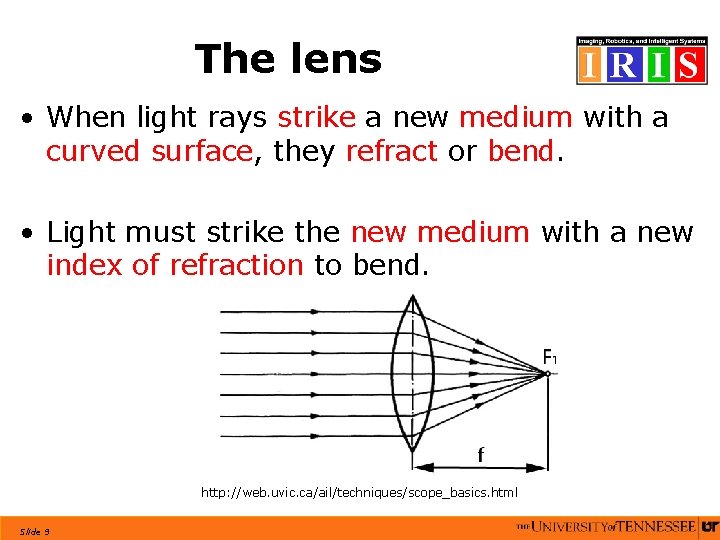
The lens • When light rays strike a new medium with a curved surface, they refract or bend. • Light must strike the new medium with a new index of refraction to bend. http: //web. uvic. ca/ail/techniques/scope_basics. html Slide 9
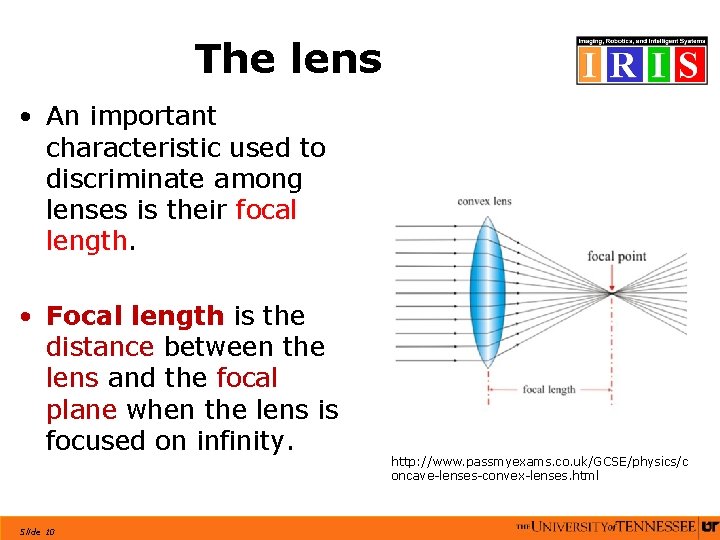
The lens • An important characteristic used to discriminate among lenses is their focal length. • Focal length is the distance between the lens and the focal plane when the lens is focused on infinity. Slide 10 http: //www. passmyexams. co. uk/GCSE/physics/c oncave-lenses-convex-lenses. html
Focal Length • Focal length controls the size of the image formed by the lens. • Focal length is inversely proportional to the angle of view (amount of scene that is shown). • Focal length lenses can be subdivided into the following categories – Normal Focal Length – Long Focal Length – Short focal Length Slide 11
Focal Length • Normal Focal Length – Approximates what the human eye sees. – Advantages: • Faster, less expensive, more compact and lighter in weight. • Long Focal Length – Provides greater image magnification and a narrower field of view. – Disadvantages over normal focal length lenses • Heavier, bulkier, more expensive. • Short Focal Length – Increases the angle of view Slide 12
Summary • As an alternative to pinhole cameras, lenses are able to collect large amount of light rays with very little exposure. • Light rays bend after striking a new medium with a different index of refraction. Ideally, these rays converge to a single point or the focal point. • The focal length is a key characteristic of lenses. It controls the size of the image formed by the lens. Slide 13
References Slide 14
- Slides: 14