
Length and Area Measurements Limits of accuracy The

- Slides: 19
Length and Area
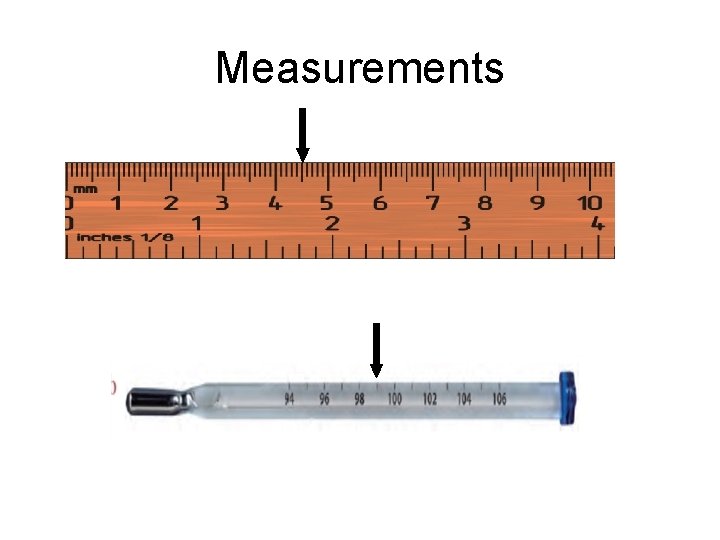
Measurements
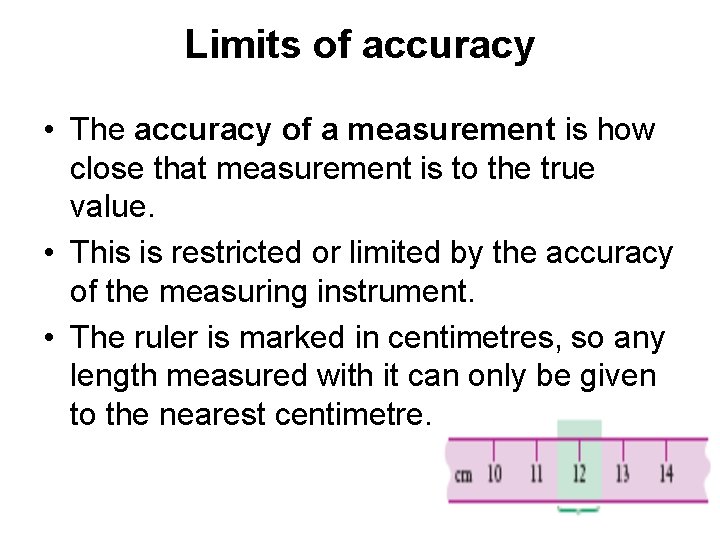
Limits of accuracy • The accuracy of a measurement is how close that measurement is to the true value. • This is restricted or limited by the accuracy of the measuring instrument. • The ruler is marked in centimetres, so any length measured with it can only be given to the nearest centimetre.
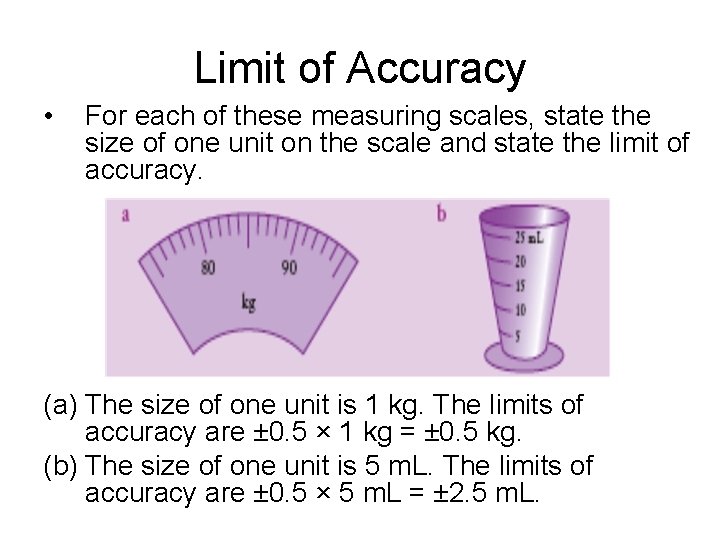
Limit of Accuracy • For each of these measuring scales, state the size of one unit on the scale and state the limit of accuracy. (a) The size of one unit is 1 kg. The limits of accuracy are ± 0. 5 × 1 kg = ± 0. 5 kg. (b) The size of one unit is 5 m. L. The limits of accuracy are ± 0. 5 × 5 m. L = ± 2. 5 m. L.
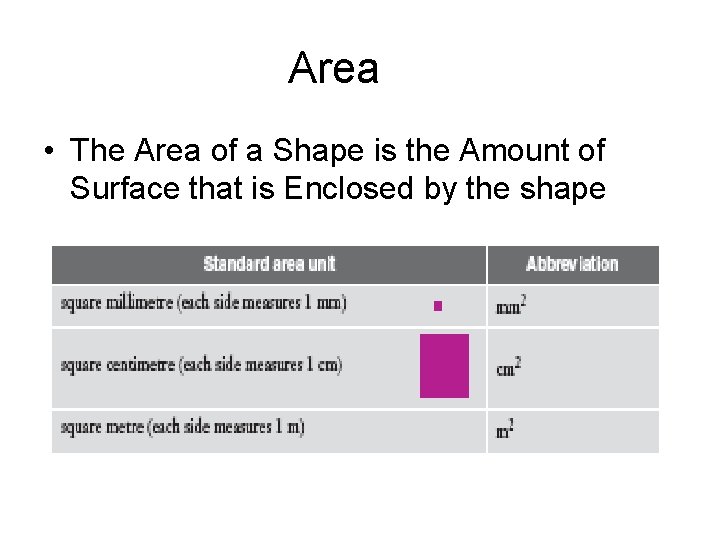
Area • The Area of a Shape is the Amount of Surface that is Enclosed by the shape
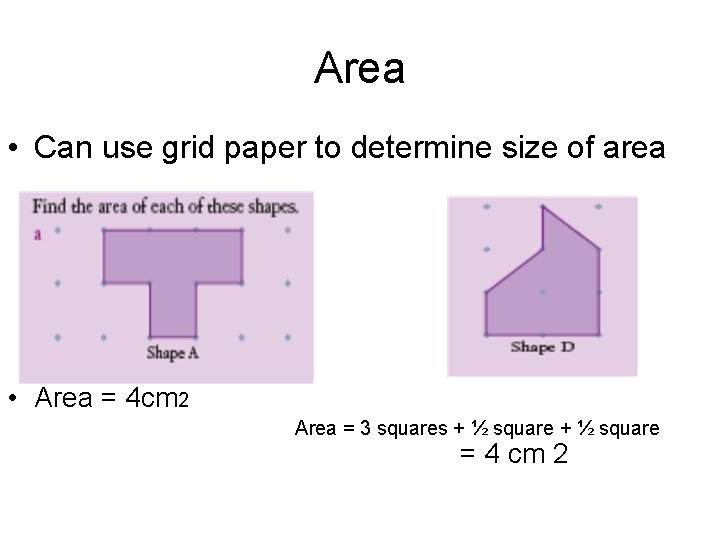
Area • Can use grid paper to determine size of area • Area = 4 cm 2 Area = 3 squares + ½ square = 4 cm 2
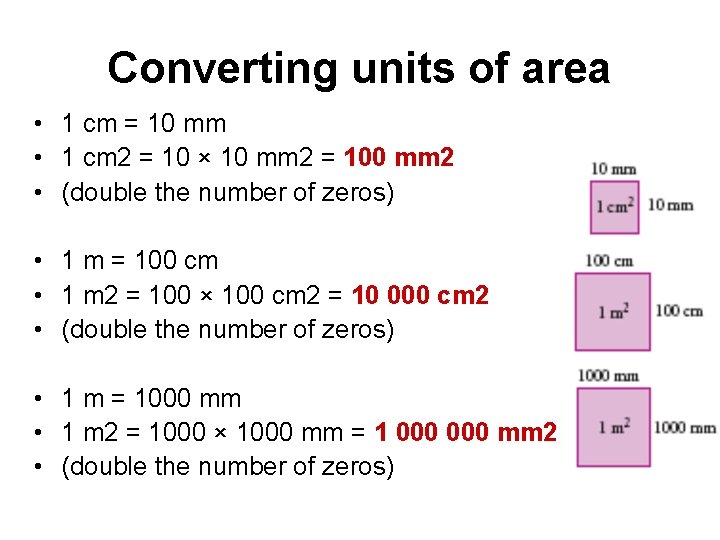
Converting units of area • 1 cm = 10 mm • 1 cm 2 = 10 × 10 mm 2 = 100 mm 2 • (double the number of zeros) • 1 m = 100 cm • 1 m 2 = 100 × 100 cm 2 = 10 000 cm 2 • (double the number of zeros) • 1 m = 1000 mm • 1 m 2 = 1000 × 1000 mm = 1 000 mm 2 • (double the number of zeros)
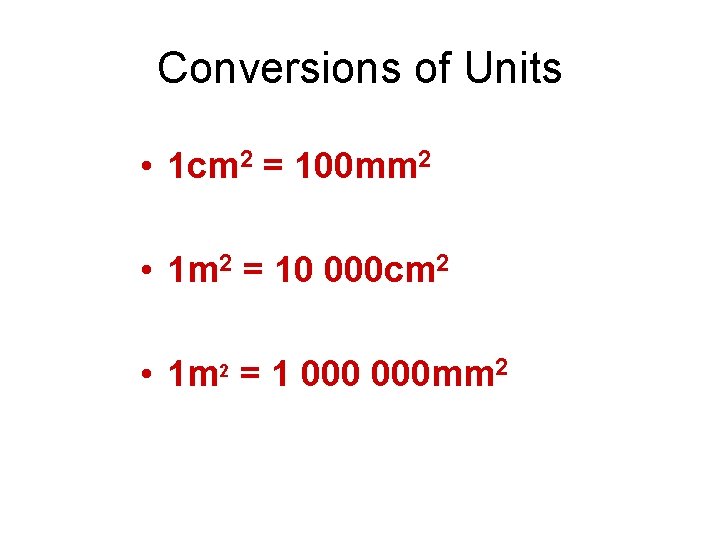
Conversions of Units • 1 cm 2 = 100 mm 2 • 1 m 2 = 10 000 cm 2 • 1 m 2 = 1 000 mm 2
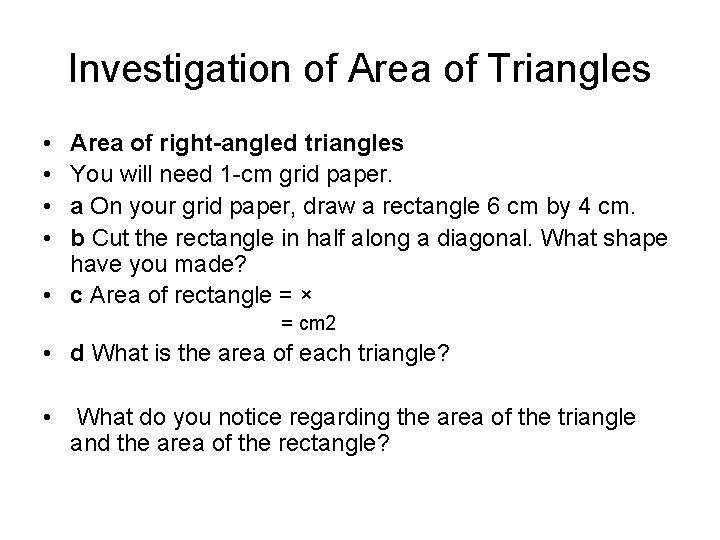
Investigation of Area of Triangles • • Area of right-angled triangles You will need 1 -cm grid paper. a On your grid paper, draw a rectangle 6 cm by 4 cm. b Cut the rectangle in half along a diagonal. What shape have you made? • c Area of rectangle = × = cm 2 • d What is the area of each triangle? • What do you notice regarding the area of the triangle and the area of the rectangle?
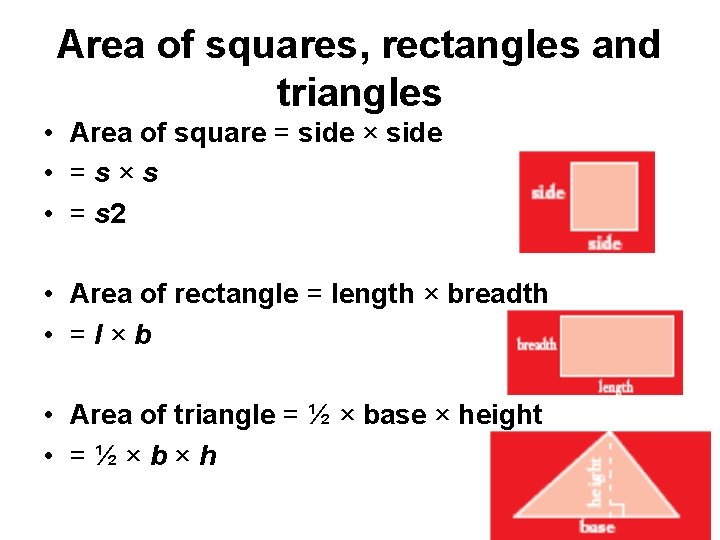
Area of squares, rectangles and triangles • Area of square = side × side • =s×s • = s 2 • Area of rectangle = length × breadth • =l×b • Area of triangle = ½ × base × height • =½×b×h
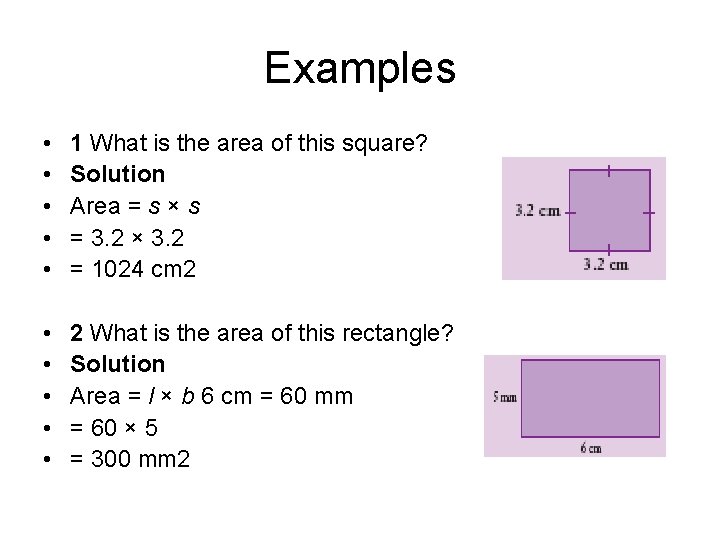
Examples • • • 1 What is the area of this square? Solution Area = s × s = 3. 2 × 3. 2 = 1024 cm 2 • • • 2 What is the area of this rectangle? Solution Area = l × b 6 cm = 60 mm = 60 × 5 = 300 mm 2
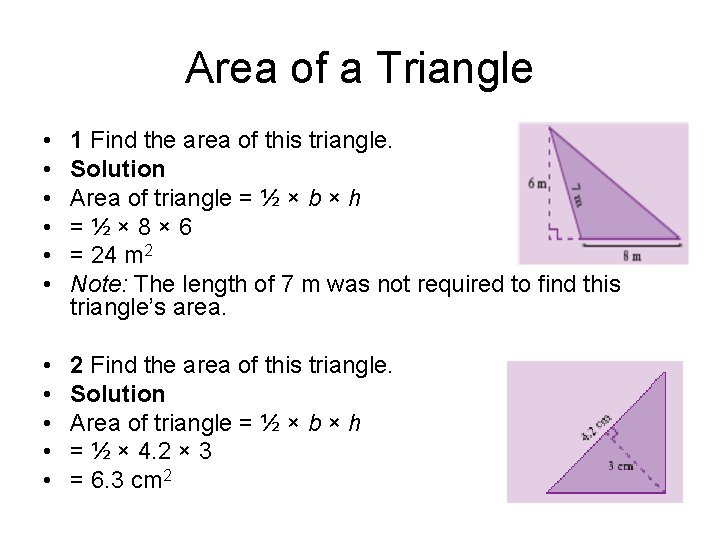
Area of a Triangle • • • 1 Find the area of this triangle. Solution Area of triangle = ½ × b × h =½× 8× 6 = 24 m 2 Note: The length of 7 m was not required to find this triangle’s area. • • • 2 Find the area of this triangle. Solution Area of triangle = ½ × b × h = ½ × 4. 2 × 3 = 6. 3 cm 2
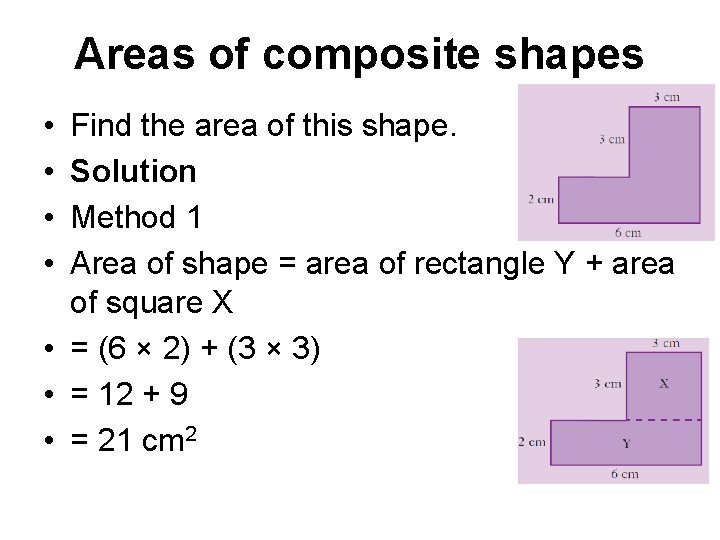
Areas of composite shapes • • Find the area of this shape. Solution Method 1 Area of shape = area of rectangle Y + area of square X • = (6 × 2) + (3 × 3) • = 12 + 9 • = 21 cm 2
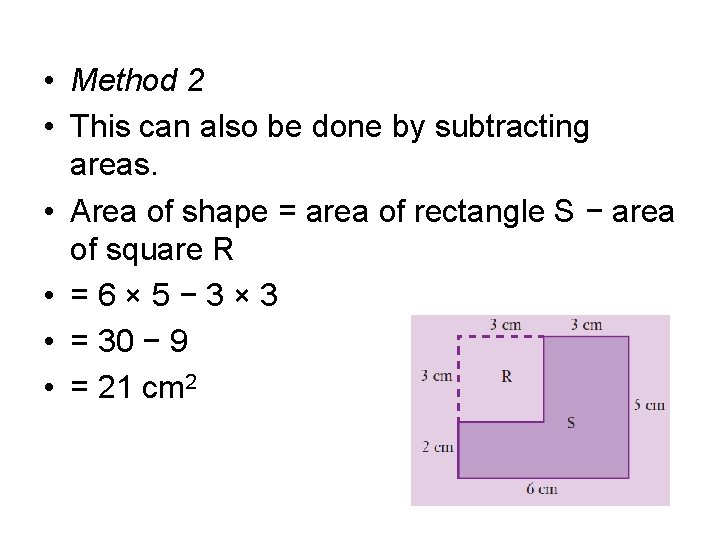
• Method 2 • This can also be done by subtracting areas. • Area of shape = area of rectangle S − area of square R • =6× 5− 3× 3 • = 30 − 9 • = 21 cm 2
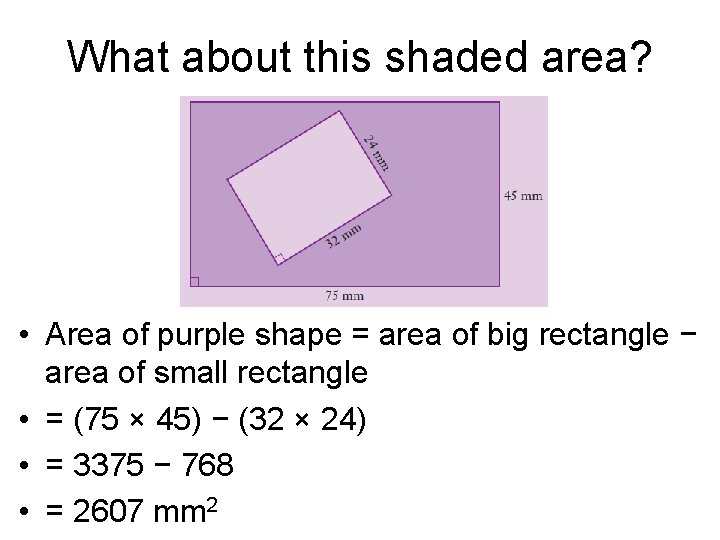
What about this shaded area? • Area of purple shape = area of big rectangle − area of small rectangle • = (75 × 45) − (32 × 24) • = 3375 − 768 • = 2607 mm 2
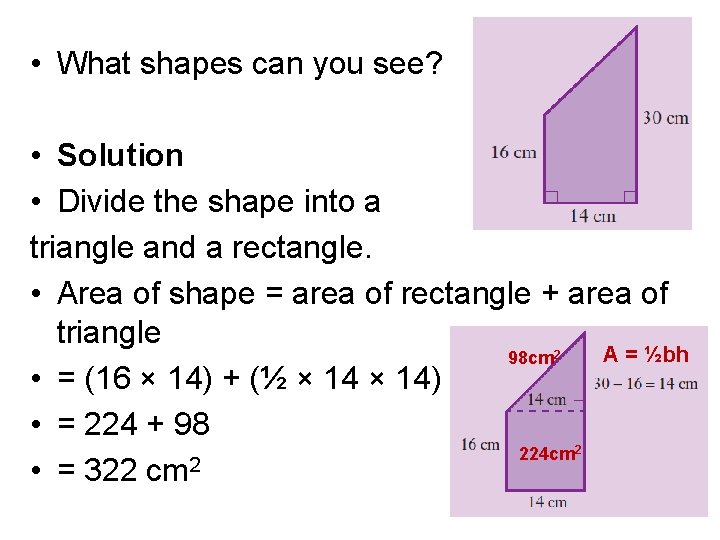
• What shapes can you see? • Solution • Divide the shape into a triangle and a rectangle. • Area of shape = area of rectangle + area of triangle A = ½bh 98 cm • = (16 × 14) + (½ × 14) • = 224 + 98 224 cm 2 • = 322 cm 2 2
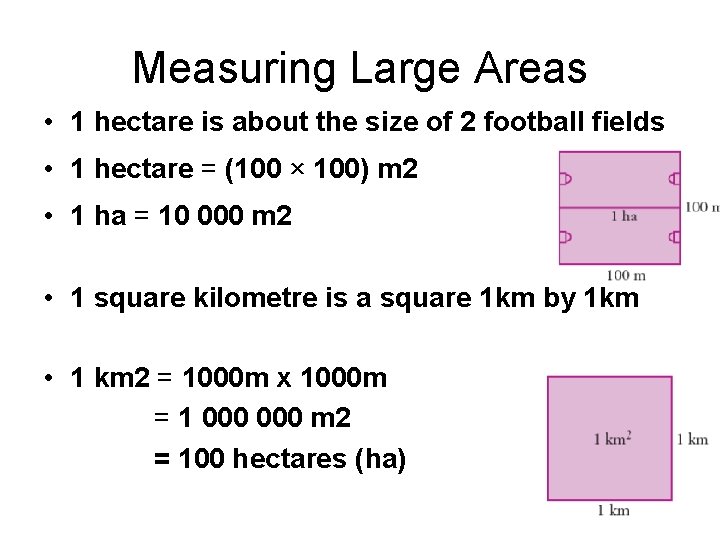
Measuring Large Areas • 1 hectare is about the size of 2 football fields • 1 hectare = (100 × 100) m 2 • 1 ha = 10 000 m 2 • 1 square kilometre is a square 1 km by 1 km • 1 km 2 = 1000 m x 1000 m = 1 000 m 2 = 100 hectares (ha)
• A nature reserve has an area of 9 577 000 m 2. • a What is its area in hectares? b What is its area in square kilometres? • • Solution a Area of reserve = 9 577 000 m 2 (1 ha = 10000 m 2) = (9 577 000 ÷ 10 000) ha = 957 700 ha • The area of the reserve is 957 700 hectares. • • b Area of reserve = 9 577 000 m 2 (1 km 2 = 1 000 m 2) = (9 577 000 ÷ 1 000) km 2 = 9577 km 2 The area of the reserve is 9577 square kilometres.