
LemonPowered Car EG 1003 Introduction to Engineering and
- Slides: 21
Lemon-Powered Car EG 1003: Introduction to Engineering and Design
Overview • • • Experimental Objective Background Information Materials Procedure Assignment Conclusion
Experimental Objective • Determine potency of reducing agents • Create chemical cells to generate electricity • Use capacitors to store/release energy • Build car powered by chemical reaction
Background Information • • • Fundamental ideas Redox (reduction/oxidation) reactions Batteries Designing citrus cell batteries Capacitors
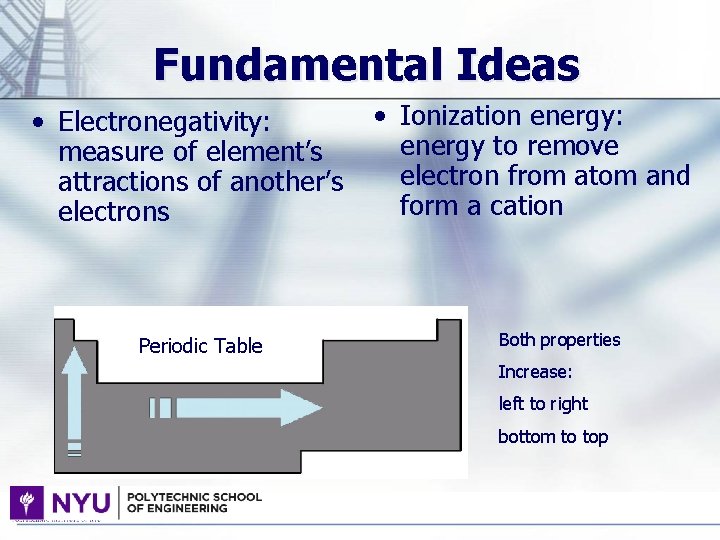
Fundamental Ideas • Electronegativity: measure of element’s attractions of another’s electrons Periodic Table • Ionization energy: energy to remove electron from atom and form a cation Both properties Increase: left to right bottom to top
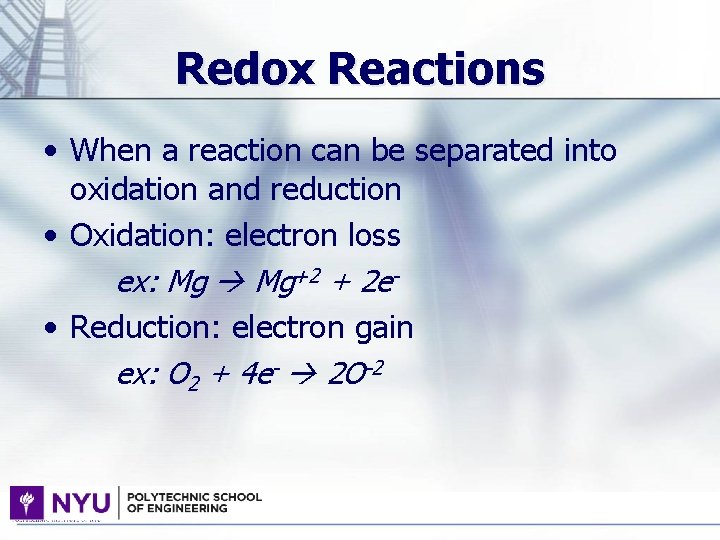
Redox Reactions • When a reaction can be separated into oxidation and reduction • Oxidation: electron loss ex: Mg Mg+2 + 2 e • Reduction: electron gain ex: O 2 + 4 e- 2 O-2
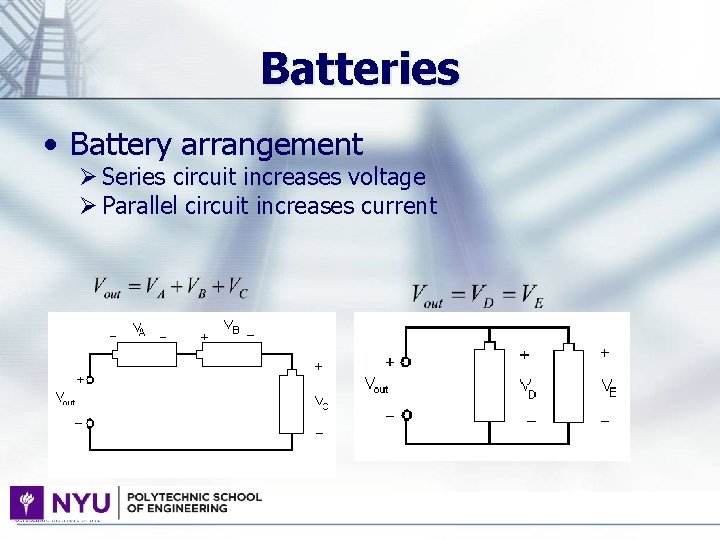
Batteries • Battery arrangement Ø Series circuit increases voltage Ø Parallel circuit increases current
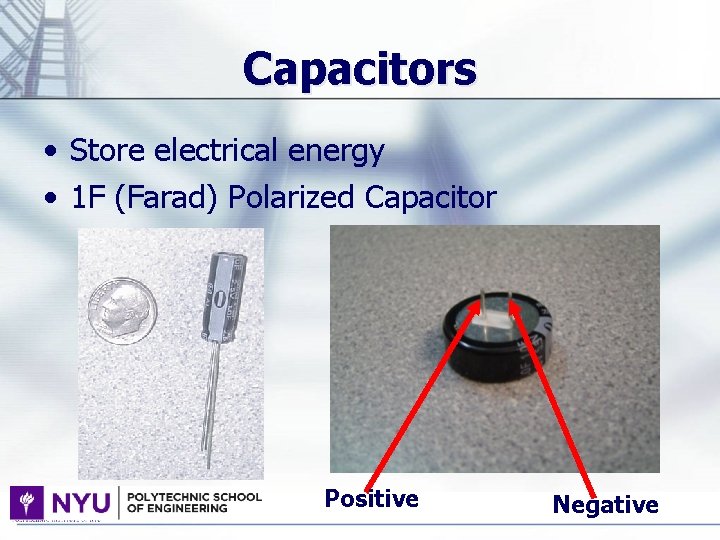
Capacitors • Store electrical energy • 1 F (Farad) Polarized Capacitor Positive Negative
Capacitor Charging • Capacitor charge limit is restricted by charge voltage • Maximizing applied voltage maximizes energy stored • Capacitor is charged in time increments called the time constant (tau): τ =RC R=resistance C=capacitance
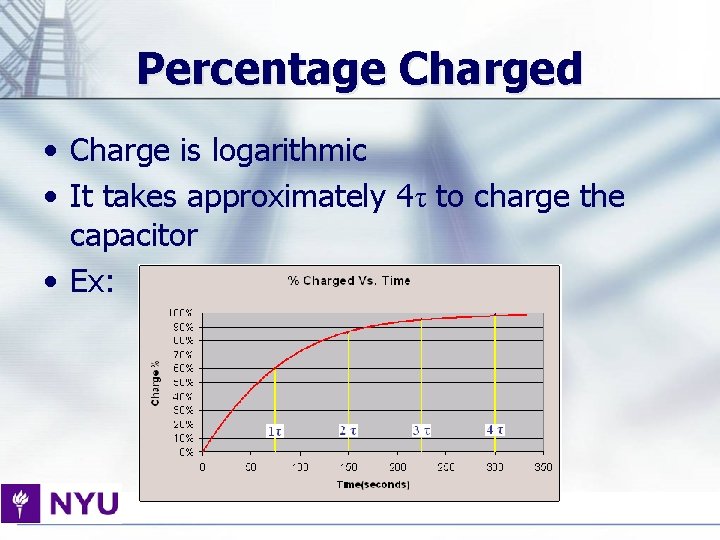
Percentage Charged • Charge is logarithmic • It takes approximately 4τ to charge the capacitor • Ex:
Designing of Citrus Cells • A citrus cell/battery § Uses two different electrodes § Citrus acid used as electrolyte
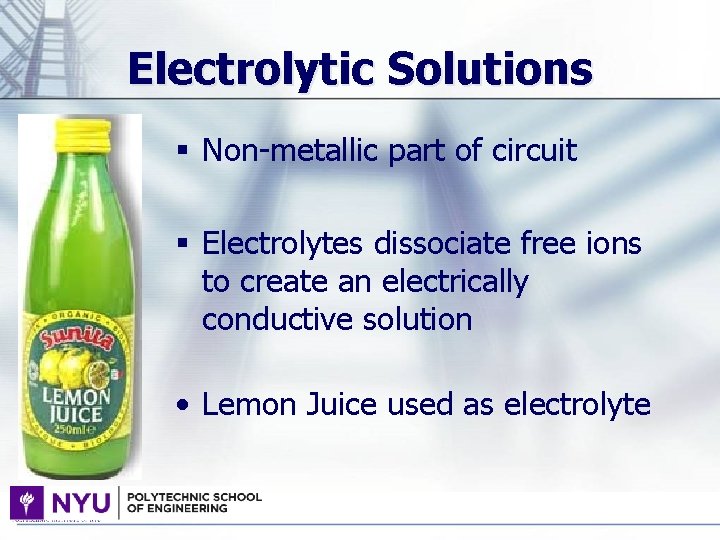
Electrolytic Solutions § Non-metallic part of circuit § Electrolytes dissociate free ions to create an electrically conductive solution • Lemon Juice used as electrolyte
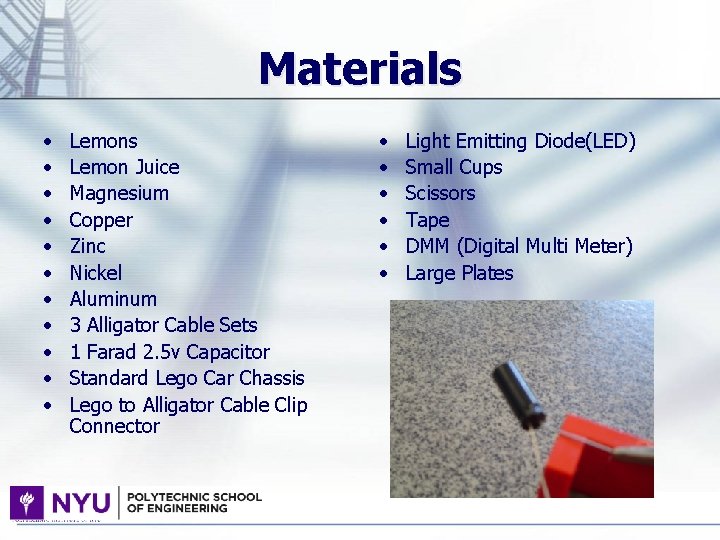
Materials • • • Lemons Lemon Juice Magnesium Copper Zinc Nickel Aluminum 3 Alligator Cable Sets 1 Farad 2. 5 v Capacitor Standard Lego Car Chassis Lego to Alligator Cable Clip Connector • • • Light Emitting Diode(LED) Small Cups Scissors Tape DMM (Digital Multi Meter) Large Plates
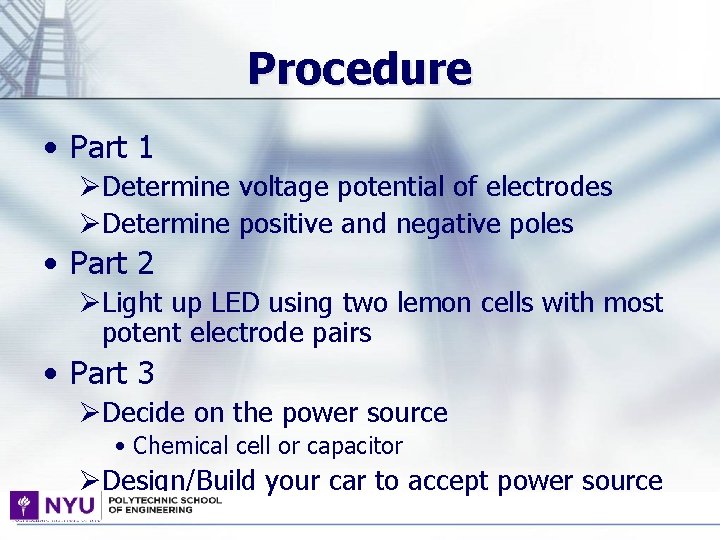
Procedure • Part 1 ØDetermine voltage potential of electrodes ØDetermine positive and negative poles • Part 2 ØLight up LED using two lemon cells with most potent electrode pairs • Part 3 ØDecide on the power source • Chemical cell or capacitor ØDesign/Build your car to accept power source
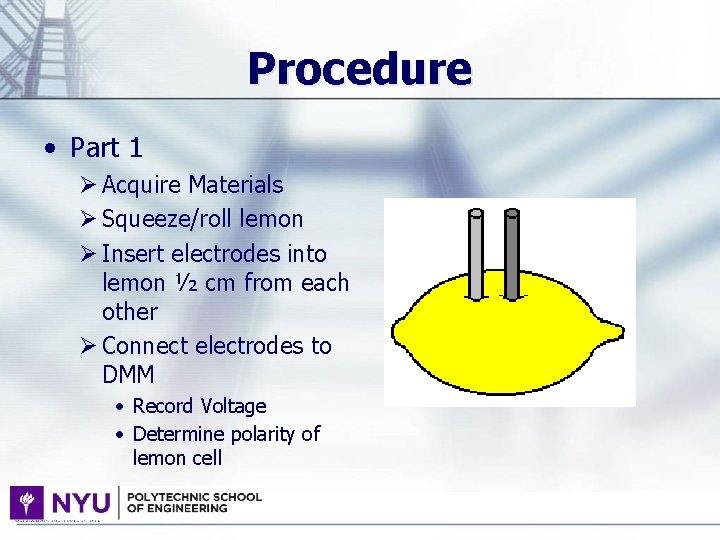
Procedure • Part 1 Ø Acquire Materials Ø Squeeze/roll lemon Ø Insert electrodes into lemon ½ cm from each other Ø Connect electrodes to DMM • Record Voltage • Determine polarity of lemon cell
Procedure • Part 2 ØCreate second citrus cell ØConnect two citrus cells in series • Attach to LED • Is it lit?
Procedure • Part 3 ØChoose your electrodes (remember cost) ØDesign your power source • Chemical or capacitor ØDesign car for power source • Allow 15 min for capacitor to charge ØCreate a sketch/pricelist ØTA must sign your work ØEnter competition
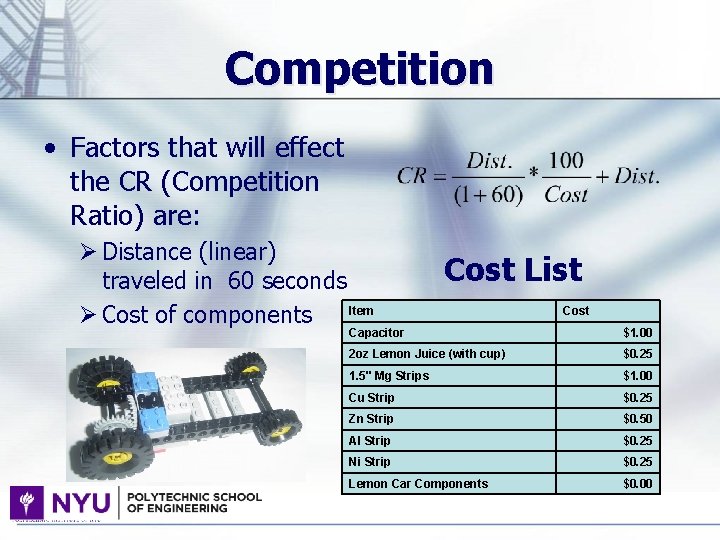
Competition • Factors that will effect the CR (Competition Ratio) are: Ø Distance (linear) traveled in 60 seconds Item Ø Cost of components Cost List Cost Capacitor $1. 00 2 oz Lemon Juice (with cup) $0. 25 1. 5" Mg Strips $1. 00 Cu Strip $0. 25 Zn Strip $0. 50 Al Strip $0. 25 Ni Strip $0. 25 Lemon Car Components $0. 00
Assignment: Report • • Team report Title page Discussion topics in the manual Include original data with instructor’s initials ØScan in data and lab notes (ask TA for assistance)
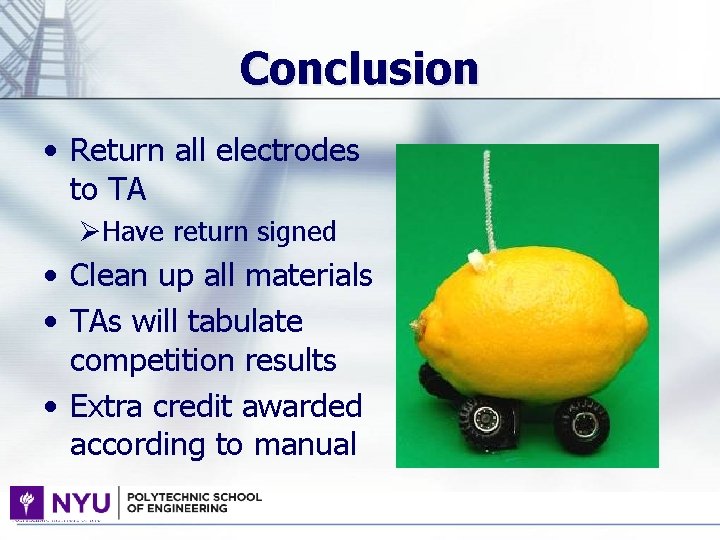
Assignment: Presentation • Team presentation • Include photos of the lemon car • Explain how the battery works
Conclusion • Return all electrodes to TA ØHave return signed • Clean up all materials • TAs will tabulate competition results • Extra credit awarded according to manual