
Leisure and spare time activities How do people

- Slides: 21
Leisure and spare time activities How do people in the UK spend their spare time?
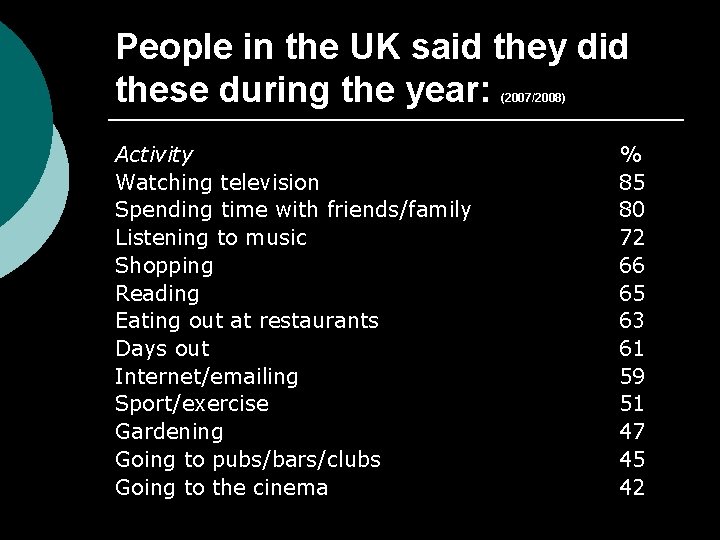
People in the UK said they did these during the year: (2007/2008) Activity Watching television Spending time with friends/family Listening to music Shopping Reading Eating out at restaurants Days out Internet/emailing Sport/exercise Gardening Going to pubs/bars/clubs Going to the cinema % 85 80 72 66 65 63 61 59 51 47 45 42
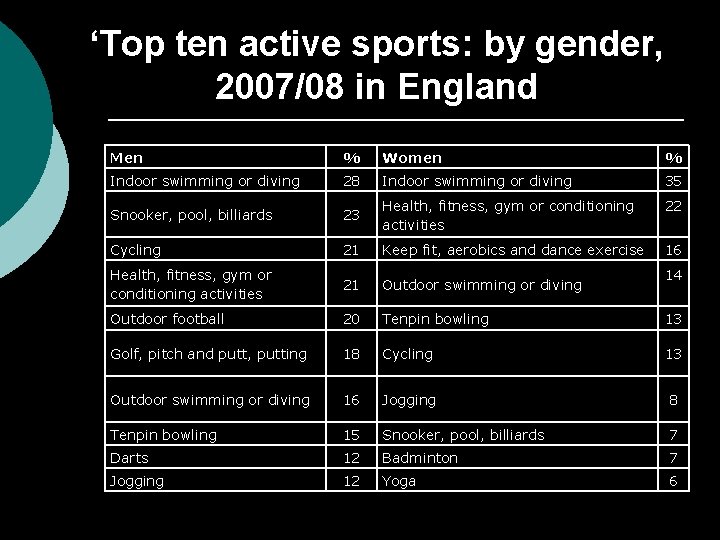
‘Top ten active sports: by gender, 2007/08 in England Men % Women % Indoor swimming or diving 28 Indoor swimming or diving 35 Snooker, pool, billiards 23 Health, fitness, gym or conditioning activities 22 Cycling 21 Keep fit, aerobics and dance exercise 16 Health, fitness, gym or conditioning activities 21 Outdoor swimming or diving Outdoor football 20 Tenpin bowling 13 Golf, pitch and putt, putting 18 Cycling 13 Outdoor swimming or diving 16 Jogging 8 Tenpin bowling 15 Snooker, pool, billiards 7 Darts 12 Badminton 7 Jogging 12 Yoga 6 14
What do you do in your spare time? l Survey those in your group about what they normally do if/when they have free time. l Each group will report back on one person in their group and tell us about the most interesting free time activity that you heard about. You need to listen and remember!
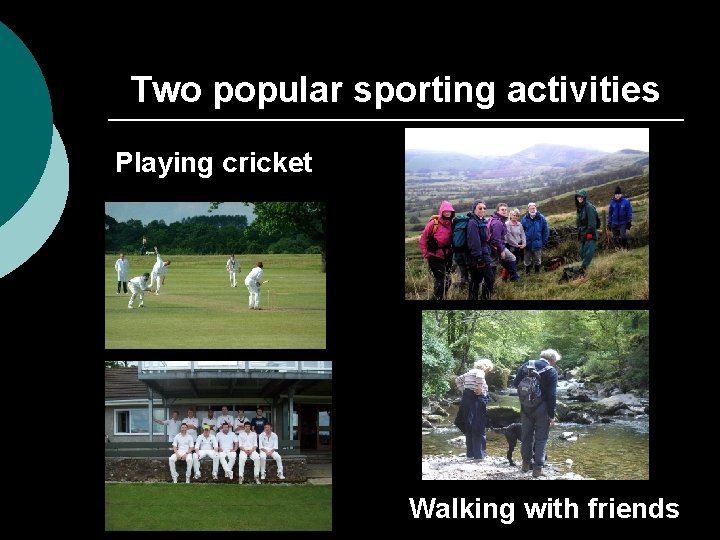
Two popular sporting activities Playing cricket Walking with friends
Time spent using the media • Watching television is very popular. • Using the internet is increasingly popular. • Listening to music is very popular. Downloads are replacing CDs. • Many people watch films on DVD. • More people are going to the cinema, especially younger people. • Some people enjoy listening to the radio. • The sale of newspapers is declining. • Reading for pleasure is popular and some people borrow books from public libraries.
The Arts • Some people join choirs or perform music in groups or orchestras. • Painting and crafts are popular spare-time activities. • Drama is another popular activity. • Others go to theatre, attend concerts and visit art galleries and museums.
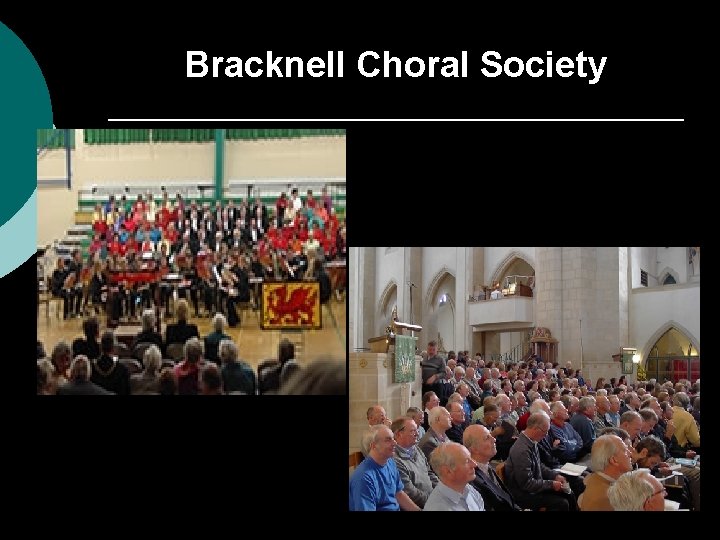
Bracknell Choral Society
Participation in education • Some people take courses which will help them with their careers. • Learning languages is popular; people may learn a language because they are planning a foreign holiday. • Painting and crafts are popular classes. • Some people take courses in subjects that interest them, such as history and literature.
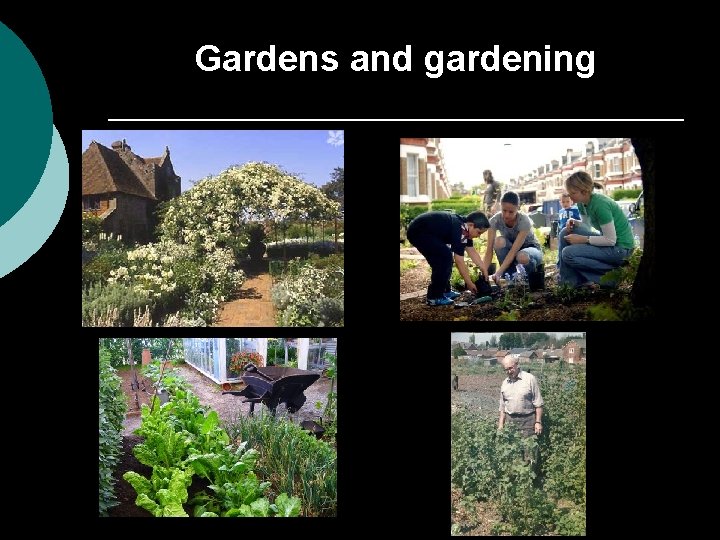
Gardening • Many people live in houses with gardens. • Many people enjoy working in their gardens, growing flowers and vegetables. • Some people have allotments where they grow vegetables. • Some gardeners join gardening clubs. • Radio and television programmes about gardening are popular. • People enjoy visiting gardens that are open for the public to visit.
Gardens and gardening
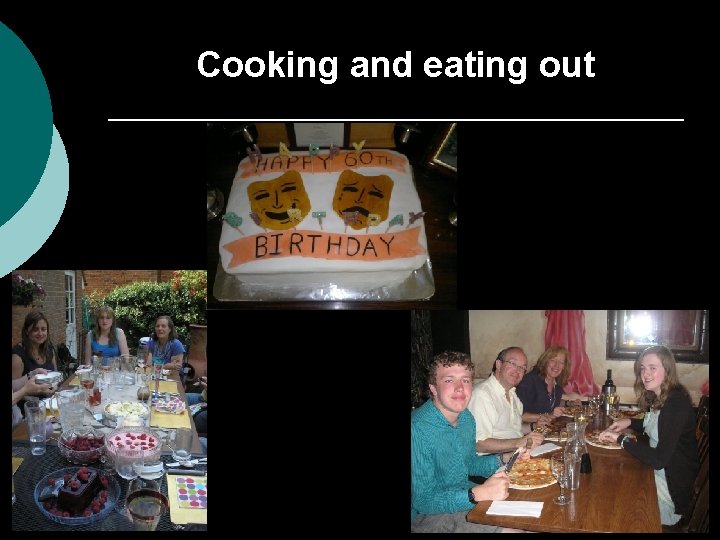
Cooking and food • Some people enjoy cooking interesting dishes and making cakes. • There is a great interest in food from around the world. • Eating out is popular. Often people choose to eat Italian, Indian or Chinese food. • There are many programmes about cookery on television and some people collect cookery books.
Cooking and eating out
Religion, politics and volunteering • Some people take part in activities linked to their religious affiliation. • Some people are active in political parties or trade unions. • Others take part in volunteering, to help others or look after the environment.
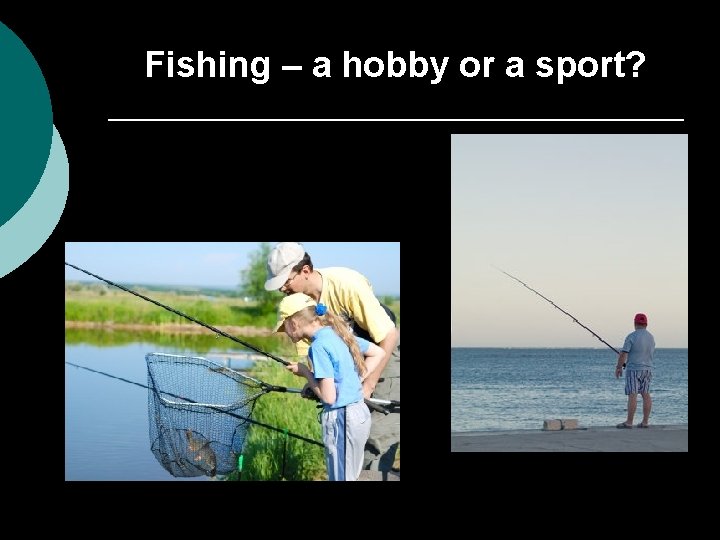
Fishing – a hobby or a sport?
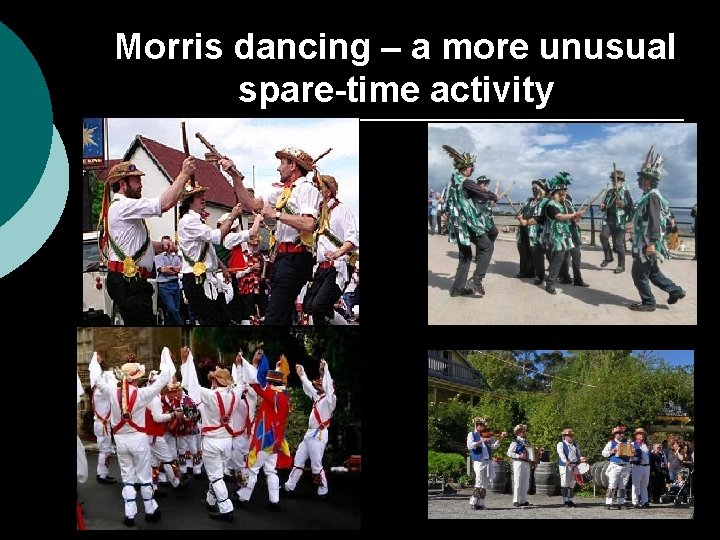
Morris dancing – a more unusual spare-time activity
What would you like to do? If you had more time, what would you like to do and why? • Ask a few others they would like to do if they had more free time. • Find out why they would like to do what they have told you.
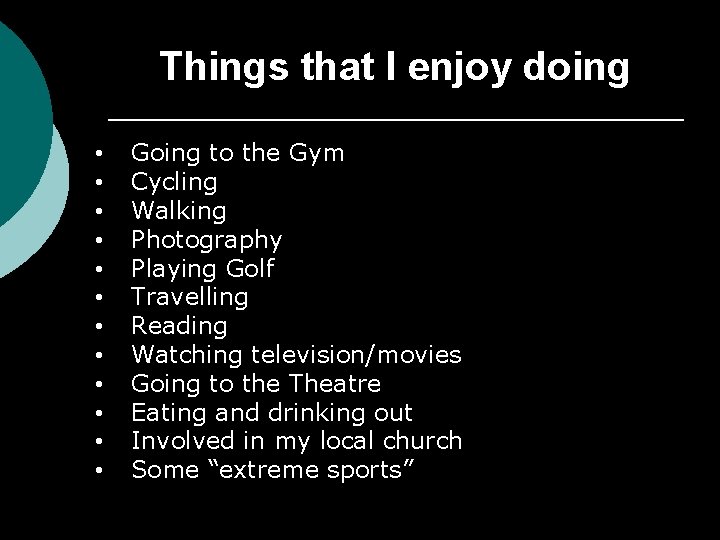
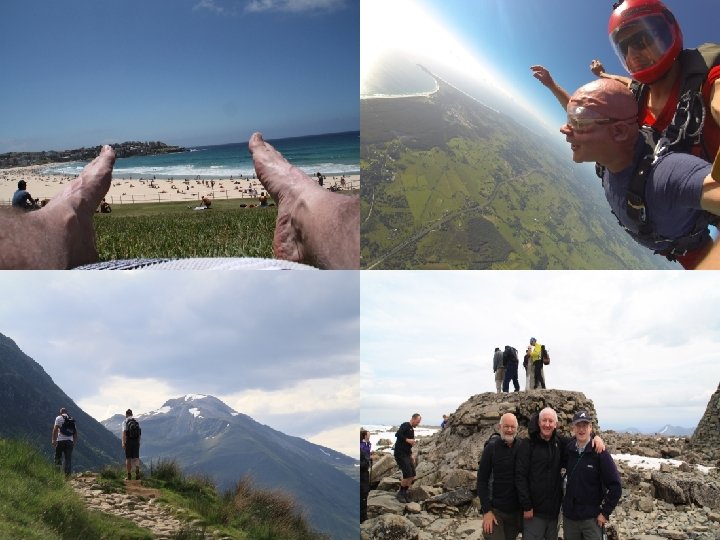
Things that I enjoy doing • • • Going to the Gym Cycling Walking Photography Playing Golf Travelling Reading Watching television/movies Going to the Theatre Eating and drinking out Involved in my local church Some “extreme sports”
What Chinese Hobby would you recommend for me? 1. In groups, list three hobbies or pastimes to recommend to me, choose the best one. 2. Why would it be good for me?