
Legionella The History of Legionella Legionnaires Disease POINTS














- Slides: 41
Legionella The History of Legionella & Legionnaires Disease
POINTS TO BE COVERED: A B C D Introduction E Legislation & Guidance F Legionellosis – Hot & Cold Water Services G Conclusion History of Legionellosis Route of Infection – Causative Chain Case Studies
Introduction to Legionellosis Including Legionnaires Disease
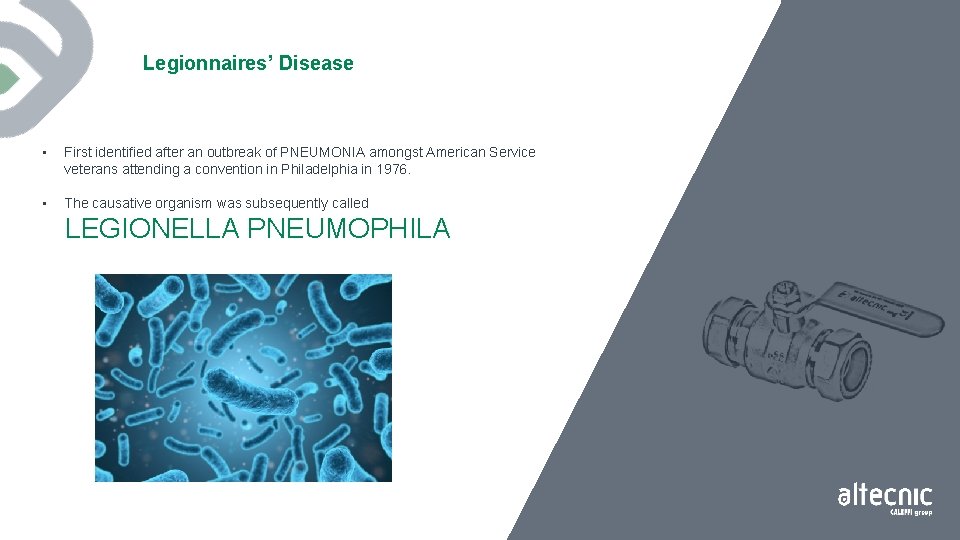
Legionnaires’ Disease • First identified after an outbreak of PNEUMONIA amongst American Service veterans attending a convention in Philadelphia in 1976. • The causative organism was subsequently called LEGIONELLA PNEUMOPHILA
A. Legionnaires’ Disease United Kingdom • • Between 250 & 400 cases reported annually Accounts for 2% of primary Pneumonia cases United States • Between 10, 000 & 11, 000 cases annually requiring hospital treatment as a minimum
Legionellosis – The Causative Chain Water System HABITAT • Legionella are commonly found in both Natural and Man-Made water systems • At least 56 Species of Legionella • At least 70 Serogroups of Legionella Pneumophila • 3 Subgroups of Serogroup 1 L. Pneumophila, serogroup 1, subgroup pontiac has been associated with over 90% of outbreaks of Legionnaires’ disease
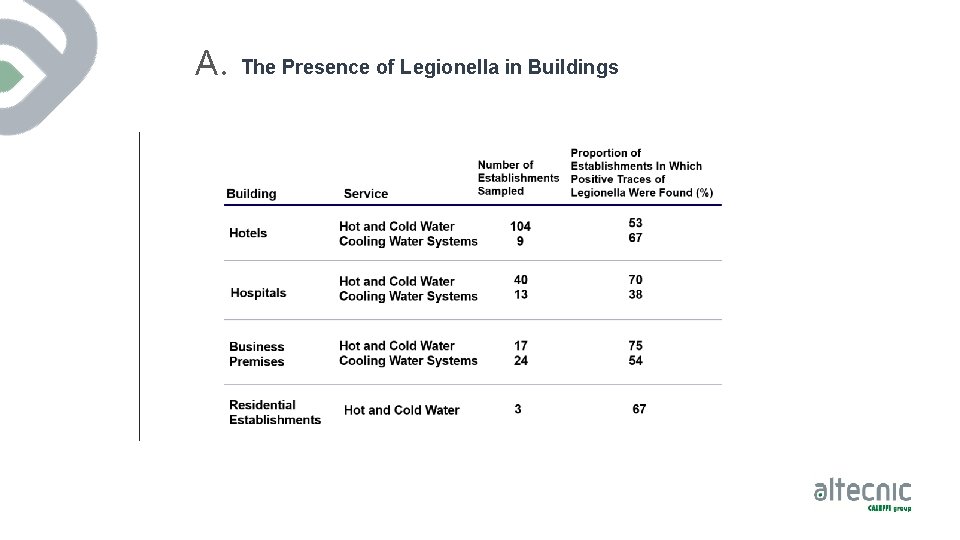
A. The Presence of Legionella in Buildings
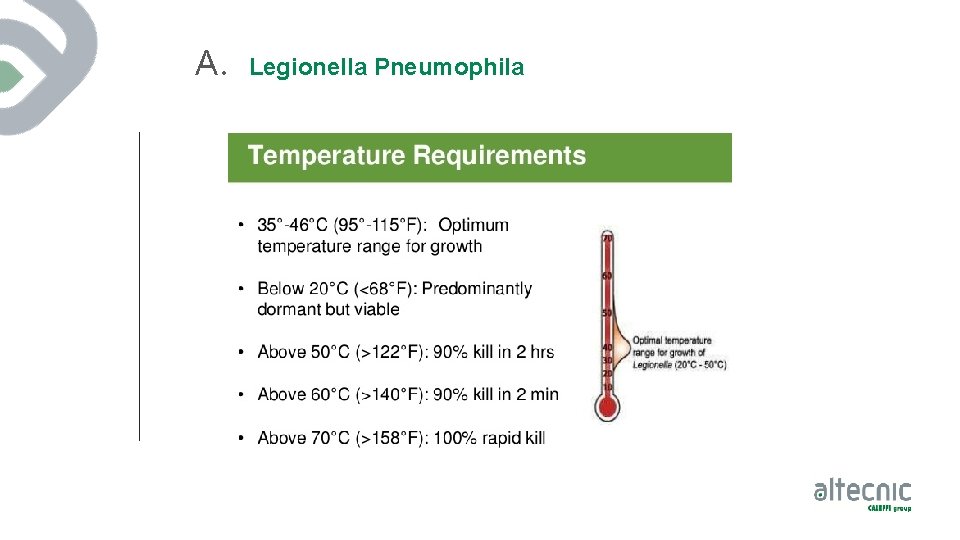
Legionellosis – The Causative Chain Water System Multiplication Environment for Multiplication • Temperature of 37°C. The bacteria survive up to 60ºC, but prefer 20 - 45ºC • p. H of 6. 9 (5. 5 - 8. 1) • Trace of iron • Bacterial slime, algae, scale
A. Legionella Pneumophila
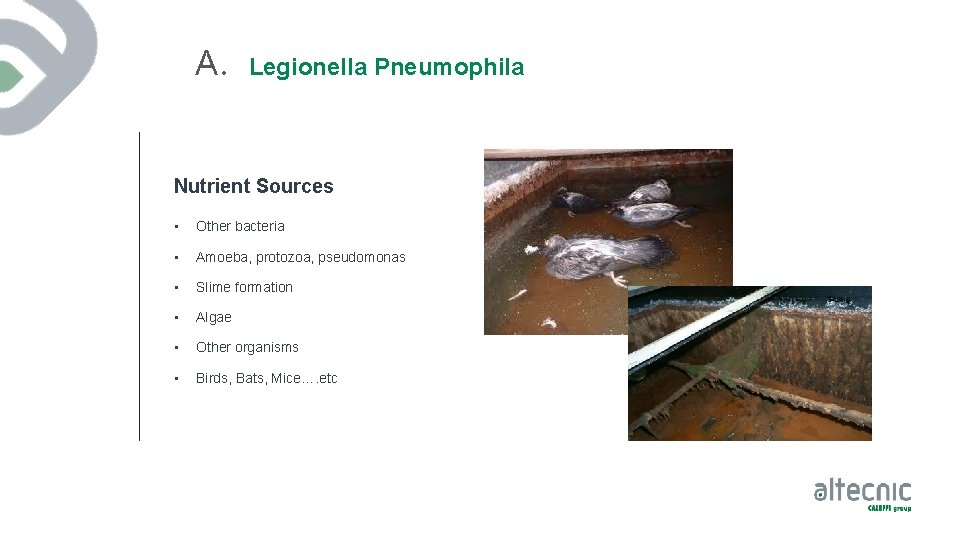
A. Legionella Pneumophila Nutrient Sources • Other bacteria • Amoeba, protozoa, pseudomonas • Slime formation • Algae • Other organisms • Birds, Bats, Mice…. etc
Legionellosis – The Causative Chain Water System Multiplication Aerosols Aerosol Generation • Cooling or Condensing towers • Humidifiers • Taps and Showers • Spas
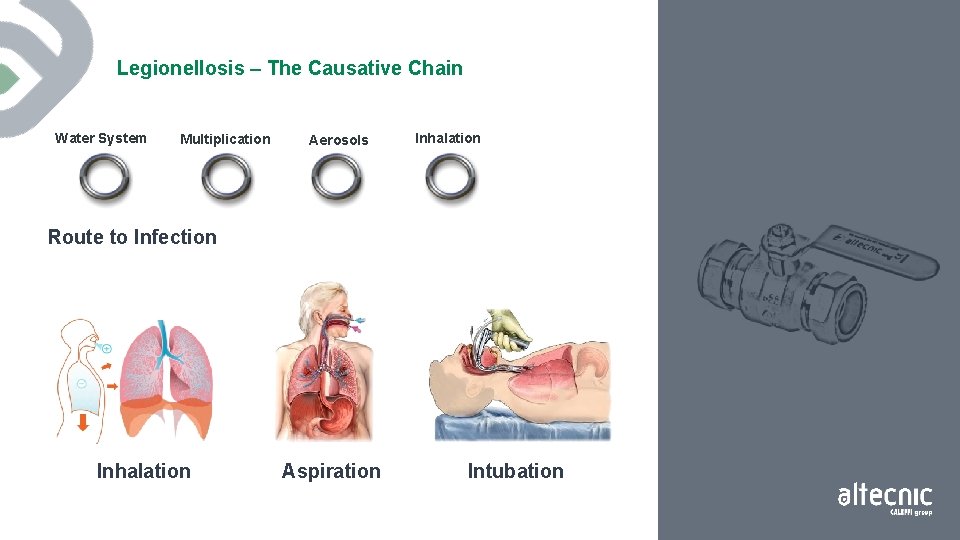
Legionellosis – The Causative Chain Water System Multiplication Aerosols Inhalation Route to Infection Inhalation Aspiration Intubation
Legionellosis – The Causative Chain Water System Multiplication Most at Risk Categories • Males (3: 1 ratio) • Smokers • Alcoholics • Immunosuppressed patients • Age group of 45+ Aerosols Inhalation Susceptible
Case Studies
A. Case Studies Three High Profile Case Studies • American Legion convention on Philadelphia • Stafford General Hospital • Barrow in Furness
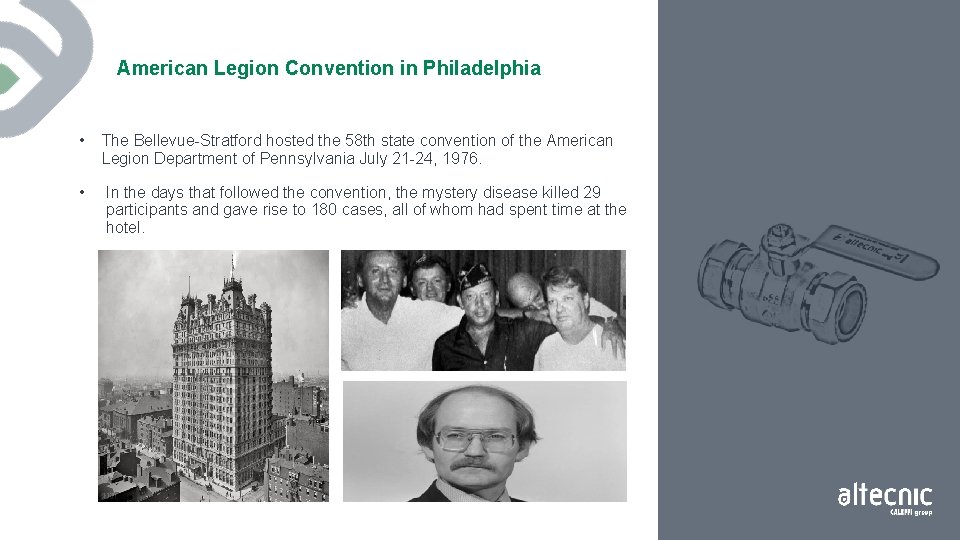
American Legion Convention in Philadelphia • The Bellevue-Stratford hosted the 58 th state convention of the American Legion Department of Pennsylvania July 21 -24, 1976. • In the days that followed the convention, the mystery disease killed 29 participants and gave rise to 180 cases, all of whom had spent time at the hotel.
A. Stafford District General Hospital • A large outbreak of Legionnaires' disease was associated with Stafford District General Hospital • A total of 68 confirmed cases was treated in hospital and 22 of these patients died. A further 35 patients, 14 of whom were treated at home, were suspected cases of Legionnaires' disease • All these patients had visited the hospital during April 1985.
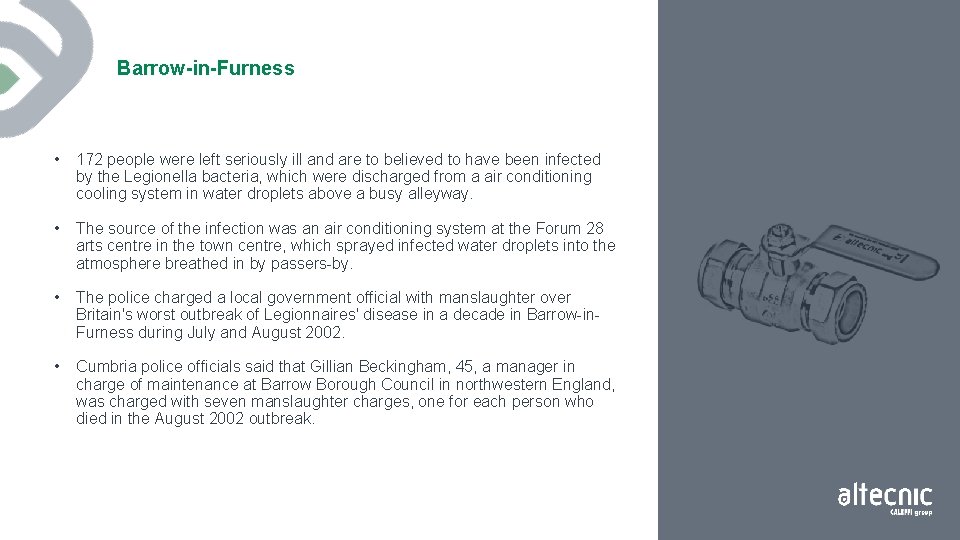
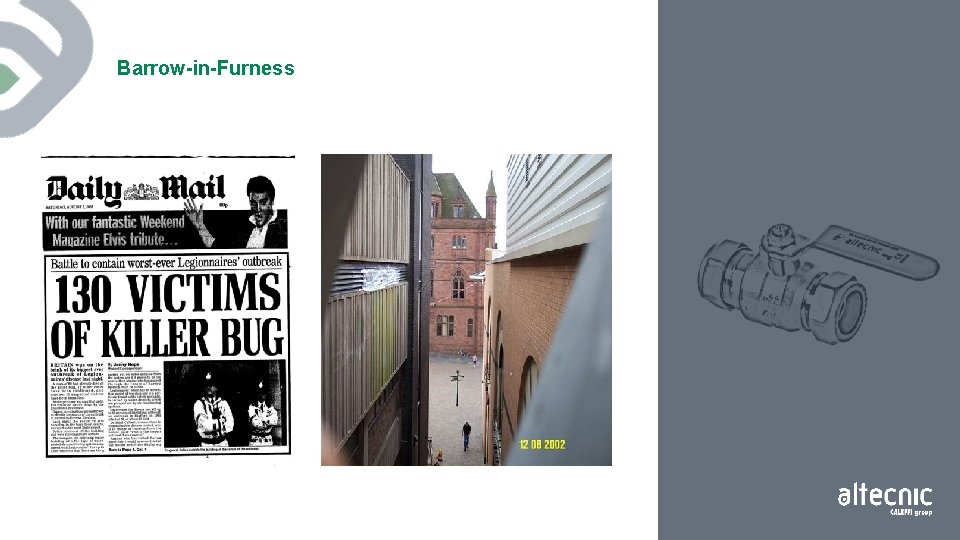
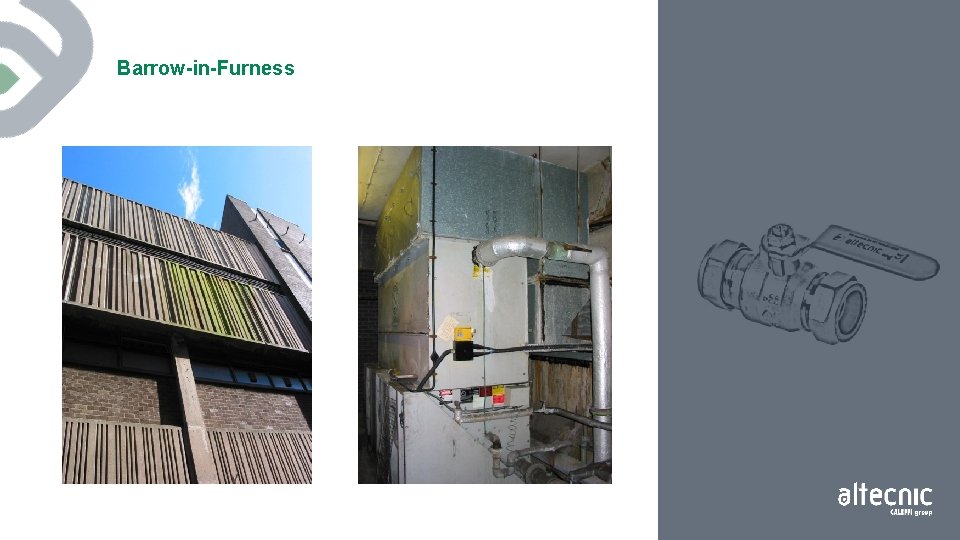
Barrow-in-Furness • 172 people were left seriously ill and are to believed to have been infected by the Legionella bacteria, which were discharged from a air conditioning cooling system in water droplets above a busy alleyway. • The source of the infection was an air conditioning system at the Forum 28 arts centre in the town centre, which sprayed infected water droplets into the atmosphere breathed in by passers-by. • The police charged a local government official with manslaughter over Britain's worst outbreak of Legionnaires' disease in a decade in Barrow-in. Furness during July and August 2002. • Cumbria police officials said that Gillian Beckingham, 45, a manager in charge of maintenance at Barrow Borough Council in northwestern England, was charged with seven manslaughter charges, one for each person who died in the August 2002 outbreak.
Barrow-in-Furness
Barrow-in-Furness
Legislation & Guidance
Legislation & Guidance Legislative & Guidance Documents Include: • Health & Safety Executive - Approved Code of Practice L 8 - Legionnaires’ Disease, The Control of legionella bacteria in water systems • Health & Safety Guidance – HSG 274 parts 1, 2 & 3 - Legionnaires’ Disease, Technical guidance • NHS Estates - Health Technical Memorandum 04 -01 - The Control of Legionella in Healthcare Premises - A Code of Practice • Control of Substances Hazardous to Health (COSHH) • Chartered Institution of Building Services Engineers Technical Memoranda TM 13 - Minimising The Risk of Legionnaires Disease • British Association for Chemical Specialities Code of Practice - The Control of Legionella By The Safe And Effective Operation of Cooling Systems
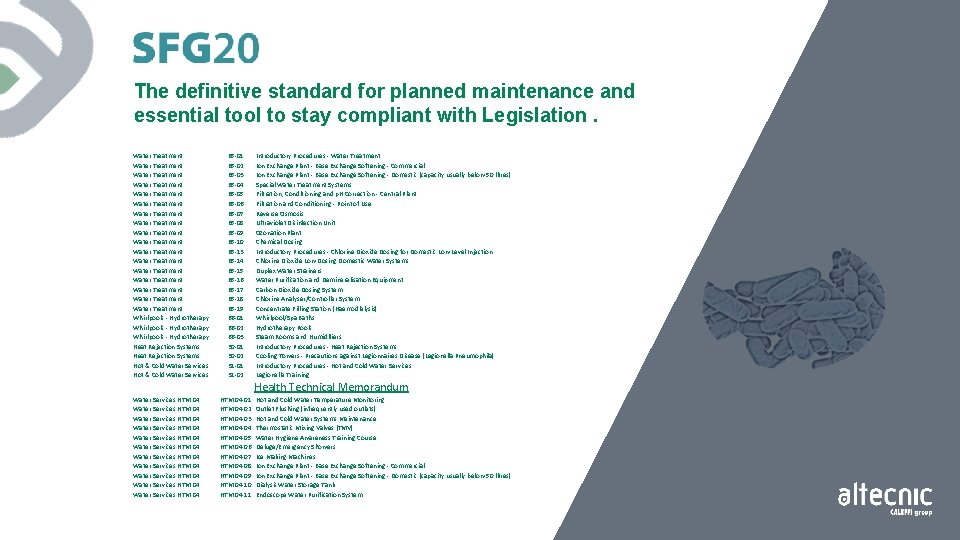
The definitive standard for planned maintenance and essential tool to stay compliant with Legislation. Water Treatment Water Treatment Water Treatment Water Treatment Water Treatment Whirlpools - Hydrotherapy Heat Rejection Systems Hot & Cold Water Services 65 -01 65 -02 65 -03 65 -04 65 -05 65 -06 65 -07 65 -08 65 -09 65 -10 65 -13 65 -14 65 -15 65 -16 65 -17 65 -18 65 -19 66 -01 66 -02 66 -03 30 -01 30 -02 31 -01 31 -02 Introductory Procedures - Water Treatment Ion Exchange Plant - Base Exchange Softening - Commercial Ion Exchange Plant - Base Exchange Softening - Domestic (capacity usually below 50 litres) Special Water Treatment Systems Filtration, Conditioning and p. H Correction - Central Plant Filtration and Conditioning - Point of Use Reverse Osmosis Ultraviolet Disinfection Unit Ozonation Plant Chemical Dosing Introductory Procedures - Chlorine Dioxide Dosing for Domestic Low Level Injection Chlorine Dioxide Low Dosing Domestic Water Systems Duplex Water Strainers Water Purification and Demineralisation Equipment Carbon Dioxide Dosing System Chlorine Analyser/Controller System Concentrate Filling Station (Haemodialysis) Whirlpool/Spa Baths Hydrotherapy Pools Steam Rooms and Humidifiers Introductory Procedures - Heat Rejection Systems Cooling Towers - Precautions against Legionnaires Disease (Legionella Pneumophila) Introductory Procedures - Hot and Cold Water Services Legionella Training Health Technical Memorandum Water Services HTM 04 Water Services HTM 04 Water Services HTM 04 -01 HTM 04 -02 HTM 04 -03 HTM 04 -04 HTM 04 -05 HTM 04 -06 HTM 04 -07 HTM 04 -08 HTM 04 -09 HTM 04 -10 HTM 04 -11 Hot and Cold Water Temperature Monitoring Outlet Flushing (infrequently used outlets) Hot and Cold Water Systems Maintenance Thermostatic Mixing Valves (TMV) Water Hygiene Awareness Training Course Deluge/Emergency Showers Ice Making Machines Ion Exchange Plant - Base Exchange Softening - Commercial Ion Exchange Plant - Base Exchange Softening - Domestic (capacity usually below 50 litres) Dialysis Water Storage Tank Endoscope Water Purification System
Requirements of L 8 • Identification and assessment of risk • Management of the risk, management responsibilities, training and competence • Preventing or controlling the risk • Record Keeping • Responsibilities of manufacturers, importers, suppliers and installers.
Practical Steps to Control the Risk • Appoint a ‘responsible manager’ • Identify and assess the risk • Prepare a written scheme of precautions • Monitor the effective implementation of procedures • Keep records of any actions
Supplier Responsibilities Designers / Manufactures / Importers • Ensure that risk is avoided • Provide adequate information on safe operation Service Providers • Provide adequate information • Ensure staff are adequately trained • Clearly define limitations
The Role of the Responsible Person A clear line of communication must be agreed and persons involved must sign an agreed declaration of their duties of responsibility. • THE DUTY HOLDER - The person with ultimate responsibility. They should appoint a person or persons in writing to take managerial responsibility and prove supervision for the implementation of precautions. Statutory Duty normally falls on the business owner, managing director or the person in control of premises or systems concerned. • THE RESPONSIBLE PERSON – “Appointed Competent Person” is someone who is in a suitable and sufficient position of authority to oversee various people and tasks, as well as having the budget control and the authority to act. They should also ensure the competence of any contractors carrying out work. • THE DEPUTY RESPONSIBLE PERSON - Responsible for the supervision of staff engaged in relevant operational duties. Should ensure that correct procedures are followed and that deadlines are met. When a Responsible Person is not available, an authorized Deputy should be appointed to maintain cover.
Legionella – Hot and Cold Water Services
Engineering Implications Hot & Cold Water Services • Water Storage Tanks • Calorifiers • Pipework • Filters • Fittings • Showers & Taps
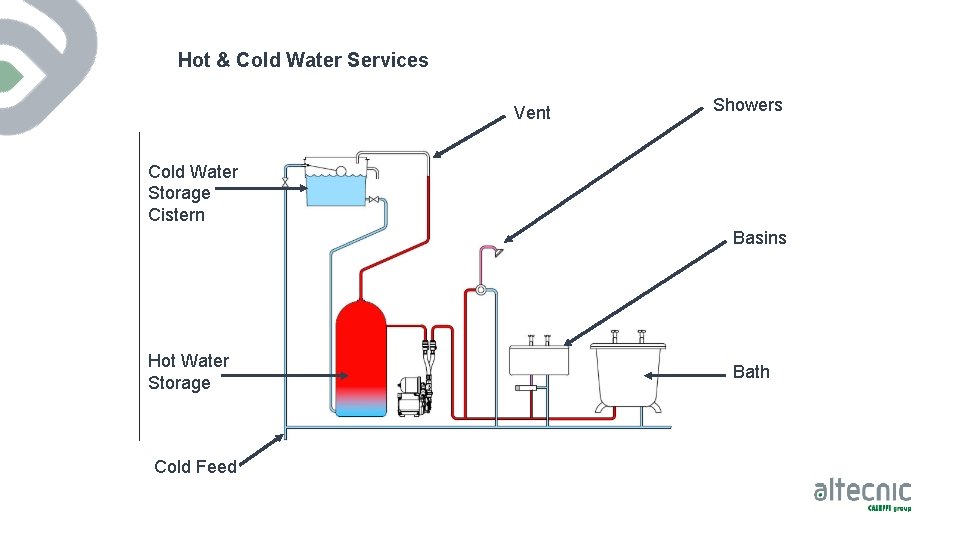
Hot & Cold Water Services Vent Showers Cold Water Storage Cistern Basins Hot Water Storage Cold Feed Bath
Unsatisfactory Cold Water Distribution Cold feed & discharge on the same side allowing possible stagnation No lid, air vent, filter or insulation Water sitting at 26°c Distribution and storage temperatures high Water draw-off 26°c after 2 minutes
HSG 274 Guide on Typical Domestic Systems Clean tank but slight corrosion on bolts Moderate fouling, suggest clean within 12 months Light debris but corrosion to restraining bars Slight surface scum indicating poor turnover and large debris count – must be cleaned
HSG 274 Guide on Typical Domestic Systems Heavy debris and corrosion internal parts that will require remedial works Unusually heavy scale formation requiring more than a regular clean and disinfection. Severe stagnation indicating that the tank is unlikely to be required Gel coat failure resulting in local biological fouling (dark spots)
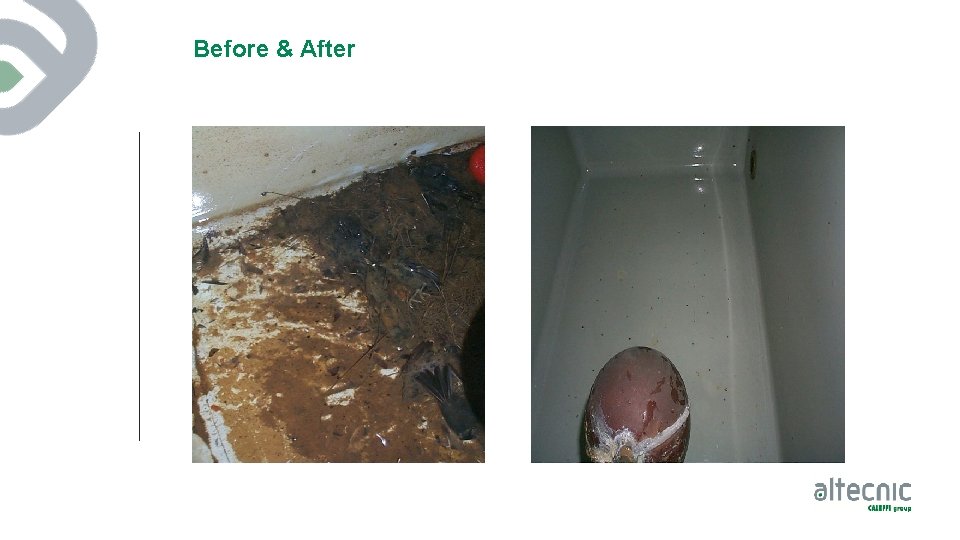
Before & After
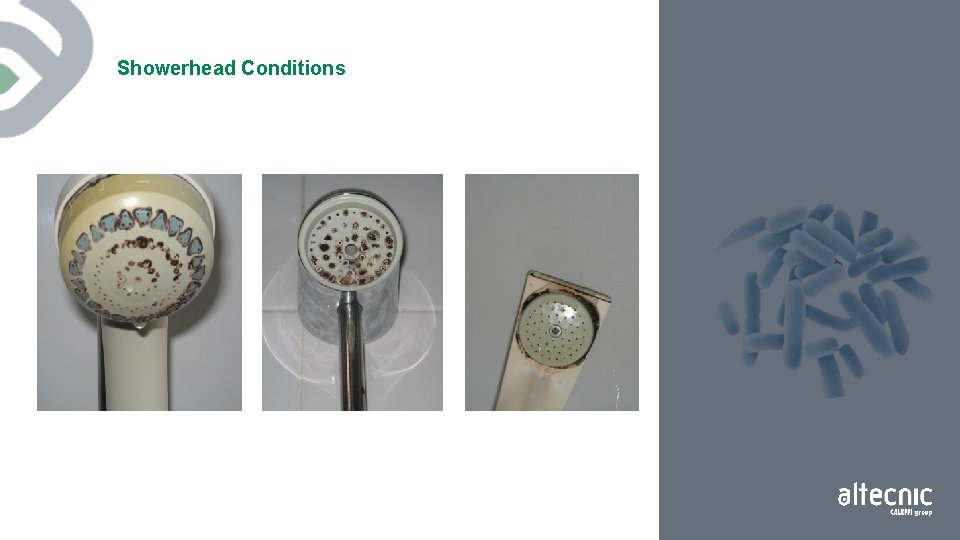
Showerhead Conditions
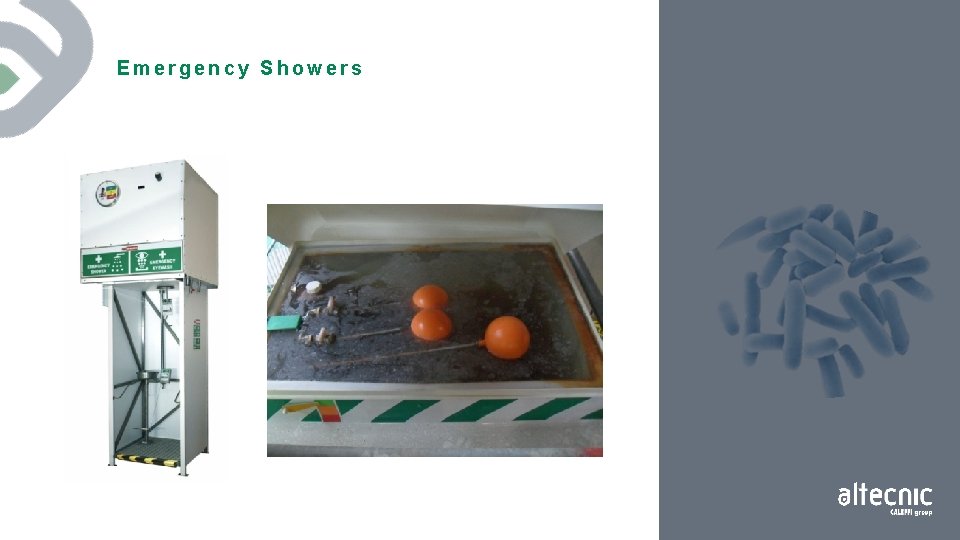
Emergency Showers
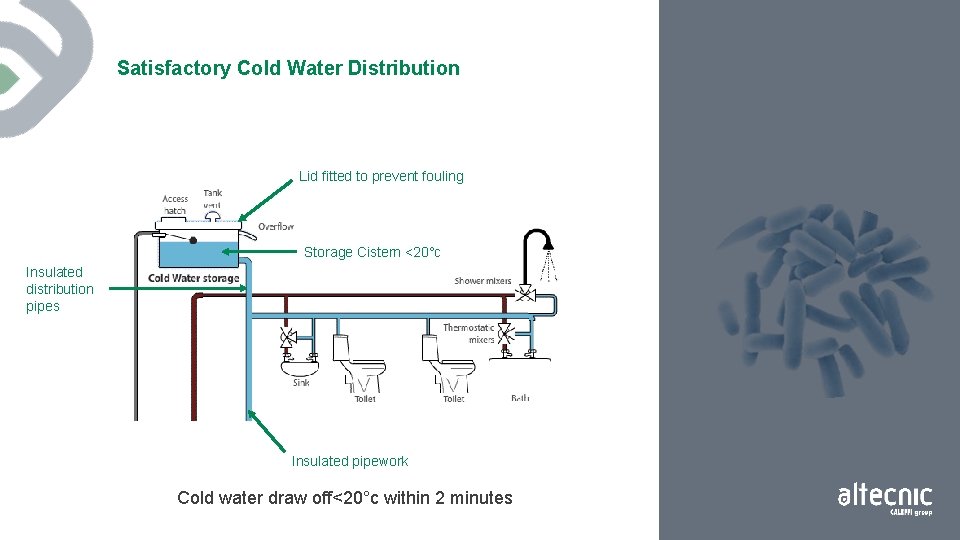
Satisfactory Cold Water Distribution Lid fitted to prevent fouling Storage Cistern <20°c Insulated distribution pipes Insulated pipework Cold water draw off<20°c within 2 minutes
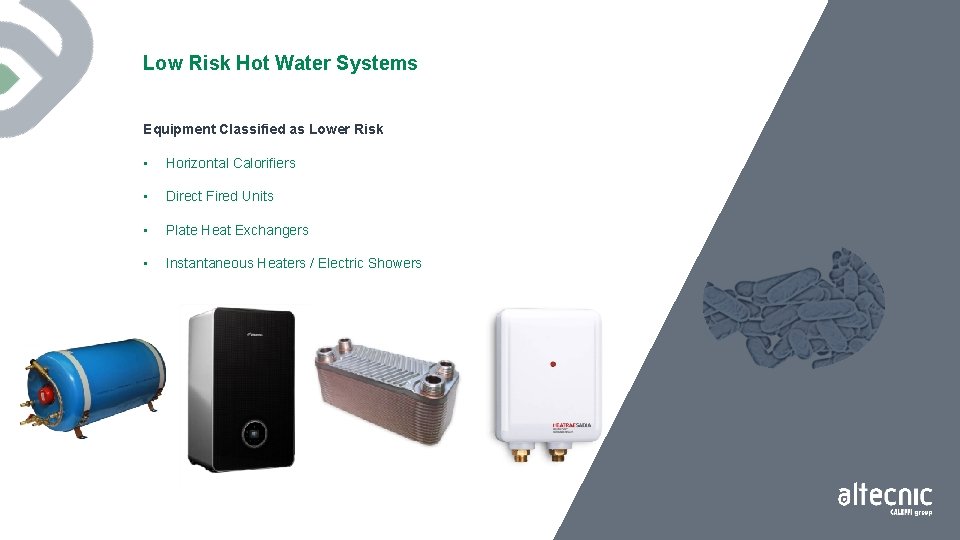
Low Risk Hot Water Systems Equipment Classified as Lower Risk • Horizontal Calorifiers • Direct Fired Units • Plate Heat Exchangers • Instantaneous Heaters / Electric Showers
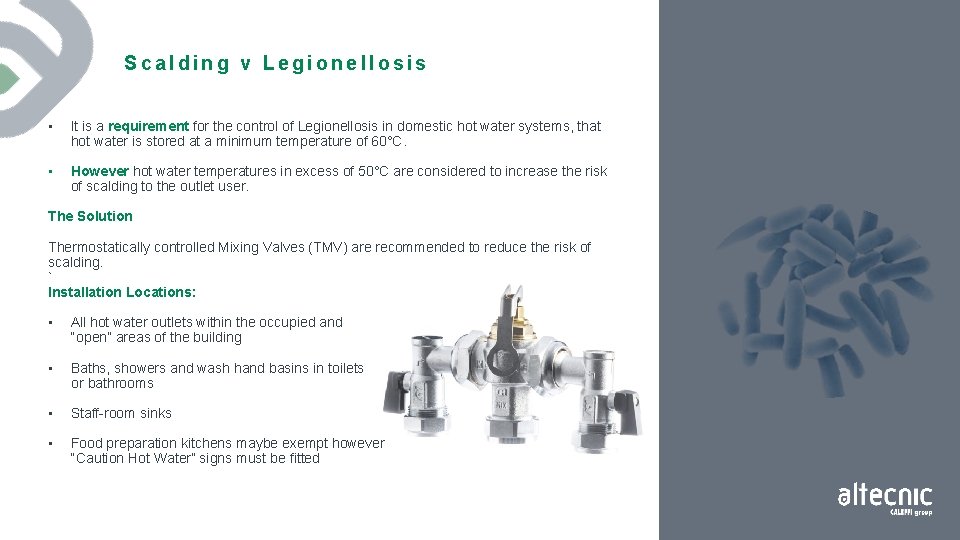
Scalding v Legionellosis • It is a requirement for the control of Legionellosis in domestic hot water systems, that hot water is stored at a minimum temperature of 60°C. • However hot water temperatures in excess of 50°C are considered to increase the risk of scalding to the outlet user. The Solution Thermostatically controlled Mixing Valves (TMV) are recommended to reduce the risk of scalding. ` Installation Locations: • All hot water outlets within the occupied and “open” areas of the building • Baths, showers and wash hand basins in toilets or bathrooms • Staff-room sinks • Food preparation kitchens maybe exempt however “Caution Hot Water” signs must be fitted
Conclusion. . • Legionella bacteria is probably present in most water systems, the task must be to prevent: -Multiplication -Aerosol Production -Inhalation of Water Droplets • Particular care is needed in buildings which house, or where systems are located near a high risk population, for example: -Hospital -Residential Elderly Care Homes or similar • When the guidelines presented are fully implemented, then the risk of infection will be minimised • Keep cold water cold and moving, keep hot water hot and moving. • • vdv
THANK YOU