
Legal Aspects of Temporary Traffic Control on Highway
- Slides: 51
“Legal Aspects" of Temporary Traffic Control on Highway Work Zones
Presentation Topics 1. Provide overview of Temporary Traffic Control (TTC) legal aspects 2. Discuss Tort liability 3. Provide ten tips to minimize liability exposure
Legal Aspects of Temporary Traffic Control on Highway Work Zones 1. Overview of Temporary Traffic Control (TTC) Legal Aspects
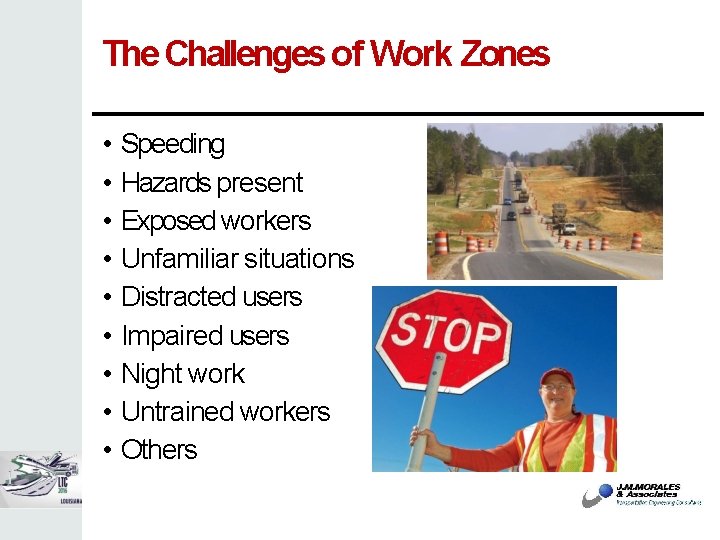
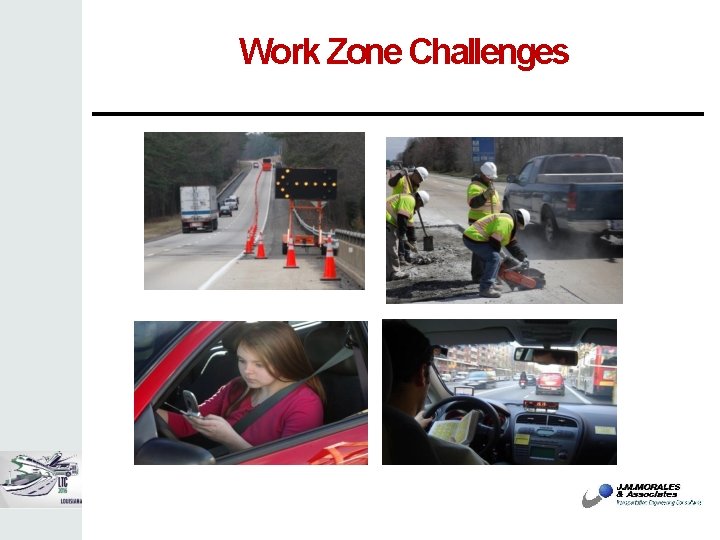
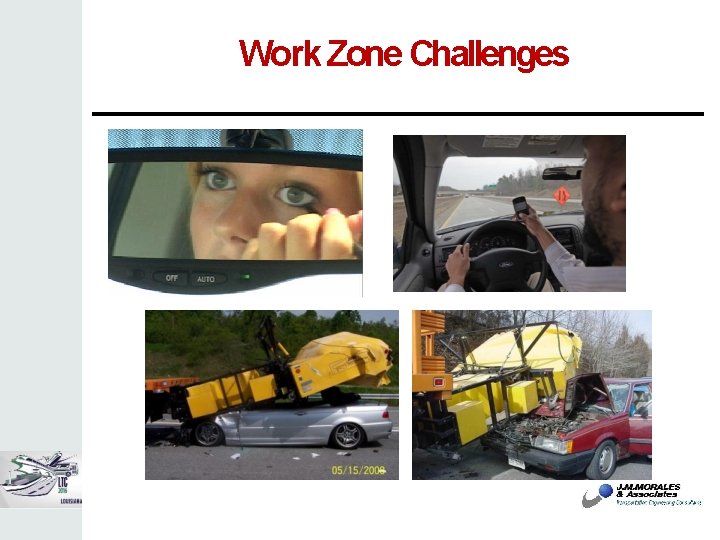
The Challenges of Work Zones • Speeding • Hazards present • Exposed workers • Unfamiliar situations • Distracted users • Impaired users • Night work • Untrained workers • Others
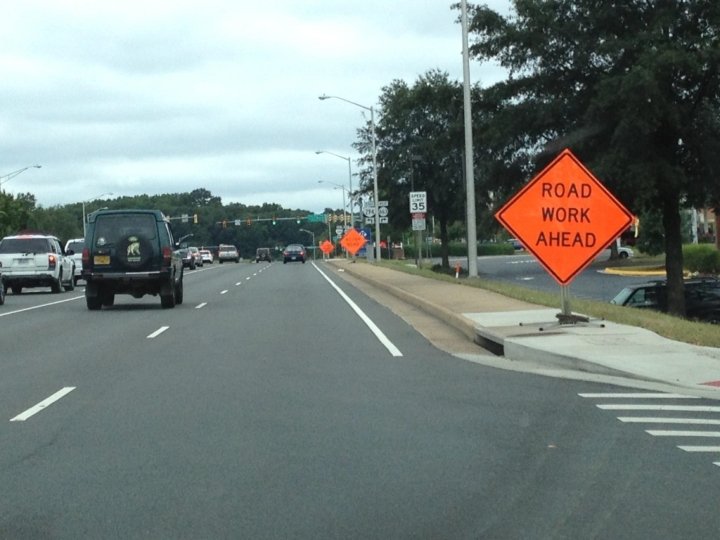
Work Zone Challenges
Work Zone Challenges
Work Zone Challenges
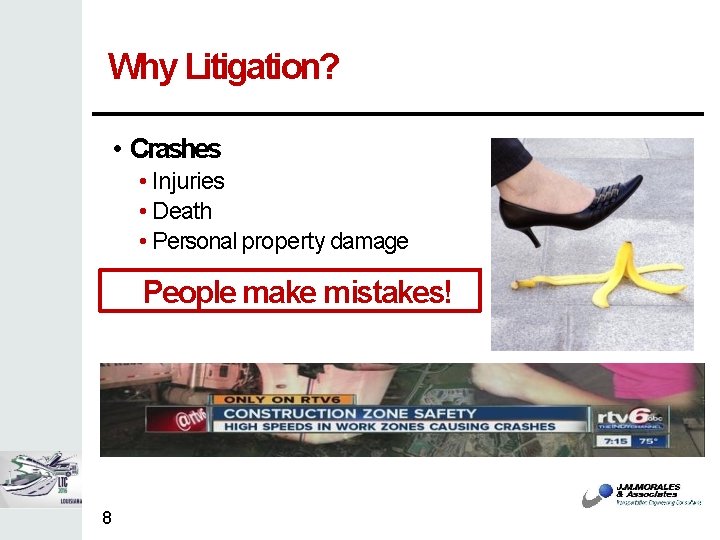
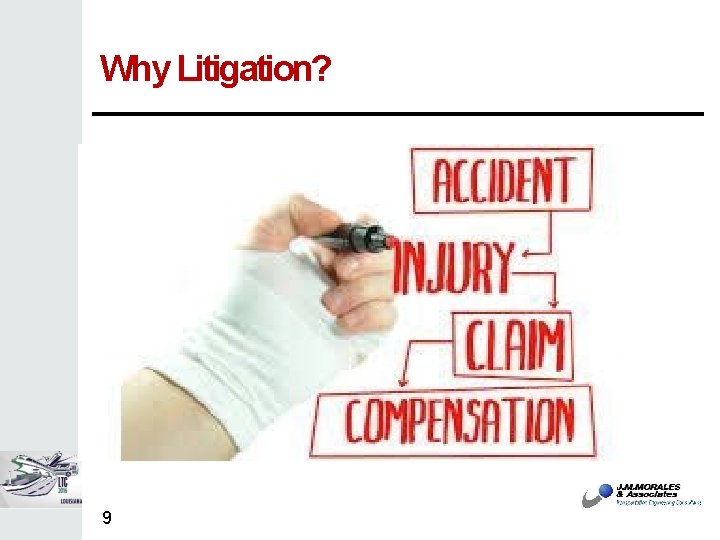
Why Litigation? • Crashes • Injuries • Death • Personal property damage People make mistakes! 8
Why Litigation? 9
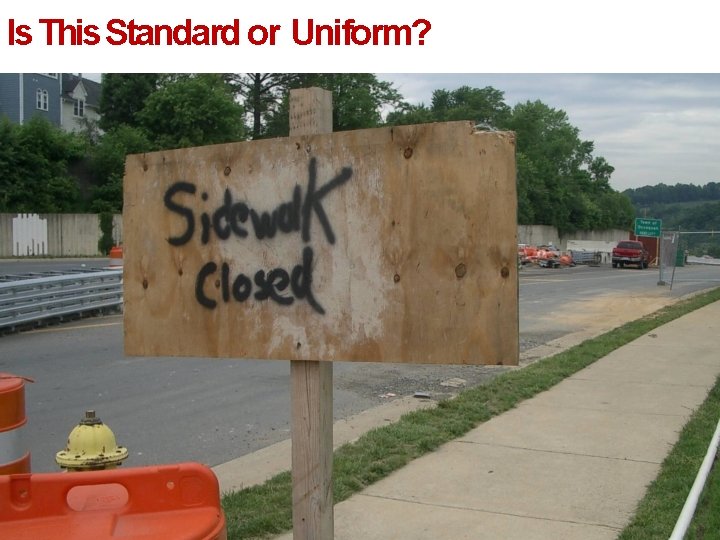
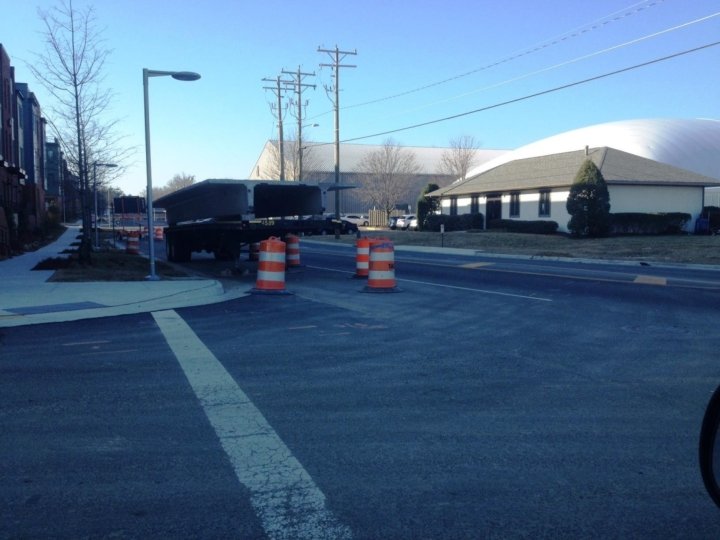
Is This Standard or Uniform? 11
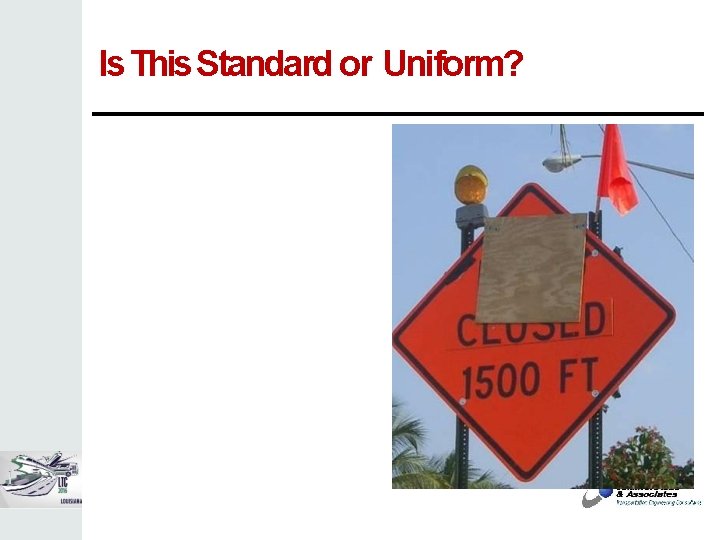
Is This Standard or Uniform?
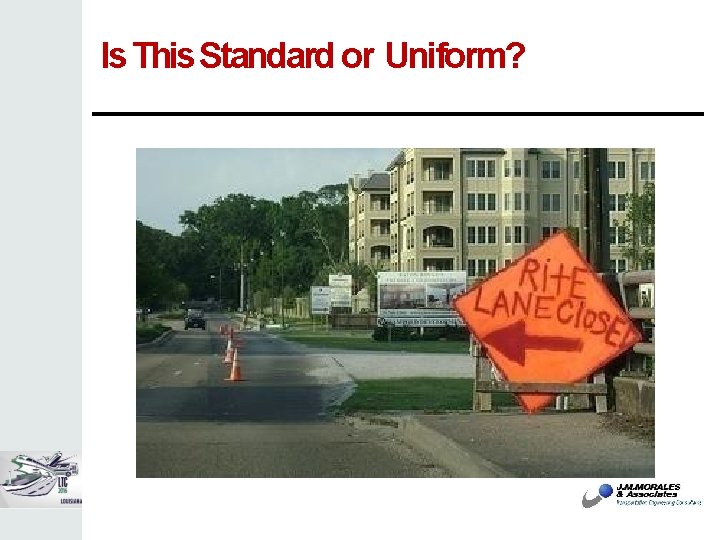
Is This Standard or Uniform?
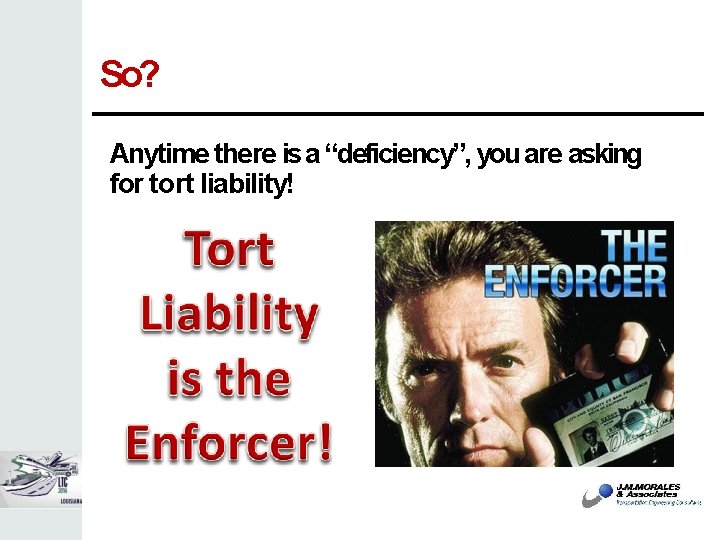
So? Anytime there is a “deficiency”, you are asking for tort liability!
Definition of Tort Liability is: A Tort, in common law jurisdictions, is a civil wrong that causes someone else to suffer loss or harm … resulting in legal liability for the person who commits the act.
Who is Ultimately Responsible? • The responsibility for the design, placement, operation, maintenance, and uniformity of traffic control devices shall rest with the public agency or the official having jurisdiction, or, in the case of private roads open to public travel, with the private owner or private official having jurisdiction. Source: MUTCD
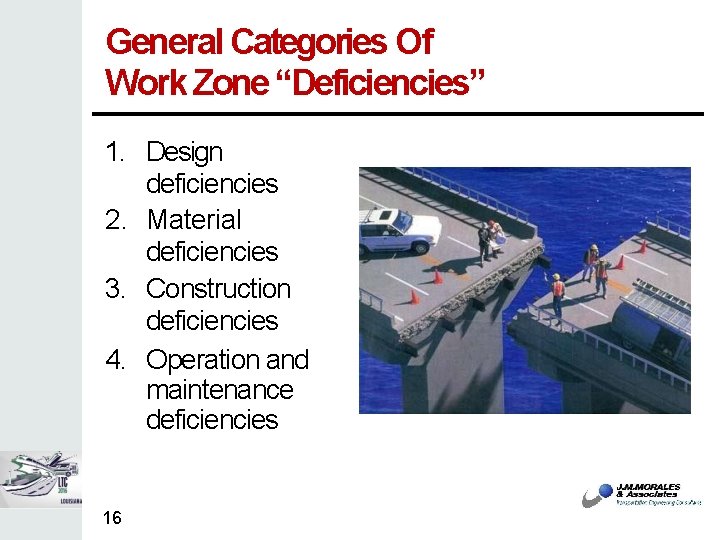
General Categories Of Work Zone “Deficiencies” 1. Design deficiencies 2. Material deficiencies 3. Construction deficiencies 4. Operation and maintenance deficiencies 16
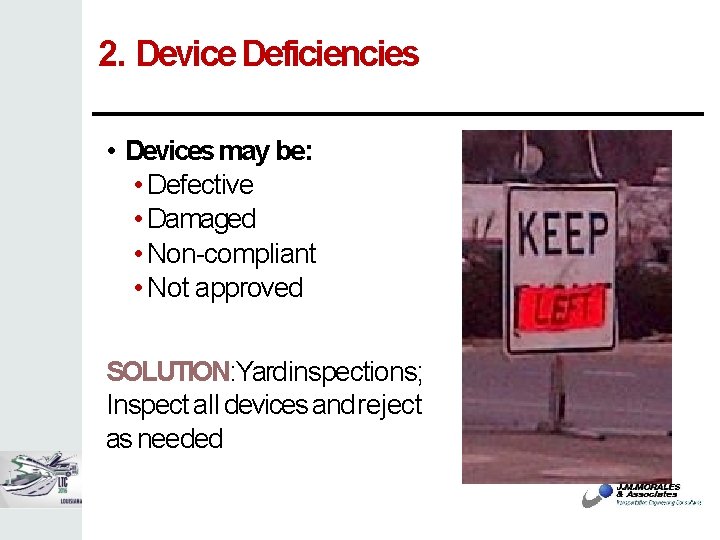
2. Device Deficiencies • Devices may be: • Defective • Damaged • Non-compliant • Not approved SOLUTION: Yardinspections; Inspect all devices and reject as needed
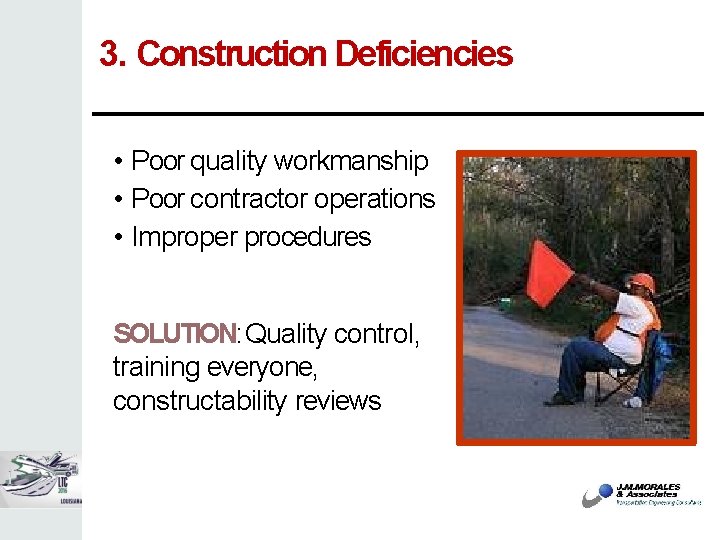
3. Construction Deficiencies • Poor quality workmanship • Poor contractor operations • Improper procedures SOLUTION: Quality control, training everyone, constructability reviews
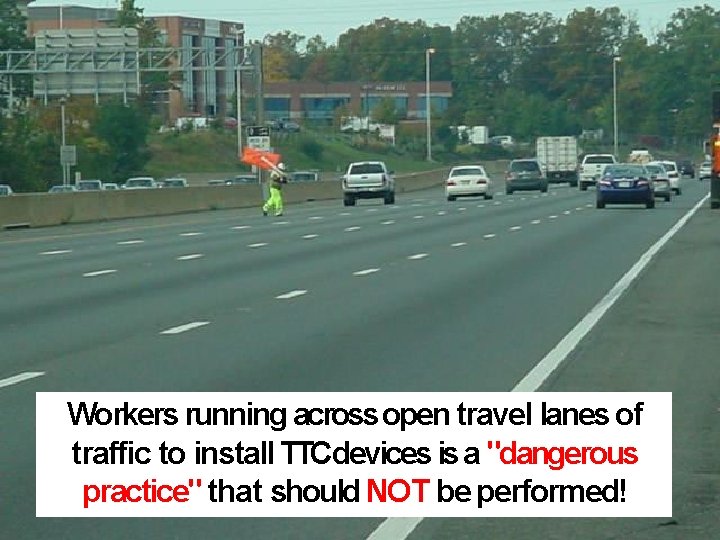
Workers running across open travel lanes of traffic to install TTCdevices is a "dangerous practice" that should NOT be performed! 20
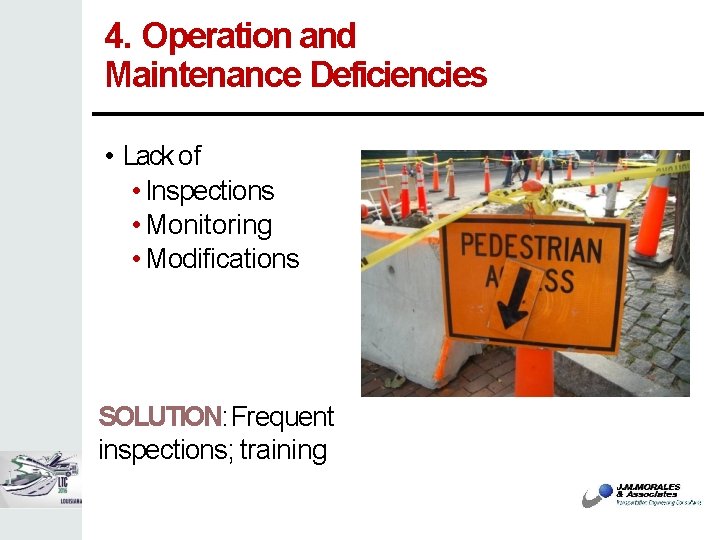
4. Operation and Maintenance Deficiencies • Lack of • Inspections • Monitoring • Modifications SOLUTION: Frequent inspections; training
Legal Aspects of Temporary Traffic Control on Highway Work Zones 2. The Civil Lawsuit Process
Four Elements Of Tort Liability • Most lawsuits involving work zones and contractors are based on negligence • In order to succeed in a tort claim, a plaintiff must prove four elements: 1. Duty 2. Breach of Duty 3. Proximate Cause 4. Damage
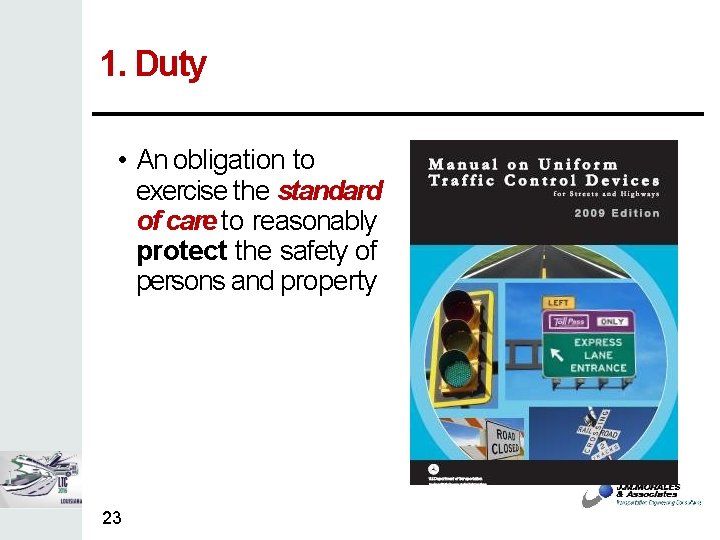
1. Duty • An obligation to exercise the standard of care to reasonably protect the safety of persons and property 23
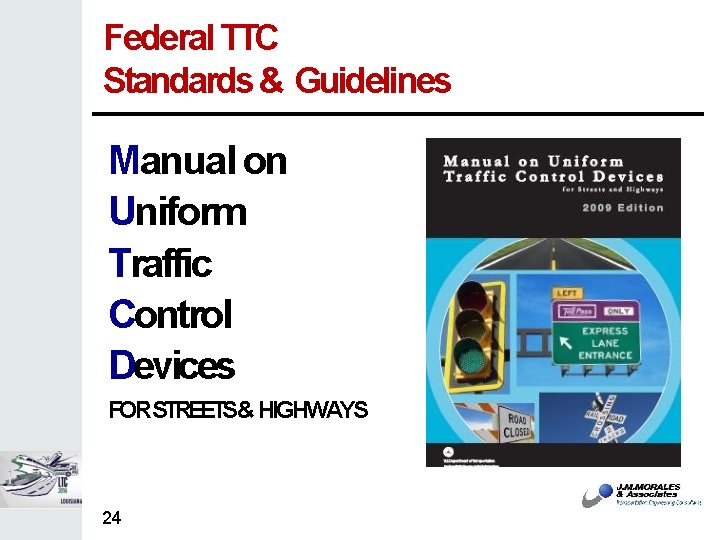
Federal TTC Standards & Guidelines Manual on Uniform Traffic Control Devices FORSTREETS& HIGHWAYS 24
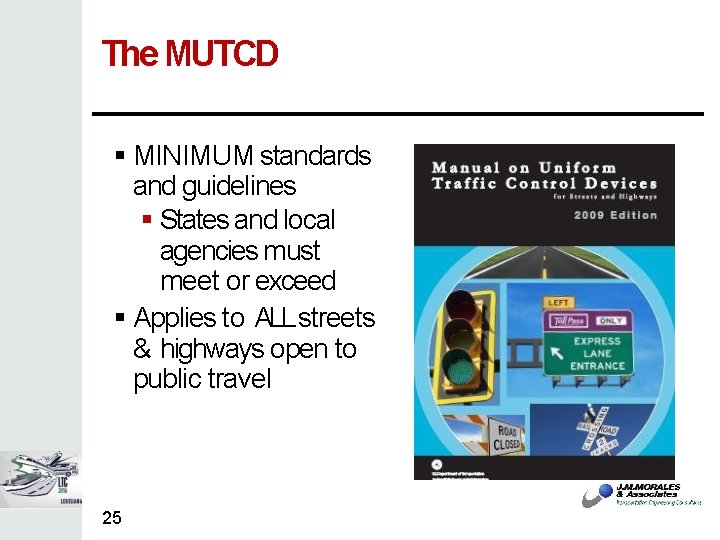
The MUTCD MINIMUM standards and guidelines States and local agencies must meet or exceed Applies to ALL streets & highways open to public travel 25
State and Local Standards More restrictive or stringent than MUTCD ALL states are required to have a manual which substantially conforms to the National MUTCD
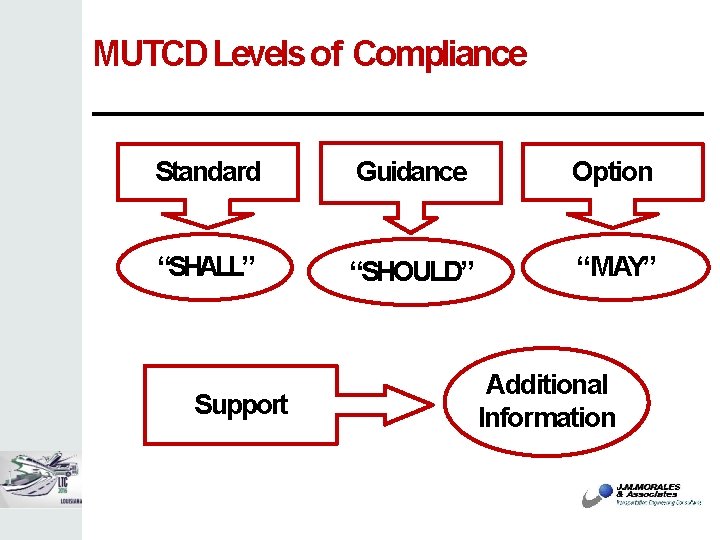
MUTCD Levels of Compliance Standard Guidance Option “SHALL” “SHOULD” “MAY” Support Additional Information
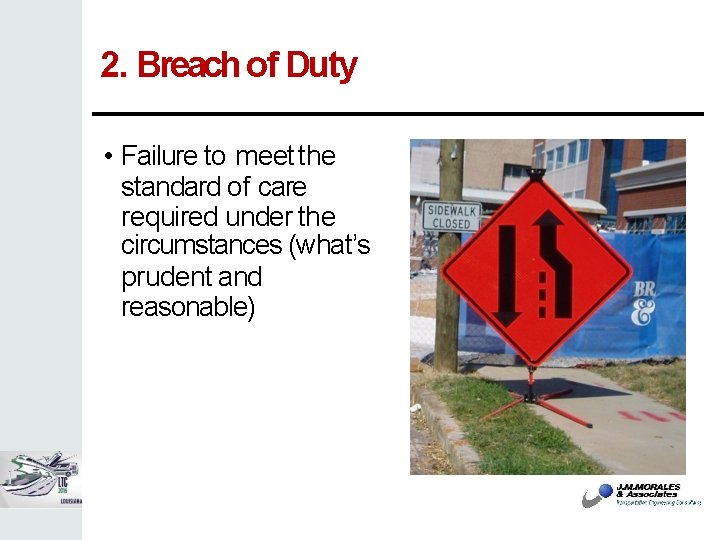
2. Breach of Duty • Failure to meet the standard of care required under the circumstances (what’s prudent and reasonable)
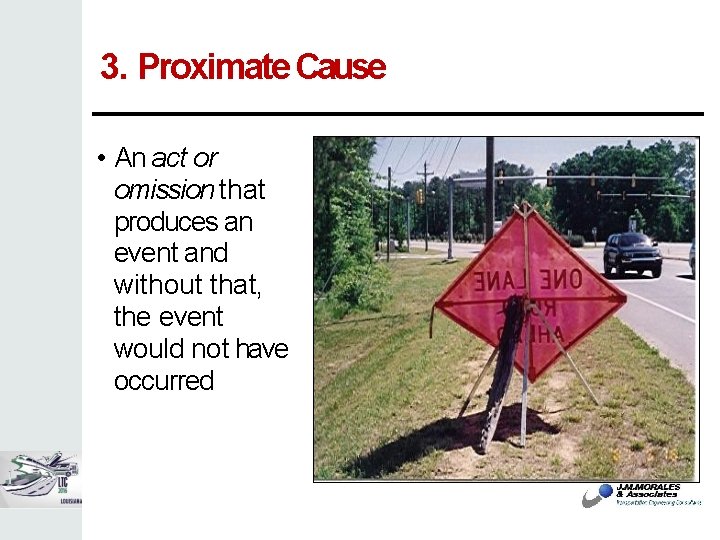
3. Proximate Cause • An act or omission that produces an event and without that, the event would not have occurred
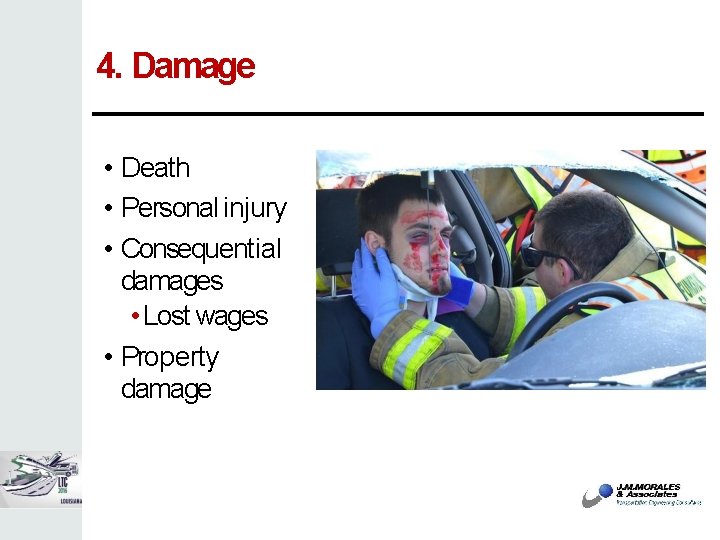
4. Damage • Death • Personal injury • Consequential damages • Lost wages • Property damage
Legal Aspects of Temporary Traffic Control on Highway Work Zones Top Ten Tips to minimize Liability Exposure
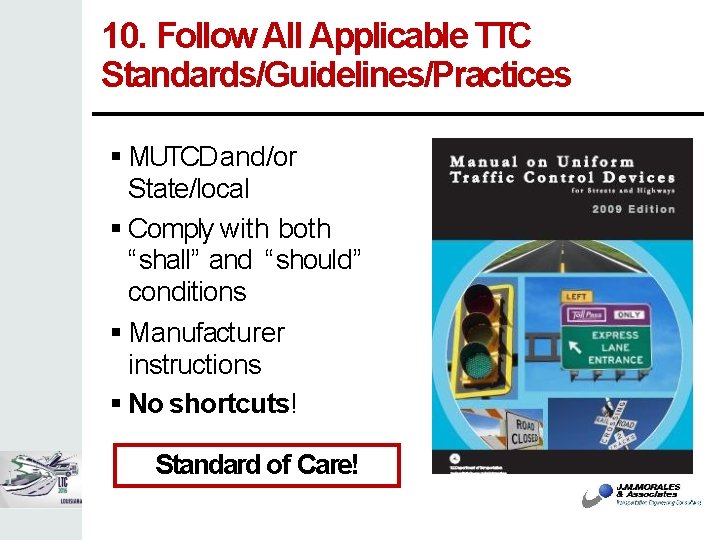
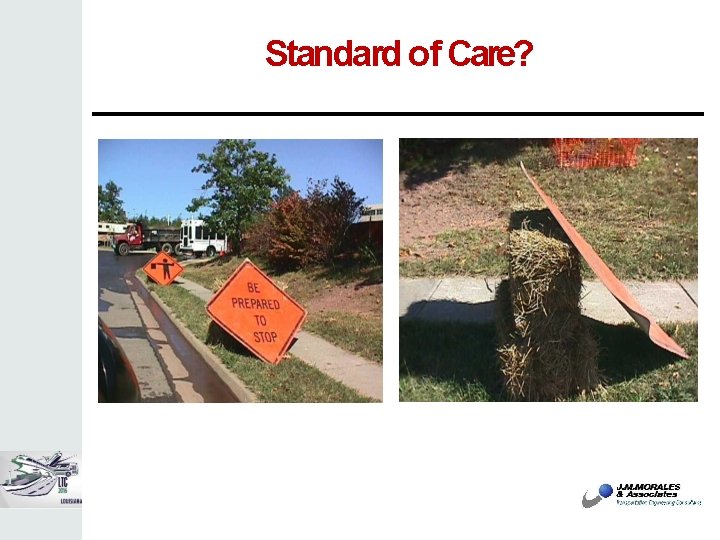
10. Follow All Applicable TTC Standards/Guidelines/Practices MUTCD and/or State/local Comply with both “shall” and “should” conditions Manufacturer instructions No shortcuts! Standard of Care!
Standard of Care?
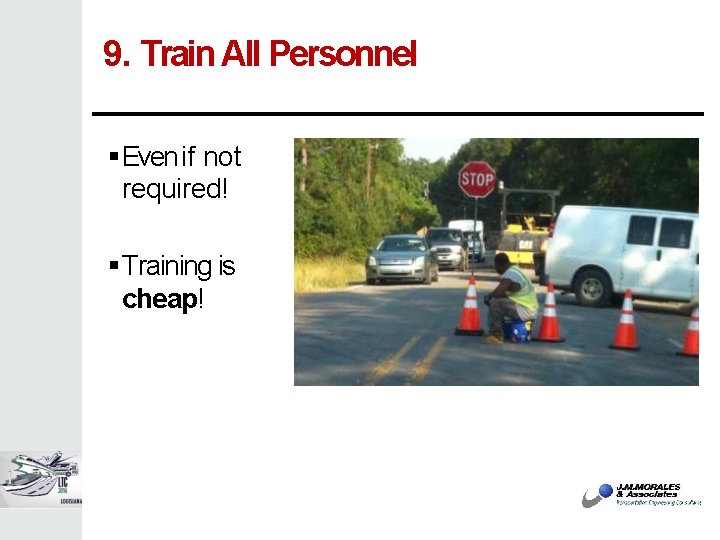
9. Train All Personnel Even if not required! Training is cheap!
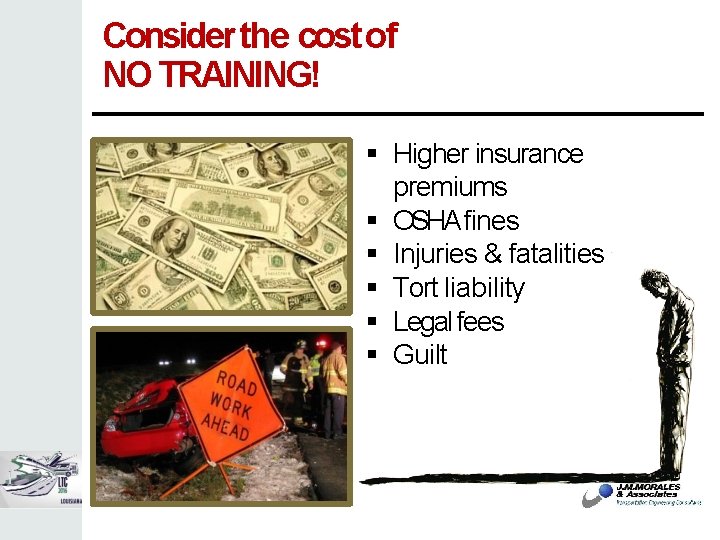
Consider the cost of NO TRAINING! Higher insurance premiums OSHA fines Injuries & fatalities Tort liability Legal fees Guilt
Importance of Training “Only those individuals who are trained in proper TTCpractices and have a basic understanding of the principles (established by applicable standards and guidelines, including those of this Manual) should supervise the selection, placement, and maintenance of TTC devices used for TTCzones and for incident management. ” MUTCD
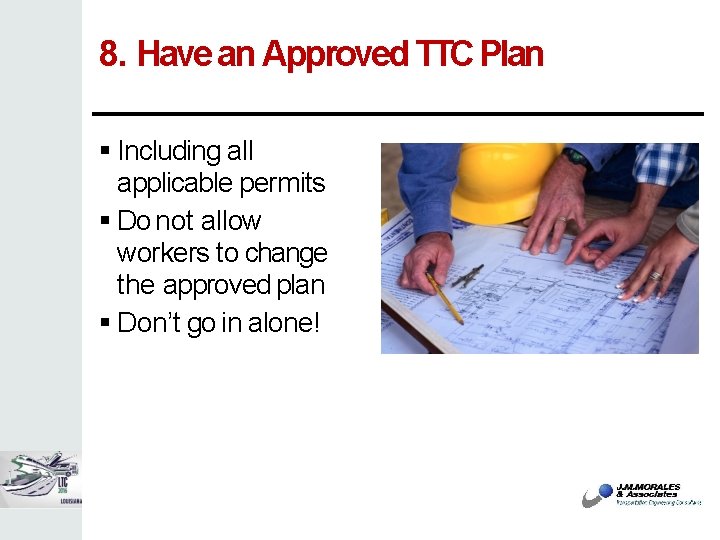
8. Have an Approved TTC Plan Including all applicable permits Do not allow workers to change the approved plan Don’t go in alone!
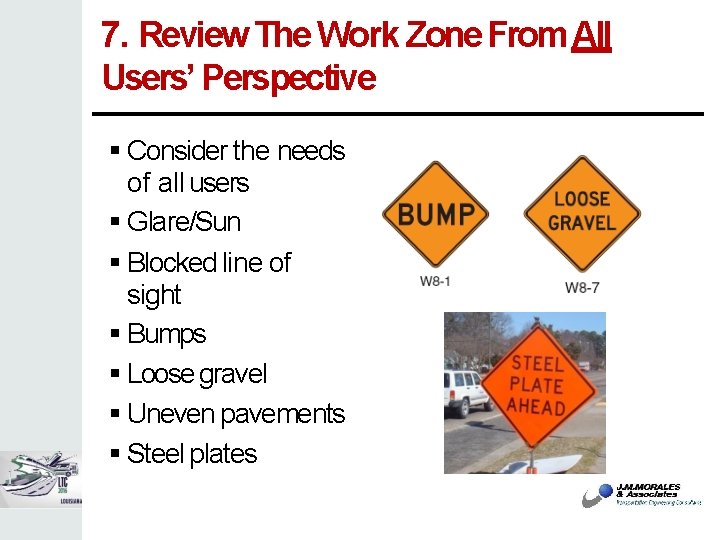
7. Review The Work Zone From All Users’ Perspective Consider the needs of all users Glare/Sun Blocked line of sight Bumps Loose gravel Uneven pavements Steel plates
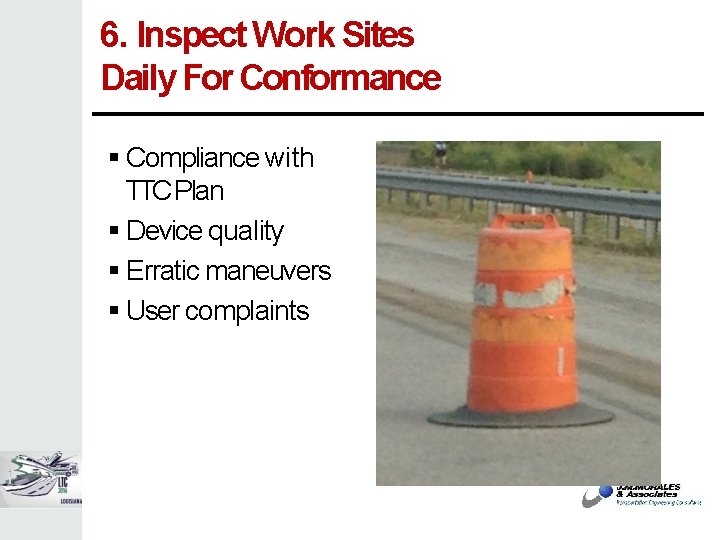
6. Inspect Work Sites Daily For Conformance Compliance with TTC Plan Device quality Erratic maneuvers User complaints
Inspecting Device Quality American Traffic Safety Services Association’s “Quality Guidelines” Acceptable Unacceptable Marginal
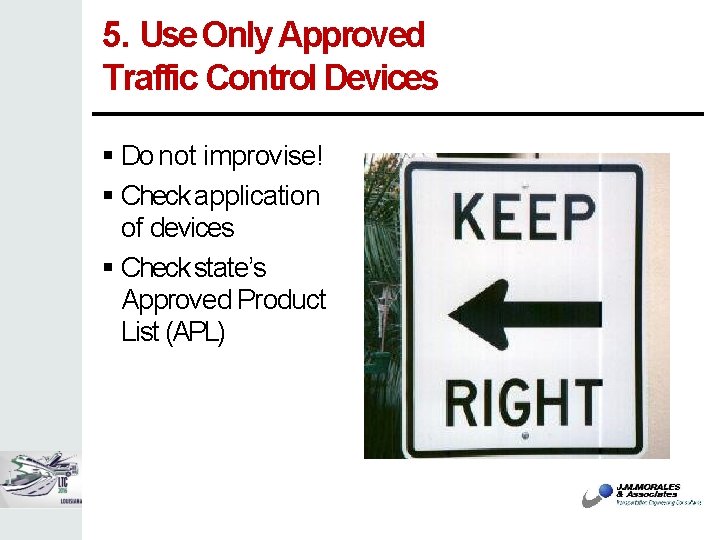
5. Use Only Approved Traffic Control Devices Do not improvise! Check application of devices Check state’s Approved Product List (APL)
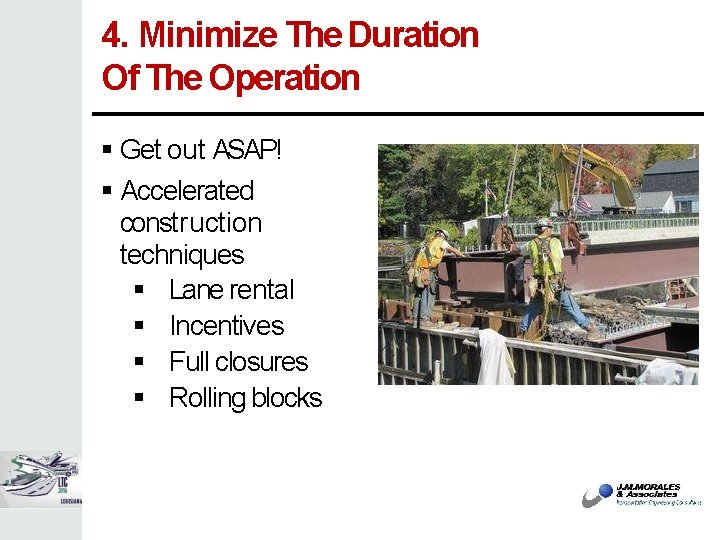
4. Minimize The Duration Of The Operation Get out ASAP! Accelerated construction techniques Lane rental Incentives Full closures Rolling blocks
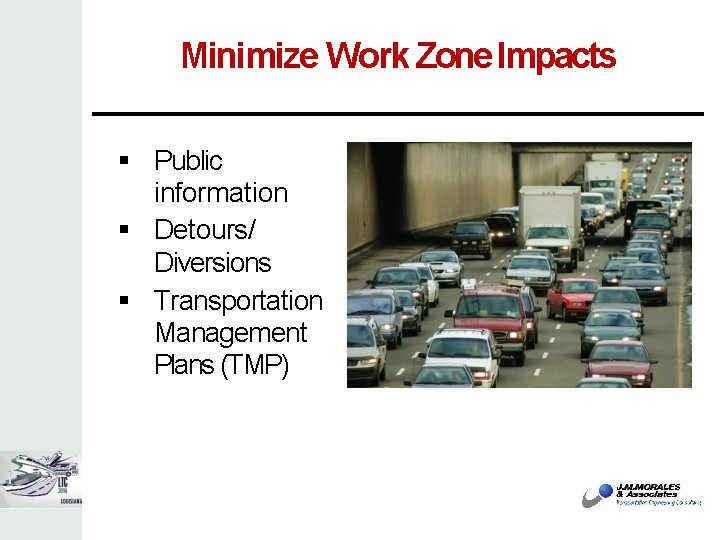
Minimize Work Zone Impacts Public information Detours/ Diversions Transportation Management Plans (TMP)
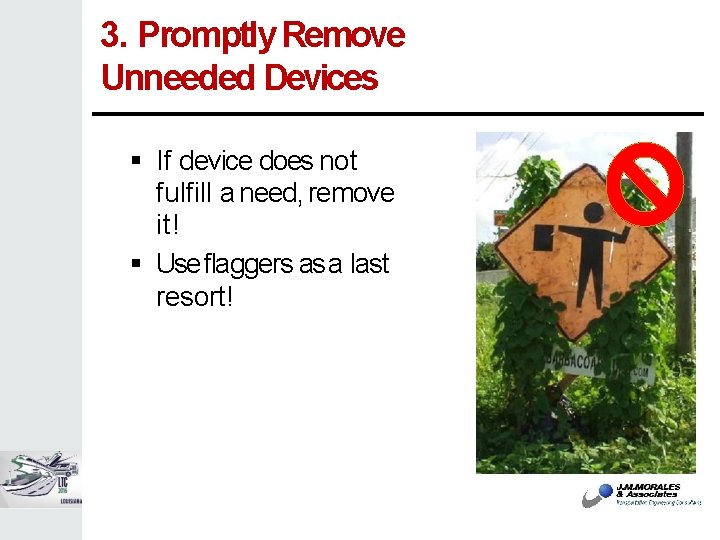
3. Promptly Remove Unneeded Devices If device does not fulfill a need, remove it! Use flaggers as a last resort!
2. Do More Than The Minimum Don’t use the posted speed; use prevailing Longer buffers Longer tapers More sign spacing Reduced device spacing
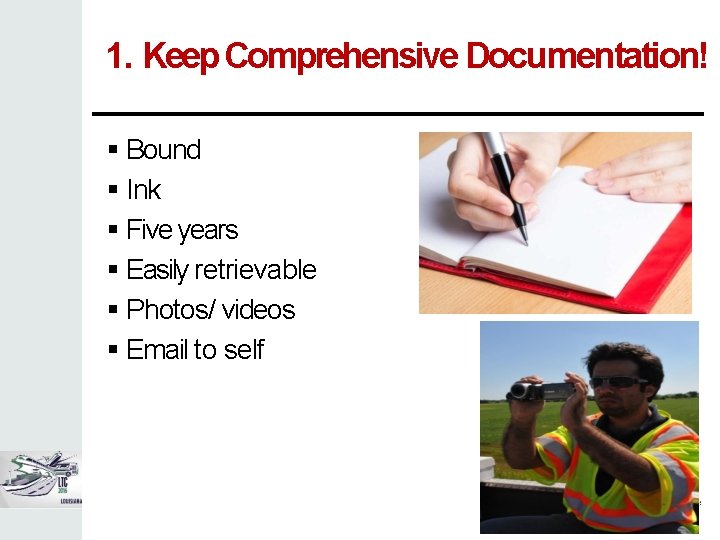
1. Keep Comprehensive Documentation! Bound Ink Five years Easily retrievable Photos/ videos Email to self
Presentation Objectives Discussed the legal aspects of temporary traffic control (TTC) on highway work zones 1. Provided overview of Temporary Traffic Control (TTC) legal aspects 2. Discussed tort liability 3. Provided ten tips to minimize liability exposure
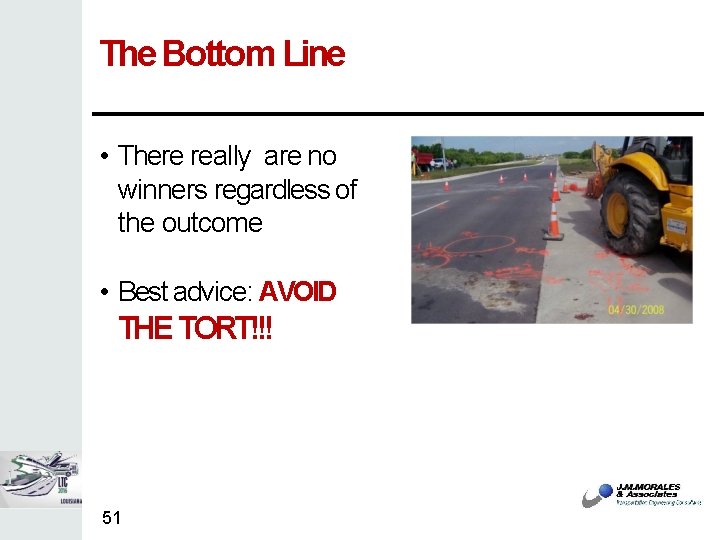
The Bottom Line • There really are no winners regardless of the outcome • Best advice: AVOID THE TORT!!! 51