
Left Main Bifurcation PCI Which Technique for Which
Left Main Bifurcation PCI: Which Technique for Which Morphology Goran Stankovic, MD, Ph. D Clinical Center of Serbia, Belgrade, Serbia

Disclosures I, Goran Stankovic, DO NOT have a financial interest / arrangements or affiliation with one or more organizations that could be perceived as a real or apparent conflict of interest in the context of the subject of this presentation
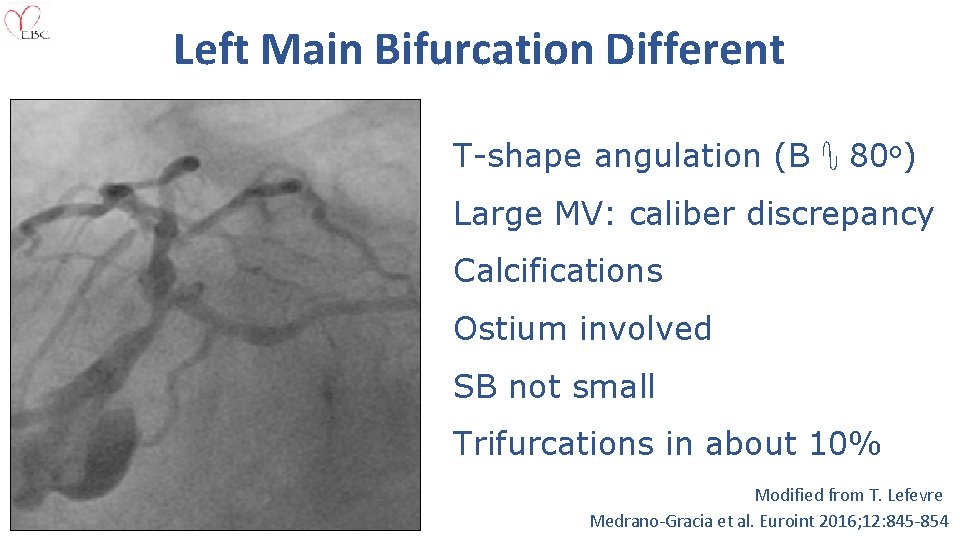
Left Main Bifurcation Different T-shape angulation (B ∿ 80 o) Large MV: caliber discrepancy Calcifications Ostium involved SB not small Trifurcations in about 10% Modified from T. Lefevre Medrano-Gracia et al. Euroint 2016; 12: 845 -854
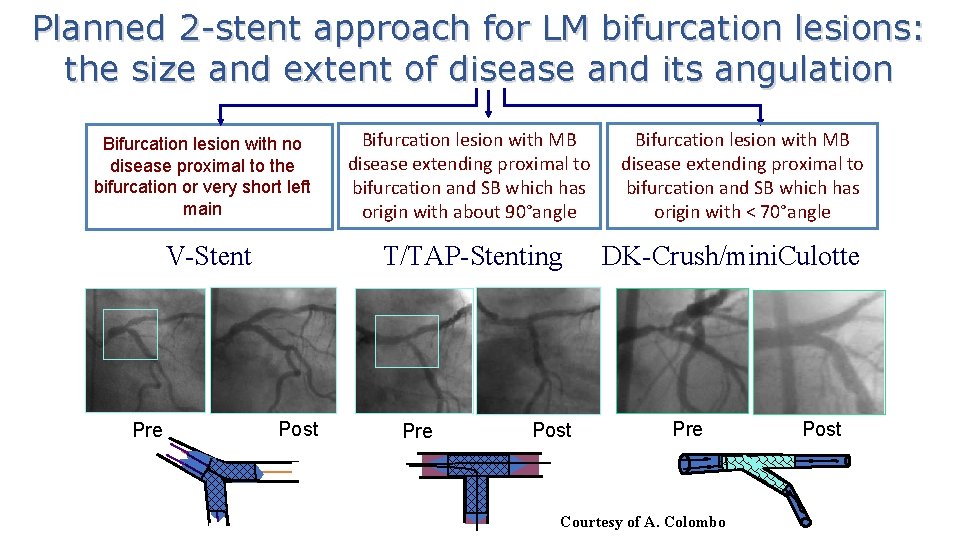
Planned 2 -stent approach for LM bifurcation lesions: the size and extent of disease and its angulation Bifurcation lesion with no disease proximal to the bifurcation or very short left main T/TAP-Stenting V-Stent Pre Bifurcation lesion with MB disease extending proximal to bifurcation and SB which has origin with about 90°angle Post Pre Post Bifurcation lesion with MB disease extending proximal to bifurcation and SB which has origin with < 70°angle DK-Crush/mini. Culotte Pre Courtesy of A. Colombo Post
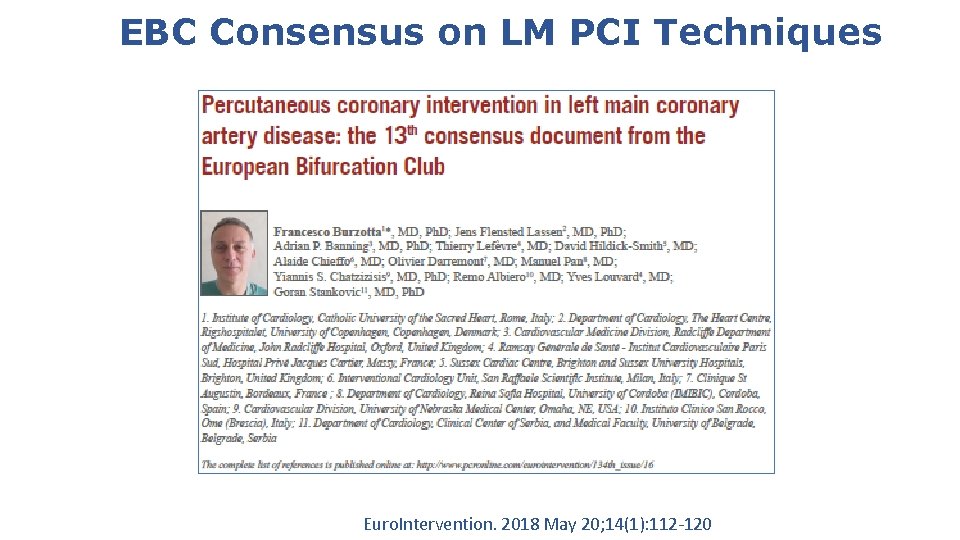
EBC Consensus on LM PCI Techniques Euro. Intervention. 2018 May 20; 14(1): 112 -120
EBC Consensus on LM PCI Techniques • Provisional is recommended technique for distal LM disease not involving both branches; • Elective two-stent strategies may be considered for long LCX lesions, high risk of LCX compromise or difficult access; • In LM disease involving both branches stent technique should depend on individual patient’s anatomical characteristics and operator’s skill; Euro. Intervention. 2018 May 20; 14(1): 112 -120
EBC Consensus on LM PCI Techniques • When a planned two stent strategy is used, this should be done in a provisional stepwise approach to the lesion, finalizing the procedure using a T/TAP or a culotte technique (as a cross-over from the provisional); • For operators with appropriate experience, DKCrush is a valuable option for complex left main bifurcation lesions; Euro. Intervention. 2018 May 20; 14(1): 112 -120
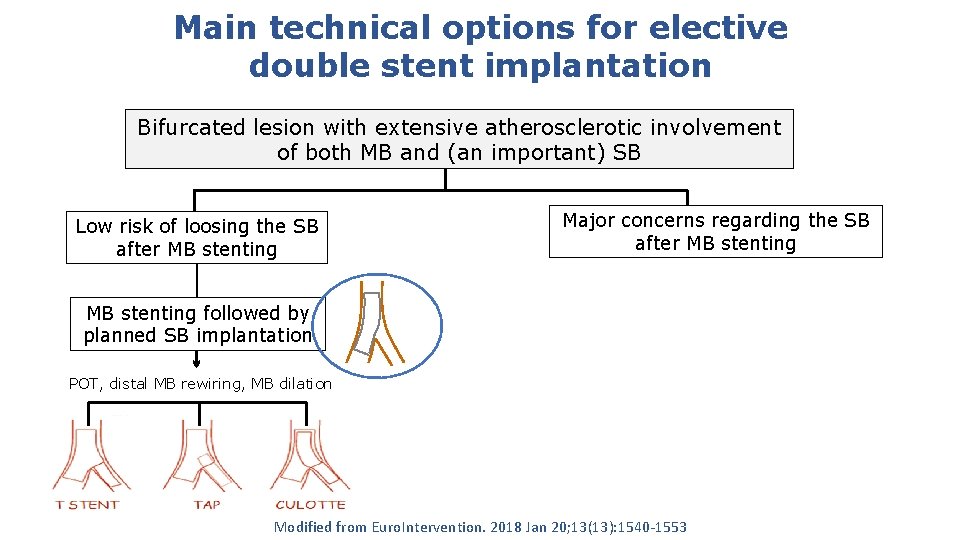
Main technical options for elective double stent implantation Bifurcated lesion with extensive atherosclerotic involvement of both MB and (an important) SB Low risk of loosing the SB after MB stenting Major concerns regarding the SB after MB stenting followed by planned SB implantation POT, distal MB rewiring, MB dilation Modified from Euro. Intervention. 2018 Jan 20; 13(13): 1540 -1553
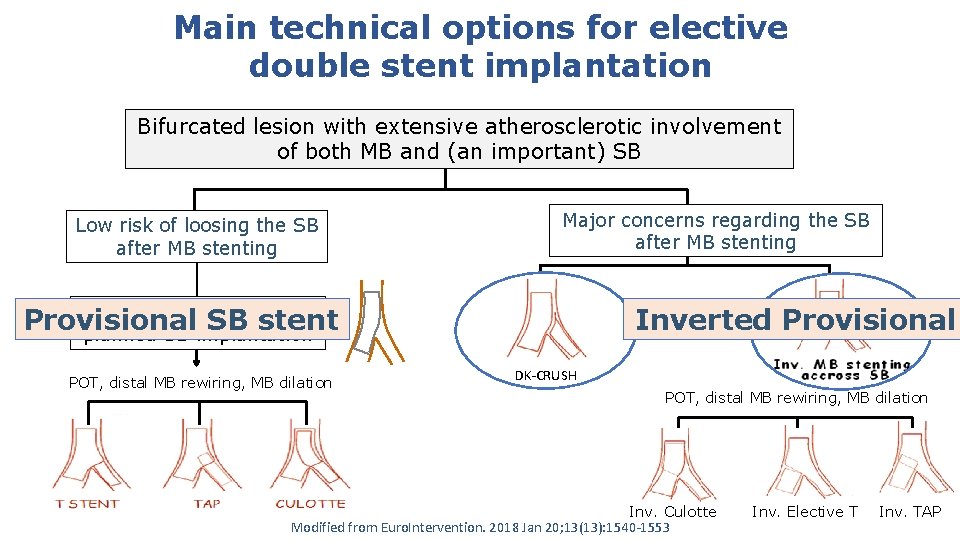
Main technical options for elective double stent implantation Bifurcated lesion with extensive atherosclerotic involvement of both MB and (an important) SB Low risk of loosing the SB after MB stenting Major concerns regarding the SB after MB stenting followed by Provisional SB stent planned SB implantation POT, distal MB rewiring, MB dilation Inverted Provisional DK-CRUSH POT, distal MB rewiring, MB dilation Inv. Culotte Modified from Euro. Intervention. 2018 Jan 20; 13(13): 1540 -1553 Inv. Elective T Inv. TAP
2018 ESC/EACTS Guidelines on myocardial revascularization Eur Heart J. 2018 Aug 25. doi: 10. 1093/eurheartj/ehy 394.
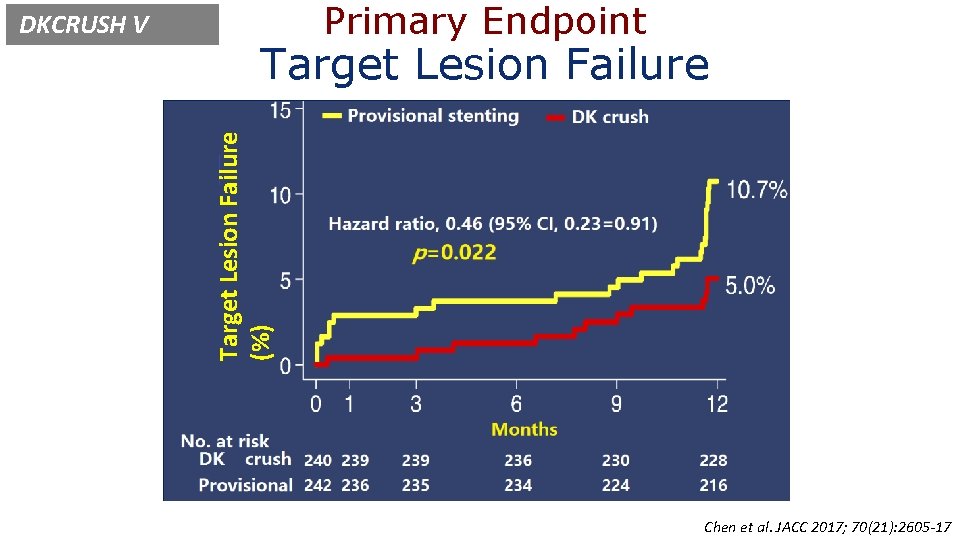
Primary Endpoint Target Lesion Failure (%) DKCRUSH V Chen et al. JACC 2017; 70(21): 2605 -17
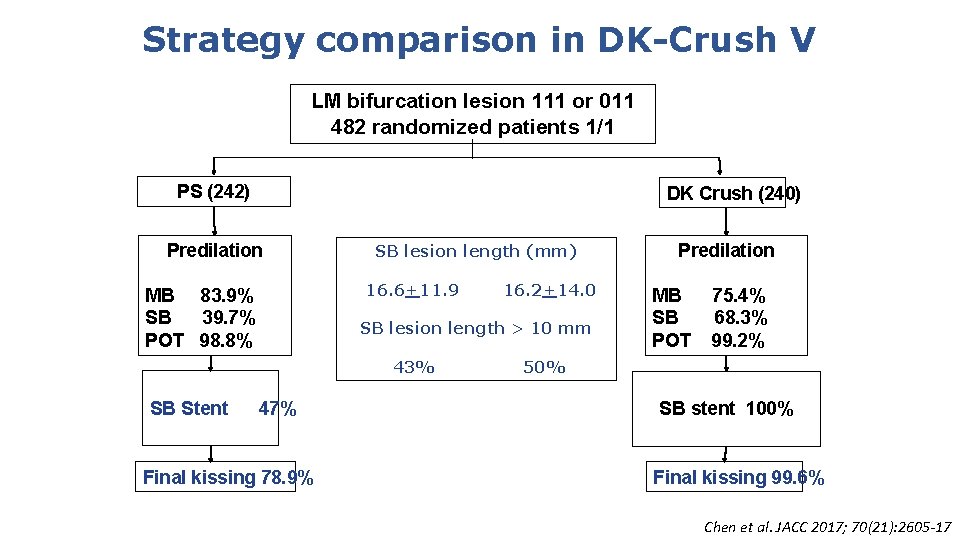
Strategy comparison in DK-Crush V LM bifurcation lesion 111 or 011 482 randomized patients 1/1 PS (242) DK Crush (240) Predilation SB lesion length (mm) 16. 6+11. 9 MB 83. 9% SB 39. 7% POT 98. 8% SB lesion length > 10 mm 43% SB Stent 16. 2+14. 0 47% Final kissing 78. 9% Predilation MB SB POT 75. 4% 68. 3% 99. 2% 50% SB stent 100% Final kissing 99. 6% Chen et al. JACC 2017; 70(21): 2605 -17
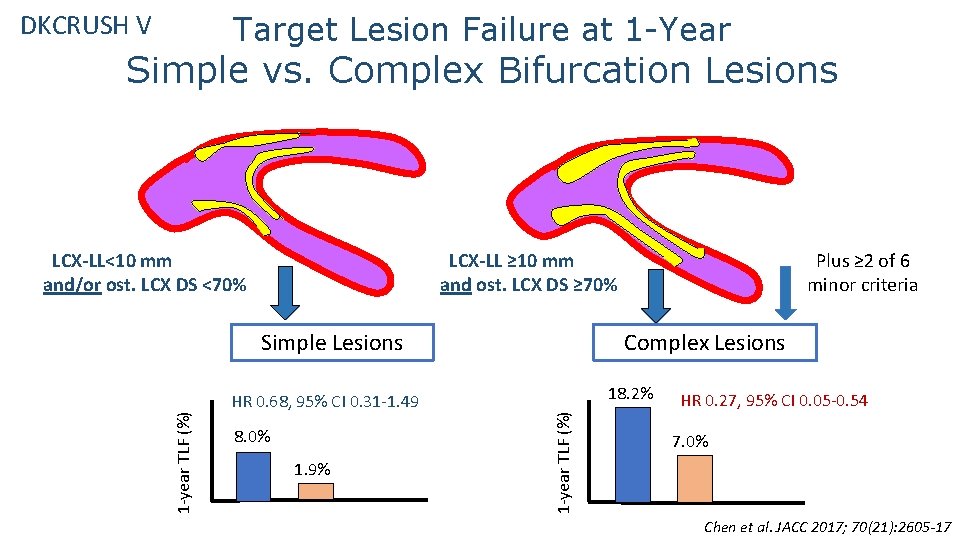
DKCRUSH V Target Lesion Failure at 1 -Year Simple vs. Complex Bifurcation Lesions LCX-LL<10 mm and/or ost. LCX DS <70% LCX-LL ≥ 10 mm and ost. LCX DS ≥ 70% HR 0. 68, 95% CI 0. 31 -1. 49 8. 0% 1. 9% Complex Lesions 18. 2% 1 -year TLF (%) Simple Lesions Plus ≥ 2 of 6 minor criteria HR 0. 27, 95% CI 0. 05 -0. 54 7. 0% Chen et al. JACC 2017; 70(21): 2605 -17
EBC MAIN: A European Bifurcation Club Trial • The European Bifurcation Club Left Main Coronary Study - a randomised comparison of Single versus Dual Stenting for True Bifurcation Left Main Coronary Lesions
EBC MAIN: Hypothesis Left main coronary bifurcation lesions (type 1, 1, 1 or 0, 1, 1: both LAD and Cx >2. 75 mm diameter) are best treated with a planned provisional single stent strategy rather than a planned dual stent strategy, with respect to death, target lesion revascularisation and myocardial infarction at 1 year. ”
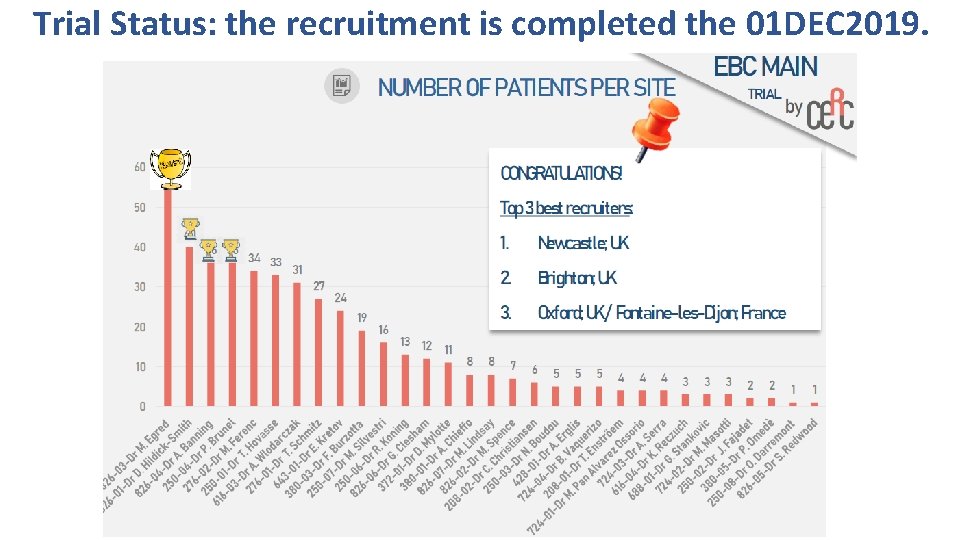
Trial Status: the recruitment is completed the 01 DEC 2019.
Conclusions LM has unique anatomical characteristics which demand different technical approaches compared with non-LM bifurcations; A provisional SB stenting approach is recommended for LM treatment in most cases; Elective two-stent strategies may be considered for long LCX lesions, high risk of LCX compromise or difficult access;
Conclusions Stent technique should depend on individual patient’s anatomical characteristics and the operator’s skill; Either T/TAP, culotte or DK crush could be used as a two stent technique; Among two-stent techniques, strong randomized evidence available for DK-Crush, while EBC MAIN

gorastan@gmail. com
- Slides: 19