
LEECHES and medical therapy PRESENTED BY XXXXXXXXXXX BIOLOGY

LEECHES and medical therapy PRESENTED BY; XXXXXXXXXXX, BIOLOGY 1407, APRIL 12 2010, HOUSTON COMMUNITY COLLEGE.

INTRODUCTION. They are annelids of class clitellata hence they arte closely related to earthworms subclass Hirudinea. They are hermaphrodites and may lay eggs in cocoons or carry almost 300 babies on it stomach. They die after one or two bouts of reproduction. They may inhabit terrestrial, freshwater and marine environments. The terrestrial have additional adaptation of respiratory auricles that permit gas exchange without excessive loss of fluid.
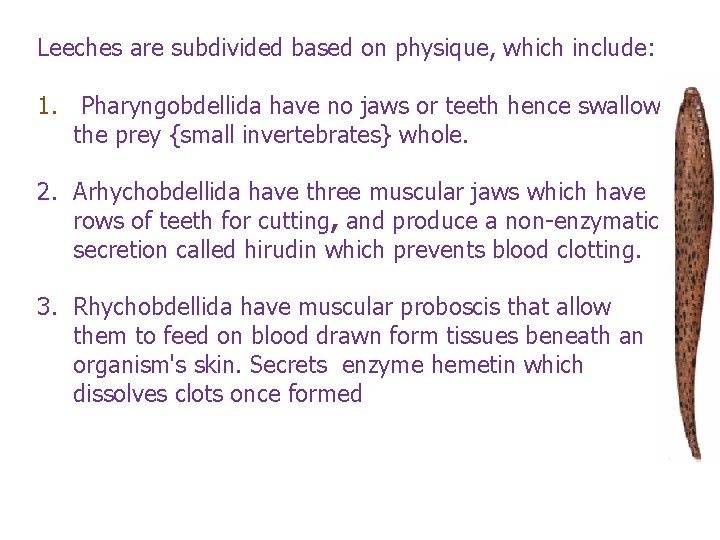
Leeches are subdivided based on physique, which include: 1. Pharyngobdellida have no jaws or teeth hence swallow the prey {small invertebrates} whole. 2. Arhychobdellida have three muscular jaws which have rows of teeth for cutting, and produce a non-enzymatic secretion called hirudin which prevents blood clotting. 3. Rhychobdellida have muscular proboscis that allow them to feed on blood drawn form tissues beneath an organism's skin. Secrets enzyme hemetin which dissolves clots once formed
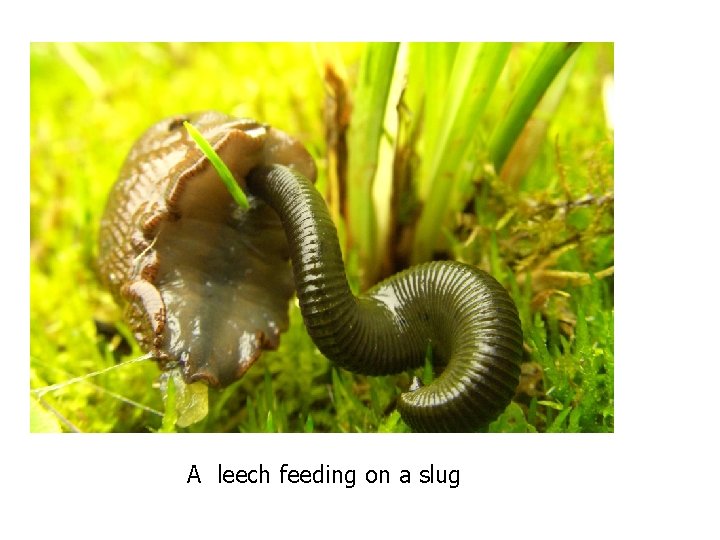
A leech feeding on a slug
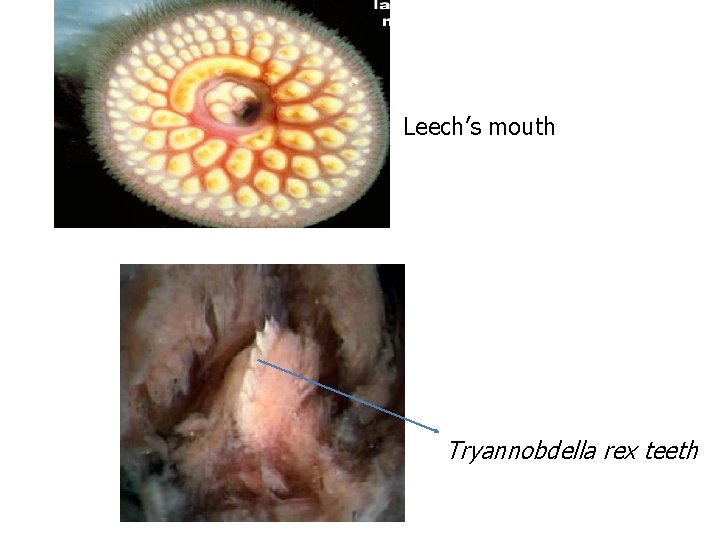
Leech’s mouth Tryannobdella rex teeth

Due to these characterizes, the Hirudo medicinalis from their enzyme hirudin, are used in medical therapy –Hirudotherapy. Their saliva contains: v Carboxypeptidase A inhibitors Increases the inflow of blood at the bite site v. Histamine like substances and Acetylcholine Vasodilator. Increases the inflow of blood at the bite site v. Complement inhibitors May possibly replace natural complement inhibitors if they are deficient v. Eglins and Bdellins are Anti-inflammation v. Hyaluronidase Increases interstitial viscosity. Antibiotic
Destabilase Monomerizing activity. Dissolves fibrin. Thrombolytic effects Tryptase inhibitor Inhibits proteolytic enzymes of host mast cells Their saliva also contain an anesthetic so their victims do not feel them break their skin. Similarly hirudin in the saliva is used as an anticoagulant, apart from that its contains thrombophlebitis which has a bactericidal property hence detains the growth of bacteria in the animals. The Hirudo medicinalis can consume between 5 – 15 Ml of blood which is almost 4 – 6 times their body weight in a single feeding, this is due to large branched gastric caecci or pouches that allow them to expand during feeding.
History of Hirudotherapy The first clinical use of medicinal leeches (Hirudo medicinal is) occurred approximately 4000 years ago. A Greek physician Nicander in Colophon first recorded the use of leeches in 200 BC for medicine. Aviccena popularized it in the canon medicine in 1020’s and in the treatment of skin diseases. A modern way to do it was introduced in 12 th century. By 5 th century it was being used in Europe. English and Scottish were used, many imported from France, Hungary, the Ukraine, Turkey, Rumania, Russia, Egypt and Algeria.
In 1846 in France alone, 30 million leeches were used. Hospitals in both London and Paris required 13 million between them for that single year. America produced their own leeches and one farm sold over a thousand per day. The leech industry began its decline due to the over collection of the animal and its discredit by the medical profession. By the end of the 19 th century the golden age of the leech had passed. Physicians used thousands of leeches for the treatment of all diseases no matter the symptoms
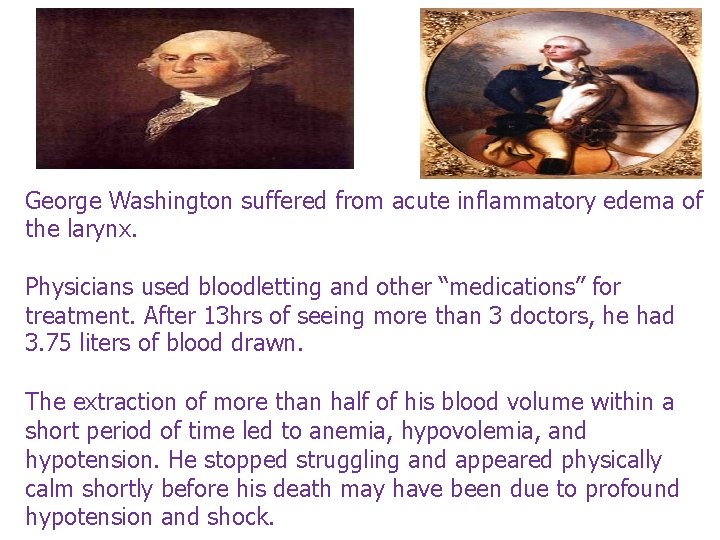
George Washington suffered from acute inflammatory edema of the larynx. Physicians used bloodletting and other “medications” for treatment. After 13 hrs of seeing more than 3 doctors, he had 3. 75 liters of blood drawn. The extraction of more than half of his blood volume within a short period of time led to anemia, hypovolemia, and hypotension. He stopped struggling and appeared physically calm shortly before his death may have been due to profound hypotension and shock.
After its decline is the 19 th century, the leeches have started to be in use today. Today they are used in microsurgery, they provide an effective means to reduce blood coagulation, relieve venous insufficiency and in reconstruction surgery. Other disease include : v. Periorbital Hematoma - sac of blood that the body creates to keep internal bleeding to a minimum around the eye. The blood may dissolve, continue to grow or show no change. Hirudotherapy can be used to evacuate the pooled blood around the eyes after couple of days.
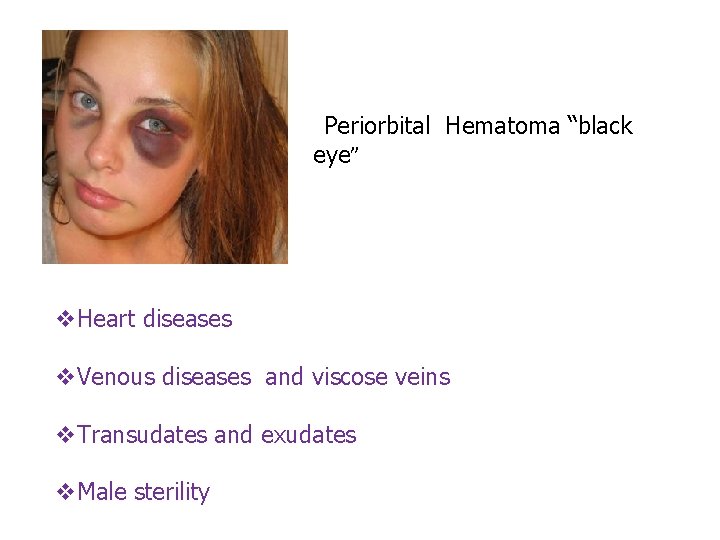
Periorbital Hematoma “black eye” v. Heart diseases v. Venous diseases and viscose veins v. Transudates and exudates v. Male sterility
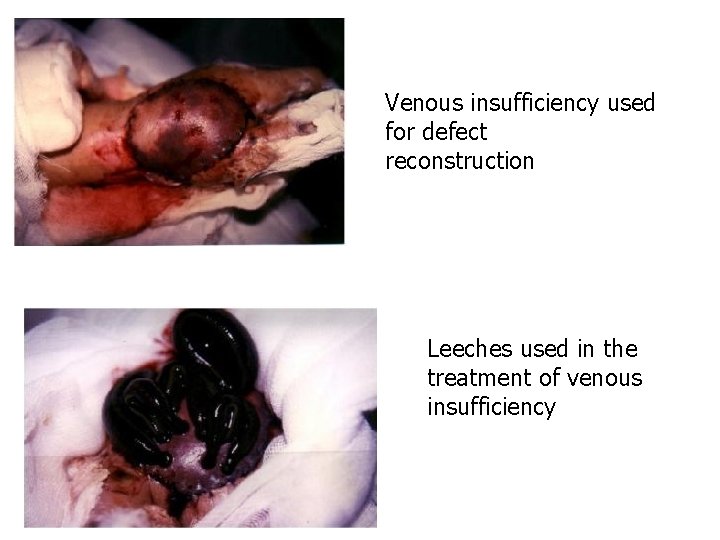
Venous insufficiency used for defect reconstruction Leeches used in the treatment of venous insufficiency
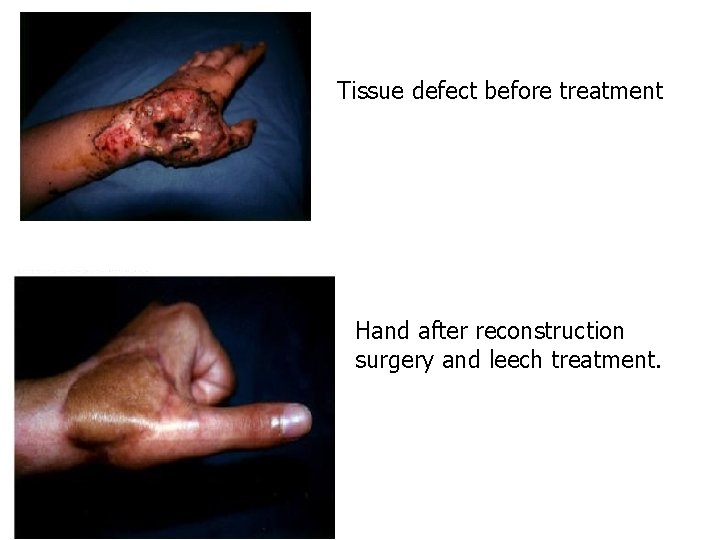
Tissue defect before treatment Hand after reconstruction surgery and leech treatment.
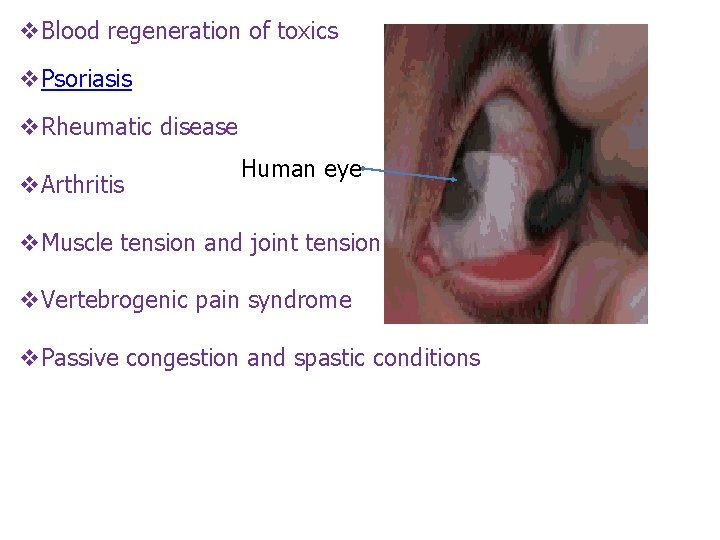
v. Blood regeneration of toxics v. Psoriasis v. Rheumatic disease v. Arthritis Human eye v. Muscle tension and joint tension v. Vertebrogenic pain syndrome v. Passive congestion and spastic conditions
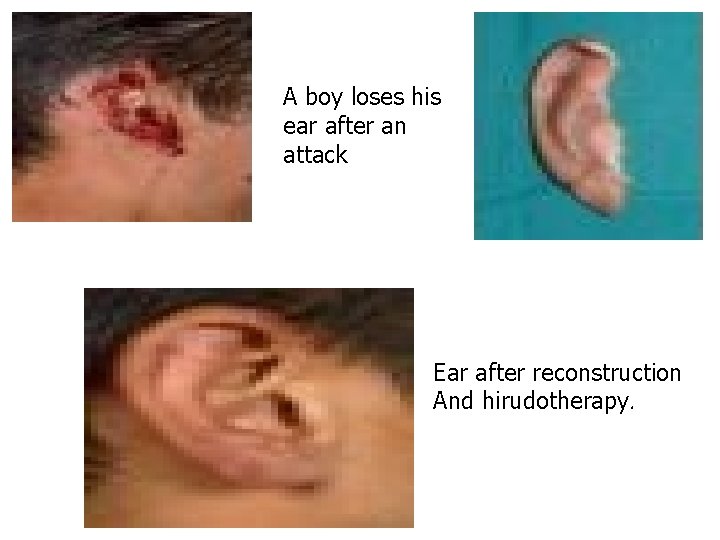
A boy loses his ear after an attack Ear after reconstruction And hirudotherapy.

Today doctors are hesitant to use leeches in their clinics due to their image but it has been proved to be useful if a patients veins are too weak to take blood away from body parts and blood building up causing venous congestion. One man who cut his penis had to have leeches attached to drain the blood says Dr. Weinkove. How therapy works. 1. Wash hands. 2. Select appropriate personal protective equipment (gloves). 3. Cleanse area with normal saline soaked sterile gauze.
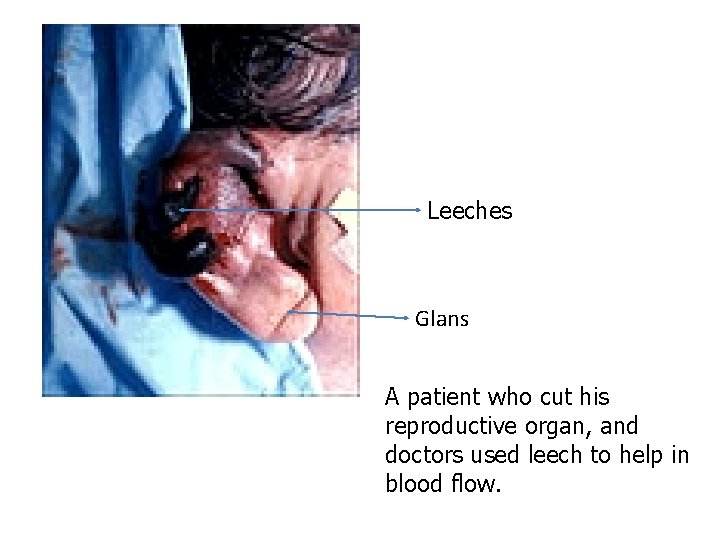
Leeches Glans A patient who cut his reproductive organ, and doctors used leech to help in blood flow.
4. Apply leeches with gloved hand on tweezers. 5. Allow leech to attach large posterior end first and direct smaller head end to the desired. 6. Apply the other leeches if necessary. 7. Monitor leeches until they fill with blood (10 -20 minutes). Usually the leech falls off itself (if not use salt. Leeches do not like salt and will drop off) v leech therapists use up to 10 leeches so the patient can lose up to 150 ml of blood during the treatment v Its good to keep the leeches hungry before therapy, they can stay without food for a year.
v Although their saliva have an anesthesia, the bite may be bad when the skin is cold, the patient is a smoker or an older individual. v However this can be helped by cleaning the surface. v Normally, patients approximate the pain with bites form 2 - 3 mosquitoes.
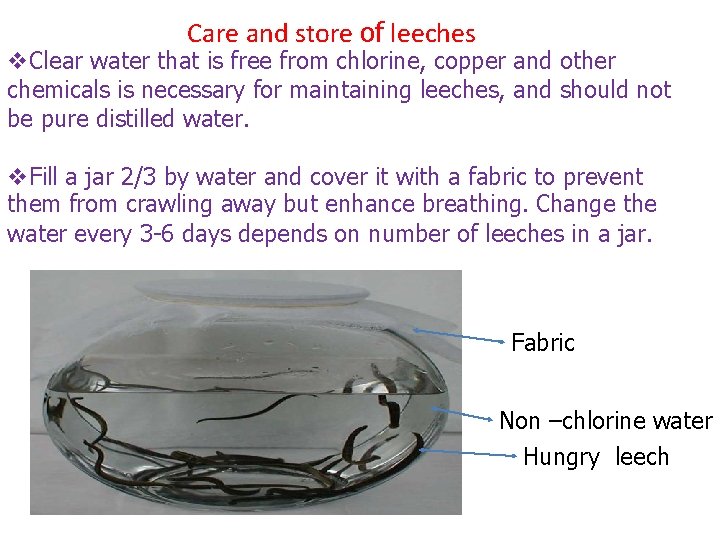
Care and store of leeches v. Clear water that is free from chlorine, copper and other chemicals is necessary for maintaining leeches, and should not be pure distilled water. v. Fill a jar 2/3 by water and cover it with a fabric to prevent them from crawling away but enhance breathing. Change the water every 3 -6 days depends on number of leeches in a jar. Fabric Non –chlorine water Hungry leech
v Sudden temperature changes could harm the leeches, hence the changing water should always be same temperature as previous. v Any temperature in a range of 40 F to 80 F (5 -27 C). They should not be kept in thermos because its too small, they are only used for transportation. v In 50 – 70 days leech become hungry and are ready to suck again. Hospitals and clinics use the leeches only once but some people reuse them after 3 -4 months.
Side effects and benefits v. They rarely lead to serious complications. The normal pain of treatment and short term itching are regular side effects. v. The benefits of leech therapy are not only the amount of blood that the leech removes, It is the anti-blood clotting enzymes in their saliva that allow blood flow. v. They normally carry parasites , viruses and bacteria from their pervious blood source which can survive for months in them. This could probably be transmitted to humans. v. After leeches drop off, the edges of the wound swell for 12 – 48 hours accompanied by tension , heat and reddening. Small blood spots develop below the skin and around the leech bites
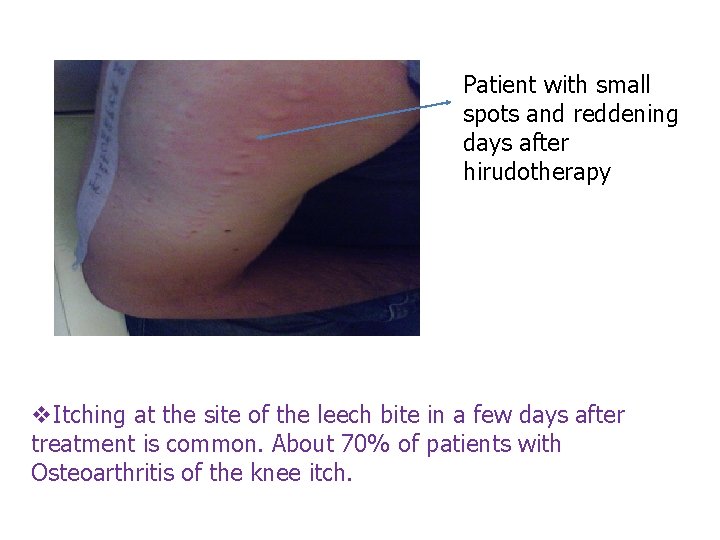
Patient with small spots and reddening days after hirudotherapy v. Itching at the site of the leech bite in a few days after treatment is common. About 70% of patients with Osteoarthritis of the knee itch.
Side effects and benefits v. The today medicine has years experience in the struggle against human diseases. v. Thousands of different mixtures, tablets, vaccines, drugs have been created – and all have effect on human treatment. v. Due to this, professional doctors have applied traditional methods of treatments. After all theses modern medicine source comes from natural roots. Hence the ancient used it for treatment of hundreds of diseases making it beneficial.
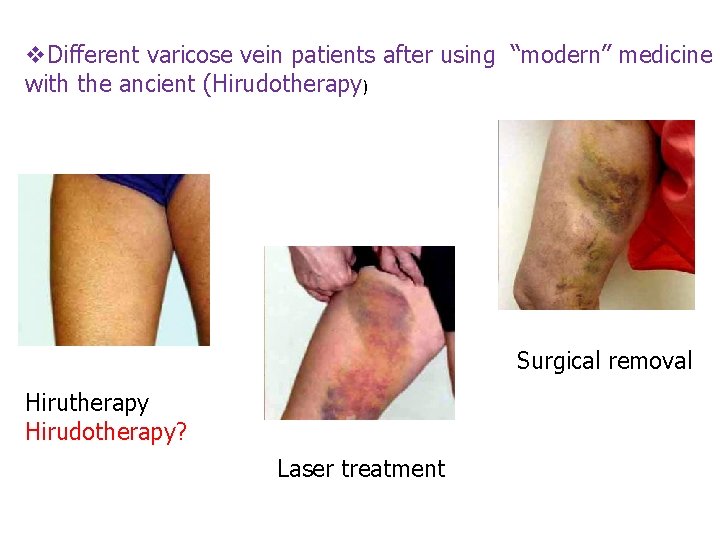
v. Different varicose vein patients after using “modern” medicine with the ancient (Hirudotherapy) Surgical removal Hirutherapy Hirudotherapy? Laser treatment

BENEFITS In Russian at this 21 st century, there is a leech farm and firm that makes cosmetic that soften the skin and fight ageing In 2009 it was know that leeches could be used to solve crimes. An armed robber was caught after his DNA was matched with blood from leech found at the scene of the crime.

Costs of leeches Mostly they got at : Medical Leeches - Hirudo medicinalis - $8 each (for orders below 100 leeches) Medical Leeches - Hirudo medicinalis - $7 each (for orders 100 leeches and more ) Shipping varies with the distance of the country from where hey are reared. .
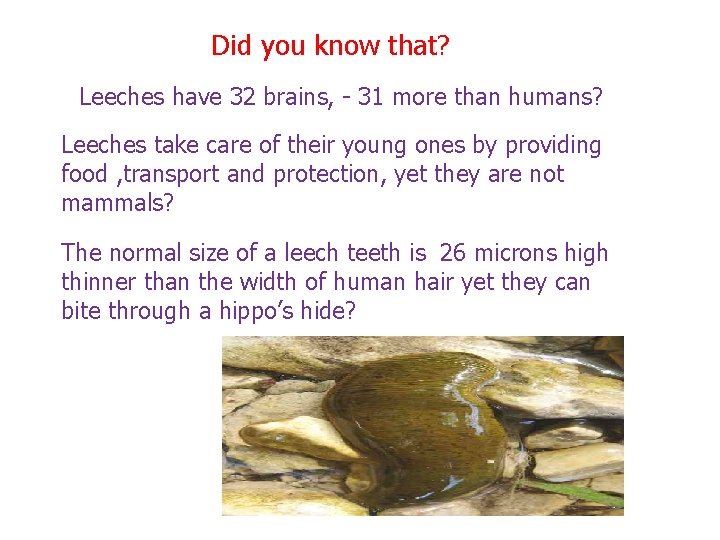
Did you know that? Leeches have 32 brains, - 31 more than humans? Leeches take care of their young ones by providing food , transport and protection, yet they are not mammals? The normal size of a leech teeth is 26 microns high thinner than the width of human hair yet they can bite through a hippo’s hide?
REFERANCE vhttp: //www. leeches. biz/index. htm vhttp: //www. youtube. com/watch? v=bg. L 55 7 f 5 ygc&feature=related vhttp: //en. wikipedia. org/wiki/European_Medical_Le ech vhttp: //www. worsleyschool. net/science/files/leeches. html vhttp: //australianmuseum. net. au/Leeches

vhttp: //www. google. com/imgres? imgurl=http: //englishrussi a. com/wp-content/uploads/2009/12/311. jpg&imgrefurl= vhttp: //www. disinfo. com/tag/leeches/&usg=__k 93 a. R 6 Drkc 2 xlu 0 s 5 Su. It. Hchqd. M=&h=612&w=918&sz=290&hl=en&start= 3&um=1&itbs=1&tbnid
- Slides: 31