
Lee County Triage Center and Low Demand Shelter

- Slides: 21
Lee County Triage Center and Low Demand Shelter Ann Arnall, Deputy Director Lee County Human Services 239 -533 -7920 arnallam@leegov. com
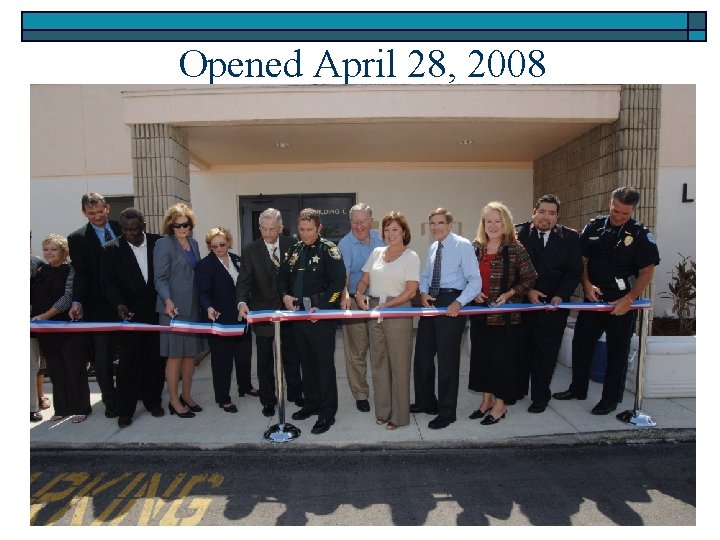
Opened April 28, 2008
Pre-Arrest Diversion Program o o Voluntary alternative to incarceration and inappropriate emergency room utilization Targets low level offenses (trespass, open container, disturbing the peace) Primarily for individuals experiencing a behavioral health crisis who are homeless, indigent, and/or intoxicated Complements Crisis Intervention Training
Program Design o o o Modeled after 24/7 no refusal drop off for law enforcement (Memphis model of CIT) Current model allows 8 hours of intake Strong community collaborative based on assets of partners Utilized existing capital infrastructure – vacant former children’s CSU Capacity 22 individuals at any given time
Program Design o o o Offers in-depth nursing and psycho-social assessments Person must be able to safely stay at center Following satisfactory nursing assessment person enters the low demand shelter component Average length of stay at shelter is 12 days Staff work to link individuals with appropriate community treatment and services
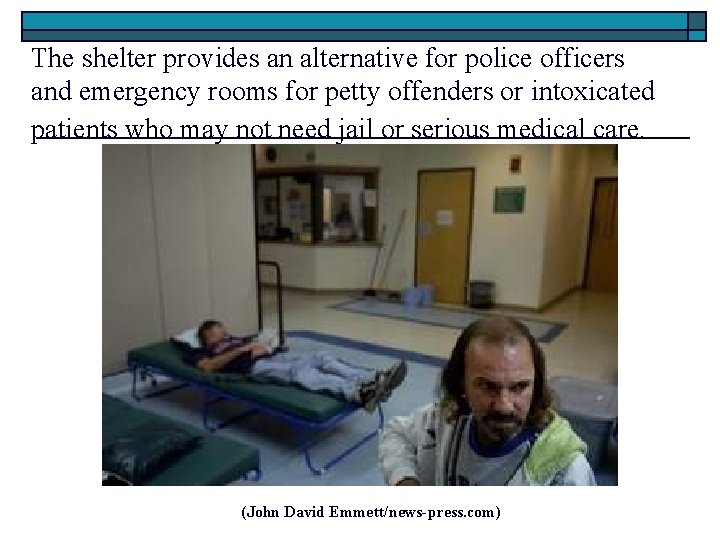
The shelter provides an alternative for police officers and emergency rooms for petty offenders or intoxicated patients who may not need jail or serious medical care. (John David Emmett/news-press. com)
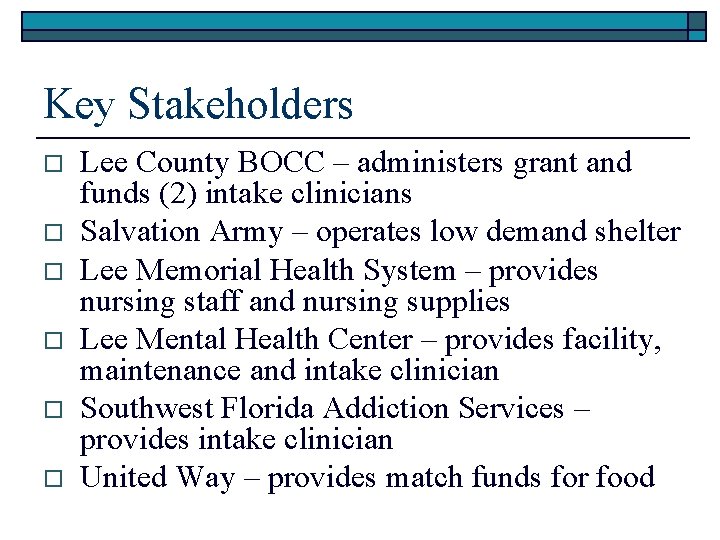
Key Stakeholders o o o Lee County BOCC – administers grant and funds (2) intake clinicians Salvation Army – operates low demand shelter Lee Memorial Health System – provides nursing staff and nursing supplies Lee Mental Health Center – provides facility, maintenance and intake clinician Southwest Florida Addiction Services – provides intake clinician United Way – provides match funds for food
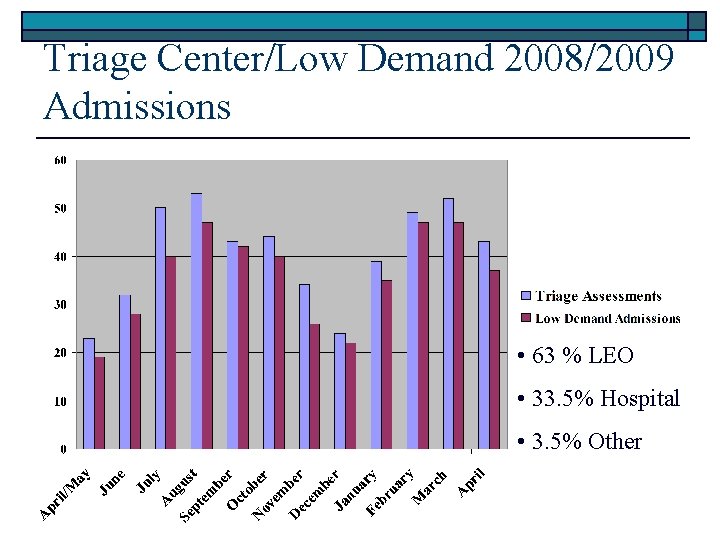
Triage Center/Low Demand 2008/2009 Admissions • 63 % LEO • 33. 5% Hospital • 3. 5% Other
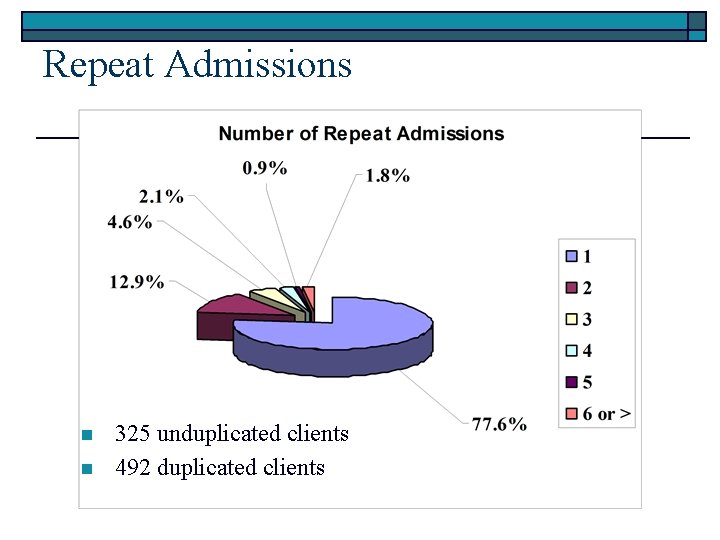
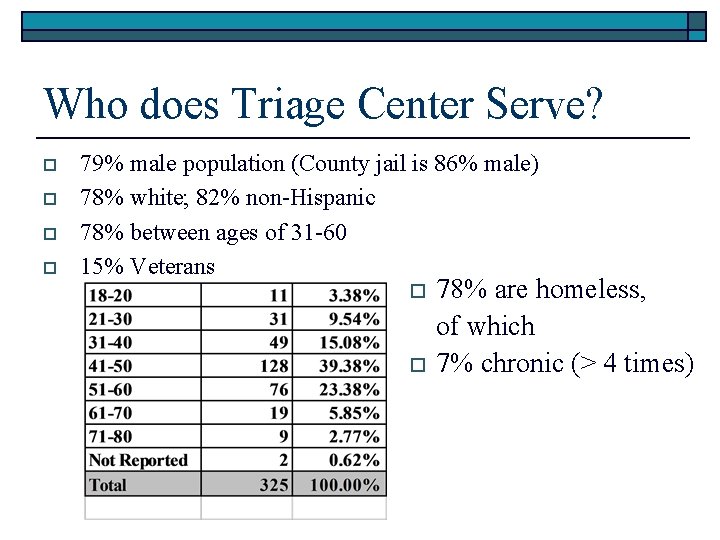
Repeat Admissions n n 325 unduplicated clients 492 duplicated clients
Who does Triage Center Serve? o o 79% male population (County jail is 86% male) 78% white; 82% non-Hispanic 78% between ages of 31 -60 15% Veterans o o 78% are homeless, of which 7% chronic (> 4 times)
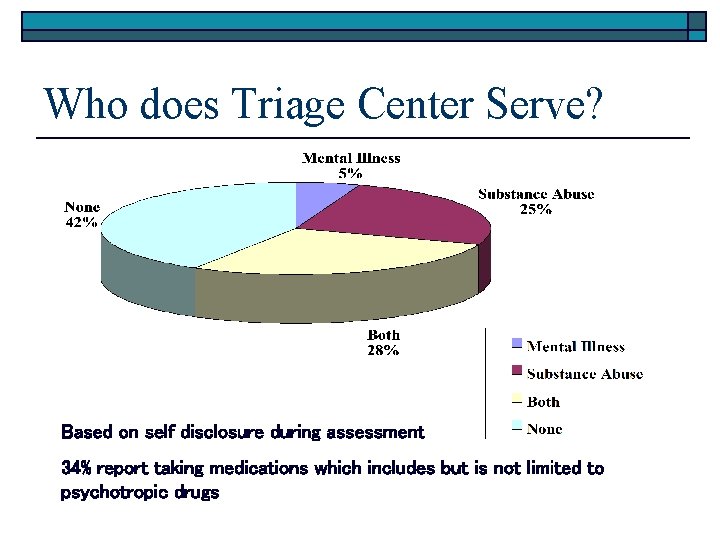
Who does Triage Center Serve? Based on self disclosure during assessment 34% report taking medications which includes but is not limited to psychotropic drugs
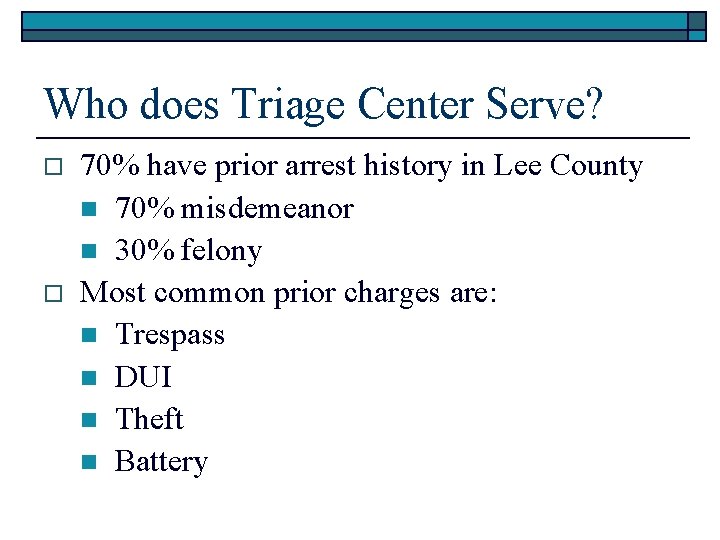
Who does Triage Center Serve? o o 70% have prior arrest history in Lee County n 70% misdemeanor n 30% felony Most common prior charges are: n Trespass n DUI n Theft n Battery
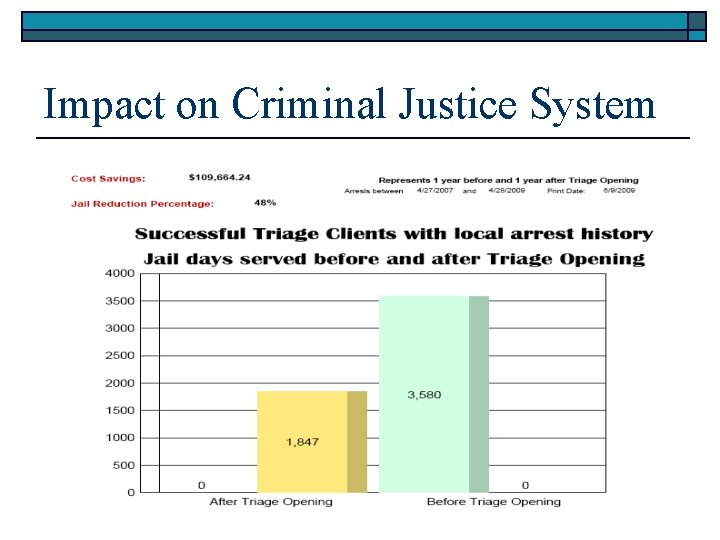
Impact on Criminal Justice System
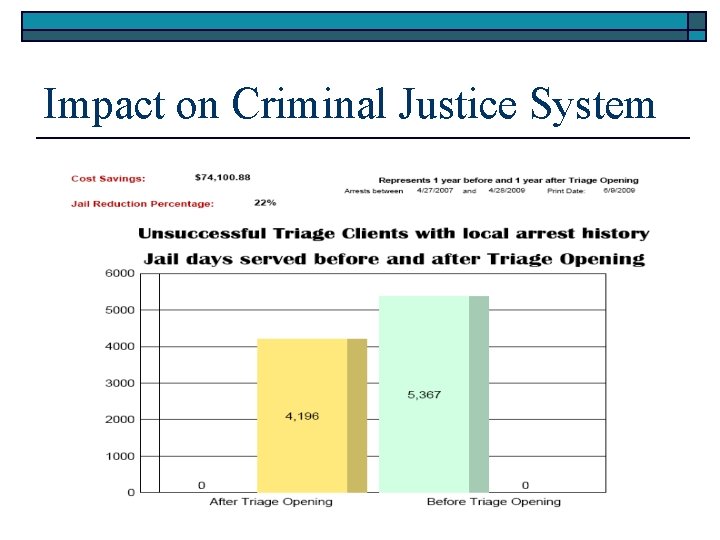
Impact on Criminal Justice System
Impact on Criminal Justice System o
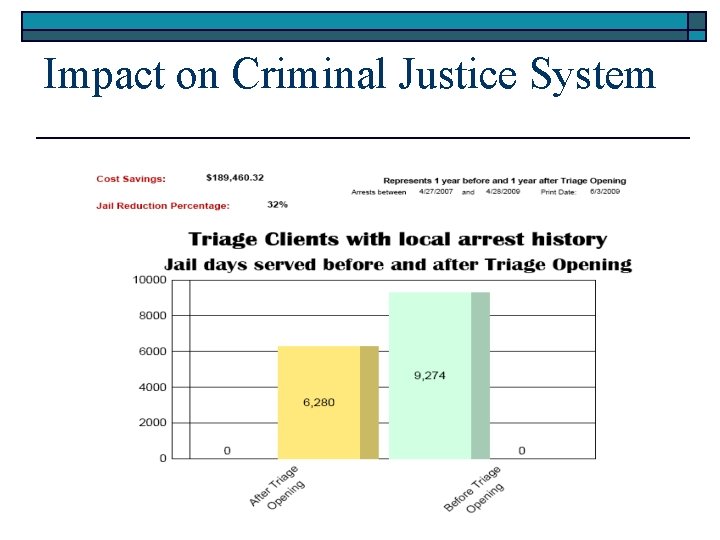
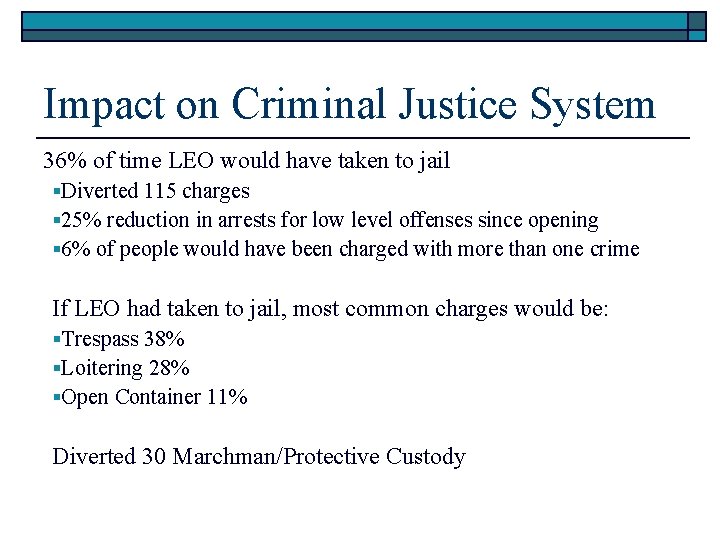
Impact on Criminal Justice System 36% of time LEO would have taken to jail §Diverted 115 charges § 25% reduction in arrests for low level offenses since opening § 6% of people would have been charged with more than one crime If LEO had taken to jail, most common charges would be: §Trespass 38% §Loitering 28% §Open Container 11% Diverted 30 Marchman/Protective Custody
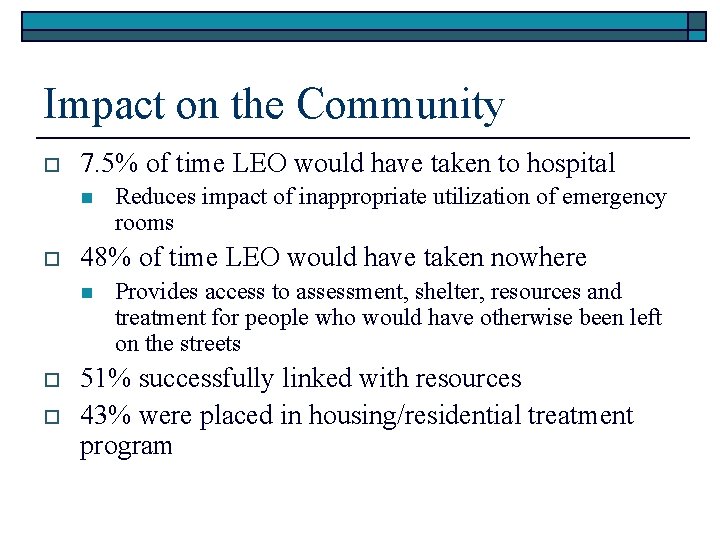
Impact on the Community o 7. 5% of time LEO would have taken to hospital n o 48% of time LEO would have taken nowhere n o o Reduces impact of inappropriate utilization of emergency rooms Provides access to assessment, shelter, resources and treatment for people who would have otherwise been left on the streets 51% successfully linked with resources 43% were placed in housing/residential treatment program
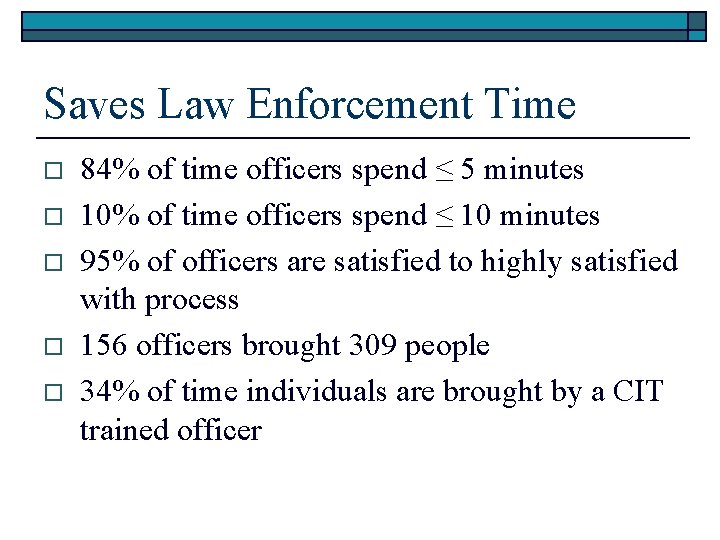
Saves Law Enforcement Time o o o 84% of time officers spend ≤ 5 minutes 10% of time officers spend ≤ 10 minutes 95% of officers are satisfied to highly satisfied with process 156 officers brought 309 people 34% of time individuals are brought by a CIT trained officer
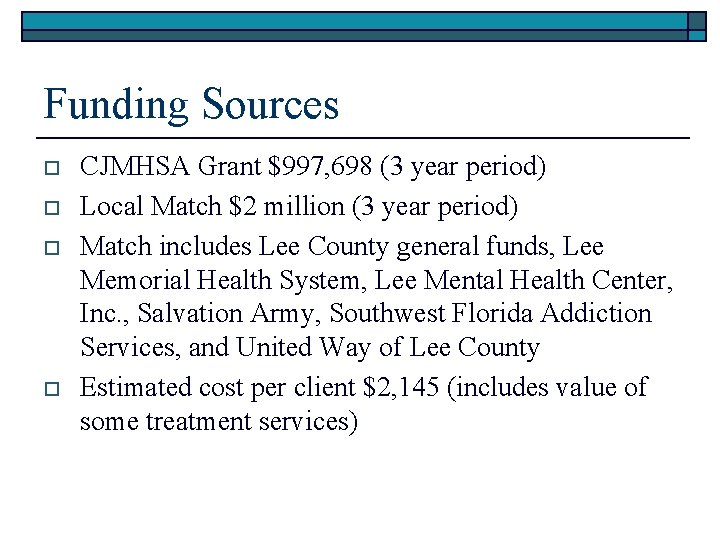
Funding Sources o o CJMHSA Grant $997, 698 (3 year period) Local Match $2 million (3 year period) Match includes Lee County general funds, Lee Memorial Health System, Lee Mental Health Center, Inc. , Salvation Army, Southwest Florida Addiction Services, and United Way of Lee County Estimated cost per client $2, 145 (includes value of some treatment services)
Questions o For additional information please contact Ann Arnall, Lee County Human Services 2440 Thompson Street Fort Myers, Florida 33901 239 -533 -7920 arnallam@leegov. com