
LECTURES IN MICROBIOLOGY Microbial Metabolism LESSON 6 Sofronio
LECTURES IN MICROBIOLOGY Microbial Metabolism LESSON 6 Sofronio Agustin Professor
Lesson 6 Topics § Metabolism § Energy § Pathways § Biosynthesis 2
Metabolism § Catabolism § Anabolism § Enzymes 3
Catabolism §Breakdown of complex organic molecules in order to extract energy and form simpler end products. §Enzymes are involved. 4
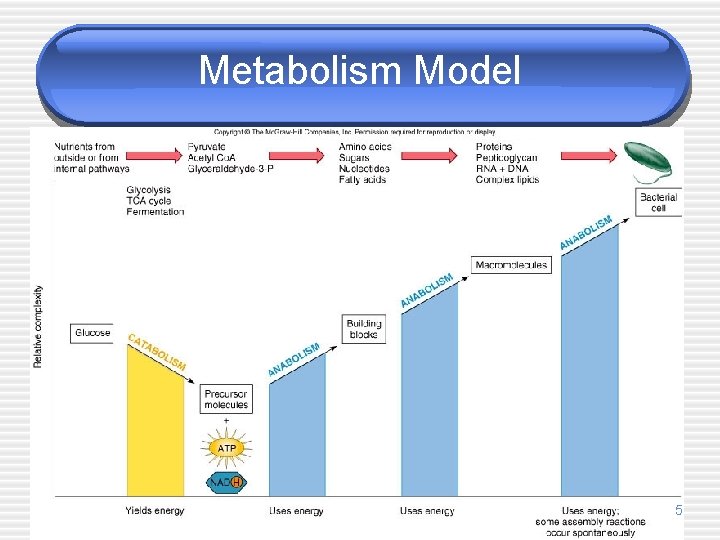
Metabolism Model 5
Enzymes § § § Function Structure Enzyme-substrate interaction Cofactors Action Regulation 6
Enzyme Structure §Simple enzyme - primarily protein §Conjugated enzyme - protein and nonprotein §Three-dimensional features: §Specificity -”lock-and-key” §Active site or catalytic site 7
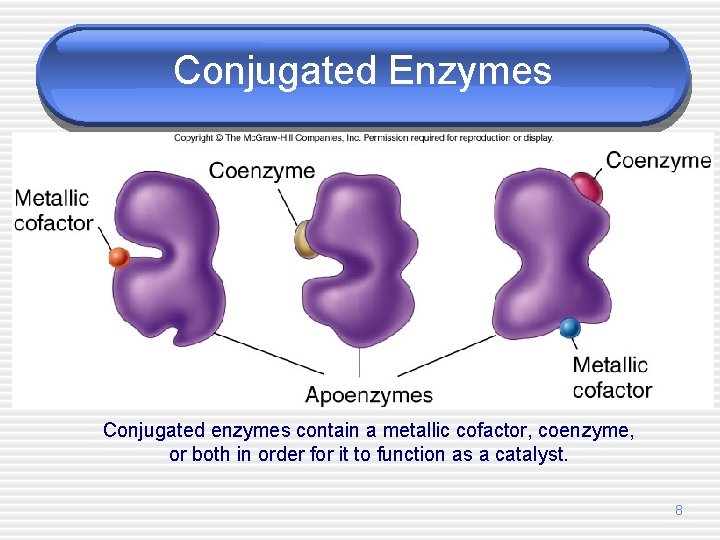
Conjugated Enzymes Conjugated enzymes contain a metallic cofactor, coenzyme, or both in order for it to function as a catalyst. 8
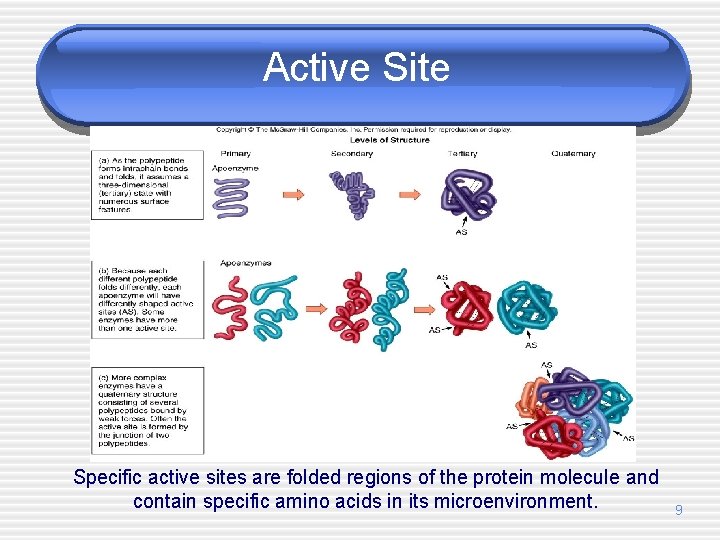
Active Site Specific active sites are folded regions of the protein molecule and contain specific amino acids in its microenvironment. 9
Enzyme-Substrate Interaction §Substrates specifically bind to the active sites on the enzyme: -“lock-and-key” style -Induced fit §Once the reaction is complete, the product is released and the enzyme reused. 10
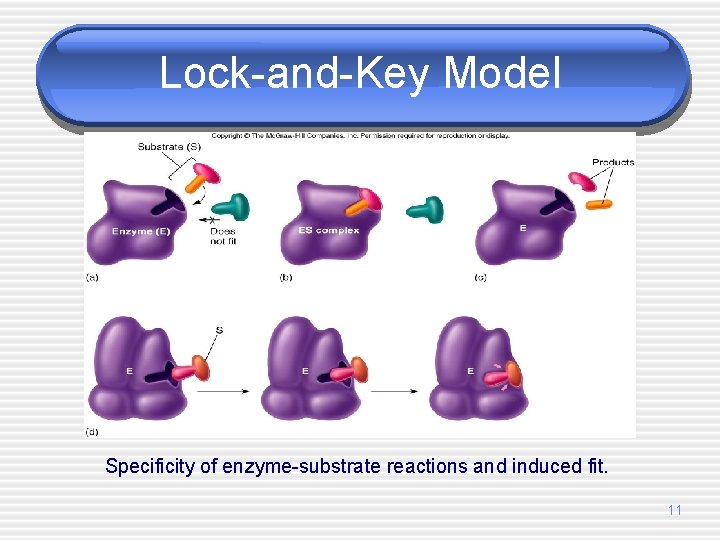
Lock-and-Key Model Specificity of enzyme-substrate reactions and induced fit. 11
Coenzymes § Function as transient carriers § Alter a substrate by removing a chemical group from it and adding it to another. § Ex. NAD, FAD and Co. A 12
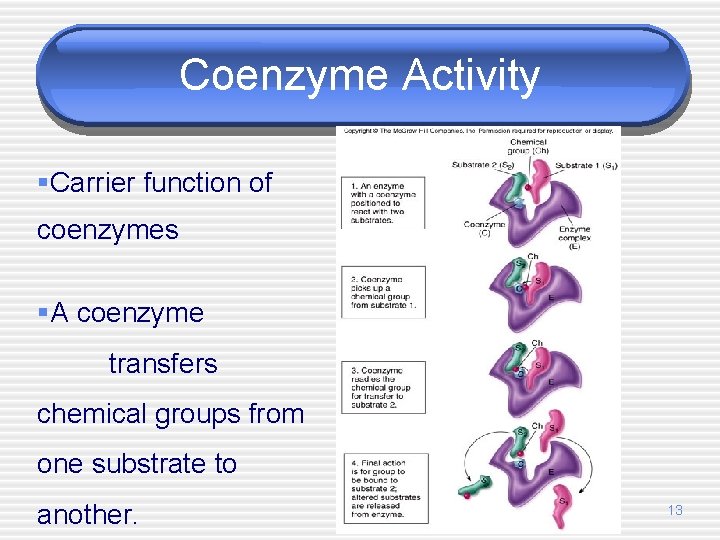
Coenzyme Activity §Carrier function of coenzymes §A coenzyme transfers chemical groups from one substrate to another. 13

Enzyme Action §Exoenzymes §Endoenzymes §Constitutive §Induction or repression §Types of reactions 14
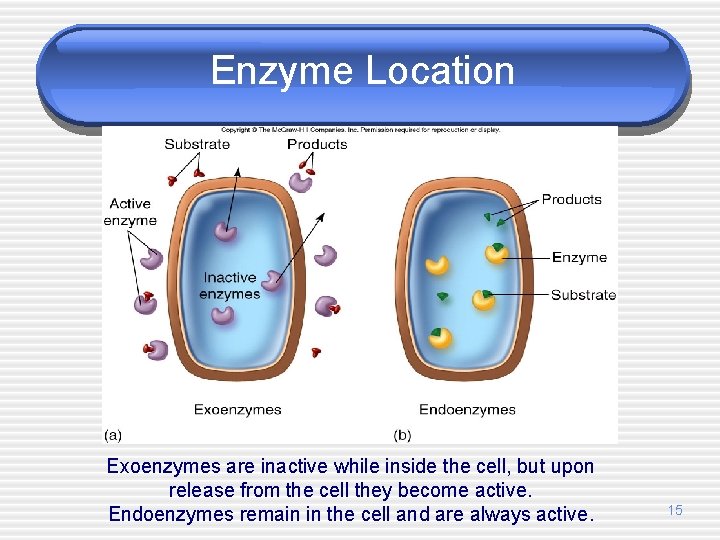
Enzyme Location Exoenzymes are inactive while inside the cell, but upon release from the cell they become active. Endoenzymes remain in the cell and are always active. 15
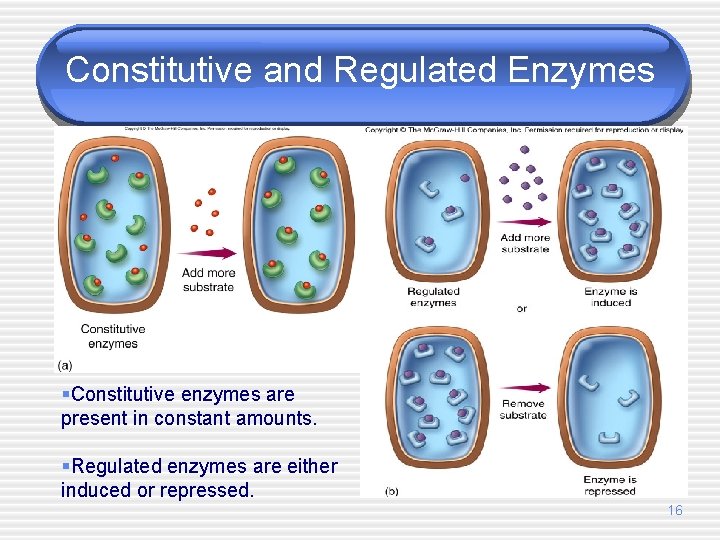
Constitutive and Regulated Enzymes §Constitutive enzymes are present in constant amounts. §Regulated enzymes are either induced or repressed. 16
Types of Reactions § Condensation § Hydrolysis § Transfer reactions 17
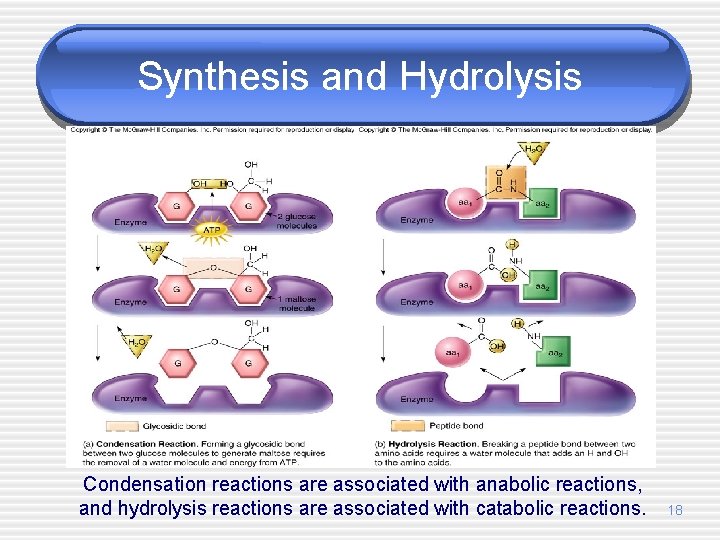
Synthesis and Hydrolysis Condensation reactions are associated with anabolic reactions, and hydrolysis reactions are associated with catabolic reactions. 18
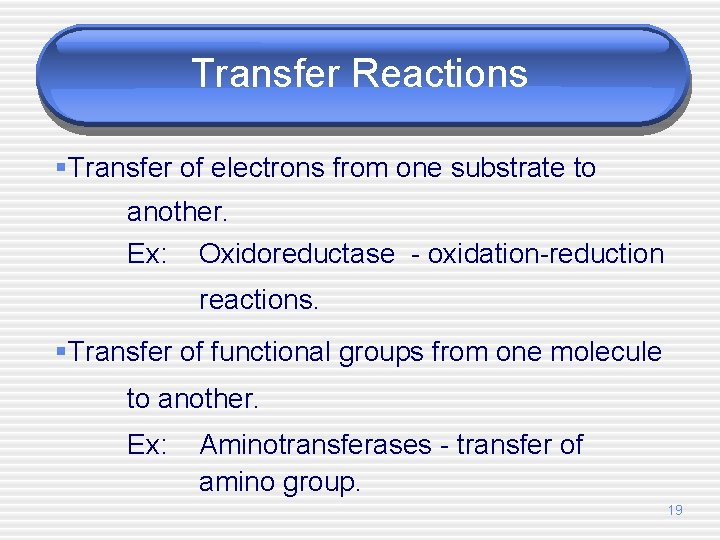
Transfer Reactions §Transfer of electrons from one substrate to another. Ex: Oxidoreductase - oxidation-reduction reactions. §Transfer of functional groups from one molecule to another. Ex: Aminotransferases - transfer of amino group. 19
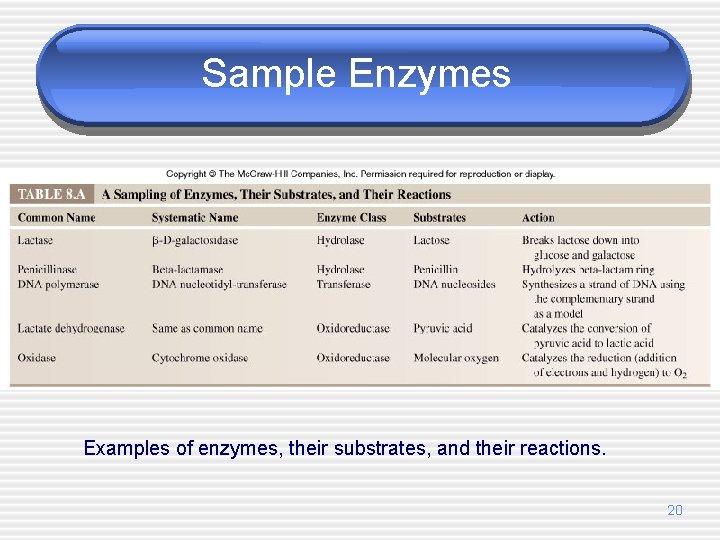
Sample Enzymes Examples of enzymes, their substrates, and their reactions. 20
Regulation §Metabolic pathways §Direct control §Genetic control 21
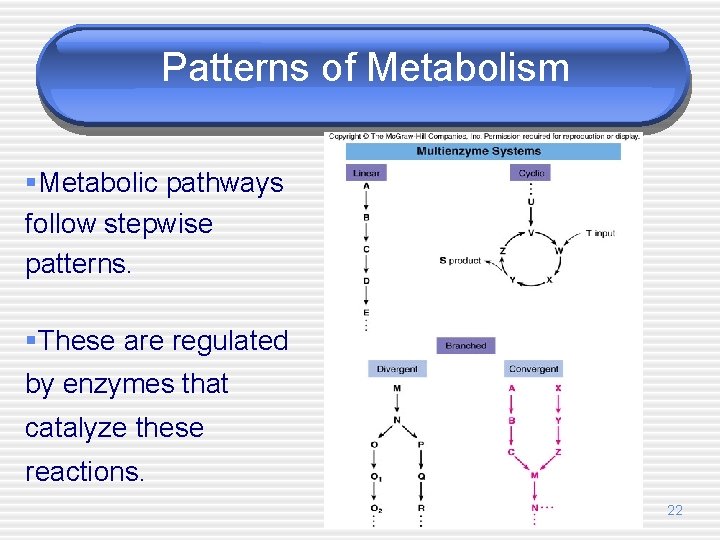
Patterns of Metabolism §Metabolic pathways follow stepwise patterns. §These are regulated by enzymes that catalyze these reactions. 22
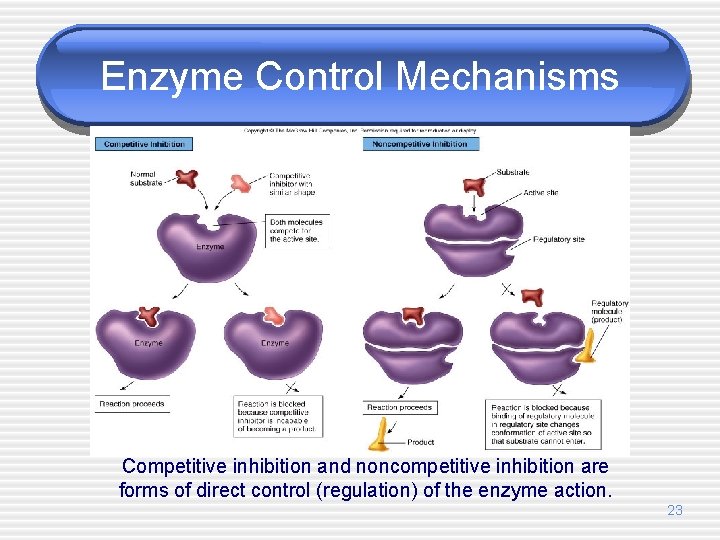
Enzyme Control Mechanisms Competitive inhibition and noncompetitive inhibition are forms of direct control (regulation) of the enzyme action. 23
Genetic Control §Repression - end products stop the expression of genes that encode for proteins (enzymes) which are responsible for metabolic reactions. §Induction - substrate initiates and enhances the expression of genes for proteins (enzymes) that drive metabolic reactions. 24
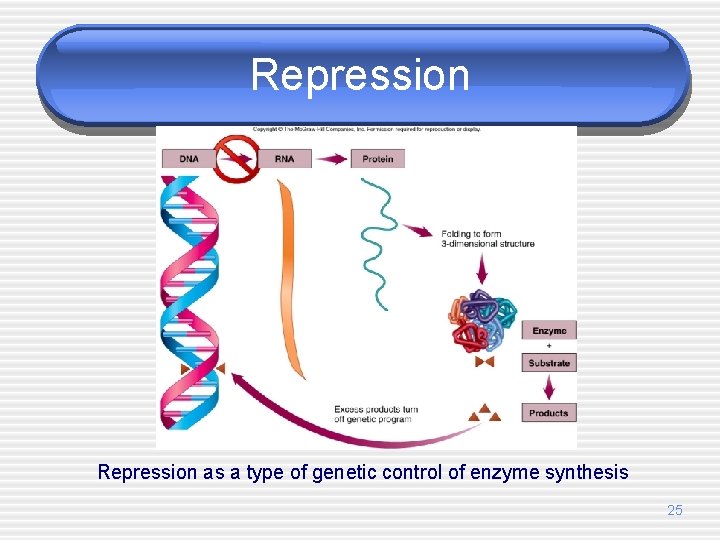
Repression as a type of genetic control of enzyme synthesis 25
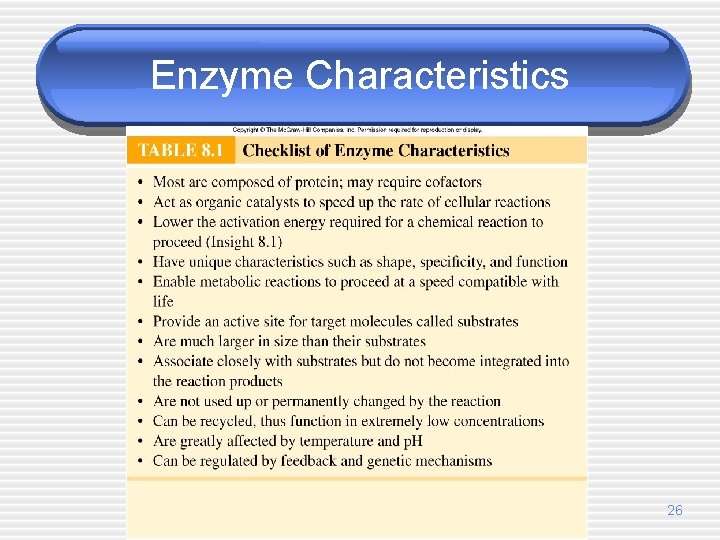
Enzyme Characteristics 26
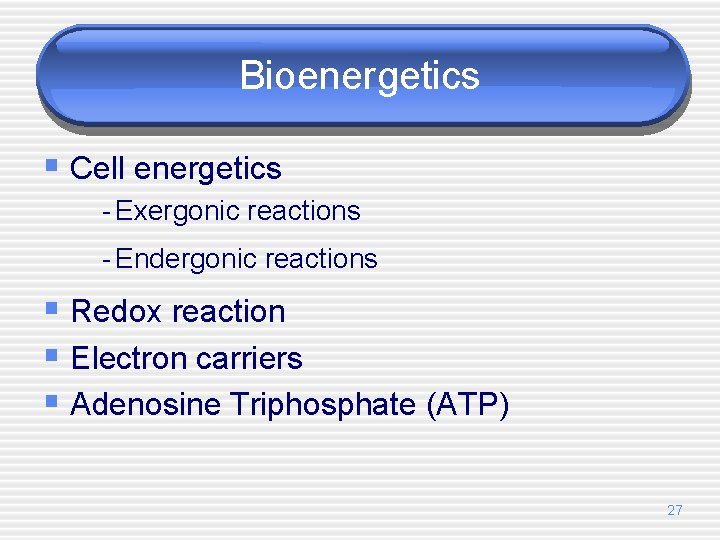
Bioenergetics § Cell energetics - Exergonic reactions - Endergonic reactions § Redox reaction § Electron carriers § Adenosine Triphosphate (ATP) 27
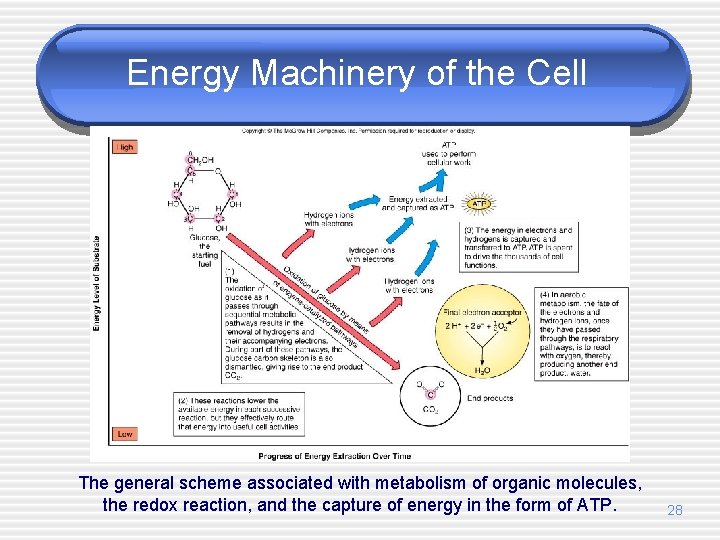
Energy Machinery of the Cell The general scheme associated with metabolism of organic molecules, the redox reaction, and the capture of energy in the form of ATP. 28
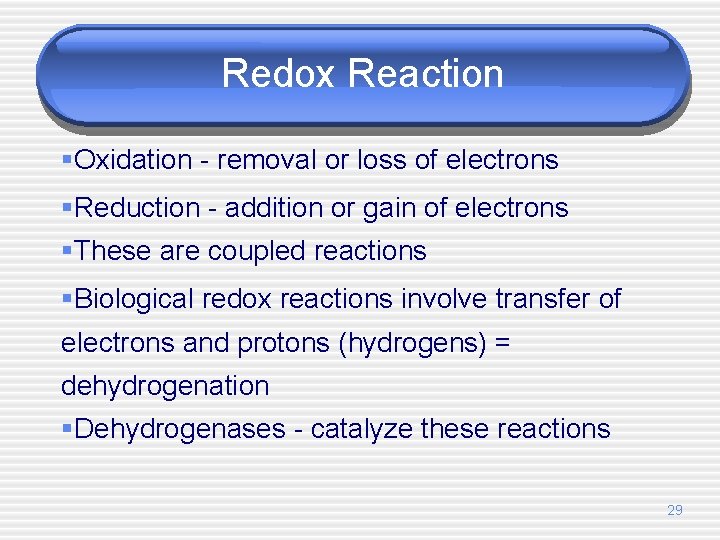
Redox Reaction §Oxidation - removal or loss of electrons §Reduction - addition or gain of electrons §These are coupled reactions §Biological redox reactions involve transfer of electrons and protons (hydrogens) = dehydrogenation §Dehydrogenases - catalyze these reactions 29
Electron Carriers §Electron carriers - transfer electrons (and protons) from donor to acceptor molecules. §Coenzymes: Ex: Nicotinamide adenine dinucleotide (NAD) §Respiratory chain (ETC) carriers: Ex: Cytochromes (protein+porphyrin) 30
Adenosine Triphosphate §Temporary energy repository (“cellular battery”) §Breaking of pyrophosphates bonds will release free energy for cellular work. §Three part molecule: §Nitrogen base - Adenine §Pentose sugar - Ribose) §Chain of three phosphate groups 31
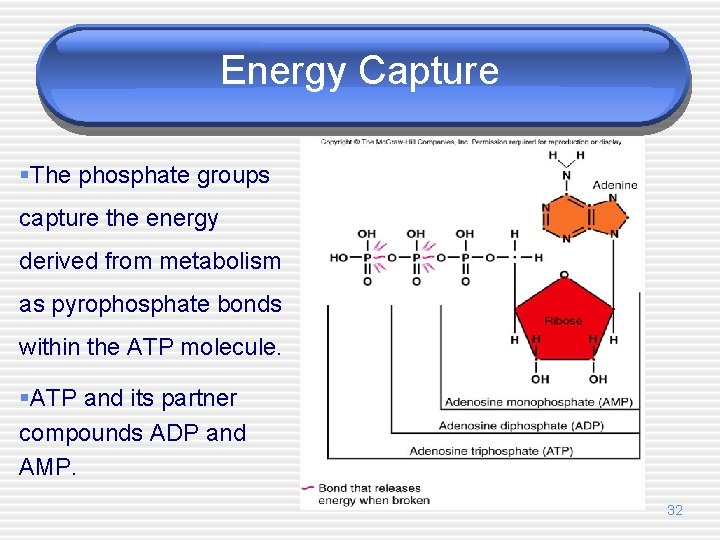
Energy Capture §The phosphate groups capture the energy derived from metabolism as pyrophosphate bonds within the ATP molecule. §ATP and its partner compounds ADP and AMP. 32
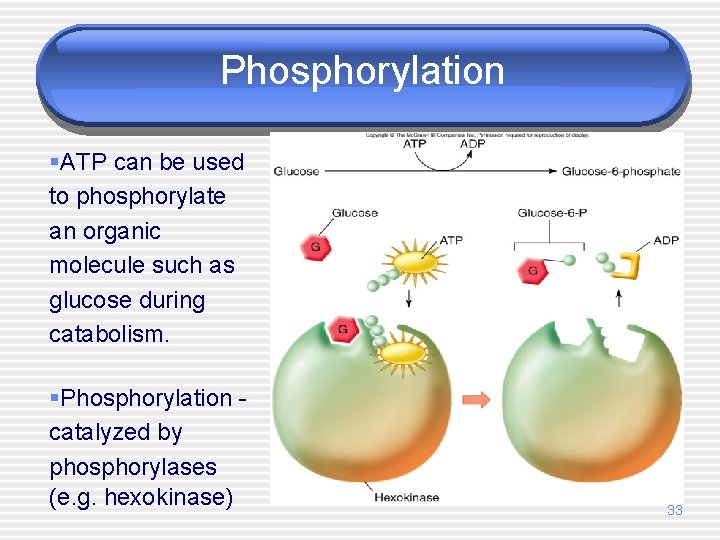
Phosphorylation §ATP can be used to phosphorylate an organic molecule such as glucose during catabolism. §Phosphorylation catalyzed by phosphorylases (e. g. hexokinase) 33
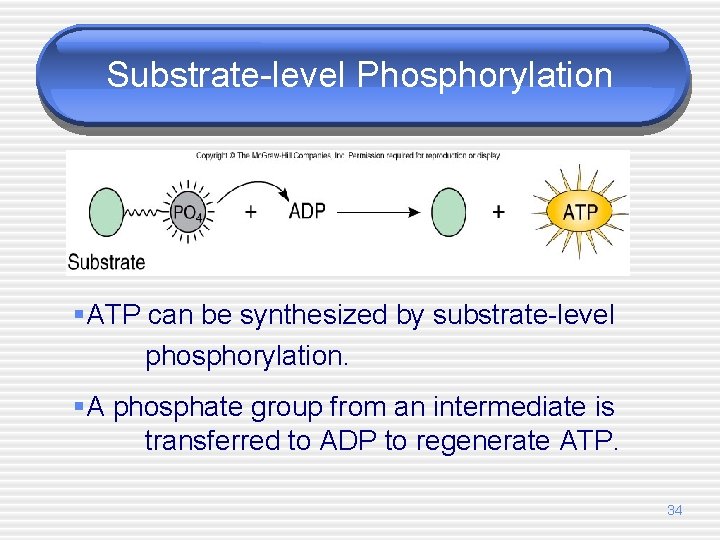
Substrate-level Phosphorylation §ATP can be synthesized by substrate-level phosphorylation. §A phosphate group from an intermediate is transferred to ADP to regenerate ATP. 34
Catabolic Pathways §Embden-Meyerhoff-Parnas (EMP) Pathway or Glycolysis §Kreb’s or Tricarboxylic Acid (TCA) Cycle §Electron Transport or Respiratory Chain §Alternate pathways §Fermentation 35
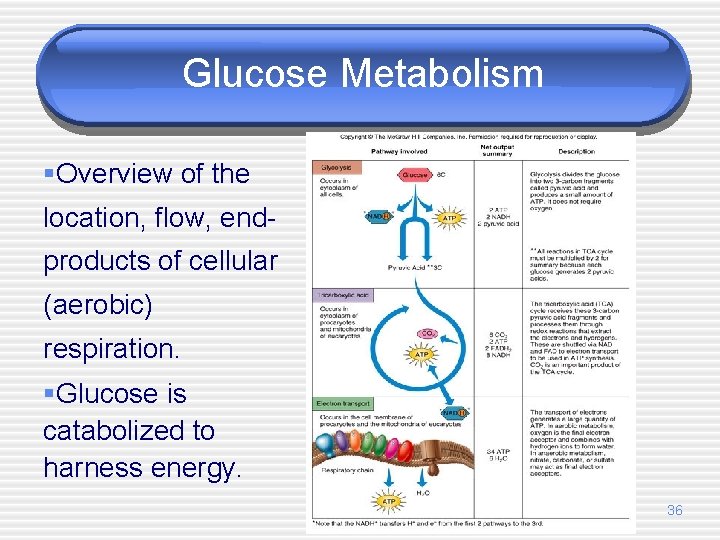
Glucose Metabolism §Overview of the location, flow, endproducts of cellular (aerobic) respiration. §Glucose is catabolized to harness energy. 36
Cellular Respiration §Glycolysis §Kreb’s Cycle §Electron Transport Chain 37
Glycolysis §Glucose (6 -carbon sugar) splits into two pyruvates (3 -carbon molecules). §Glucose is oxidized and coenzyme NAD is reduced to NADH. §Energy investment phase: - Phosphorylation of intermediates using 2 ATP molecules §Energy yielding phase: - Substrate-level-phosphorylation of ADP to produce 4 ATPs. 38
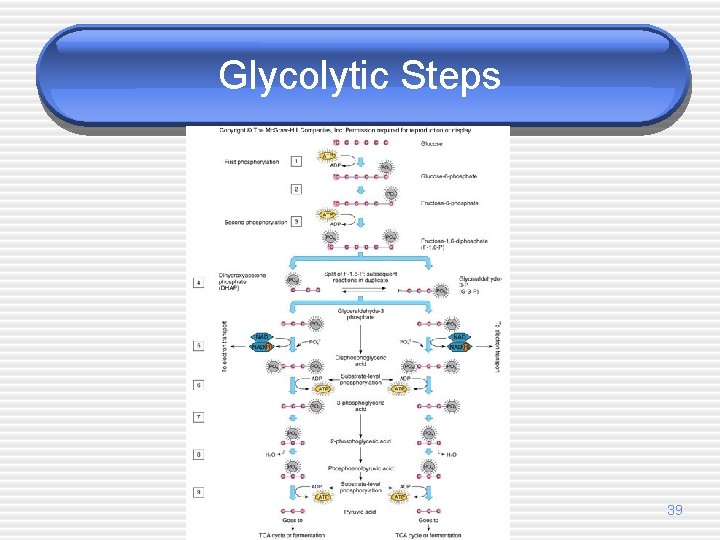
Glycolytic Steps 39
Kreb’s Cycle § Each pyruvic acid is processed to enter the Kreb’s Cycle as Acetyl Co. A. § CO 2 is generated -decarboxylation § reactions. Coenzymes NAD and FAD are reduced to NADH and FADH 2 § Net yield of two ATPs per molecule of glucose. 40
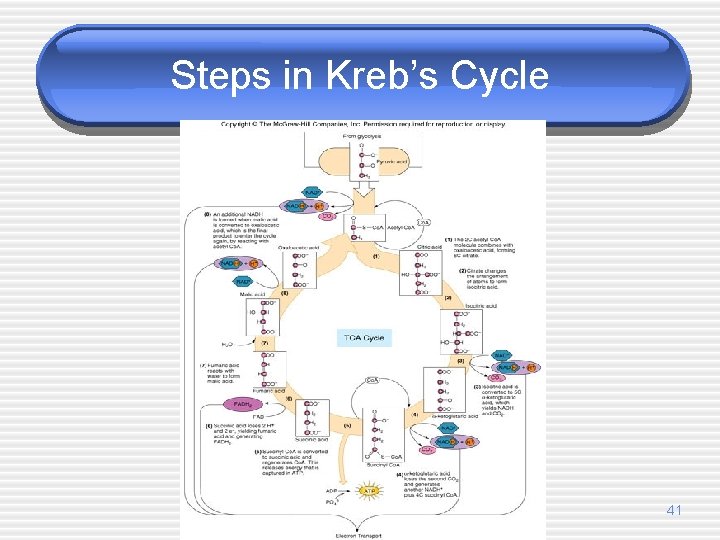
Steps in Kreb’s Cycle 41
Electron Transport Chain • NADH and FADH 2 from glycolysis and Kreb’s Cycle donate electrons to the electron carriers (ETC). • Membrane bound carriers transfer electrons by redox reactions. • Oxygen (final electron acceptor) completes the terminal step. 42
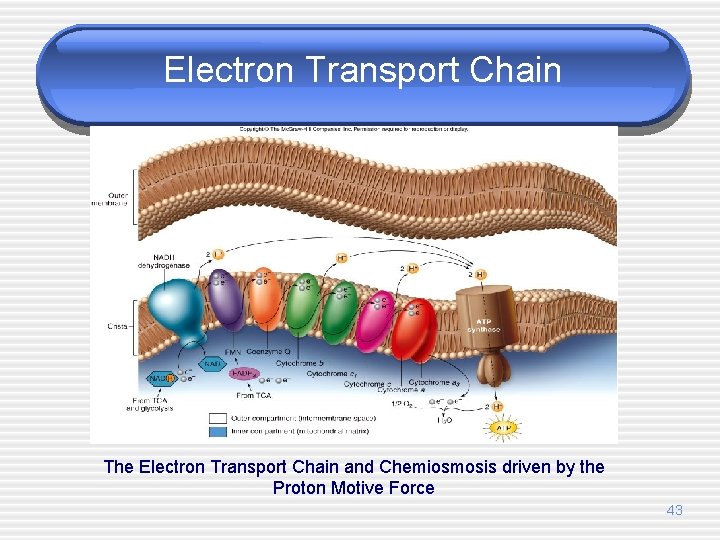
Electron Transport Chain The Electron Transport Chain and Chemiosmosis driven by the Proton Motive Force 43
Location of ETC § Eukaryotes - Inner Mitochondrial Membrane § Prokaryotes- Cytoplasmic Membrane 44
ATP Yield §Glycolysis 2 §Kreb’s Cycle - 2 §ETC 34 Total Yield: 38 §NADH yield §FADH 2 yield- 2 in Glycolysis 8 in Kreb’s Cycle 2 in Kreb’s Cycle 45
Anaerobic Respiration §Similar to aerobic respiration, except nitrate or nitrite is the final electron acceptor 46
Fermentation §Glycolysis only §NADH from glycolysis is used to reduce the glucose §Organic compounds as the final electron acceptors (not O 2) §Low ATP yields per glucose molecule compared to cellular respiration 47
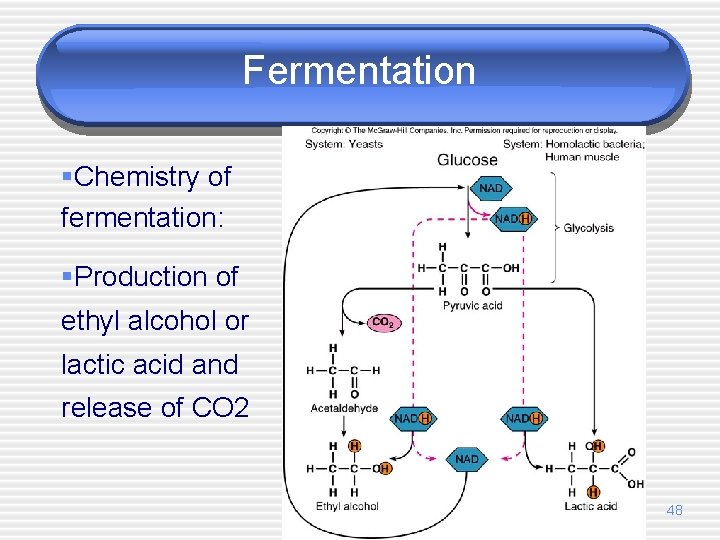
Fermentation §Chemistry of fermentation: §Production of ethyl alcohol or lactic acid and release of CO 2 48
Types of Fermenters §Facultative anaerobes §Fermentation in the absence of oxygen §Respiration in the presence of oxygen Ex. Escherichia coli §Strict fermenters §No respiration Ex. yeast 49
Fermentation Products § Alcoholic fermentation § Acidic fermentation § Mixed acid fermentation 50
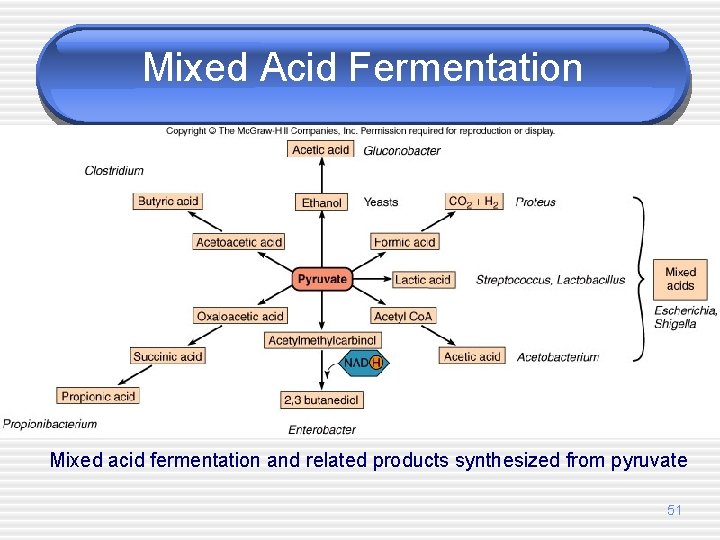
Mixed Acid Fermentation Mixed acid fermentation and related products synthesized from pyruvate 51
Biosynthesis §Amphibolic §Gluconeogenesis §Beta oxidation §Amination §Transamination §Deamination §Macromolecules 52
Amphibolic Synthesis §Integration of the catabolic and anabolic pathways (Coupled Reactions) §Intermediates serve multiple purposes 53
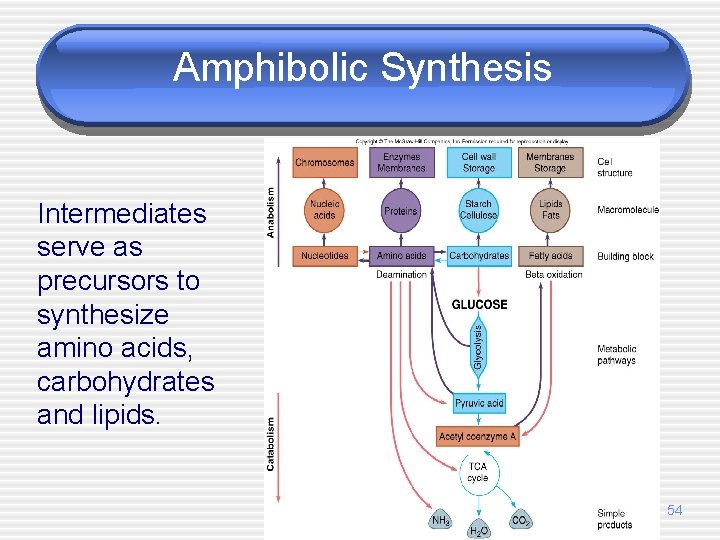
Amphibolic Synthesis Intermediates serve as precursors to synthesize amino acids, carbohydrates and lipids. 54
Gluconeogenesis §Pyruvate (intermediate) is converted back to glucose §Occurs when the glucose supply is low 55
Beta Oxidation Metabolism of fats into acetyl, which can then enter the Kreb’s cycle as acetyl Co. A. 56
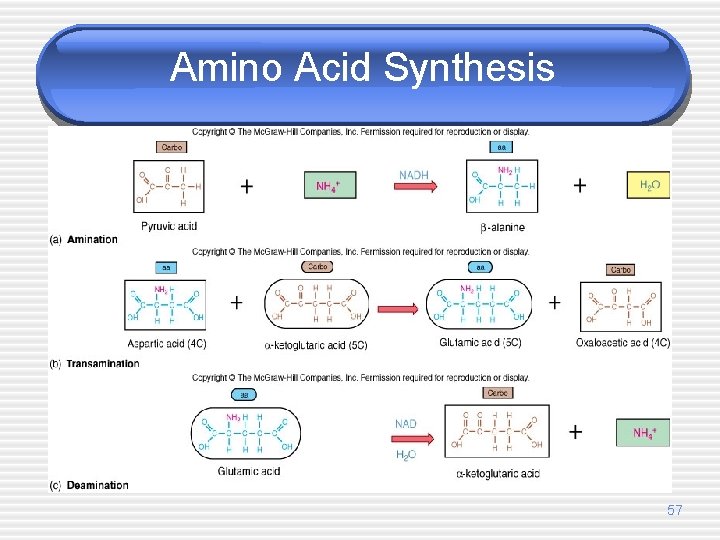
Amino Acid Synthesis 57
Macromolecules Cellular building blocks: §Monosaccharides §Amino acids §Fatty acids §Nitrogen bases §Vitamins 58
- Slides: 58