
LECTURES IN MICROBIOLOGY Chemistry of Microbes LESSON 2
LECTURES IN MICROBIOLOGY Chemistry of Microbes LESSON 2 Sofronio Agustin Professor
Topics § Fundamental Building Blocks § Macromolecules § The Cell 2
Fundamental Building Blocks § Atoms § Elements § Molecules and compounds 3
Atoms § Subatomic Particles Proton = positive charge Neutron = neutral Electron = negative charge § Atomic number = no. of protons § Atomic mass = no. of protons and neutrons 4
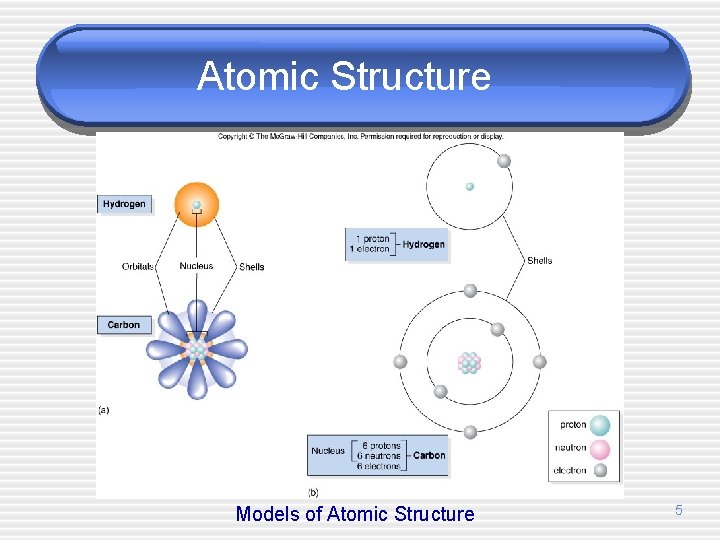
Atomic Structure Models of Atomic Structure 5
Isotopes § Atoms with same number of protons but differ in number of neutrons are called isotopes. § Example: 12 C, 13 C, and 14 C are isotopes of carbon. § Radioisotopes emit radiation in the form of alpha or beta or gamma rays or photons. 6
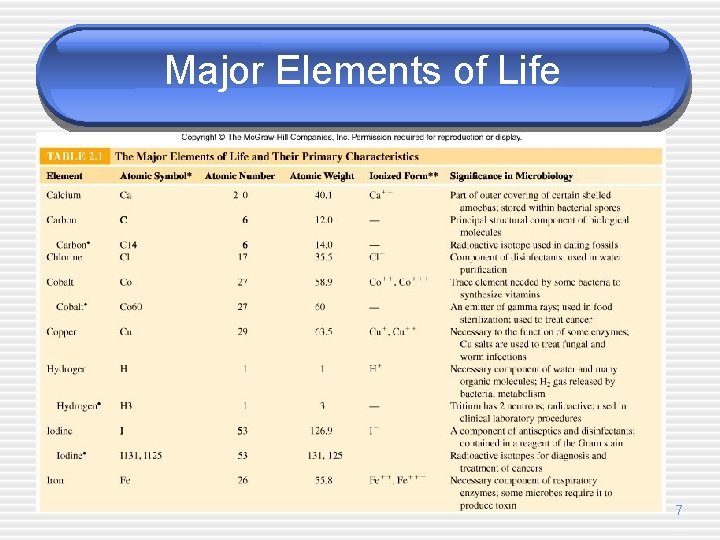
Major Elements of Life 7
Molecules and Compounds § Molecule = combination of two or more elements (e. g. H 2) § Compound = combination of two or more different elements (e. g. H 2 O) § Molecules are held together by chemical bonds 8
Chemical Bonds § Covalent § Ionic § Hydrogen 9
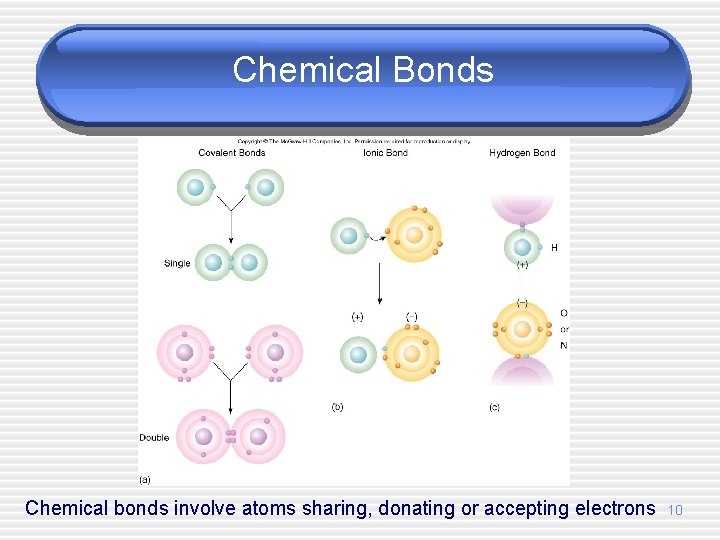
Chemical Bonds Chemical bonds involve atoms sharing, donating or accepting electrons 10
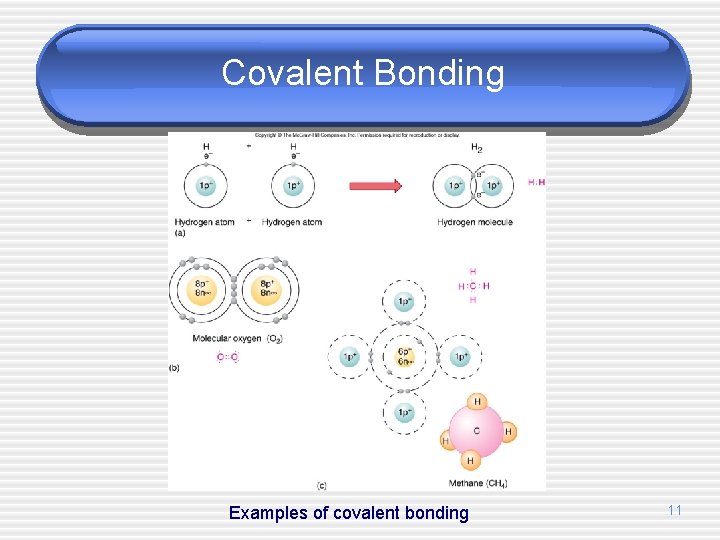
Covalent Bonding Examples of covalent bonding 11
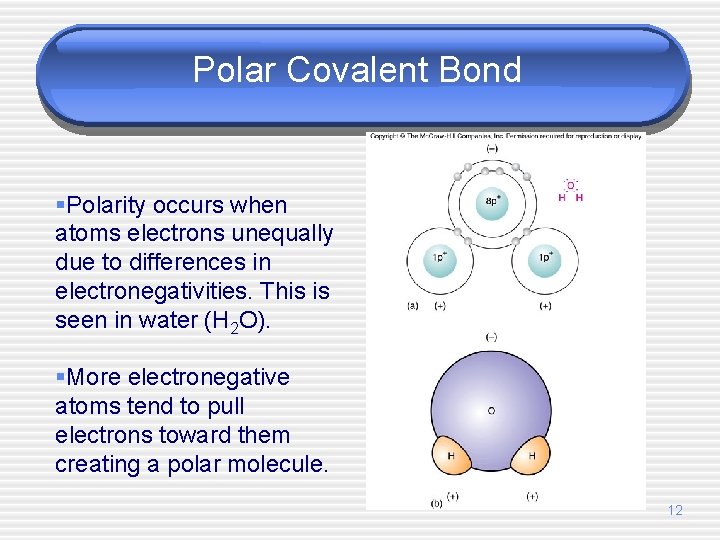
Polar Covalent Bond §Polarity occurs when atoms electrons unequally due to differences in electronegativities. This is seen in water (H 2 O). §More electronegative atoms tend to pull electrons toward them creating a polar molecule. 12
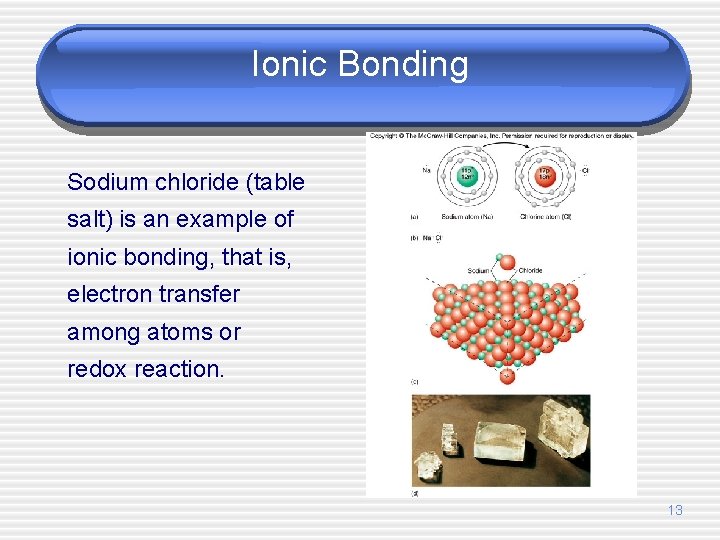
Ionic Bonding Sodium chloride (table salt) is an example of ionic bonding, that is, electron transfer among atoms or redox reaction. 13
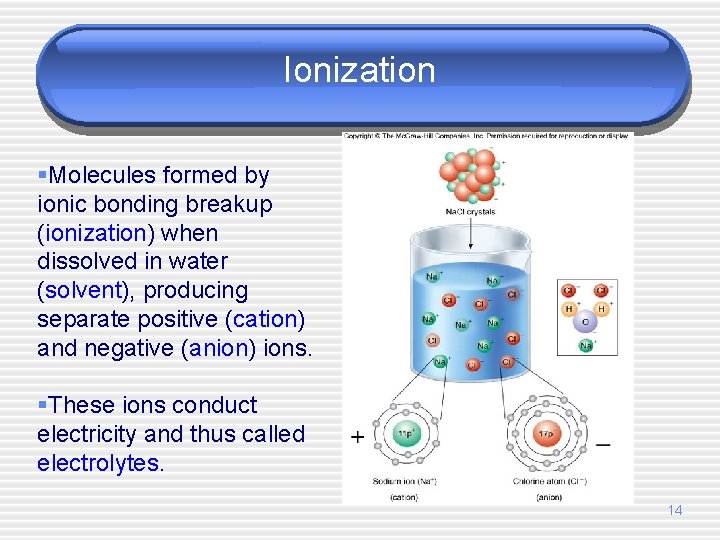
Ionization §Molecules formed by ionic bonding breakup (ionization) when dissolved in water (solvent), producing separate positive (cation) and negative (anion) ions. §These ions conduct electricity and thus called electrolytes. 14
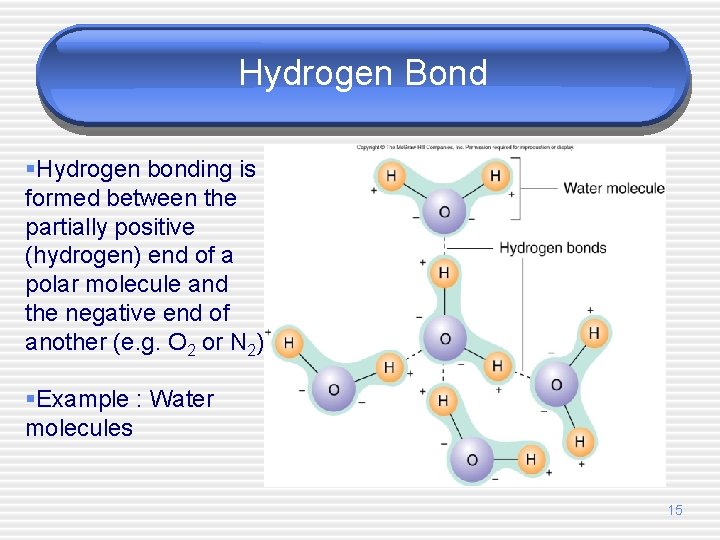
Hydrogen Bond §Hydrogen bonding is formed between the partially positive (hydrogen) end of a polar molecule and the negative end of another (e. g. O 2 or N 2). §Example : Water molecules 15
p. H § p. H – measurement of the H+ ion concentration in a solution. § General rule: § Acidic = excess H+ ions in solution § Basic = excess OH- ions in solution § Neutral = equal amounts of H+ and OH- ions 16
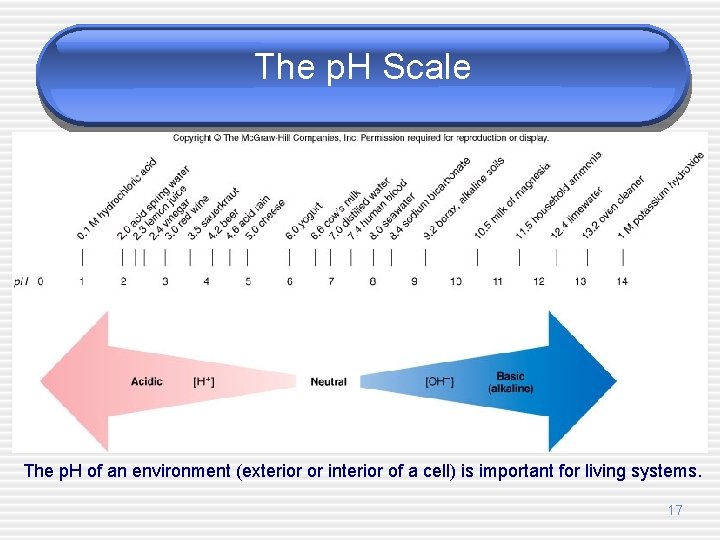
The p. H Scale The p. H of an environment (exterior or interior of a cell) is important for living systems. 17
Molecules important to life consist of inorganic and organic substances. § Inorganic – either C or H maybe present (e, g, CO 2, H 2) § Organic- C and H (hydrocarbons) are present (e. g. CH 3) 18
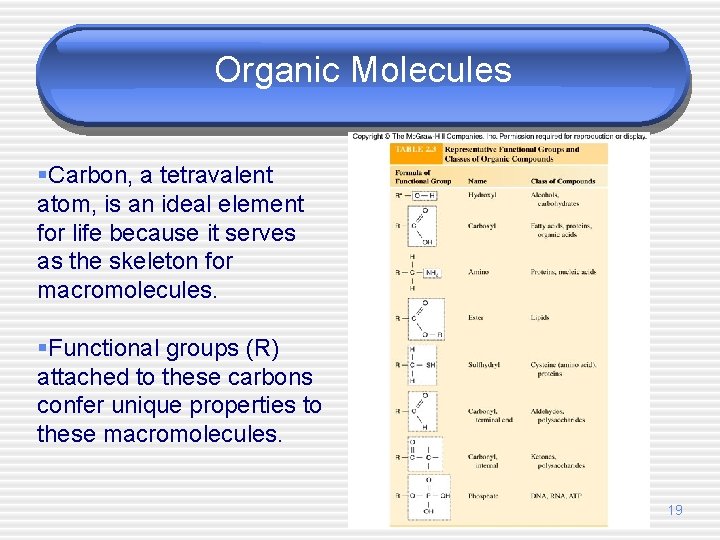
Organic Molecules §Carbon, a tetravalent atom, is an ideal element for life because it serves as the skeleton for macromolecules. §Functional groups (R) attached to these carbons confer unique properties to these macromolecules. 19
Macromolecules § Carbohydrates § Lipids § Proteins § Nucleic acids 20
Carbohydrates § Simple Sugars § Disaccharides § Polysaccharides 21
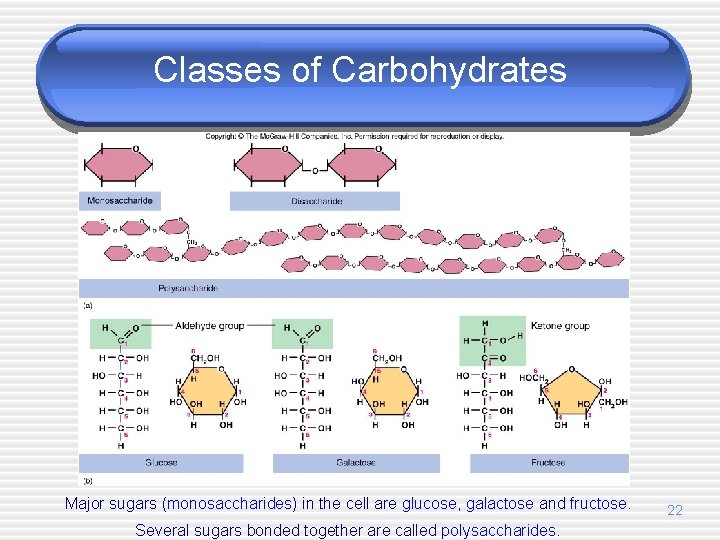
Classes of Carbohydrates Major sugars (monosaccharides) in the cell are glucose, galactose and fructose. Several sugars bonded together are called polysaccharides. 22
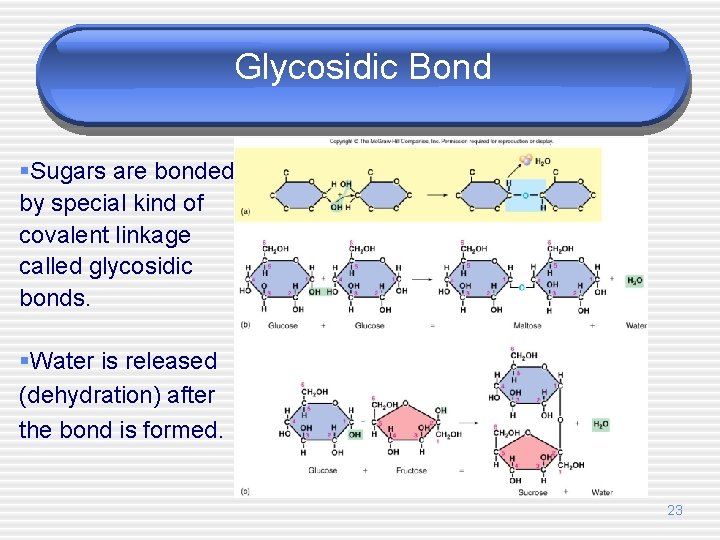
Glycosidic Bond §Sugars are bonded by special kind of covalent linkage called glycosidic bonds. §Water is released (dehydration) after the bond is formed. 23
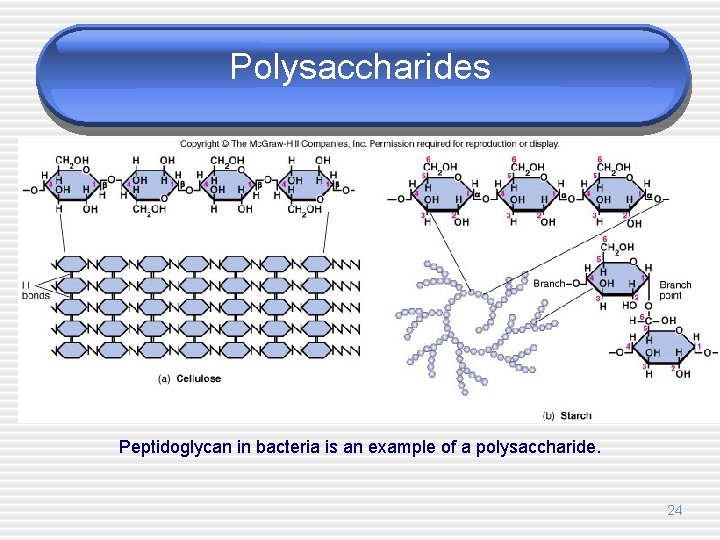
Polysaccharides Peptidoglycan in bacteria is an example of a polysaccharide. 24
Lipids § Fats § Phospholipids § Steroids 25
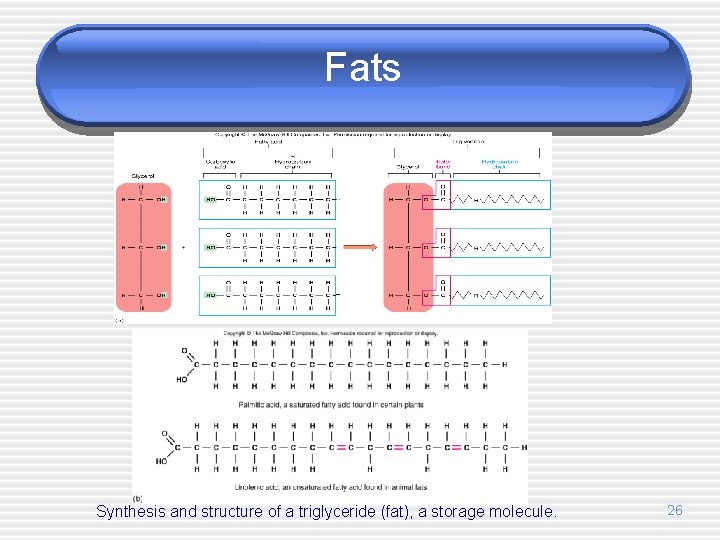
Fats Synthesis and structure of a triglyceride (fat), a storage molecule. 26
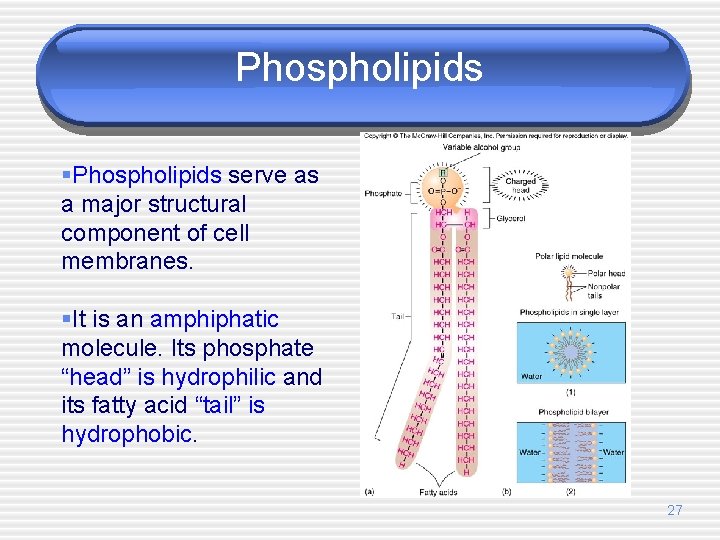
Phospholipids §Phospholipids serve as a major structural component of cell membranes. §It is an amphiphatic molecule. Its phosphate “head” is hydrophilic and its fatty acid “tail” is hydrophobic. 27
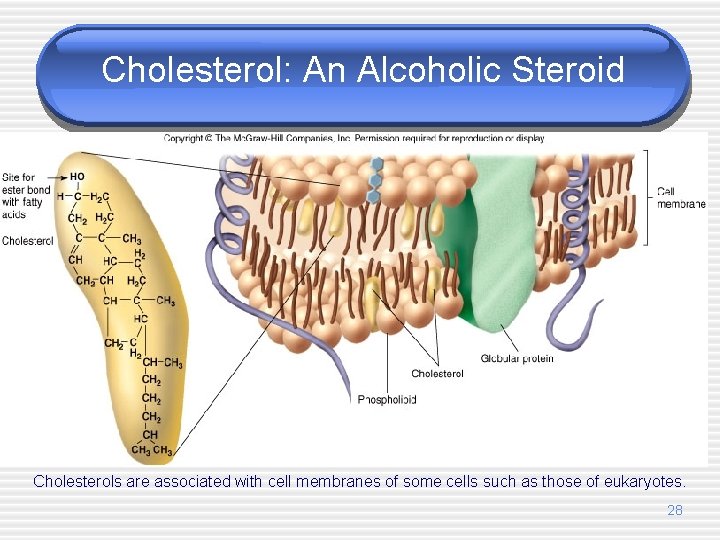
Cholesterol: An Alcoholic Steroid Cholesterols are associated with cell membranes of some cells such as those of eukaryotes. 28
Proteins § Proteins are the predominant organic molecules in cells. § Proteins consist of a series of amino acids (e. g. peptides, polypeptides) § Peptide bonds link amino acids together. § Examples: hormones, enzymes, antibodies, etc. 29
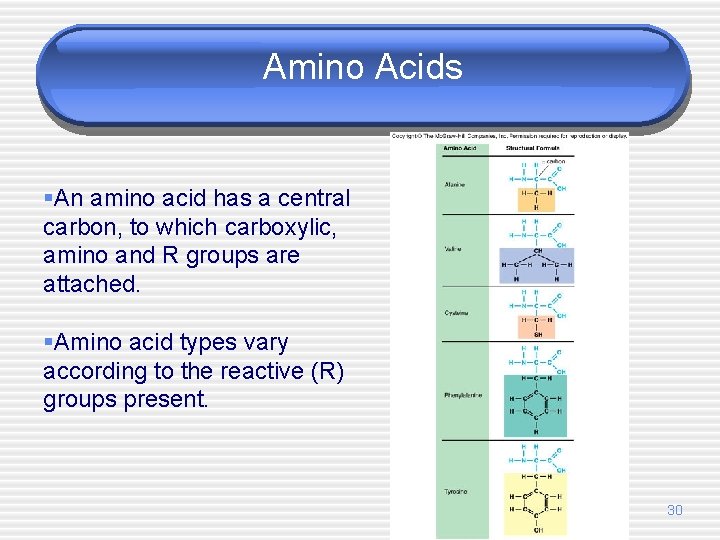
Amino Acids §An amino acid has a central carbon, to which carboxylic, amino and R groups are attached. §Amino acid types vary according to the reactive (R) groups present. 30
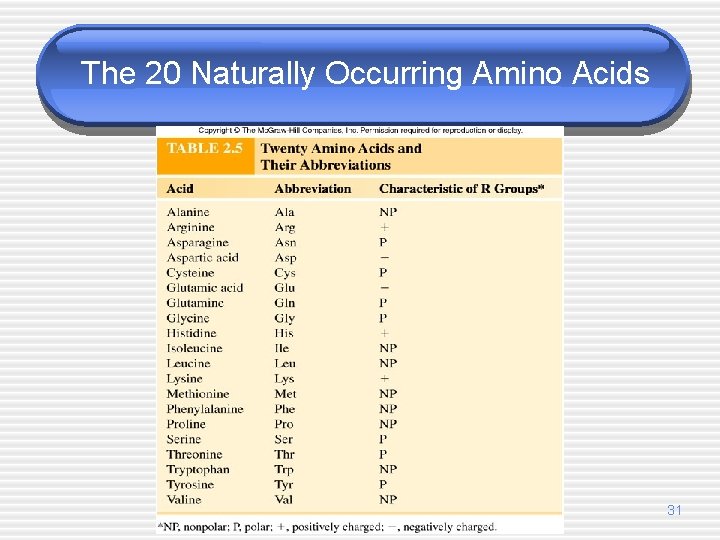
The 20 Naturally Occurring Amino Acids 31
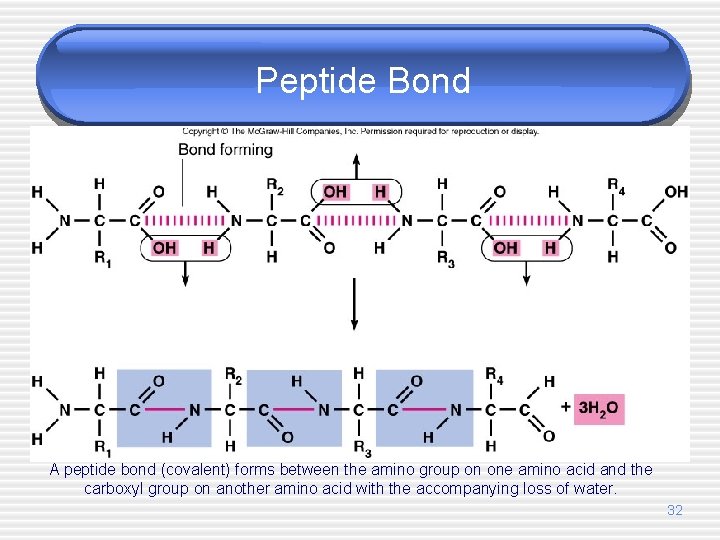
. Peptide Bond A peptide bond (covalent) forms between the amino group on one amino acid and the carboxyl group on another amino acid with the accompanying loss of water. 32
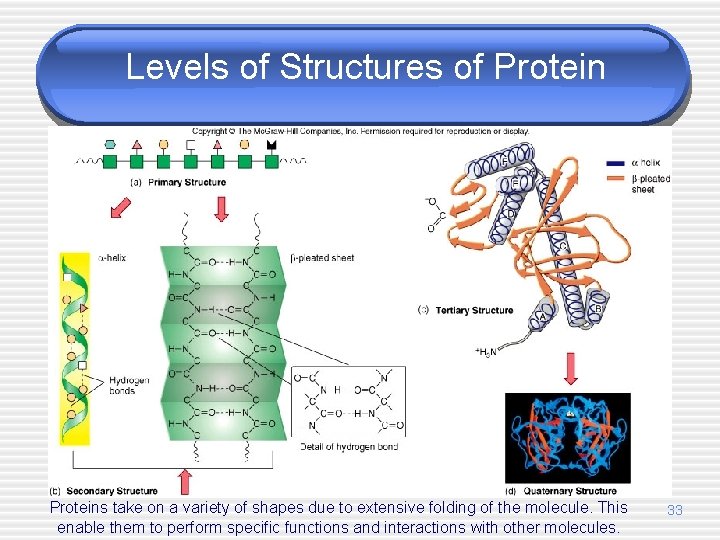
Levels of Structures of Proteins take on a variety of shapes due to extensive folding of the molecule. This enable them to perform specific functions and interactions with other molecules. 33
Nucleic acids § Deoxyribonucleic acid (DNA) § Ribonucleic acid (RNA) § DNA contains genetic information and transfers it to RNA § RNA translates the DNA information into proteins 34
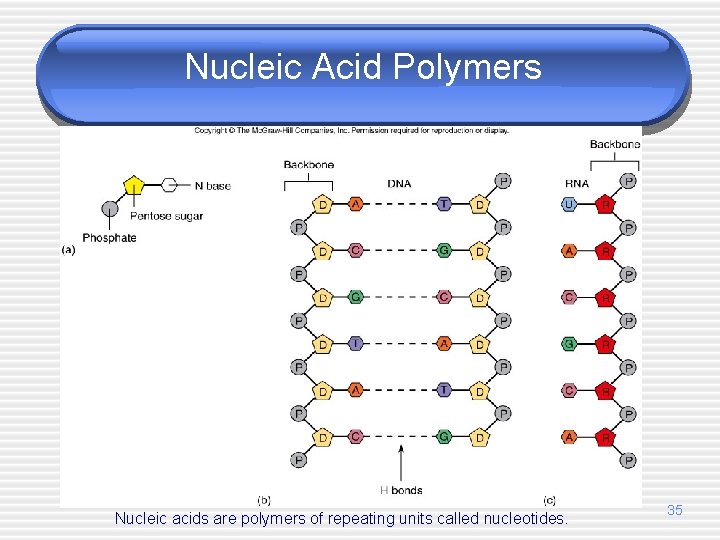
Nucleic Acid Polymers Nucleic acids are polymers of repeating units called nucleotides. 35
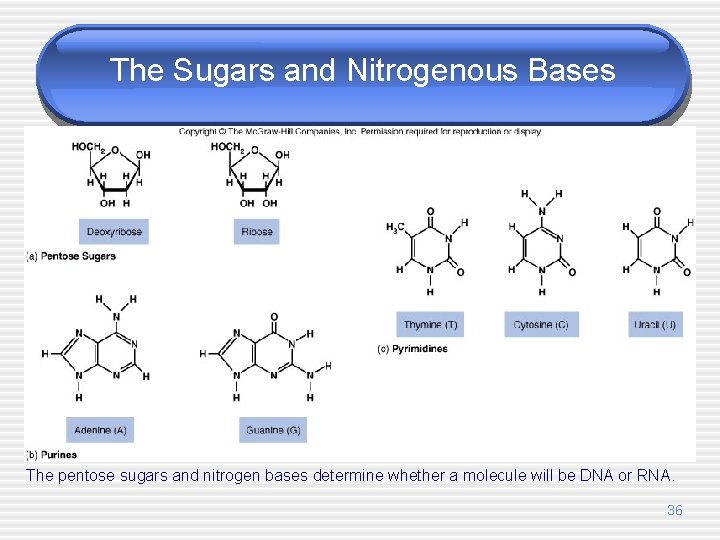
The Sugars and Nitrogenous Bases The pentose sugars and nitrogen bases determine whether a molecule will be DNA or RNA. 36
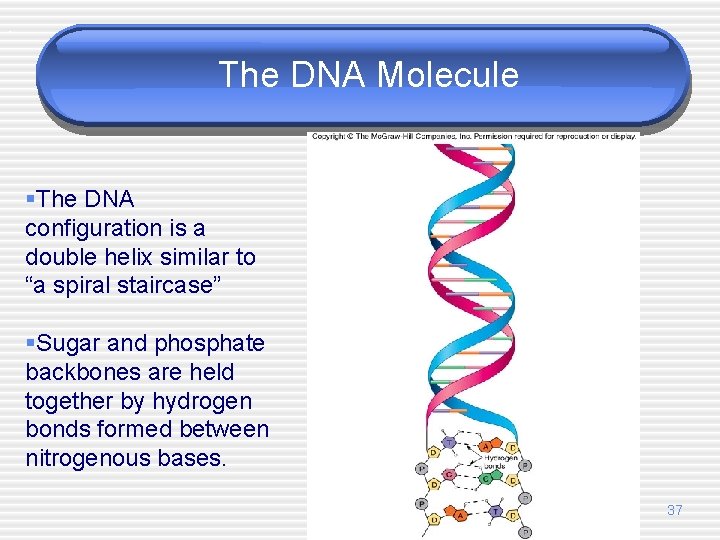
. The DNA Molecule §The DNA configuration is a double helix similar to “a spiral staircase” §Sugar and phosphate backbones are held together by hydrogen bonds formed between nitrogenous bases. 37
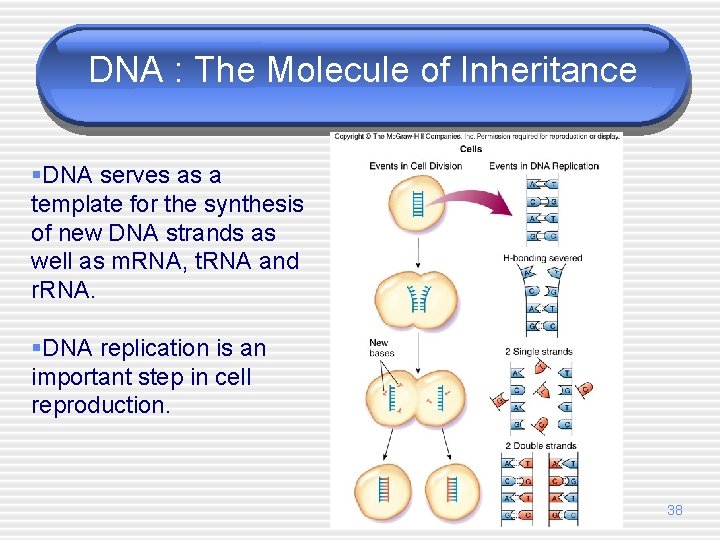
DNA : The Molecule of Inheritance §DNA serves as a template for the synthesis of new DNA strands as well as m. RNA, t. RNA and r. RNA. §DNA replication is an important step in cell reproduction. 38
The Cell Fundamental characteristics shared by all living organisms: § § Reproduction Metabolism Motility (Response to molecules) Protection and Storage (Cell wall or membrane) § Nutrient transport 39
- Slides: 39