
lectures accompanying the book Solid State Physics An
• lectures accompanying the book: Solid State Physics: An Introduction, by Philip Hofmann (2 nd edition 2015, ISBN 10: 3527412824, ISBN-13: 978 -3527412822, Wiley-VCH Berlin. www. philiphofmann. net 1
The electronic properties of Metals: quantum mechanical approach 2
Outline • Basic assumptions: Born-Oppenheimer and one-electron approximations. • Intuitive picture for how the energy levels in a solid are formed from those in the atom. • Calculate the quantum mechanical eigenvalues and wave functions for one electron in some simple potential of all the others and the ions. • Fill up these eigenvalues using the Fermi-Dirac statistics. 3
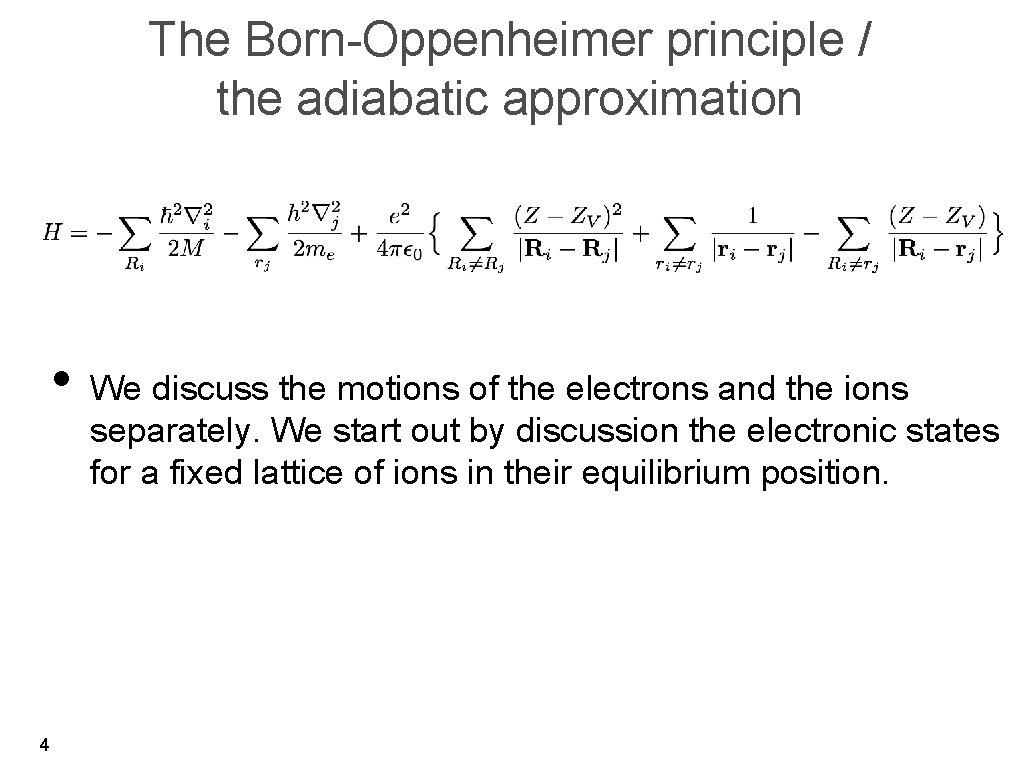
The Born-Oppenheimer principle / the adiabatic approximation • We discuss the motions of the electrons and the ions separately. We start out by discussion the electronic states for a fixed lattice of ions in their equilibrium position. 4

One electron approximation • Solving the Schrödinger equation for an all-electron wave function in a rigid lattice is still hopeless. We assume an effective one-electron potential. we know for sure that . . . but not much more 5
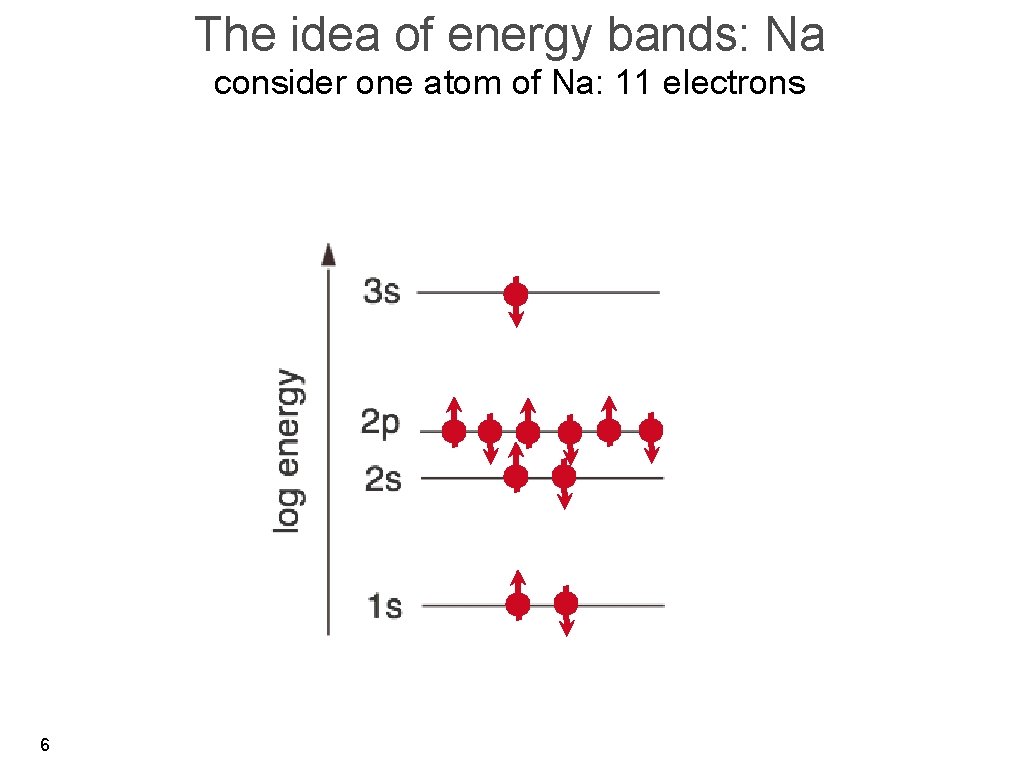
The idea of energy bands: Na consider one atom of Na: 11 electrons 6
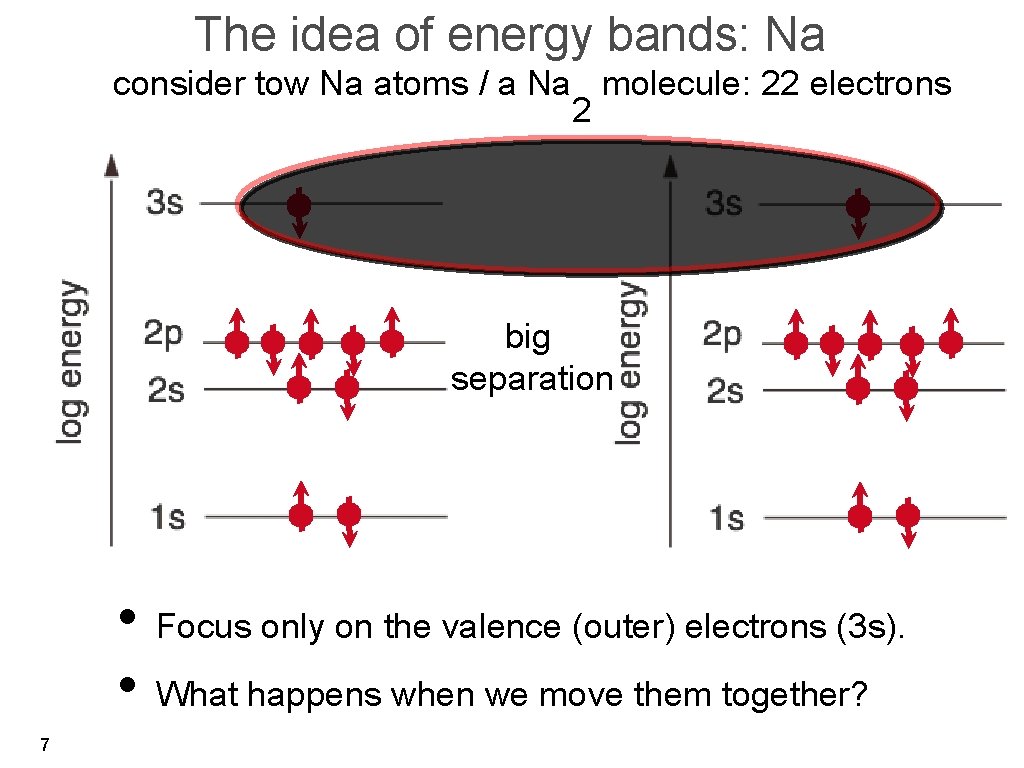
The idea of energy bands: Na consider tow Na atoms / a Na molecule: 22 electrons 2 big separation • Focus only on the valence (outer) electrons (3 s). • What happens when we move them together? 7
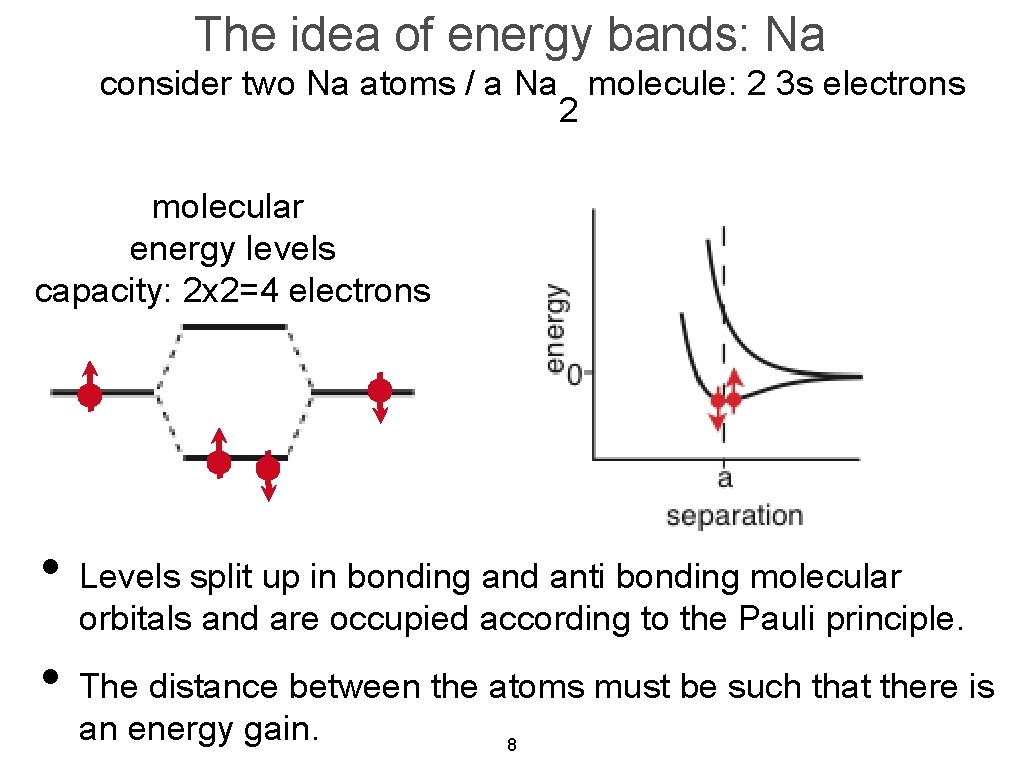
The idea of energy bands: Na consider two Na atoms / a Na molecule: 2 3 s electrons 2 molecular energy levels capacity: 2 x 2=4 electrons • Levels split up in bonding and anti bonding molecular orbitals and are occupied according to the Pauli principle. • The distance between the atoms must be such that there is an energy gain. 8
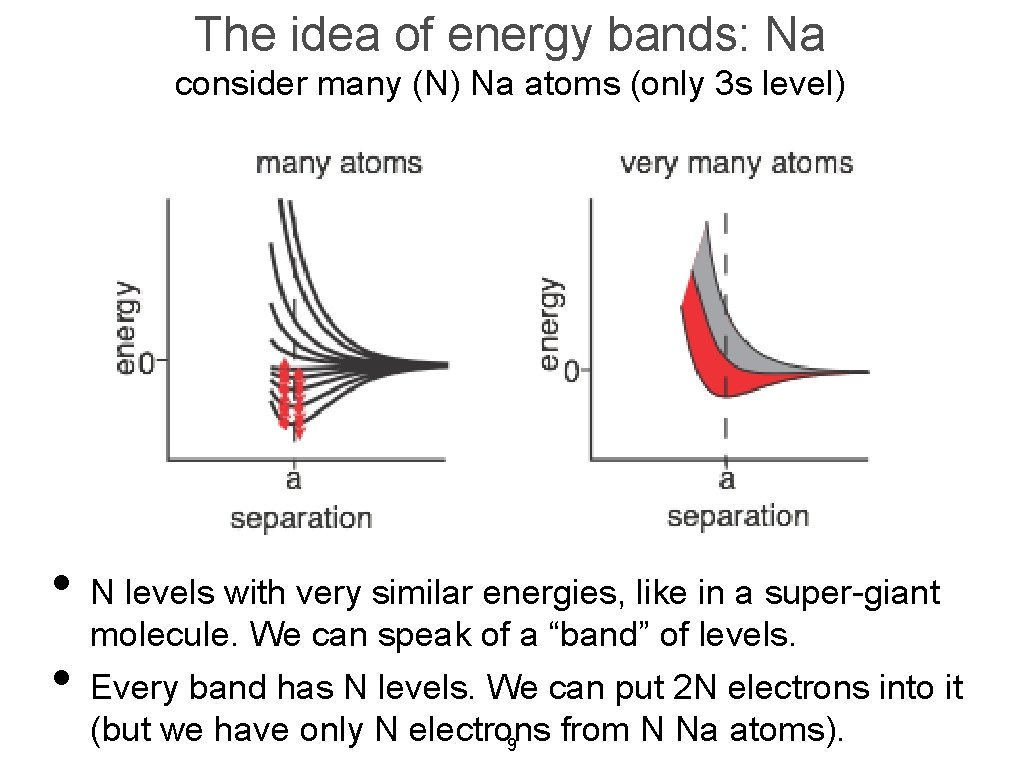
The idea of energy bands: Na consider many (N) Na atoms (only 3 s level) • N levels with very similar energies, like in a super-giant molecule. We can speak of a “band” of levels. • Every band has N levels. We can put 2 N electrons into it (but we have only N electrons from N Na atoms). 9
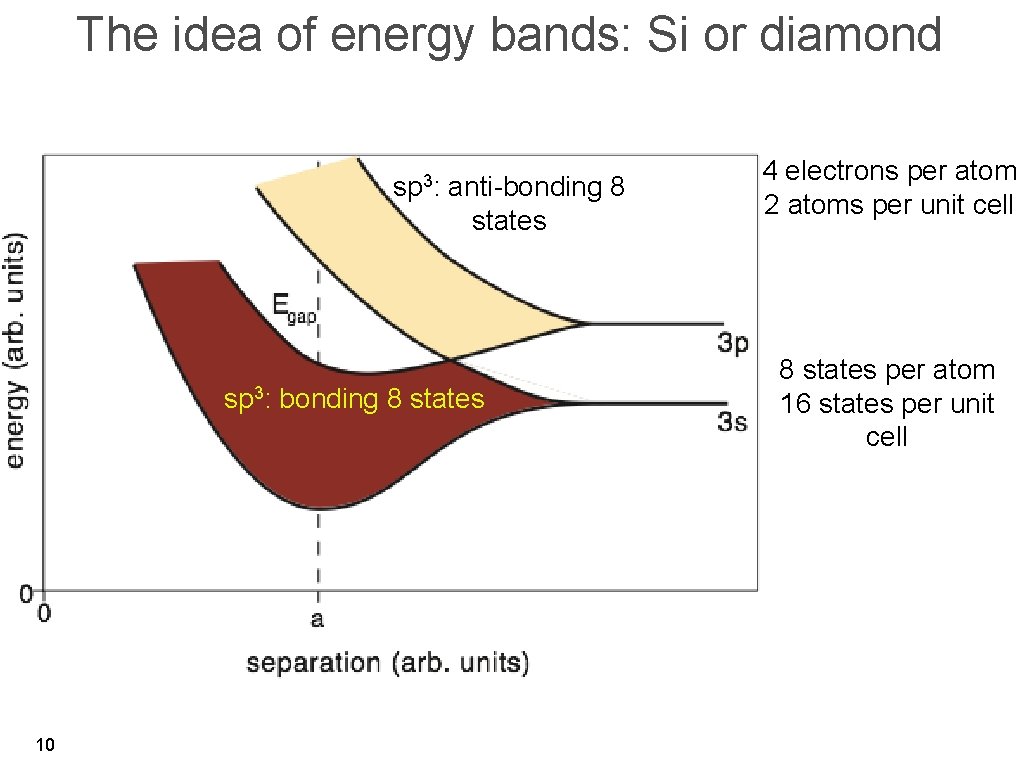
The idea of energy bands: Si or diamond sp 3: anti-bonding 8 states sp 3: bonding 8 states 10 4 electrons per atom 2 atoms per unit cell 8 states per atom 16 states per unit cell
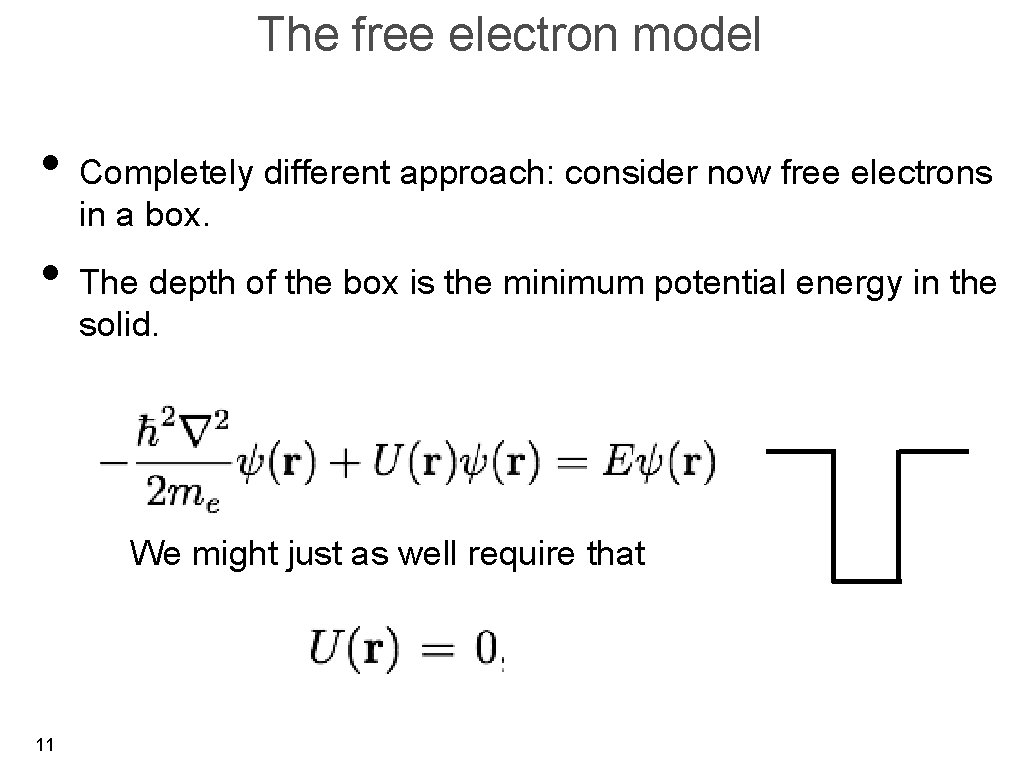
The free electron model • Completely different approach: consider now free electrons in a box. • The depth of the box is the minimum potential energy in the solid. We might just as well require that 11
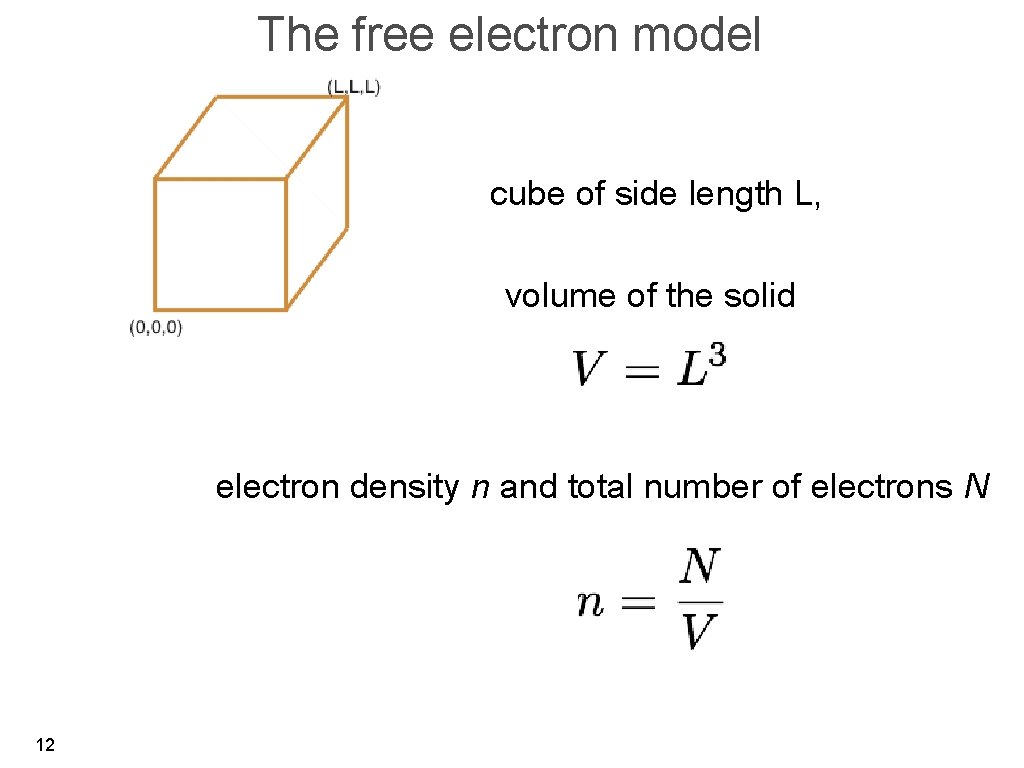
The free electron model cube of side length L, volume of the solid electron density n and total number of electrons N 12
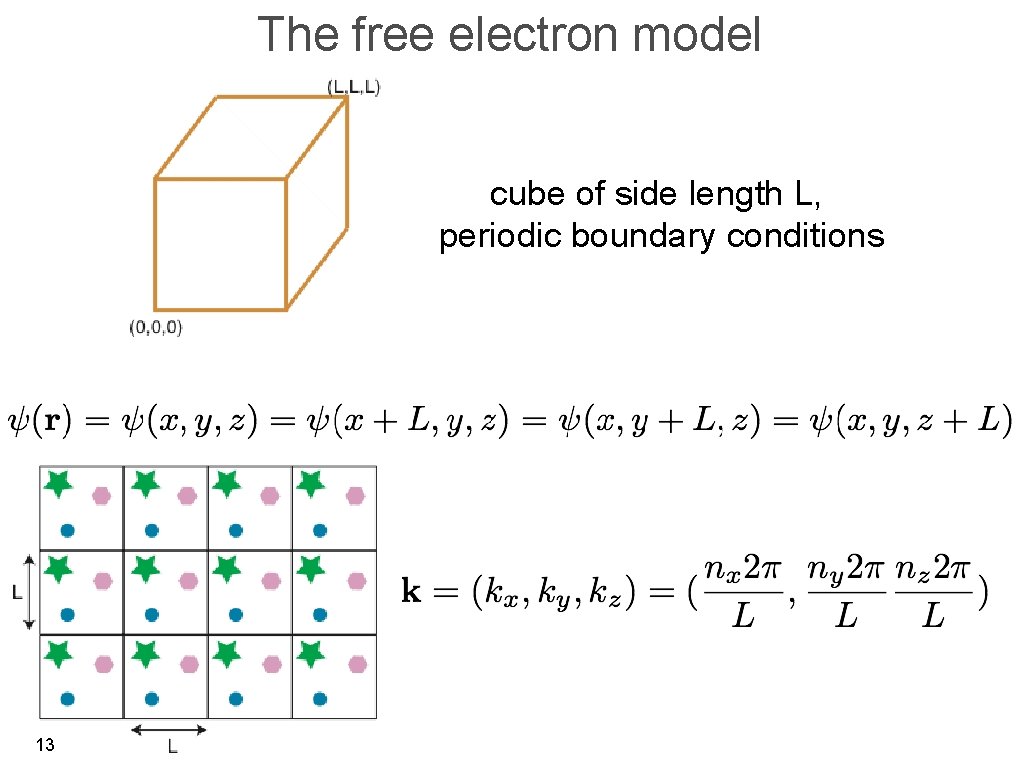
The free electron model cube of side length L, periodic boundary conditions 13
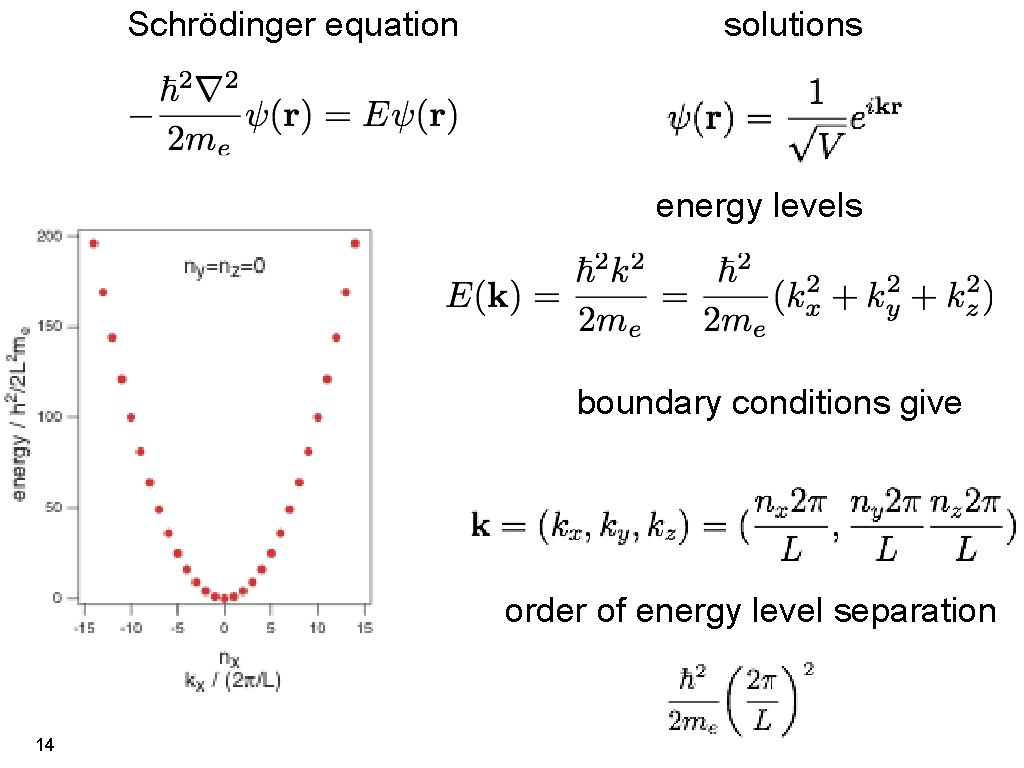
Schrödinger equation solutions energy levels boundary conditions give order of energy level separation 14
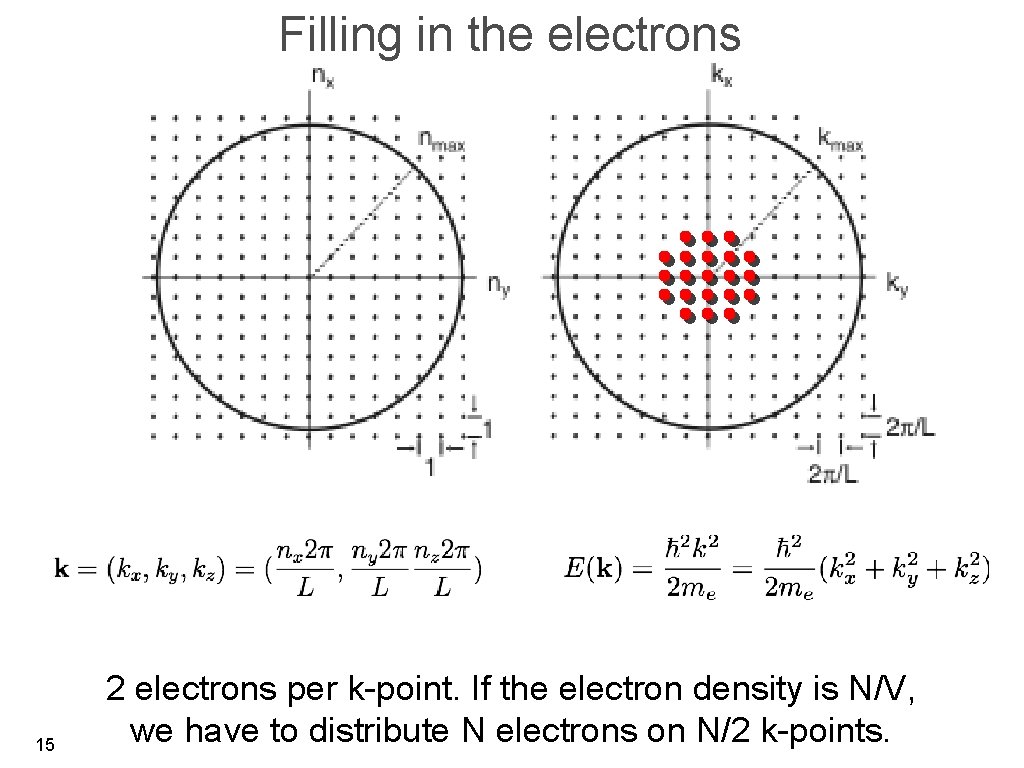
Filling in the electrons 15 2 electrons per k-point. If the electron density is N/V, we have to distribute N electrons on N/2 k-points.
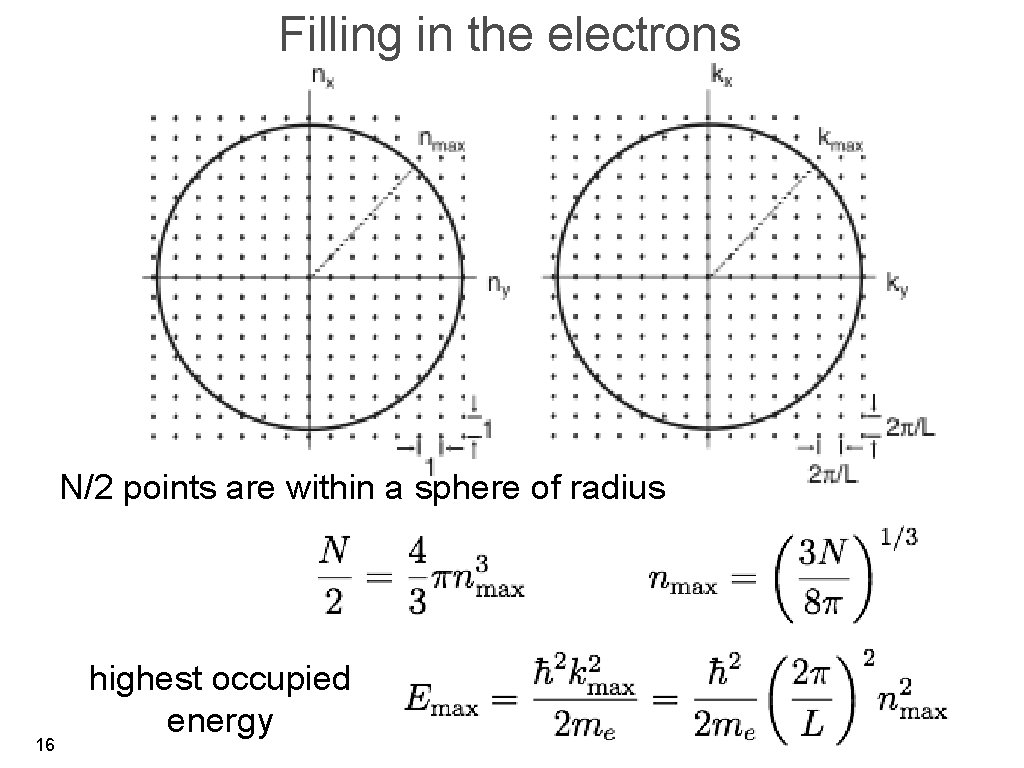
Filling in the electrons N/2 points are within a sphere of radius 16 highest occupied energy
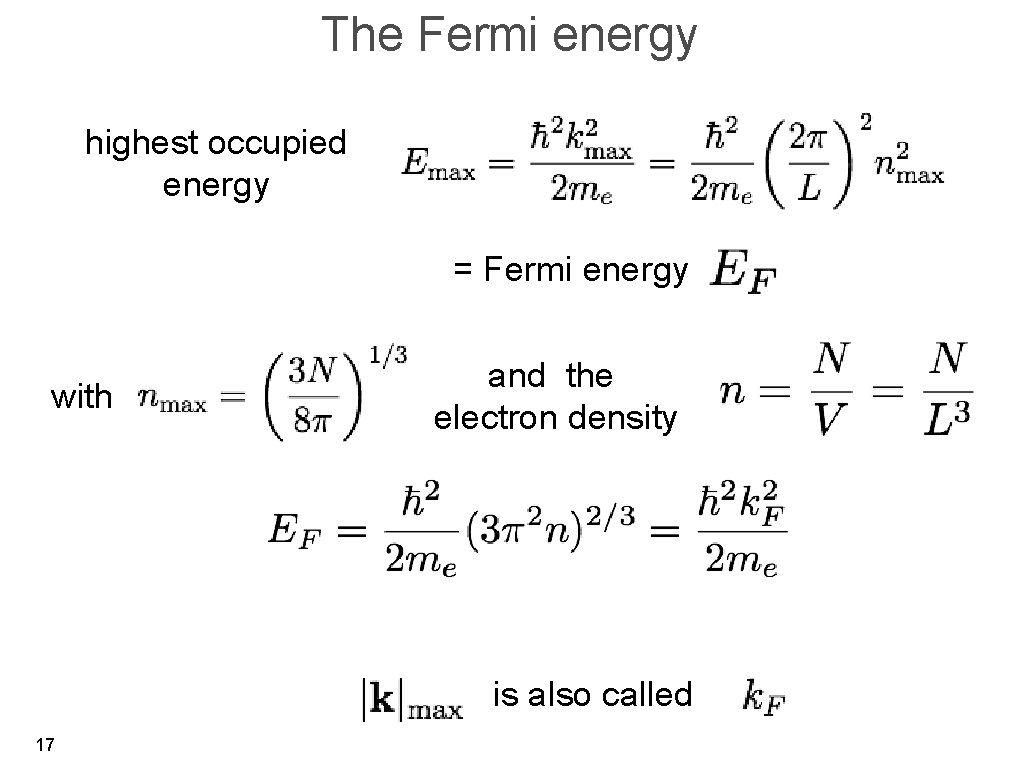
The Fermi energy highest occupied energy = Fermi energy with and the electron density is also called 17
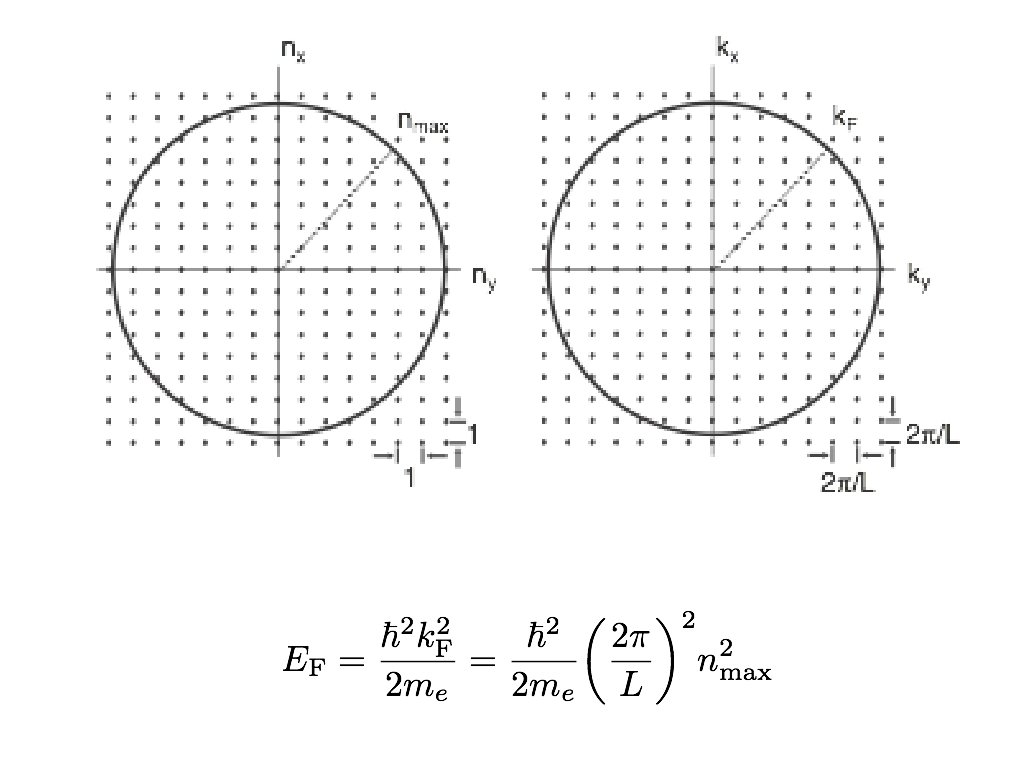
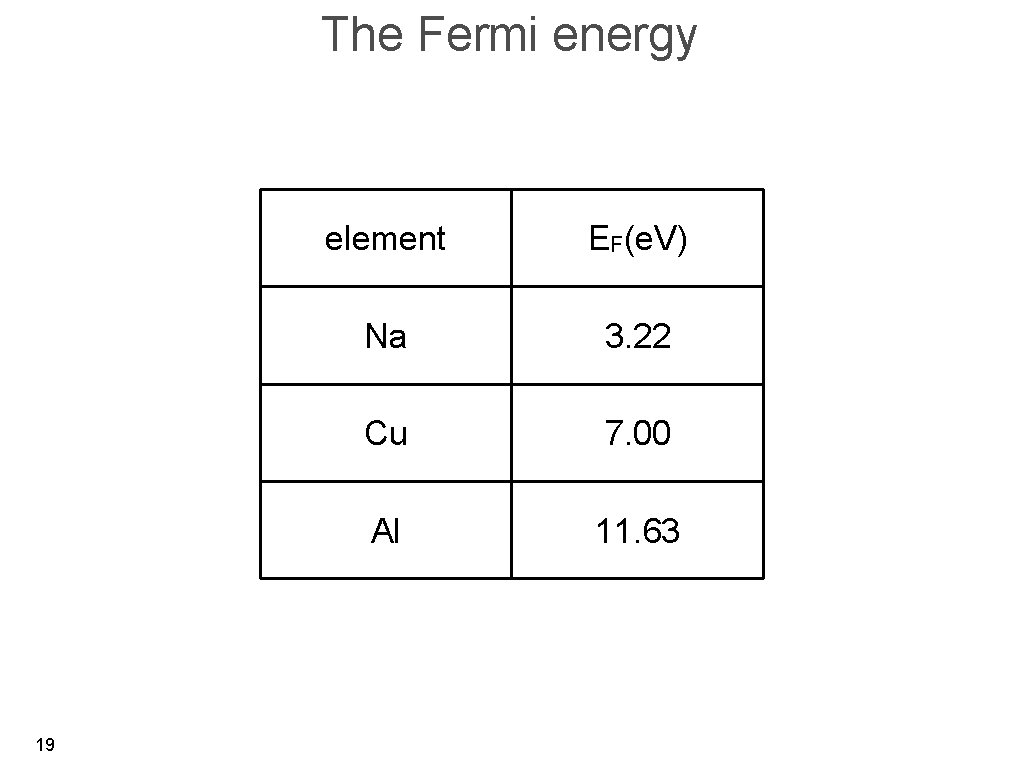
The Fermi energy 19 element EF(e. V) Na 3. 22 Cu 7. 00 Al 11. 63
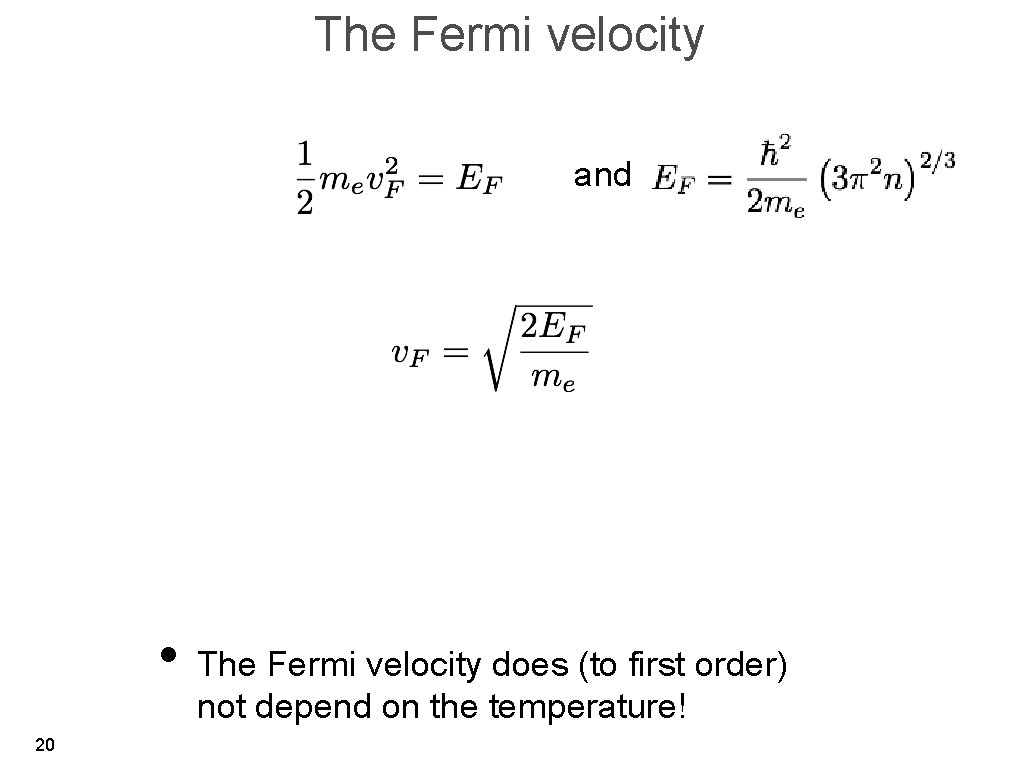
The Fermi velocity and • The Fermi velocity does (to first order) not depend on the temperature! 20
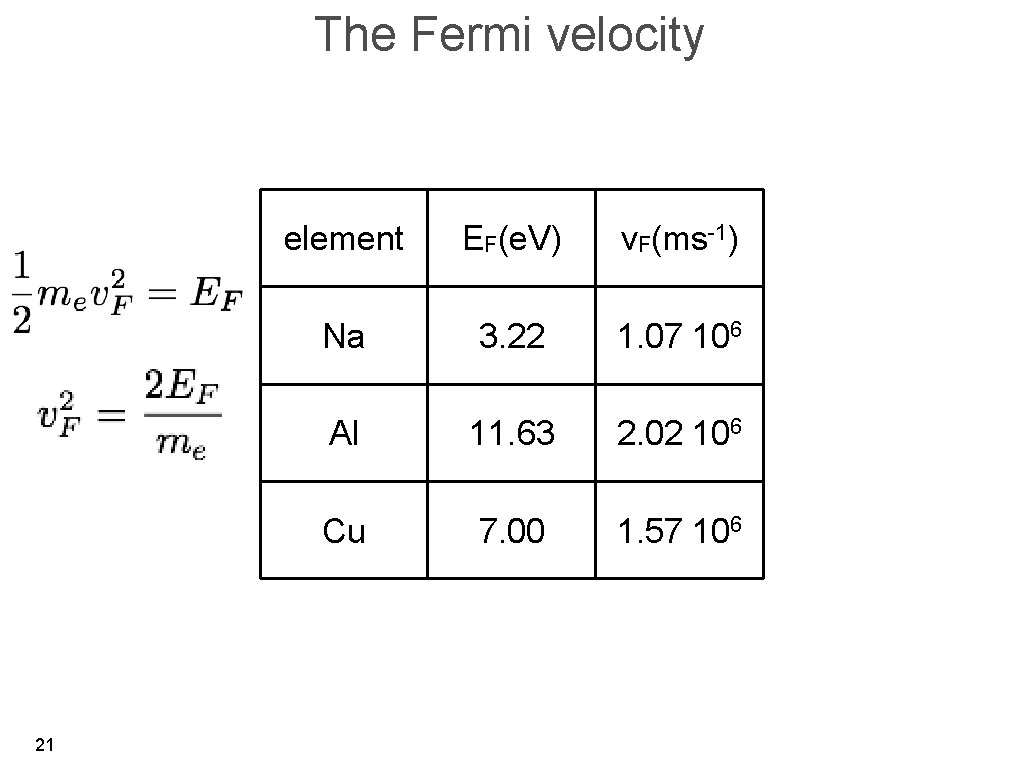
The Fermi velocity 21 element EF(e. V) v. F(ms-1) Na 3. 22 1. 07 106 Al 11. 63 2. 02 106 Cu 7. 00 1. 57 106
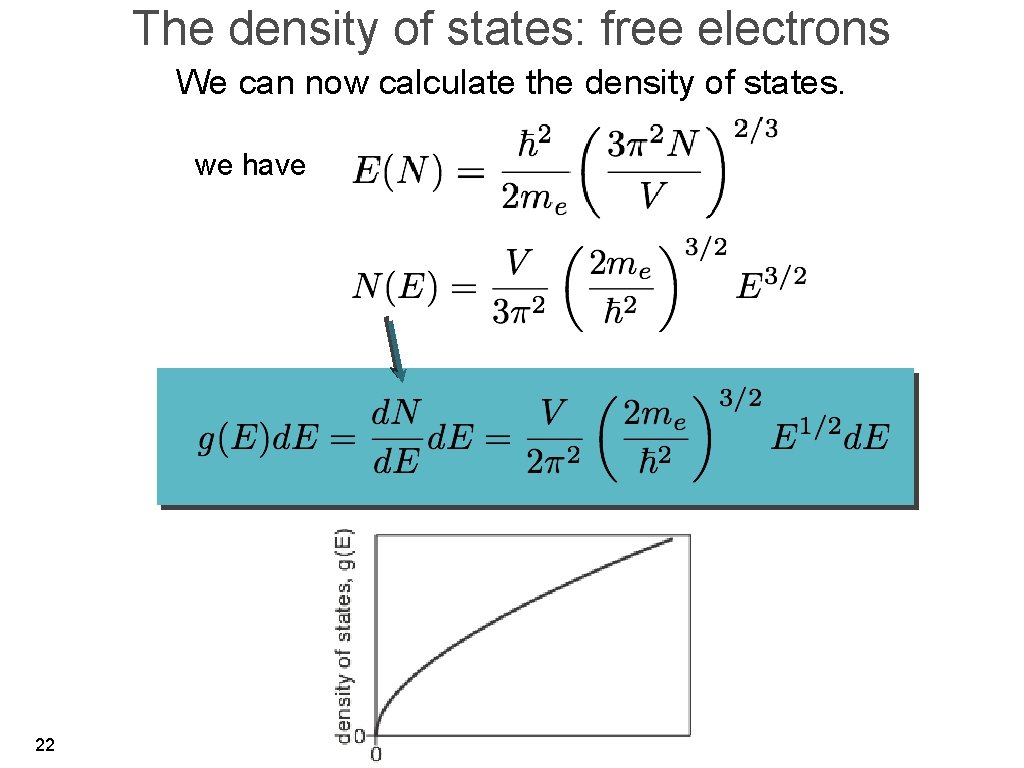
The density of states: free electrons We can now calculate the density of states. we have 22
The Fermi-Dirac distribution • How are the electronic states populated at finite temperature? 23
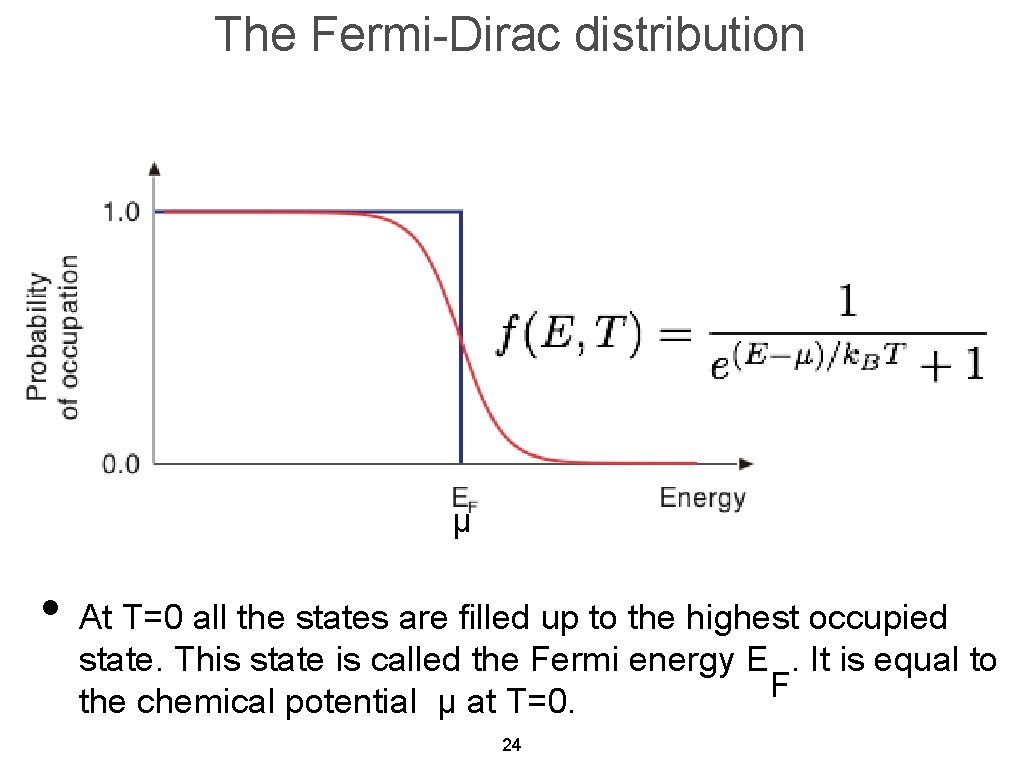
The Fermi-Dirac distribution μ • At T=0 all the states are filled up to the highest occupied state. This state is called the Fermi energy E. It is equal to F the chemical potential μ at T=0. 24
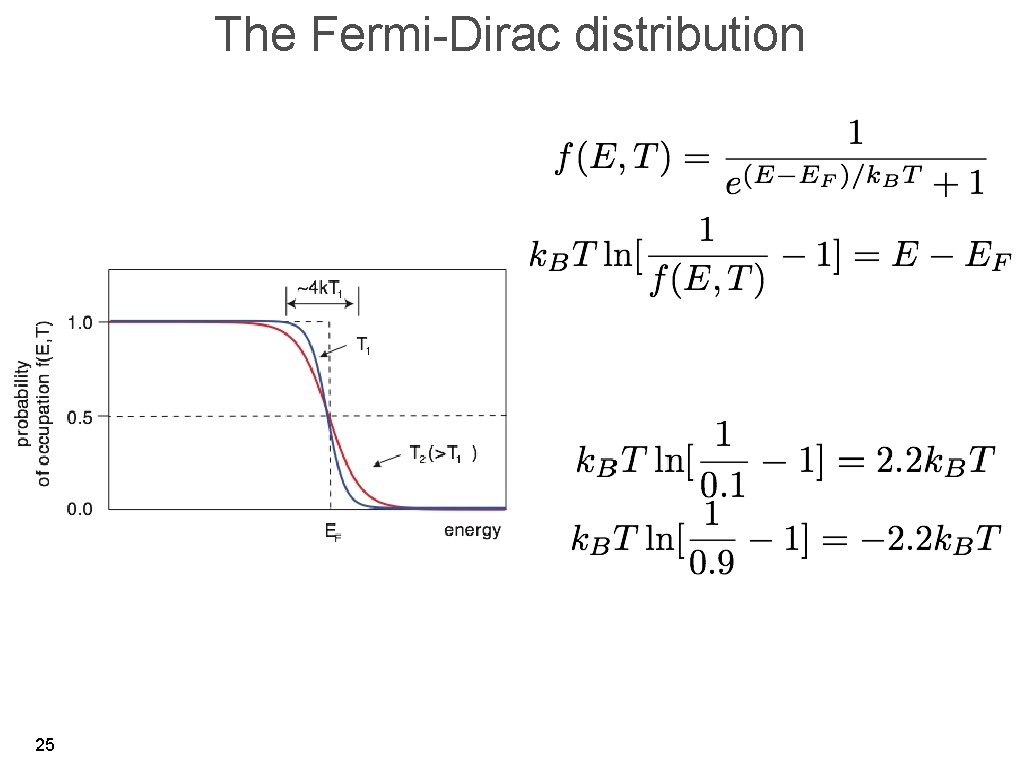
The Fermi-Dirac distribution 25
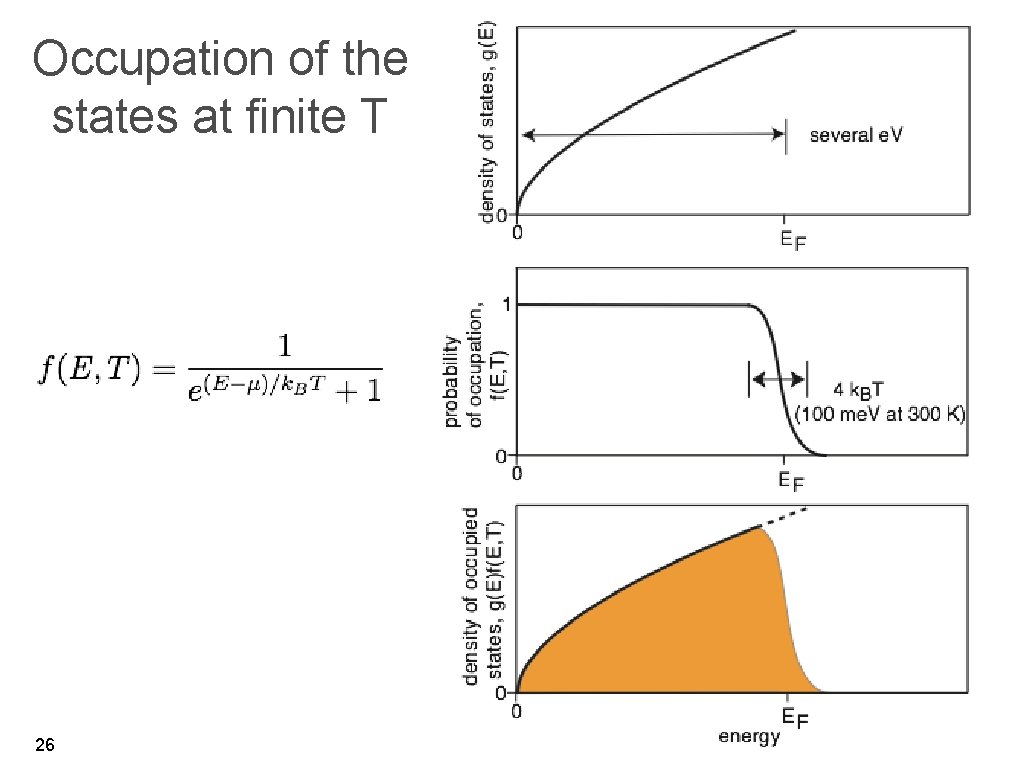
Occupation of the states at finite T 26
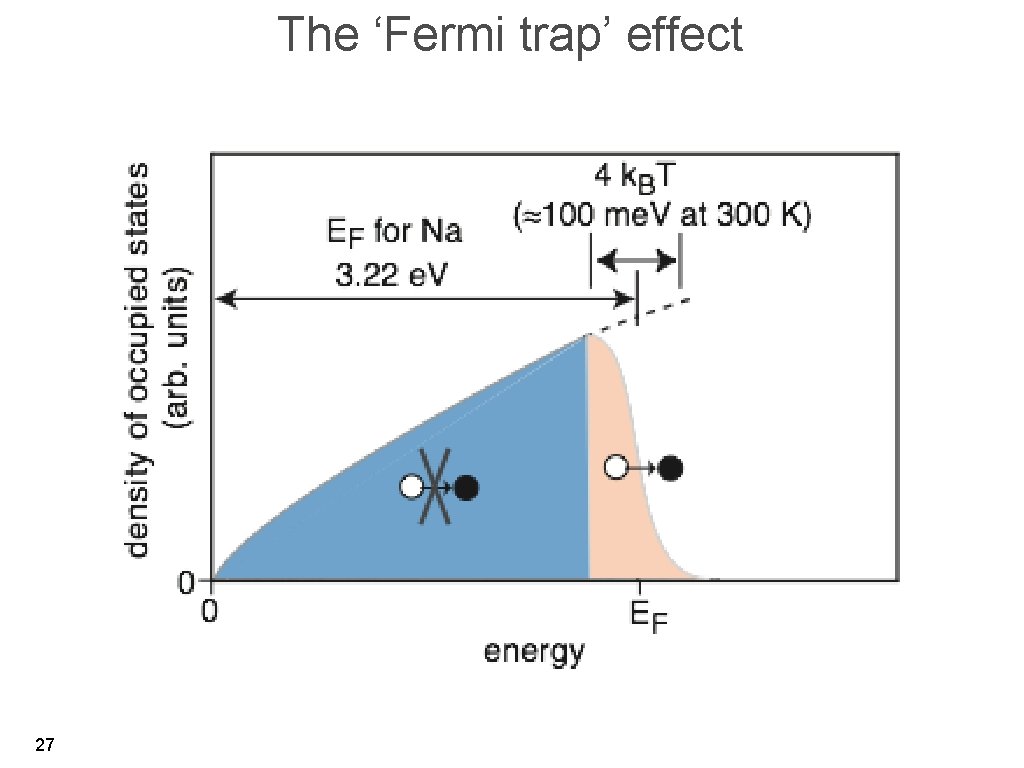
The ‘Fermi trap’ effect 27
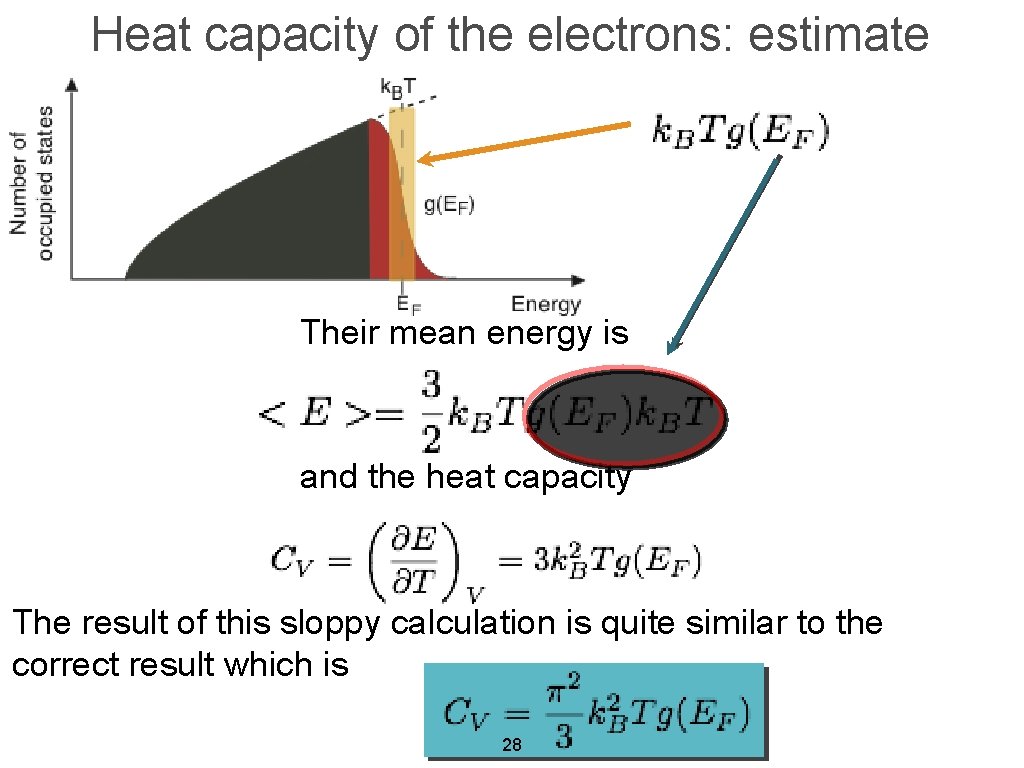
Heat capacity of the electrons: estimate Their mean energy is and the heat capacity The result of this sloppy calculation is quite similar to the correct result which is 28
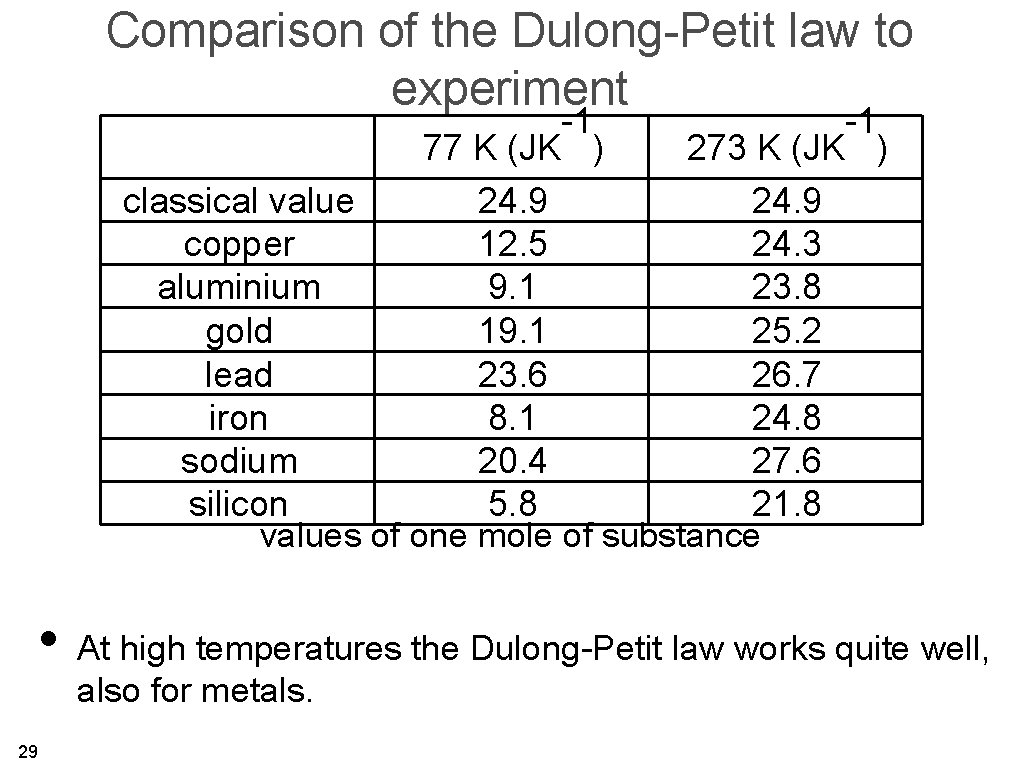
Comparison of the Dulong-Petit law to experiment -1 -1 77 K (JK ) 273 K (JK ) classical value 24. 9 copper 12. 5 24. 3 aluminium 9. 1 23. 8 gold 19. 1 25. 2 lead 23. 6 26. 7 iron 8. 1 24. 8 sodium 20. 4 27. 6 silicon 5. 8 21. 8 values of one mole of substance • At high temperatures the Dulong-Petit law works quite well, also for metals. 29
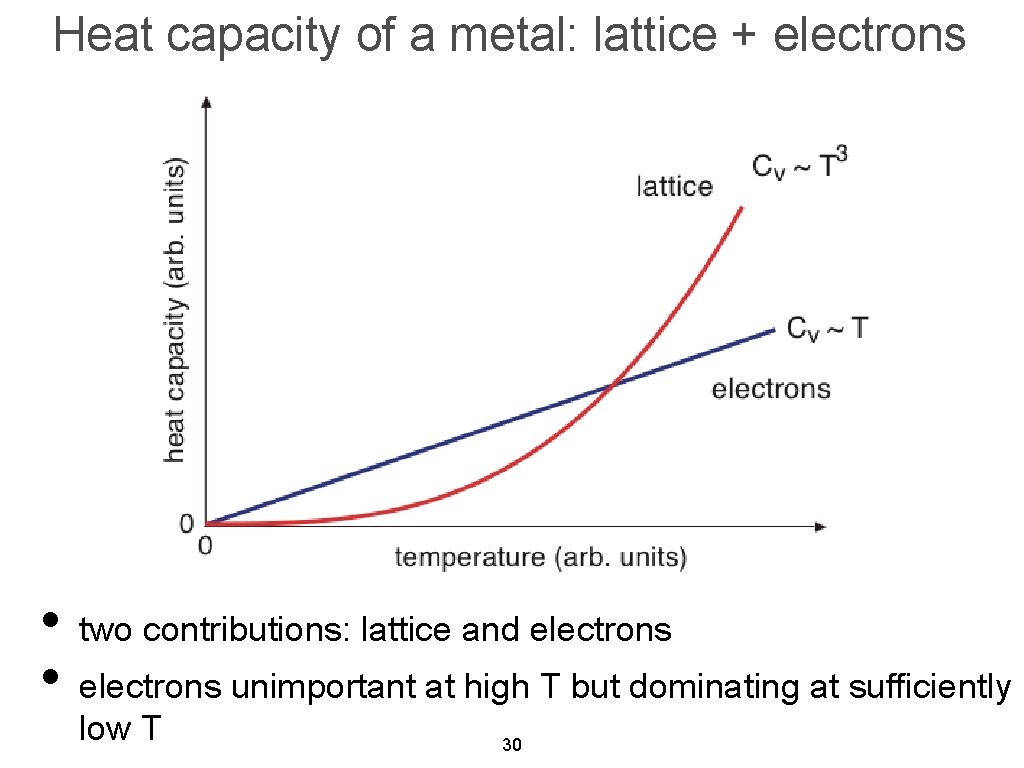
Heat capacity of a metal: lattice + electrons • two contributions: lattice and electrons • electrons unimportant at high T but dominating at sufficiently low T 30
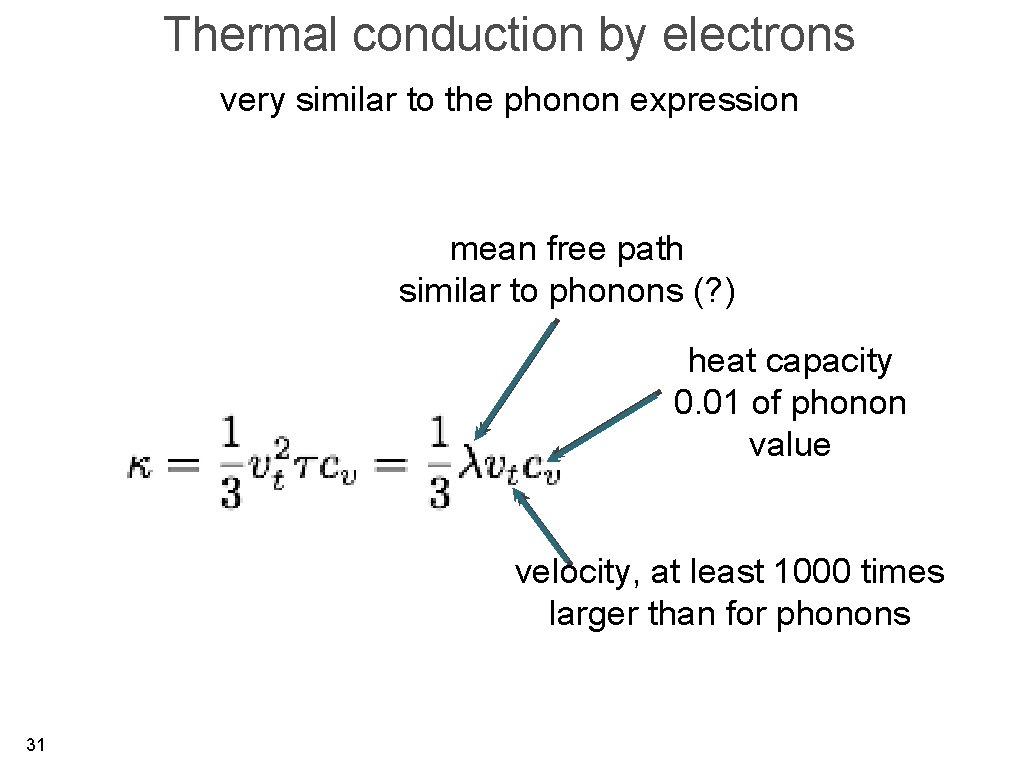
Thermal conduction by electrons very similar to the phonon expression mean free path similar to phonons (? ) heat capacity 0. 01 of phonon value velocity, at least 1000 times larger than for phonons 31
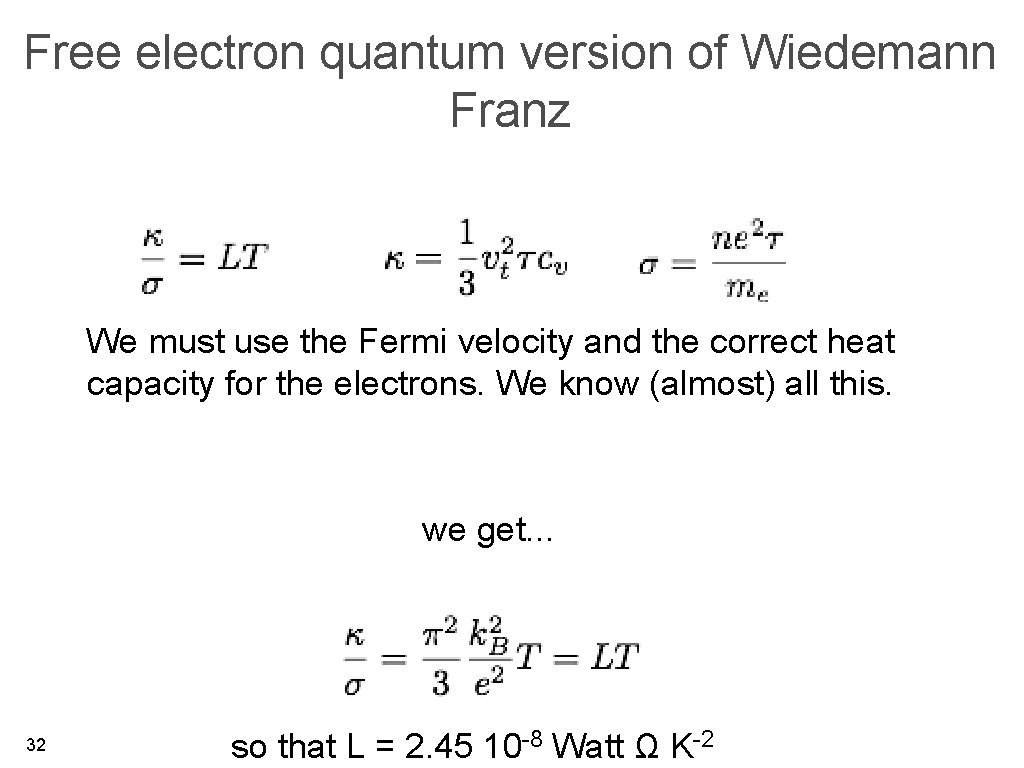
Free electron quantum version of Wiedemann Franz We must use the Fermi velocity and the correct heat capacity for the electrons. We know (almost) all this. we get. . . 32 so that L = 2. 45 10 -8 Watt Ω K-2
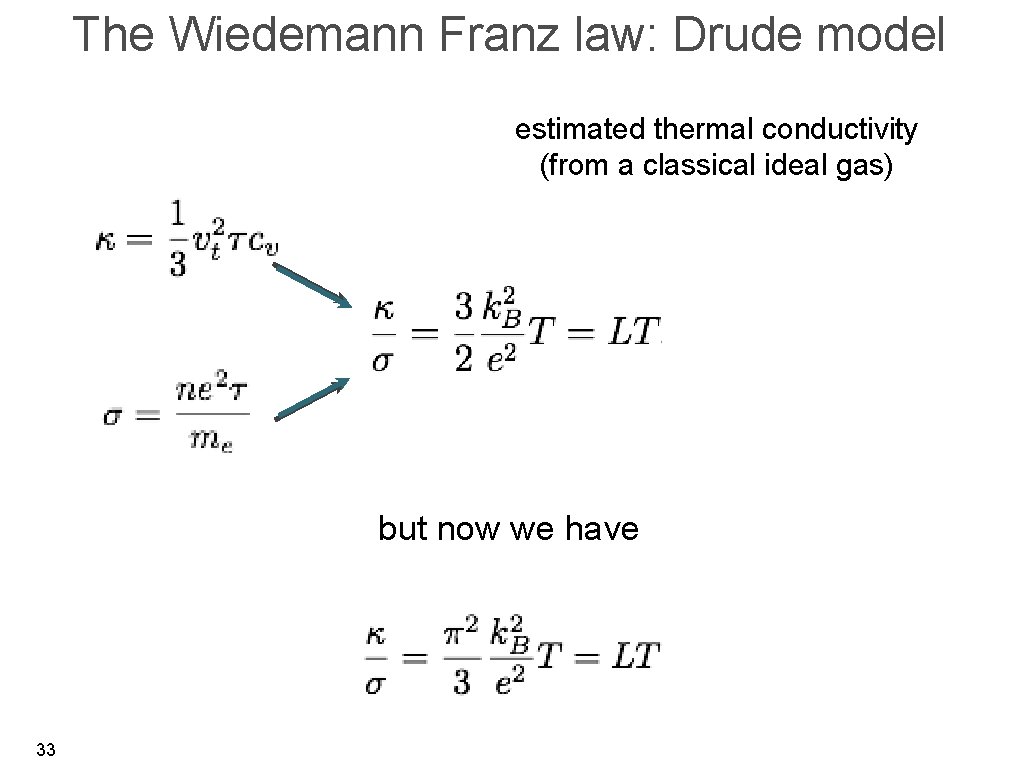
The Wiedemann Franz law: Drude model estimated thermal conductivity (from a classical ideal gas) but now we have 33
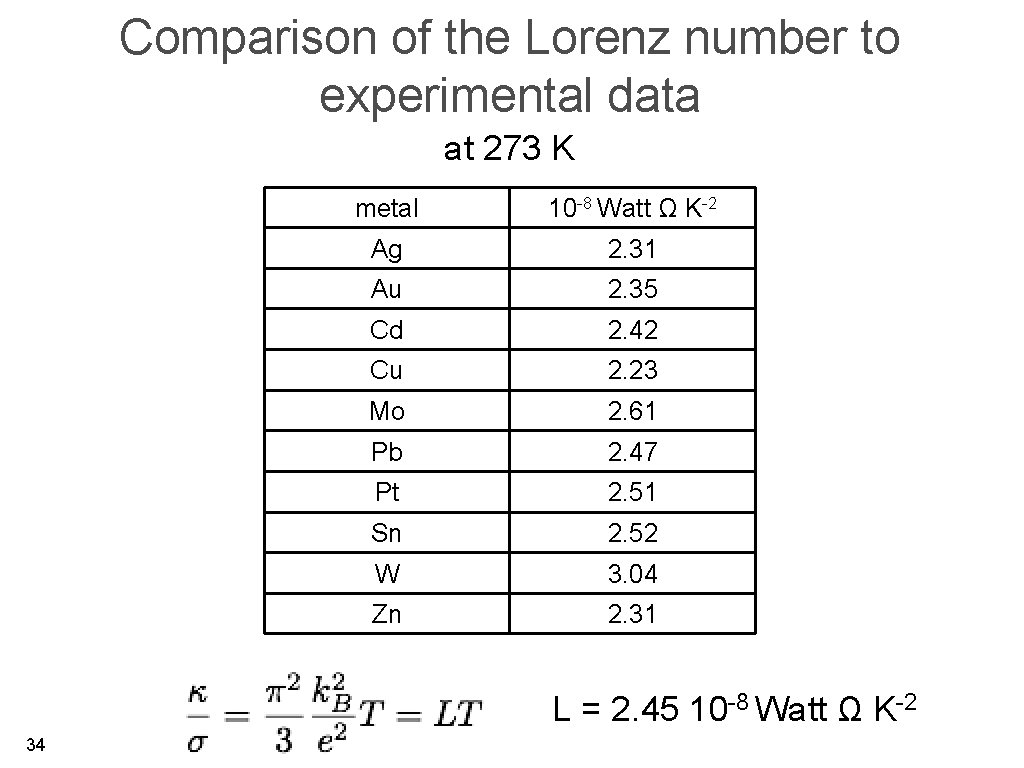
Comparison of the Lorenz number to experimental data at 273 K metal 10 -8 Watt Ω K-2 Ag 2. 31 Au 2. 35 Cd 2. 42 Cu 2. 23 Mo 2. 61 Pb 2. 47 Pt 2. 51 Sn 2. 52 W 3. 04 Zn 2. 31 L = 2. 45 10 -8 Watt Ω K-2 34
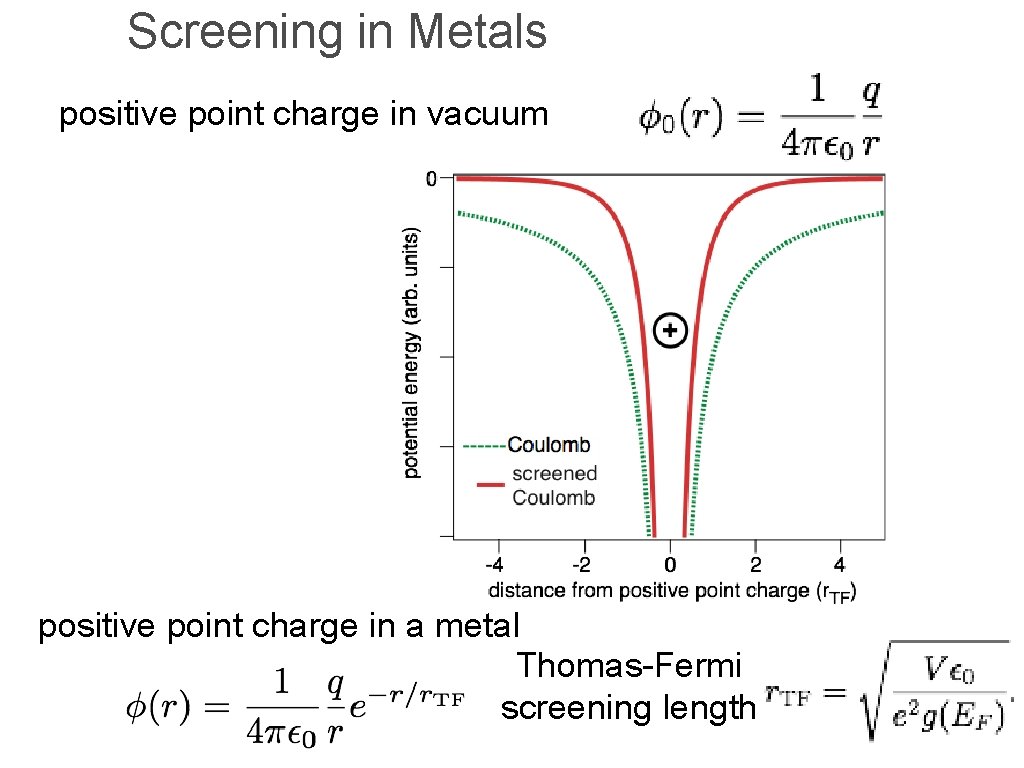
Screening in Metals positive point charge in vacuum positive point charge in a metal Thomas-Fermi screening length
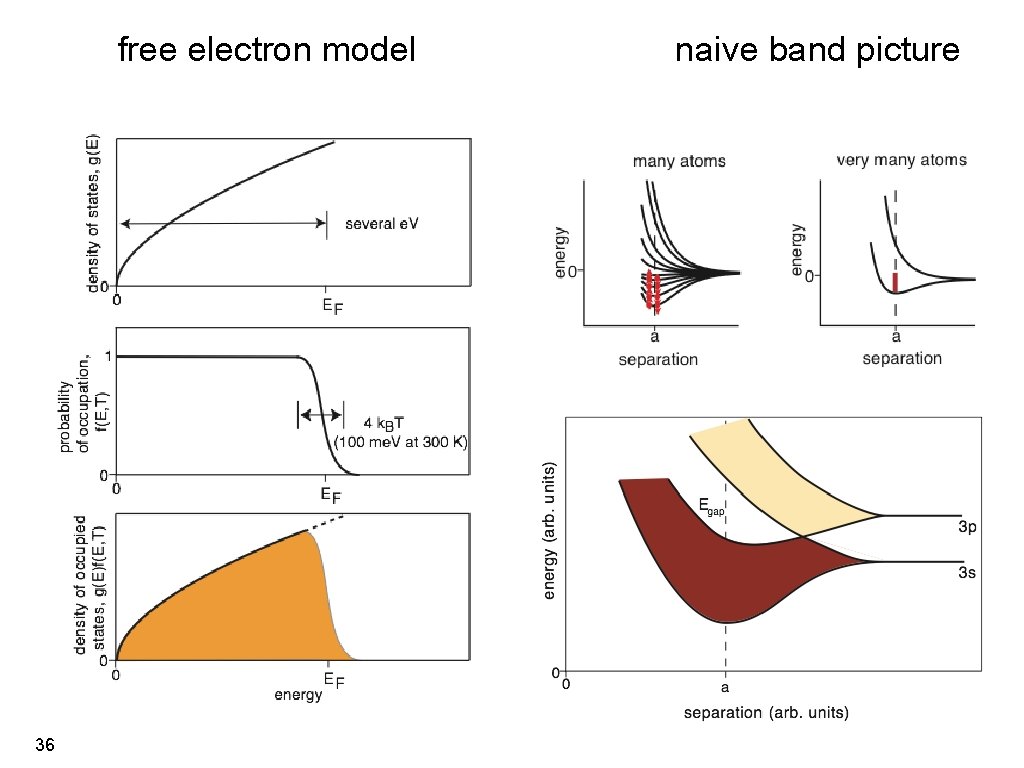
free electron model 36 naive band picture
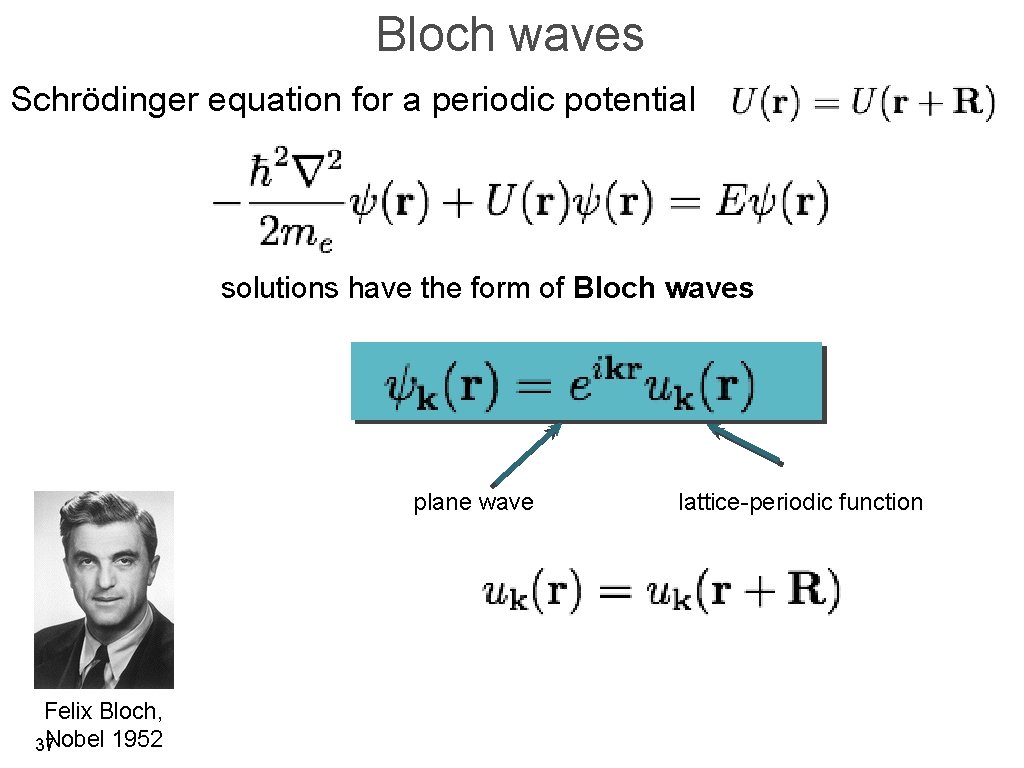
Bloch waves Schrödinger equation for a periodic potential solutions have the form of Bloch waves plane wave Felix Bloch, Nobel 1952 37 lattice-periodic function
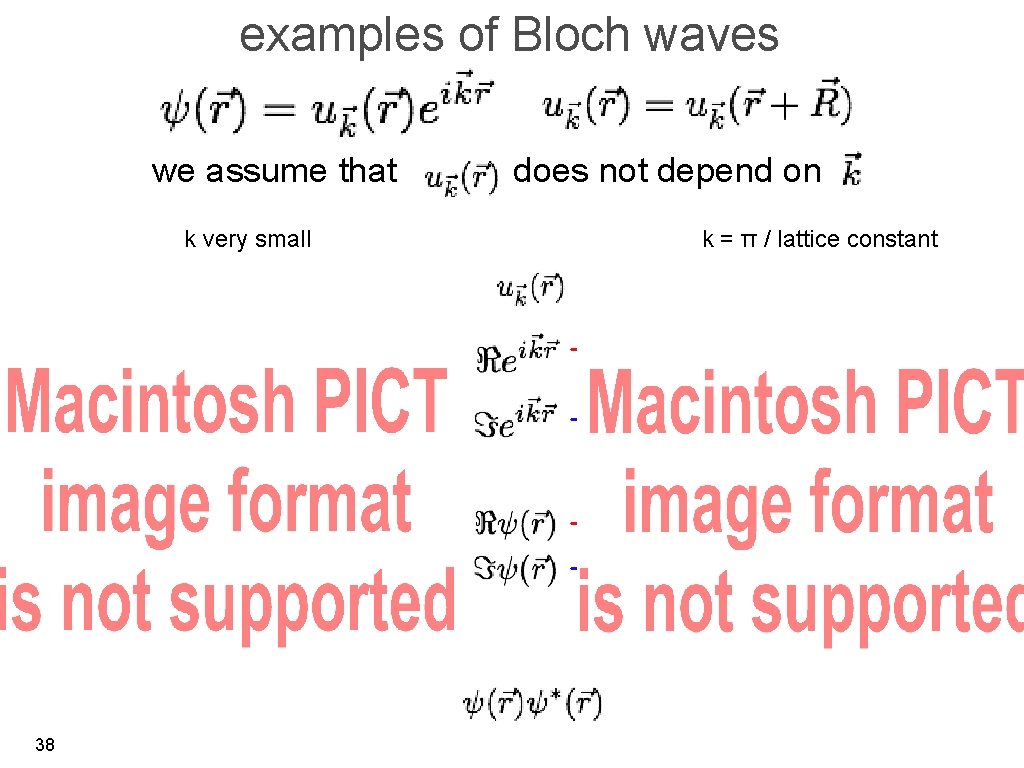
examples of Bloch waves we assume that k very small 38 does not depend on k = π / lattice constant
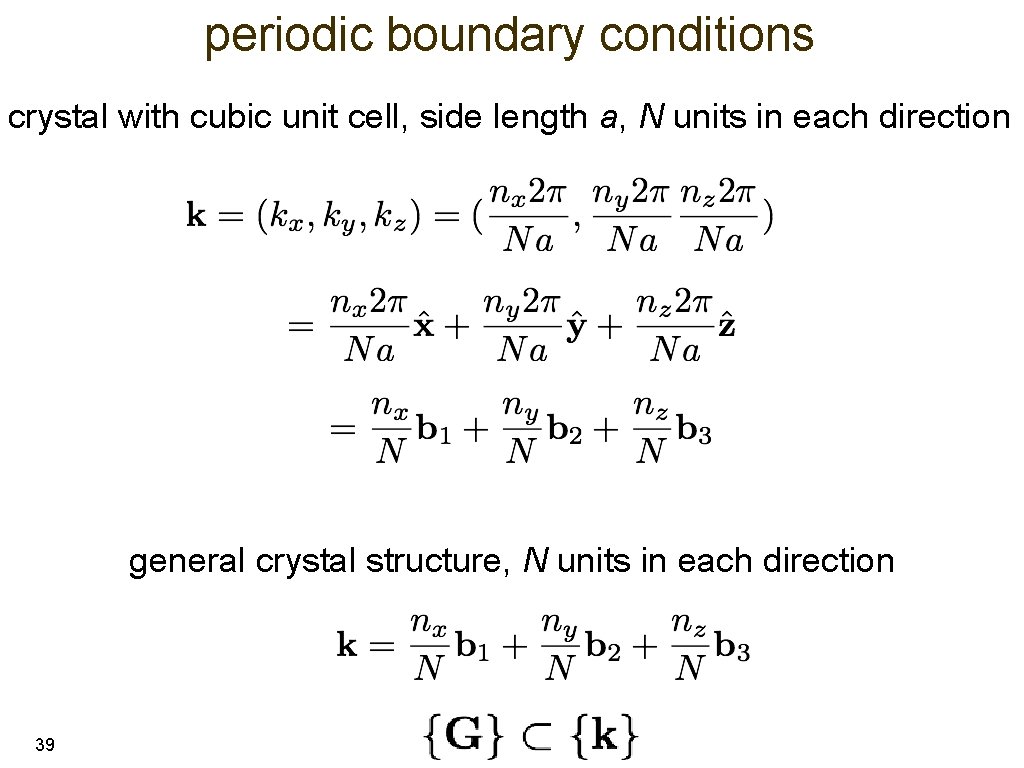
periodic boundary conditions crystal with cubic unit cell, side length a, N units in each direction general crystal structure, N units in each direction 39
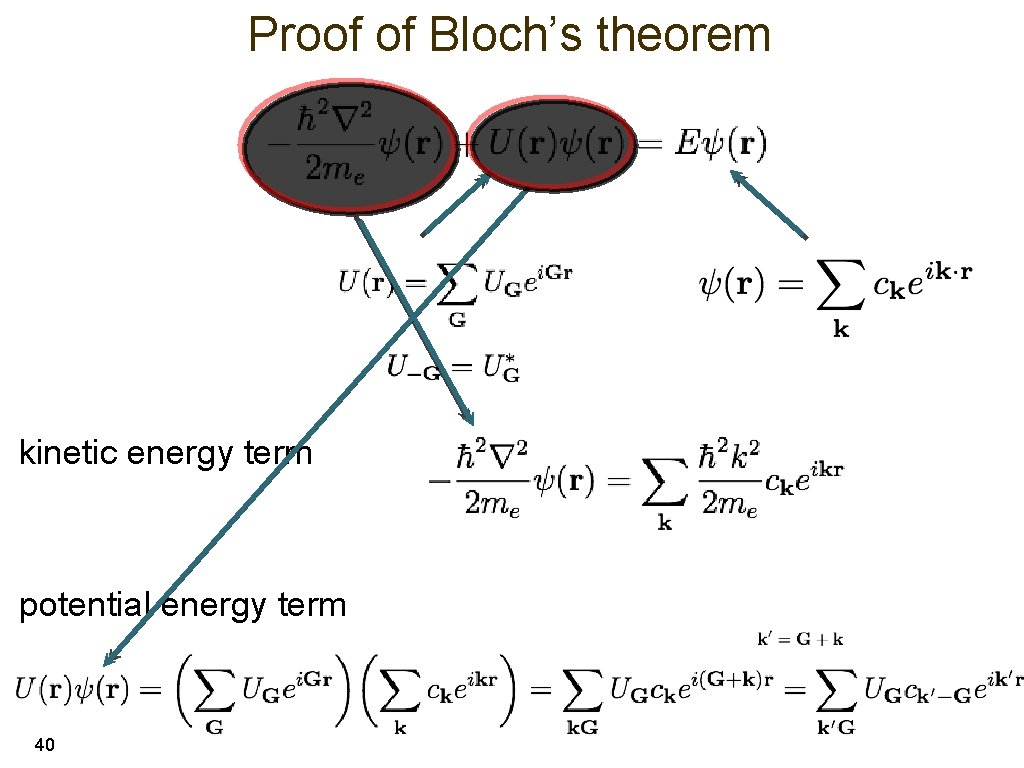
Proof of Bloch’s theorem kinetic energy term potential energy term 40
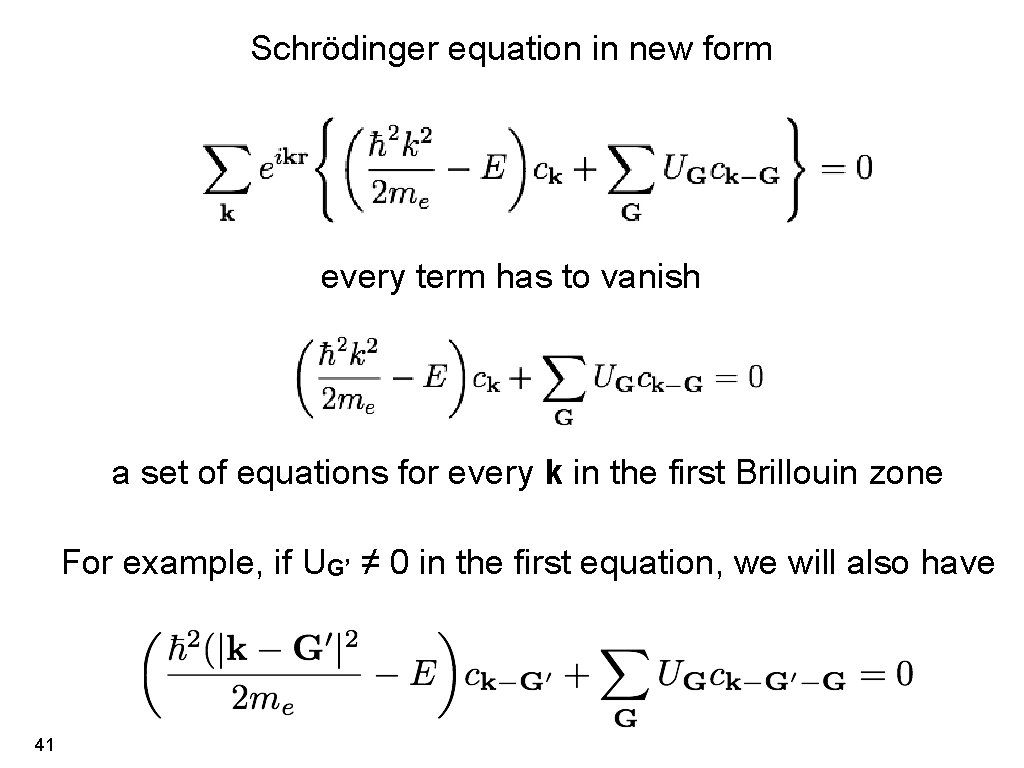
Schrödinger equation in new form every term has to vanish a set of equations for every k in the first Brillouin zone For example, if UG’ ≠ 0 in the first equation, we will also have 41
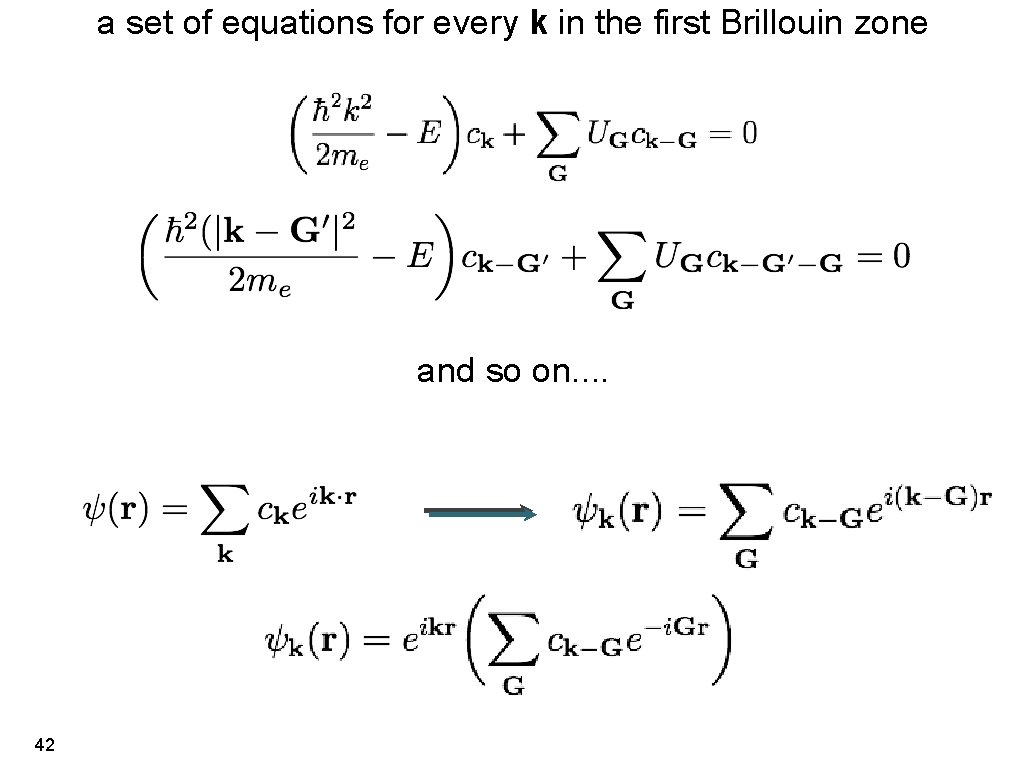
a set of equations for every k in the first Brillouin zone and so on. . 42
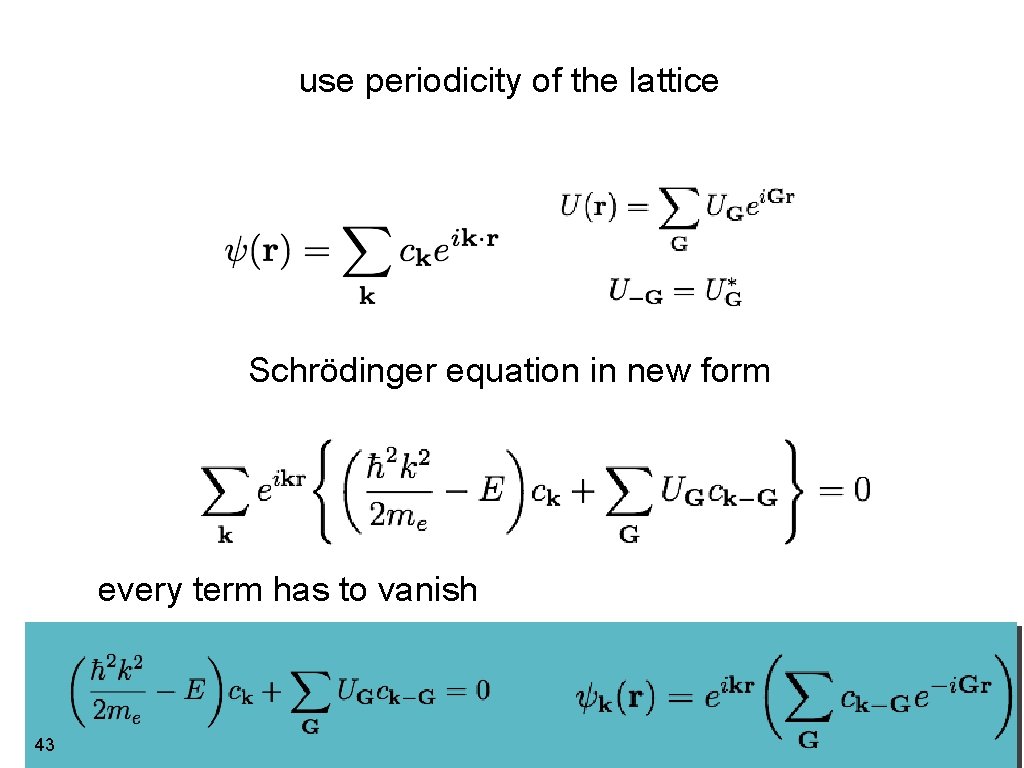
use periodicity of the lattice Schrödinger equation in new form every term has to vanish 43
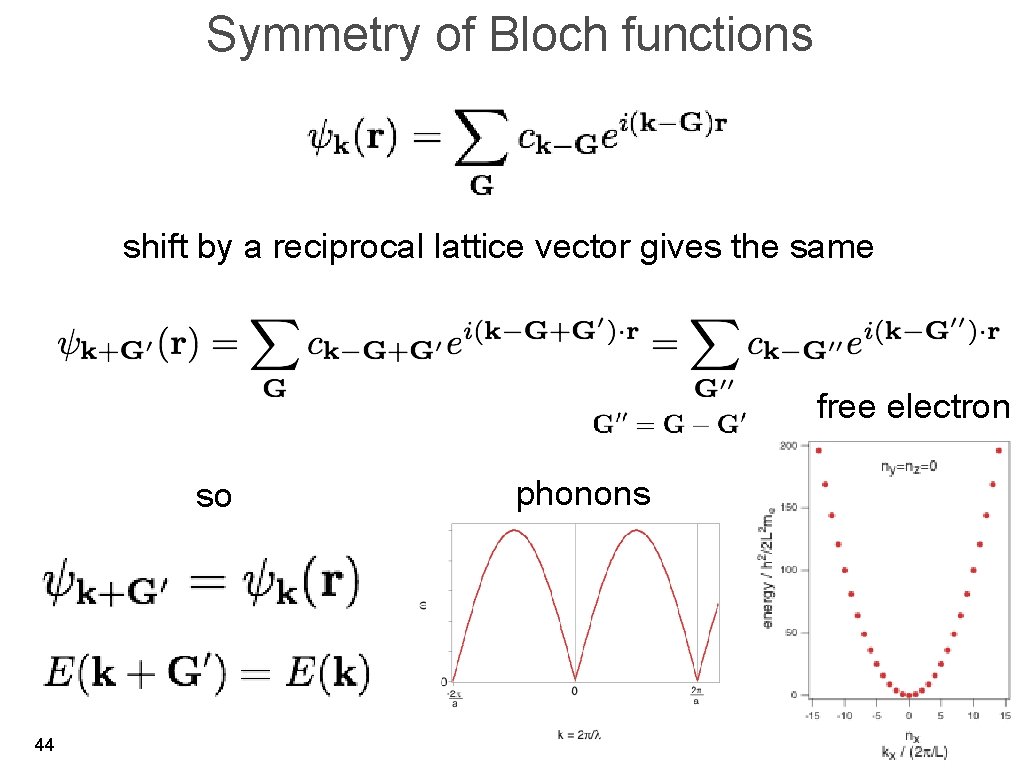
Symmetry of Bloch functions shift by a reciprocal lattice vector gives the same free electron so 44 phonons
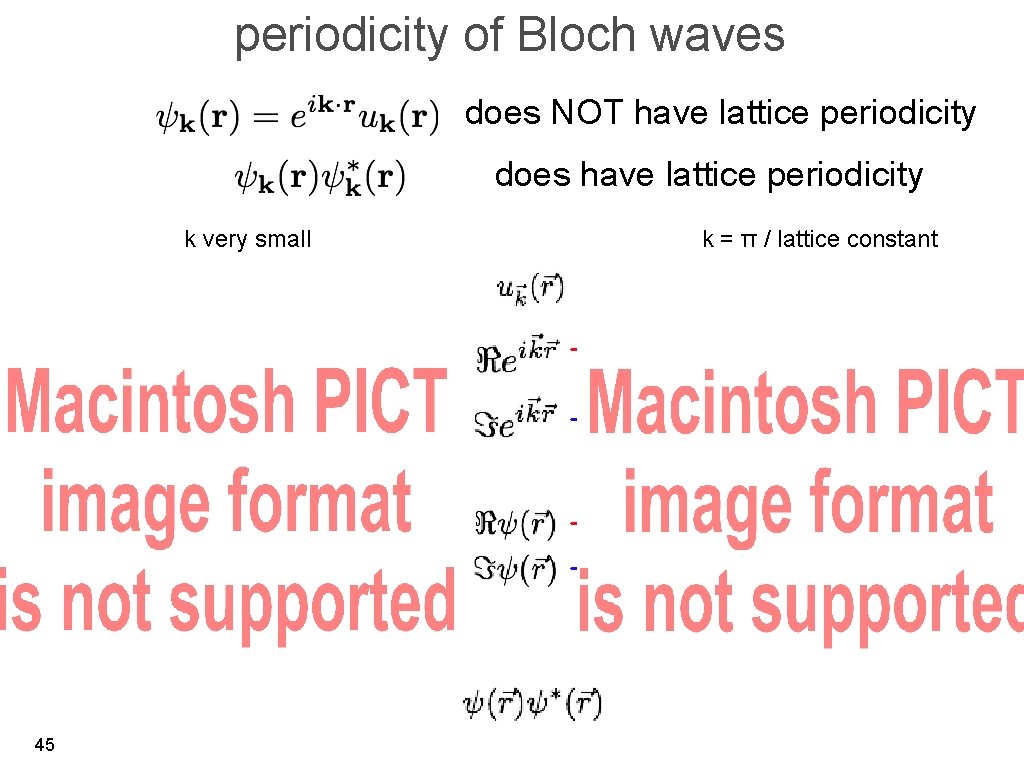
periodicity of Bloch waves does NOT have lattice periodicity does have lattice periodicity k very small 45 k = π / lattice constant
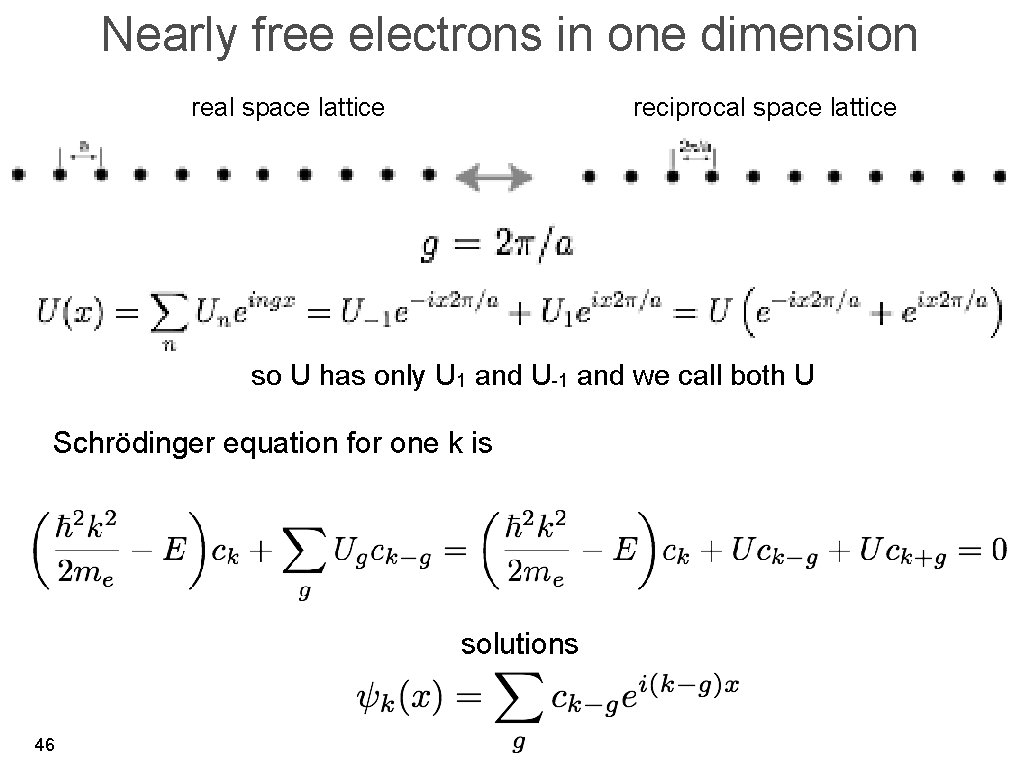
Nearly free electrons in one dimension real space lattice reciprocal space lattice so U has only U 1 and U-1 and we call both U Schrödinger equation for one k is solutions 46
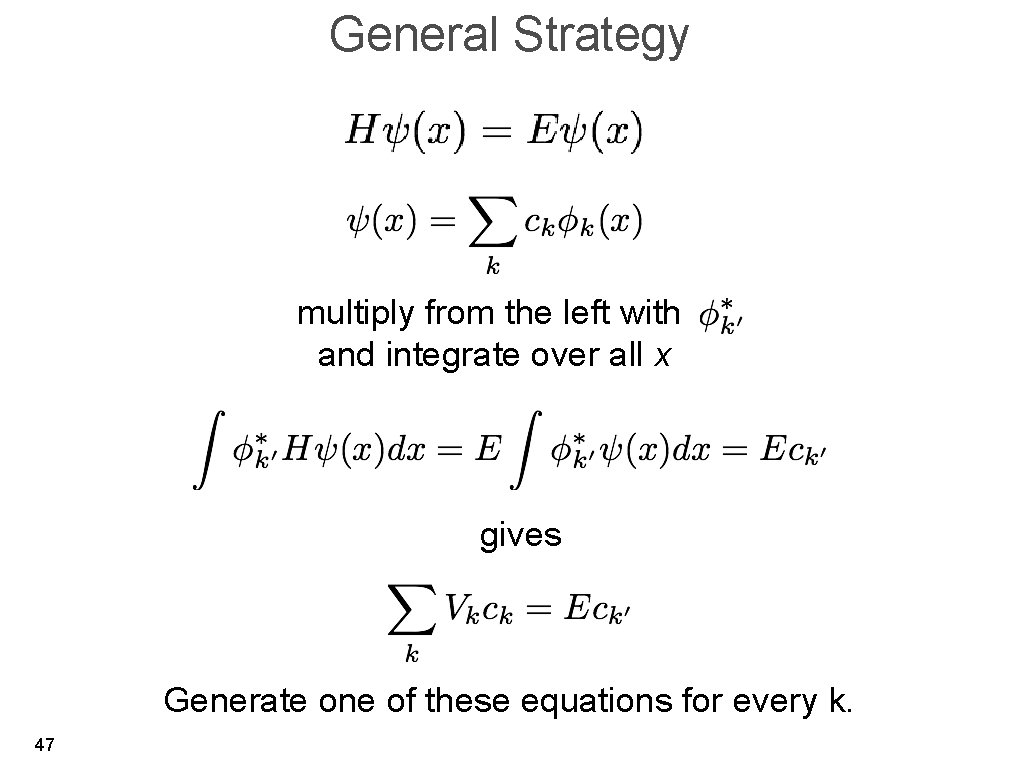
General Strategy multiply from the left with and integrate over all x gives Generate one of these equations for every k. 47
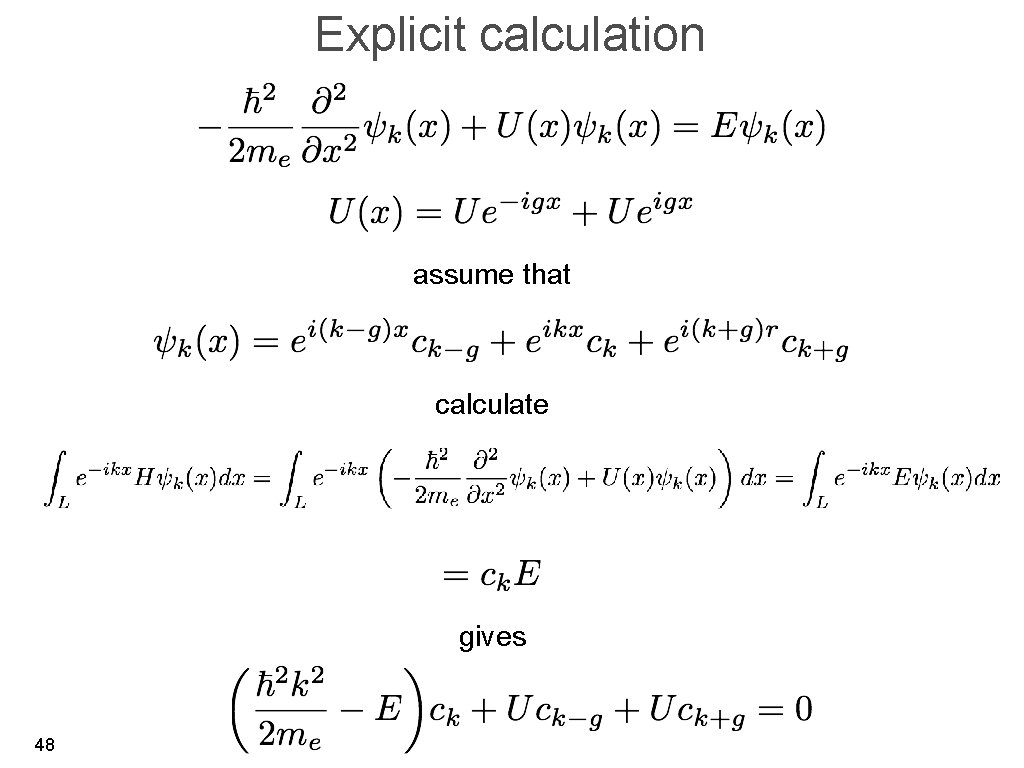
Explicit calculation assume that calculate gives 48
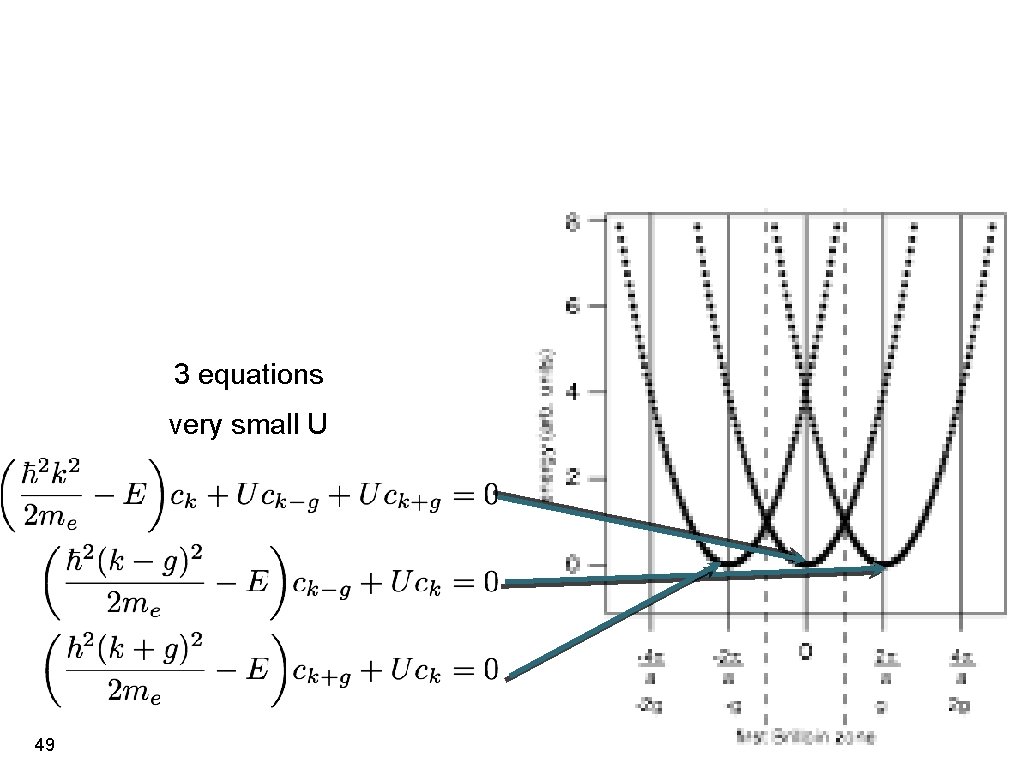
3 equations very small U 49
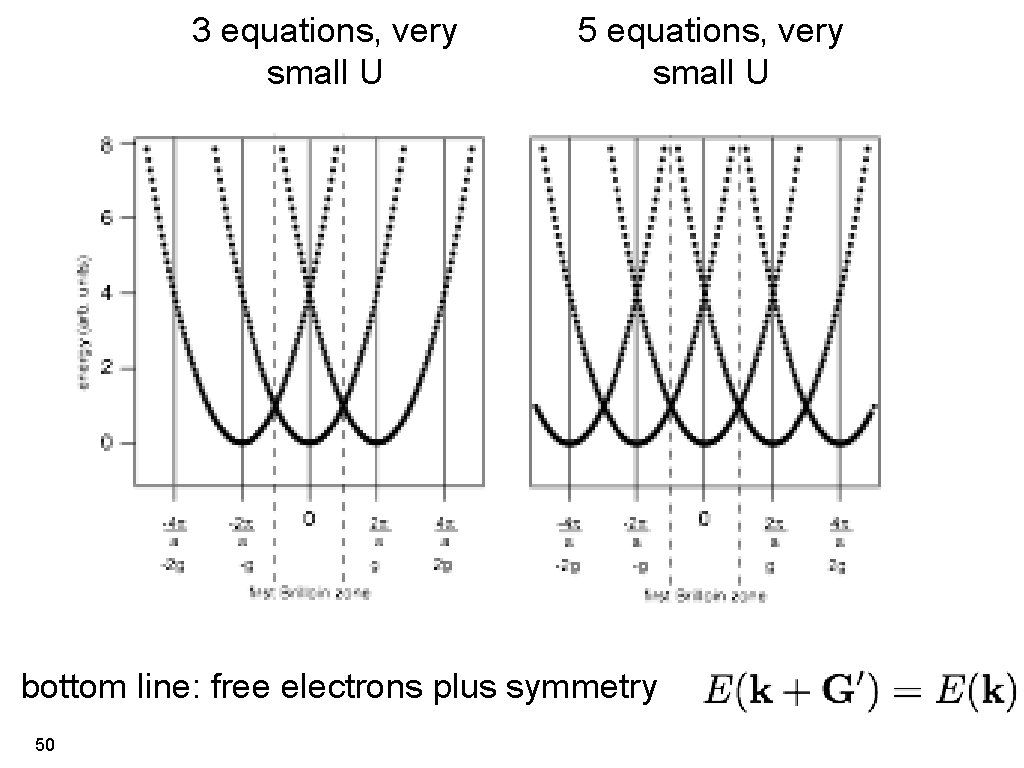
3 equations, very small U 5 equations, very small U bottom line: free electrons plus symmetry 50
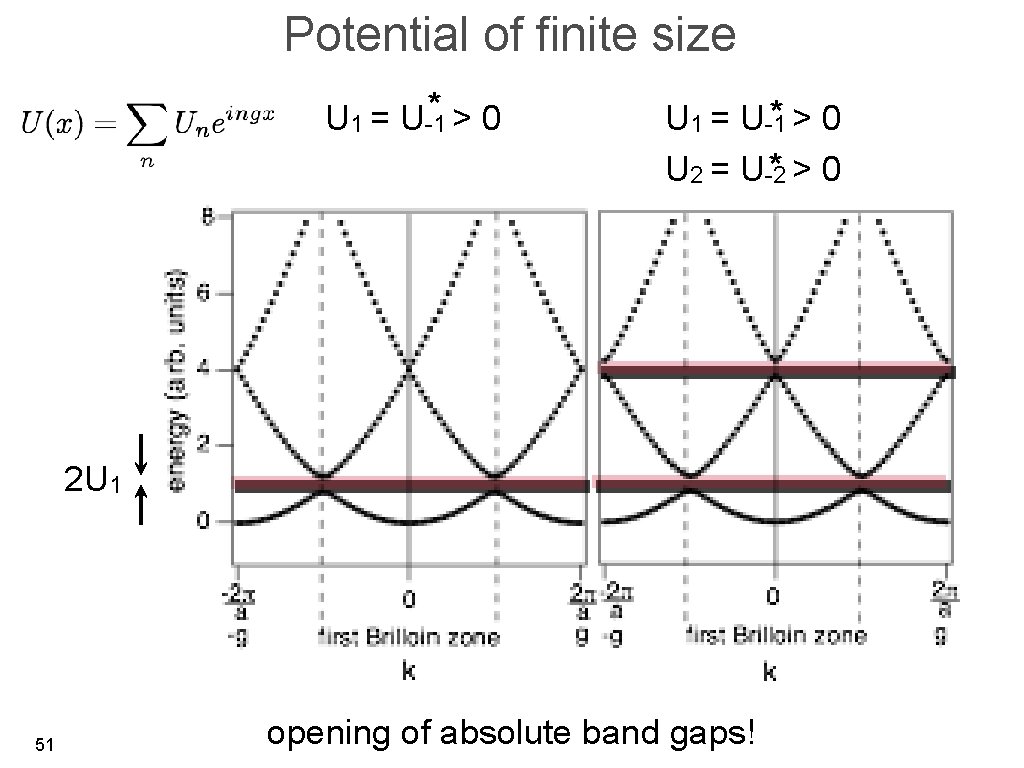
Potential of finite size *>0 U 1 = U-1* > 0 U 2 = U-2* > 0 2 U 1 51 opening of absolute band gaps!
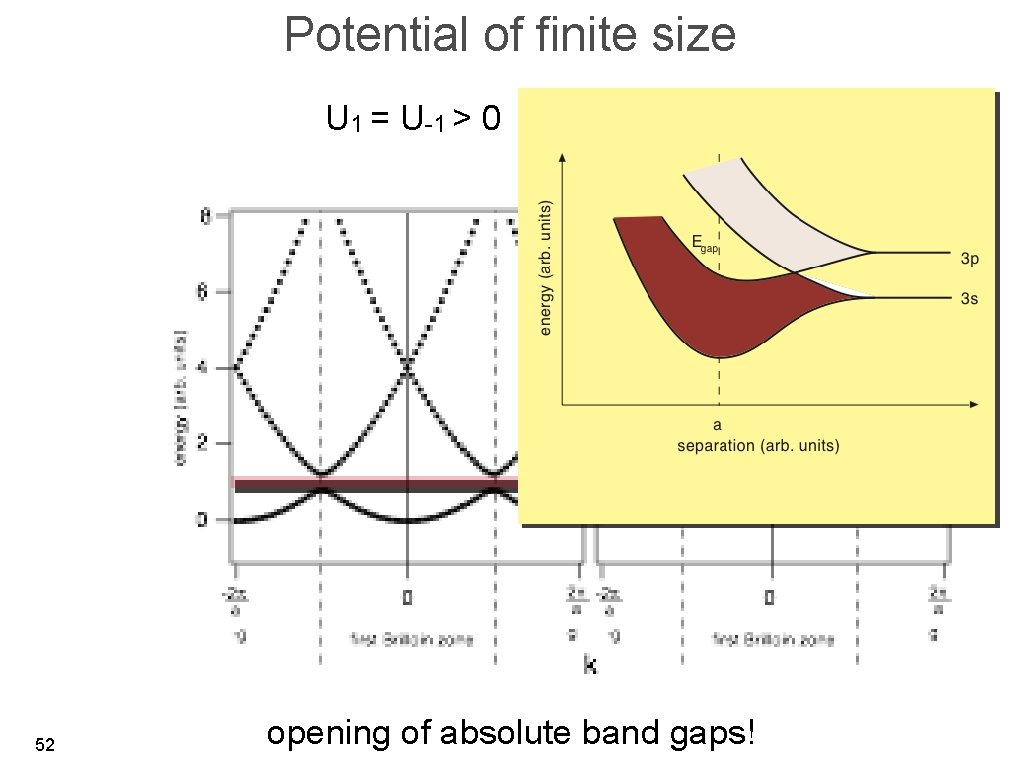
Potential of finite size U 1 = U-1 > 0 52 U 1 = U-1 > 0 U 2 = U-2 > 0 opening of absolute band gaps!
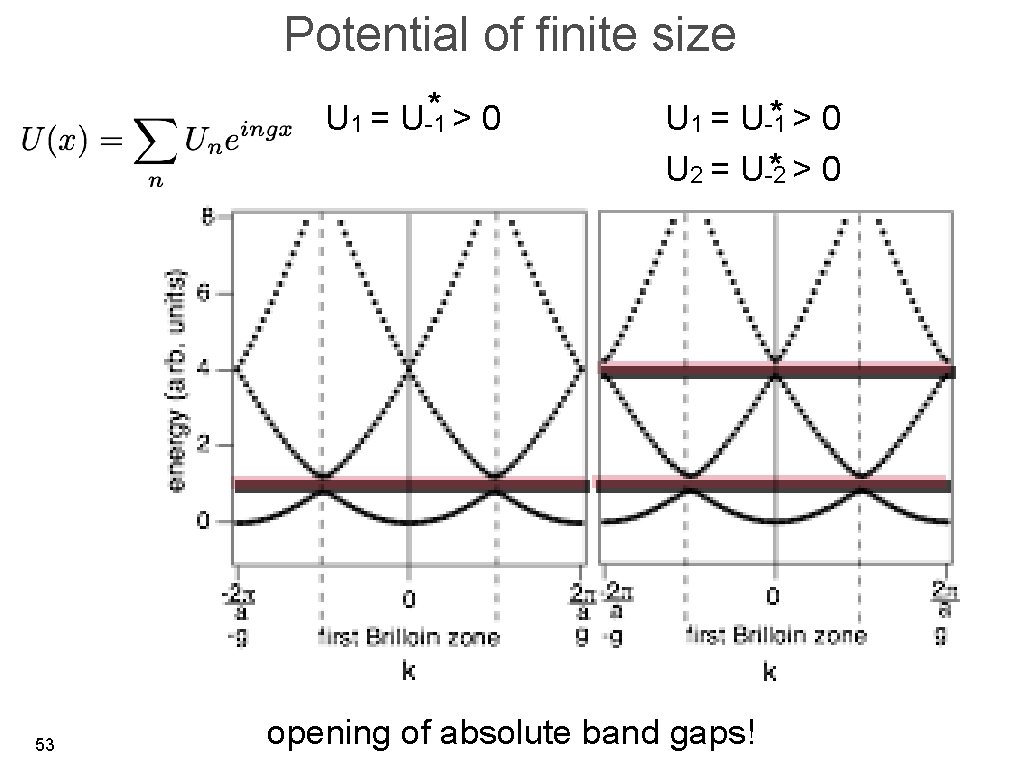
Potential of finite size *>0 U 1 = U-1 53 U 1 = U-1* > 0 U 2 = U-2* > 0 opening of absolute band gaps!
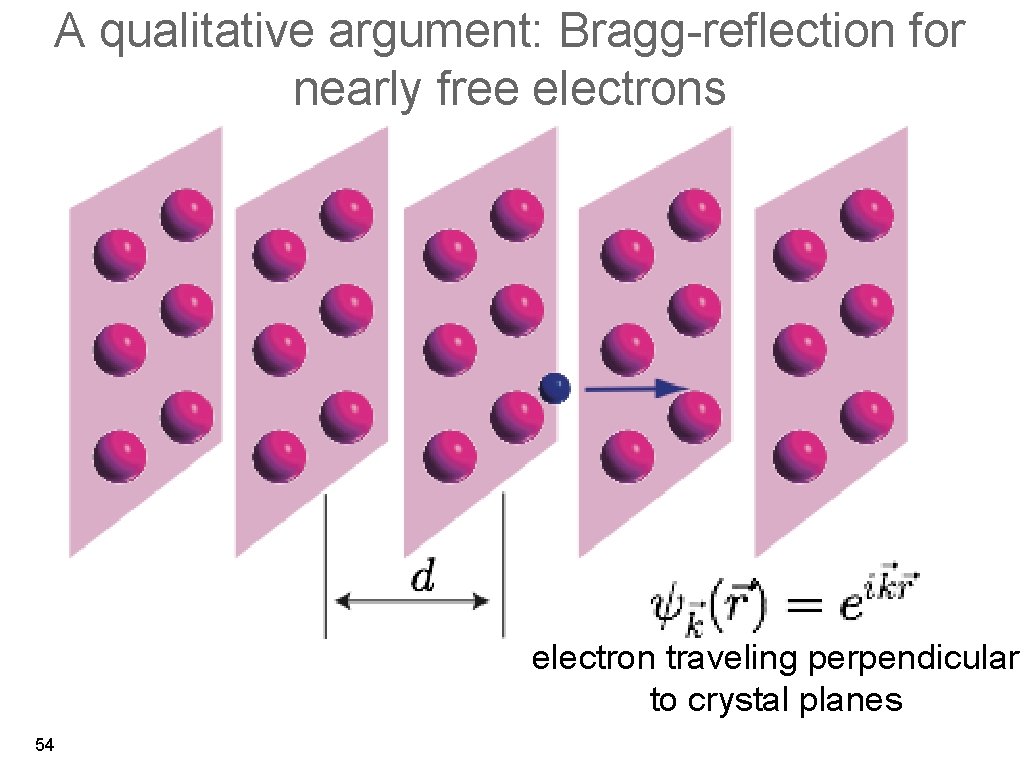
A qualitative argument: Bragg-reflection for nearly free electrons electron traveling perpendicular to crystal planes 54
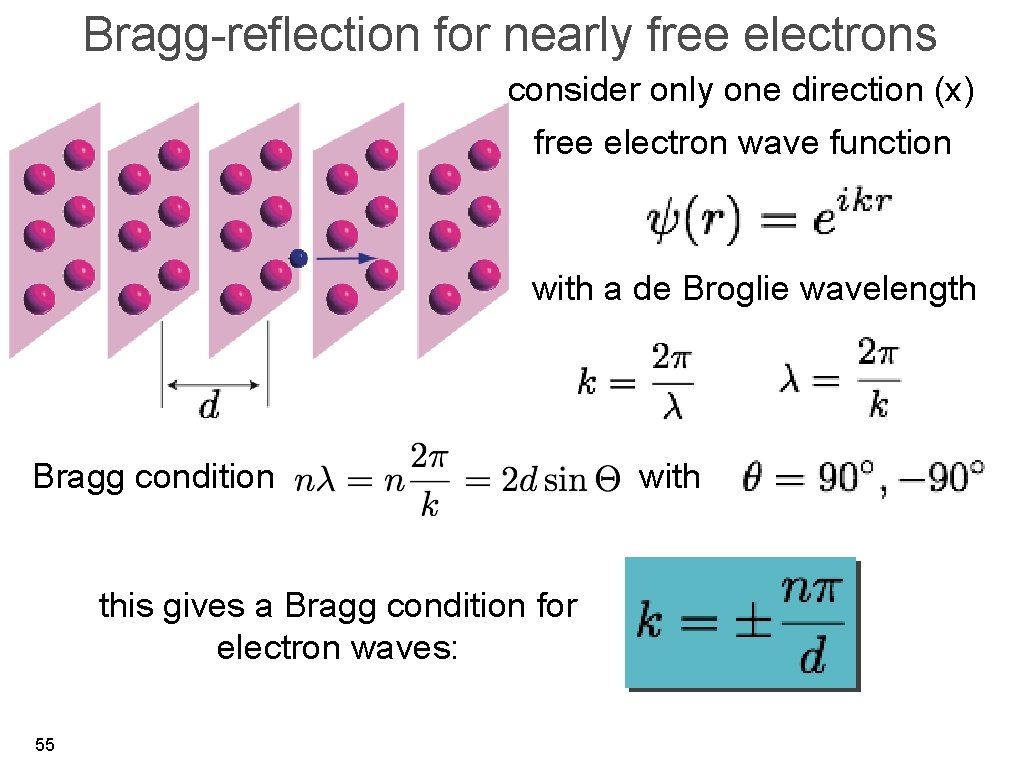
Bragg-reflection for nearly free electrons consider only one direction (x) free electron wave function with a de Broglie wavelength Bragg condition this gives a Bragg condition for electron waves: 55 with
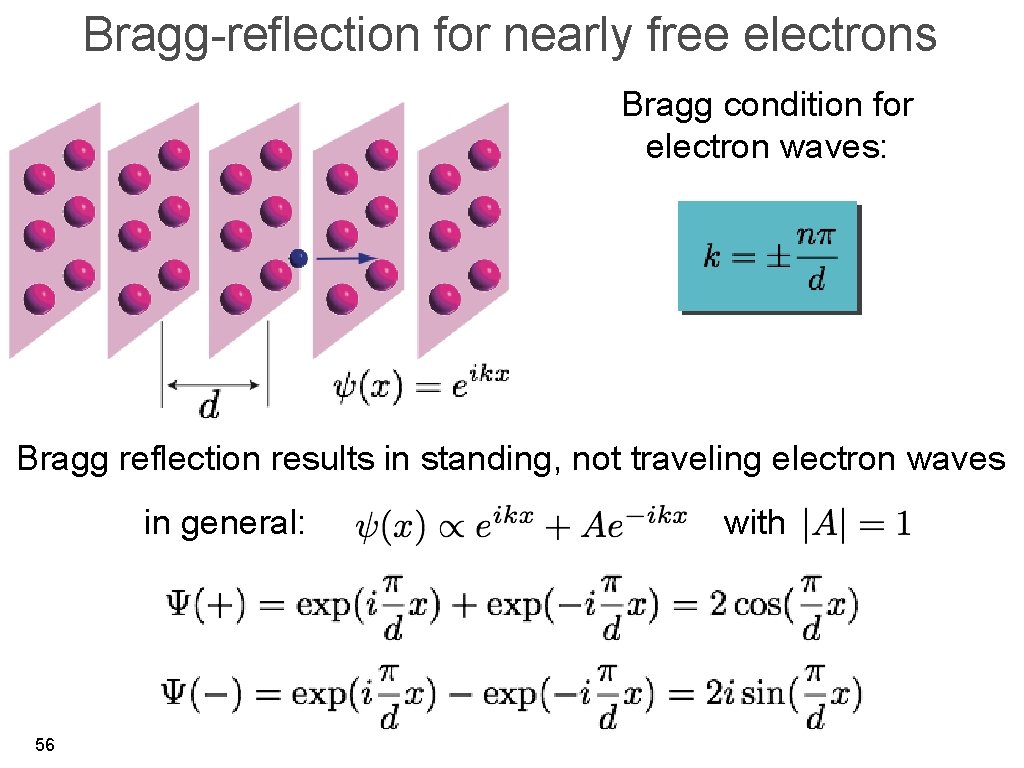
Bragg-reflection for nearly free electrons Bragg condition for electron waves: Bragg reflection results in standing, not traveling electron waves in general: 56 with
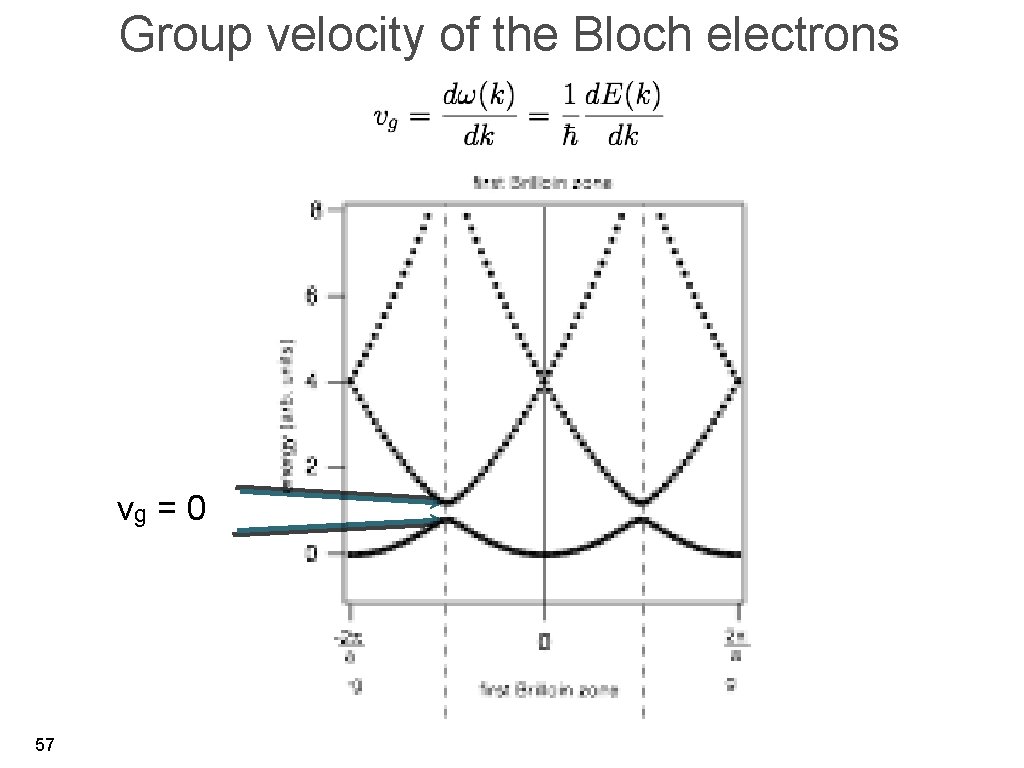
Group velocity of the Bloch electrons vg = 0 57
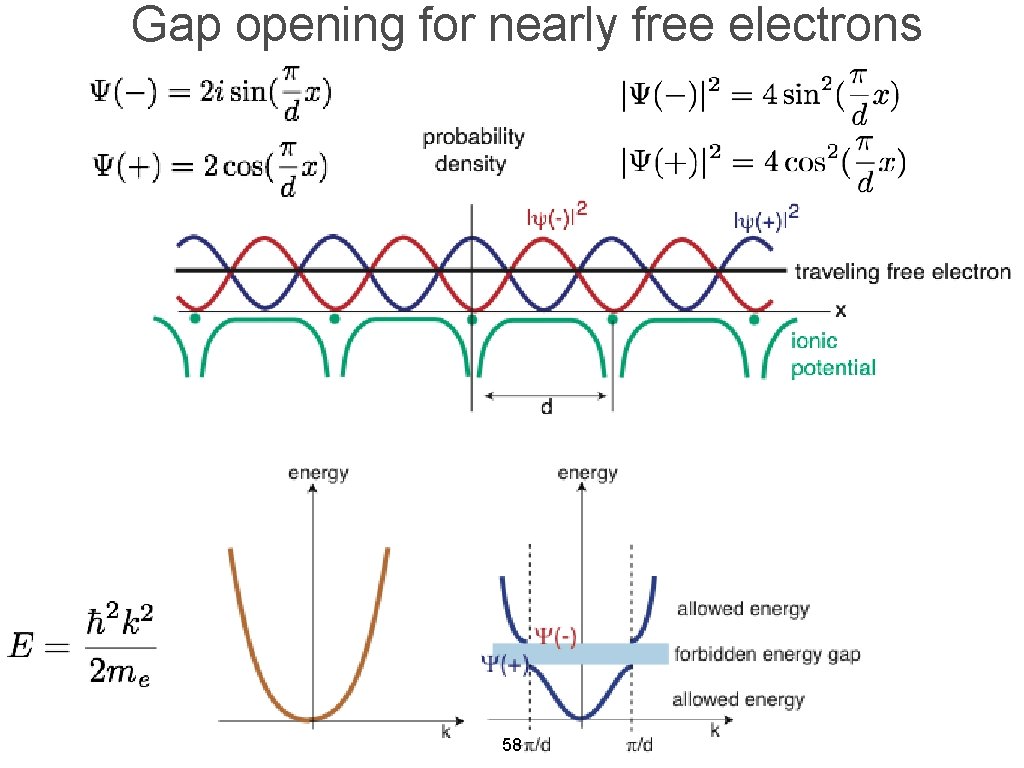
Gap opening for nearly free electrons 58
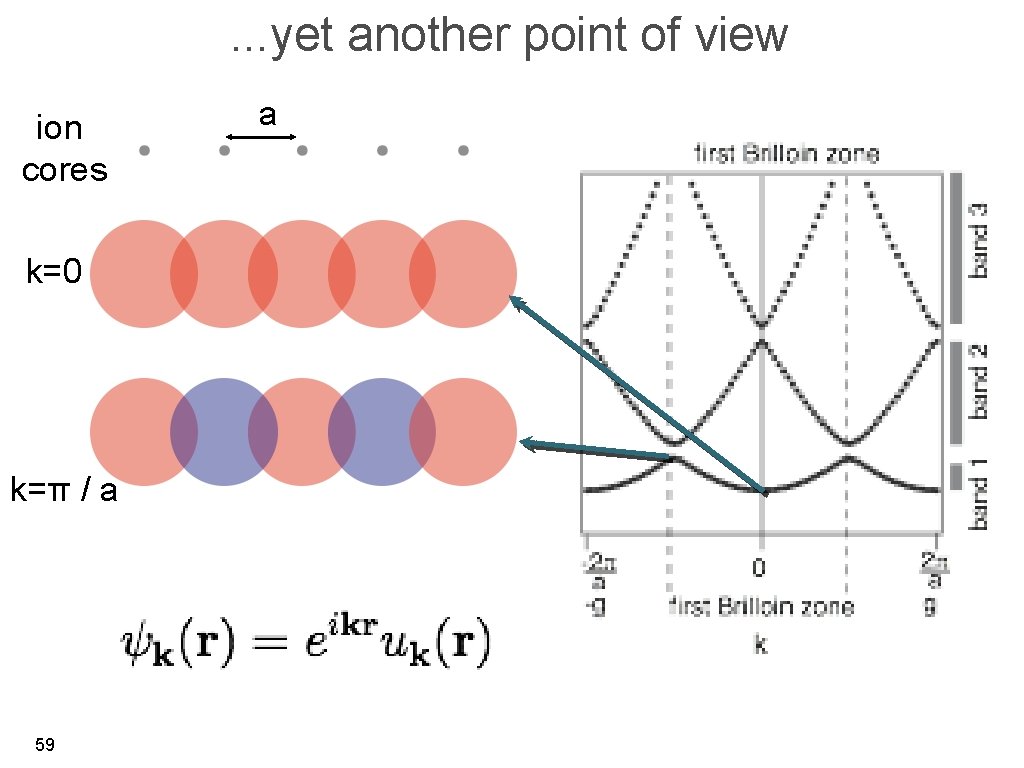
. . . yet another point of view ion cores k=0 k=π / a 59 a
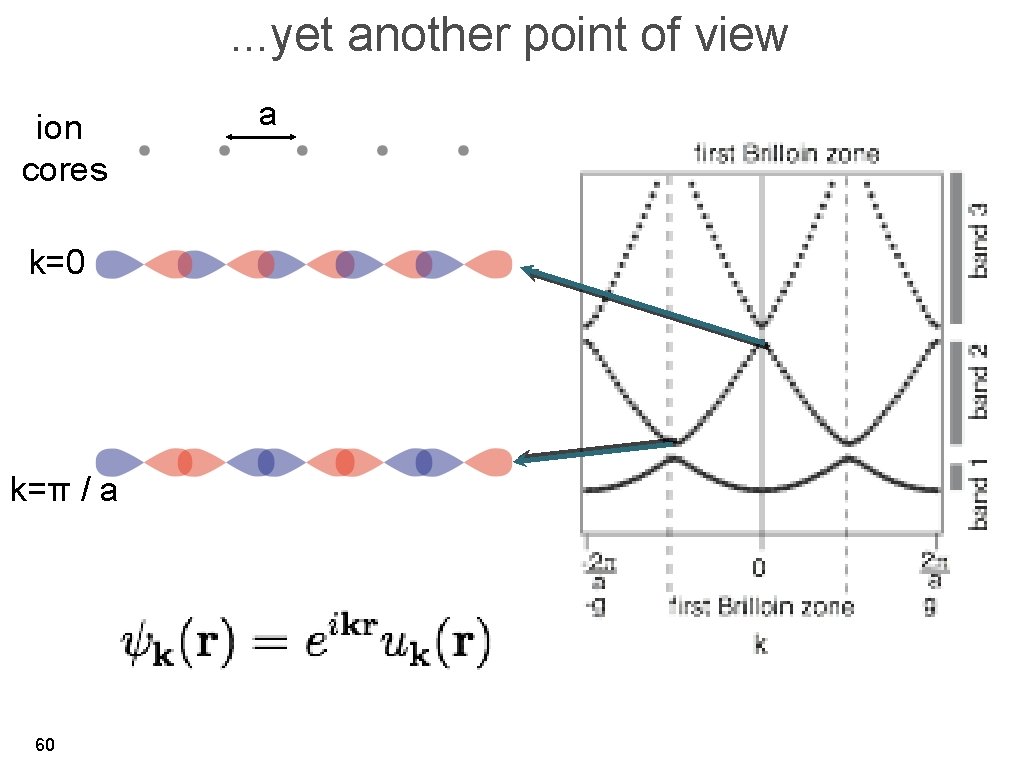
. . . yet another point of view ion cores k=0 k=π / a 60 a
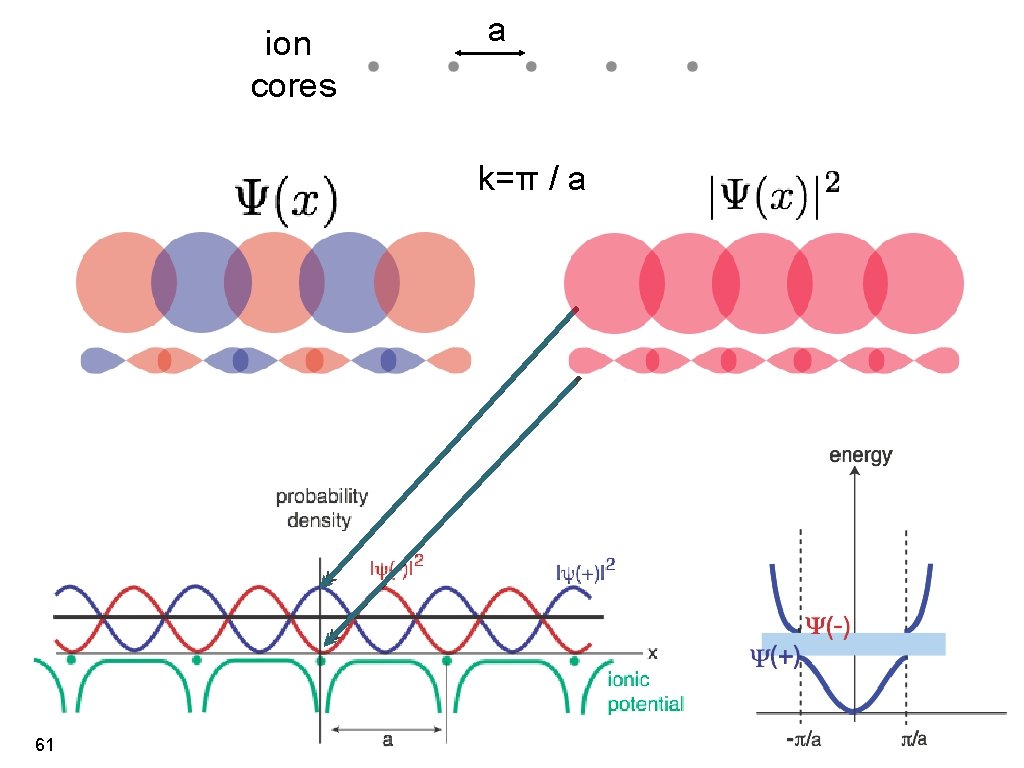
ion cores a k=π / a 61
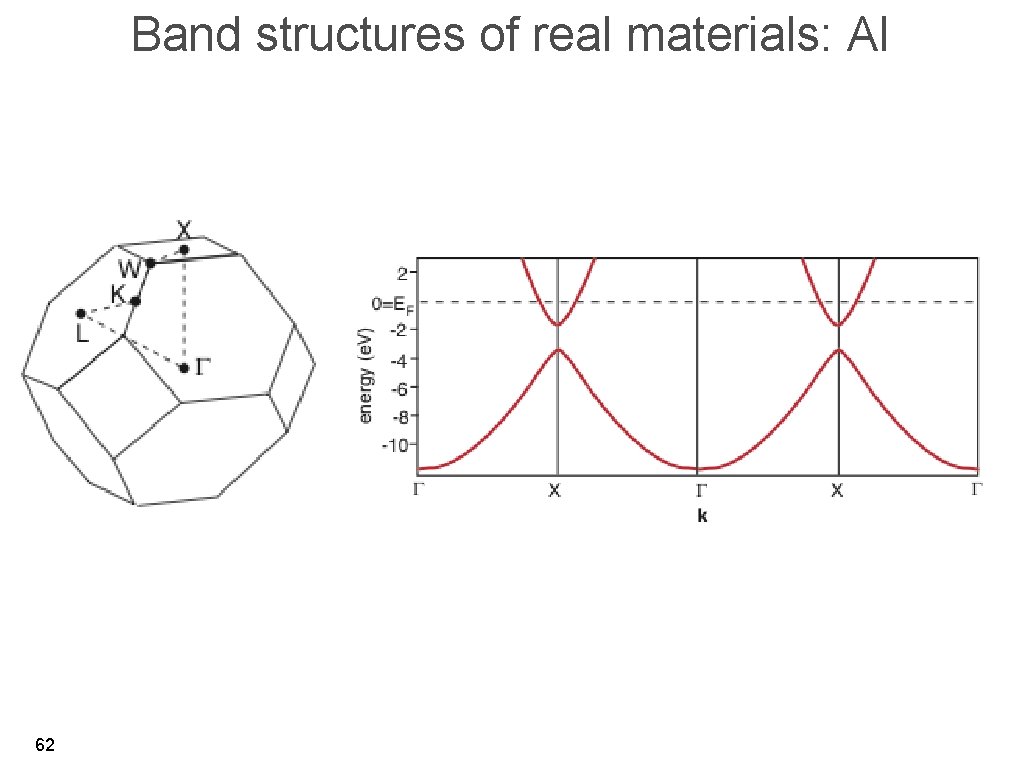
Band structures of real materials: Al 62
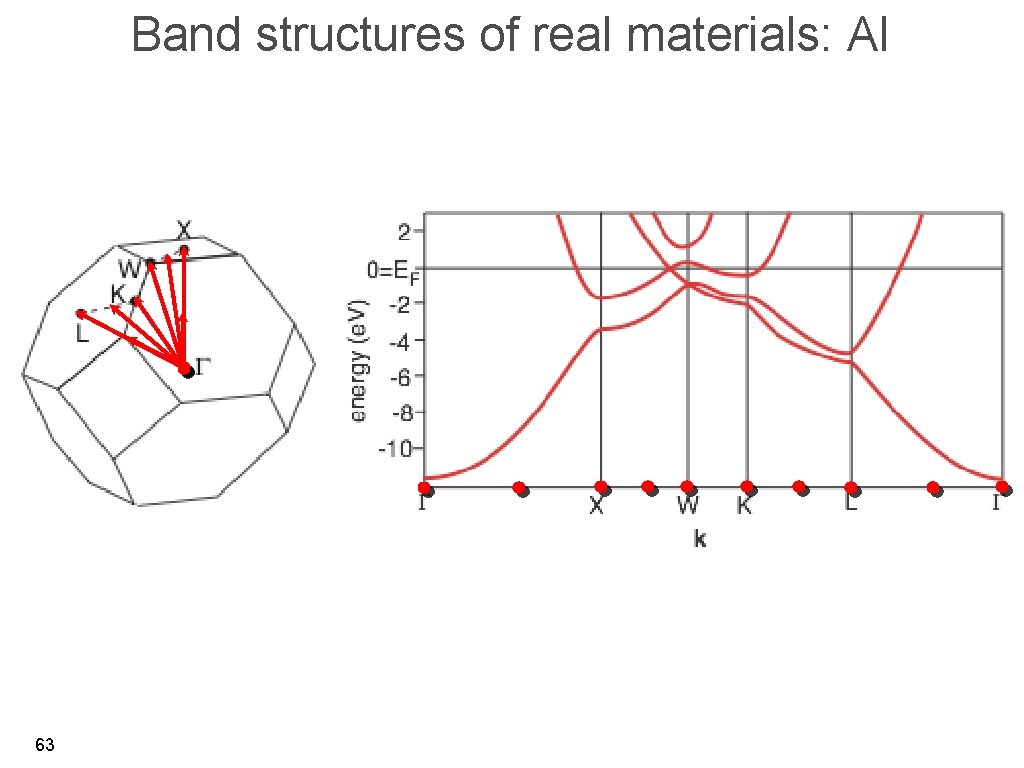
Band structures of real materials: Al 63
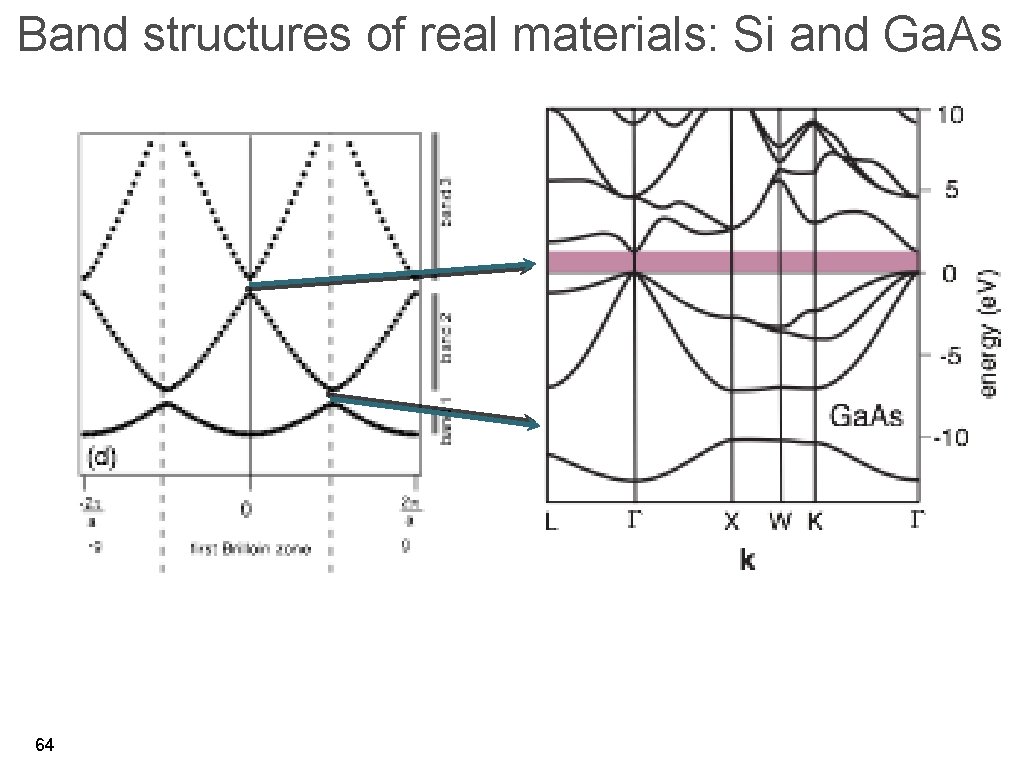
Band structures of real materials: Si and Ga. As 64
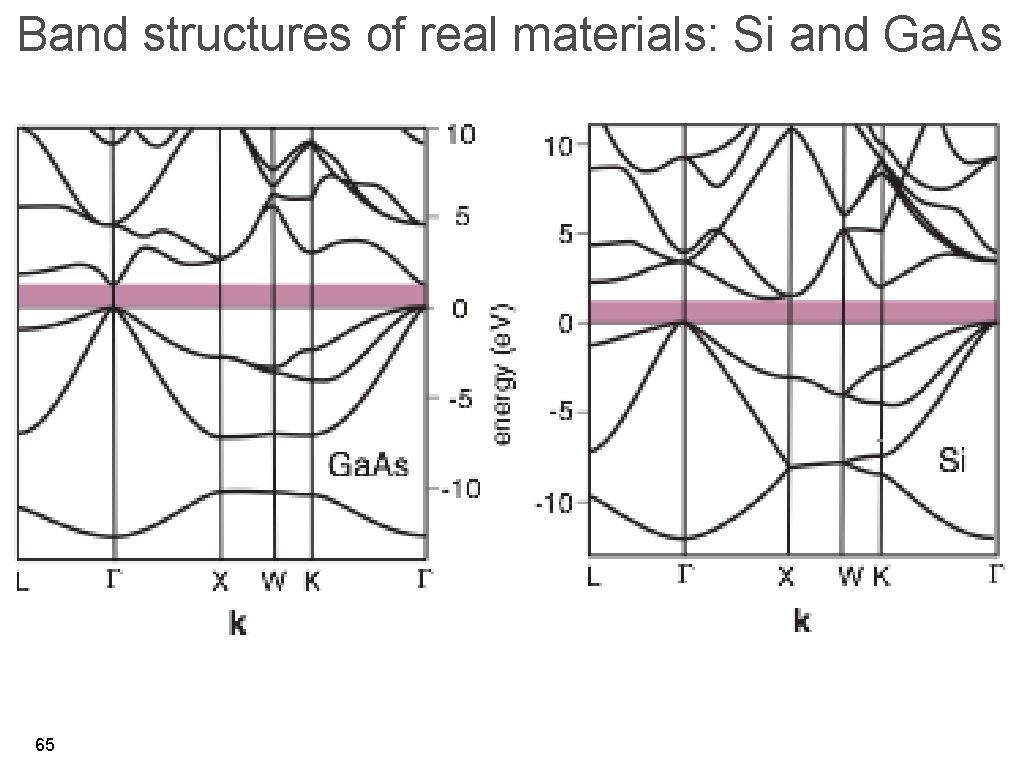
Band structures of real materials: Si and Ga. As 65
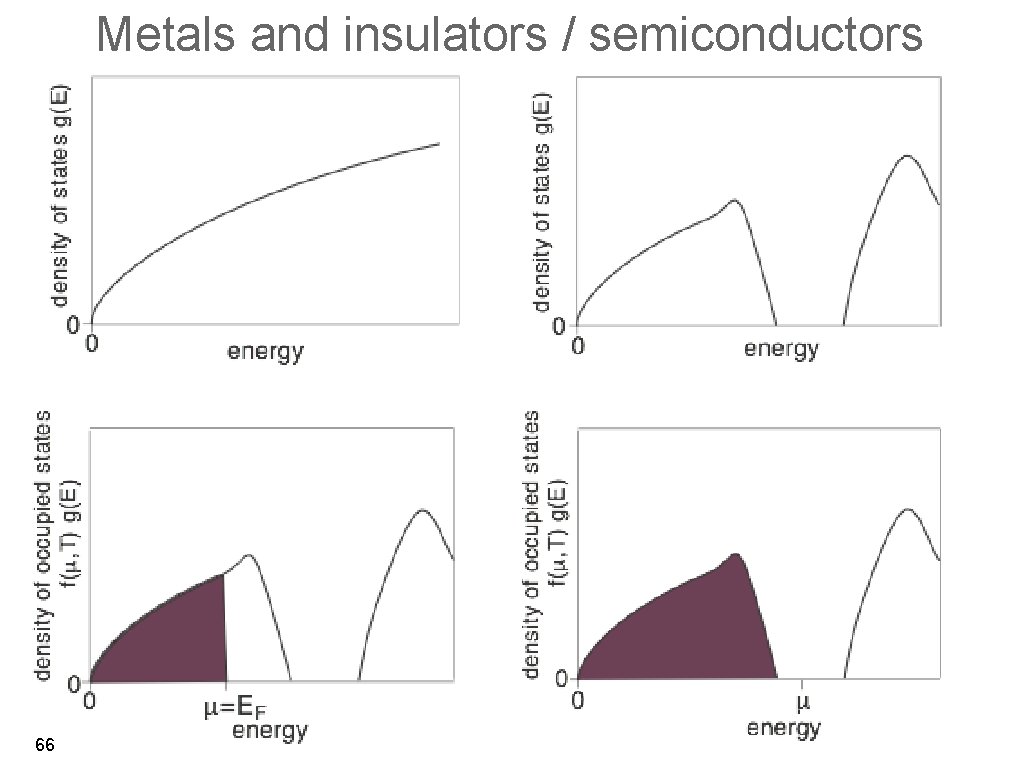
Metals and insulators / semiconductors 66
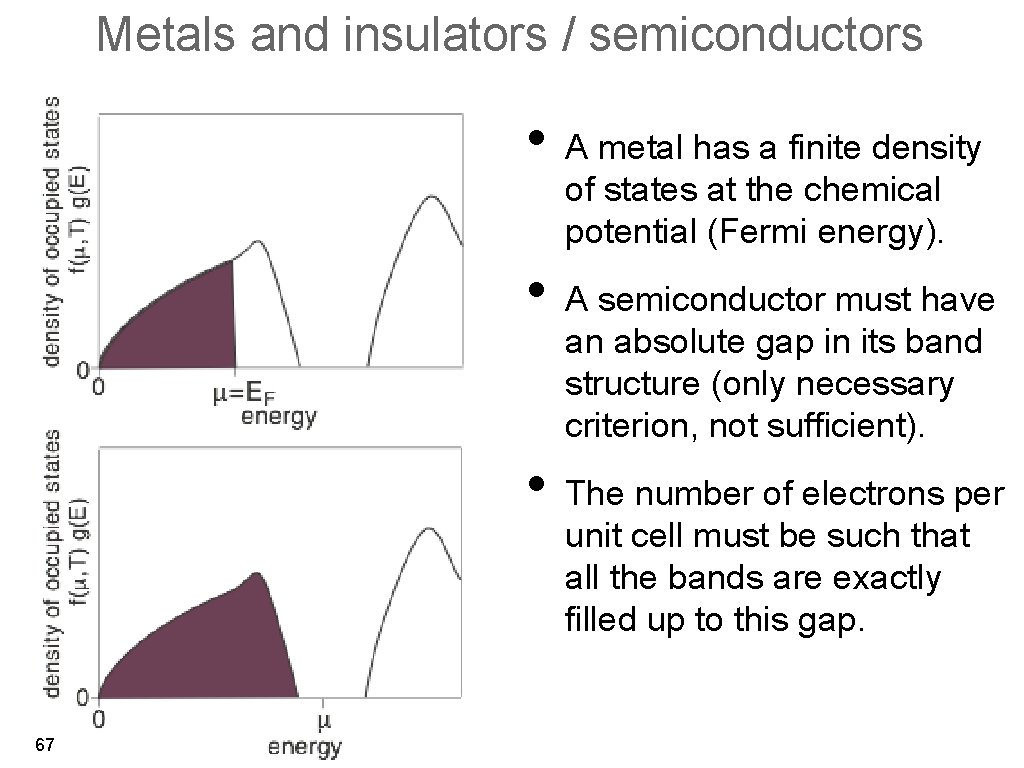
Metals and insulators / semiconductors • A metal has a finite density of states at the chemical potential (Fermi energy). • A semiconductor must have an absolute gap in its band structure (only necessary criterion, not sufficient). • The number of electrons per unit cell must be such that all the bands are exactly filled up to this gap. 67
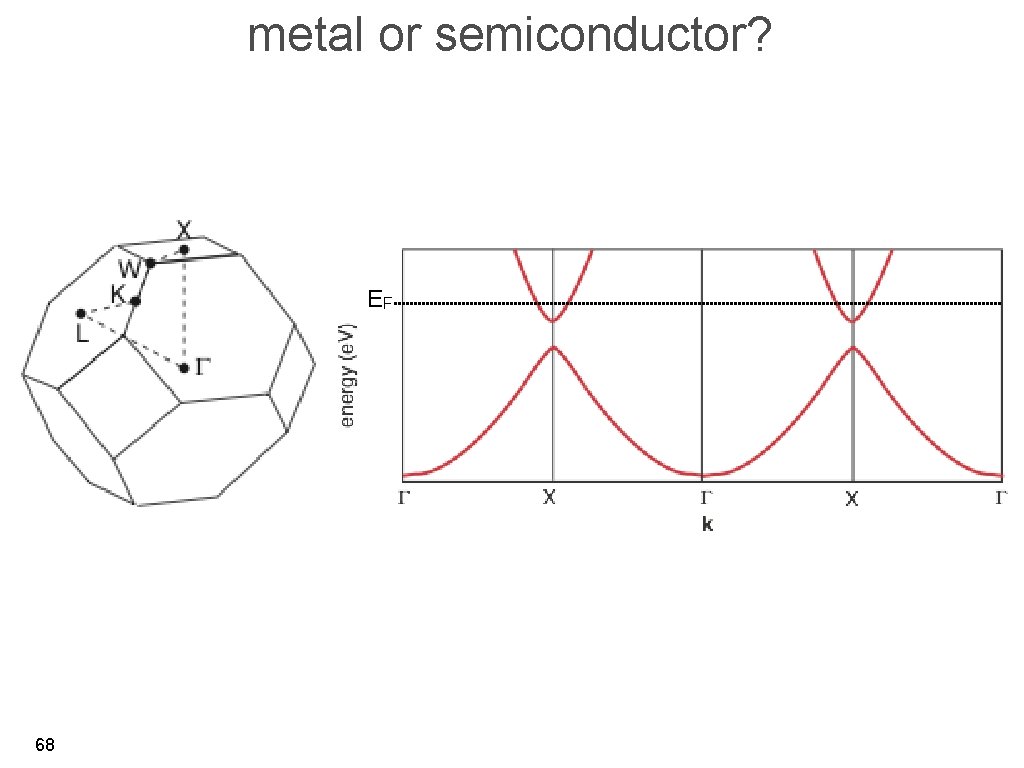
metal or semiconductor? EF 68
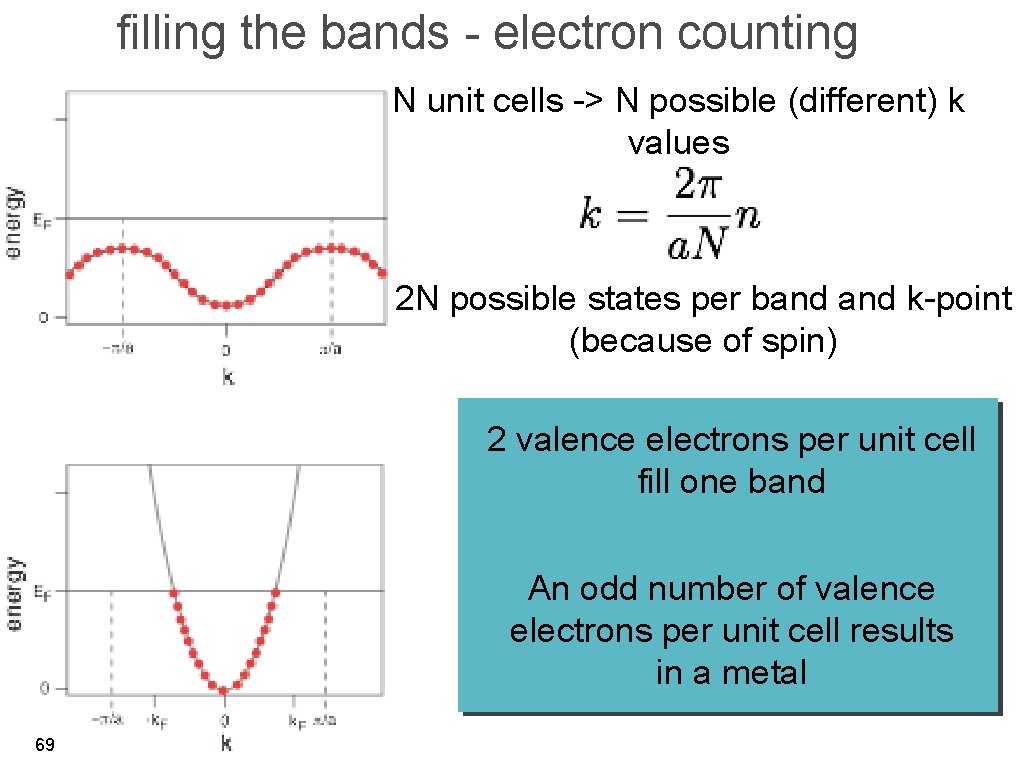
filling the bands - electron counting N unit cells -> N possible (different) k values 2 N possible states per band k-point (because of spin) 2 valence electrons per unit cell fill one band An odd number of valence electrons per unit cell results in a metal 69
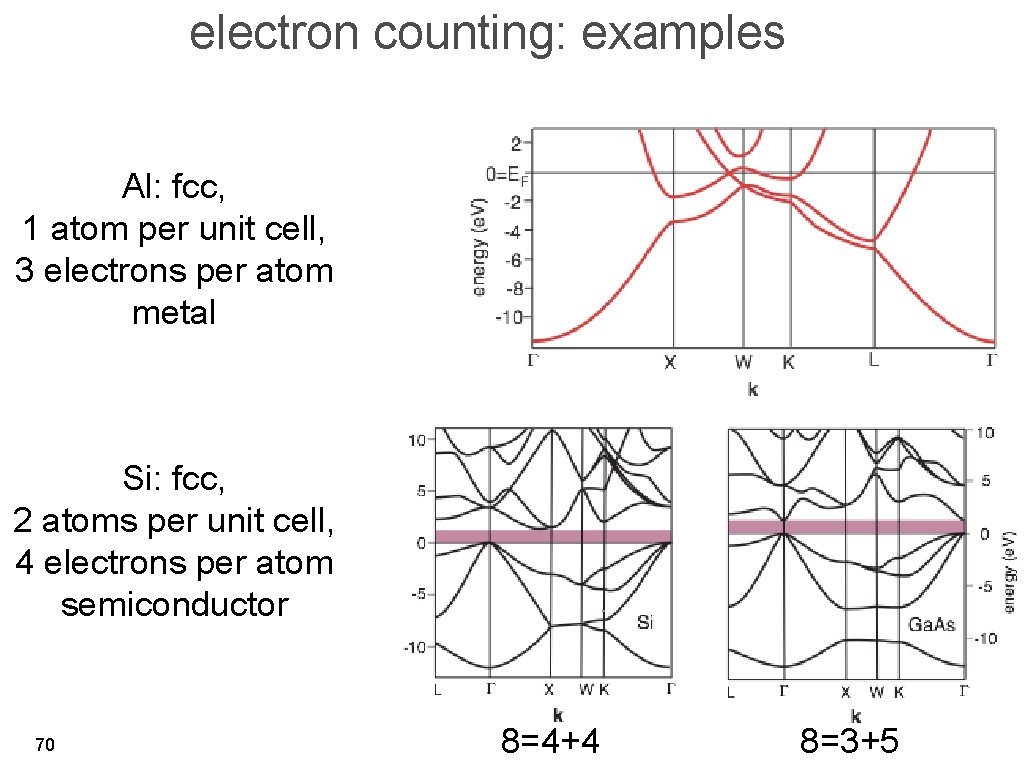
electron counting: examples Al: fcc, 1 atom per unit cell, 3 electrons per atom metal Si: fcc, 2 atoms per unit cell, 4 electrons per atom semiconductor 70 8=4+4 8=3+5
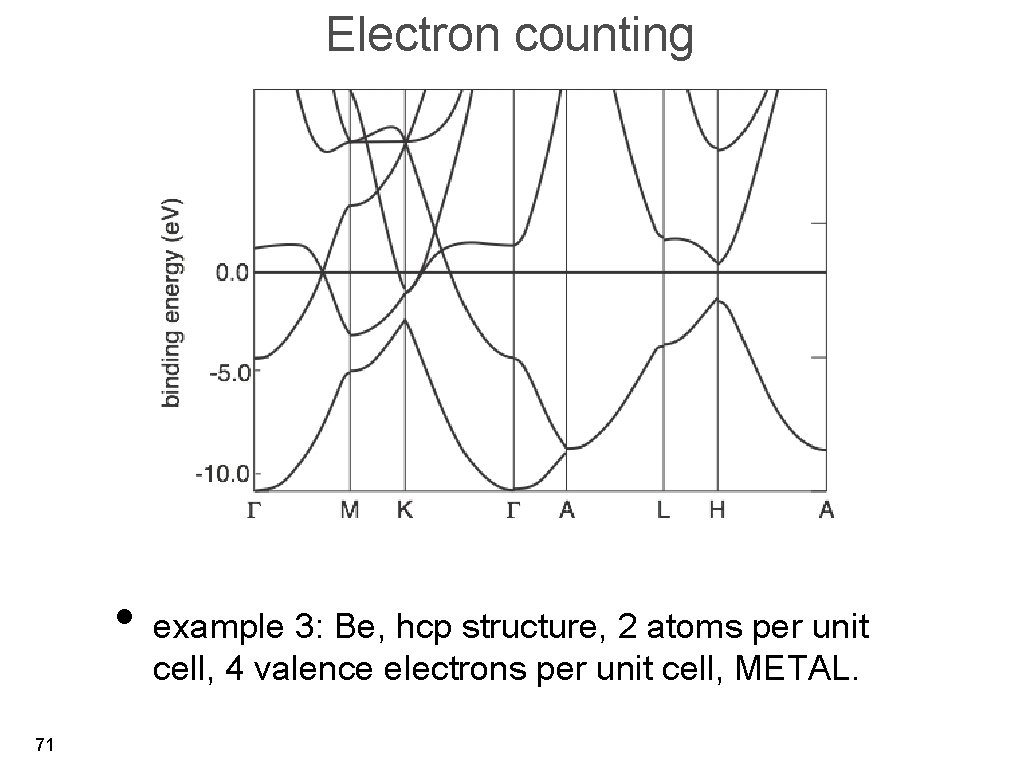
Electron counting • example 3: Be, hcp structure, 2 atoms per unit cell, 4 valence electrons per unit cell, METAL. 71
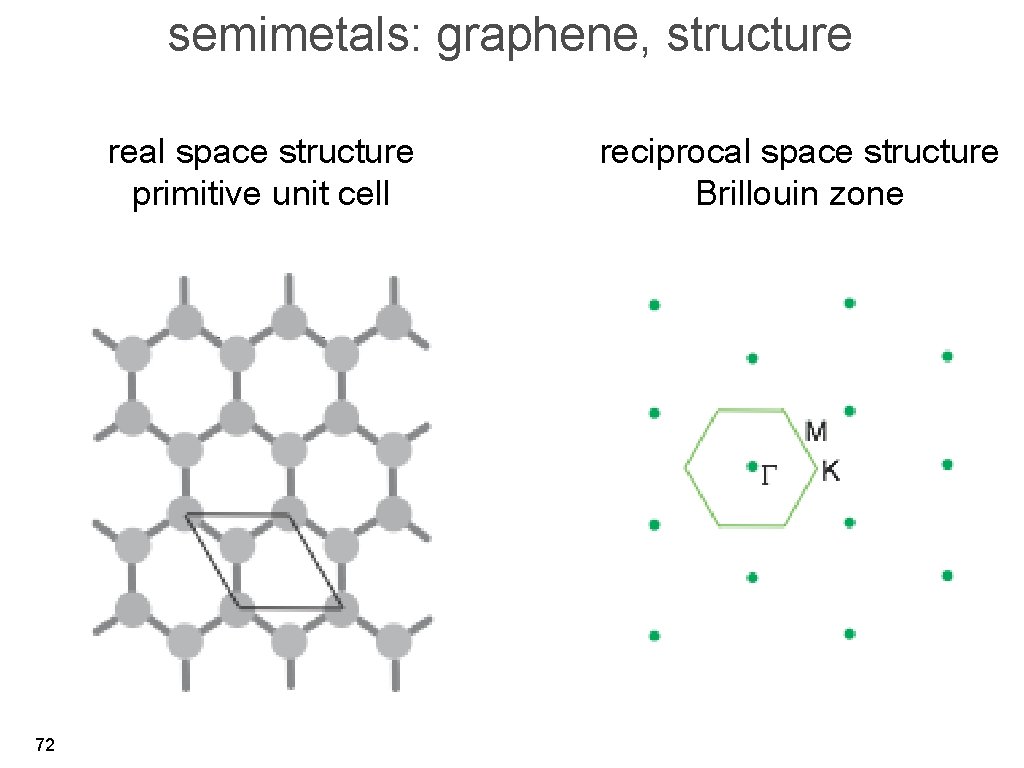
semimetals: graphene, structure real space structure primitive unit cell 72 reciprocal space structure Brillouin zone
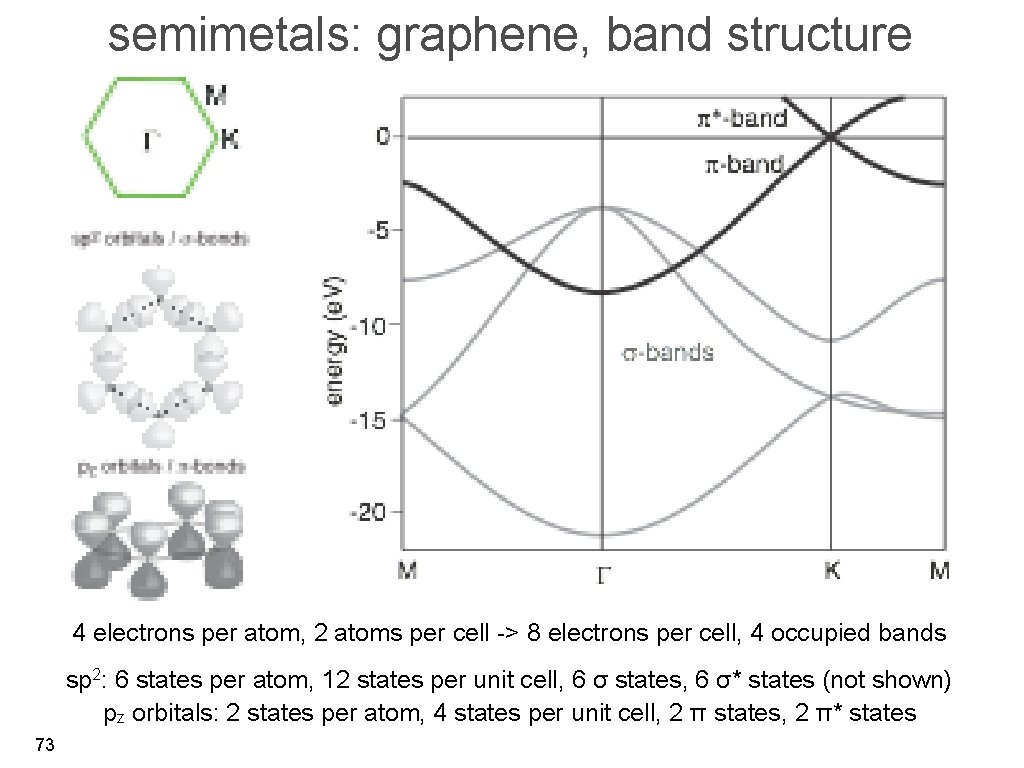
semimetals: graphene, band structure 4 electrons per atom, 2 atoms per cell -> 8 electrons per cell, 4 occupied bands sp 2: 6 states per atom, 12 states per unit cell, 6 σ states, 6 σ* states (not shown) pz orbitals: 2 states per atom, 4 states per unit cell, 2 π states, 2 π* states 73
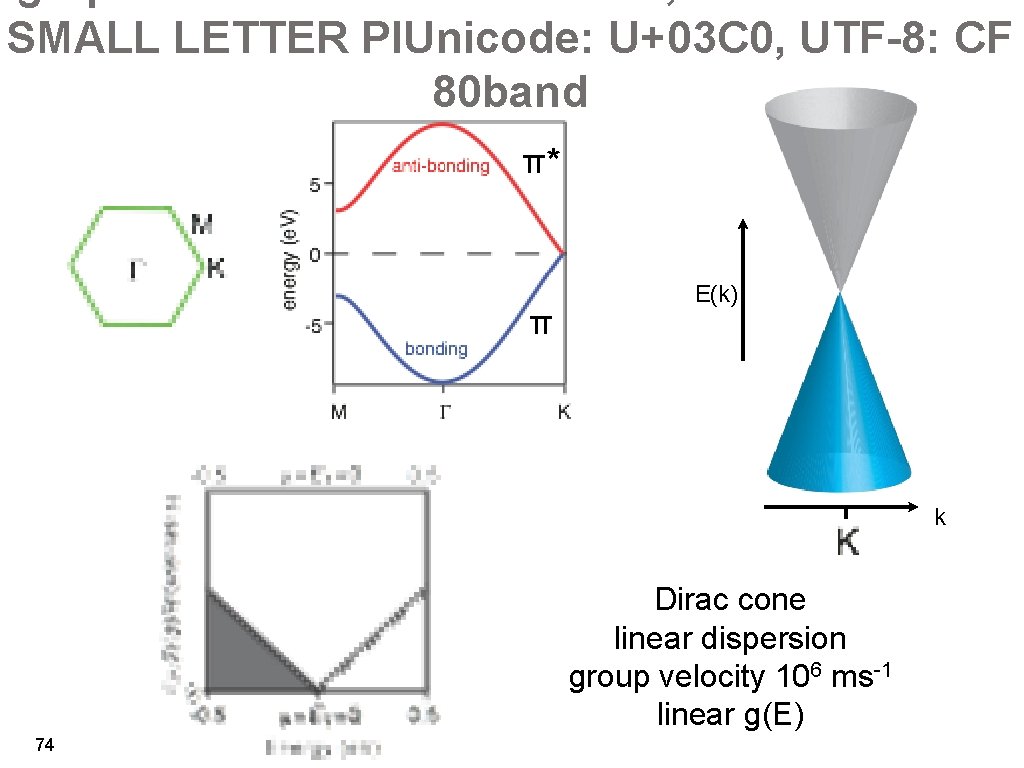
SMALL LETTER PIUnicode: U+03 C 0, UTF-8: CF 80 band π* π E(k) k Dirac cone linear dispersion group velocity 106 ms-1 linear g(E) 74
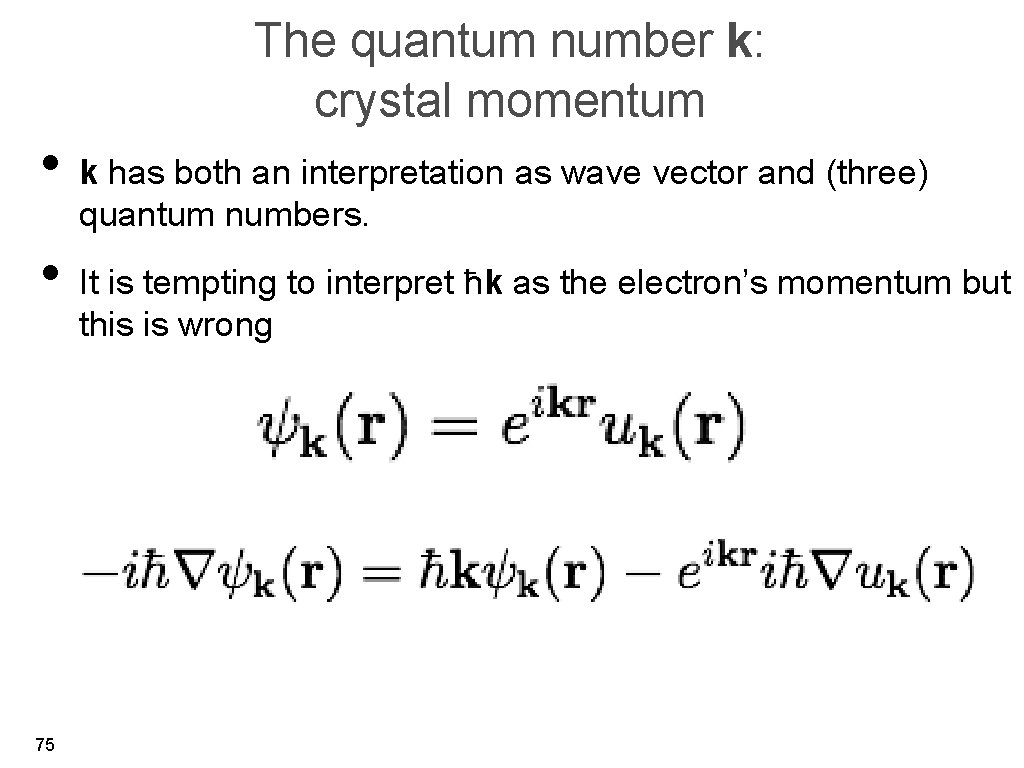
The quantum number k: crystal momentum • k has both an interpretation as wave vector and (three) quantum numbers. • It is tempting to interpret ħk as the electron’s momentum but this is wrong 75
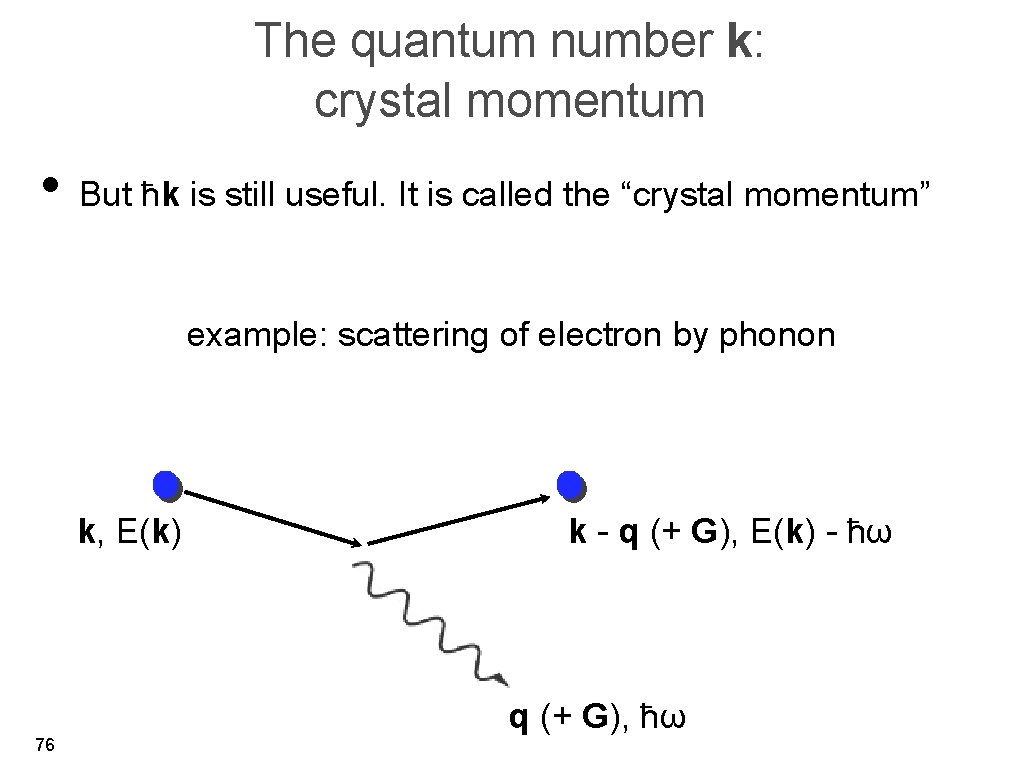
The quantum number k: crystal momentum • But ħk is still useful. It is called the “crystal momentum” example: scattering of electron by phonon k, E(k) 76 k - q (+ G), E(k) - ħω q (+ G), ħω
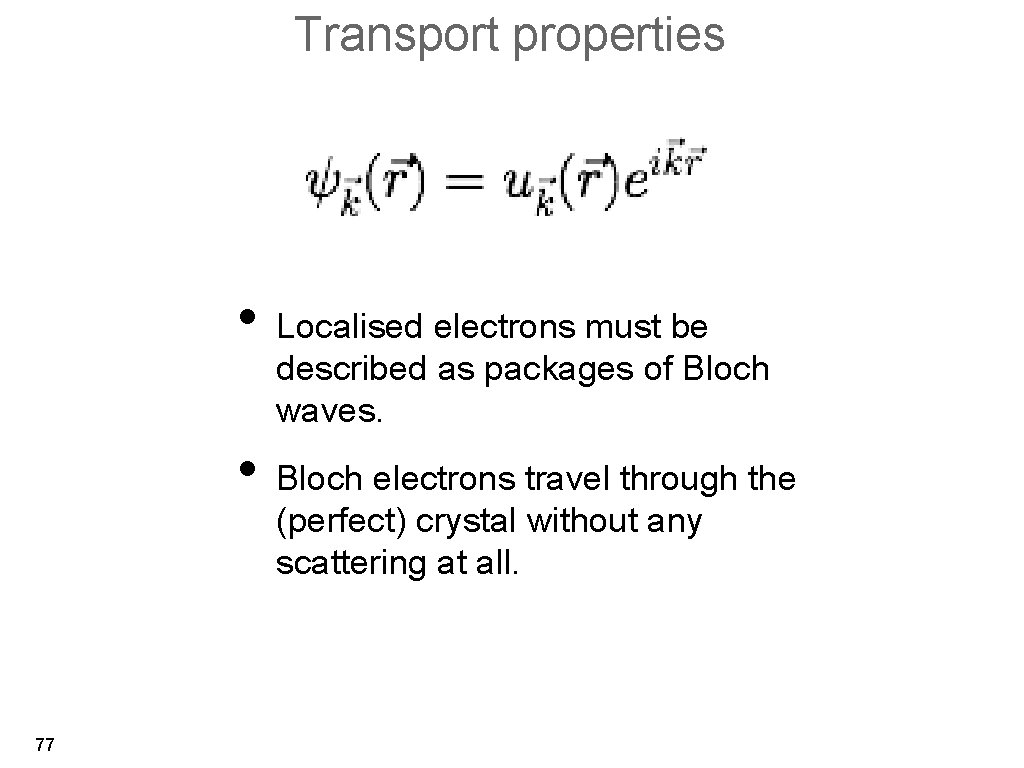
Transport properties • Localised electrons must be described as packages of Bloch waves. • Bloch electrons travel through the (perfect) crystal without any scattering at all. 77
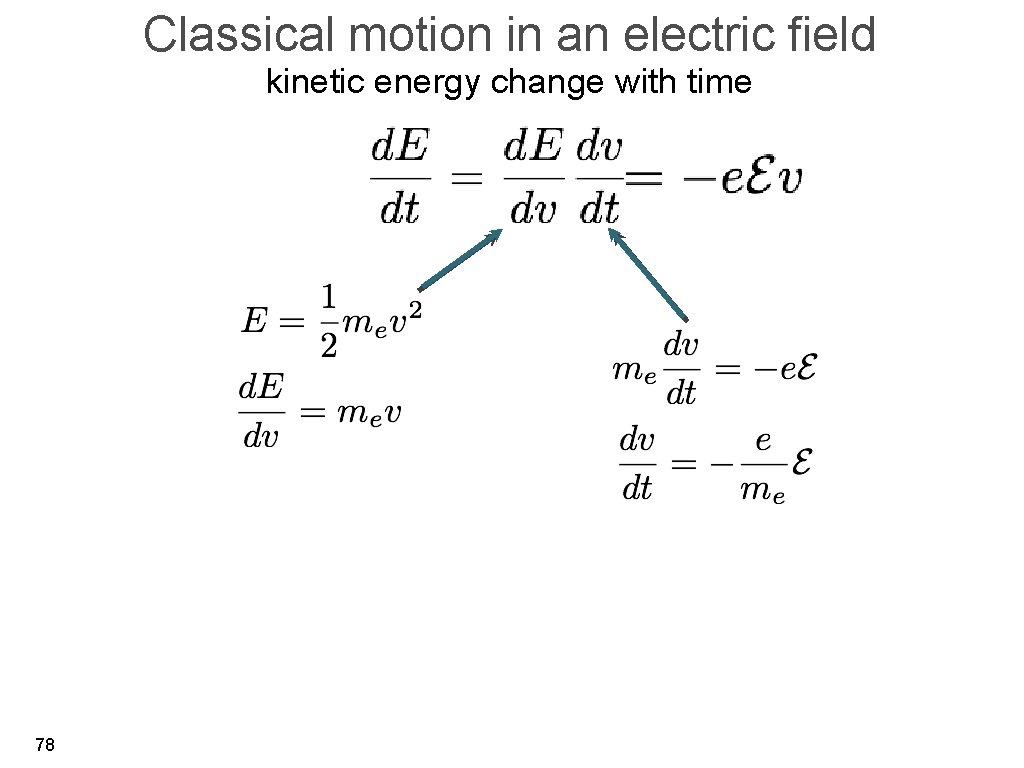
Classical motion in an electric field kinetic energy change with time 78
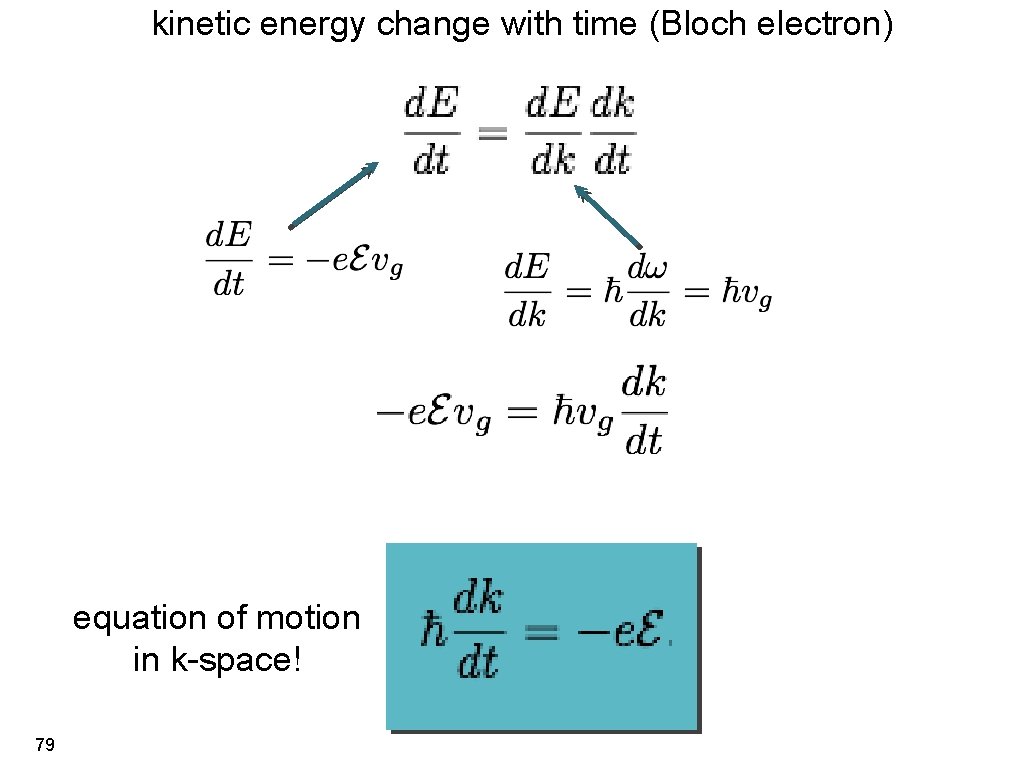
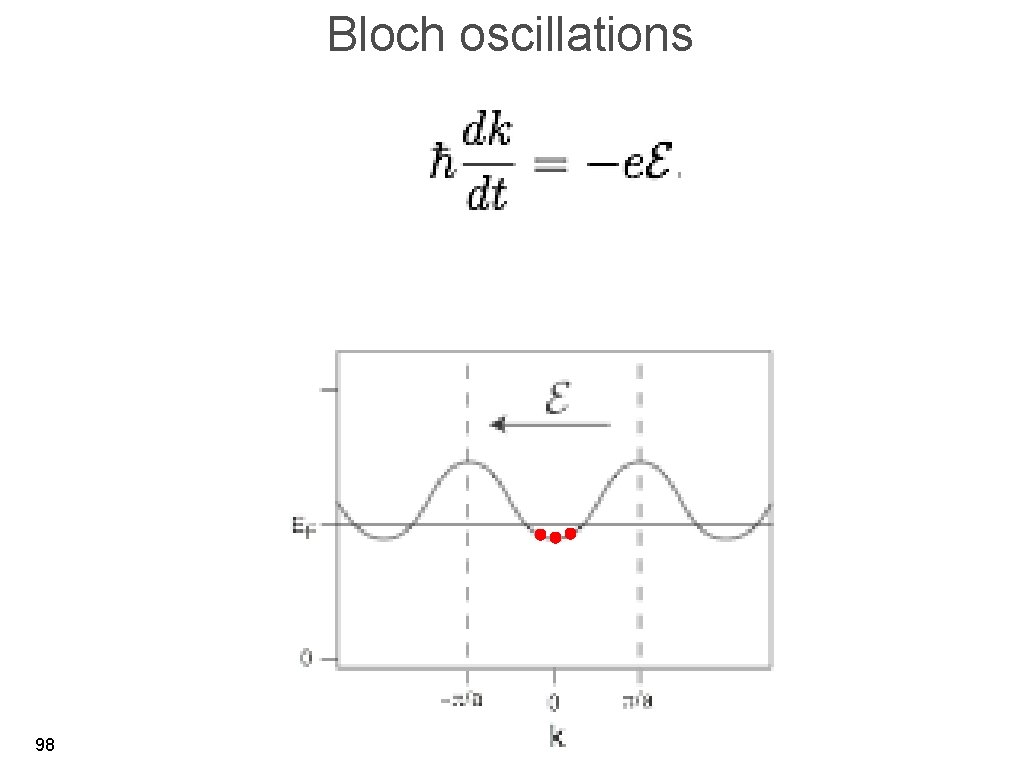
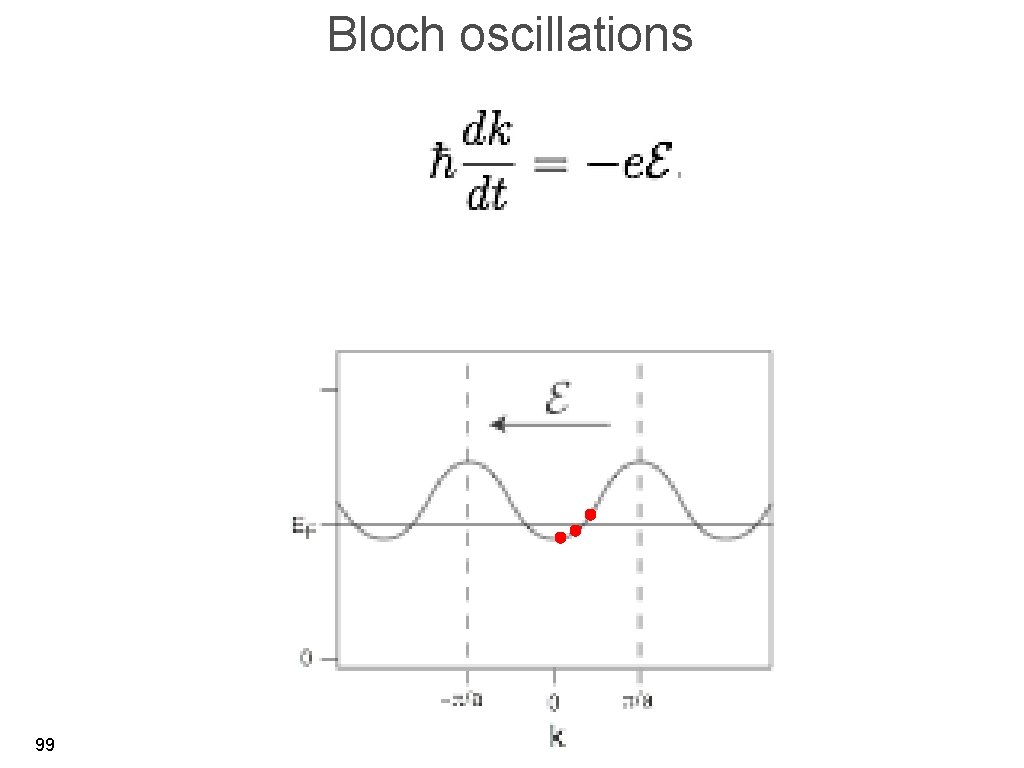
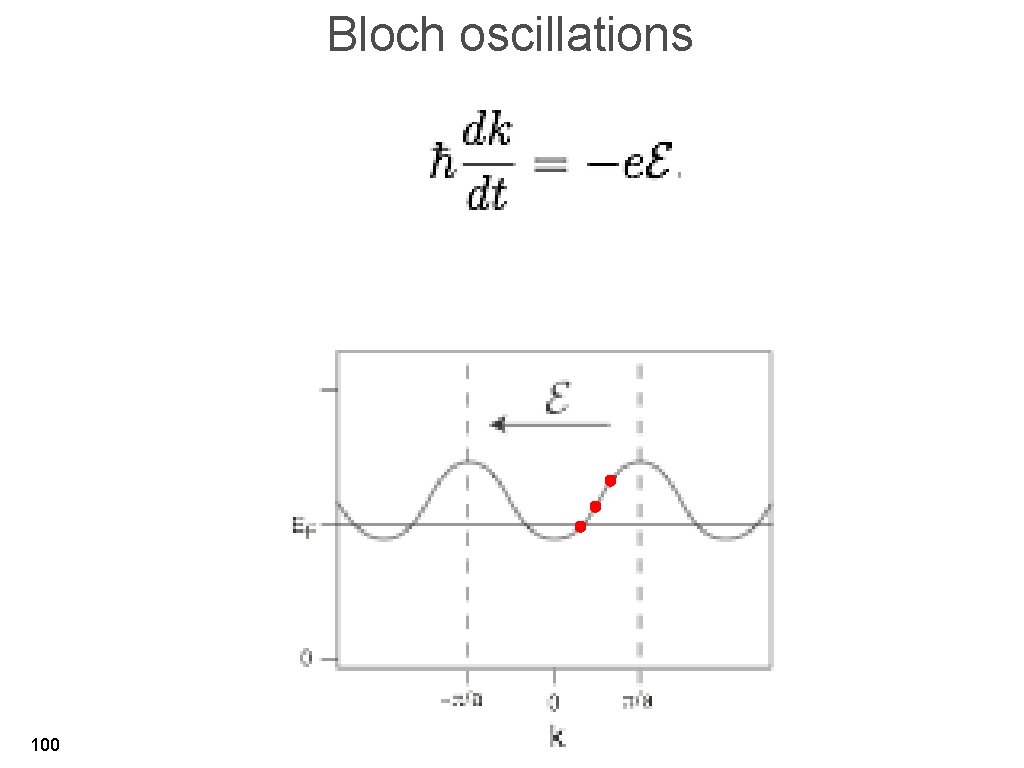
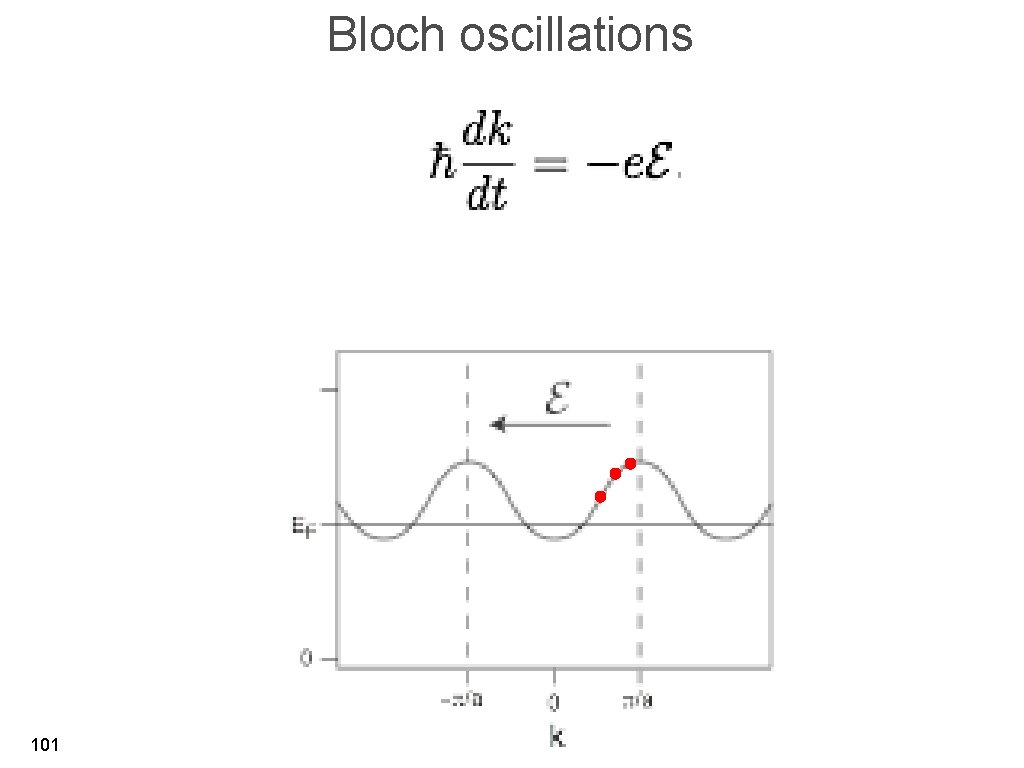
kinetic energy change with time (Bloch electron) equation of motion in k-space! 79
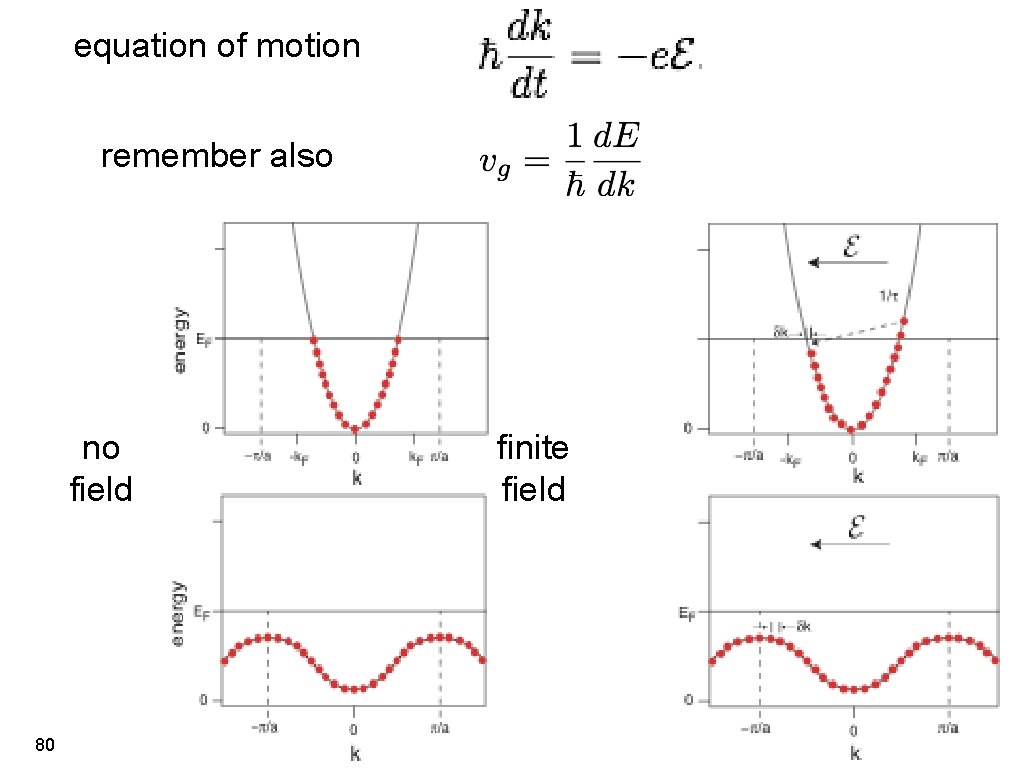
equation of motion remember also no field 80 finite field
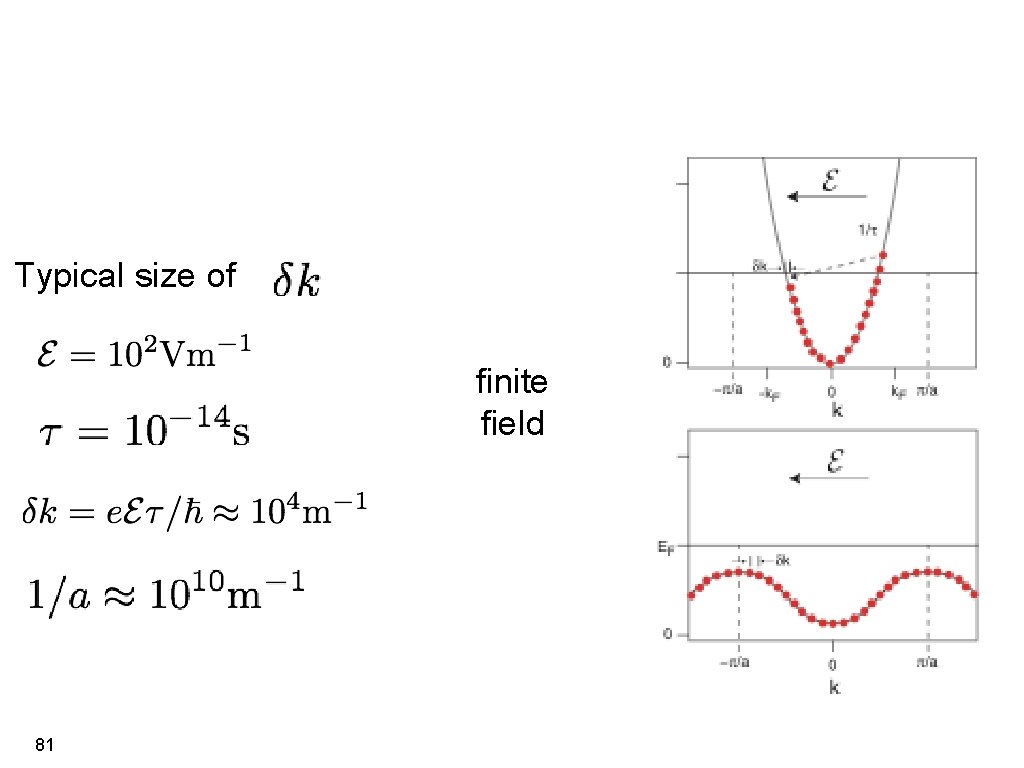
Typical size of finite field 81
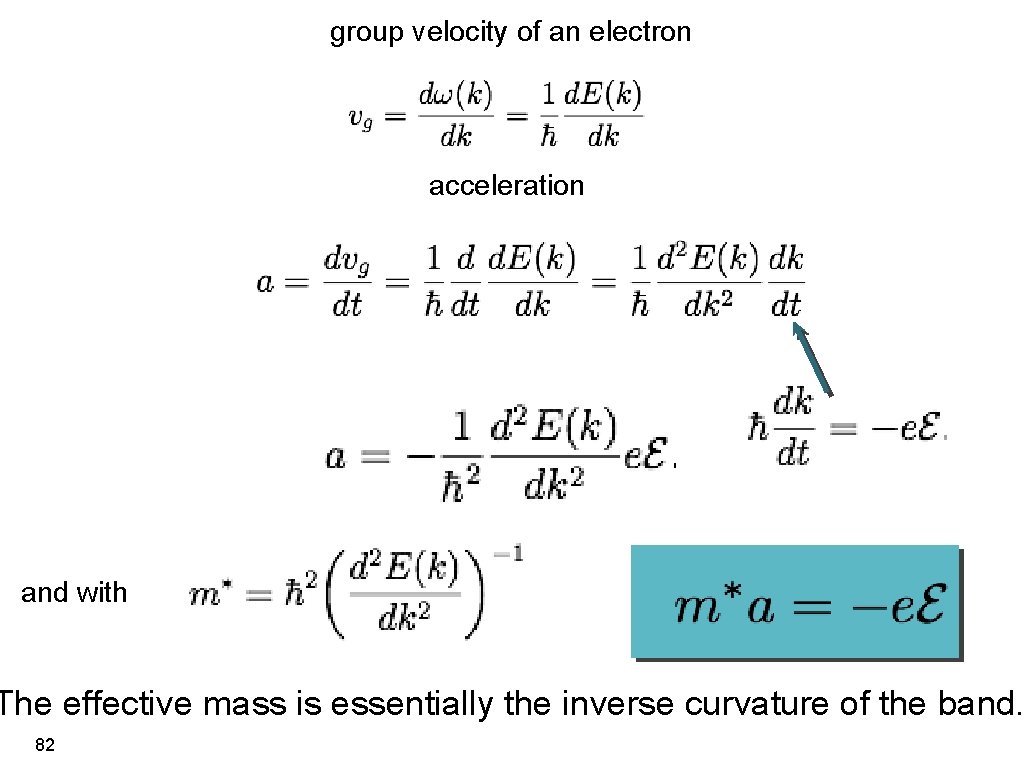
group velocity of an electron acceleration and with The effective mass is essentially the inverse curvature of the band. 82
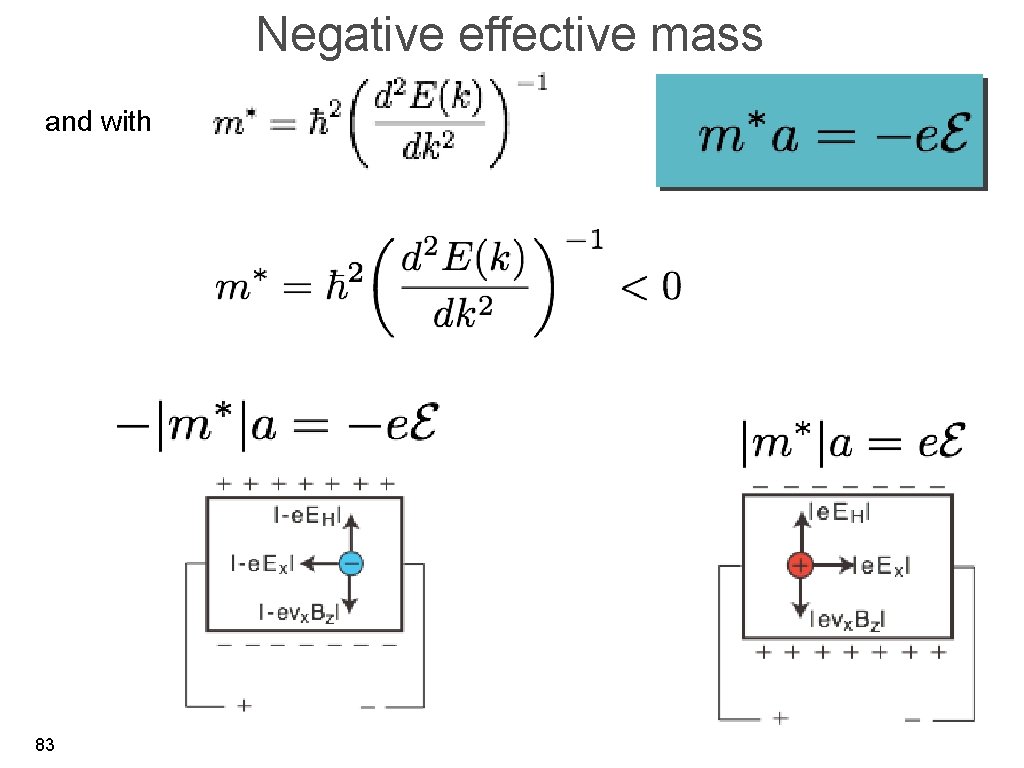
Negative effective mass and with 83
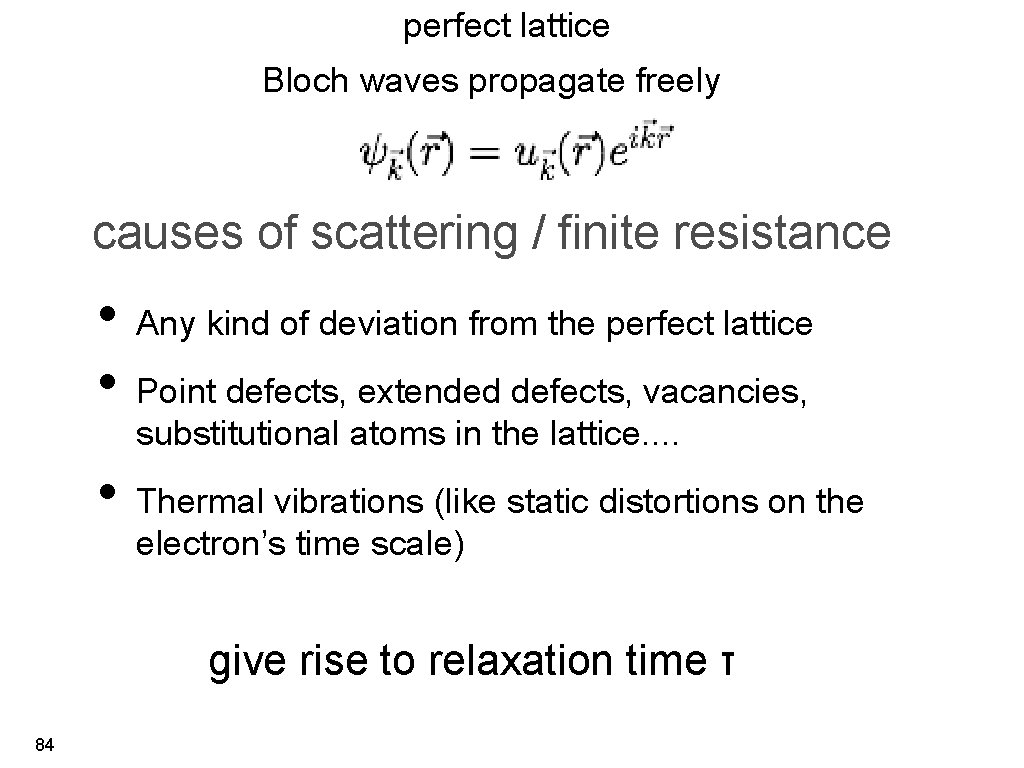
perfect lattice Bloch waves propagate freely causes of scattering / finite resistance • Any kind of deviation from the perfect lattice • Point defects, extended defects, vacancies, substitutional atoms in the lattice. . • Thermal vibrations (like static distortions on the electron’s time scale) give rise to relaxation time τ 84
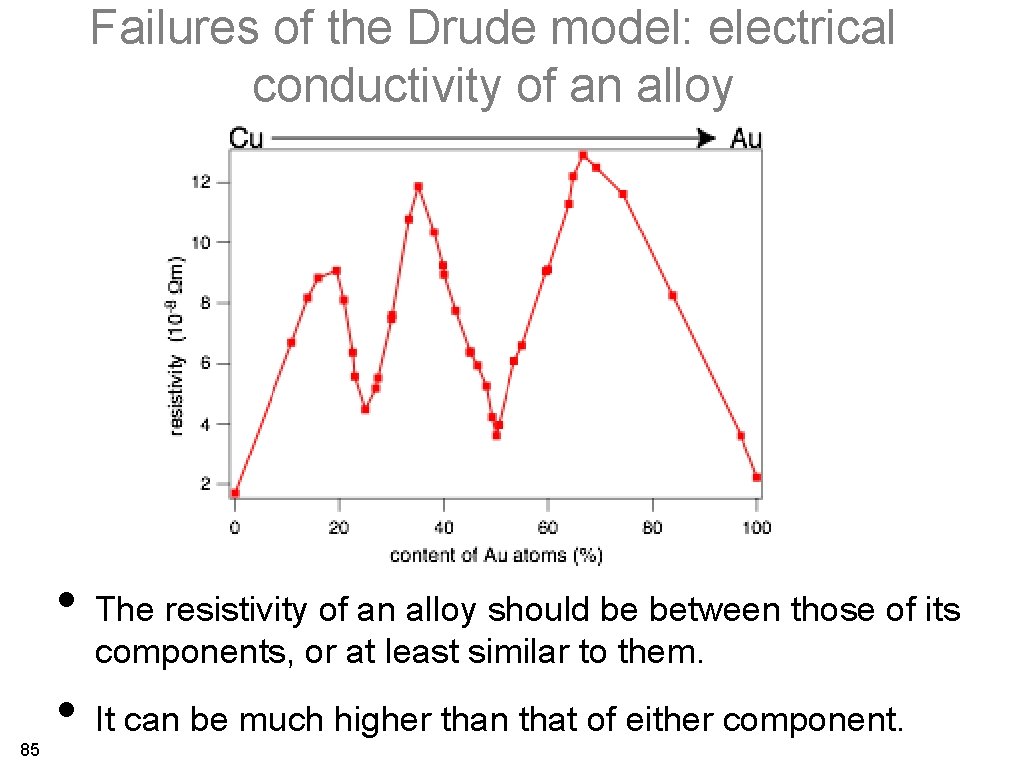
Failures of the Drude model: electrical conductivity of an alloy • The resistivity of an alloy should be between those of its components, or at least similar to them. 85 • It can be much higher than that of either component.
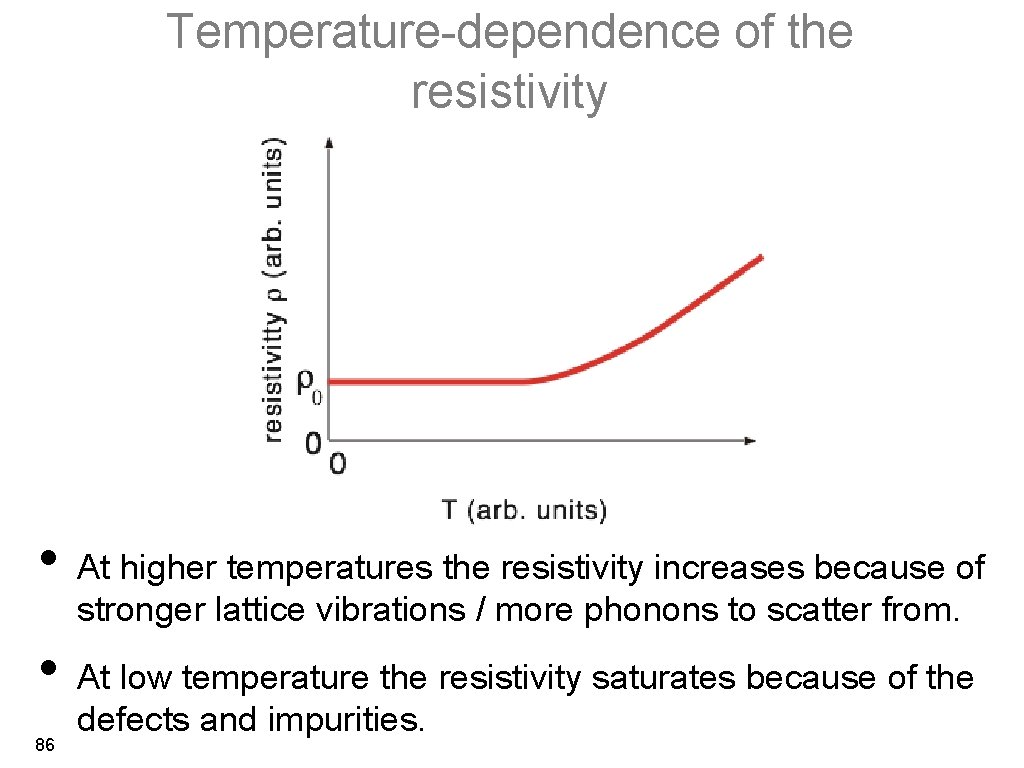
Temperature-dependence of the resistivity • At higher temperatures the resistivity increases because of stronger lattice vibrations / more phonons to scatter from. • At low temperature the resistivity saturates because of the 86 defects and impurities.
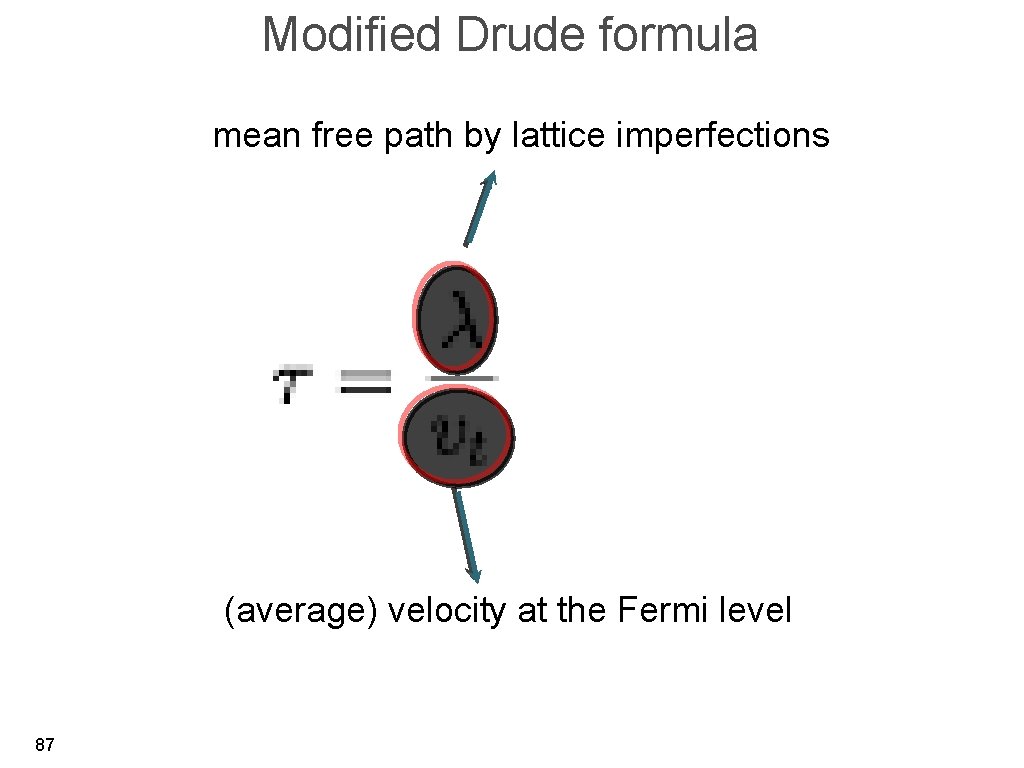
Modified Drude formula mean free path by lattice imperfections (average) velocity at the Fermi level 87
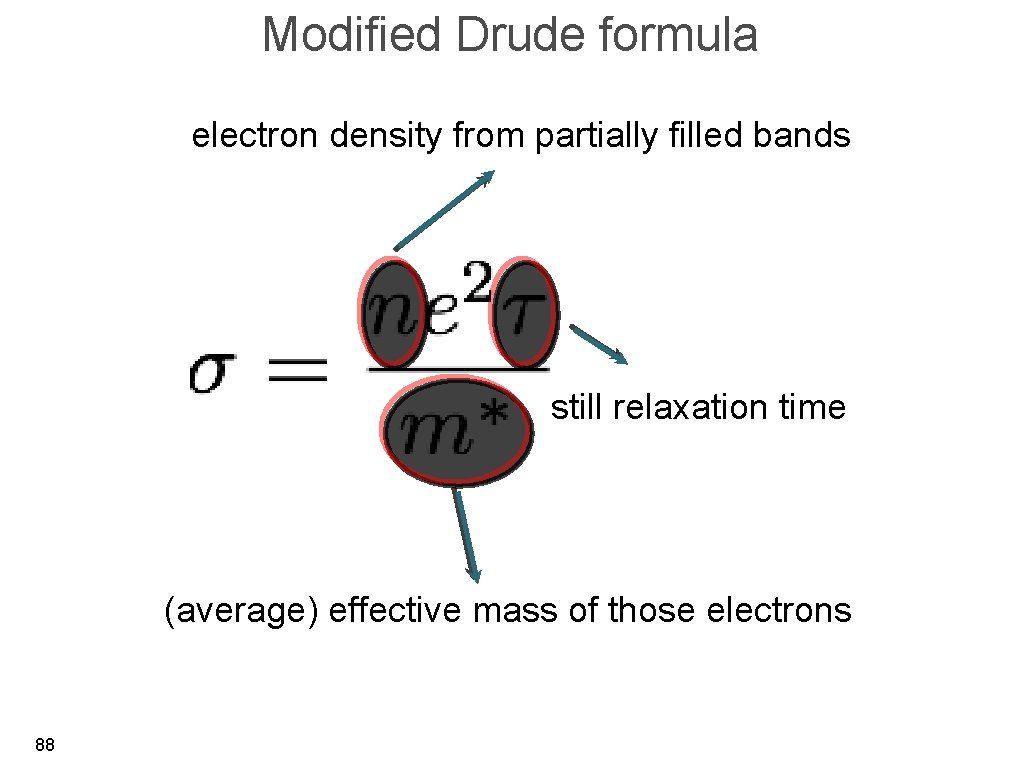
Modified Drude formula electron density from partially filled bands still relaxation time (average) effective mass of those electrons 88
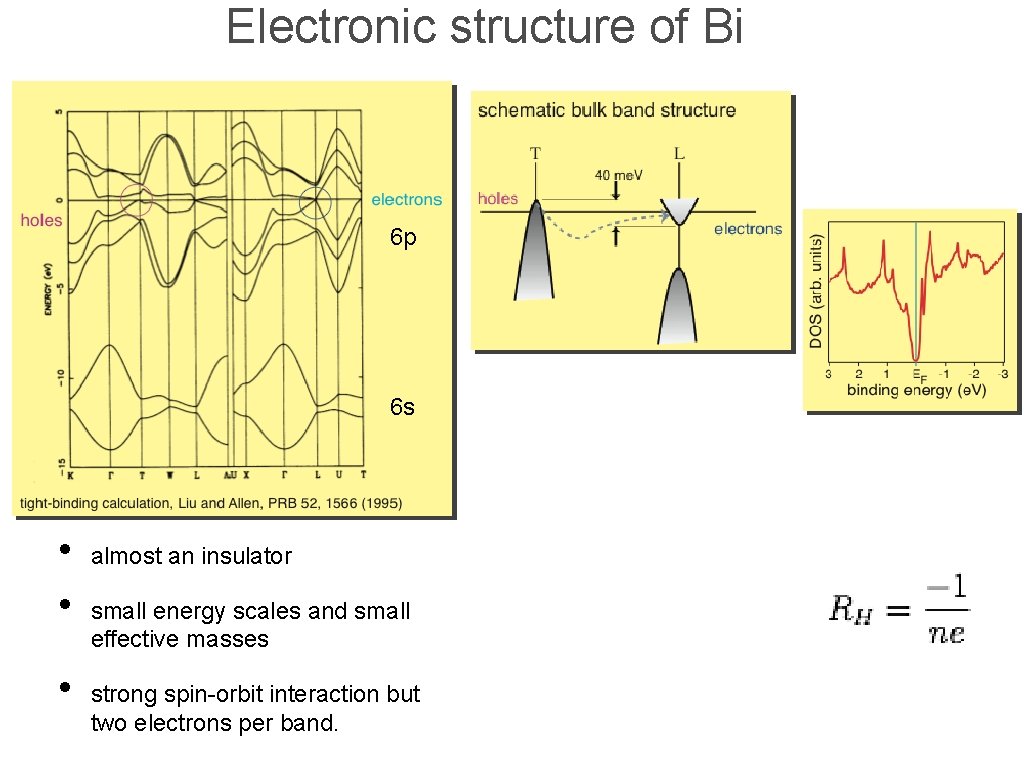
Electronic structure of Bi 6 p 6 s • • • almost an insulator small energy scales and small effective masses strong spin-orbit interaction but two electrons per band.
Focus on photoemission 90
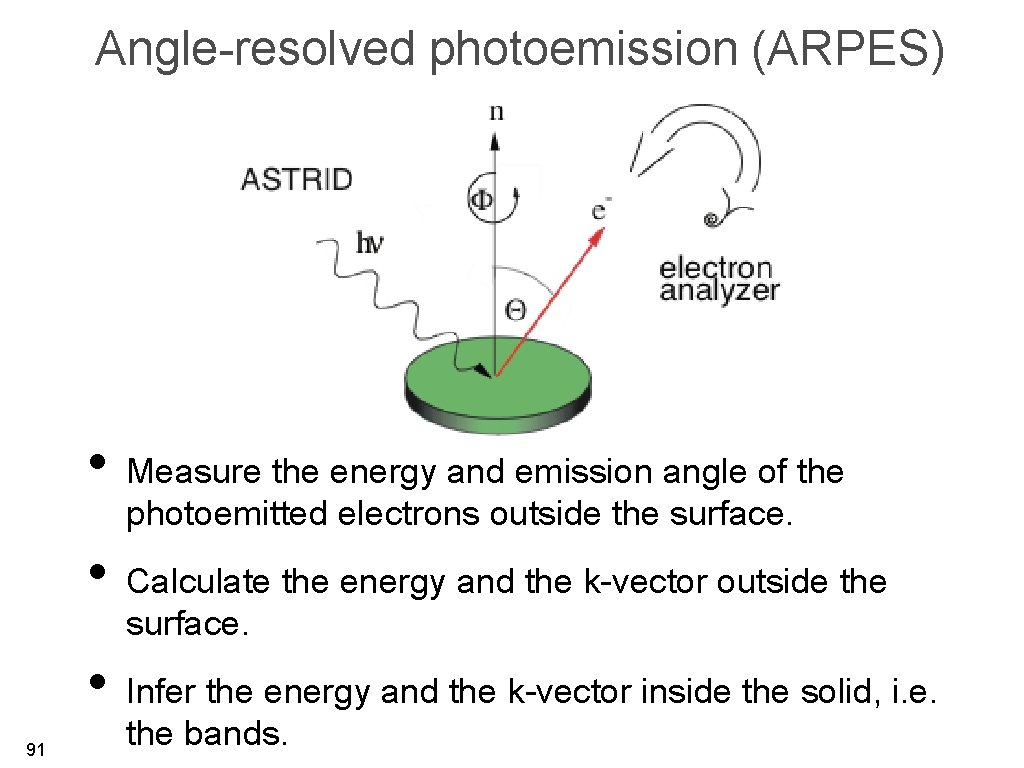
Angle-resolved photoemission (ARPES) • Measure the energy and emission angle of the photoemitted electrons outside the surface. • Calculate the energy and the k-vector outside the surface. • Infer the energy and the k-vector inside the solid, i. e. 91 the bands.
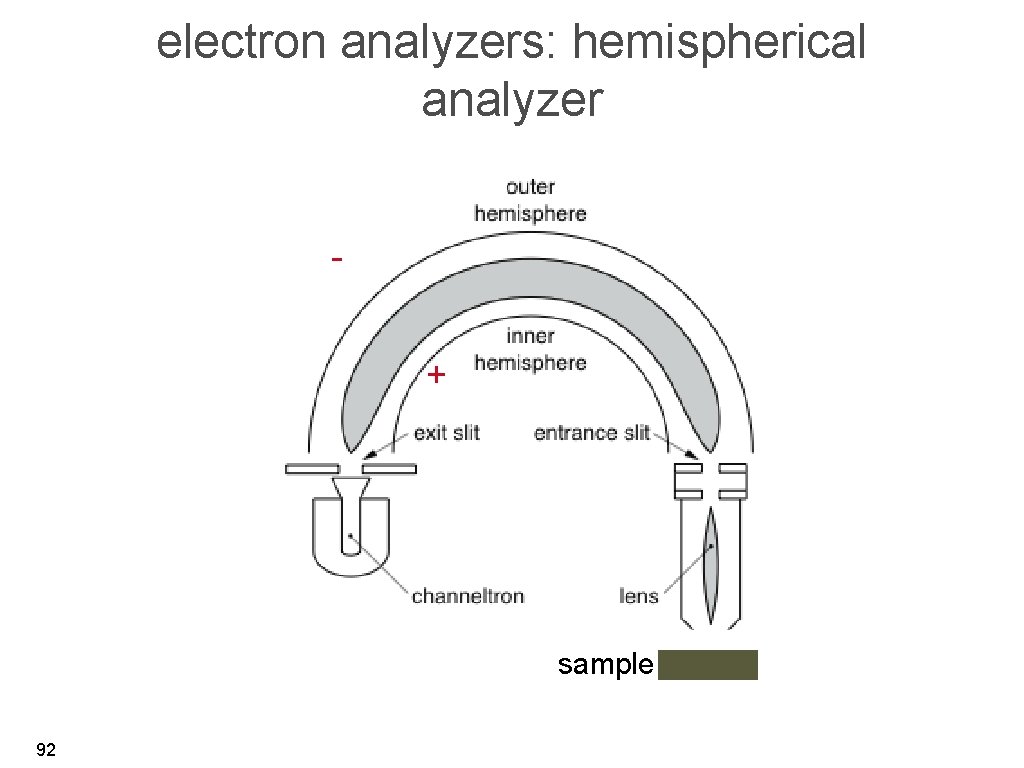
electron analyzers: hemispherical analyzer + sample 92
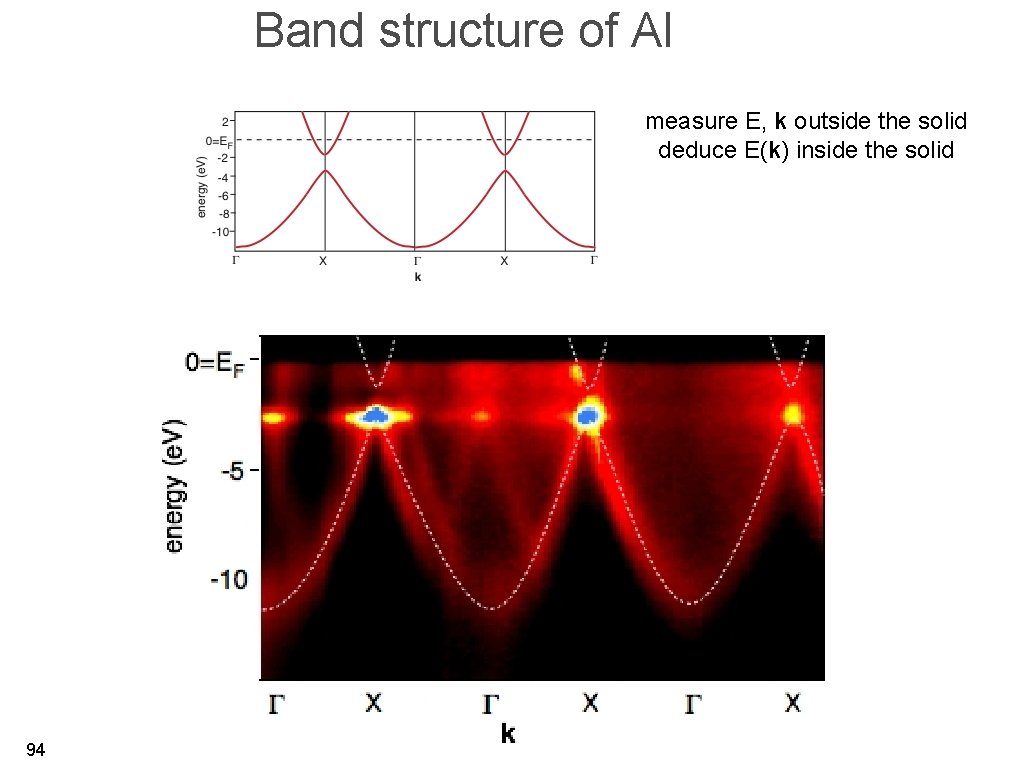
Band structure of Al measure E, k outside the solid deduce E(k) inside the solid 94
Bloch oscillations 98
Bloch oscillations 99
Bloch oscillations 100
Bloch oscillations 101
Bloch oscillations 102
Bloch oscillations 103
Bloch oscillations 104
Bloch oscillations 105
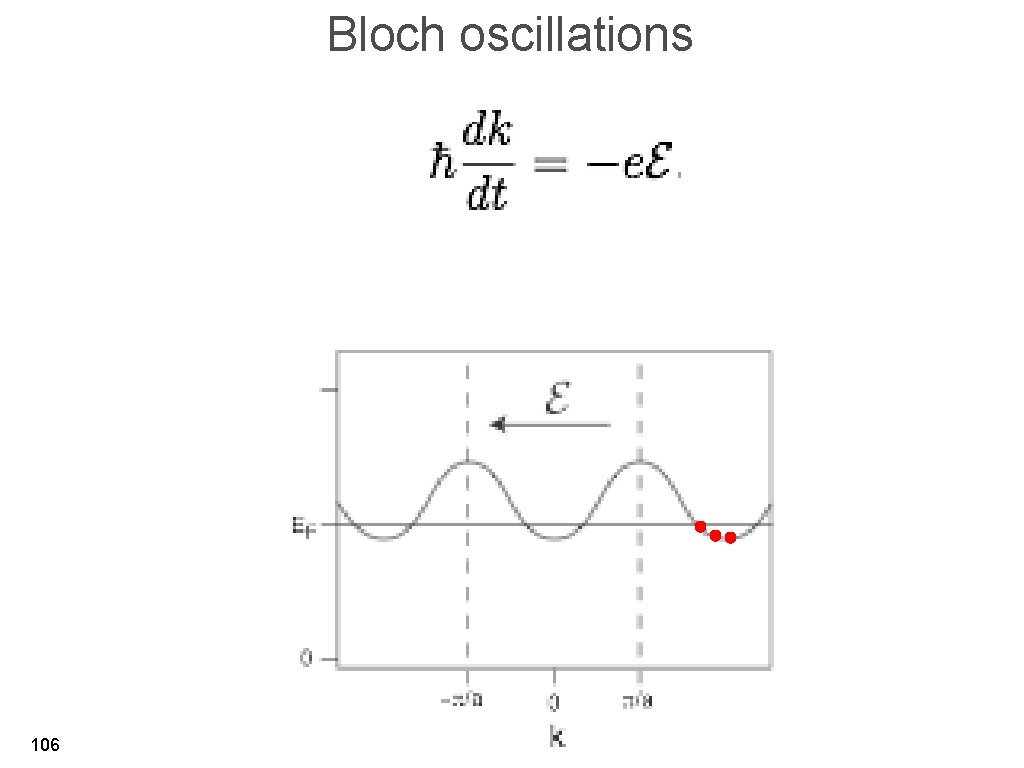
Bloch oscillations 106
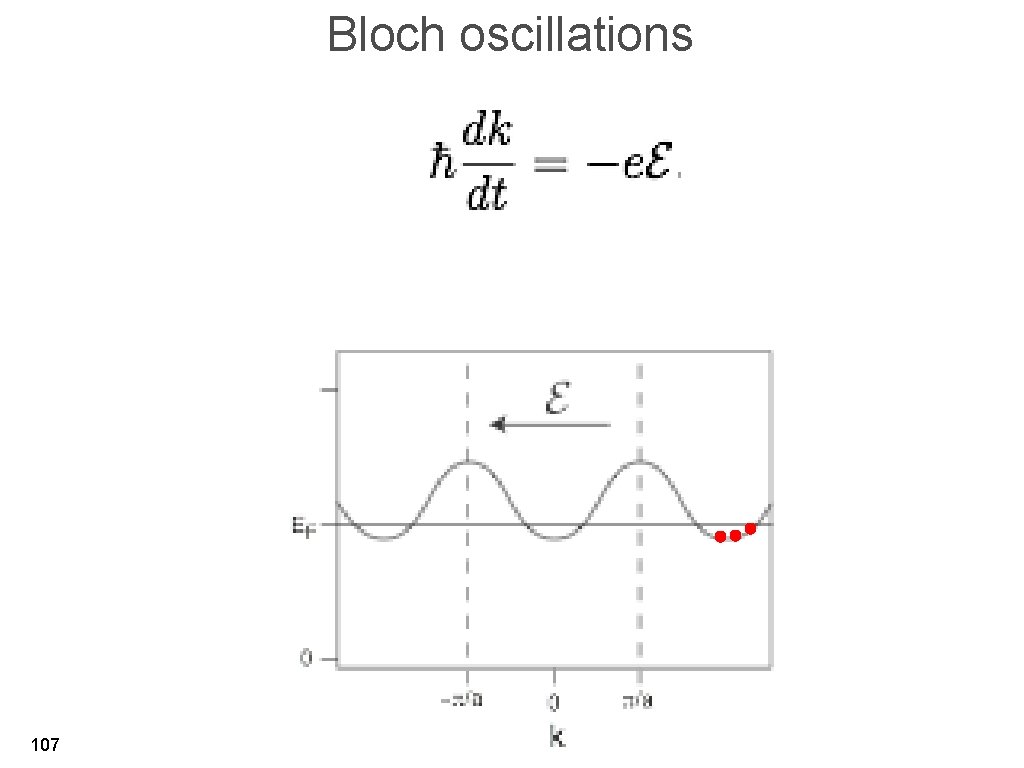
Bloch oscillations 107
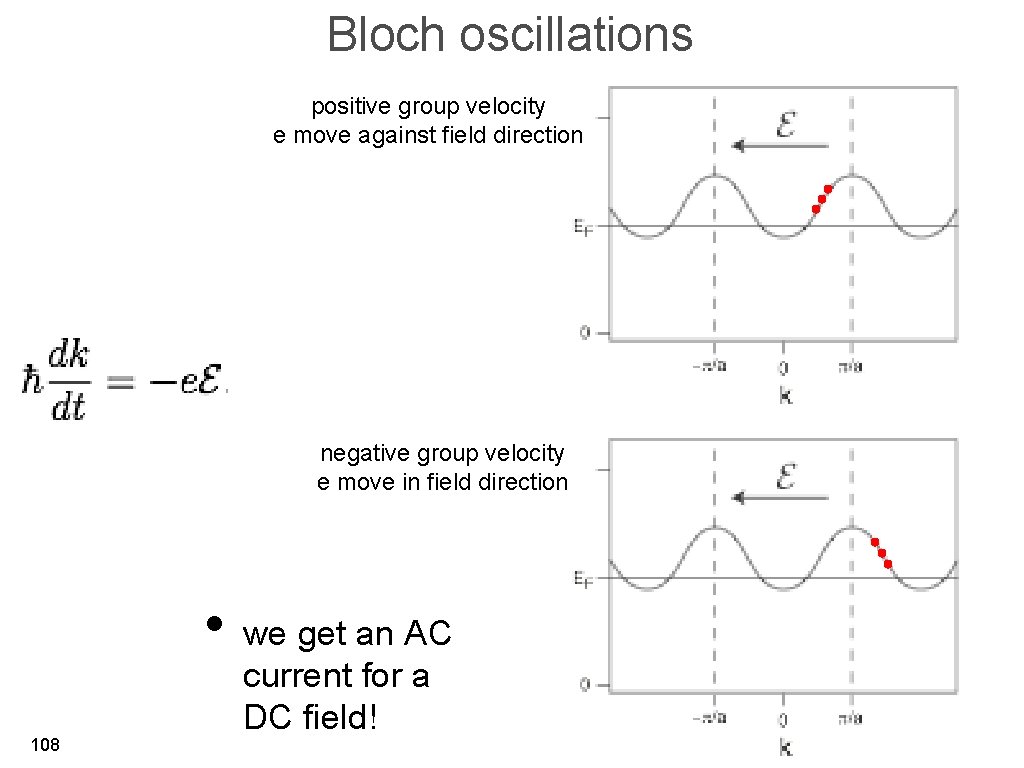
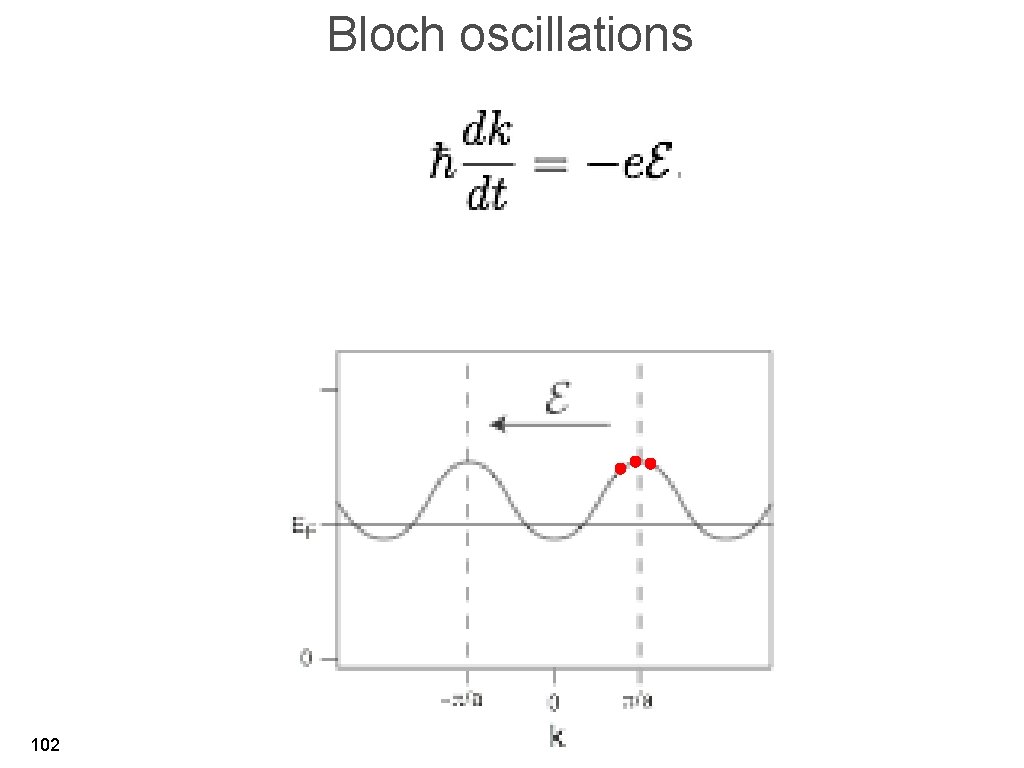
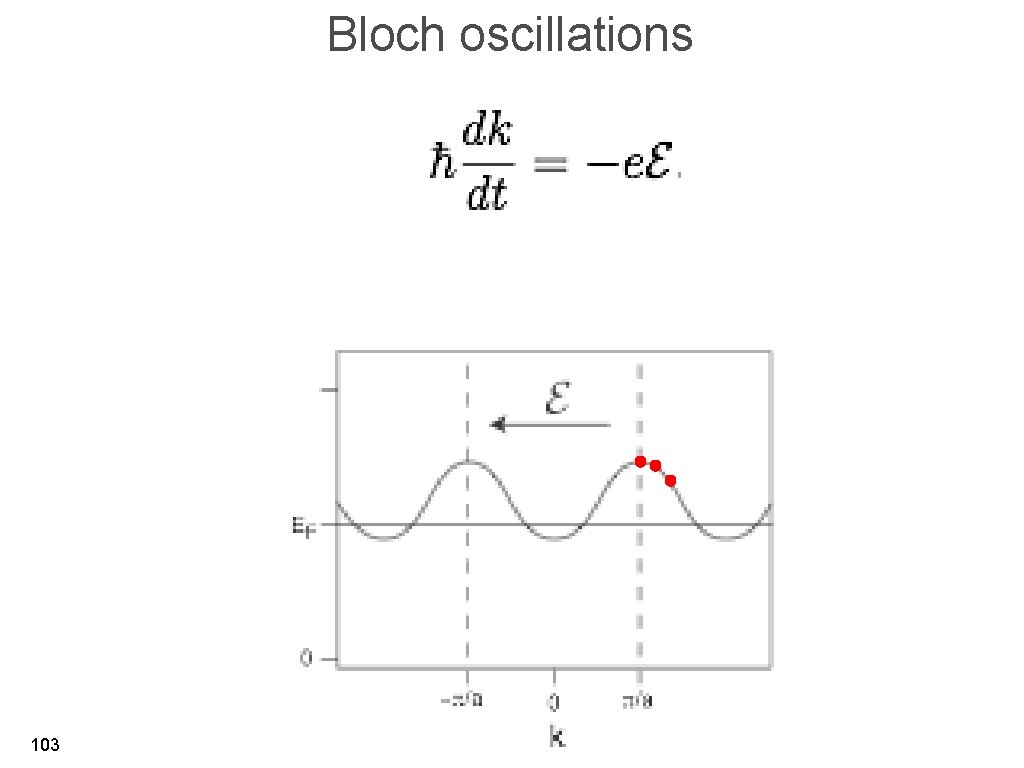
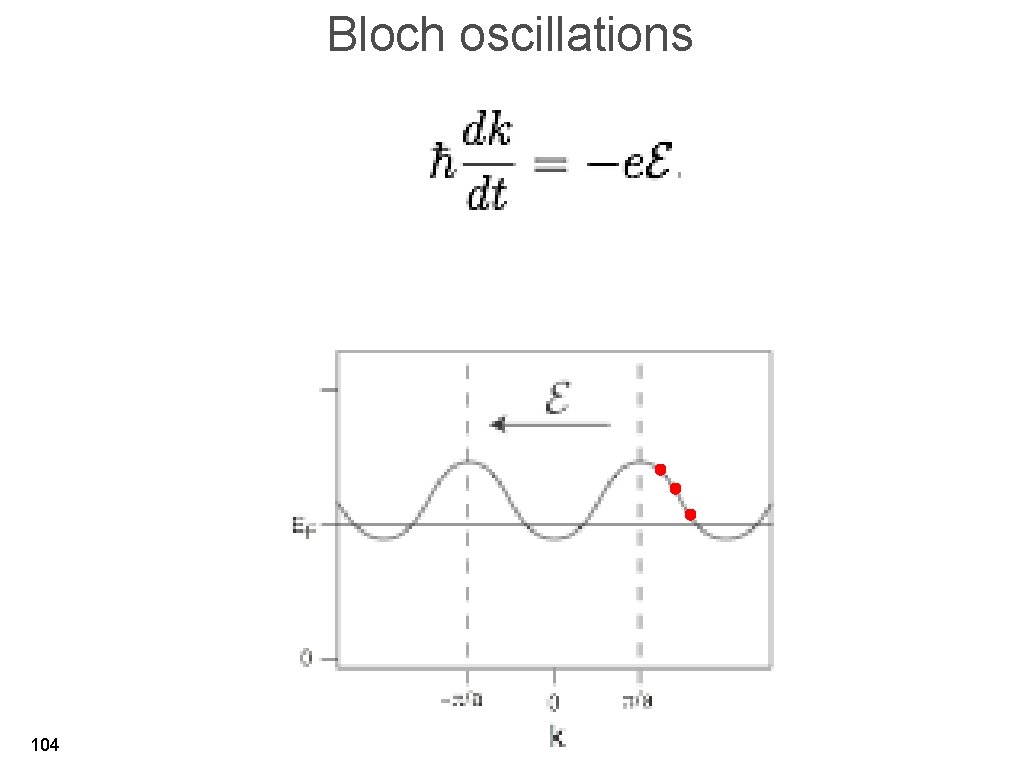
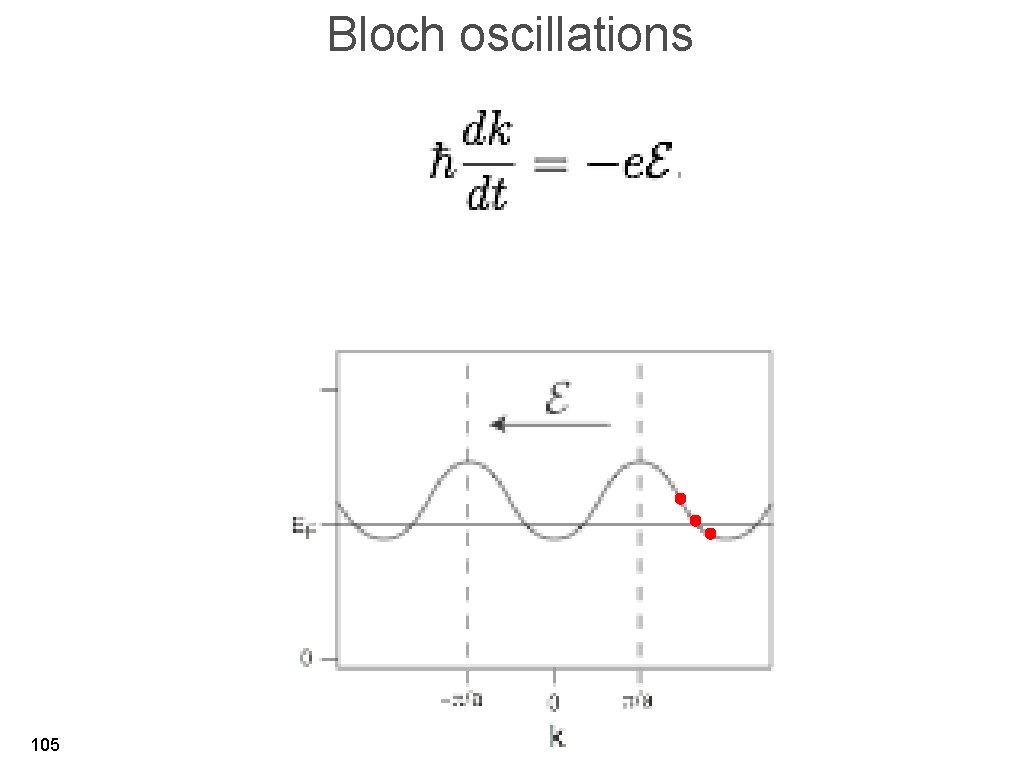
Bloch oscillations positive group velocity e move against field direction negative group velocity e move in field direction • we get an AC 108 current for a DC field!
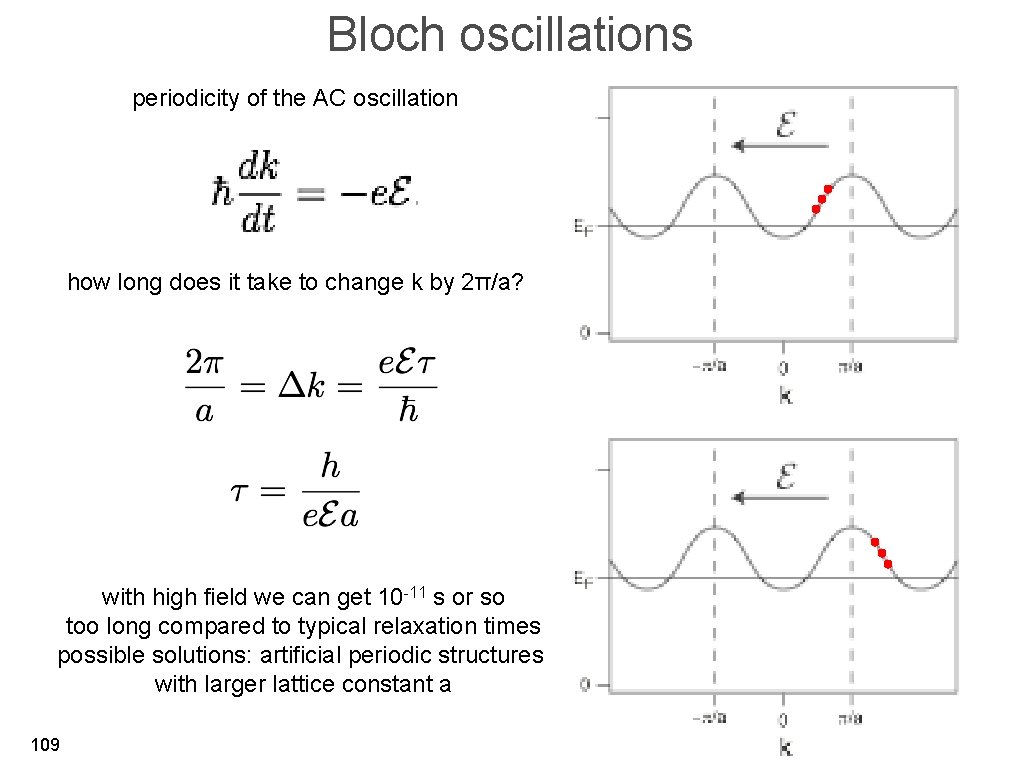
Bloch oscillations periodicity of the AC oscillation how long does it take to change k by 2π/a? with high field we can get 10 -11 s or so too long compared to typical relaxation times possible solutions: artificial periodic structures with larger lattice constant a 109
- Slides: 105