
lectures accompanying the book Solid State Physics An
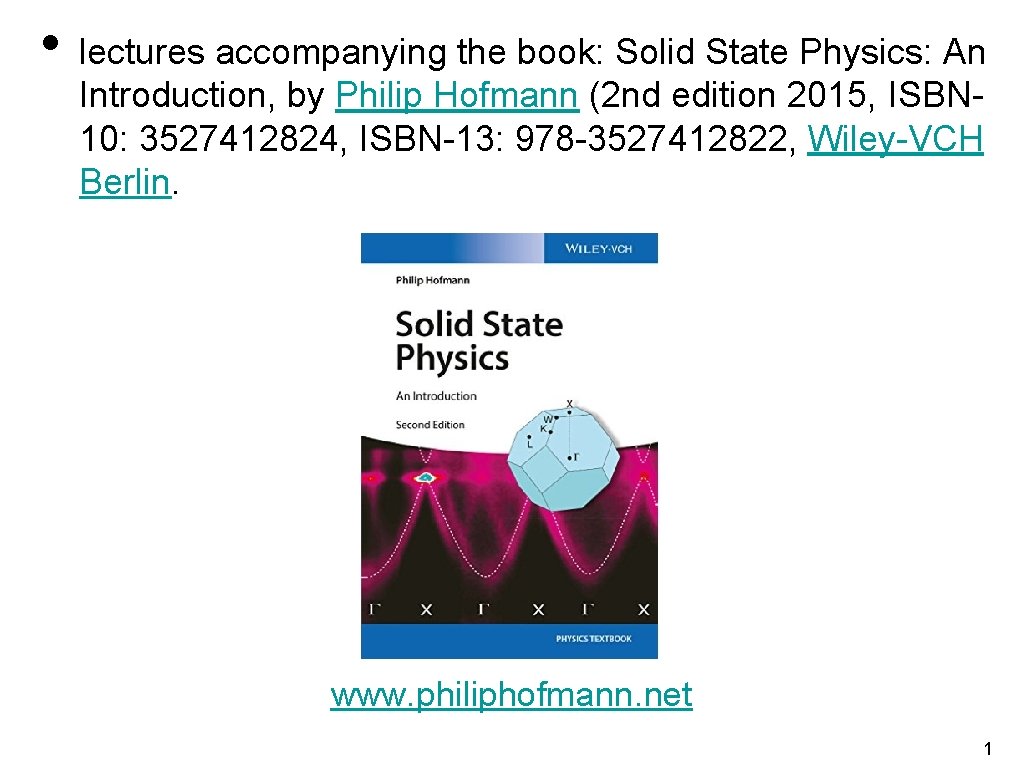
• lectures accompanying the book: Solid State Physics: An Introduction, by Philip Hofmann (2 nd edition 2015, ISBN 10: 3527412824, ISBN-13: 978 -3527412822, Wiley-VCH Berlin. www. philiphofmann. net 1
Bonds between atoms: contents at the end of this lecture you should understand. . • bonding in general, attractive and repulsive forces, cohesive energy • ionic bonding • covalent bonding • metallic bonding • hydrogen bonding and van der Waals bonding • relationship between bonding type and some physical properties of a solid (in particular melting point) 2
Bonding in solids: the general idea • valence electrons (of the outer shell) achieve bonding (like in chemistry) • decrease in total energy stabilises the solid (the solid’s energy is lower than that of sum of atoms it is made of) • so the energy gain by the bonding must be higher than the energy it costs to promote electrons from the atomic orbitals to the electronic states of the solid. • this energy difference is a measure for the strength of the bond. It is called the cohesive energy = energy of atoms - energy of solid 3

Repulsive force 4
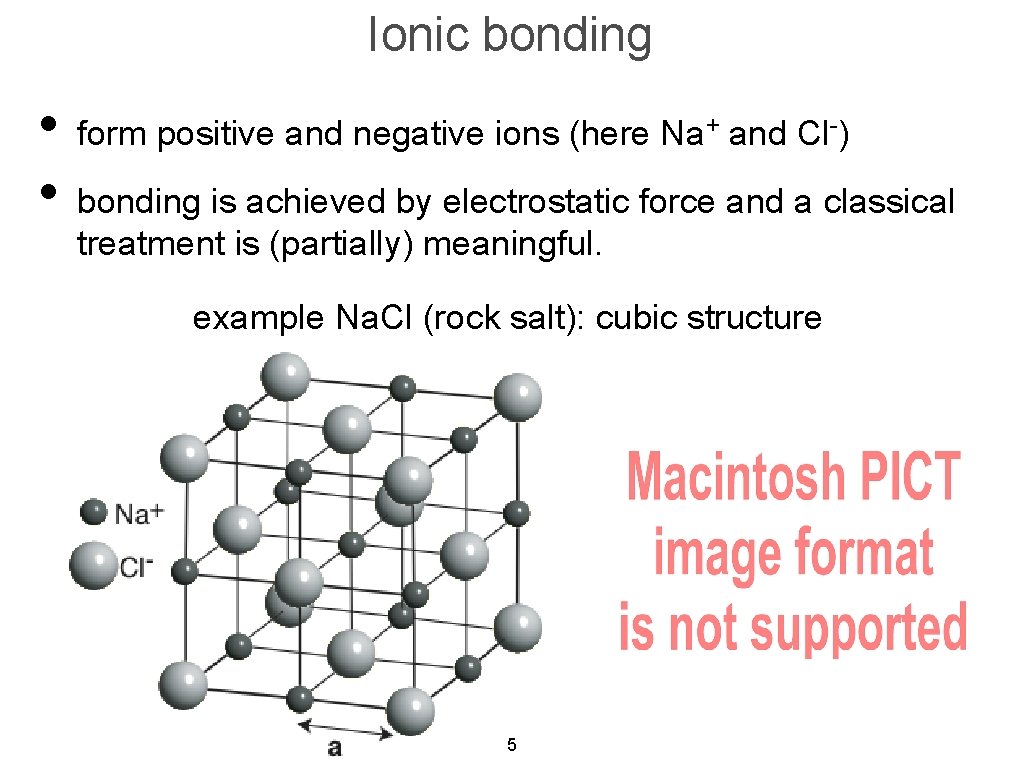
Ionic bonding • form positive and negative ions (here Na and Cl ) • bonding is achieved by electrostatic force and a classical + treatment is (partially) meaningful. example Na. Cl (rock salt): cubic structure 5 -
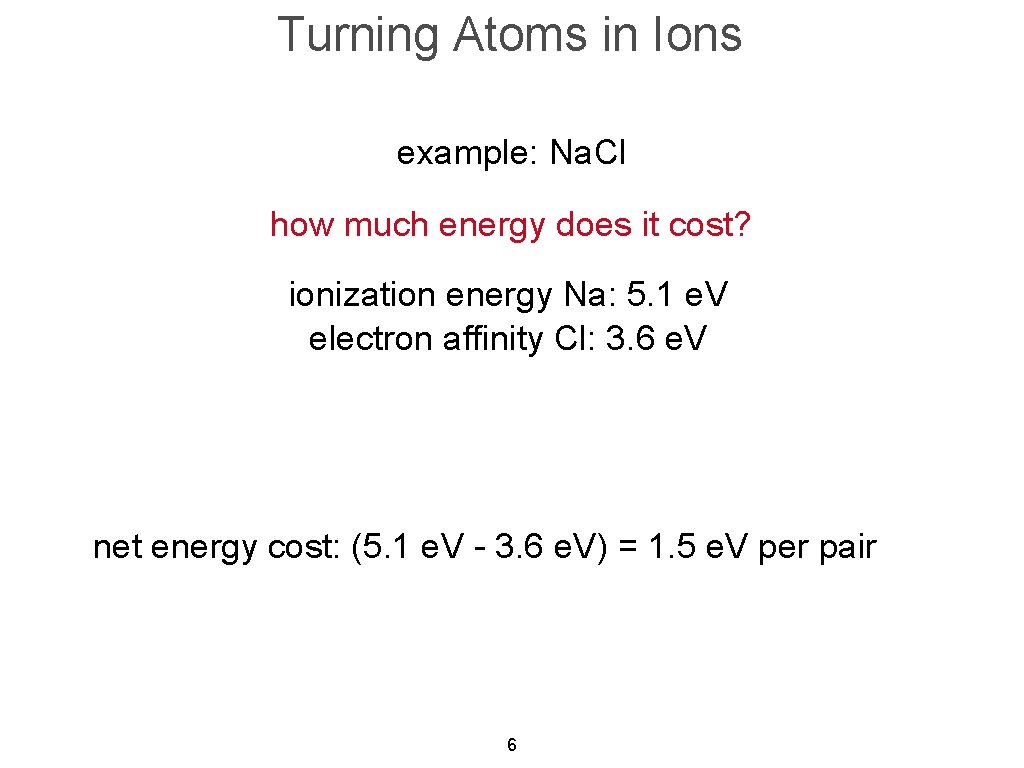
Turning Atoms in Ions example: Na. Cl how much energy does it cost? ionization energy Na: 5. 1 e. V electron affinity Cl: 3. 6 e. V net energy cost: (5. 1 e. V - 3. 6 e. V) = 1. 5 e. V per pair 6
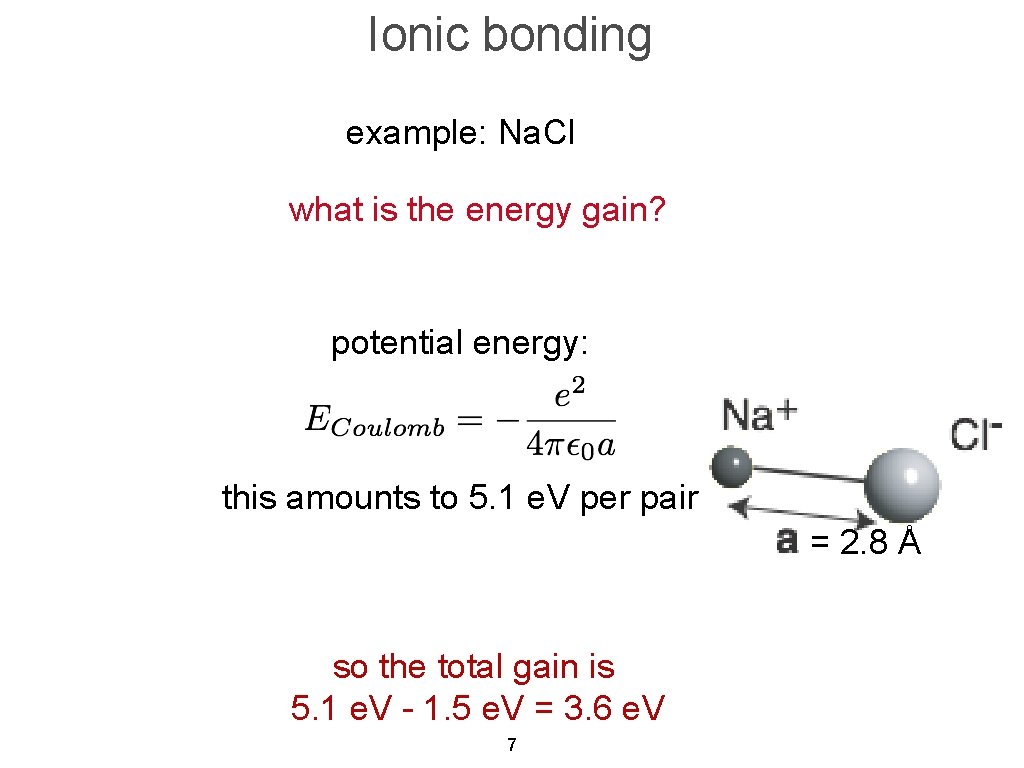
Ionic bonding example: Na. Cl what is the energy gain? potential energy: this amounts to 5. 1 e. V per pair = 2. 8 Å so the total gain is 5. 1 e. V - 1. 5 e. V = 3. 6 e. V 7
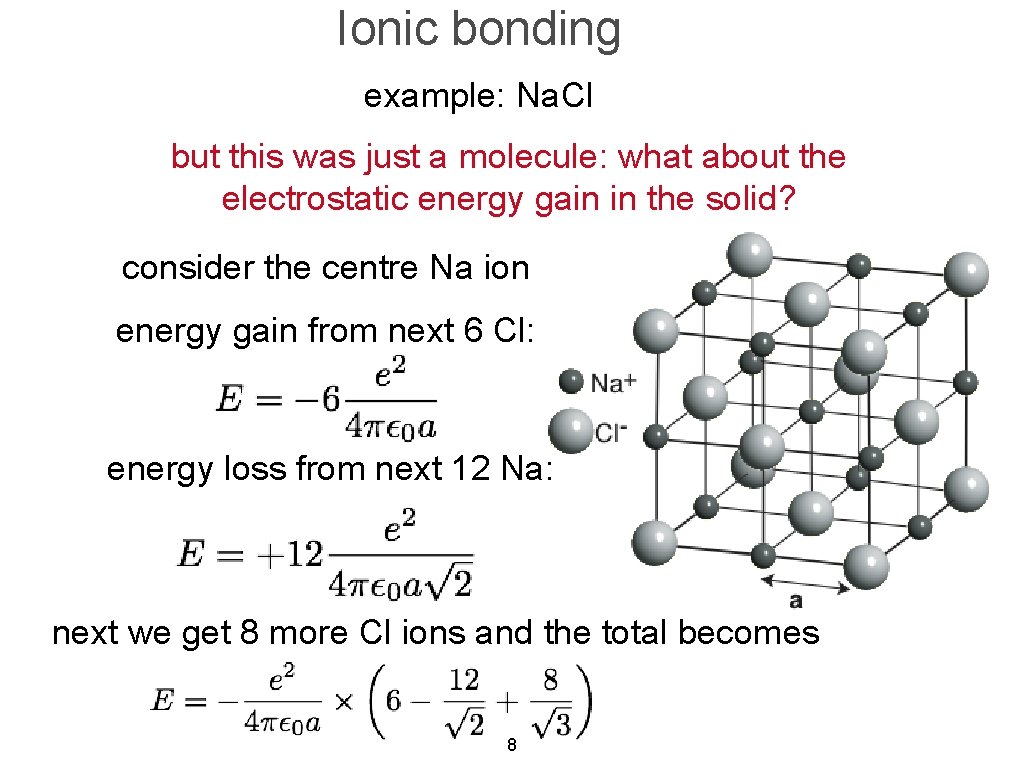
Ionic bonding example: Na. Cl but this was just a molecule: what about the electrostatic energy gain in the solid? consider the centre Na ion energy gain from next 6 Cl: energy loss from next 12 Na: next we get 8 more Cl ions and the total becomes 8
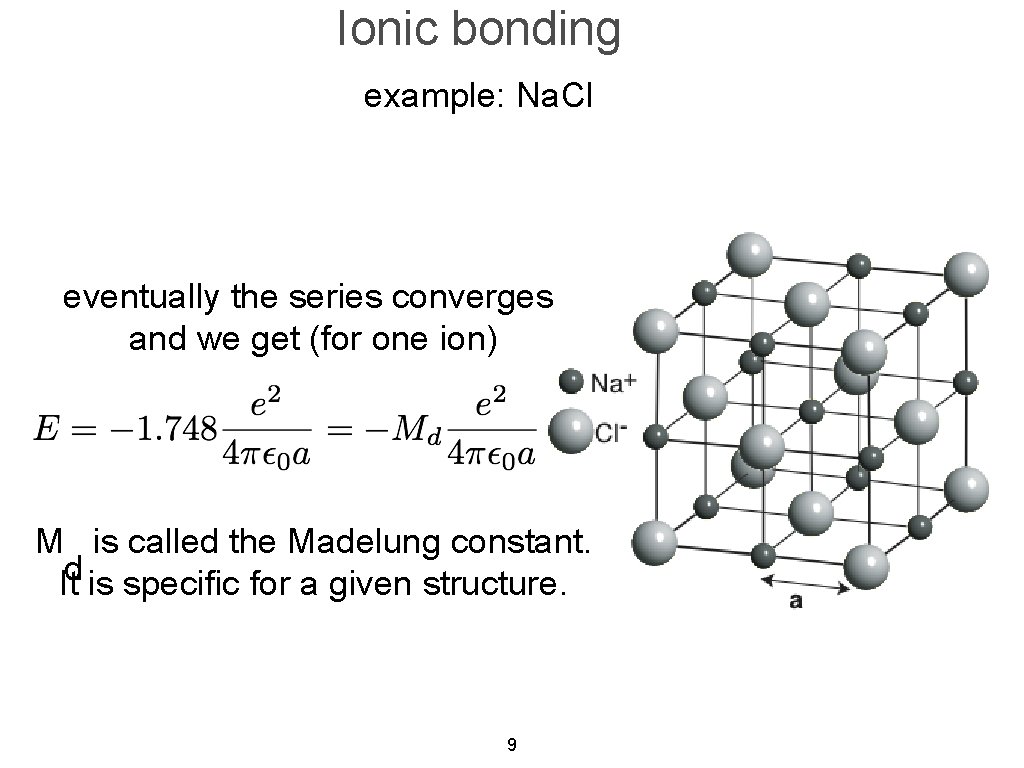
Ionic bonding example: Na. Cl eventually the series converges and we get (for one ion) M is called the Madelung constant. d It is specific for a given structure. 9
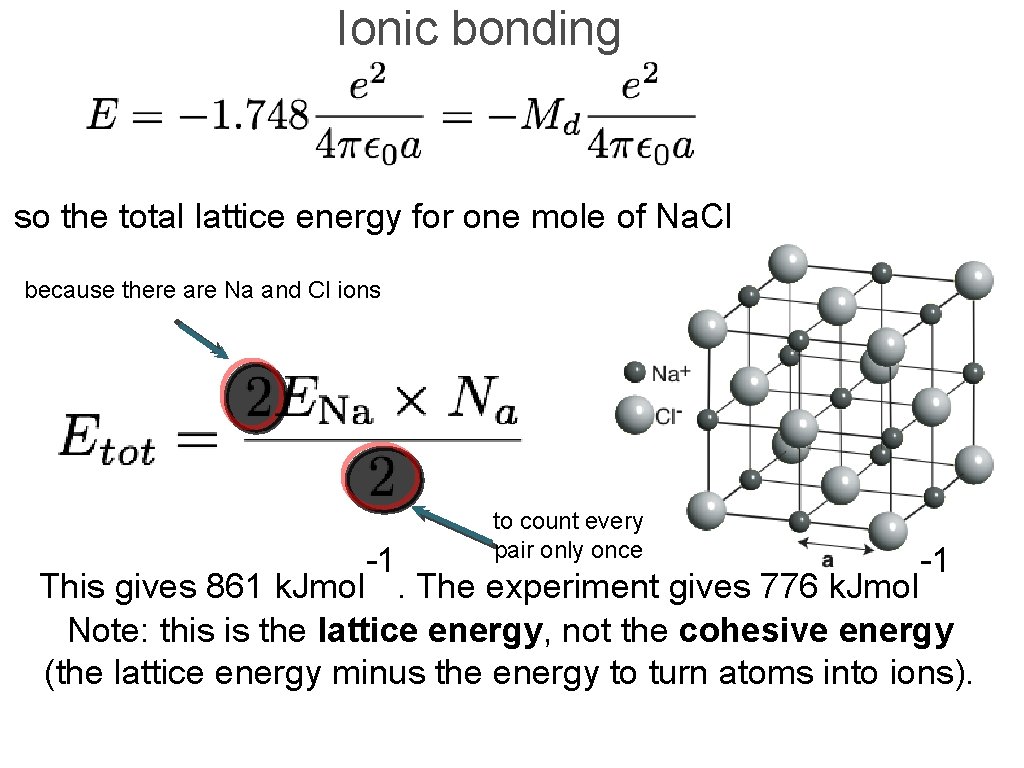
Ionic bonding so the total lattice energy for one mole of Na. Cl because there are Na and Cl ions -1 to count every pair only once -1 This gives 861 k. Jmol. The experiment gives 776 k. Jmol Note: this is the lattice energy, not the cohesive energy (the lattice energy minus the energy to turn atoms into ions).
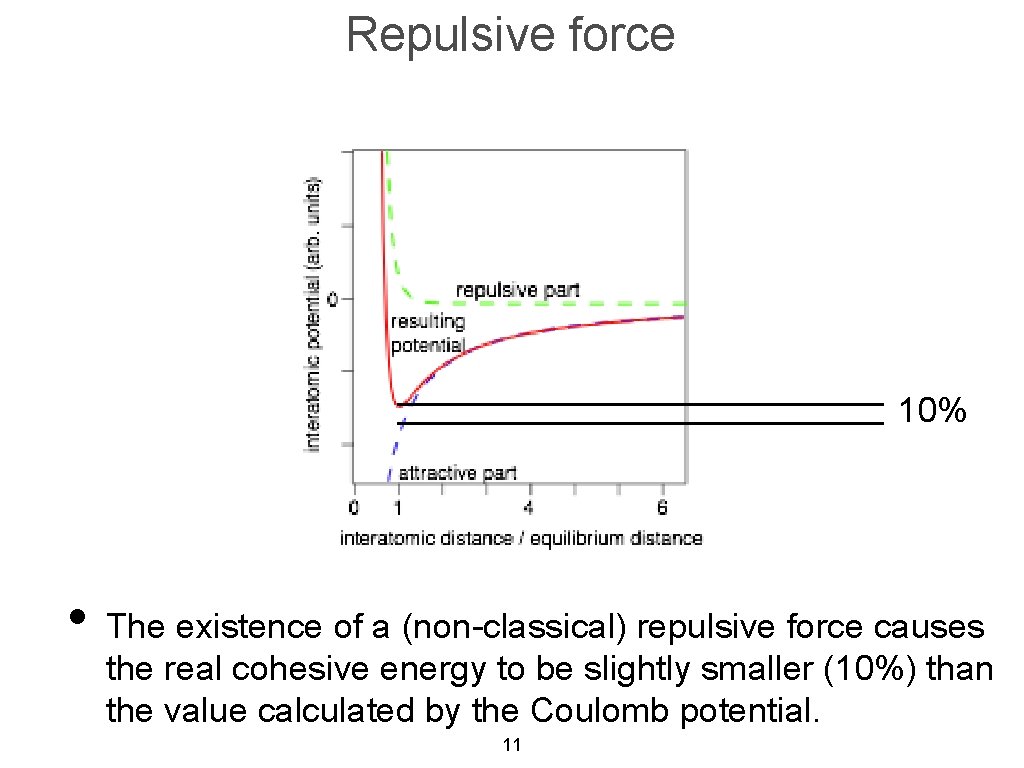
Repulsive force 10% • The existence of a (non-classical) repulsive force causes the real cohesive energy to be slightly smaller (10%) than the value calculated by the Coulomb potential. 11
Covalent bonding • A detailed view on the hydrogen molecule, identical particles (later in connection with magnetism, see online note on www. philiphofmann. net). • A simple view on other covalent bonds. 12
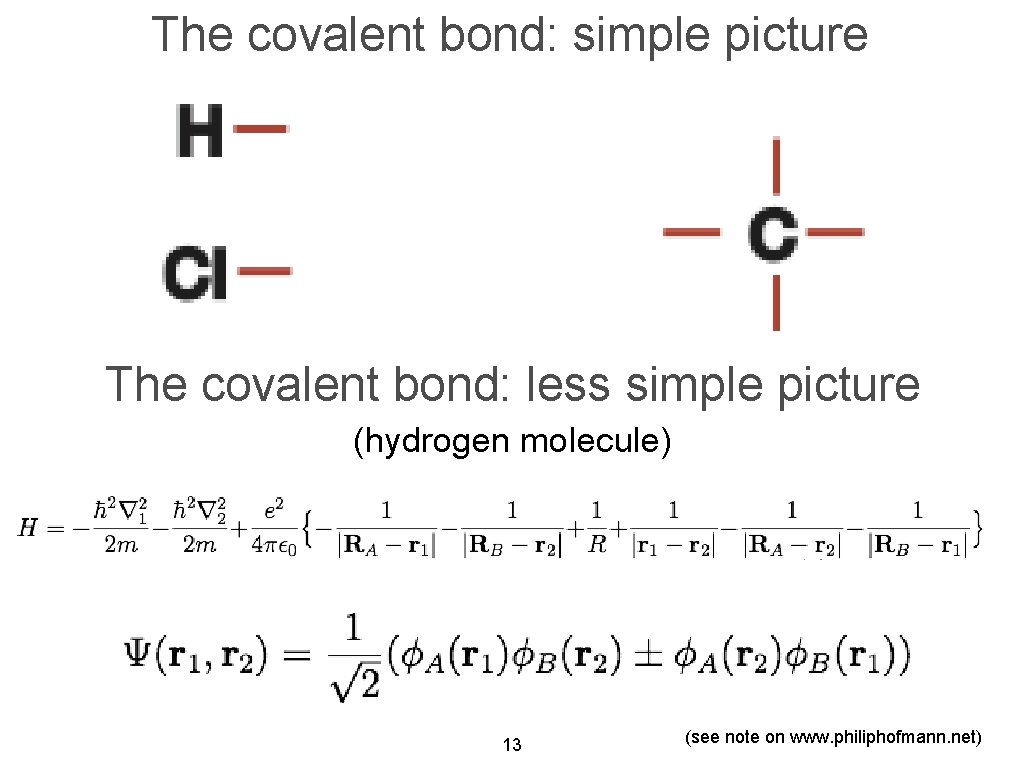
The covalent bond: simple picture The covalent bond: less simple picture (hydrogen molecule) 13 (see note on www. philiphofmann. net)
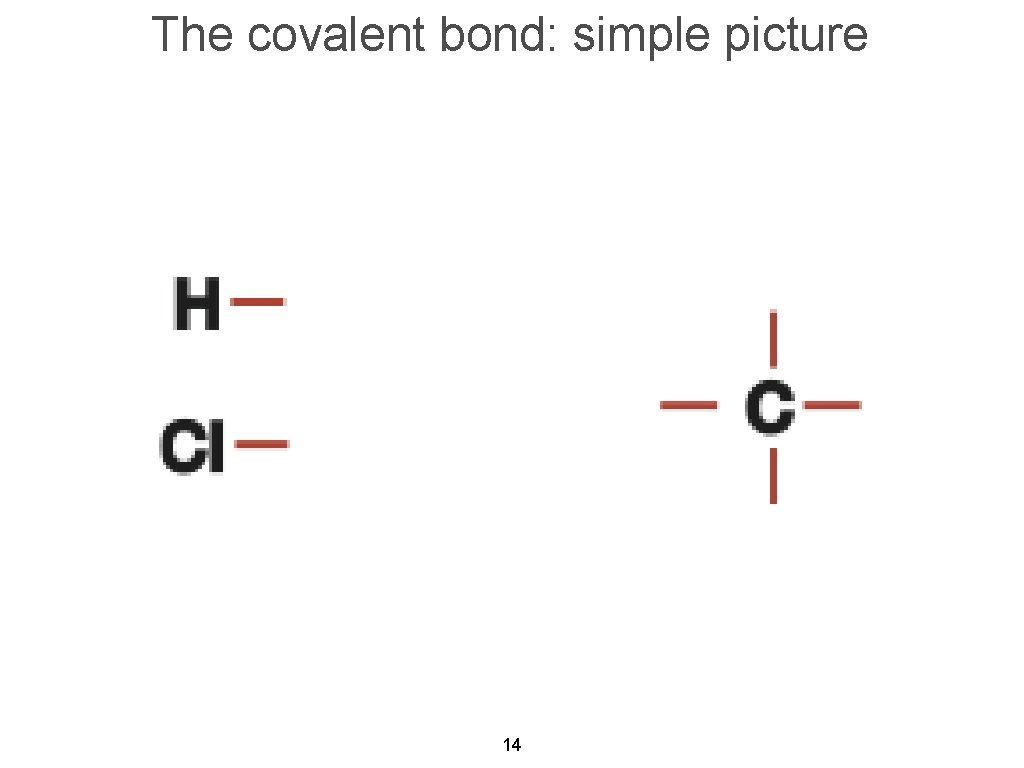
The covalent bond: simple picture 14
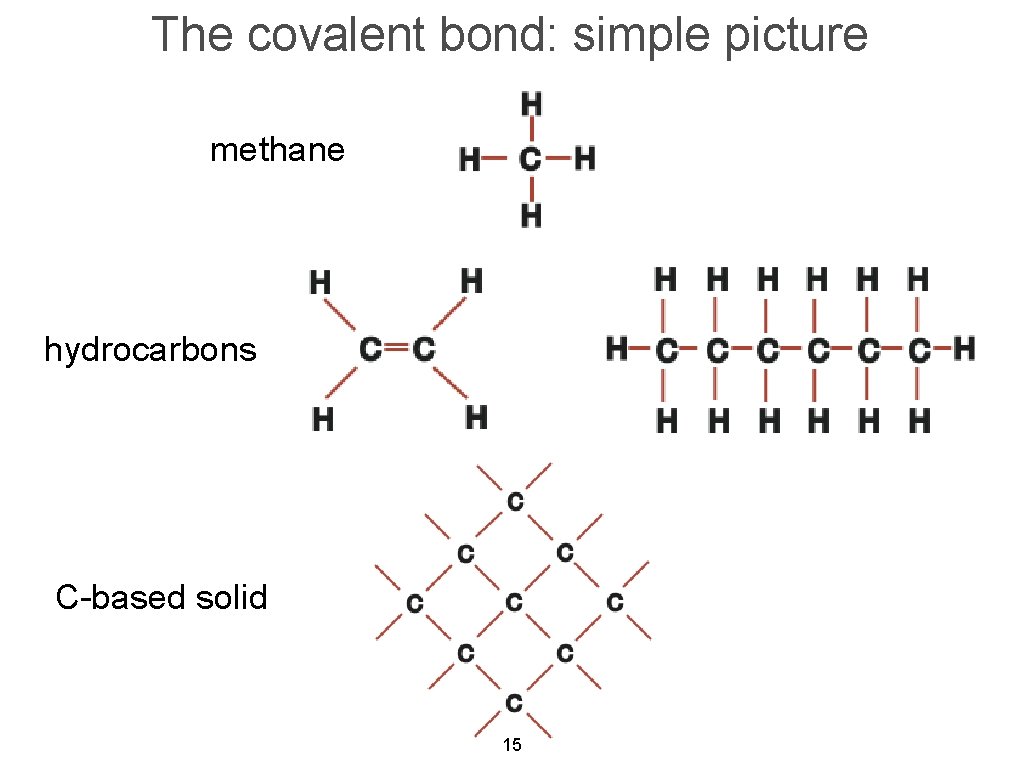
The covalent bond: simple picture methane hydrocarbons C-based solid 15
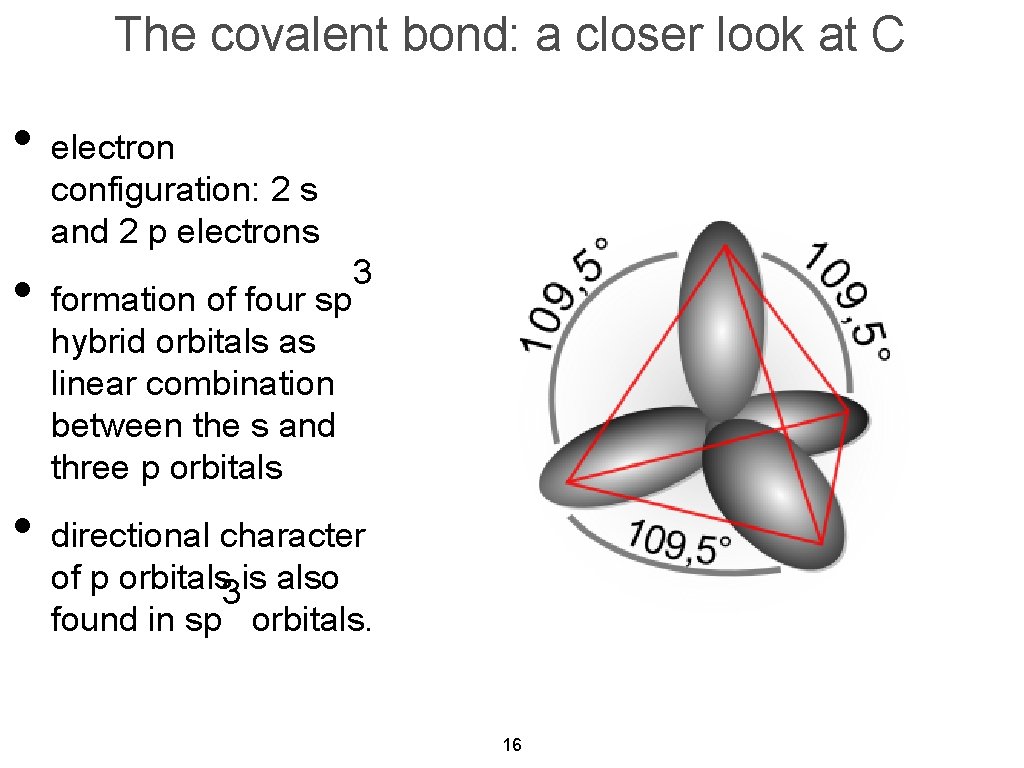
The covalent bond: a closer look at C • electron configuration: 2 s and 2 p electrons • formation of four sp 3 hybrid orbitals as linear combination between the s and three p orbitals • directional character of p orbitals 3 is also found in sp orbitals. 16
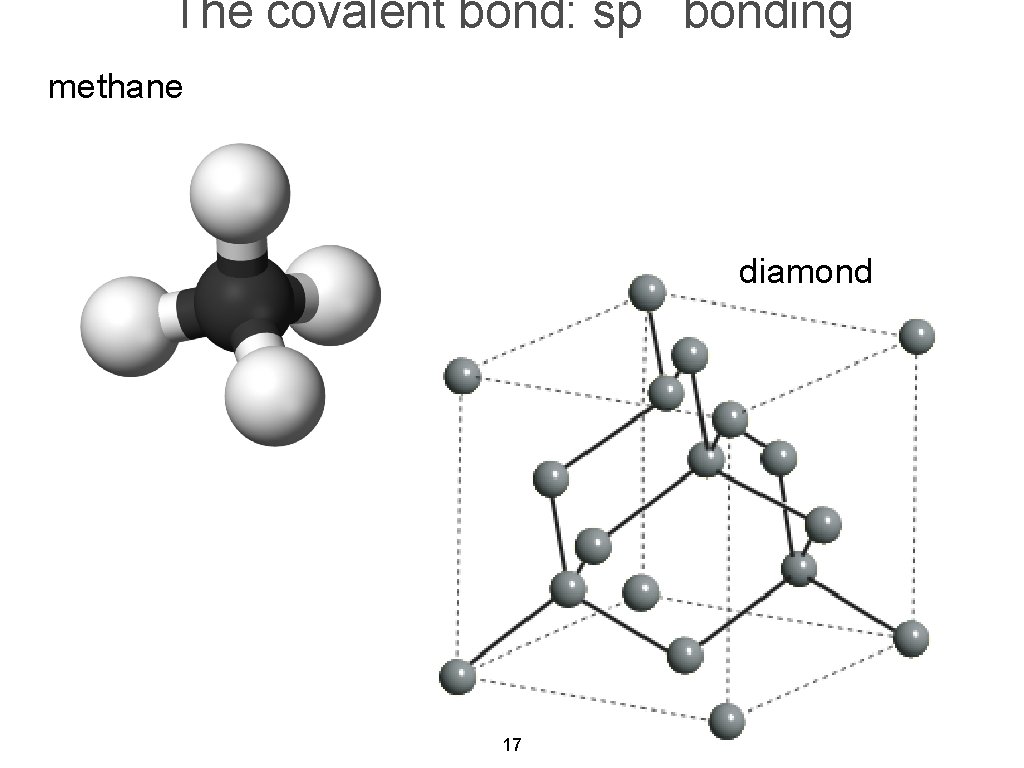
The covalent bond: sp bonding methane diamond 17
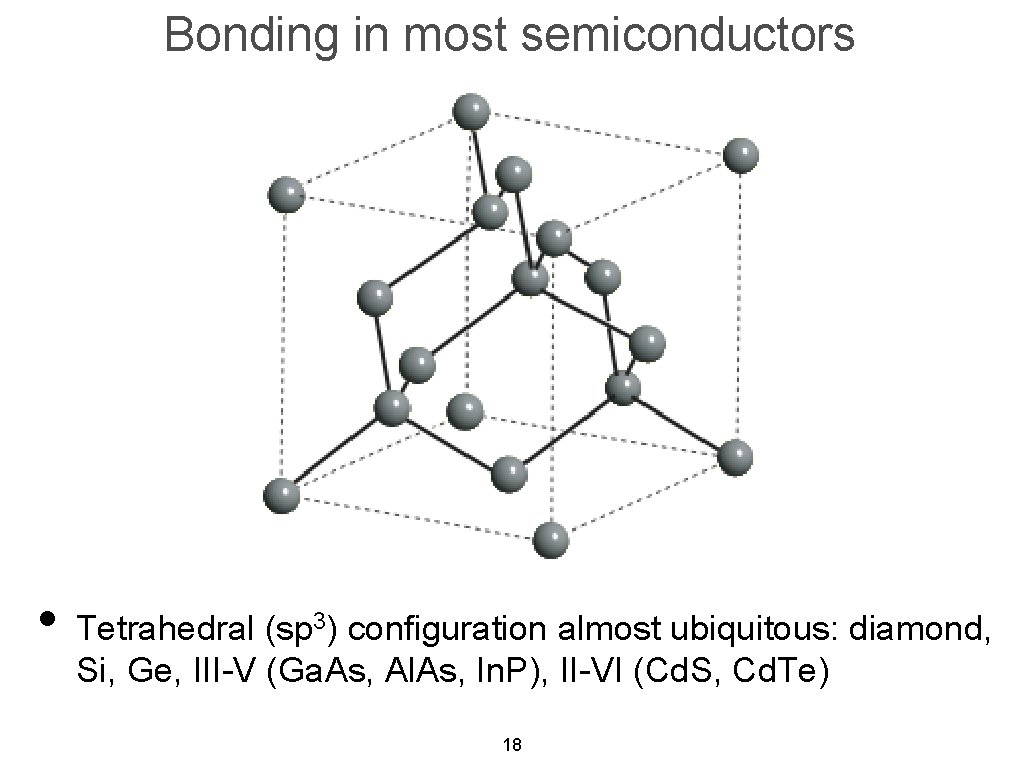
Bonding in most semiconductors • Tetrahedral (sp ) configuration almost ubiquitous: diamond, 3 Si, Ge, III-V (Ga. As, Al. As, In. P), II-VI (Cd. S, Cd. Te) 18
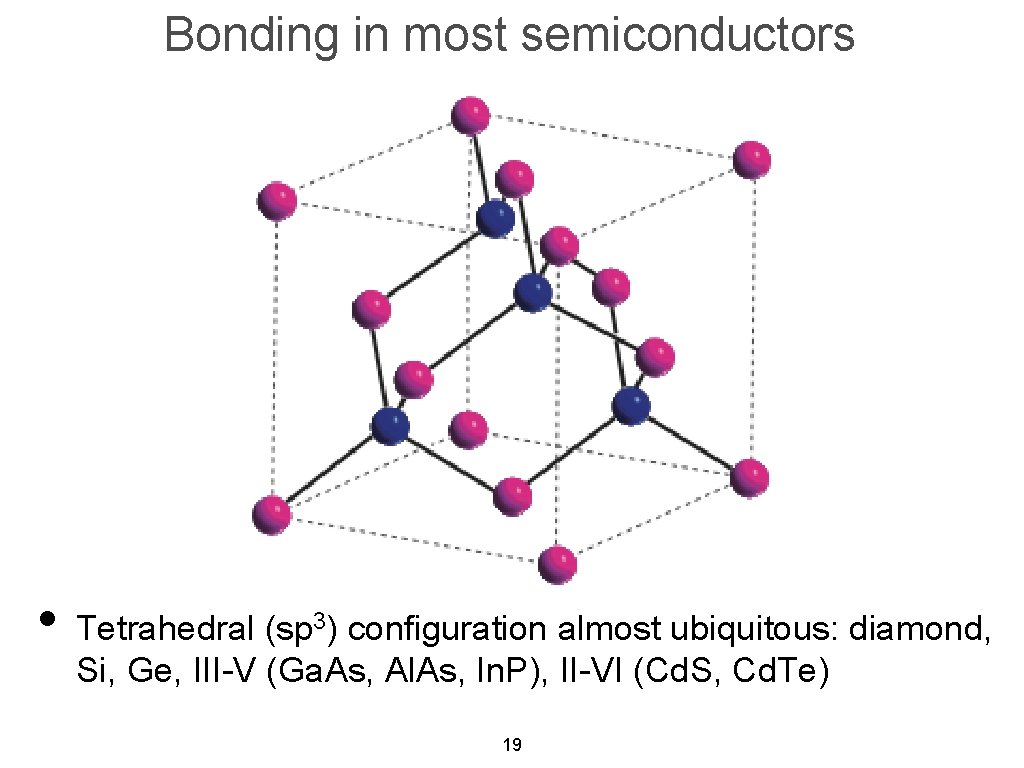
Bonding in most semiconductors • Tetrahedral (sp ) configuration almost ubiquitous: diamond, 3 Si, Ge, III-V (Ga. As, Al. As, In. P), II-VI (Cd. S, Cd. Te) 19
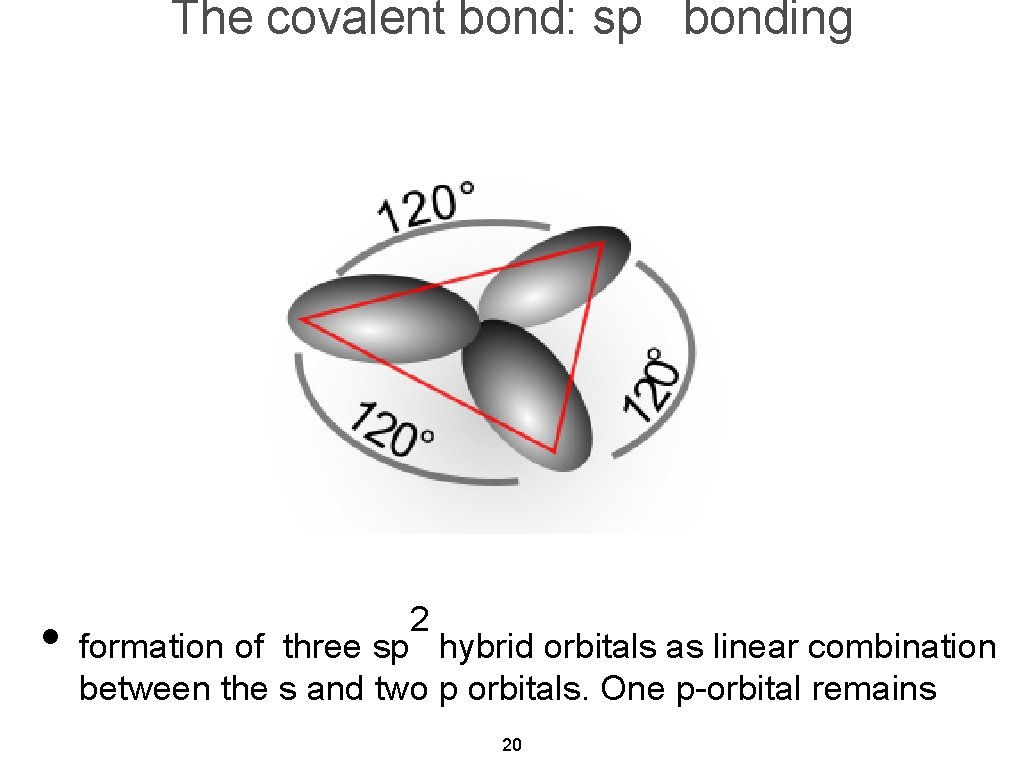
The covalent bond: sp bonding • formation of 2 three sp hybrid orbitals as linear combination between the s and two p orbitals. One p-orbital remains 20
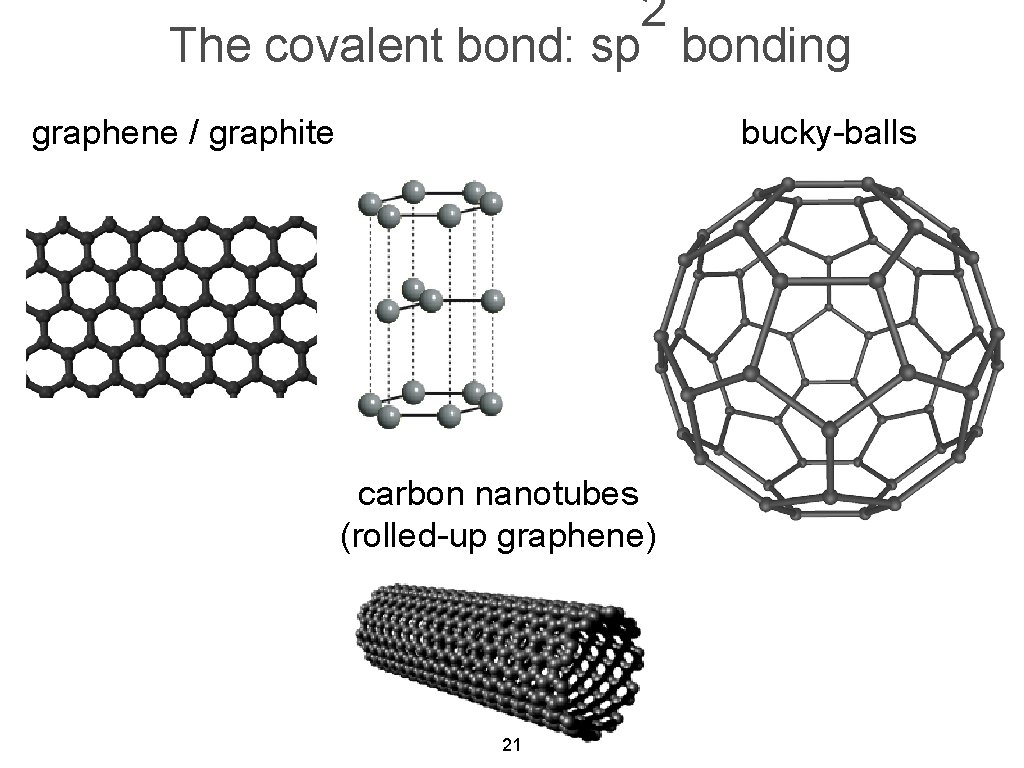
2 The covalent bond: sp bonding graphene / graphite bucky-balls carbon nanotubes (rolled-up graphene) 21
Covalent bonding • Cohesive energies similar to ionic bonding, in the e. V range. • Very directional bonding. 22
Metallic bonding 23
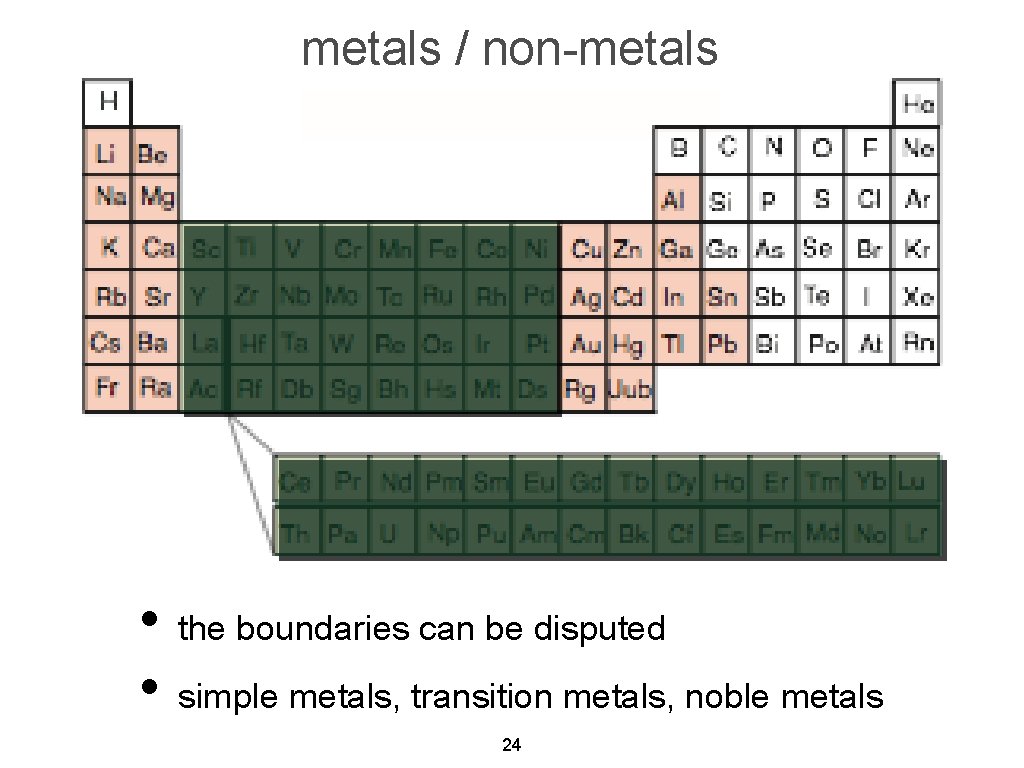
metals / non-metals • the boundaries can be disputed • simple metals, transition metals, noble metals 24
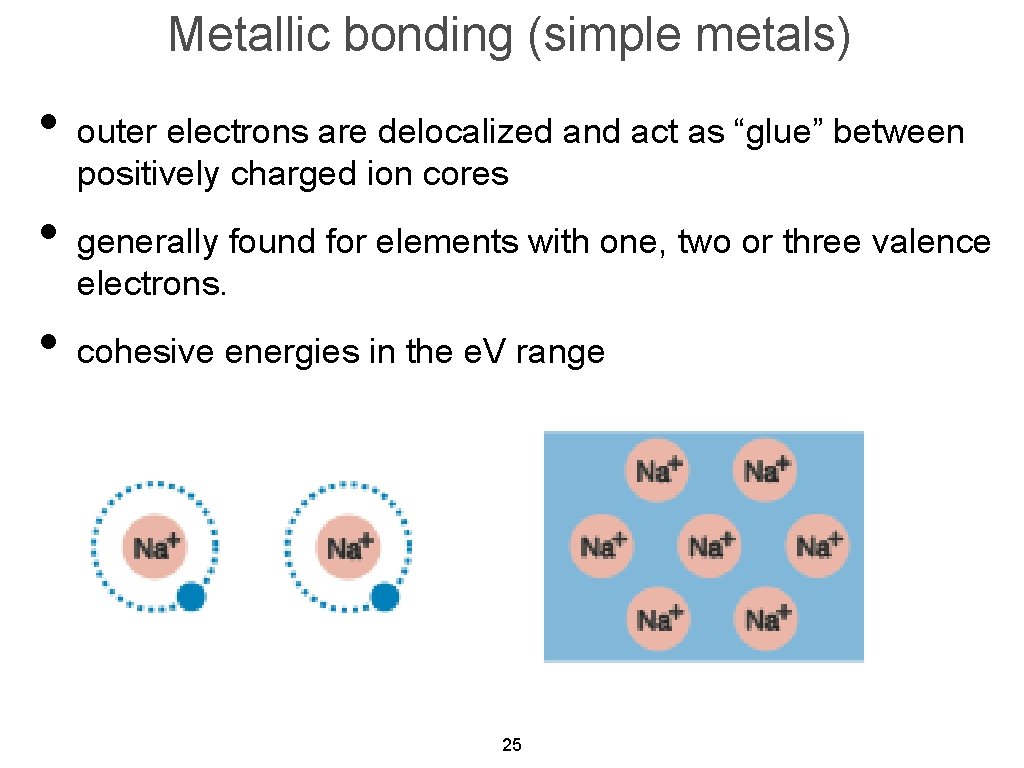
Metallic bonding (simple metals) • outer electrons are delocalized and act as “glue” between positively charged ion cores • generally found for elements with one, two or three valence electrons. • cohesive energies in the e. V range 25
Metallic bonding (simple metals): more characteristics • smaller cohesive energies than in ionic crystals • larger ionic radii, e. g. for Na: 3. 82 Å (metal) and 1. 94 Å (Na. Cl) • bonding has no directional preference • closed-packed atomic configurations are preferred: best possible overlap between the orbitals, no “holes” in the potential 26
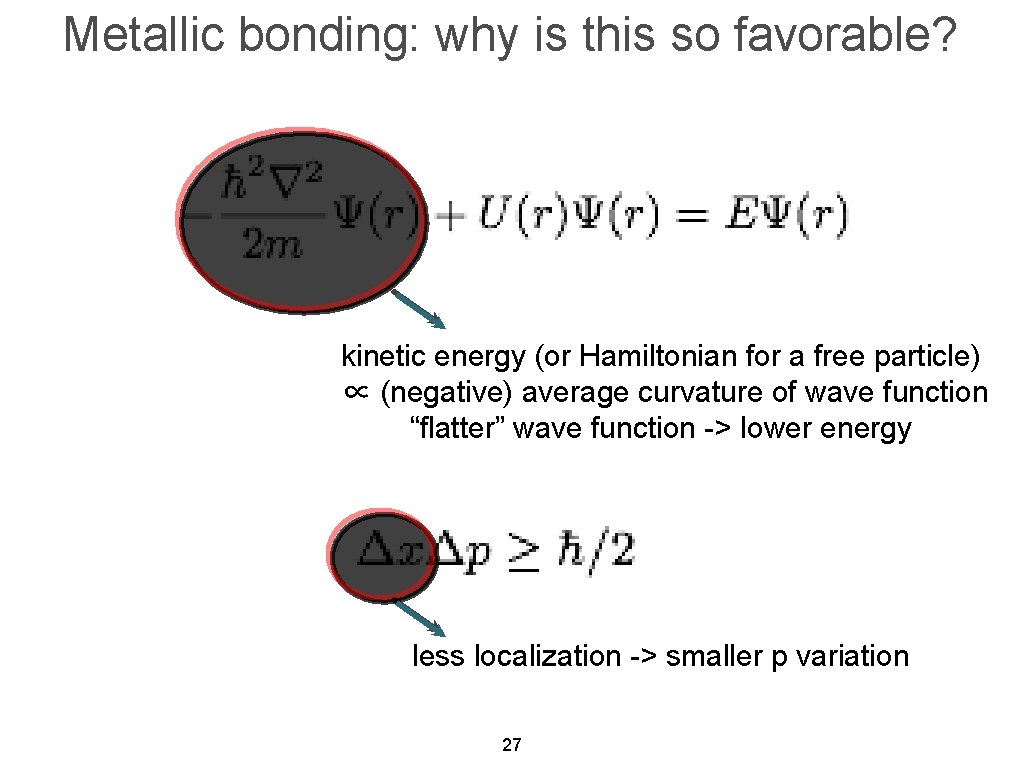
Metallic bonding: why is this so favorable? kinetic energy (or Hamiltonian for a free particle) ∝ (negative) average curvature of wave function “flatter” wave function -> lower energy less localization -> smaller p variation 27
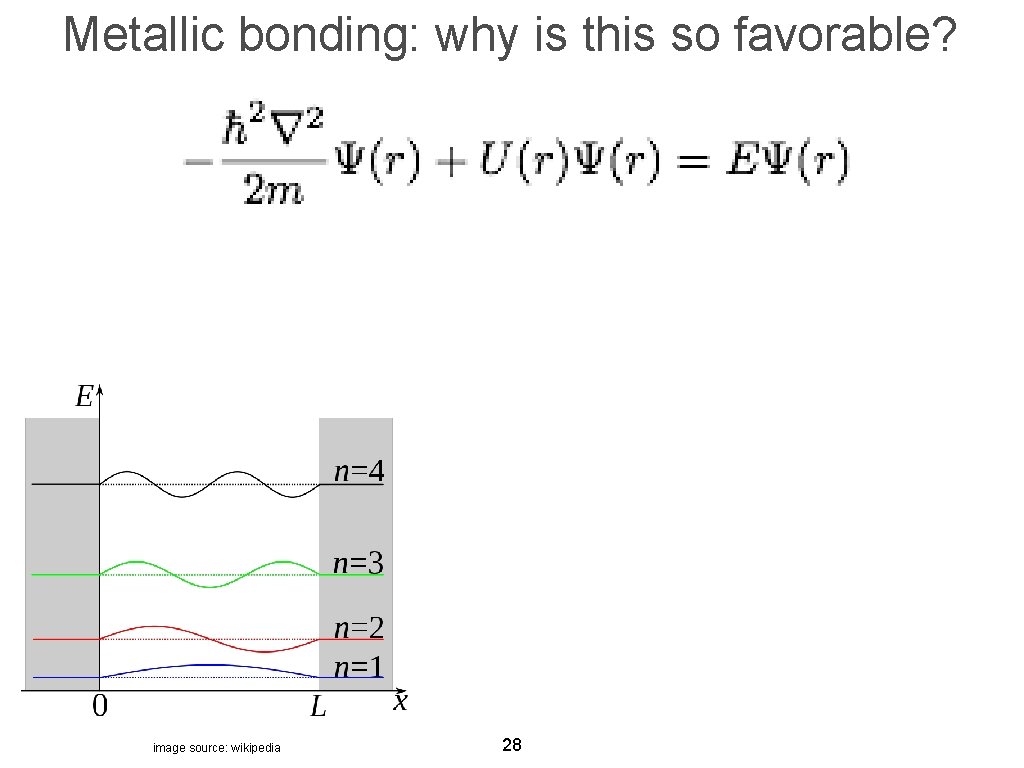
Metallic bonding: why is this so favorable? image source: wikipedia 28
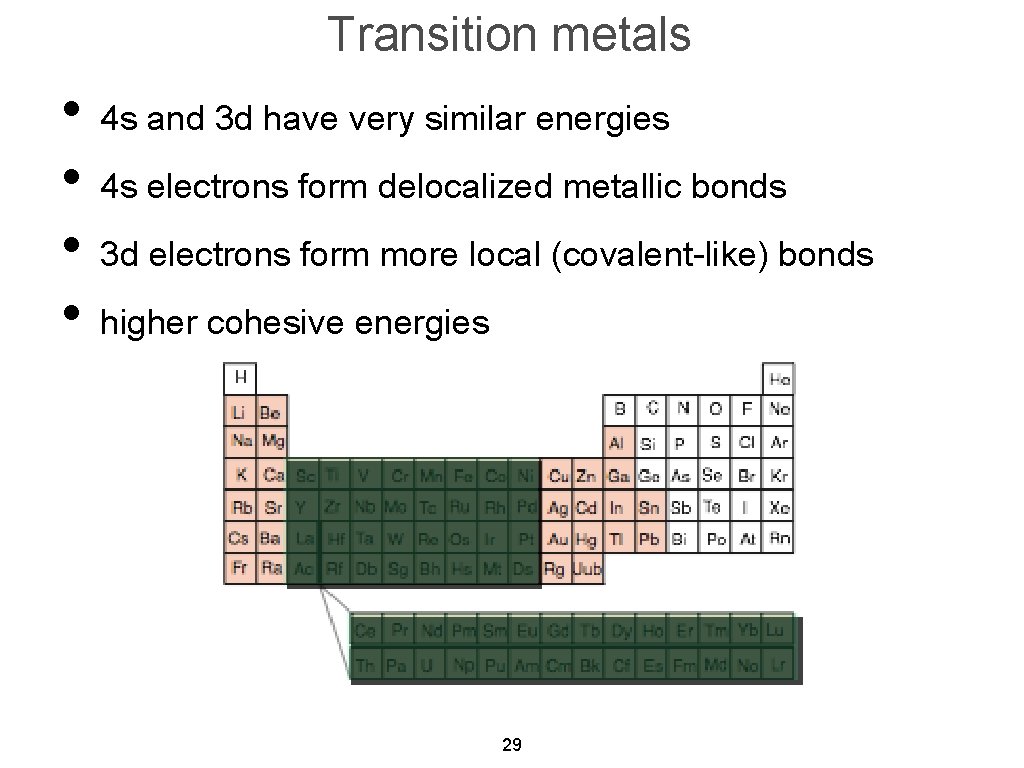
Transition metals • 4 s and 3 d have very similar energies • 4 s electrons form delocalized metallic bonds • 3 d electrons form more local (covalent-like) bonds • higher cohesive energies 29
Bonds between molecules • molecular solids are very common (but not at RT) • ice • plastic • DNA • what makes molecules bond to each other? 30
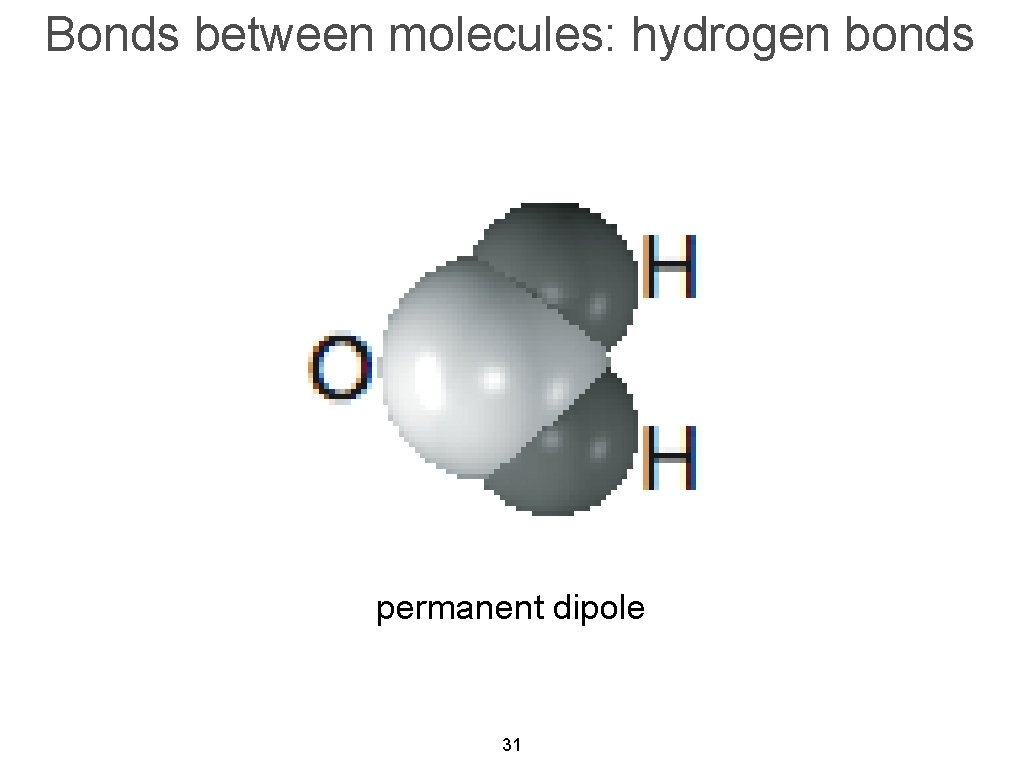
Bonds between molecules: hydrogen bonds permanent dipole 31
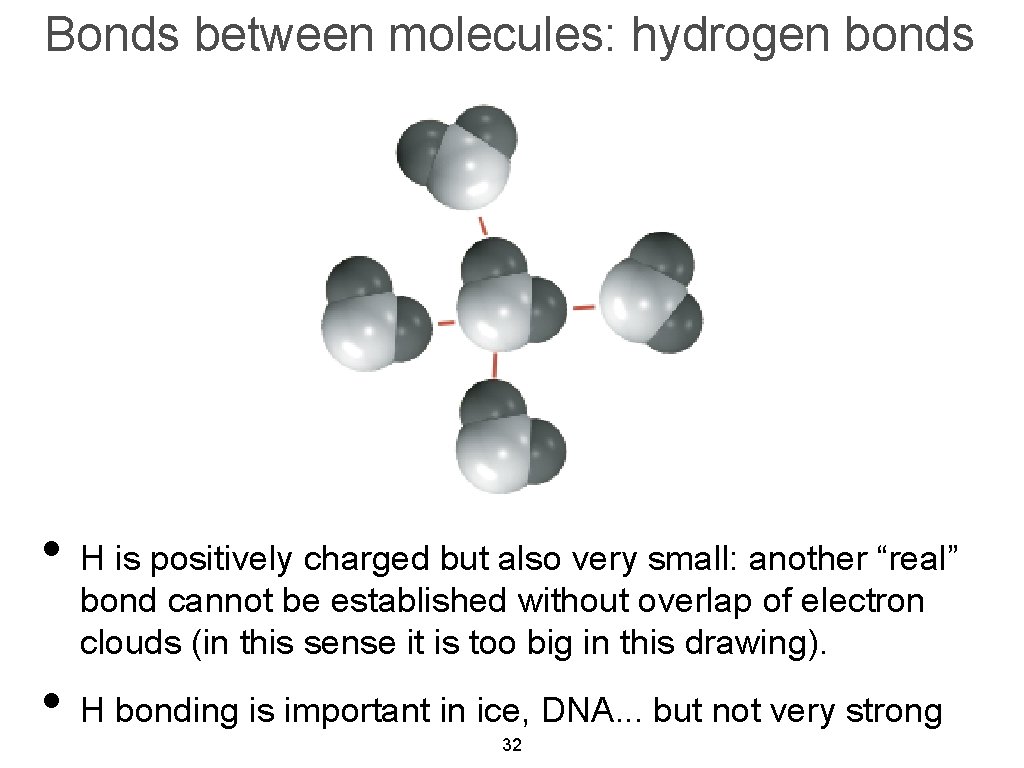
Bonds between molecules: hydrogen bonds • H is positively charged but also very small: another “real” bond cannot be established without overlap of electron clouds (in this sense it is too big in this drawing). • H bonding is important in ice, DNA. . . but not very strong 32
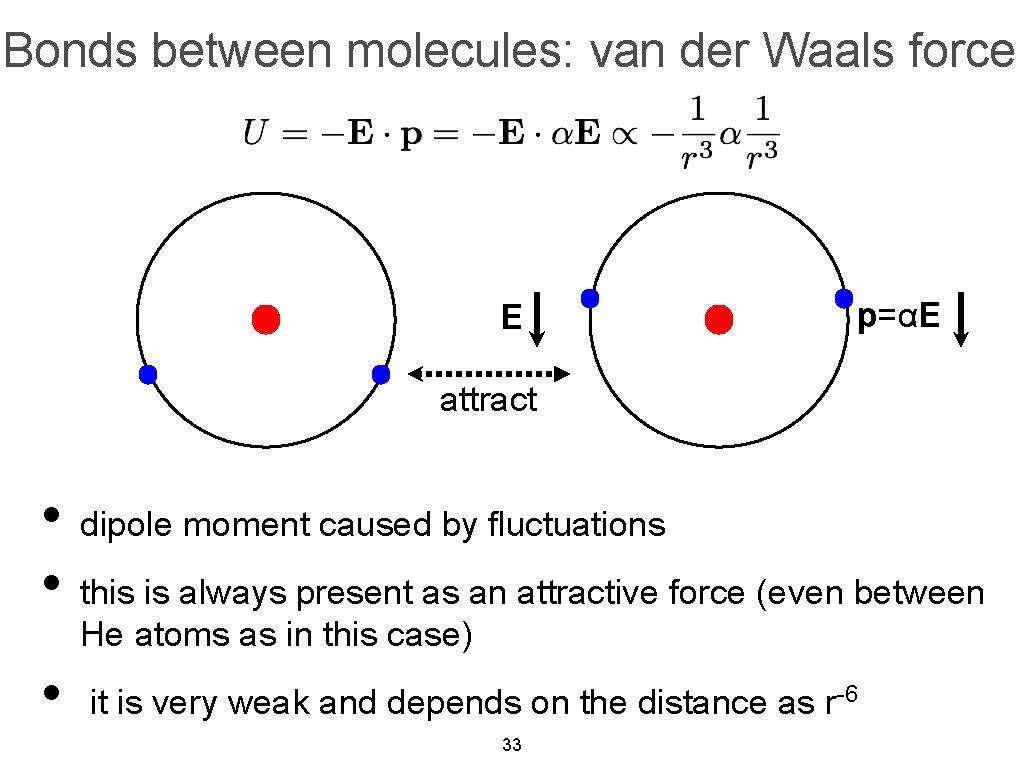
Bonds between molecules: van der Waals force E p=αE attract • dipole moment caused by fluctuations • this is always present as an attractive force (even between He atoms as in this case) • it is very weak and depends on the distance as r-6 33
Bond type and physical properties • How does the bond type affect the properties of a solid such as: • mechanical strength / melting point • electrical conductivity • thermal conductivity • optical properties 34
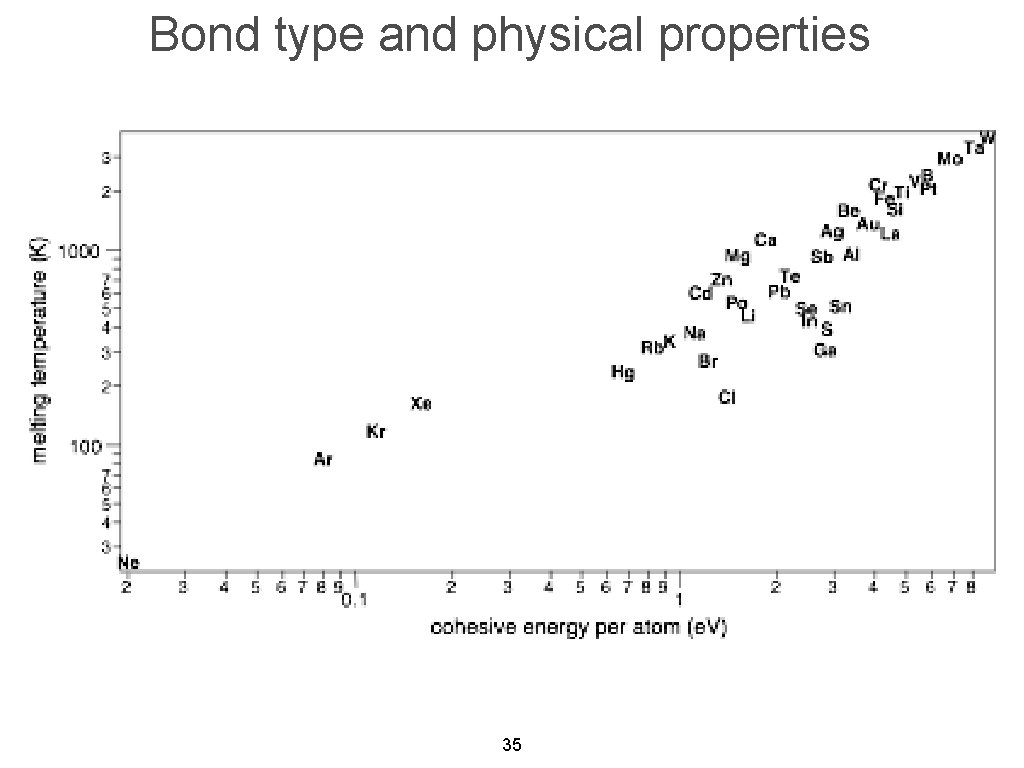
Bond type and physical properties 35
Summary • We have looked at different types of bonding: ionic, metallic, covalent, H-bonds, van der Waals bonds. • In reality, intermediate bonding scenarios are often found. • We have some ideas about the relation between the bonding type and the physical properties (at least for the melting point). 36
- Slides: 36