
LECTURE X Reticuloendothelial System and Function of the
- Slides: 10
LECTURE X: Reticuloendothelial System and Function of the Spleen IMPORTANT MALE SLIDES EDITING FILE EXTRA FEMALE SLIDES LECTURER’S NOTES
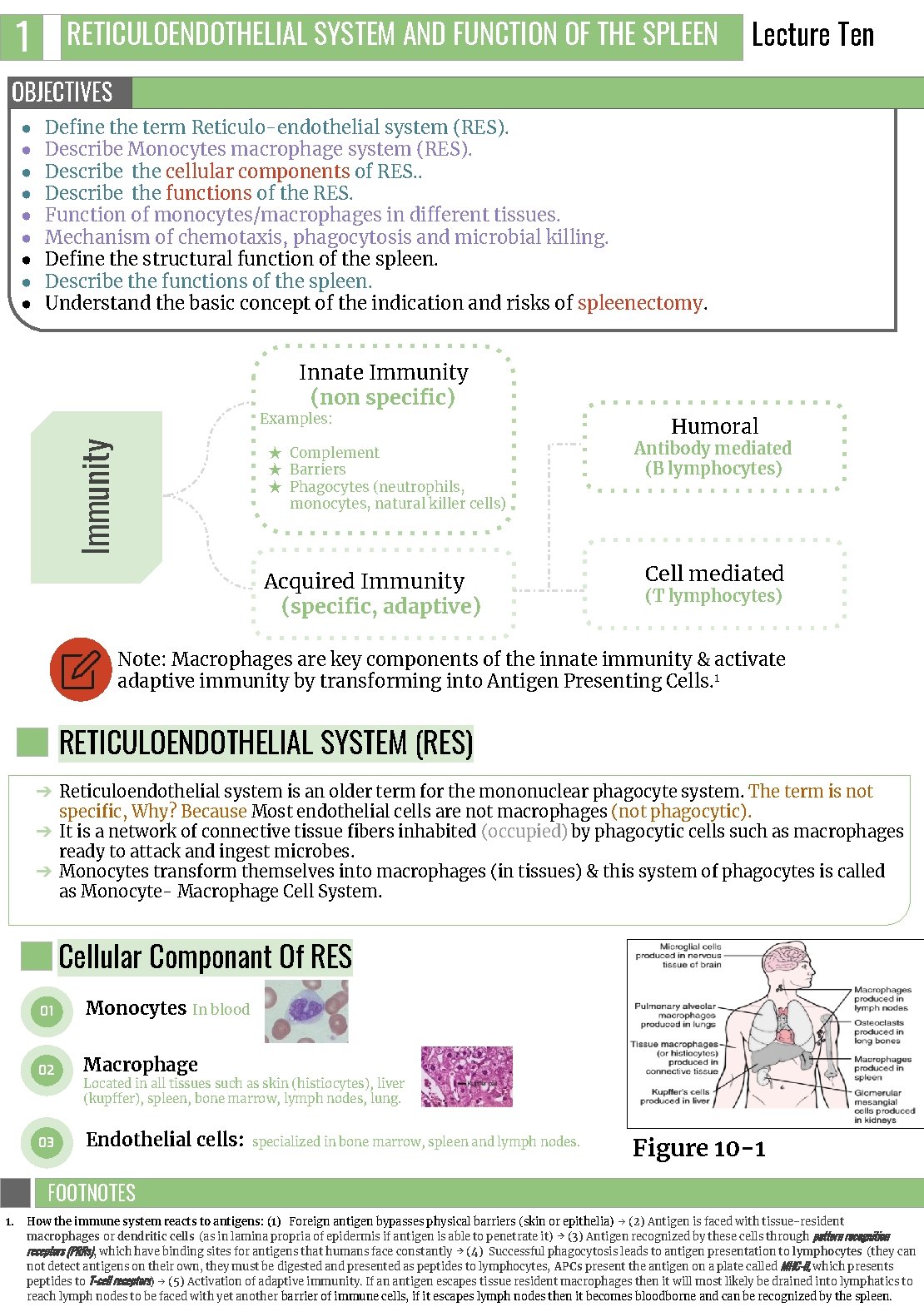
1 RETICULOENDOTHELIAL SYSTEM AND FUNCTION OF THE SPLEEN Lecture Ten OBJECTIVES ● ● ● ● ● Define the term Reticulo-endothelial system (RES). Describe Monocytes macrophage system (RES). Describe the cellular components of RES. . Describe the functions of the RES. Function of monocytes/macrophages in different tissues. Mechanism of chemotaxis, phagocytosis and microbial killing. Define the structural function of the spleen. Describe the functions of the spleen. Understand the basic concept of the indication and risks of spleenectomy. Innate Immunity (non specific) Immunity Examples: ★ Complement ★ Barriers ★ Phagocytes (neutrophils, monocytes, natural killer cells) Acquired Immunity (specific, adaptive) Humoral Antibody mediated (B lymphocytes) Cell mediated (T lymphocytes) Note: Macrophages are key components of the innate immunity & activate adaptive immunity by transforming into Antigen Presenting Cells. 1 RETICULOENDOTHELIAL SYSTEM (RES) ➔ Reticuloendothelial system is an older term for the mononuclear phagocyte system. The term is not specific, Why? Because Most endothelial cells are not macrophages (not phagocytic). ➔ It is a network of connective tissue fibers inhabited (occupied) by phagocytic cells such as macrophages ready to attack and ingest microbes. ➔ Monocytes transform themselves into macrophages (in tissues) & this system of phagocytes is called as Monocyte- Macrophage Cell System. Cellular Componant Of RES 01 Monocytes 02 Macrophage 03 Endothelial cells: In blood Located in all tissues such as skin (histiocytes), liver (kupffer), spleen, bone marrow, lymph nodes, lung. specialized in bone marrow, spleen and lymph nodes. Figure 10 -1 FOOTNOTES Footnotes 1. How the immune system reacts to antigens: (1) Foreign antigen bypasses physical barriers (skin or epithelia) → (2) Antigen is faced with tissue-resident macrophages or dendritic cells (as in lamina propria of epidermis if antigen is able to penetrate it) → (3) Antigen recognized by these cells through pattern recognition receptors (PRRs), which have binding sites for antigens that humans face constantly → (4) Successful phagocytosis leads to antigen presentation to lymphocytes (they can not detect antigens on their own, they must be digested and presented as peptides to lymphocytes, APCs present the antigen on a plate called MHC-II, which presents peptides to T-cell receptors) → (5) Activation of adaptive immunity. If an antigen escapes tissue resident macrophages then it will most likely be drained into lymphatics to reach lymph nodes to be faced with yet another barrier of immune cells, if it escapes lymph nodes then it becomes bloodborne and can be recognized by the spleen.
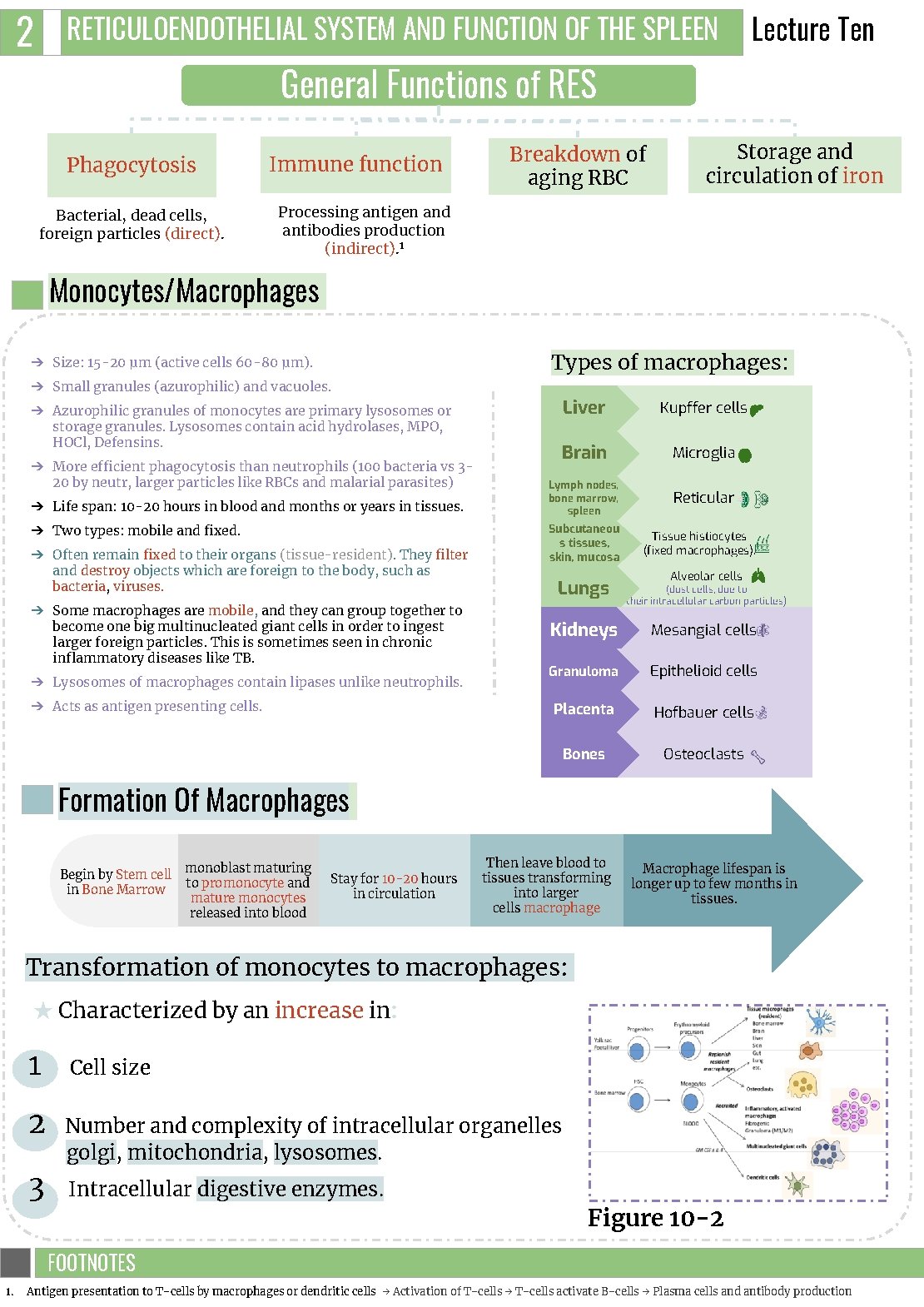
2 RETICULOENDOTHELIAL SYSTEM AND FUNCTION OF THE SPLEEN General Functions of RES Phagocytosis Bacterial, dead cells, foreign particles (direct). Immune function Breakdown of aging RBC Lecture Ten Storage and circulation of iron Processing antigen and antibodies production (indirect). 1 Monocytes/Macrophages Types of macrophages: ➔ Size: 15 -20 μm (active cells 60 -80 μm). ➔ Small granules (azurophilic) and vacuoles. ➔ Azurophilic granules of monocytes are primary lysosomes or storage granules. Lysosomes contain acid hydrolases, MPO, HOCl, Defensins. ➔ More efficient phagocytosis than neutrophils (100 bacteria vs 320 by neutr, larger particles like RBCs and malarial parasites) ➔ Life span: 10 -20 hours in blood and months or years in tissues. ➔ Two types: mobile and fixed. ➔ Often remain fixed to their organs (tissue-resident). They filter and destroy objects which are foreign to the body, such as bacteria, viruses. ➔ Some macrophages are mobile, and they can group together to become one big multinucleated giant cells in order to ingest larger foreign particles. This is sometimes seen in chronic inflammatory diseases like TB. ➔ Lysosomes of macrophages contain lipases unlike neutrophils. ➔ Acts as antigen presenting cells. Liver Kupffer cells Brain Microglia Lymph nodes, bone marrow, spleen Reticular Subcutaneou s tissues, skin, mucosa Lungs Tissue histiocytes (fixed macrophages). Alveolar cells (dust cells, due to their intracellular carbon particles) Kidneys Mesangial cells Granuloma Epithelioid cells Placenta Hofbauer cells Bones Osteoclasts Formation Of Macrophages Begin by Stem cell in Bone Marrow monoblast maturing to promonocyte and mature monocytes released into blood Stay for 10 -20 hours in circulation Then leave blood to tissues transforming into larger cells macrophage Macrophage lifespan is longer up to few months in tissues. Transformation of monocytes to macrophages: ★ Characterized by an increase in: 1 Cell size 2 Number and complexity of intracellular organelles golgi, mitochondria, lysosomes. 3 Intracellular digestive enzymes. Figure 10 -2 FOOTNOTES Footnotes 1. Antigen presentation to T-cells by macrophages or dendritic cells → Activation of T-cells → T-cells activate B-cells → Plasma cells and antibody production
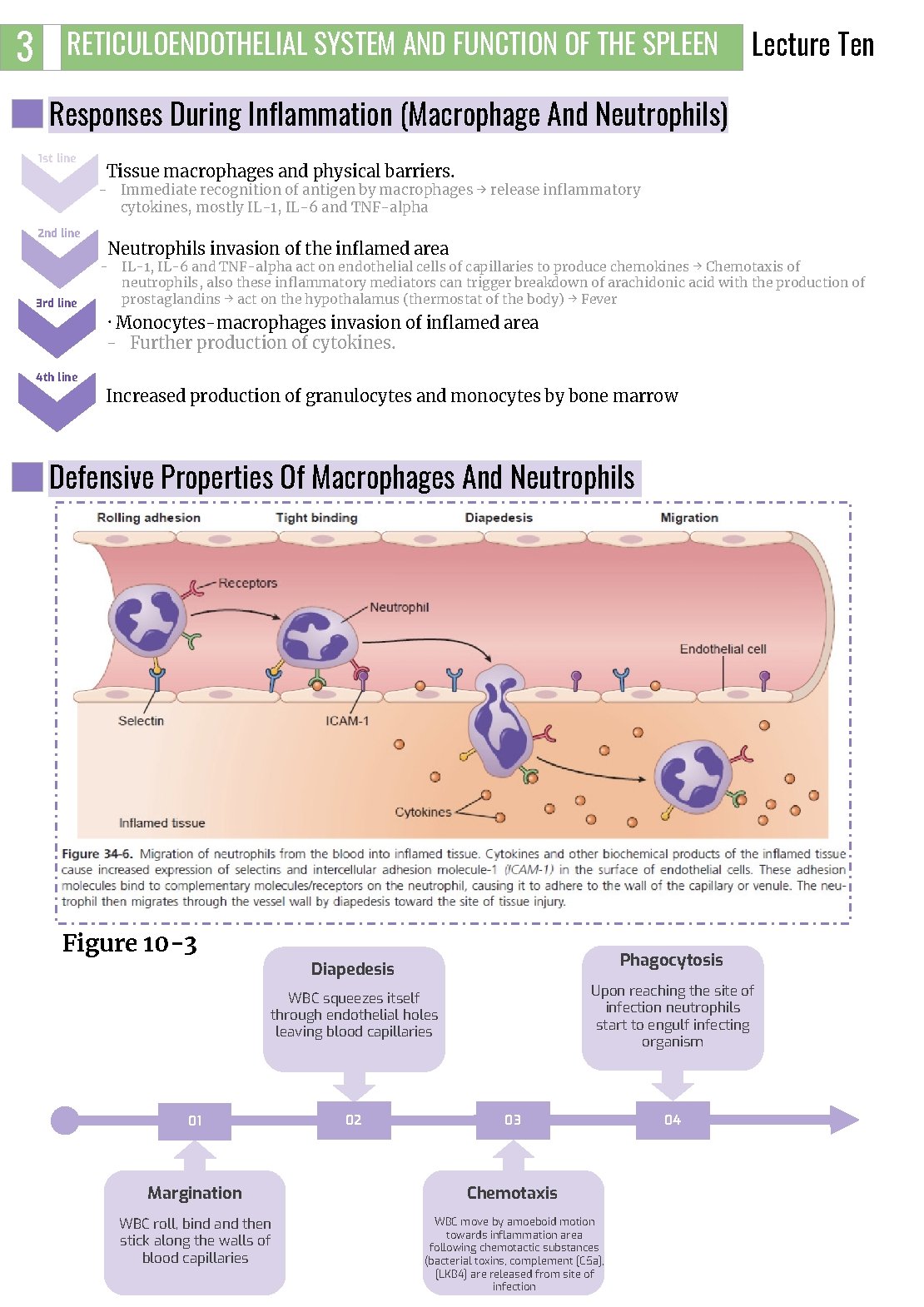
3 RETICULOENDOTHELIAL SYSTEM AND FUNCTION OF THE SPLEEN Lecture Ten Responses During Inflammation (Macrophage And Neutrophils) 1 st line Tissue macrophages and physical barriers. - Immediate recognition of antigen by macrophages → release inflammatory cytokines, mostly IL-1, IL-6 and TNF-alpha 2 nd line 3 rd line Neutrophils invasion of the inflamed area - IL-1, IL-6 and TNF-alpha act on endothelial cells of capillaries to produce chemokines → Chemotaxis of neutrophils, also these inflammatory mediators can trigger breakdown of arachidonic acid with the production of prostaglandins → act on the hypothalamus (thermostat of the body) → Fever . Monocytes-macrophages invasion of inflamed area - Further production of cytokines. 4 th line Increased production of granulocytes and monocytes by bone marrow Defensive Properties Of Macrophages And Neutrophils Figure 10 -3 Phagocytosis Diapedesis Upon reaching the site of infection neutrophils start to engulf infecting organism WBC squeezes itself through endothelial holes leaving blood capillaries 01 02 03 Margination Chemotaxis WBC roll, bind and then stick along the walls of blood capillaries WBC move by amoeboid motion towards inflammation area following chemotactic substances (bacterial toxins, complement [C 5 a], [LKB 4] are released from site of infection 04
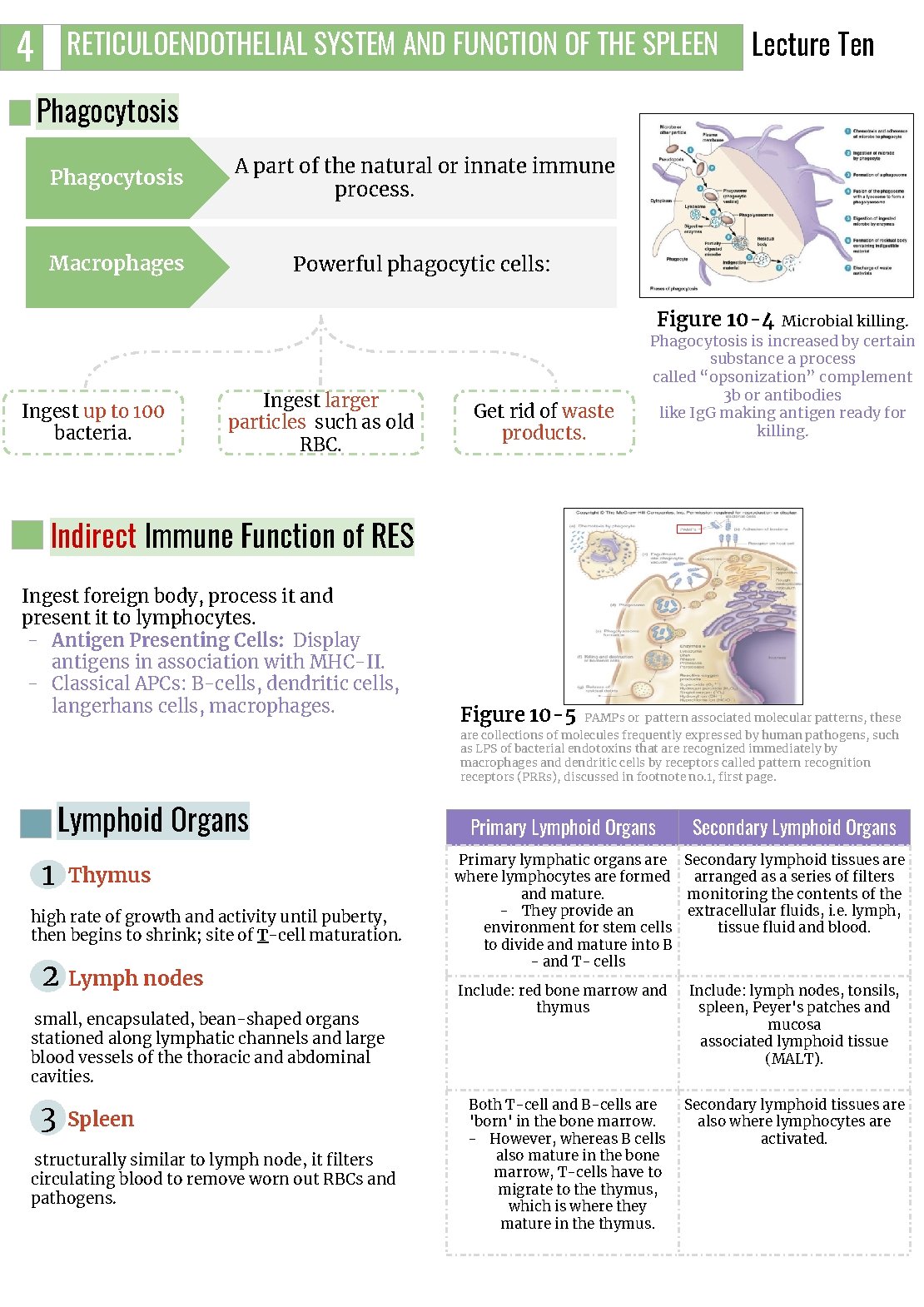
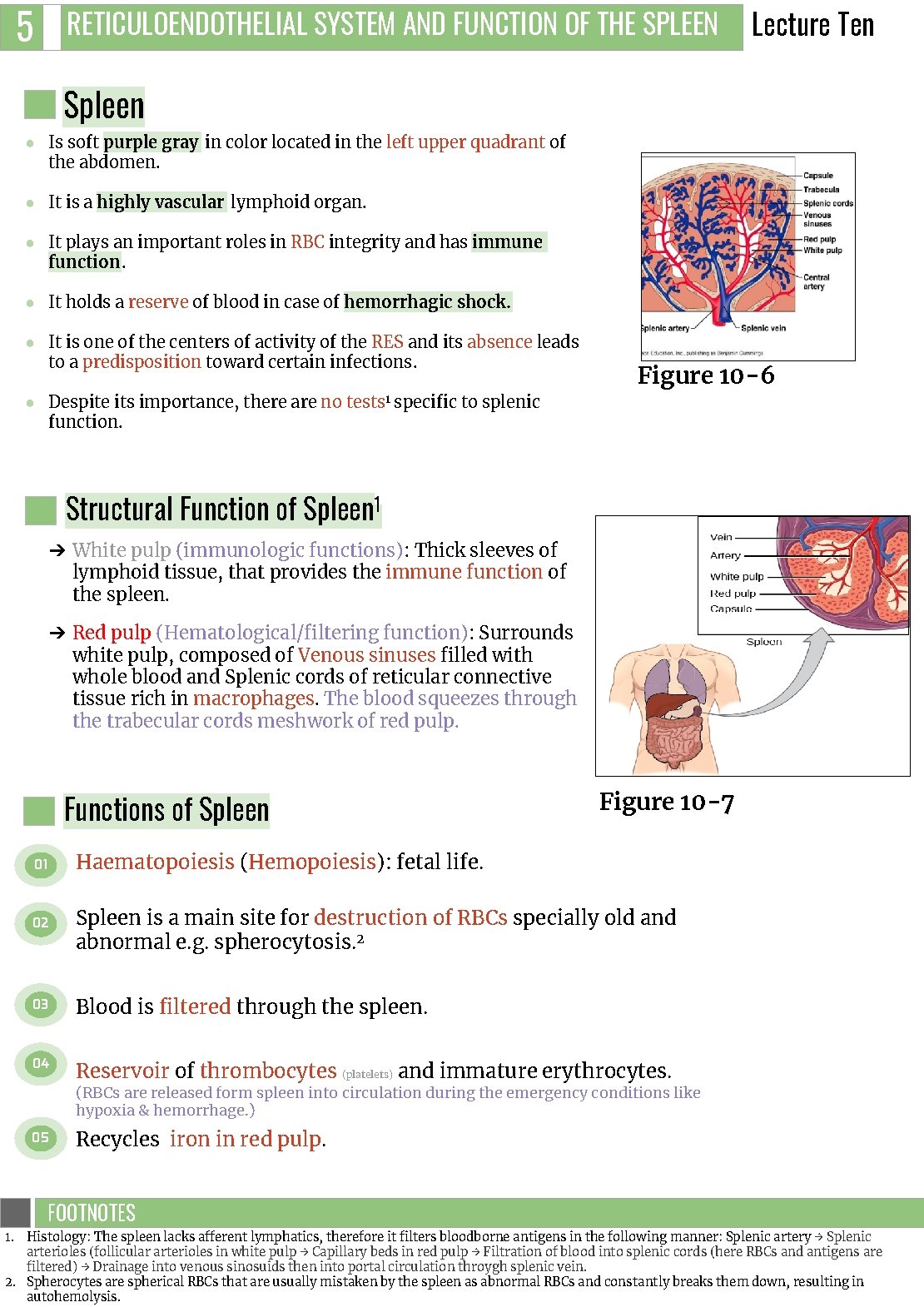
4 RETICULOENDOTHELIAL SYSTEM AND FUNCTION OF THE SPLEEN Lecture Ten Phagocytosis A part of the natural or innate immune process. Macrophages Powerful phagocytic cells: Figure 10 -4 Ingest up to 100 bacteria. Ingest larger particles such as old RBC. Get rid of waste products. Microbial killing. Phagocytosis is increased by certain substance a process called “opsonization” complement 3 b or antibodies like Ig. G making antigen ready for killing. Indirect Immune Function of RES Ingest foreign body, process it and present it to lymphocytes. - Antigen Presenting Cells: Display antigens in association with MHC-II. - Classical APCs: B-cells, dendritic cells, langerhans cells, macrophages. Lymphoid Organs 11 Thymus high rate of growth and activity until puberty, then begins to shrink; site of T-cell maturation. 22 Lymph nodes small, encapsulated, bean-shaped organs stationed along lymphatic channels and large blood vessels of the thoracic and abdominal cavities. 33 Spleen structurally similar to lymph node, it filters circulating blood to remove worn out RBCs and pathogens. Figure 10 -5 PAMPs or pattern associated molecular patterns, these are collections of molecules frequently expressed by human pathogens, such as LPS of bacterial endotoxins that are recognized immediately by macrophages and dendritic cells by receptors called pattern recognition receptors (PRRs), discussed in footnote no. 1, first page. Primary Lymphoid Organs Secondary Lymphoid Organs Primary lymphatic organs are Secondary lymphoid tissues are where lymphocytes are formed arranged as a series of filters and mature. monitoring the contents of the - They provide an extracellular fluids, i. e. lymph, environment for stem cells tissue fluid and blood. to divide and mature into B - and T- cells Include: red bone marrow and thymus Include: lymph nodes, tonsils, spleen, Peyer's patches and mucosa associated lymphoid tissue (MALT). Both T-cell and B-cells are 'born' in the bone marrow. - However, whereas B cells also mature in the bone marrow, T-cells have to migrate to the thymus, which is where they mature in the thymus. Secondary lymphoid tissues are also where lymphocytes are activated.
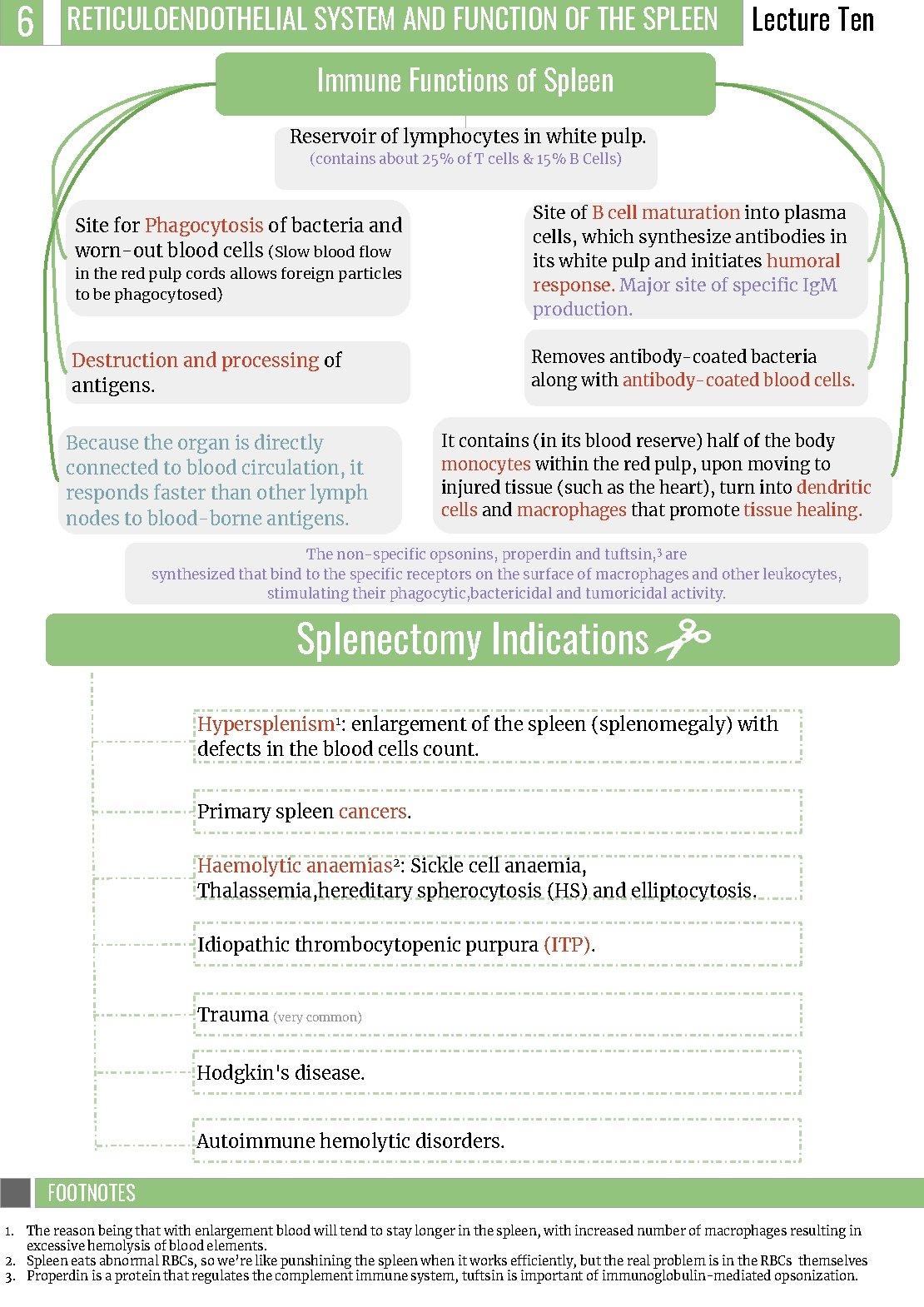
5 RETICULOENDOTHELIAL SYSTEM AND FUNCTION OF THE SPLEEN Lecture Ten Spleen ● Is soft purple gray in color located in the left upper quadrant of the abdomen. ● It is a highly vascular lymphoid organ. ● It plays an important roles in RBC integrity and has immune function. ● It holds a reserve of blood in case of hemorrhagic shock. ● It is one of the centers of activity of the RES and its absence leads to a predisposition toward certain infections. ● Despite its importance, there are no tests 1 specific to splenic function. Figure 10 -6 Structural Function of Spleen 1 ➔ White pulp (immunologic functions): Thick sleeves of lymphoid tissue, that provides the immune function of the spleen. ➔ Red pulp (Hematological/filtering function): Surrounds white pulp, composed of Venous sinuses filled with whole blood and Splenic cords of reticular connective tissue rich in macrophages. The blood squeezes through the trabecular cords meshwork of red pulp. Functions of Spleen 01 02 Figure 10 -7 Haematopoiesis (Hemopoiesis): fetal life. Spleen is a main site for destruction of RBCs specially old and abnormal e. g. spherocytosis. 2 03 Blood is filtered through the spleen. 04 Reservoir of thrombocytes (platelets) and immature erythrocytes. (RBCs are released form spleen into circulation during the emergency conditions like hypoxia & hemorrhage. ) 05 Recycles iron in red pulp. FOOTNOTES Footnotes 1. Histology: The spleen lacks afferent lymphatics, therefore it filters bloodborne antigens in the following manner: Splenic artery → Splenic arterioles (follicular arterioles in white pulp → Capillary beds in red pulp → Filtration of blood into splenic cords (here RBCs and antigens are filtered) → Drainage into venous sinosuids then into portal circulation throygh splenic vein. 2. Spherocytes are spherical RBCs that are usually mistaken by the spleen as abnormal RBCs and constantly breaks them down, resulting in autohemolysis.
6 RETICULOENDOTHELIAL SYSTEM AND FUNCTION OF THE SPLEEN Lecture Ten Immune Functions of Spleen Reservoir of lymphocytes in white pulp. (contains about 25% of T cells & 15% B Cells) Site of B cell maturation into plasma cells, which synthesize antibodies in its white pulp and initiates humoral response. Major site of specific Ig. M production. Site for Phagocytosis of bacteria and worn-out blood cells (Slow blood flow in the red pulp cords allows foreign particles to be phagocytosed) Removes antibody-coated bacteria along with antibody-coated blood cells. Destruction and processing of antigens. Because the organ is directly connected to blood circulation, it responds faster than other lymph nodes to blood-borne antigens. It contains (in its blood reserve) half of the body monocytes within the red pulp, upon moving to injured tissue (such as the heart), turn into dendritic cells and macrophages that promote tissue healing. The non-specific opsonins, properdin and tuftsin, 3 are synthesized that bind to the specific receptors on the surface of macrophages and other leukocytes, stimulating their phagocytic, bactericidal and tumoricidal activity. Splenectomy Indications Hypersplenism 1: enlargement of the spleen (splenomegaly) with defects in the blood cells count. Primary spleen cancers. Haemolytic anaemias 2: Sickle cell anaemia, Thalassemia, hereditary spherocytosis (HS) and elliptocytosis. Idiopathic thrombocytopenic purpura (ITP). Trauma (very common) Hodgkin's disease. Autoimmune hemolytic disorders. FOOTNOTES Footnotes 1. The reason being that with enlargement blood will tend to stay longer in the spleen, with increased number of macrophages resulting in excessive hemolysis of blood elements. 2. Spleen eats abnormal RBCs, so we’re like punshining the spleen when it works efficiently, but the real problem is in the RBCs themselves 3. Properdin is a protein that regulates the complement immune system, tuftsin is important of immunoglobulin-mediated opsonization.
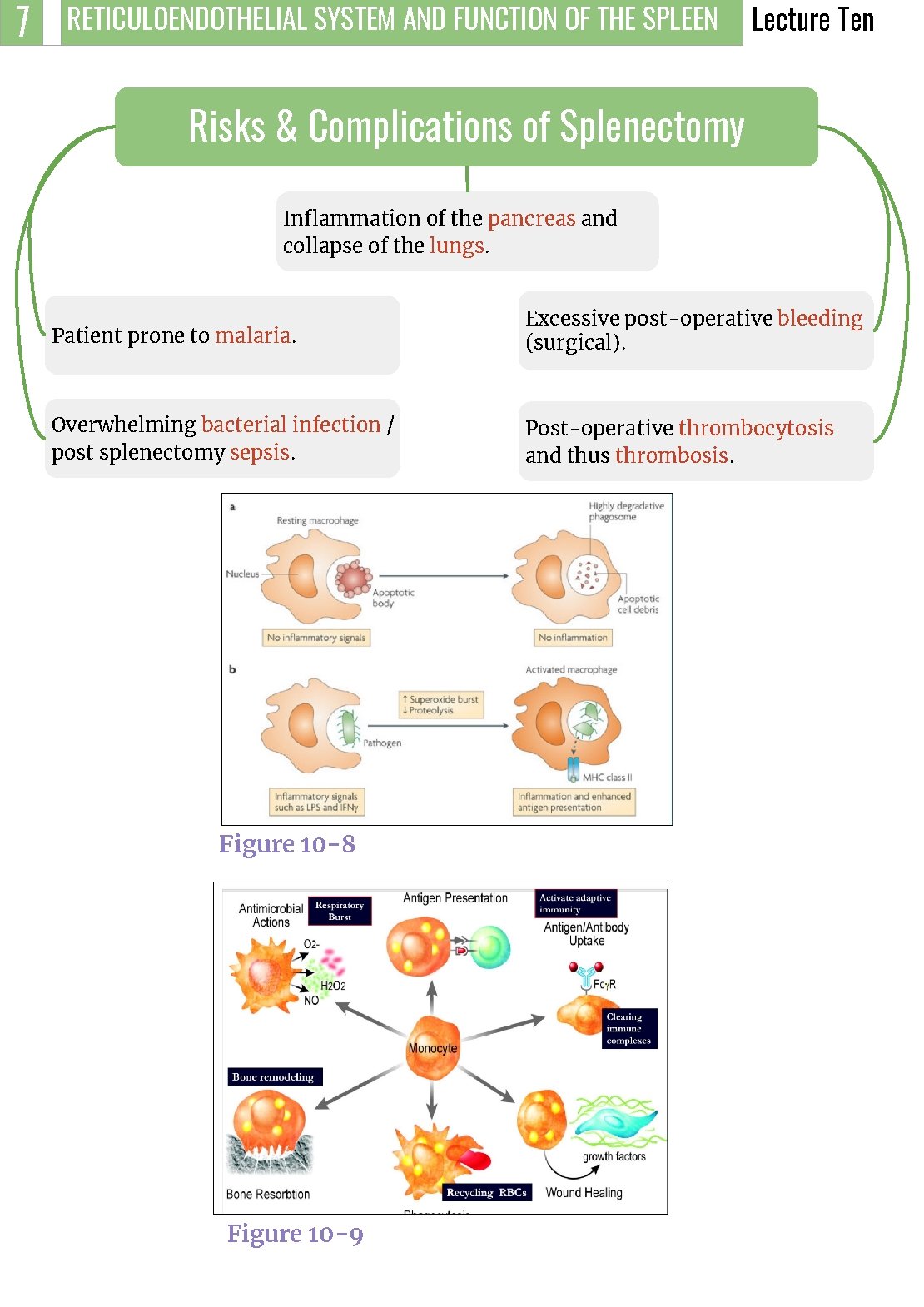
7 RETICULOENDOTHELIAL SYSTEM AND FUNCTION OF THE SPLEEN Lecture Ten Risks & Complications of Splenectomy Inflammation of the pancreas and collapse of the lungs. Patient prone to malaria. Excessive post-operative bleeding (surgical). Overwhelming bacterial infection / post splenectomy sepsis. Post-operative thrombocytosis and thus thrombosis. Figure 10 -8 Figure 10 -9
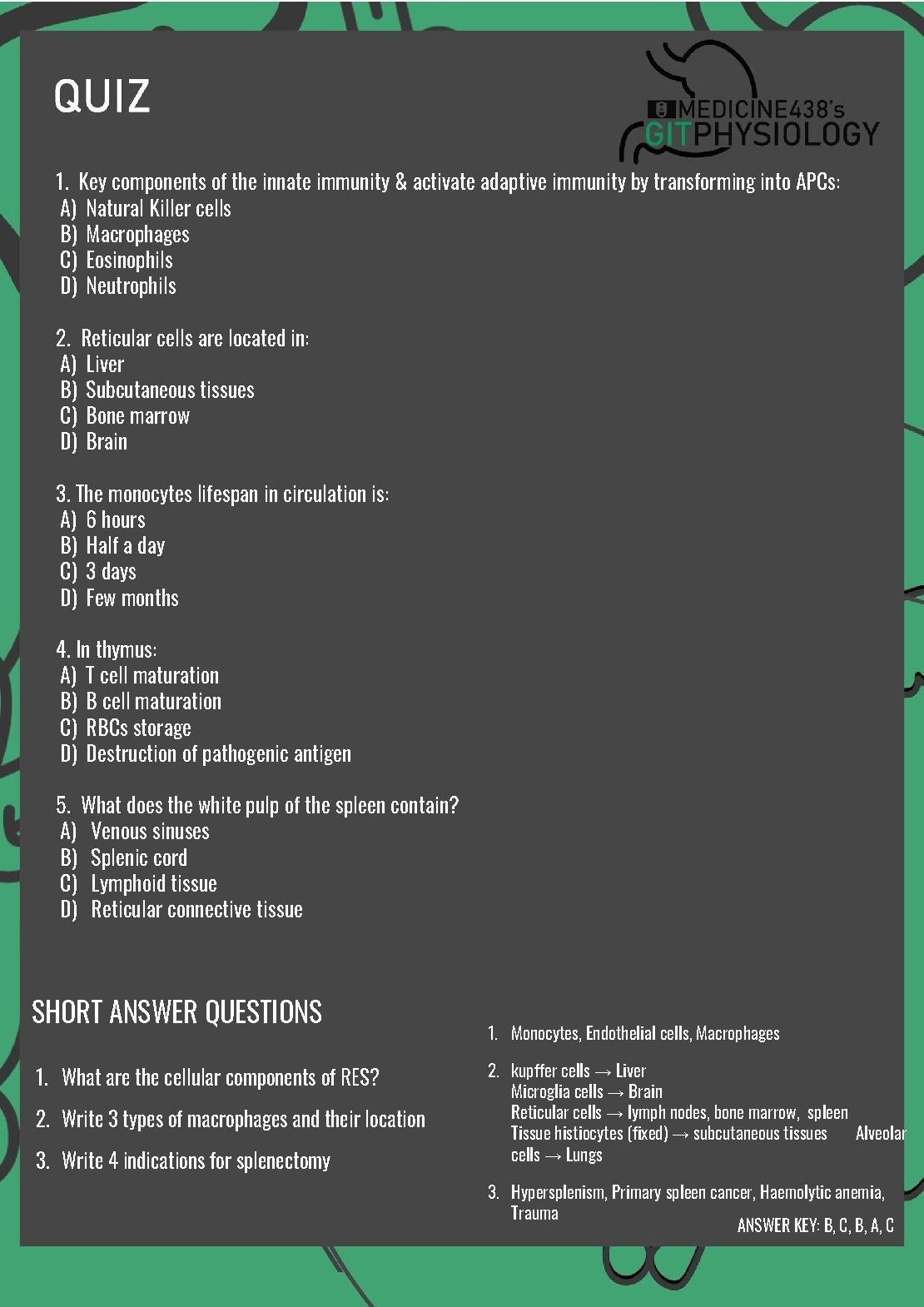
1. Key components of the innate immunity & activate adaptive immunity by transforming into APCs: A) Natural Killer cells B) Macrophages C) Eosinophils D) Neutrophils 2. Reticular cells are located in: A) Liver B) Subcutaneous tissues C) Bone marrow D) Brain 3. The monocytes lifespan in circulation is: A) 6 hours B) Half a day C) 3 days D) Few months 4. In thymus: A) T cell maturation B) B cell maturation C) RBCs storage D) Destruction of pathogenic antigen 5. What does the white pulp of the spleen contain? A) Venous sinuses B) Splenic cord C) Lymphoid tissue D) Reticular connective tissue SHORT ANSWER QUESTIONS 1. What are the cellular components of RES? 2. Write 3 types of macrophages and their location 3. Write 4 indications for splenectomy 1. Monocytes, Endothelial cells, Macrophages 2. kupffer cells → Liver Microglia cells → Brain Reticular cells → lymph nodes, bone marrow, spleen Tissue histiocytes (fixed) → subcutaneous tissues Alveolar cells → Lungs 3. Hypersplenism, Primary spleen cancer, Haemolytic anemia, Trauma ANSWER KEY: B, C, B, A, C
Naif Alsolais, Mohannad Alqarni FEMALE PHYSIOLOGY CO-LEADERS Maha Alnahdi, Taif Alshammari MALE PHYSIOLOGY CO-LEADERS Nayef Alsaber, Hameed M. Humaid REFERENCES - Guyton and Hall Textbook of Medical Physiology - Ganong’s Review of Medical Physiology