
LECTURE VI Physiology of the Colon IMPORTANT MALE

- Slides: 11
LECTURE VI: Physiology of the Colon IMPORTANT MALE SLIDES EDITING FILE EXTRA FEMALE SLIDES LECTURER’S NOTES
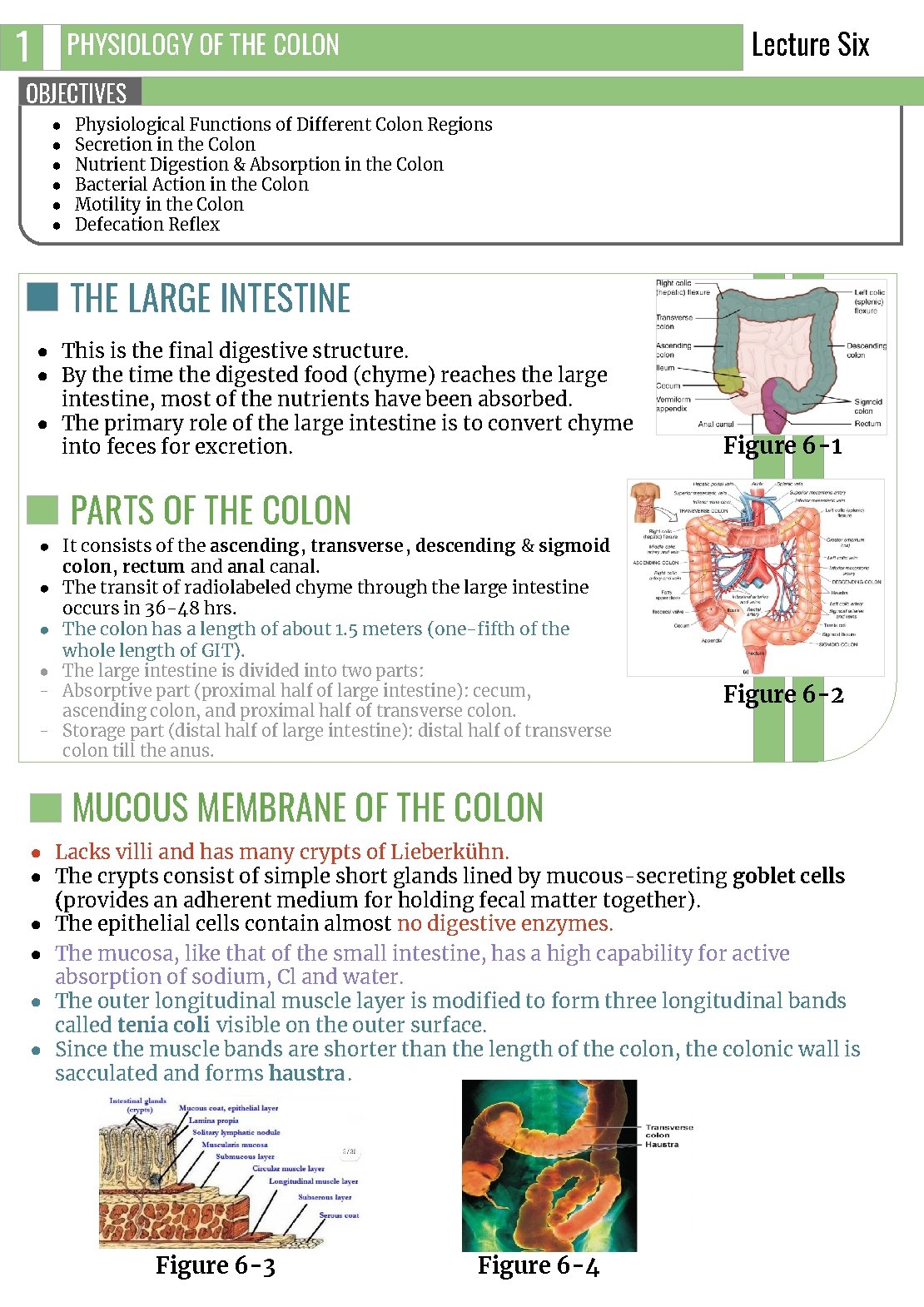
1 Lecture Six PHYSIOLOGY OF THE COLON OBJECTIVES ● ● ● Physiological Functions of Different Colon Regions Secretion in the Colon Nutrient Digestion & Absorption in the Colon Bacterial Action in the Colon Motility in the Colon Defecation Reflex THE LARGE INTESTINE ● This is the final digestive structure. ● By the time the digested food (chyme) reaches the large intestine, most of the nutrients have been absorbed. ● The primary role of the large intestine is to convert chyme into feces for excretion. Figure 6 -1 PARTS OF THE COLON ● It consists of the ascending, transverse , descending & sigmoid colon, rectum and anal canal. ● The transit of radiolabeled chyme through the large intestine occurs in 36 -48 hrs. ● The colon has a length of about 1. 5 meters (one-fifth of the whole length of GIT). ● The large intestine is divided into two parts: - Absorptive part (proximal half of large intestine): cecum, ascending colon, and proximal half of transverse colon. - Storage part (distal half of large intestine): distal half of transverse colon till the anus. Figure 6 -2 MUCOUS MEMBRANE OF THE COLON ● Lacks villi and has many crypts of Lieberkühn. ● The crypts consist of simple short glands lined by mucous-secreting goblet cells (provides an adherent medium for holding fecal matter together). ● The epithelial cells contain almost no digestive enzymes. ● The mucosa, like that of the small intestine, has a high capability for active absorption of sodium, Cl and water. ● The outer longitudinal muscle layer is modified to form three longitudinal bands called tenia coli visible on the outer surface. ● Since the muscle bands are shorter than the length of the colon, the colonic wall is sacculated and forms haustra. Figure 6 -3 Figure 6 -4
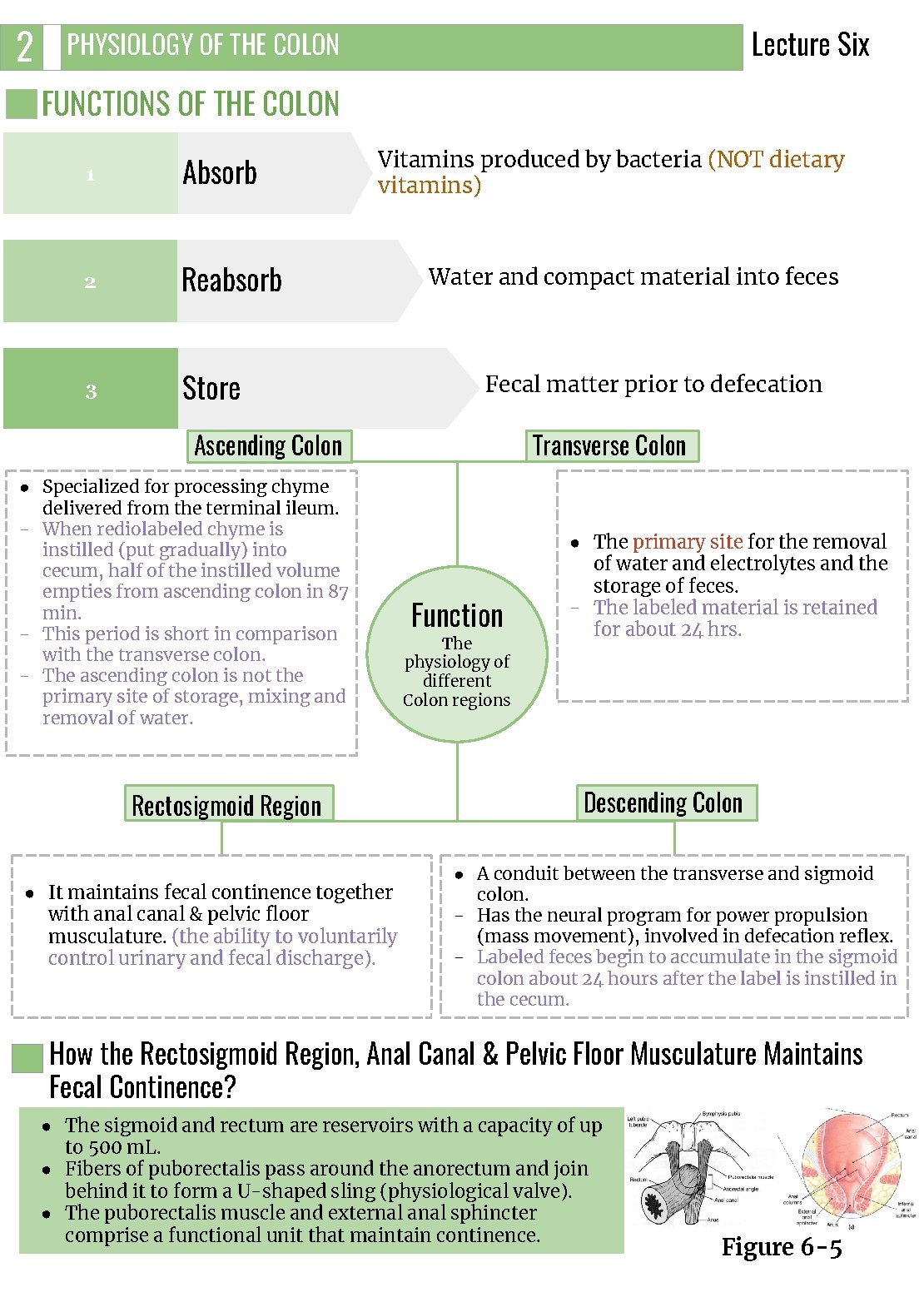
2 Lecture Six PHYSIOLOGY OF THE COLON FUNCTIONS OF THE COLON 1 Absorb 2 Reabsorb 3 Store Vitamins produced by bacteria (NOT dietary vitamins) Water and compact material into feces Fecal matter prior to defecation Transverse Colon Ascending Colon ● Specialized for processing chyme delivered from the terminal ileum. - When rediolabeled chyme is instilled (put gradually) into cecum, half of the instilled volume empties from ascending colon in 87 min. - This period is short in comparison with the transverse colon. - The ascending colon is not the primary site of storage, mixing and removal of water. Rectosigmoid Region ● It maintains fecal continence together with anal canal & pelvic floor musculature. (the ability to voluntarily control urinary and fecal discharge). Function The physiology of different Colon regions ● The primary site for the removal of water and electrolytes and the storage of feces. - The labeled material is retained for about 24 hrs. Descending Colon ● A conduit between the transverse and sigmoid colon. - Has the neural program for power propulsion (mass movement), involved in defecation reflex. - Labeled feces begin to accumulate in the sigmoid colon about 24 hours after the label is instilled in the cecum. How the Rectosigmoid Region, Anal Canal & Pelvic Floor Musculature Maintains Fecal Continence? ● The sigmoid and rectum are reservoirs with a capacity of up to 500 m. L. ● Fibers of puborectalis pass around the anorectum and join behind it to form a U-shaped sling (physiological valve). ● The puborectalis muscle and external anal sphincter comprise a functional unit that maintain continence. Figure 6 -5
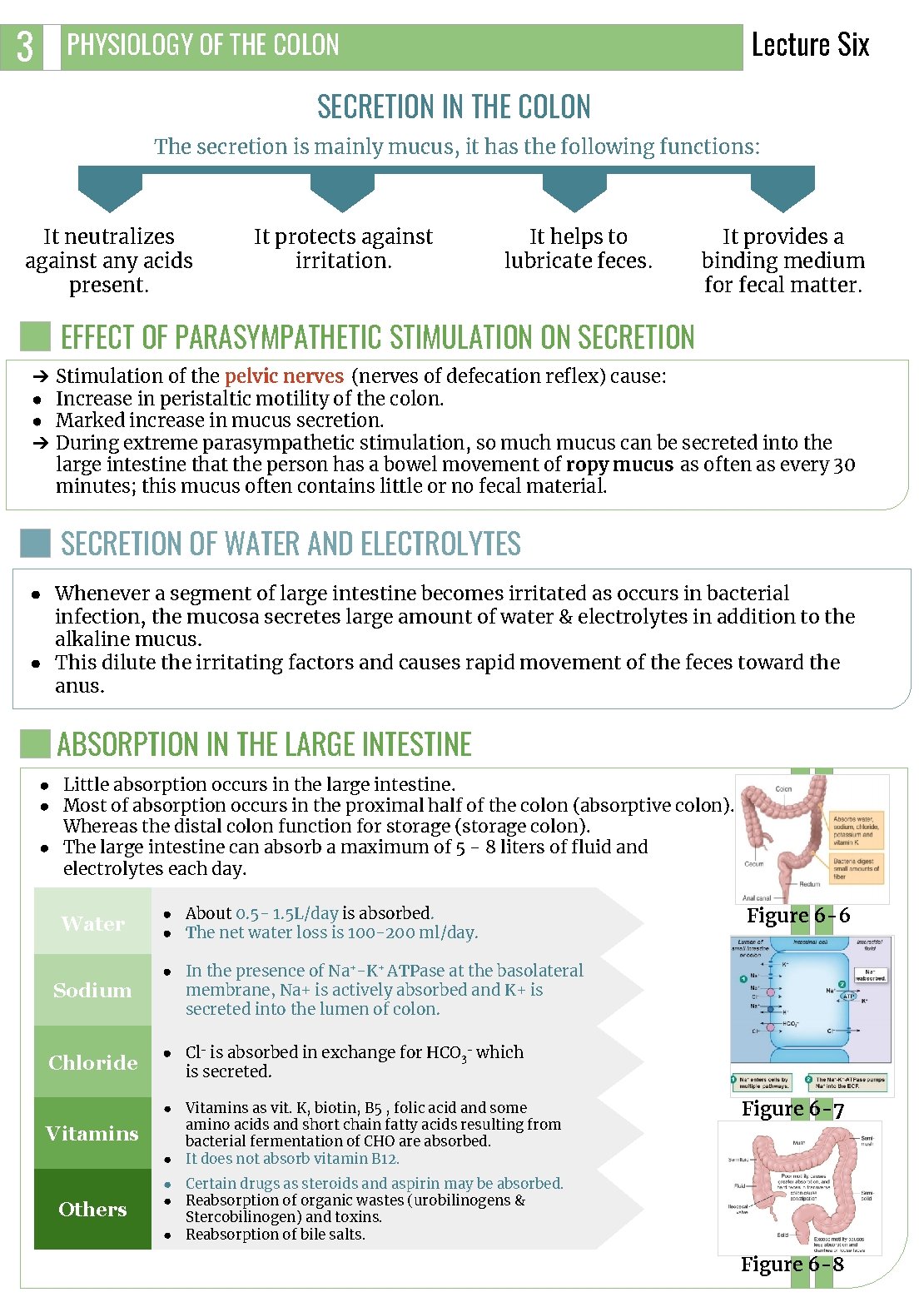
3 Lecture Six PHYSIOLOGY OF THE COLON SECRETION IN THE COLON The secretion is mainly mucus, it has the following functions: It neutralizes against any acids present. It protects against irritation. It helps to lubricate feces. It provides a binding medium for fecal matter. EFFECT OF PARASYMPATHETIC STIMULATION ON SECRETION ➔ ● ● ➔ Stimulation of the pelvic nerves (nerves of defecation reflex) cause: Increase in peristaltic motility of the colon. Marked increase in mucus secretion. During extreme parasympathetic stimulation, so much mucus can be secreted into the large intestine that the person has a bowel movement of ropy mucus as often as every 30 minutes; this mucus often contains little or no fecal material. SECRETION OF WATER AND ELECTROLYTES ● Whenever a segment of large intestine becomes irritated as occurs in bacterial infection, the mucosa secretes large amount of water & electrolytes in addition to the alkaline mucus. ● This dilute the irritating factors and causes rapid movement of the feces toward the anus. ABSORPTION IN THE LARGE INTESTINE ● Little absorption occurs in the large intestine. ● Most of absorption occurs in the proximal half of the colon (absorptive colon). Whereas the distal colon function for storage (storage colon). ● The large intestine can absorb a maximum of 5 - 8 liters of fluid and electrolytes each day. Water Sodium ● About 0. 5 - 1. 5 L/day is absorbed. ● The net water loss is 100 -200 ml/day. Figure 6 -6 ● In the presence of Na+-K+ ATPase at the basolateral membrane, Na+ is actively absorbed and K+ is secreted into the lumen of colon. Chloride ● Cl- is absorbed in exchange for HCO 3 - which is secreted. Vitamins ● Vitamins as vit. K, biotin, B 5 , folic acid and some amino acids and short chain fatty acids resulting from bacterial fermentation of CHO are absorbed. ● It does not absorb vitamin B 12. Others ● Certain drugs as steroids and aspirin may be absorbed. ● Reabsorption of organic wastes (urobilinogens & Stercobilinogen) and toxins. ● Reabsorption of bile salts. Figure 6 -7 Figure 6 -8
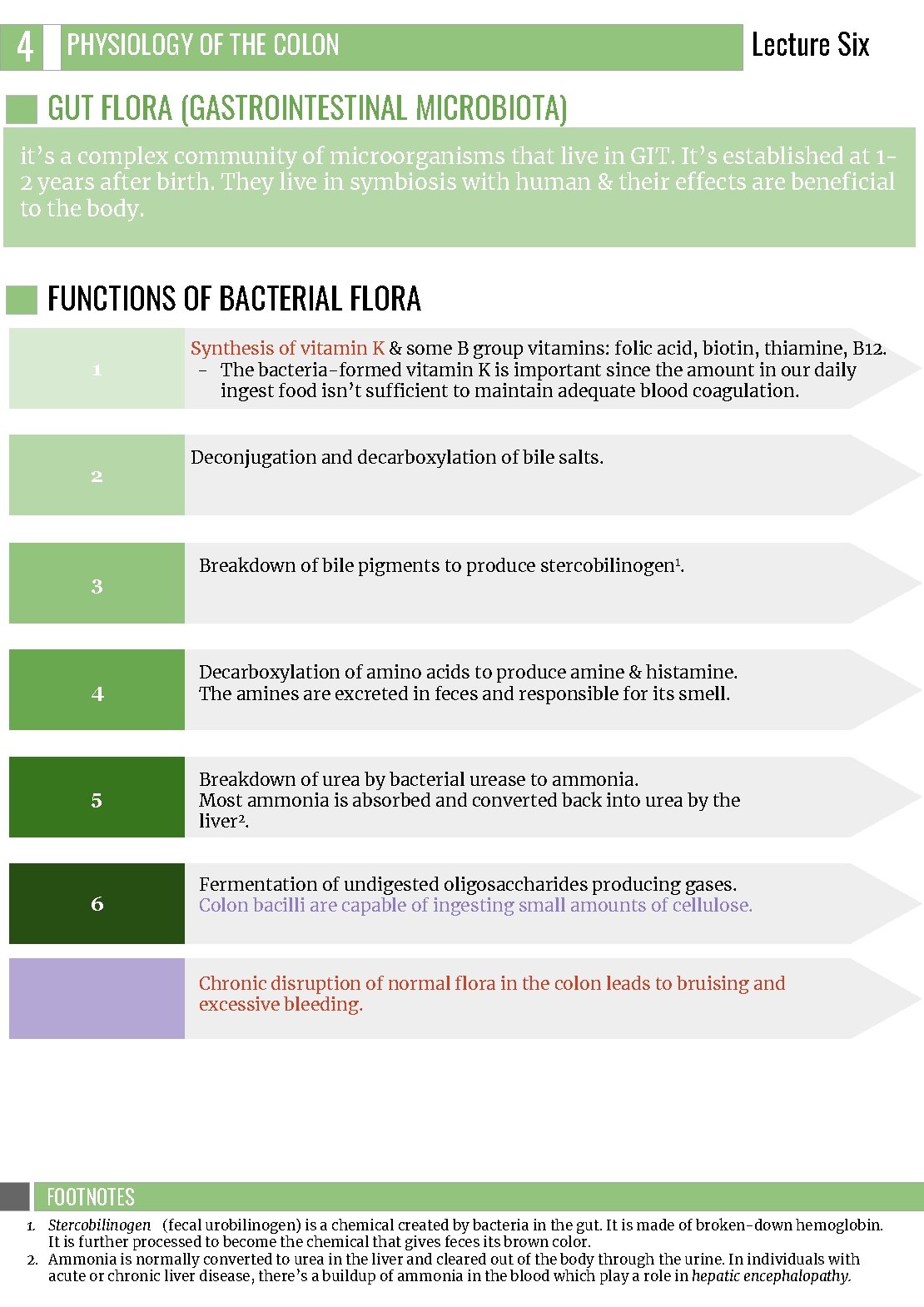
4 PHYSIOLOGY OF THE COLON Lecture Six GUT FLORA (GASTROINTESTINAL MICROBIOTA) it’s a complex community of microorganisms that live in GIT. It’s established at 12 years after birth. They live in symbiosis with human & their effects are beneficial to the body. FUNCTIONS OF BACTERIAL FLORA 1 2 3 Synthesis of vitamin K & some B group vitamins: folic acid, biotin, thiamine, B 12. - The bacteria-formed vitamin K is important since the amount in our daily ingest food isn’t sufficient to maintain adequate blood coagulation. Deconjugation and decarboxylation of bile salts. Breakdown of bile pigments to produce stercobilinogen 1. 4 Decarboxylation of amino acids to produce amine & histamine. The amines are excreted in feces and responsible for its smell. 5 Breakdown of urea by bacterial urease to ammonia. Most ammonia is absorbed and converted back into urea by the liver 2. 6 Fermentation of undigested oligosaccharides producing gases. Colon bacilli are capable of ingesting small amounts of cellulose. Chronic disruption of normal flora in the colon leads to bruising and excessive bleeding. FOOTNOTES 1. Stercobilinogen (fecal urobilinogen) is a chemical created by bacteria in the gut. It is made of broken-down hemoglobin. It is further processed to become the chemical that gives feces its brown color. 2. Ammonia is normally converted to urea in the liver and cleared out of the body through the urine. In individuals with acute or chronic liver disease, there’s a buildup of ammonia in the blood which play a role in hepatic encephalopathy.
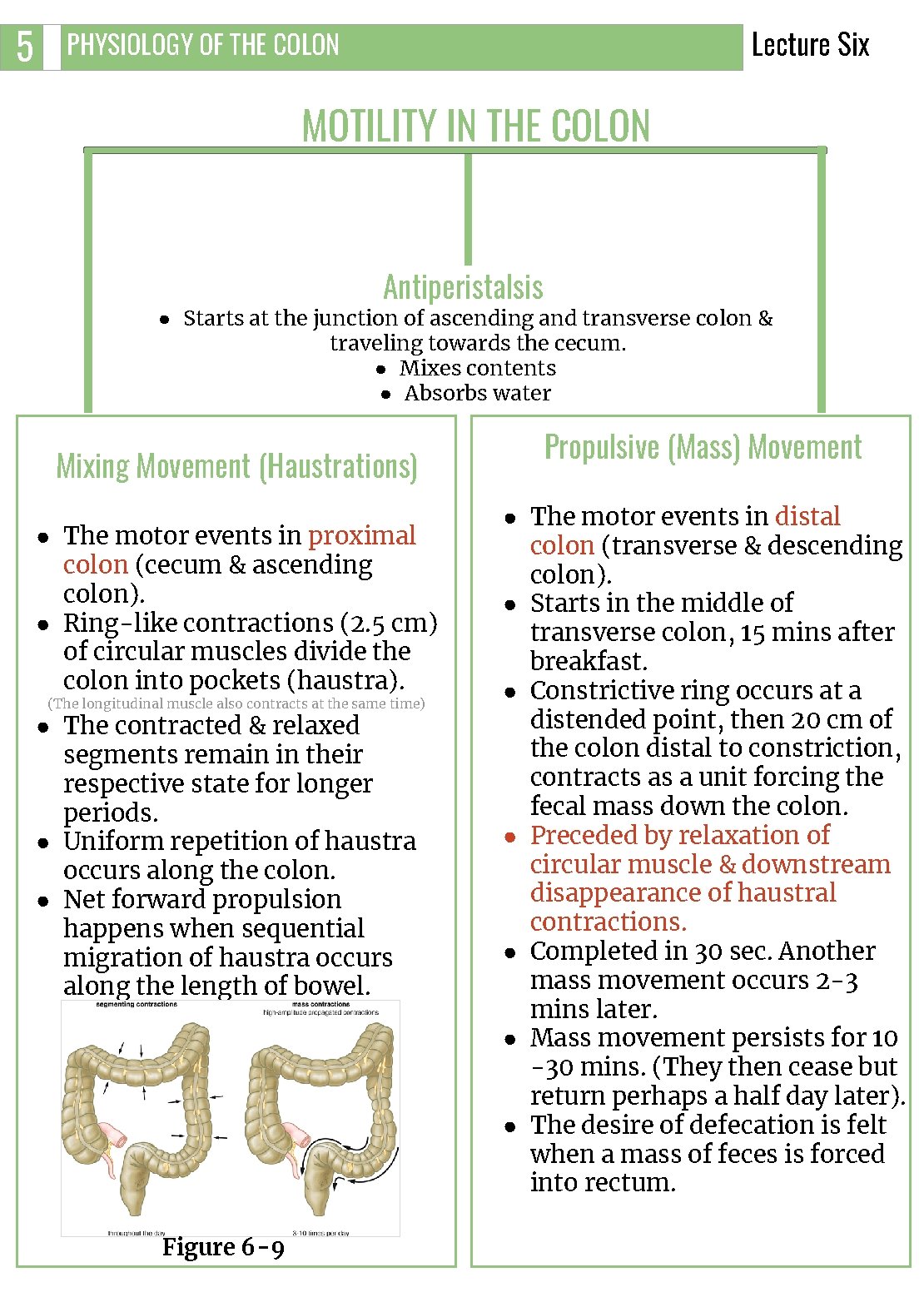
5 Lecture Six PHYSIOLOGY OF THE COLON MOTILITY IN THE COLON Antiperistalsis ● Starts at the junction of ascending and transverse colon & traveling towards the cecum. ● Mixes contents ● Absorbs water Mixing Movement (Haustrations) ● The motor events in proximal colon (cecum & ascending colon). ● Ring-like contractions (2. 5 cm) of circular muscles divide the colon into pockets (haustra). (The longitudinal muscle also contracts at the same time) ● The contracted & relaxed segments remain in their respective state for longer periods. ● Uniform repetition of haustra occurs along the colon. ● Net forward propulsion happens when sequential migration of haustra occurs along the length of bowel. Figure 6 -9 Propulsive (Mass) Movement ● The motor events in distal colon (transverse & descending colon). ● Starts in the middle of transverse colon, 15 mins after breakfast. ● Constrictive ring occurs at a distended point, then 20 cm of the colon distal to constriction, contracts as a unit forcing the fecal mass down the colon. ● Preceded by relaxation of circular muscle & downstream disappearance of haustral contractions. ● Completed in 30 sec. Another mass movement occurs 2 -3 mins later. ● Mass movement persists for 10 -30 mins. (They then cease but return perhaps a half day later). ● The desire of defecation is felt when a mass of feces is forced into rectum.
6 Lecture Six PHYSIOLOGY OF THE COLON Initiation of Mass Movement ● Gastrocolic & duodenocolic reflexes after meals. They result from distension of the stomach & duodenum. ● Irritation of the colon 1. e. g. Castor oil. ● Threatening agents. e. g. Parasites & enterotoxins can initiate mass movement. Figure 6 -10 CONTROL OF COLONIC MOTILITY Stimulatory Enteric Motor Neurons Release: Inhibitory Enteric Motor Neurons Release: Acetylcholine vasoactive intestinal peptide (VIP) Substance P Nitric oxide (NO) The extrinsic autonomic nerves to the colon modulate the control of colonic motility by enteric nervous system Table 6 -1 THE RECTUM & ANAL CANAL ● The rectum is the last portion of GIT that terminates at the anal canal. ● Contains mechanoreceptors that detect distinction. ● Skin of anal canal is innervated by somatosensory nerves that transmit pain, temperature & touch signals to CNS. ● Contraction of anal sphincters (external 2 & internal) and puborectalis muscle blocks the passage of feces and maintain continence with small volumes in the rectum. - when puborectalis is contracted, it pulls the junction of the rectum and the anal canal forwards, creating an angle in the bowel called the anorectal angle. This angle prevents the movement of stool stored in the rectum moving into the anal canal. - Conversely, relaxation of the puborectalis reduces the pull on the junction of the rectum and the anal canal, causing the anorectal angle to straighten out. A squatting posture is also known to straighten the anorectal angle, meaning that less effort is required to defecate when in this position. Figure 6 -11 Figure 6 -12 FOOTNOTES 1. For instance, a person who has an ulcerated condition of the colon mucosa (ulcerative colitis) fre quently has mass movements that persist almost all the time. 2. The external sphincter is controlled by nerve fibers in the pudendal nerve, which is part of the somatic nervous system and therefore is under voluntary control. Subconsciously, the external sphincter is usually kept continuously constricted unless conscious signals inhibit the constriction.
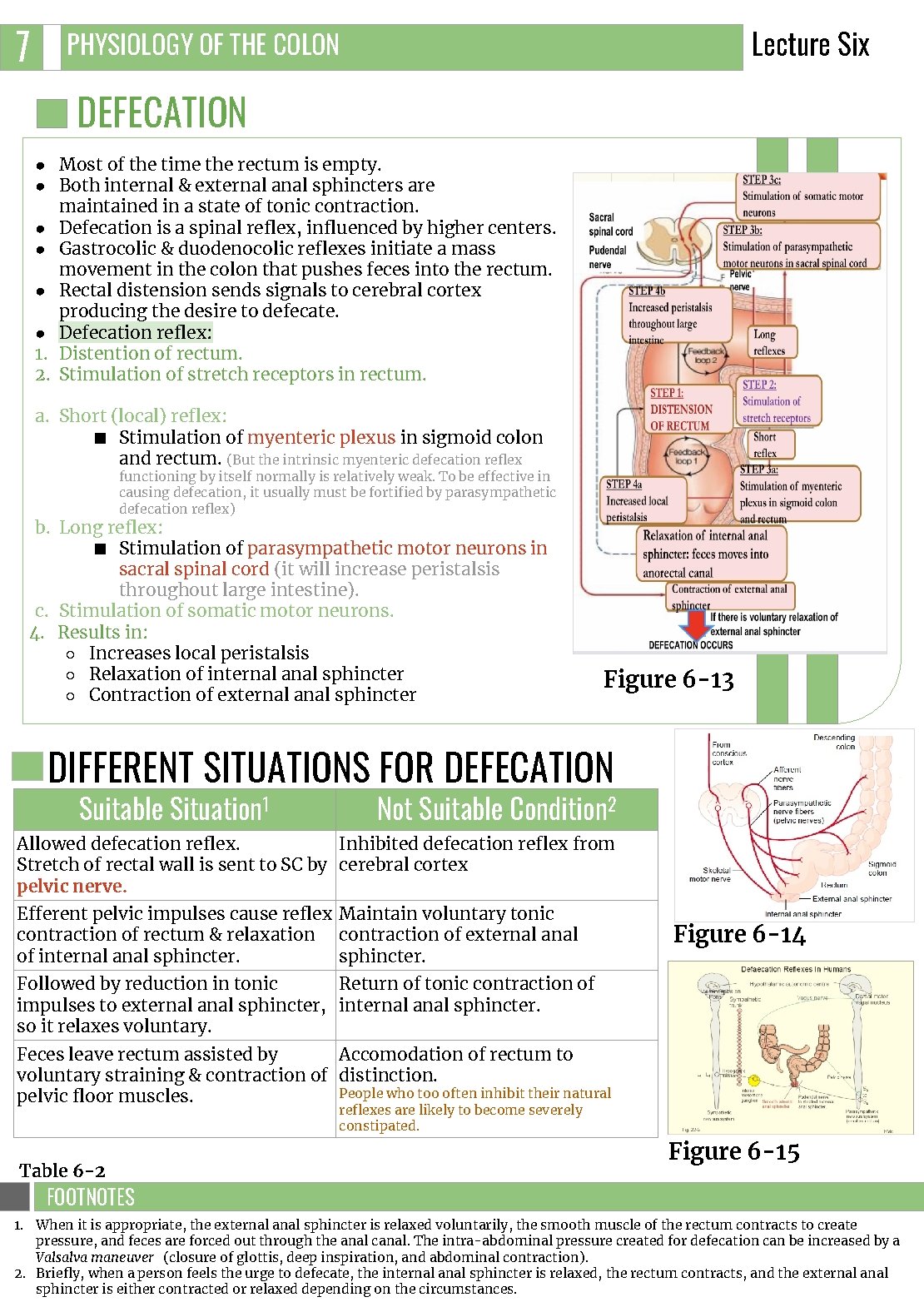
7 Lecture Six PHYSIOLOGY OF THE COLON DEFECATION ● Most of the time the rectum is empty. ● Both internal & external anal sphincters are maintained in a state of tonic contraction. ● Defecation is a spinal reflex, influenced by higher centers. ● Gastrocolic & duodenocolic reflexes initiate a mass movement in the colon that pushes feces into the rectum. ● Rectal distension sends signals to cerebral cortex producing the desire to defecate. ● Defecation reflex: 1. Distention of rectum. 2. Stimulation of stretch receptors in rectum. a. Short (local) reflex: ■ Stimulation of myenteric plexus in sigmoid colon and rectum. (But the intrinsic myenteric defecation reflex functioning by itself normally is relatively weak. To be effective in causing defecation, it usually must be fortified by parasympathetic defecation reflex) b. Long reflex: ■ Stimulation of parasympathetic motor neurons in sacral spinal cord (it will increase peristalsis throughout large intestine). c. Stimulation of somatic motor neurons. 4. Results in: ○ Increases local peristalsis ○ Relaxation of internal anal sphincter ○ Contraction of external anal sphincter Figure 6 -13 DIFFERENT SITUATIONS FOR DEFECATION Suitable Situation 1 Not Suitable Condition 2 Allowed defecation reflex. Inhibited defecation reflex from Stretch of rectal wall is sent to SC by cerebral cortex pelvic nerve. Efferent pelvic impulses cause reflex Maintain voluntary tonic contraction of rectum & relaxation contraction of external anal of internal anal sphincter. Figure 6 -14 Followed by reduction in tonic Return of tonic contraction of impulses to external anal sphincter, internal anal sphincter. so it relaxes voluntary. Feces leave rectum assisted by Accomodation of rectum to voluntary straining & contraction of distinction. People who too often inhibit their natural pelvic floor muscles. reflexes are likely to become severely constipated. Table 6 -2 Figure 6 -15 FOOTNOTES 1. When it is appropriate, the external anal sphincter is relaxed voluntarily, the smooth muscle of the rectum contracts to create pressure, and feces are forced out through the anal canal. The intra-abdominal pressure created for defecation can be increased by a Valsalva maneuver (closure of glottis, deep inspiration, and abdominal contraction). 2. Briefly, when a person feels the urge to defecate, the internal anal sphincter is relaxed, the rectum contracts, and the external anal sphincter is either contracted or relaxed depending on the circumstances.
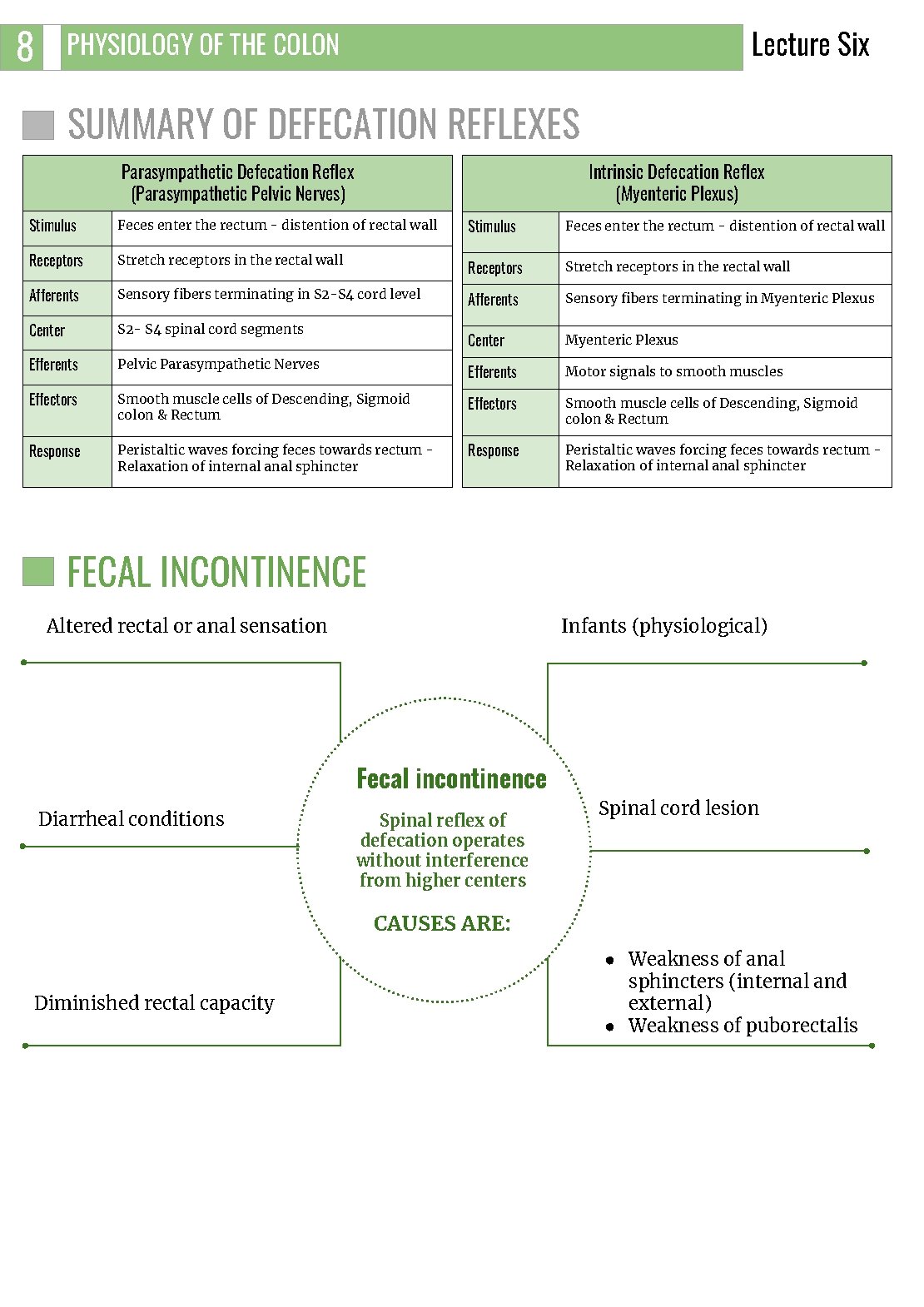
8 Lecture Six PHYSIOLOGY OF THE COLON SUMMARY OF DEFECATION REFLEXES Intrinsic Defecation Reflex (Myenteric Plexus) Parasympathetic Defecation Reflex (Parasympathetic Pelvic Nerves) Stimulus Feces enter the rectum - distention of rectal wall Receptors Stretch receptors in the rectal wall Afferents Sensory fibers terminating in S 2 -S 4 cord level Afferents Sensory fibers terminating in Myenteric Plexus Center S 2 - S 4 spinal cord segments Myenteric Plexus Efferents Center Pelvic Parasympathetic Nerves Efferents Motor signals to smooth muscles Effectors Smooth muscle cells of Descending, Sigmoid colon & Rectum Response Peristaltic waves forcing feces towards rectum Relaxation of internal anal sphincter FECAL INCONTINENCE Altered rectal or anal sensation Infants (physiological) Fecal incontinence Diarrheal conditions Spinal reflex of defecation operates without interference from higher centers Spinal cord lesion CAUSES ARE: Diminished rectal capacity ● Weakness of anal sphincters (internal and external) ● Weakness of puborectalis
1. A) B) C) D) Which colon region is specialized for processing chyme delivered from the terminal ileum? Ascending colon Transverse colon Descending colon Rectosigmoid region 2. A) B) C) Which of the following statements about colonic motility is true? Mass contractions involve only the rectum Antiperistaltic contractions occur in the descending colon Defecation involves both sensory and motor pathways 3. Mass movements are often stimulated after a meal by distention of the stomach (gastrocolic reflex) and distention of the duodenum (duodenocolic reflex). Mass movements often lead to which of the following? A) B) C) D) E) Bowel movements Gastric movements Haustrations Esophageal contractions Pharyngeal peristalsis 4. The SC of 60 YO is severed at T 6 in an automobile accident. She devises a method to distend the rectum to initiate the rectosphincteric reflex. Rectal distention causes which of the following responses in this women? A) B) C) D) E) Contraction of the rectum Contraction of EAS, contraction of the rectum Relaxation of IAS, contraction of EAS, contraction of the rectum A) B) C) D) Contraction of EAS & rectum Relaxation of IAS, contraction of EAS & rectum 5. After 20 mins of eating a big meal, a 20 YO women feels the urge to defecate, but manages to hold it. Which mechanism occurred in this women? SHORT ANSWER QUESTIONS Q 1: What are three functions of the colon? Q 2: What does reabsorption in the large intestine include? Q 3: What are the causes of fecal incontinence? 1. Absorb vitamins produced by bacteria. Reabsorb water and compact material into feces. Store facial matter prior to defecation. 2. Water, vitamins, bile salts, and toxins. 3. Spinal cord injury, altered rectal or anal sensation, weakness of anal sphincters or puborectalis. ANSWER KEY: A, C, D
Shahd Alsalamh, Shahad Althaqep FEMALE PHYSIOLOGY CO-LEADERS Maha Alnahdi, Taif Alshammari MALE PHYSIOLOGY CO-LEADERS Nayef Alsaber, Hameed M. Humaid REFERENCES - Guyton and Hall Textbook of Medical Physiology - Ganong’s Review of Medical Physiology