
Lecture topics Elements stars and the solar system

- Slides: 21
Lecture topics • Elements, stars and the solar system • Earthquakes • Volcanoes • Tsunamis • Plate tectonics • Nov. 2 - Midterm
Today’s Lecture • Review of volcano classification • Volcano explosivity index (VEI) • Controls on eruption style • Monitoring volcanoes • Volcanoes and plate boundaries
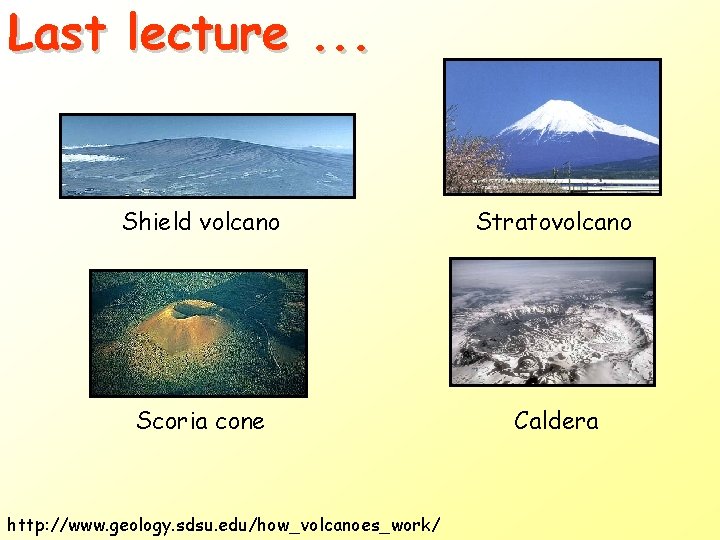
Last lecture. . . Shield volcano Stratovolcano Scoria cone Caldera http: //www. geology. sdsu. edu/how_volcanoes_work/
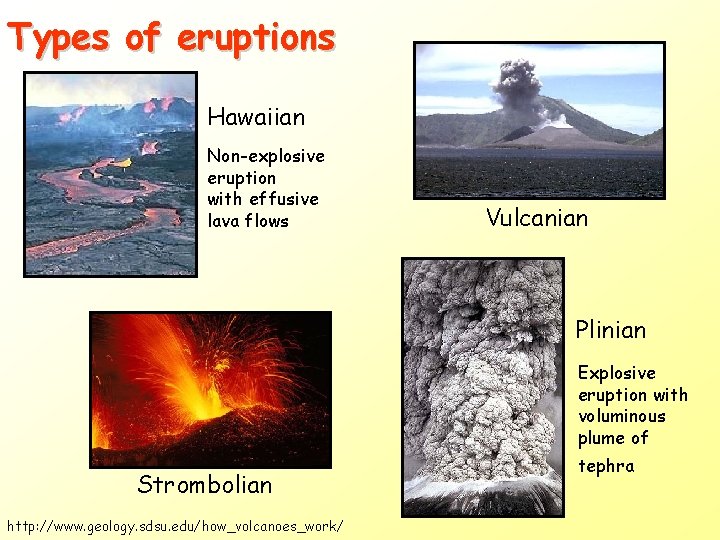
Types of eruptions Hawaiian Non-explosive eruption with effusive lava flows Vulcanian Plinian Explosive eruption with voluminous plume of Strombolian http: //www. geology. sdsu. edu/how_volcanoes_work/ tephra
MEASURING EXPLOSIVENESS: The Volcano Explosivity Index (VEI) http: //www. geology. sdsu. edu/how_volcanoes_work/
PHYSICOCHEMICAL CONTROLS ON ERUPTION STYLE • Magma viscosity • Bulk composition and temperature • Dissolved gas http: //www. geology. sdsu. edu/how_volcanoes_work/
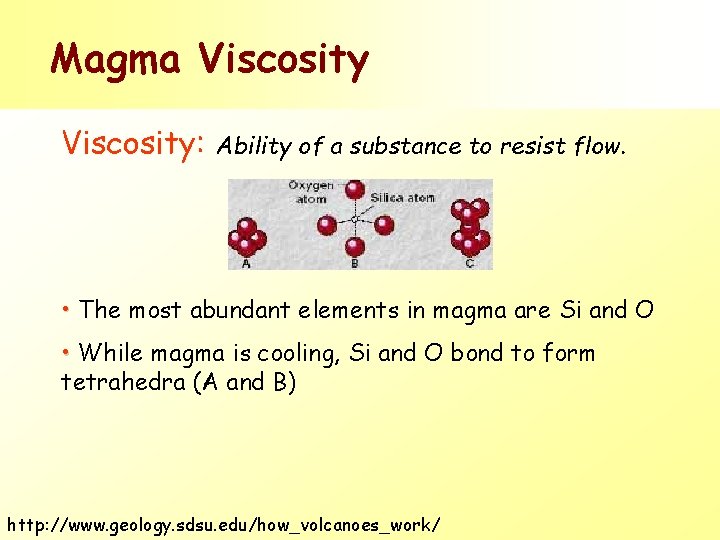
Magma Viscosity: Ability of a substance to resist flow. • The most abundant elements in magma are Si and O • While magma is cooling, Si and O bond to form tetrahedra (A and B) http: //www. geology. sdsu. edu/how_volcanoes_work/
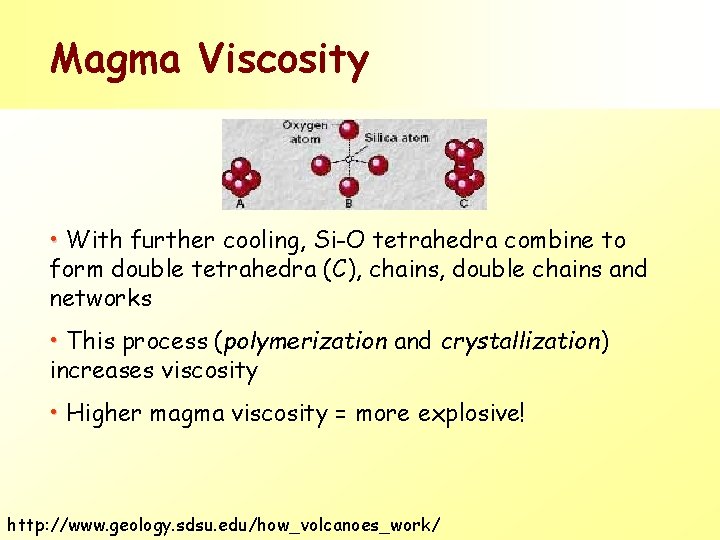
Magma Viscosity • With further cooling, Si-O tetrahedra combine to form double tetrahedra (C), chains, double chains and networks • This process (polymerization and crystallization) increases viscosity • Higher magma viscosity = more explosive! http: //www. geology. sdsu. edu/how_volcanoes_work/
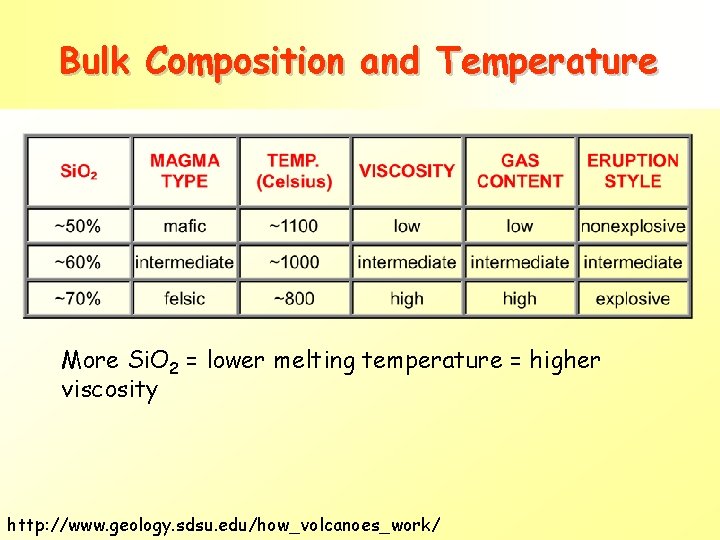
Bulk Composition and Temperature More Si. O 2 = lower melting temperature = higher viscosity http: //www. geology. sdsu. edu/how_volcanoes_work/
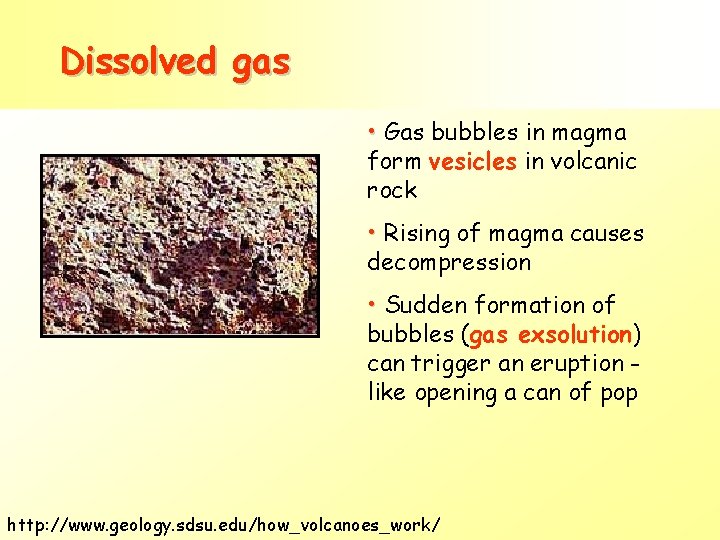
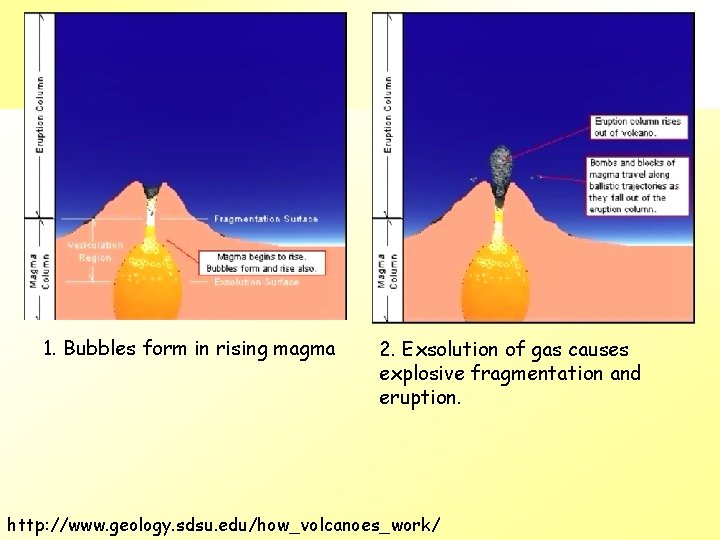
Dissolved gas • Gas bubbles in magma form vesicles in volcanic rock • Rising of magma causes decompression • Sudden formation of bubbles (gas exsolution) can trigger an eruption like opening a can of pop http: //www. geology. sdsu. edu/how_volcanoes_work/
1. Bubbles form in rising magma 2. Exsolution of gas causes explosive fragmentation and eruption. http: //www. geology. sdsu. edu/how_volcanoes_work/
Monitoring Volcanoes • Deformation (tilt) ( • Seismic activity (focal depth) • Gas chemistry http: //volcano. und. nodak. edu/vwdocs/vwlessons/monitors. html
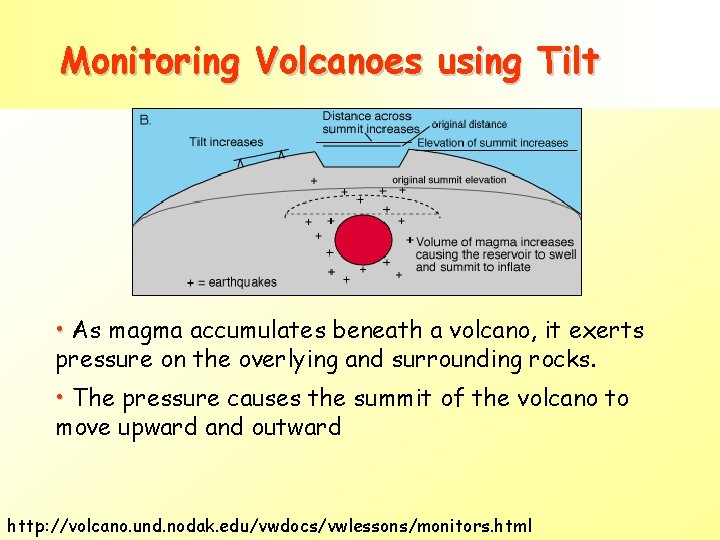
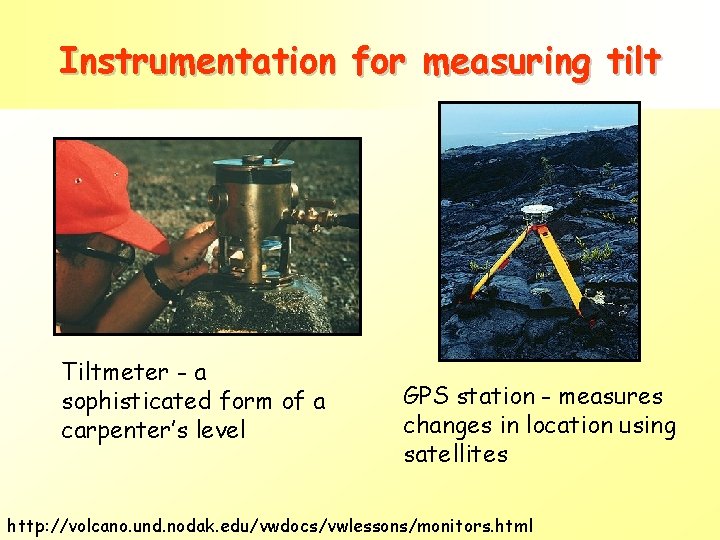
Monitoring Volcanoes using Tilt • As magma accumulates beneath a volcano, it exerts pressure on the overlying and surrounding rocks. • The pressure causes the summit of the volcano to move upward and outward http: //volcano. und. nodak. edu/vwdocs/vwlessons/monitors. html
Instrumentation for measuring tilt Tiltmeter - a sophisticated form of a carpenter’s level GPS station - measures changes in location using satellites http: //volcano. und. nodak. edu/vwdocs/vwlessons/monitors. html
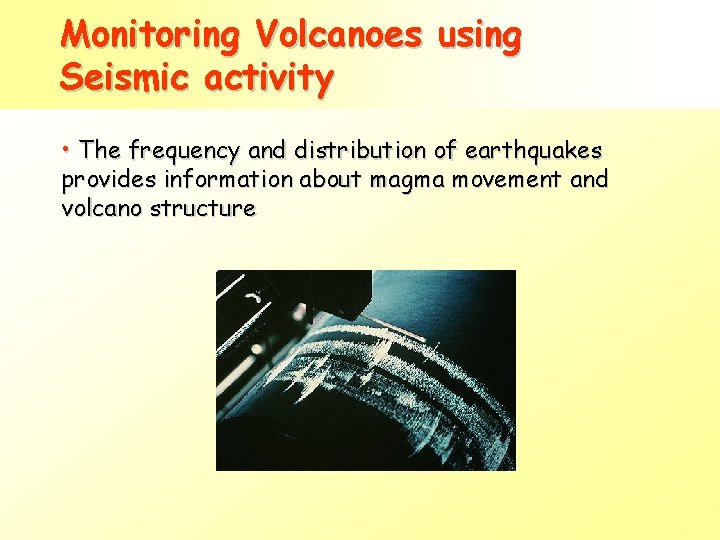
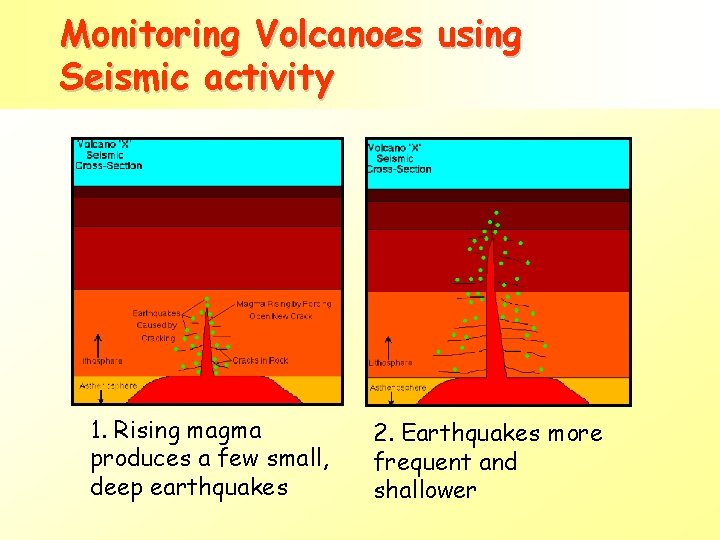
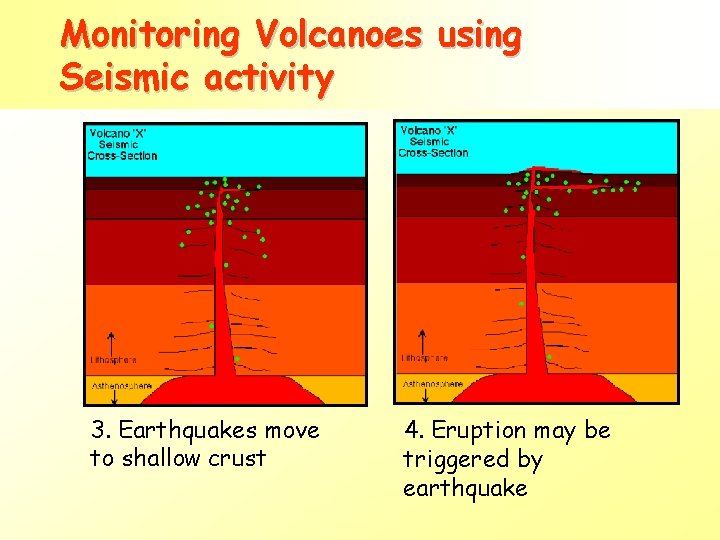
Monitoring Volcanoes using Seismic activity • The frequency and distribution of earthquakes provides information about magma movement and volcano structure
Monitoring Volcanoes using Seismic activity 1. Rising magma produces a few small, deep earthquakes 2. Earthquakes more frequent and shallower
Monitoring Volcanoes using Seismic activity 3. Earthquakes move to shallow crust 4. Eruption may be triggered by earthquake
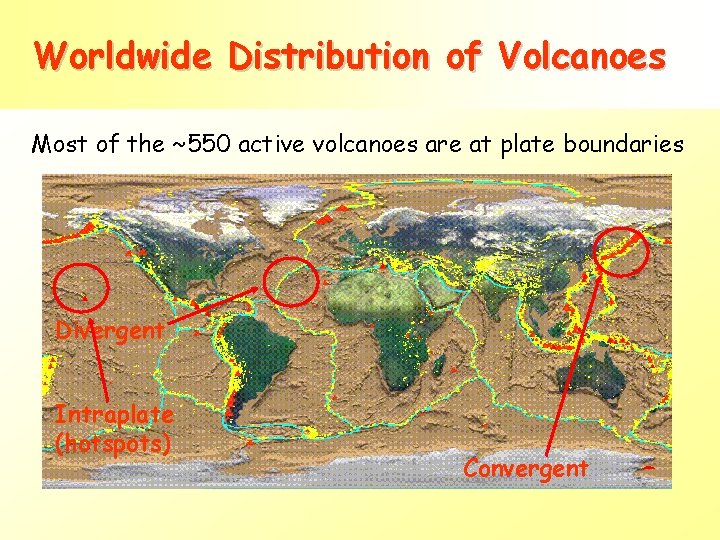
Worldwide Distribution of Volcanoes Most of the ~550 active volcanoes are at plate boundaries Divergent Intraplate (hotspots) Convergent
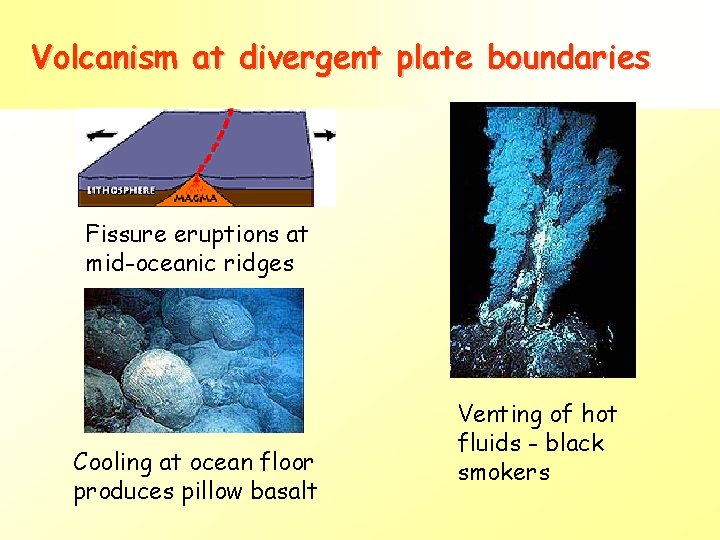
Volcanism at divergent plate boundaries Fissure eruptions at mid-oceanic ridges Cooling at ocean floor produces pillow basalt Venting of hot fluids - black smokers
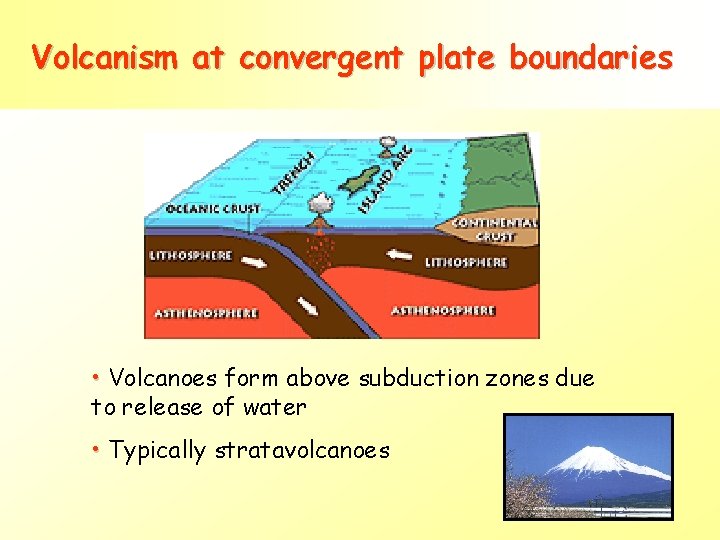
Volcanism at convergent plate boundaries • Volcanoes form above subduction zones due to release of water • Typically stratavolcanoes
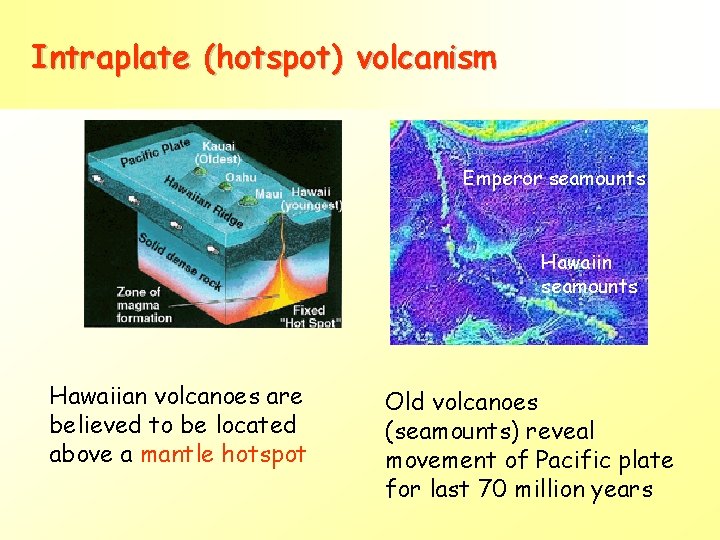
Intraplate (hotspot) volcanism Emperor seamounts Hawaiin seamounts Hawaiian volcanoes are believed to be located above a mantle hotspot Old volcanoes (seamounts) reveal movement of Pacific plate for last 70 million years