
Lecture Title post op pain management Lecturer name













- Slides: 136
Lecture Title : post op pain management Lecturer name: Fatma Al-Dammas Assistant Professor Lecture Date:
The management of pain is a multidisciplinary team effort involving physicians, psychologists, nurses, and physical therapists. Copyright © 2003 American Society of Anesthesiologists. All rights reserved
GOAL OF PAIN TREATMENT • Improve quality of the pt. • Facilitate rapid recovery &return to full function. • Reduce morbidity. • Allow early discharge from hospital.
Causes of Post-Operative Pain l Incisional skin and subcutaneous tissue l Deep Positional IV site Tubes Respiratory Rehab Surgical Others l l l l cutting, coagulation, trauma nerve compression, traction & bed sore. needle trauma, extravasation, venous irritation drains, nasogastric tube, ETT from ETT, coughing, deep breathing physiotherapy, movement, ambulation complication of surgery cast, dressing too tight, urinary retention
Pain Physiology
Pain is subjective and difficult to quantify
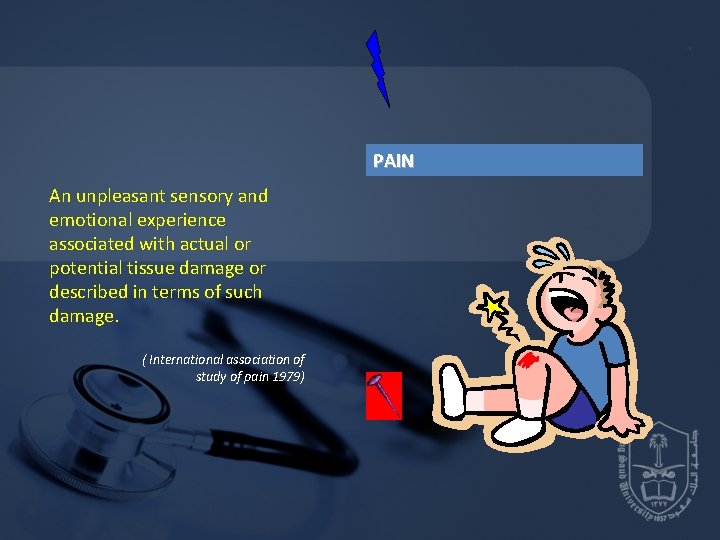
PAIN An unpleasant sensory and emotional experience associated with actual or potential tissue damage or described in terms of such damage. ( International association of study of pain 1979)
CLASSIFICATION OF PAIN
CLASSIFICATION OF PAIN According to Pathophysiology • Nociceptive; Due to activation, sensitization of peripheral nociceptors. • Neuropathic: Due to injury or acquired abnormalities of peripheral OR central nervous system.
CLASSIFICATION OF PAIN According to Etiology • Post operative OR • Cancer pain
CLASSIFICATION OF PAIN According to Type of organ affected – Toothache – Earache – Headache – Low backache
ACUTE PAIN .
ACUTE PAIN • Caused by noxious stimulation due to injury, a disease process or abnormal function of muscle or viscera • It is nearly always nociceptive • Nociceptive pain serves to detect, localize and limit the tissue damage.
TYPES OF ACUTE PAIN • Somatic OR • Visceral
SOMATIC PAIN • Superficial OR • Deep
SUPERFICIAL SOMATIC PAIN • Nociceptive input from skin, sub-cutaneous tissue and mucous membranes • Well localized and described as sharp, pricking, burning and throbbing
DEEP SOMATIC PAIN • Arise from Muscles, Tendons and Bones • Dull, aching quality and is less well localized • Intensity and Duration of stimulus affects the degree of localization
VISCERAL PAIN • Due to disease process, abnormal function of internal organ or its covering, e. g. Parietal pleura, Pericardium or Peritoneum.
SUBTYPES OF VISCERAL PAIN – True localized visceral pain – Localized parietal pain – Referred Visceral pain – Referred parietal pain
VISCERAL PAIN • Dull, diffuse and in midline • Frequently associated with abnormal sympathetic activity causing nausea, vomiting, sweating and changes in heart rate and blood pressure.
PARIETAL PAIN • Sharp, often described as stabbing sensation either localized to the area around the organ or referred to a distant site.
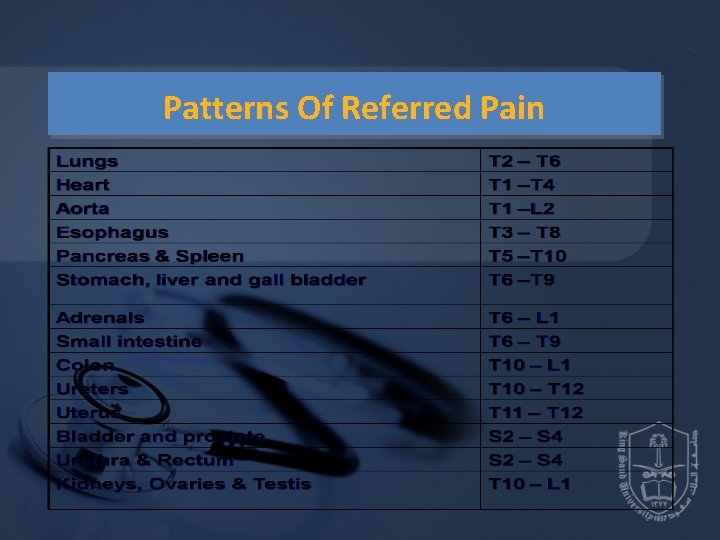
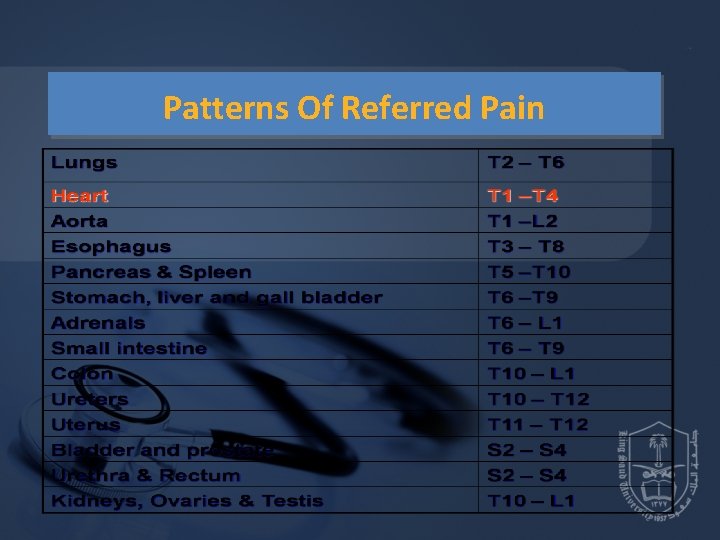
Patterns Of Referred Pain
Patterns Of Referred Pain
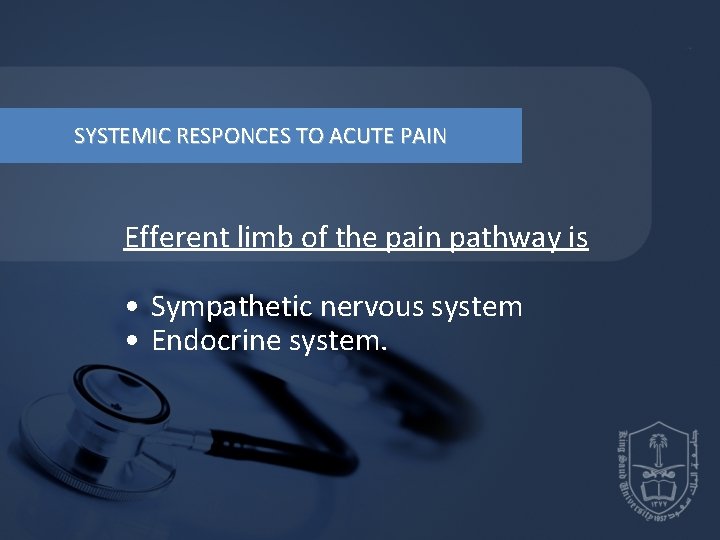
SYSTEMIC RESPONCES TO ACUTE PAIN Efferent limb of the pain pathway is • Sympathetic nervous system • Endocrine system.
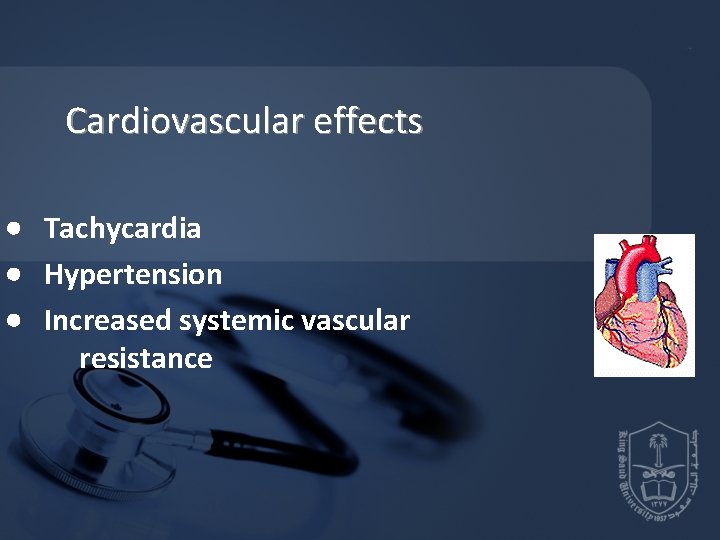
Cardiovascular effects · Tachycardia · Hypertension · Increased systemic vascular resistance
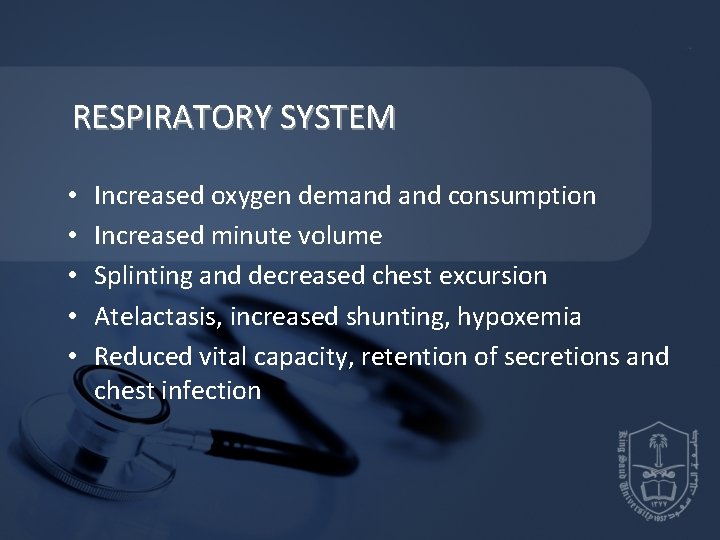
RESPIRATORY SYSTEM • • • Increased oxygen demand consumption Increased minute volume Splinting and decreased chest excursion Atelactasis, increased shunting, hypoxemia Reduced vital capacity, retention of secretions and chest infection
Gastrointestinal and Urinary Effects • • • Increased sympathetic tone Decreased motility, ileus and urinary retention Hypersecretion of stomach Increased chance of aspiration Abdominal distension leads to decreased chest excursion
ENDOCRINE EFFECTS • Increase secretion of Catecholamine, Cartisol and Glucagon • Decreased secretion of Insulin and testosterone
HEMATOLOGICAL EFFECTS • • Increased platelet adhesiveness Reduced fibrinolysis and hypercoagulatability
IMMUNE EFFECTS Leukocytosis Lymphopenia Depression of reticuloendothetial system
GENERAL SENSE OF WELL-BEING • Anxiety • Sleep disturbances • Depression
POSITIVE ROLE OF PAIN Acute pain plays a useful positive physiological role by providing a warning of tissue damage.
Acute Pain management • Pain management continues to be a challenge to nurses. • PCA &epidural analgesia are advance in analgesia that may assist nurse with this challenge • Pain management can be evaluated in terms of its ability to meet 2 main goals: – To relieve postoperative pain. – To relieve patient of inhibition of respiratory movement without sedation.
CHRONIC PAIN • Chronic pain is defined as that which persists beyond the usual course of an acute disease or after a reasonable time for healing to occur • period varies between 6 or > months in most definitions.
CHRONIC PAIN • Chronic pain may be nociceptive, neuropathic, or a combination of both.
CHRONIC PAIN • Pt with chronic pain often have an absent nuroendocrine stress response • Have prominent sleep and affective (mood) disturbances.
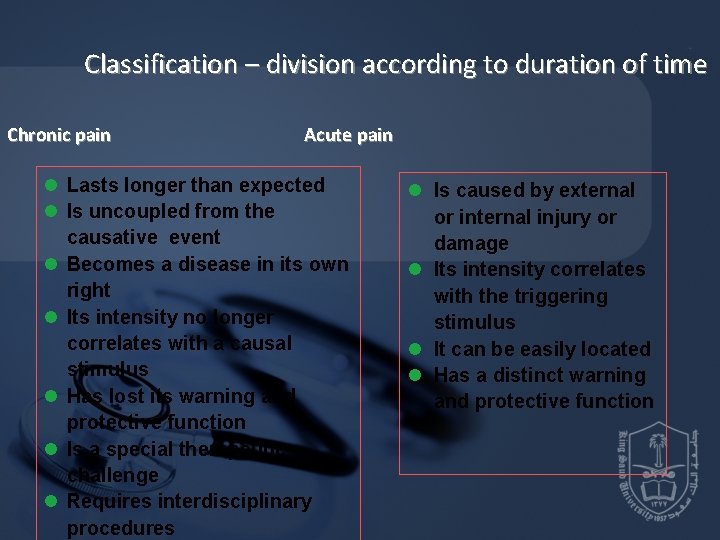
Classification – division according to duration of time Chronic pain Acute pain l Lasts longer than expected l Is uncoupled from the causative event l Becomes a disease in its own right l Its intensity no longer correlates with a causal stimulus l Has lost its warning and protective function l Is a special therapeutic challenge l Requires interdisciplinary procedures l Is caused by external or internal injury or damage l Its intensity correlates with the triggering stimulus l It can be easily located l Has a distinct warning and protective function
2
INTR : G N I C ODU F E H “T T I V IFTH ” N G I S L A s s a n i a p s a m m a D l A a r o s s Fatm e f Pro t n a t s i s As t n e m s es
• Ask your patients about their pain
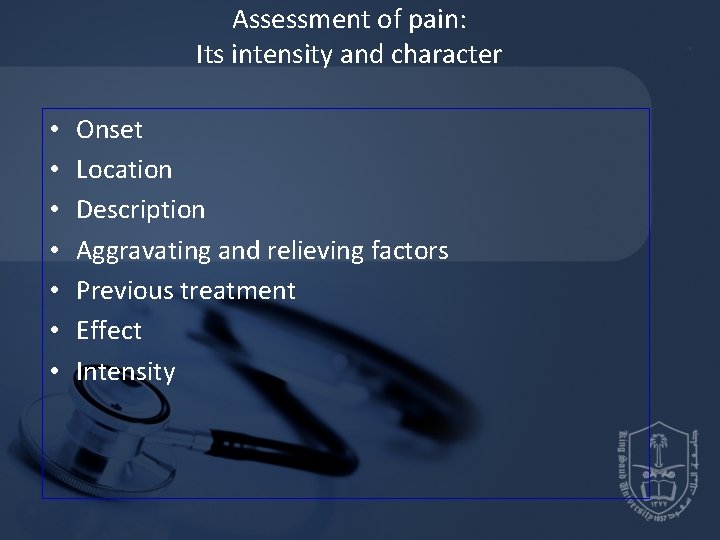
Assessment of pain: Its intensity and character • • Onset Location Description Aggravating and relieving factors Previous treatment Effect Intensity
ASSESSMENT OF PAIN Measurement tools provide a valuable means of overcoming this problem.
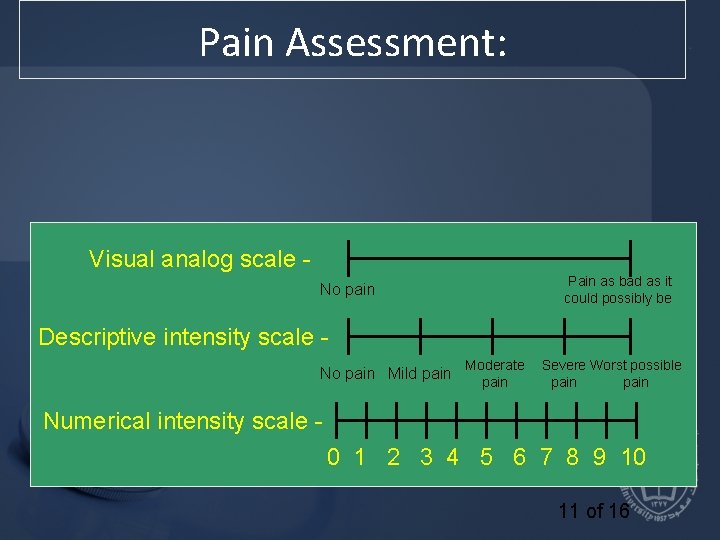
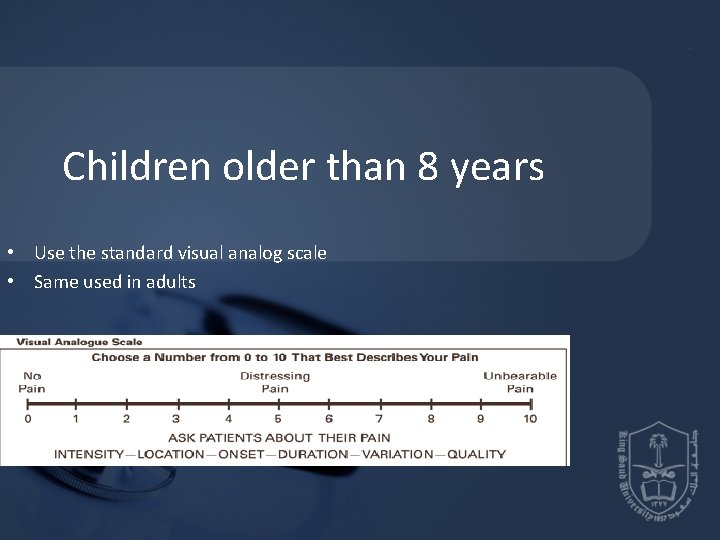
Pain Assessment: Visual analog scale Pain as bad as it could possibly be No pain What is the severity of the pain? Descriptive intensity scale No pain Mild pain Moderate pain Severe Worst possible pain Numerical intensity scale 0 1 2 3 4 5 6 7 8 9 10 11 of 16
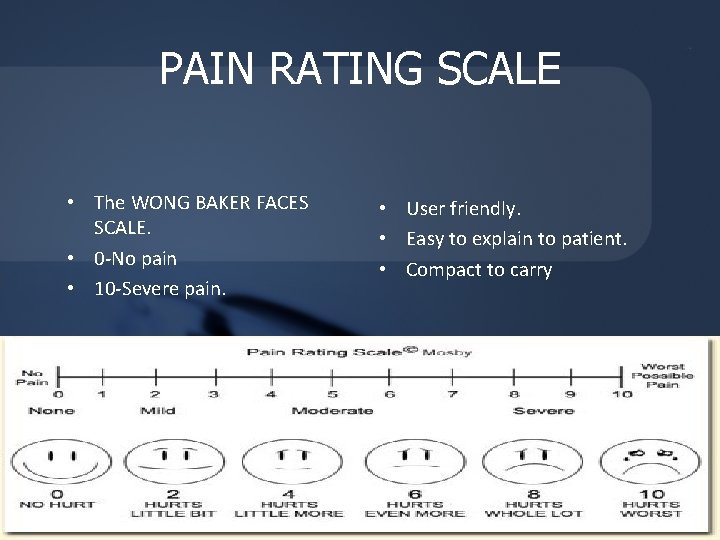
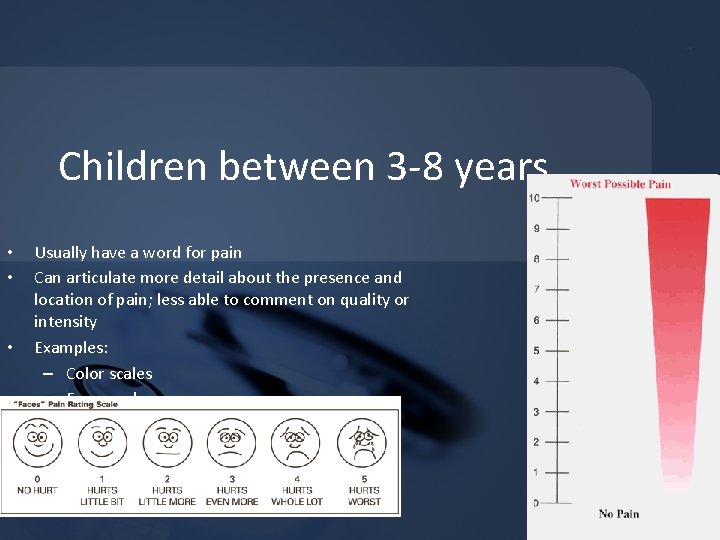
PAIN RATING SCALE • The WONG BAKER FACES SCALE. • 0 -No pain • 10 -Severe pain. • User friendly. • Easy to explain to patient. • Compact to carry
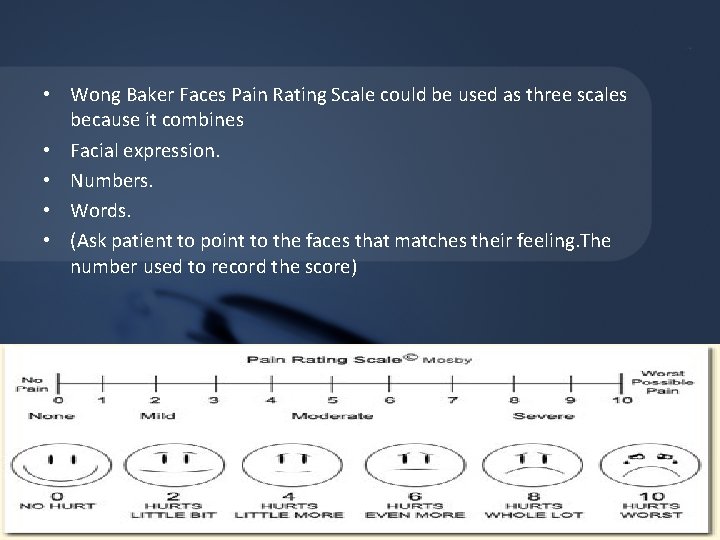
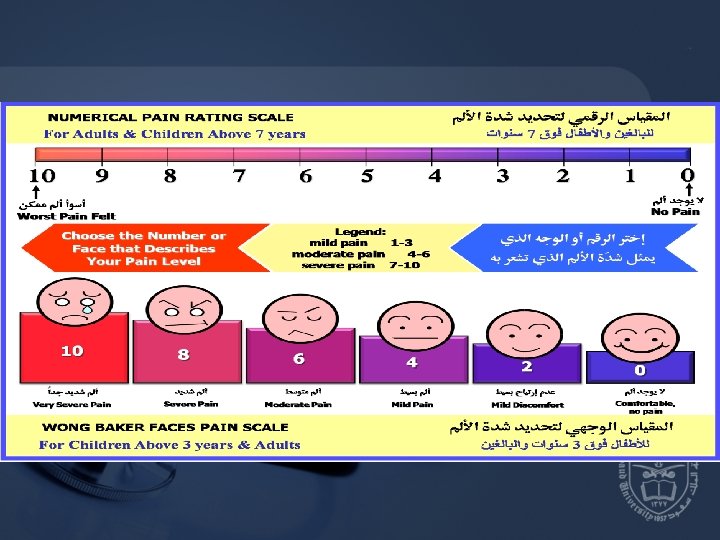
• Wong Baker Faces Pain Rating Scale could be used as three scales because it combines • Facial expression. • Numbers. • Words. • (Ask patient to point to the faces that matches their feeling. The number used to record the score)
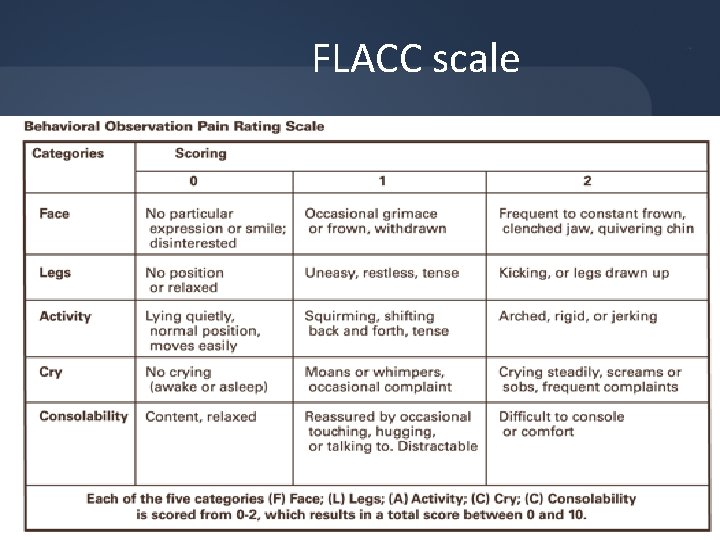
FLACC scale
Children between 3 -8 years • • • Usually have a word for pain Can articulate more detail about the presence and location of pain; less able to comment on quality or intensity Examples: – Color scales – Faces scales
Children older than 8 years • Use the standard visual analog scale • Same used in adults
INTR : G N I C ODU F E H “T T I V IFTH ” N G I S L A n i a P f o y g o l o c a m Phar t n e m e g a Man s a m m a D l A a r o s s Fatm e f Pro t n a t s i s As
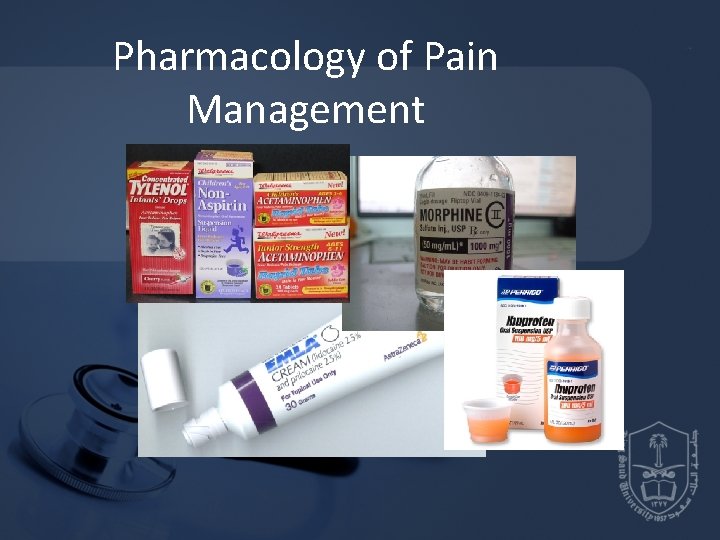
Pharmacology of Pain Management
There are many different techniques, nonpharmacological &pharmacological , both regional and non-regional to provide post op analgesia.
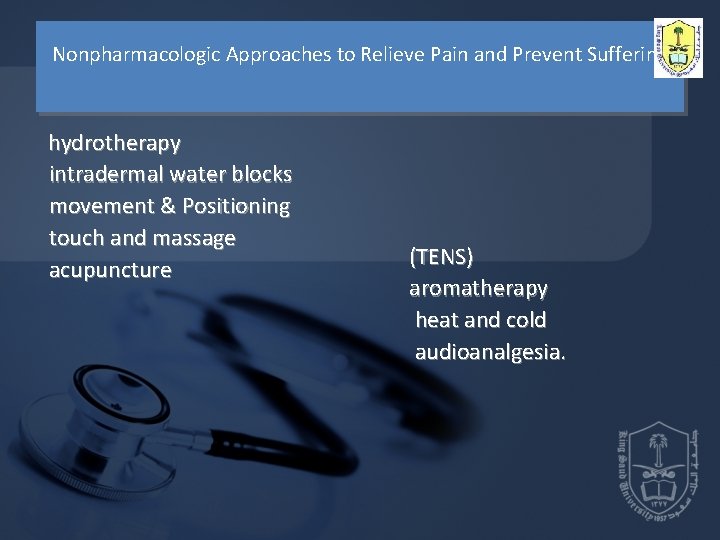
Nonpharmacologic Approaches to Relieve Pain and Prevent Suffering hydrotherapy intradermal water blocks movement & Positioning touch and massage acupuncture (TENS) aromatherapy heat and cold audioanalgesia.
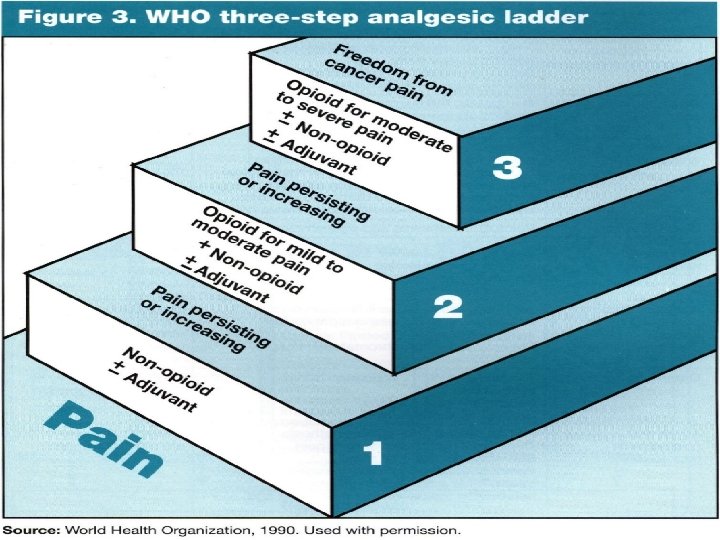
PHARMACOLEGICAL WHO Ladder An essential principle in using medications to manage pain is to individualize the regimen to the patient
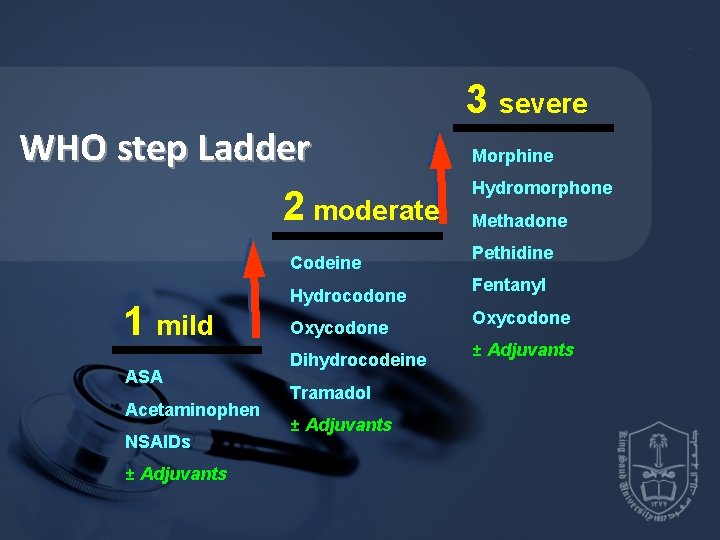
3 severe WHO step Ladder 2 moderate Codeine 1 mild ASA Acetaminophen NSAIDs ± Adjuvants Hydrocodone Oxycodone Dihydrocodeine Tramadol ± Adjuvants Morphine Hydromorphone Methadone Pethidine Fentanyl Oxycodone ± Adjuvants
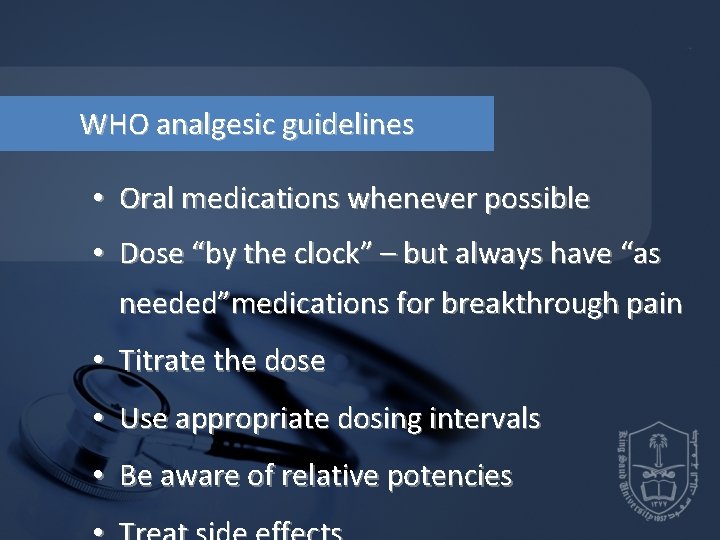
WHO analgesic guidelines • Oral medications whenever possible • Dose “by the clock” – but always have “as needed”medications for breakthrough pain • Titrate the dose • Use appropriate dosing intervals • Be aware of relative potencies
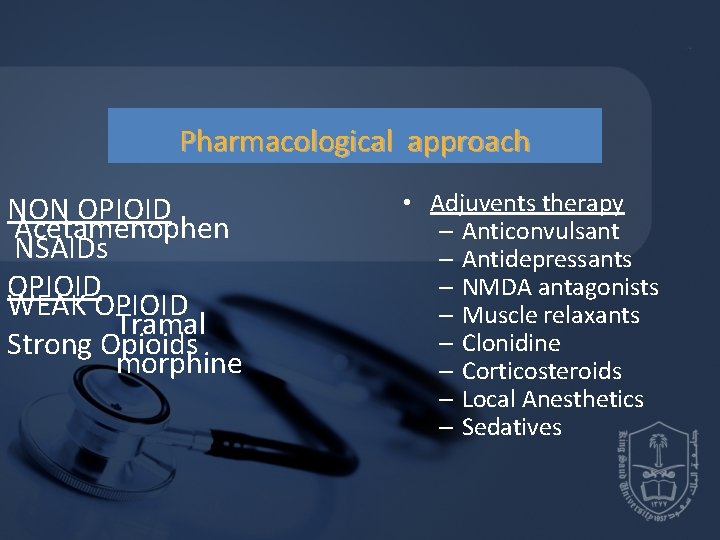
Pharmacological approach NON OPIOID Acetamenophen NSAIDs OPIOID WEAK OPIOID Tramal Strong Opioids morphine • Adjuvents therapy – Anticonvulsant – Antidepressants – NMDA antagonists – Muscle relaxants – Clonidine – Corticosteroids – Local Anesthetics – Sedatives
e v i a r e p o t s o P e t u c A f o s d o h f t e i l e Me R n i a P
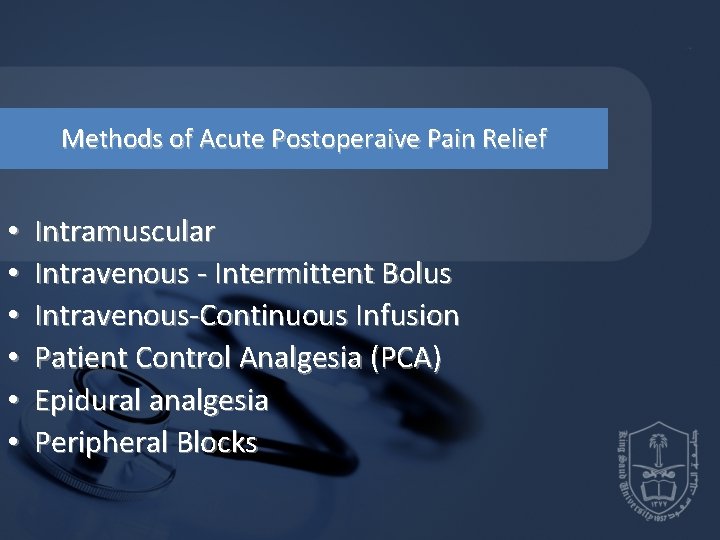
Methods of Acute Postoperaive Pain Relief • • • Intramuscular Intravenous - Intermittent Bolus Intravenous-Continuous Infusion Patient Control Analgesia (PCA) Epidural analgesia Peripheral Blocks
O R T N O TIENT C PA A I S E G L L ANA
Acute Pain v Postop pain is a type of “Acute Pain” v Recent onset, v Limited duration, v Has a causal relationship, v Variable pain intensity, v Variable response to analgesia PCA
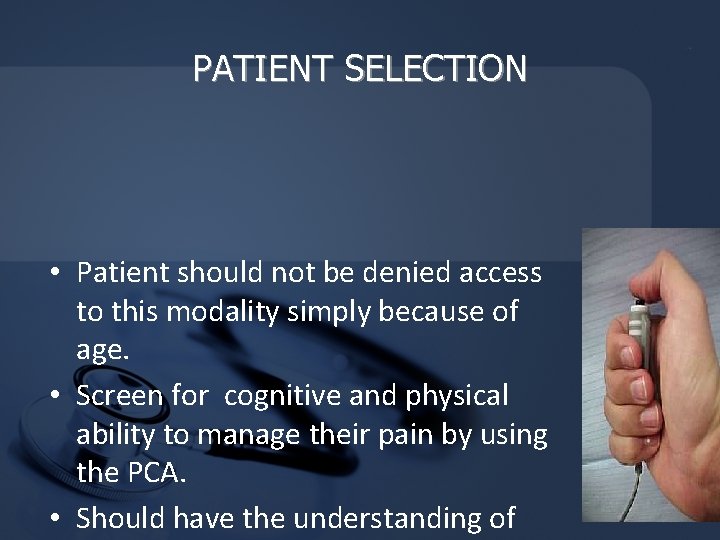
Patient Controlled Analgesia • PCA is based on the belief that patients are the best judges of their pain. • They should be allowed an active role in controlling their pain. • That pain relief should be secured as quickly as possible.
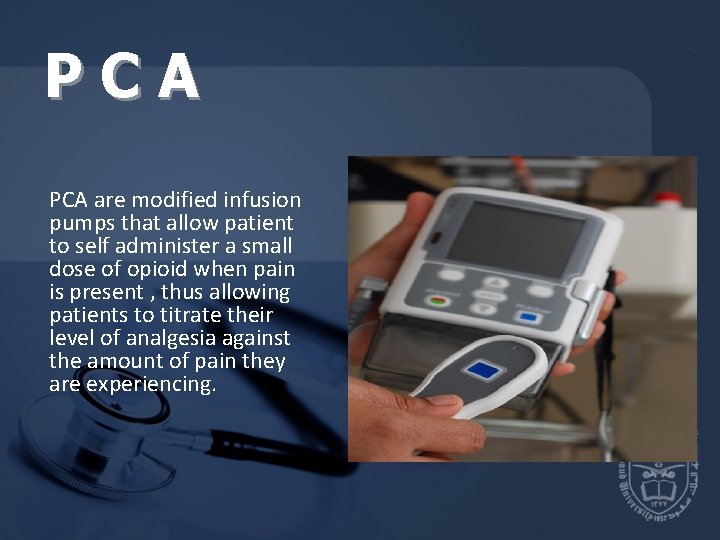
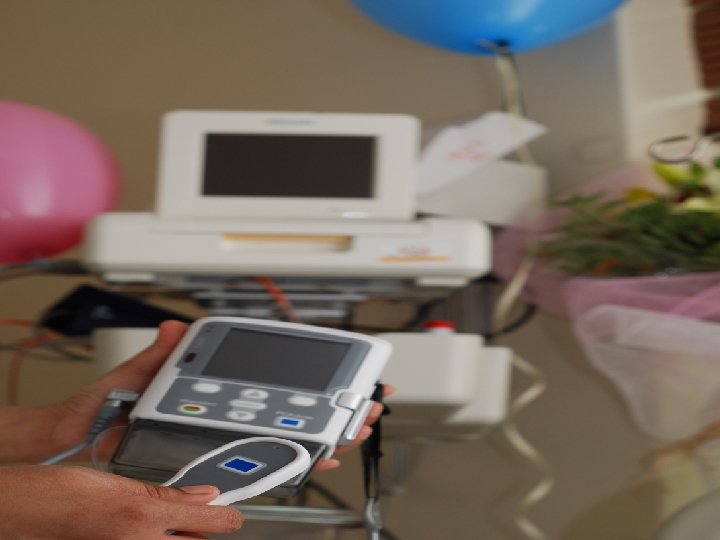
PCA are modified infusion pumps that allow patient to self administer a small dose of opioid when pain is present , thus allowing patients to titrate their level of analgesia against the amount of pain they are experiencing.
PATIENT SELECTION • Patient should not be denied access to this modality simply because of age. • Screen for cognitive and physical ability to manage their pain by using the PCA. • Should have the understanding of
PATIENT SELECTION v PCA not offered to confused patient and those who become confused should have PCA discontinued. v The same patient selection guidelines and consideration for the use of PCA apply to children. v Important to remind parents and
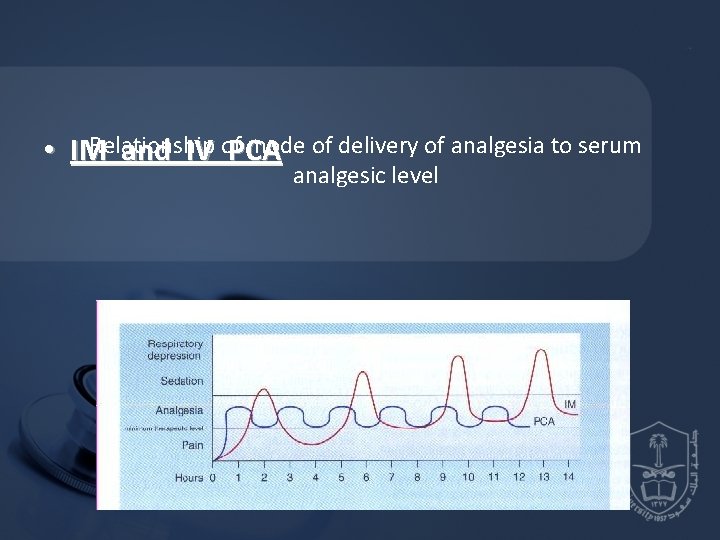
P C A • PCA is well tolerated. • Offer flexibility in dose size and dose interval in individual patients. • Therapeutic serum level can be reached relatively quickly because the drug is administered into the vascular system directly.
PCA • Patient can secure an early therapeutic serum level with loading doses titrated to individual pain needs. • A steady state plasma level occurs because the elimination of the drug from the plasma is balanced by the patients self administered drug injection.
Relationship of mode of delivery of analgesia to serum • IM and IV PCA analgesic level
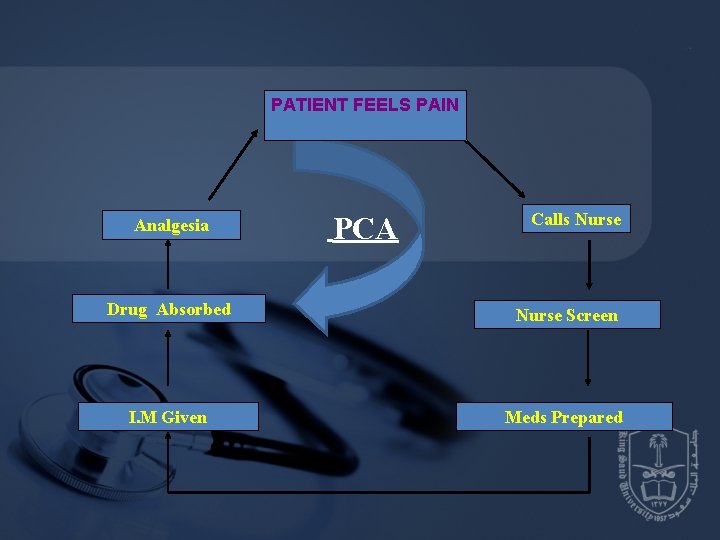
PCA • PCA allows patient control over their pain and therefore gives greater satisfaction. • PCA also eliminates the lag time between pain sensation and administration of analgesia.
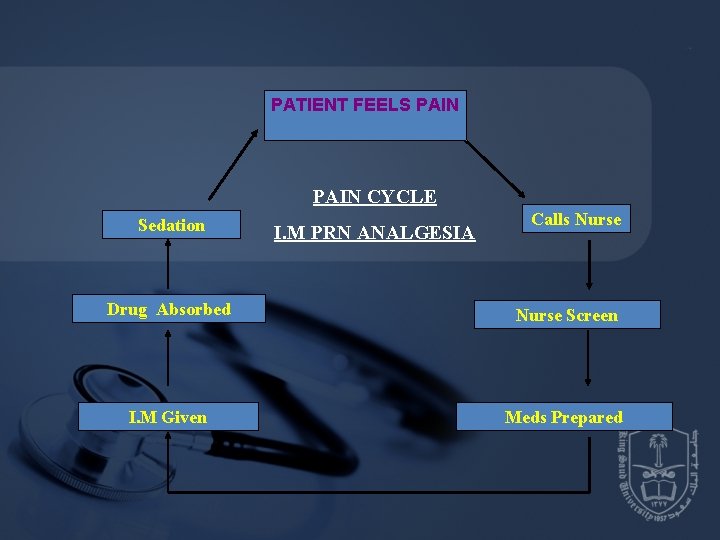
PATIENT FEELS PAIN CYCLE Sedation I. M PRN ANALGESIA Calls Nurse Drug Absorbed Nurse Screen I. M Given Meds Prepared
PATIENT FEELS PAIN Analgesia PCA Calls Nurse Drug Absorbed Nurse Screen I. M Given Meds Prepared
PCA • The pump documents the total number of mg of drug delivered, the number of times the patient requests a bolus and number of times medication is delivered in response to demands. • This information is helpful when assessing whether the established PCA parameters
BENEFITS
BENEFITS Decreased nursing time Increased patient satisfaction. Used in a variety of medical and post-op surgical conditions. • Decreased narcotic usage. • Decreased level of sedation. • Earlier ambulation. • • •
BENEFITS • Decreased overall pain scores reported by patients. • Increased compliance to post op care. • Less anxiety. • More autonomy regarding pain control. • Improved rest and sleep pattern
INTR : G N I C ODU F E H “T T I V IFTH ” N G I S L A A I S E G L A N A L A R U EPID s a m m a D l A a r o s s Fatm e f Pro t n a t s i s As
Benefits of Epidural Analgesia ü Better pain control ü Earlier ambulation ü Improved Pulmonary Mechanics ü Decreased incidence of DVT ü Faster return of bowel function
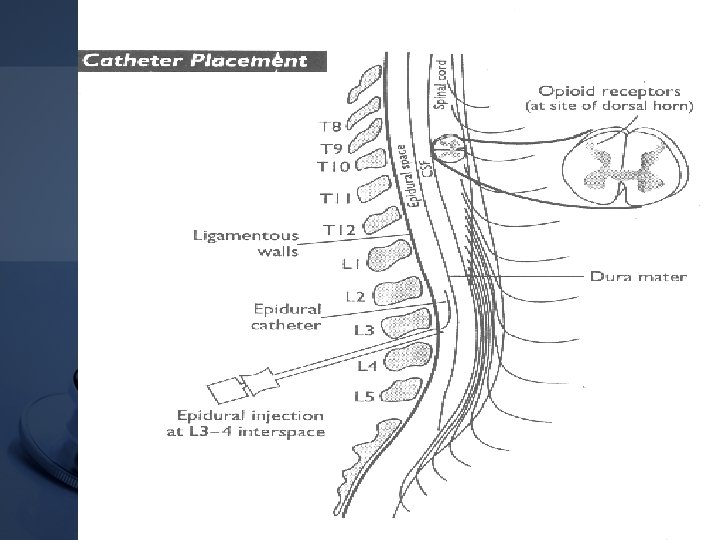
OBJECTIVES • Identify the anatomy and physiology of the spinal column in relation to the placement of an epidural catheter. • Identify the nursing responsibilities in caring for a patient receiving epidural analgesia.
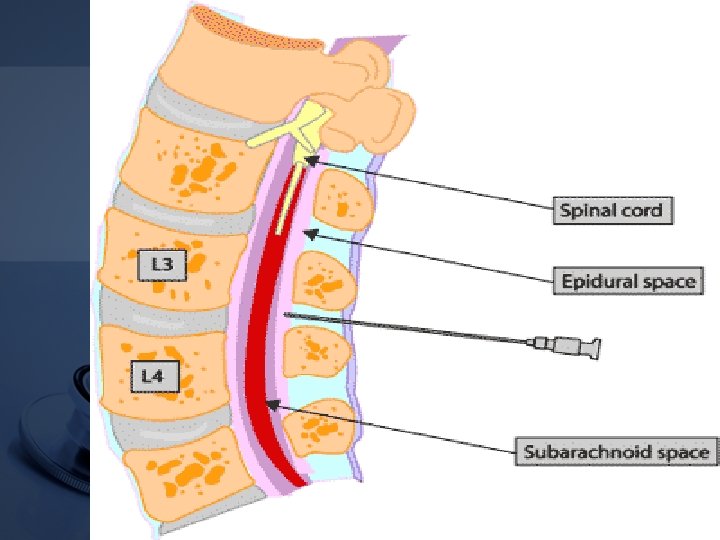
DEFINITIONS • EPIDURAL=administration of medication into epidural space • INTRATHECAL=administration of medication into subarachnoid space
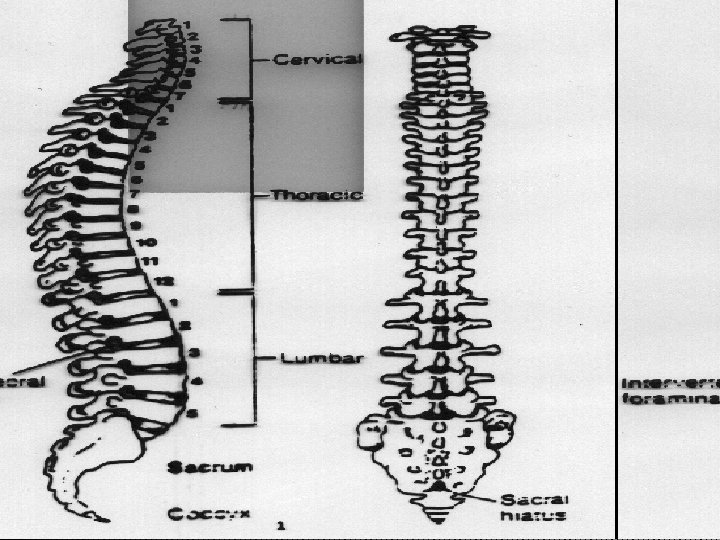
OVERVIEW OF THE SPINAL ANATOMY
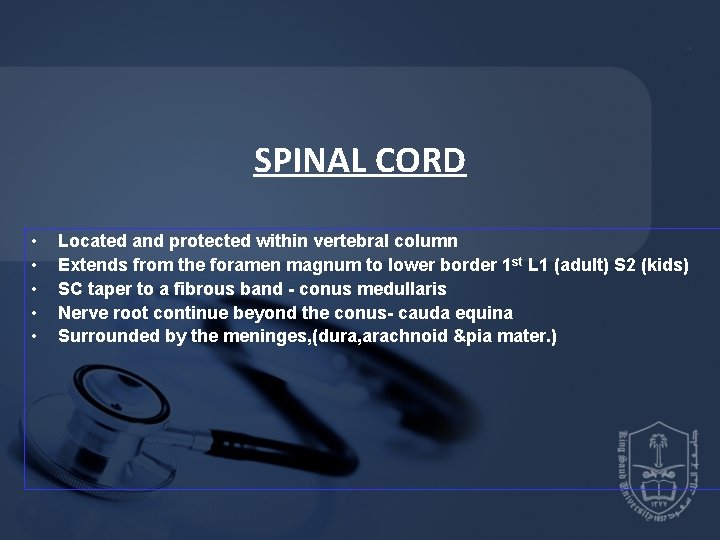
SPINAL CORD • • • Located and protected within vertebral column Extends from the foramen magnum to lower border 1 st L 1 (adult) S 2 (kids) SC taper to a fibrous band - conus medullaris Nerve root continue beyond the conus- cauda equina Surrounded by the meninges, (dura, arachnoid &pia mater. )
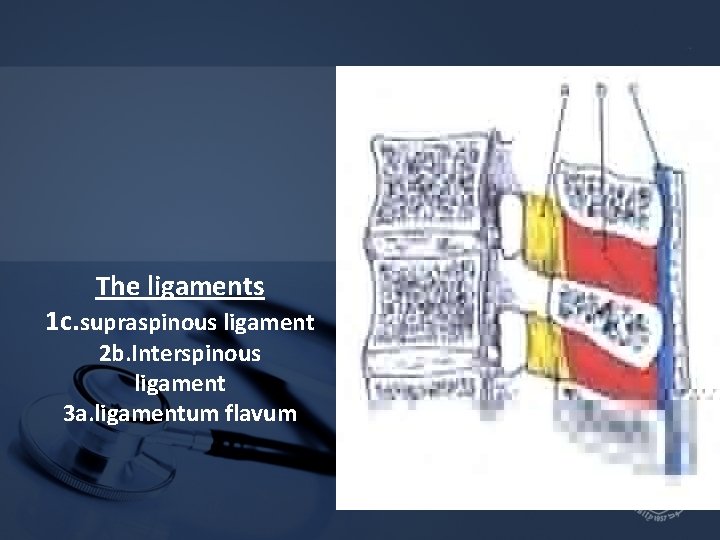
The ligaments 1 c. supraspinous ligament 2 b. Interspinous ligament 3 a. ligamentum flavum
EPIDURAL SPACE • • Potential space Between the dura mater, luigamentum flavum Made up of vasculature, nerves, fat and lymphatic Extends from foramen magnum to the sacrococcygeal ligament
INDICATIONS § The objective of epidural analgesia is to relieve pain. Major surgery Trauma (# ribs) Palliative care (intractable pain) Labour and Delivery
CONTRAINDICATIONS • • Patient refusal Known allergy to opioid or local anesthetic Infection/abscess near the proposed injection site Sepsis Coagulation disorder Hypotension / hypovolemia Spinal deformity/increased ICP
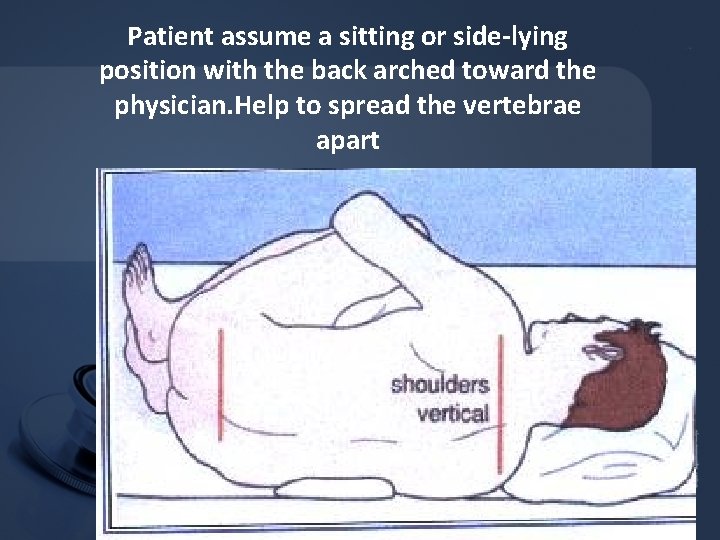
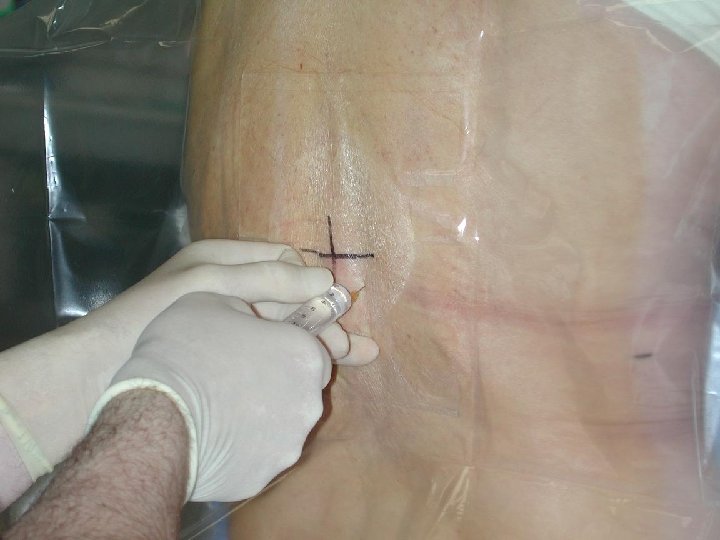
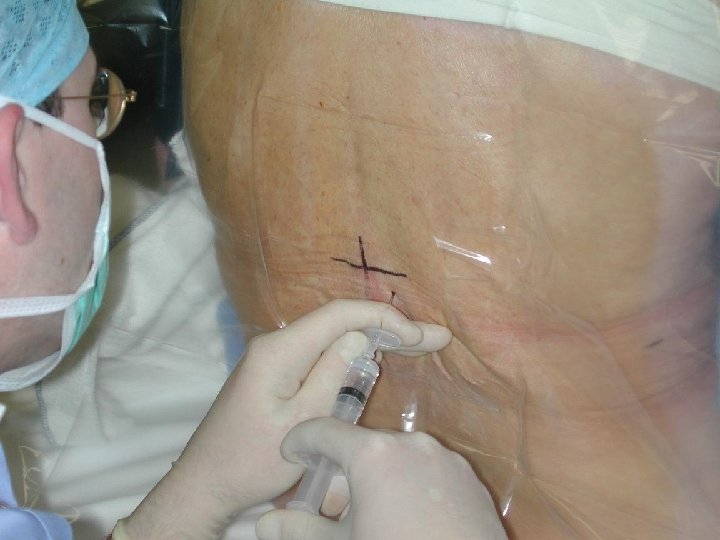
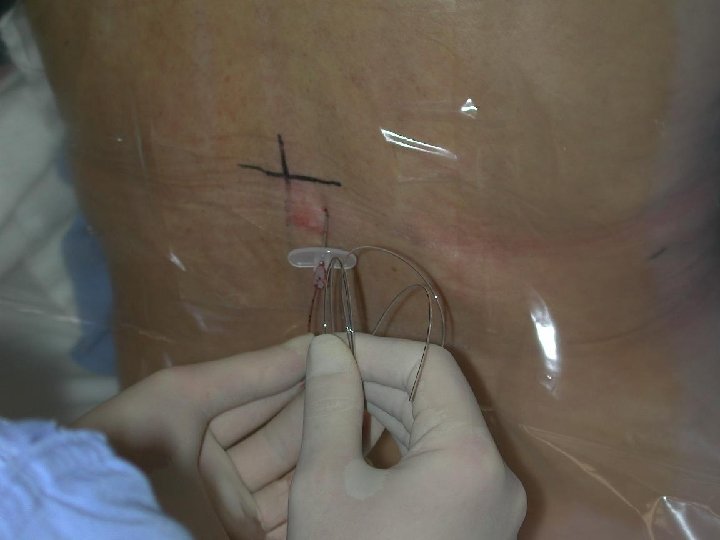
Patient assume a sitting or side-lying position with the back arched toward the physician. Help to spread the vertebrae apart
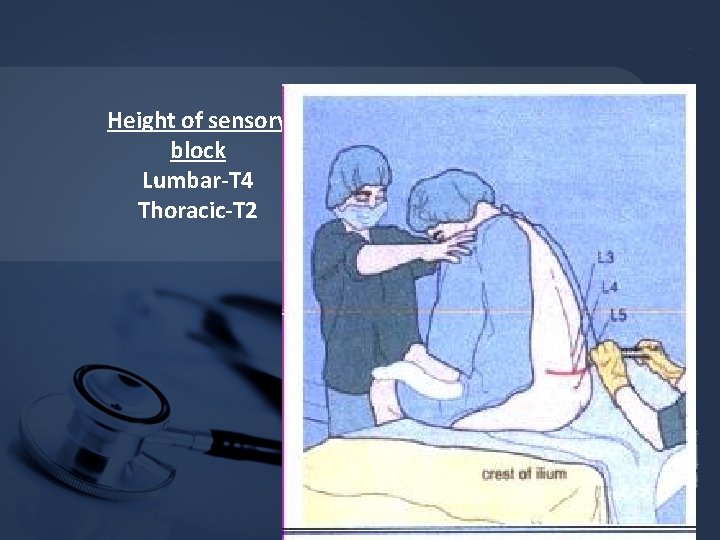
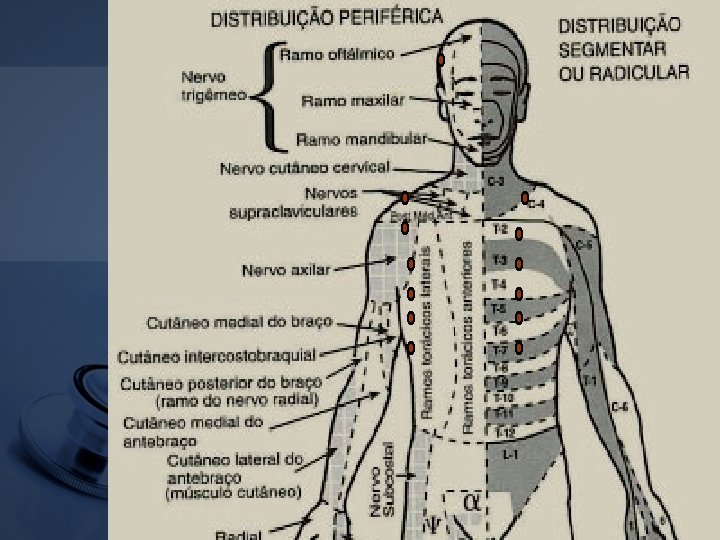
Height of sensory block Lumbar-T 4 Thoracic-T 2
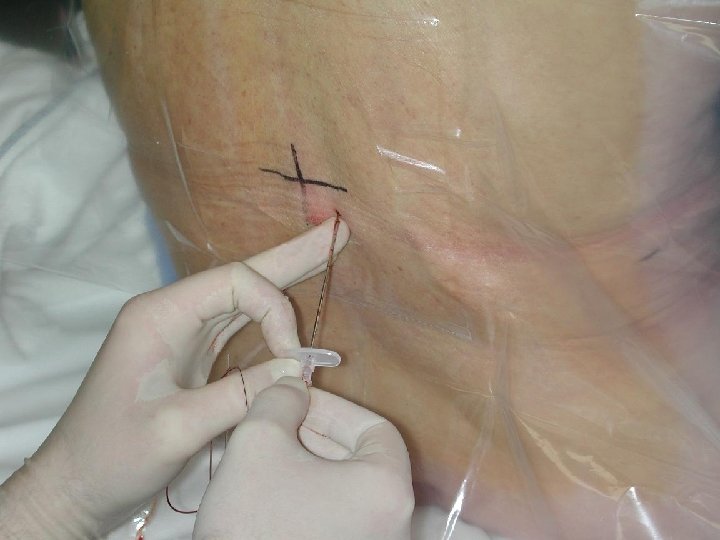
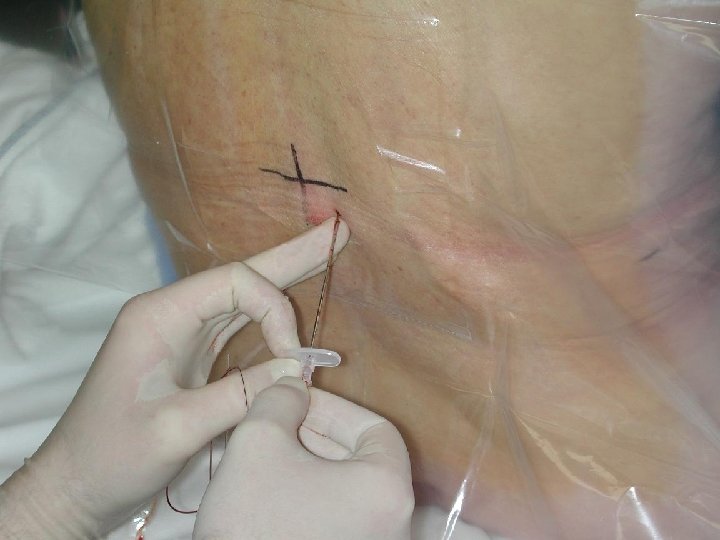
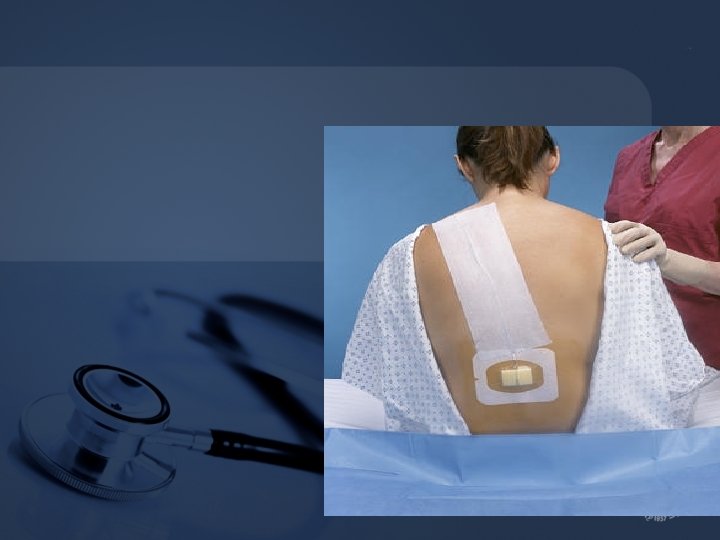
INSERTION OF EPIDURAL CATHETER • Positioning of patient • The site is dependent upon the area of pain • Fixing the catheter Incision Level Thoracic T 4 -T 6 Upper abdo T 6 -T 8 Lower abdo T 8 -T 10 Pelvic T 8 -T 10 Lower extremity L 1 -L 4
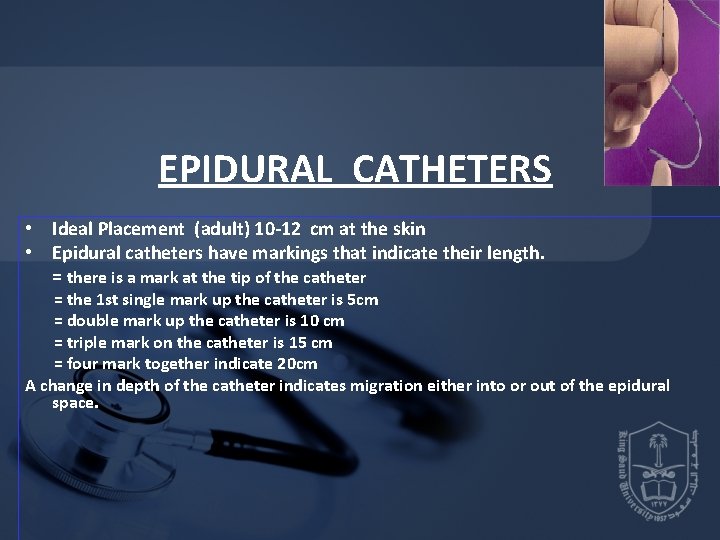
EPIDURAL CATHETERS • Ideal Placement (adult) 10 -12 cm at the skin • Epidural catheters have markings that indicate their length. = there is a mark at the tip of the catheter = the 1 st single mark up the catheter is 5 cm = double mark up the catheter is 10 cm = triple mark on the catheter is 15 cm = four mark together indicate 20 cm A change in depth of the catheter indicates migration either into or out of the epidural space.
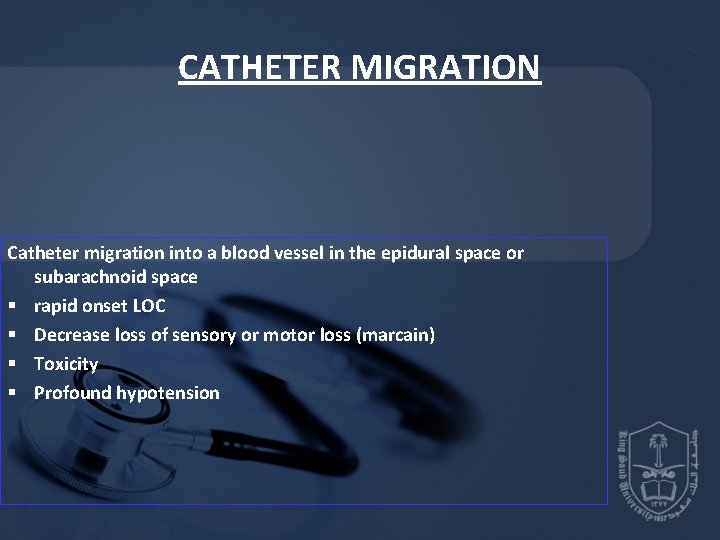
CATHETER MIGRATION Catheter migration into a blood vessel in the epidural space or subarachnoid space § rapid onset LOC § Decrease loss of sensory or motor loss (marcain) § Toxicity § Profound hypotension
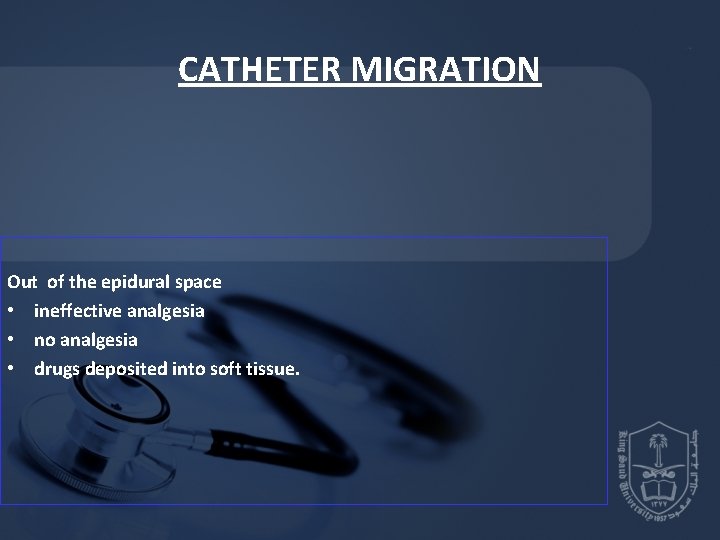
CATHETER MIGRATION Out of the epidural space • ineffective analgesia • no analgesia • drugs deposited into soft tissue.
DRUGS • One of the most important factors influencing drug absorption and bioavailability is the drug SOLUBILITY • The more lipid soluble rapid onset & shorter duration
MEDICATION COMMONLY USED • OPIOIDS-Fentanyl +Morphine (affect the pain transmission at the opioid receptors) • L. A. -Bupivacaine(marcaine) (inhibits the pain impulse transmission in the nerves with which it comes in contact)
METHODS OF ADMINISTRATION § BOLUS (FENTANYL, DURAMORPH) § CONTINUOUS INFUSION(MARCAINE+FENTANYL) § All drugs administered epidural should be preservative free. § All epidural opioids should be diluted with normal saline prior to intermittent bolus administration.
EPIDURAL LOCAL § Bupivacaine (marcaine)
Mechanism of Action § Bupivacaine (marcaine) - local anaesthetic works as an analgesic (subanesthetic dose) - inhibiting impulse transmission inthe nerve fibers - sensory nerves are blocked first before the motor fibers - sensory fibers carrying the pain is blocked before those carrying heat cold touch and pressure.
EPIDURAL LOCAL ANESTHETIC(MARCAINE) • • Onset 10 -15 minutes Duration- 4 hrs+ after a bolus or after infusion is stopped Marcaine(0. 0625%-0. 125%-0. 25%) Extend of spread influenced by volume and position of patient
OPIOIDS Mechanism of action-distribution § Vascular uptake by blood vessels in the epidural space § Diffusion through dura into CSF to spinal cord to the site of action. § Uptake by the fat in the epidural space.
Morphine (Duramorph/Astramorph) • • Hydrophilic(water soluble) Slow to diffuse across the dura on to the spinal cord Can cause late respiratory depression Monitor respiratory status for 12 hrs after the last dose of duramorph • Duration 6 hrs+ • Broad spread
Fentanyl (preservativefree) • • Lipophilic(fat soluble) Crossess the dura rapidly Rapid onset of action(segmental) Decreased risk of late respiratory depression Onset 5 -20 mins Duration 2 -4 hrs Excellent for breakthrough pain
Opioid pharmacology • Peak plasma concentration after po = 1 hour SC, IM = 30 MINS IV = 6 MIN • Half- life at steady state PO, PR, SC, IM, IV = 2 -4 H.
Adverse Effects -Opioids § Sedation and resp. depression- IV narcan § N/V-Opioids stimulate the chemoreceptor trigger zone primperan § Pruritus- diphenhydramine or narcan (low dose) § Urinary retention- low dose narcan and /or catheterization § Slowing of GI motility § Hypotension
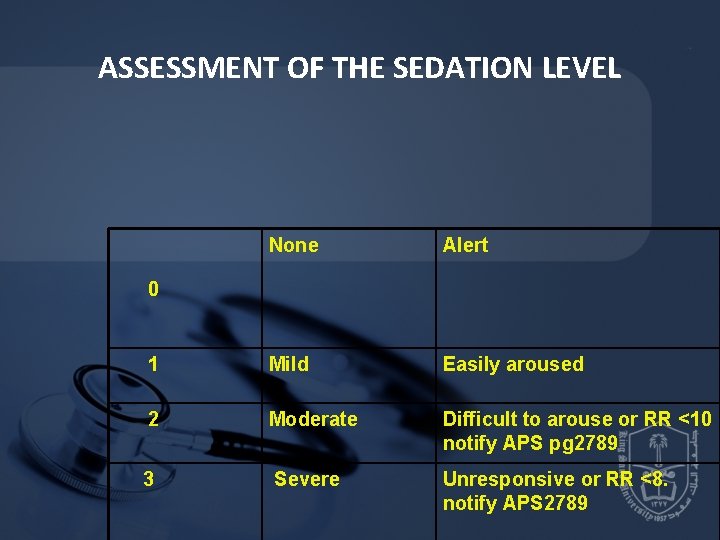
ASSESSMENT OF THE SEDATION LEVEL None Alert 1 Mild Easily aroused 2 Moderate Difficult to arouse or RR <10 notify APS pg 2789 3 Severe Unresponsive or RR <8. notify APS 2789 0
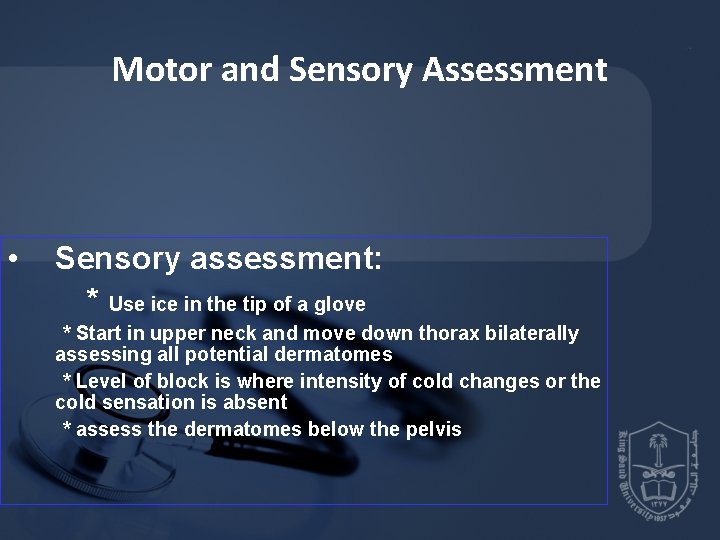
Motor and Sensory Assessment • • Motor assessment Sensory assessment: *
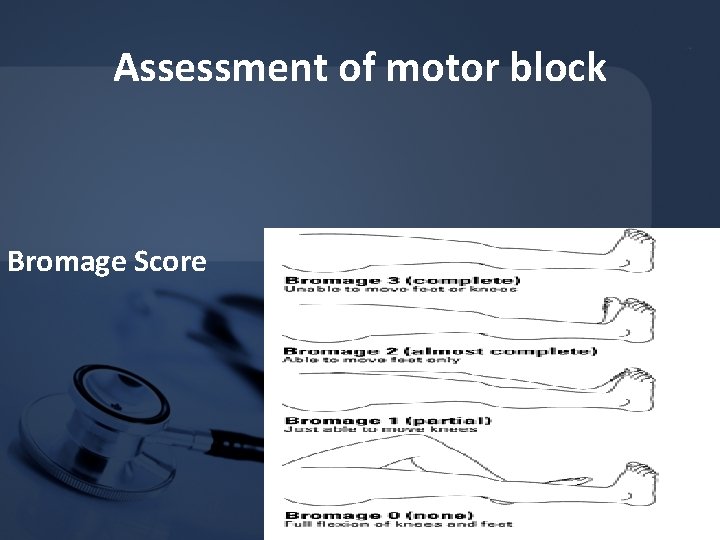
Assessment of motor block Bromage Score
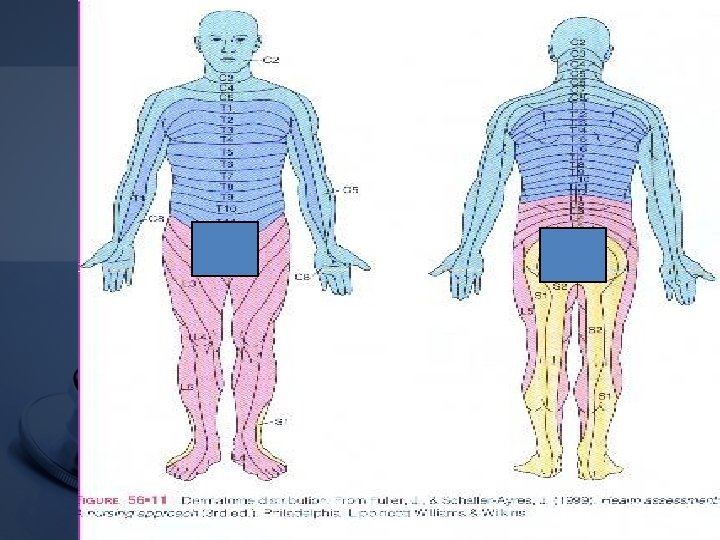
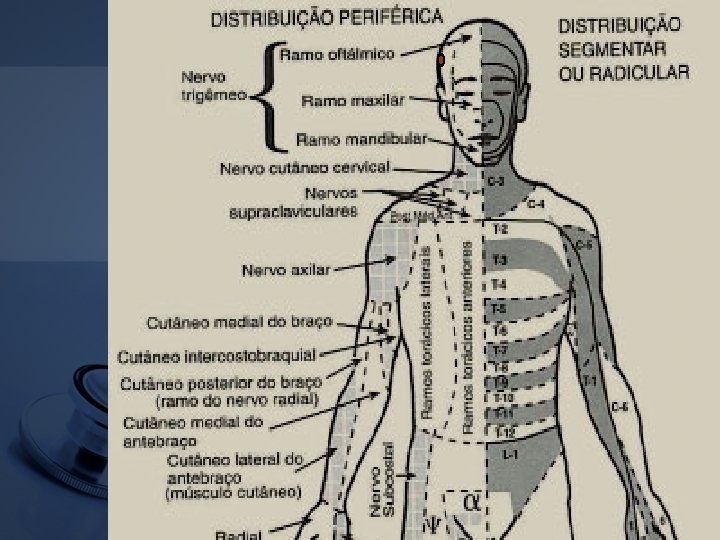
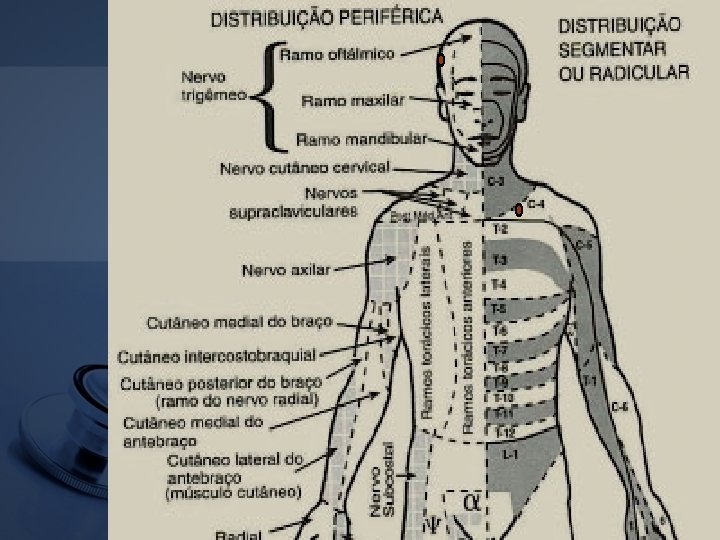
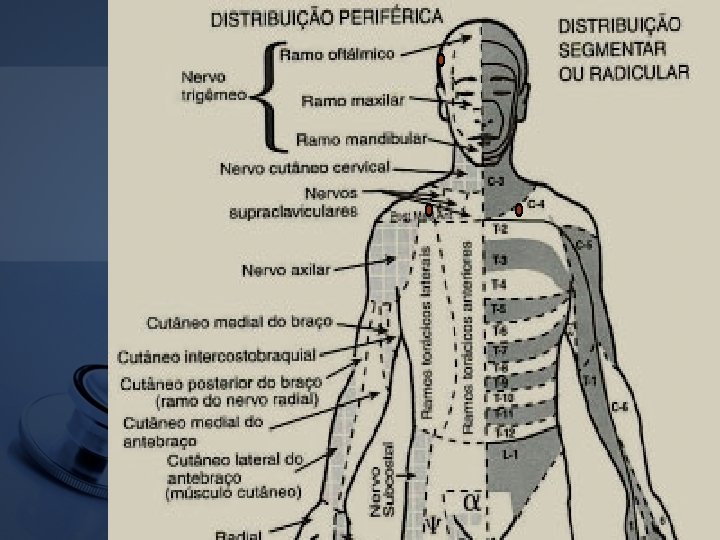
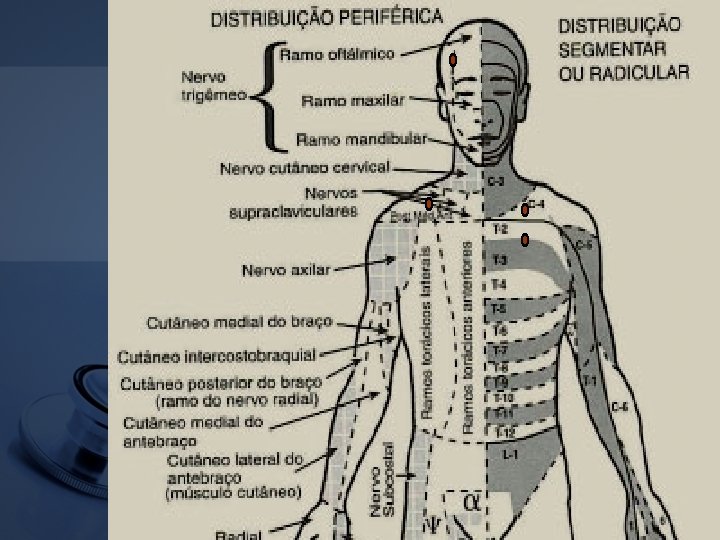
Motor and Sensory Assessment • Sensory assessment: * Use ice in the tip of a glove * Start in upper neck and move down thorax bilaterally assessing all potential dermatomes * Level of block is where intensity of cold changes or the cold sensation is absent * assess the dermatomes below the pelvis
Adverse Effects L. A • Hypotension -assess intravascular volume status -no trendelenberg positioning • Teach patient to move slowly from a lying position to sitting to standing position. Treatment • fluids
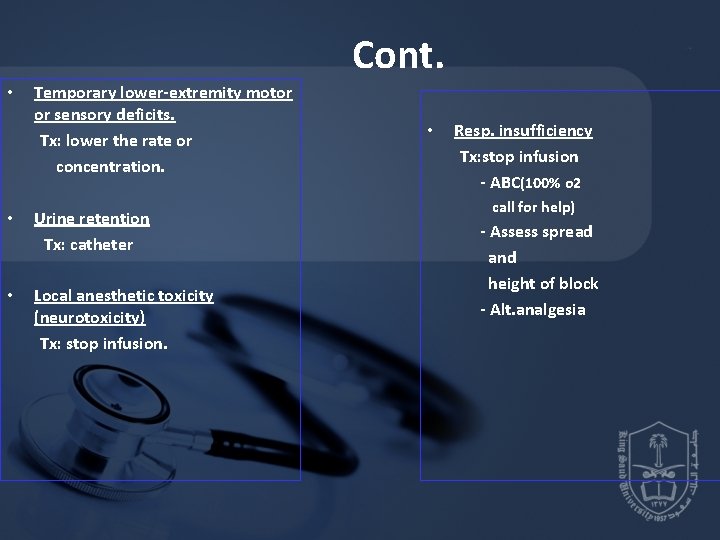
Cont. Temporary lower-extremity motor or sensory deficits. Tx: lower the rate or concentration. • • Urine retention Tx: catheter Local anesthetic toxicity (neurotoxicity) Tx: stop infusion. • • Resp. insufficiency Tx: stop infusion - ABC(100% o 2 call for help) - Assess spread and height of block - Alt. analgesia
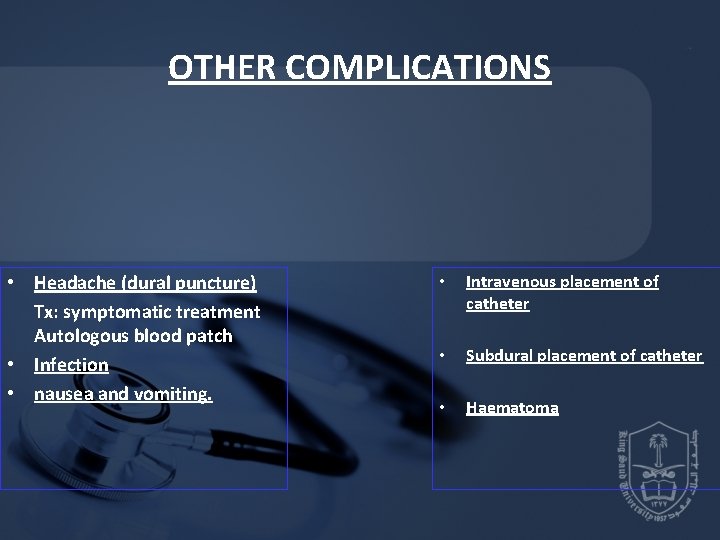
OTHER COMPLICATIONS • Headache (dural puncture) Tx: symptomatic treatment Autologous blood patch • Infection • nausea and vomiting. • Intravenous placement of catheter • Subdural placement of catheter • Haematoma
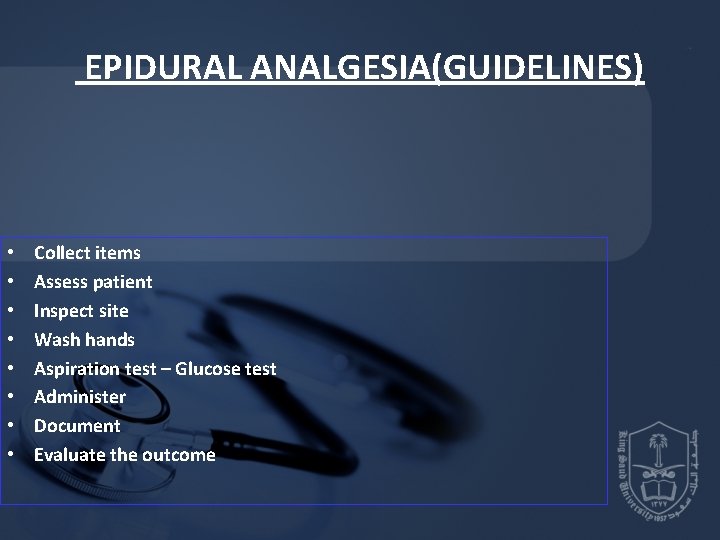
EPIDURAL ANALGESIA(GUIDELINES) • • Collect items Assess patient Inspect site Wash hands Aspiration test – Glucose test Administer Document Evaluate the outcome
Unrelieved pain is morally and ethically unaccepted.
Reference book and the relevant page numbers. .
Thank You Dr. Date: