
Lecture Title Diversity of Fungi and Fungal Infections
- Slides: 19
Lecture Title: Diversity of Fungi and Fungal Infections (Foundation Block, Microbiology)
Lecture Objectives. . 1. To provide students with an overview of the common medically important yeasts and mold fungi. 2. To provide students with an overview of the major fungal diseases that threatens human health. 3. To give a fundamental knowledge about the antifungal agents, their mechanisms of action, and spectrum.
Mycotic Diseases Ø Hypersensitivity (Allergy) Ø Mycotoxicoses Ø Infections
Mycotic Diseases How the infection is acquired? Ø Endogenous, Colonization (overgrowth of normal flora) Ø Inhalation (Airborne) Ø Contact Ø Trauma
Types of fungal infections ( Mycoses) Superficial mycoses Cutaneous mycosis Subcutaneous mycoses Systemic mycoses Opportunistic mycoses
Types of fungal infections - Mycoses Superficial Mycoses Affect the outer layer of the skin or hair shaft No immune response Cutaneous Mycoses Dermatophytosis �Infection of the skin, hair or nails caused by a group of keratinophilic fungi, called dermatophytes
Types of fungal infections - Mycoses Subcutaneous Mycoses ØFungal infections involving the dermis, subcutaneous tissues, muscle and may extend to bone. ØUsually they are initiated by trauma.
Types of fungal infections - Mycoses Primary Systemic Mycoses • Caused by primary pathogens • Contracted by inhalation, Start as respiratory disease • Geographically restricted (endemic), north and south America 8
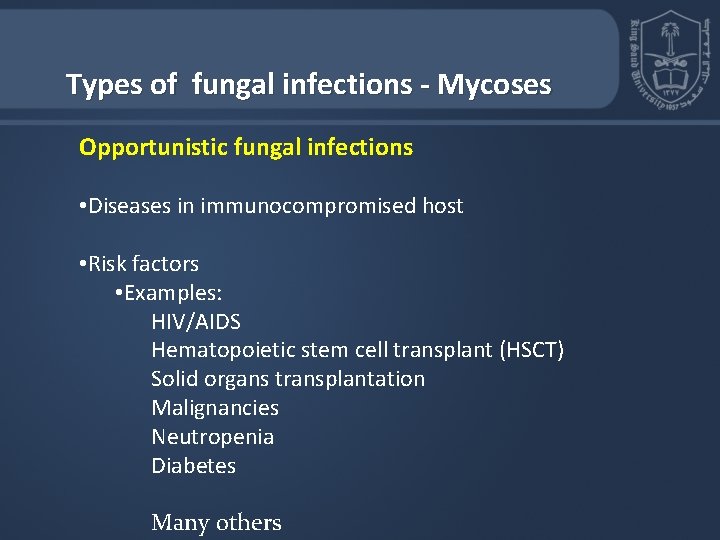
Types of fungal infections - Mycoses Opportunistic fungal infections • Diseases in immunocompromised host • Risk factors • Examples: HIV/AIDS Hematopoietic stem cell transplant (HSCT) Solid organs transplantation Malignancies Neutropenia Diabetes Many others
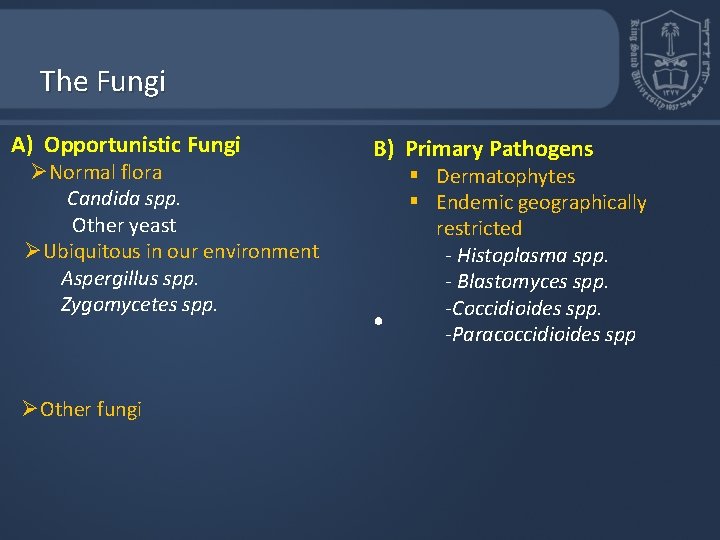
The Fungi A) Opportunistic Fungi ØNormal flora Candida spp. Other yeast ØUbiquitous in our environment Aspergillus spp. Zygomycetes spp. ØOther fungi B) Primary Pathogens • § Dermatophytes § Endemic geographically restricted - Histoplasma spp. - Blastomyces spp. -Coccidioides spp. -Paracoccidioides spp
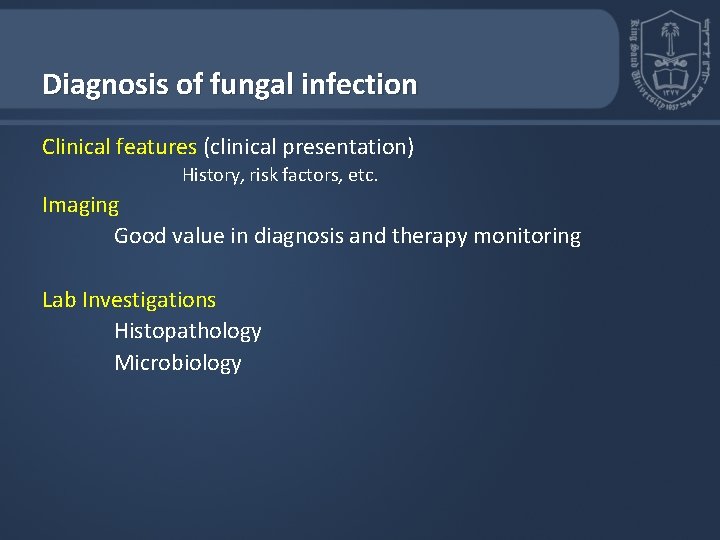
Diagnosis of fungal infection Clinical features (clinical presentation) History, risk factors, etc. Imaging Good value in diagnosis and therapy monitoring Lab Investigations Histopathology Microbiology
Antifungal agents
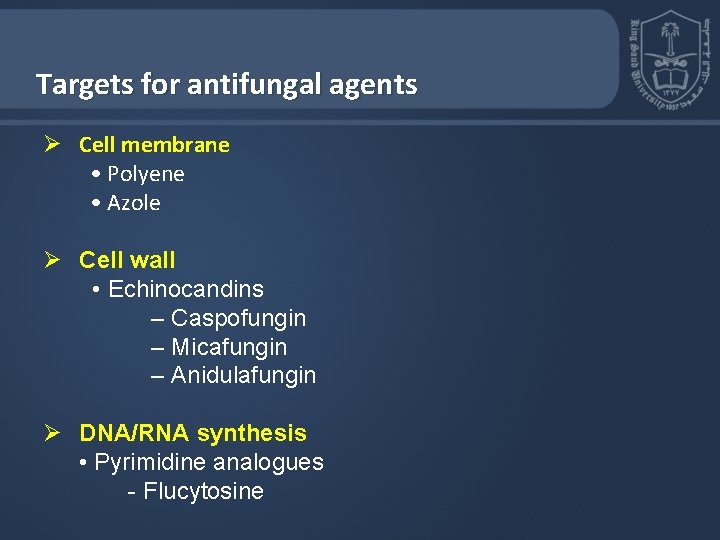
Targets for antifungal agents Ø Cell membrane • Polyene • Azole Ø Cell wall • Echinocandins – Caspofungin – Micafungin – Anidulafungin Ø DNA/RNA synthesis • Pyrimidine analogues - Flucytosine
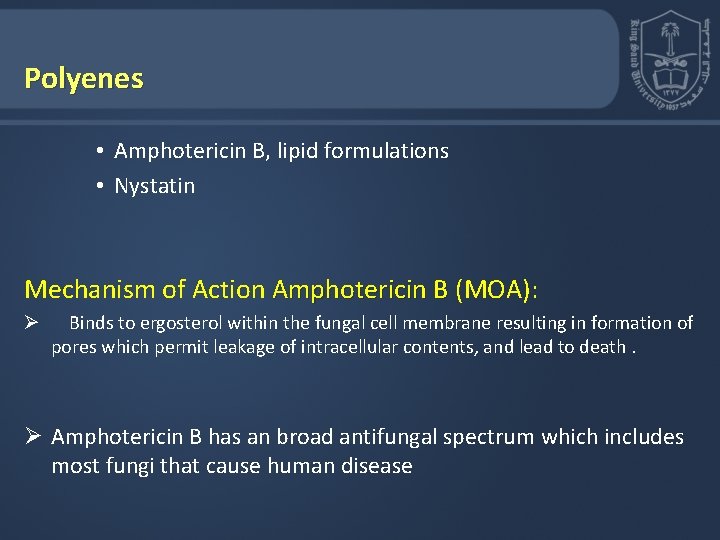
Polyenes • Amphotericin B, lipid formulations • Nystatin Mechanism of Action Amphotericin B (MOA): Ø Binds to ergosterol within the fungal cell membrane resulting in formation of pores which permit leakage of intracellular contents, and lead to death. Ø Amphotericin B has an broad antifungal spectrum which includes most fungi that cause human disease
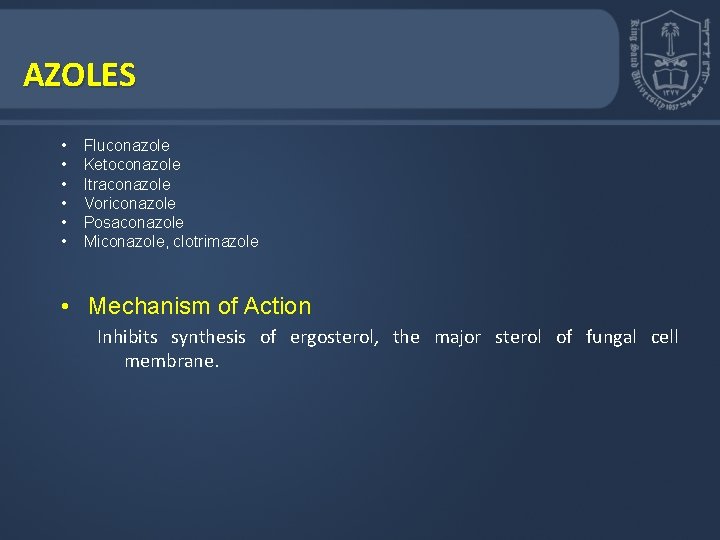
AZOLES • • • Fluconazole Ketoconazole Itraconazole Voriconazole Posaconazole Miconazole, clotrimazole • Mechanism of Action Inhibits synthesis of ergosterol, the major sterol of fungal cell membrane.
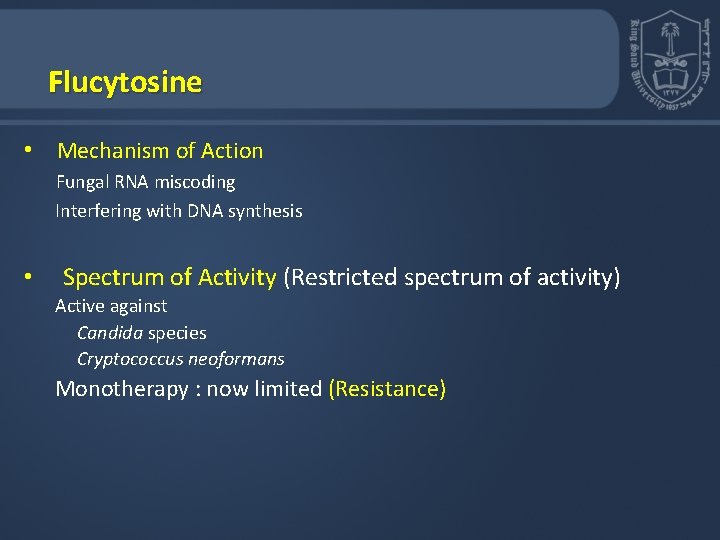
Flucytosine • Mechanism of Action Fungal RNA miscoding Interfering with DNA synthesis • Spectrum of Activity (Restricted spectrum of activity) Active against Candida species Cryptococcus neoformans Monotherapy : now limited (Resistance)
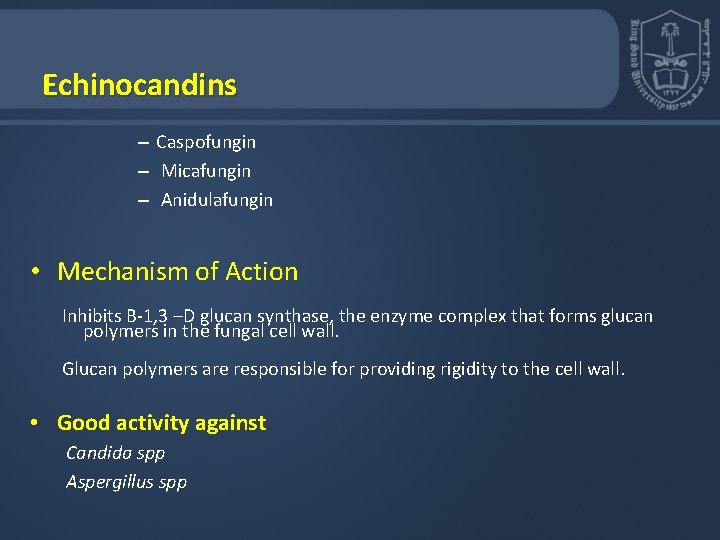
Echinocandins – Caspofungin – Micafungin – Anidulafungin • Mechanism of Action Inhibits B-1, 3 –D glucan synthase, the enzyme complex that forms glucan polymers in the fungal cell wall. Glucan polymers are responsible for providing rigidity to the cell wall. • Good activity against Candida spp Aspergillus spp
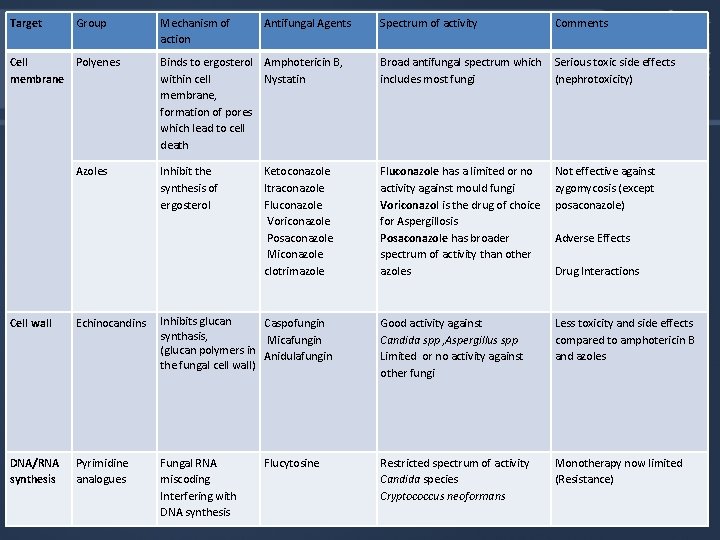
Target Group Cell Polyenes membrane Azoles Mechanism of action Antifungal Agents Spectrum of activity Comments Binds to ergosterol Amphotericin B, within cell Nystatin membrane, formation of pores which lead to cell death Broad antifungal spectrum which includes most fungi Serious toxic side effects (nephrotoxicity) Inhibit the synthesis of ergosterol Fluconazole has a limited or no activity against mould fungi Voriconazol is the drug of choice for Aspergillosis Posaconazole has broader spectrum of activity than other azoles Not effective against zygomycosis (except posaconazole) Ketoconazole Itraconazole Fluconazole Voriconazole Posaconazole Miconazole clotrimazole Adverse Effects Drug Interactions Cell wall Echinocandins Inhibits glucan Caspofungin synthasis, Micafungin (glucan polymers in Anidulafungin the fungal cell wall) Good activity against Candida spp , Aspergillus spp Limited or no activity against other fungi Less toxicity and side effects compared to amphotericin B and azoles DNA/RNA synthesis Pyrimidine analogues Fungal RNA miscoding Interfering with DNA synthesis Restricted spectrum of activity Candida species Cryptococcus neoformans Monotherapy now limited (Resistance) Flucytosine
Thank You (Foundation Block, Microbiology)