
Lecture Ten Factfinding Techniques Based on Chapter Ten
Lecture Ten Fact-finding Techniques Based on Chapter Ten of this book: Database Systems: A Practical Approach to Design, Implementation and Management International Computer Science S. Carolyn Begg, Thomas Connolly 1

Lecture 10 - Objectives u When fact-finding techniques are used in the database application lifecycle. u Types of facts collected in each stage of database application lifecycle. u Types of documentation produced in each stage of database application lifecycle. u Most commonly used fact-finding techniques. 2

Lecture 10 - Objectives u How to use each fact-finding technique and the advantages and disadvantages of each. u How to apply fact-finding techniques to early stages of database application lifecycle. 3

Fact-finding techniques u Critical to capture necessary facts to build the required database application. u These facts are captured using fact-finding techniques. u Formal process of using techniques such as interviews and questionnaires to collect facts about systems, requirements, and preferences. 4
When Are Fact-Finding Techniques Used? u Fact-finding used throughout database application lifecycle. Crucial to early stages including database planning, system definition, and requirements collection and analysis stages. u Enables developer to learn about the terminology, problems, opportunities, constraints, requirements, and priorities of the organization and the users of the system. 5
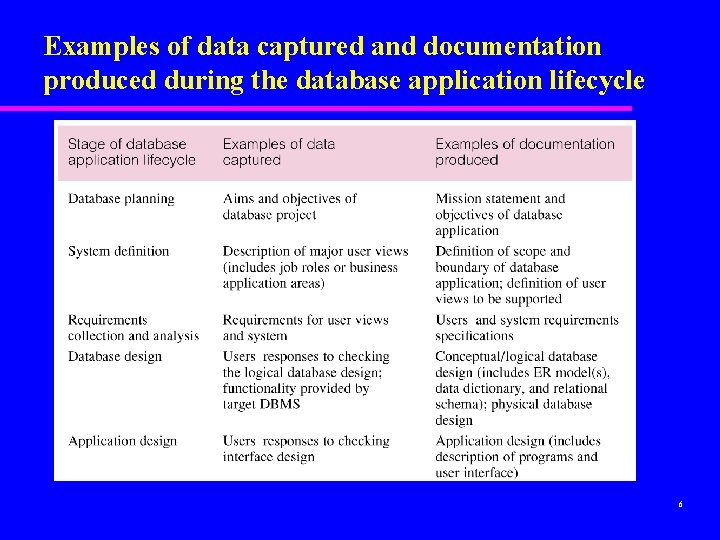
Examples of data captured and documentation produced during the database application lifecycle 6
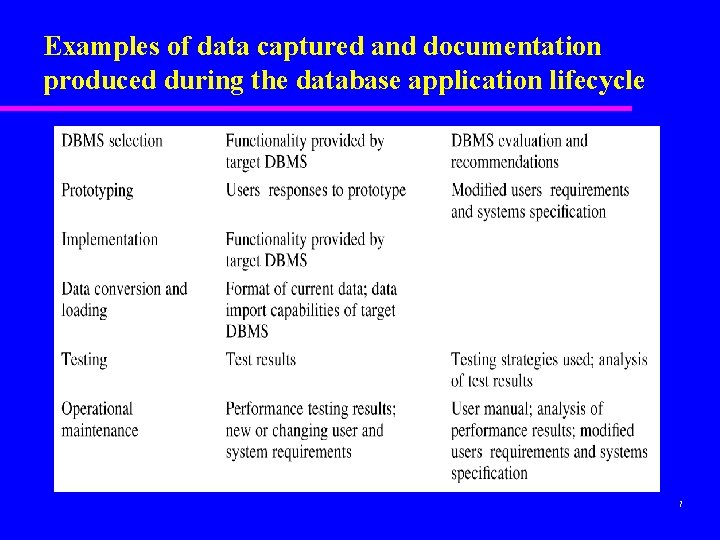
Examples of data captured and documentation produced during the database application lifecycle 7
Fact-Finding Techniques u Database developer normally uses several factfinding techniques during a single database project including: – examining documentation – interviewing – observing organization in operation – research – Questionnaires. 8
Examining documentation u Can be useful: – to gain some insight as to how the need for a database arose; – to identify the part of the organization associated with the problem; – to understand the current system. 9
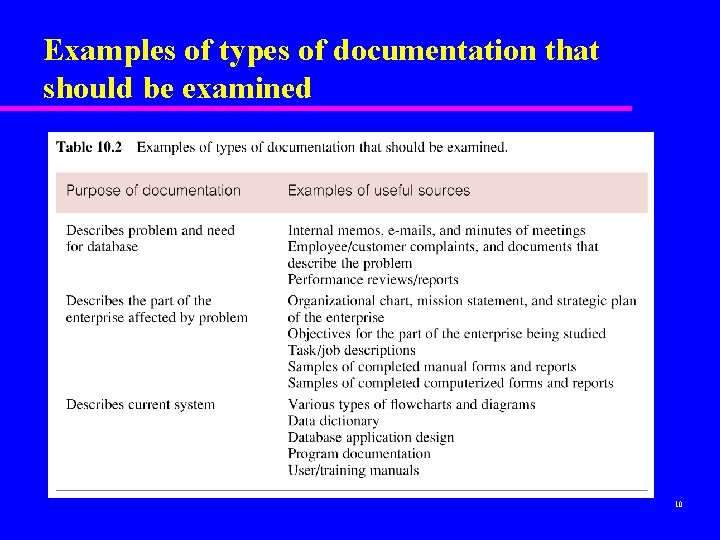
Examples of types of documentation that should be examined 10

Interviewing u Most commonly used, and normally most useful, fact-finding technique. u Enables collection of information from individuals face-to-face. u Objectives include finding out facts, verifying facts, clarifying facts, generating enthusiasm, getting end-user involved, identifying requirements, and gathering ideas and opinions. 11
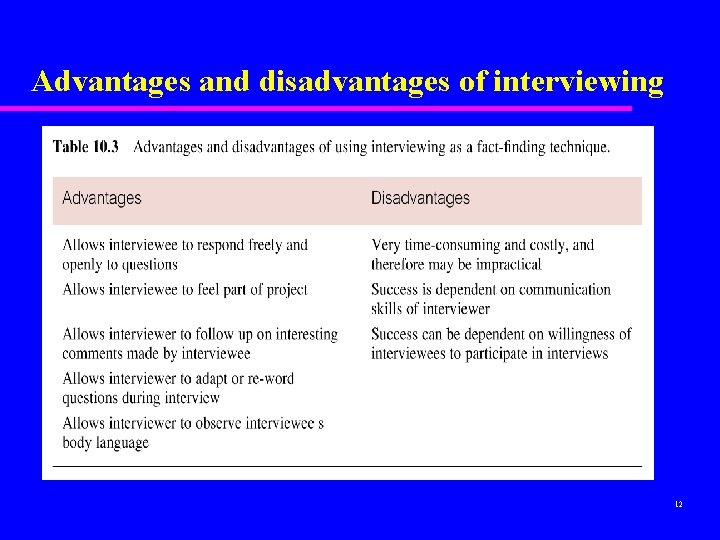
Advantages and disadvantages of interviewing 12
Interviewing u Two types of interviews: unstructured and structured. u Open-ended questions allow interviewee to respond in any way that seems appropriate. u Closed-ended questions restrict answers to either specific choices or short, direct responses. 13
Observing the Organization in Operation u Effective technique for understanding system. u Possible to participate in, or watch, a person perform activities to learn about system. u Useful when validity of data collected is in question or when complexity of certain aspects of system prevents clear explanation by endusers. 14
Research u Useful to research application and problem. u Use computer trade journals, reference books, and Internet (including user groups and bulletin boards). u Provide information on how others have solved similar problems, plus whether or not software packages exist to solve, or even partially solve, the problem. 15
Questionnaires u Conduct surveys through questionnaires – special-purpose documents that allow facts to be gathered from a large number of people while maintaining some control over their responses. u Two types of questions, namely free-format and fixed-format. 16
- Slides: 16