
Lecture SMT Cache Hierarchies Topics SMT processors cache
- Slides: 16
Lecture: SMT, Cache Hierarchies • Topics: SMT processors, cache access basics and innovations (Sections B. 1 -B. 3, 2. 1) 1
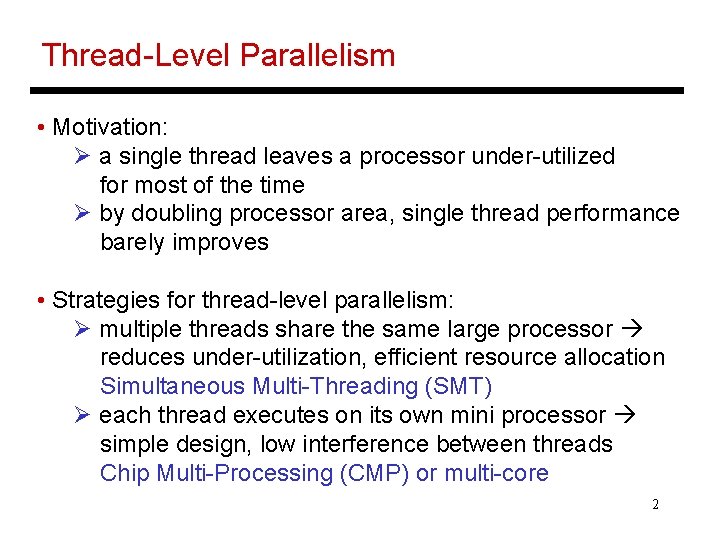
Thread-Level Parallelism • Motivation: Ø a single thread leaves a processor under-utilized for most of the time Ø by doubling processor area, single thread performance barely improves • Strategies for thread-level parallelism: Ø multiple threads share the same large processor reduces under-utilization, efficient resource allocation Simultaneous Multi-Threading (SMT) Ø each thread executes on its own mini processor simple design, low interference between threads Chip Multi-Processing (CMP) or multi-core 2
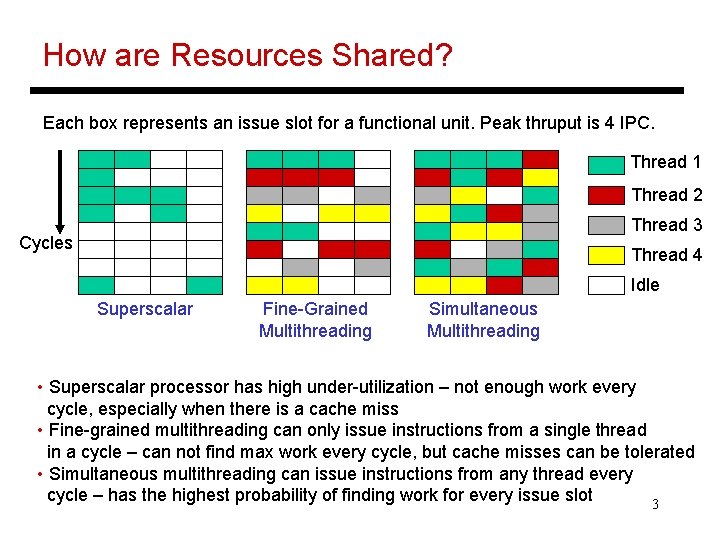
How are Resources Shared? Each box represents an issue slot for a functional unit. Peak thruput is 4 IPC. Thread 1 Thread 2 Thread 3 Cycles Thread 4 Idle Superscalar Fine-Grained Multithreading Simultaneous Multithreading • Superscalar processor has high under-utilization – not enough work every cycle, especially when there is a cache miss • Fine-grained multithreading can only issue instructions from a single thread in a cycle – can not find max work every cycle, but cache misses can be tolerated • Simultaneous multithreading can issue instructions from any thread every cycle – has the highest probability of finding work for every issue slot 3
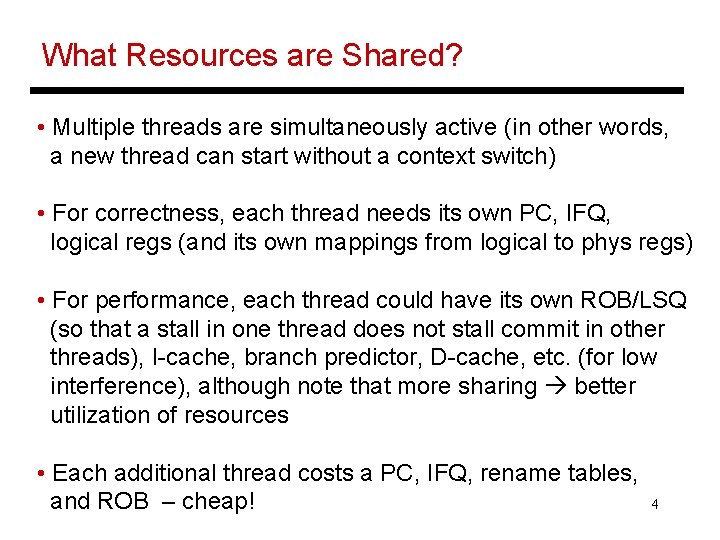
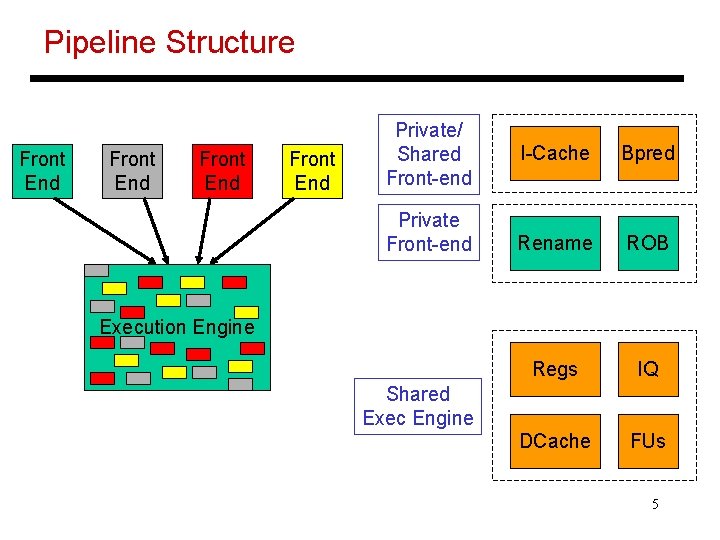
What Resources are Shared? • Multiple threads are simultaneously active (in other words, a new thread can start without a context switch) • For correctness, each thread needs its own PC, IFQ, logical regs (and its own mappings from logical to phys regs) • For performance, each thread could have its own ROB/LSQ (so that a stall in one thread does not stall commit in other threads), I-cache, branch predictor, D-cache, etc. (for low interference), although note that more sharing better utilization of resources • Each additional thread costs a PC, IFQ, rename tables, and ROB – cheap! 4
Pipeline Structure Front End Private/ Shared Front-end Private Front-end I-Cache Bpred Rename ROB Regs IQ DCache FUs Execution Engine Shared Exec Engine 5
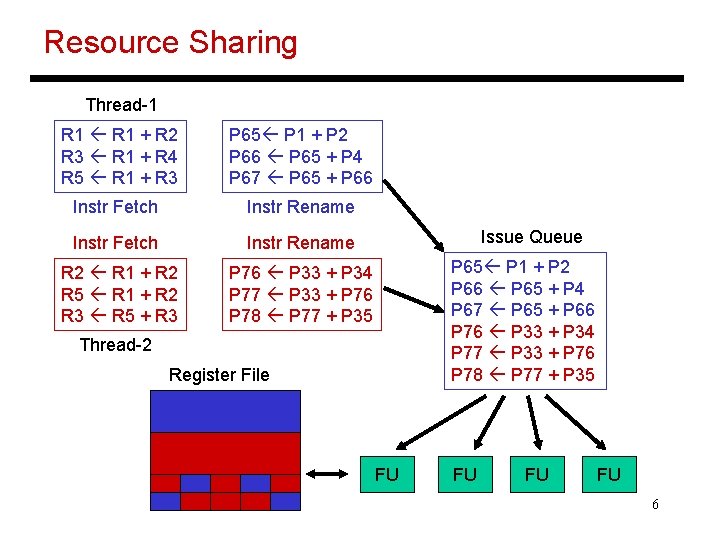
Resource Sharing Thread-1 R 1 + R 2 R 3 R 1 + R 4 R 5 R 1 + R 3 P 65 P 1 + P 2 P 66 P 65 + P 4 P 67 P 65 + P 66 Instr Fetch Instr Rename R 2 R 1 + R 2 R 5 R 1 + R 2 R 3 R 5 + R 3 P 76 P 33 + P 34 P 77 P 33 + P 76 P 78 P 77 + P 35 Issue Queue P 65 P 1 + P 2 P 66 P 65 + P 4 P 67 P 65 + P 66 P 76 P 33 + P 34 P 77 P 33 + P 76 P 78 P 77 + P 35 Thread-2 Register File FU FU 6
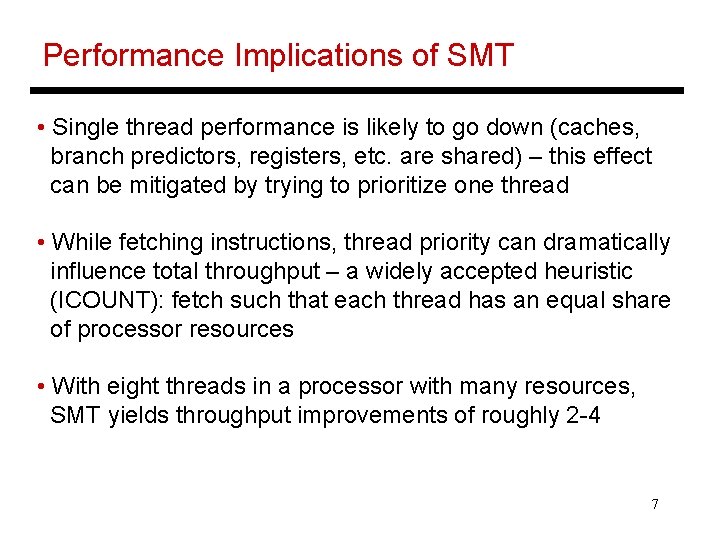
Performance Implications of SMT • Single thread performance is likely to go down (caches, branch predictors, registers, etc. are shared) – this effect can be mitigated by trying to prioritize one thread • While fetching instructions, thread priority can dramatically influence total throughput – a widely accepted heuristic (ICOUNT): fetch such that each thread has an equal share of processor resources • With eight threads in a processor with many resources, SMT yields throughput improvements of roughly 2 -4 7
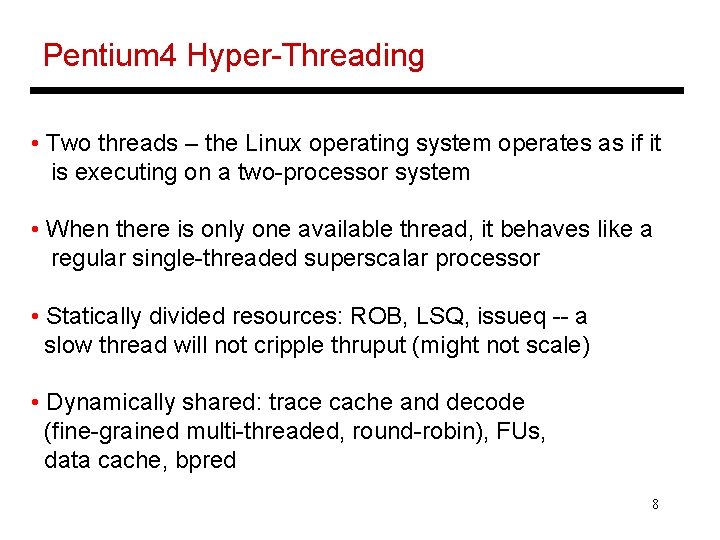
Pentium 4 Hyper-Threading • Two threads – the Linux operating system operates as if it is executing on a two-processor system • When there is only one available thread, it behaves like a regular single-threaded superscalar processor • Statically divided resources: ROB, LSQ, issueq -- a slow thread will not cripple thruput (might not scale) • Dynamically shared: trace cache and decode (fine-grained multi-threaded, round-robin), FUs, data cache, bpred 8
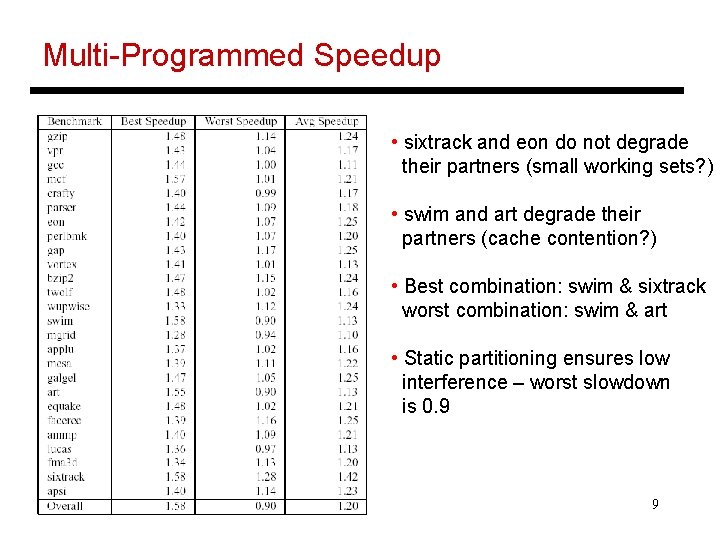
Multi-Programmed Speedup • sixtrack and eon do not degrade their partners (small working sets? ) • swim and art degrade their partners (cache contention? ) • Best combination: swim & sixtrack worst combination: swim & art • Static partitioning ensures low interference – worst slowdown is 0. 9 9
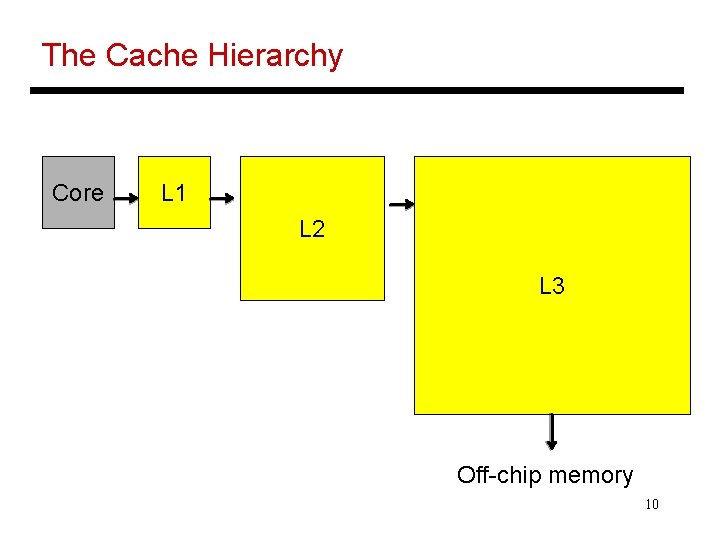
The Cache Hierarchy Core L 1 L 2 L 3 Off-chip memory 10
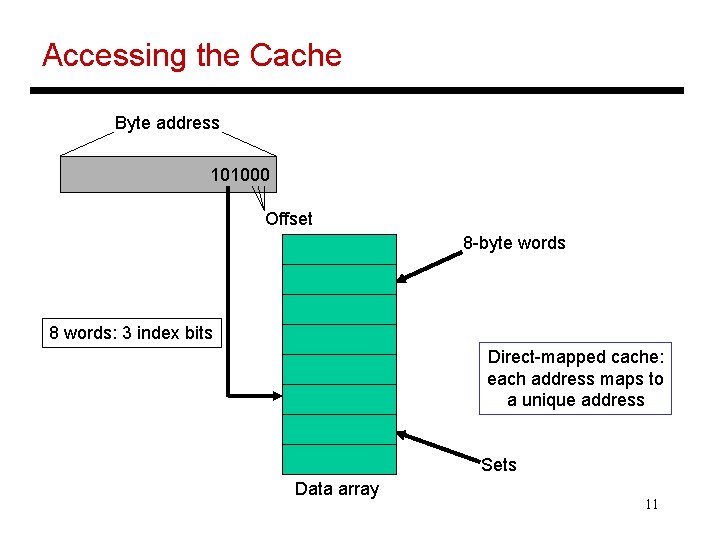
Accessing the Cache Byte address 101000 Offset 8 -byte words 8 words: 3 index bits Direct-mapped cache: each address maps to a unique address Sets Data array 11
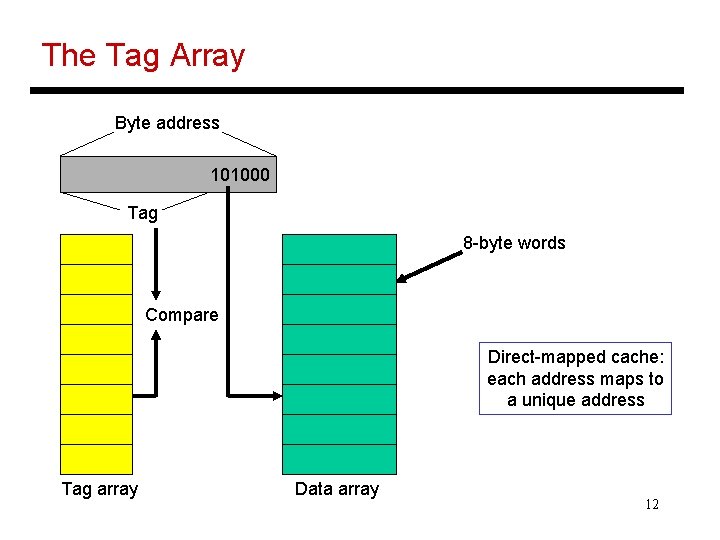
The Tag Array Byte address 101000 Tag 8 -byte words Compare Direct-mapped cache: each address maps to a unique address Tag array Data array 12
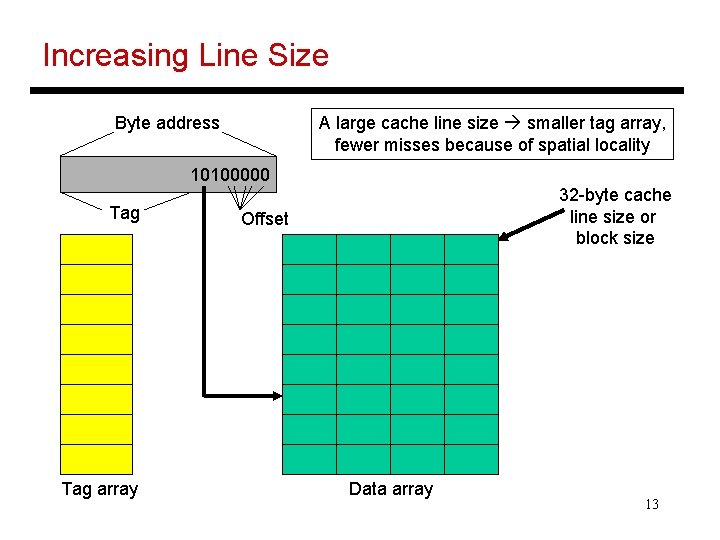
Increasing Line Size A large cache line size smaller tag array, fewer misses because of spatial locality Byte address 10100000 Tag array 32 -byte cache line size or block size Offset Data array 13
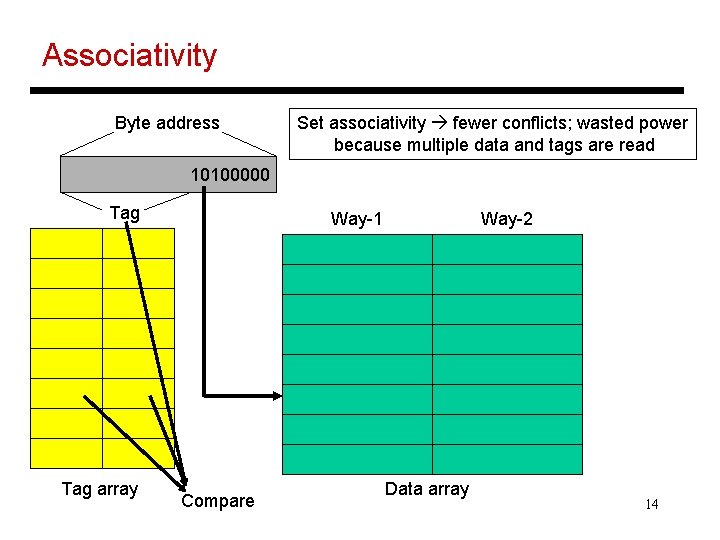
Associativity Byte address Set associativity fewer conflicts; wasted power because multiple data and tags are read 10100000 Tag array Way-1 Compare Way-2 Data array 14
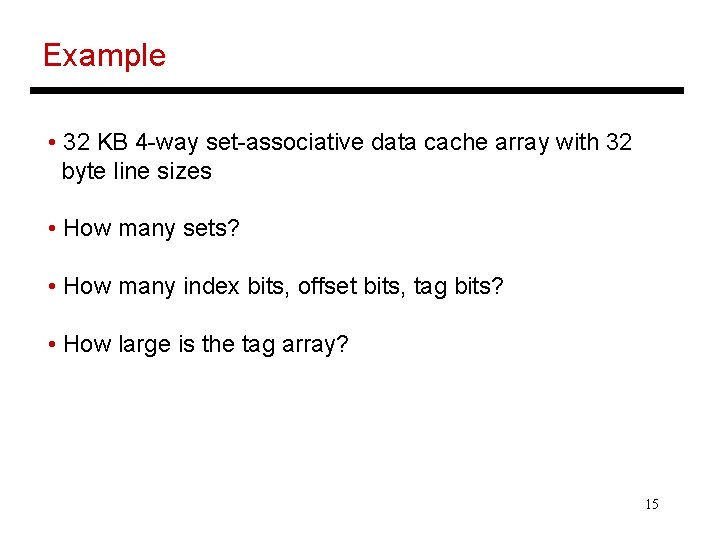
Example • 32 KB 4 -way set-associative data cache array with 32 byte line sizes • How many sets? • How many index bits, offset bits, tag bits? • How large is the tag array? 15
Title • Bullet 16