
lecture resources Bringing ecology to life ECOLOGY OF
lecture resources Bringing ecology to life ECOLOGY OF THE SEASHORE A complete seashore sampling and quantification course on CD-ROM. Power. Point presentations showing the species you are likely to find and the techniques you need. LECTURE 9 METHODS FOR STUDYING THE ECOLOGY OF THE SEASHORE Part 3: QUANTIFYING THE ORGANISMS Photography, text & design by Dr James Merryweather
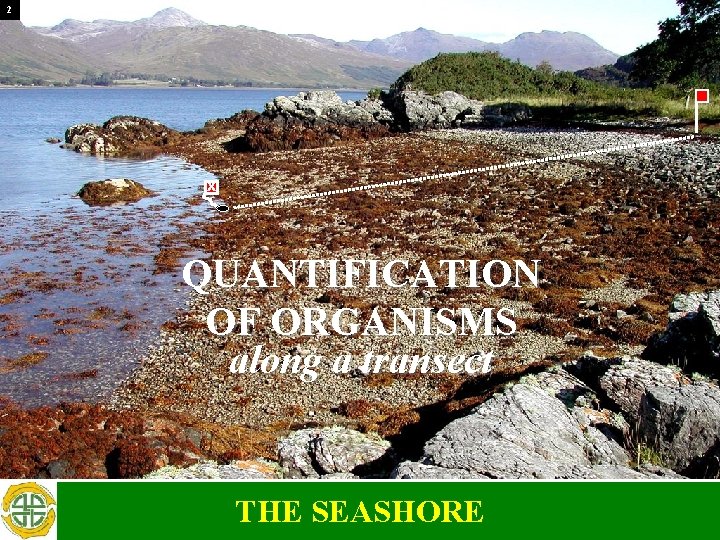
2 X QUANTIFICATION OF ORGANISMS along a transect THE SEASHORE
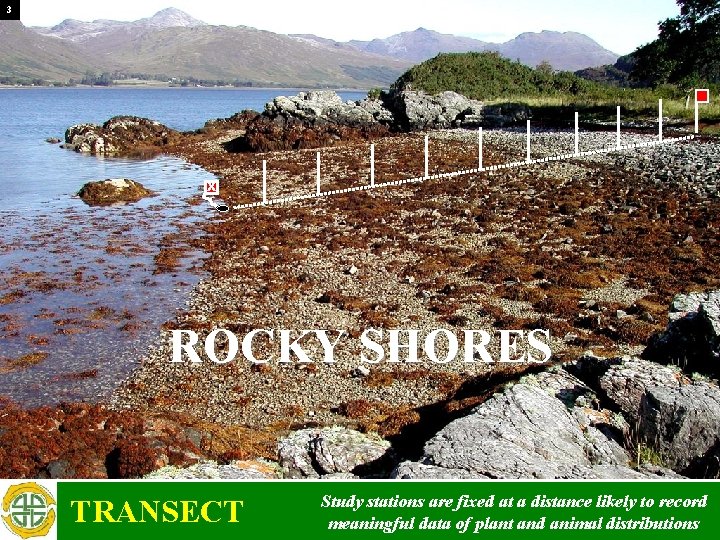
3 X ROCKY SHORES TRANSECT Study stations are fixed at a distance likely to record meaningful data of plant and animal distributions
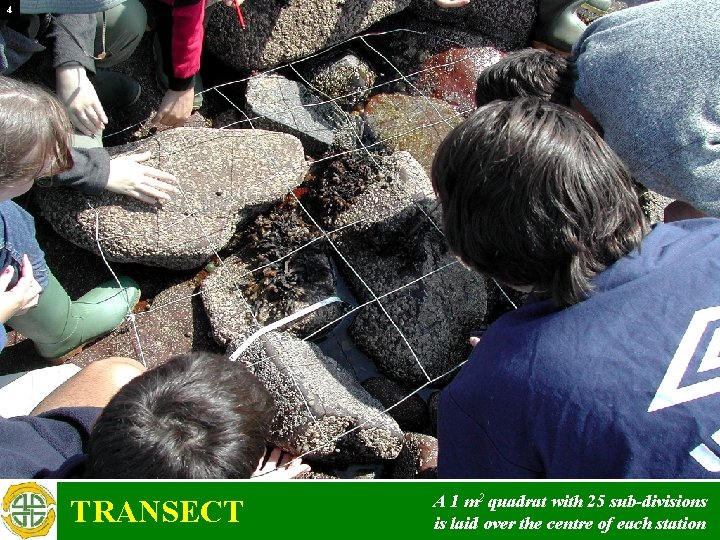
4 TRANSECT A 1 m 2 quadrat with 25 sub-divisions is laid over the centre of each station
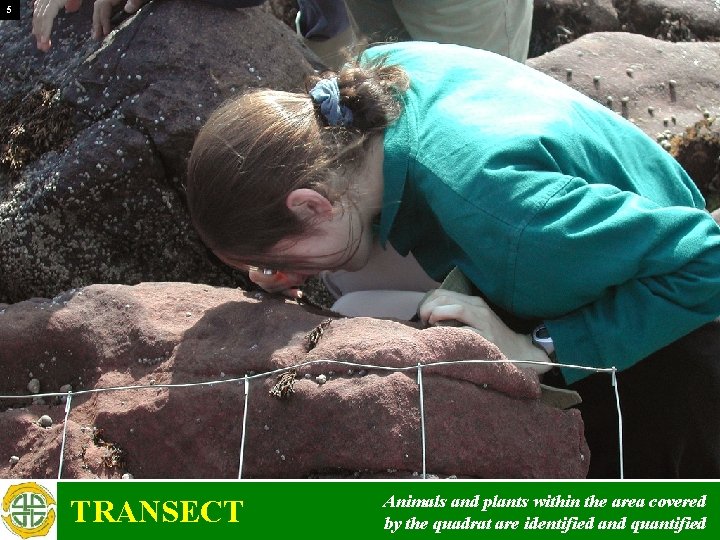
5 TRANSECT Animals and plants within the area covered by the quadrat are identified and quantified
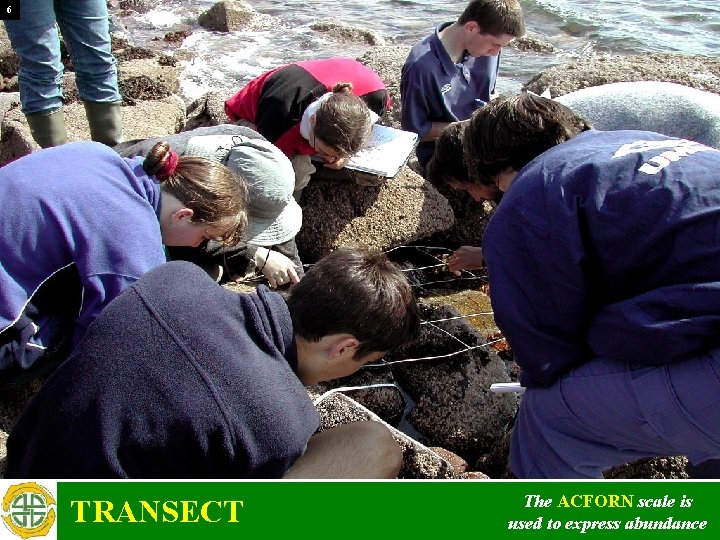
6 TRANSECT The ACFORN scale is used to express abundance
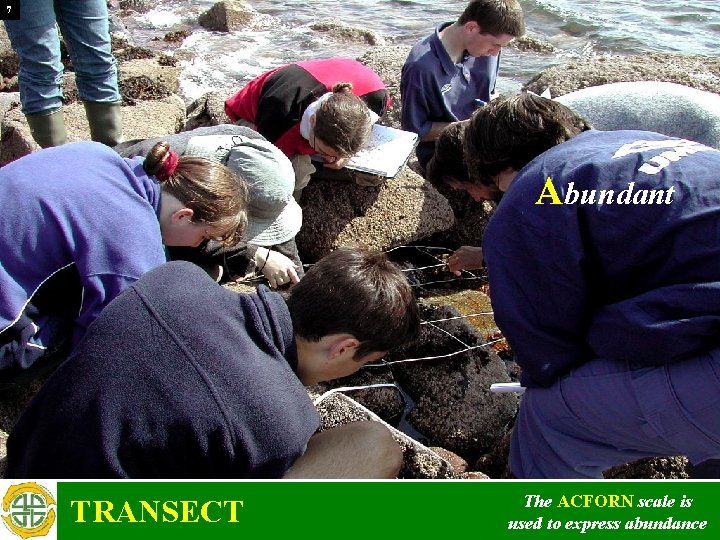
7 Abundant TRANSECT The ACFORN scale is used to express abundance
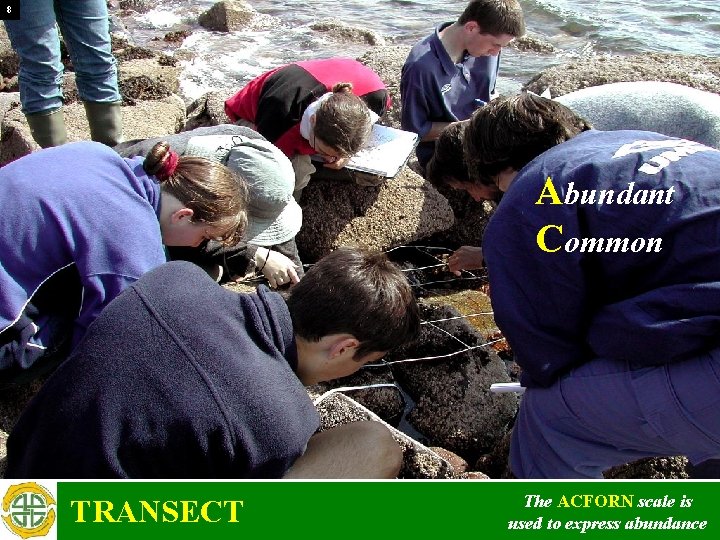
8 Abundant Common TRANSECT The ACFORN scale is used to express abundance
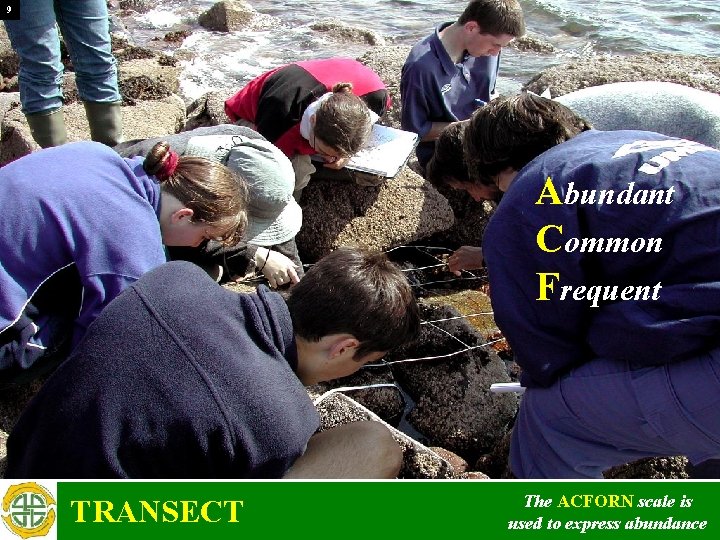
9 Abundant Common Frequent TRANSECT The ACFORN scale is used to express abundance
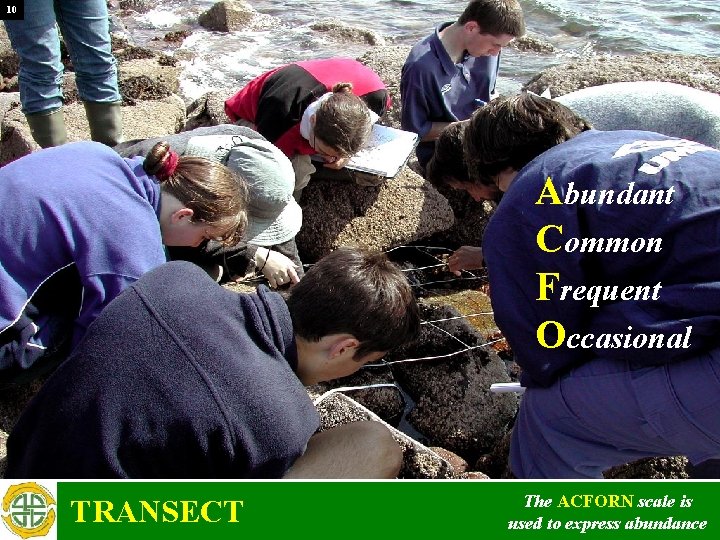
10 Abundant Common Frequent Occasional TRANSECT The ACFORN scale is used to express abundance
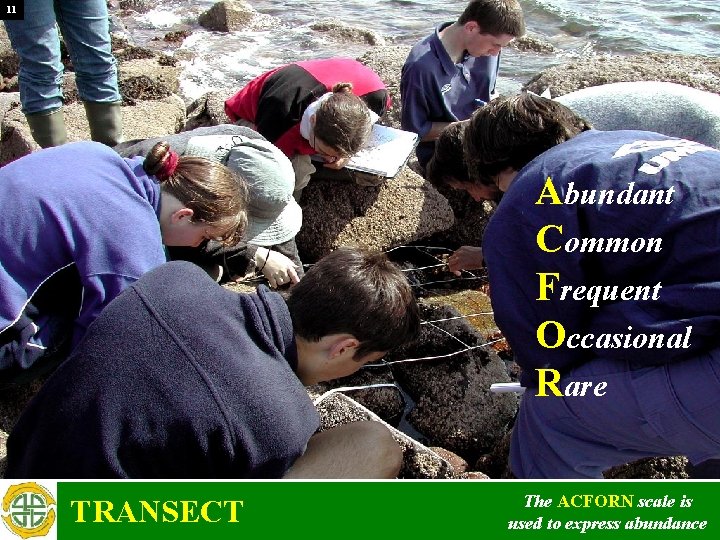
11 Abundant Common Frequent Occasional Rare TRANSECT The ACFORN scale is used to express abundance
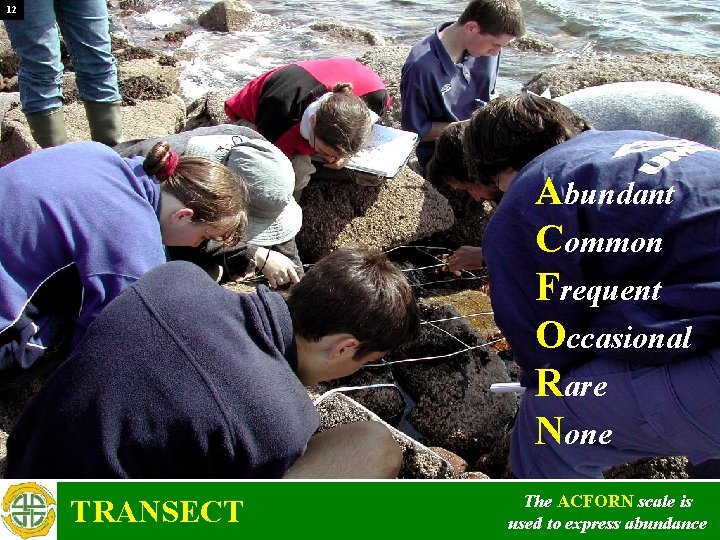
12 Abundant Common Frequent Occasional Rare None TRANSECT The ACFORN scale is used to express abundance
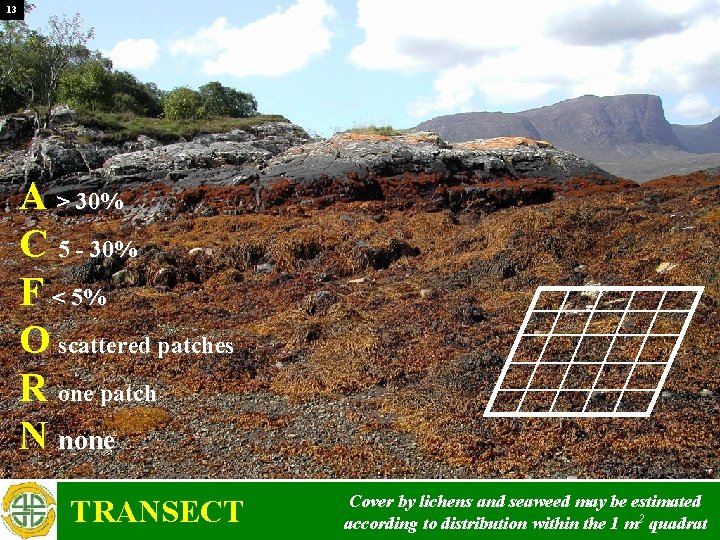
13 A > 30% C 5 - 30% F < 5% O scattered patches R one patch N none TRANSECT Cover by lichens and seaweed may be estimated according to distribution within the 1 m 2 quadrat
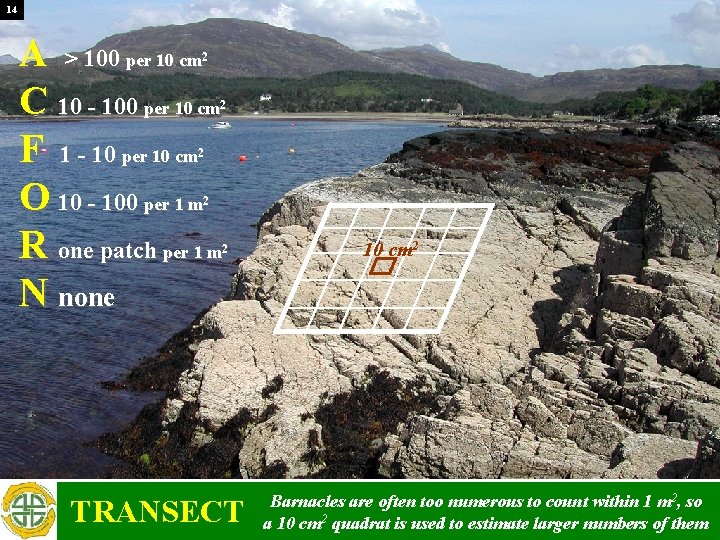
14 A > 100 per 10 cm C 10 - 100 per 10 cm F 1 - 10 per 10 cm O 10 - 100 per 1 m R one patch per 1 m N none 2 2 2 TRANSECT 10 cm 2 Barnacles are often too numerous to count within 1 m 2, so a 10 cm 2 quadrat is used to estimate larger numbers of them
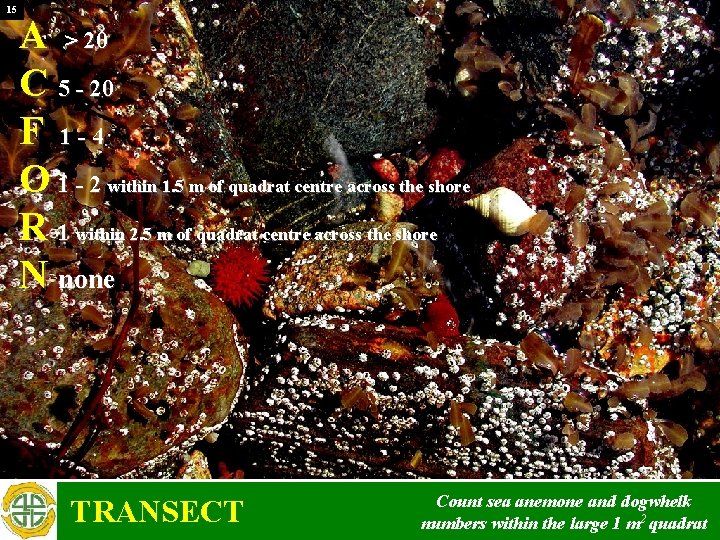
15 A > 20 C 5 - 20 F 1 -4 O 1 - 2 within 1. 5 m of quadrat centre across the shore R 1 within 2. 5 m of quadrat centre across the shore N none TRANSECT Count sea anemone and dogwhelk numbers within the large 1 m 2 quadrat
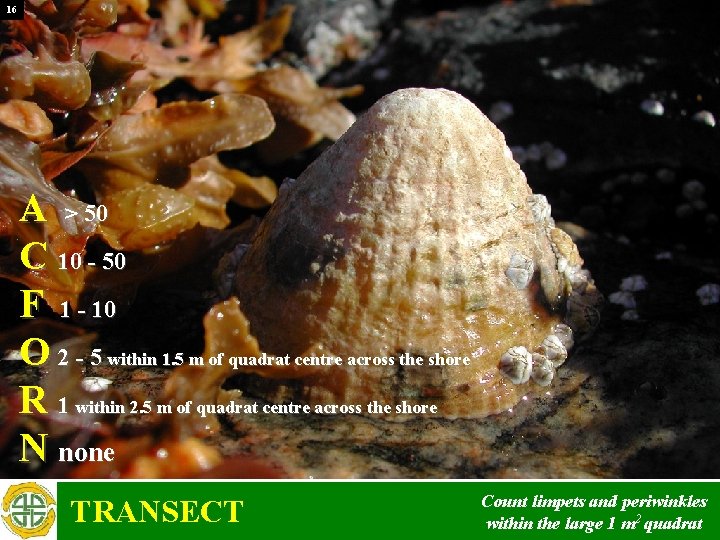
16 A > 50 C 10 - 50 F 1 - 10 O 2 - 5 within 1. 5 m of quadrat centre across the shore R 1 within 2. 5 m of quadrat centre across the shore N none TRANSECT Count limpets and periwinkles within the large 1 m 2 quadrat
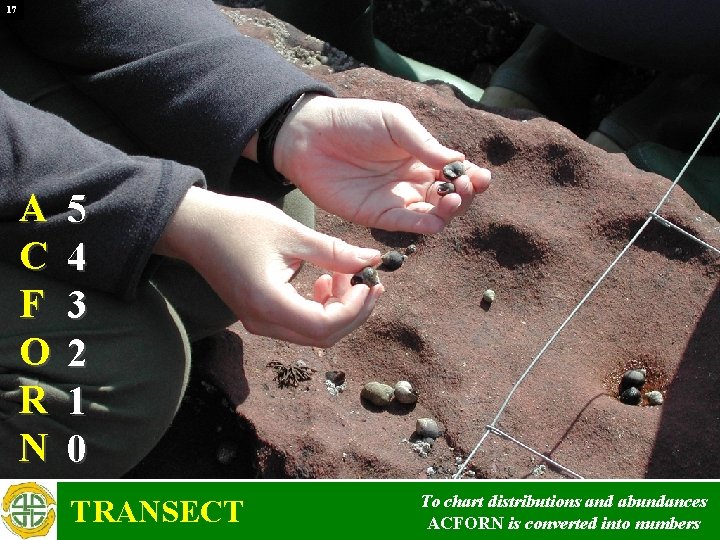
17 A C F O R N 5 4 3 2 1 0 TRANSECT To chart distributions and abundances ACFORN is converted into numbers
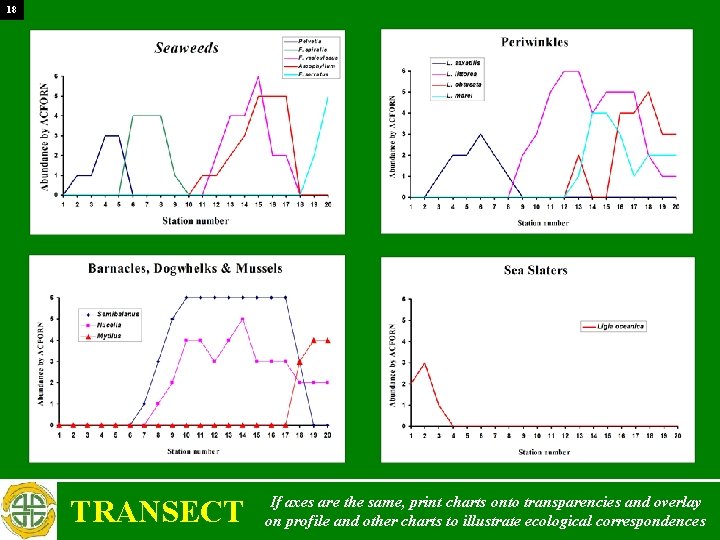
18 TRANSECT If axes are the same, print charts onto transparencies and overlay on profile and other charts to illustrate ecological correspondences
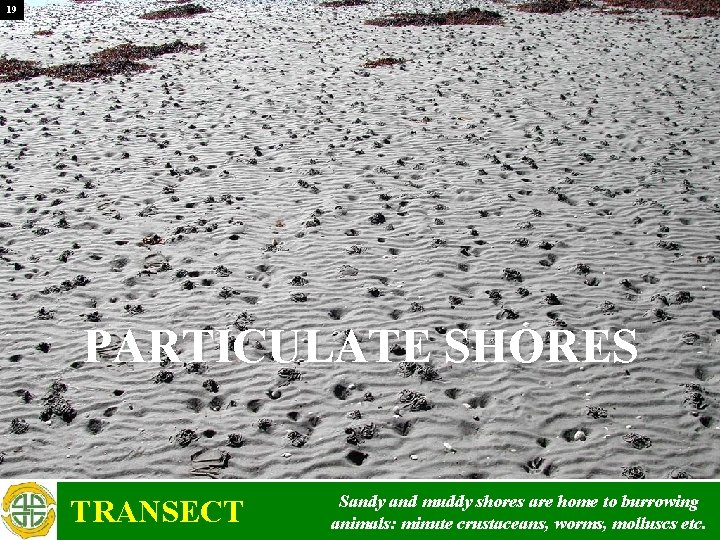
19 PARTICULATE SHORES TRANSECT Sandy and muddy shores are home to burrowing animals: minute crustaceans, worms, molluscs etc.
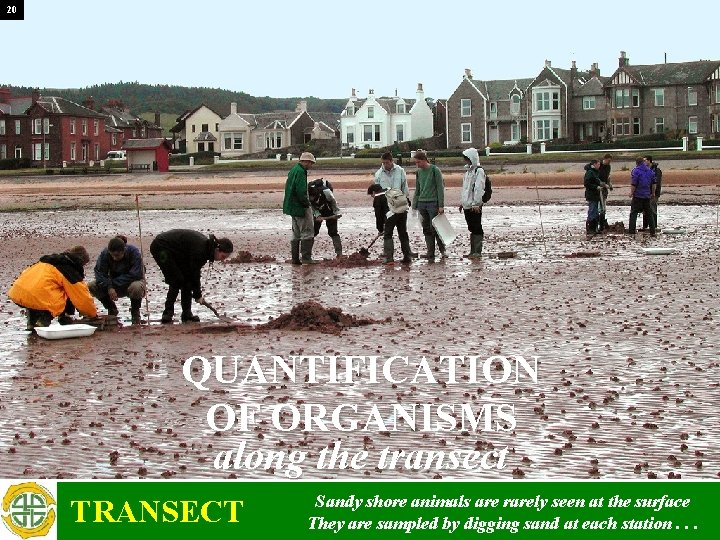
20 QUANTIFICATION OF ORGANISMS along the transect TRANSECT Sandy shore animals are rarely seen at the surface They are sampled by digging sand at each station. . .
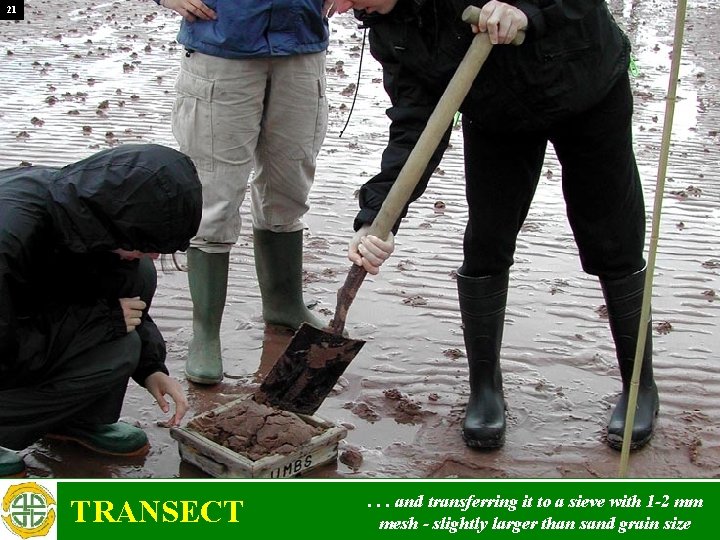
21 TRANSECT . . . and transferring it to a sieve with 1 -2 mm mesh - slightly larger than sand grain size
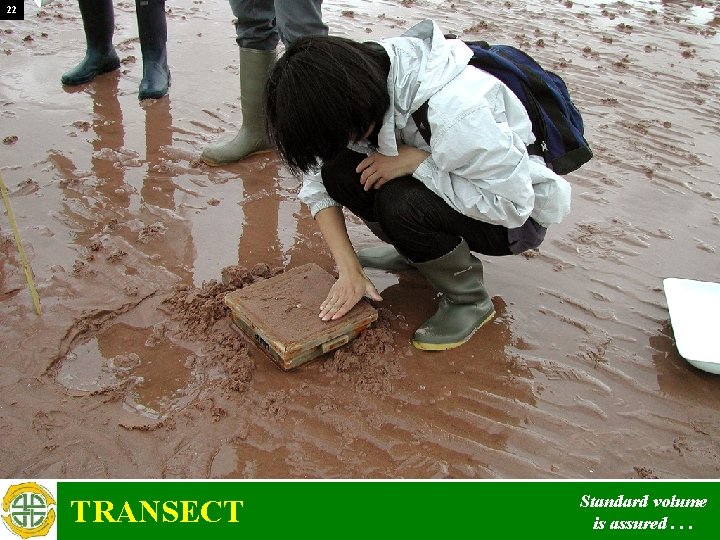
22 TRANSECT Standard volume is assured. . .
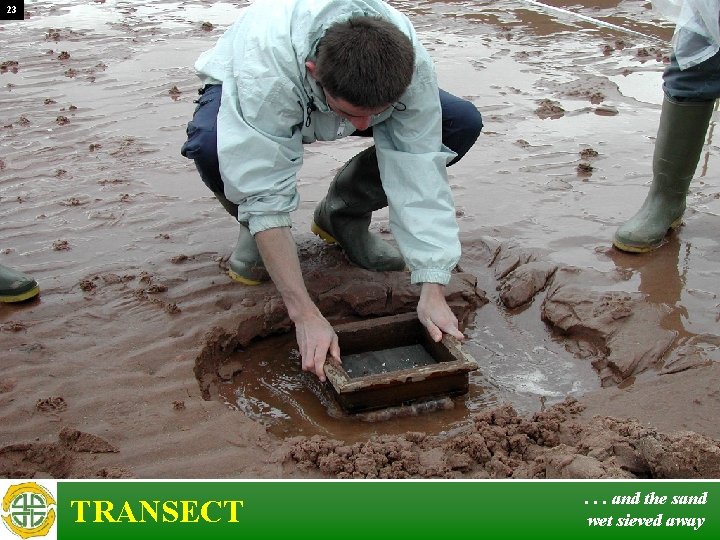
23 TRANSECT . . . and the sand wet sieved away
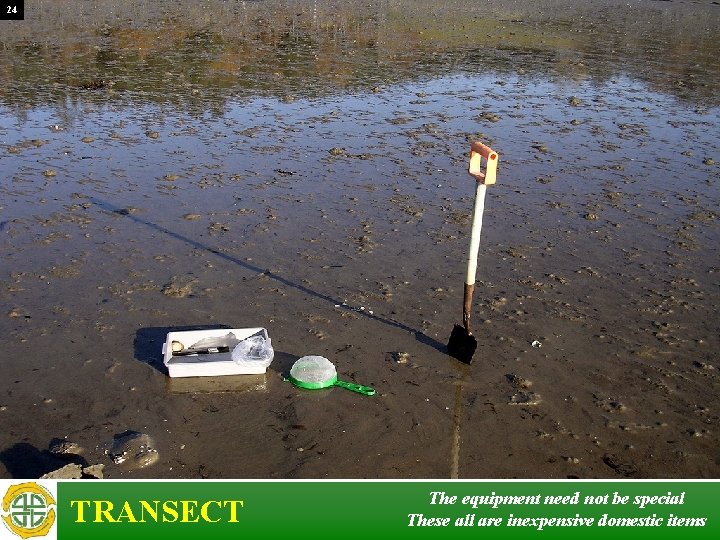
24 TRANSECT The equipment need not be special These all are inexpensive domestic items
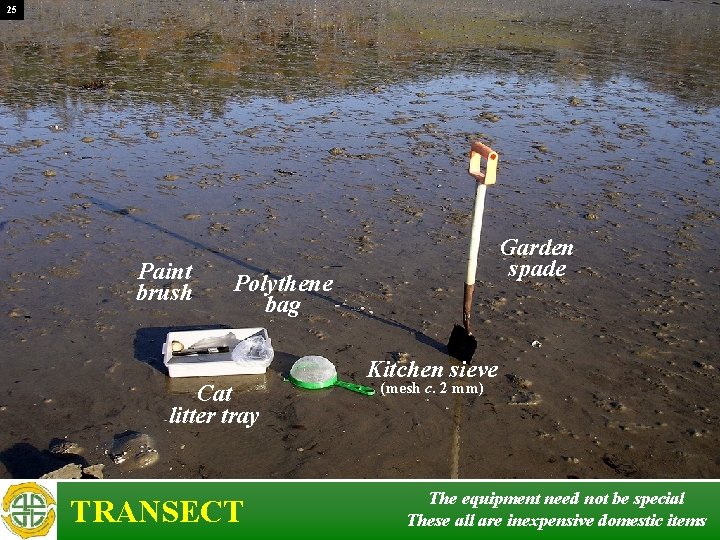
25 Paint brush Garden spade Polythene bag Cat litter tray TRANSECT Kitchen sieve (mesh c. 2 mm) The equipment need not be special These all are inexpensive domestic items
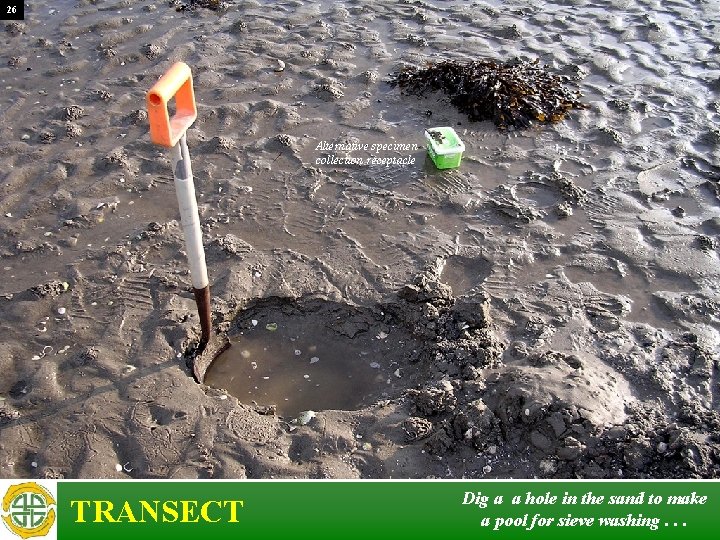
26 Alternative specimen collection receptacle TRANSECT Dig a a hole in the sand to make a pool for sieve washing. . .
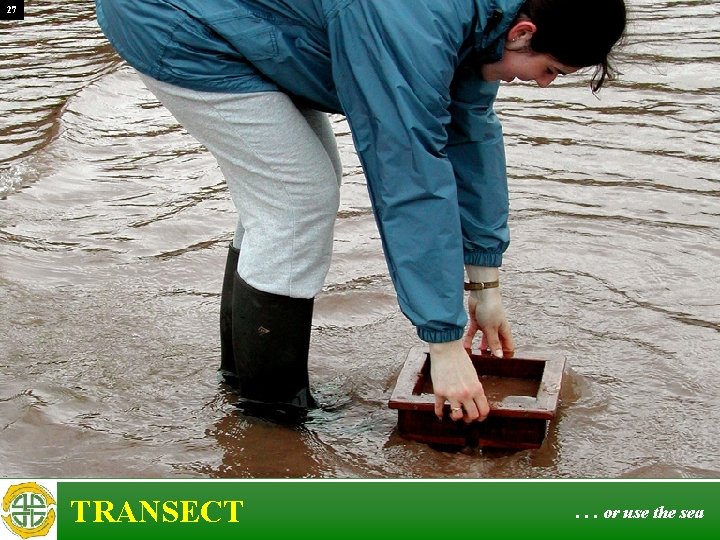
27 TRANSECT . . . or use the sea
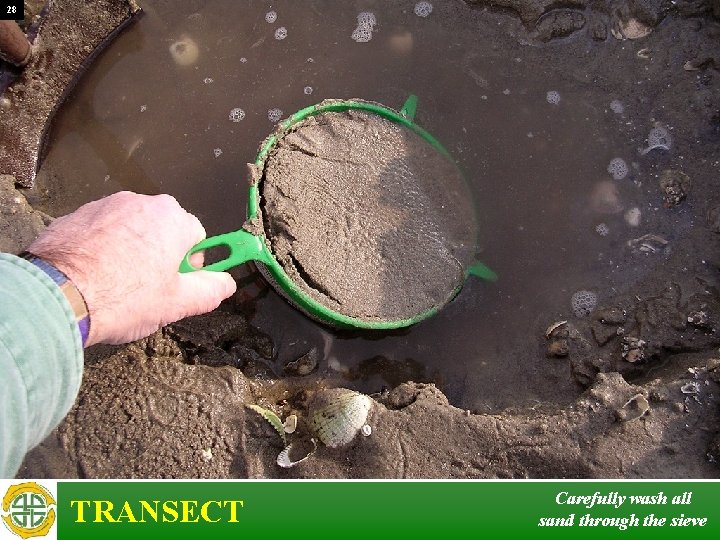
28 TRANSECT Carefully wash all sand through the sieve
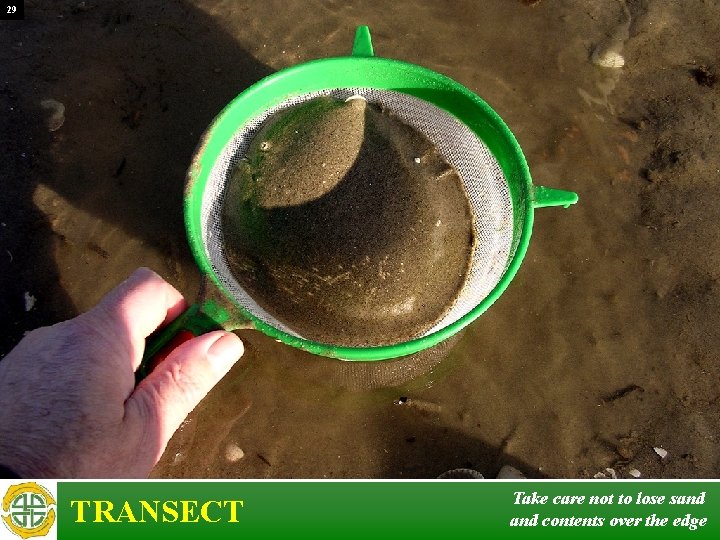
29 TRANSECT Take care not to lose sand contents over the edge
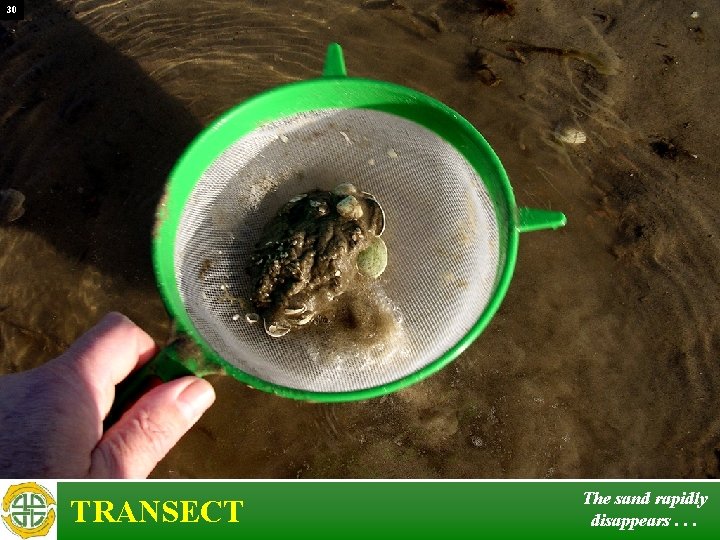
30 TRANSECT The sand rapidly disappears. . .
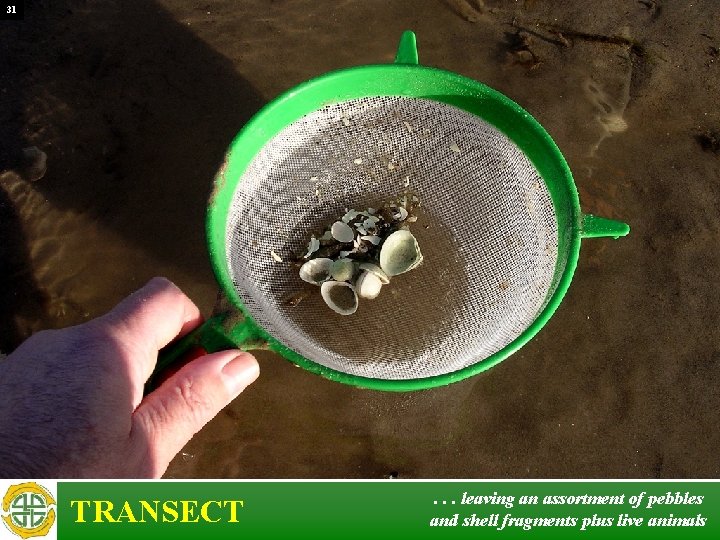
31 TRANSECT . . . leaving an assortment of pebbles and shell fragments plus live animals
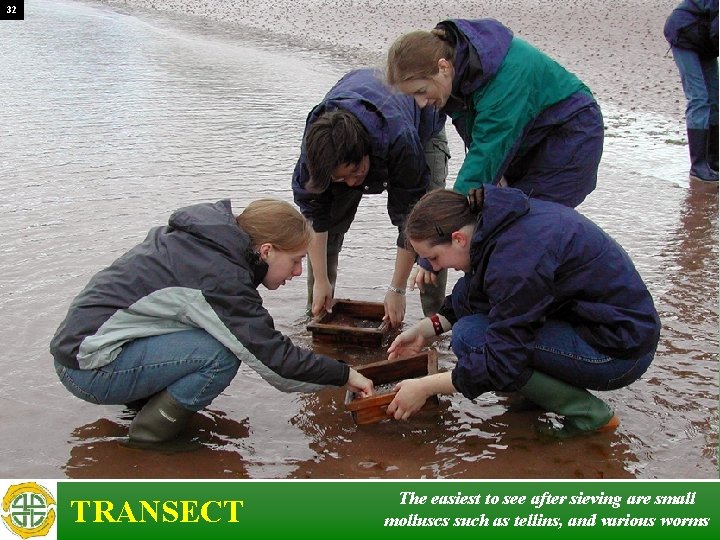
32 TRANSECT The easiest to see after sieving are small molluscs such as tellins, and various worms
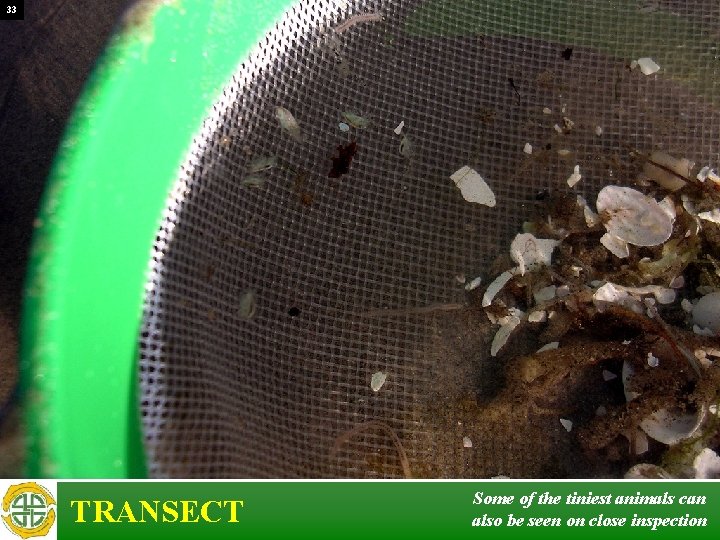
33 TRANSECT Some of the tiniest animals can also be seen on close inspection
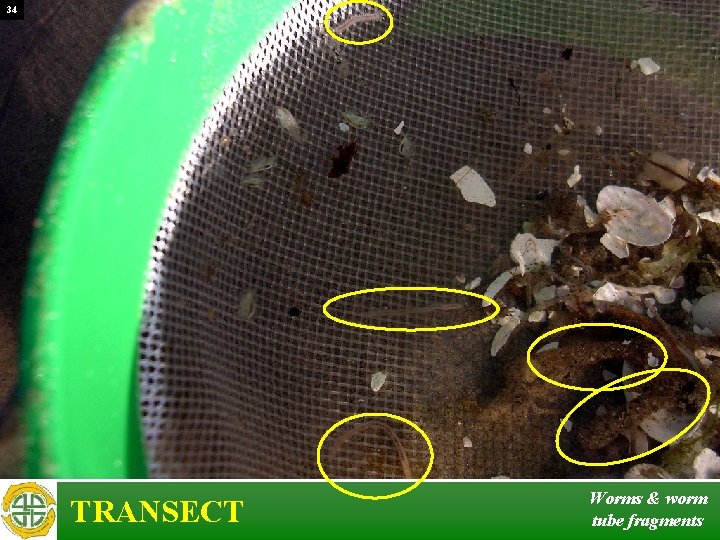
34 TRANSECT Worms & worm tube fragments
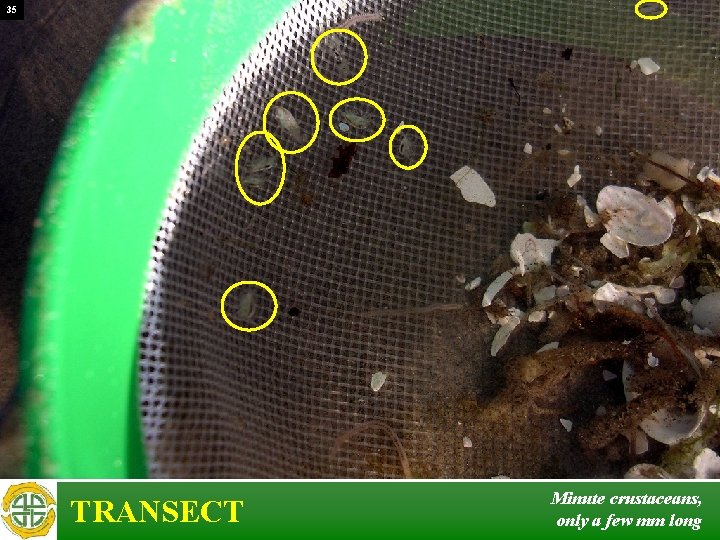
35 TRANSECT Minute crustaceans, only a few mm long
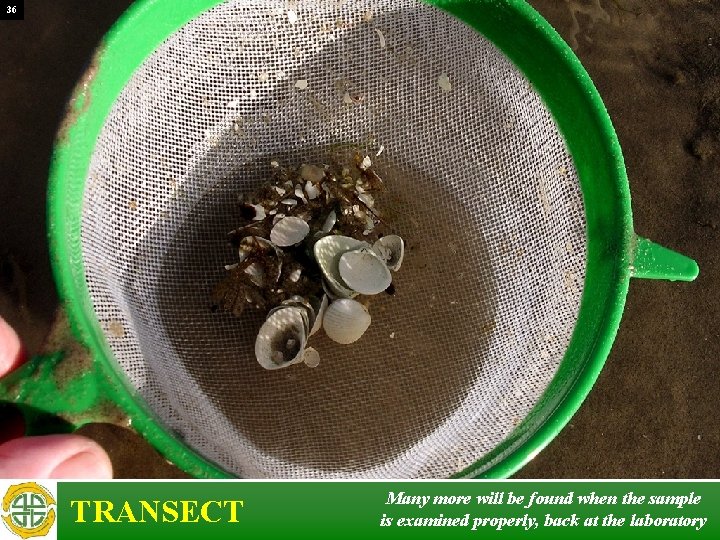
36 TRANSECT Many more will be found when the sample is examined properly, back at the laboratory
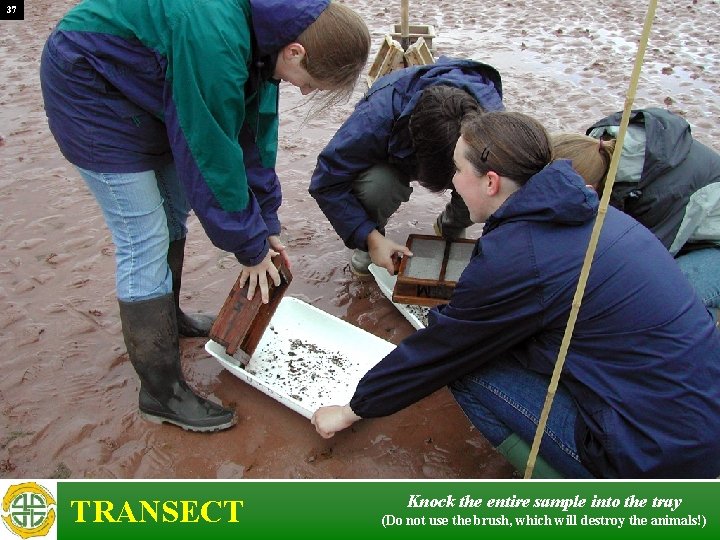
37 TRANSECT Knock the entire sample into the tray (Do not use the brush, which will destroy the animals!)
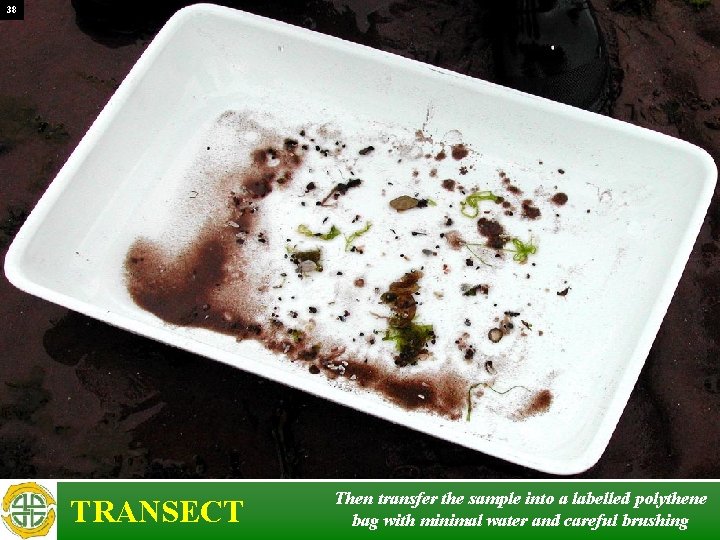
38 TRANSECT Then transfer the sample into a labelled polythene bag with minimal water and careful brushing
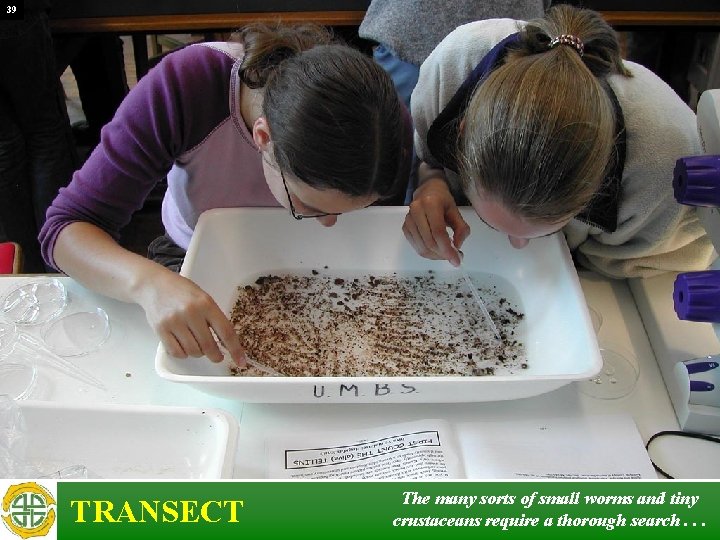
39 TRANSECT The many sorts of small worms and tiny crustaceans require a thorough search. . .
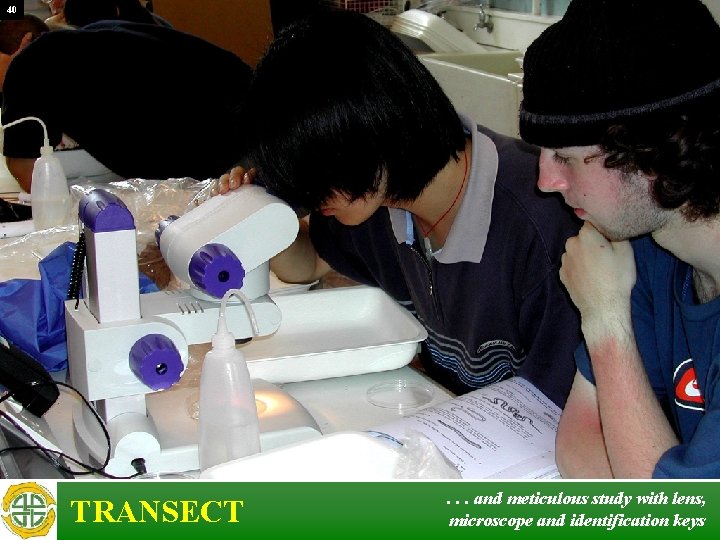
40 TRANSECT . . . and meticulous study with lens, microscope and identification keys
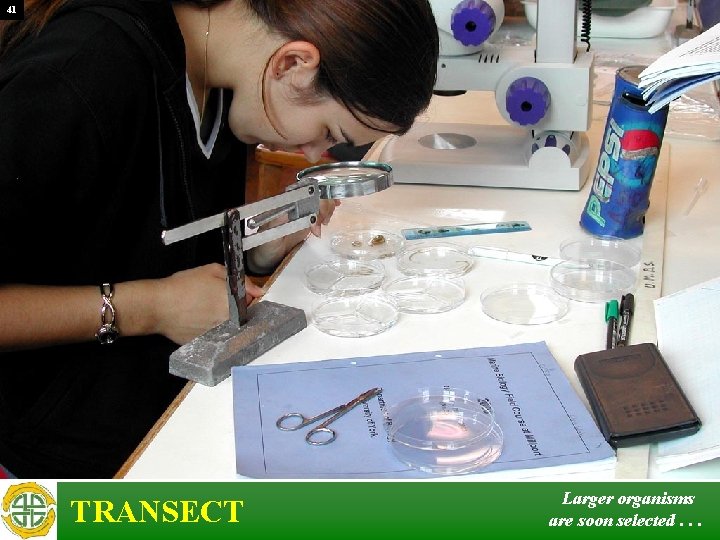
41 TRANSECT Larger organisms are soon selected. . .
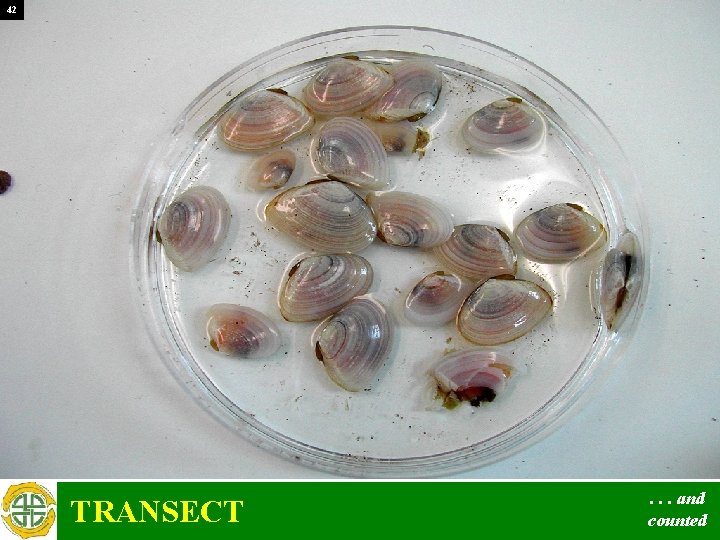
42 TRANSECT . . . and counted
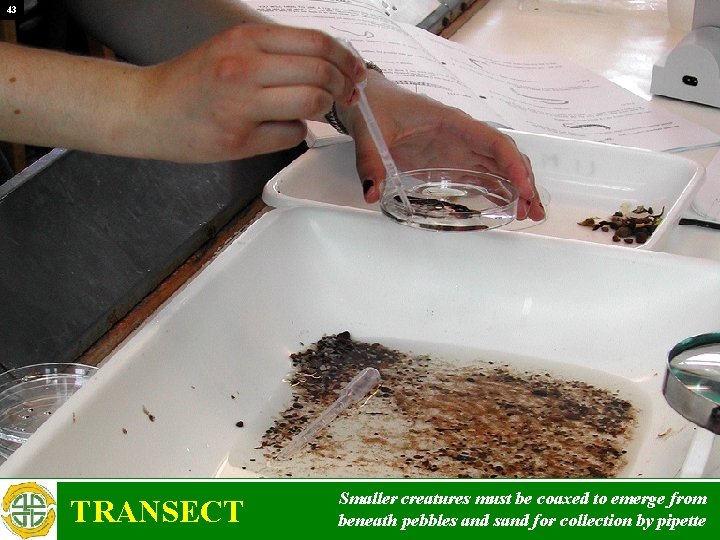
43 TRANSECT Smaller creatures must be coaxed to emerge from beneath pebbles and sand for collection by pipette
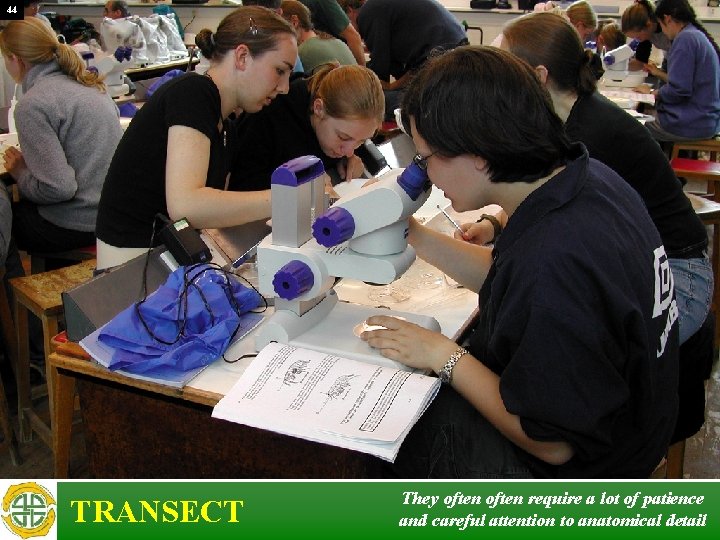
44 TRANSECT They often require a lot of patience and careful attention to anatomical detail
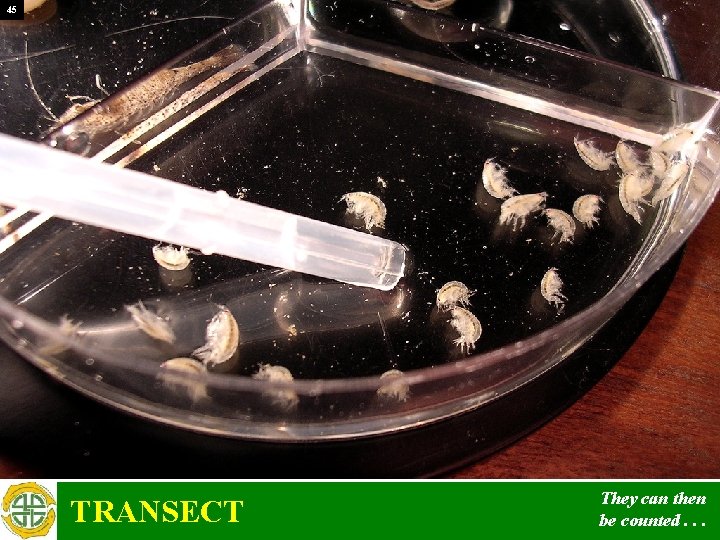
45 TRANSECT They can then be counted. . .
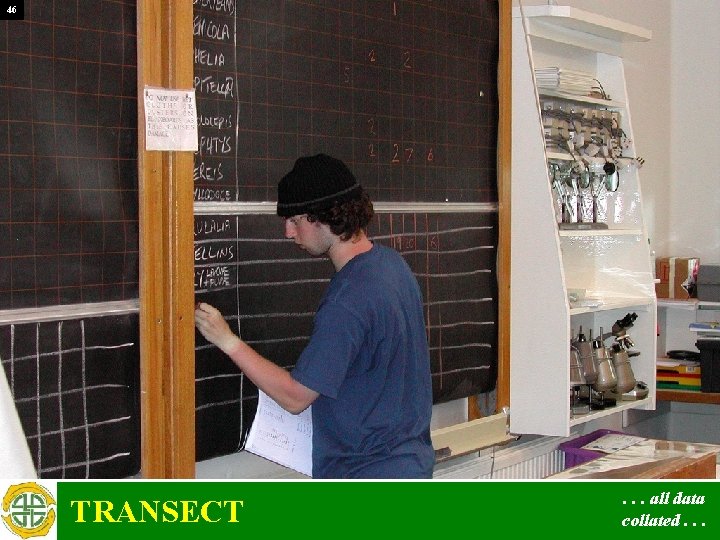
46 TRANSECT . . . all data collated. . .
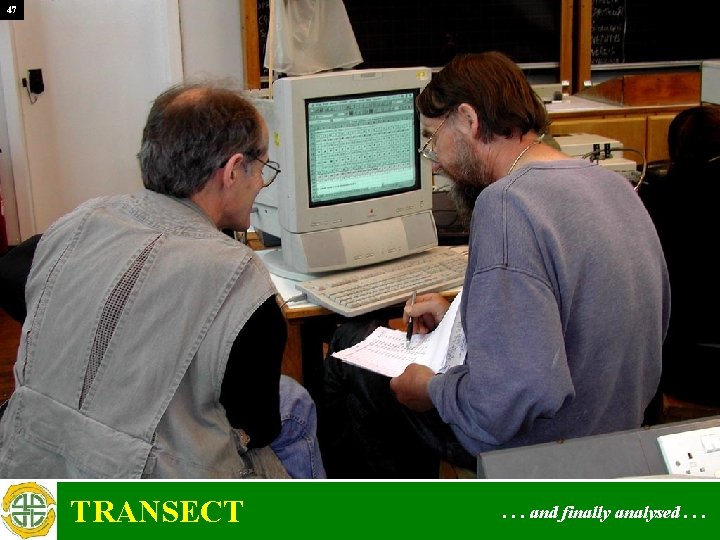
47 TRANSECT . . . and finally analysed. . .
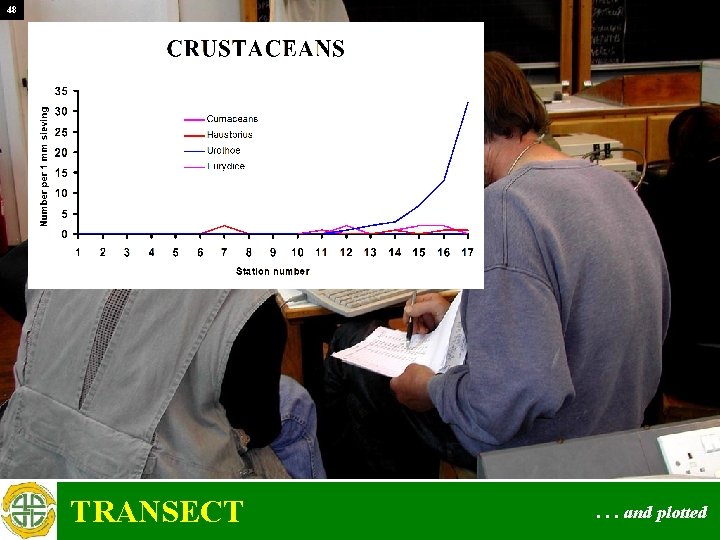
48 TRANSECT . . . and plotted
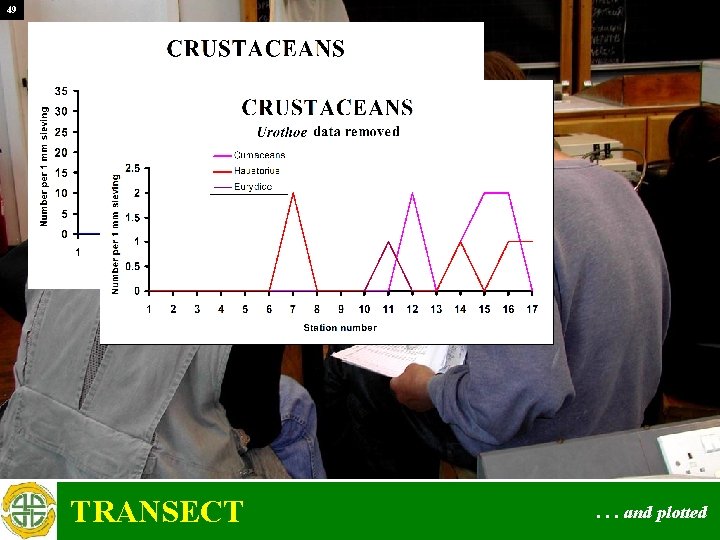
49 TRANSECT . . . and plotted
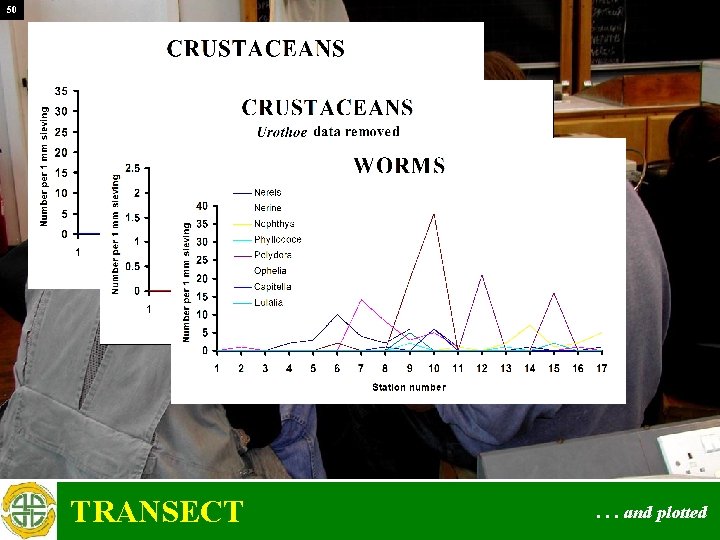
50 TRANSECT . . . and plotted
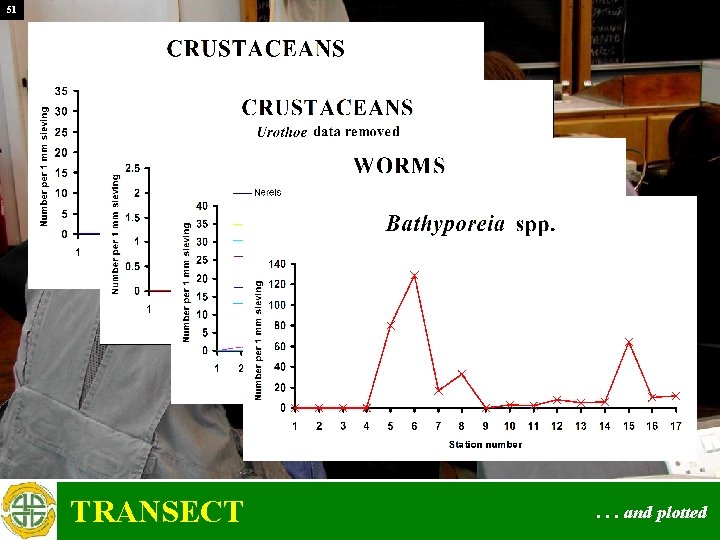
51 TRANSECT . . . and plotted
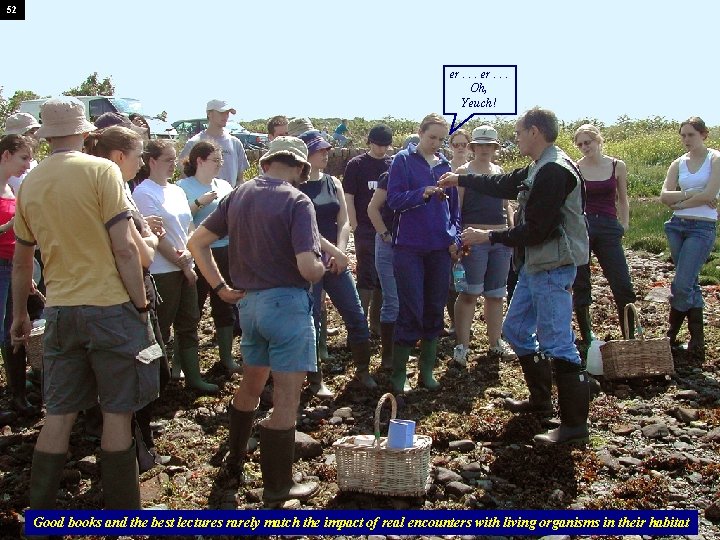
52 er. . . Oh, Yeuch! Good books and the best lectures rarely match the impact of real encounters with living organisms in their habitat
- Slides: 52