
Lecture Overview Theories Concepts of Motivation Motivation the
- Slides: 12
Lecture Overview • Theories & Concepts of Motivation • Motivation & the brain • Theories & Concepts of Emotion ©John Wiley & Sons, Inc. 2010
Theories & Concepts of Motivation: Important Definitions • Motivation: set of factors that activate, direct, & maintain behavior, usually toward some goal • Emotion: subjective feeling including arousal, cognitions, & expressions ©John Wiley & Sons, Inc. 2010
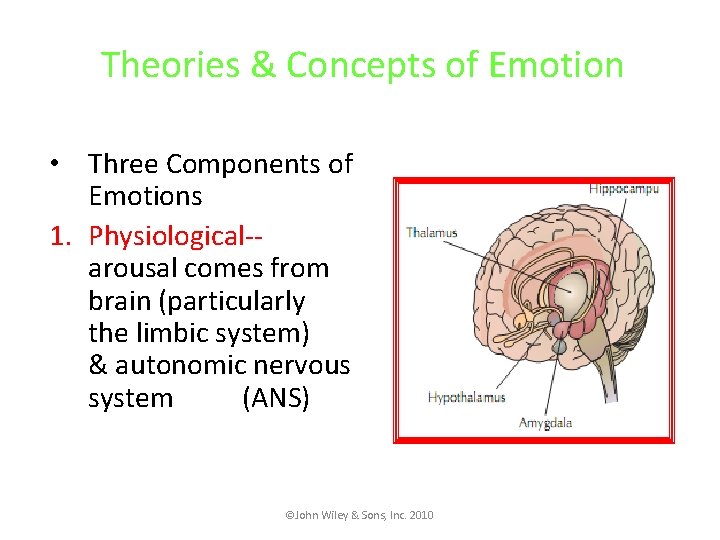
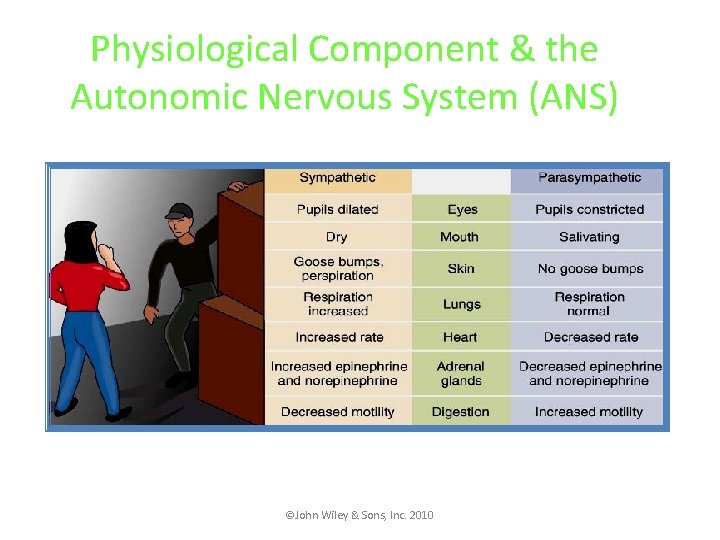
Theories & Concepts of Emotion • Three Components of Emotions 1. Physiological-arousal comes from brain (particularly the limbic system) & autonomic nervous system (ANS) ©John Wiley & Sons, Inc. 2010
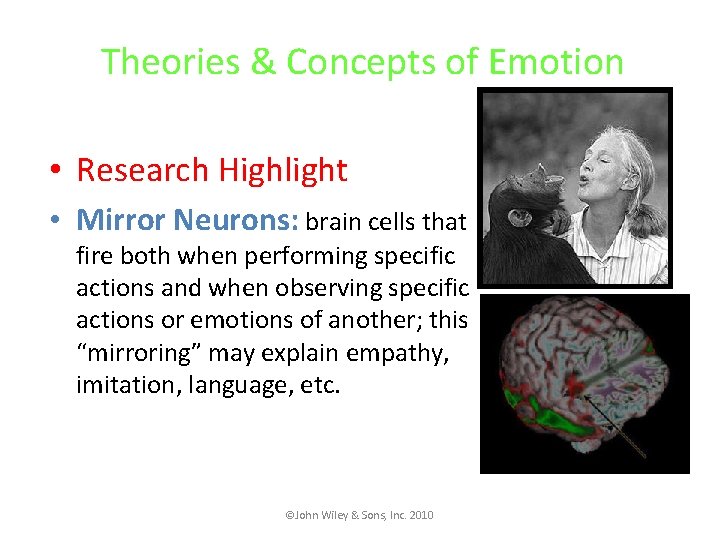
Theories & Concepts of Emotion • Research Highlight • Mirror Neurons: brain cells that fire both when performing specific actions and when observing specific actions or emotions of another; this “mirroring” may explain empathy, imitation, language, etc. ©John Wiley & Sons, Inc. 2010
Physiological Component & the Autonomic Nervous System (ANS) ©John Wiley & Sons, Inc. 2010
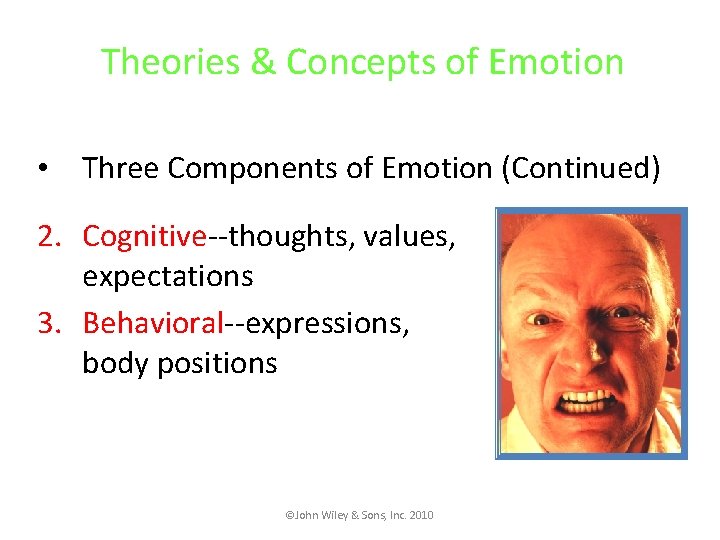
Theories & Concepts of Emotion • Three Components of Emotion (Continued) 2. Cognitive--thoughts, values, expectations 3. Behavioral--expressions, body positions ©John Wiley & Sons, Inc. 2010 & gestures, &
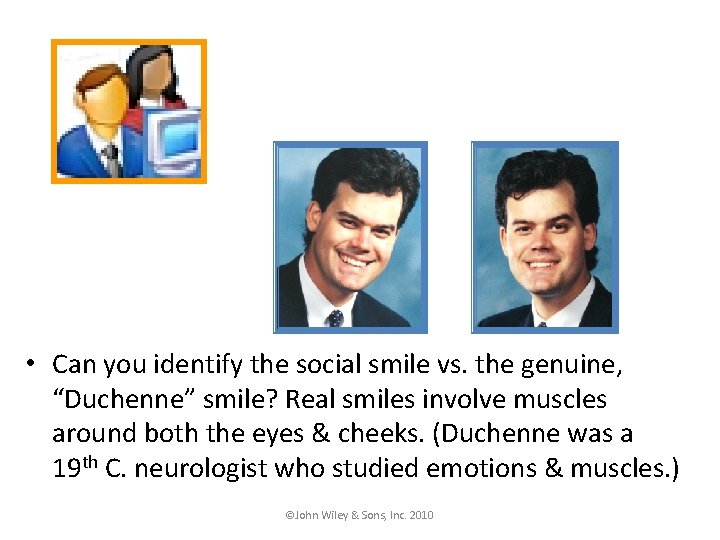
• Can you identify the social smile vs. the genuine, “Duchenne” smile? Real smiles involve muscles around both the eyes & cheeks. (Duchenne was a 19 th C. neurologist who studied emotions & muscles. ) ©John Wiley & Sons, Inc. 2010
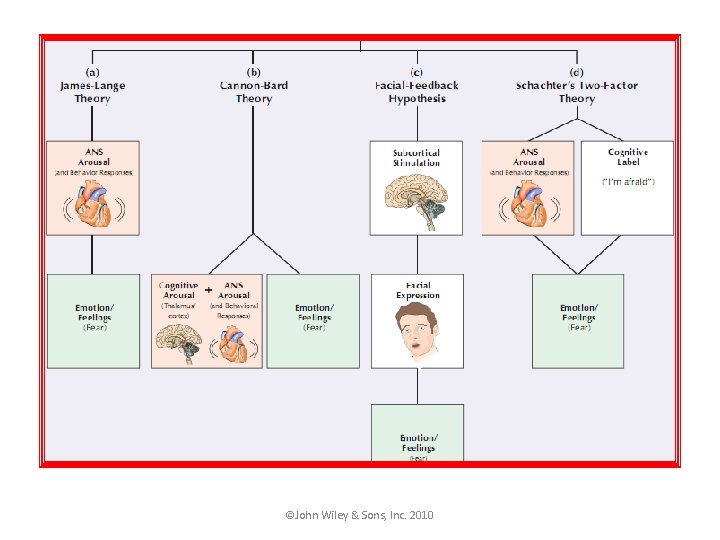
Theories & Concepts of Emotion-- Four Theories of Emotion • James-Lange: subjective experience of emotion follows bodily arousal • Cannon-Bard: arousal & emotion occur simultaneously • Facial-Feedback: facial movements elicit arousal & specific emotions • Schachter’s Two-Factor: arousal & label (or interpretation) produce emotion ©John Wiley & Sons, Inc. 2010
©John Wiley & Sons, Inc. 2010
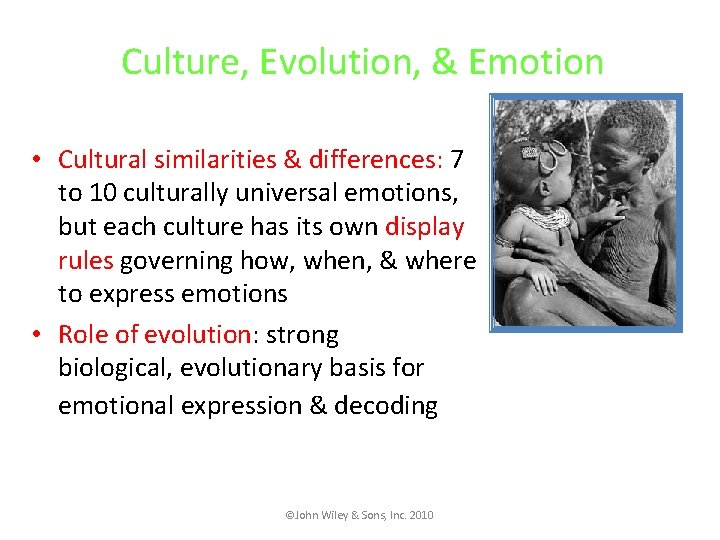
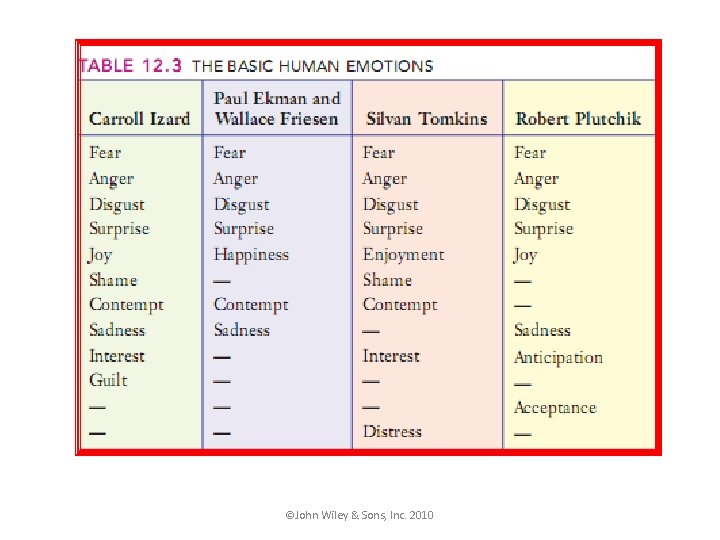
Culture, Evolution, & Emotion • Cultural similarities & differences: 7 to 10 culturally universal emotions, but each culture has its own display rules governing how, when, & where to express emotions • Role of evolution: strong biological, evolutionary basis for emotional expression & decoding ©John Wiley & Sons, Inc. 2010
©John Wiley & Sons, Inc. 2010
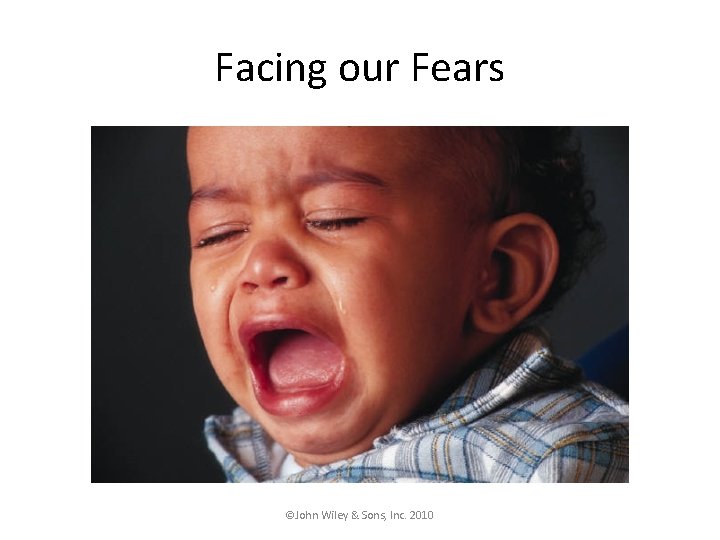
Facing our Fears ©John Wiley & Sons, Inc. 2010