
Lecture Outline What is development Domains of development

- Slides: 18
Lecture Outline • • • What is development? Domains of development Types of developmental change Goals of developmental psychology Themes/Issues in developmental psychology Research methods in developmental psychology
What is development? • Development refers to systematic changes in the individual that occur over time from conception to death
Domains of Development • Physical Development – Changes in the body and brain • Cognitive Development – Changes in thought, intelligence, and language • Socioemotional Development – Changes in relationships, emotions, and personality
Types of development • Normative development – Involves typical or average patterns of change
• Individual differences – Involves differences between individuals of approximately the same age
Goals of Developmental Psychology • Describe behavior and how it changes across development • Explain development – • Identify the underlying processes or causes of change Apply knowledge to help children develop in positive directions
Themes in Developmental Psychology • How do genetic/biological and environmental factors work together to shape development?
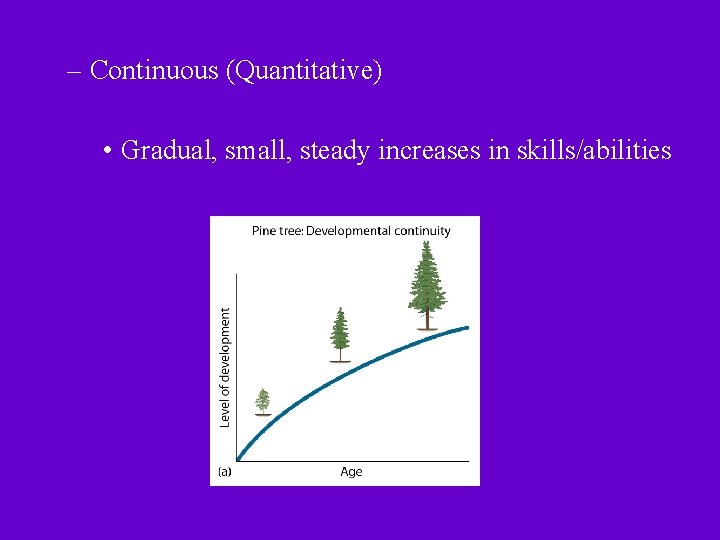
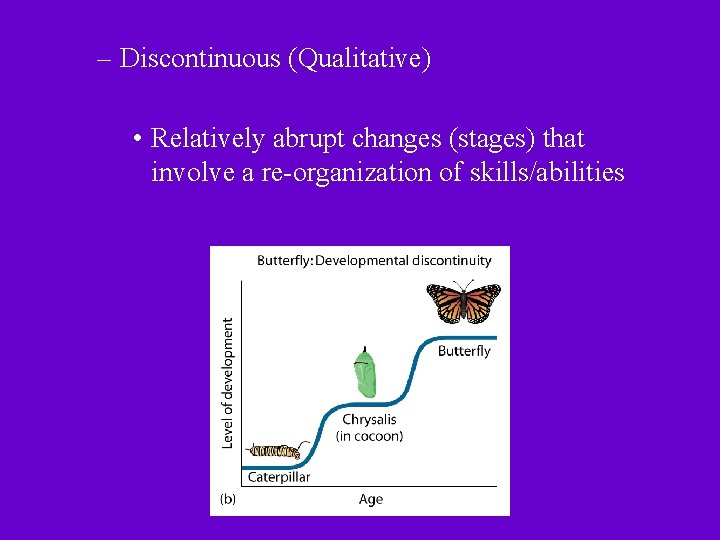
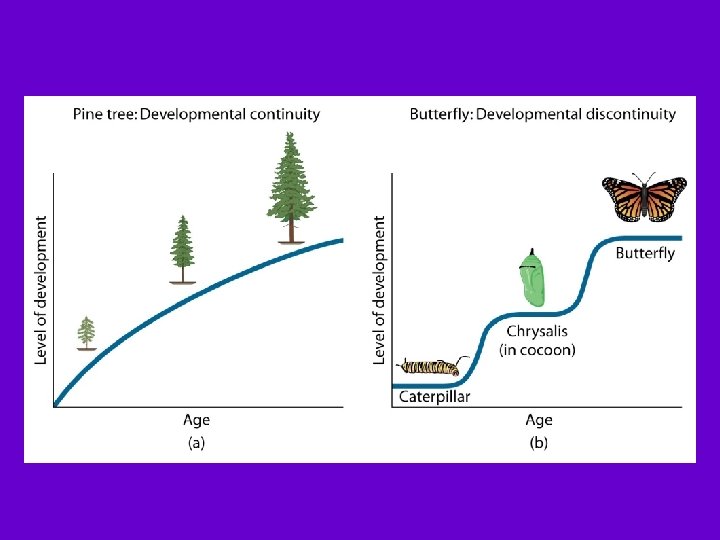
• Is development continuous or discontinuous?
– Continuous (Quantitative) • Gradual, small, steady increases in skills/abilities
– Discontinuous (Qualitative) • Relatively abrupt changes (stages) that involve a re-organization of skills/abilities
• How important is early experience in affecting later development?
Research Methods in Developmental Psychology • Hypothesis: A specific prediction that can be tested
Data Collection Techniques • Systematic Observation (2 Types) – Naturalistic Observation • Observe child’s behavior in a natural environment – Exs: playground, school, home
– Structured Observation: • Design a situation that will elicit relevant behavior(s) • Typically conducted in a laboratory setting • Observe different children in the same situation
General Disadvantages (Observation):
• Self-report Measures – Clinical Interviews • More “open-ended” questions—response choices are not limited – Ex: “Tell me about that” • Participants may be asked different questions (depending on their answers)
– Structured interviews, questionnaires, and tests • More “close-ended” questions—response choices are limited – Ex: yes/no questions, rating scales, multiple choice questions • All participants are asked the same questions