
Lecture on Skeletal Muscle Tissue www Assignment Point
- Slides: 30
Lecture on Skeletal Muscle Tissue www. Assignment. Point. com
Main objectives: 1) Describe the distinguishing characteristics of the different muscle tissues 2) Discuss the organization of skeletal muscle 3) Explain the micro-anatomy of a skeletal muscle fiber 4) Describe the fascicle arrangement in different types of muscle 5) Review general muscle terminology
Muscle tissue vs. Muscle as an organ One of the 4 primary tissue types How many subtypes? Made up of _____ tissue types. > 700 skeletal muscles Word roots: sarco mys
Function of Skeletal Muscles 1. Skeletal movement 2. Posture and body position 3. Support of soft tissues 4. Guarding of entrances & exits 5. Maintenance of body temperature
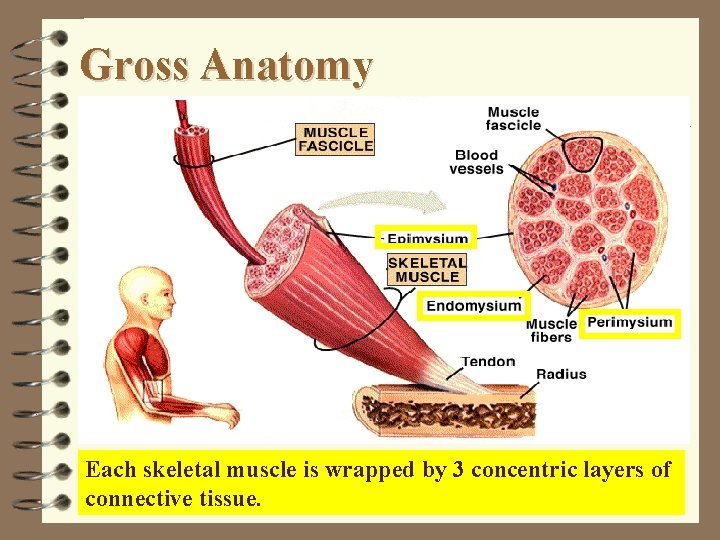
Gross Anatomy Each skeletal muscle is wrapped by 3 concentric layers of connective tissue.
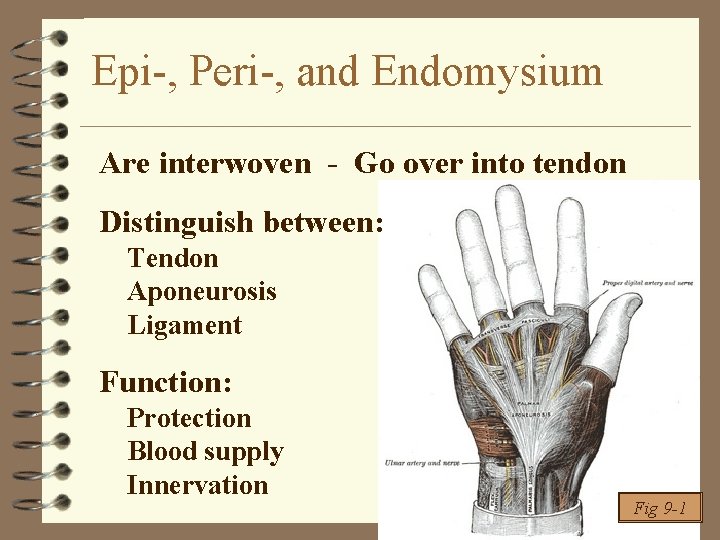
Epi-, Peri-, and Endomysium Are interwoven - Go over into tendon Distinguish between: Tendon Aponeurosis Ligament Function: Protection Blood supply Innervation Fig 9 -1
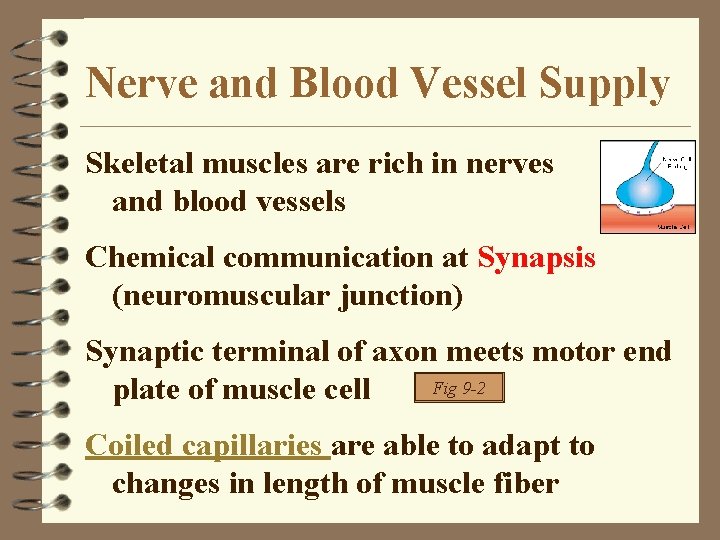
Nerve and Blood Vessel Supply Skeletal muscles are rich in nerves and blood vessels Chemical communication at Synapsis (neuromuscular junction) Synaptic terminal of axon meets motor end Fig 9 -2 plate of muscle cell Coiled capillaries are able to adapt to changes in length of muscle fiber
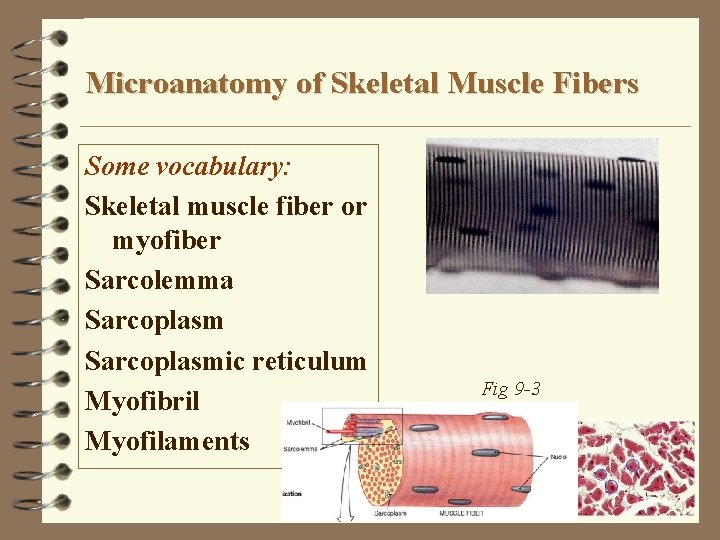
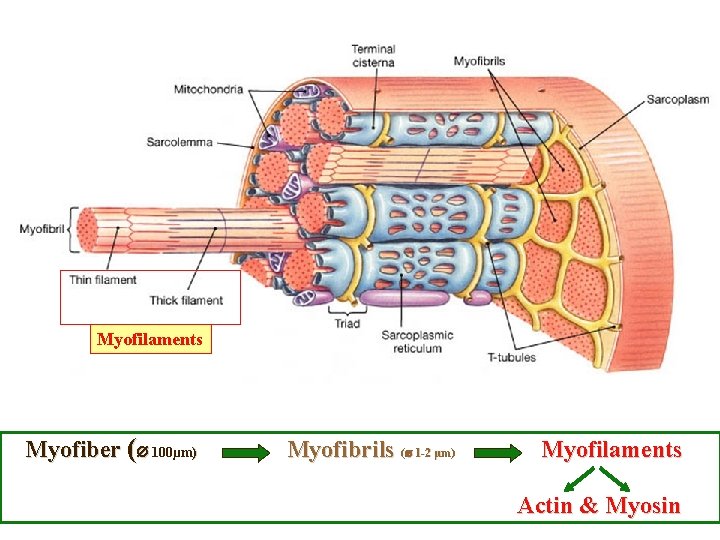
Microanatomy of Skeletal Muscle Fibers Some vocabulary: Skeletal muscle fiber or myofiber Sarcolemma Sarcoplasmic reticulum Myofibril Myofilaments Fig 9 -3
Myofilaments Myofiber ( 100µm) Myofibrils ( 1 -2 µm) Myofilaments Actin & Myosin
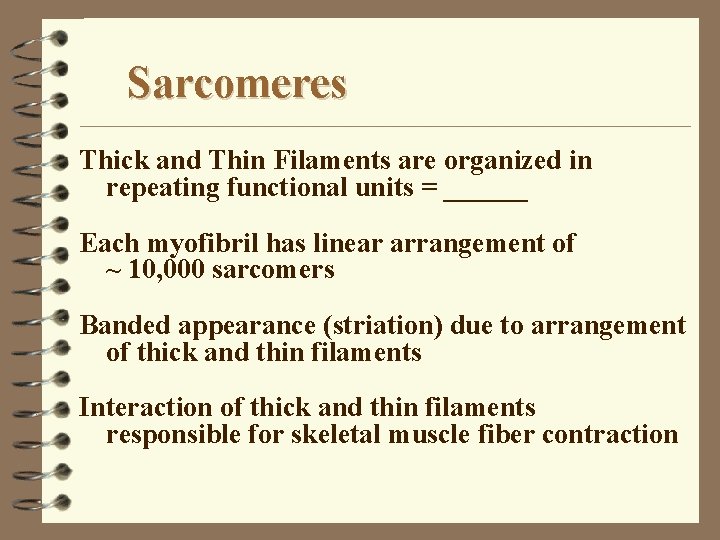
Sarcomeres Thick and Thin Filaments are organized in repeating functional units = ______ Each myofibril has linear arrangement of ~ 10, 000 sarcomers Banded appearance (striation) due to arrangement of thick and thin filaments Interaction of thick and thin filaments responsible for skeletal muscle fiber contraction
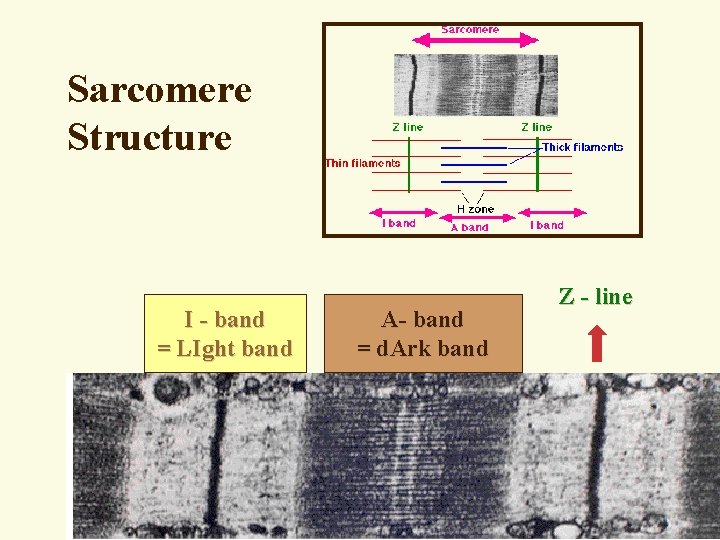
Sarcomere Structure I - band = LIght band A- band = d. Ark band Z - line
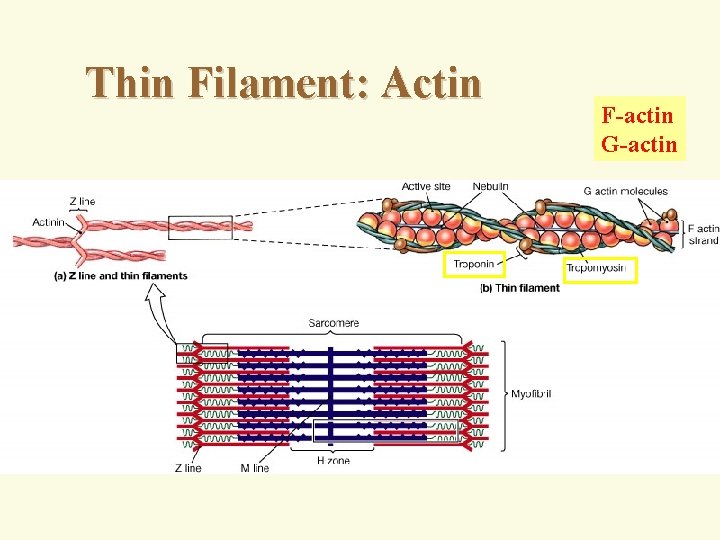
Thin Filament: Actin F-actin G-actin
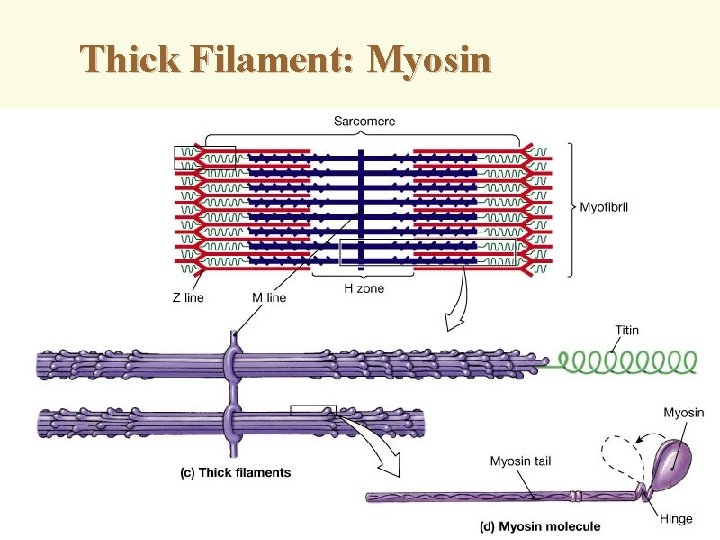
Thick Filament: Myosin
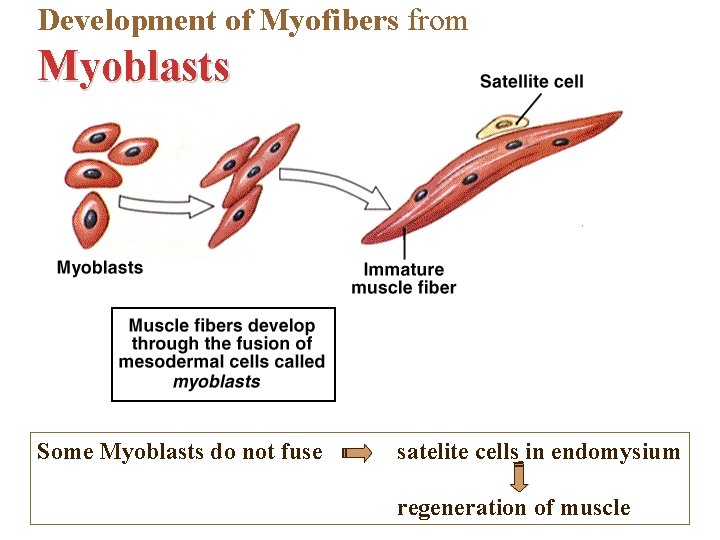
Development of Myofibers from Myoblasts Some Myoblasts do not fuse satelite cells in endomysium regeneration of muscle
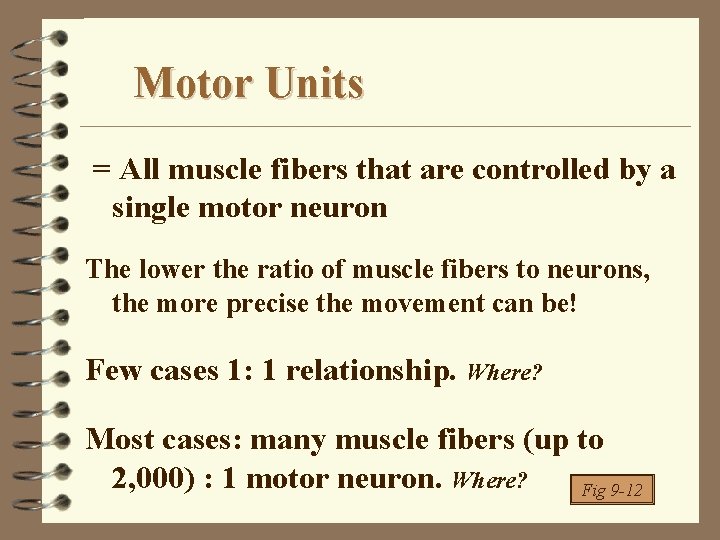
Motor Units = All muscle fibers that are controlled by a single motor neuron The lower the ratio of muscle fibers to neurons, the more precise the movement can be! Few cases 1: 1 relationship. Where? Most cases: many muscle fibers (up to 2, 000) : 1 motor neuron. Where? Fig 9 -12
Muscle Control Muscle tone = Resting tension of skeletal muscles (continuous contraction of some motor units to maintain some muscle tension) Recruitment or Multiple motor unit summation Maximal tension production: ?
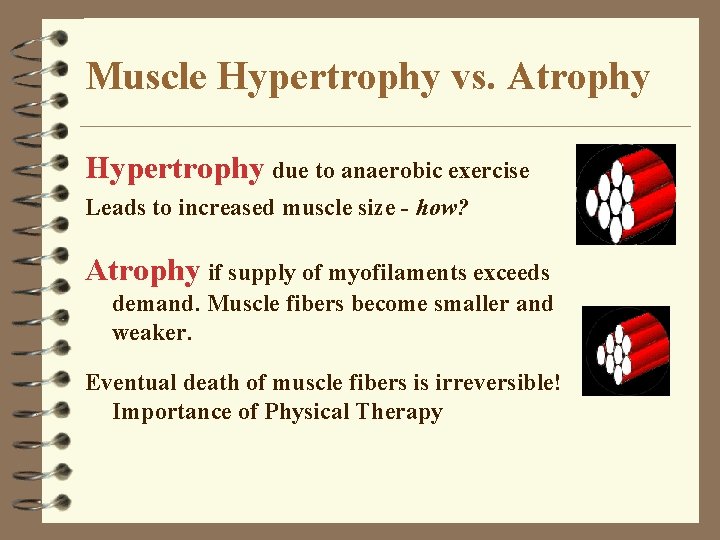
Muscle Hypertrophy vs. Atrophy Hypertrophy due to anaerobic exercise Leads to increased muscle size - how? Atrophy if supply of myofilaments exceeds demand. Muscle fibers become smaller and weaker. Eventual death of muscle fibers is irreversible! Importance of Physical Therapy
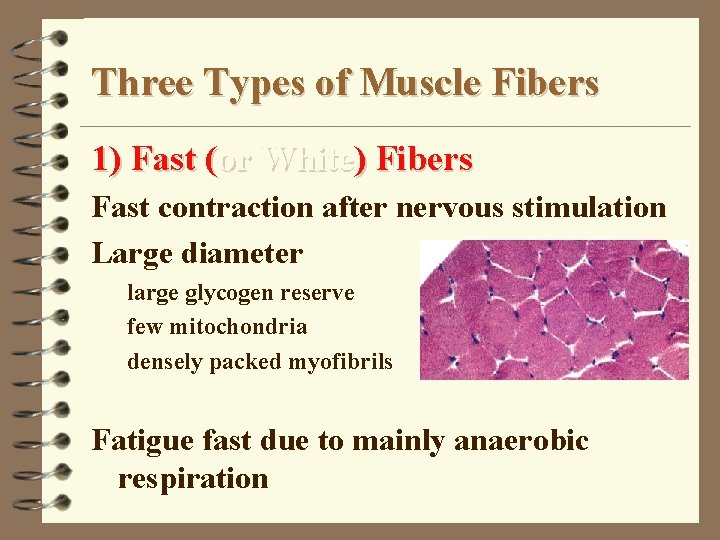
Three Types of Muscle Fibers 1) Fast (or White) Fibers Fast contraction after nervous stimulation Large diameter large glycogen reserve few mitochondria densely packed myofibrils Fatigue fast due to mainly anaerobic respiration
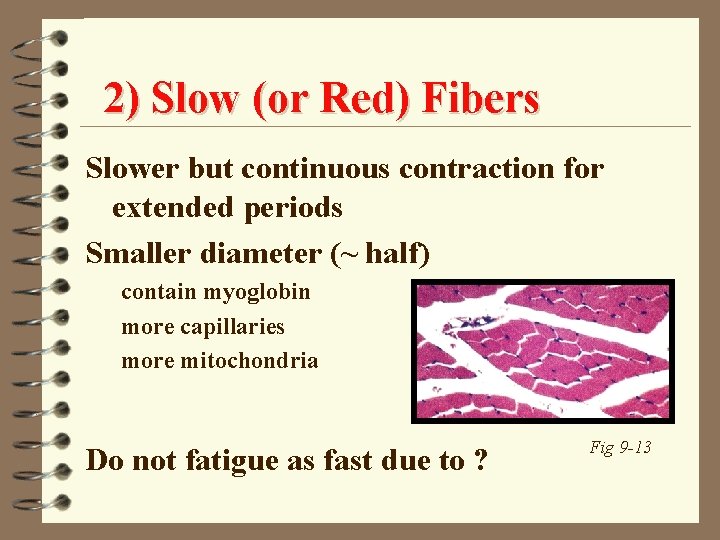
2) Slow (or Red) Fibers Slower but continuous contraction for extended periods Smaller diameter (~ half) contain myoglobin more capillaries more mitochondria Do not fatigue as fast due to ? Fig 9 -13
3) Intermediate Fibers Have attributes inbetween fast and slow types Most skeletal muscles contain mixture of fiber types. Proportion of fast to slow depends on ______? One motor unit only contains one fiber type Eye, hand: ____ fibers dominate Back, calf: ____ fibers dominate
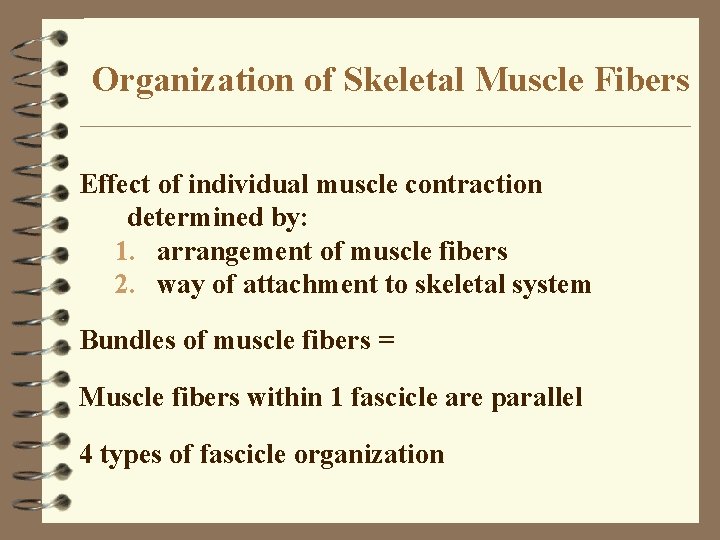
Organization of Skeletal Muscle Fibers Effect of individual muscle contraction determined by: 1. arrangement of muscle fibers 2. way of attachment to skeletal system Bundles of muscle fibers = Muscle fibers within 1 fascicle are parallel 4 types of fascicle organization
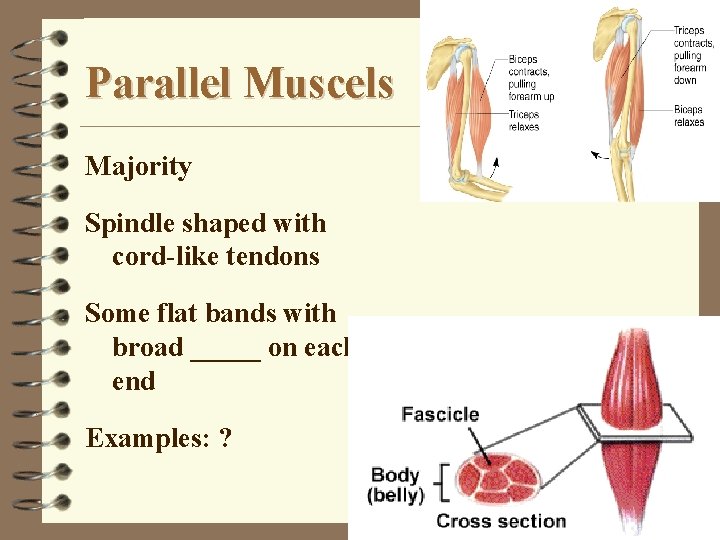
Parallel Muscels Majority Spindle shaped with cord-like tendons Some flat bands with broad _____ on each end Examples: ?
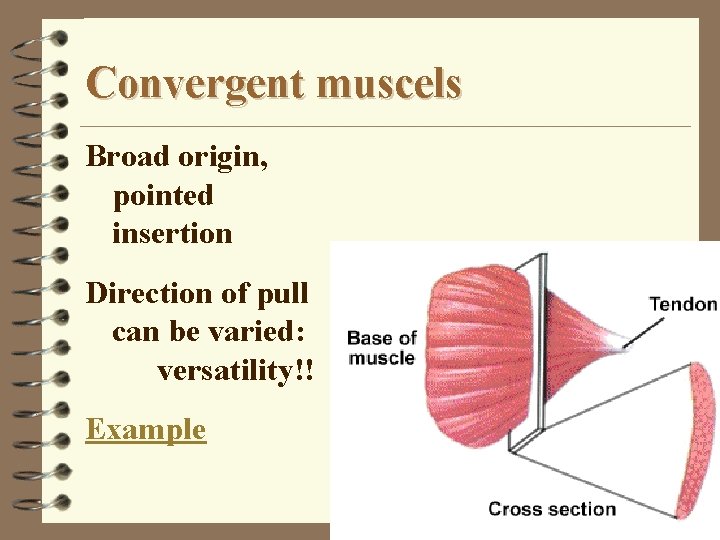
Convergent muscels Broad origin, pointed insertion Direction of pull can be varied: versatility!! Example
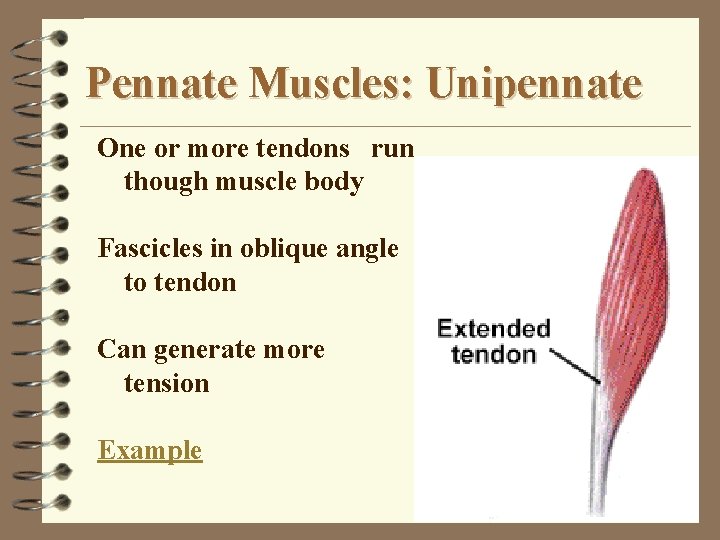
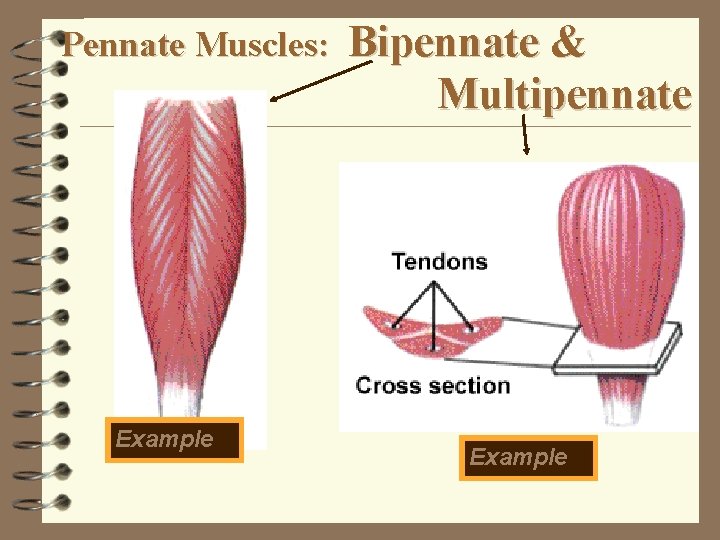
Pennate Muscles: Unipennate One or more tendons run though muscle body Fascicles in oblique angle to tendon Can generate more tension Example
Pennate Muscles: Example Bipennate & Multipennate Example
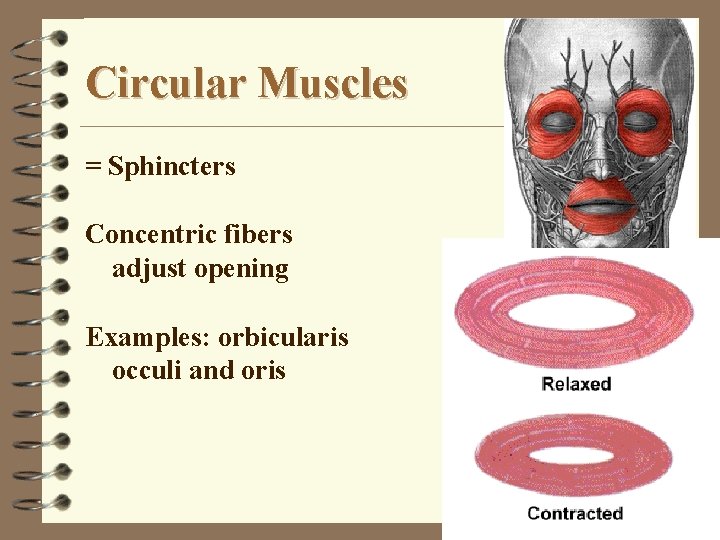
Circular Muscles = Sphincters Concentric fibers adjust opening Examples: orbicularis occuli and oris
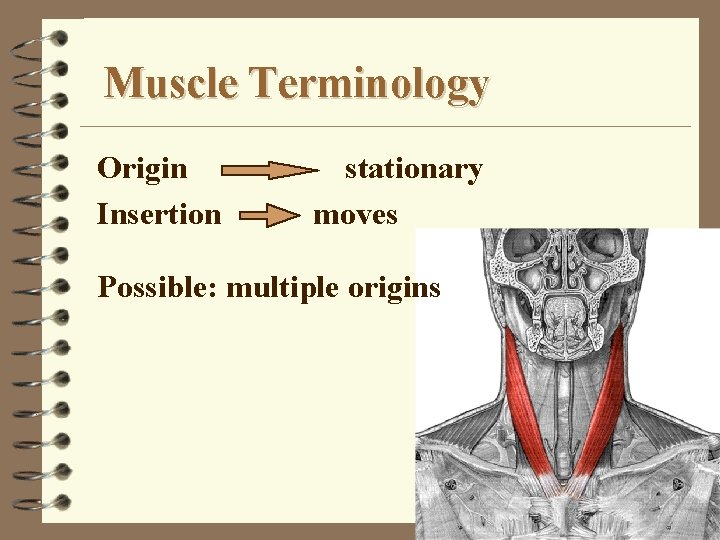
Muscle Terminology Origin Insertion stationary moves Possible: multiple origins
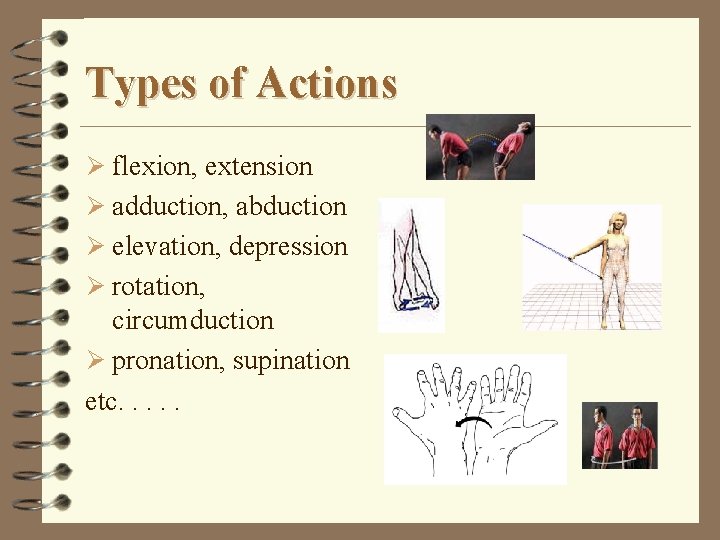
Types of Actions Ø flexion, extension Ø adduction, abduction Ø elevation, depression Ø rotation, circumduction Ø pronation, supination etc. . .
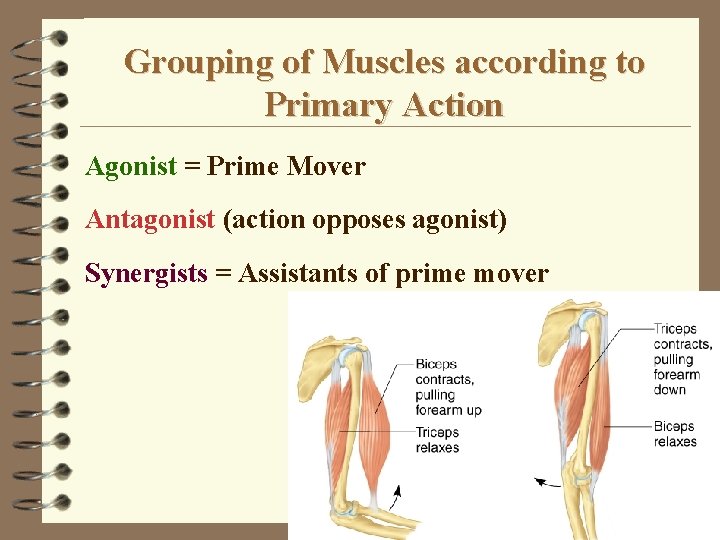
Grouping of Muscles according to Primary Action Agonist = Prime Mover Antagonist (action opposes agonist) Synergists = Assistants of prime mover
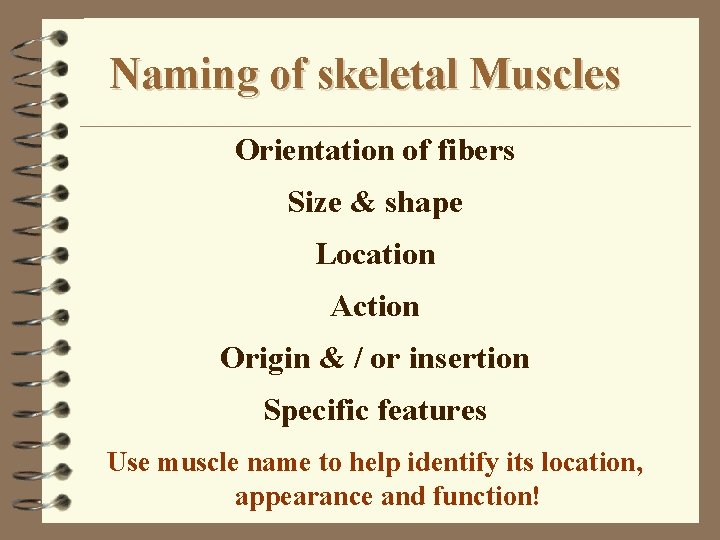
Naming of skeletal Muscles Orientation of fibers Size & shape Location Action Origin & / or insertion Specific features Use muscle name to help identify its location, appearance and function!