
Lecture on Climate www assignmentpoint com Introduction Climate
- Slides: 19
Lecture on Climate www. assignmentpoint. com
• Introduction – Climate is a generalized pattern for weather over a period of time – Weather describes the changes that occur to the atmospheric conditions over short periods of time. www. assignmentpoint. com
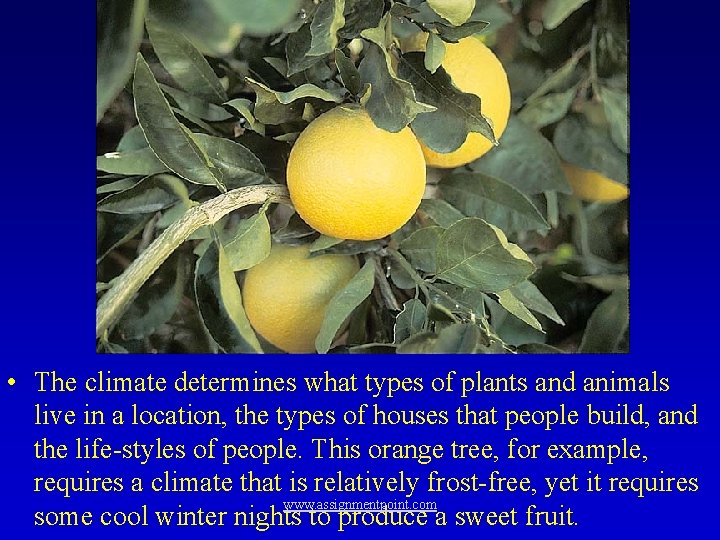
• The climate determines what types of plants and animals live in a location, the types of houses that people build, and the life-styles of people. This orange tree, for example, requires a climate that is relatively frost-free, yet it requires www. assignmentpoint. com some cool winter nights to produce a sweet fruit.
• Major Climate Groups – Factors Determining Weather • Temperature • Moisture • Movement of Air www. assignmentpoint. com
– Low Latitudes • Have vertical solar radiation at noon some times of the year – High Latitudes • Have no vertical solar radiation at noon some times of the year. – Middle Latitudes • Between high and low latitudes. www. assignmentpoint. com
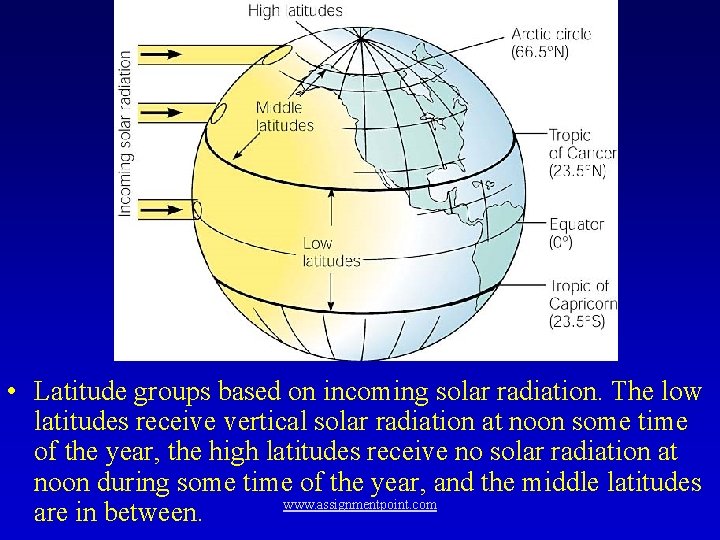
• Latitude groups based on incoming solar radiation. The low latitudes receive vertical solar radiation at noon some time of the year, the high latitudes receive no solar radiation at noon during some time of the year, and the middle latitudes www. assignmentpoint. com are in between.
– Tropical Climate Zone • Near the equator and receives the greatest amount of sunlight throughout the year. – Polar Climate Zone • The Sun never sets during the summer and never rises during the winter. – Temperate Climate Zone • Average temperatures that are between the two extremes www. assignmentpoint. com
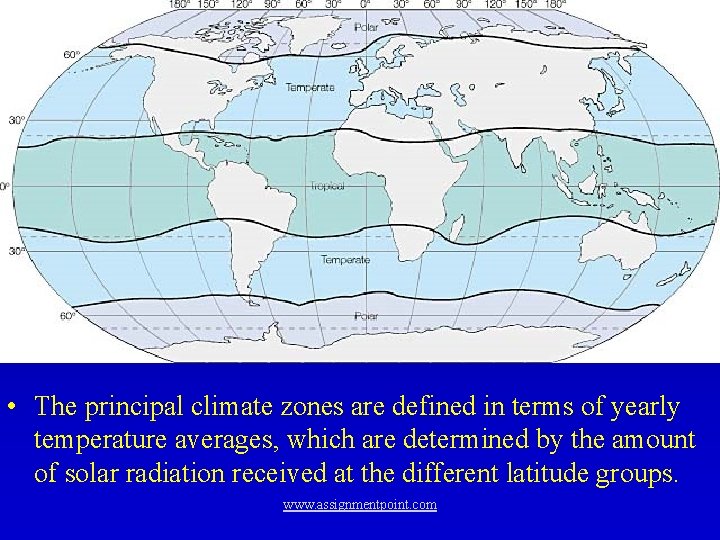
• The principal climate zones are defined in terms of yearly temperature averages, which are determined by the amount of solar radiation received at the different latitude groups. www. assignmentpoint. com
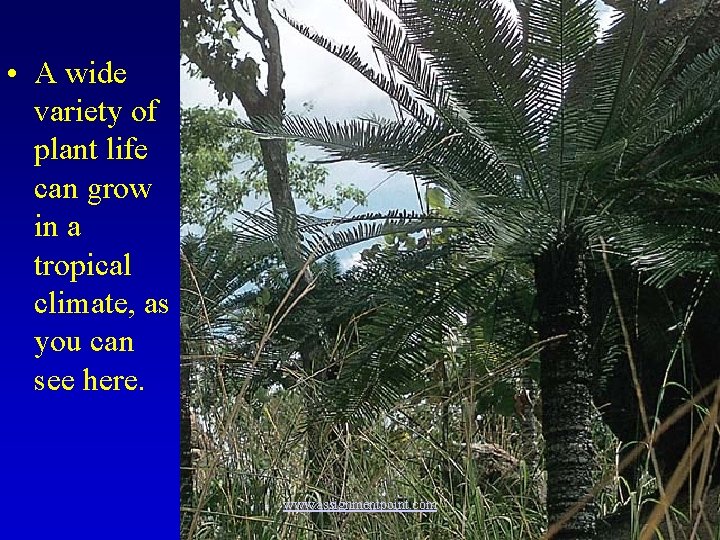
• A wide variety of plant life can grow in a tropical climate, as you can see here. www. assignmentpoint. com
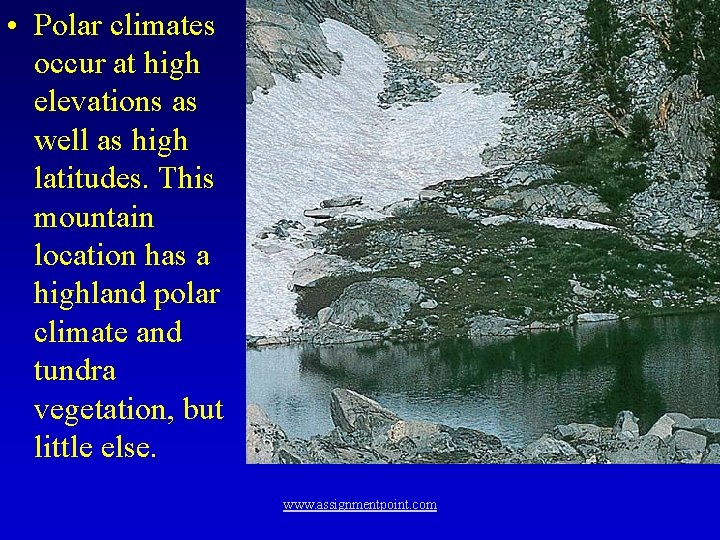
• Polar climates occur at high elevations as well as high latitudes. This mountain location has a highland polar climate and tundra vegetation, but little else. www. assignmentpoint. com
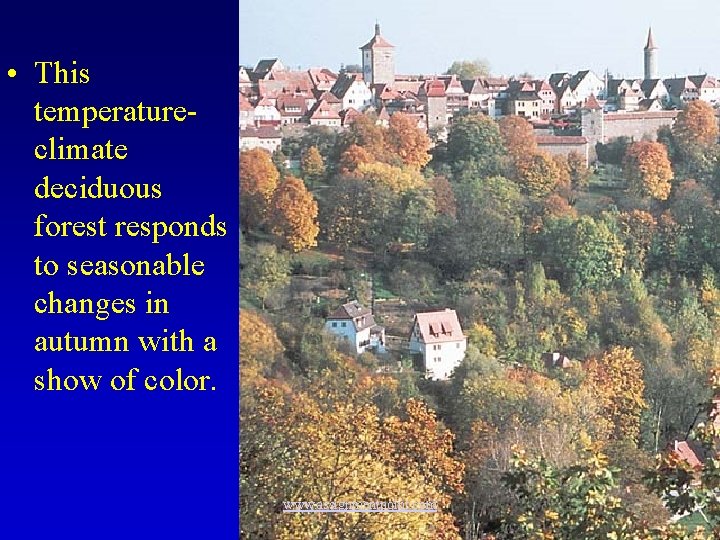
• This temperatureclimate deciduous forest responds to seasonable changes in autumn with a show of color. www. assignmentpoint. com
• Regional Climate Influence – Altitude • Higher altitudes radiate more energy back into space. • Temperature decreases with altitude – Mountains • Decreasing temperature with altitude • Uplifting effect on air masses www. assignmentpoint. com
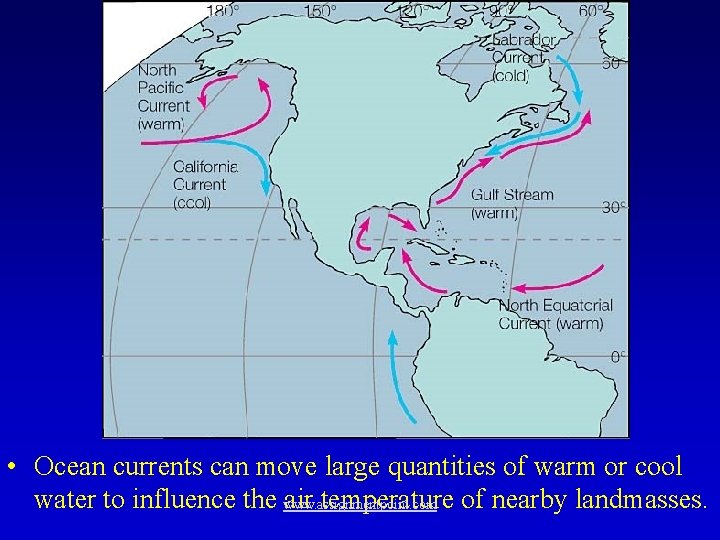
– Large Bodies of Water • high specific heat and loses energy by evaporation. • This has the effect of keeping the temperatures more constant from night to day on a land mass near a large body of water – Ocean Currents • Currents move large amounts of water from different parts of the world. • Can warm or cool land depending upon the origin of the current www. assignmentpoint. com
• Ocean currents can move large quantities of warm or cool water to influence the www. assignmentpoint. com air temperature of nearby landmasses.
• Describing Climates – Major Climate Zones • Maritime Climate – Influenced by air masses from the ocean • Continental Climate – Influenced by air masses from land • Arid – dry – Less than 25 cm (10 in) of rain per year www. assignmentpoint. com
• Humid – Moist – More than 50 cm (20 in) of rain per year • Semiarid – Between arid and humid – 25 – 50 cm (10 – 20 in) of rain per year www. assignmentpoint. com
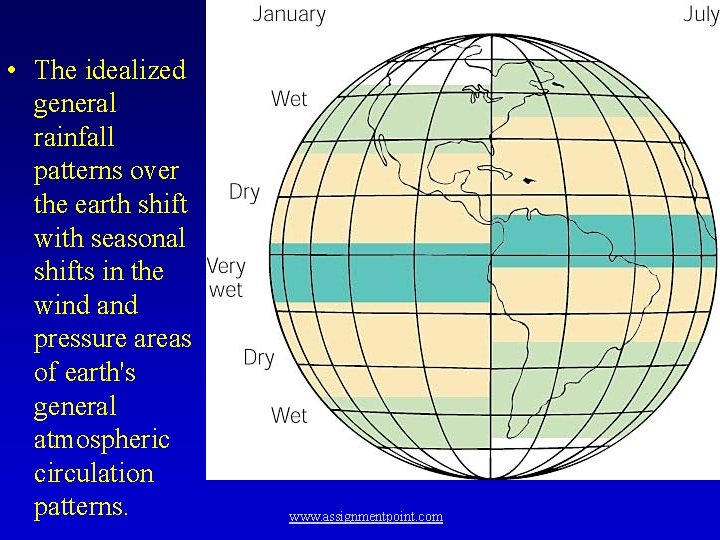
• The idealized general rainfall patterns over the earth shift with seasonal shifts in the wind and pressure areas of earth's general atmospheric circulation patterns. www. assignmentpoint. com
– Local Climates • Cities – Materials used to build cities have a higher heat holding capacity that natural materials. – Also change wind direction and speeds • Microclimates – A local pattern of climate influenced greatly by the local conditions. www. assignmentpoint. com
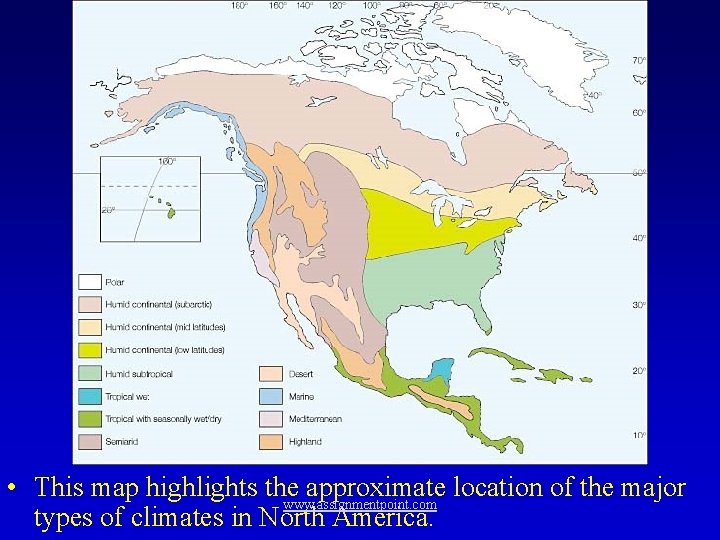
• This map highlights the approximate location of the major www. assignmentpoint. com types of climates in North America.