
Lecture Objectives Discuss Project 1 Diffuser modeling Ventilation
Lecture Objectives • Discuss: Project 1 • Diffuser modeling • Ventilation effectiveness
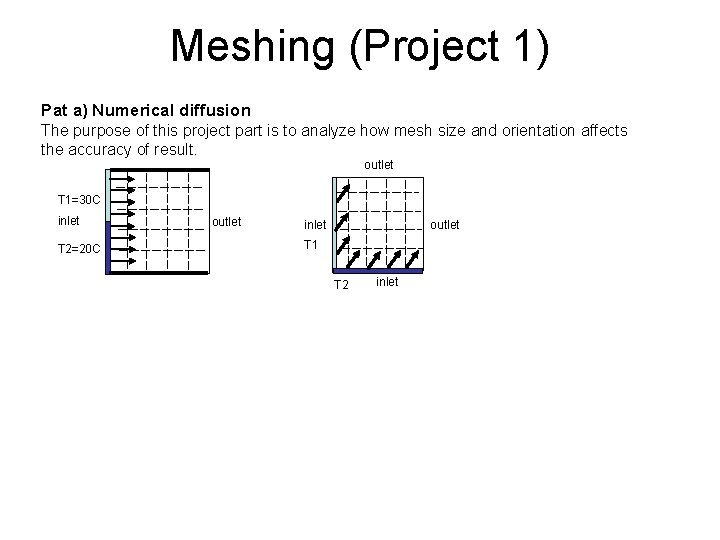
Meshing (Project 1) Pat a) Numerical diffusion The purpose of this project part is to analyze how mesh size and orientation affects the accuracy of result. outlet T 1=30 C inlet T 2=20 C outlet inlet outlet T 1 T 2 inlet
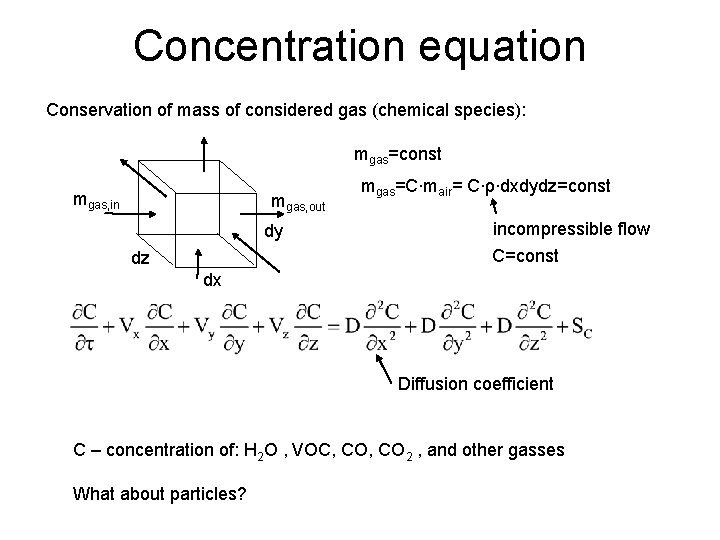
Concentration equation Conservation of mass of considered gas (chemical species): mgas=const mgas, in mgas, out dy mgas=C∙mair= C∙ρ∙dxdydz=const incompressible flow C=const dz dx Diffusion coefficient C – concentration of: H 2 O , VOC, CO 2 , and other gasses What about particles?
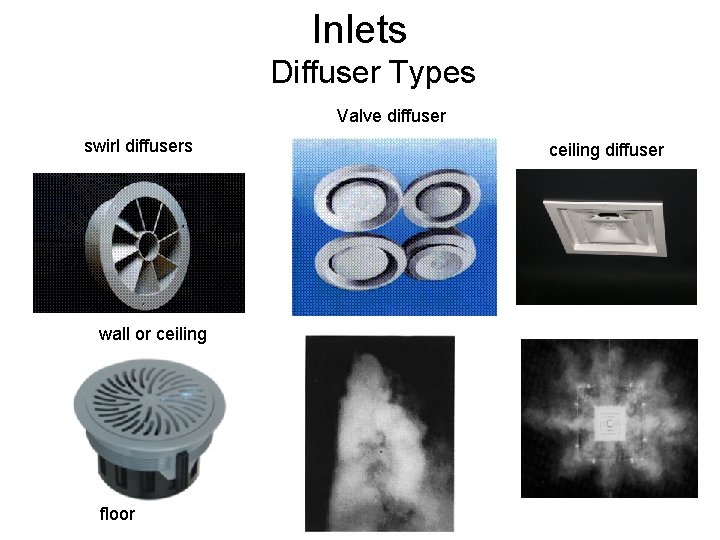
Inlets Diffuser Types Valve diffuser swirl diffusers wall or ceiling floor ceiling diffuser
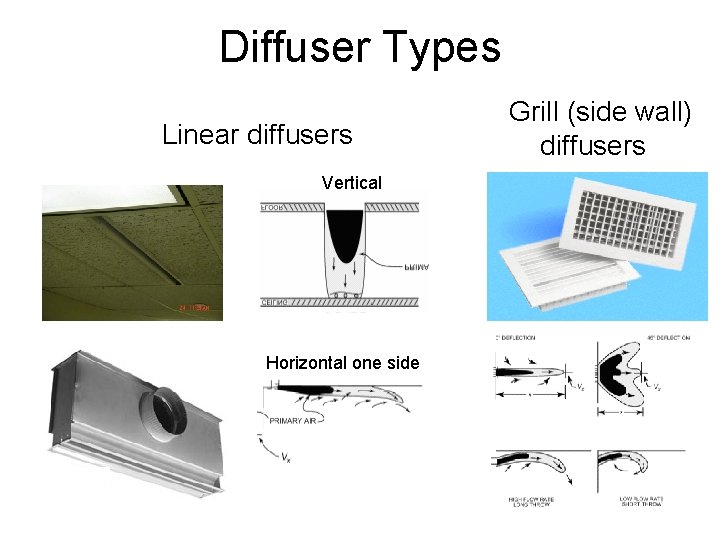
Diffuser Types Linear diffusers Vertical Horizontal one side Grill (side wall) diffusers
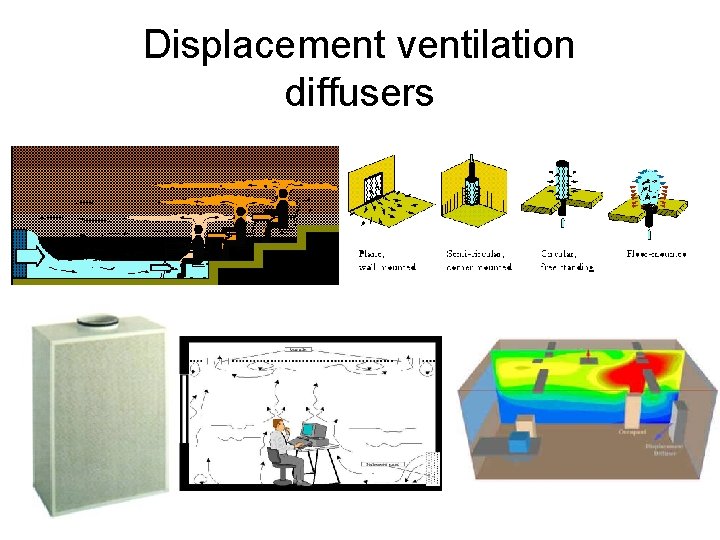
Displacement ventilation diffusers
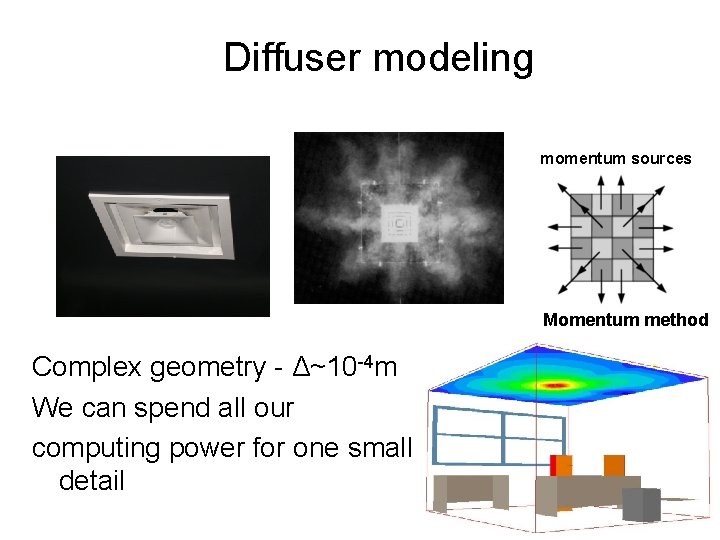
Diffuser modeling momentum sources Momentum method Complex geometry - Δ~10 -4 m We can spend all our computing power for one small detail
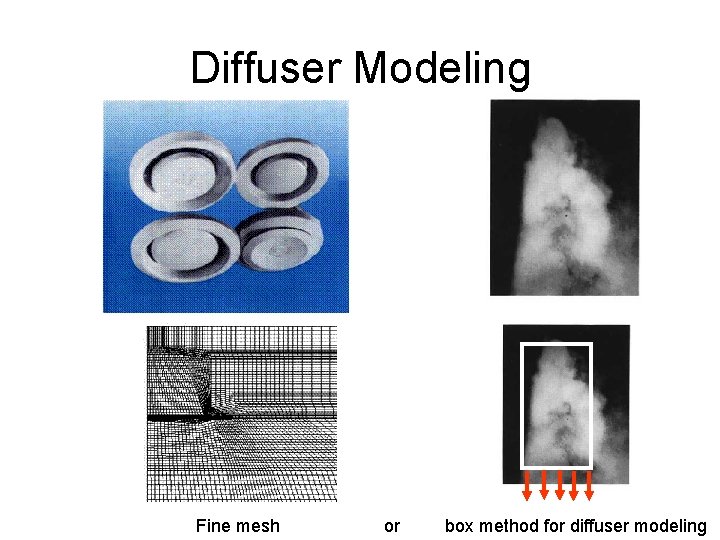
Diffuser Modeling Fine mesh or box method for diffuser modeling
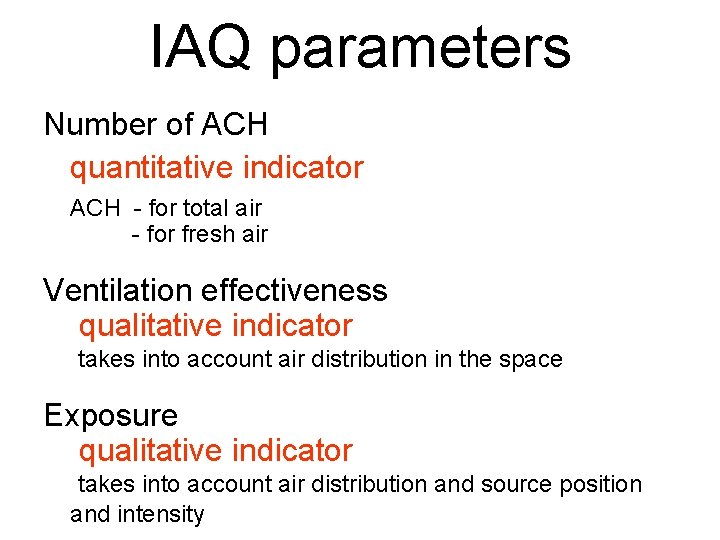
IAQ parameters Number of ACH quantitative indicator ACH - for total air - for fresh air Ventilation effectiveness qualitative indicator takes into account air distribution in the space Exposure qualitative indicator takes into account air distribution and source position and intensity
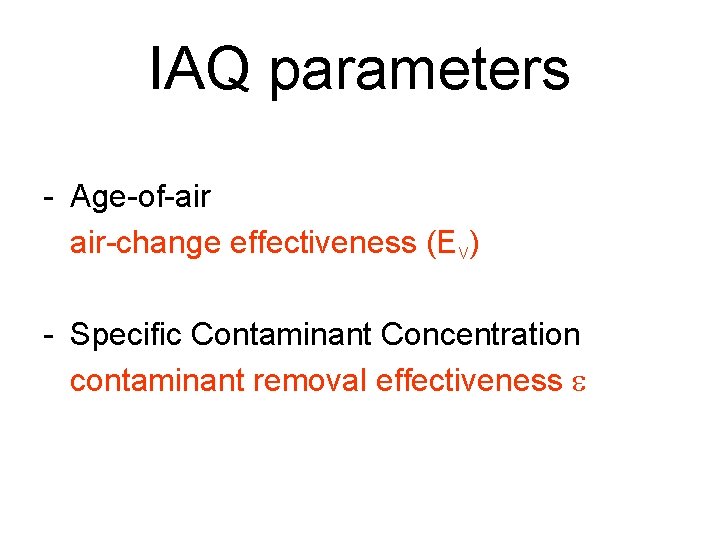
IAQ parameters - Age-of-air air-change effectiveness (EV) - Specific Contaminant Concentration contaminant removal effectiveness e
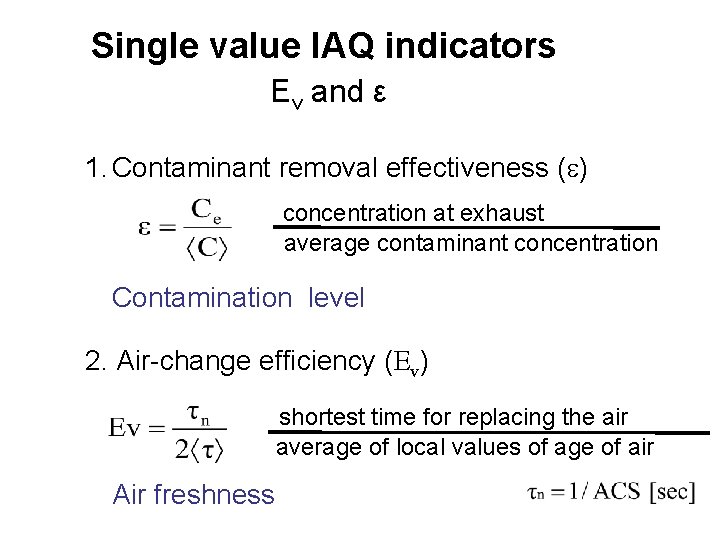
Single value IAQ indicators Ev and ε 1. Contaminant removal effectiveness (e) concentration at exhaust average contaminant concentration Contamination level 2. Air-change efficiency (Ev) shortest time for replacing the air average of local values of age of air Air freshness
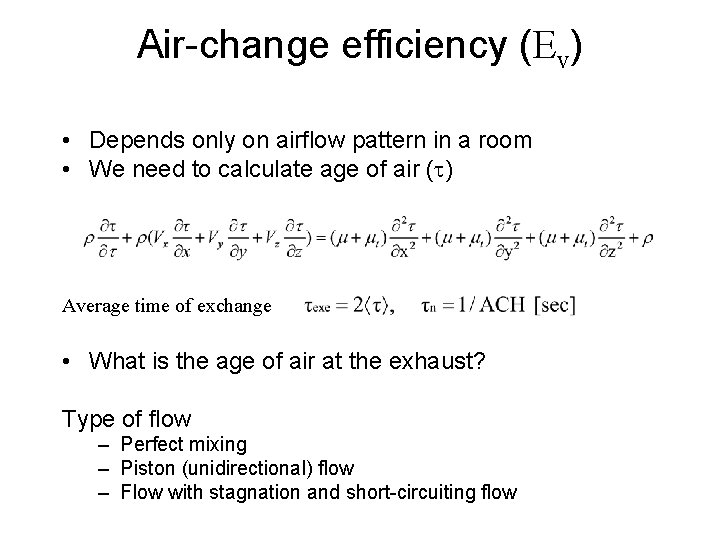
Air-change efficiency (Ev) • Depends only on airflow pattern in a room • We need to calculate age of air (t) Average time of exchange • What is the age of air at the exhaust? Type of flow – Perfect mixing – Piston (unidirectional) flow – Flow with stagnation and short-circuiting flow
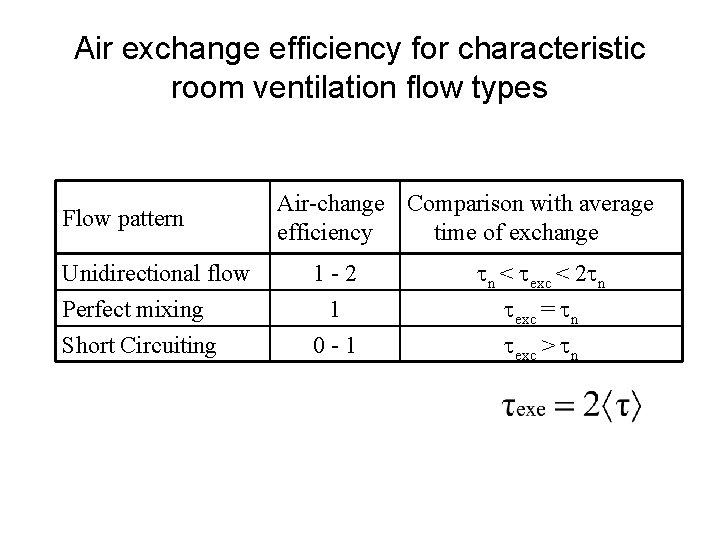
Air exchange efficiency for characteristic room ventilation flow types Flow pattern Air-change Comparison with average efficiency time of exchange Unidirectional flow Perfect mixing 1 -2 1 tn < texc < 2 tn texc = tn Short Circuiting 0 -1 texc > tn
Contaminant removal effectiveness (e) • Depends on: - position of a contaminant source - Airflow in the room • Questions 1) Is the concentration of pollutant in the room with stratified flow larger or smaller that the concentration with perfect mixing? 2) How to find the concentration at exhaust of the room?
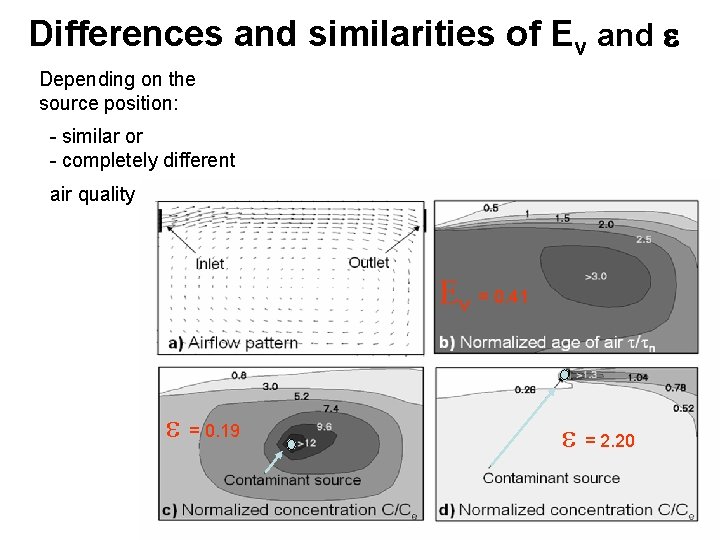
Differences and similarities of Ev and e Depending on the source position: - similar or - completely different air quality Ev = 0. 41 e = 0. 19 e = 2. 20
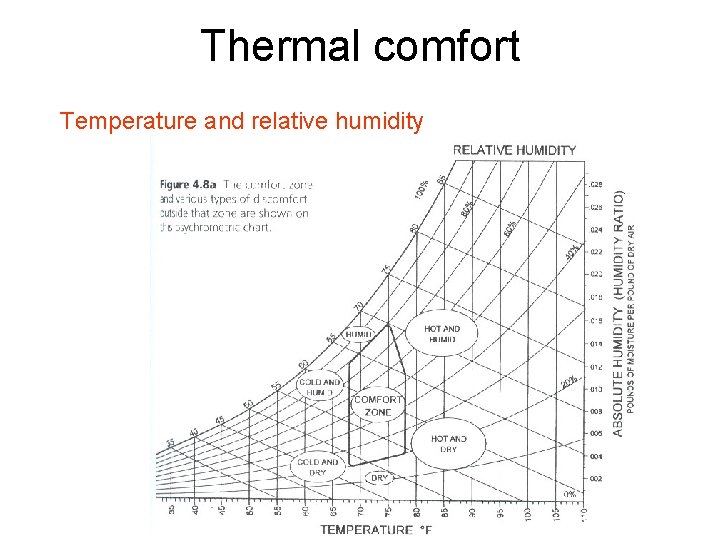
Thermal comfort Temperature and relative humidity
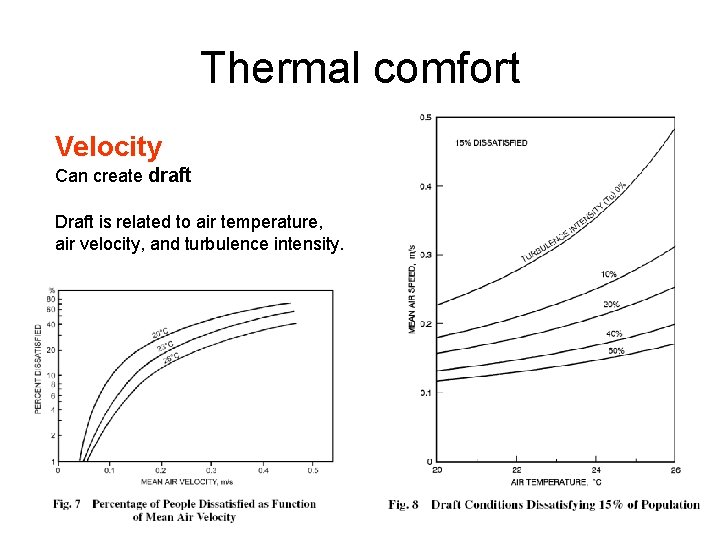
Thermal comfort Velocity Can create draft Draft is related to air temperature, air velocity, and turbulence intensity.
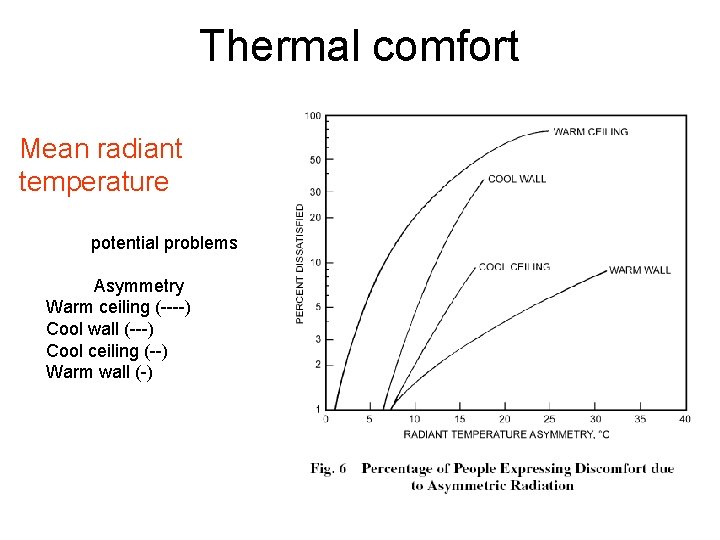
Thermal comfort Mean radiant temperature potential problems Asymmetry Warm ceiling (----) Cool wall (---) Cool ceiling (--) Warm wall (-)
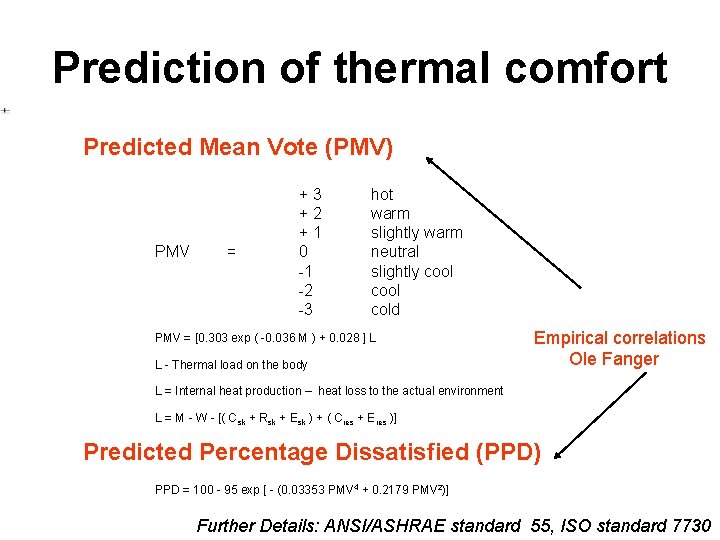
Prediction of thermal comfort Predicted Mean Vote (PMV) PMV = +3 +2 +1 0 -1 -2 -3 hot warm slightly warm neutral slightly cool cold PMV = [0. 303 exp ( -0. 036 M ) + 0. 028 ] L L - Thermal load on the body Empirical correlations Ole Fanger L = Internal heat production – heat loss to the actual environment L = M - W - [( C sk + Rsk + Esk ) + ( Cres + Eres )] Predicted Percentage Dissatisfied (PPD) PPD = 100 - 95 exp [ - (0. 03353 PMV 4 + 0. 2179 PMV 2)] Further Details: ANSI/ASHRAE standard 55, ISO standard 7730
- Slides: 19