
Lecture Notes A Power Point Presentation Classroom Activity

- Slides: 65
Lecture Notes A Power. Point Presentation Classroom Activity to Accompany Medical Terminology Systems, Seventh Edition Barbara A. Gylys ∙ Mary Ellen Wedding 4 Body Structure
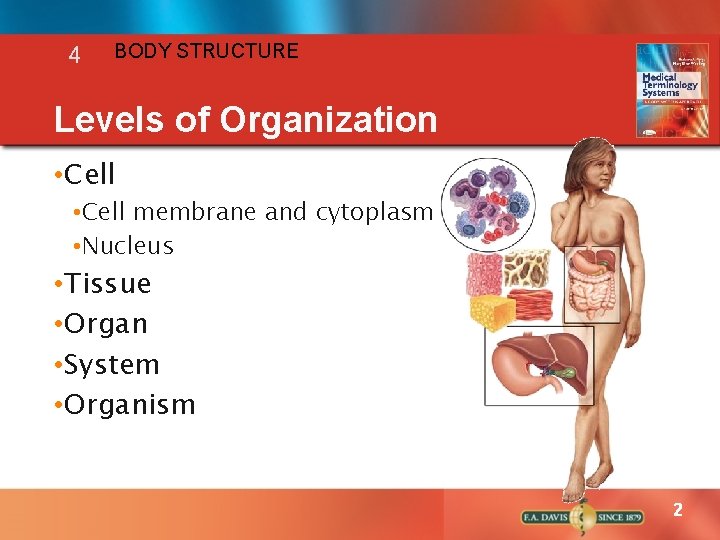
4 BODY STRUCTURE Levels of Organization • Cell membrane and cytoplasm • Nucleus • Tissue • Organ • System • Organism 2
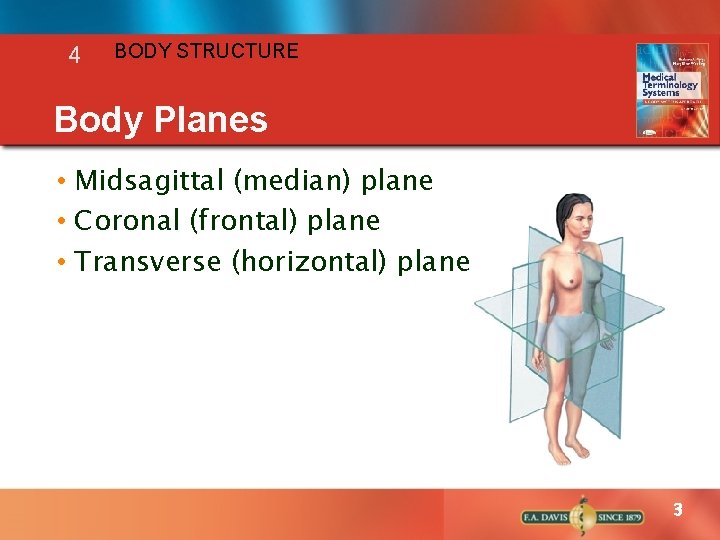
4 BODY STRUCTURE Body Planes • Midsagittal (median) plane • Coronal (frontal) plane • Transverse (horizontal) plane 3
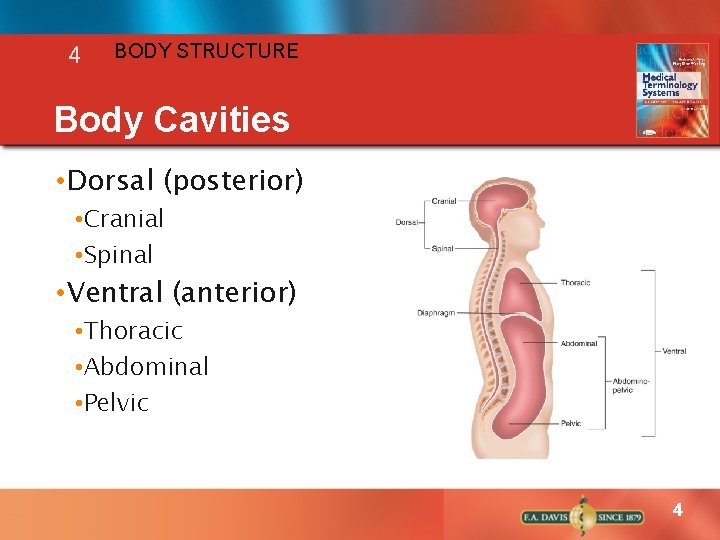
4 BODY STRUCTURE Body Cavities • Dorsal (posterior) • Cranial • Spinal • Ventral (anterior) • Thoracic • Abdominal • Pelvic 4
4 BODY STRUCTURE Body Cavities Exercise 1. What is another term for dorsal? 2. What is another term for ventral? 3. Name the two dorsal cavities. 4. Name the ventral cavities. 5
4 BODY STRUCTURE Body Cavities Exercise 1. What is another term for dorsal? It is also called posterior. 2. What is another term for ventral? It is also called anterior. 3. Name the two dorsal cavities. cranial and spinal 4. Name the ventral cavities. Thoracic, abdominal, and pelvic, or thoracic and abdominopelvic 6
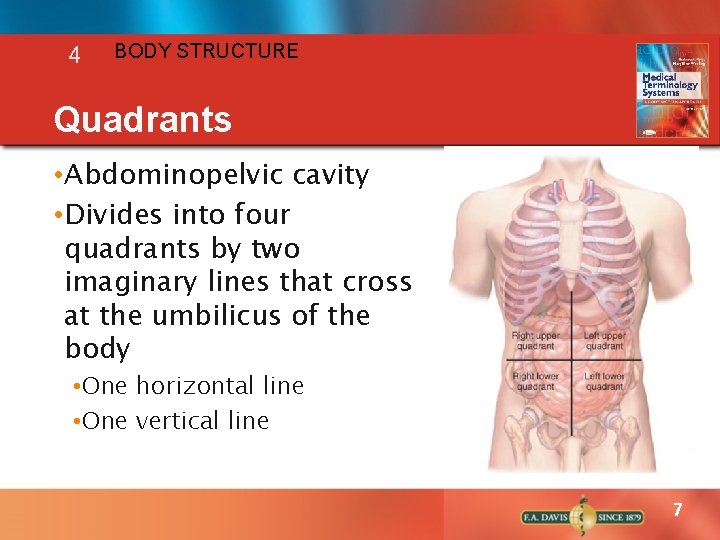
4 BODY STRUCTURE Quadrants • Abdominopelvic cavity • Divides into four quadrants by two imaginary lines that cross at the umbilicus of the body • One horizontal line • One vertical line 7
4 BODY STRUCTURE Quadrants (continued) • Four divisions providing reference points • Used to describe the location of abdominopelvic organs • Used for clinical examination, reporting, and charting • Location of abdominal pain • Location of surgical procedures, such as incision sites • Location of tumors • Patient assessments • Operative and physical examinations 8
4 BODY STRUCTURE Quadrants Exercise Define the following abbreviations: 1. RUQ: 2. LUQ: 3. RLQ: 4. LLQ: 9
4 BODY STRUCTURE Quadrants Exercise 1. RUQ: right upper quadrant 2. LUQ: left upper quadrant 3. RLQ: right lower quadrant 4. LLQ: left lower quadrant 10
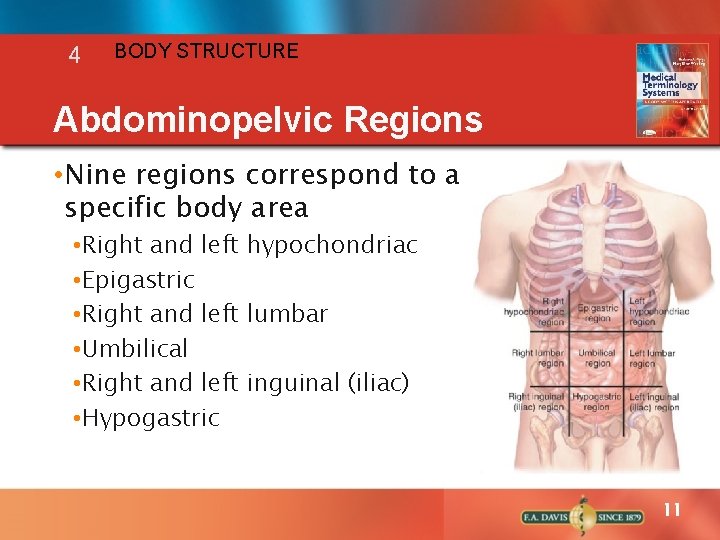
4 BODY STRUCTURE Abdominopelvic Regions • Nine regions correspond to a specific body area • Right and left hypochondriac • Epigastric • Right and left lumbar • Umbilical • Right and left inguinal (iliac) • Hypogastric 11
4 BODY STRUCTURE Abdominopelvic Regions (continued) • Nine regions provide reference points • Used to describe location of internal organs • Used for clinical examinations, reporting, and charting • Location of abdominal pain • Location of surgical procedures • Incision sites • Location of tumors • Operative reports 12
4 BODY STRUCTURE Abdominopelvic Regions Exercise Identify the region: 1. surrounding the umbilicus (navel): 2. above the stomach: 3. beneath the umbilicus (navel): 4. on the left lower side near the groin (ileus): 5. on the right middle side near the waist: 13
4 BODY STRUCTURE Abdominopelvic Regions Exercise Identify the region: 1. surrounding the umbilicus (navel): umbilical 2. above the stomach: epigastric 3. beneath the umbilicus (navel): hypogastric 4. on the left lower side near the groin (ileus): left inguinal or left iliac 5. on the right middle side near the waist: right lumbar 14
4 BODY STRUCTURE Combining Forms Exercise List the CFs for cellular structures: 1. cell: 2. nucleus: 3. tissue: 15
4 BODY STRUCTURE Combining Forms Exercise 1. cell: cyt/o 2. nucleus: kary/o, nucle/o 3. tissue: hist/o 16
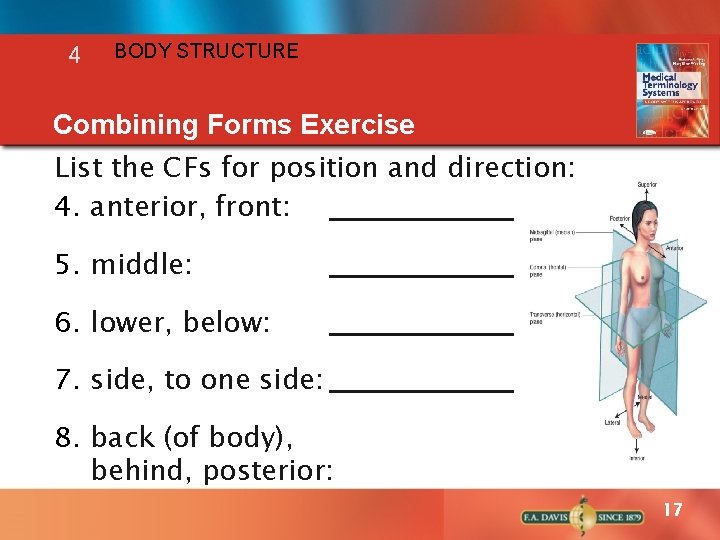
4 BODY STRUCTURE Combining Forms Exercise List the CFs for position and direction: 4. anterior, front: 5. middle: 6. lower, below: 7. side, to one side: 8. back (of body), behind, posterior: 17
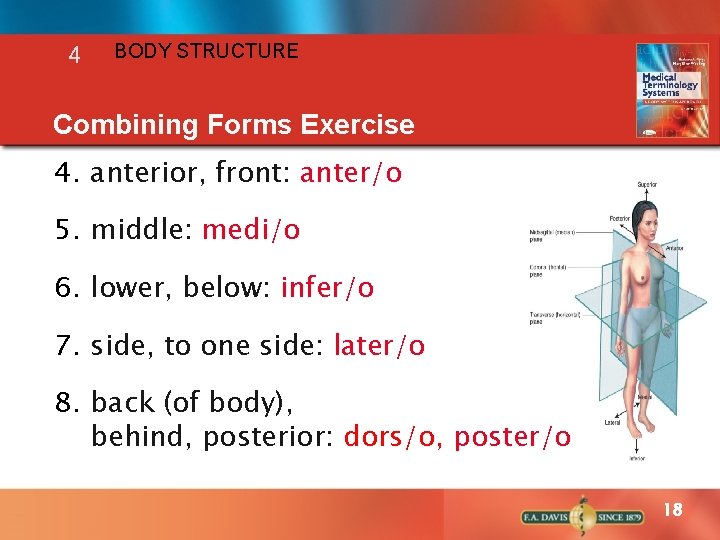
4 BODY STRUCTURE Combining Forms Exercise 4. anterior, front: anter/o 5. middle: medi/o 6. lower, below: infer/o 7. side, to one side: later/o 8. back (of body), behind, posterior: dors/o, poster/o 18
4 BODY STRUCTURE Combining Forms Exercise List the CFs for regions of the body: 9. stomach: 10. chest: 11. cranium (skull): 12. pelvis: 13. abdomen: 14. loins (lower back): 19
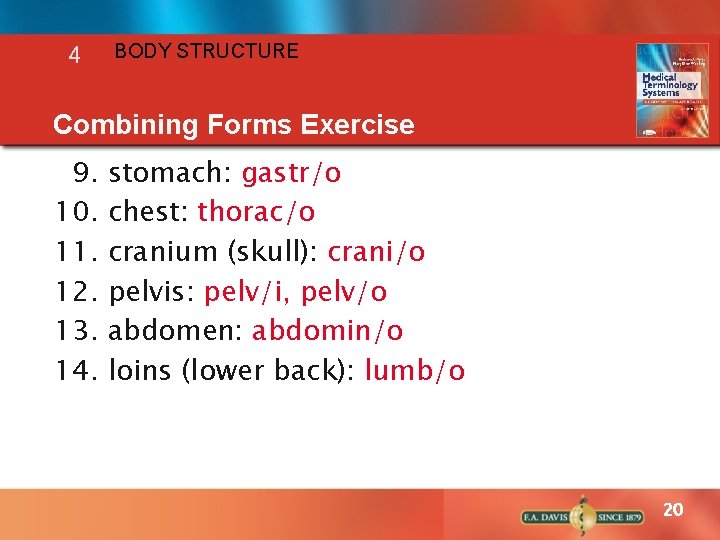
4 BODY STRUCTURE Combining Forms Exercise 9. 10. 11. 12. 13. 14. stomach: gastr/o chest: thorac/o cranium (skull): crani/o pelvis: pelv/i, pelv/o abdomen: abdomin/o loins (lower back): lumb/o 20
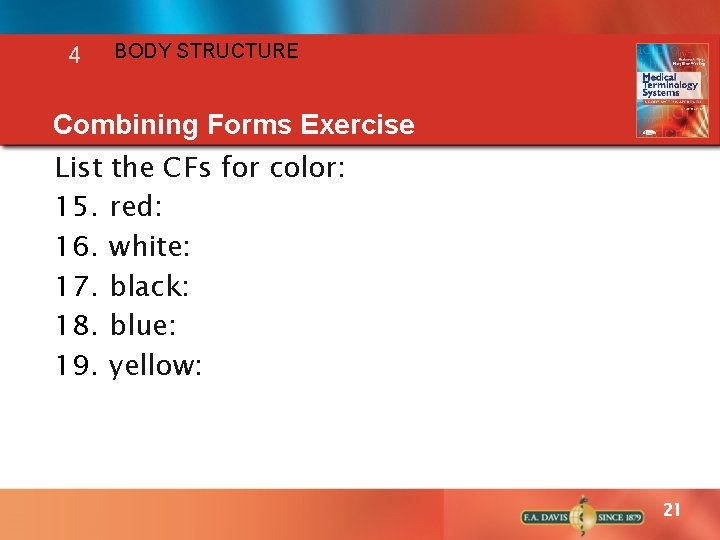
4 BODY STRUCTURE Combining Forms Exercise List the CFs for color: 15. red: 16. white: 17. black: 18. blue: 19. yellow: 21
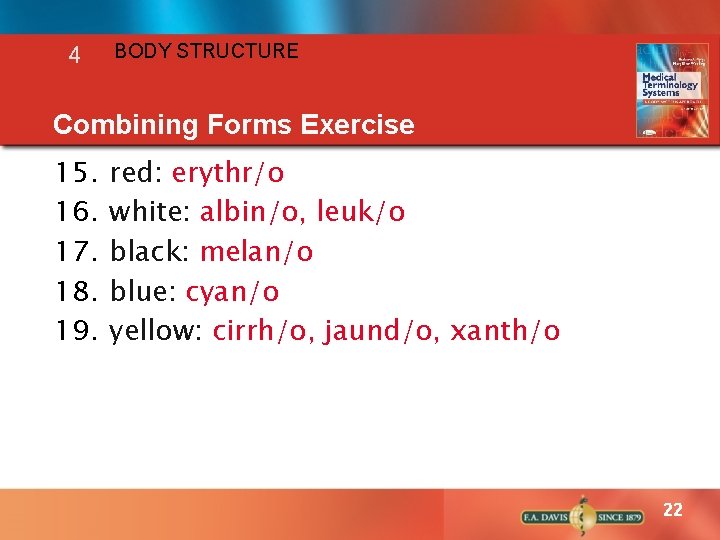
4 BODY STRUCTURE Combining Forms Exercise 15. 16. 17. 18. 19. red: erythr/o white: albin/o, leuk/o black: melan/o blue: cyan/o yellow: cirrh/o, jaund/o, xanth/o 22
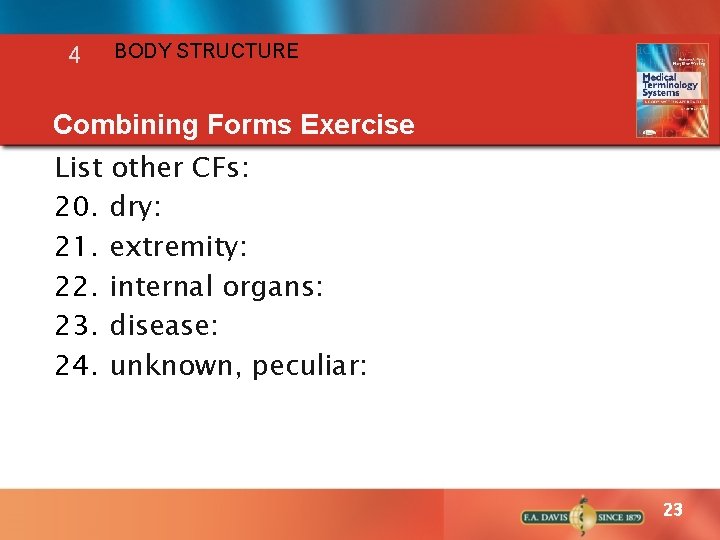
4 BODY STRUCTURE Combining Forms Exercise List other CFs: 20. dry: 21. extremity: 22. internal organs: 23. disease: 24. unknown, peculiar: 23
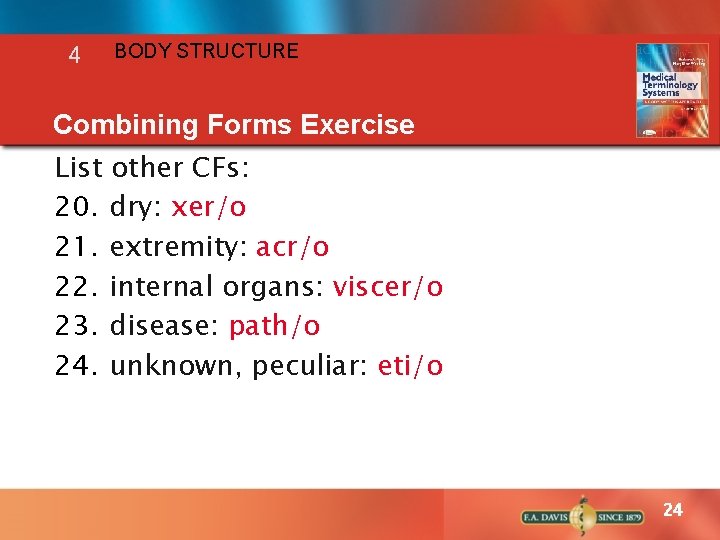
4 BODY STRUCTURE Combining Forms Exercise List other CFs: 20. dry: xer/o 21. extremity: acr/o 22. internal organs: viscer/o 23. disease: path/o 24. unknown, peculiar: eti/o 24
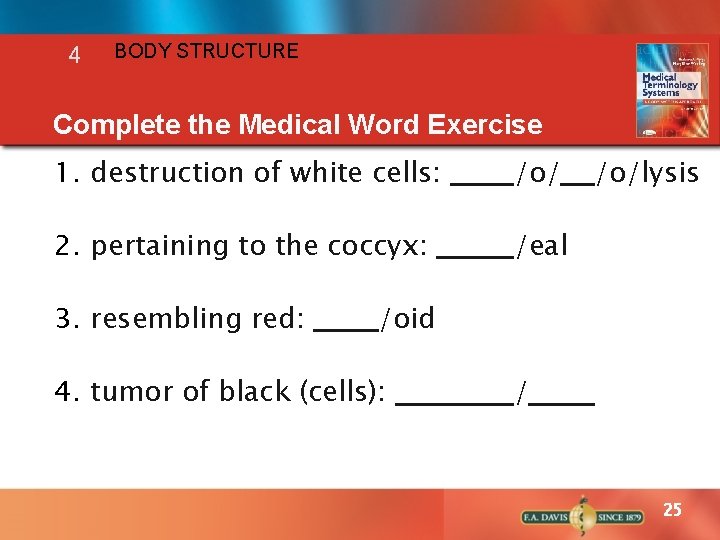
4 BODY STRUCTURE Complete the Medical Word Exercise 1. destruction of white cells: /o/ 2. pertaining to the coccyx: /eal 3. resembling red: /o/lysis /oid 4. tumor of black (cells): / 25
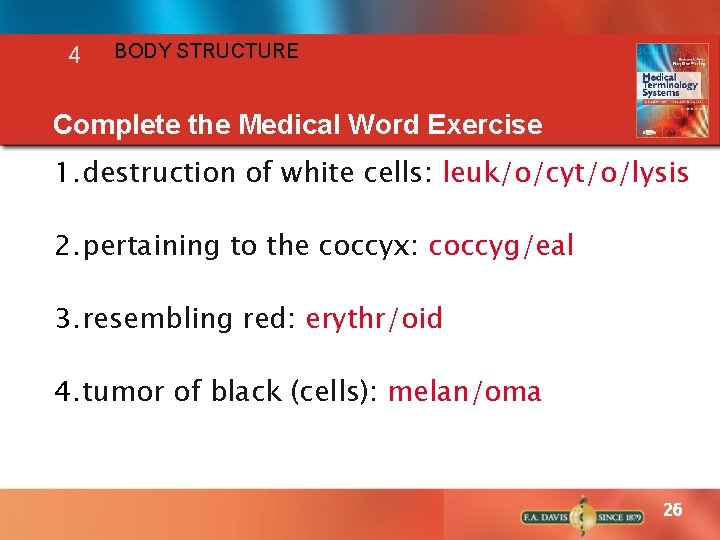
4 BODY STRUCTURE Complete the Medical Word Exercise 1. destruction of white cells: leuk/o/cyt/o/lysis 2. pertaining to the coccyx: coccyg/eal 3. resembling red: erythr/oid 4. tumor of black (cells): melan/oma 26
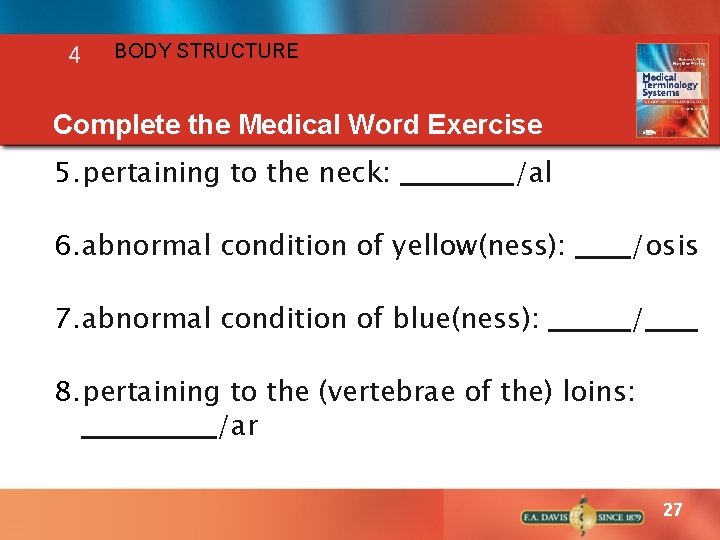
4 BODY STRUCTURE Complete the Medical Word Exercise 5. pertaining to the neck: /al 6. abnormal condition of yellow(ness): /osis 7. abnormal condition of blue(ness): / 8. pertaining to the (vertebrae of the) loins: /ar 27
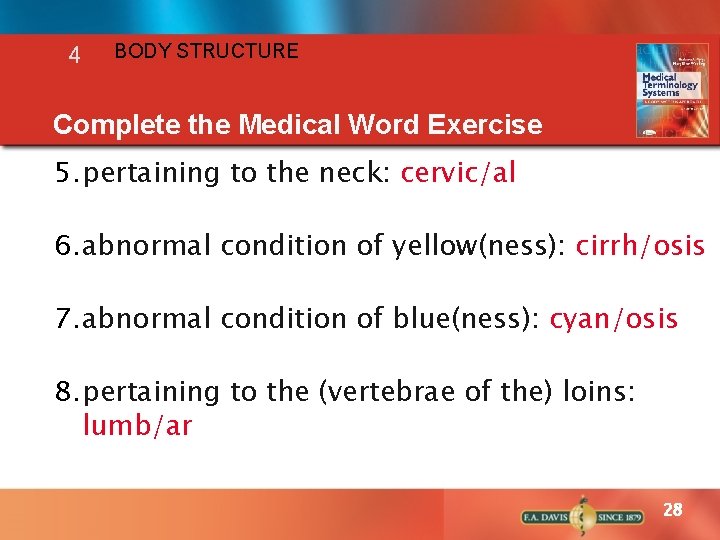
4 BODY STRUCTURE Complete the Medical Word Exercise 5. pertaining to the neck: cervic/al 6. abnormal condition of yellow(ness): cirrh/osis 7. abnormal condition of blue(ness): cyan/osis 8. pertaining to the (vertebrae of the) loins: lumb/ar 28
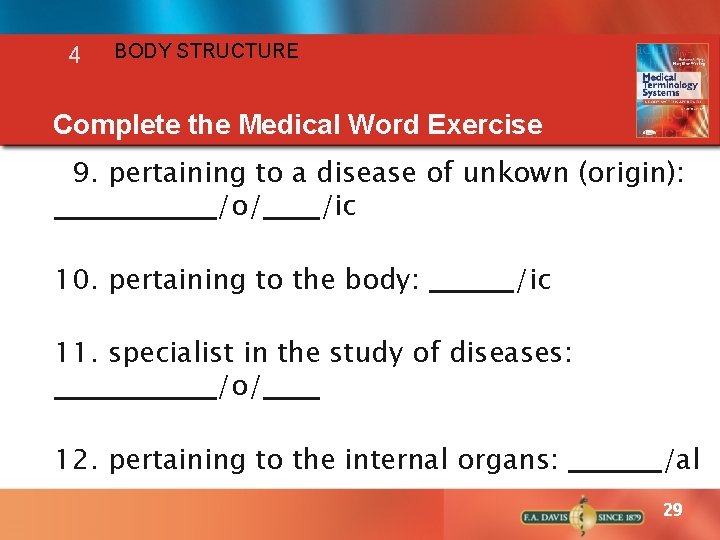
4 BODY STRUCTURE Complete the Medical Word Exercise 9. pertaining to a disease of unkown (origin): /o/ /ic 10. pertaining to the body: /ic 11. specialist in the study of diseases: /o/ 12. pertaining to the internal organs: /al 29
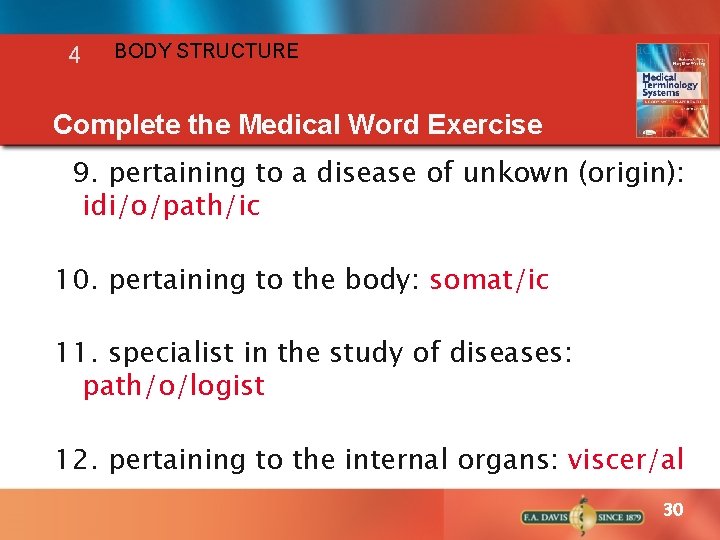
4 BODY STRUCTURE Complete the Medical Word Exercise 9. pertaining to a disease of unkown (origin): idi/o/path/ic 10. pertaining to the body: somat/ic 11. specialist in the study of diseases: path/o/logist 12. pertaining to the internal organs: viscer/al 30
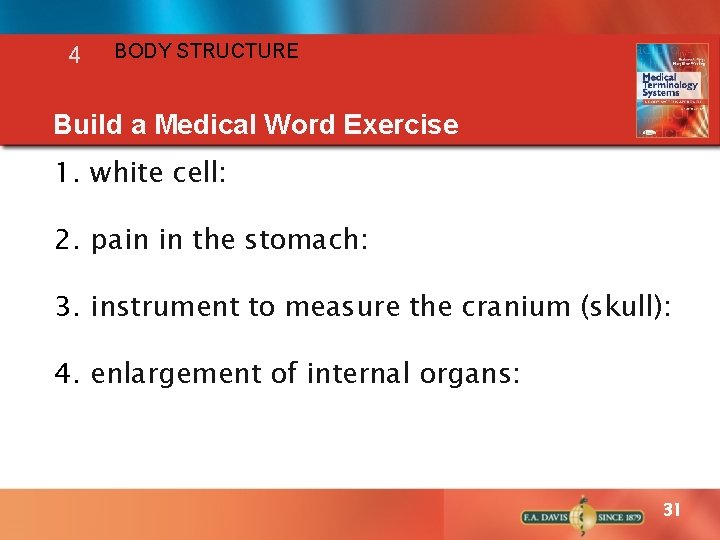
4 BODY STRUCTURE Build a Medical Word Exercise 1. white cell: 2. pain in the stomach: 3. instrument to measure the cranium (skull): 4. enlargement of internal organs: 31
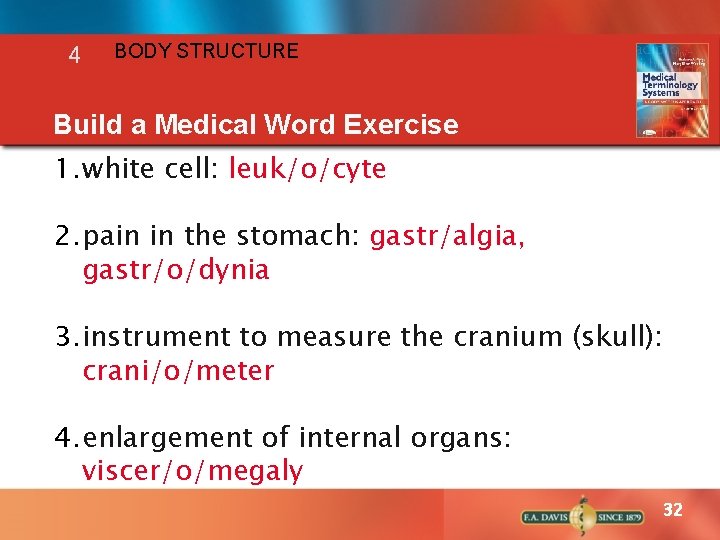
4 BODY STRUCTURE Build a Medical Word Exercise 1. white cell: leuk/o/cyte 2. pain in the stomach: gastr/algia, gastr/o/dynia 3. instrument to measure the cranium (skull): crani/o/meter 4. enlargement of internal organs: viscer/o/megaly 32
4 BODY STRUCTURE Build a Medical Word Exercise 5. incision of the chest: 6. study of tissues: 7. record of an x-ray: 8. pertaining to a deficient color: 33
4 BODY STRUCTURE Build a Medical Word Exercise 5. incision of the chest: thorac/o/tomy 6. study of tissues: hist/o/logy 7. record of an x-ray: radi/o/gram 8. pertaining to a deficient color: hypo/chrom/ic 34
4 BODY STRUCTURE Diseases and Conditions Disease • Pathological (morbid) condition that presents a group of signs, symptoms, and clinical findings • Disrupts homeostasis (state of equilibrium within internal environment of the body), including: • temperature • hydration (fluid volume) • acidity and salts (electrolytes) 35
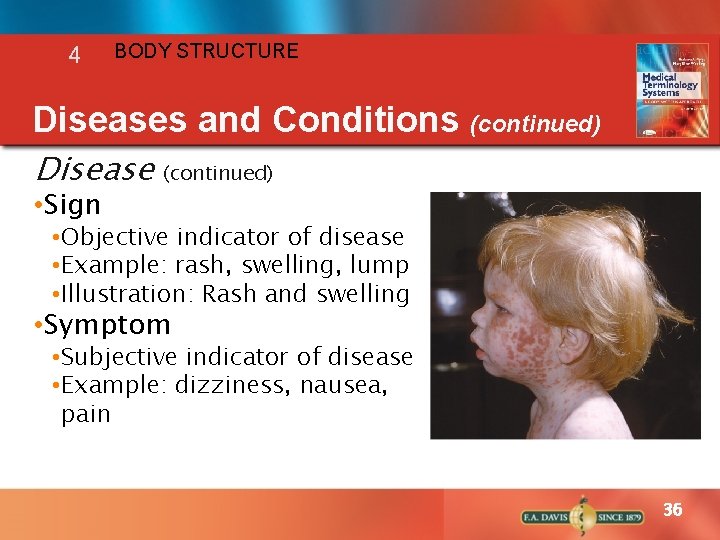
4 BODY STRUCTURE Diseases and Conditions (continued) Disease • Sign (continued) • Objective indicator of disease • Example: rash, swelling, lump • Illustration: Rash and swelling • Symptom • Subjective indicator of disease • Example: dizziness, nausea, pain 36
4 BODY STRUCTURE Diseases and Conditions (continued) Disease • Cause (continued) • Metabolic (diabetes) • Infectious (influenza) • Congenital (cleft palate) • Hereditary (hemophilia) • Neoplastic (cancer) • Environmental (trauma, burns) 37
4 BODY STRUCTURE Vocabulary Challenge Exercise 1. adhesion: 2. inflammation: 3. febrile: 38
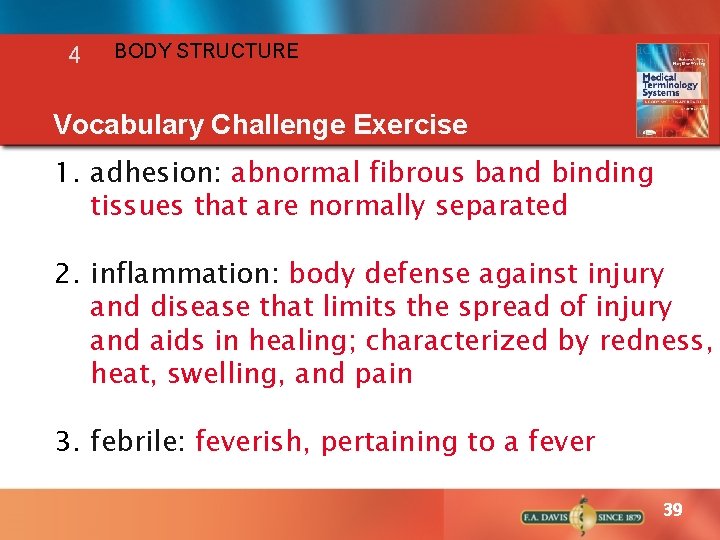
4 BODY STRUCTURE Vocabulary Challenge Exercise 1. adhesion: abnormal fibrous band binding tissues that are normally separated 2. inflammation: body defense against injury and disease that limits the spread of injury and aids in healing; characterized by redness, heat, swelling, and pain 3. febrile: feverish, pertaining to a fever 39
4 BODY STRUCTURE Vocabulary Challenge Exercise 4. morbid: 5. sepsis: 6. suppurative: 40
4 BODY STRUCTURE Vocabulary Challenge Exercise 4. morbid: diseased; unhealthy 5. sepsis: presence of pathogens in blood or other tissues 6. suppurative: producing or pertaining to the generation of pus 41
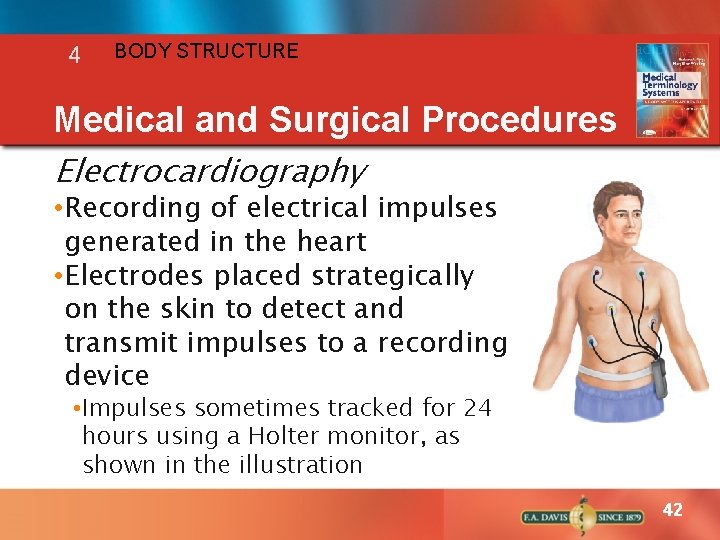
4 BODY STRUCTURE Medical and Surgical Procedures Electrocardiography • Recording of electrical impulses generated in the heart • Electrodes placed strategically on the skin to detect and transmit impulses to a recording device • Impulses sometimes tracked for 24 hours using a Holter monitor, as shown in the illustration 42
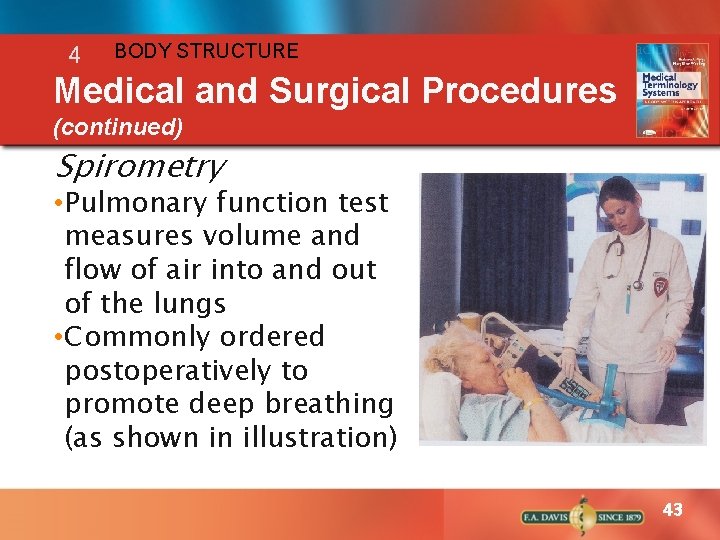
4 BODY STRUCTURE Medical and Surgical Procedures (continued) Spirometry • Pulmonary function test measures volume and flow of air into and out of the lungs • Commonly ordered postoperatively to promote deep breathing (as shown in illustration) 43
4 BODY STRUCTURE Medical and Surgical Procedures (continued) Spirometry • Aid in assessment of lung disorders • Improves lung function • Ordered for patients who have had surgeries that may jeopardize respiratory function 44
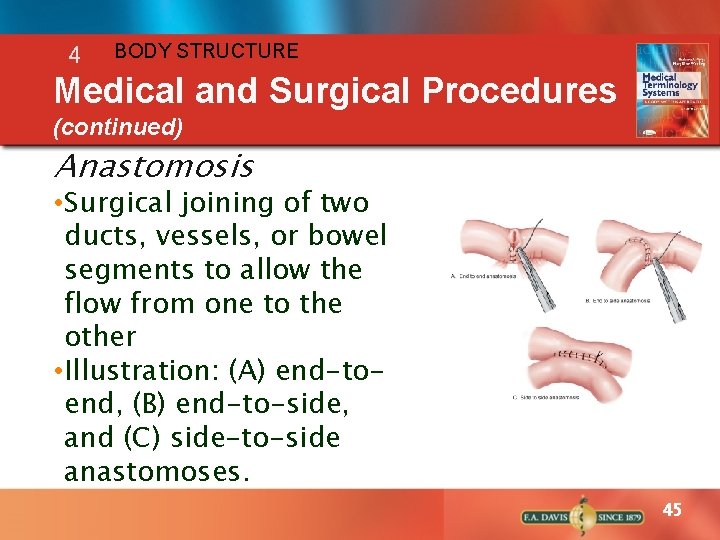
4 BODY STRUCTURE Medical and Surgical Procedures (continued) Anastomosis • Surgical joining of two ducts, vessels, or bowel segments to allow the flow from one to the other • Illustration: (A) end-toend, (B) end-to-side, and (C) side-to-side anastomoses. 45
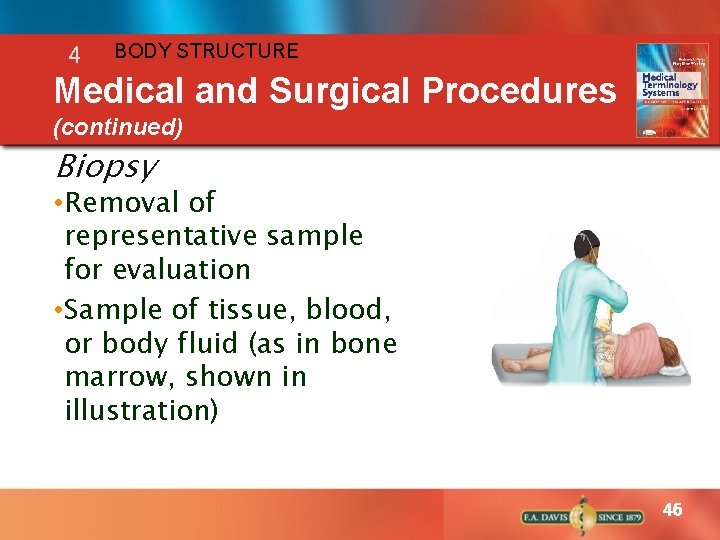
4 BODY STRUCTURE Medical and Surgical Procedures (continued) Biopsy • Removal of representative sample for evaluation • Sample of tissue, blood, or body fluid (as in bone marrow, shown in illustration) 46
4 BODY STRUCTURE Clinically Related Exercise 1. Mr. L. ’s saphenous vein is excised and used to bypass an occlusion in one of his heart vessels. Surgery that joins two vessels to allow the free flow of blood between them is called a(n) (anastomosis, scan, vasculotomy). 47
4 BODY STRUCTURE Clinically Related Exercise 1. Mr. L. ’s saphenous vein is excised and used to bypass an occlusion in one of his heart vessels. Surgery that joins two vessels to allow the free flow of blood between them is called an (anastomosis, scan, vasculotomy). 48
4 BODY STRUCTURE Clinically Related Exercise 2. Mrs. W. is told that deep breathing postoperatively is essential to avoid lung complications. The doctor instructs her to use an incentive spirometer. This device helps prevent fluid build-up in the . 49
4 BODY STRUCTURE Clinically Related Exercise 2. Mrs. W. is told that deep breathing postoperatively is essential to avoid lung complications. The doctor instructs her to use an incentive spirometer. This device helps prevent fluid build-up in the lungs. 50
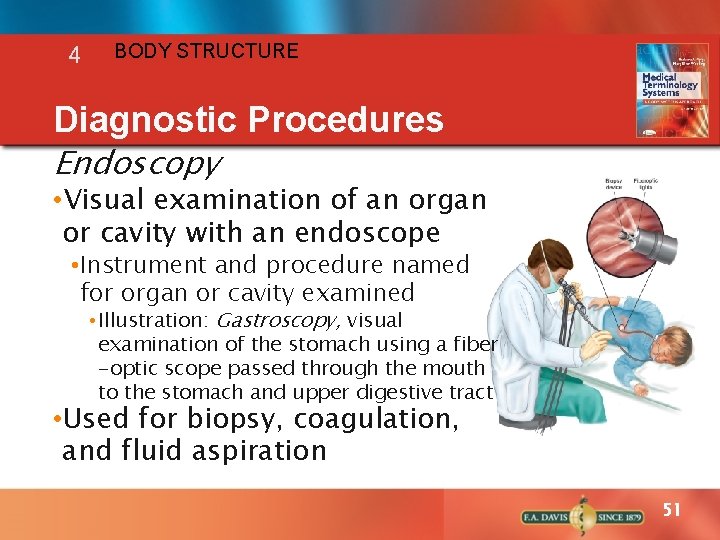
4 BODY STRUCTURE Diagnostic Procedures Endoscopy • Visual examination of an organ or cavity with an endoscope • Instrument and procedure named for organ or cavity examined • Illustration: Gastroscopy, visual examination of the stomach using a fiber -optic scope passed through the mouth to the stomach and upper digestive tract • Used for biopsy, coagulation, and fluid aspiration 51
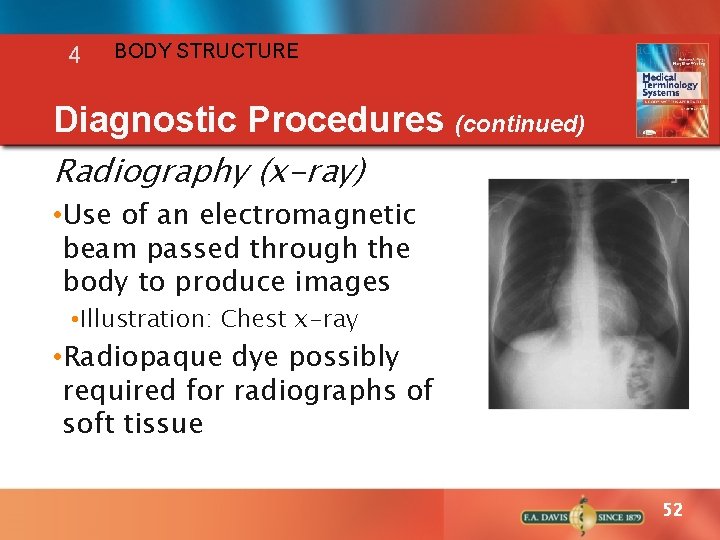
4 BODY STRUCTURE Diagnostic Procedures (continued) Radiography (x-ray) • Use of an electromagnetic beam passed through the body to produce images • Illustration: Chest x-ray • Radiopaque dye possibly required for radiographs of soft tissue 52
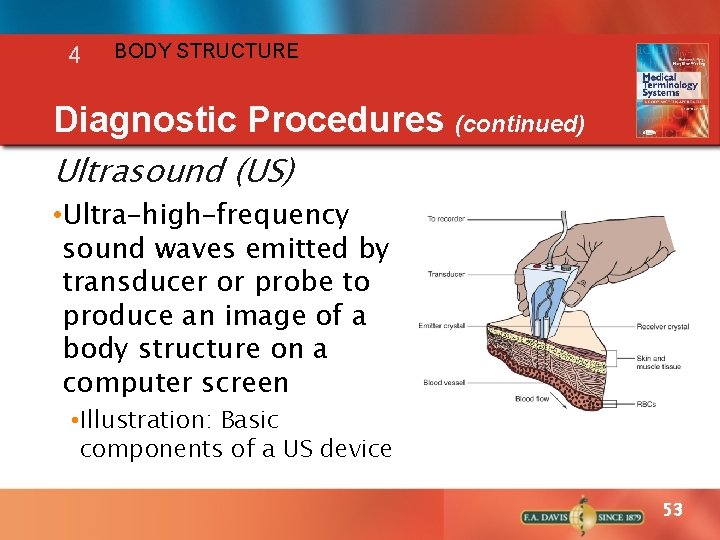
4 BODY STRUCTURE Diagnostic Procedures (continued) Ultrasound (US) • Ultra–high–frequency sound waves emitted by a transducer or probe to produce an image of a body structure on a computer screen • Illustration: Basic components of a US device 53
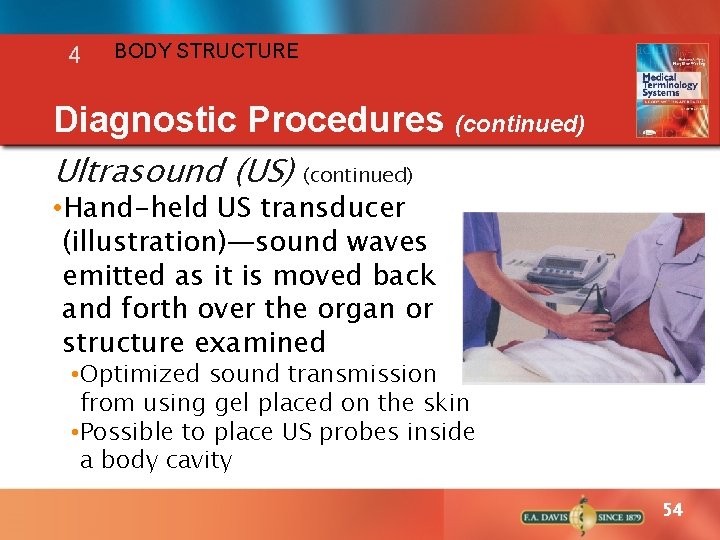
4 BODY STRUCTURE Diagnostic Procedures (continued) Ultrasound (US) (continued) • Hand-held US transducer (illustration)—sound waves emitted as it is moved back and forth over the organ or structure examined • Optimized sound transmission from using gel placed on the skin • Possible to place US probes inside a body cavity 54
4 BODY STRUCTURE Diagnostic Procedures (continued) Ultrasound (US) (continued) • Sound waves from a transducer or probe reflected from internal structures as echoes • Echoes changed into electrical signals and analyzed by a computer • Brightest areas on the ultrasound image produced by the strongest echoes 55
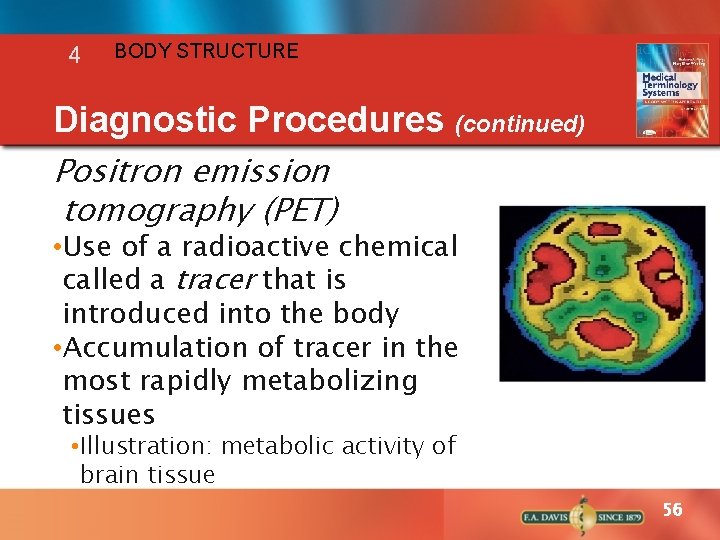
4 BODY STRUCTURE Diagnostic Procedures (continued) Positron emission tomography (PET) • Use of a radioactive chemical called a tracer that is introduced into the body • Accumulation of tracer in the most rapidly metabolizing tissues • Illustration: metabolic activity of brain tissue 56
BODY STRUCTURE 4 Diagnostic Procedures (continued) PET (continued) • Positively charged particles (positrons) emitted in a body region and detected by a device called a gamma camera to produce an image • Identification of areas of higher and decreased metabolic activity • Areas of increased metabolism possibly indicating a tumor • Areas of decreased metabolism possibly indicating Alzheimer disease, Parkinson disease, or epilepsy 57
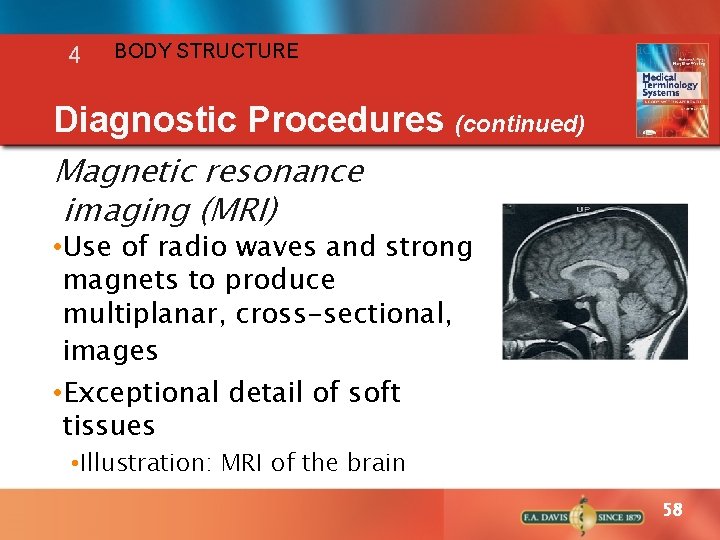
4 BODY STRUCTURE Diagnostic Procedures (continued) Magnetic resonance imaging (MRI) • Use of radio waves and strong magnets to produce multiplanar, cross-sectional, images • Exceptional detail of soft tissues • Illustration: MRI of the brain 58
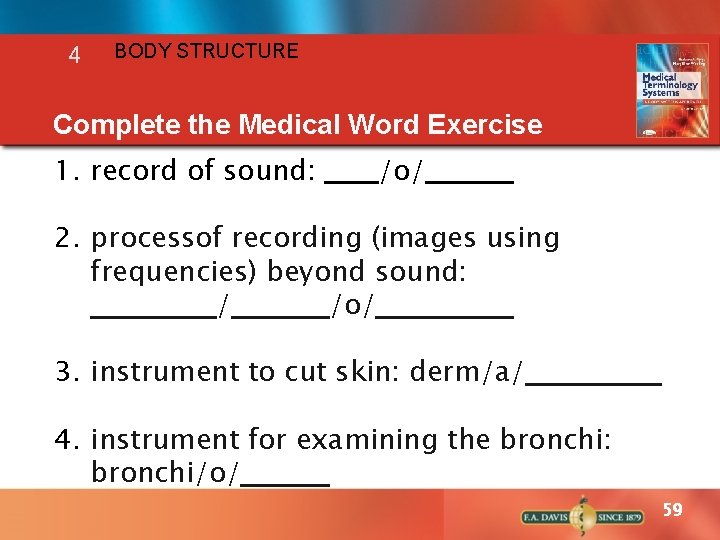
4 BODY STRUCTURE Complete the Medical Word Exercise 1. record of sound: /o/ 2. processof recording (images using frequencies) beyond sound: / /o/ 3. instrument to cut skin: derm/a/ 4. instrument for examining the bronchi: bronchi/o/ 59
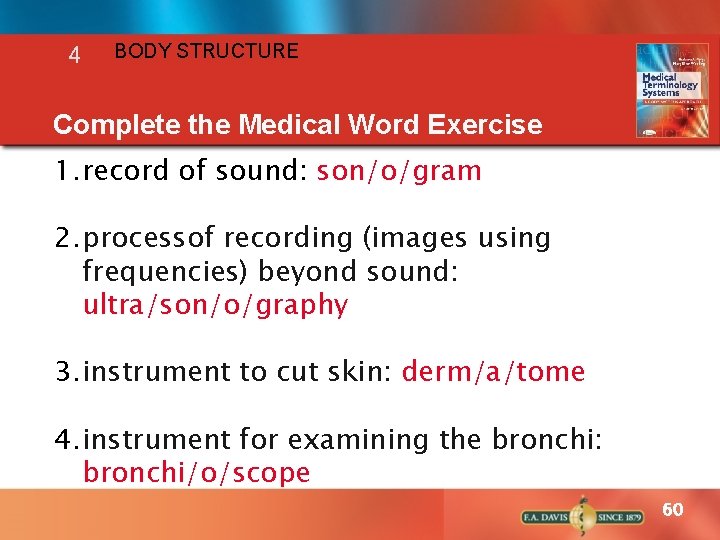
4 BODY STRUCTURE Complete the Medical Word Exercise 1. record of sound: son/o/gram 2. processof recording (images using frequencies) beyond sound: ultra/son/o/graphy 3. instrument to cut skin: derm/a/tome 4. instrument for examining the bronchi: bronchi/o/scope 60
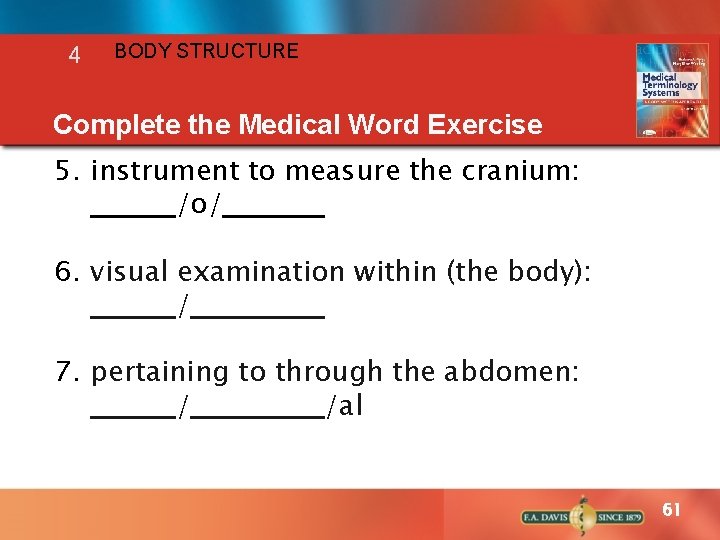
4 BODY STRUCTURE Complete the Medical Word Exercise 5. instrument to measure the cranium: /o/ 6. visual examination within (the body): / 7. pertaining to through the abdomen: / /al 61
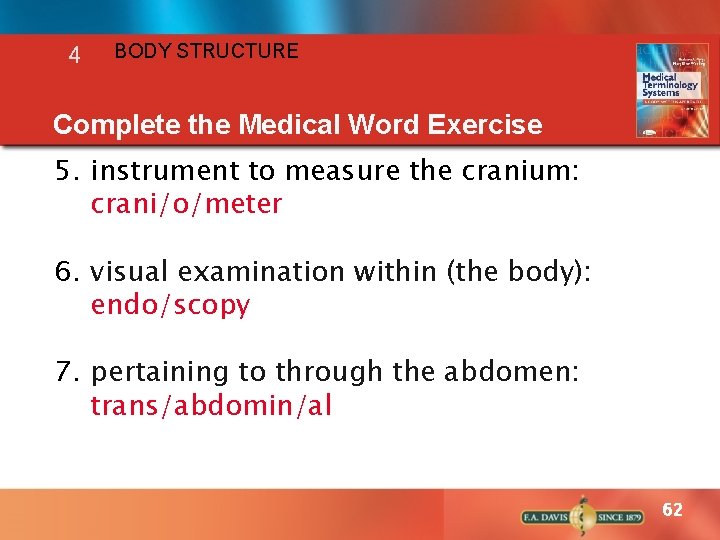
4 BODY STRUCTURE Complete the Medical Word Exercise 5. instrument to measure the cranium: crani/o/meter 6. visual examination within (the body): endo/scopy 7. pertaining to through the abdomen: trans/abdomin/al 62
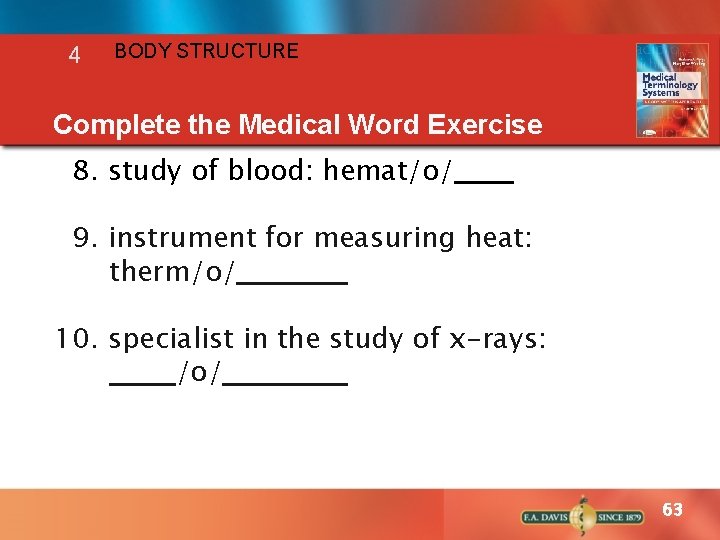
4 BODY STRUCTURE Complete the Medical Word Exercise 8. study of blood: hemat/o/ 9. instrument for measuring heat: therm/o/ 10. specialist in the study of x-rays: /o/ 63
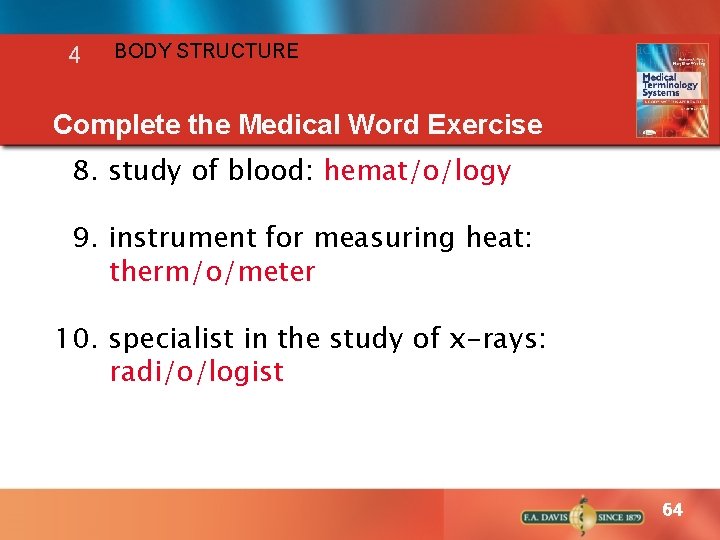
4 BODY STRUCTURE Complete the Medical Word Exercise 8. study of blood: hemat/o/logy 9. instrument for measuring heat: therm/o/meter 10. specialist in the study of x-rays: radi/o/logist 64
Copyright © 2013 by F. A. Davis Company. All rights reserved. This product is protected by copyright. No part of it may be reproduced, stored in a retrieval system, or transmitted in any form or by any means— electronic, mechanical, photocopying, recording, or otherwise—without written permission from the publisher. 65