
Lecture Note 10 Application I Distributed Computing on
Lecture Note 10 Application I – Distributed Computing on Sensor Networks
Cross-Layered Design of Sensor Networks I. Fundamentals - Basics of Wireless Ad-Hoc Networks - Autonomous Systems - Communication Models and Algorithms II. Design of Wireless Sensor Networks - Reconfigurable Networking Architecture - Routing Protocol and Communication Algorithms - Network Self-Reconfiguration Algorithms - Sensor Network Deployment
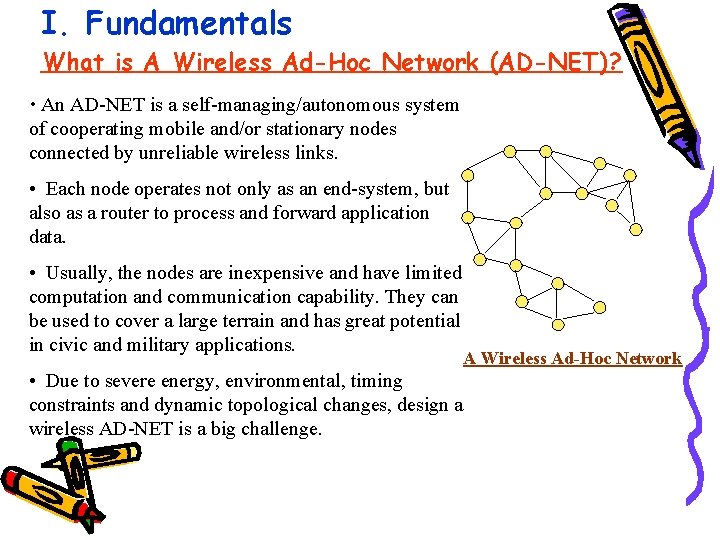
I. Fundamentals What is A Wireless Ad-Hoc Network (AD-NET)? • An AD-NET is a self-managing/autonomous system of cooperating mobile and/or stationary nodes connected by unreliable wireless links. • Each node operates not only as an end-system, but also as a router to process and forward application data. • Usually, the nodes are inexpensive and have limited computation and communication capability. They can be used to cover a large terrain and has great potential in civic and military applications. A Wireless Ad-Hoc Network • Due to severe energy, environmental, timing constraints and dynamic topological changes, design a wireless AD-NET is a big challenge.
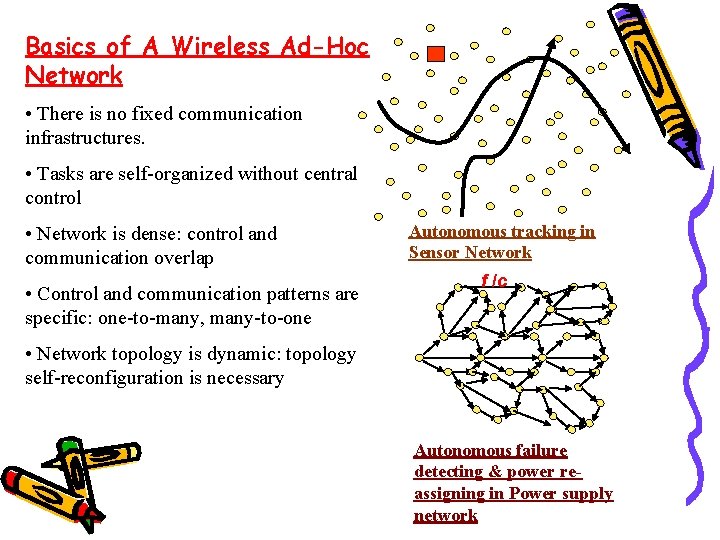
Basics of A Wireless Ad-Hoc Network • There is no fixed communication infrastructures. • Tasks are self-organized without central control • Network is dense: control and communication overlap • Control and communication patterns are specific: one-to-many, many-to-one Autonomous tracking in Sensor Network f /c • Network topology is dynamic: topology self-reconfiguration is necessary Autonomous failure detecting & power reassigning in Power supply network

An Example of Wireless Sensor Network
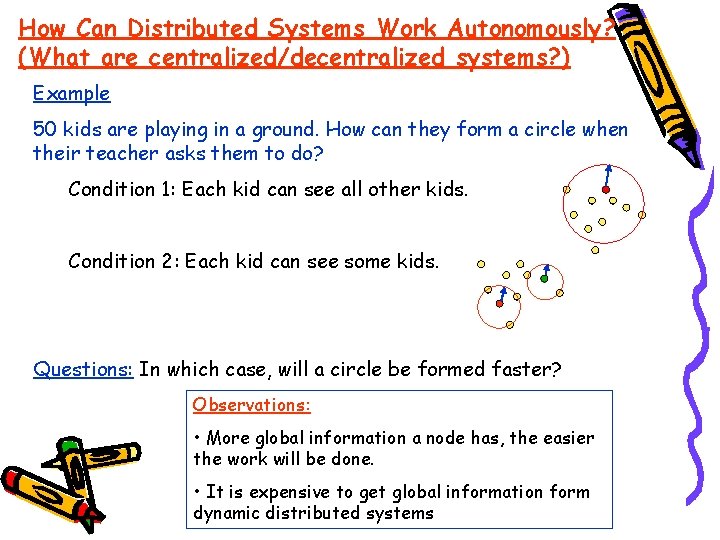
How Can Distributed Systems Work Autonomously? (What are centralized/decentralized systems? ) Example 50 kids are playing in a ground. How can they form a circle when their teacher asks them to do? Condition 1: Each kid can see all other kids. Condition 2: Each kid can see some kids. Questions: In which case, will a circle be formed faster? Observations: • More global information a node has, the easier the work will be done. • It is expensive to get global information form dynamic distributed systems
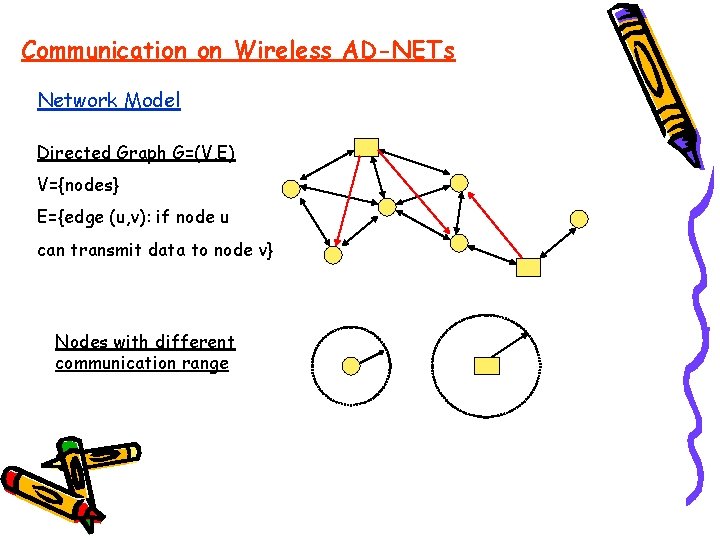
Communication on Wireless AD-NETs Network Model Directed Graph G=(V, E) V={nodes} E={edge (u, v): if node u can transmit data to node v} Nodes with different communication range
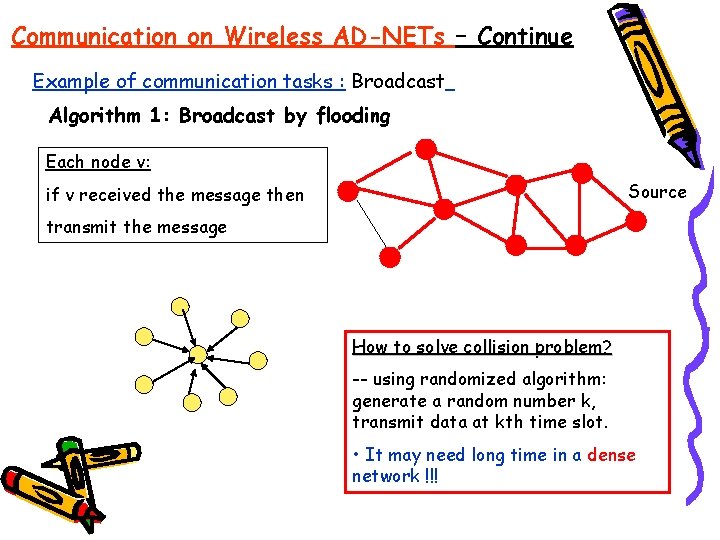
Communication on Wireless AD-NETs – Continue Example of communication tasks : Broadcast Algorithm 1: Broadcast by flooding Each node v: Source if v received the message then transmit the message How to solve collision problem? -- using randomized algorithm: generate a random number k, transmit data at kth time slot. • It may need long time in a dense network !!!
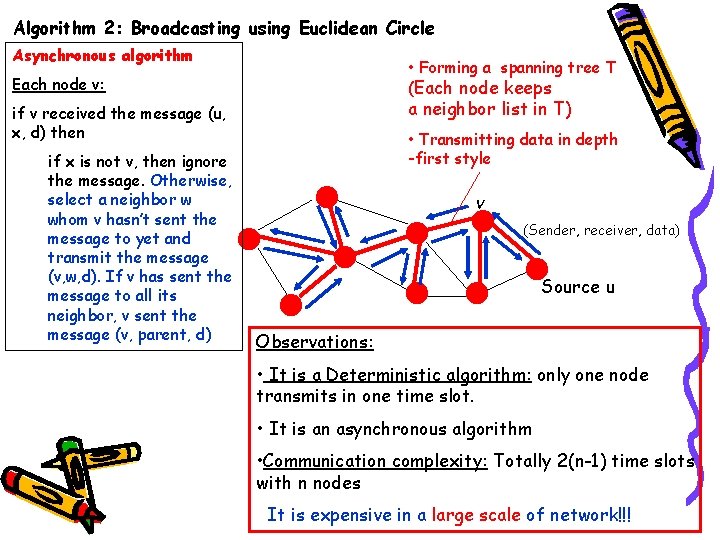
Algorithm 2: Broadcasting using Euclidean Circle Asynchronous algorithm • Forming a spanning tree T (Each node keeps Each node v: a neighbor list in T) if v received the message (u, x, d) then if x is not v, then ignore the message. Otherwise, select a neighbor w whom v hasn’t sent the message to yet and transmit the message (v, w, d). If v has sent the message to all its neighbor, v sent the message (v, parent, d) • Transmitting data in depth -first style v (Sender, receiver, data) Source u Observations: • It is a Deterministic algorithm: only one node transmits in one time slot. • It is an asynchronous algorithm • Communication complexity: Totally 2(n-1) time slots with n nodes It is expensive in a large scale of network!!!
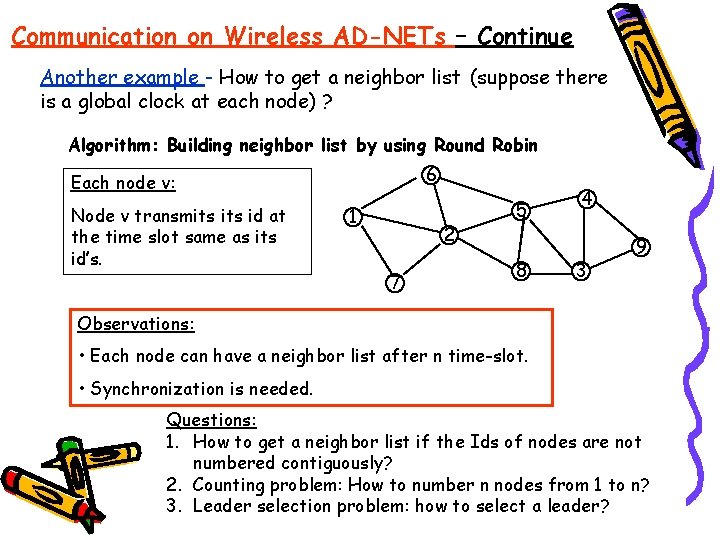
Communication on Wireless AD-NETs – Continue Another example - How to get a neighbor list (suppose there is a global clock at each node) ? Algorithm: Building neighbor list by using Round Robin 6 Each node v: Node v transmits id at the time slot same as its id’s. 1 2 7 5 8 4 3 9 Observations: • Each node can have a neighbor list after n time-slot. • Synchronization is needed. Questions: 1. How to get a neighbor list if the Ids of nodes are not numbered contiguously? 2. Counting problem: How to number n nodes from 1 to n? 3. Leader selection problem: how to select a leader?
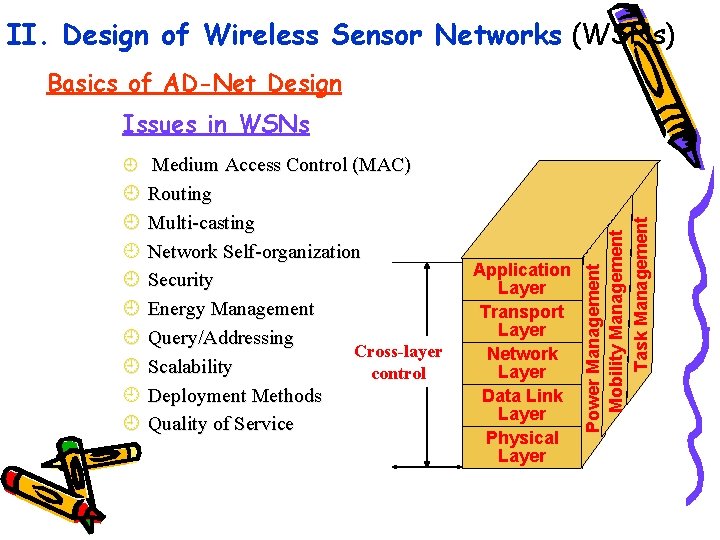
II. Design of Wireless Sensor Networks (WSNs) Basics of AD-Net Design Issues in WSNs ¿ ¿ ¿ ¿ ¿ Routing Multi-casting Network Self-organization Security Energy Management Query/Addressing Cross-layer Scalability control Deployment Methods Quality of Service Application Layer Transport Layer Network Layer Data Link Layer Physical Layer Power Management Mobility Management Task Management ¿ Medium Access Control (MAC) Sensor Node Protocol Stack
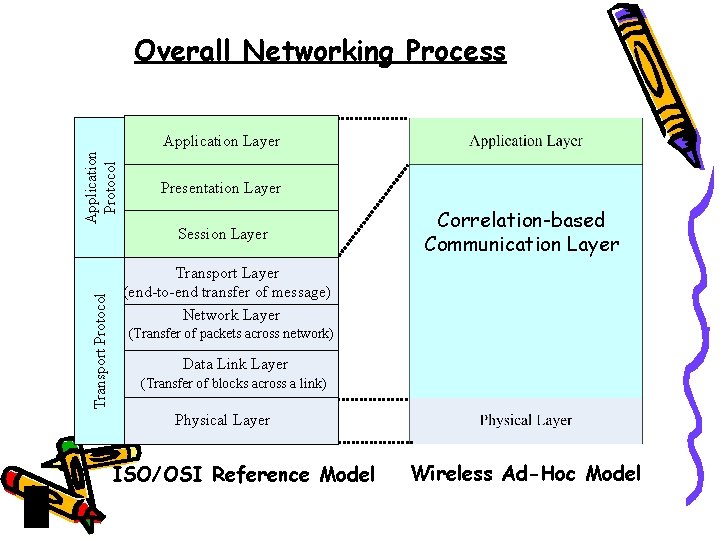
Overall Networking Process Application Protocol Application Layer Presentation Layer Transport Protocol Session Layer Correlation-based Communication Layer Transport Layer (end-to-end transfer of message) Network Layer (Transfer of packets across network) Data Link Layer (Transfer of blocks across a link) Physical Layer ISO/OSI Reference Model Wireless Ad-Hoc Model

Embed Network into Nodes
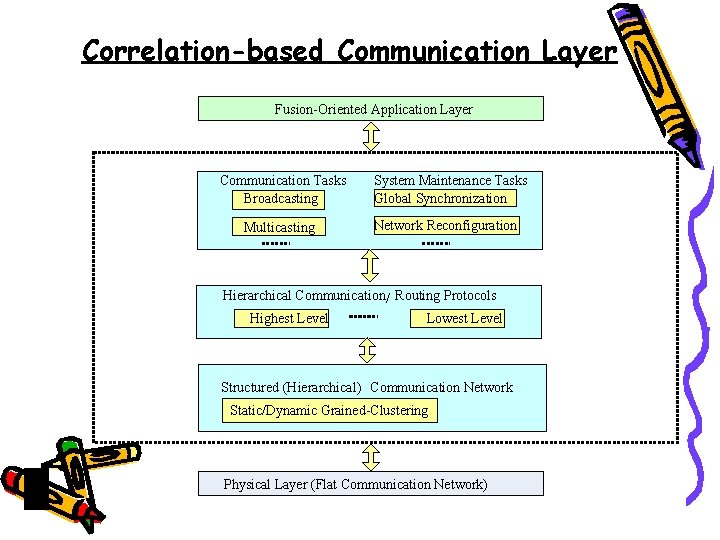
Correlation-based Communication Layer Fusion-Oriented Application Layer Communication Tasks Broadcasting Multicasting System Maintenance Tasks Global Synchronization Network Reconfiguration Hierarchical Communication / Routing Protocols Highest Level Lowest Level Structured (Hierarchical) Communication Network Static/Dynamic Grained-Clustering Physical Layer (Flat Communication Network)
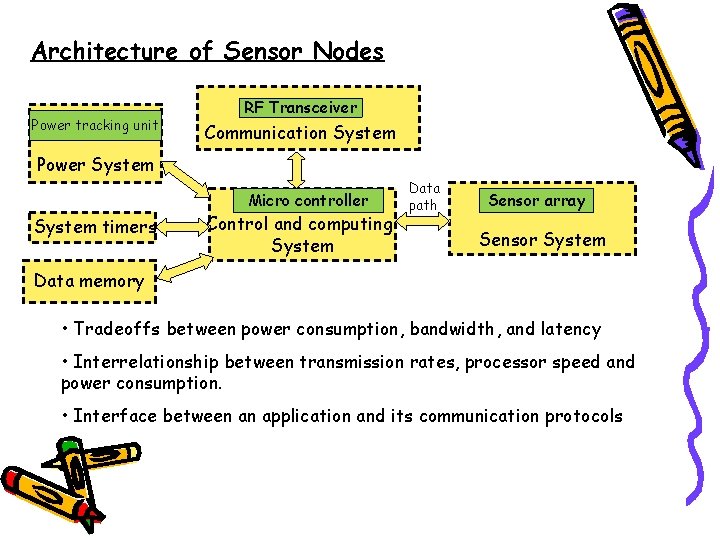
Architecture of Sensor Nodes Power tracking unit RF Transceiver Communication System Power System Micro controller System timers Control and computing System Data path Sensor array Sensor System Data memory • Tradeoffs between power consumption, bandwidth, and latency • Interrelationship between transmission rates, processor speed and power consumption. • Interface between an application and its communication protocols
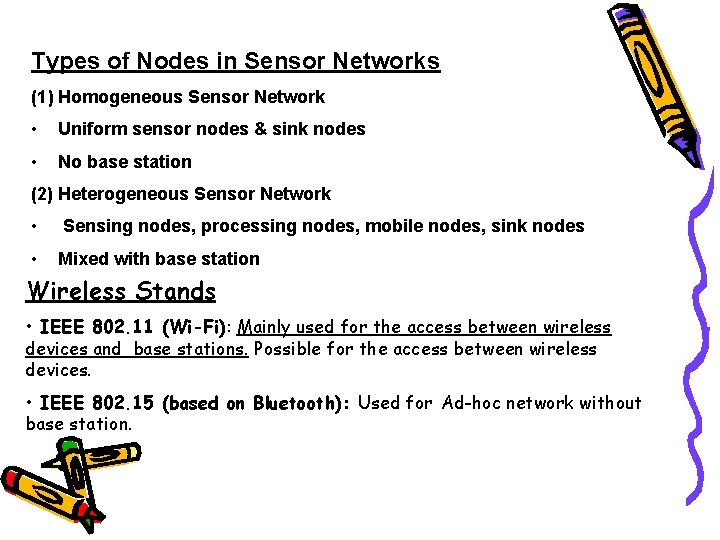
Types of Nodes in Sensor Networks (1) Homogeneous Sensor Network • Uniform sensor nodes & sink nodes • No base station (2) Heterogeneous Sensor Network • Sensing nodes, processing nodes, mobile nodes, sink nodes • Mixed with base station Wireless Stands • IEEE 802. 11 (Wi-Fi): Mainly used for the access between wireless devices and base stations. Possible for the access between wireless devices. • IEEE 802. 15 (based on Bluetooth): Used for Ad-hoc network without base station.
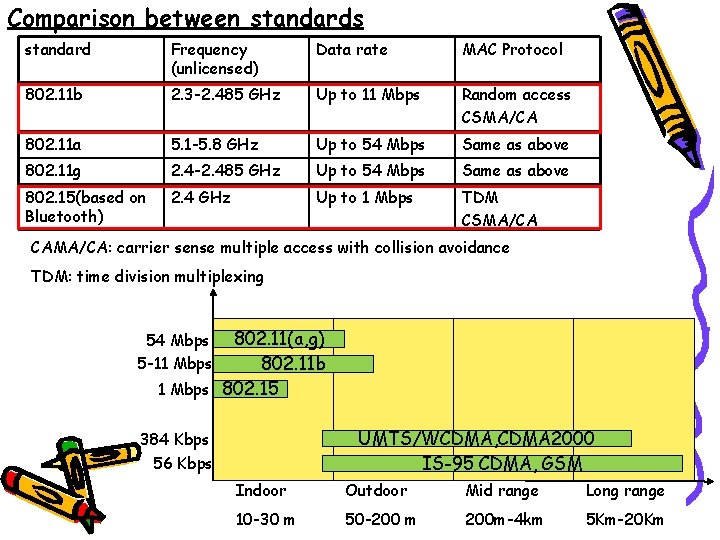
Comparison between standards standard Frequency (unlicensed) Data rate MAC Protocol 802. 11 b 2. 3 -2. 485 GHz Up to 11 Mbps Random access CSMA/CA 802. 11 a 5. 1 -5. 8 GHz Up to 54 Mbps Same as above 802. 11 g 2. 4 -2. 485 GHz Up to 54 Mbps Same as above 802. 15(based on Bluetooth) 2. 4 GHz Up to 1 Mbps TDM CSMA/CA CAMA/CA: carrier sense multiple access with collision avoidance TDM: time division multiplexing 802. 11(a, g) 802. 11 b 1 Mbps 802. 15 54 Mbps 5 -11 Mbps UMTS/WCDMA, CDMA 2000 IS-95 CDMA, GSM 384 Kbps 56 Kbps Indoor Outdoor Mid range Long range 10 -30 m 50 -200 m 200 m-4 km 5 Km-20 Km
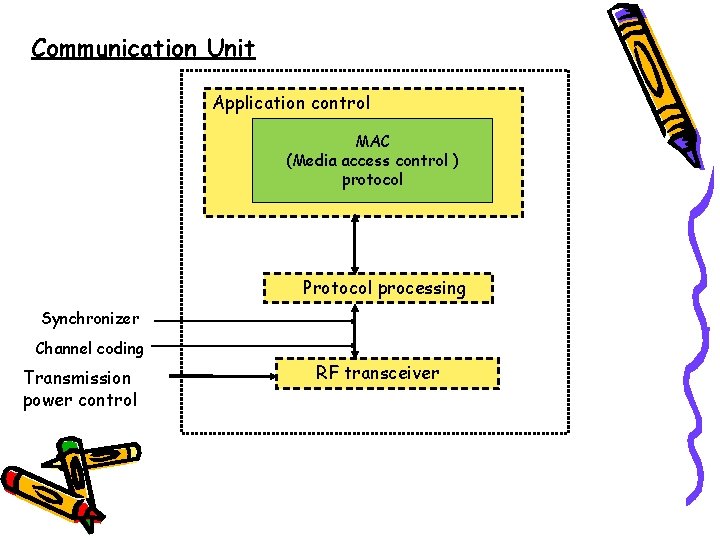
Communication Unit Application control MAC (Media access control ) protocol Protocol processing Synchronizer Channel coding Transmission power control RF transceiver
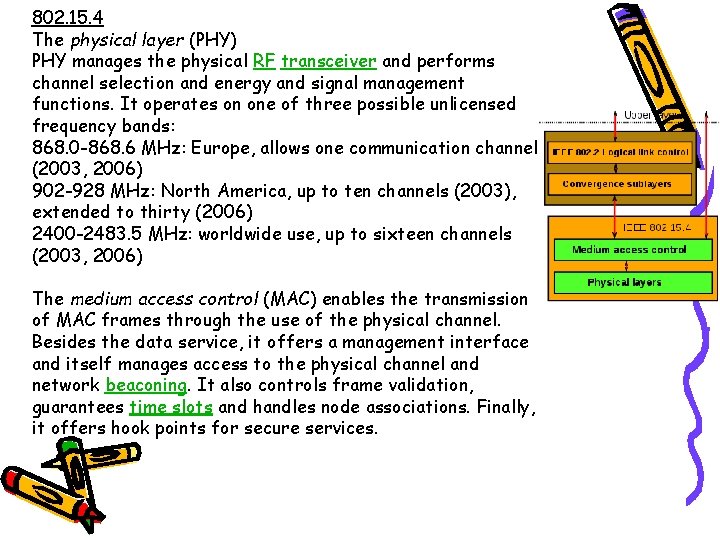
802. 15. 4 The physical layer (PHY) PHY manages the physical RF transceiver and performs channel selection and energy and signal management functions. It operates on one of three possible unlicensed frequency bands: 868. 0 -868. 6 MHz: Europe, allows one communication channel (2003, 2006) 902 -928 MHz: North America, up to ten channels (2003), extended to thirty (2006) 2400 -2483. 5 MHz: worldwide use, up to sixteen channels (2003, 2006) The medium access control (MAC) enables the transmission of MAC frames through the use of the physical channel. Besides the data service, it offers a management interface and itself manages access to the physical channel and network beaconing. It also controls frame validation, guarantees time slots and handles node associations. Finally, it offers hook points for secure services.
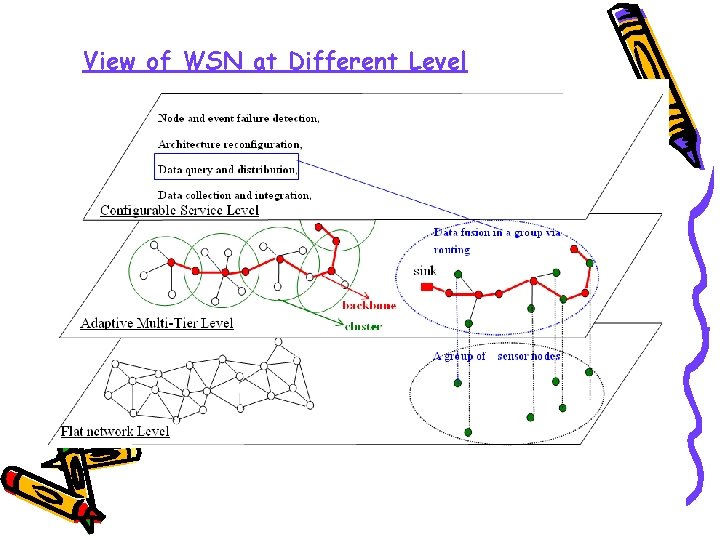
View of WSN at Different Level
Networking Architecture/Topology Flat architecture • Completely decentralized • Large communication overlap • Difficult to select local control and data aggregation point • Almost impossible to organize a real-time application • Easy (Cheap) for topology management Cluster-based (Hierarchical) architecture • Centralized control in local and decentralized control in global • Easy for schedule a routing without or with less overlap • Easy to select local control and data aggregation point • Expensive for topology management
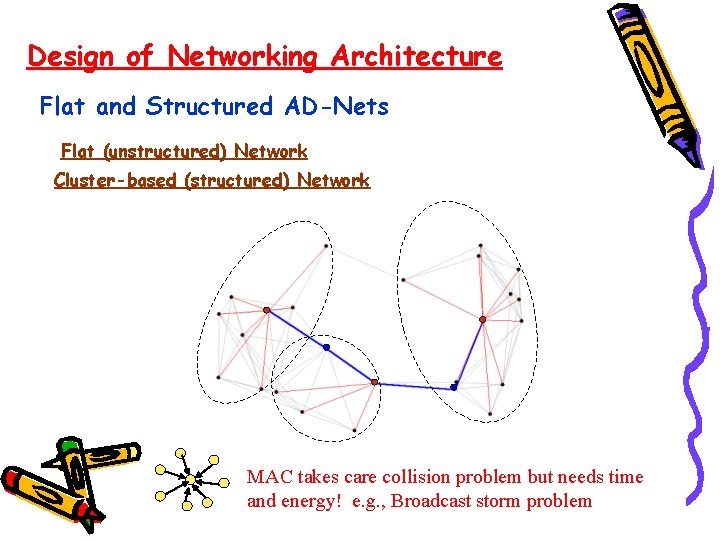
Design of Networking Architecture Flat and Structured AD-Nets Flat (unstructured) Network Cluster-based (structured) Network MAC takes care collision problem but needs time and energy! e. g. , Broadcast storm problem
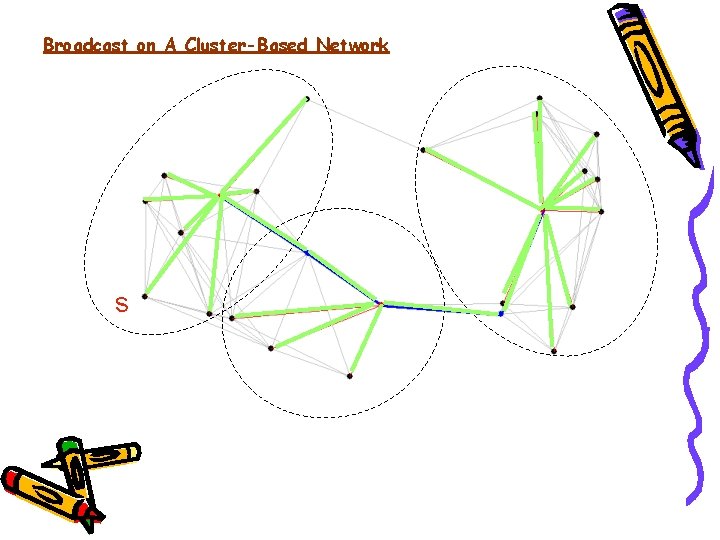
Broadcast on A Cluster-Based Network s
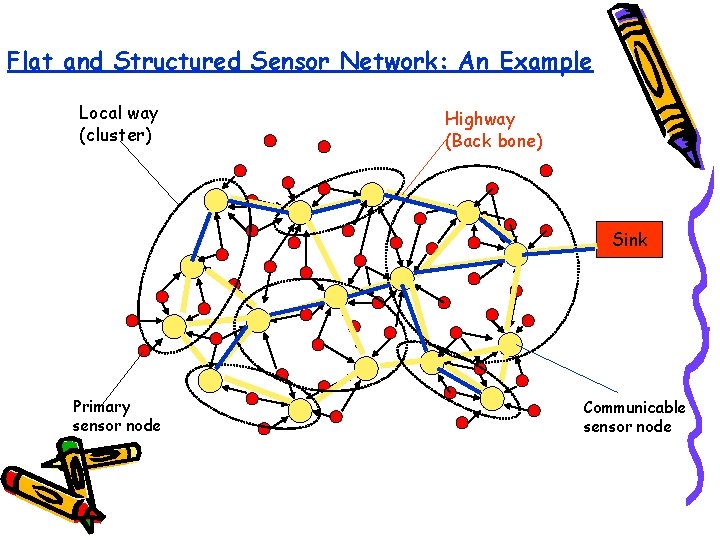
Flat and Structured Sensor Network: An Example Local way (cluster) Highway (Back bone) Sink Primary sensor node Communicable sensor node
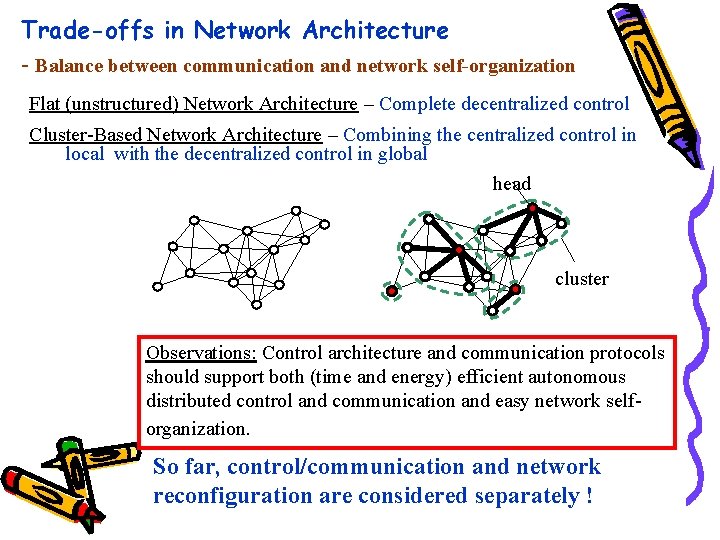
Trade-offs in Network Architecture - Balance between communication and network self-organization Flat (unstructured) Network Architecture – Complete decentralized control Cluster-Based Network Architecture – Combining the centralized control in local with the decentralized control in global head cluster Observations: Control architecture and communication protocols should support both (time and energy) efficient autonomous distributed control and communication and easy network selforganization. So far, control/communication and network reconfiguration are considered separately !
Comprehensively Design AD-Nets (1) Clustering architecture which support the functionalities for both of communication and network self-organization. (2) Design efficient algorithms for network self-organization (3) Design efficient algorithms for key control and communication functions
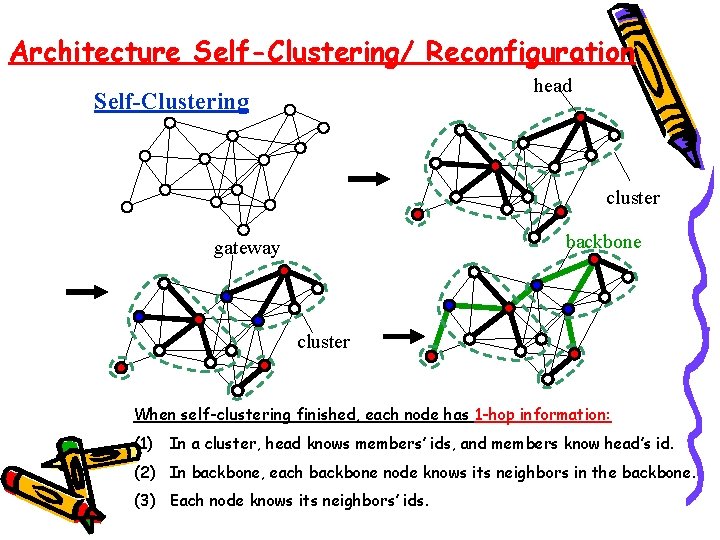
Architecture Self-Clustering/ Reconfiguration head Self-Clustering cluster backbone gateway cluster When self-clustering finished, each node has 1 -hop information: (1) In a cluster, head knows members’ ids, and members know head’s id. (2) In backbone, each backbone node knows its neighbors in the backbone. (3) Each node knows its neighbors’ ids.
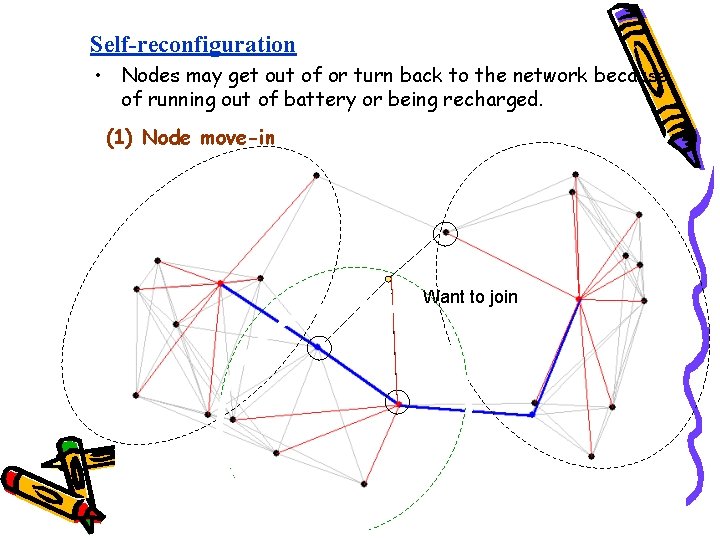
Self-reconfiguration • Nodes may get out of or turn back to the network because of running out of battery or being recharged. (1) Node move-in Want to join
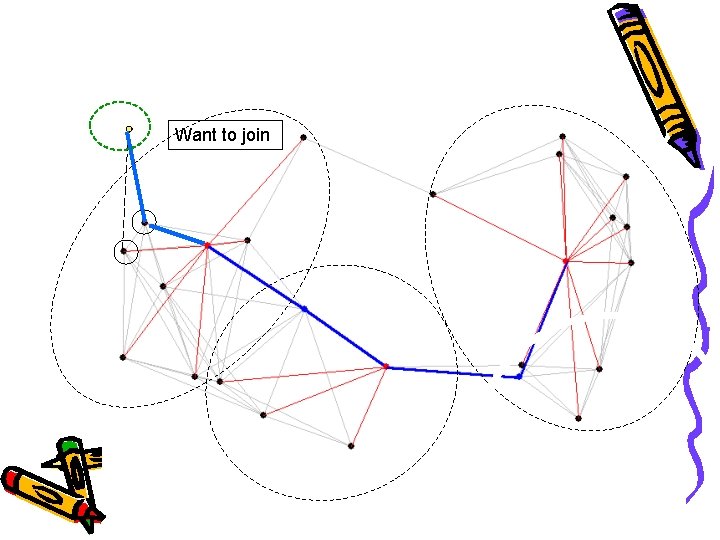
Want to join
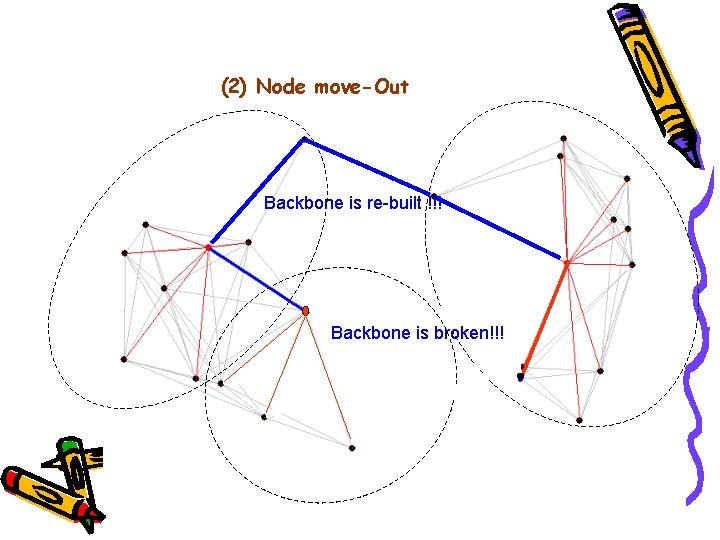
(2) Node move-Out Backbone is re-built !!! Want to Backbone is broken!!! move out
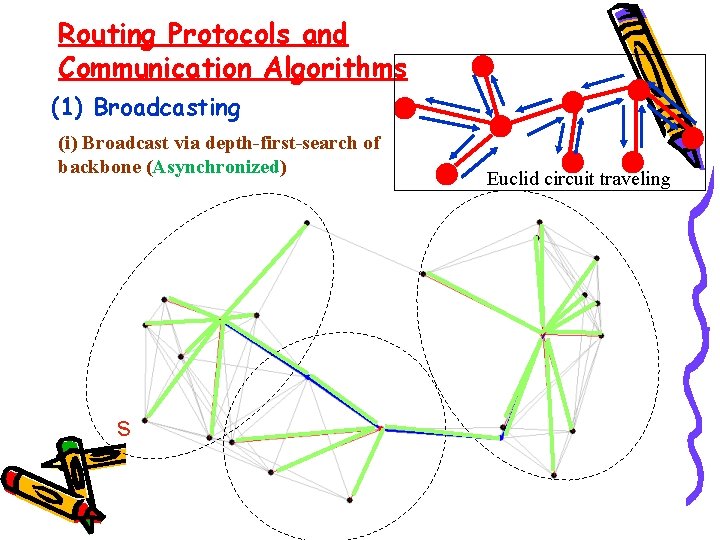
Routing Protocols and Communication Algorithms (1) Broadcasting (i) Broadcast via depth-first-search of backbone (Asynchronized) s Euclid circuit traveling
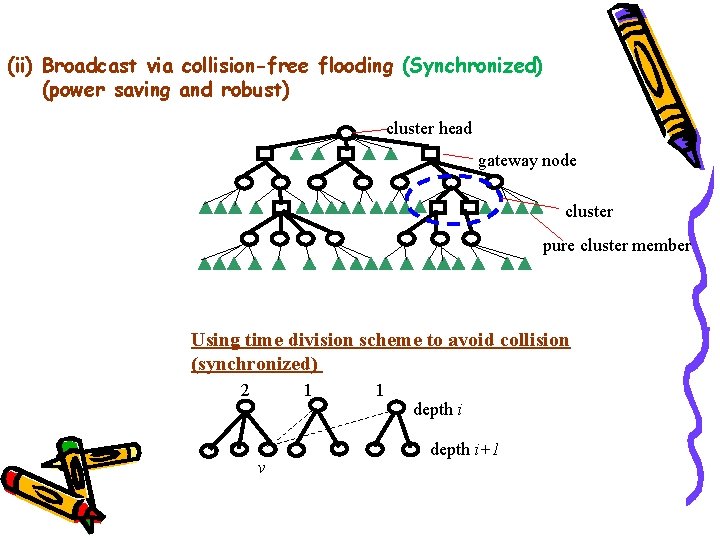
(ii) Broadcast via collision-free flooding (Synchronized) (power saving and robust) cluster head gateway node cluster pure cluster member Using time division scheme to avoid collision (synchronized) 2 1 v 1 depth i+1
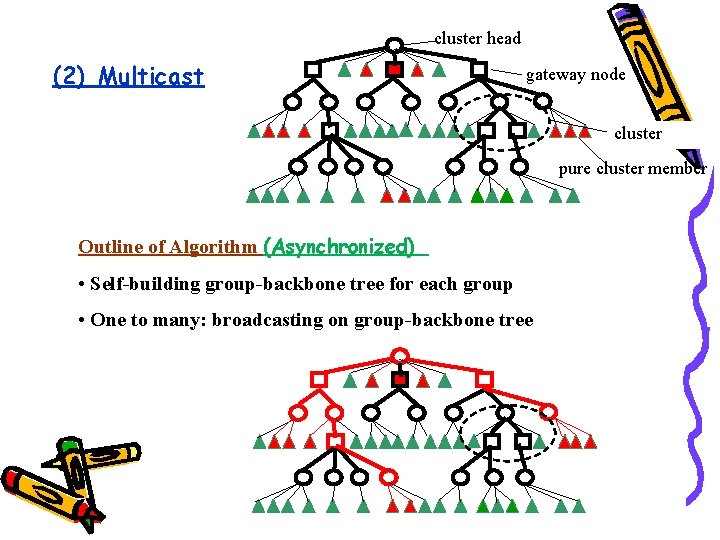
cluster head (2) Multicast gateway node cluster pure cluster member Outline of Algorithm (Asynchronized)_ • Self-building group-backbone tree for each group • One to many: broadcasting on group-backbone tree
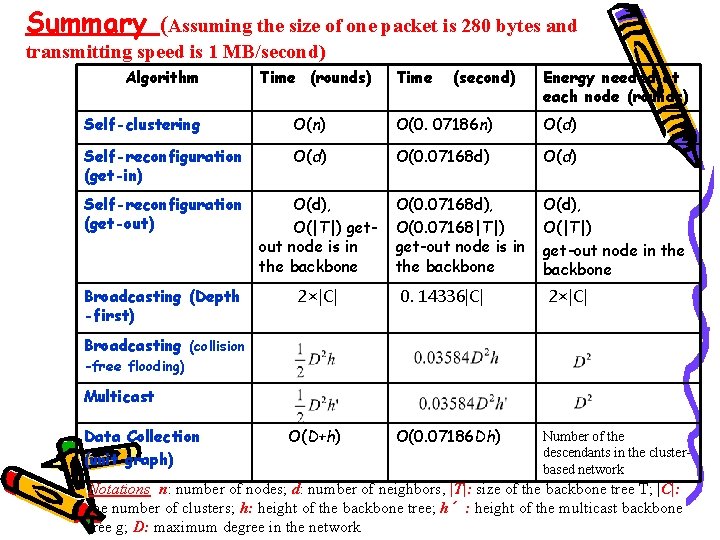
Summary (Assuming the size of one packet is 280 bytes and transmitting speed is 1 MB/second) Algorithm Time (rounds) Time (second) Energy needed at each node (rounds) Self-clustering O(n) O(0. 07186 n) O(d) Self-reconfiguration (get-in) O(d) O(0. 07168 d), O(0. 07168|T|) get-out node is in the backbone O(d), O(|T|) get-out node in the backbone 0. 14336|C| 2×|C| Self-reconfiguration (get-out) O(d), O(|T|) getout node is in the backbone Broadcasting (Depth -first) 2×|C| Broadcasting (collision -free flooding) Multicast Data Collection (unit graph) O(D+h) O(0. 07186 Dh) Number of the descendants in the clusterbased network Notations n: number of nodes; d: number of neighbors, |T|: size of the backbone tree T; |C|: the number of clusters; h: height of the backbone tree; h’: height of the multicast backbone tree g; D: maximum degree in the network
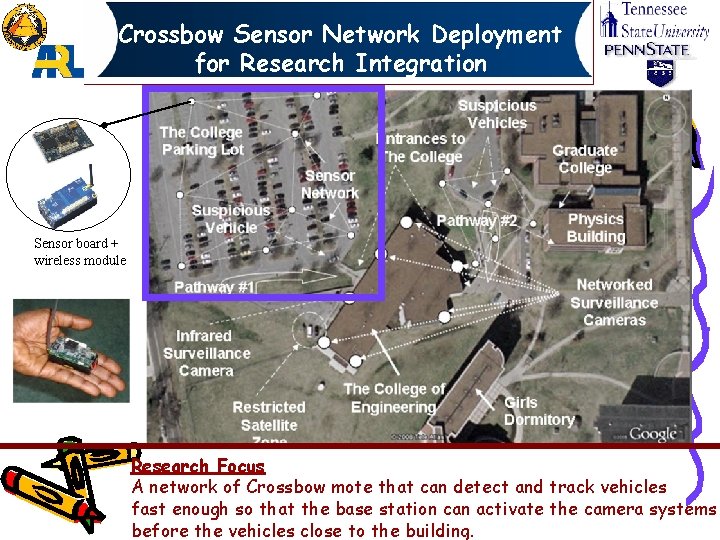
Crossbow Sensor Network Deployment for Research Integration Sensor board + wireless module Research Focus A network of Crossbow mote that can detect and track vehicles fast enough so that the base station can activate the camera systems before the vehicles close to the building.
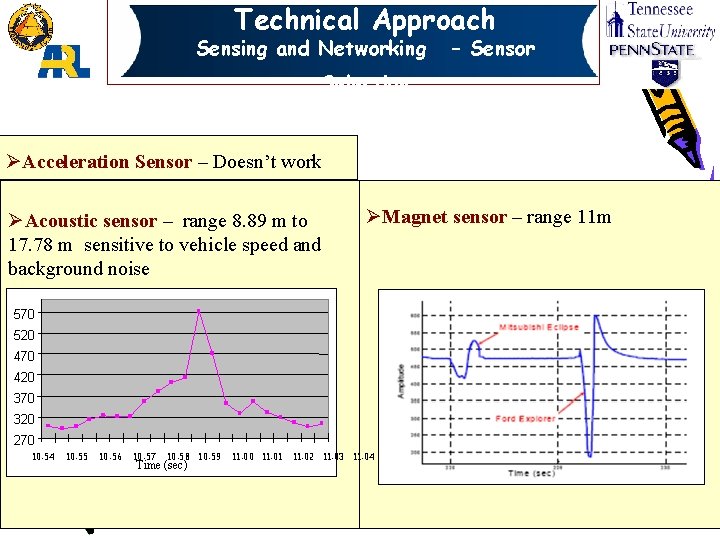
Technical Approach Sensing and Networking – Sensor Selection ØAcceleration Sensor – Doesn’t work ØAcoustic sensor – range 8. 89 m to 17. 78 m sensitive to vehicle speed and background noise ØMagnet sensor – range 11 m 570 520 470 420 370 320 270 11: 02 11: 03 11: 04 21 19 17 11: 00 11: 01 15 Time (sec) 13 10: 58 10: 59 11 10: 57 9 10: 56 7 5 10: 55 3 1 10: 54
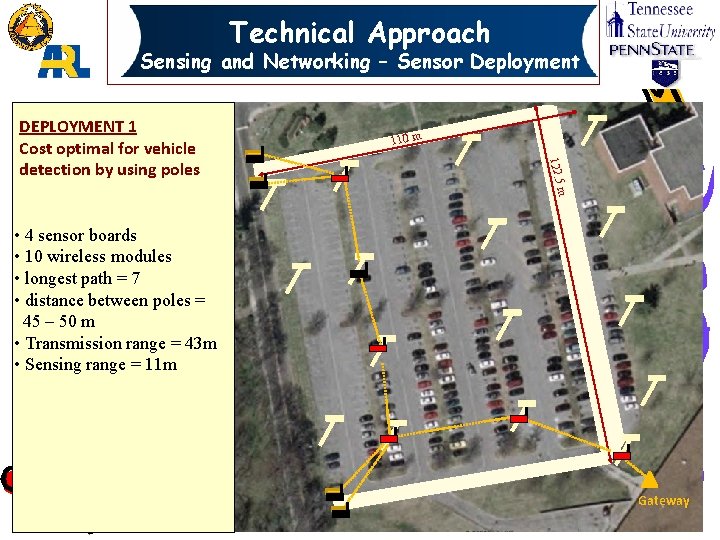
Technical Approach Sensing and Networking – Sensor Deployment 110 m 122. 5 DEPLOYMENT 1 Cost optimal for vehicle detection by using poles m • 4 sensor boards • 10 wireless modules • longest path = 7 • distance between poles = 45 – 50 m • Transmission range = 43 m • Sensing range = 11 m Gateway
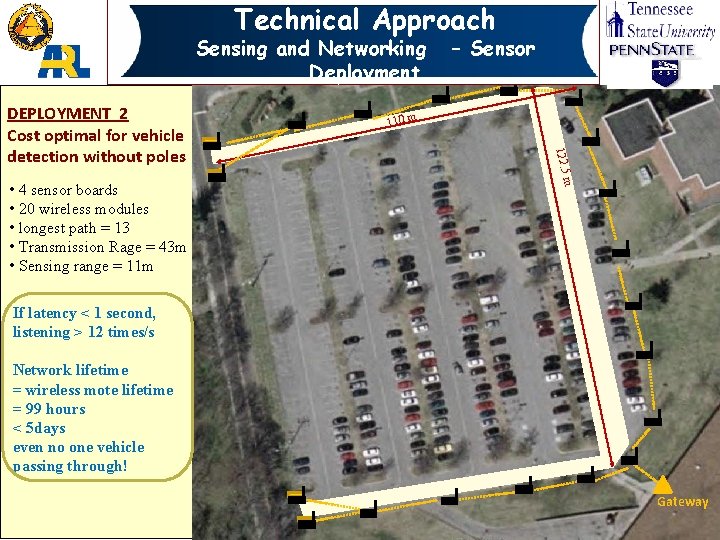
Technical Approach Sensing and Networking Deployment m • 4 sensor boards • 20 wireless modules • longest path = 13 • Transmission Rage = 43 m • Sensing range = 11 m 110 m 122. 5 DEPLOYMENT 2 Cost optimal for vehicle detection without poles – Sensor If latency < 1 second, listening > 12 times/s Network lifetime = wireless mote lifetime = 99 hours < 5 days even no one vehicle passing through! Gateway
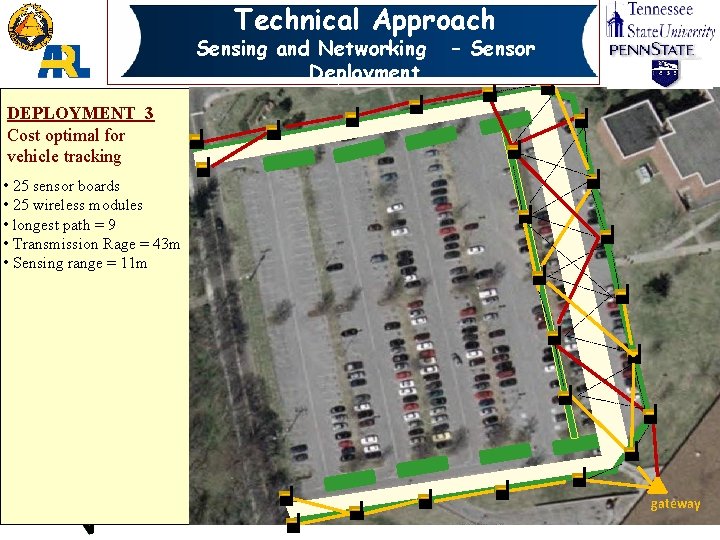
Technical Approach Sensing and Networking Deployment – Sensor DEPLOYMENT 3 Cost optimal for vehicle tracking • 25 sensor boards • 25 wireless modules • longest path = 9 • Transmission Rage = 43 m • Sensing range = 11 m gateway
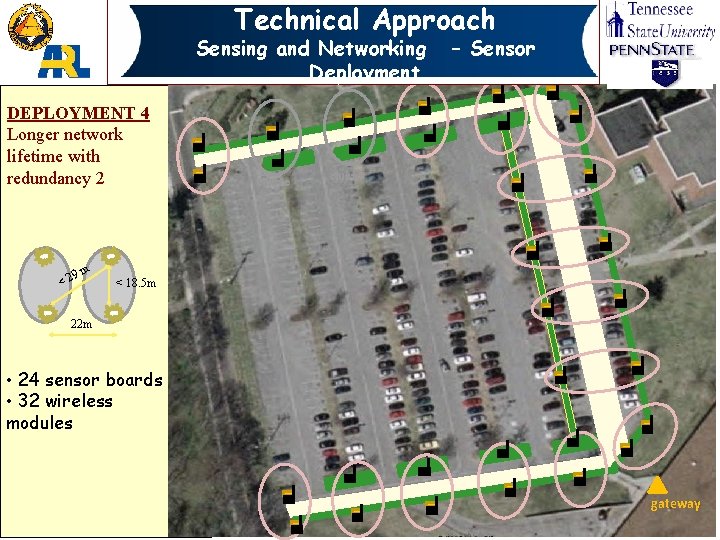
Technical Approach Sensing and Networking Deployment DEPLOYMENT 4 Longer network lifetime with redundancy 2 9 m <2 cluste r – Sensor cluste r < 18. 5 m 22 m • 24 sensor boards • 32 wireless modules gateway
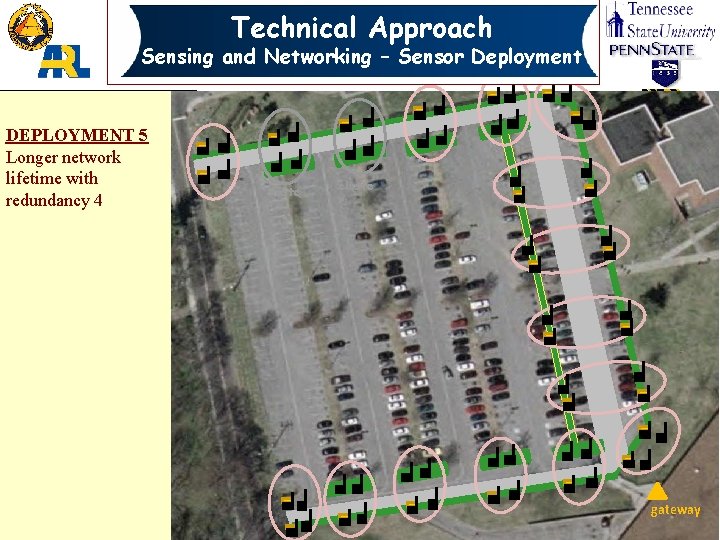
Technical Approach Sensing and Networking – Sensor Deployment DEPLOYMENT 5 Longer network lifetime with redundancy 4 cluste r gateway
Exercises: 1. What are wireless ad-hoc/mobile/sensor networks? 2. What are the challenge for the networks of low cost and small-sized sensor nodes? 3. Explain the tradeoff of centralized system and decentralized system 4. How to get a neighbor list if the Ids of nodes are not numbered contiguously? 5. Counting problem: How to number n nodes from 1 to n? 6. Leader selection problem: how to select a leader?
- Slides: 42