
LECTURE II HypothalamoPituitary Axis and Regulatory Mechanisms EDITING

- Slides: 9
LECTURE II: Hypothalamo-Pituitary Axis and Regulatory Mechanisms EDITING FILE IMPORTANT MALE SLIDES EXTRA FEMALE SLIDES LECTURER’S NOTES
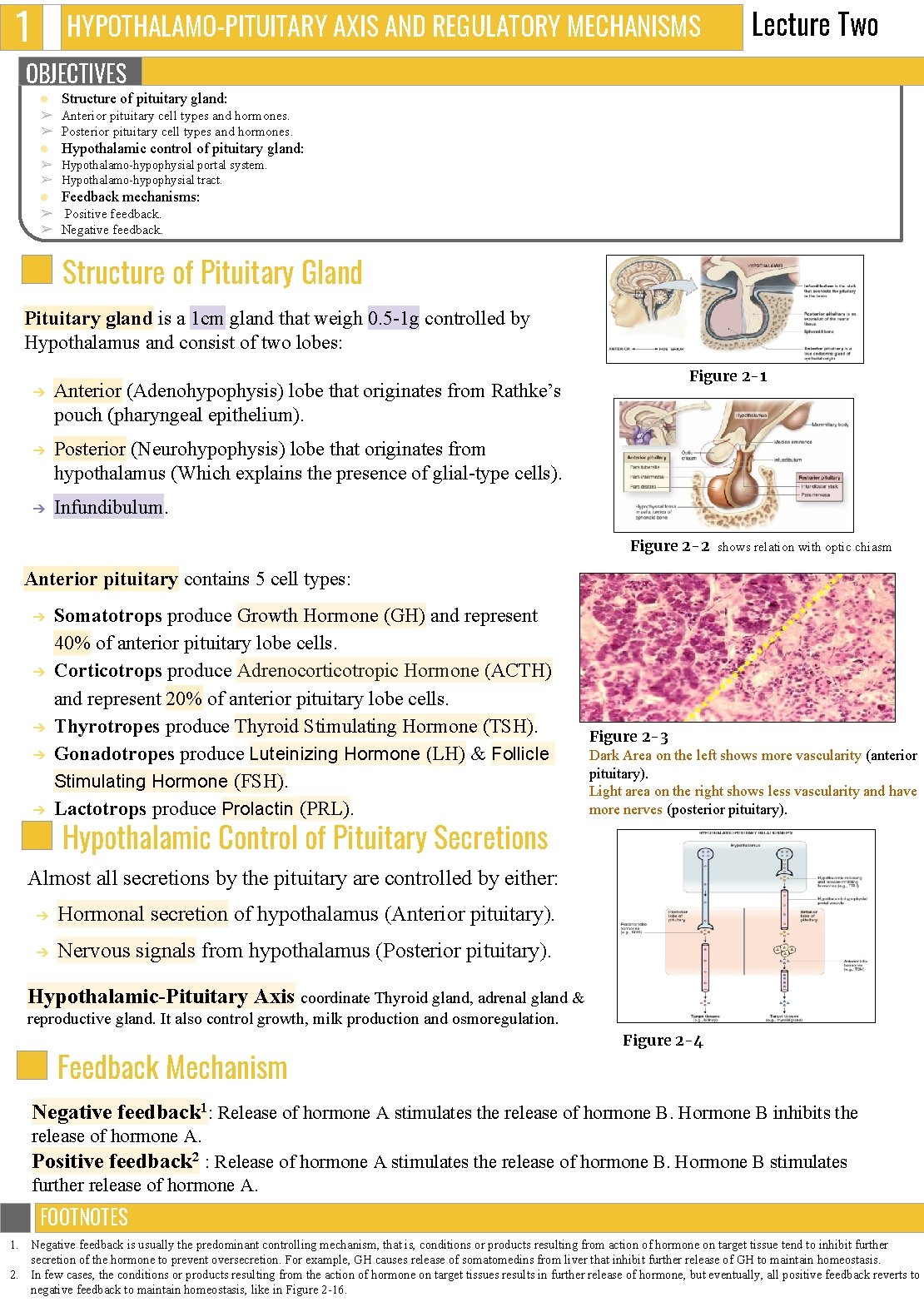
1 HYPOTHALAMO-PITUITARY AXIS AND REGULATORY MECHANISMS Lecture Two OBJECTIVES ● Structure of pituitary gland: ➢ Anterior pituitary cell types and hormones. ➢ Posterior pituitary cell types and hormones. ● Hypothalamic control of pituitary gland: ➢ Hypothalamo-hypophysial portal system. ➢ Hypothalamo-hypophysial tract. ● Feedback mechanisms: ➢ Positive feedback. ➢ Negative feedback. Structure of Pituitary Gland Pituitary gland is a 1 cm gland that weigh 0. 5 -1 g controlled by Hypothalamus and consist of two lobes: ➔ Anterior (Adenohypophysis) lobe that originates from Rathke’s pouch (pharyngeal epithelium). ➔ Posterior (Neurohypophysis) lobe that originates from hypothalamus (Which explains the presence of glial-type cells). ➔ Infundibulum. Figure 2 -1 Figure 2 -2 shows relation with optic chiasm Anterior pituitary contains 5 cell types: ➔ ➔ ➔ Somatotrops produce Growth Hormone (GH) and represent 40% of anterior pituitary lobe cells. Corticotrops produce Adrenocorticotropic Hormone (ACTH) and represent 20% of anterior pituitary lobe cells. Thyrotropes produce Thyroid Stimulating Hormone (TSH). Gonadotropes produce Luteinizing Hormone (LH) & Follicle Stimulating Hormone (FSH). Lactotrops produce Prolactin (PRL). Hypothalamic Control of Pituitary Secretions Figure 2 -3 Dark Area on the left shows more vascularity (anterior pituitary). Light area on the right shows less vascularity and have more nerves (posterior pituitary). Almost all secretions by the pituitary are controlled by either: ➔ Hormonal secretion of hypothalamus (Anterior pituitary). ➔ Nervous signals from hypothalamus (Posterior pituitary). Hypothalamic-Pituitary Axis coordinate Thyroid gland, adrenal gland & reproductive gland. It also control growth, milk production and osmoregulation. Feedback Mechanism Figure 2 -4 Negative feedback 1: Release of hormone A stimulates the release of hormone B. Hormone B inhibits the release of hormone A. Positive feedback 2 : Release of hormone A stimulates the release of hormone B. Hormone B stimulates further release of hormone A. FOOTNOTES 1. Negative feedback is usually the predominant controlling mechanism, that is, conditions or products resulting from action of hormone on target tissue tend to inhibit further secretion of the hormone to prevent oversecretion. For example, GH causes release of somatomedins from liver that inhibit further release of GH to maintain homeostasis. 2. In few cases, the conditions or products resulting from the action of hormone on target tissues results in further release of hormone, but eventually, all positive feedback reverts to negative feedback to maintain homeostasis, like in Figure 2 -16.
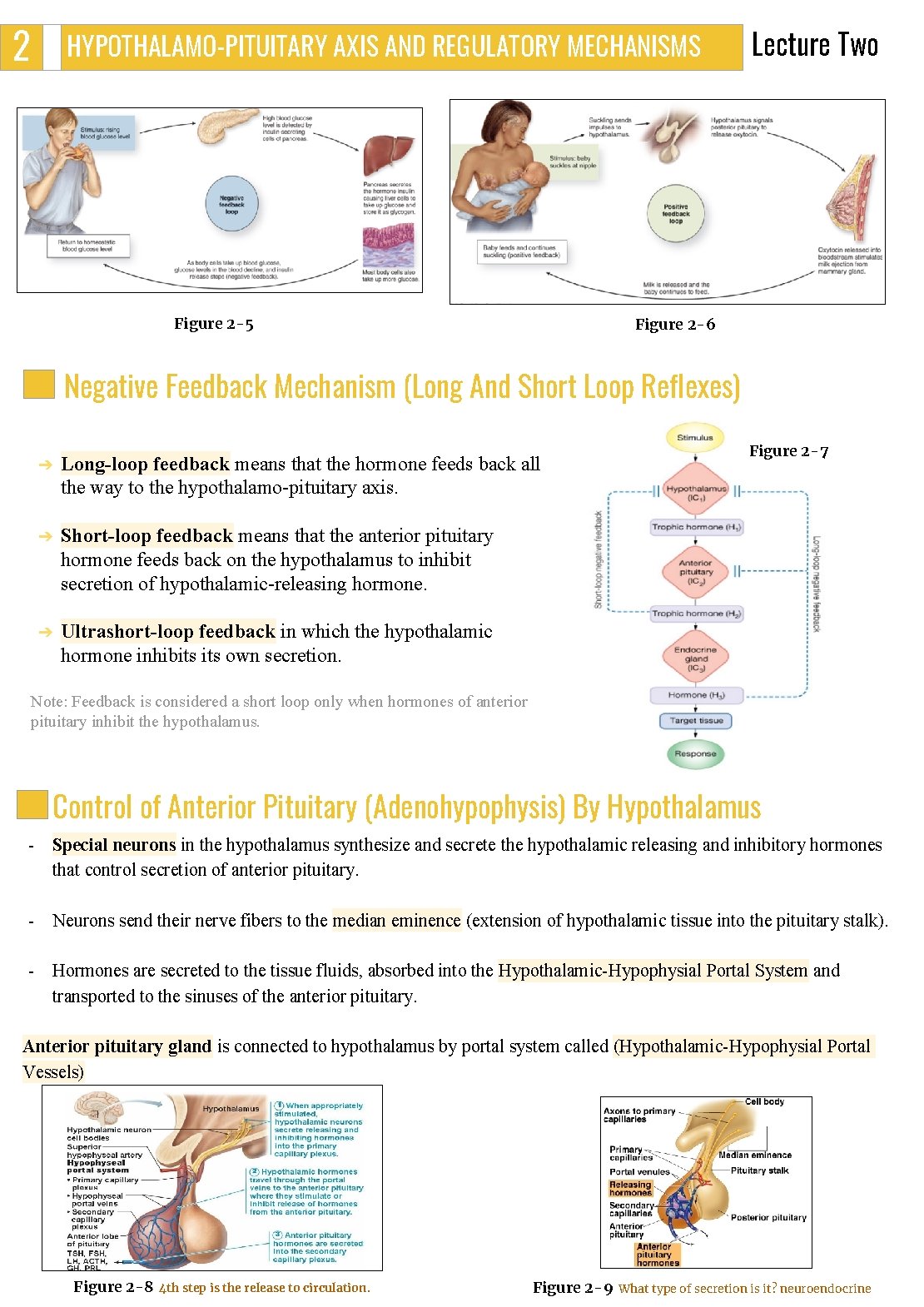
2 HYPOTHALAMO-PITUITARY AXIS AND REGULATORY MECHANISMS Figure 2 -5 Lecture Two Figure 2 -6 Negative Feedback Mechanism (Long And Short Loop Reflexes) ➔ Long-loop feedback means that the hormone feeds back all the way to the hypothalamo-pituitary axis. ➔ Short-loop feedback means that the anterior pituitary hormone feeds back on the hypothalamus to inhibit secretion of hypothalamic-releasing hormone. ➔ Ultrashort-loop feedback in which the hypothalamic hormone inhibits own secretion. Figure 2 -7 Note: Feedback is considered a short loop only when hormones of anterior pituitary inhibit the hypothalamus. Control of Anterior Pituitary (Adenohypophysis) By Hypothalamus - Special neurons in the hypothalamus synthesize and secrete the hypothalamic releasing and inhibitory hormones that control secretion of anterior pituitary. - Neurons send their nerve fibers to the median eminence (extension of hypothalamic tissue into the pituitary stalk). - Hormones are secreted to the tissue fluids, absorbed into the Hypothalamic-Hypophysial Portal System and transported to the sinuses of the anterior pituitary. Anterior pituitary gland is connected to hypothalamus by portal system called (Hypothalamic-Hypophysial Portal Vessels) Figure 2 -8 4 th step is the release to circulation. Figure 2 -9 What type of secretion is it? neuroendocrine
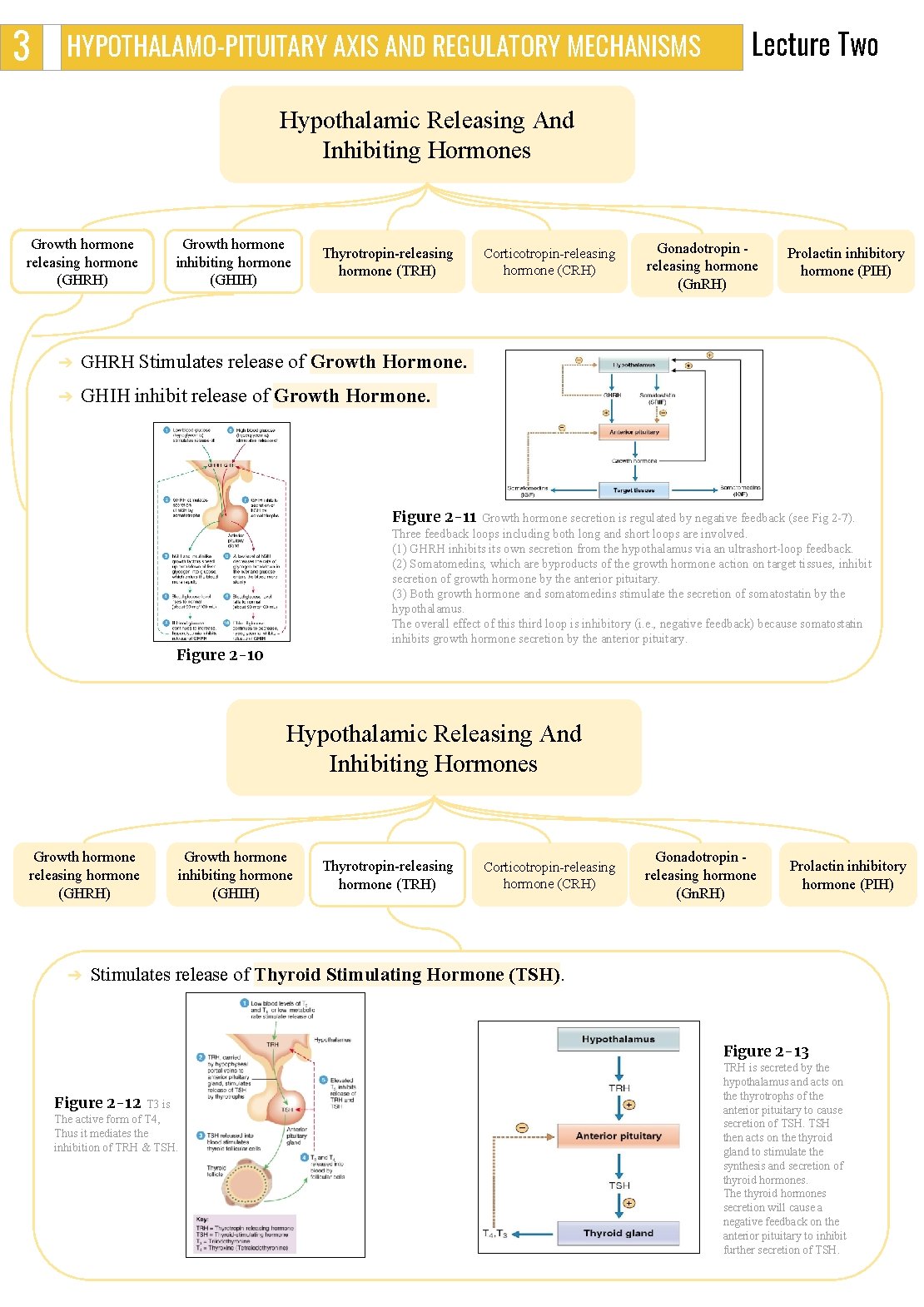
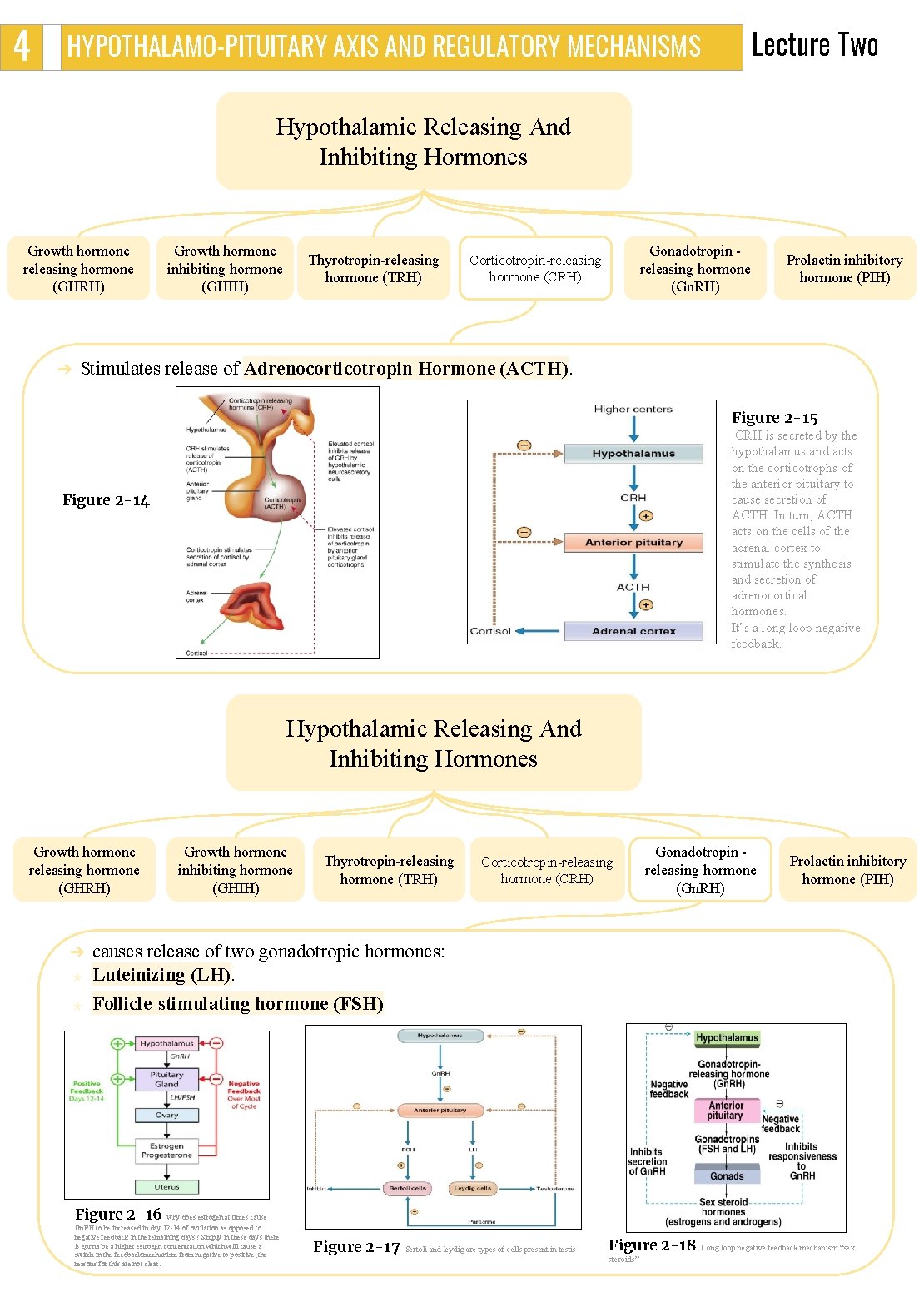
3 HYPOTHALAMO-PITUITARY AXIS AND REGULATORY MECHANISMS Lecture Two Hypothalamic Releasing And Inhibiting Hormones Growth hormone releasing hormone (GHRH) Growth hormone inhibiting hormone (GHIH) Thyrotropin-releasing hormone (TRH) ➔ GHRH Stimulates release of Growth Hormone. ➔ GHIH inhibit release of Growth Hormone. Corticotropin-releasing hormone (CRH) Gonadotropin releasing hormone (Gn. RH) Prolactin inhibitory hormone (PIH) Figure 2 -11 Growth hormone secretion is regulated by negative feedback (see Fig 2 -7). Three feedback loops including both long and short loops are involved. (1) GHRH inhibits own secretion from the hypothalamus via an ultrashort-loop feedback. (2) Somatomedins, which are byproducts of the growth hormone action on target tissues, inhibit secretion of growth hormone by the anterior pituitary. (3) Both growth hormone and somatomedins stimulate the secretion of somatostatin by the hypothalamus. The overall effect of this third loop is inhibitory (i. e. , negative feedback) because somatostatin inhibits growth hormone secretion by the anterior pituitary. Figure 2 -10 Hypothalamic Releasing And Inhibiting Hormones Growth hormone releasing hormone (GHRH) ➔ Growth hormone inhibiting hormone (GHIH) Thyrotropin-releasing hormone (TRH) Corticotropin-releasing hormone (CRH) Gonadotropin releasing hormone (Gn. RH) Prolactin inhibitory hormone (PIH) Stimulates release of Thyroid Stimulating Hormone (TSH). Figure 2 -13 Figure 2 -12 T 3 is The active form of T 4, Thus it mediates the inhibition of TRH & TSH. TRH is secreted by the hypothalamus and acts on the thyrotrophs of the anterior pituitary to cause secretion of TSH then acts on the thyroid gland to stimulate the synthesis and secretion of thyroid hormones. The thyroid hormones secretion will cause a negative feedback on the anterior pituitary to inhibit further secretion of TSH.
4 Lecture Two HYPOTHALAMO-PITUITARY AXIS AND REGULATORY MECHANISMS Hypothalamic Releasing And Inhibiting Hormones Growth hormone releasing hormone (GHRH) ➔ Growth hormone inhibiting hormone (GHIH) Thyrotropin-releasing hormone (TRH) Gonadotropin releasing hormone (Gn. RH) Corticotropin-releasing hormone (CRH) Prolactin inhibitory hormone (PIH) Stimulates release of Adrenocorticotropin Hormone (ACTH). Figure 2 -15 CRH is secreted by the hypothalamus and acts on the corticotrophs of the anterior pituitary to cause secretion of ACTH. In turn, ACTH acts on the cells of the adrenal cortex to stimulate the synthesis and secretion of adrenocortical hormones. It’s a long loop negative feedback. Figure 2 -14 Hypothalamic Releasing And Inhibiting Hormones Growth hormone releasing hormone (GHRH) Growth hormone inhibiting hormone (GHIH) Thyrotropin-releasing hormone (TRH) ★ causes release of two gonadotropic hormones: Luteinizing (LH). ★ Follicle-stimulating hormone (FSH) ➔ Corticotropin-releasing hormone (CRH) Gonadotropin releasing hormone (Gn. RH) Prolactin inhibitory hormone (PIH) Figure 2 -16 why does estrogen at times cause Gn. RH to be increased in day 12 -14 of ovulation as opposed to negative feedback in the remaining days? Simply in these days there is gonna be a higher estrogen concentration which will cause a switch in the feedback mechanism from negative to positive, the reasons for this are not clear. Figure 2 -17 Sertoli and leydig are types of cells present in testis Figure 2 -18 steroids” Long loop negative feedback mechanism “sex
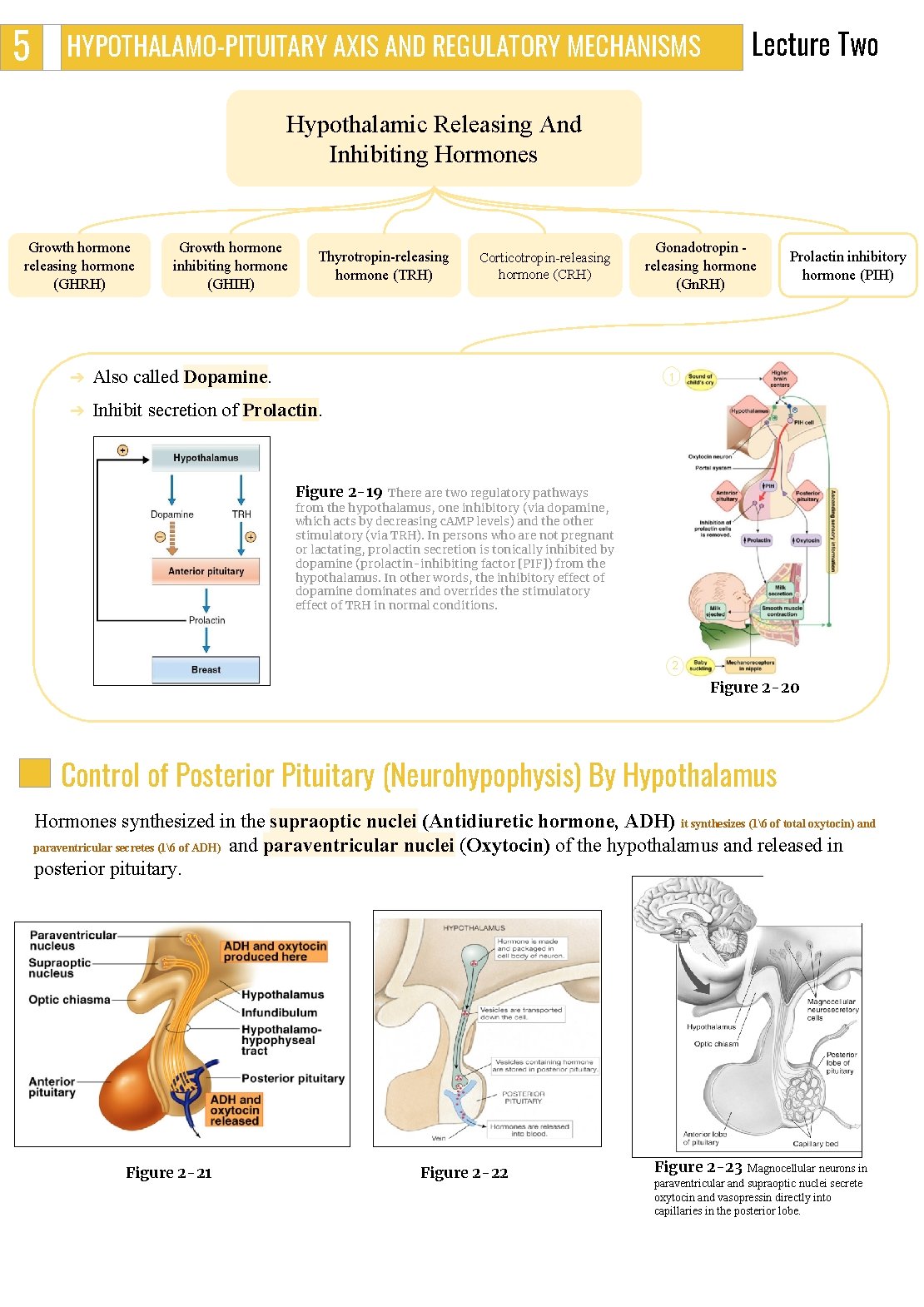
5 Lecture Two HYPOTHALAMO-PITUITARY AXIS AND REGULATORY MECHANISMS Hypothalamic Releasing And Inhibiting Hormones Growth hormone releasing hormone (GHRH) Growth hormone inhibiting hormone (GHIH) Thyrotropin-releasing hormone (TRH) ➔ Also called Dopamine. ➔ Inhibit secretion of Prolactin. Corticotropin-releasing hormone (CRH) Gonadotropin releasing hormone (Gn. RH) Prolactin inhibitory hormone (PIH) 1 Figure 2 -19 There are two regulatory pathways from the hypothalamus, one inhibitory (via dopamine, which acts by decreasing c. AMP levels) and the other stimulatory (via TRH). In persons who are not pregnant or lactating, prolactin secretion is tonically inhibited by dopamine (prolactin-inhibiting factor [PIF]) from the hypothalamus. In other words, the inhibitory effect of dopamine dominates and overrides the stimulatory effect of TRH in normal conditions. 2 Figure 2 -20 Control of Posterior Pituitary (Neurohypophysis) By Hypothalamus Hormones synthesized in the supraoptic nuclei (Antidiuretic hormone, ADH) it synthesizes (16 of total oxytocin) and paraventricular secretes (16 of ADH) and paraventricular nuclei (Oxytocin) of the hypothalamus and released in posterior pituitary. Figure 2 -21 Figure 2 -22 Figure 2 -23 Magnocellular neurons in paraventricular and supraoptic nuclei secrete oxytocin and vasopressin directly into capillaries in the posterior lobe.
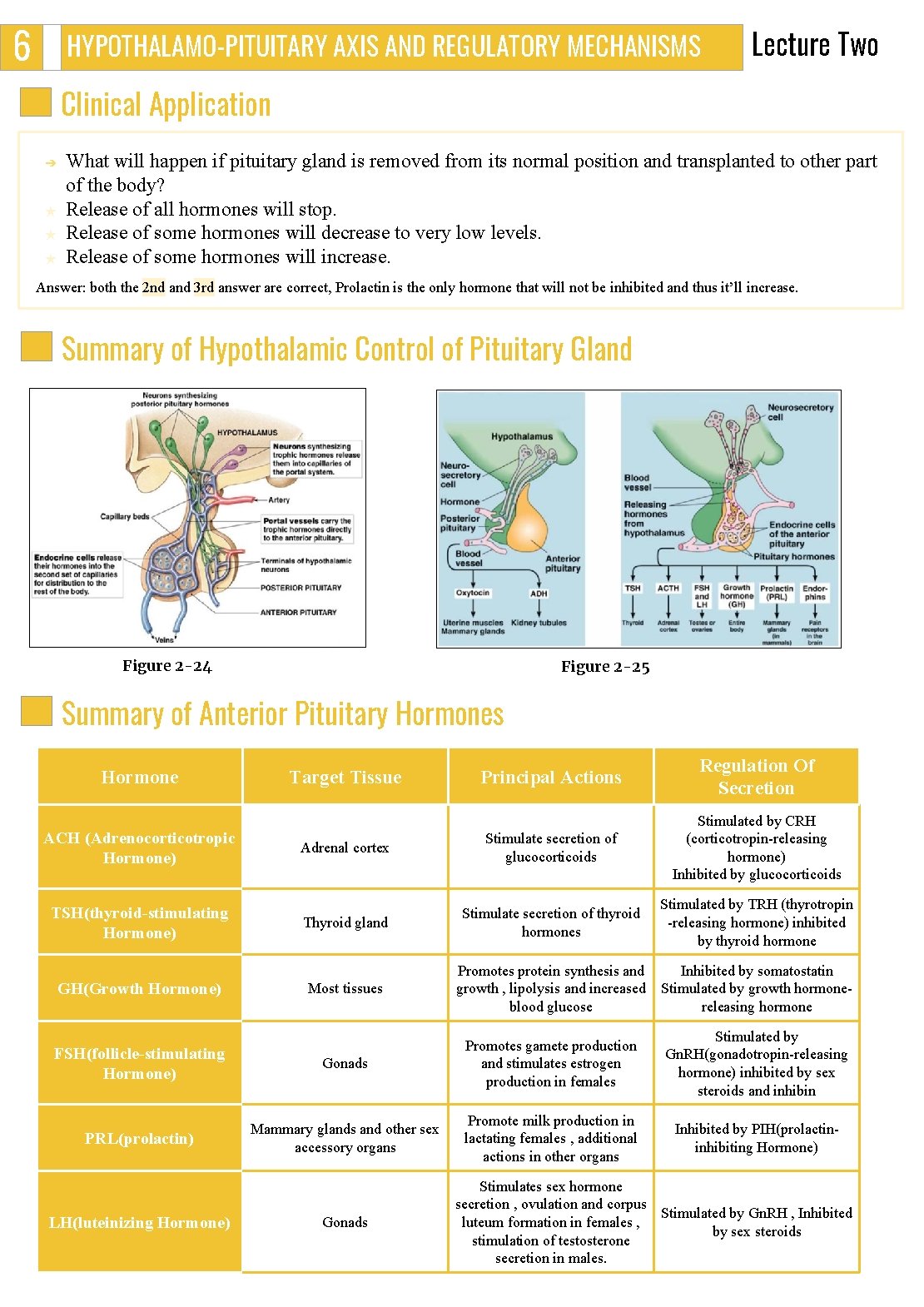
6 HYPOTHALAMO-PITUITARY AXIS AND REGULATORY MECHANISMS Lecture Two Clinical Application ➔ ★ ★ ★ What will happen if pituitary gland is removed from its normal position and transplanted to other part of the body? Release of all hormones will stop. Release of some hormones will decrease to very low levels. Release of some hormones will increase. Answer: both the 2 nd and 3 rd answer are correct, Prolactin is the only hormone that will not be inhibited and thus it’ll increase. Summary of Hypothalamic Control of Pituitary Gland Figure 2 -24 Figure 2 -25 Summary of Anterior Pituitary Hormones Hormone ACH (Adrenocorticotropic Hormone) TSH(thyroid-stimulating Hormone) GH(Growth Hormone) Principal Actions Regulation Of Secretion Adrenal cortex Stimulate secretion of glucocorticoids Stimulated by CRH (corticotropin-releasing hormone) Inhibited by glucocorticoids Thyroid gland Stimulate secretion of thyroid hormones Stimulated by TRH (thyrotropin -releasing hormone) inhibited by thyroid hormone Target Tissue Most tissues Promotes protein synthesis and Inhibited by somatostatin growth , lipolysis and increased Stimulated by growth hormoneblood glucose releasing hormone FSH(follicle-stimulating Hormone) Gonads Promotes gamete production and stimulates estrogen production in females PRL(prolactin) Mammary glands and other sex accessory organs Promote milk production in lactating females , additional actions in other organs LH(luteinizing Hormone) Gonads Stimulated by Gn. RH(gonadotropin-releasing hormone) inhibited by sex steroids and inhibin Inhibited by PIH(prolactininhibiting Hormone) Stimulates sex hormone secretion , ovulation and corpus Stimulated by Gn. RH , Inhibited luteum formation in females , by sex steroids stimulation of testosterone secretion in males.
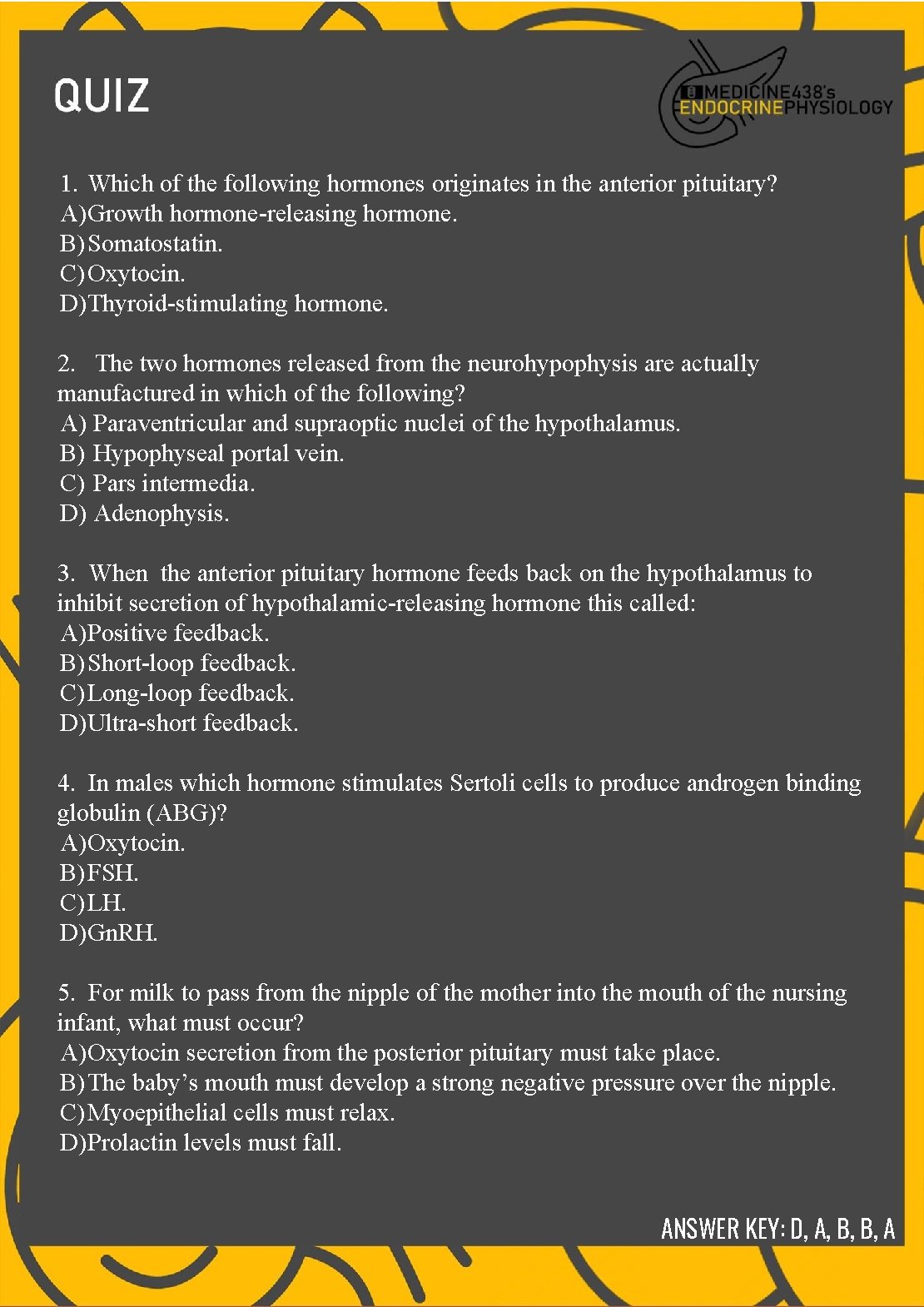
1. Which of the following hormones originates in the anterior pituitary? A)Growth hormone-releasing hormone. B) Somatostatin. C) Oxytocin. D)Thyroid-stimulating hormone. 2. The two hormones released from the neurohypophysis are actually manufactured in which of the following? A) Paraventricular and supraoptic nuclei of the hypothalamus. B) Hypophyseal portal vein. C) Pars intermedia. D) Adenophysis. 3. When the anterior pituitary hormone feeds back on the hypothalamus to inhibit secretion of hypothalamic-releasing hormone this called: A)Positive feedback. B) Short-loop feedback. C) Long-loop feedback. D)Ultra-short feedback. 4. In males which hormone stimulates Sertoli cells to produce androgen binding globulin (ABG)? A)Oxytocin. B) FSH. C) LH. D)Gn. RH. 5. For milk to pass from the nipple of the mother into the mouth of the nursing infant, what must occur? A)Oxytocin secretion from the posterior pituitary must take place. B) The baby’s mouth must develop a strong negative pressure over the nipple. C) Myoepithelial cells must relax. D)Prolactin levels must fall. ANSWER KEY: D, A, B, B, A
Taif Alshammari FEMALE PHYSIOLOGY CO-LEADERS Maha Alnahdi, Taif Alshammari MALE PHYSIOLOGY CO-LEADERS Nayef Alsaber, Hameed M. Humaid REFERENCES - Guyton and Hall Textbook of Medical Physiology - Ganong’s Review of Medical Physiology