
Lecture course Electronic structure of topological insulators and
- Slides: 55
Lecture course. Electronic structure of topological insulators and superconductors Part 2: Superconductivity in topologically nontrivial systems A. S. Mel’nikov Institute for Physics of Microstructures RAS Nizhny Novgorod, Russia
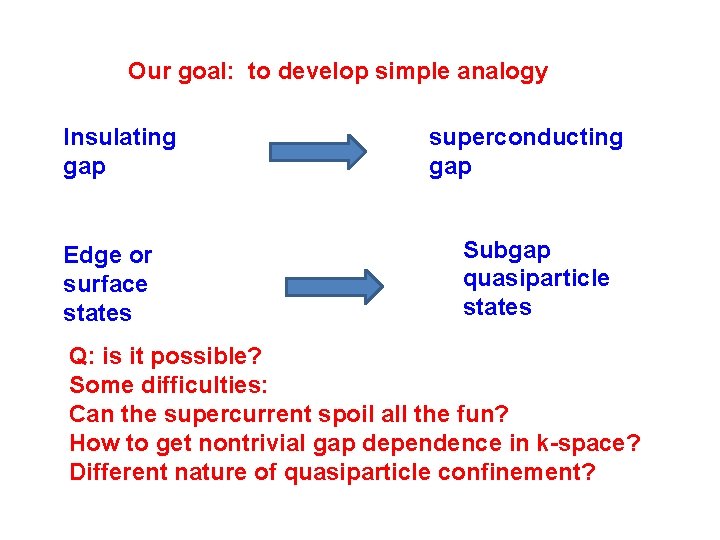
Our goal: to develop simple analogy Insulating gap Edge or surface states superconducting gap Subgap quasiparticle states Q: is it possible? Some difficulties: Can the supercurrent spoil all the fun? How to get nontrivial gap dependence in k-space? Different nature of quasiparticle confinement?
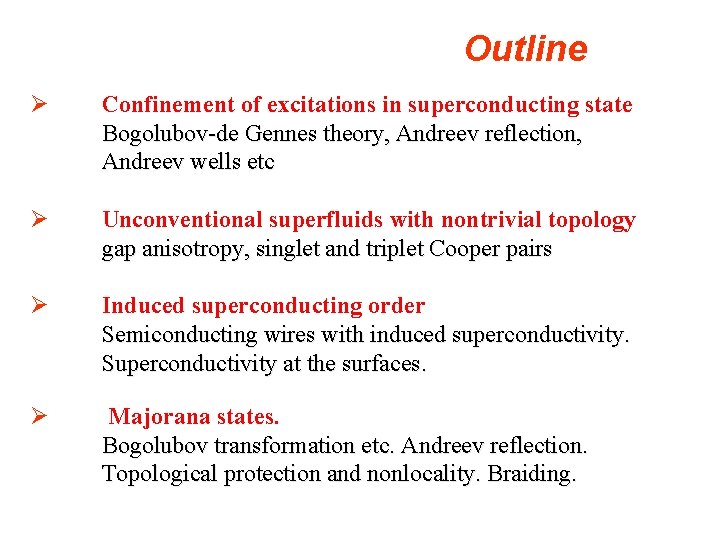
Outline Ø Confinement of excitations in superconducting state Bogolubov-de Gennes theory, Andreev reflection, Andreev wells etc Ø Unconventional superfluids with nontrivial topology gap anisotropy, singlet and triplet Cooper pairs Ø Induced superconducting order Semiconducting wires with induced superconductivity. Superconductivity at the surfaces. Ø Majorana states. Bogolubov transformation etc. Andreev reflection. Topological protection and nonlocality. Braiding.
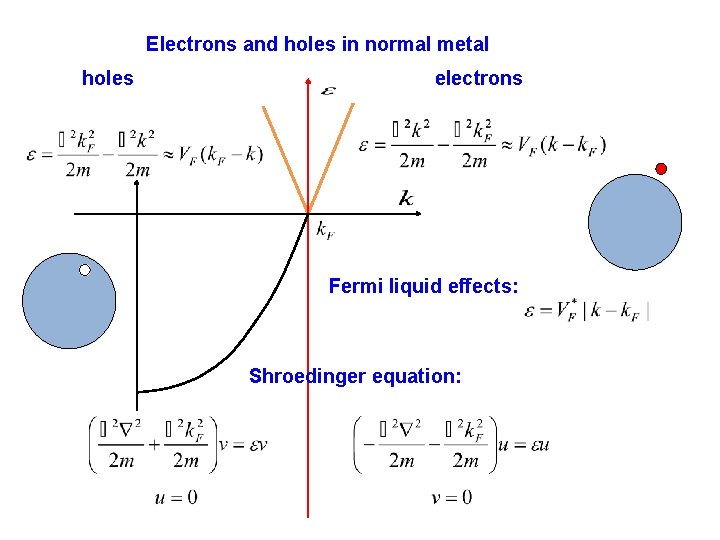
Electrons and holes in normal metal holes electrons Fermi liquid effects: Shroedinger equation:
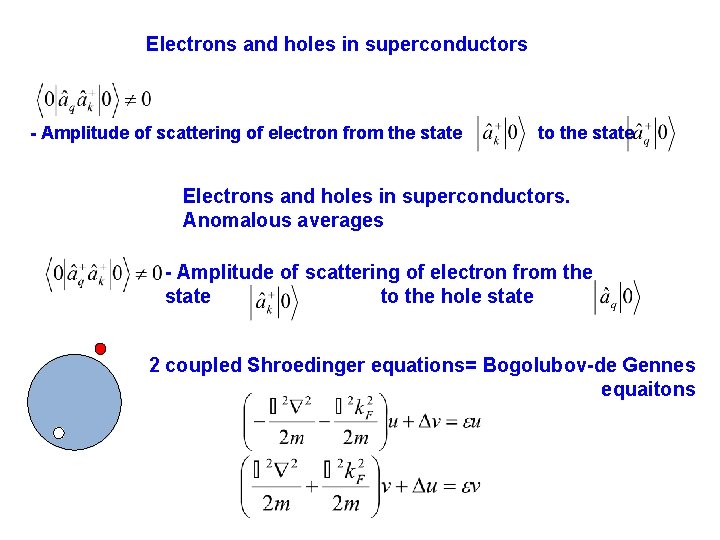
Electrons and holes in superconductors - Amplitude of scattering of electron from the state to the state Electrons and holes in superconductors. Anomalous averages - Amplitude of scattering of electron from the state to the hole state 2 coupled Shroedinger equations= Bogolubov-de Gennes equaitons
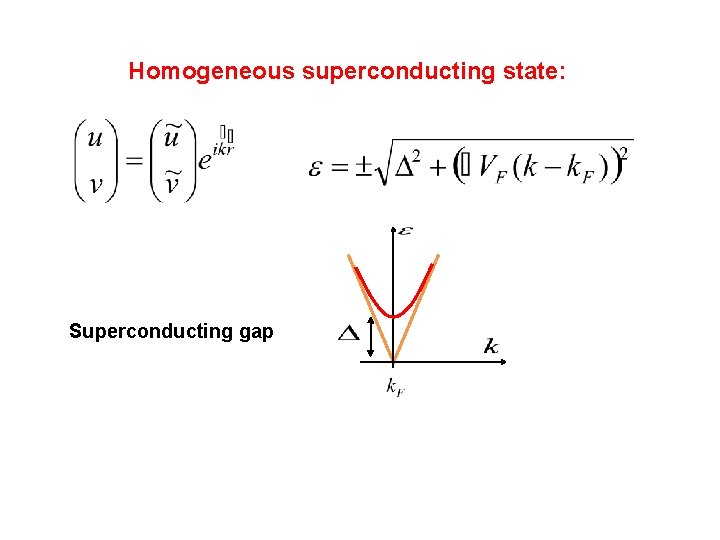
Homogeneous superconducting state: Superconducting gap
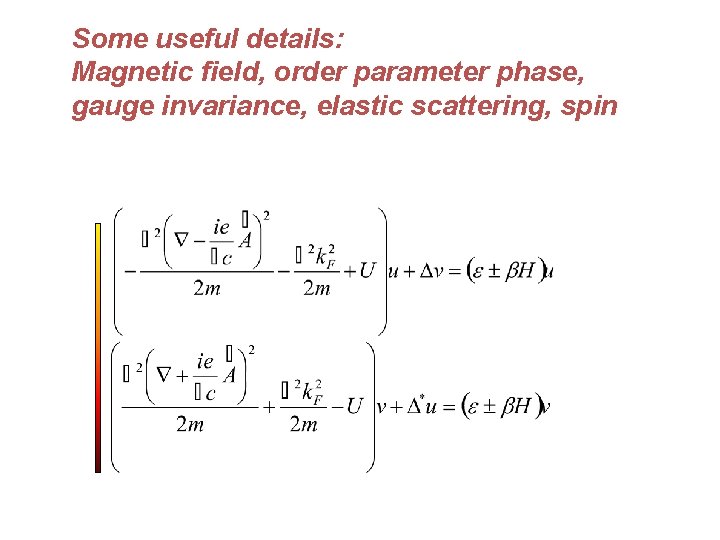
Some useful details: Magnetic field, order parameter phase, gauge invariance, elastic scattering, spin
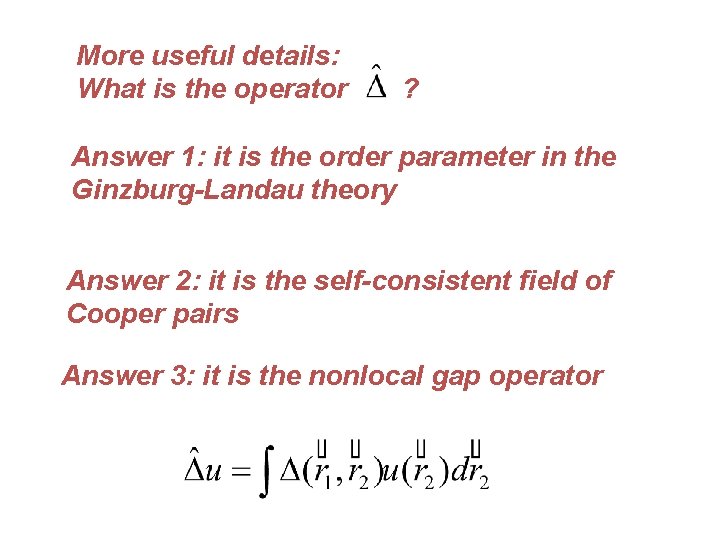
More useful details: What is the operator ? Answer 1: it is the order parameter in the Ginzburg-Landau theory Answer 2: it is the self-consistent field of Cooper pairs Answer 3: it is the nonlocal gap operator
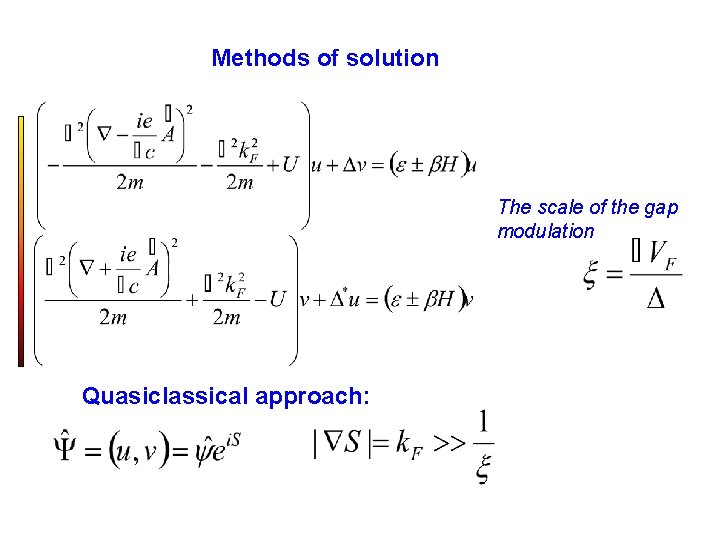
Methods of solution The scale of the gap modulation Quasiclassical approach:
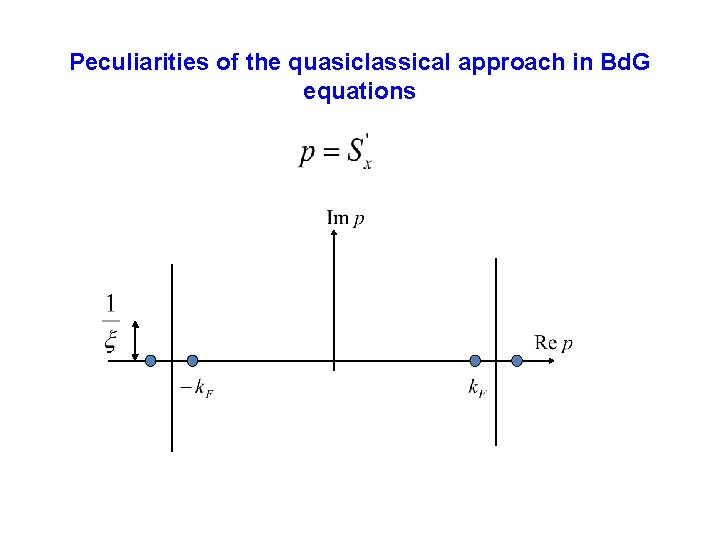
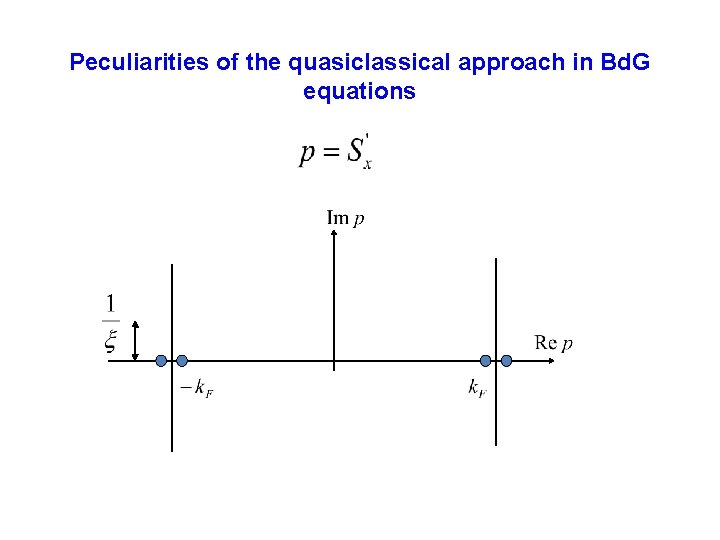
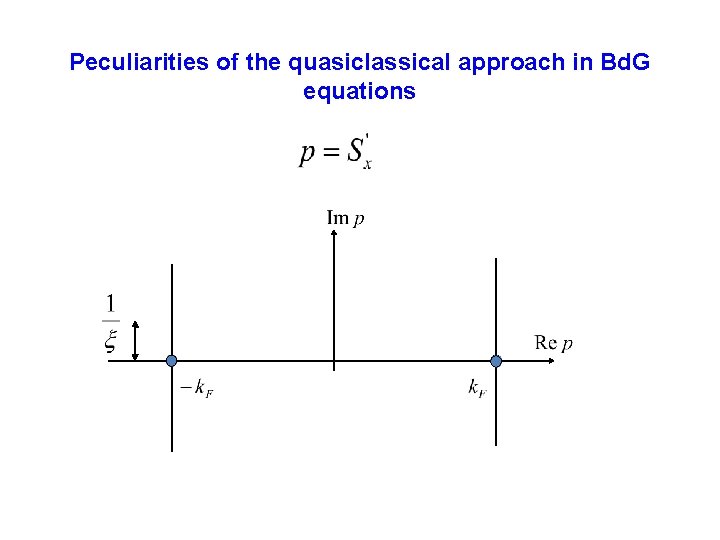
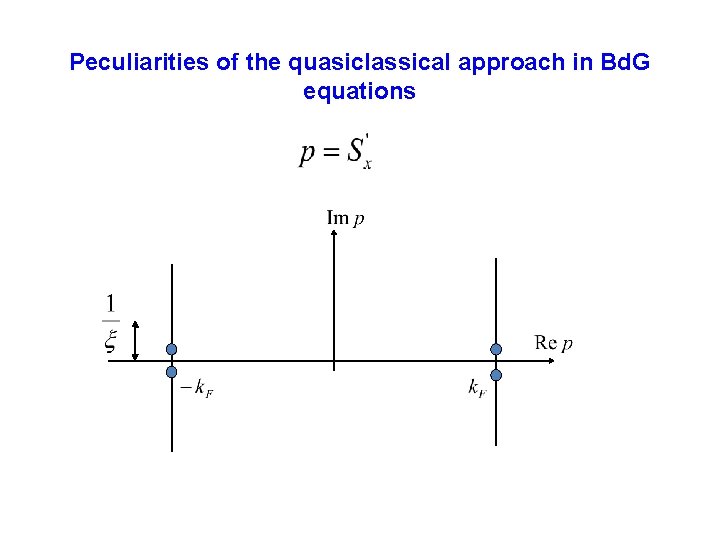
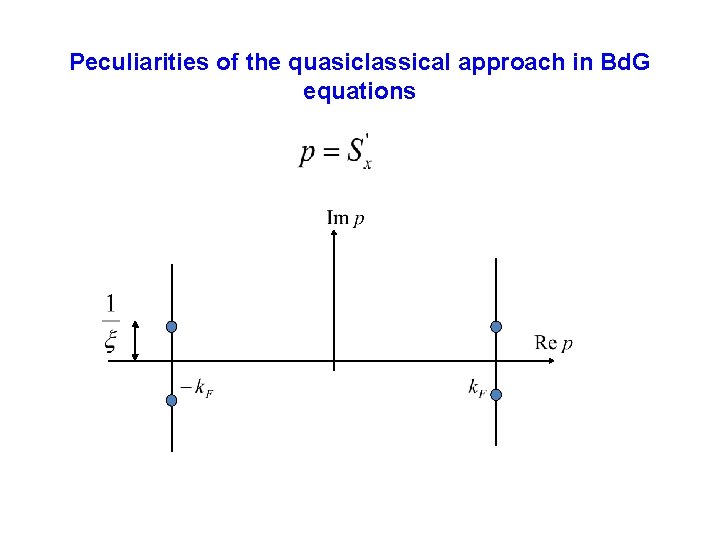
Peculiarities of the quasiclassical approach in Bd. G equations
Peculiarities of the quasiclassical approach in Bd. G equations
Peculiarities of the quasiclassical approach in Bd. G equations
Peculiarities of the quasiclassical approach in Bd. G equations
Peculiarities of the quasiclassical approach in Bd. G equations
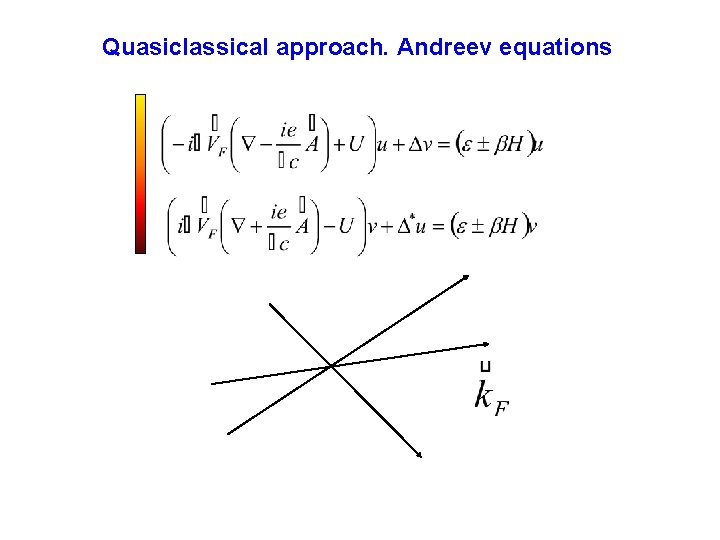
Quasiclassical approach. Andreev equations
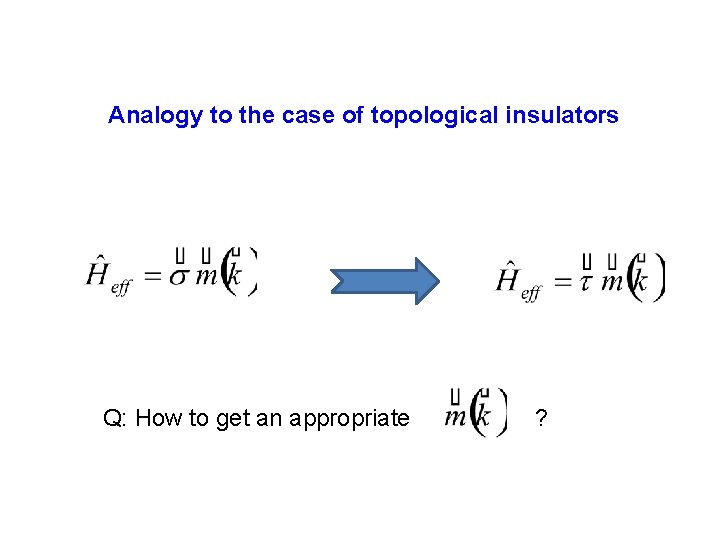
Analogy to the case of topological insulators Q: How to get an appropriate ?
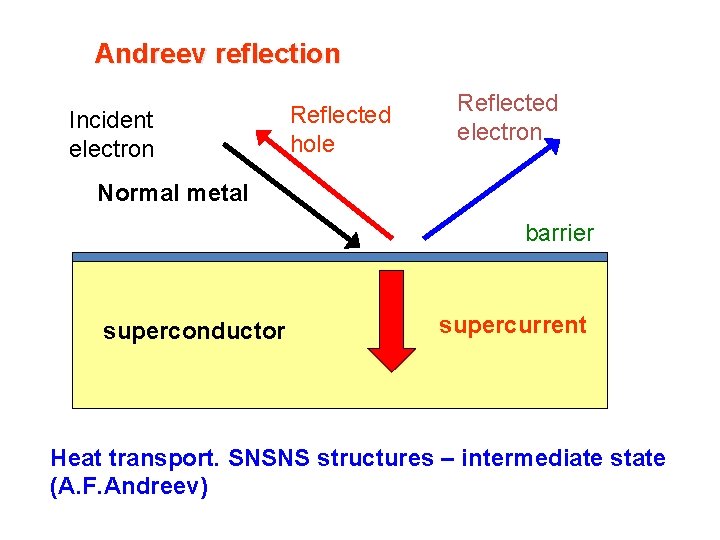
Andreev reflection Incident electron Reflected hole Reflected electron Normal metal barrier superconductor supercurrent Heat transport. SNSNS structures – intermediate state (A. F. Andreev)
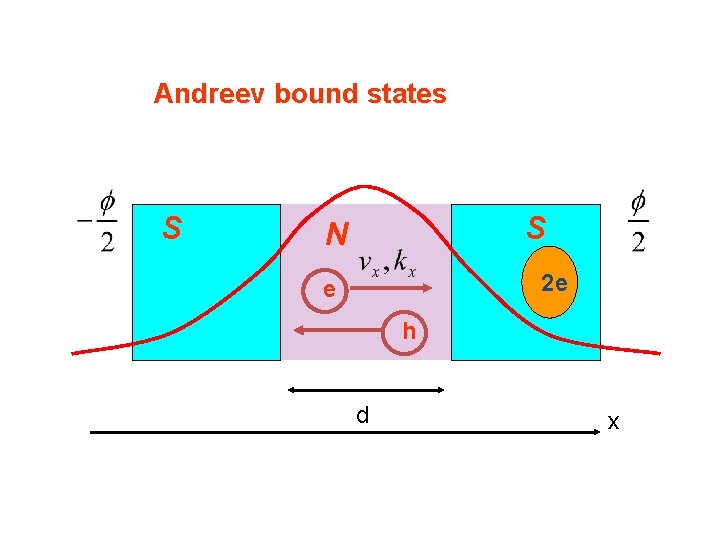
Andreev bound states S S N 2 e e h d x
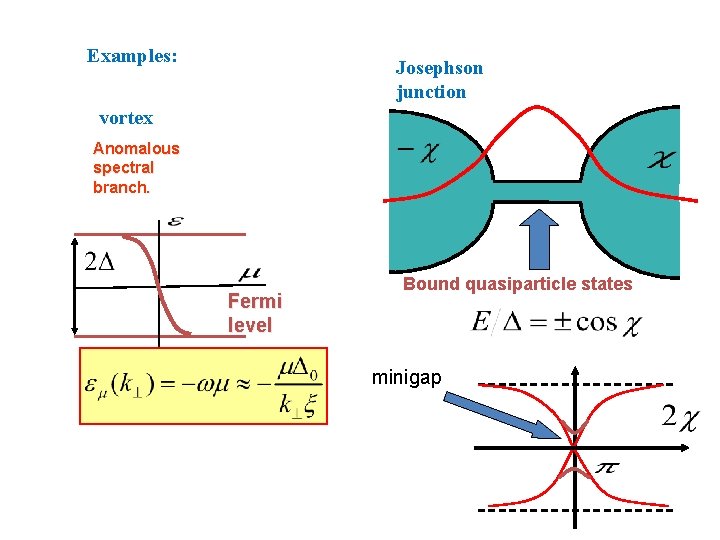
Examples: Josephson junction vortex Anomalous spectral branch. Fermi level Bound quasiparticle states minigap
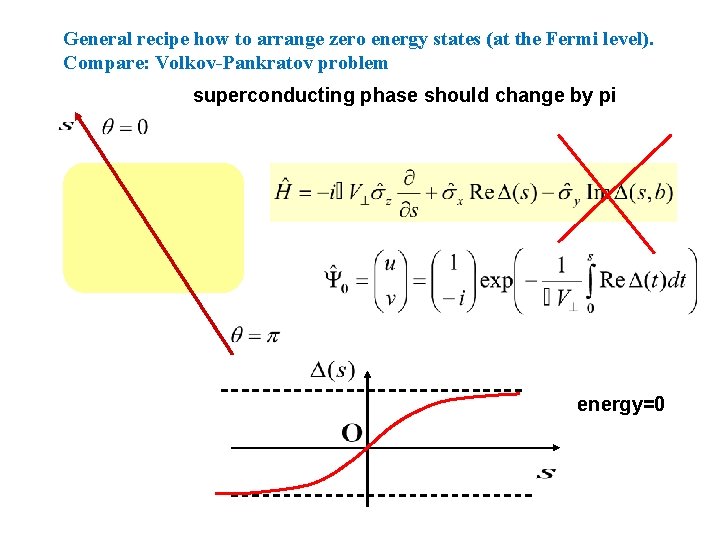
General recipe how to arrange zero energy states (at the Fermi level). Compare: Volkov-Pankratov problem superconducting phase should change by pi energy=0
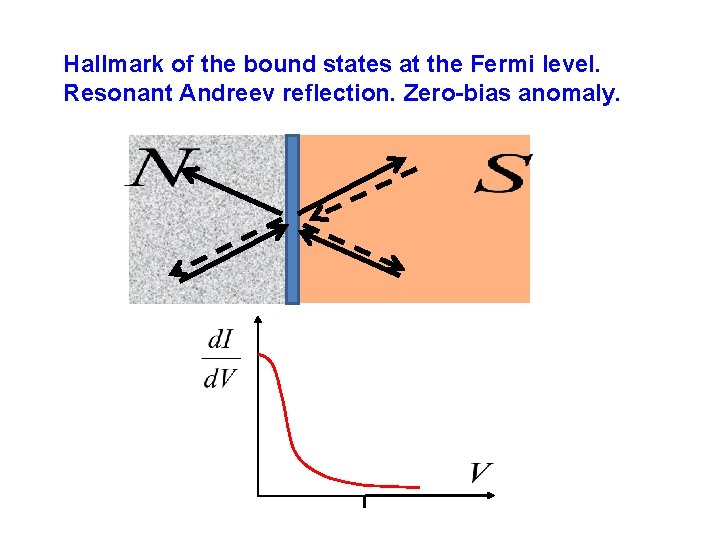
Hallmark of the bound states at the Fermi level. Resonant Andreev reflection. Zero-bias anomaly.
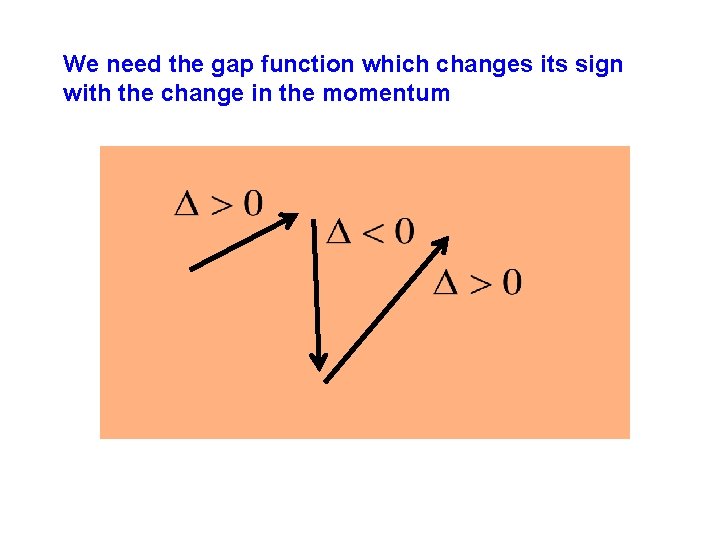
We need the gap function which changes its sign with the change in the momentum
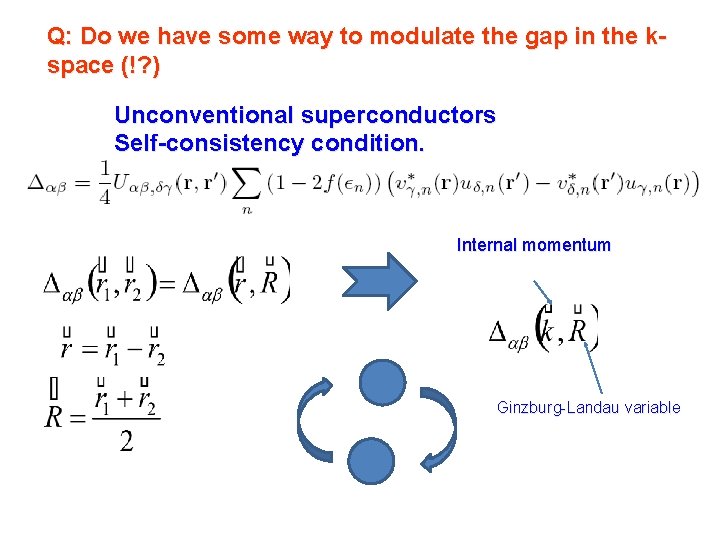
Q: Do we have some way to modulate the gap in the kspace (!? ) Unconventional superconductors Self-consistency condition. Internal momentum Ginzburg-Landau variable
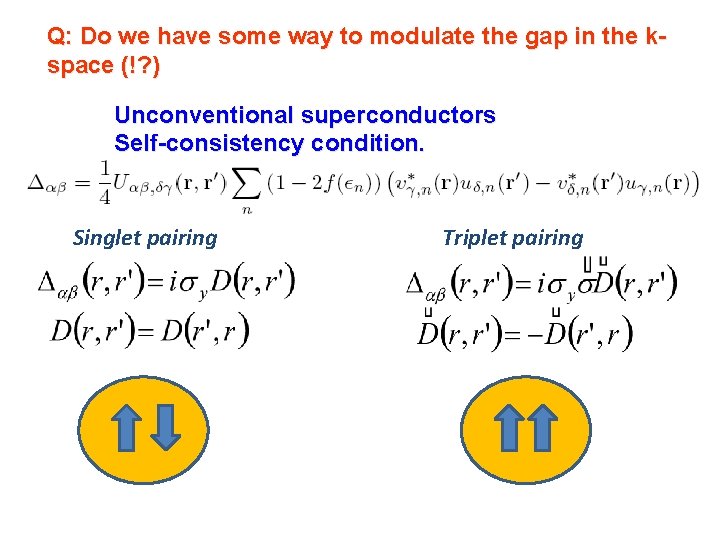
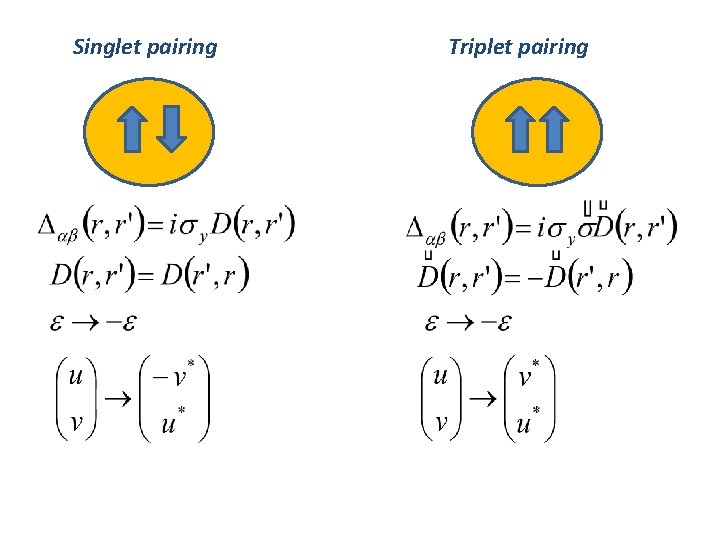
Q: Do we have some way to modulate the gap in the kspace (!? ) Unconventional superconductors Self-consistency condition. Singlet pairing Triplet pairing
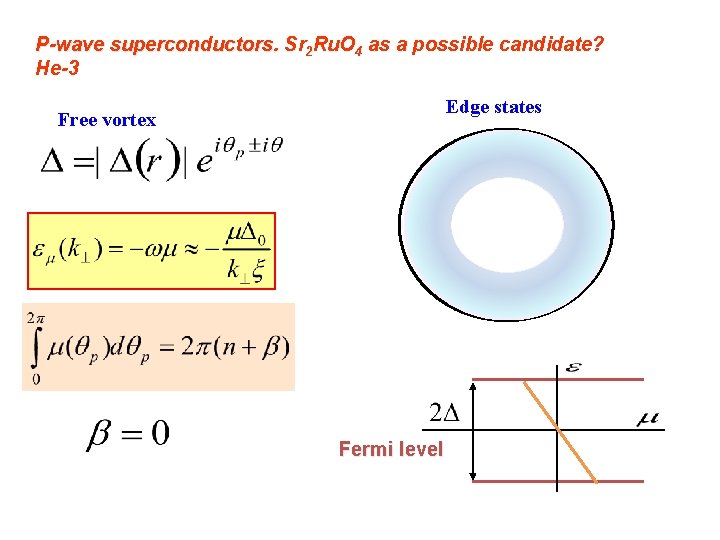
P-wave superconductors. Sr 2 Ru. O 4 as a possible candidate? He-3 Edge states Free vortex Fermi level
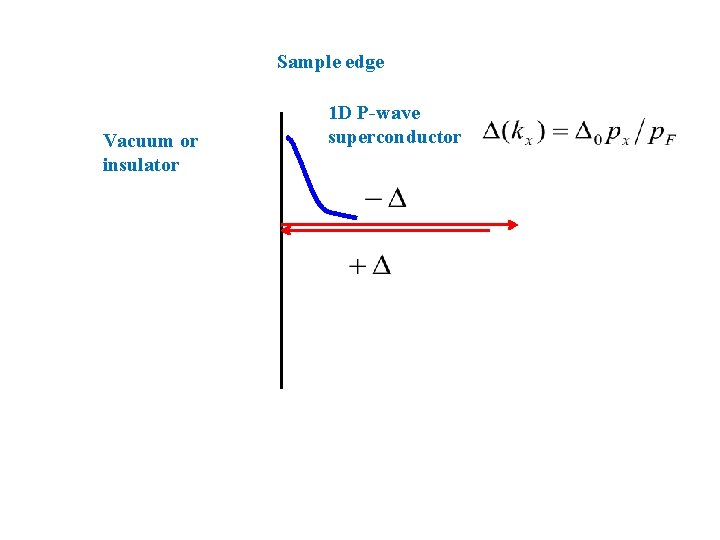
Sample edge Vacuum or insulator 1 D P-wave superconductor
Another possibility to get topologically nontrivial systems: Creating the systems with induced superconducting order to engineer the properties of new superconducting materials 27
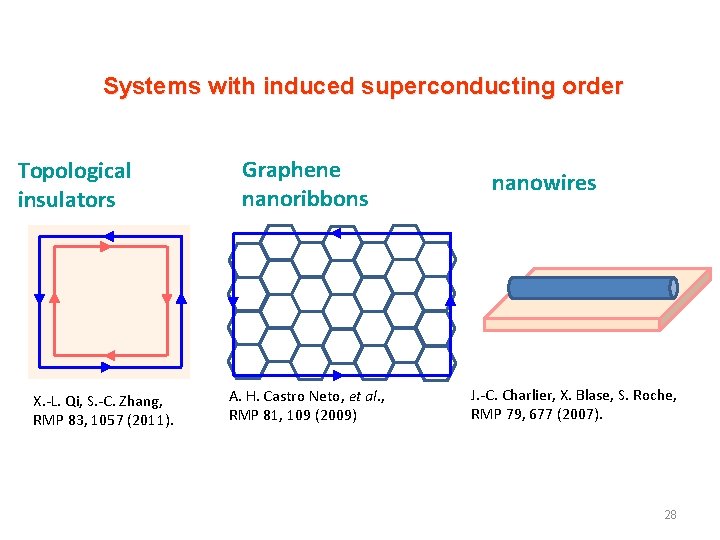
Systems with induced superconducting order Topological insulators X. -L. Qi, S. -C. Zhang, RMP 83, 1057 (2011). Graphene nanoribbons A. H. Castro Neto, et al. , RMP 81, 109 (2009) nanowires J. -C. Charlier, X. Blase, S. Roche, RMP 79, 677 (2007). 28
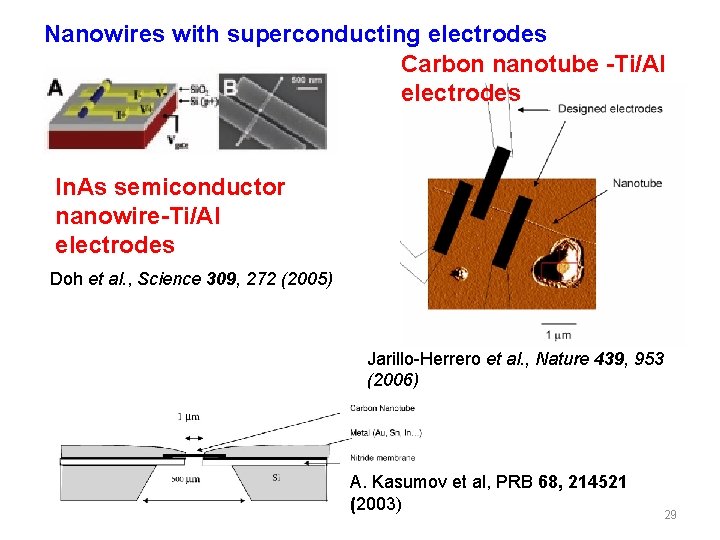
Nanowires with superconducting electrodes Carbon nanotube -Ti/Al electrodes In. As semiconductor nanowire-Ti/Al electrodes Doh et al. , Science 309, 272 (2005) Jarillo-Herrero et al. , Nature 439, 953 (2006) A. Kasumov et al, PRB 68, 214521 (2003) 29
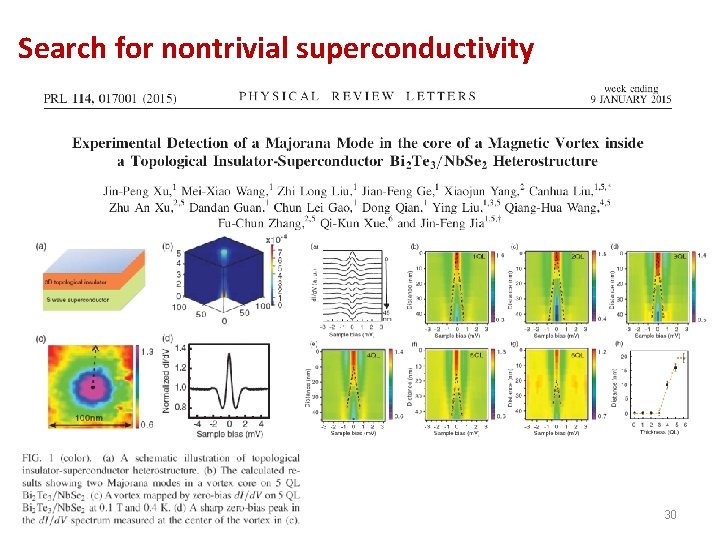
Search for nontrivial superconductivity 30
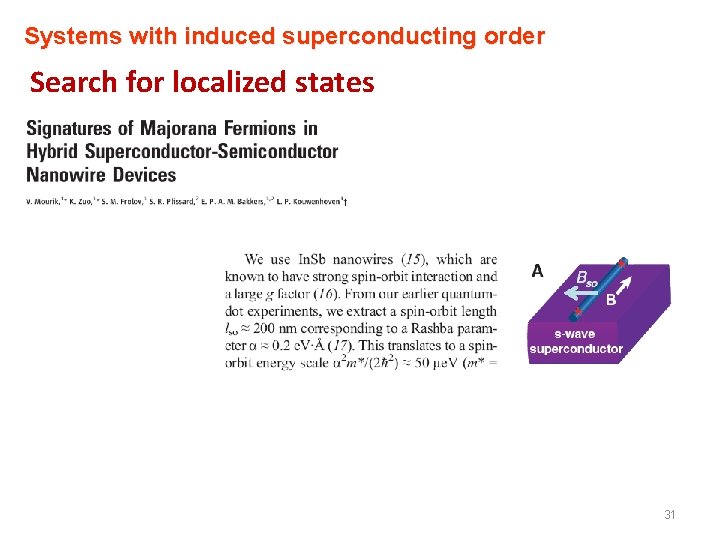
Systems with induced superconducting order Search for localized states 31
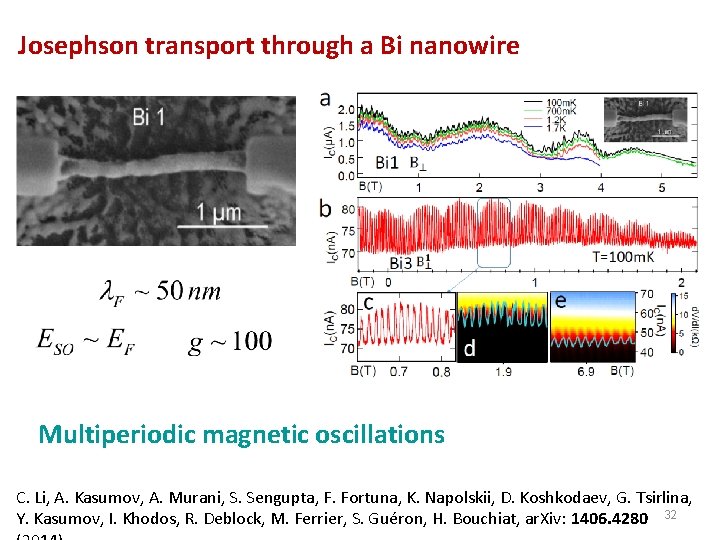
Josephson transport through a Bi nanowire Multiperiodic magnetic oscillations C. Li, A. Kasumov, A. Murani, S. Sengupta, F. Fortuna, K. Napolskii, D. Koshkodaev, G. Tsirlina, Y. Kasumov, I. Khodos, R. Deblock, M. Ferrier, S. Guéron, H. Bouchiat, ar. Xiv: 1406. 4280 32
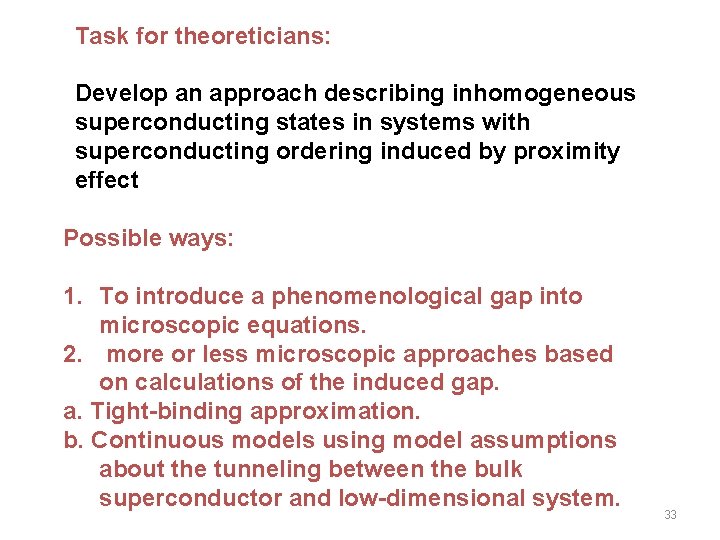
Task for theoreticians: Develop an approach describing inhomogeneous superconducting states in systems with superconducting ordering induced by proximity effect Possible ways: 1. To introduce a phenomenological gap into microscopic equations. 2. more or less microscopic approaches based on calculations of the induced gap. a. Tight-binding approximation. b. Continuous models using model assumptions about the tunneling between the bulk superconductor and low-dimensional system. 33
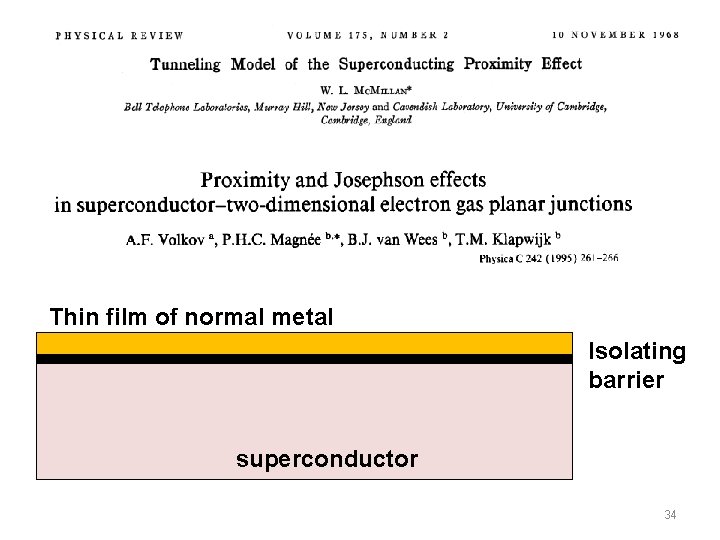
Thin film of normal metal Isolating barrier superconductor 34
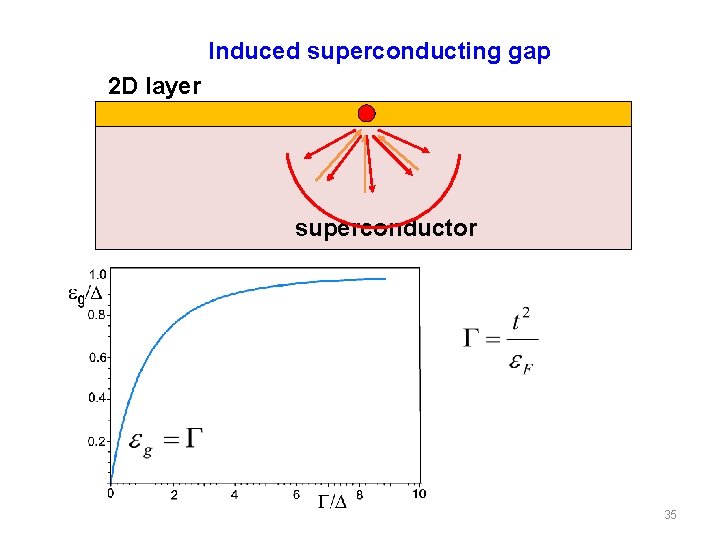
Induced superconducting gap 2 D layer superconductor 35
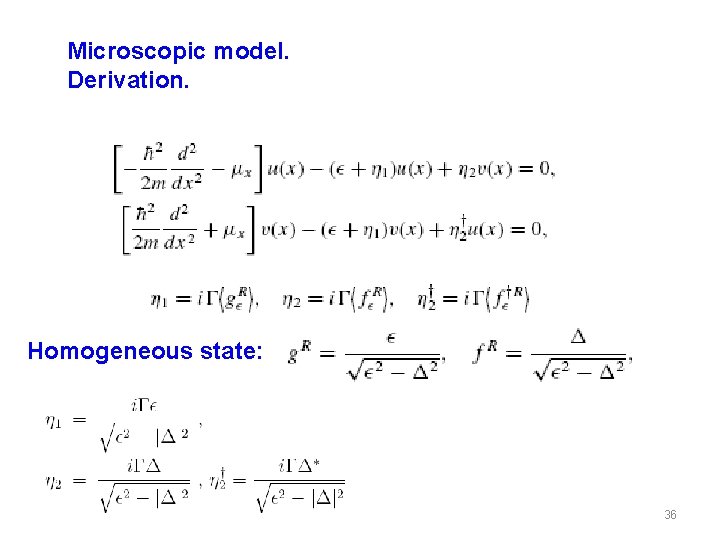
Microscopic model. Derivation. Homogeneous state: 36
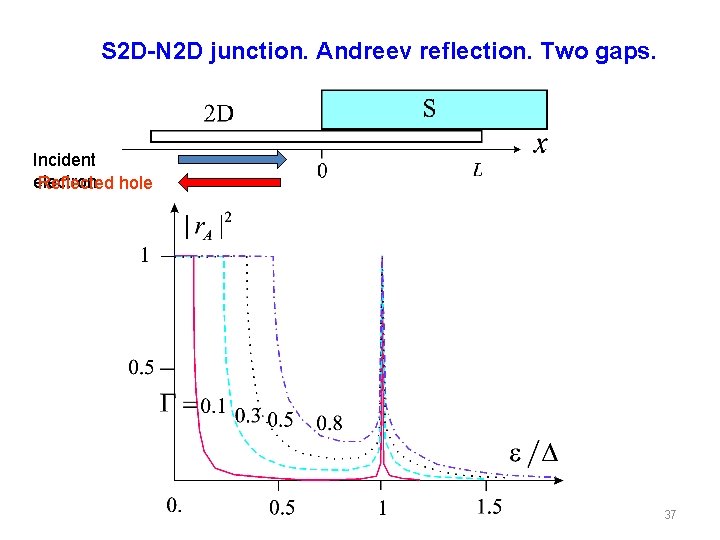
S 2 D-N 2 D junction. Andreev reflection. Two gaps. Incident electron Reflected hole 37
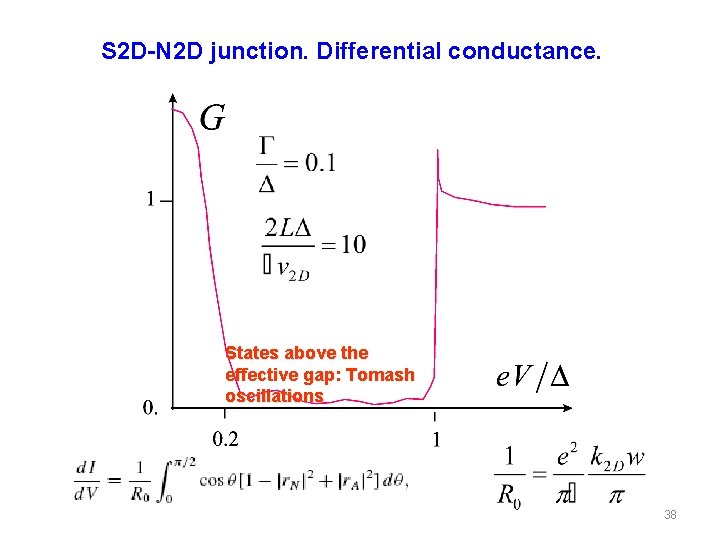
S 2 D-N 2 D junction. Differential conductance. States above the effective gap: Tomash oscillations 38
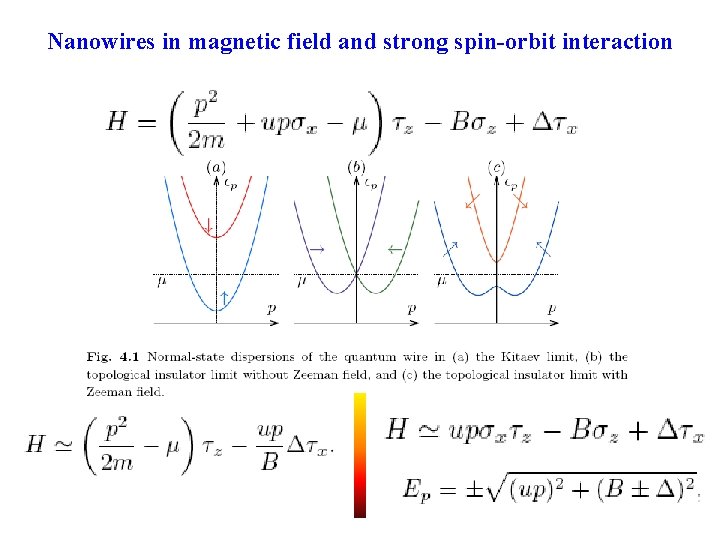
Nanowires in magnetic field and strong spin-orbit interaction
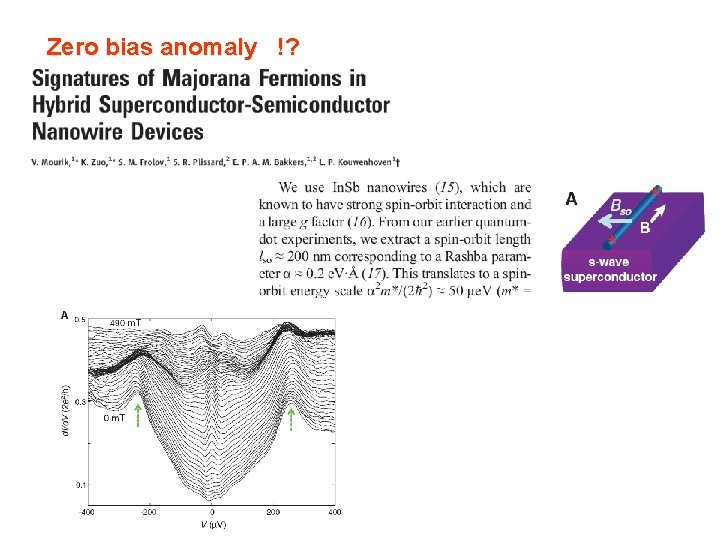
Zero bias anomaly !?
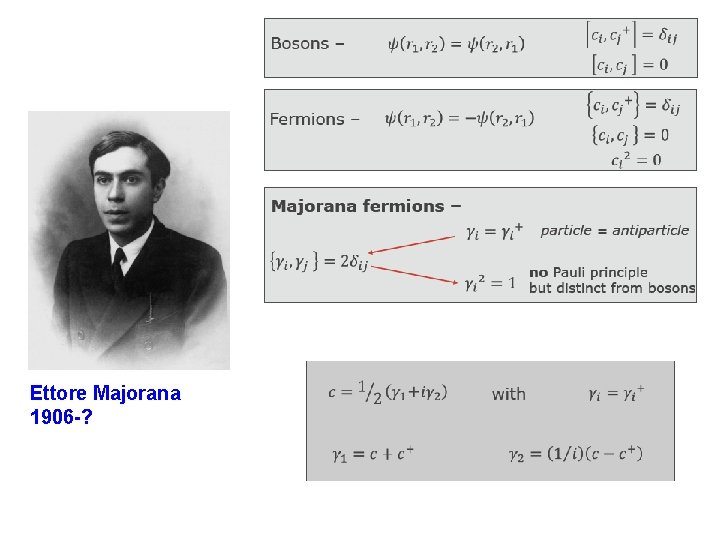
Ettore Majorana 1906 -?
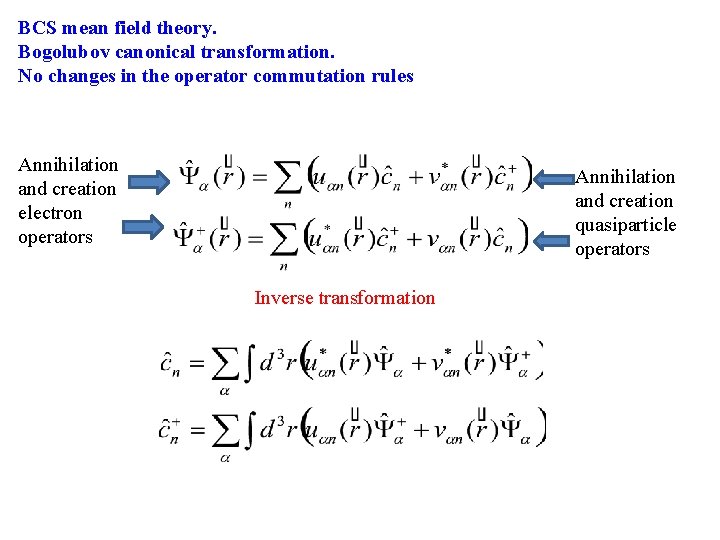
BCS mean field theory. Bogolubov canonical transformation. No changes in the operator commutation rules Annihilation and creation electron operators Annihilation and creation quasiparticle operators Inverse transformation
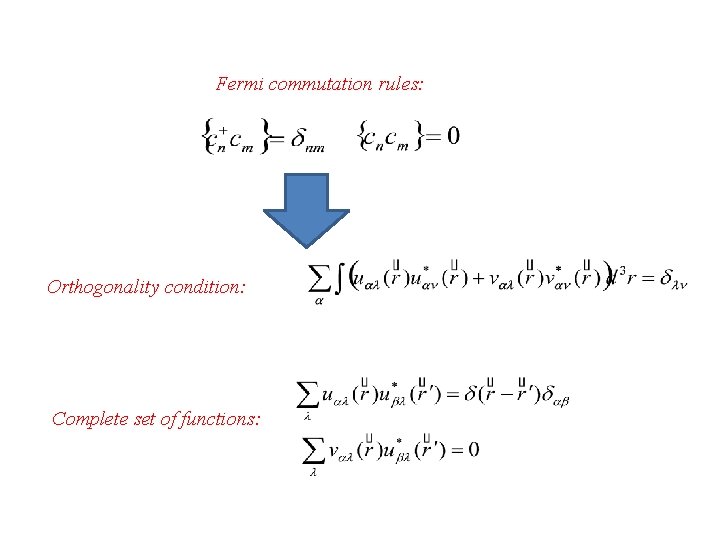
Fermi commutation rules: Orthogonality condition: Complete set of functions:
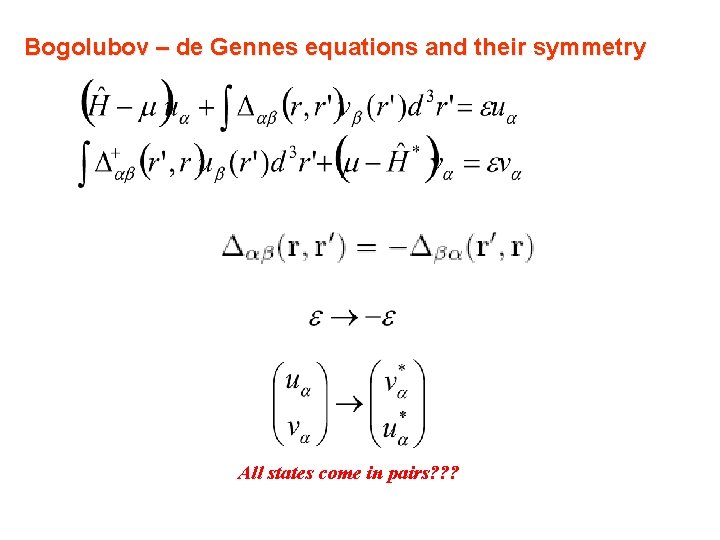
Bogolubov – de Gennes equations and their symmetry All states come in pairs? ? ?
Singlet pairing Triplet pairing
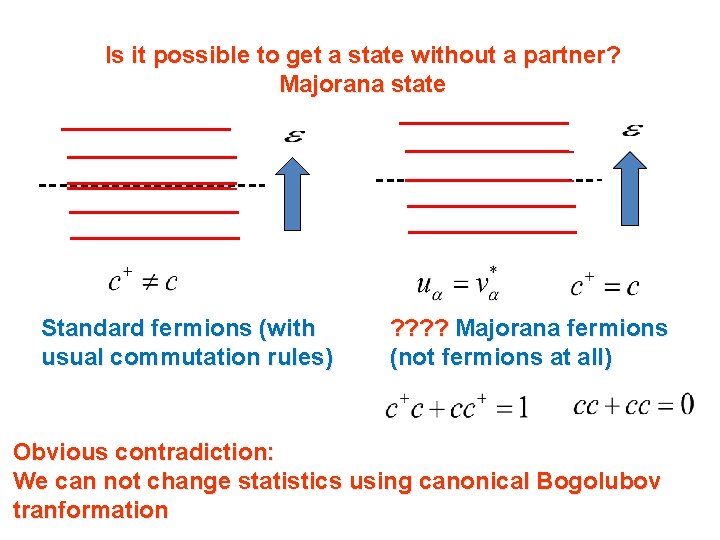
Is it possible to get a state without a partner? Majorana state Standard fermions (with usual commutation rules) ? ? Majorana fermions (not fermions at all) Obvious contradiction: We can not change statistics using canonical Bogolubov tranformation
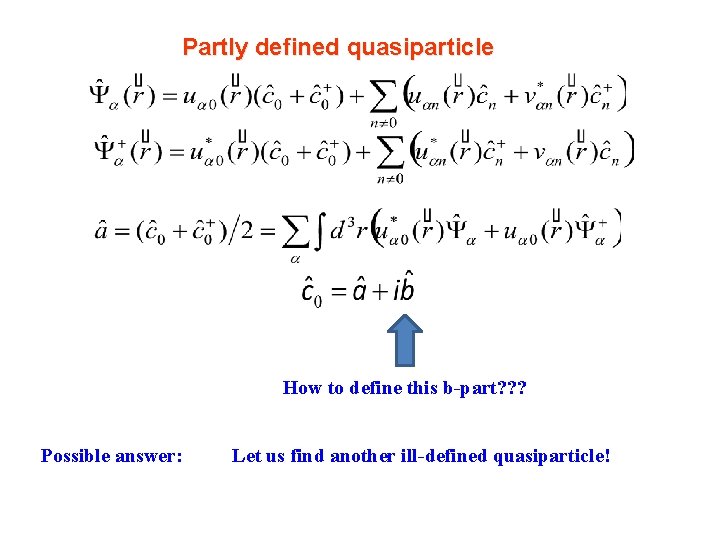
Partly defined quasiparticle How to define this b-part? ? ? Possible answer: Let us find another ill-defined quasiparticle!
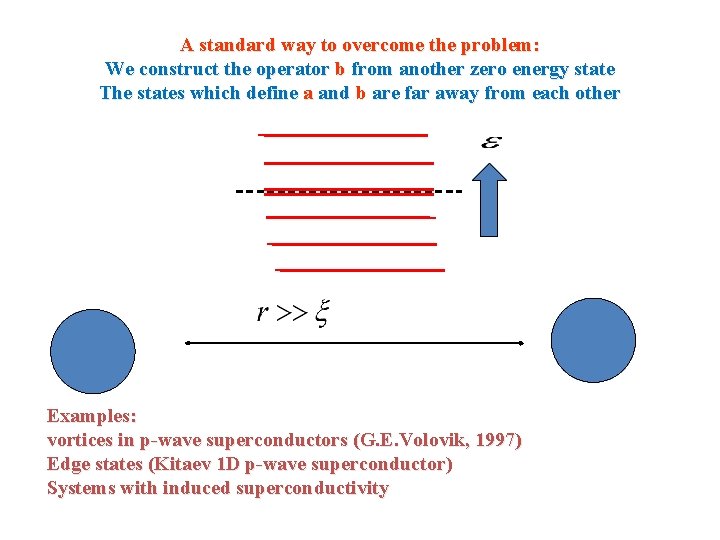
A standard way to overcome the problem: We construct the operator b from another zero energy state The states which define a and b are far away from each other Examples: vortices in p-wave superconductors (G. E. Volovik, 1997) Edge states (Kitaev 1 D p-wave superconductor) Systems with induced superconductivity
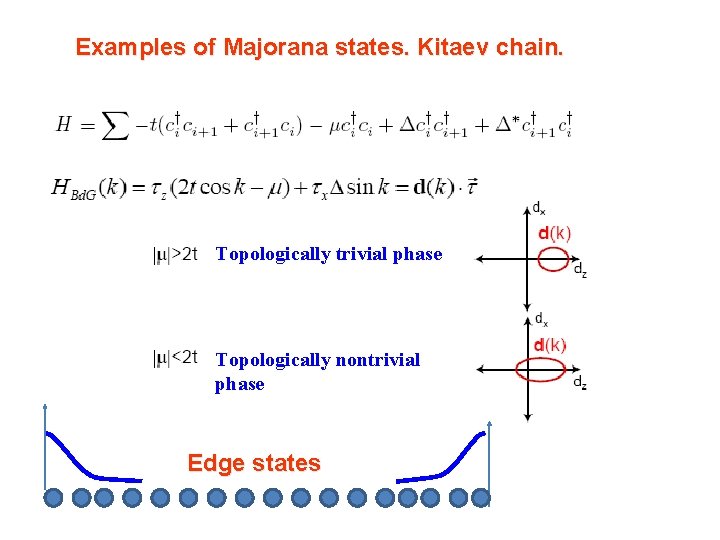
Examples of Majorana states. Kitaev chain. Topologically trivial phase Topologically nontrivial phase Edge states
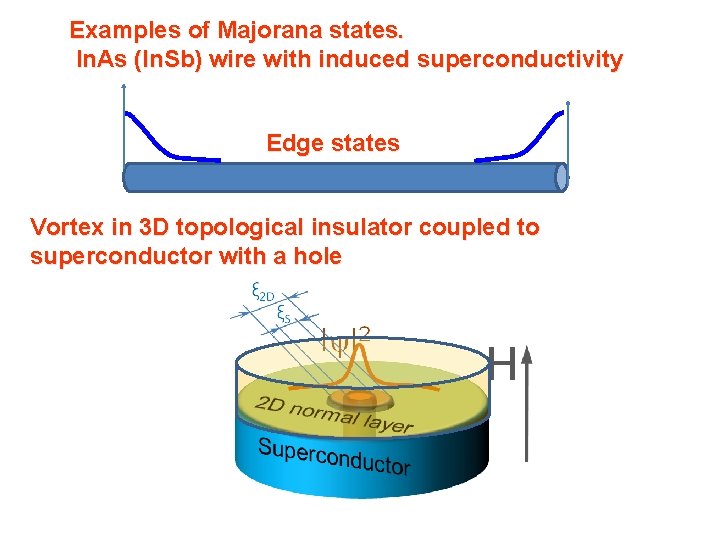
Examples of Majorana states. In. As (In. Sb) wire with induced superconductivity Edge states Vortex in 3 D topological insulator coupled to superconductor with a hole
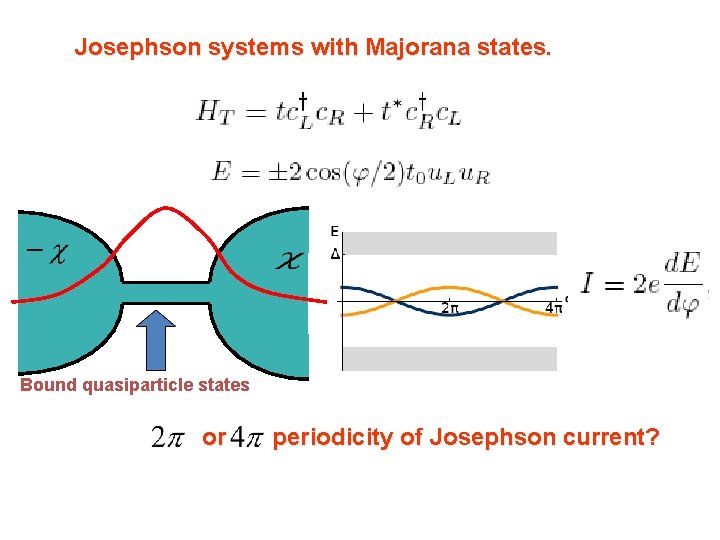
Josephson systems with Majorana states. Bound quasiparticle states or periodicity of Josephson current?
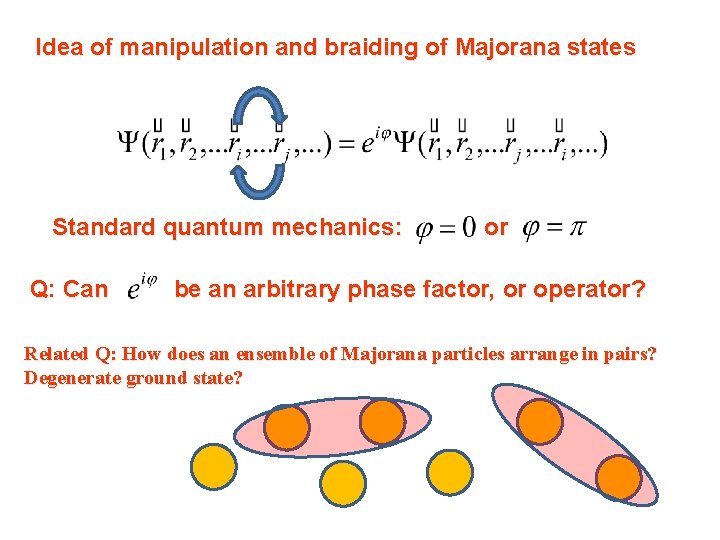
Idea of manipulation and braiding of Majorana states Standard quantum mechanics: Q: Can or be an arbitrary phase factor, or operator? Related Q: How does an ensemble of Majorana particles arrange in pairs? Degenerate ground state?
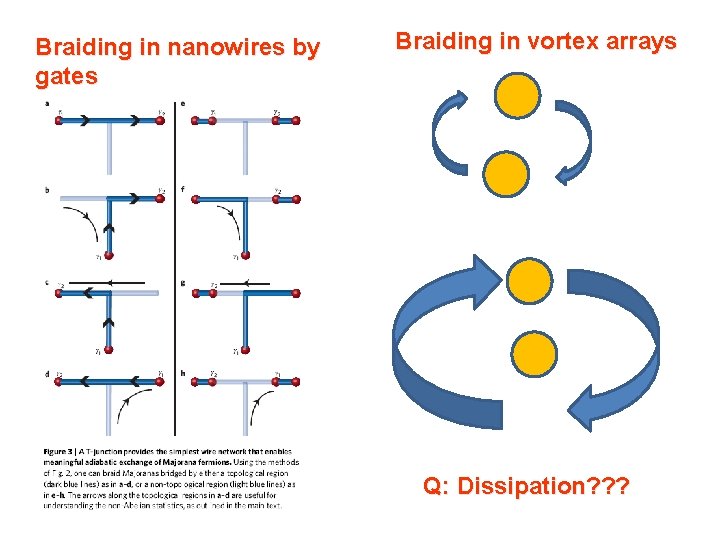
Braiding in nanowires by gates Braiding in vortex arrays Q: Dissipation? ? ?
Some conclusions • topologically nontrivial states can be creating in superconductors with non s-wave pairing • one can engineer the effective pairing in hybrids • new physics of manipulation of Majorana states Some references
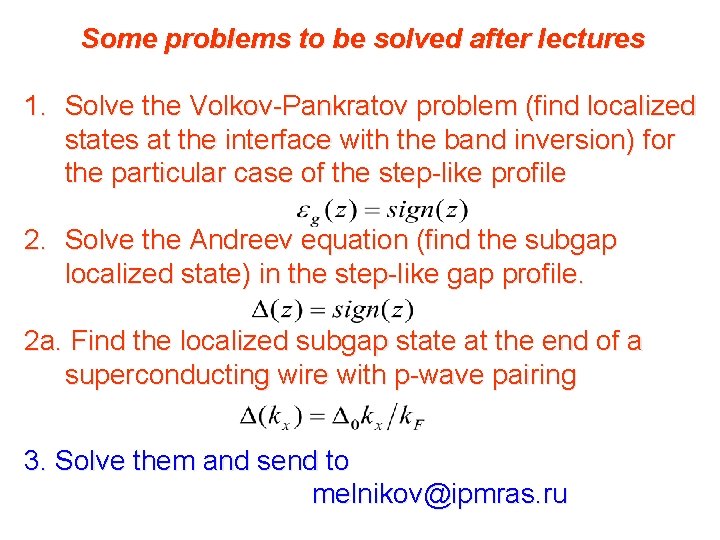
Some problems to be solved after lectures 1. Solve the Volkov-Pankratov problem (find localized states at the interface with the band inversion) for the particular case of the step-like profile 2. Solve the Andreev equation (find the subgap localized state) in the step-like gap profile. 2 a. Find the localized subgap state at the end of a superconducting wire with p-wave pairing 3. Solve them and send to melnikov@ipmras. ru