
LECTURE 9 2 E mc 2 Todays Learning
- Slides: 14
LECTURE 9. 2 – E = mc 2
Today’s Learning Targets • LT 9. 2 – I can explain why energy is released in a nuclear fusion/fission reaction and I can calculate the amount of energy released.
What are nuclear fusion and fission?
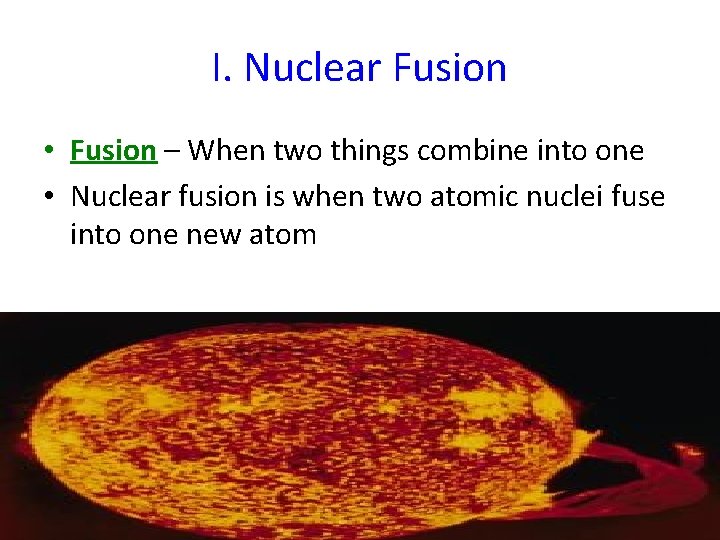
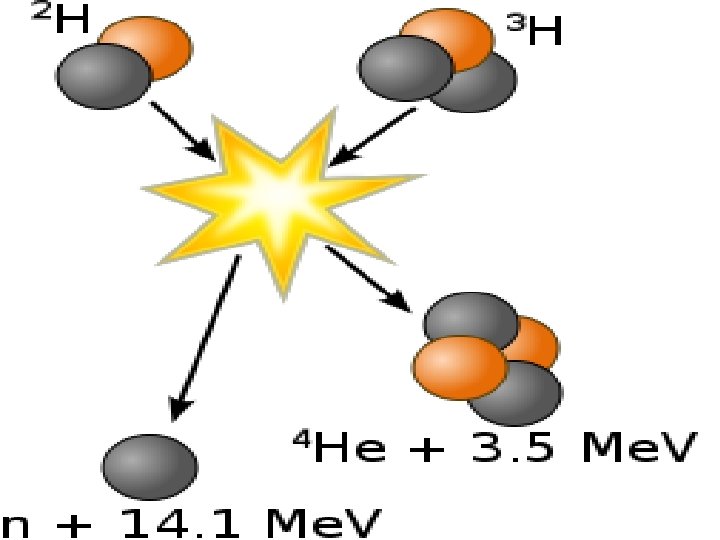
I. Nuclear Fusion • Fusion – When two things combine into one • Nuclear fusion is when two atomic nuclei fuse into one new atom
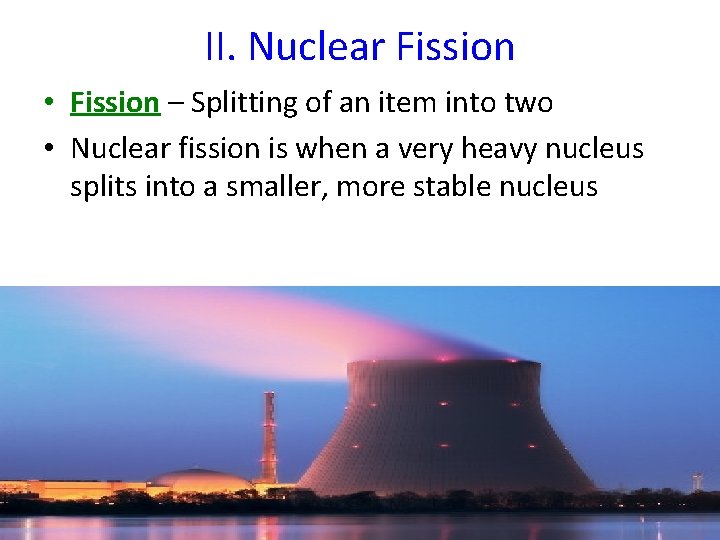
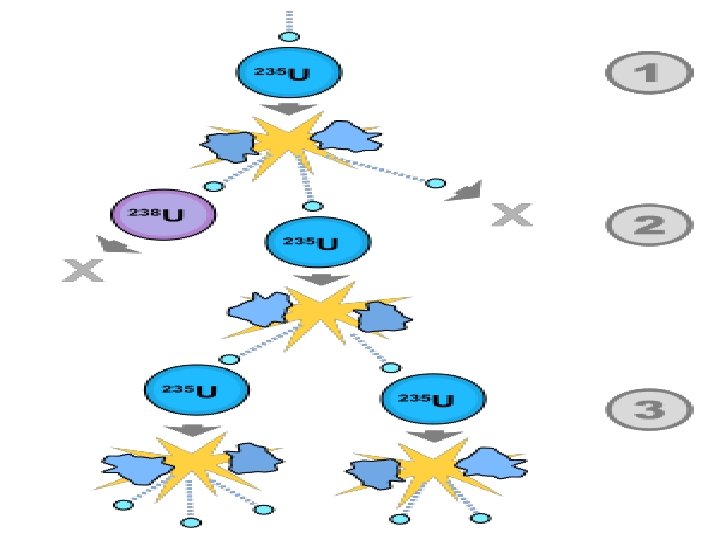
II. Nuclear Fission • Fission – Splitting of an item into two • Nuclear fission is when a very heavy nucleus splits into a smaller, more stable nucleus
What is Einstein’s Equation?
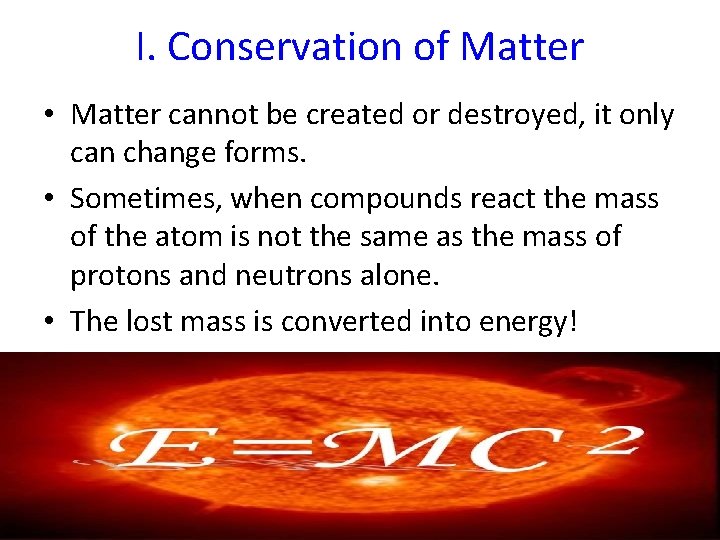
I. Conservation of Matter • Matter cannot be created or destroyed, it only can change forms. • Sometimes, when compounds react the mass of the atom is not the same as the mass of protons and neutrons alone. • The lost mass is converted into energy!
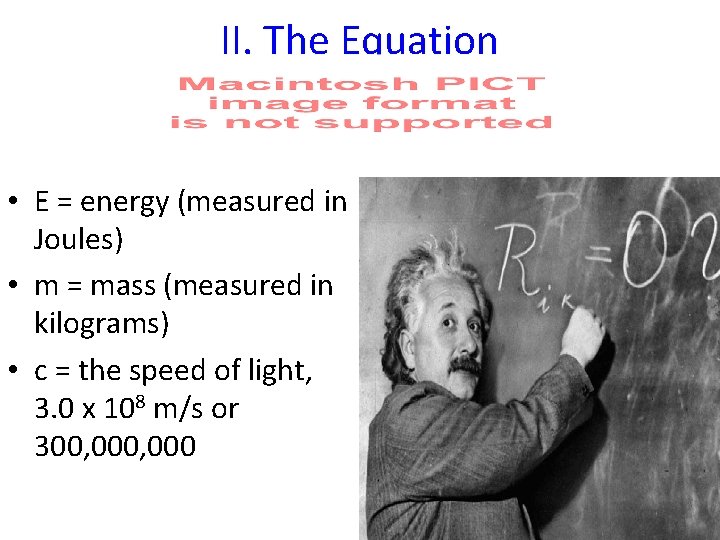
II. The Equation • E = energy (measured in Joules) • m = mass (measured in kilograms) • c = the speed of light, 3. 0 x 108 m/s or 300, 000
Class Example • You have a 2 kg object. Calculate the amount of energy that would be produced if you were to convert all of this mass into energy. (c = 3. 0 x 108 m/s)
Table Talk • You have a 5 kg substance. How much energy would be produced if this mass was converted to energy? (c = 3. 0 x 108)
Stop and Jot • If you produced 500, 000 J of energy when you converted the mass of a substance to energy, then what was the original mass of the substance? (c = 3. 0 x 108)
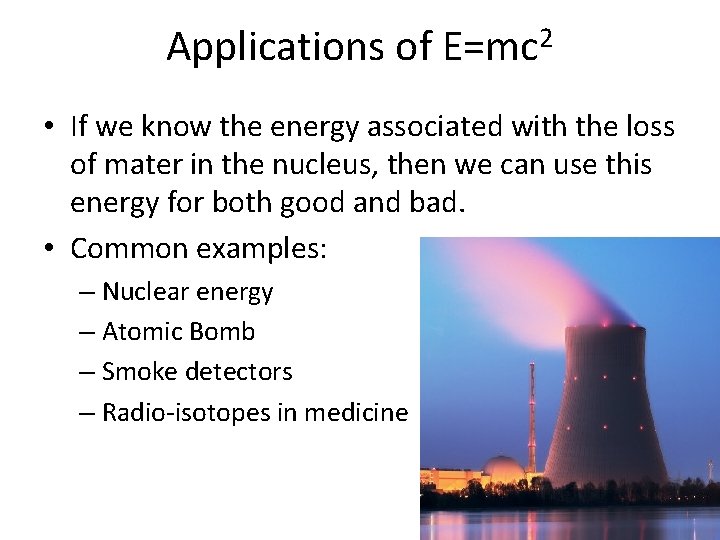
Applications of E=mc 2 • If we know the energy associated with the loss of mater in the nucleus, then we can use this energy for both good and bad. • Common examples: – Nuclear energy – Atomic Bomb – Smoke detectors – Radio-isotopes in medicine