
Lecture 8 Control Structures I Selection cont Introduction
- Slides: 17
Lecture 8: Control Structures I (Selection) (cont. ) Introduction to Computer Science Spring 2006 1
Contents n Selection control structures: if, if. . . else n n n Compound statement Nested if Selection control structures: switch 2
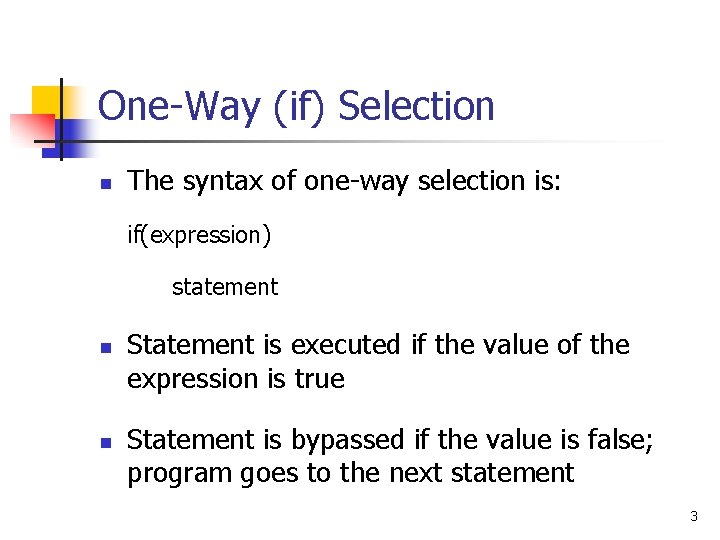
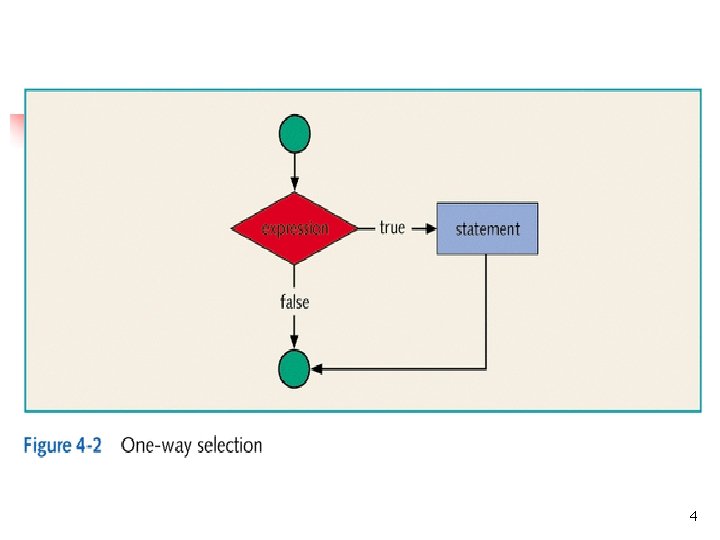
One-Way (if) Selection n The syntax of one-way selection is: if(expression) statement n n Statement is executed if the value of the expression is true Statement is bypassed if the value is false; program goes to the next statement 3
4
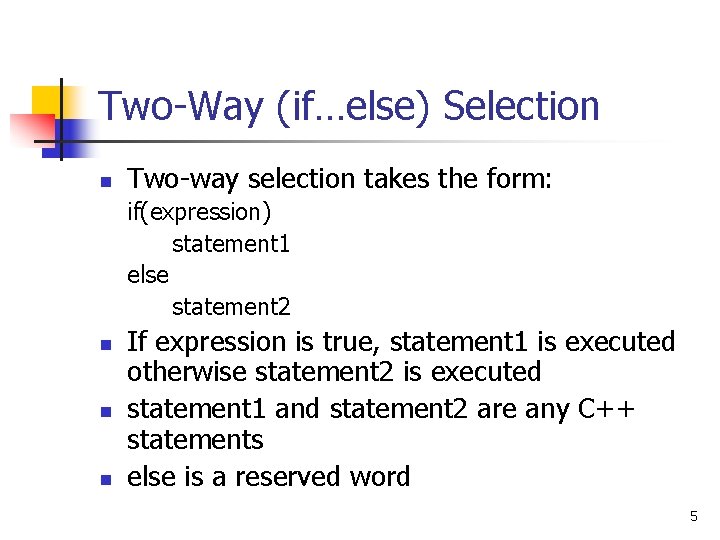
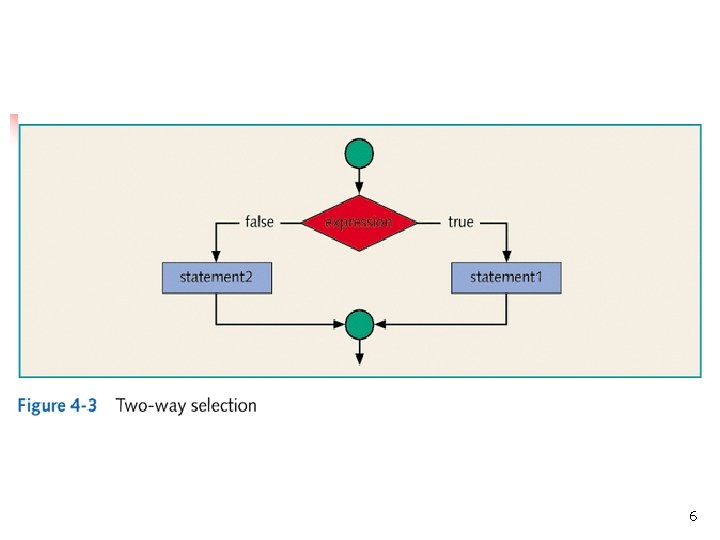
Two-Way (if…else) Selection n Two-way selection takes the form: if(expression) statement 1 else statement 2 n n n If expression is true, statement 1 is executed otherwise statement 2 is executed statement 1 and statement 2 are any C++ statements else is a reserved word 5
6
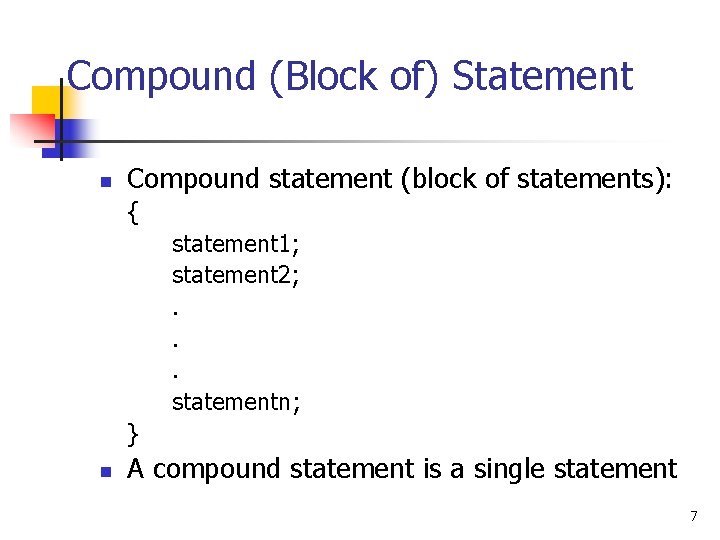
Compound (Block of) Statement n Compound statement (block of statements): { statement 1; statement 2; . . . statementn; } n A compound statement is a single statement 7
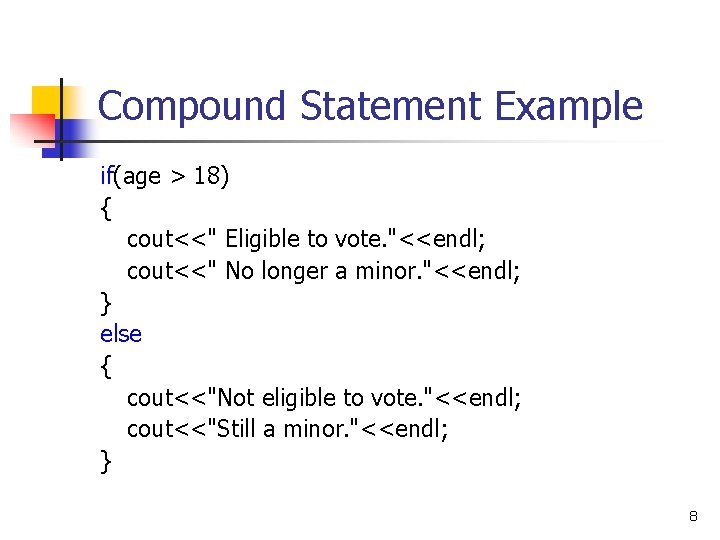
Compound Statement Example if(age > 18) { cout<<" Eligible to vote. "<<endl; cout<<" No longer a minor. "<<endl; } else { cout<<"Not eligible to vote. "<<endl; cout<<"Still a minor. "<<endl; } 8
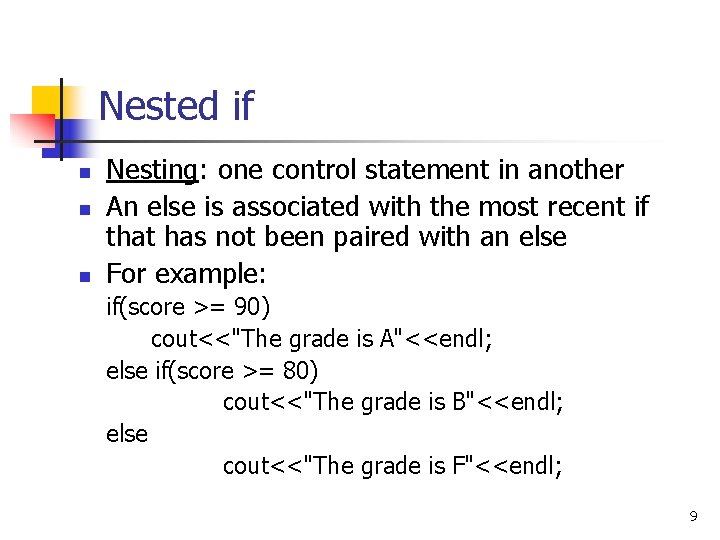
Nested if n n n Nesting: one control statement in another An else is associated with the most recent if that has not been paired with an else For example: if(score >= 90) cout<<"The grade is A"<<endl; else if(score >= 80) cout<<"The grade is B"<<endl; else cout<<"The grade is F"<<endl; 9
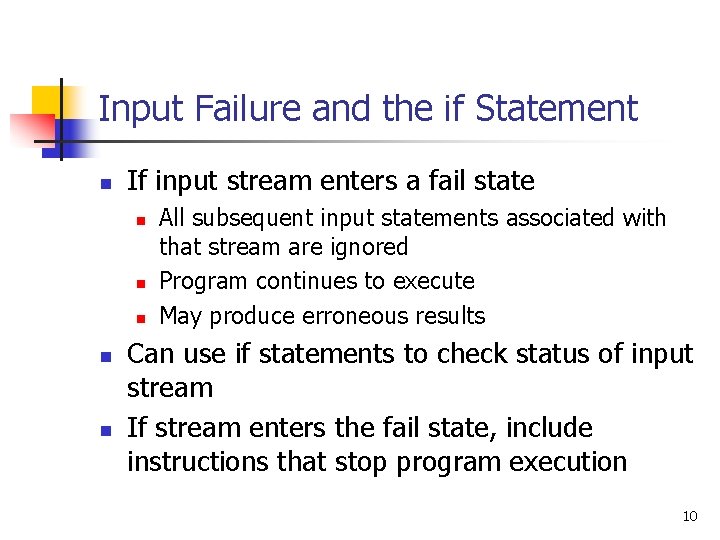
Input Failure and the if Statement n If input stream enters a fail state n n n All subsequent input statements associated with that stream are ignored Program continues to execute May produce erroneous results Can use if statements to check status of input stream If stream enters the fail state, include instructions that stop program execution 10
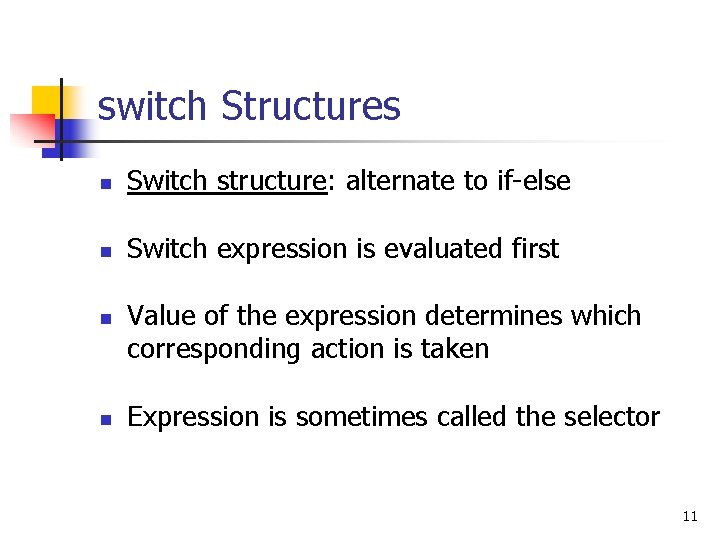
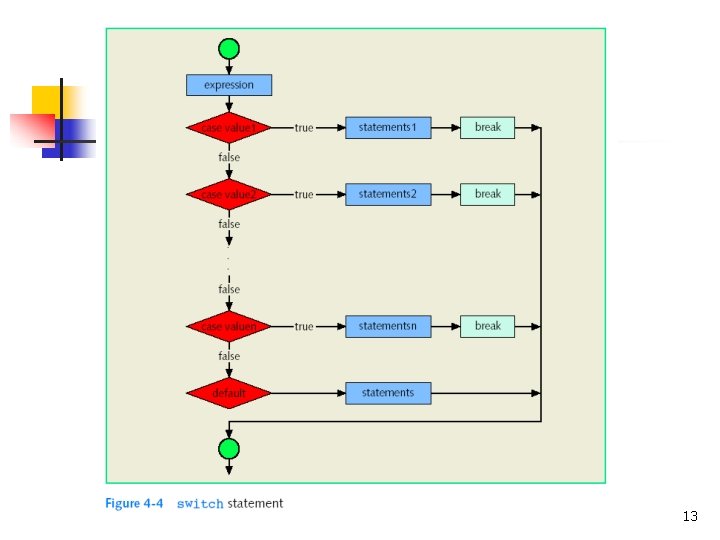
switch Structures n Switch structure: alternate to if-else n Switch expression is evaluated first n n Value of the expression determines which corresponding action is taken Expression is sometimes called the selector 11
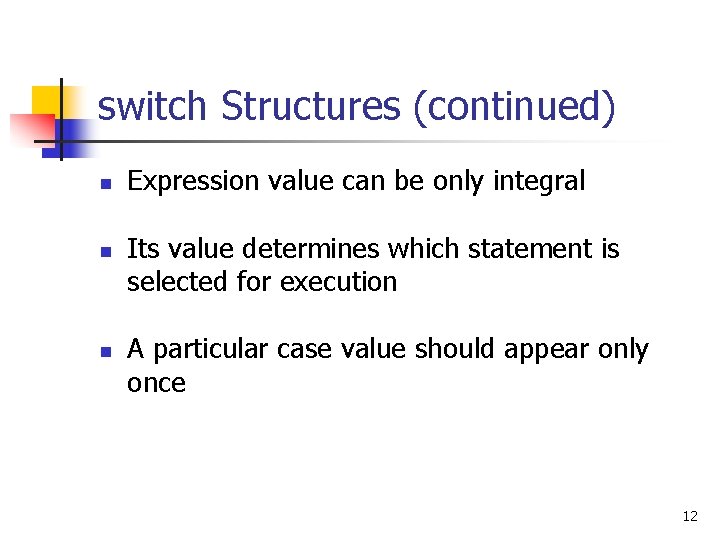
switch Structures (continued) n n n Expression value can be only integral Its value determines which statement is selected for execution A particular case value should appear only once 12
13
switch Structures (continued) n n One or more statements may follow a case label Braces are not needed to turn multiple statements into a single compound statement The break statement may or may not appear after each statement switch, case, break, and default are reserved words 14
switch Statement Rules n When value of the expression is matched against a case value, n n If value of the expression does not match any of the case values n n Statements execute until break statement is found or the end of switch structure is reached Statements following the default label execute If no default label and no match the entire switch statement is skipped A break statement causes an immediate exit from the switch structure 15
switch Statement Rules (continued) n When value of the expression is matched against a case value, n n If value of the expression does not match any of the case values n n Statements execute until break statement is found or the end of switch structure is reached Statements following the default label execute If no default label and no match the entire switch statement is skipped A break statement causes an immediate exit from the switch structure 16
End of lecture 8 Thank you! 17