
Lecture 7 The Calvin Cycle and the Pentose
- Slides: 31
Lecture 7 - The Calvin Cycle and the Pentose Phosphate Pathway Chem 454: Regulatory Mechanisms in Biochemistry University of Wisconsin-Eau Claire
Introduction The Calvin cycle The dark reactions of photosynthesis in green plants Reduces carbon from CO 2 to hexose (C 6 H 12 O 6) Requires ATP for free energy and NADPH as a reducing agent. 2
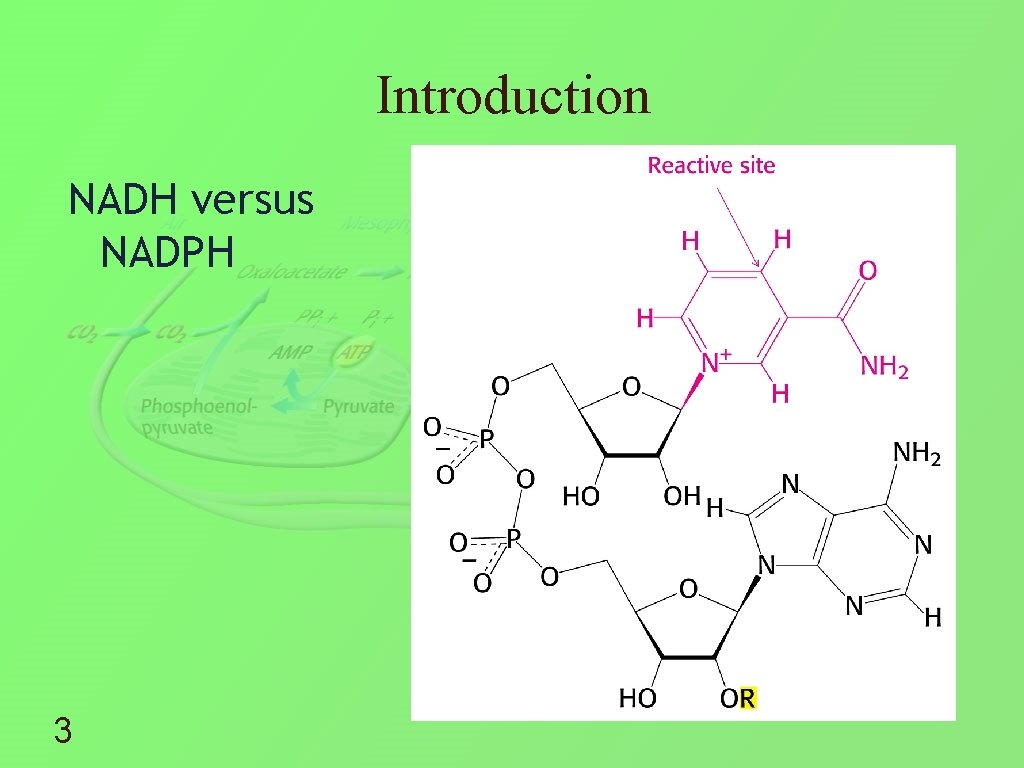
Introduction NADH versus NADPH 3
Introduction The Pentose Phosphate Pathway Used in all organisms Glucose is oxidized and decarboxylated to produce reduced NADPH Used for the synthesis and degradation of pentoses Shares reactions with the Calvin cycle 4
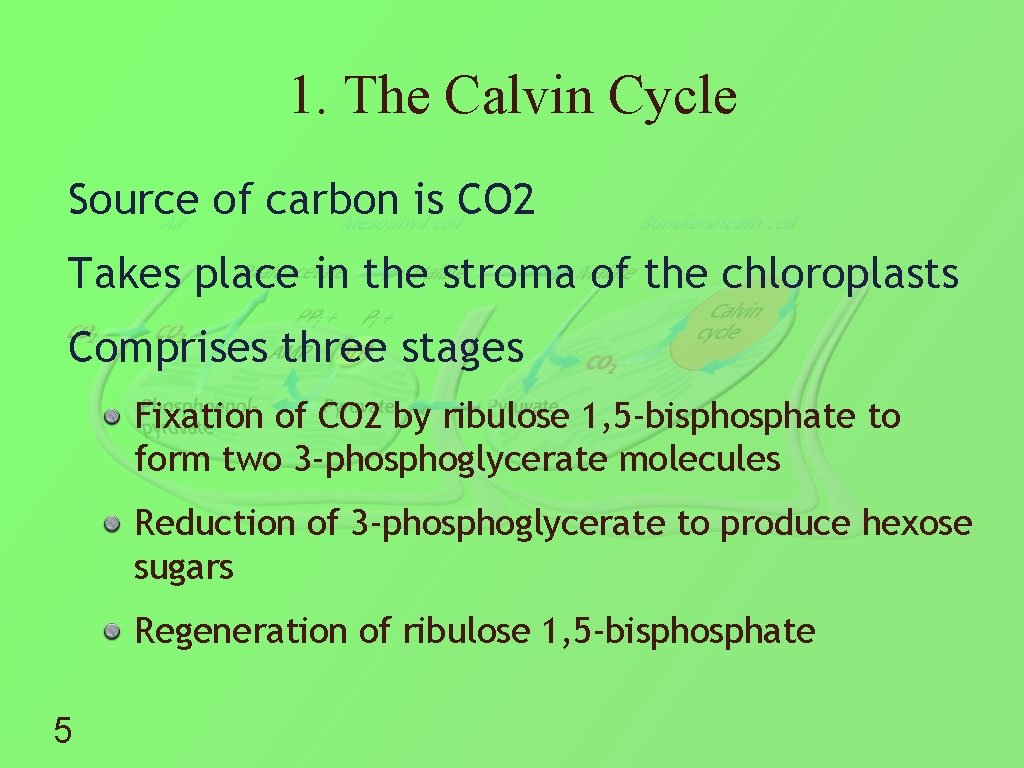
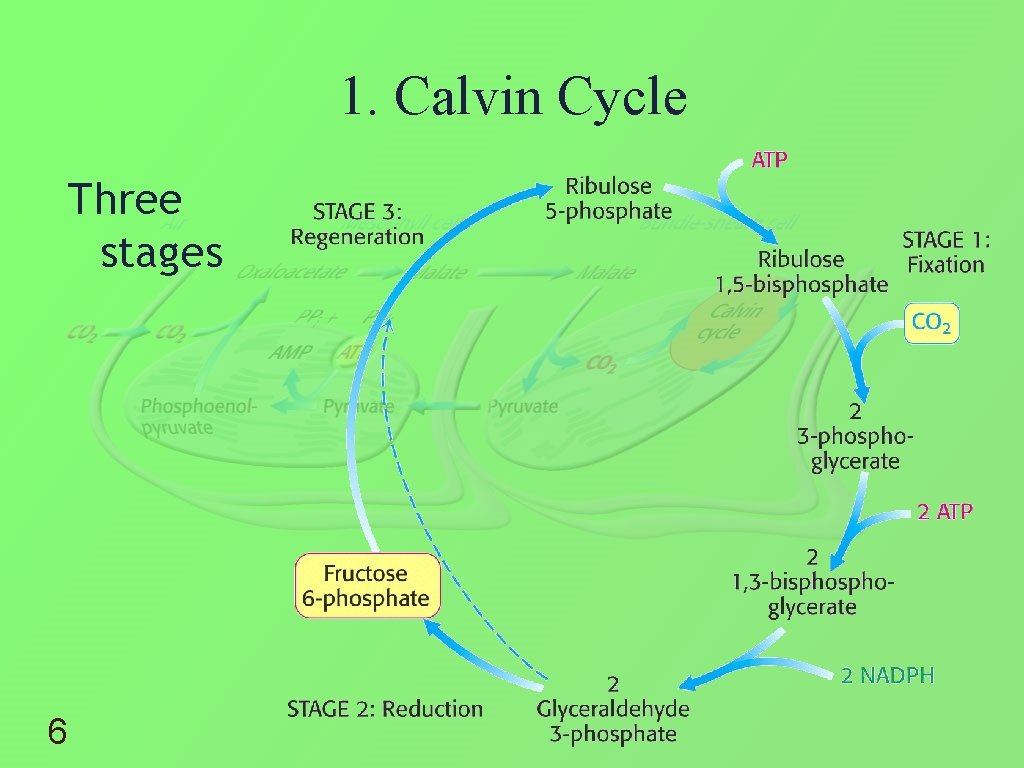
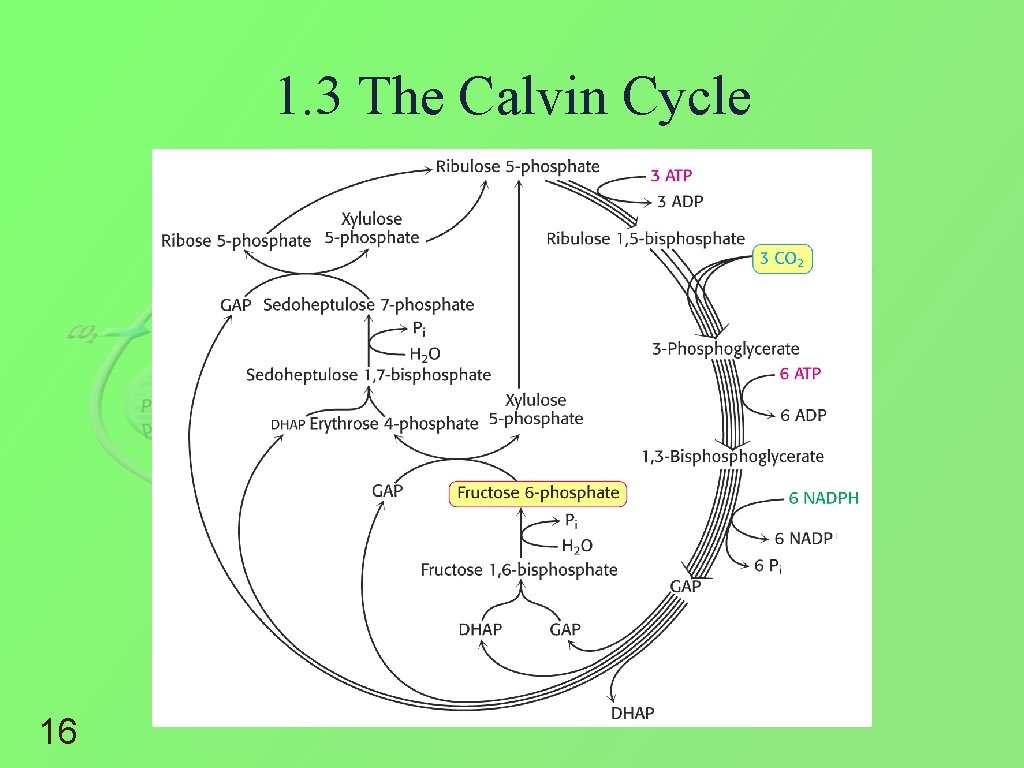
1. The Calvin Cycle Source of carbon is CO 2 Takes place in the stroma of the chloroplasts Comprises three stages Fixation of CO 2 by ribulose 1, 5 -bisphosphate to form two 3 -phosphoglycerate molecules Reduction of 3 -phosphoglycerate to produce hexose sugars Regeneration of ribulose 1, 5 -bisphosphate 5
1. Calvin Cycle Three stages 6
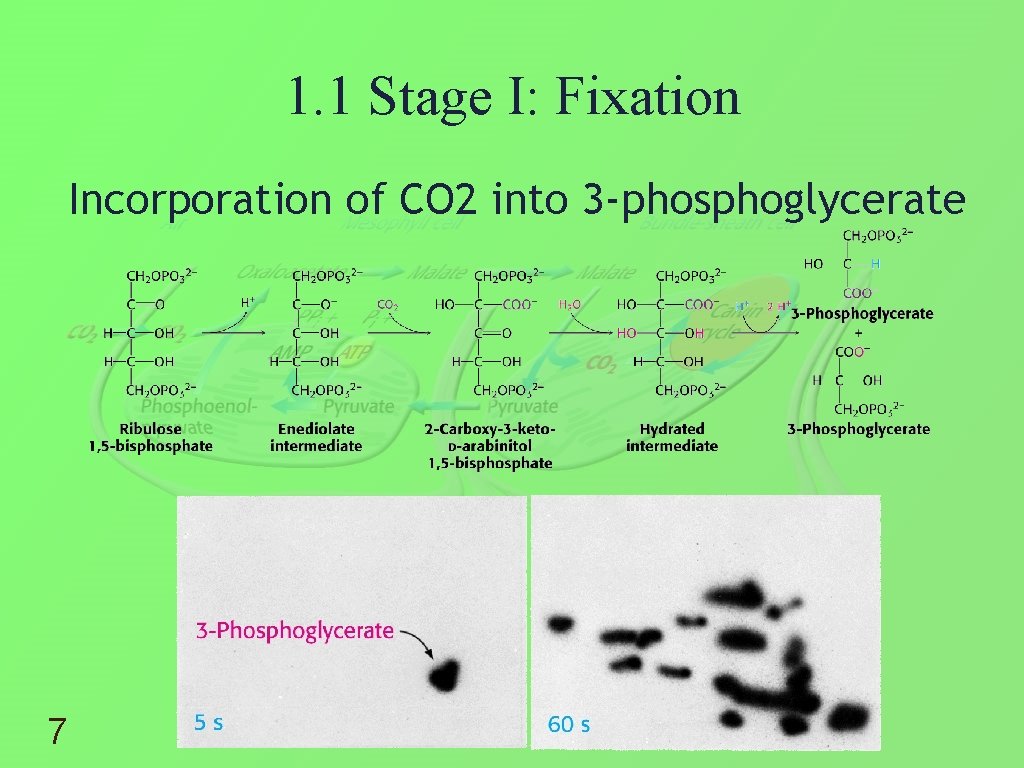
1. 1 Stage I: Fixation Incorporation of CO 2 into 3 -phosphoglycerate 7
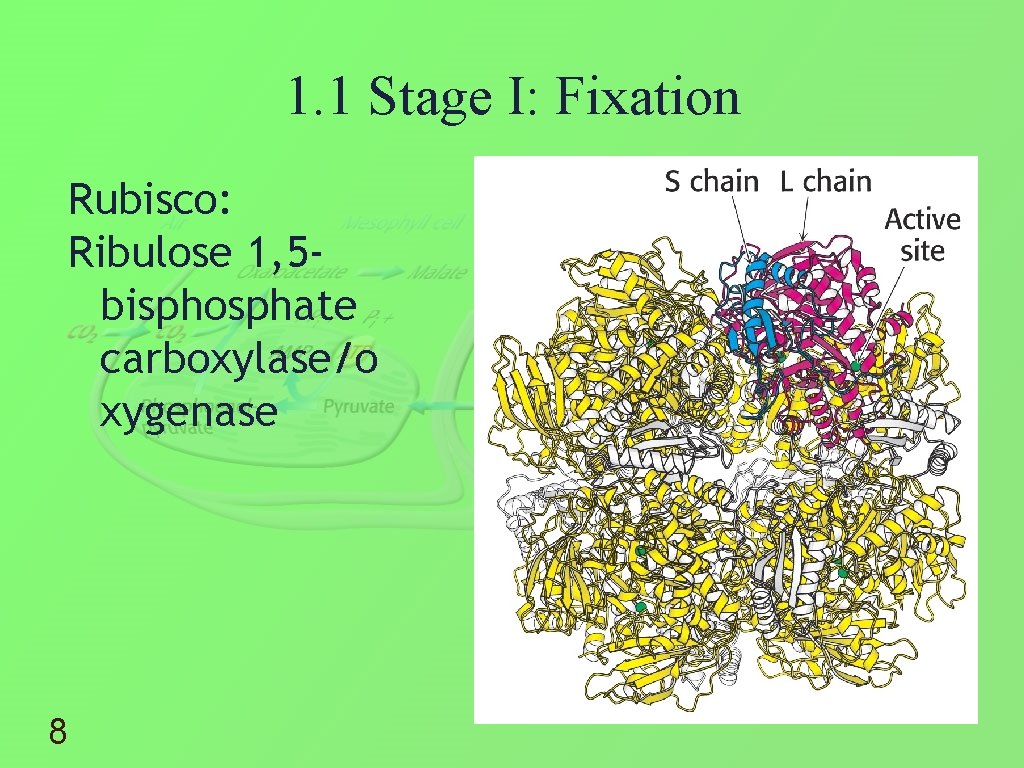
1. 1 Stage I: Fixation Rubisco: Ribulose 1, 5 bisphosphate carboxylase/o xygenase 8
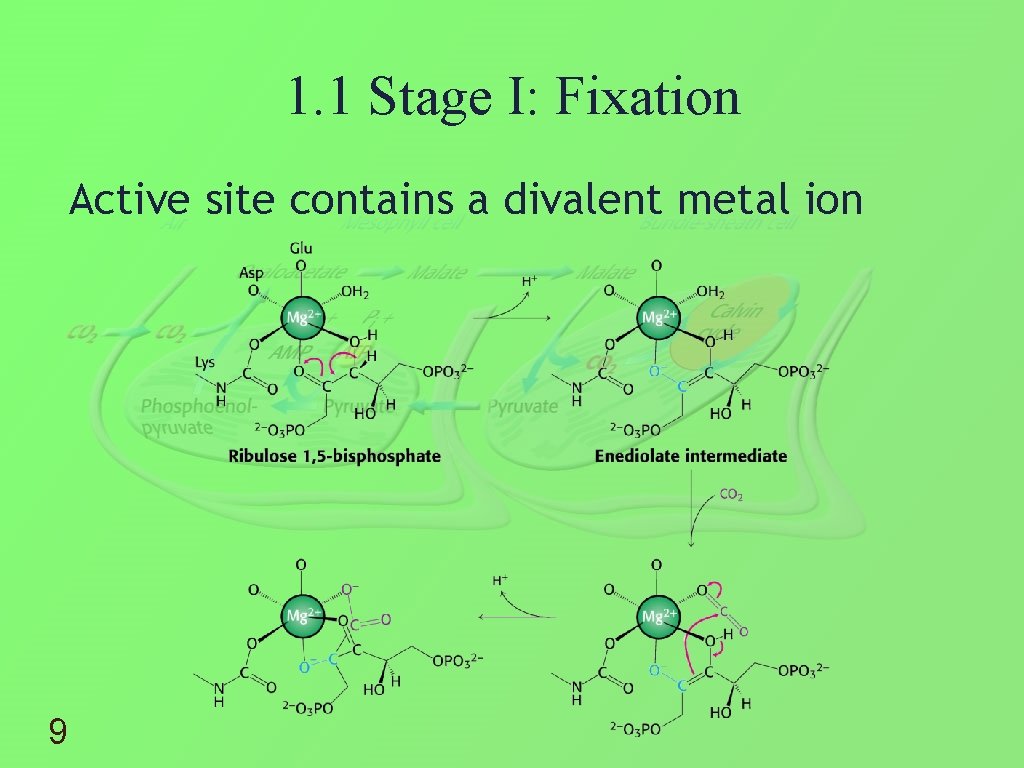
1. 1 Stage I: Fixation Active site contains a divalent metal ion 9
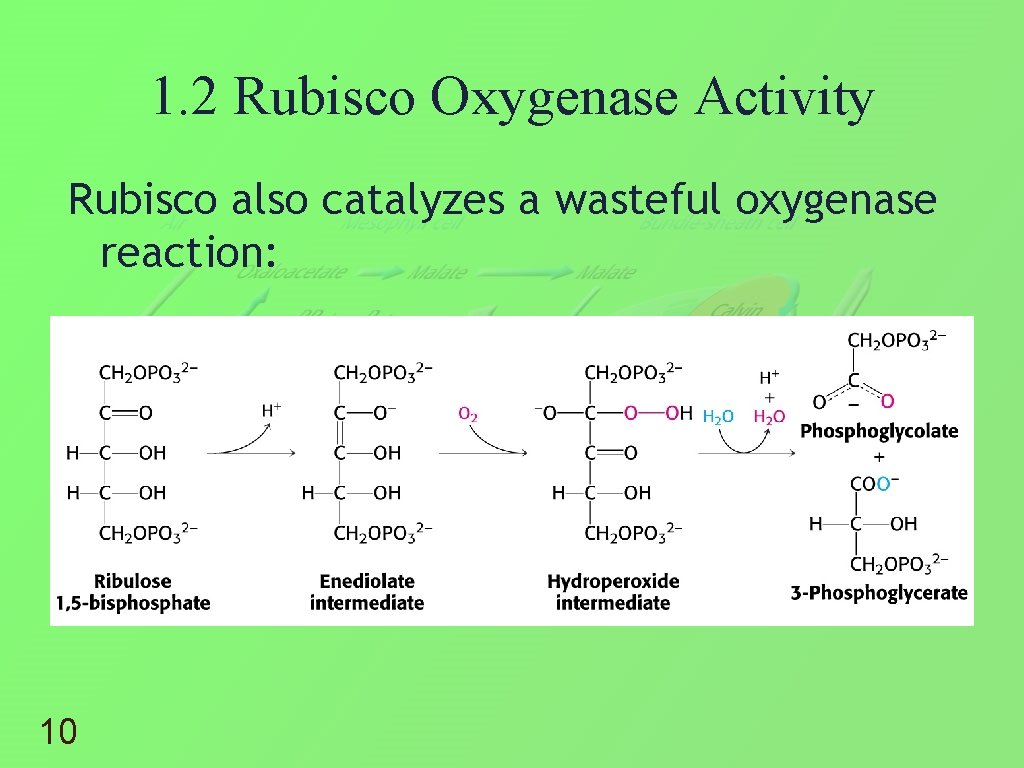
1. 2 Rubisco Oxygenase Activity Rubisco also catalyzes a wasteful oxygenase reaction: 10
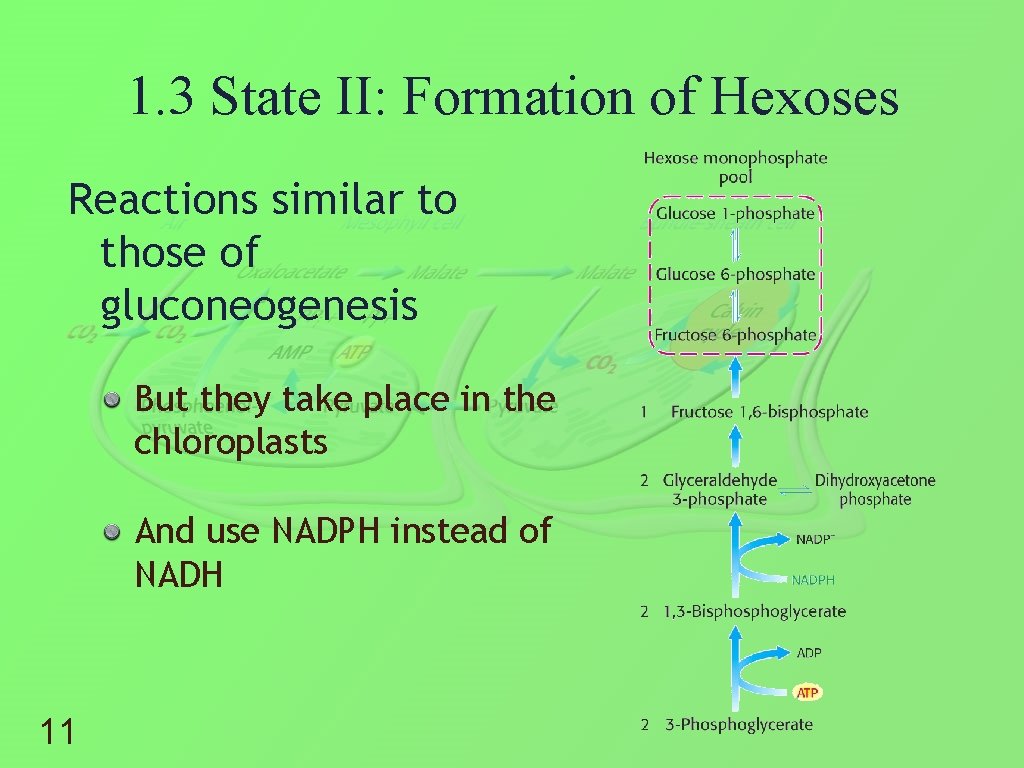
1. 3 State II: Formation of Hexoses Reactions similar to those of gluconeogenesis But they take place in the chloroplasts And use NADPH instead of NADH 11
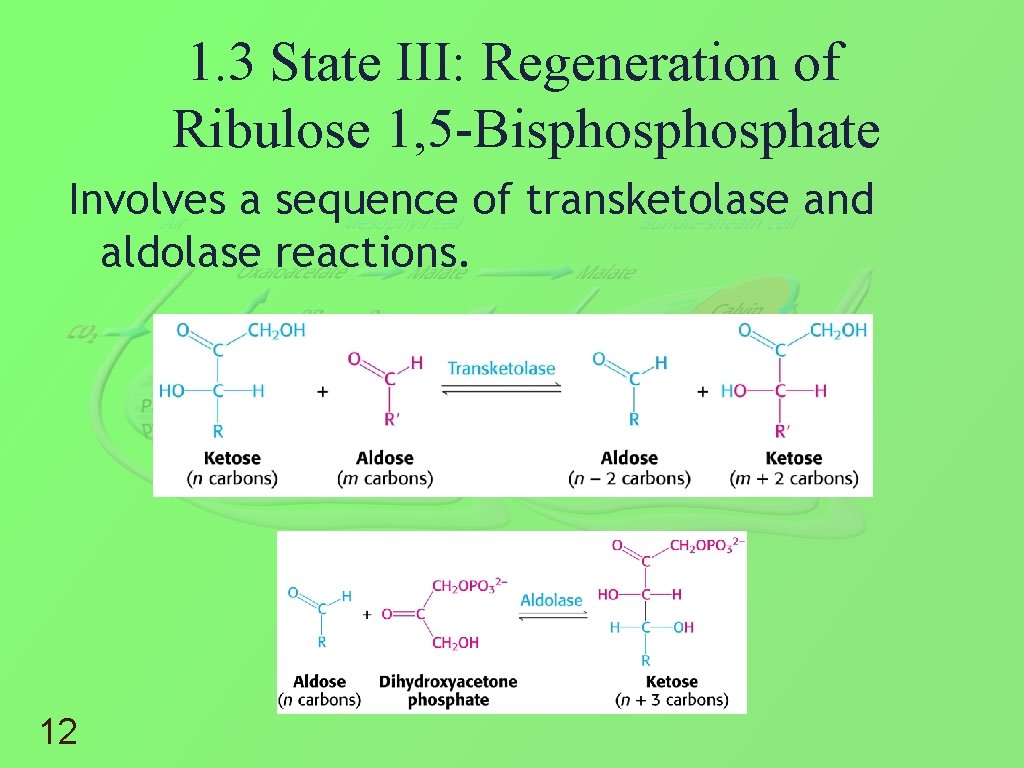
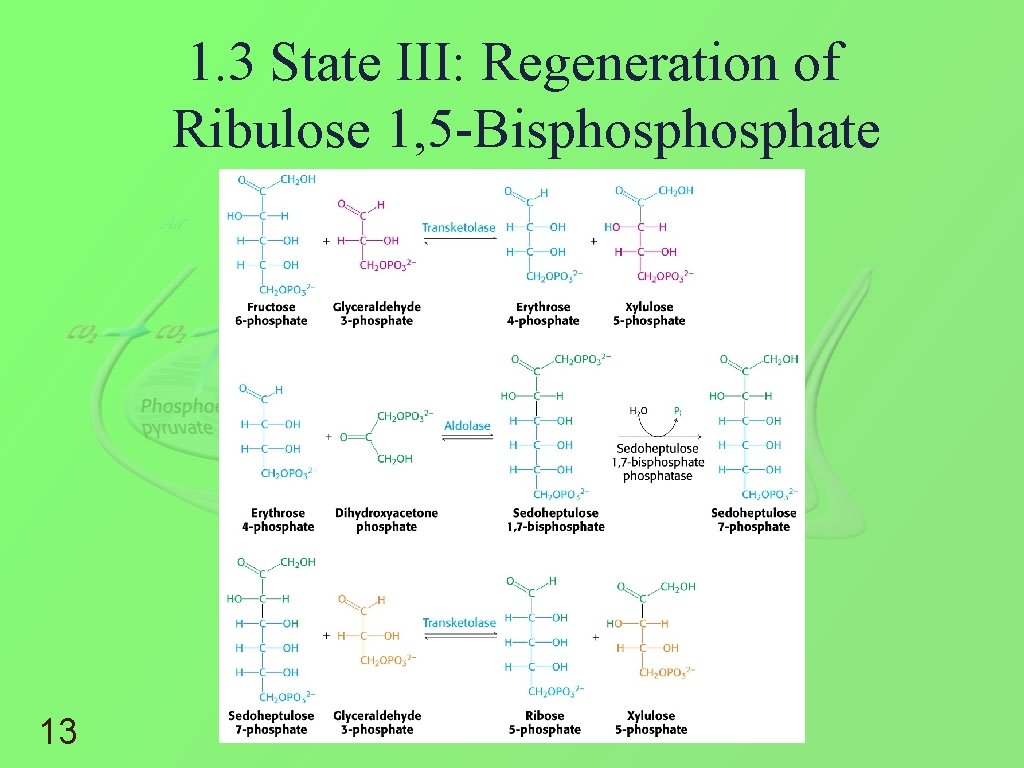
1. 3 State III: Regeneration of Ribulose 1, 5 -Bisphosphate Involves a sequence of transketolase and aldolase reactions. 12
1. 3 State III: Regeneration of Ribulose 1, 5 -Bisphosphate 13
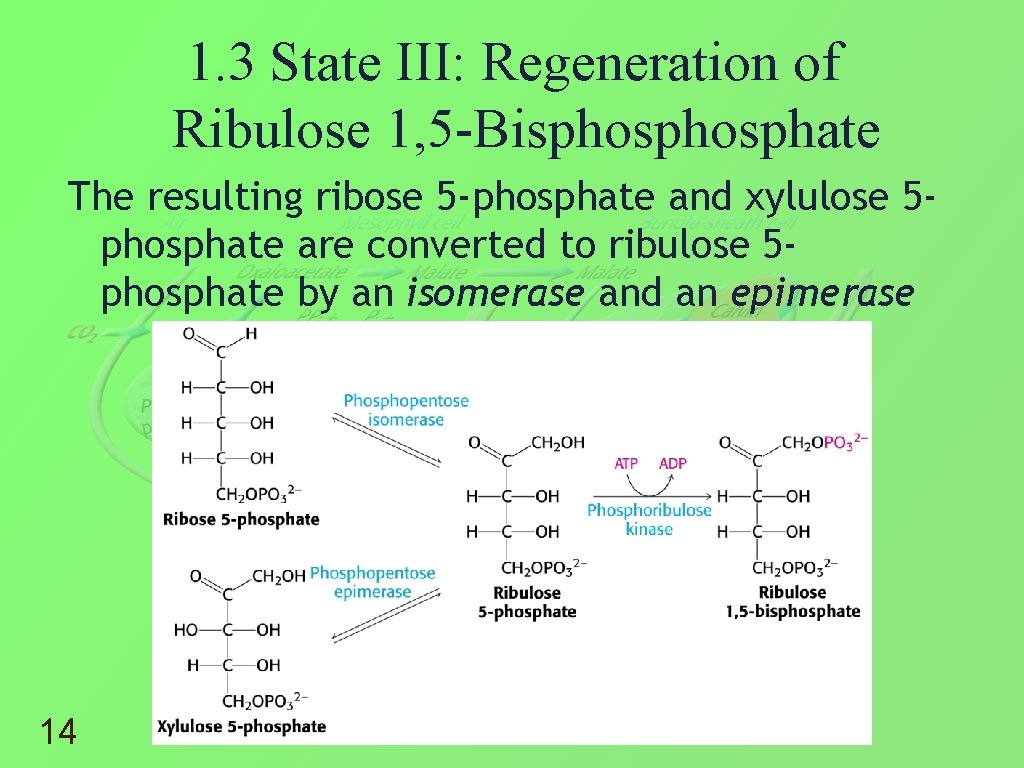
1. 3 State III: Regeneration of Ribulose 1, 5 -Bisphosphate The resulting ribose 5 -phosphate and xylulose 5 phosphate are converted to ribulose 5 phosphate by an isomerase and an epimerase 14
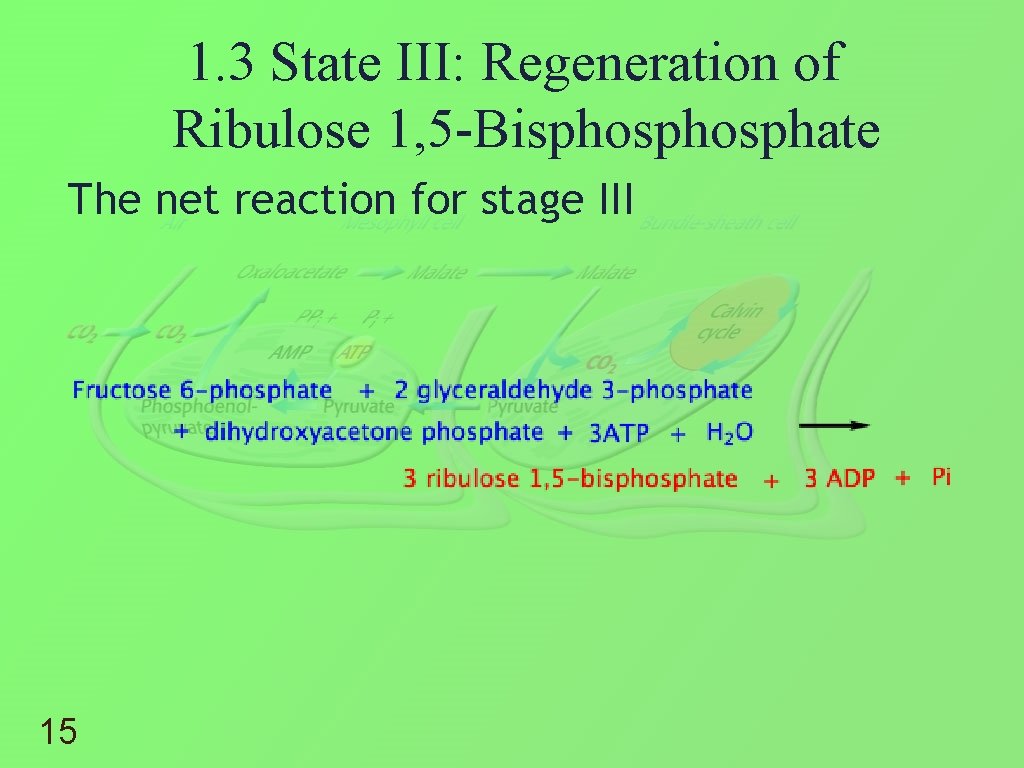
1. 3 State III: Regeneration of Ribulose 1, 5 -Bisphosphate The net reaction for stage III 15
1. 3 The Calvin Cycle 16
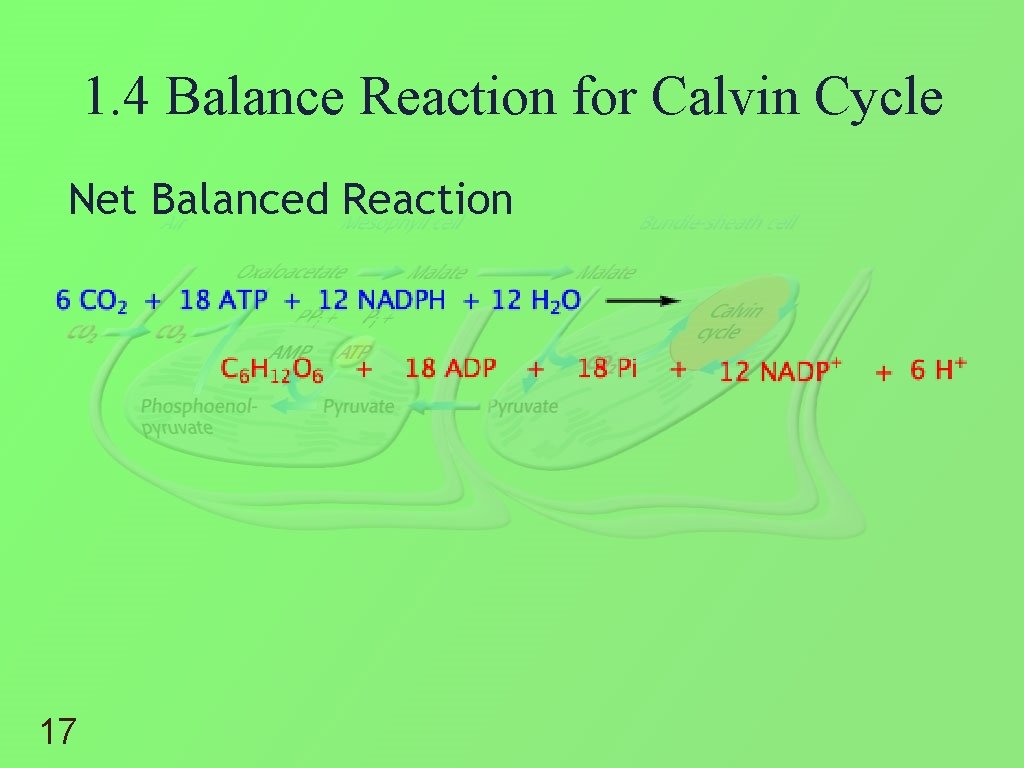
1. 4 Balance Reaction for Calvin Cycle Net Balanced Reaction 17
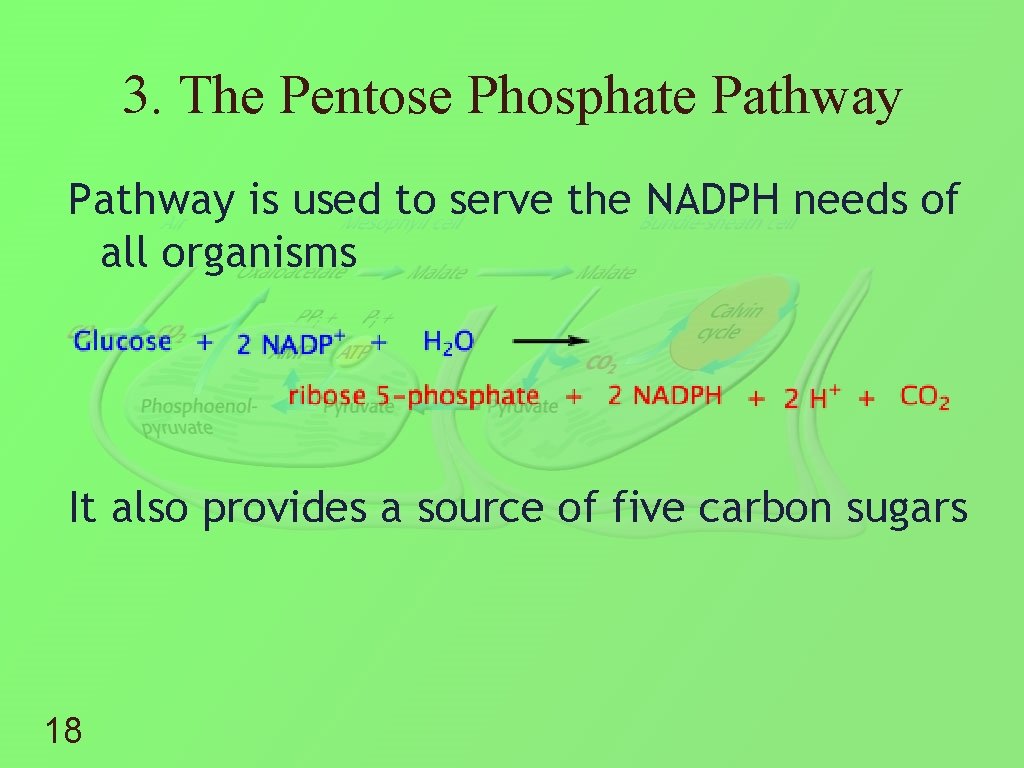
3. The Pentose Phosphate Pathway is used to serve the NADPH needs of all organisms It also provides a source of five carbon sugars 18
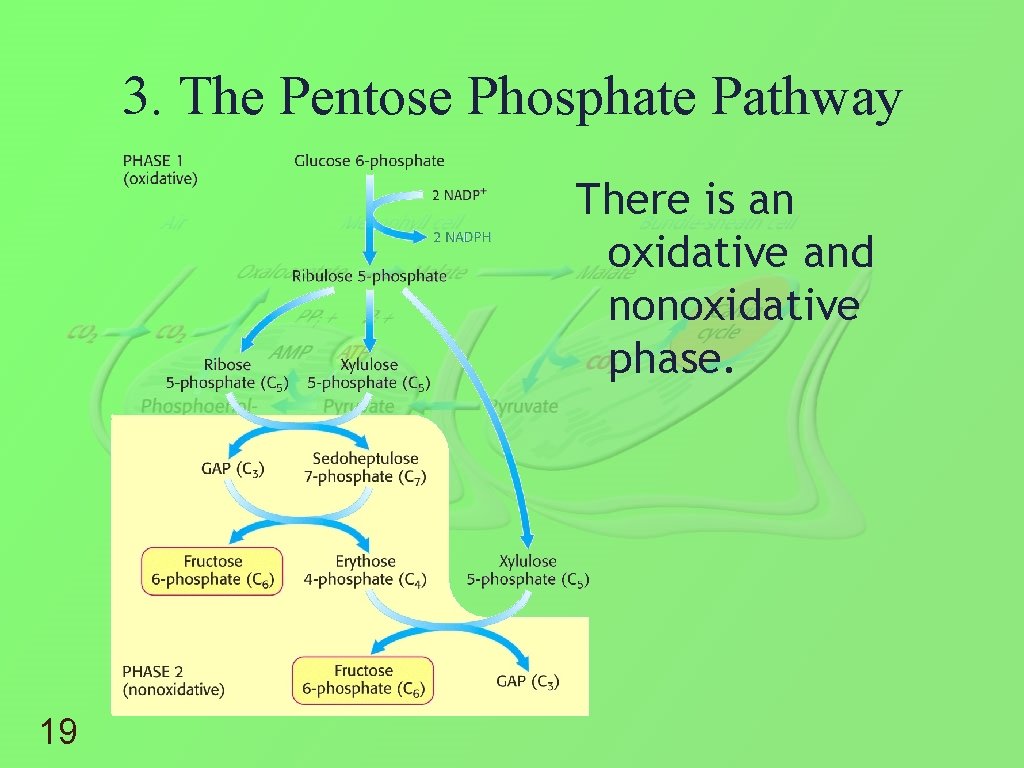
3. The Pentose Phosphate Pathway There is an oxidative and nonoxidative phase. 19
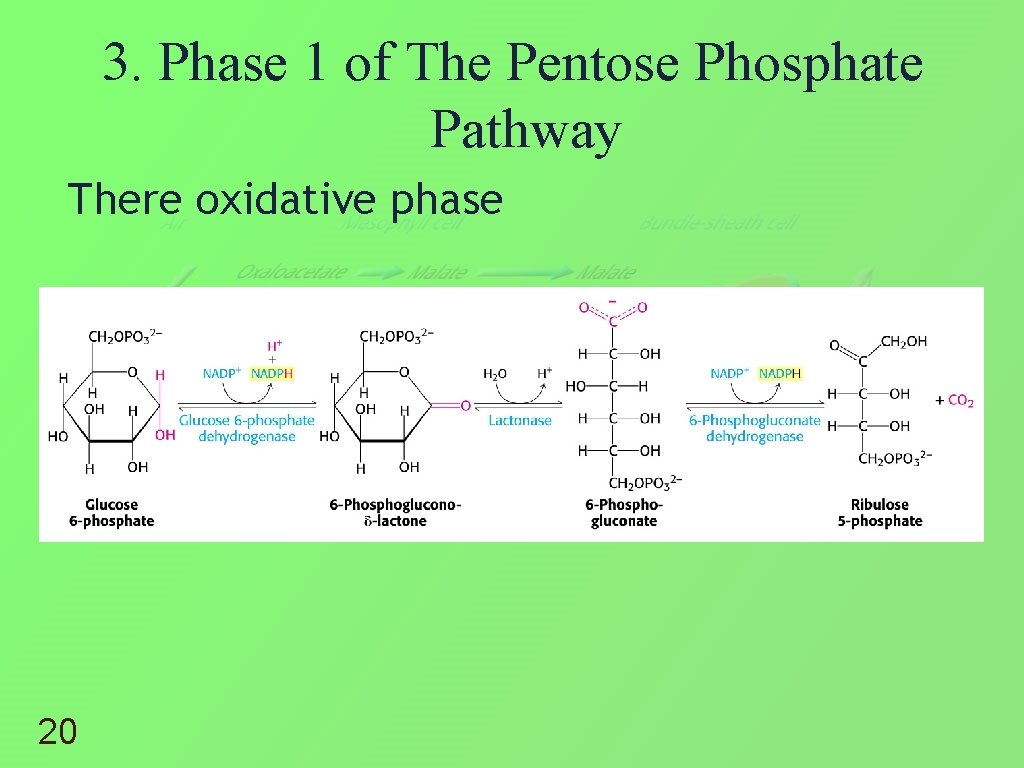
3. Phase 1 of The Pentose Phosphate Pathway There oxidative phase 20
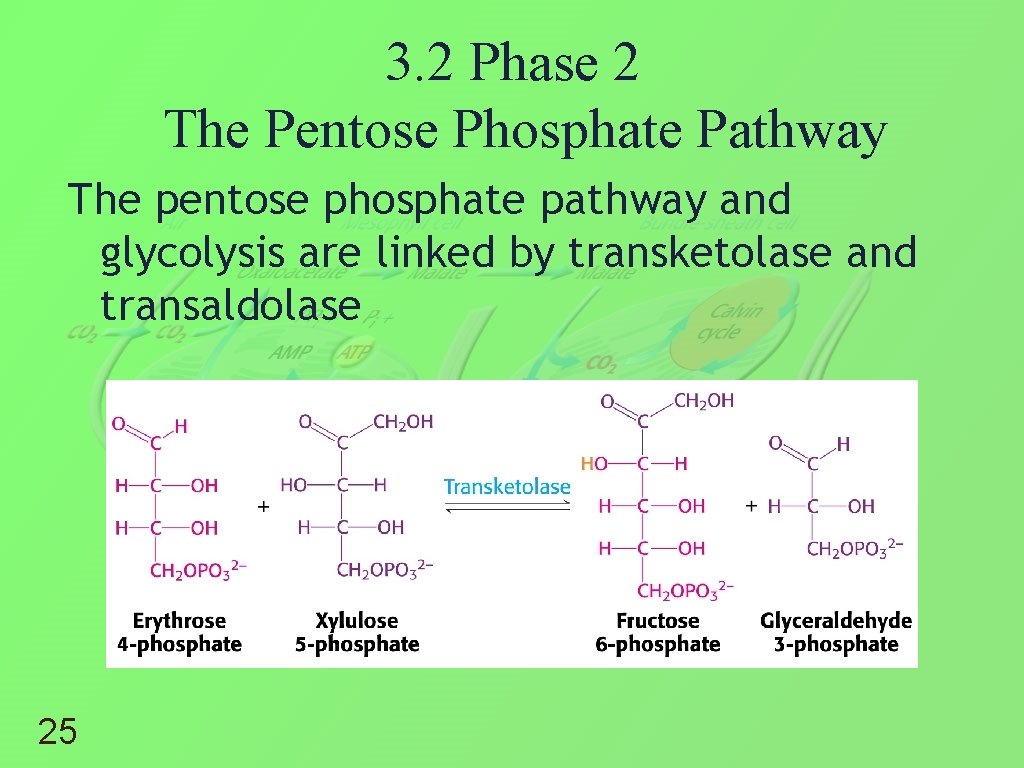
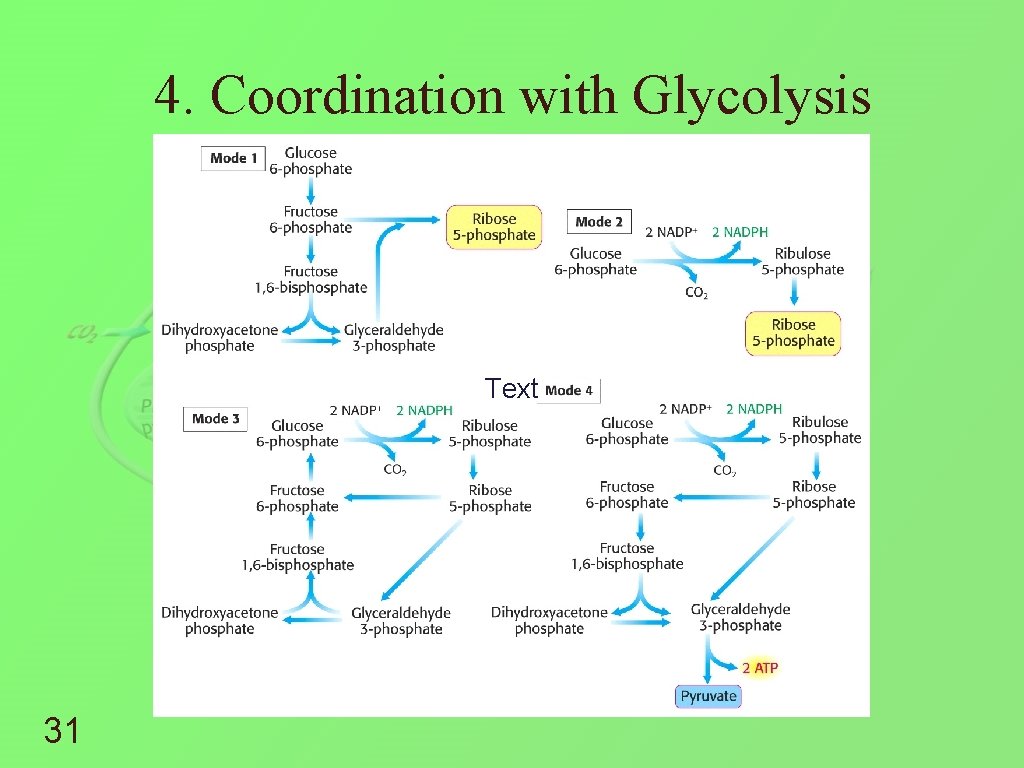
3. 2 Phase 2 The Pentose Phosphate Pathway The pentose phosphate pathway and glycolysis are linked by transketolase and transaldolase When the need for NADPH is greater than the need for ribose 5 -phosphate, the ribose 5–phosphate is converted into the glycolytic intermediates glyceraldehyde 3–phosphate and fructose 6– phosphate 21
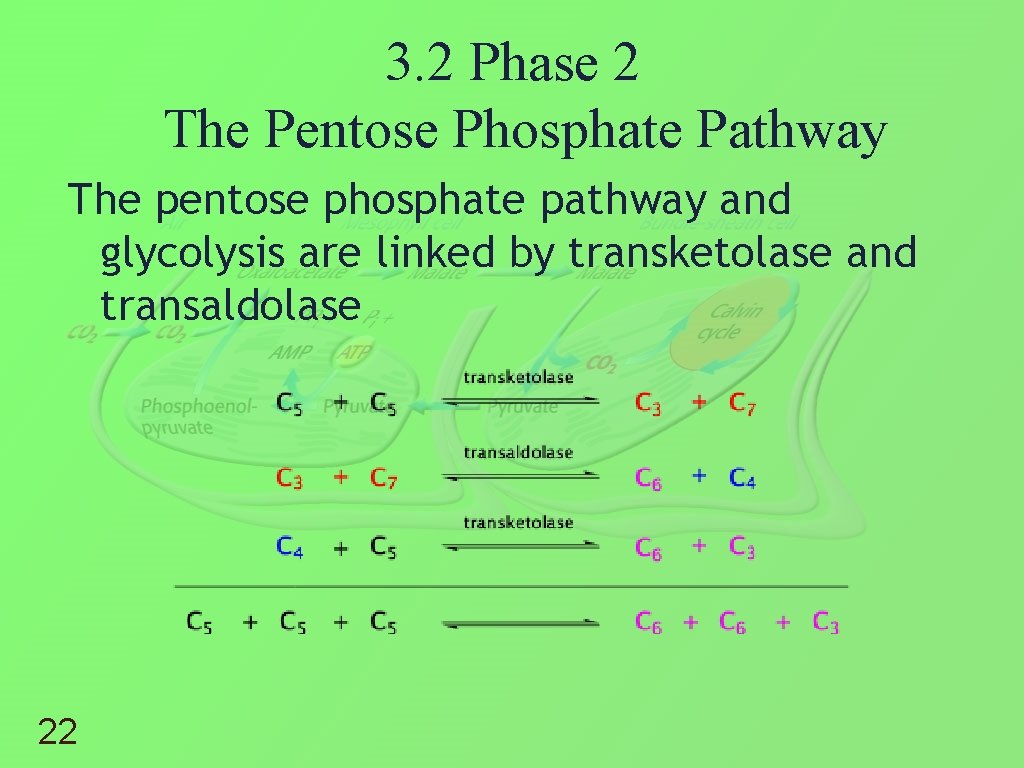
3. 2 Phase 2 The Pentose Phosphate Pathway The pentose phosphate pathway and glycolysis are linked by transketolase and transaldolase 22
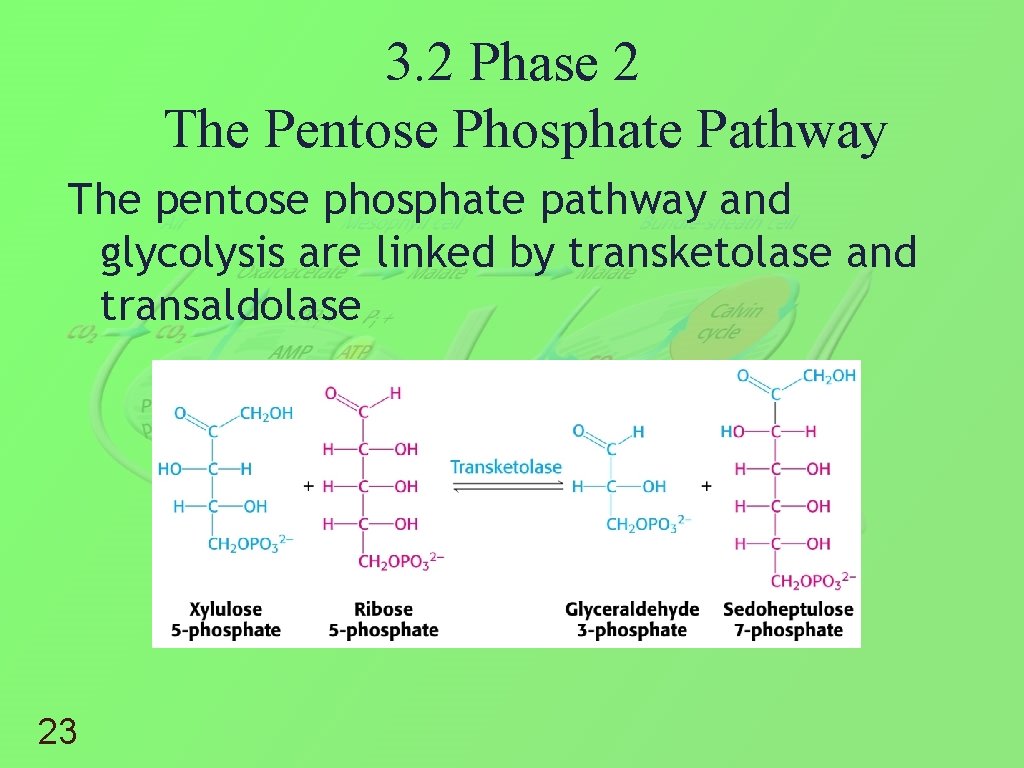
3. 2 Phase 2 The Pentose Phosphate Pathway The pentose phosphate pathway and glycolysis are linked by transketolase and transaldolase 23
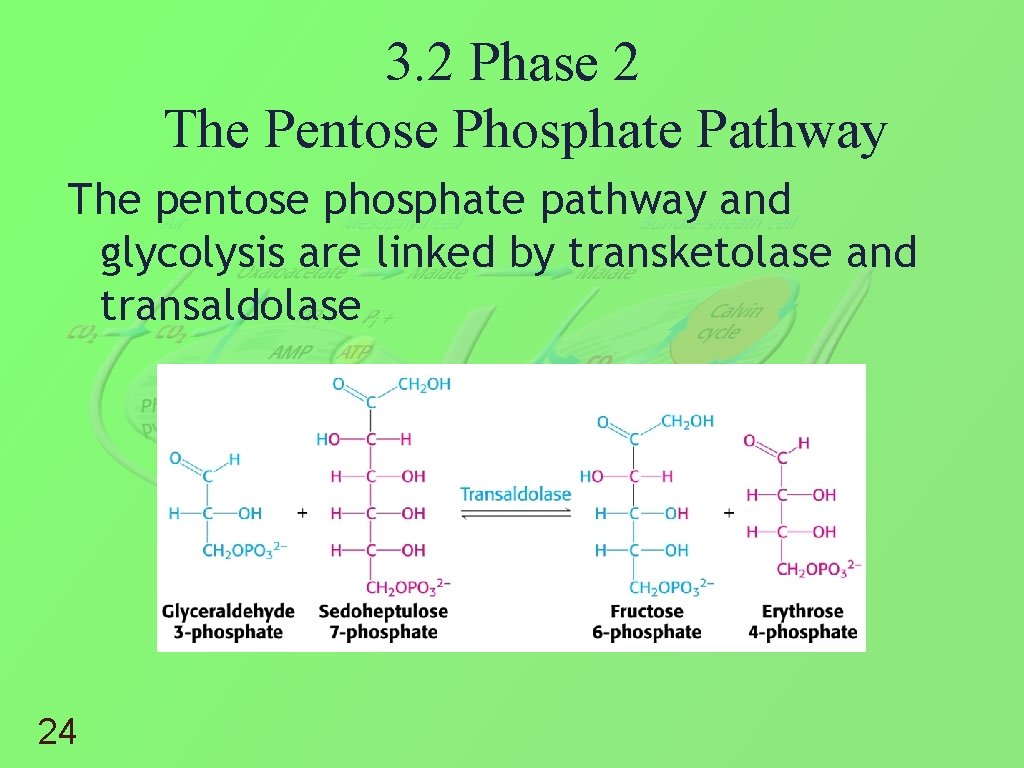
3. 2 Phase 2 The Pentose Phosphate Pathway The pentose phosphate pathway and glycolysis are linked by transketolase and transaldolase 24
3. 2 Phase 2 The Pentose Phosphate Pathway The pentose phosphate pathway and glycolysis are linked by transketolase and transaldolase 25
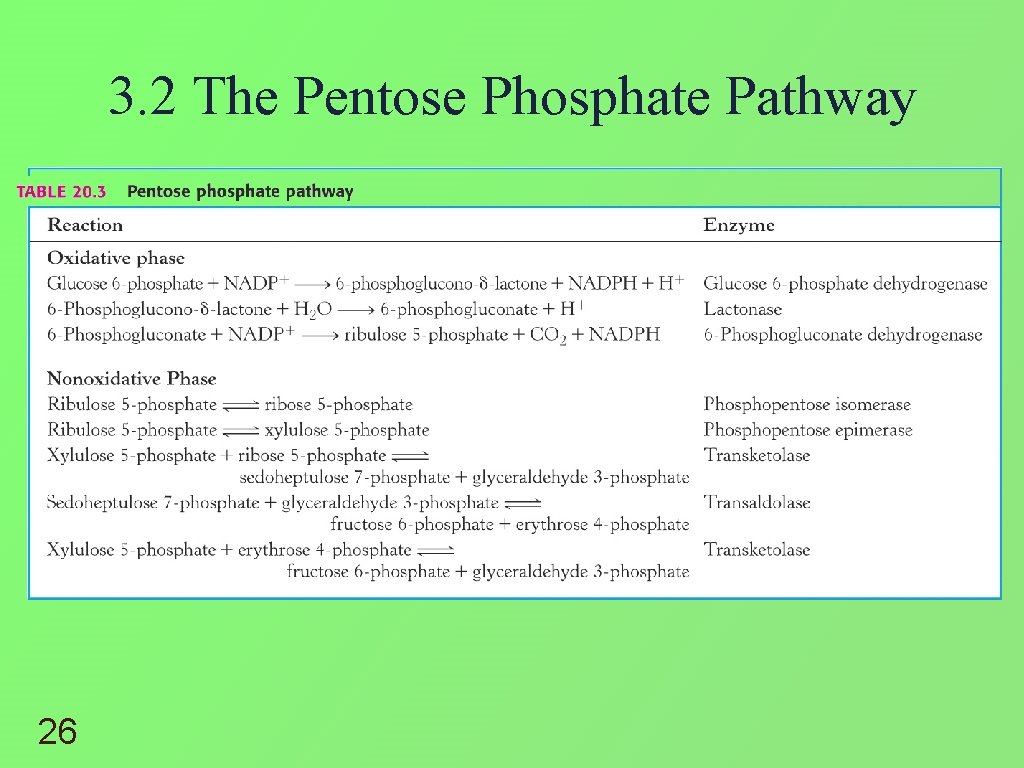
3. 2 The Pentose Phosphate Pathway 26
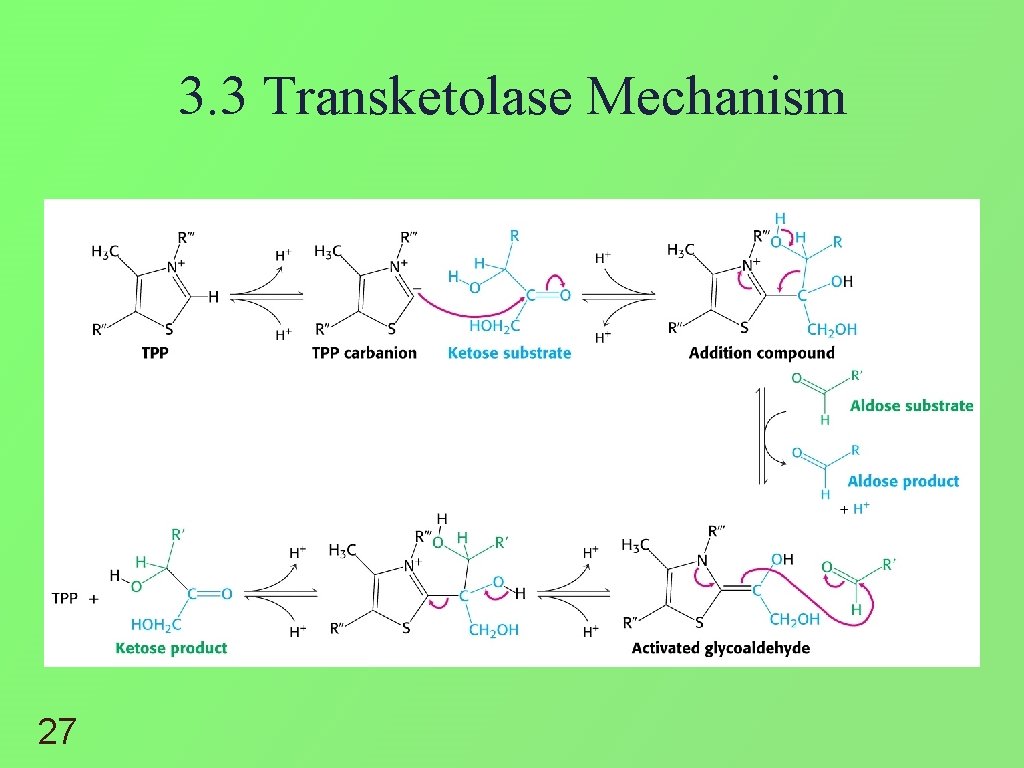
3. 3 Transketolase Mechanism 27
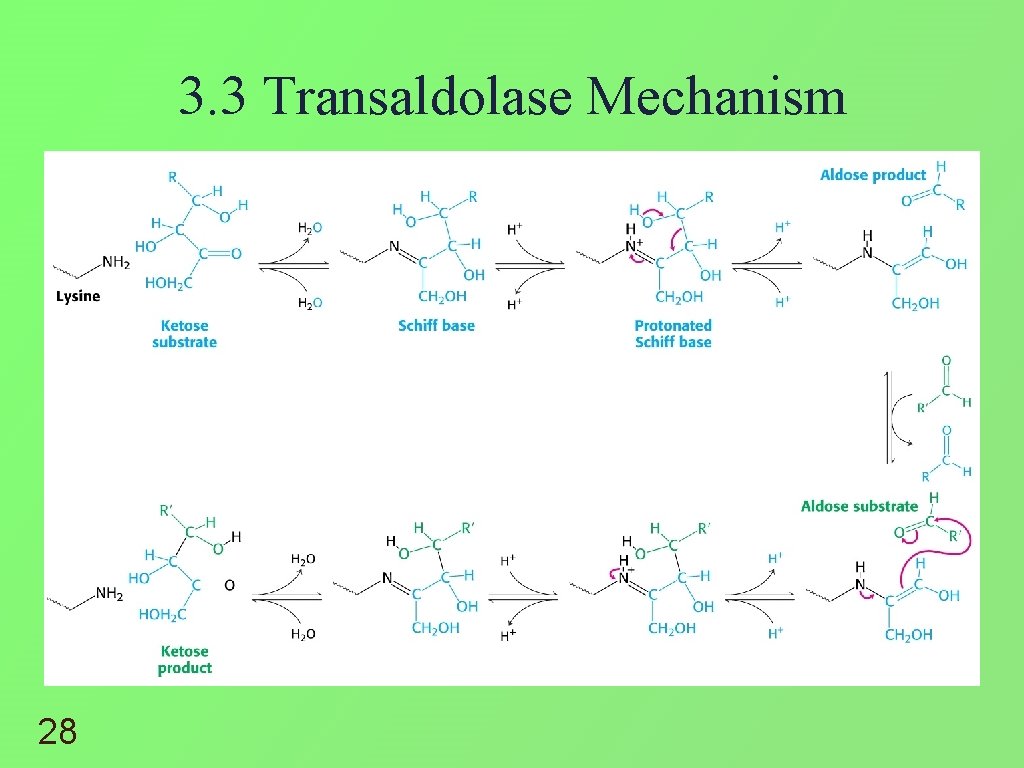
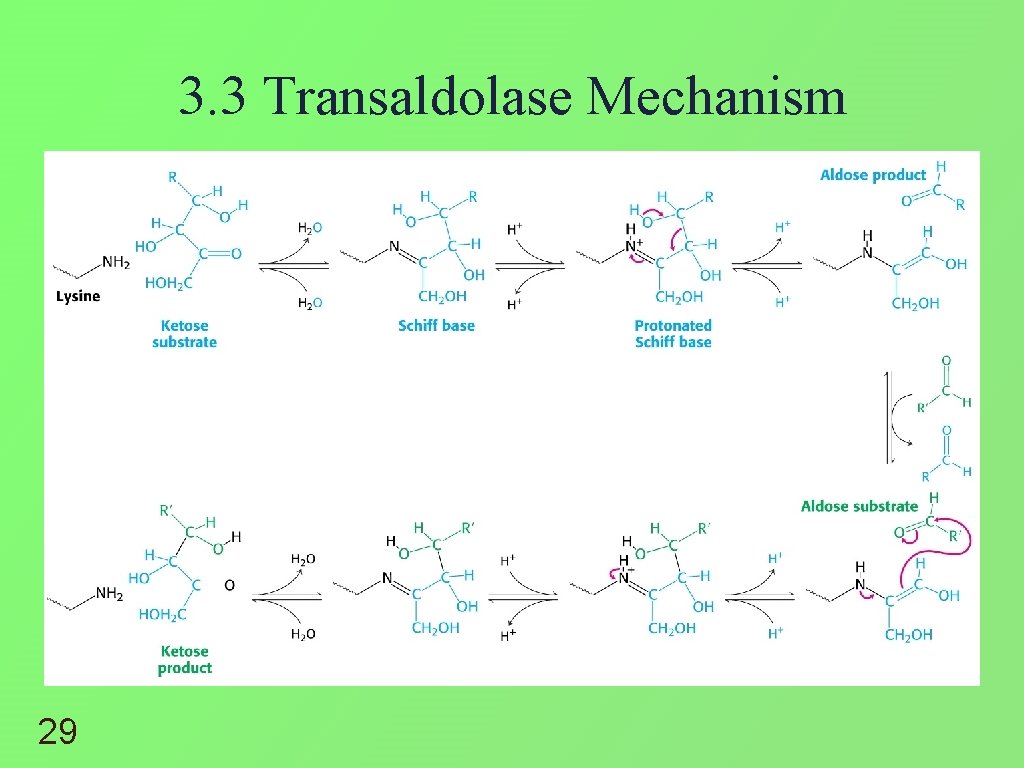
3. 3 Transaldolase Mechanism 28
3. 3 Transaldolase Mechanism 29
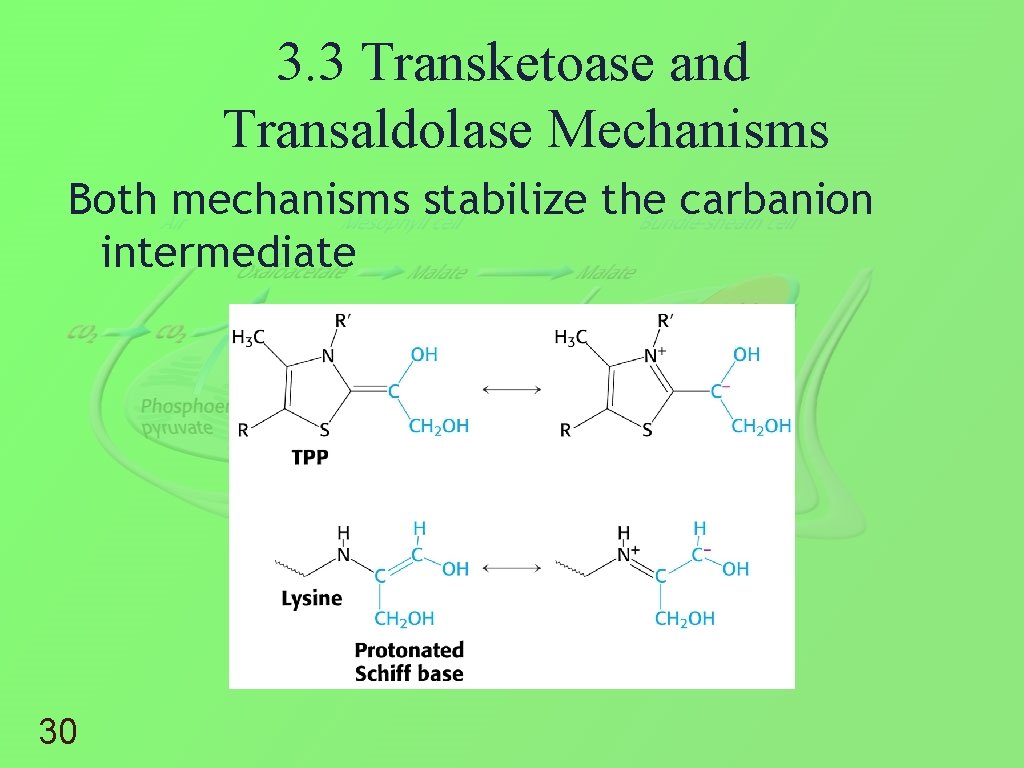
3. 3 Transketoase and Transaldolase Mechanisms Both mechanisms stabilize the carbanion intermediate 30
4. Coordination with Glycolysis Text 31