
Lecture 7 Stakeholder Analysis Life Cycle Analysis n




- Slides: 13
Lecture 7: Stakeholder Analysis & Life Cycle Analysis n n n Why stakeholder analysis What is a stakeholder What is stakeholder analysis When is stakeholder analysis conducted How to implement it Life cycle analysis
Why Stakeholder Analysis? n n Premise: A project is more likely to be successful if it BEGINs well. An understanding of stakeholders’ needs and expectations in crucial to success. The project management team must identify the stakeholders, determine what their needs and expectations are, and then manage and influence those expectations to ensure a successful project.
What Is a Stakeholder? n Individuals, groups, or organizations that have an interest in the project and can mobilize resources to affect its outcome in some way
What Is Stakeholder Analysis? n Refers to the range of techniques or tools used to identify and understand the needs and expectations of major interests inside and outside the project environment
When to Conduct a SA? n n Before a project is initiated at some beginning phase Before it is too late
How to implement SA? 1. 2. 3. 4. 5. Identify who they are (by name) Identify their interests, impact level, and relative priority Assess their importance and influence levels Outline assumptions and risks Define their participation
Step 1: Identify who they are (by name)
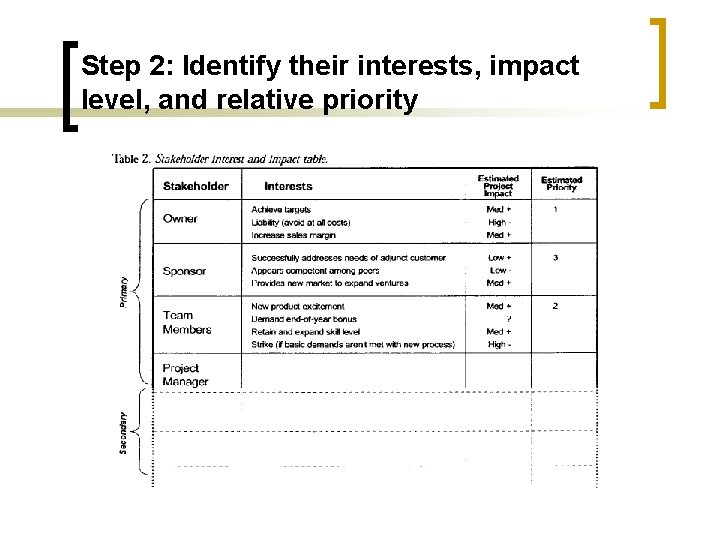
Step 2: Identify their interests, impact level, and relative priority
Step 3: Assess their importance and influence levels
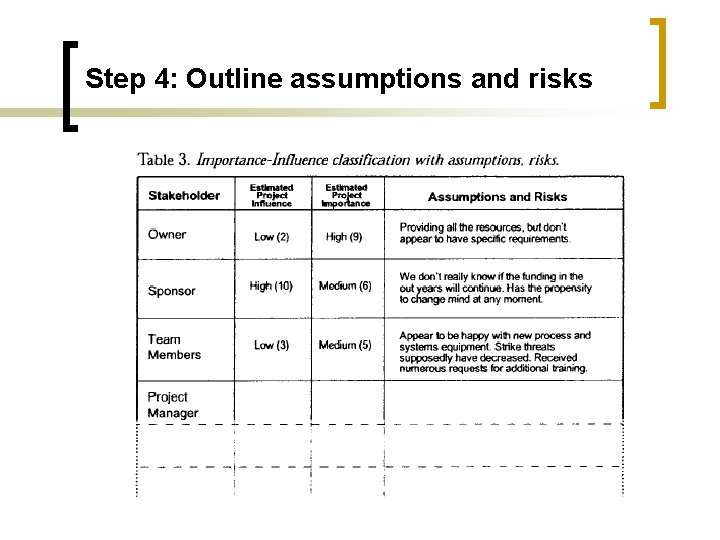
Step 4: Outline assumptions and risks
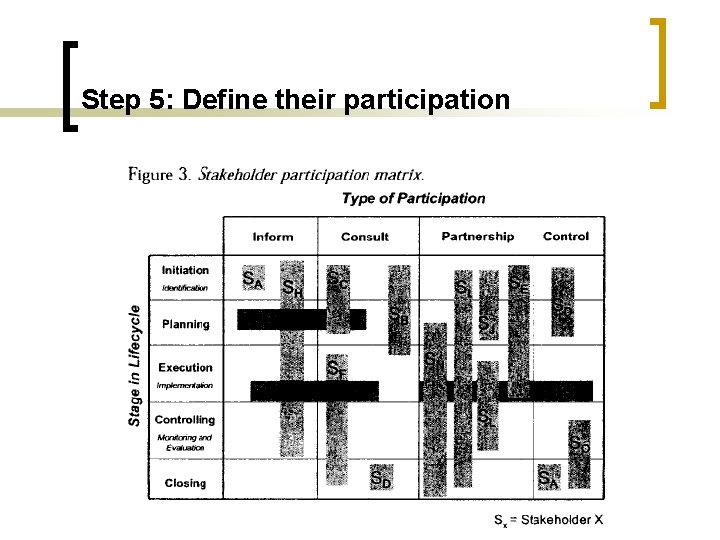
Step 5: Define their participation
Life Cycle Analysis n n n Birth: product innovation Growth: more formal structures Maturity: more bureaucratic structure, less innovation Decline Death Revival: higher levels of innovation
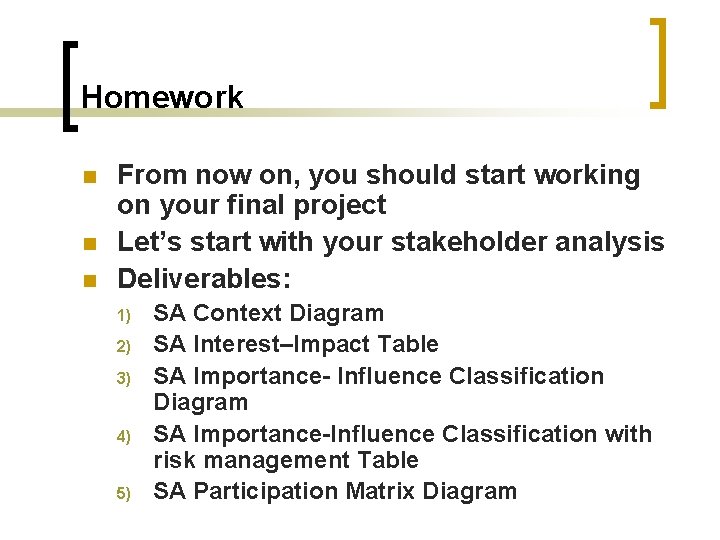
Homework n n n From now on, you should start working on your final project Let’s start with your stakeholder analysis Deliverables: 1) 2) 3) 4) 5) SA Context Diagram SA Interest–Impact Table SA Importance- Influence Classification Diagram SA Importance-Influence Classification with risk management Table SA Participation Matrix Diagram