
Lecture 7 n Overview of Vitamins and mineralsI

- Slides: 31
Lecture 7 n Overview of Vitamins and minerals-I
1 - Define vitamins, classify them according to their solubility 2 - Describe the role of water-soluble vitamins in metabolism 3 - Discuss manifestation of water soluble vitamin deficiency
Vitamins Definition, history and naming: Organic compounds needed in small amounts in diet and body does not synthesize them. n First vitamin discovered was thiamine or B 1. n Name vitamin because they essential for life (vita) and thiamine is amine. n
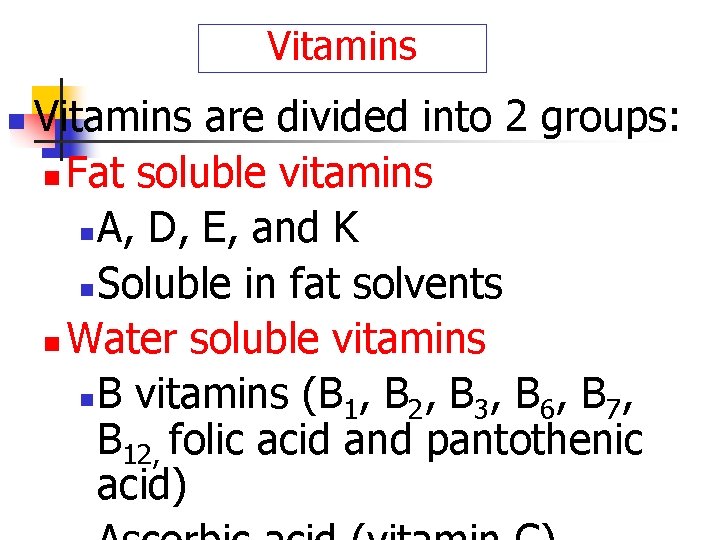
Vitamins n Vitamins are divided into 2 groups: n Fat soluble vitamins n A, D, E, and K n Soluble in fat solvents n Water soluble vitamins n B vitamins (B 1, B 2, B 3, B 6, B 7, B 12, folic acid and pantothenic acid)
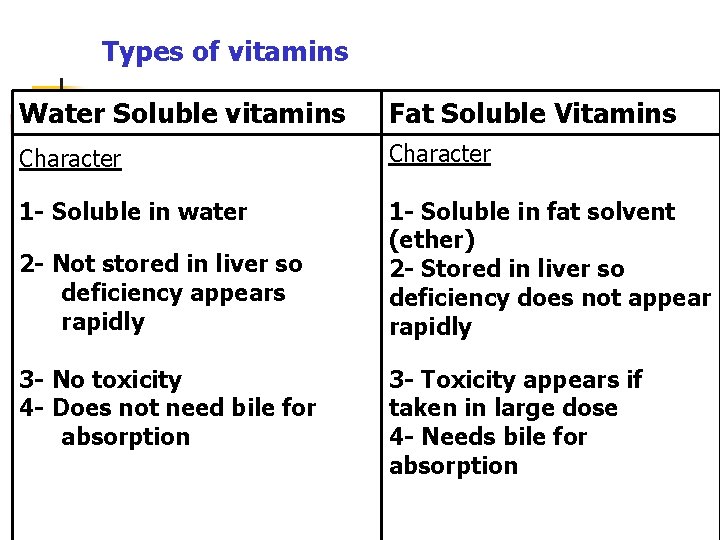
Types of vitamins Water Soluble vitamins Fat Soluble Vitamins Character 1 - Soluble in water 1 - Soluble in fat solvent (ether) 2 - Stored in liver so deficiency does not appear rapidly 2 - Not stored in liver so deficiency appears rapidly 3 - No toxicity 4 - Does not need bile for absorption 3 - Toxicity appears if taken in large dose 4 - Needs bile for absorption
The Water-Soluble Vitamins B-vitamins and vitamin C
Water Soluble Vitamins n n n Most are coenzymes so their deficiencies result in abnormal metabolism Acute toxicity unlikely to happen due to ability to excrete excesses Microbial synthesis in ruminants.
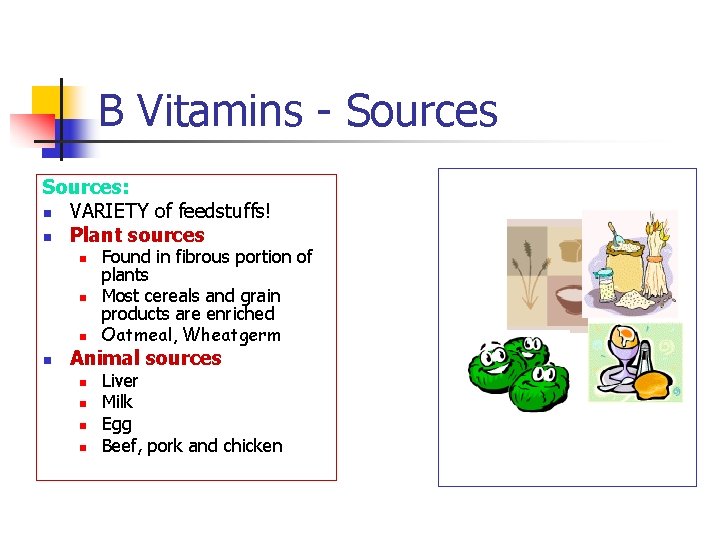
B Vitamins - Sources: n VARIETY of feedstuffs! n Plant sources n n Found in fibrous portion of plants Most cereals and grain products are enriched Oatmeal, Wheatgerm Animal sources n n Liver Milk Egg Beef, pork and chicken
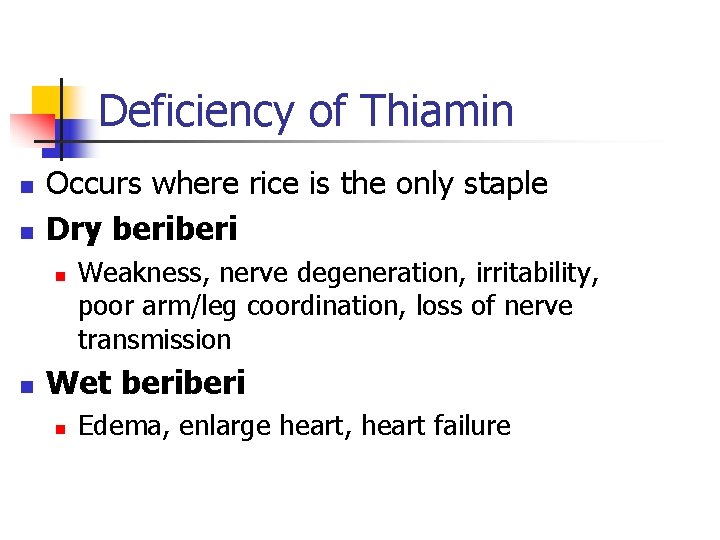
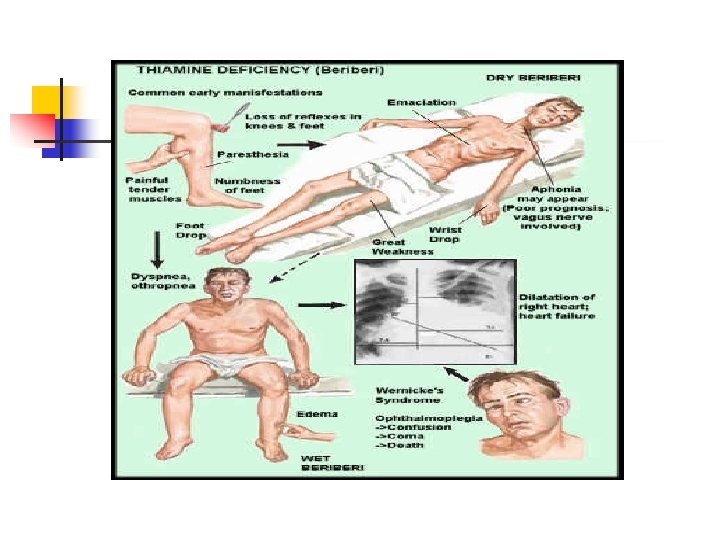
Vitamin B 1 - Thiamine Functions n n n Essential for release of energy from carbohydrates Necessary for appetite and good health Needed for normal functioning of nervous system Deficiency n Fatigue, depression, irritability n Beri-beri - disease of nervous system Common in countries where polished rice is staple food
Deficiency of Thiamin n n Occurs where rice is the only staple Dry beri n n Weakness, nerve degeneration, irritability, poor arm/leg coordination, loss of nerve transmission Wet beri n Edema, enlarge heart, heart failure
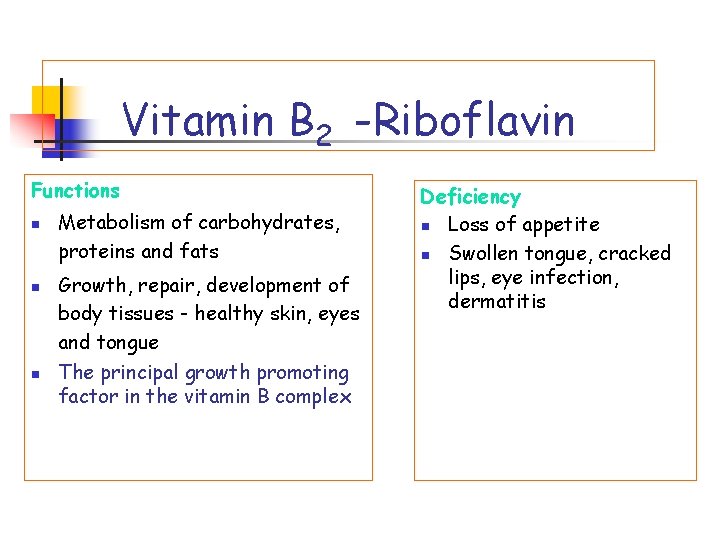
Vitamin B 2 -Riboflavin Functions n n n Metabolism of carbohydrates, proteins and fats Growth, repair, development of body tissues - healthy skin, eyes and tongue The principal growth promoting factor in the vitamin B complex Deficiency n Loss of appetite n Swollen tongue, cracked lips, eye infection, dermatitis
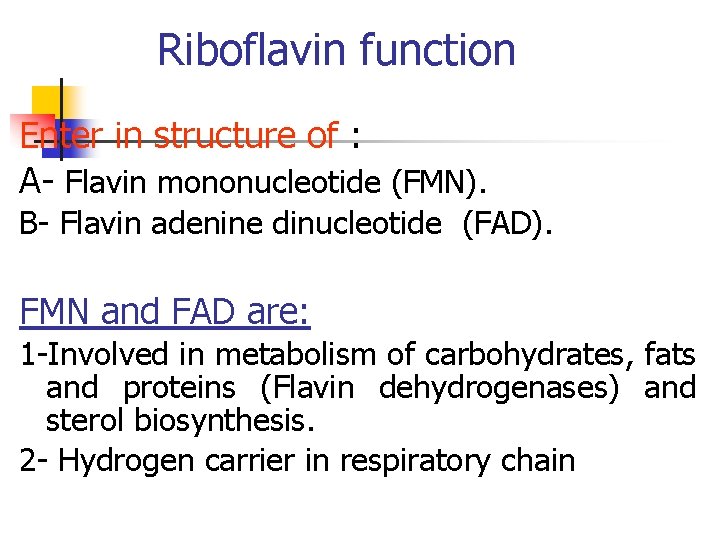
Riboflavin function Enter in structure of : A- Flavin mononucleotide (FMN). B- Flavin adenine dinucleotide (FAD). FMN and FAD are: 1 -Involved in metabolism of carbohydrates, fats and proteins (Flavin dehydrogenases) and sterol biosynthesis. 2 - Hydrogen carrier in respiratory chain
Vitamin B -Niacin (Nicotinic acid) Functions n Metabolism of carbohydrates, proteins and fats Deficiency n Fatigue, depression, irritability
Pellagra n Early stages: Anorexia n Rough skin n n Advanced stages 3 D’s of pellagra: dermatitis, diarrhea, dementia th D is death. n 4 n
Causes of pellagra Diet deficient in Niacin and tryptophan as corn. isoniazid therapy n carcinoid syndrome: excess serotonin synthesis n Uses of niacin 1 - Prevent pellagra 2 - Hypolipidemic agent (nicotinic acid in large doses lowers both triglycerides and cholesterol
Pantothenic acid (vitamin B 5) Pantothenic acid is formed by combination of pantoic acid and β-alanine • Pantothenic acid is a cofactor for coenzyme A (Co. A) and acyl carrier protein (ACP).
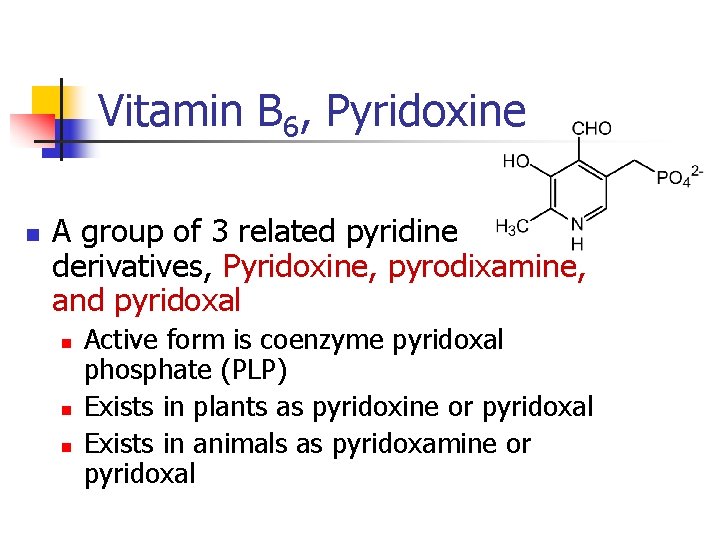
Vitamin B 6, Pyridoxine n A group of 3 related pyridine derivatives, Pyridoxine, pyrodixamine, and pyridoxal n n n Active form is coenzyme pyridoxal phosphate (PLP) Exists in plants as pyridoxine or pyridoxal Exists in animals as pyridoxamine or pyridoxal
Pyridoxine - Functions n n n Transamination processes Decarboxylation of amino acids Conversion of glycogen to glucose Production of serotonin Production of epinephrine and norepinephrine
Pyridoxine Deficiency Growth retardation due to disturbance of AA metabolism. n Pellagra: Tryptophan----Niacin n Anemia n Convulsion: GABA deficiency. n Requirements: Adults: 2. 0 mg n Pregnancy: 2. 5 mg n
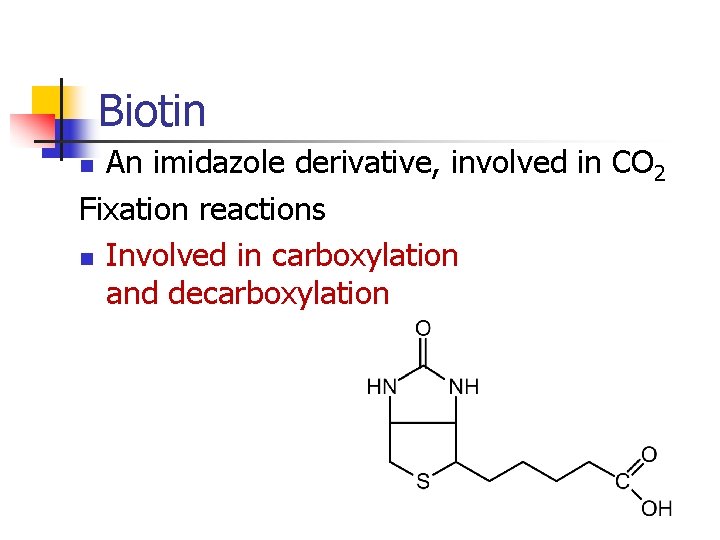
Biotin An imidazole derivative, involved in CO 2 Fixation reactions n Involved in carboxylation and decarboxylation n
Vitamin B 12 Synthesized by bacteria only. n Red in color n Stored in liver n Absorbed only in presence of intrinsic factor (glycoprotein in parietal cells) n Present in liver, fish, eggs, milk n Absent in vegetables and fruits n
Vitamin B 12 - Functions n Related to folic acid metabolism. n Coenzyme for numerous reactions: n n n Methylmalonyl Co. A to succinyl Co. A DNA synthesis Transmethylation (methionine synthesis)
Causes of B 12 deficiency n n Pernicious anemia ( loss of intrinsic factor) Oral contraceptive drugs Intestinal parasites Gastrectomy
Manifestation of B 12 deficiency n macrocytic megaloblastic anemia n n Hyperchromic macrocytes appear in blood Spinal cord degeneration (irreversible) n neurological disease
Folate (Folic Acid) n n n Involved in protein metabolism. Critical role in the synthesis of DNA Folate is secreted into the GI tract with bile n If the cells of the GI tract are injured/destroyed as in the case of alcohol abuse, then folate can not be absorbed, and leads to deficiency
Folate - Deficiency n Macrocytic or megaloblastic anemia, and GI tract deterioration n n Diarrhea, fatigue, depression and confusion Impairs cell division and proteins synthesis n n n Reduced growth Alters DNA metabolism Folate deficiency masks vitamin B 12 deficiency
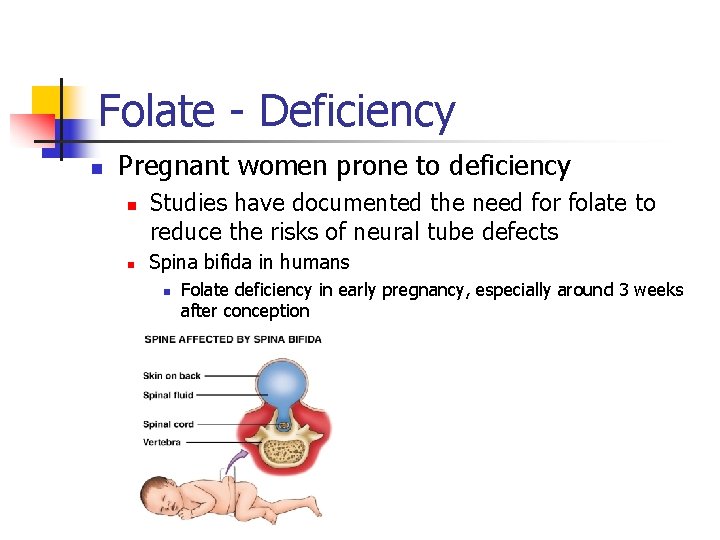
Folate - Deficiency n Pregnant women prone to deficiency n n Studies have documented the need for folate to reduce the risks of neural tube defects Spina bifida in humans n Folate deficiency in early pregnancy, especially around 3 weeks after conception
Ascorbic acid vitamin C; anti-scorbutic vitamin (scurvy) n Sources: citrus fruits, tomatoes, Guava n
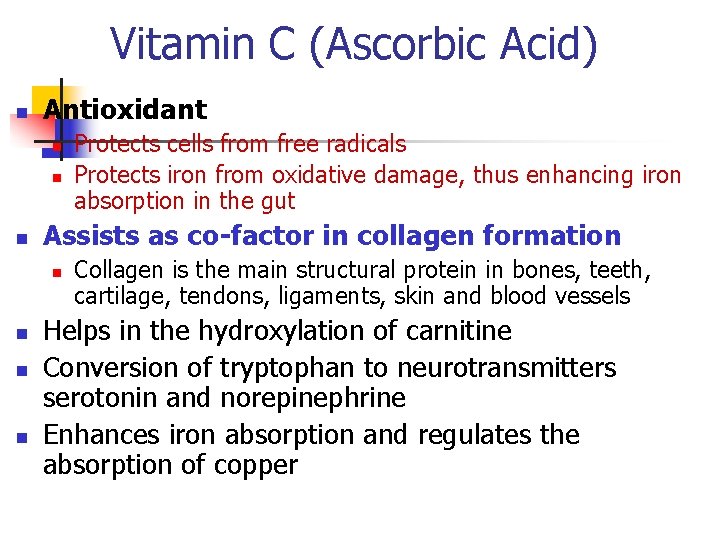
Vitamin C (Ascorbic Acid) n Antioxidant n n n Assists as co-factor in collagen formation n n Protects cells from free radicals Protects iron from oxidative damage, thus enhancing iron absorption in the gut Collagen is the main structural protein in bones, teeth, cartilage, tendons, ligaments, skin and blood vessels Helps in the hydroxylation of carnitine Conversion of tryptophan to neurotransmitters serotonin and norepinephrine Enhances iron absorption and regulates the absorption of copper
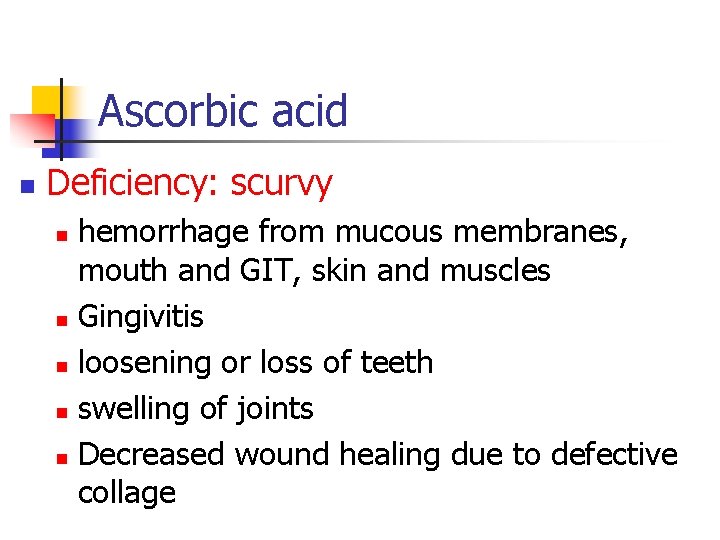
Ascorbic acid n Deficiency: scurvy hemorrhage from mucous membranes, mouth and GIT, skin and muscles n Gingivitis n loosening or loss of teeth n swelling of joints n Decreased wound healing due to defective collage n