
Lecture 7 Localization Techniques ODRP 755 Radiology II
- Slides: 39
Lecture 7 Localization Techniques ODRP 755 Radiology II Theory and Interpretation Heidi L. Christensen, DDS, MS 1
Objectives ¨ Identify the techniques used in localization of an object in the third dimension ¨ Identify the uses of localization techniques 2
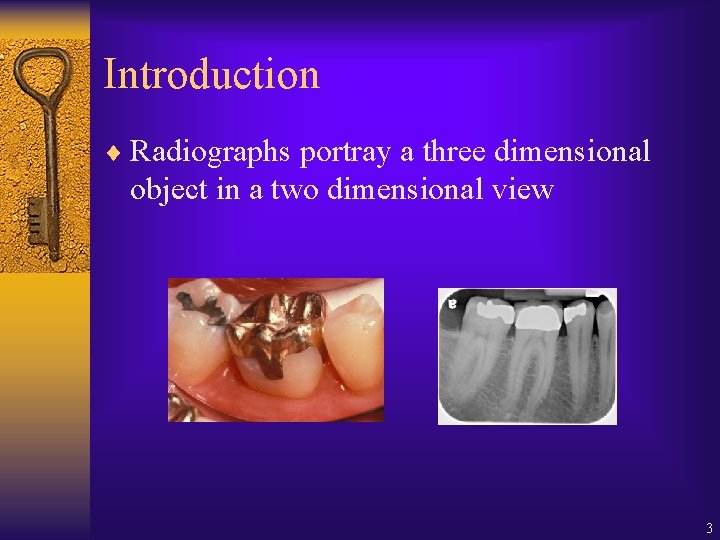
Introduction ¨ Radiographs portray a three dimensional object in a two dimensional view 3
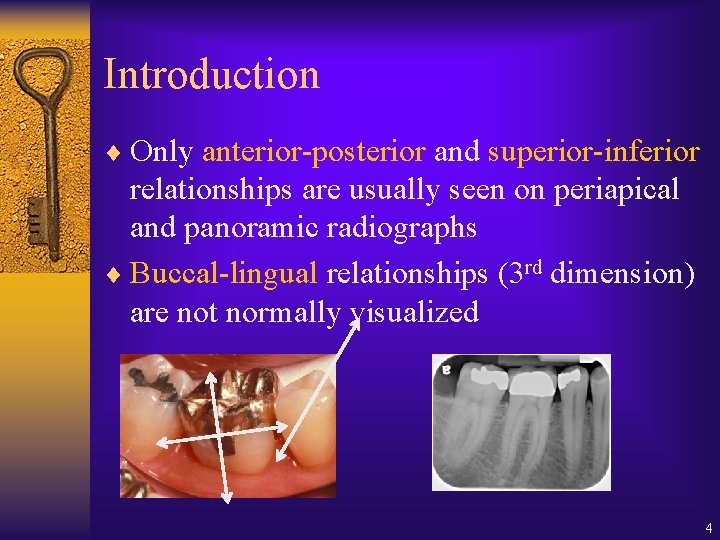
Introduction ¨ Only anterior-posterior and superior-inferior relationships are usually seen on periapical and panoramic radiographs ¨ Buccal-lingual relationships (3 rd dimension) are not normally visualized 4
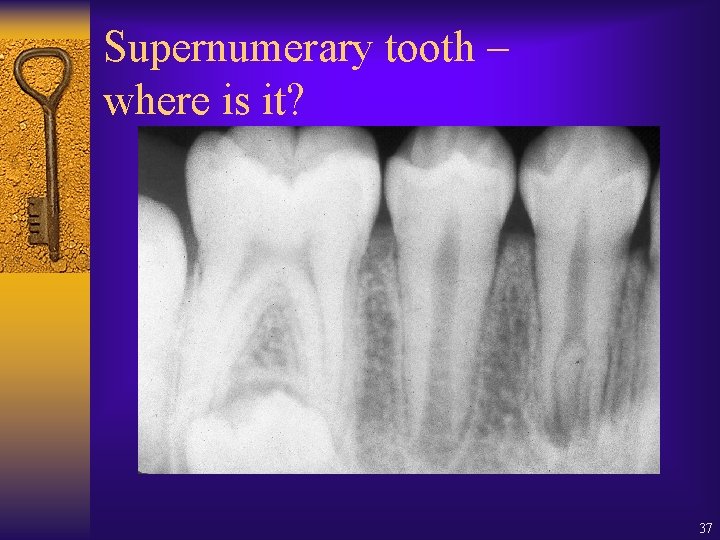
Uses of Localization Technique ¨ Foreign objects ¨ Root tips ¨ Supernumerary teeth ¨ Broken instruments ¨ Impacted teeth ¨ Separation of roots in multiroot teeth 5
Methods of Localization ¨ Tube Shift Technique – Defines the location of an unknown object, relative to the position of a known object – Two periapical radiographs used with different horizontal or vertical angulations (Tube-Shift) – Usually accomplished with an FMX with no further exposures 6
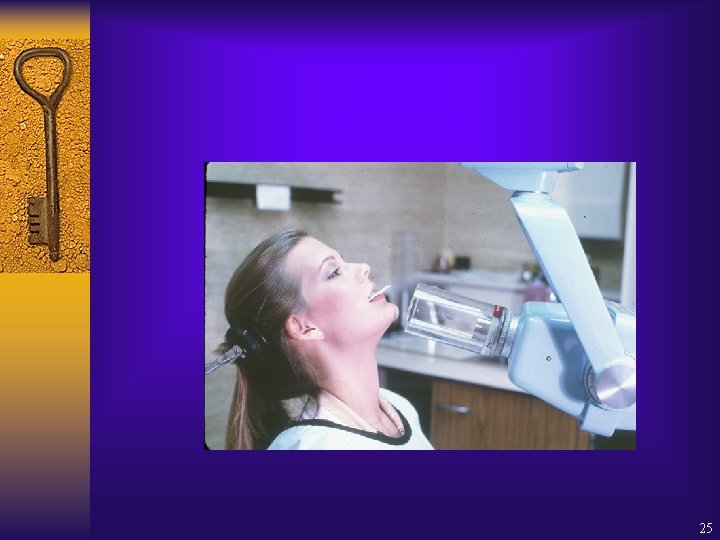
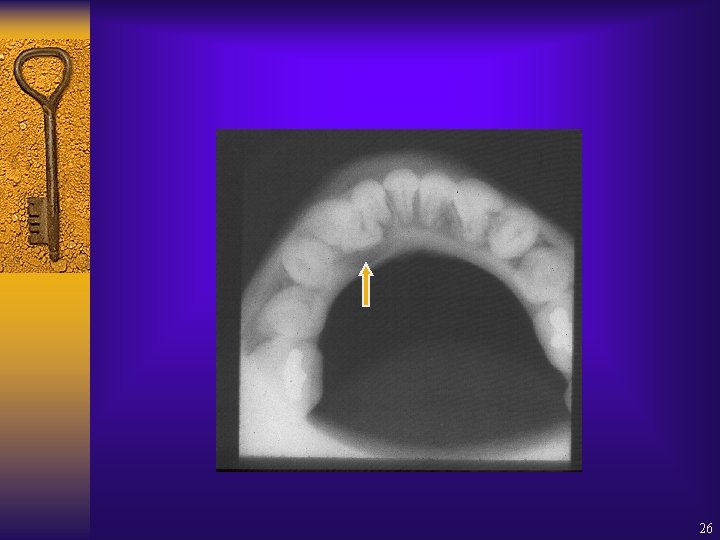
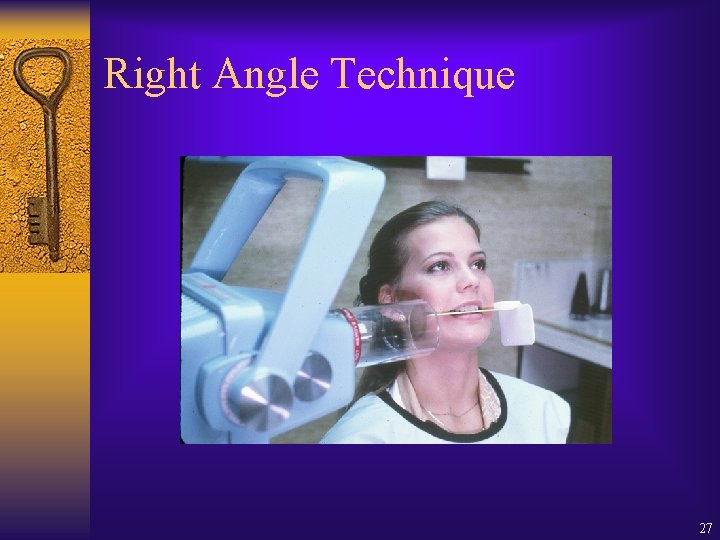
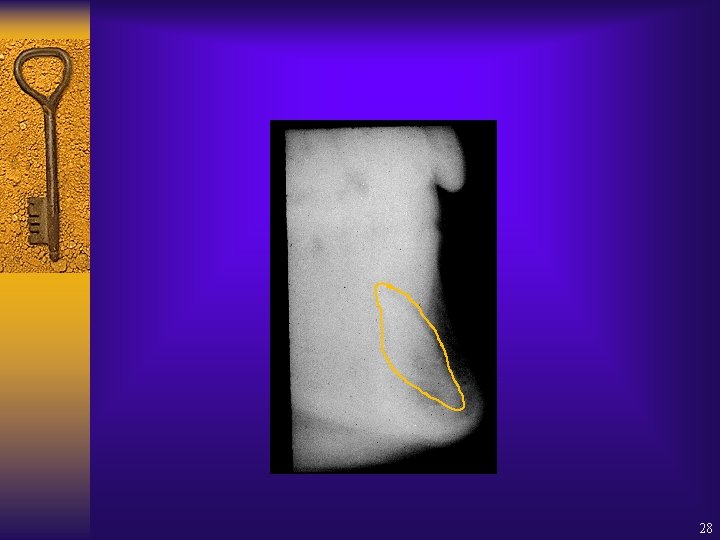
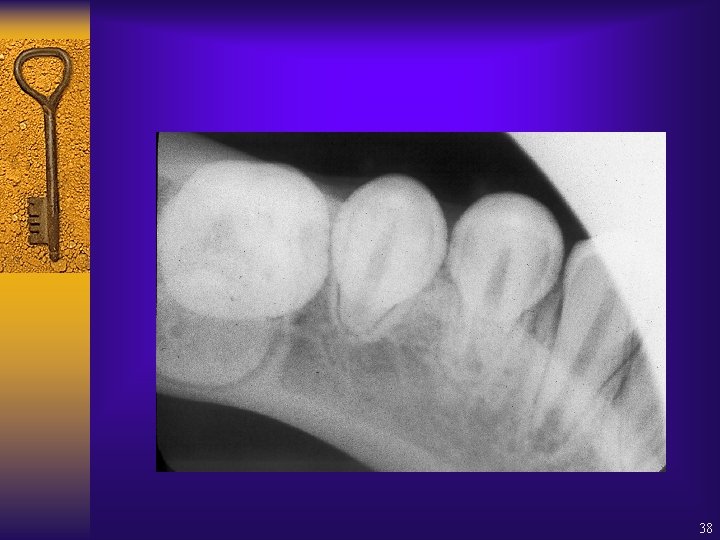
Methods of Localization ¨ Right Angle Technique – Two radiographs taken at right angles to each other – Sometimes called the cross sectional technique – Example: Occlusal Radiograph • Occlusal film is at right angle to periapical 7
Tube Shift Technique 8
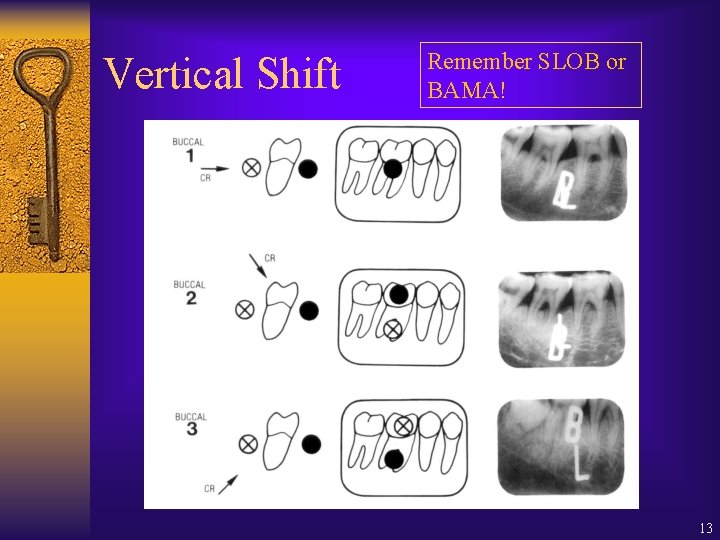
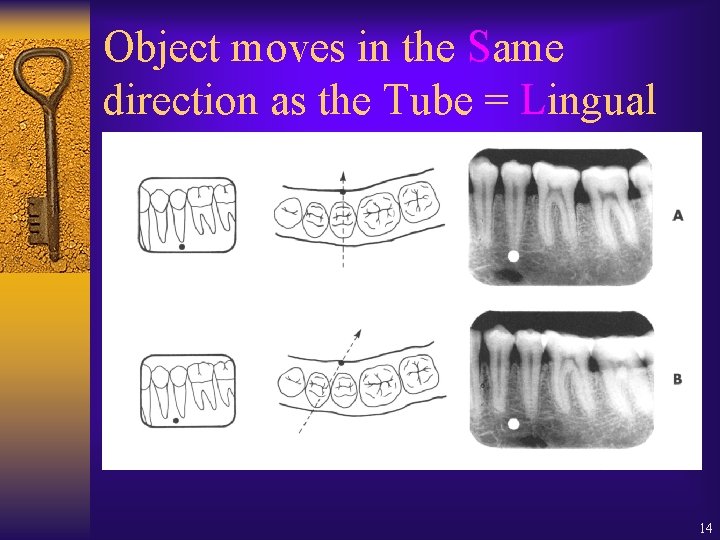
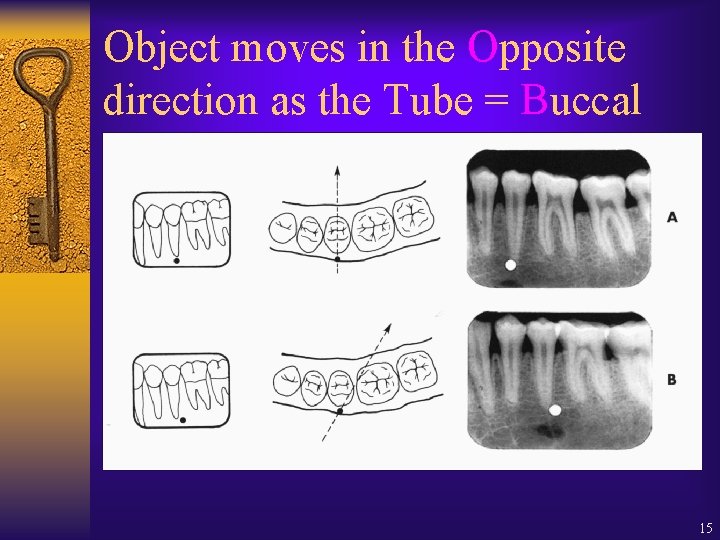
Synonyms for Tube Shift Technique ¨ Buccal Object Rule ¨ SLOB Rule – Same Lingual Opposite Buccal ¨ Clark’s Rule ¨ BAMA Rule – Buccal Always Moves Away 9
Tube-Shift Technique ¨ One periapical radiograph is taken ¨ A second periapical radiograph taken: – The film is placed in the same position – The x-ray tube is shifted either mesial or distal (or superior or inferior) in relation to the position of the previous radiograph 10
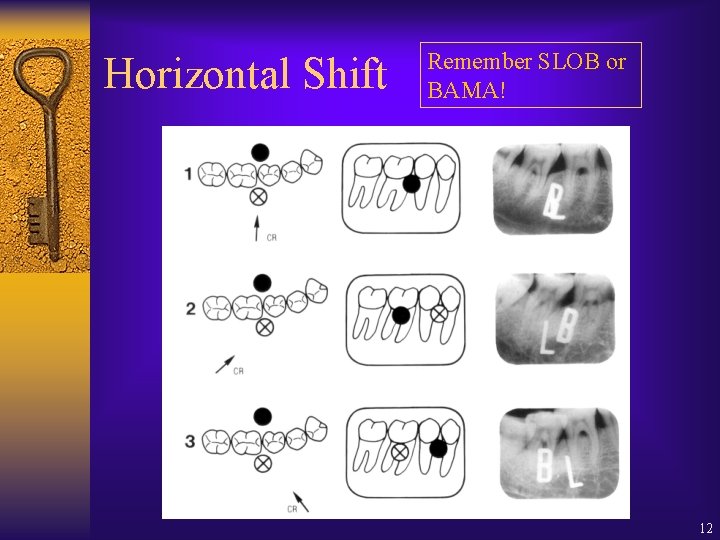
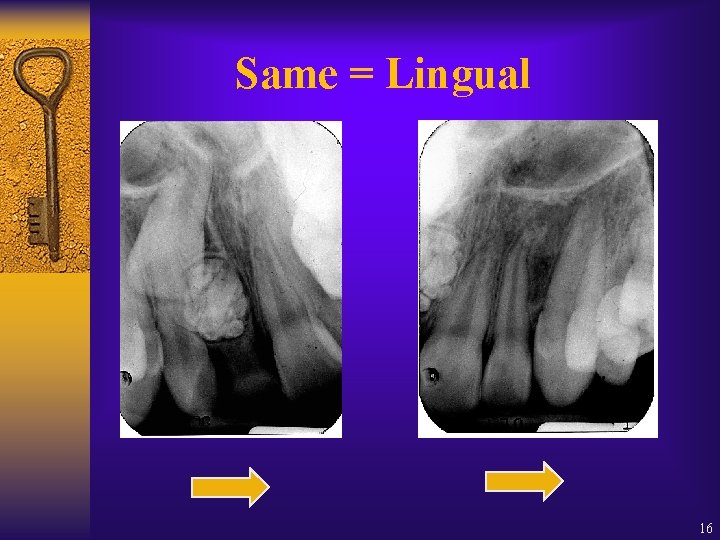
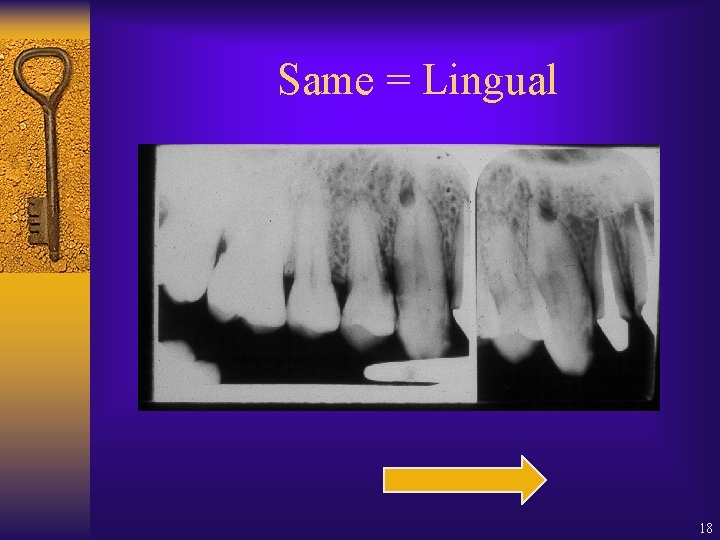
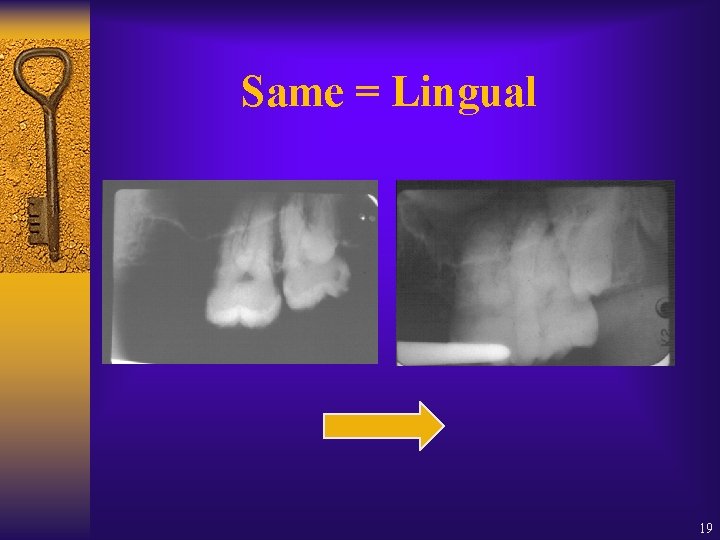
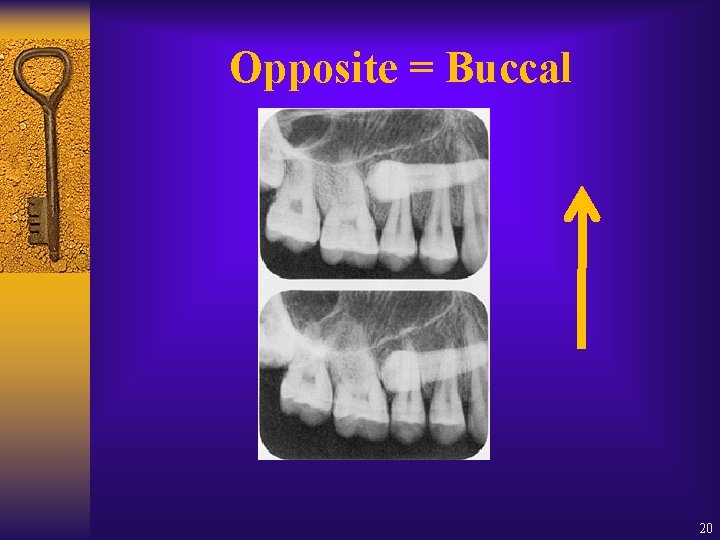
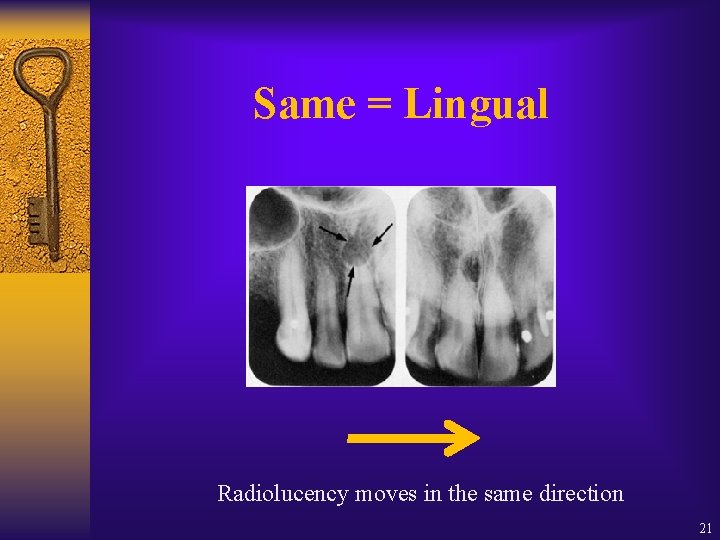
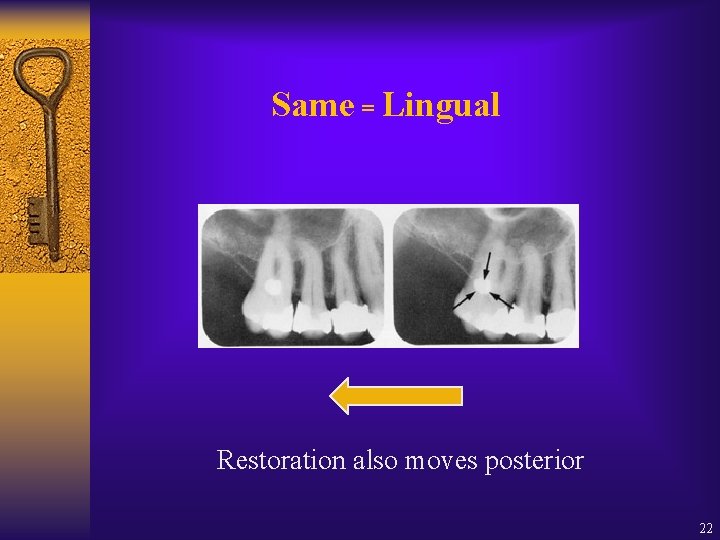
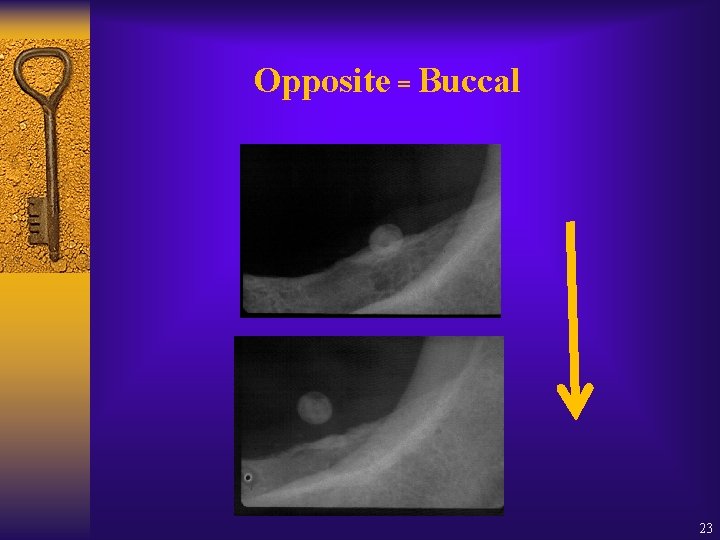
Method ¨ Select a reference point common to both radiographs ¨ If the object of interest moved relative to the reference point, in the SAME direction as the tube – the object is LINGUAL to the reference point ¨ If the object of interest moved relative to the reference point, in the OPPOSITE direction to the tube – the object is BUCCAL to the reference point 11
Horizontal Shift Remember SLOB or BAMA! 12
Vertical Shift Remember SLOB or BAMA! 13
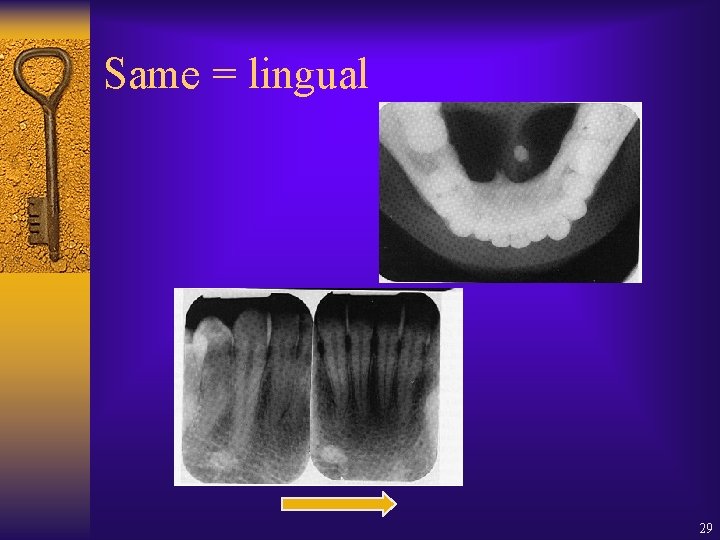
Object moves in the Same direction as the Tube = Lingual 14
Object moves in the Opposite direction as the Tube = Buccal 15
Same = Lingual 16
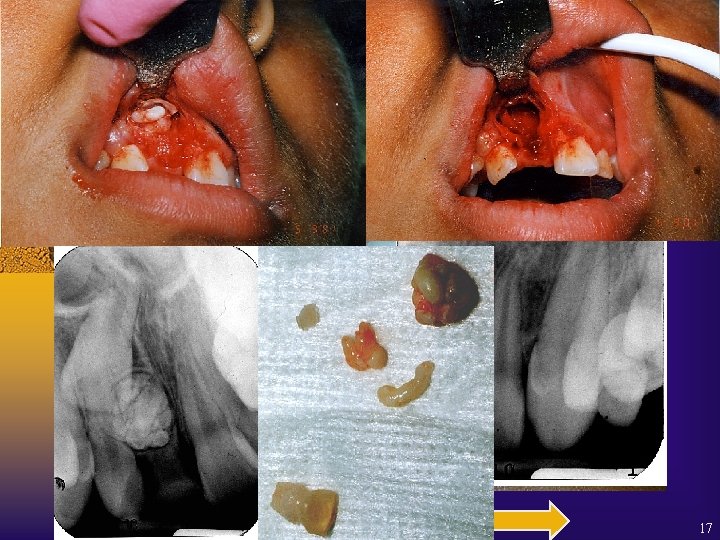
17
Same = Lingual 18
Same = Lingual 19
Opposite = Buccal 20
Same = Lingual Radiolucency moves in the same direction 21
Same = Lingual Restoration also moves posterior 22
Opposite = Buccal 23
Right Angle Technique 24
25
26
Right Angle Technique 27
28
Same = lingual 29
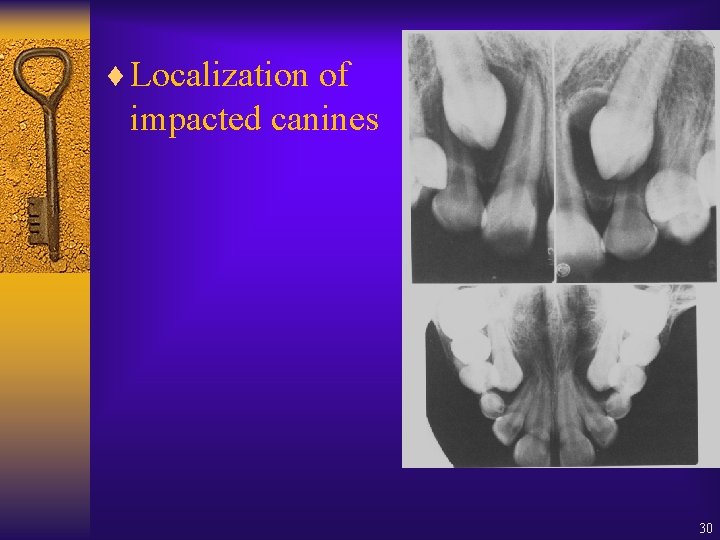
¨ Localization of impacted canines 30
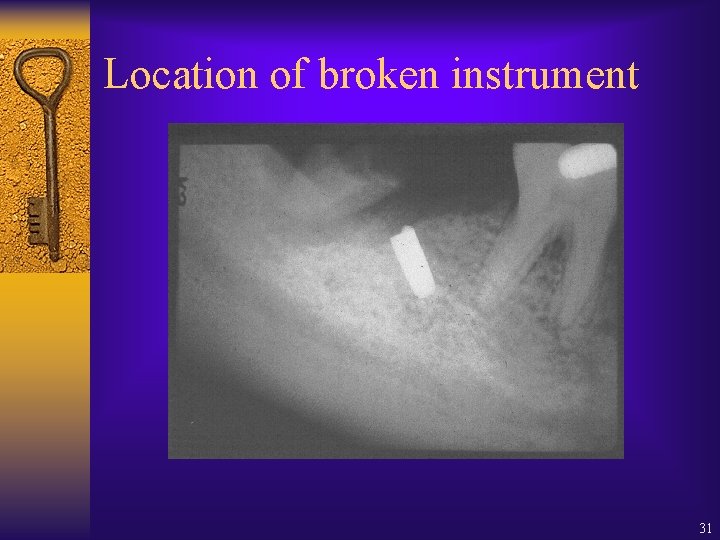
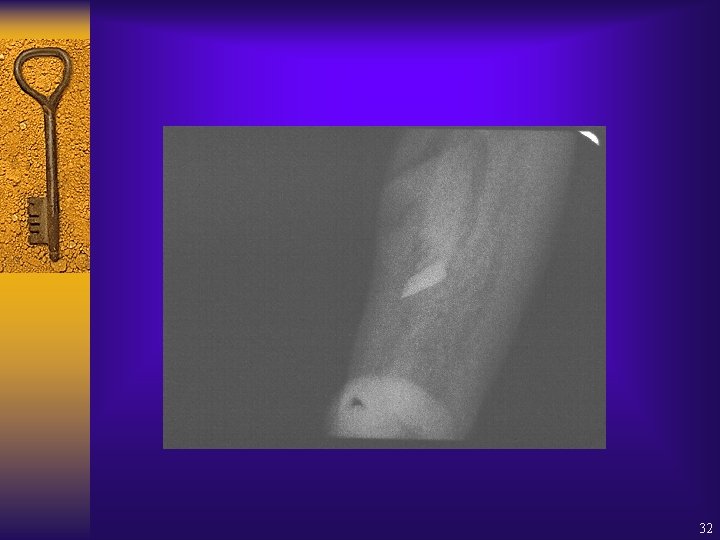
Location of broken instrument 31
32
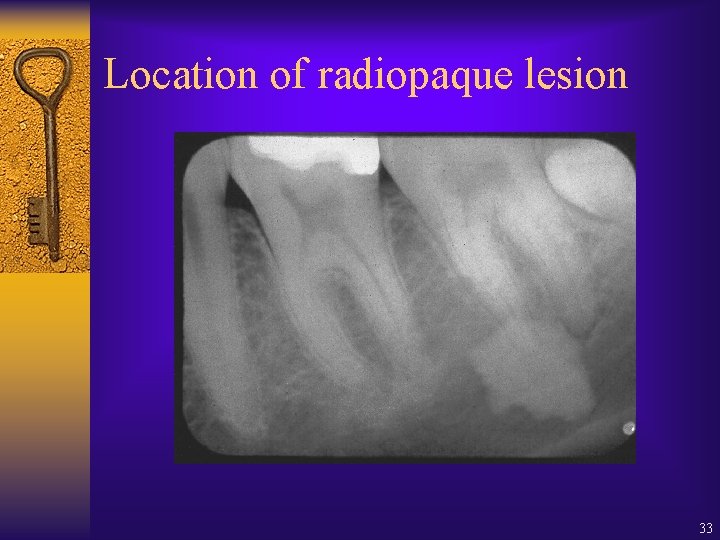
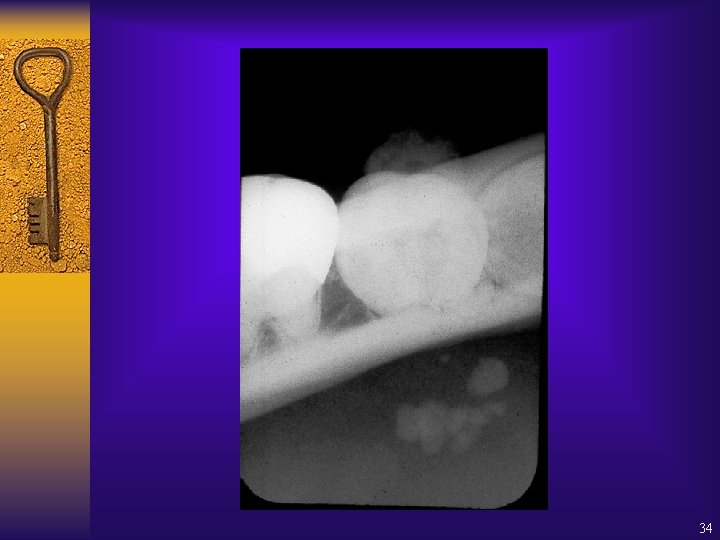
Location of radiopaque lesion 33
34
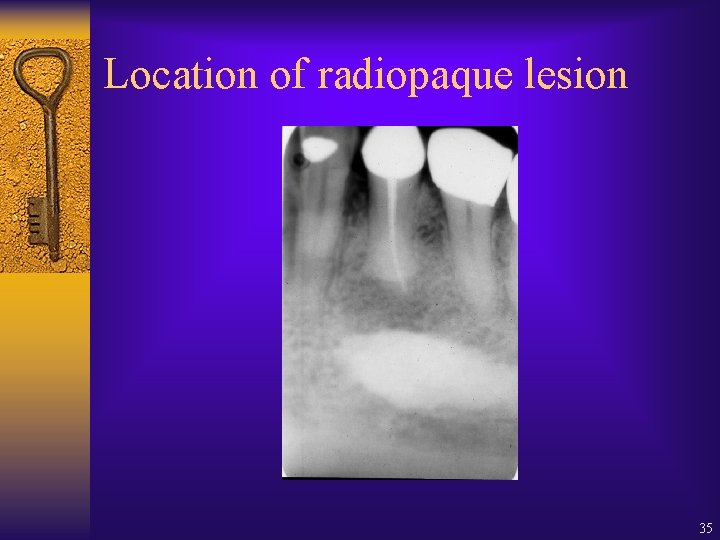
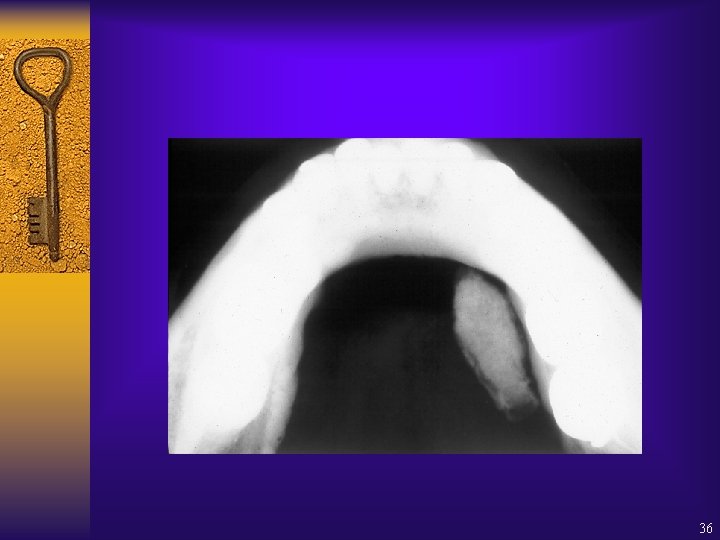
Location of radiopaque lesion 35
36
Supernumerary tooth – where is it? 37
38
Questions? 39