
Lecture 7 Introduction to Business Fundamentals of Management
Lecture 7 Introduction to Business Fundamentals of Management www. Assignment. Point. com
Management is the process of coordinating work activities so that they are completed efficiently and effectively to reach organizational objectives. Organizational objective is a visionary target that an organization and its employees www. Assignment. Point. com
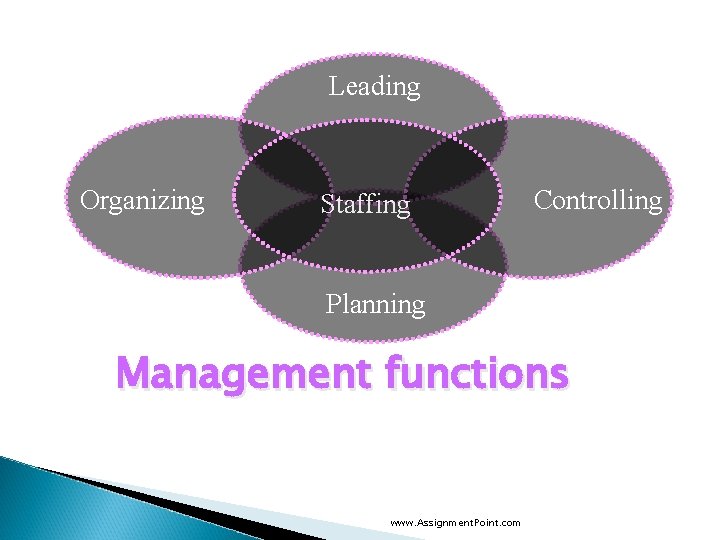
Leading Organizing Staffing Controlling Planning Management functions www. Assignment. Point. com
Planning Defining goals, establishing strategies to achieve goals and coordinate activities. It also means deciding in advance what is to be done. Why do managers need planning? ◦ To ensure that things will get done on right time, in a right way, with right resources, and by the right person. www. Assignment. Point. com
Organizing function of management consists of the arrangement of people and activities so that the job task in properly done. Why do managers need to organize? ◦ To make sure that the job is done in a organized manner. www. Assignment. Point. com
Leading means directing subordinates through orders, instructions, assignments & cooperation. Autocratic leadership ◦ Delegates little authority & controls the significant area. Democratic leadership ◦ Consults with subordinates about job related issues. Laissez-Faire leadership ◦ Avoiding power & responsibility by giving assignments & support but staying out of the subordinates’ way. www. Assignment. Point. com
Controlling is a management function of checking, comparing and correcting work activities. The process of control: ◦ Set standards for time, quantity and quality. ◦ Measure performance ◦ Compare performance to standards ◦ Make necessary modifications www. Assignment. Point. com
Staffing is a management function that deals with the selection, placement, training, development, appraisal and compensation of human resources. Staffing is not a activity of HR only, rather nowadays line managers and mid managers of other departments should be involved. www. Assignment. Point. com
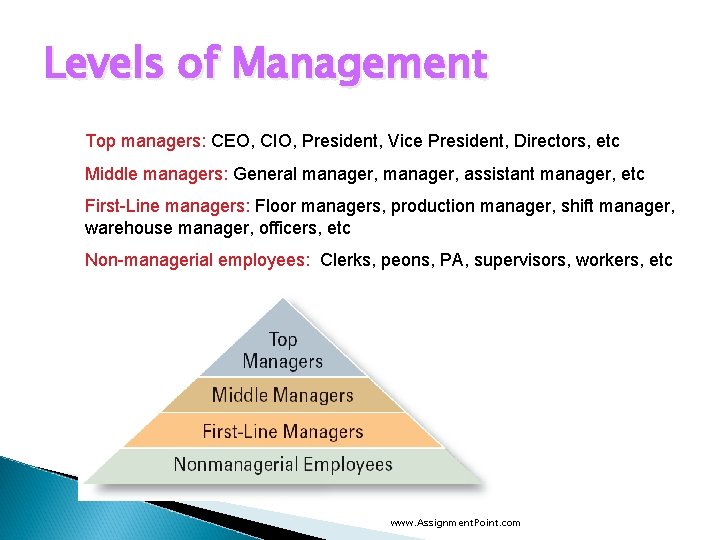
Levels of Management Top managers: CEO, CIO, President, Vice President, Directors, etc Middle managers: General manager, assistant manager, etc First-Line managers: Floor managers, production manager, shift manager, warehouse manager, officers, etc Non-managerial employees: Clerks, peons, PA, supervisors, workers, etc www. Assignment. Point. com
Managerial roles Interpersonal ◦ Figurehead, Leader, Liaison Informational ◦ Monitor, Disseminator, Spokesperson Decisional ◦ Entrepreneur, Disturbance handler, Resource allocator, Negotiator www. Assignment. Point. com
Managerial roles (Contd. ) Figurehead: perform a number of routine duties of a legal or social nature, e. g. greeting visitors, signing legal documents. Leader: responsible for motivation, staffing, training and associated duties, e. g. performing virtually all duties that involves subordinates. Liaison: maintains self-developed networks of outside contact and informers who provide favours and information, e. g. acknowledging mail, external board work, performing other activities that involve outsiders. www. Assignment. Point. com
Managerial roles (Contd. ) Monitor: seeks and receives wide variety of internal and external information to develop through understanding of organization and environment, e. g. reading periodicals and reports, maintaining personal contacts. Disseminator: transmits information received from outsiders or from subordinates to members of the organization, e. g. holding informational meetings, making phone calls to relay information. Spokesperson: transmits information to outsiders on organization’s plans, polices, actions and results, e. g. holding board meetings, giving information to media. www. Assignment. Point. com
Managerial roles (Contd. ) Entrepreneurial: searches opportunities, initiates for to bring changes, e. g. organizing strategy and review sessions to develop new programs. Disturbance handler: responsible for corrective actions when organization faces disturbance, e. g. involve in resolving disturbance and crisis situations. Resource allocator: responsible for the allocation of organizational resources of all kinds, e. g. activities involves budgeting, programming of subordinate’s work activities. Negotiator: responsible for major organizational negotiations, e. g. participating in union contract negotiations. www. Assignment. Point. com
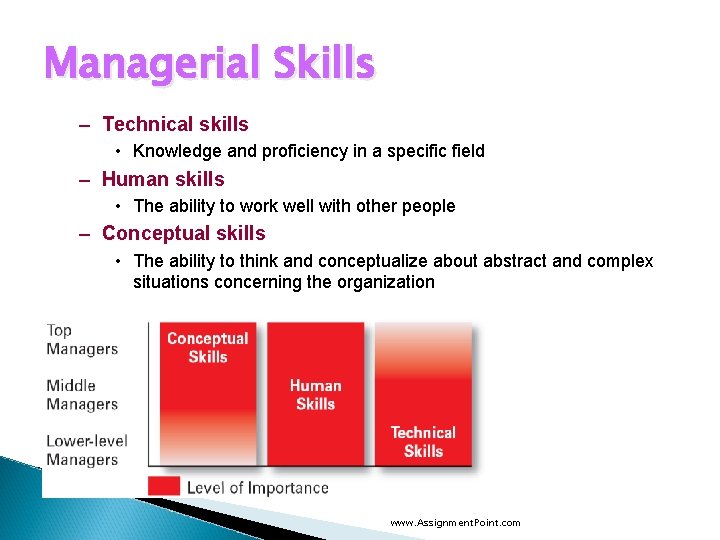
Managerial Skills – Technical skills • Knowledge and proficiency in a specific field – Human skills • The ability to work well with other people – Conceptual skills • The ability to think and conceptualize about abstract and complex situations concerning the organization www. Assignment. Point. com
- Slides: 14