
LECTURE 7 HYDROLOGIC PROCESSES PARAMETERS AND CALIBRATION THE

LECTURE #7 HYDROLOGIC PROCESSES, PARAMETERS, AND CALIBRATION
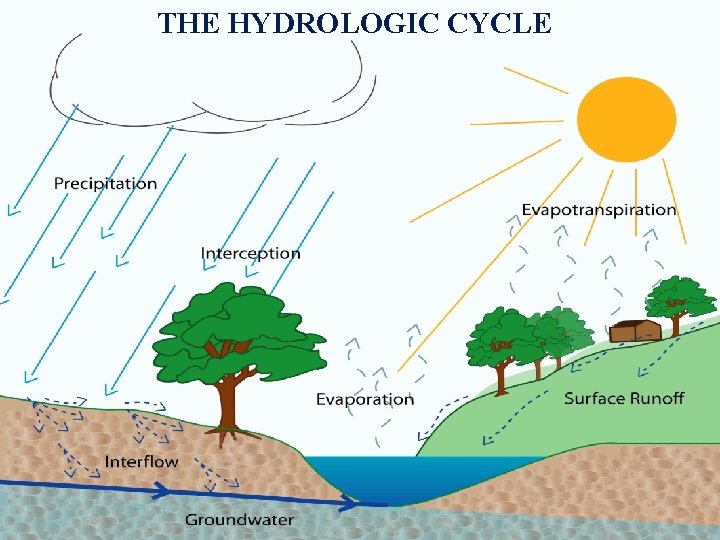
THE HYDROLOGIC CYCLE
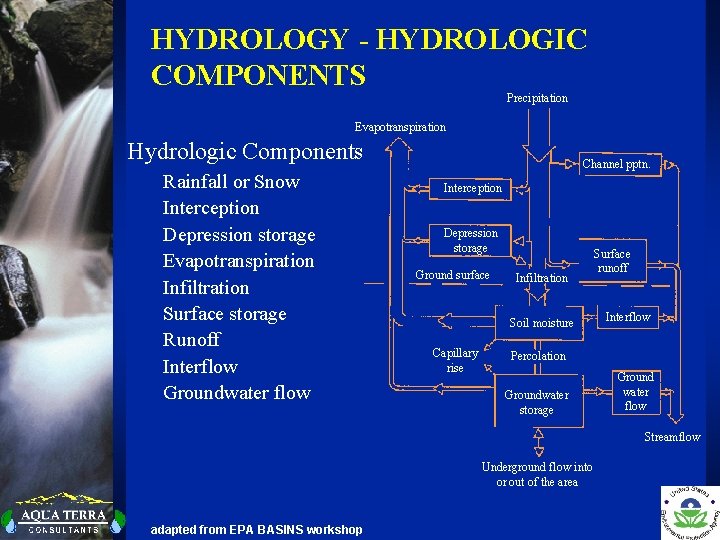
HYDROLOGY - HYDROLOGIC COMPONENTS Precipitation Evapotranspiration Hydrologic Components: Rainfall or Snow Interception Depression storage Evapotranspiration Infiltration Surface storage Runoff Interflow Groundwater flow Channel pptn. Interception Depression storage Ground surface Infiltration Soil moisture Capillary rise Surface runoff Interflow Percolation Groundwater storage Ground water flow Streamflow Underground flow into or out of the area adapted from EPA BASINS workshop
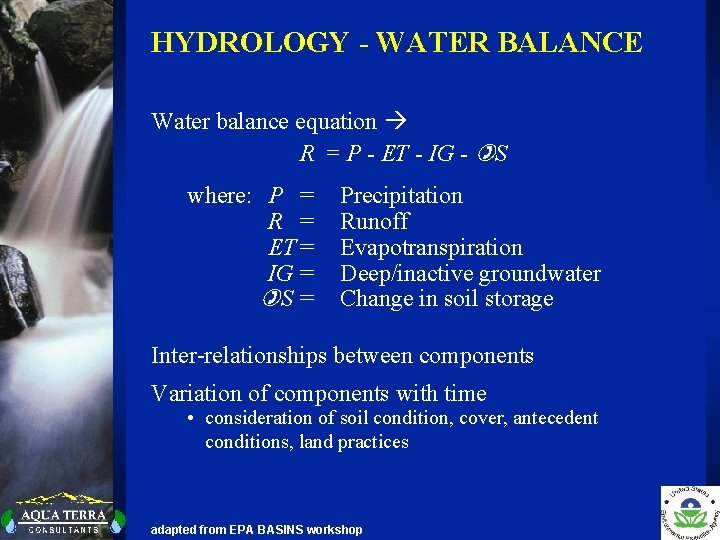
HYDROLOGY - WATER BALANCE Water balance equation R = P - ET - IG - S where: P = R = ET = IG = S = Precipitation Runoff Evapotranspiration Deep/inactive groundwater Change in soil storage Inter-relationships between components Variation of components with time • consideration of soil condition, cover, antecedent conditions, land practices adapted from EPA BASINS workshop
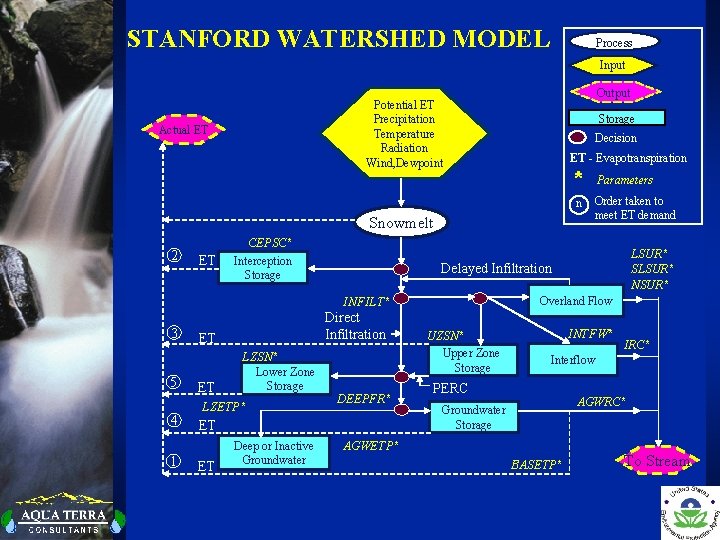
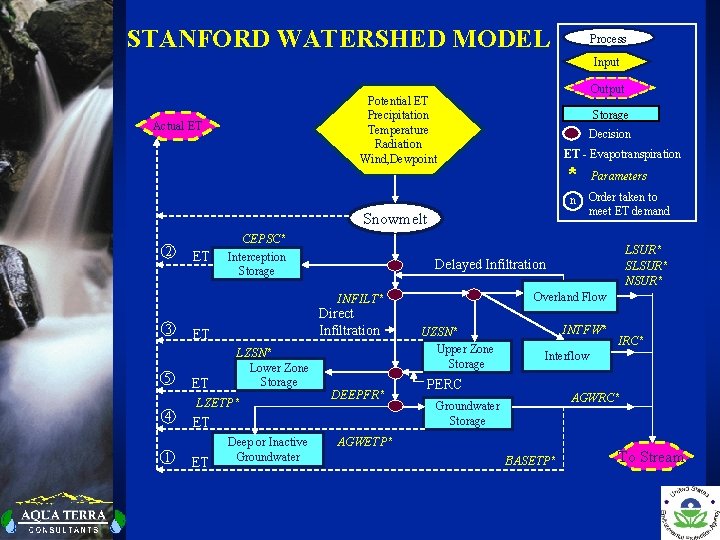
STANFORD WATERSHED MODEL Process Input Output Potential ET Precipitation Temperature Radiation Wind, Dewpoint Actual ET Storage Decision ET - Evapotranspiration * n Snowmelt 2 ET CEPSC* Interception Storage 5 4 1 Direct Infiltration ET ET LZSN* Lower Zone Storage LZETP* DEEPFR* ET ET Deep or Inactive Groundwater Order taken to meet ET demand LSUR* SLSUR* NSUR* Delayed Infiltration Overland Flow INFILT* 3 Parameters UZSN* Upper Zone Storage INTFW* IRC* Interflow PERC AGWRC* Groundwater Storage AGWETP* BASETP* To Stream
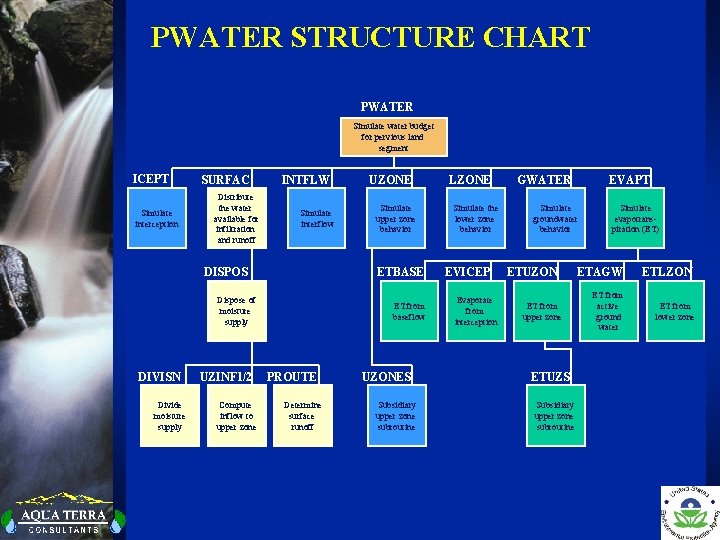
PWATER STRUCTURE CHART PWATER Simulate water budget for pervious land segment ICEPT Simulate interception SURFAC Distribute the water available for infiltration and runoff INTFLW Simulate interflow DISPOS Divide moisture supply UZINF 1/2 Compute inflow to upper zone Simulate upper zone behavior ETBASE Dispose of moisture supply DIVISN UZONE ET from baseflow PROUTE Determine surface runoff UZONES Subsidiary upper zone subroutine LZONE Simulate the lower zone behavior EVICEP Evaporate from interception GWATER EVAPT Simulate groundwater behavior ETUZON ET from upper zone ETUZS Subsidiary upper zone subroutine Simulate evapotranspiration (ET) ETAGW ET from active ground water ETLZON ET from lower zone
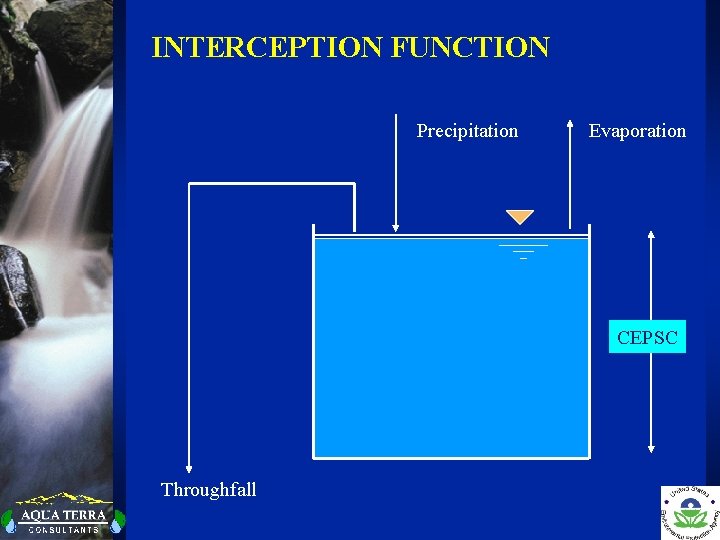
INTERCEPTION FUNCTION Precipitation Evaporation CEPSC Throughfall
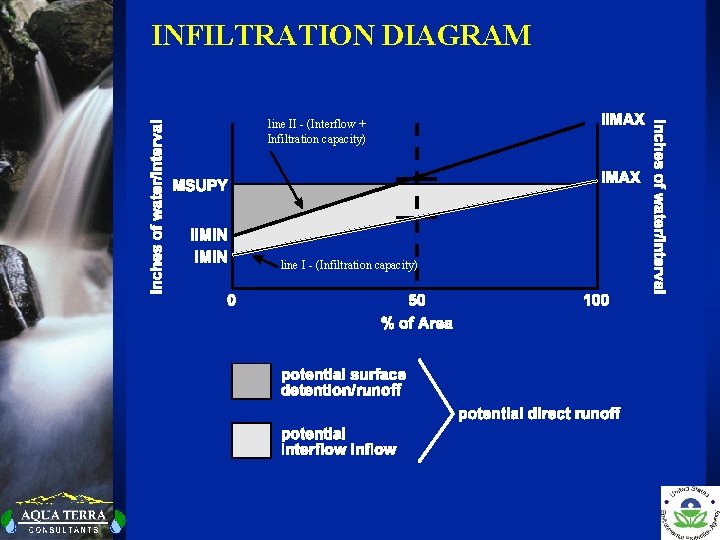
INFILTRATION DIAGRAM line II - (Interflow + Infiltration capacity) line I - (Infiltration capacity)
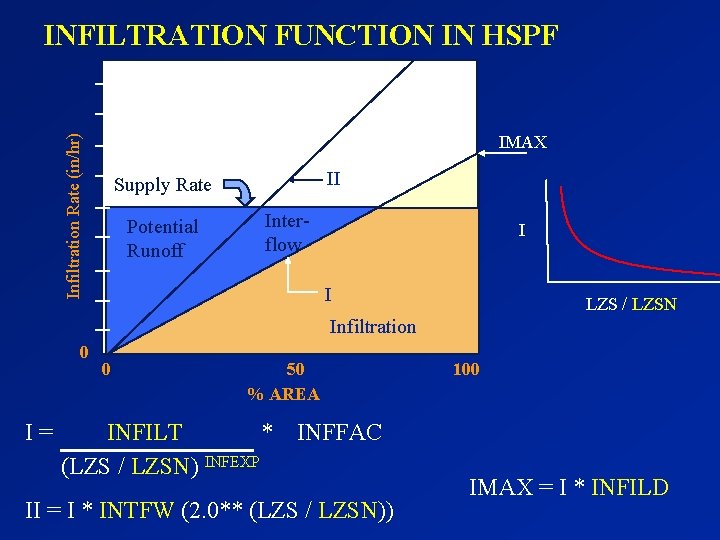
INFILTRATION FUNCTION IN HSPF Infiltration Rate (in/hr) IMAX II Supply Rate Potential Runoff Interflow I I LZS / LZSN Infiltration 0 I= 0 50 % AREA INFILT * INFFAC (LZS / LZSN) INFEXP II = I * INTFW (2. 0** (LZS / LZSN)) 100 IMAX = I * INFILD
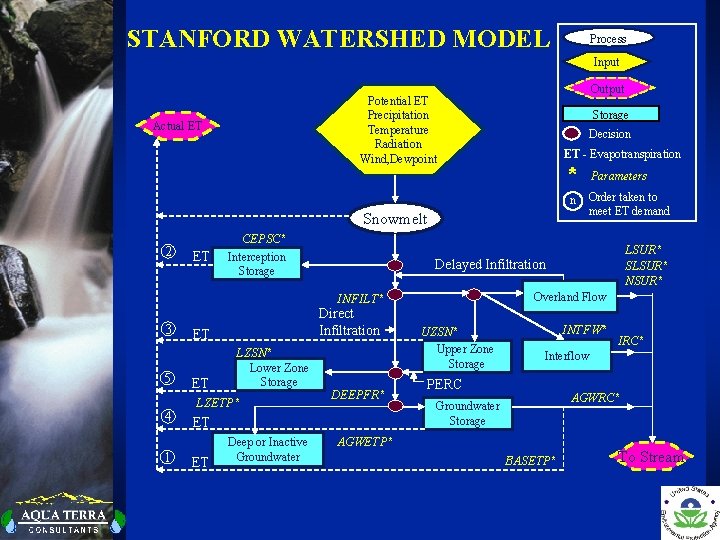
STANFORD WATERSHED MODEL Process Input Output Potential ET Precipitation Temperature Radiation Wind, Dewpoint Actual ET Storage Decision ET - Evapotranspiration * n Snowmelt 2 ET CEPSC* Interception Storage 5 4 1 Direct Infiltration ET ET LZSN* Lower Zone Storage LZETP* DEEPFR* ET ET Deep or Inactive Groundwater Order taken to meet ET demand LSUR* SLSUR* NSUR* Delayed Infiltration Overland Flow INFILT* 3 Parameters UZSN* Upper Zone Storage INTFW* IRC* Interflow PERC AGWRC* Groundwater Storage AGWETP* BASETP* To Stream
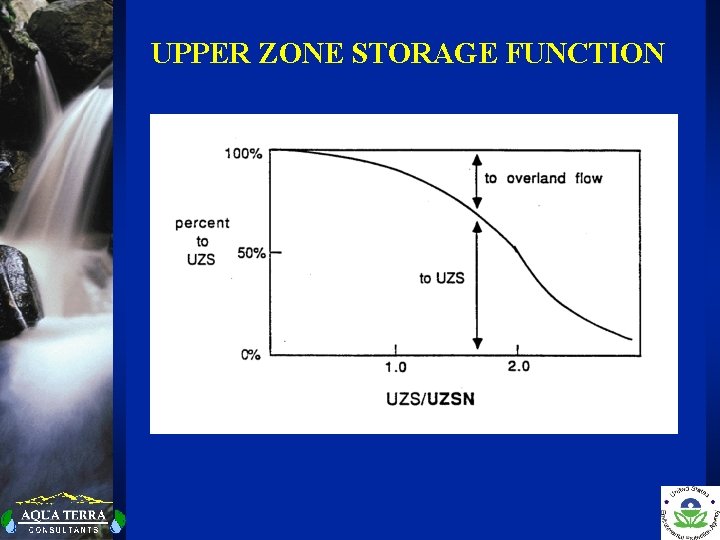
UPPER ZONE STORAGE FUNCTION
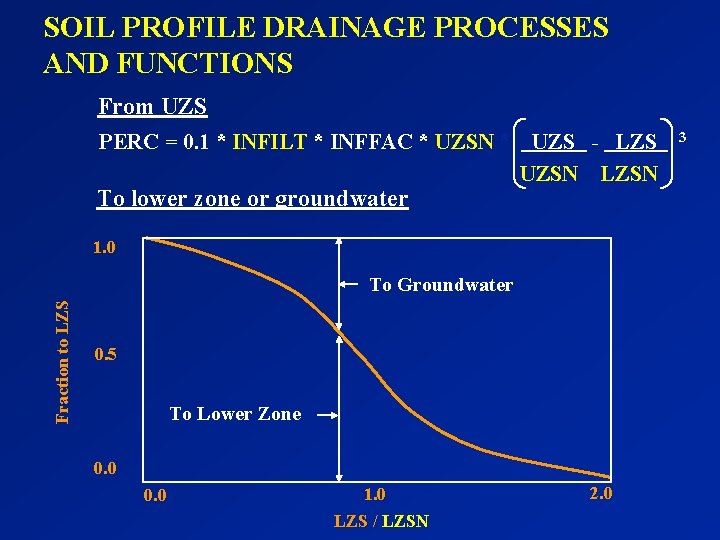
SOIL PROFILE DRAINAGE PROCESSES AND FUNCTIONS From UZS PERC = 0. 1 * INFILT * INFFAC * UZSN * UZS - LZS UZSN LZSN To lower zone or groundwater 1. 0 Fraction to LZS To Groundwater 0. 5 To Lower Zone 0. 0 1. 0 LZS / LZSN 2. 0 3
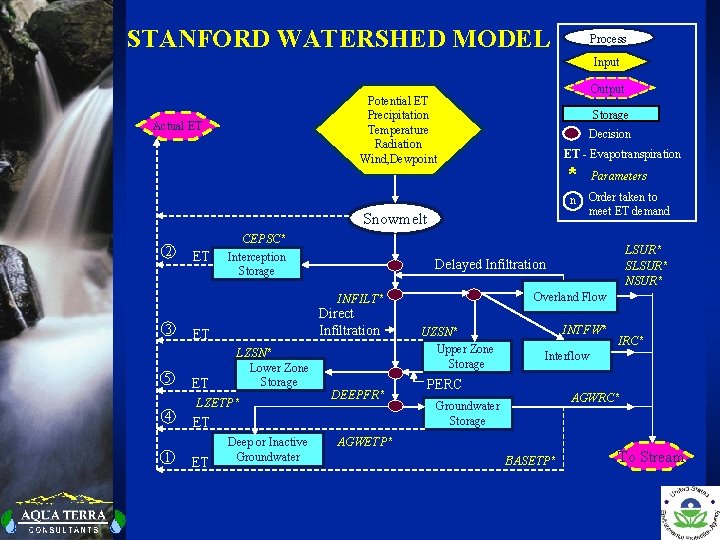
STANFORD WATERSHED MODEL Process Input Output Potential ET Precipitation Temperature Radiation Wind, Dewpoint Actual ET Storage Decision ET - Evapotranspiration * n Snowmelt 2 ET CEPSC* Interception Storage 5 4 1 Direct Infiltration ET ET LZSN* Lower Zone Storage LZETP* DEEPFR* ET ET Deep or Inactive Groundwater Order taken to meet ET demand LSUR* SLSUR* NSUR* Delayed Infiltration Overland Flow INFILT* 3 Parameters UZSN* Upper Zone Storage INTFW* IRC* Interflow PERC AGWRC* Groundwater Storage AGWETP* BASETP* To Stream
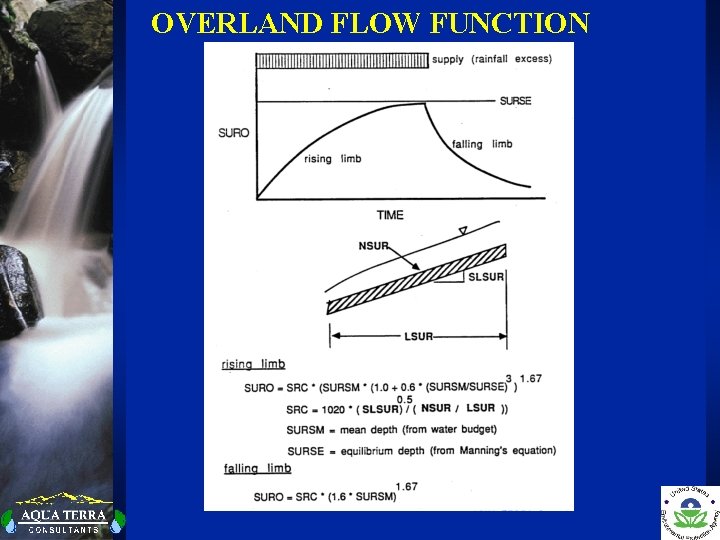
OVERLAND FLOW FUNCTION
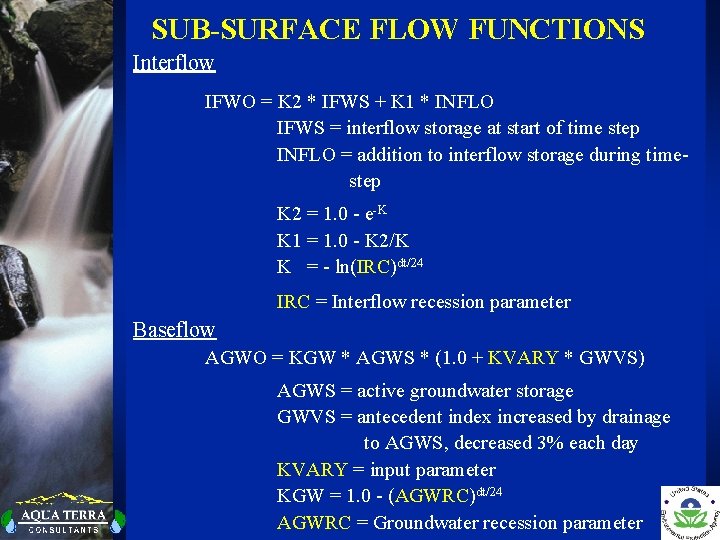
SUB-SURFACE FLOW FUNCTIONS Interflow IFWO = K 2 * IFWS + K 1 * INFLO IFWS = interflow storage at start of time step INFLO = addition to interflow storage during timestep K 2 = 1. 0 - e-K K 1 = 1. 0 - K 2/K K = - ln(IRC)dt/24 IRC = Interflow recession parameter Baseflow AGWO = KGW * AGWS * (1. 0 + KVARY * GWVS) AGWS = active groundwater storage GWVS = antecedent index increased by drainage to AGWS, decreased 3% each day KVARY = input parameter KGW = 1. 0 - (AGWRC)dt/24 AGWRC = Groundwater recession parameter
STANFORD WATERSHED MODEL Process Input Output Potential ET Precipitation Temperature Radiation Wind, Dewpoint Actual ET Storage Decision ET - Evapotranspiration * n Snowmelt 2 ET CEPSC* Interception Storage 5 4 1 Direct Infiltration ET ET LZSN* Lower Zone Storage LZETP* DEEPFR* ET ET Deep or Inactive Groundwater Order taken to meet ET demand LSUR* SLSUR* NSUR* Delayed Infiltration Overland Flow INFILT* 3 Parameters UZSN* Upper Zone Storage INTFW* IRC* Interflow PERC AGWRC* Groundwater Storage AGWETP* BASETP* To Stream
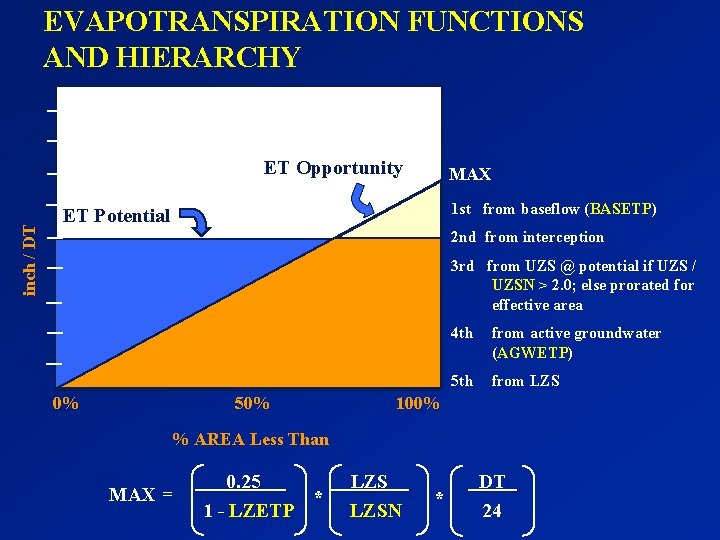
EVAPOTRANSPIRATION FUNCTIONS AND HIERARCHY inch / DT ET Opportunity MAX 1 st from baseflow (BASETP) ET Potential 2 nd from interception 3 rd from UZS @ potential if UZS / UZSN > 2. 0; else prorated for effective area Actual ET 0% 50% 4 th from active groundwater (AGWETP) 5 th from LZS 100% % AREA Less Than MAX = 0. 25 * 1 - LZETP LZSN * DT_ 24
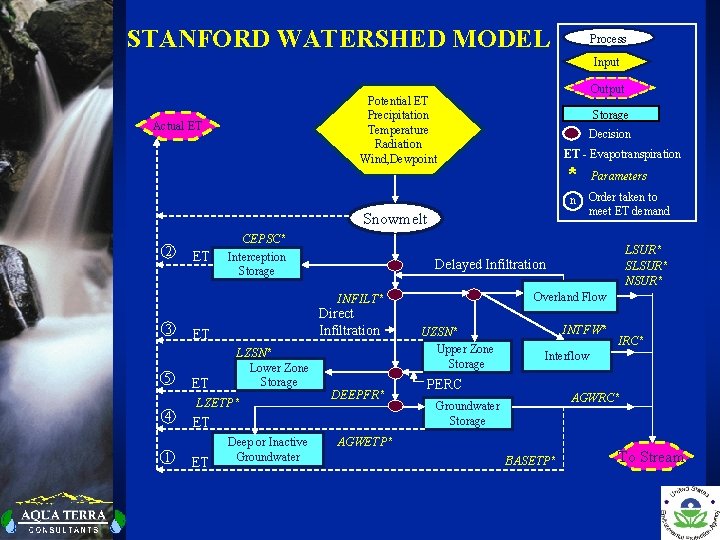
STANFORD WATERSHED MODEL Process Input Output Potential ET Precipitation Temperature Radiation Wind, Dewpoint Actual ET Storage Decision ET - Evapotranspiration * n Snowmelt 2 ET CEPSC* Interception Storage 5 4 1 Direct Infiltration ET ET LZSN* Lower Zone Storage LZETP* DEEPFR* ET ET Deep or Inactive Groundwater Order taken to meet ET demand LSUR* SLSUR* NSUR* Delayed Infiltration Overland Flow INFILT* 3 Parameters UZSN* Upper Zone Storage INTFW* IRC* Interflow PERC AGWRC* Groundwater Storage AGWETP* BASETP* To Stream
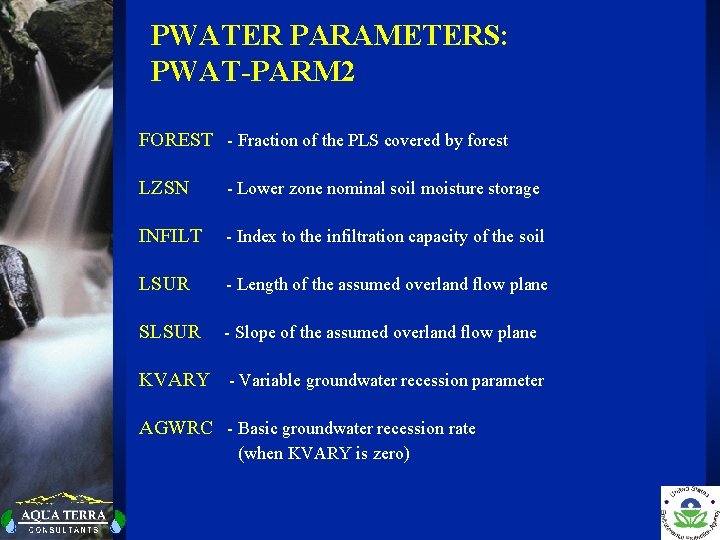
PWATER PARAMETERS: PWAT-PARM 2 FOREST - Fraction of the PLS covered by forest LZSN - Lower zone nominal soil moisture storage INFILT - Index to the infiltration capacity of the soil LSUR - Length of the assumed overland flow plane SLSUR - Slope of the assumed overland flow plane KVARY - Variable groundwater recession parameter AGWRC - Basic groundwater recession rate (when KVARY is zero)
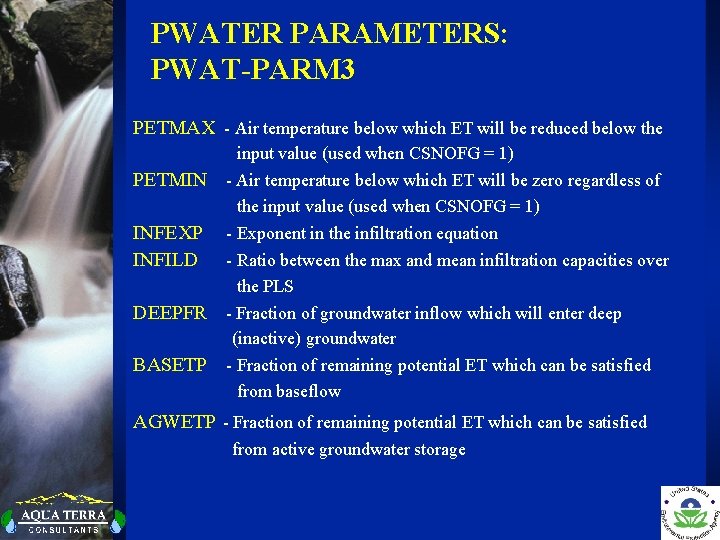
PWATER PARAMETERS: PWAT-PARM 3 PETMAX - Air temperature below which ET will be reduced below the input value (used when CSNOFG = 1) PETMIN - Air temperature below which ET will be zero regardless of the input value (used when CSNOFG = 1) INFEXP INFILD - Exponent in the infiltration equation - Ratio between the max and mean infiltration capacities over the PLS DEEPFR - Fraction of groundwater inflow which will enter deep (inactive) groundwater BASETP - Fraction of remaining potential ET which can be satisfied from baseflow AGWETP - Fraction of remaining potential ET which can be satisfied from active groundwater storage
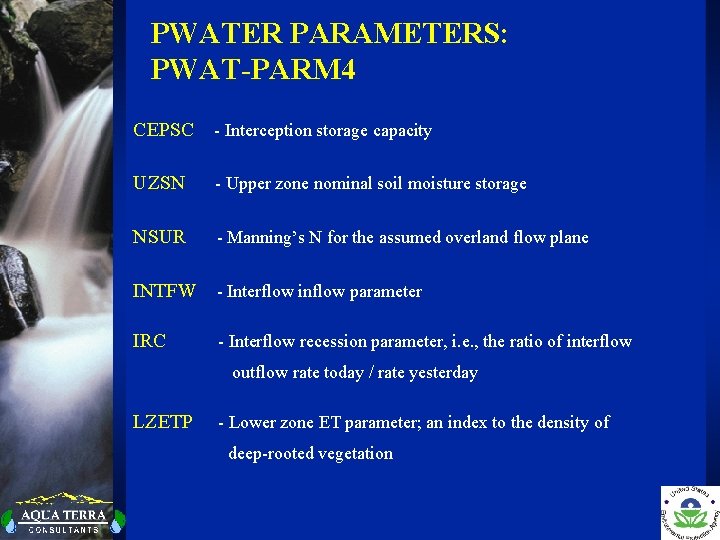
PWATER PARAMETERS: PWAT-PARM 4 CEPSC - Interception storage capacity UZSN - Upper zone nominal soil moisture storage NSUR - Manning’s N for the assumed overland flow plane INTFW - Interflow inflow parameter IRC - Interflow recession parameter, i. e. , the ratio of interflow outflow rate today / rate yesterday LZETP - Lower zone ET parameter; an index to the density of deep-rooted vegetation
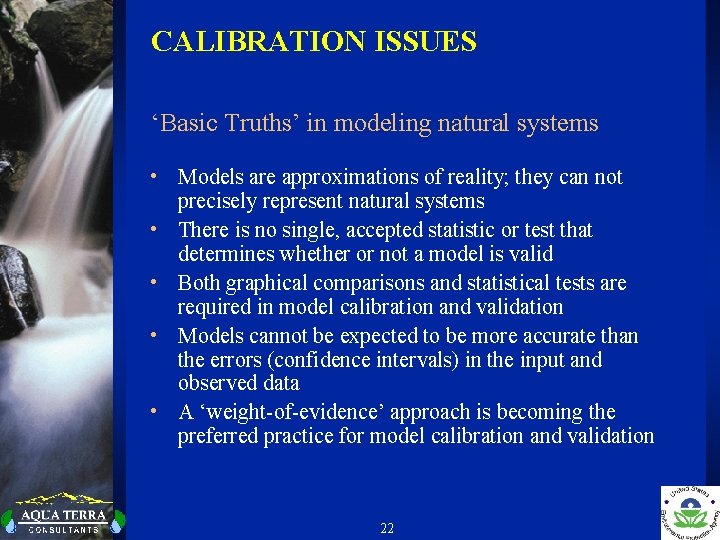
CALIBRATION ISSUES ‘Basic Truths’ in modeling natural systems • Models are approximations of reality; they can not precisely represent natural systems • There is no single, accepted statistic or test that determines whether or not a model is valid • Both graphical comparisons and statistical tests are required in model calibration and validation • Models cannot be expected to be more accurate than the errors (confidence intervals) in the input and observed data • A ‘weight-of-evidence’ approach is becoming the preferred practice for model calibration and validation 22
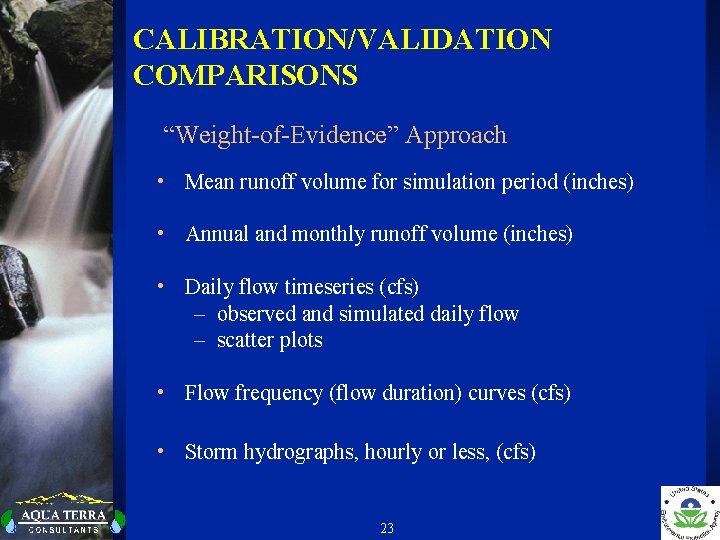
CALIBRATION/VALIDATION COMPARISONS “Weight-of-Evidence” Approach • Mean runoff volume for simulation period (inches) • Annual and monthly runoff volume (inches) • Daily flow timeseries (cfs) – observed and simulated daily flow – scatter plots • Flow frequency (flow duration) curves (cfs) • Storm hydrographs, hourly or less, (cfs) 23
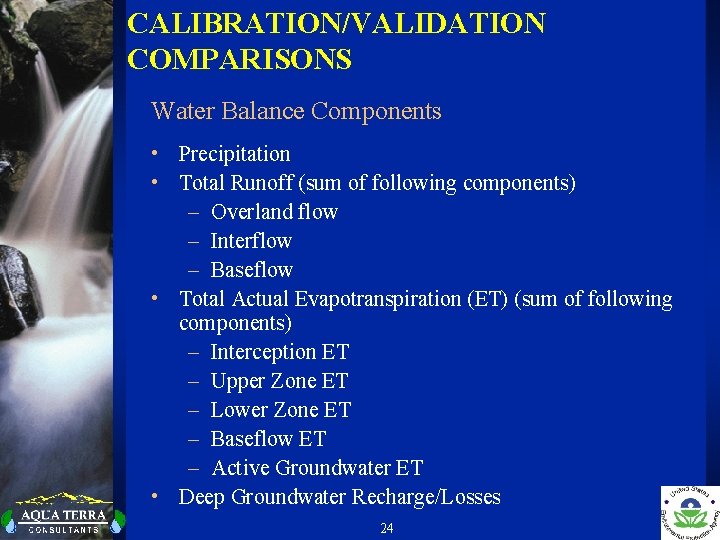
CALIBRATION/VALIDATION COMPARISONS Water Balance Components • Precipitation • Total Runoff (sum of following components) – Overland flow – Interflow – Baseflow • Total Actual Evapotranspiration (ET) (sum of following components) – Interception ET – Upper Zone ET – Lower Zone ET – Baseflow ET – Active Groundwater ET • Deep Groundwater Recharge/Losses 24
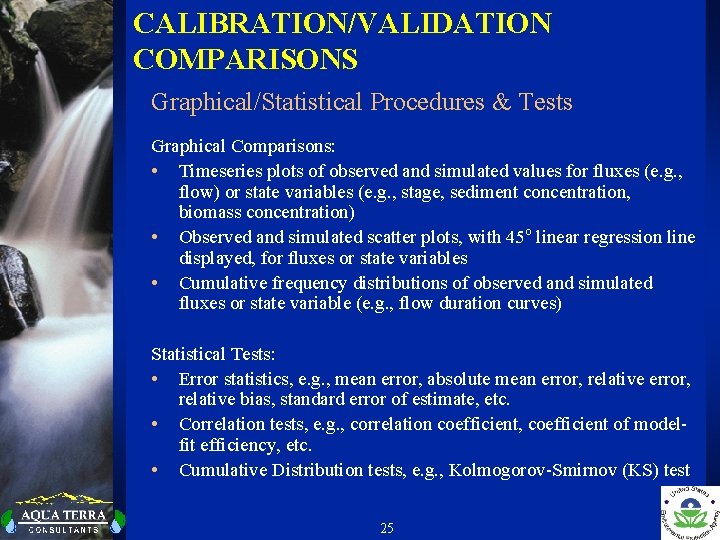
CALIBRATION/VALIDATION COMPARISONS Graphical/Statistical Procedures & Tests Graphical Comparisons: • Timeseries plots of observed and simulated values for fluxes (e. g. , flow) or state variables (e. g. , stage, sediment concentration, biomass concentration) • Observed and simulated scatter plots, with 45 o linear regression line displayed, for fluxes or state variables • Cumulative frequency distributions of observed and simulated fluxes or state variable (e. g. , flow duration curves) Statistical Tests: • Error statistics, e. g. , mean error, absolute mean error, relative bias, standard error of estimate, etc. • Correlation tests, e. g. , correlation coefficient, coefficient of modelfit efficiency, etc. • Cumulative Distribution tests, e. g. , Kolmogorov-Smirnov (KS) test 25
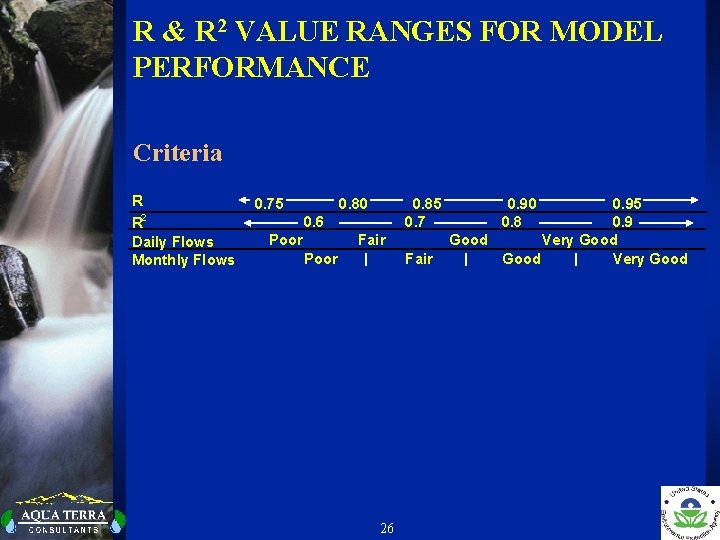
R & R 2 VALUE RANGES FOR MODEL PERFORMANCE Criteria R R 2 Daily Flows Monthly Flows 0. 75 0. 80 0. 85 0. 7 0. 6 Poor Fair 26 0. 90 0. 8 0. 95 0. 9 Good Very Good
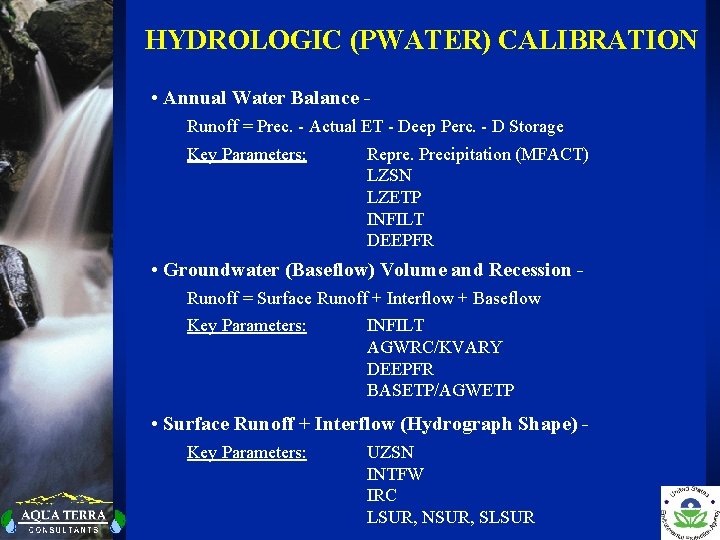
HYDROLOGIC (PWATER) CALIBRATION • Annual Water Balance Runoff = Prec. - Actual ET - Deep Perc. - D Storage Key Parameters: Repre. Precipitation (MFACT) LZSN LZETP INFILT DEEPFR • Groundwater (Baseflow) Volume and Recession Runoff = Surface Runoff + Interflow + Baseflow Key Parameters: INFILT AGWRC/KVARY DEEPFR BASETP/AGWETP • Surface Runoff + Interflow (Hydrograph Shape) Key Parameters: UZSN INTFW IRC LSUR, NSUR, SLSUR
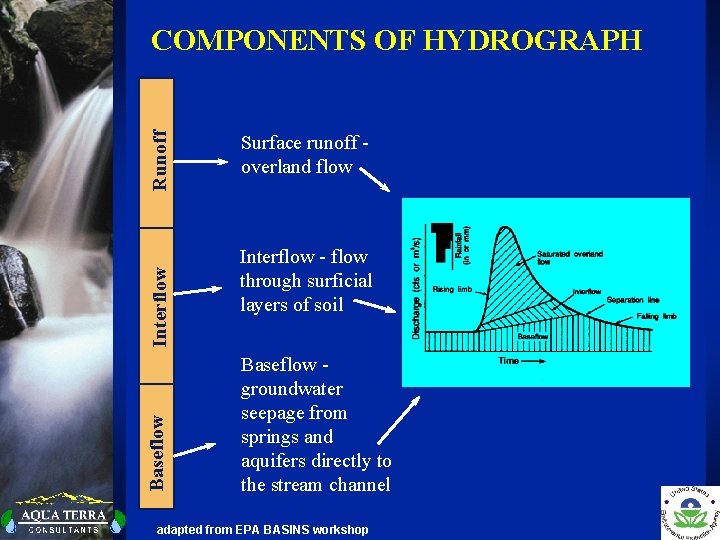
Baseflow Interflow Runoff COMPONENTS OF HYDROGRAPH Surface runoff overland flow Interflow - flow through surficial layers of soil Baseflow groundwater seepage from springs and aquifers directly to the stream channel adapted from EPA BASINS workshop
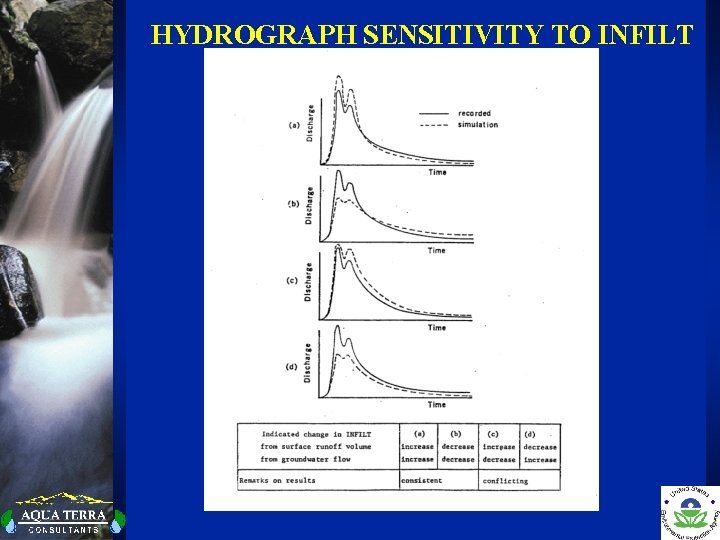
HYDROGRAPH SENSITIVITY TO INFILT
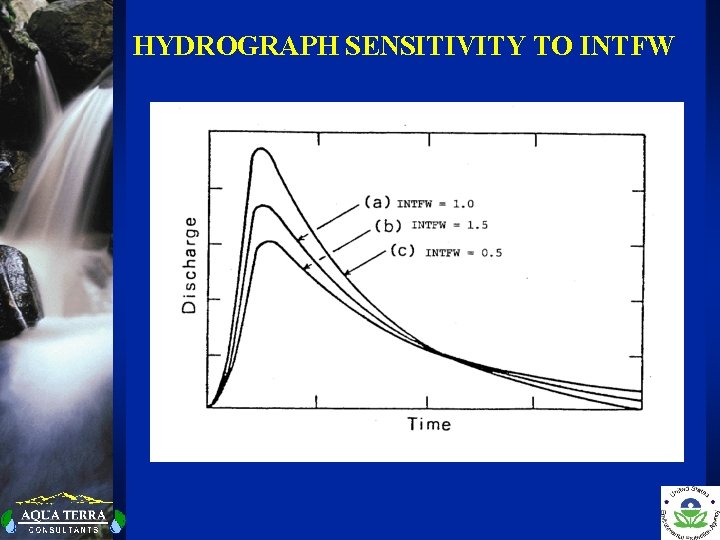
HYDROGRAPH SENSITIVITY TO INTFW
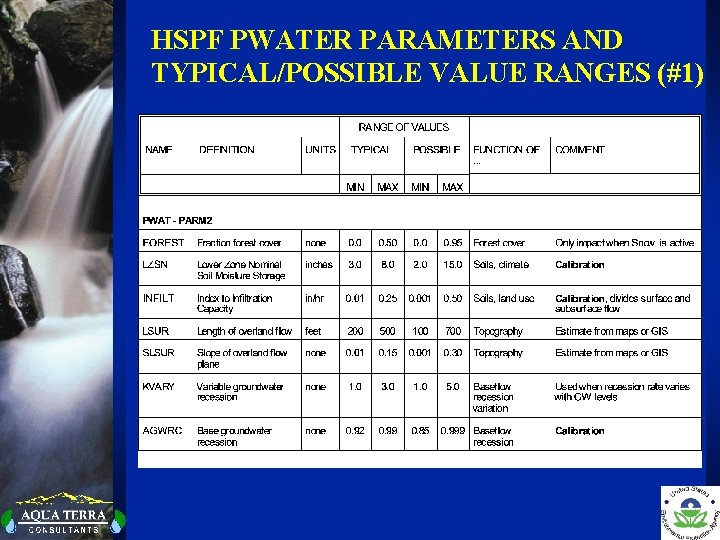
HSPF PWATER PARAMETERS AND TYPICAL/POSSIBLE VALUE RANGES (#1)
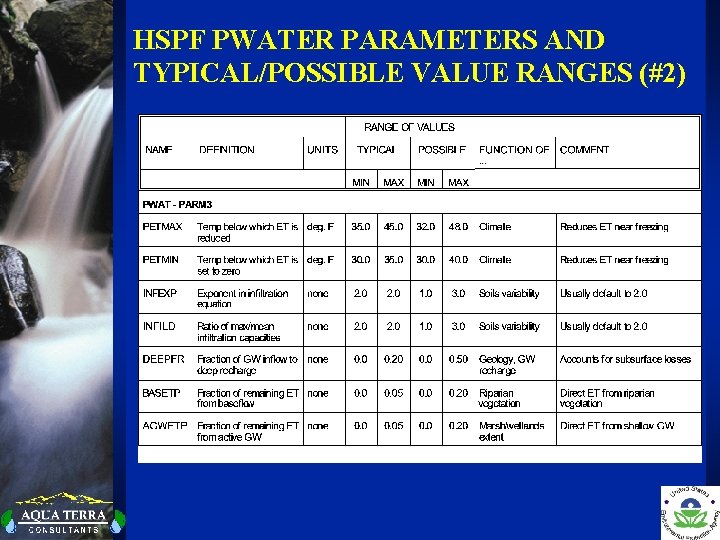
HSPF PWATER PARAMETERS AND TYPICAL/POSSIBLE VALUE RANGES (#2)
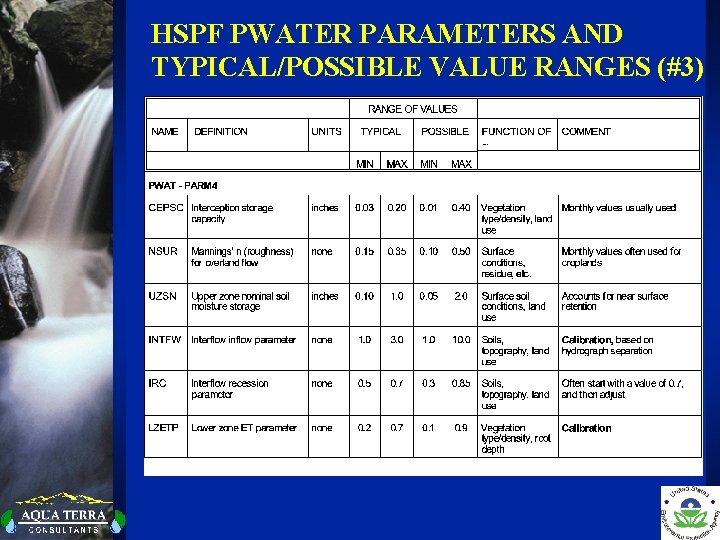
HSPF PWATER PARAMETERS AND TYPICAL/POSSIBLE VALUE RANGES (#3)
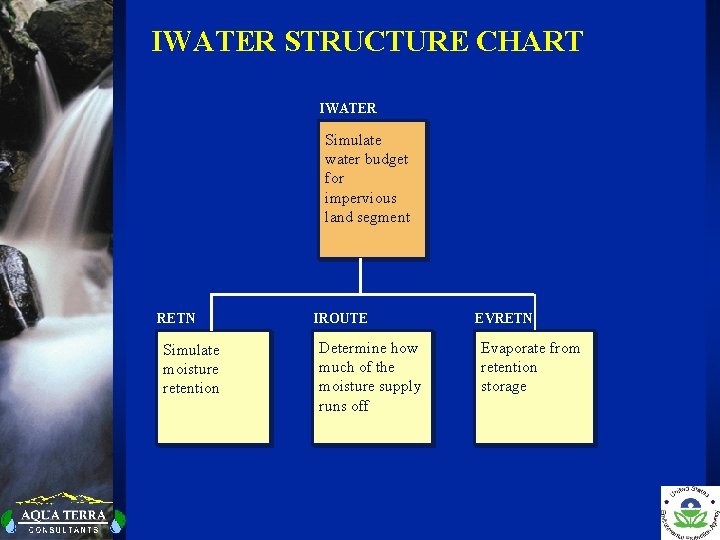
IWATER STRUCTURE CHART IWATER Simulate water budget for impervious land segment RETN Simulate moisture retention IROUTE Determine how much of the moisture supply runs off EVRETN Evaporate from retention storage
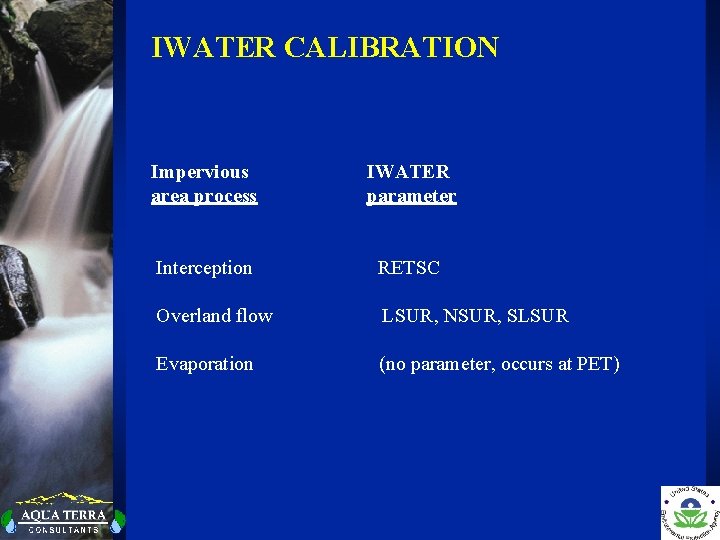
IWATER CALIBRATION Impervious area process IWATER parameter Interception RETSC Overland flow LSUR, NSUR, SLSUR Evaporation (no parameter, occurs at PET)
- Slides: 35