
Lecture 7 Analysis of Proteins 1 Protein Characterization
- Slides: 29
Lecture 7 Analysis of Proteins 1
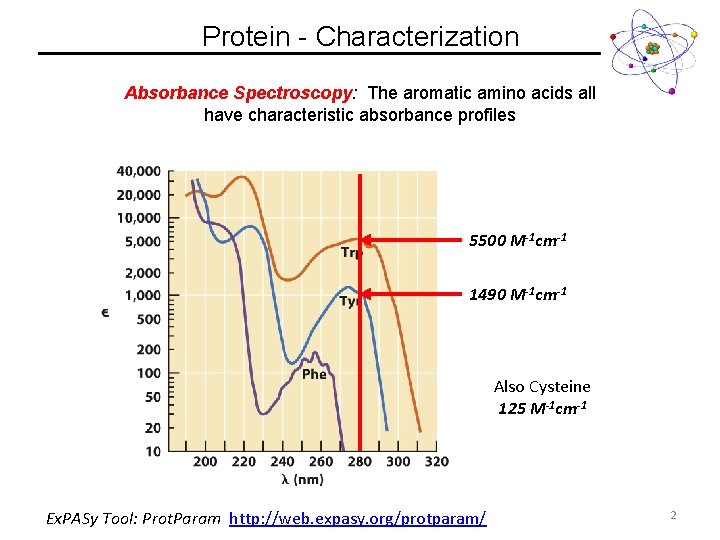
Protein - Characterization Absorbance Spectroscopy: The aromatic amino acids all have characteristic absorbance profiles 5500 M-1 cm-1 1490 M-1 cm-1 Also Cysteine 125 M-1 cm-1 Ex. PASy Tool: Prot. Param http: //web. expasy. org/protparam/ 2
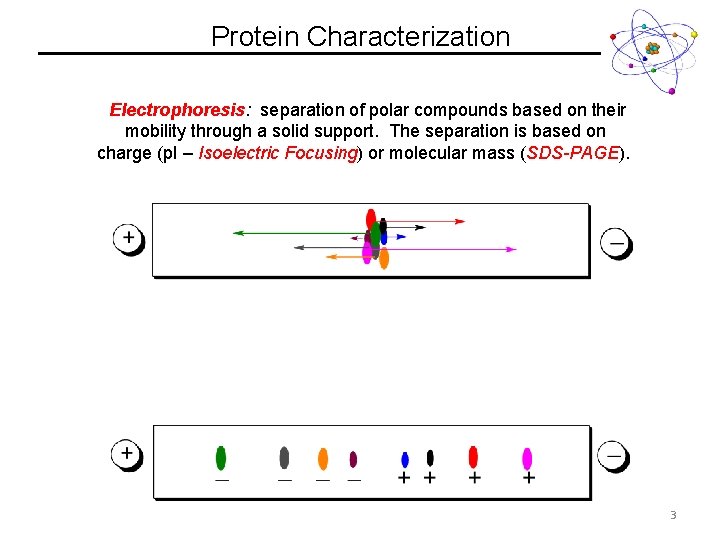
Protein Characterization Electrophoresis: separation of polar compounds based on their mobility through a solid support. The separation is based on charge (p. I – Isoelectric Focusing) or molecular mass (SDS-PAGE). 3
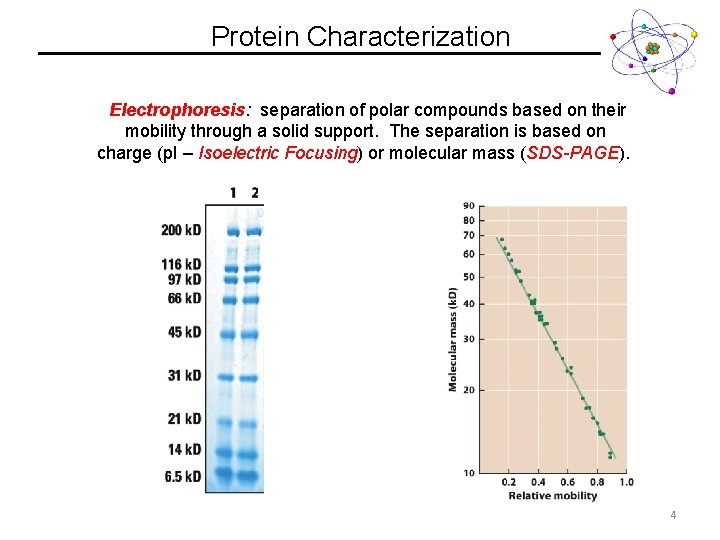
Protein Characterization Electrophoresis: separation of polar compounds based on their mobility through a solid support. The separation is based on charge (p. I – Isoelectric Focusing) or molecular mass (SDS-PAGE). 4
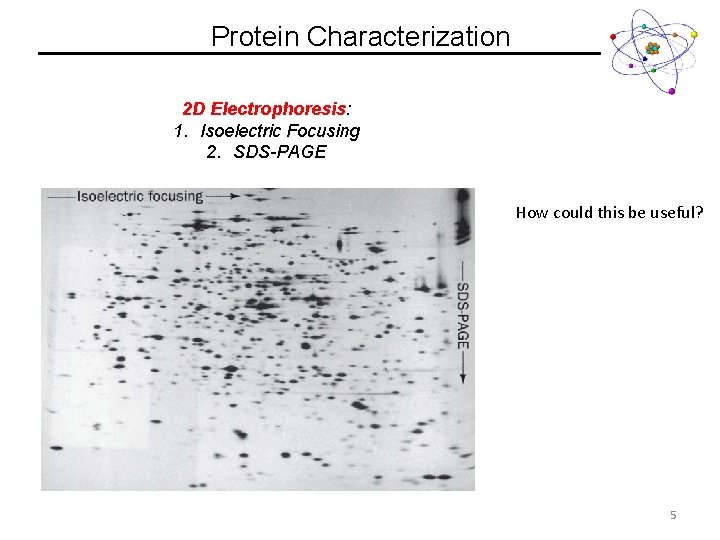
Protein Characterization 2 D Electrophoresis: 1. Isoelectric Focusing 2. SDS-PAGE How could this be useful? 5
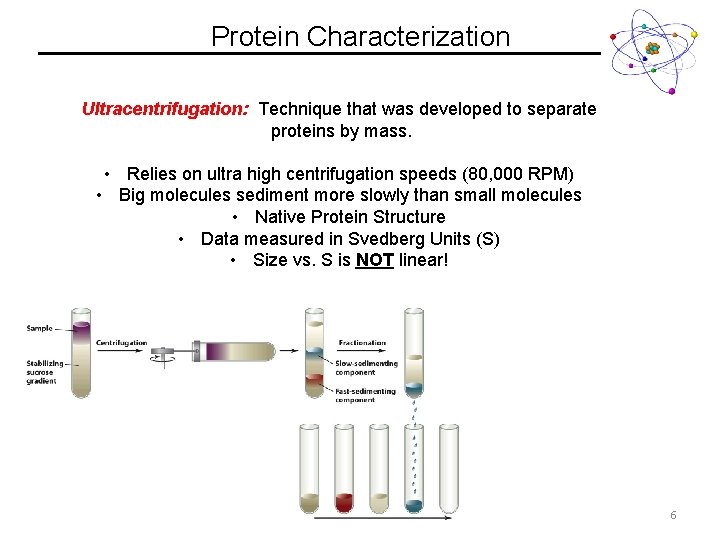
Protein Characterization Ultracentrifugation: Technique that was developed to separate proteins by mass. • Relies on ultra high centrifugation speeds (80, 000 RPM) • Big molecules sediment more slowly than small molecules • Native Protein Structure • Data measured in Svedberg Units (S) • Size vs. S is NOT linear! 6
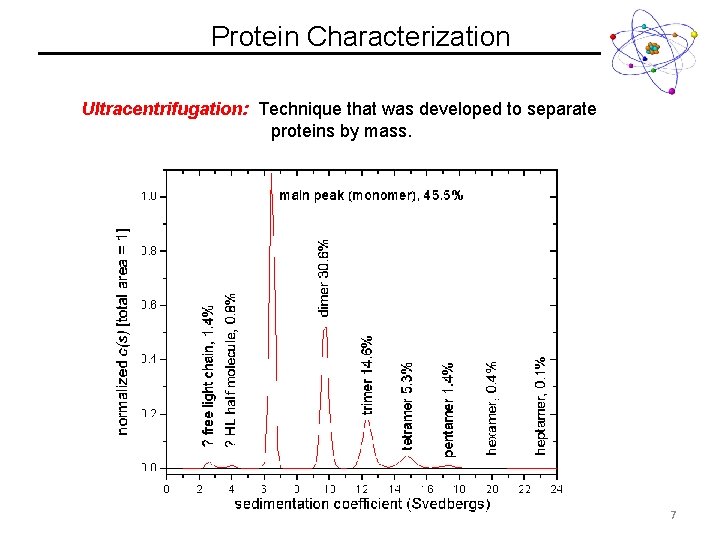
Protein Characterization Ultracentrifugation: Technique that was developed to separate proteins by mass. 7
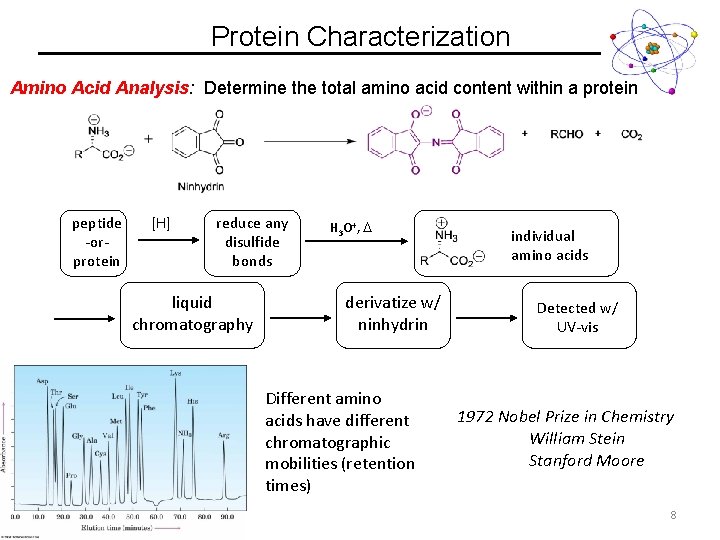
Protein Characterization Amino Acid Analysis: Determine the total amino acid content within a protein peptide -orprotein [H] reduce any disulfide bonds liquid chromatography H 3 O+, derivatize w/ ninhydrin Different amino acids have different chromatographic mobilities (retention times) individual amino acids Detected w/ UV-vis 1972 Nobel Prize in Chemistry William Stein Stanford Moore 8
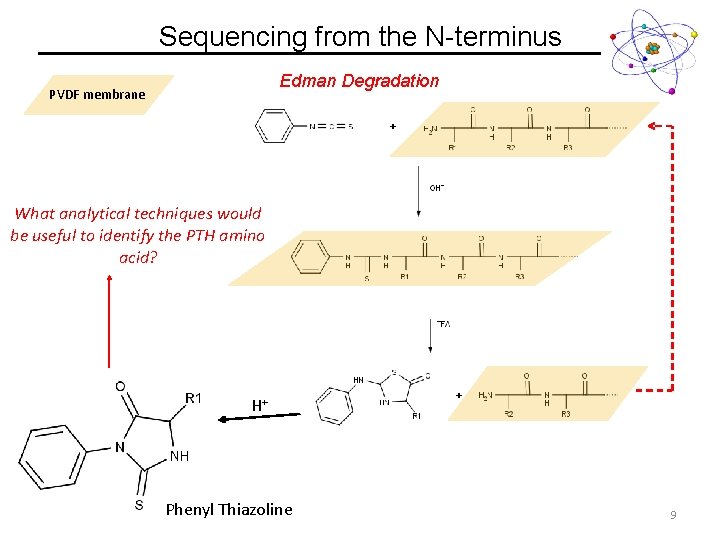
Sequencing from the N-terminus Edman Degradation PVDF membrane What analytical techniques would be useful to identify the PTH amino acid? H+ Phenyl Thiazoline 9
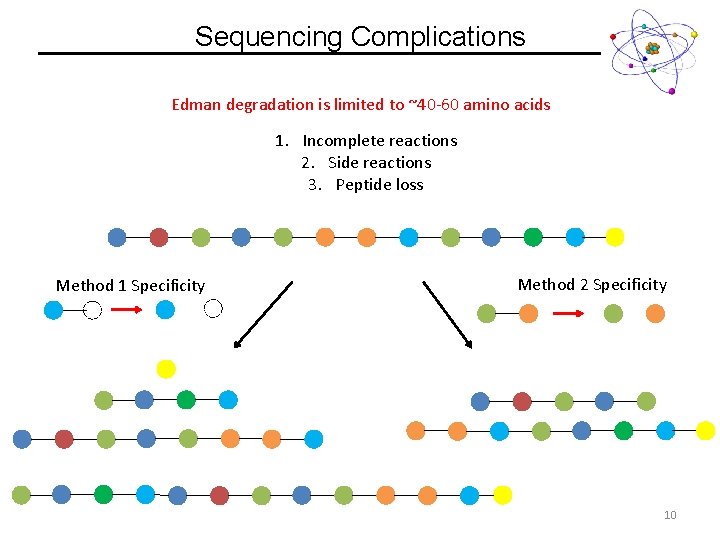
Sequencing Complications Edman degradation is limited to ~40 -60 amino acids 1. Incomplete reactions 2. Side reactions 3. Peptide loss Method 1 Specificity Method 2 Specificity 10
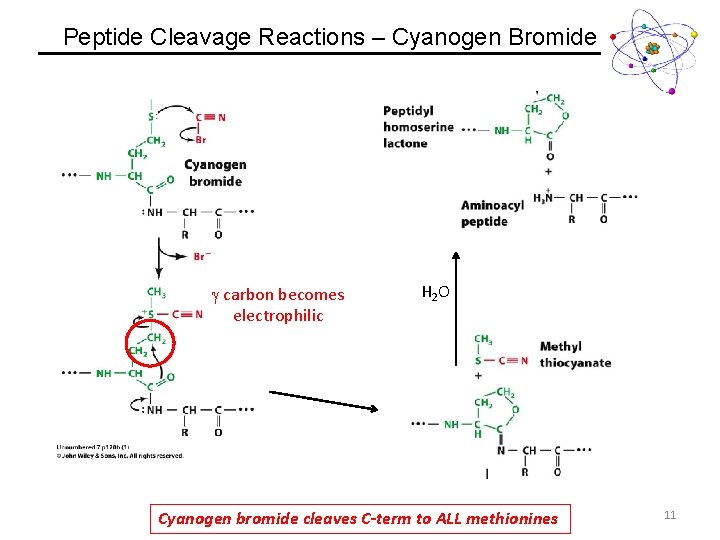
Peptide Cleavage Reactions – Cyanogen Bromide g carbon becomes electrophilic H 2 O Cyanogen bromide cleaves C-term to ALL methionines 11
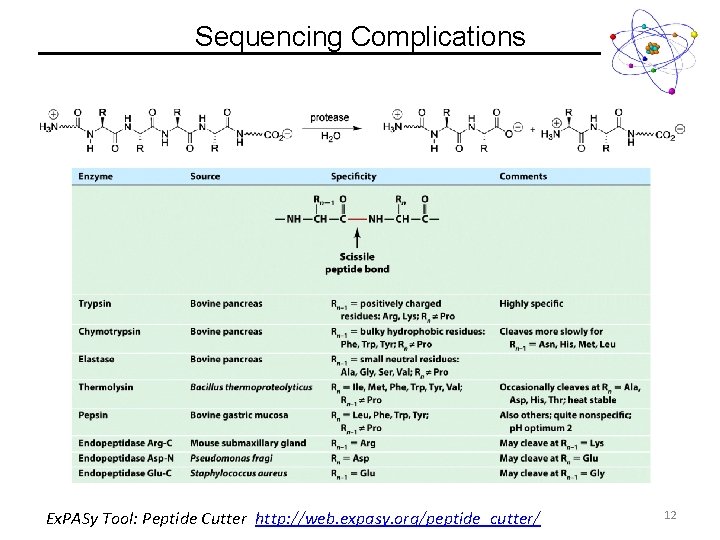
Sequencing Complications Ex. PASy Tool: Peptide Cutter http: //web. expasy. org/peptide_cutter/ 12
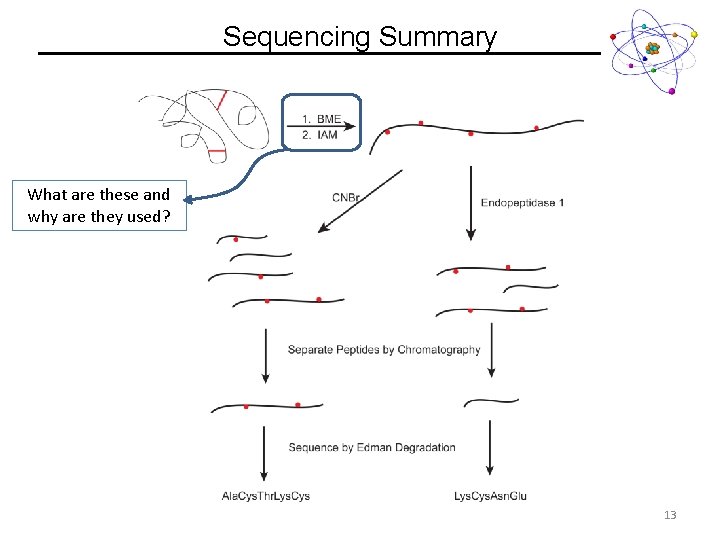
Sequencing Summary What are these and why are they used? 13
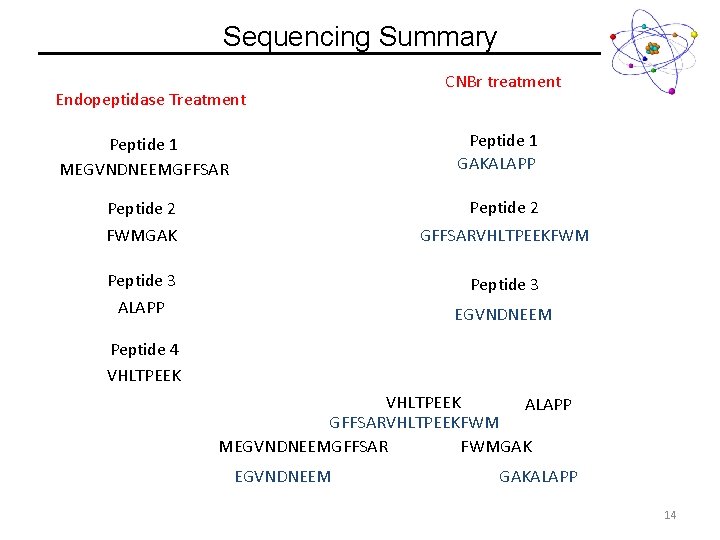
Sequencing Summary Endopeptidase Treatment CNBr treatment Peptide 1 GAKALAPP Peptide 1 MEGVNDNEEMGFFSAR Peptide 2 FWMGAK GFFSARVHLTPEEKFWM Peptide 3 ALAPP Peptide 3 EGVNDNEEM Peptide 4 VHLTPEEK ALAPP GFFSARVHLTPEEKFWM MEGVNDNEEMGFFSAR FWMGAK EGVNDNEEM GAKALAPP 14
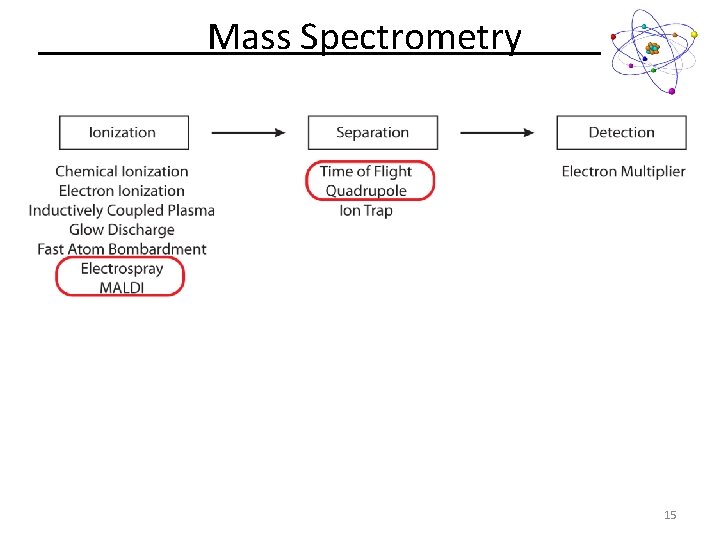
Mass Spectrometry 15
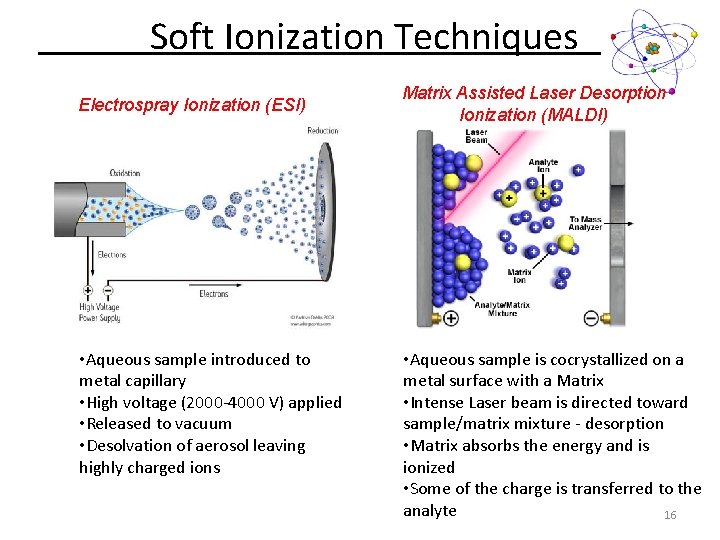
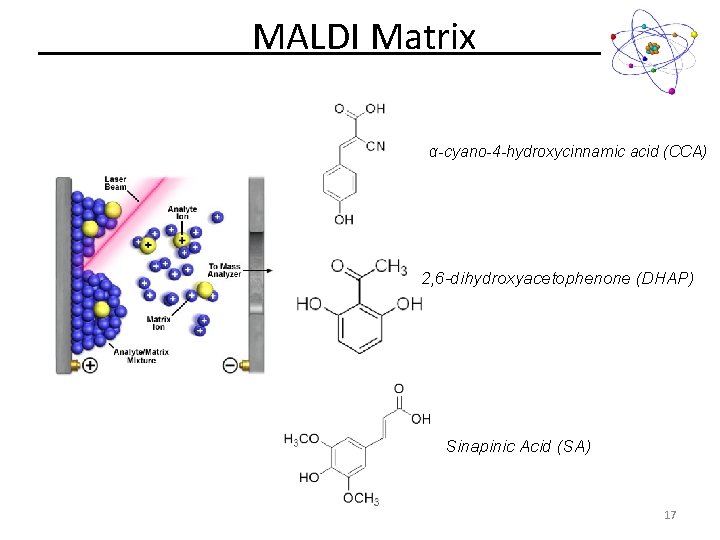
Soft Ionization Techniques Electrospray Ionization (ESI) • Aqueous sample introduced to metal capillary • High voltage (2000 -4000 V) applied • Released to vacuum • Desolvation of aerosol leaving highly charged ions Matrix Assisted Laser Desorption Ionization (MALDI) • Aqueous sample is cocrystallized on a metal surface with a Matrix • Intense Laser beam is directed toward sample/matrix mixture - desorption • Matrix absorbs the energy and is ionized • Some of the charge is transferred to the analyte 16
MALDI Matrix α-cyano-4 -hydroxycinnamic acid (CCA) 2, 6 -dihydroxyacetophenone (DHAP) Sinapinic Acid (SA) 17
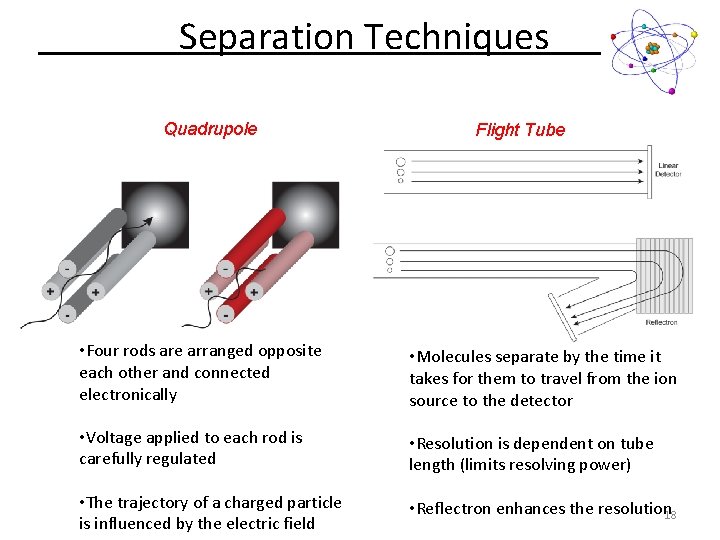
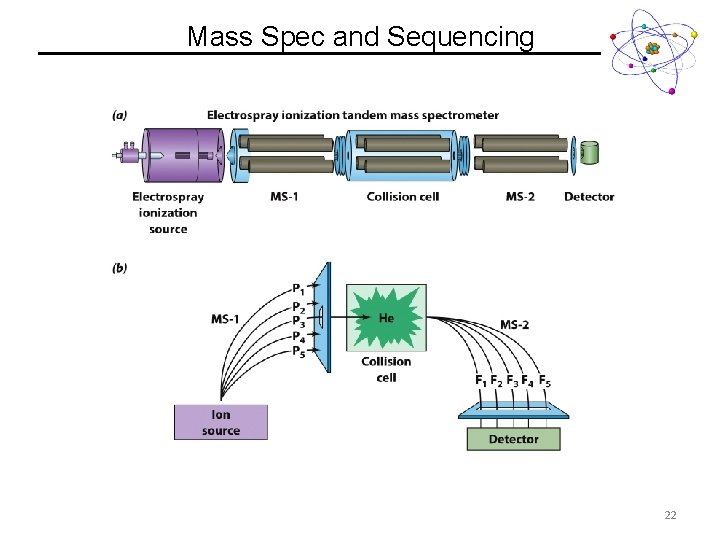
Separation Techniques Quadrupole Flight Tube • Four rods are arranged opposite each other and connected electronically • Molecules separate by the time it takes for them to travel from the ion source to the detector • Voltage applied to each rod is carefully regulated • Resolution is dependent on tube length (limits resolving power) • The trajectory of a charged particle is influenced by the electric field • Reflectron enhances the resolution 18
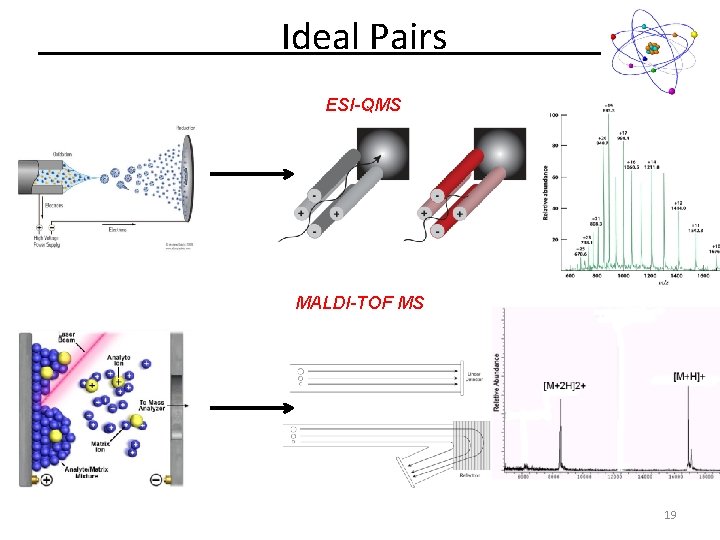
Ideal Pairs ESI-QMS MALDI-TOF MS 19
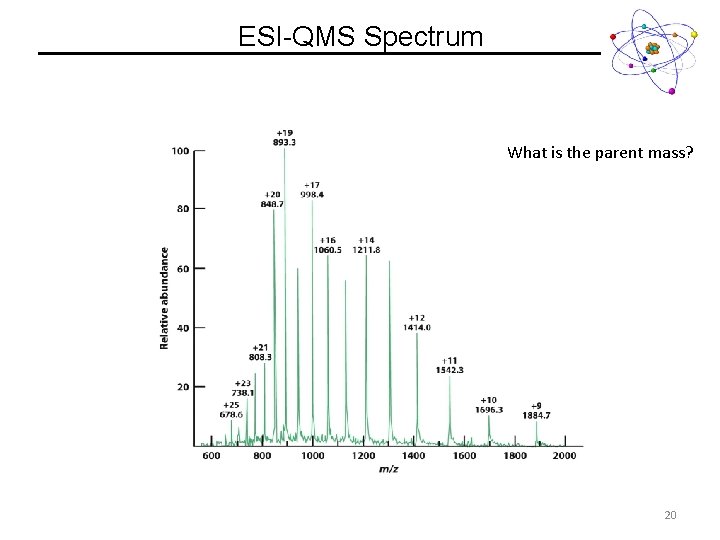
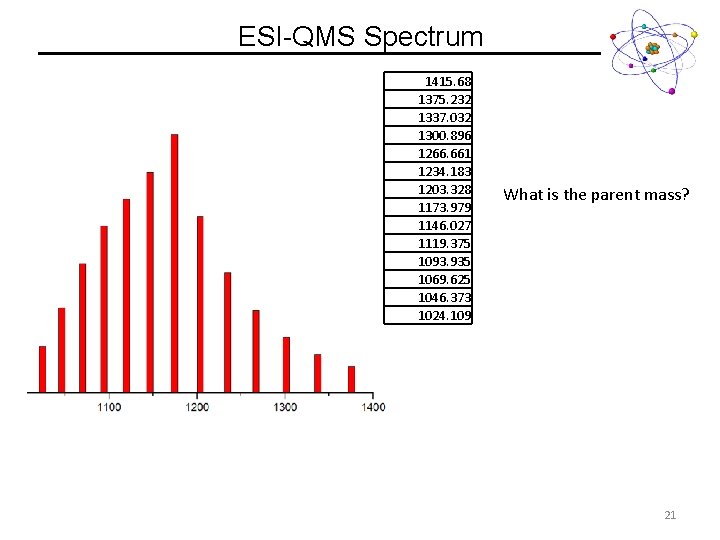
ESI-QMS Spectrum What is the parent mass? 20
ESI-QMS Spectrum 1415. 68 1375. 232 1337. 032 1300. 896 1266. 661 1234. 183 1203. 328 1173. 979 1146. 027 1119. 375 1093. 935 1069. 625 1046. 373 1024. 109 What is the parent mass? 21
Mass Spec and Sequencing 22
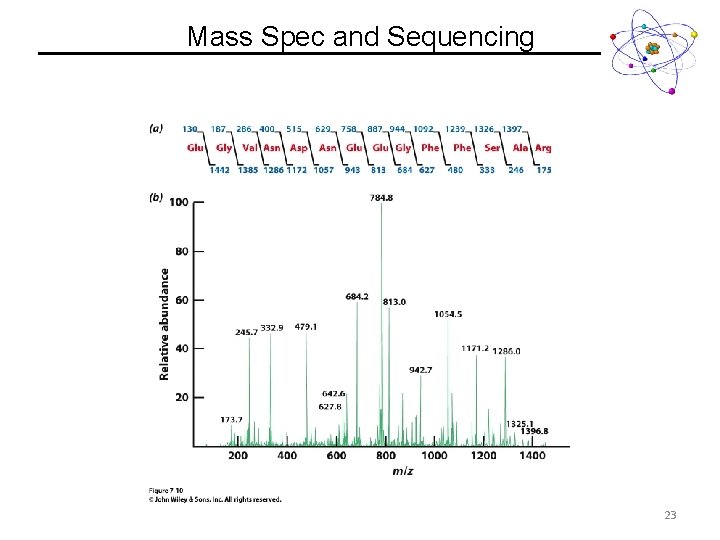
Mass Spec and Sequencing 23
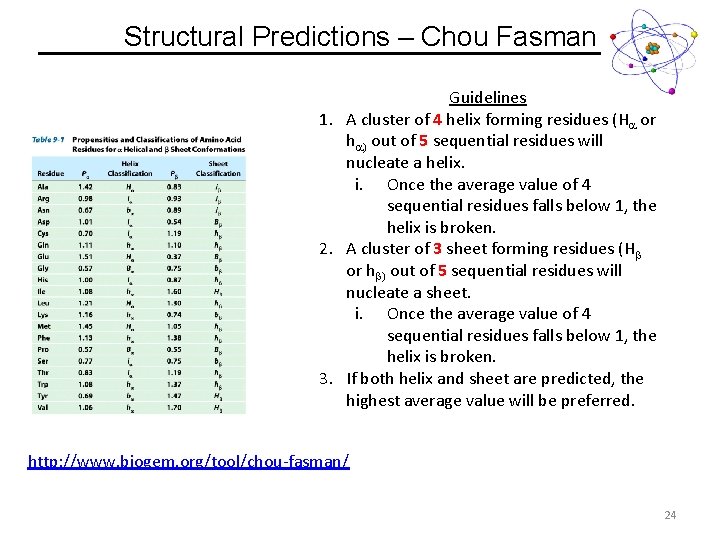
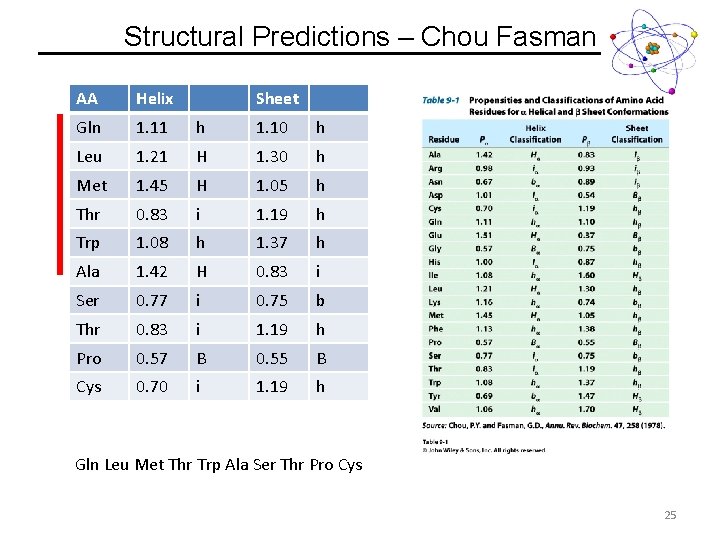
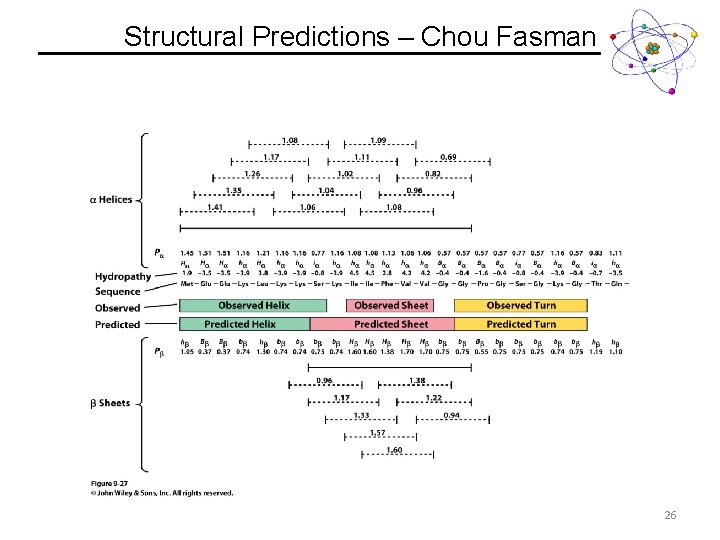
Structural Predictions – Chou Fasman Guidelines 1. A cluster of 4 helix forming residues (Ha or ha) out of 5 sequential residues will nucleate a helix. i. Once the average value of 4 sequential residues falls below 1, the helix is broken. 2. A cluster of 3 sheet forming residues (Hb or hb) out of 5 sequential residues will nucleate a sheet. i. Once the average value of 4 sequential residues falls below 1, the helix is broken. 3. If both helix and sheet are predicted, the highest average value will be preferred. http: //www. biogem. org/tool/chou-fasman/ 24
Structural Predictions – Chou Fasman AA Helix Sheet Gln 1. 11 h 1. 10 h Leu 1. 21 H 1. 30 h Met 1. 45 H 1. 05 h Thr 0. 83 i 1. 19 h Trp 1. 08 h 1. 37 h Ala 1. 42 H 0. 83 i Ser 0. 77 i 0. 75 b Thr 0. 83 i 1. 19 h Pro 0. 57 B 0. 55 B Cys 0. 70 i 1. 19 h Gln Leu Met Thr Trp Ala Ser Thr Pro Cys 25
Structural Predictions – Chou Fasman 26
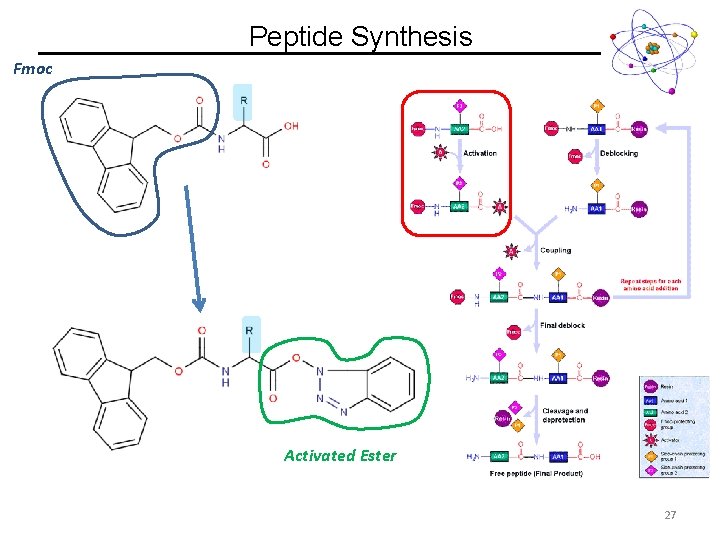
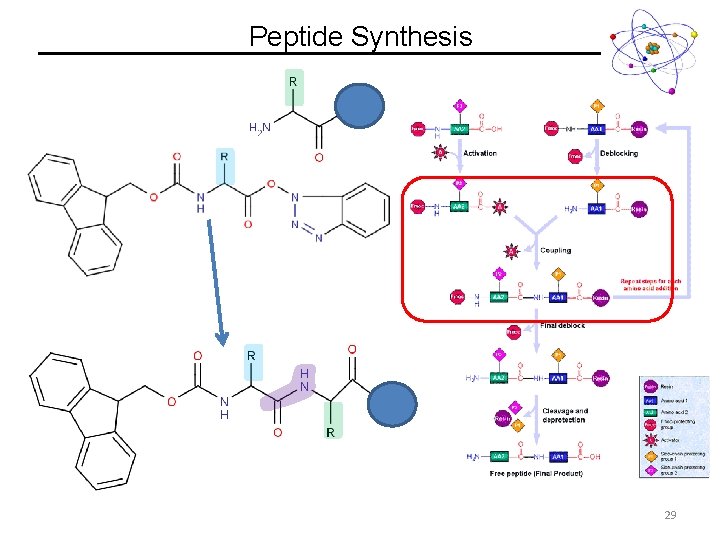
Peptide Synthesis Fmoc Activated Ester 27
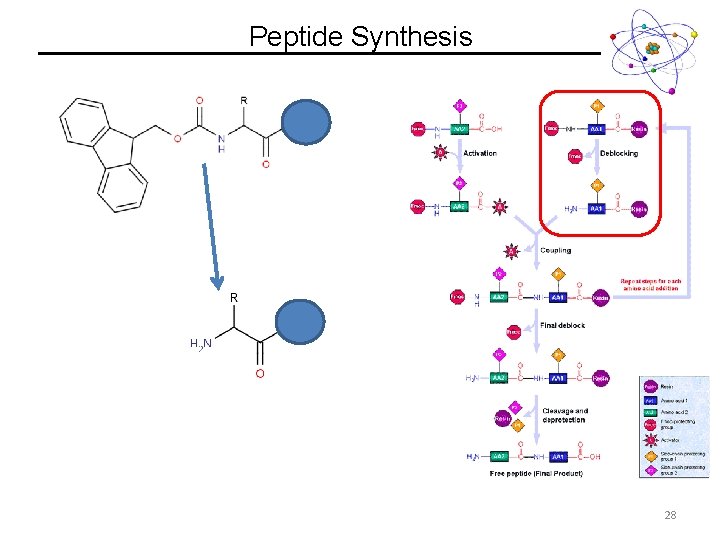
Peptide Synthesis 28
Peptide Synthesis 29