
Lecture 7 8 Energy balance and temperature Ch
Lecture 7 -8: Energy balance and temperature (Ch 3) • the diurnal cycle in net radiation, temperature and stratification • the friction layer • local microclimates • influences on regional temperature patterns
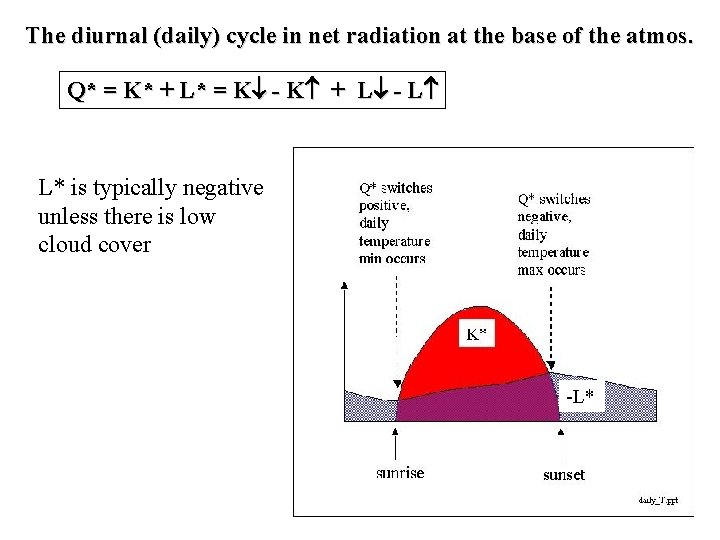
The diurnal (daily) cycle in net radiation at the base of the atmos. Q* = K* + L* = K - K + L - L L* is typically negative unless there is low cloud cover -L*
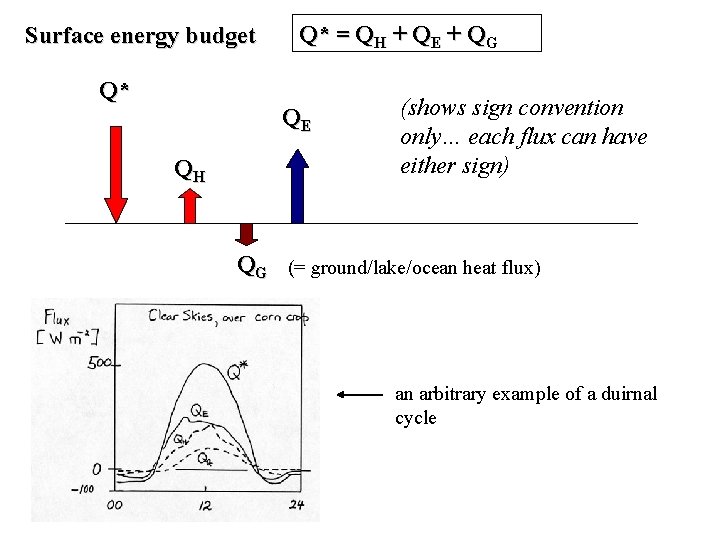
Surface energy budget Q* Q* = QH + QE + QG QE QH (shows sign convention only… each flux can have either sign) QG (= ground/lake/ocean heat flux) an arbitrary example of a duirnal cycle
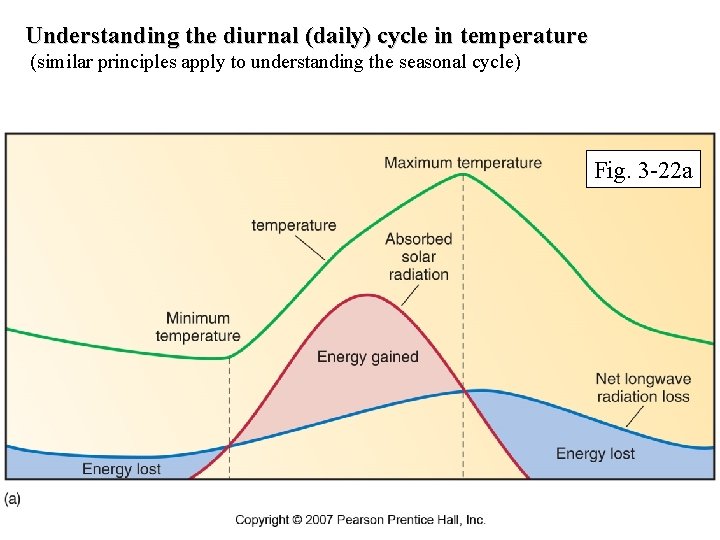
Understanding the diurnal (daily) cycle in temperature (similar principles apply to understanding the seasonal cycle) Fig. 3 -22 a
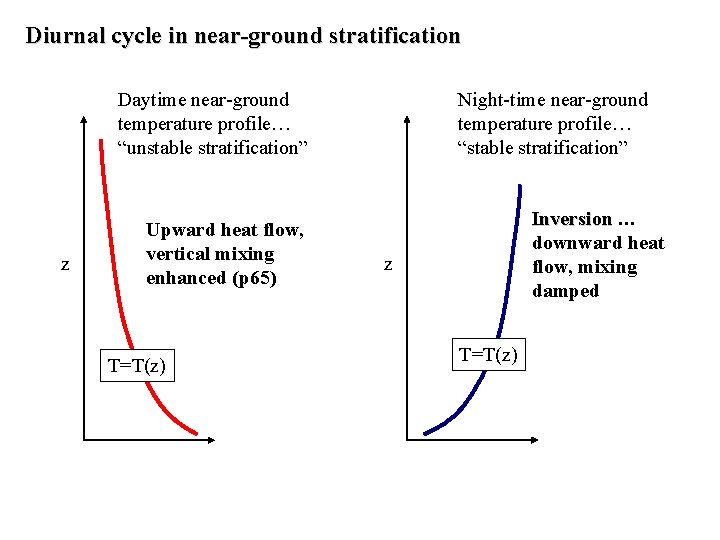
Diurnal cycle in near-ground stratification Daytime near-ground temperature profile… “unstable stratification” z Upward heat flow, vertical mixing enhanced (p 65) T=T(z) Night-time near-ground temperature profile… “stable stratification” Inversion … downward heat flow, mixing damped z T=T(z)
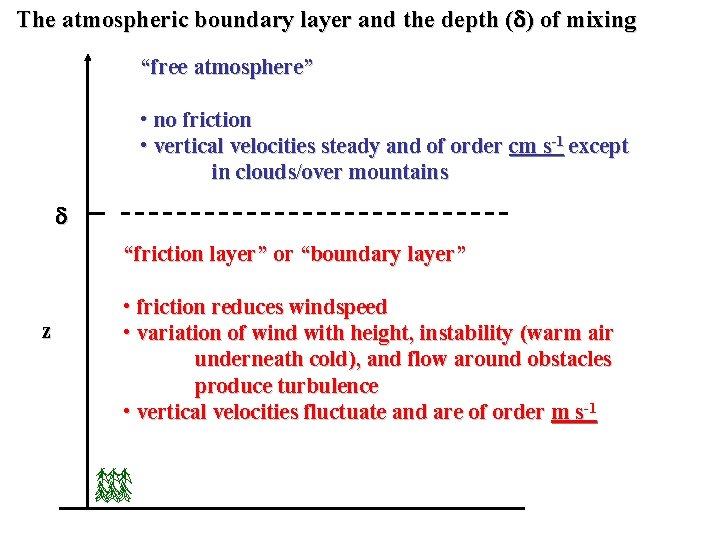
The atmospheric boundary layer and the depth ( ) of mixing “free atmosphere” • no friction • vertical velocities steady and of order cm s-1 except in clouds/over mountains “friction layer” or “boundary layer” z • friction reduces windspeed • variation of wind with height, instability (warm air underneath cold), and flow around obstacles produce turbulence • vertical velocities fluctuate and are of order m s-1
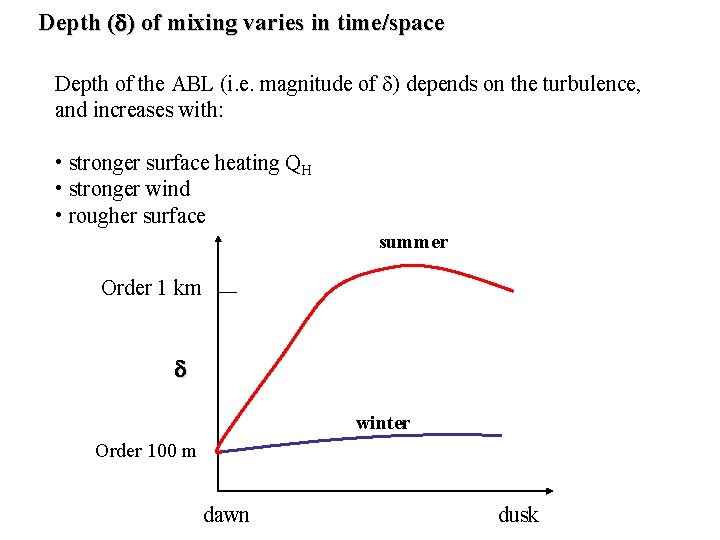
Depth ( ) of mixing varies in time/space Depth of the ABL (i. e. magnitude of ) depends on the turbulence, and increases with: • stronger surface heating QH • stronger wind • rougher surface summer Order 1 km winter Order 100 m dawn dusk
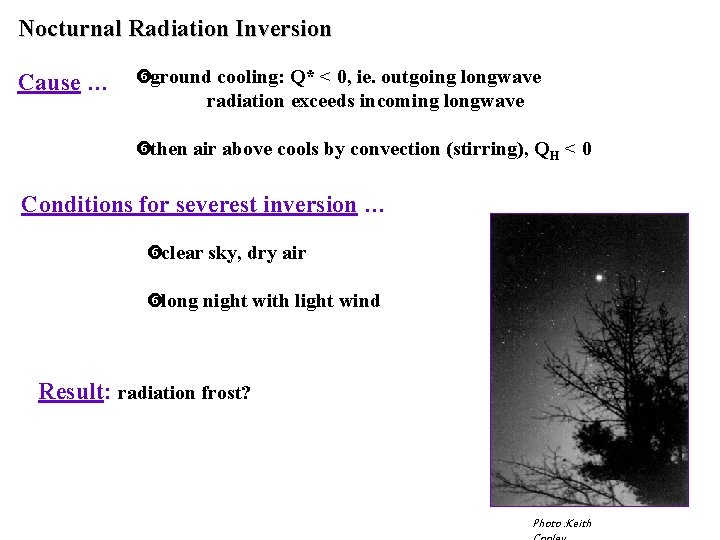
Nocturnal Radiation Inversion Cause … ground cooling: Q* < 0, ie. outgoing longwave radiation exceeds incoming longwave then air above cools by convection (stirring), QH < 0 Conditions for severest inversion … clear sky, dry air long night with light wind Result: radiation frost? Photo : Keith
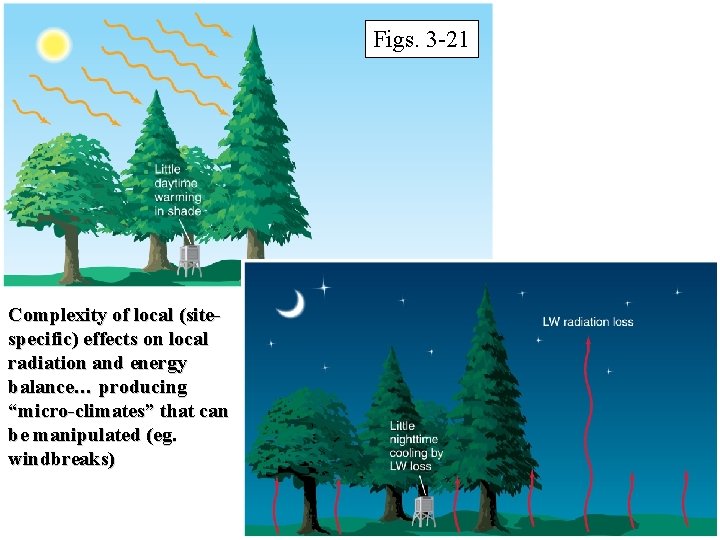
Figs. 3 -21 Complexity of local (sitespecific) effects on local radiation and energy balance… producing “micro-climates” that can be manipulated (eg. windbreaks)
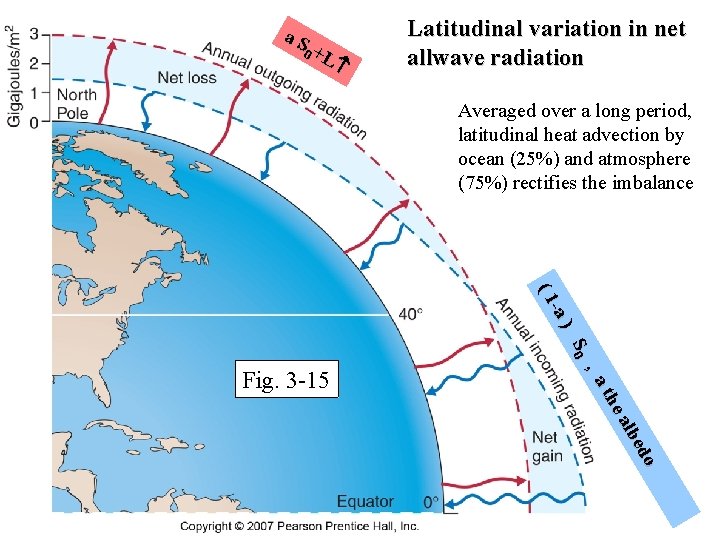
a. S 0 +L Latitudinal variation in net allwave radiation Averaged over a long period, latitudinal heat advection by ocean (25%) and atmosphere (75%) rectifies the imbalance ) -a (1 S 0 o ed alb the , a Fig. 3 -15
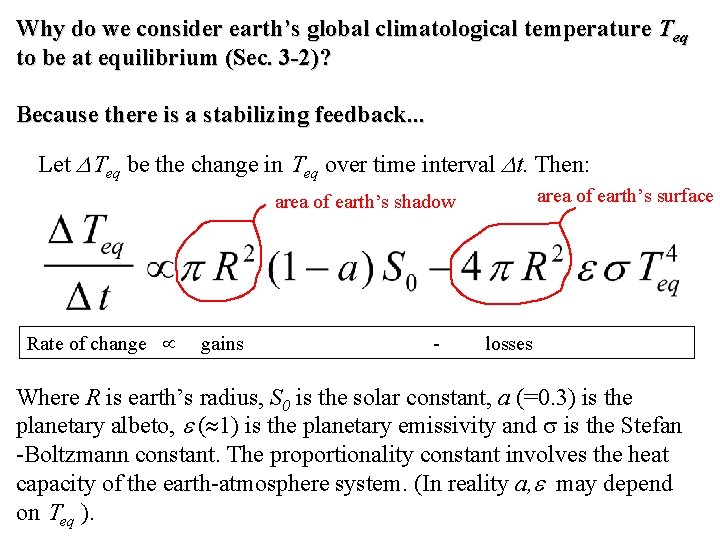
Why do we consider earth’s global climatological temperature Teq to be at equilibrium (Sec. 3 -2)? Because there is a stabilizing feedback. . . Let DTeq be the change in Teq over time interval Dt. Then: area of earth’s surface area of earth’s shadow Rate of change gains - losses Where R is earth’s radius, S 0 is the solar constant, a (=0. 3) is the planetary albeto, ( 1) is the planetary emissivity and is the Stefan -Boltzmann constant. The proportionality constant involves the heat capacity of the earth-atmosphere system. (In reality a, may depend on Teq ).
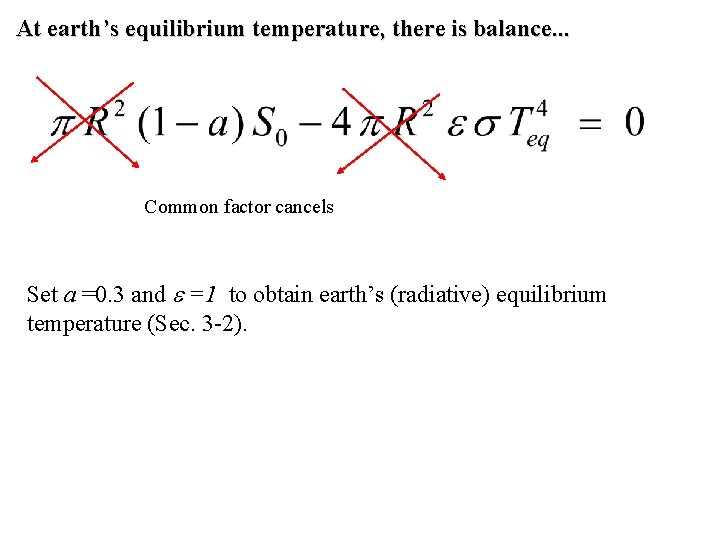
At earth’s equilibrium temperature, there is balance. . . Common factor cancels Set a =0. 3 and =1 to obtain earth’s (radiative) equilibrium temperature (Sec. 3 -2).
Factors controlling temperature on regional & global time & space scales • Latitude • solar radiation • distribution of land & water** • surface thermal inertia, surface energy balance • topographic steering/blockage of winds • Ocean Currents • advective domination (horizontal heat transport) • Elevation
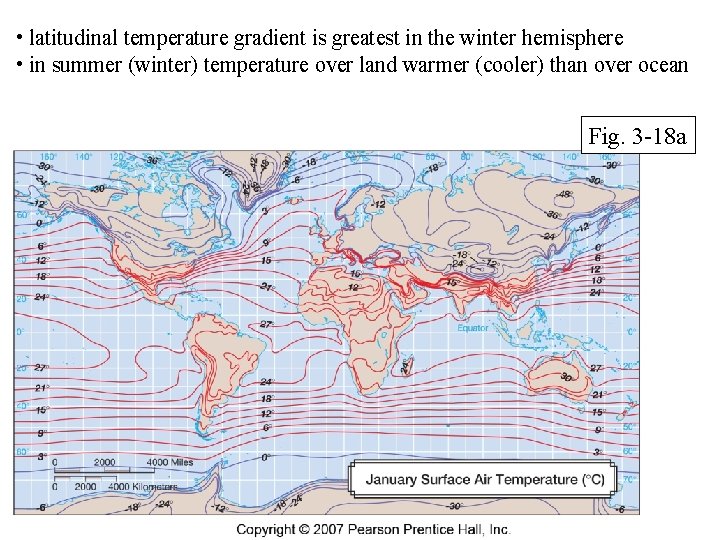
• latitudinal temperature gradient is greatest in the winter hemisphere • in summer (winter) temperature over land warmer (cooler) than over ocean Fig. 3 -18 a
Why are water bodies “more conservative” in their temperature? • solar radiation penetrates to some depth so warms a volume • much of the available radiant energy used to evaporate water • mixing of the water in the ocean/lake “mixed layer” ensures heat deposited/drawn from a deep layer • water has a much higher specific heat (4128 J kg-1 K-1) than “land”
- Slides: 15