
Lecture 7 1 Gravitational vs Electrostatic Potential Energy
- Slides: 17
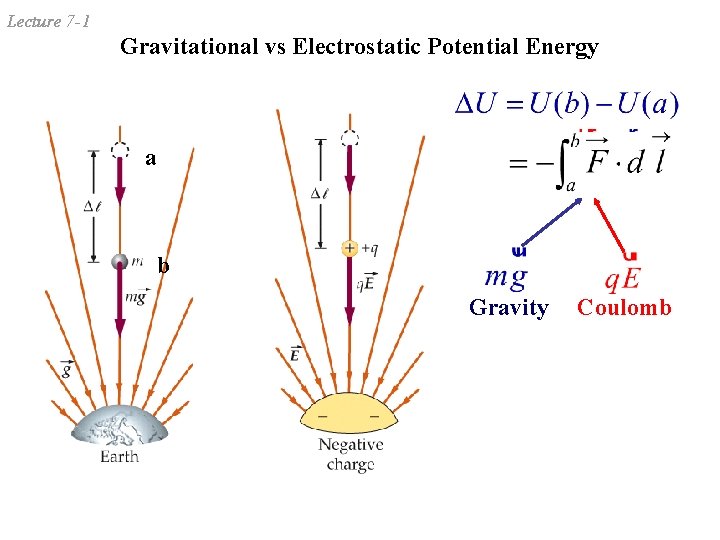
Lecture 7 -1 Gravitational vs Electrostatic Potential Energy a a b b Gravity Coulomb
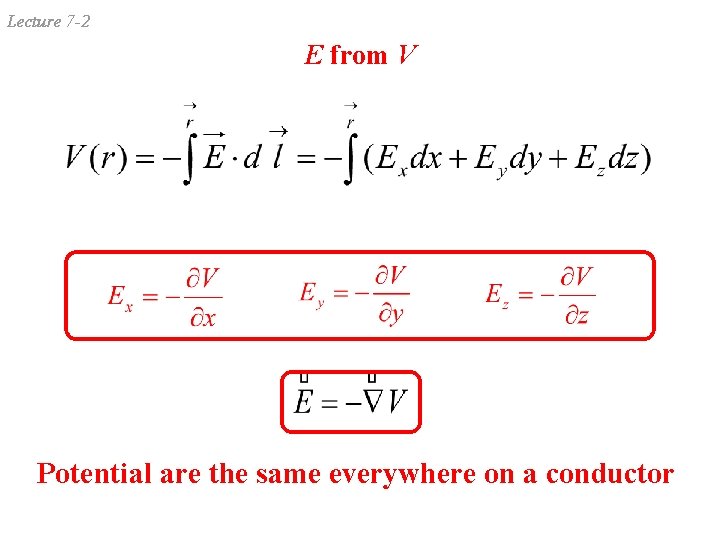
Lecture 7 -2 E from V Potential are the same everywhere on a conductor
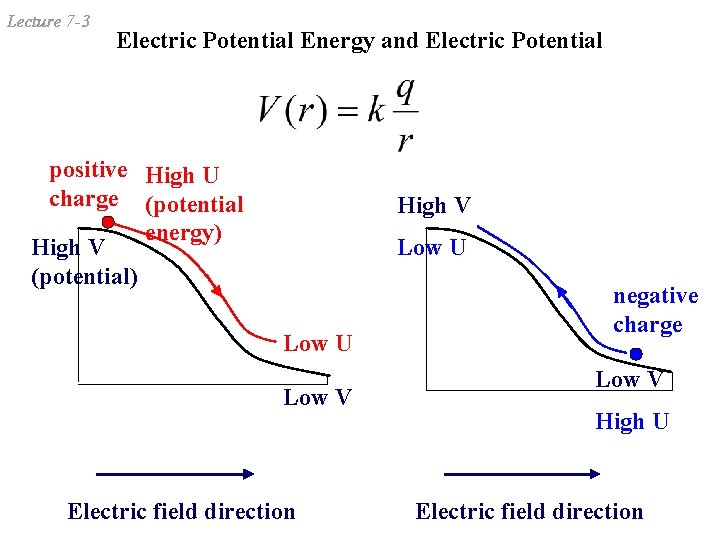
Lecture 7 -3 Electric Potential Energy and Electric Potential positive High U charge (potential energy) High V (potential) High V Low U Low V Electric field direction negative charge Low V High U Electric field direction
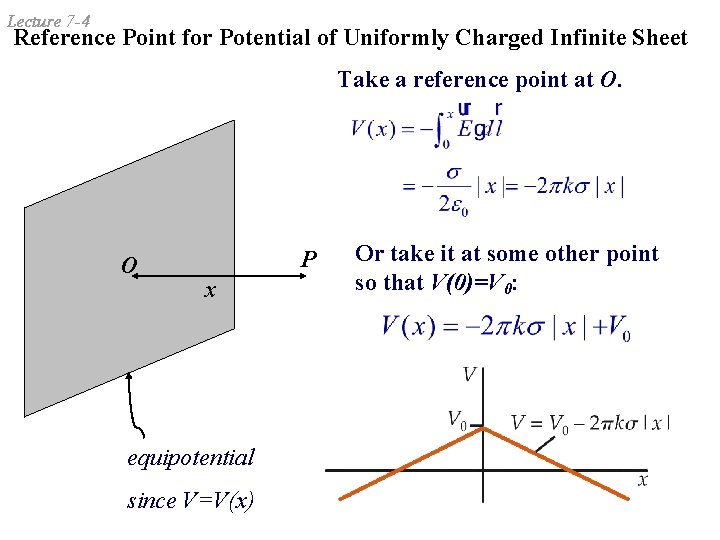
Lecture 7 -4 Reference Point for Potential of Uniformly Charged Infinite Sheet Take a reference point at O. O P x equipotential since V=V(x) Or take it at some other point so that V(0)=V 0:
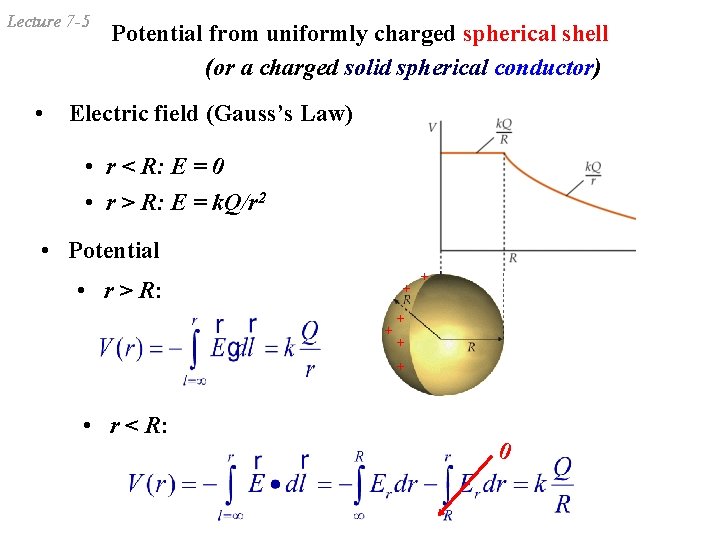
Lecture 7 -5 • Potential from uniformly charged spherical shell (or a charged solid spherical conductor) Electric field (Gauss’s Law) • r < R: E = 0 • r > R: E = k. Q/r 2 • Potential • r > R: + + + • r < R: 0
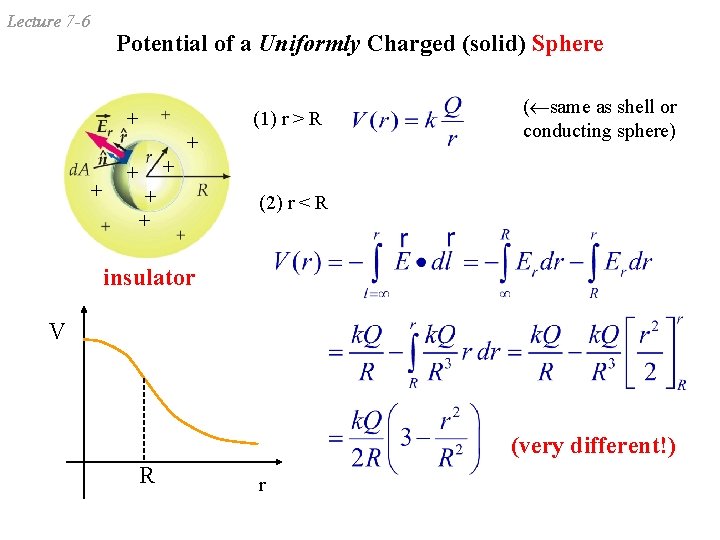
Lecture 7 -6 Potential of a Uniformly Charged (solid) Sphere + (1) r > R + + ( same as shell or conducting sphere) + + (2) r < R insulator V (very different!) R r
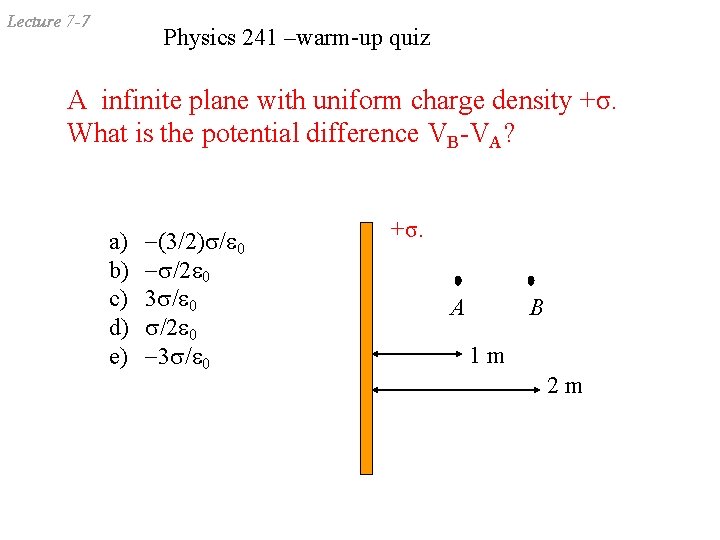
Lecture 7 -7 Physics 241 –warm-up quiz A infinite plane with uniform charge density +σ. What is the potential difference VB-VA? a) b) c) d) e) (3/2) / 0 /2 0 3 / 0 +σ. A B 1 m 2 m
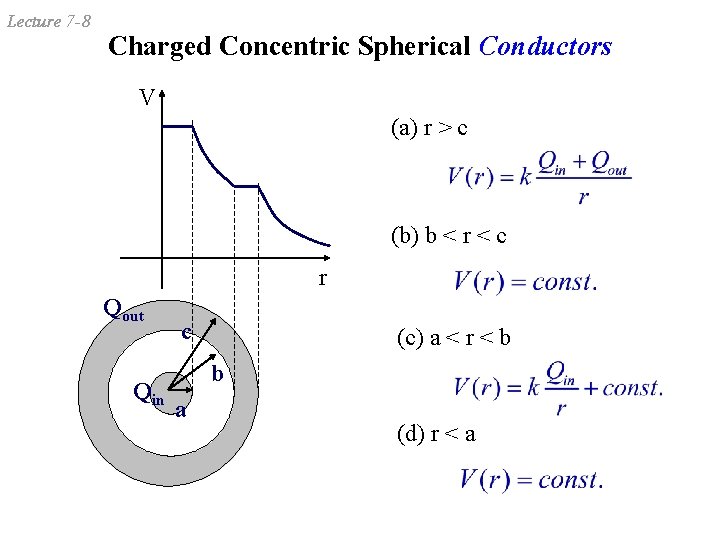
Lecture 7 -8 Charged Concentric Spherical Conductors V (a) r > c (b) b < r < c r Qout Qin c (c) a < r < b b a (d) r < a
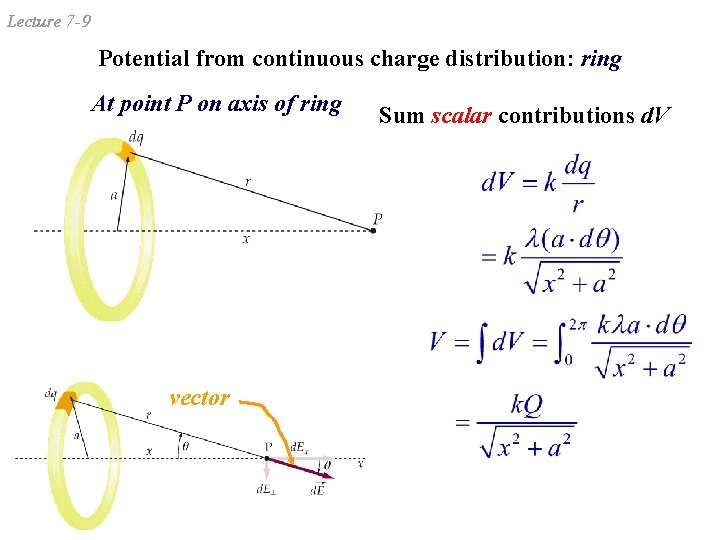
Lecture 7 -9 Potential from continuous charge distribution: ring At point P on axis of ring vector Sum scalar contributions d. V
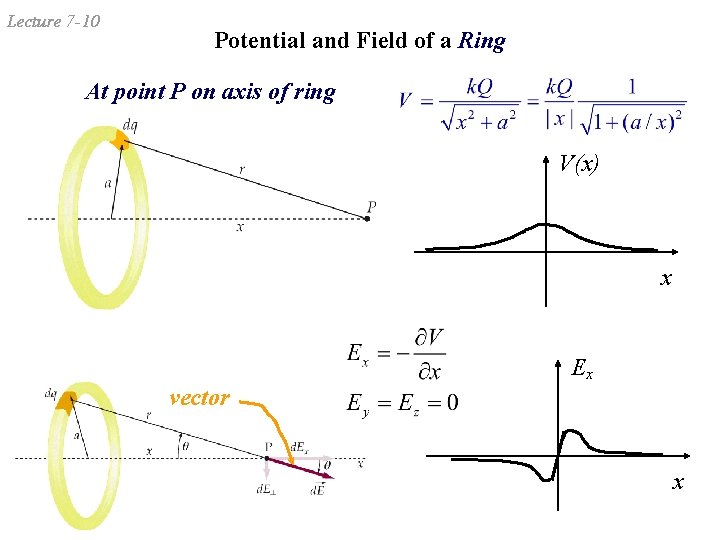
Lecture 7 -10 Potential and Field of a Ring At point P on axis of ring V(x) x Ex vector x
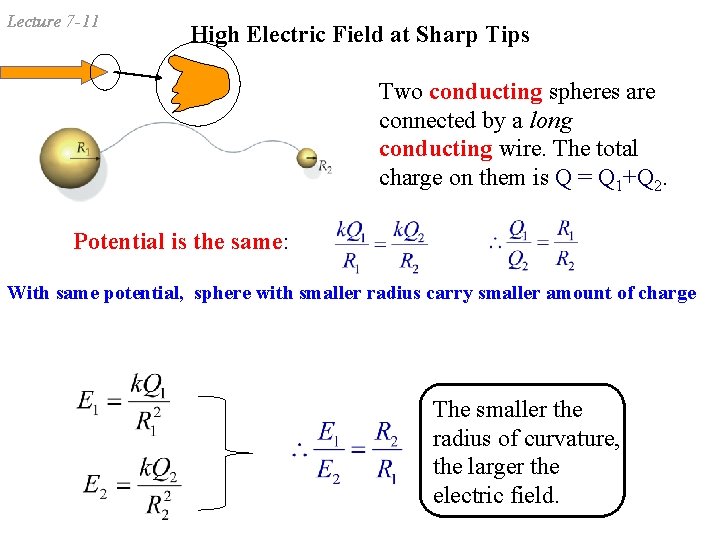
Lecture 7 -11 High Electric Field at Sharp Tips Two conducting spheres are connected by a long conducting wire. The total charge on them is Q = Q 1+Q 2. Potential is the same: With same potential, sphere with smaller radius carry smaller amount of charge The smaller the radius of curvature, the larger the electric field.
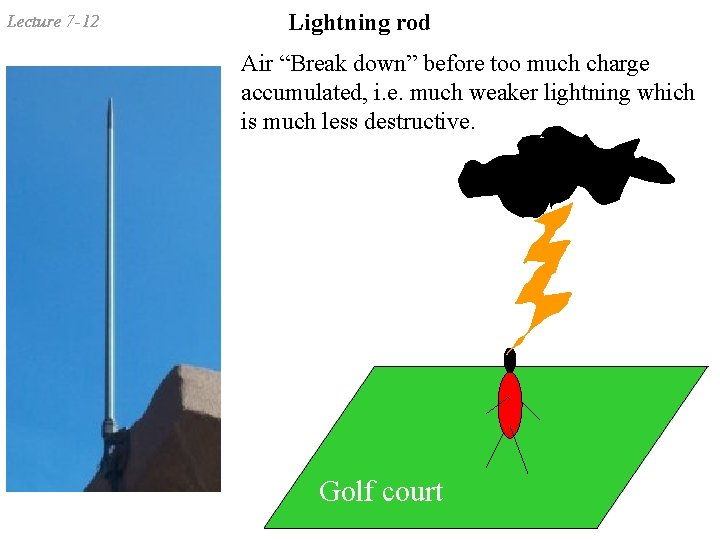
Lecture 7 -12 Lightning rod Air “Break down” before too much charge accumulated, i. e. much weaker lightning which is much less destructive. Golf court
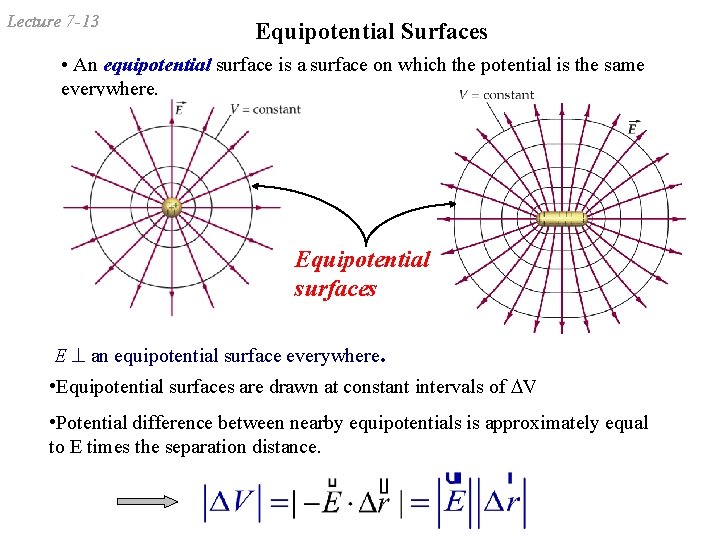
Lecture 7 -13 Equipotential Surfaces • An equipotential surface is a surface on which the potential is the same everywhere. Equipotential surfaces E an equipotential surface everywhere. • Equipotential surfaces are drawn at constant intervals of V • Potential difference between nearby equipotentials is approximately equal to E times the separation distance.
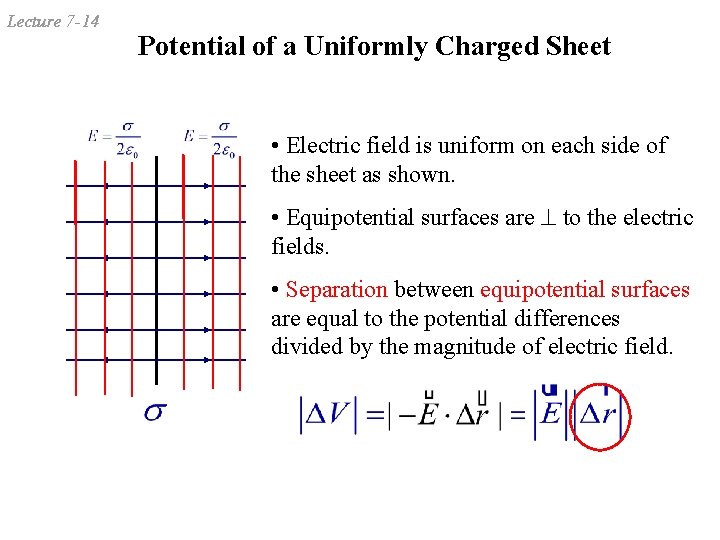
Lecture 7 -14 Potential of a Uniformly Charged Sheet • Electric field is uniform on each side of the sheet as shown. • Equipotential surfaces are to the electric fields. • Separation between equipotential surfaces are equal to the potential differences divided by the magnitude of electric field.
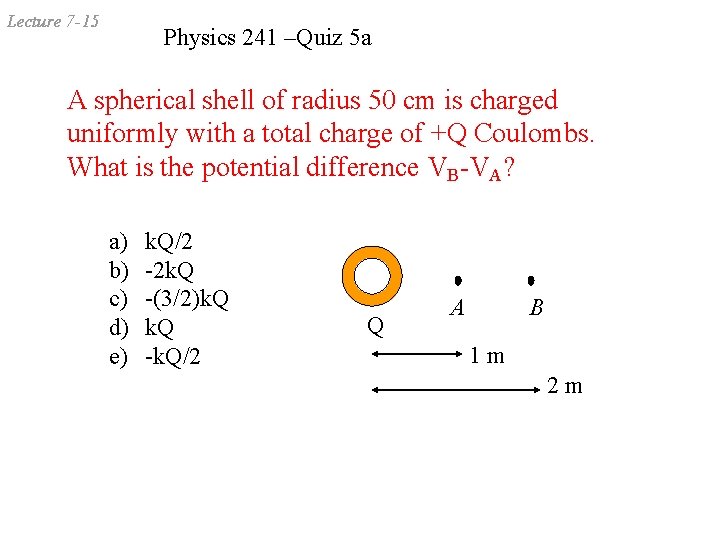
Lecture 7 -15 Physics 241 –Quiz 5 a A spherical shell of radius 50 cm is charged uniformly with a total charge of +Q Coulombs. What is the potential difference VB-VA? a) b) c) d) e) k. Q/2 -2 k. Q -(3/2)k. Q -k. Q/2 Q A B 1 m 2 m
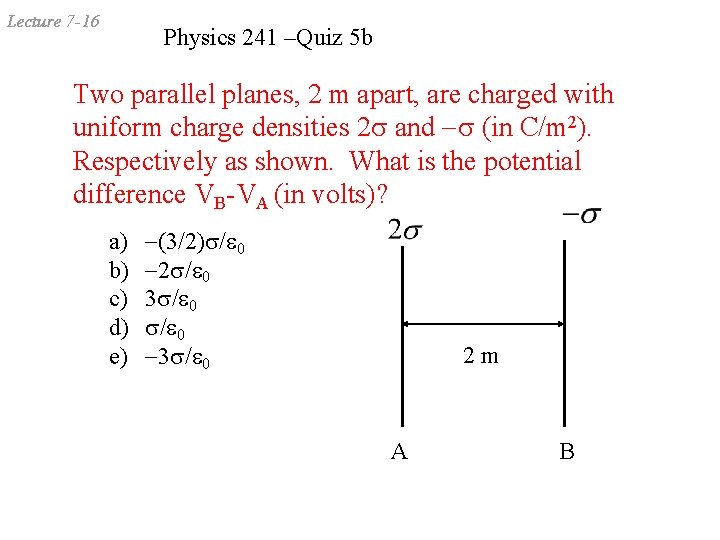
Lecture 7 -16 Physics 241 –Quiz 5 b Two parallel planes, 2 m apart, are charged with uniform charge densities 2 and (in C/m 2). Respectively as shown. What is the potential difference VB-VA (in volts)? a) b) c) d) e) (3/2) / 0 2 / 0 3 / 0 2 m A B
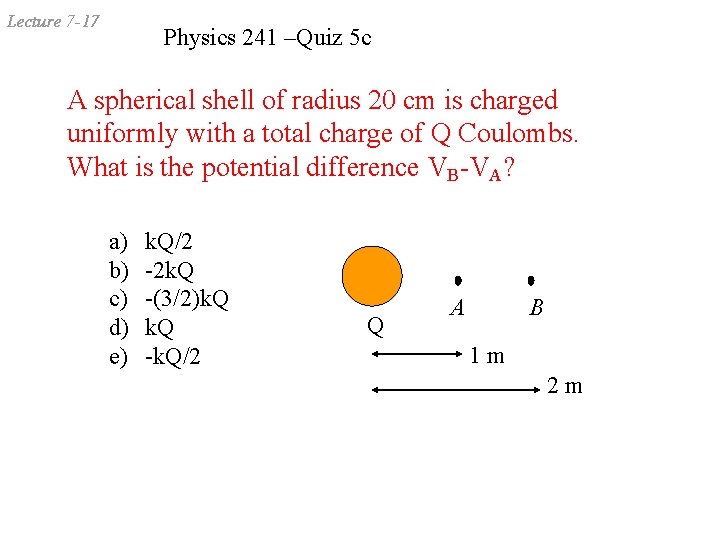
Lecture 7 -17 Physics 241 –Quiz 5 c A spherical shell of radius 20 cm is charged uniformly with a total charge of Q Coulombs. What is the potential difference VB-VA? a) b) c) d) e) k. Q/2 -2 k. Q -(3/2)k. Q -k. Q/2 Q A B 1 m 2 m