
Lecture 6 RNA directed RNA synthesis Some RNA
- Slides: 34
Lecture 6 RNA directed RNA synthesis
Some RNA history • 1935 - Stanley crystallizes TMV • 1936 - TMV crystals contain 5% RNA • 1944 - DNA is genetic material • 1952 - Hershey-Chase experiment • 1953 - Structure of DNA • 1956 - TMV nucleic acid is infectious; first demonstration that RNA can be genetic material • By 1959, RNA was identified in many animal viruses • 1960 s - studies on viral RNA replication begin
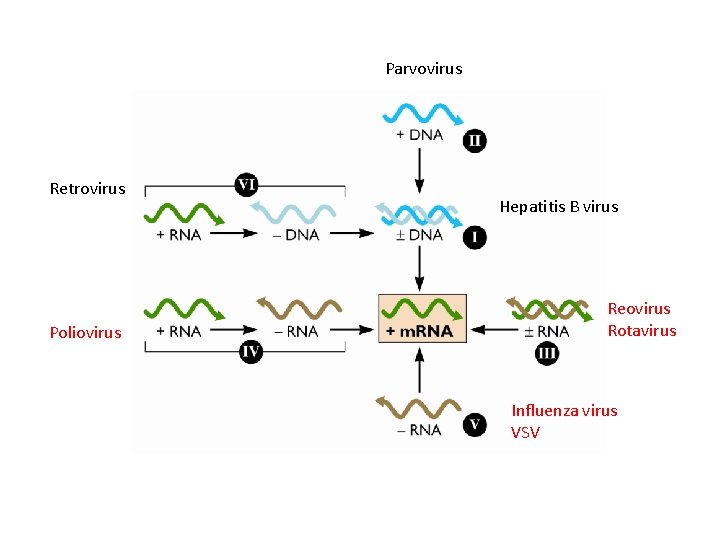
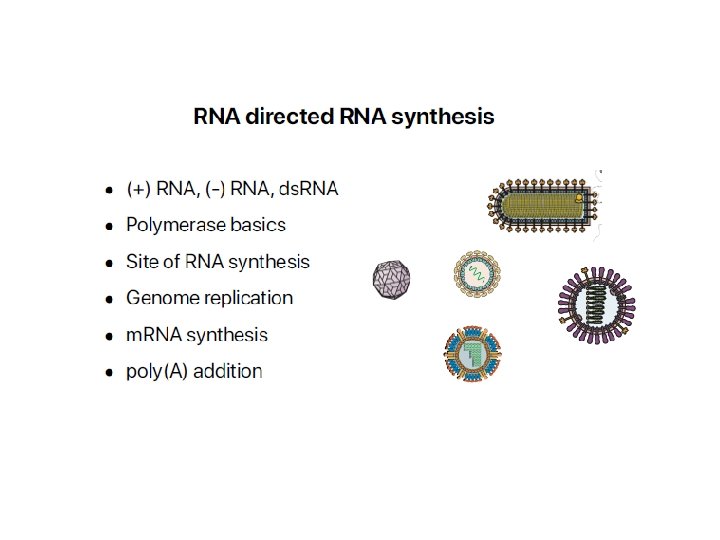
Parvovirus Retrovirus Poliovirus Hepatitis B virus Reovirus Rotavirus Influenza virus VSV
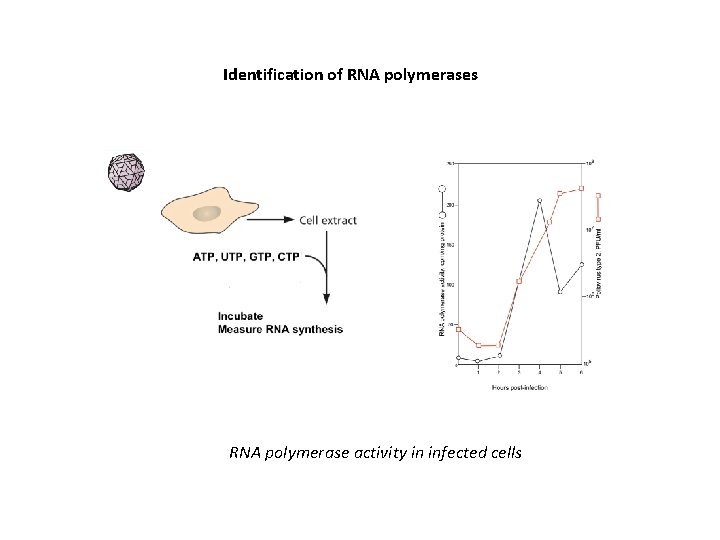
Identification of RNA polymerases RNA polymerase activity in infected cells
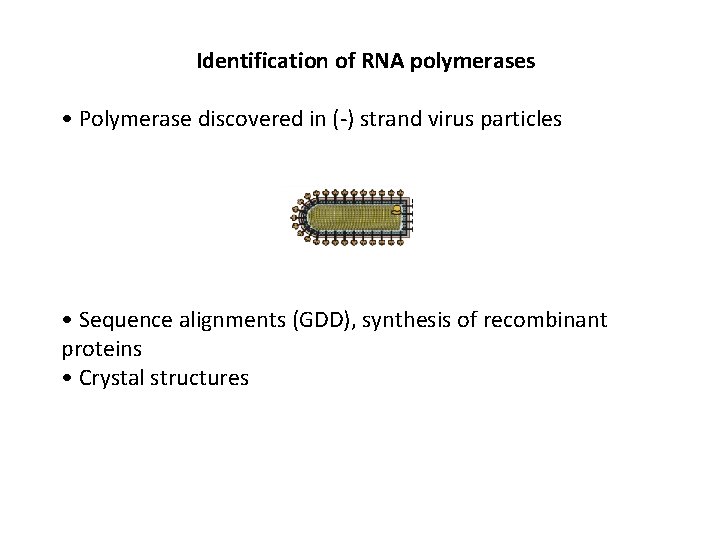
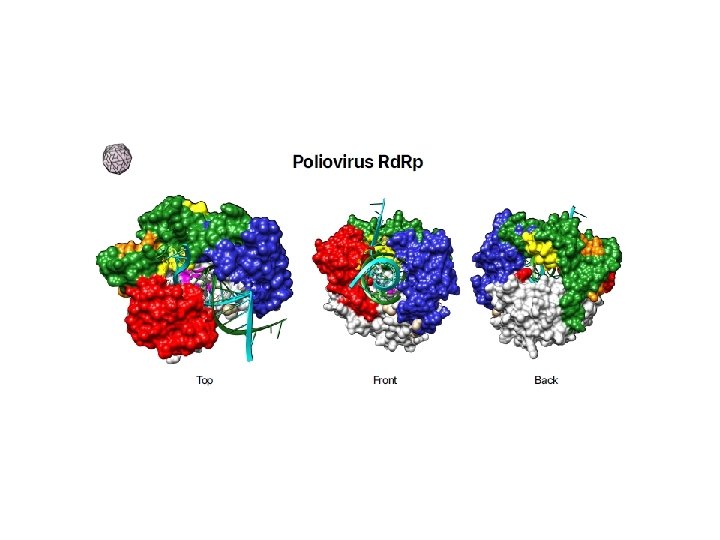
Identification of RNA polymerases • Polymerase discovered in (-) strand virus particles • Sequence alignments (GDD), synthesis of recombinant proteins • Crystal structures
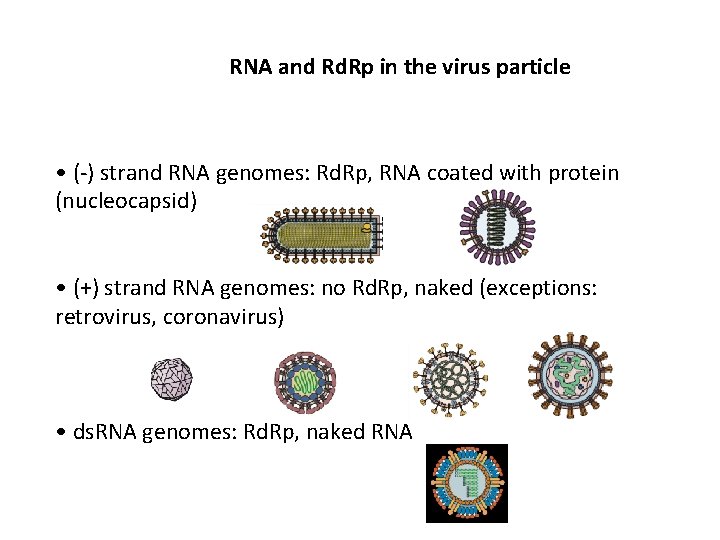
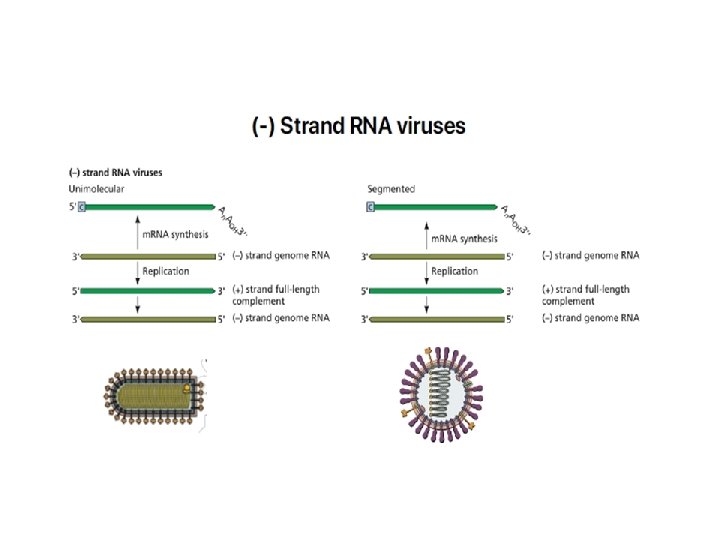
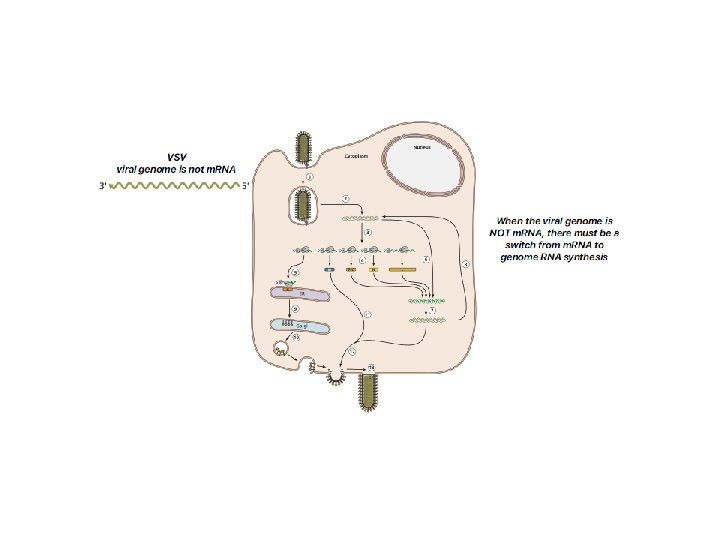
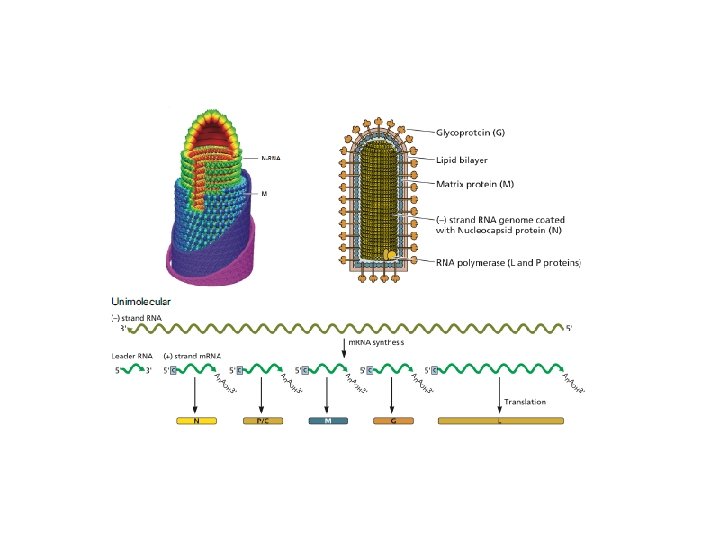
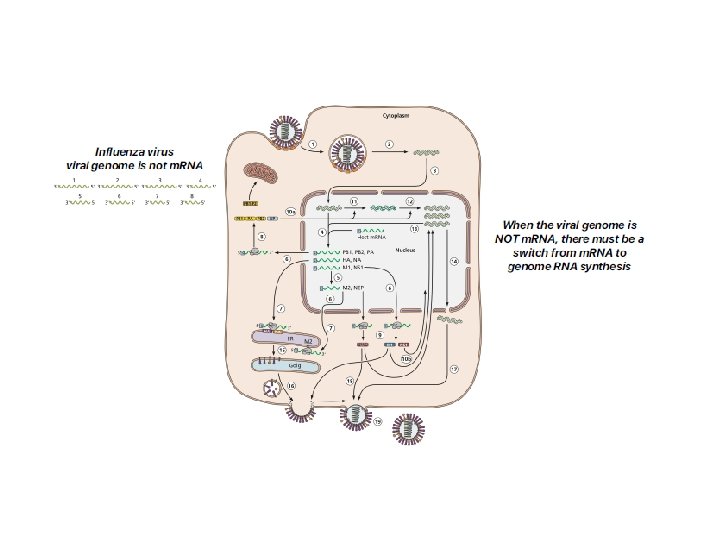
RNA and Rd. Rp in the virus particle • (-) strand RNA genomes: Rd. Rp, RNA coated with protein (nucleocapsid) • (+) strand RNA genomes: no Rd. Rp, naked (exceptions: retrovirus, coronavirus) • ds. RNA genomes: Rd. Rp, naked RNA
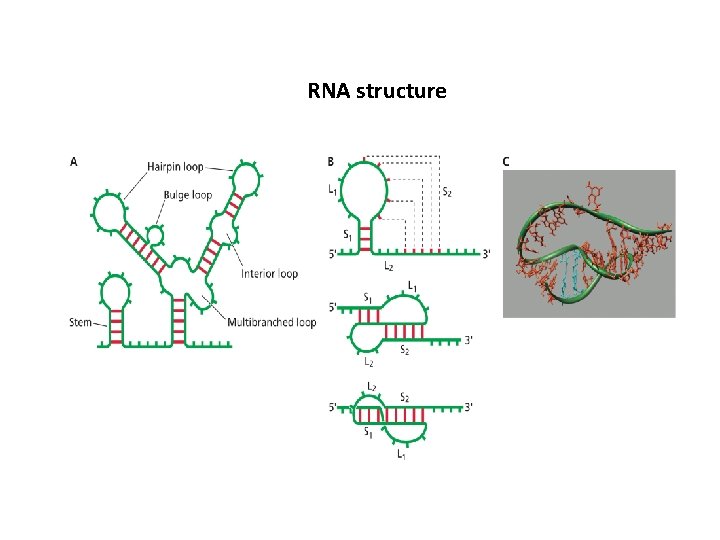
RNA structure
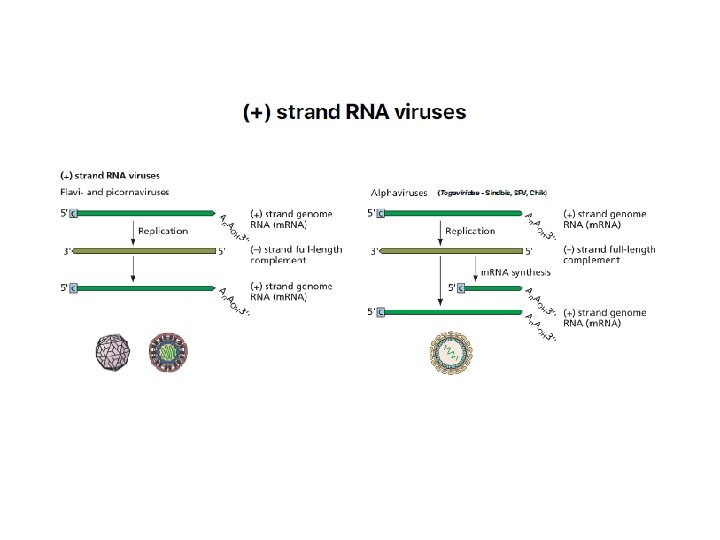
Rules for viral RNA synthesis • RNA genome must be copied end to end with no loss of nucleotide sequence • Viral m. RNAs must be produced that can be efficiently translated by cellular protein synthesis machinery
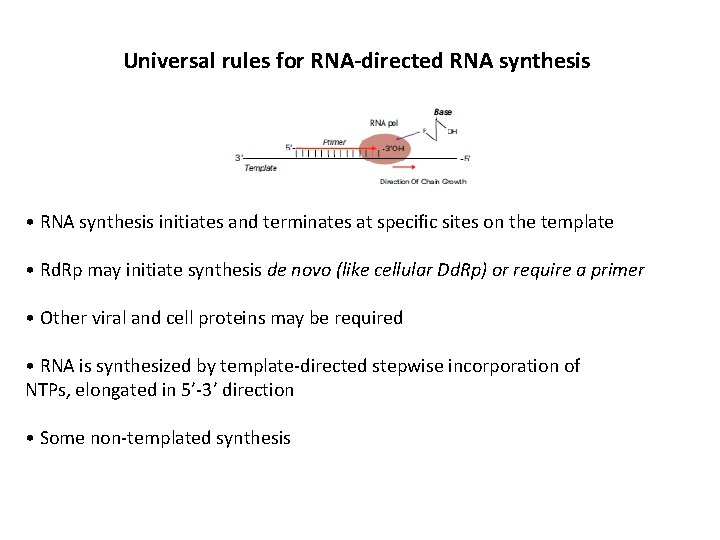
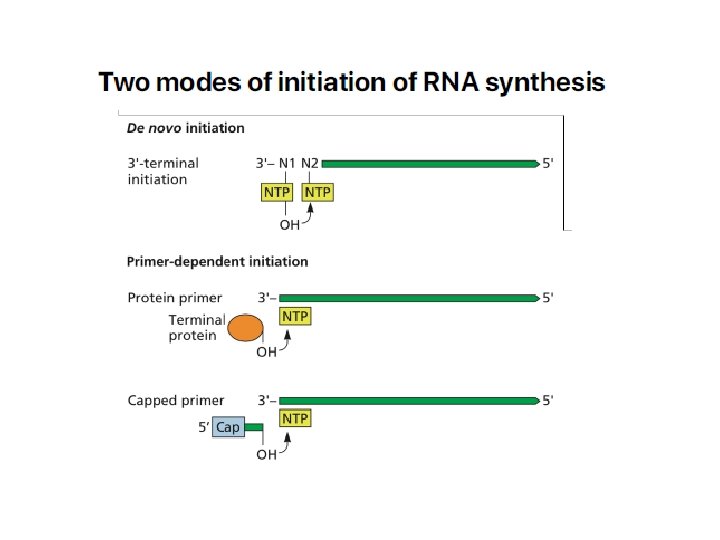
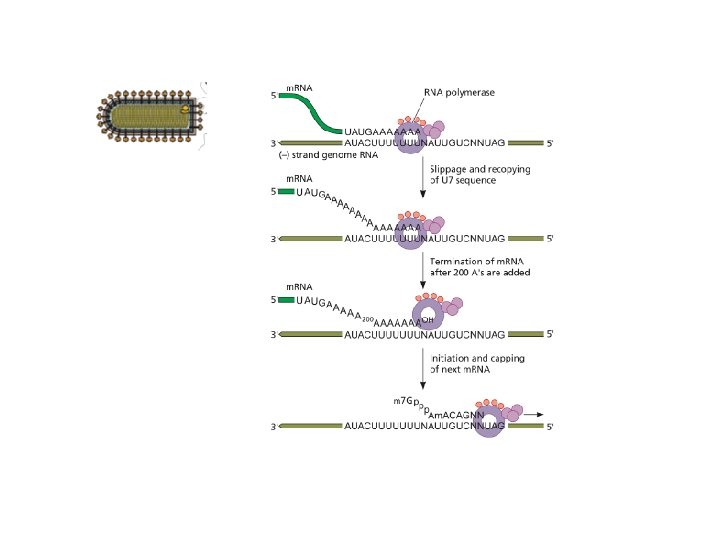
Universal rules for RNA-directed RNA synthesis • RNA synthesis initiates and terminates at specific sites on the template • Rd. Rp may initiate synthesis de novo (like cellular Dd. Rp) or require a primer • Other viral and cell proteins may be required • RNA is synthesized by template-directed stepwise incorporation of NTPs, elongated in 5’-3’ direction • Some non-templated synthesis
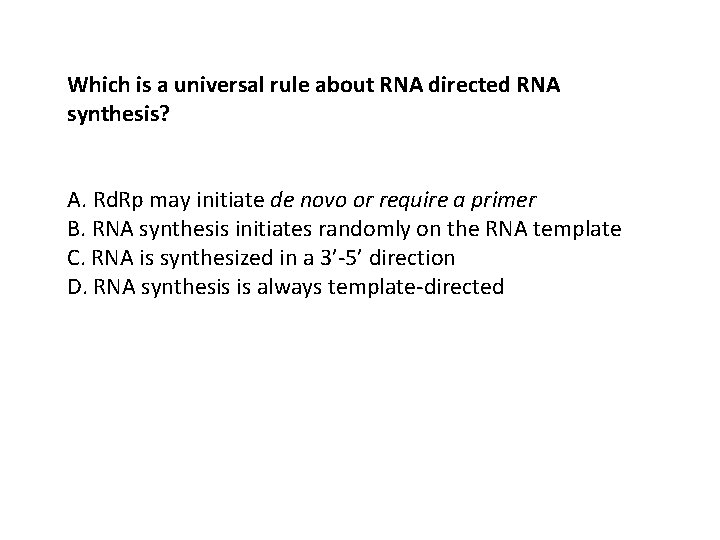
Which is a universal rule about RNA directed RNA synthesis? A. Rd. Rp may initiate de novo or require a primer B. RNA synthesis initiates randomly on the RNA template C. RNA is synthesized in a 3’-5’ direction D. RNA synthesis is always template-directed
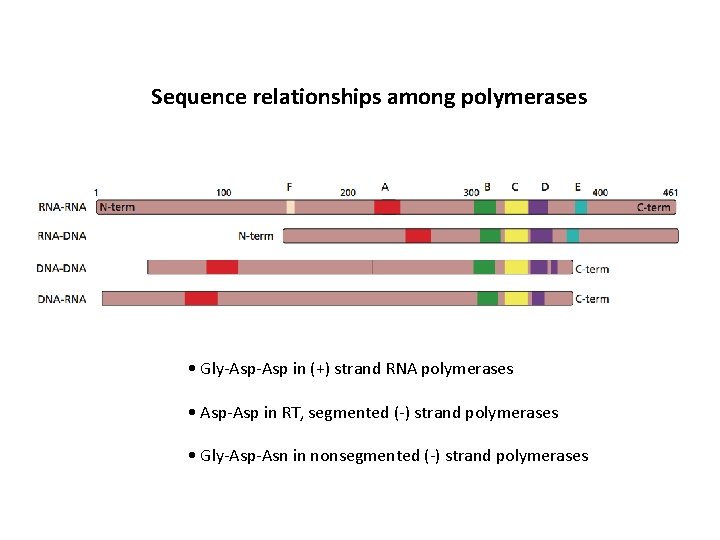
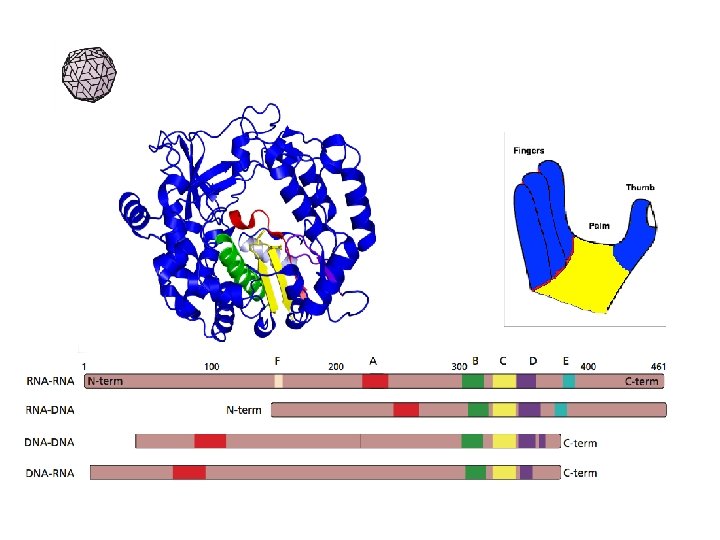
Sequence relationships among polymerases • Gly-Asp in (+) strand RNA polymerases • Asp-Asp in RT, segmented (-) strand polymerases • Gly-Asp-Asn in nonsegmented (-) strand polymerases